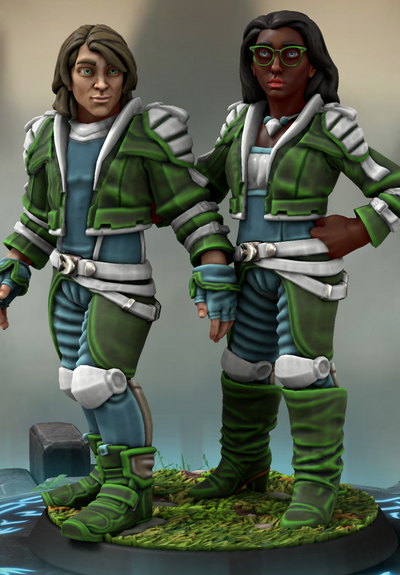
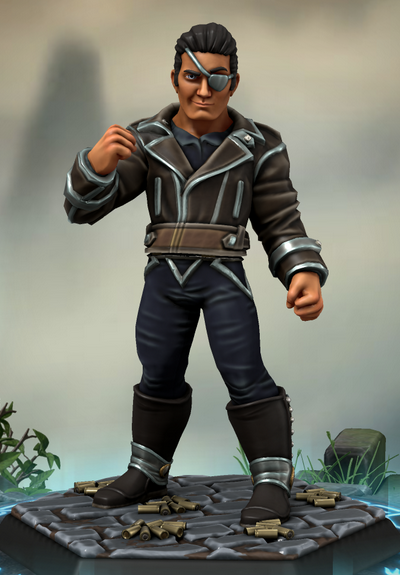
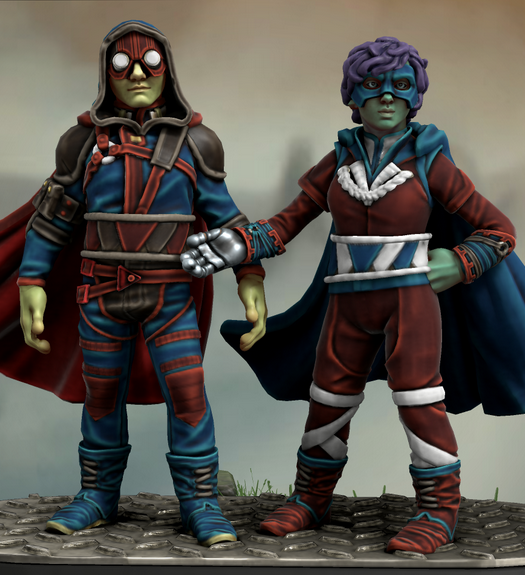
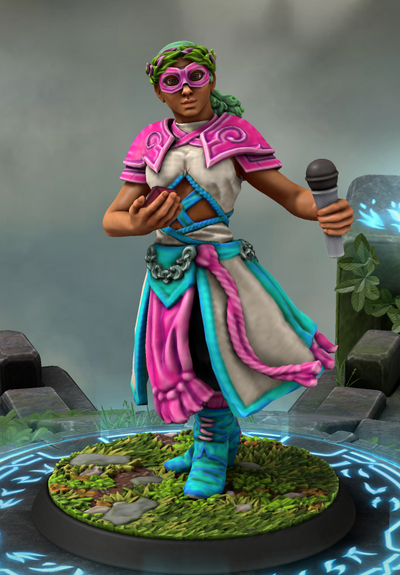
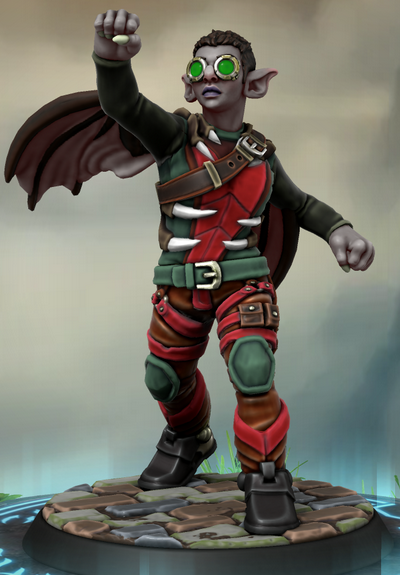
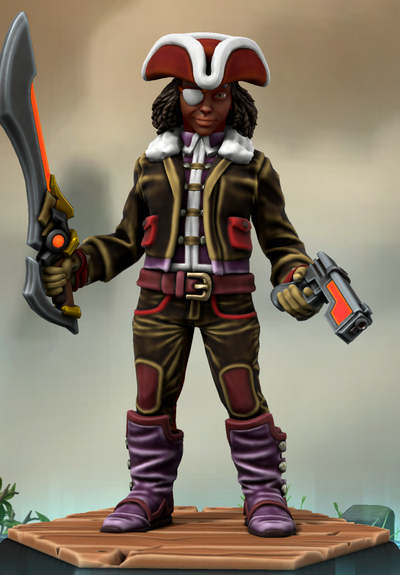
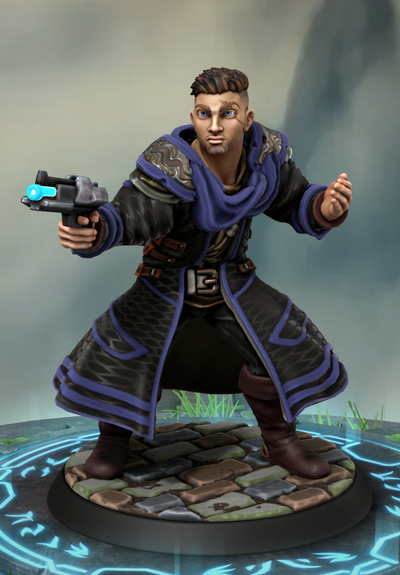
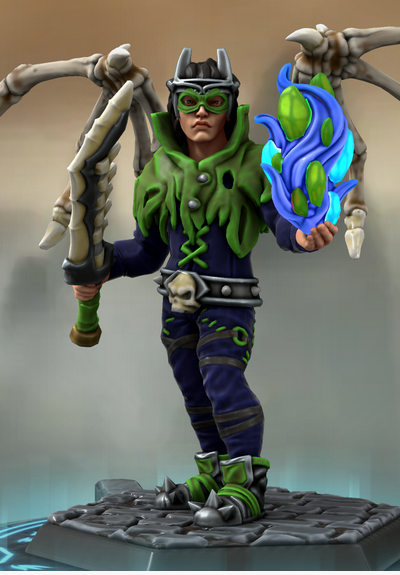
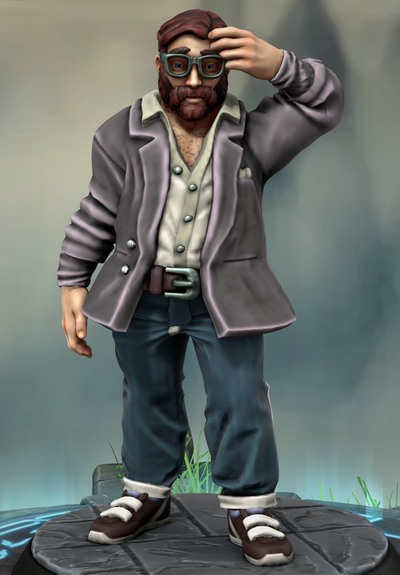
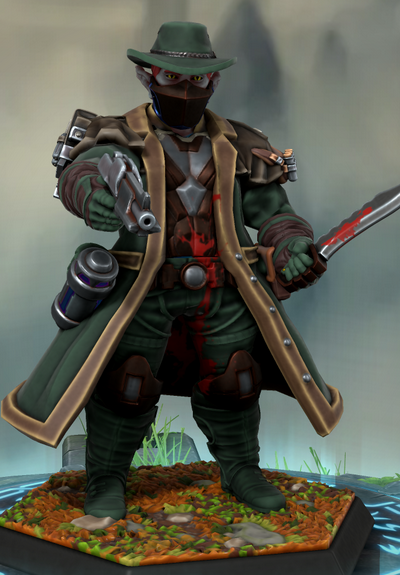
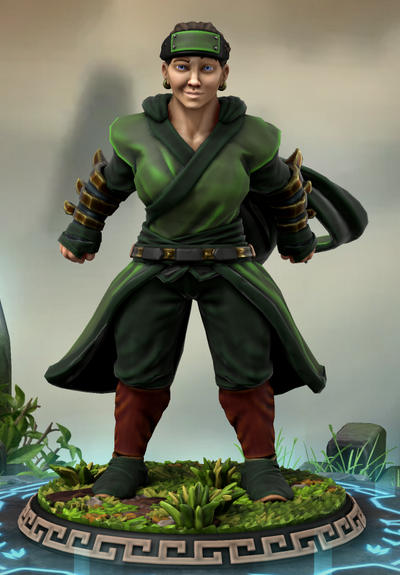
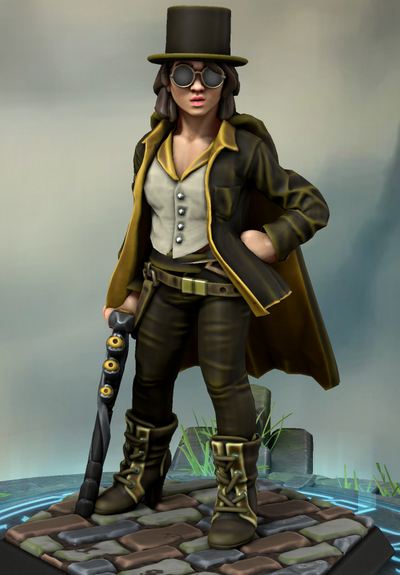
All CategoriesGamesSentinel Comics RPG › The History of Venture Comics!

The History of Venture Comics!

1674 posts · 38004 views · started 2023-11-23 19:18 UTC
FR
FrivYeti
2023-11-23 19:18 UTC
#1

Over on another forum, I started work on the publication history of a rival comics company. I hadn’t originally put it here, because I was a bit concerned about ongoing forum concerns about new material, but I think the new stuff is limited enough that it should be okay. (Mods, let me know if this is not the case.)

I’ll be updating twice daily until I catch up to the other forum, after which I’ll start updating five times a week alongside it.

Here is how the exercise plays out:

This game is going to be divided into two Major Phases, each of which is subdivided into Ages. The first phase is the Classic Phase, subdivided into the Golden Age, the Silver Age, and the Bronze Age. The second phase is the Modern Phase, subdivided into the Iron Age and the Diamond Age.

Each phase involves 40 heroes and 36 villains. Unlike previous runs, I’m not fully blocking myself out, because companies duplicate common archetypes. Instead, the following restrictions are in play:

  • If I hit any given heroic Background, Power Source, Archetype, or villainous Approach, Archetype, Upgrade or Mastery four times in a given phase, it is blocked out completely, and any result that gets it gets the next available one up instead.
  • I can’t have a heroic character duplicate a Background, Power Source, and Archetype combination that already exists in the current phase.
  • I can’t have two heroic characters share the same Background and Power Source, Background and Archetype, or Power Source and Archetype within an Age.
  • If a heroic character shares two of Background, Power Source, and Archetype with a character from a previous age, they must either be an updated version or a reboot of the previous age’s character. (I am allowed to update or reboot with fewer, but not required.)

Dice totals and Principles may not be quite how you expect them; I’m using a revised character creation process for heroes that I play with at my own tables. Since it’s a rival company, I figure they get rival character generation! :wink:

The ages of Venture Comics are as follows:

  • The Golden Age (1938 - 1957): Following the development of ten superheroes and nine of their villains.
  • The Silver Age (1957 - 1971): Following the development or reboots of twenty superheroes and eighteen of their villains.
  • The Bronze Age (1971 - 1986): Following the development of ten superheroes added to their Silver Age counterparts, and nine new villains.
  • The Iron Age (1986 - 2004): Following a company-wide relaunch of twenty superheroes and eighteen villains.
  • The Plutonium Age (2004-2014): A rather disastrous period of rapid reboots, relaunches, new #1 issues and bad decisions that will not be developed in full.
  • The Diamond Age (2014-2022): The slowly growing reboot of the line following a series of disasters between 2004 and 2014 that saw the company nearly fail entirely, which follows a new or revamped set of twenty superheroes and eighteen villains.

In each age, I’ll start with a quick post giving an overview of the situation for Venture Comics. Then I’ll create the heroes, developing them into teams and solo titles, create a set of villains for them, and then write out the comics that they appear in. Venture Comics is a small publisher, which usually only had a single-digit number of comics titles at a time, possibly growing in the Bronze Age before struggling in the 80s. I think this’ll be a fun way to build a setting that I can do other things in later. It is also going to be massive. I’ve already finished the Golden Age, so you’ll be getting that at high speed, and I’m early in the Silver Age as we type.

Venture Comics: The Golden Age

Founded in 1938, Venture Comics initially sought to bring the popular world of pulp magazines to comics. They opened with four titles. Campfire Terrors was a horror comic aimed at preteens and young teens, telling scary stories that weren’t too gruesome. Celestial Travels was a pulpy science fiction anthology in the style of Buck Rogers, with a major character lead and a variety of backup adventures. Cryptic Trails was a classic adventure pulp, frequently about hidden corners of the world and magical or impossible realms hidden just outside the world. And Company Town was a noir anthology about the city of Ferristown, a thinly-veiled Detroit analogue ruled over by a ruthless industrialist with mob ties fairly clearly modelled as a mixture of Henry Ford and Thomas Edison.

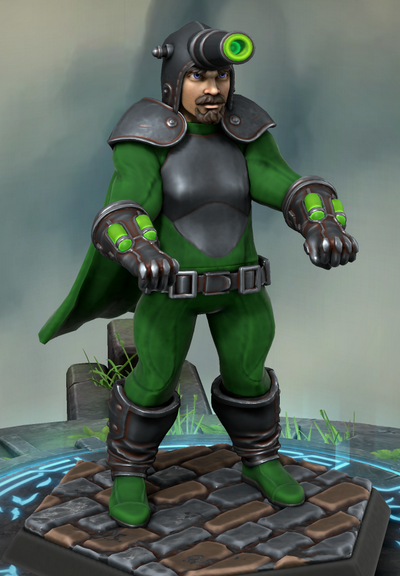
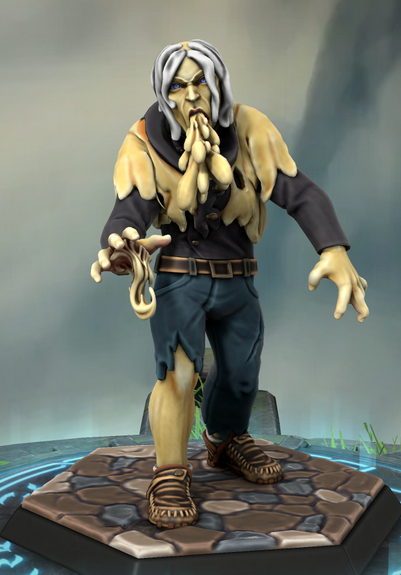
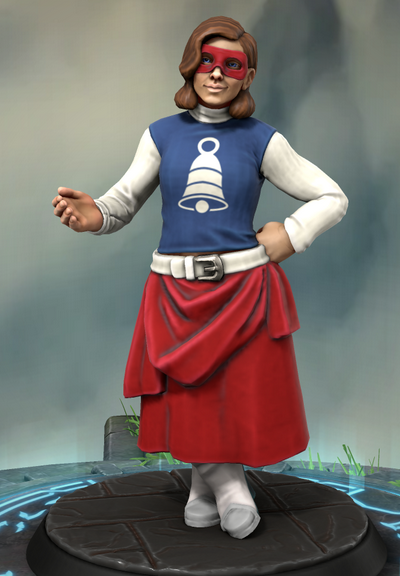
The twin pressures of the rise of superheroes and the breaking out of war created pressures on the company, and a fifth title, Covert Tactics, was released in February 1940, alongside the first superhero of the Venture Comics line…

to be revealed later today, when I have time to format it!
CR
Chief_Lackey_Rich
2023-11-23 19:25 UTC
#2

For folks who haven’t seen this already, I heartily recommend following the thread. There’s some great content a-coming. Really interesting experiment in making one’s own fictional publishing company and navigating it through the various historical comic ages, and his characters are top notch.

FR
FrivYeti
2023-11-23 20:49 UTC
#3

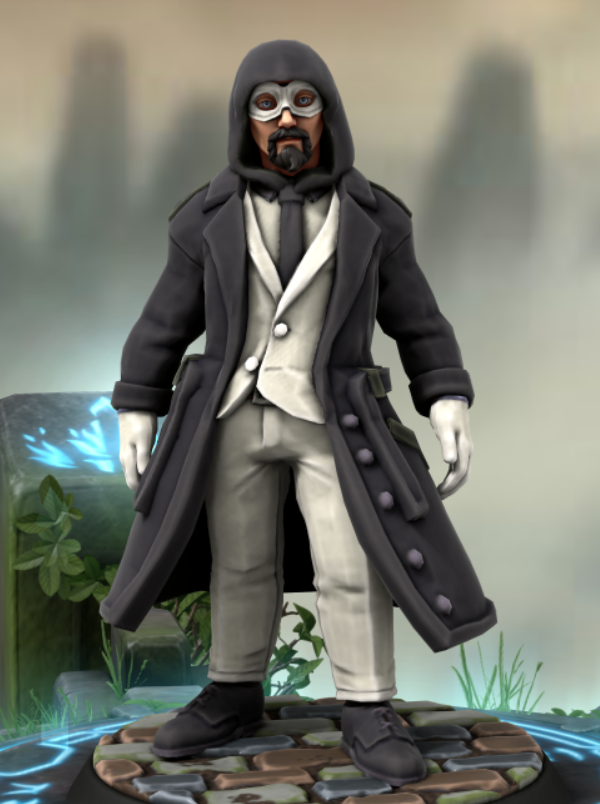
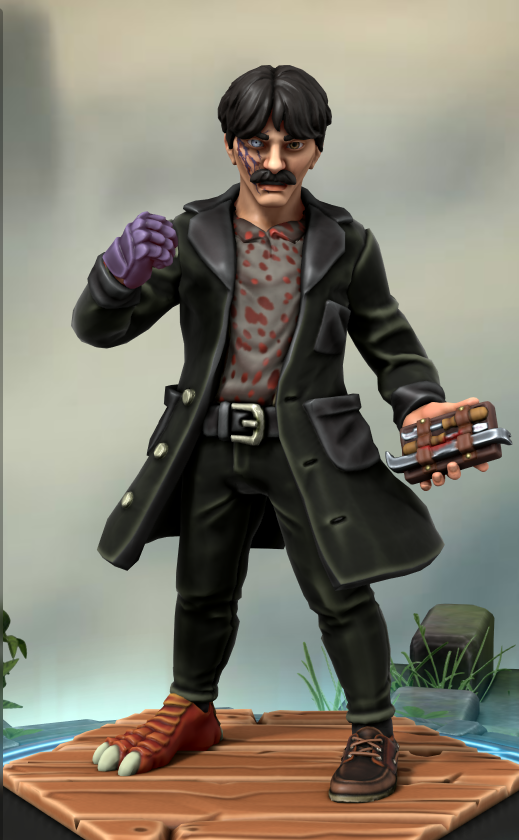
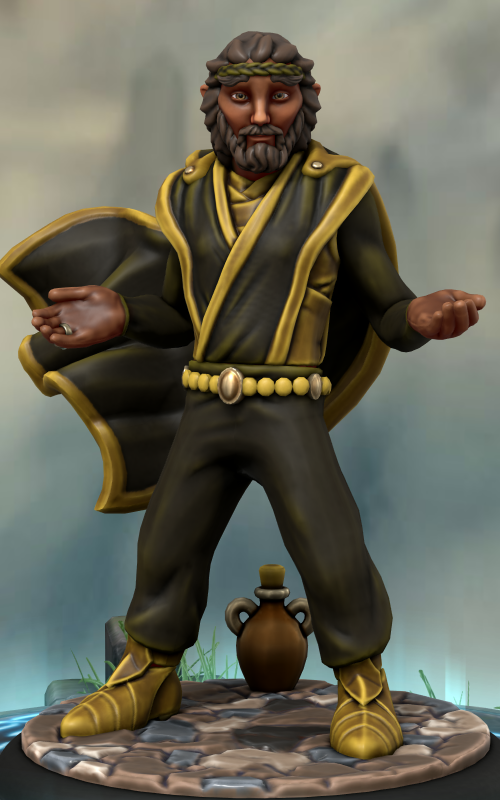
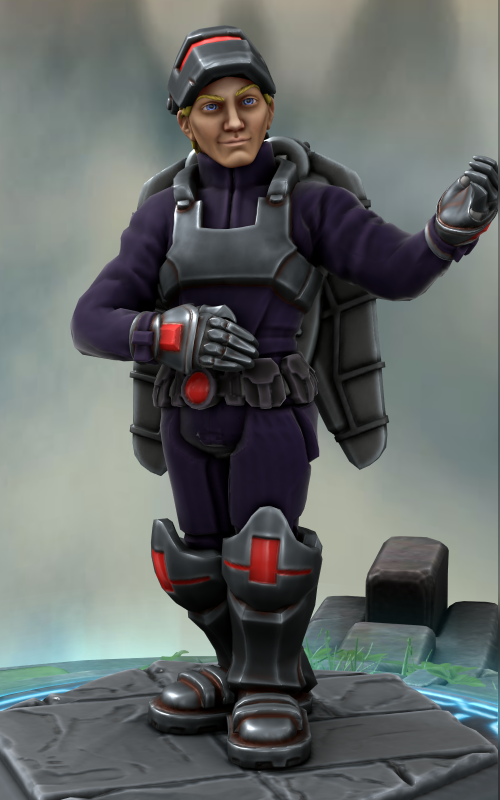
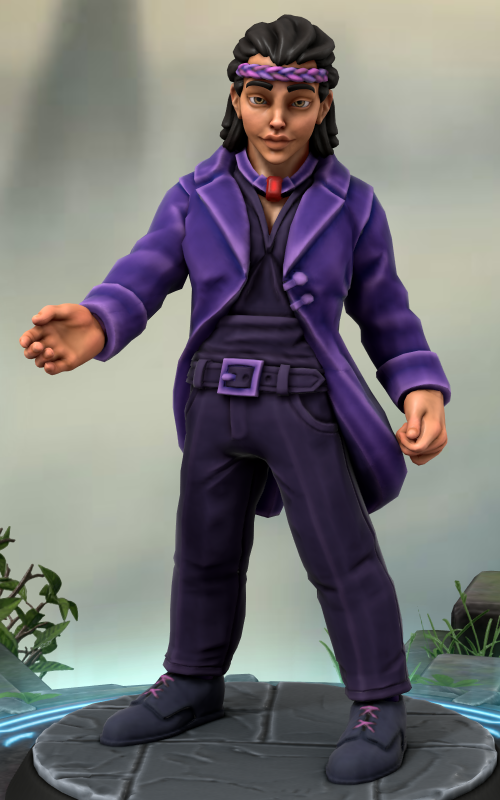
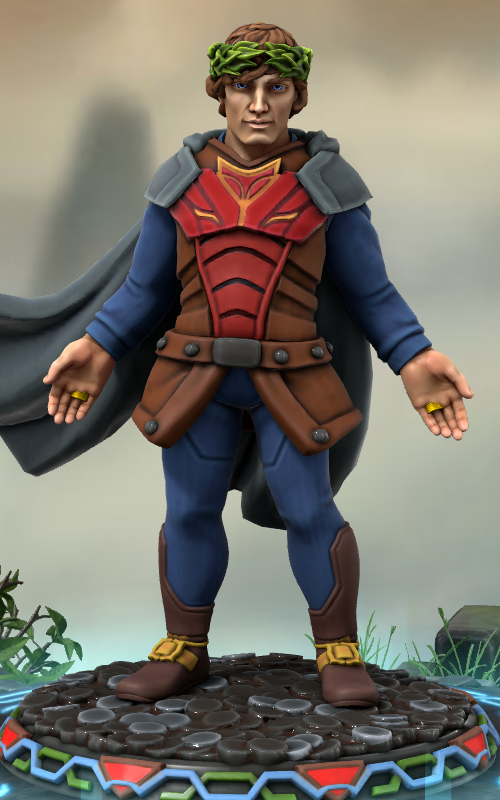
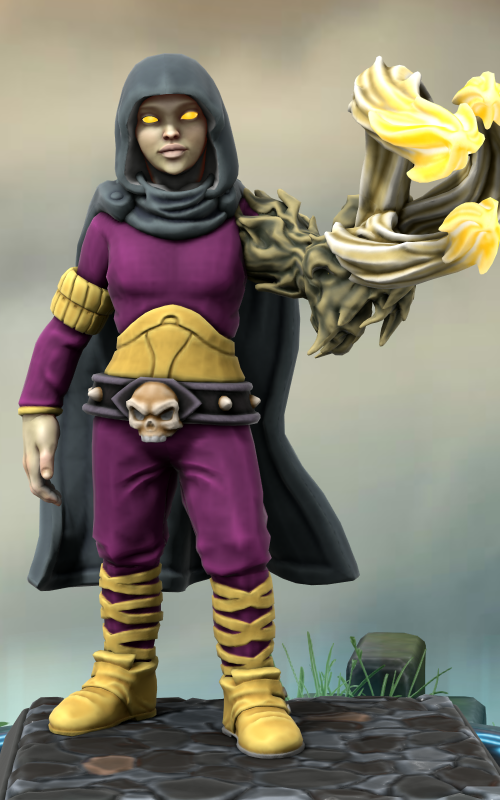
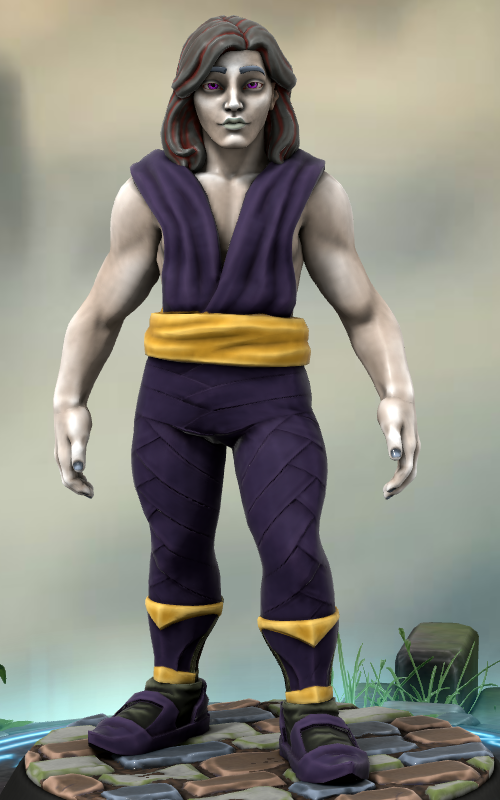
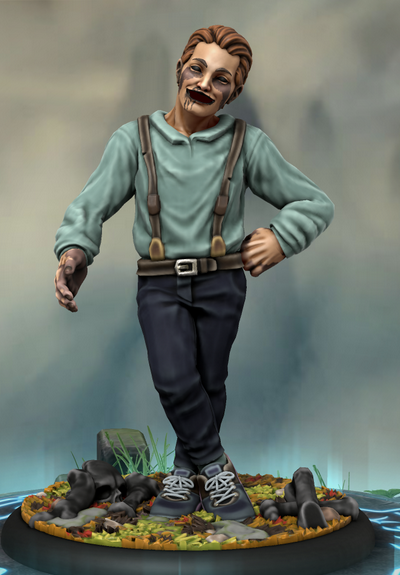
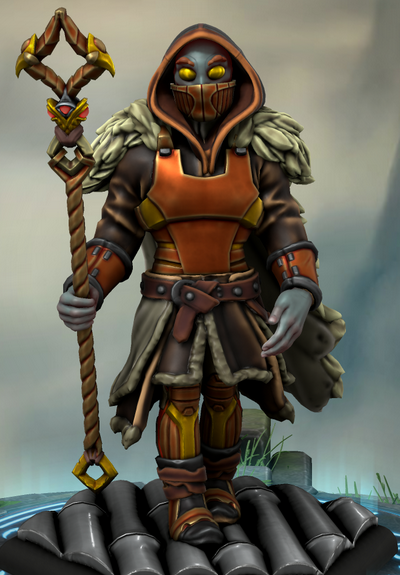
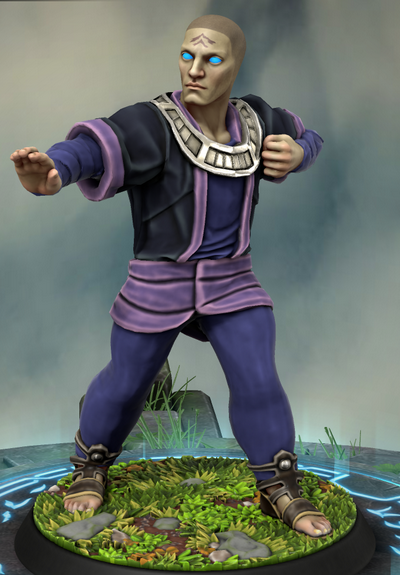
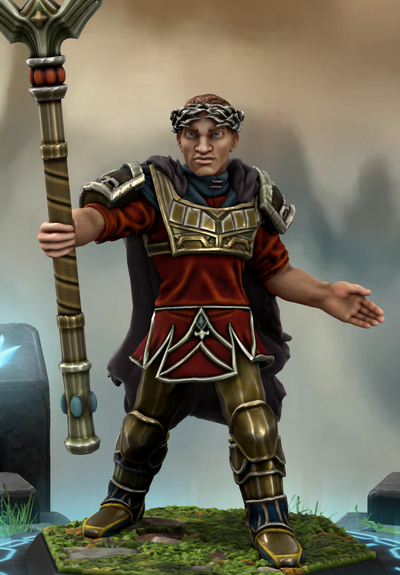
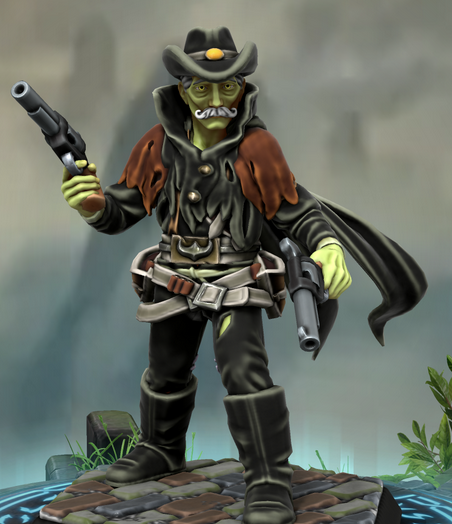
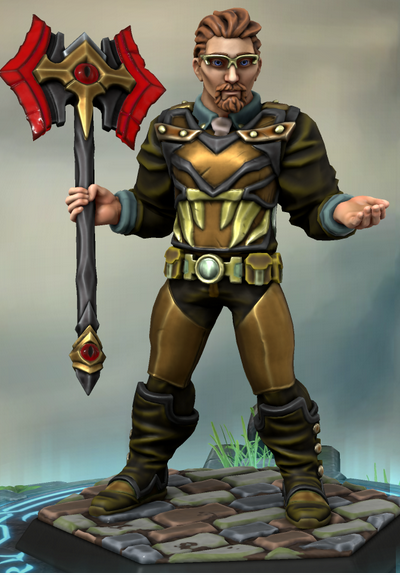
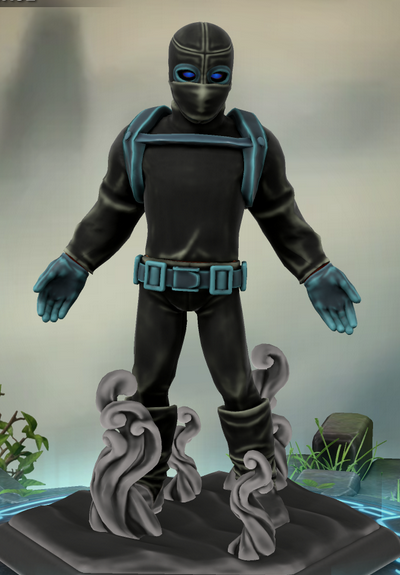
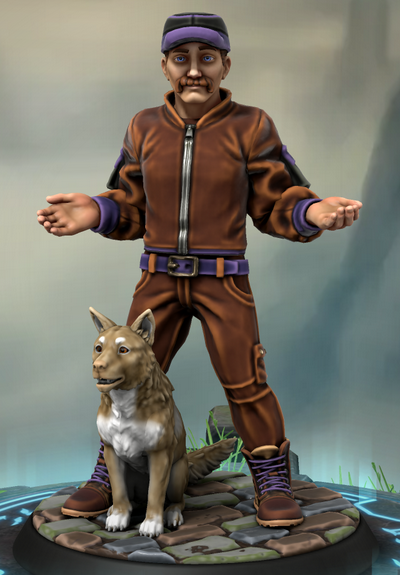
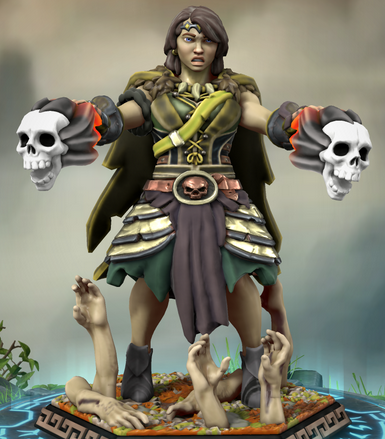
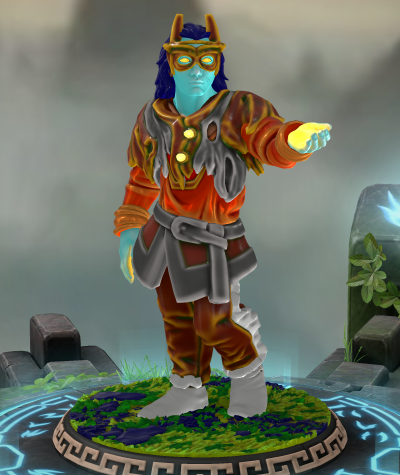
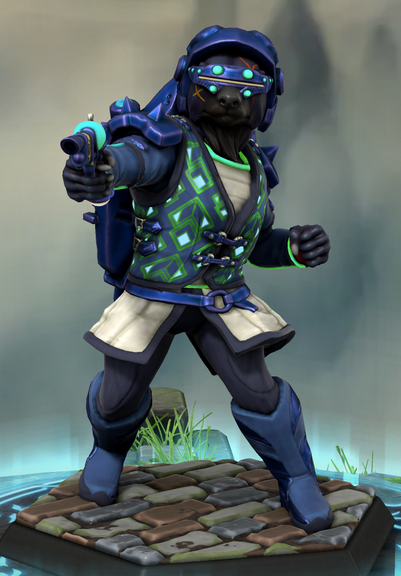
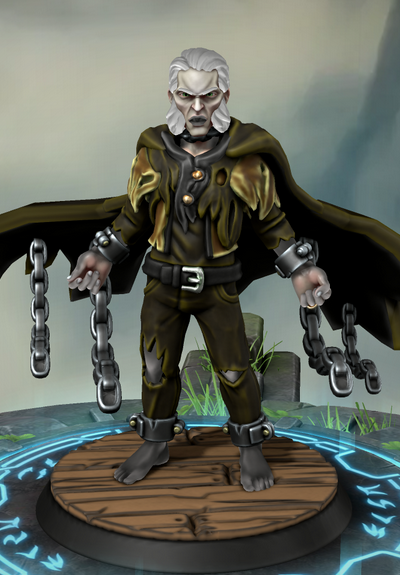
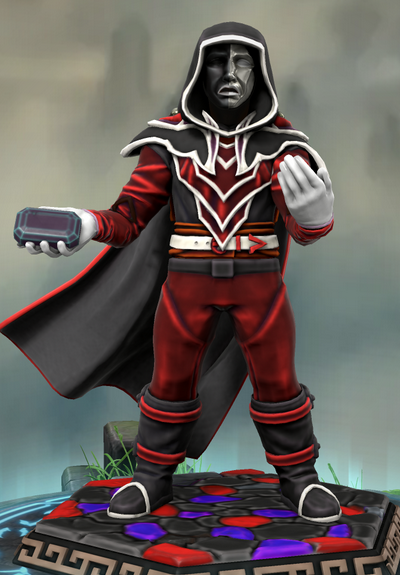
The Penitent

Real Name: Unknown, First Appearance: Campfire Terrors #12, February 1940
Background: Academic, Power Source: Mystical, Archetype: Close Quarters Combatant
Personality: Stalwart, Principles: Mastery, Veteran

Status Dice: Green d8, Yellow d8, Red d10. Health: 34 [Green 32-25, Yellow 24-12, Red 11-1]
Qualities: Self-Discipline d12, Close Combat d10, Magical Lore d8, Imposing d8, Mysterious Stranger d8
Powers: Awareness d10, Relics (Gadgets) d8, Presence d6, Infernal d6

Green Abilities:

  • The Old One-Two [A]: Attack one target using Close Combat. Attack a second target with your Min die.
  • Spellcaster [A]: Take any two basic actions using Magical Lore, each using your Min die.
  • Terrifying Presence [A]: Attack a minion using Imposing. Whatever that minion rolls as defense Attacks another target of your choice.
  • Principle of Mastery [A]: Overcome in a situation in which you use your powers in a new way and use your Max die. You and your allies gain a Hero Point.
  • Principle of the Veteran [A]: Overcome a tactical challenge using knowledge of a previous conflict and use your Max die. You and your allies gain a Hero Point.

Yellow Abilities:

  • The Darkness Within [A]: Attack using Awareness. Ignore all penalties on this Attack, ignore any Defend actions, and it cannot be affected by reactions.
  • Dark Evocations [A]: Boost or Hinder using Infernal, and apply that mod to multiple nearby targets.
  • Runic Lore [A]: Overcome an environmental challenge using Awareness. Use your Max die. Either remove any penalty in the scene or Boost equal to your Mid die.

Red Abilities

  • Dangerous Artifacts [A]: Attack multiple targets using Relics, using your Max+Min dice. If you roll doubles, take a minor twist or damage equal to your Mid die.
  • Mystical Awareness (I): When taking any action using Magical Lore, you may reroll your Min die before determining effects.

Out

  • Defend an ally by rolling your single Awareness die.

Background

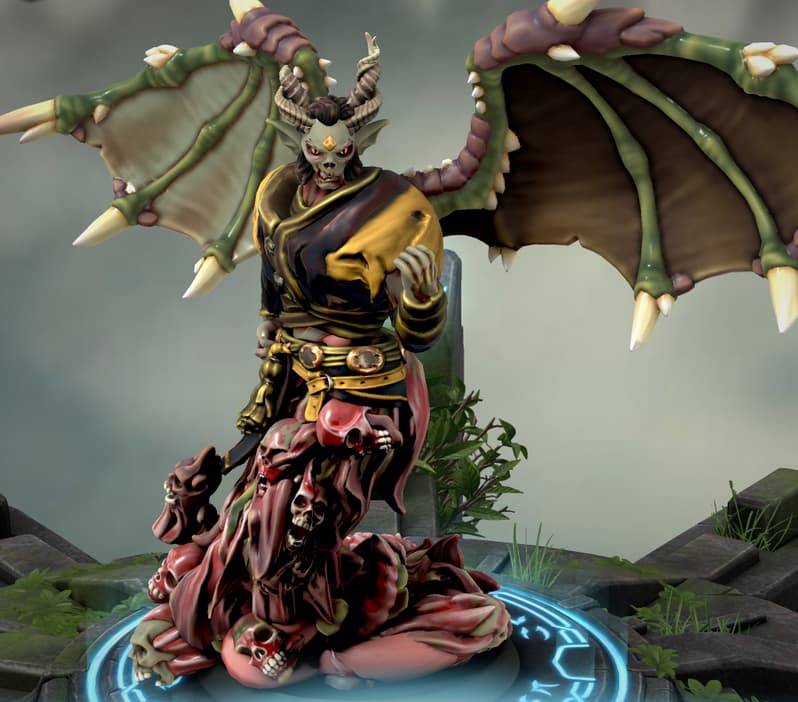
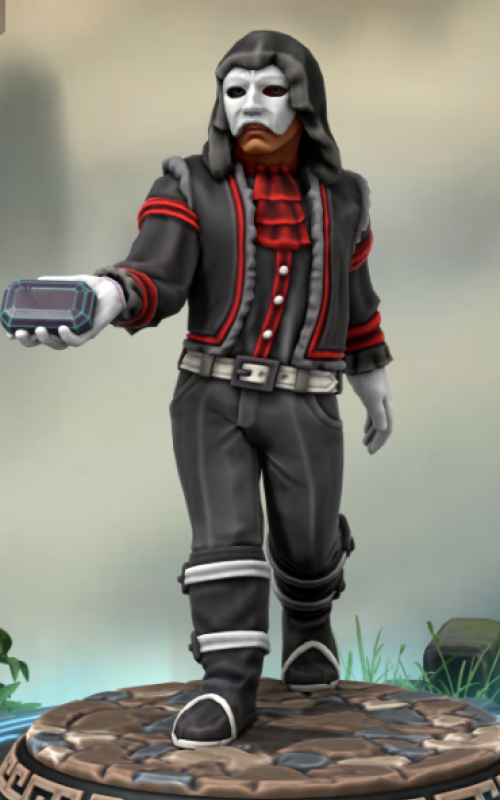
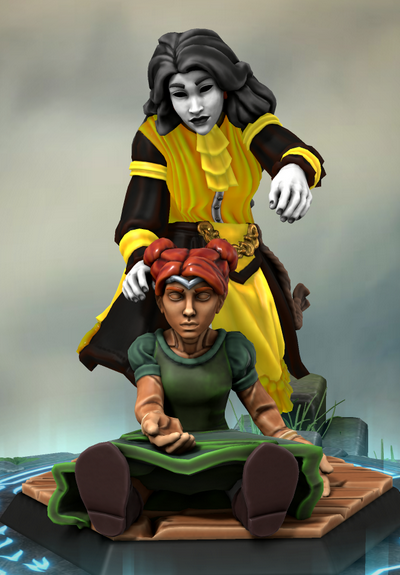
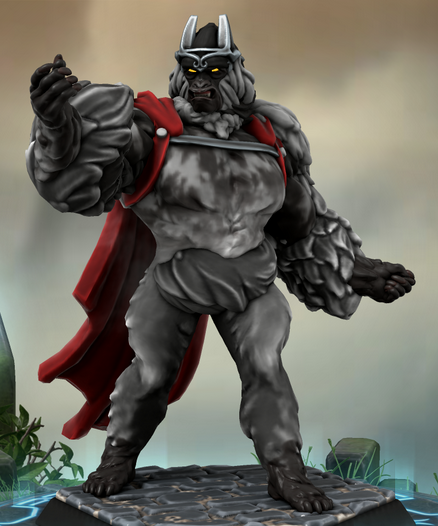
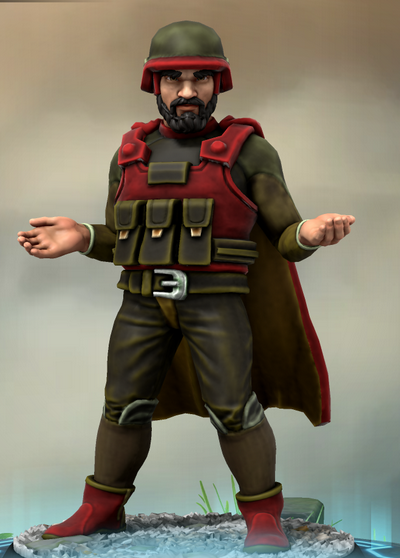
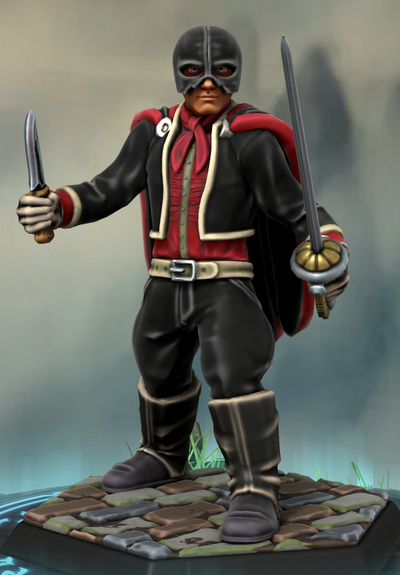
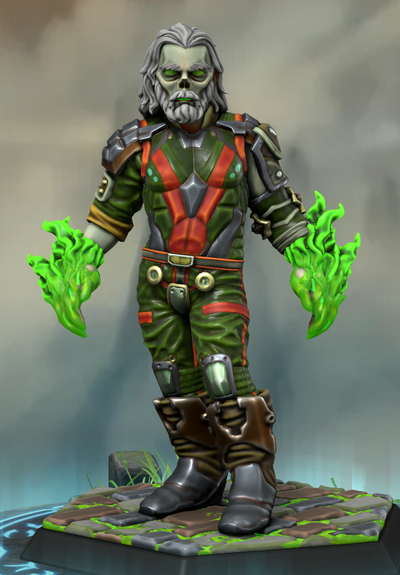
The Penitent was introduced as a mysterious masked figure in a tattered suit who intervened in a demon summoning to save its innocent victims, condemning the cultists themselves to the flames. His name was not revealed in the Golden Age, but his backstory was laid out as having been an academic who delved deep into forbidden texts in search of wisdom, only to come to the attention of a terrible force that offered him all the knowledge he craved in exchange for his soul. Regretting his decision, he sought to stop other demonic forces from intruding into the world.

The Penitent quickly became a popular character in the pages of Campfire Terrors, appearing as one of the main stories in roughly half of its issues during the Golden Age. He gradually picked up a supporting cast that included a plucky reporter threatened by the dark forces she frequently investigated and a newsboy who was targeted as a human sacrifice in an early story, then stuck around to help the Penitent find cases, but he mostly wandered from location to location fighting largely nameless cultists and demons or saving an innocent from using a magical relic they didn’t understand, occasionally showing up as a surprise in a story that was otherwise heading towards a bad end to save the day.

Behind the Scenes

I considered building into a Gadgeteer instead of a Close Quarters Combatant, and then I realized that this is the Golden Age and we want a character to be good at absolutely everything, so instead of a relic-based Doctor Strange we got some kind of magic brawler who I kind of love.

The Penitent is halfway between a superhero and a classic pulp hero, which seems fitting for the first big hero of the line. I was also kind of shocked that there is no major superhero by that name!

CR
Chief_Lackey_Rich
2023-11-23 21:43 UTC (in reply to #3)
#4

I have a player with this ability that was pleasantly surprised to discover that you don’t actually have to have an environmental challenge in play to use it for the riders. There was a really problematic penalty in effect that no one had a good way to clear before it ruined a key hero turn, and then she looked at her character sheet again and twigged to the fact that the rider amounts to an automatic penalty removal where your dice don’t even matter. It’s no Purification but it sure can be a handy trick to have in your pocket even when there there aren’t e-challenges to deal with.

Always happy to see a player discover a new way to use an ability they’ve been treating as kind of situational.

FR
FrivYeti
2023-11-24 15:59 UTC
#5

The Randomizers:
Background 7, 5, 9 [Options: Academic, Law Enforcement, Tragic, Adventurer, Interstellar, Created]
Power Source 2, 7, 5 [Options: Training, Mystical, Relic, Radiation, Artificial Being]
Archetype 4, 4, 5 [Options: Marksman, Blaster, Flyer, Elemental Manipulator, Minion-Maker]
Personality 9, 2, 10 [Options: Natural Leader, Inquisitive, Alluring, Stoic, Nurturing Jaded]

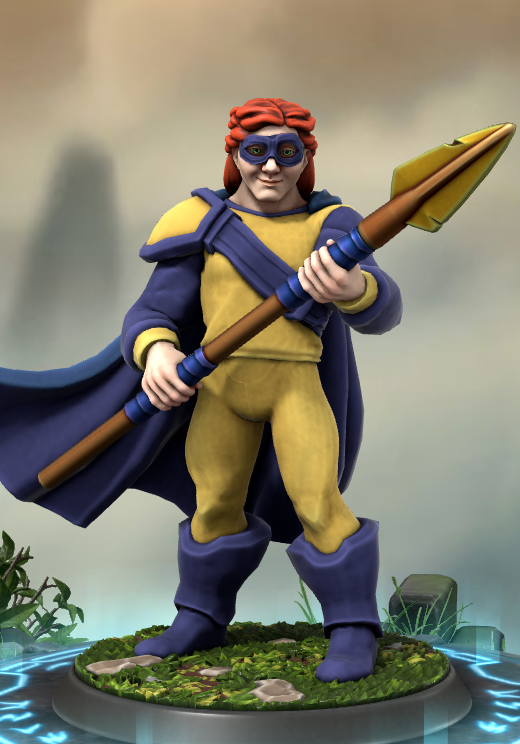
Skybreaker

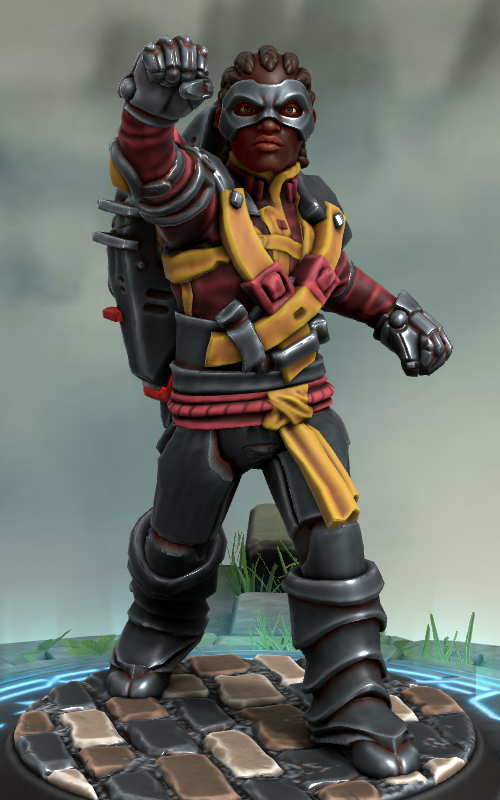
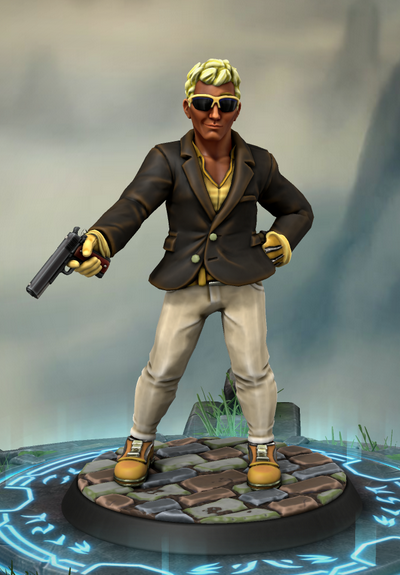
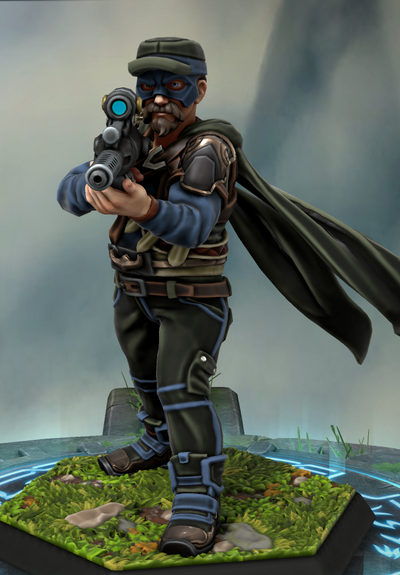
Real Name: Lewis Lamont, First Appearance: Cryptic Trails #16, June 1940
Background: Adventurer, Power Source: Relic, Archetype: Marksman
Personality: Natural Leader, Principles: Justice, Veteran

Status Dice: Green d6, Yellow d8, Red d12, Health: 30 [Green 30-23, Yellow 22-12, Red 11-1]
Qualities: Banter d10, Ranged Combat d10, Alertness d8, Fitness d6, Wilderness Explorer d8
Powers: The Spear of Assal d10, Wind d8, Intuition d8, Teleportation d8, Presence d6

Green Abilities:

  • Call The Storm [A]: Boost yourself using Wind. That bonus is persistent and exclusive.
  • Strike True [A]: Attack using the Spear of Assal. Ignore all penalties on this Attack, ignore any Defend actions, and it cannot be affected by Reactions.
  • Feigned Ease [A]: Attack using Banter. Defend using your Min die.
  • Principle of Justice [A]: Overcome to stop an act of injustice in progress and use your Max die. You and your allies gain a Hero Point.
  • Principle of the Veteran [A]: Overcome a tactical challenge using knowledge of a previous conflict and use your Max die. You and your allies gain a Hero Point.

Yellow Abilities:

  • Shining Spear [A]: Attack using Ranged Combat. Boost another hero using your Max die.
  • Man of the Woods [A]: Attack or Overcome using Alertness on an environmental target, using your Max+min dice. If you roll doubles, take a minor twist.
  • Gale Step [A]: Boost yourself using Teleportation. Use your Max die. Hinder a nearby opponent with your Min die.
  • Shield of Winds [R]: When another hero in the Yellow or Red zone would take damage, you may Defend them by rolling your single Wind die.

Red Abilities

  • The Final Cast [A]: Attack using the Spear of Assal and at least one bonus. Use your Max+Mid+Min dice. Destroy all of your bonuses, adding each of them to this Attack first, even if they are exclusive.
  • Windstorm [A]: Attack up to three targets, one of which must be you, using Wind. Assign your Min, Mid, and Max dice as you choose among those targets.

Out

  • Boost an ally by rolling your single Banter die.

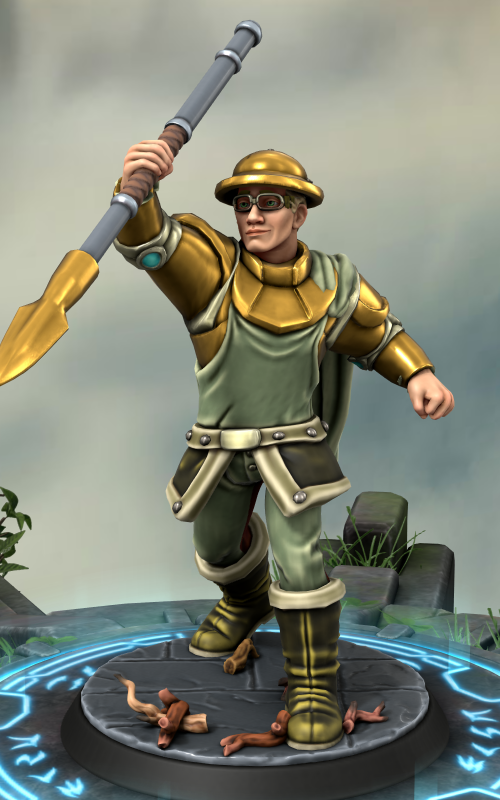
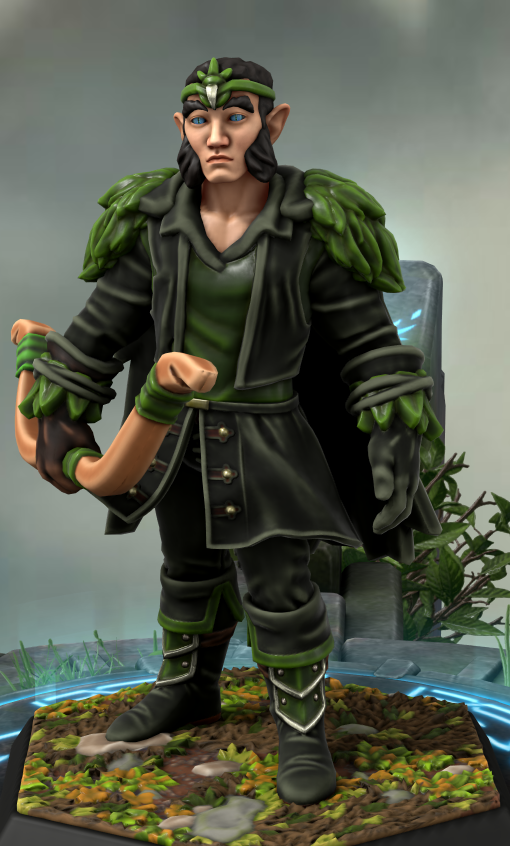
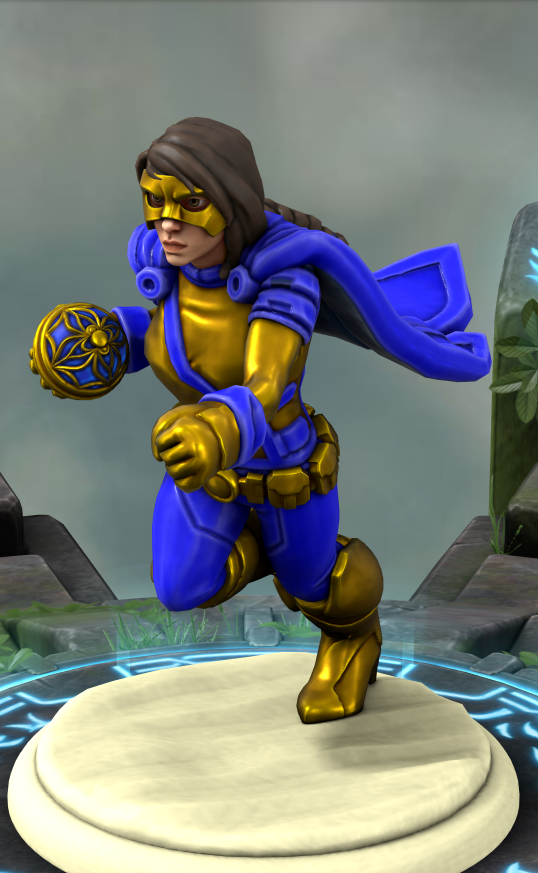
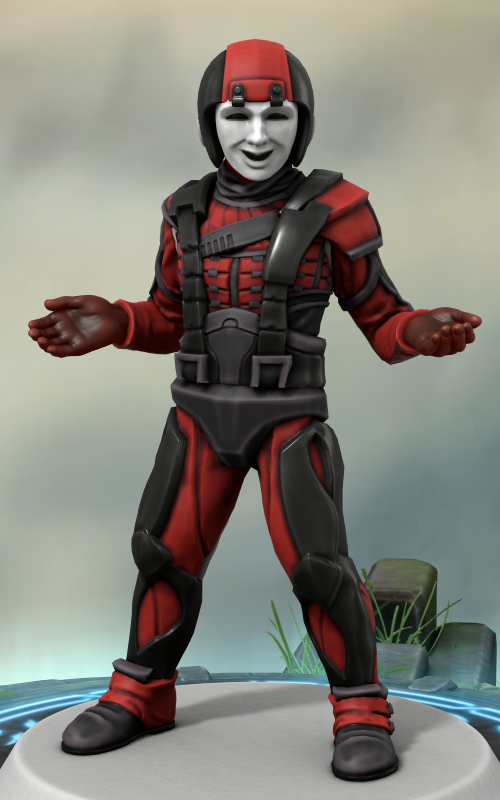
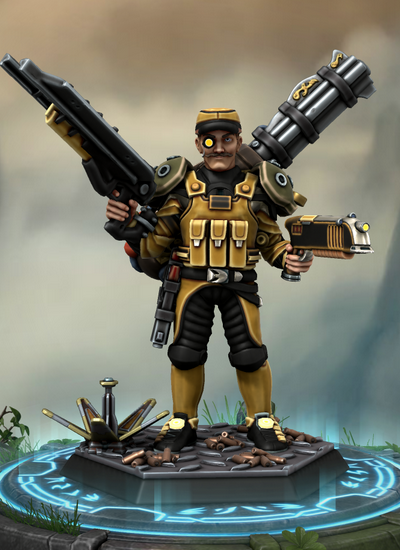
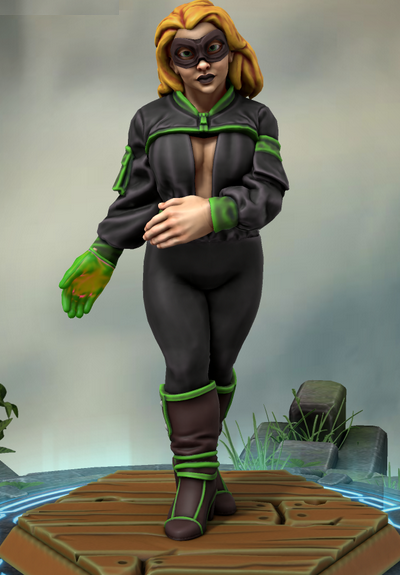
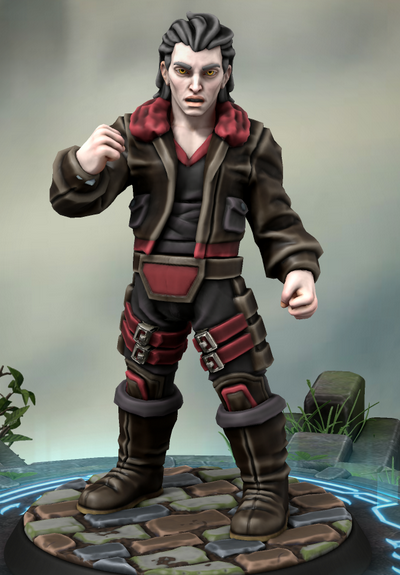
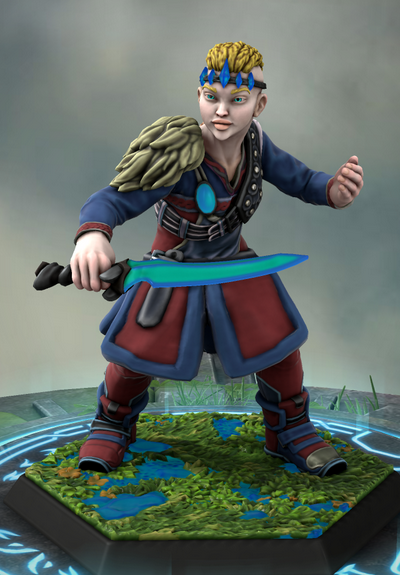
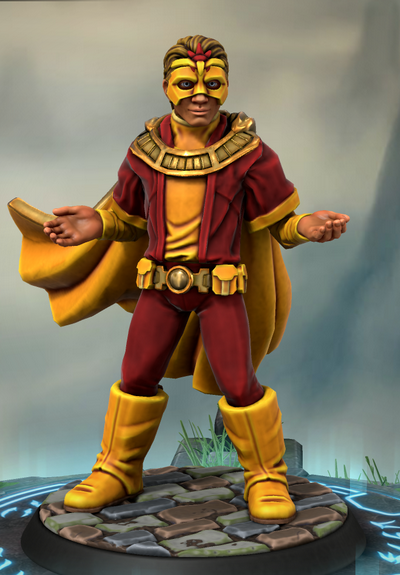
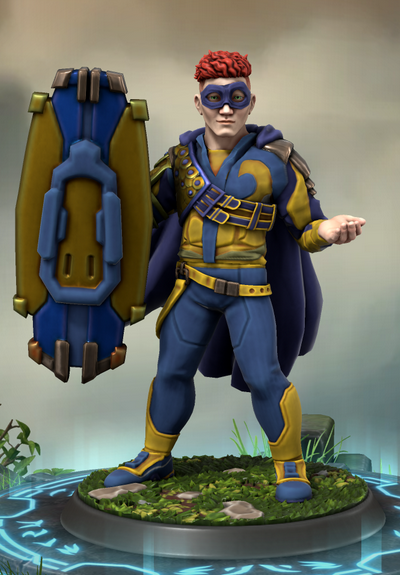
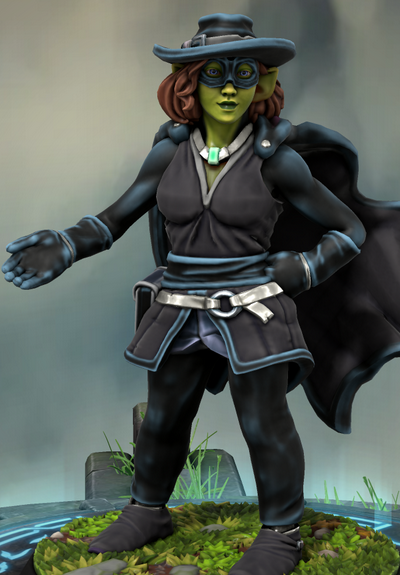
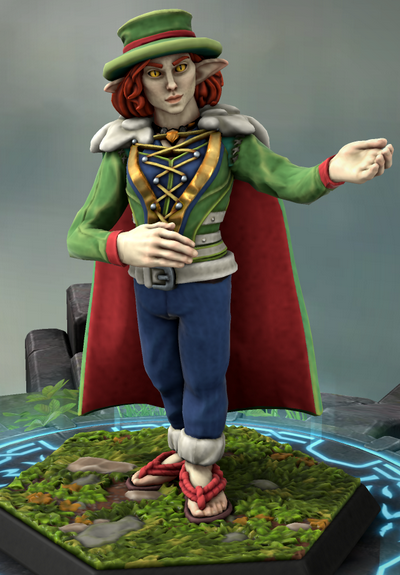
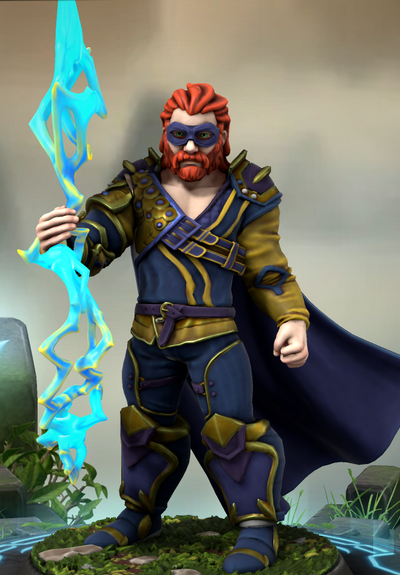
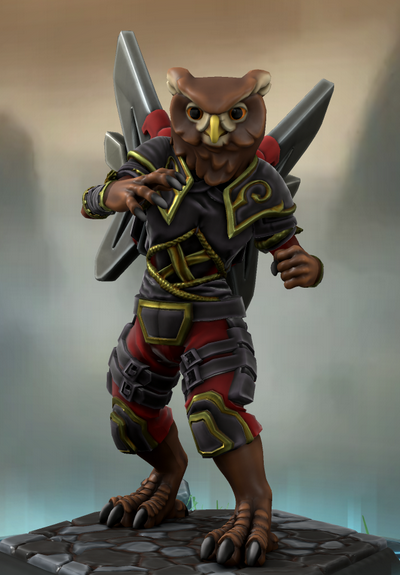
With the success of the Penitent, the makers of Venture Comics turned their attention to Cryptic Trails , which was struggling to retain readers as the war ramped up. As it happened, one of the company’s lead writers was an Irish man who drew on his home’s folklore to create Skybreaker. Lewis Lamont was a rugged explorer who discovered a long-forgotten island in the Atlantic, on which was the glowing spear of the Celtic god Lugh. Wielding the spear gave Lewis the power to command the winds, which combined with unerring aim let him face off against the demonic Fomorians who were infiltrating the world to spread hatred and cruelty.

Penitent had been a success, but Skybreaker was a breakout hit - a quippy stone-jawed hero who combined wind magic with marksman tricks to always have a solution to every problem. Within a year, every issue of Cryptic Trails included him in either the lead or as a backup story, travelling around Europe and Africa and fighting against a mixture of Nazi occultists, Italian soldiers, and agents of the dreaded Fomorians and their mysterious leader.

Behind the Scenes

Marvel has Norse gods, DC uses the Greek, and Sentinel Comics prefers Egyptians, so I thought Venture would take a swing at poorly understood Celtic mythology! Relic and marksman made for a good spear-thrower, which also allows for neat wind powers.

Skybreaker as a hero is going to have more supervillain enemies than Penitent, because he’s got a built-in mythology, but the setup still allows for him to fight generic Nazis and random monsters a lot of the time, with occasional appearances by bigger bads.

One thing I’m noticing already is a pull to use very similar Principles; two out of two have the Principle of the Veteran as their Responsibility. Golden Age heroes are a bit… flat isn’t the right word, but they tend to lack the social connections that most Responsibility Principles embody. It feels like it’ll mostly be variations on Detective or Veteran for Responsibility, and variations on Liberty or Justice for Ideals. I’ll keep an eye on that moving forward to try to keep them from being too same-y.

CR
Chief_Lackey_Rich
2023-11-24 17:05 UTC (in reply to #5)
#6

True, but some of them are fanatical enough about secret identities to make Mask reasonable - it never gets to to the outright neurotic level we see in Silver Age Clark’s famed superdickery, but some characters (including indies) made it a big deal. Some gangbuster types could run Underworld instead of Detective. And there were some Sidekicks, some prototypical and often unpowered and uncostumed, others clear knockoffs of Robin.

FR
FrivYeti
2023-11-25 04:25 UTC
#7

The Randomizers:
Background 1, 7, 1 [Options: Blank Slate, Criminal, Law Enforcement, Struggling, Dynasty]
Power Source 10, 2, 6 [Options: Training, Nature, Powered Suit, Tech Upgrades, Artificial Being, Cosmos]
Archetype 4, 6, 8 [Options: Marksman, Close Quarters, Flyer, Robot/Cyborg, Psychic, Minion Maker]
Personality 4, 3, 3 [Options: Impulsive, Mischievous, Distant, Stalwart, Analytical]

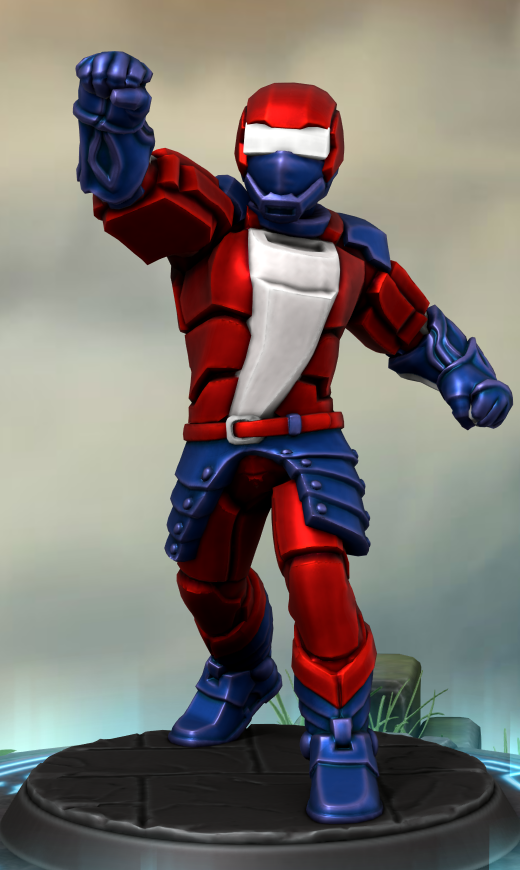
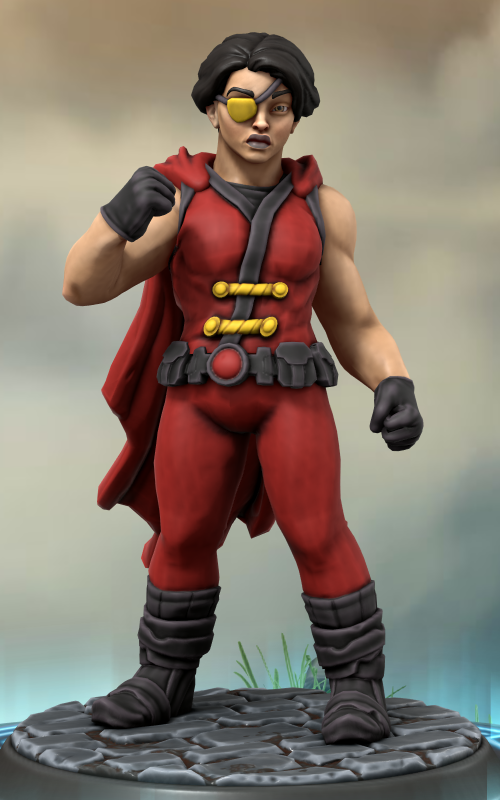
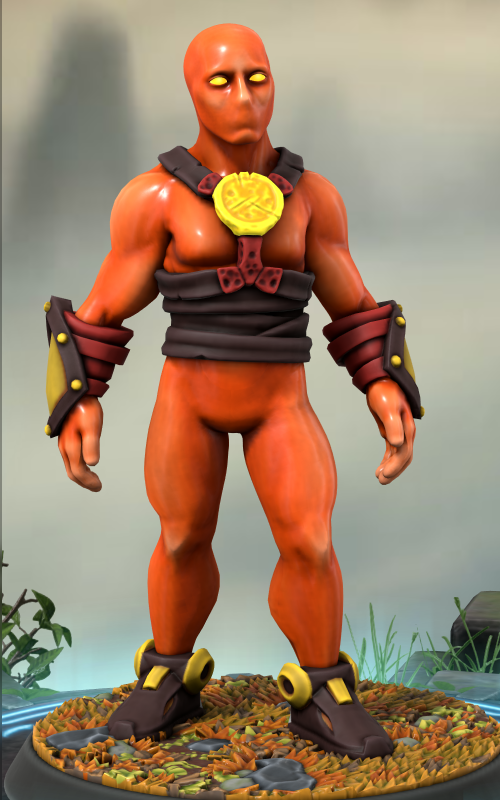
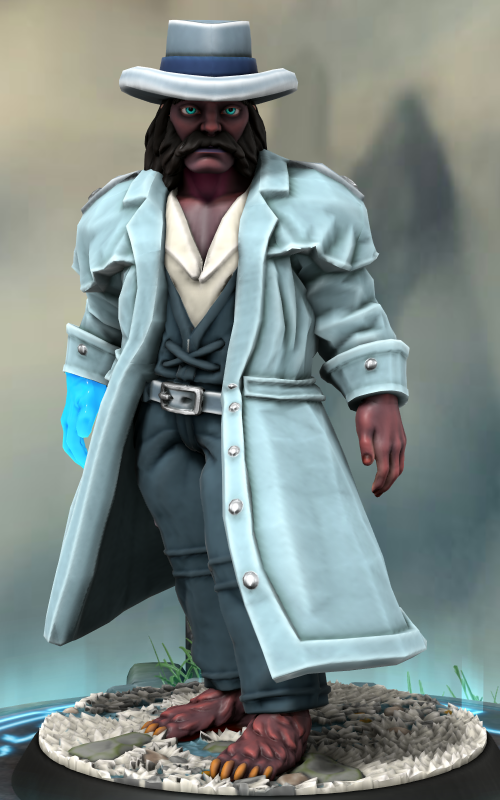
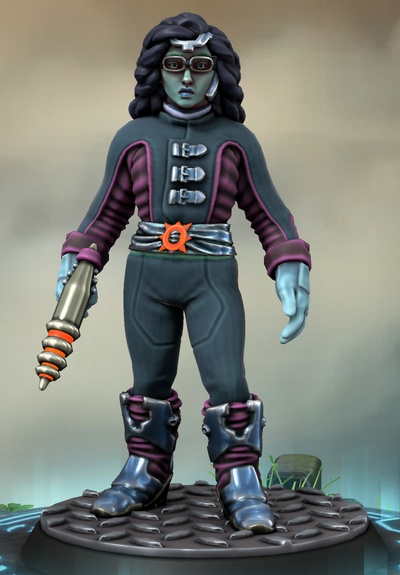
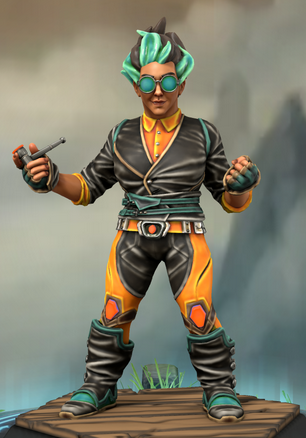
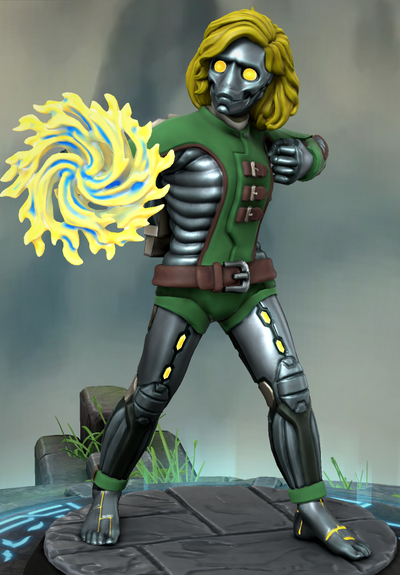
Flatfoot

Real Name: Johnny Law, First Appearance: Company Town #19, November 1940
Background: Law Enforcement, Power Source: Artificial Being, Archetype: Robot/Cyborg
Personality: Analytical, Principles: The Law (Honor), Indestructible

Status Dice: Green d10, Yellow d8, Red d8. Health: 30 [Green 30-23, Yellow 22-12, Red 11-1]
Qualities: Close Combat d10, Investigation d10, Criminal Underworld d10, Technology d8, The Artificial Man d8
Powers: Strength d10, Gadgets d10, Lightning Calculator d8, Presence d8, Vitality d6

Green Abilities:

  • Created Form (I): Reduce physical damage to yourself by 1 while you are in the Green zone, 2 while in the Yellow zone, and 3 while in the Red zone.
  • Vacuum Tubes [A]: Boost yourself using Lightning Calculator. That bonus is persistent and exclusive.
  • Hold The Line [A]: Boost yourself using Strength, and Defend with your Min die.
  • Principle of The Law [A]: Overcome a situation to uphold the law and use your Max die. You and your allies gain a Hero Point.
  • Principle of the Indestructible [A]: Overcome in a situation where you charge headlong into danger and use your Max die. You and your allies gain a Hero Point.

Yellow Abilities:

  • Power Kick [A]: Attack using Strength with a bonus equal to the number of bonuses you currently have.
  • One-Robot Army [A]: Attack using Lightning Calculator against multiple targets, using your Min die against each.
  • Perfect Calculations [R]: After rolling during your turn, you may take 1 irreducible damage to reroll your entire die pool.

Red Abilities

  • Superhuman Surge [A]: Overcome using Strength in a situation that requires you to be more than humanly capable, like an extreme feat of strength or speed. Use your Max+Min dice. Boost all nearby allies with your Mid die.
  • Reliable Calculations (I): When taking any action using Lightning Calculator, you may reroll your Min die before determining effects.

Out

  • Remove a bonus or penalty of your choice.

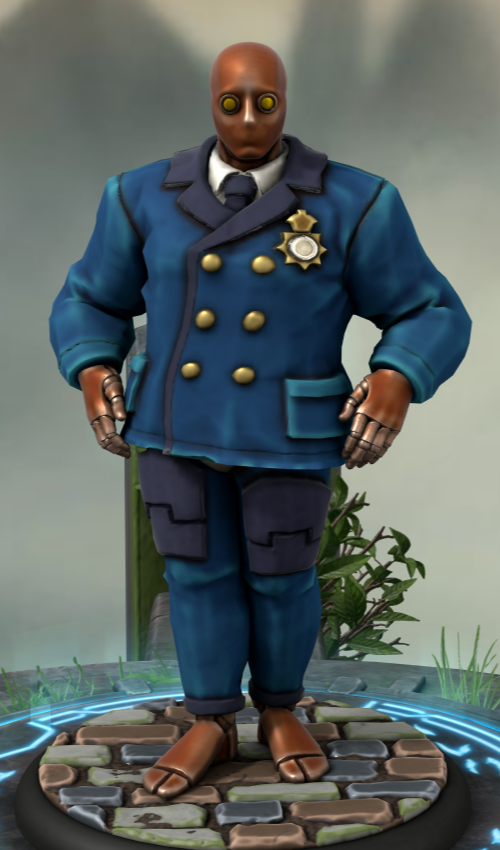
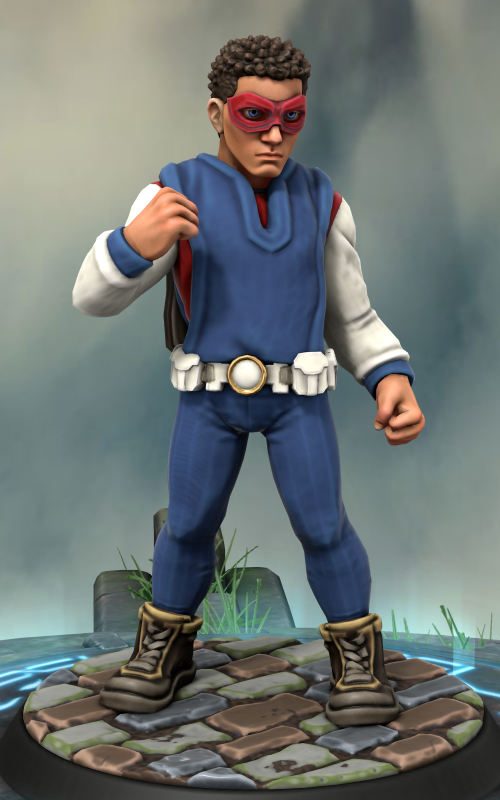
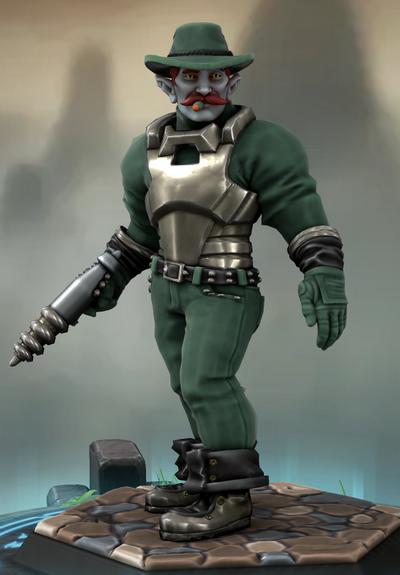
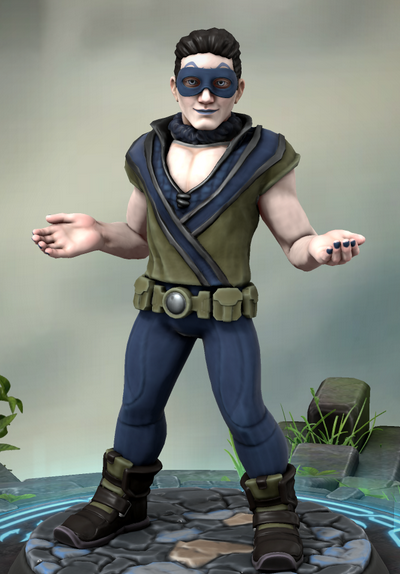
By 1940, superheroes were in full swing, and every publishing company wanted in. Venture Comics had made a few attempts to introduce new heroes in Campfire Terrors and Cryptic Trails , without much success; Skybreaker and the Penitent were the only ones with a following. Venture Comics’ editor-in-chief decided to branch out, creating a new hero to stand against the forces of crime in the pages of Company Town . As it happened, one of Venture Comics’ new writers had done a few pulp magazine stories about robots, and pitched the idea of a mechanical police officer - the Incorruptible Flatfoot!

The creation of Flatfoot sparked a huge fight in Venture Comics. The main editor for Company Town hated the idea. He had reluctantly agreed to put a hero into the stories, but had envisioned a grim hero in the style of the Shadow or the Spider, not some flamboyant metal man. He argued that it would completely undermine the style of Company Town to have something like that tromping around. In the end, however, he was overruled, and Flatfoot appeared in October of 1940.

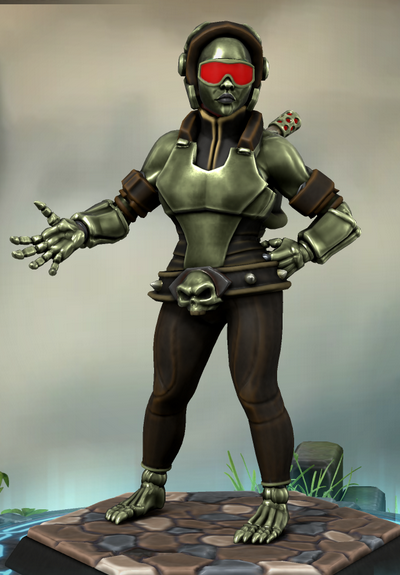
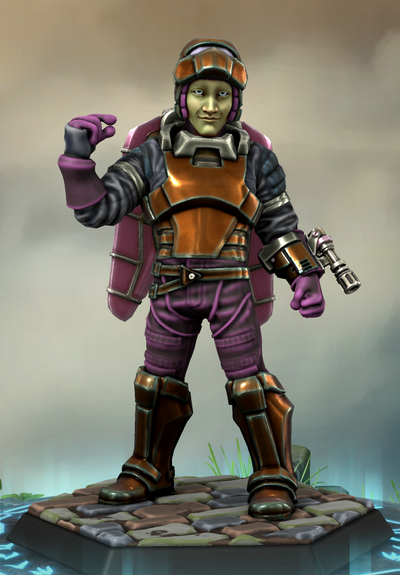
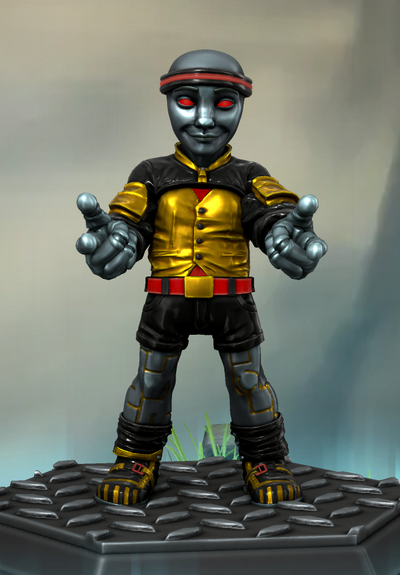
Flatfoot was an android crime-fighter created by a well-meaning scientist to be the first in a new line of police officers immune to corruption or leverage by the criminal element. Seeing the dangerous potential of the work, the shadowy master of Ferristown had the scientist killed, but was unable to stop Flatfoot from arresting the assassin. Now, the robot serves on the Ferristown Police Force, standing firm against the crime and corruption of the city due to his encyclopedic understanding of law and order - and his array of gadgets and attachments created by his technician, a young man who served as the student of Flatfoot’s creator.

The metal detective was initially a modest success, but his audience grew over the course of 1941, doing battle with mobsters, goons, corrupt politicians and occasionally mad scientists who would try to build robots of their own. In 1942, Nazi spies were added to his roster of villains, and while Company Town retained some stories of pure crime or hardboiled detecting, the overall tone of the book lightened due to Flatfoot’s presence.

Behind the Scenes

I was planning for my third hero to be a Cryptic Trails character, but Artificial Being jumped out at me, and after a few minutes of research into the state of science fiction robotics in 1940, I decided that Venture Comics can definitely get away with the setting’s first robot superhero. Heck, maybe it’s the presence of Flatfoot that delayed Sentinel Comics getting one for so long!

I know who I want next, but not what, so we’ll see what the dice give me as we head into 1941…

CR
Chief_Lackey_Rich
2023-11-25 13:35 UTC
#8

New characters taking over a book and radically altering its tone and even title as time passes is such a Golden Age thing. Just ask the Shield how he feels about that Archie Andrews punk and his crew of delinquents. :slight_smile:

TA
TakeWalker
2023-11-25 14:21 UTC
#9

I’m quite enjoying these :slight_smile:

FR
FrivYeti
2023-11-25 20:45 UTC
#10

The Randomizers:
Background 8, 2, 1 [Options: Blank Slate, Criminal, Performer, Struggling, Tragic, Unremarkable]
Power Source 4, 8, 5 [Options: Experimentation, Mystical, Powered Suit, Radiation, Artificial Being, Cursed]
Archetype 8, 3, 2 [Options: Shadow, Powerhouse, Blaster, Flyer, Robot/Cyborg, Sorcerer]
Personality 6, 9, 7 [Options: Distant, Stalwart, Inquisitive, Analytical, Jovial, Cheerful]

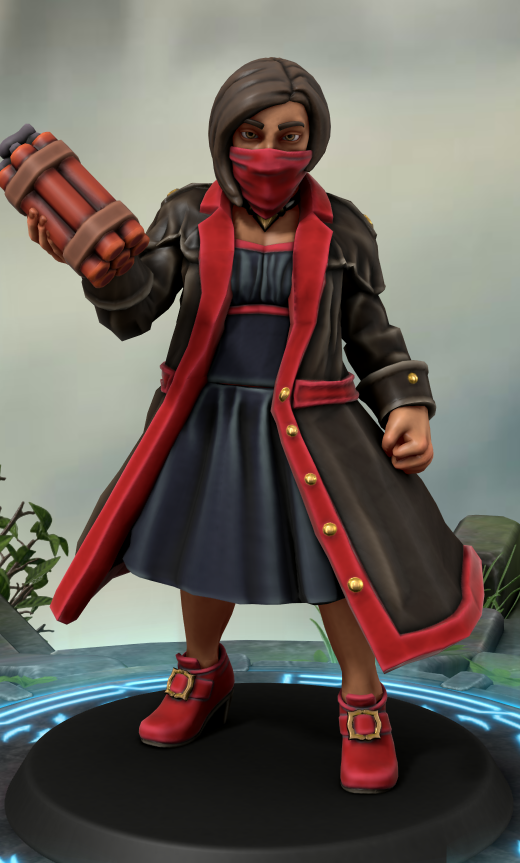
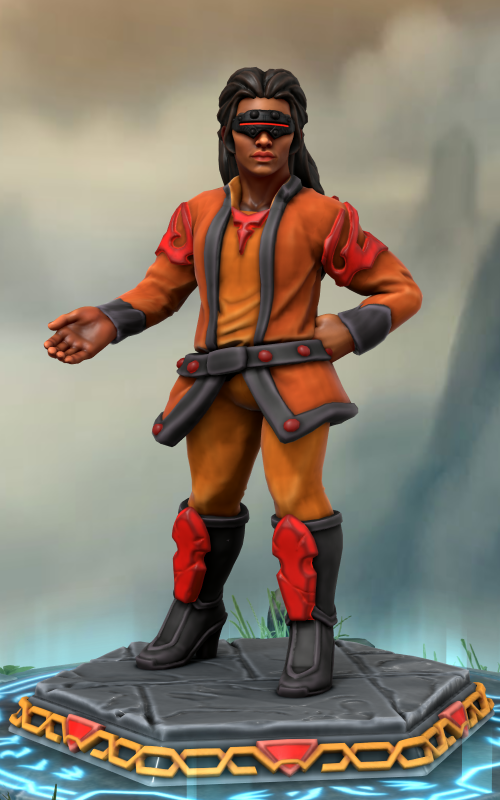
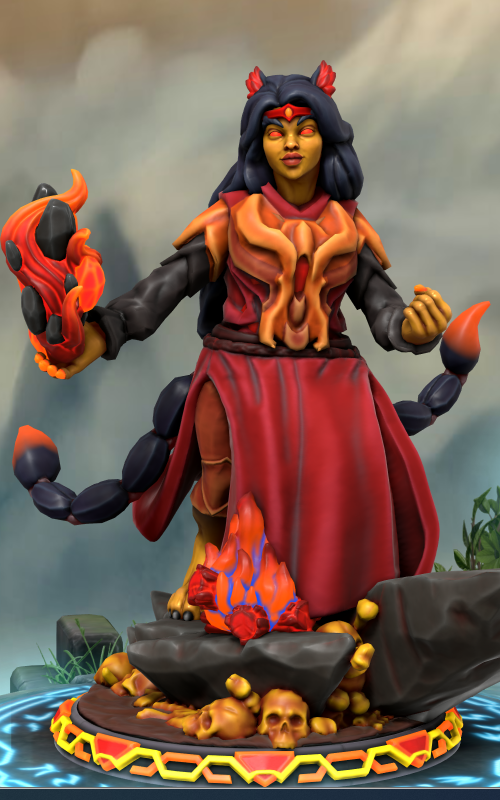
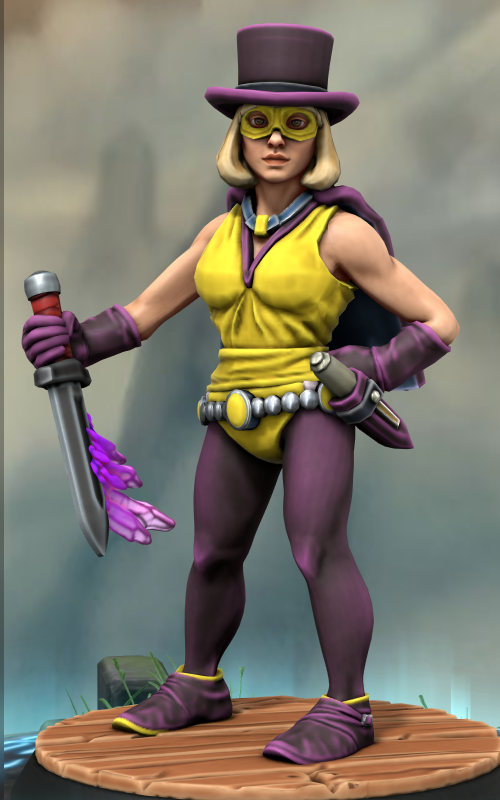
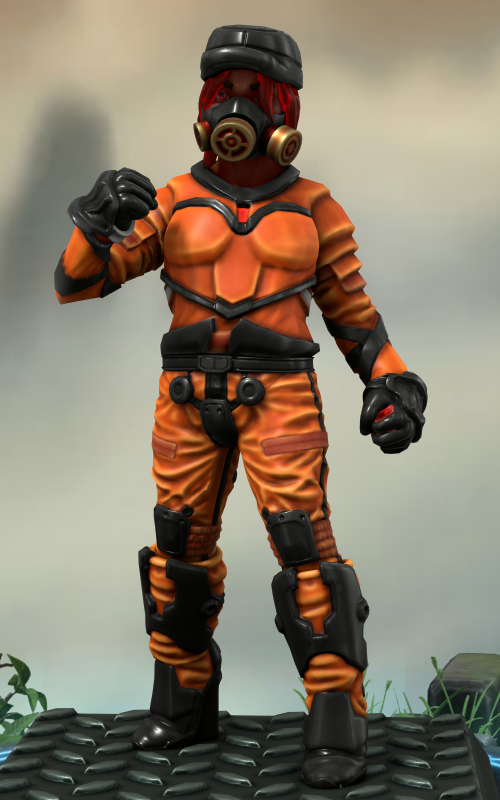
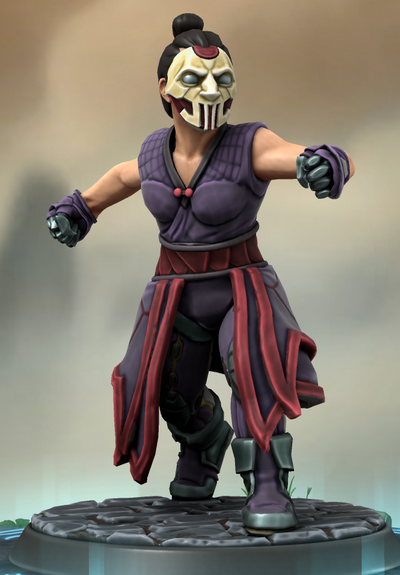
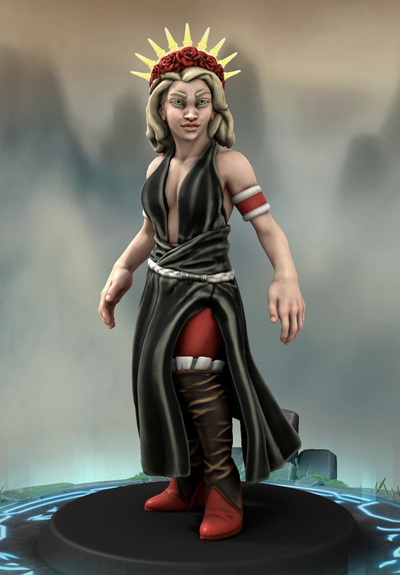
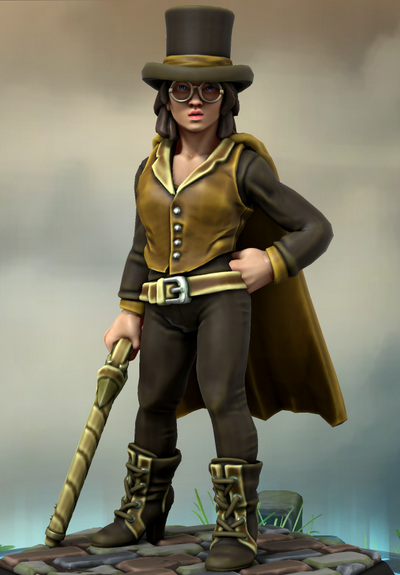
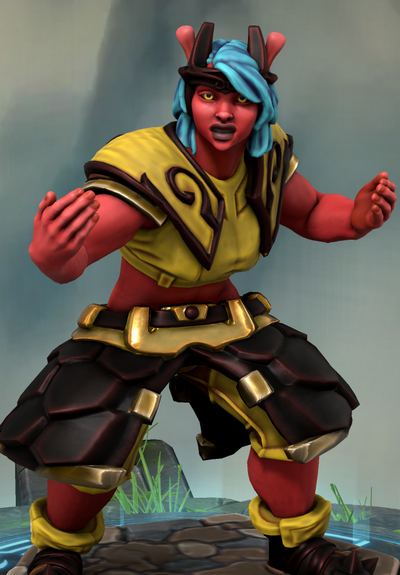
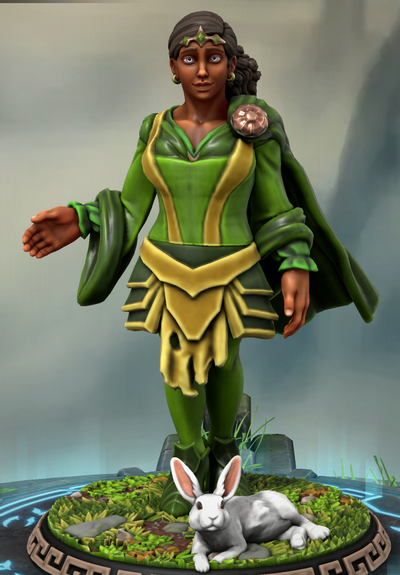
Madame Liberty

Real Name: Marianne Leblanc, First Appearance: Covert Tactics #18, July 1941
Background: Criminal, Power Source: Experimentation, Archetype: Shadow
Personality: Inquisitive, Principles: Mask, Tactician

Status Dice: Green d6, Yellow d8, Red d10. Health: 30 [Green 30-23, Yellow 22-12, Red 11-1]
Qualities: Persuasion d10, Finesse d10, Stealth d8, Close Combat d8, Slippery Spy d8
Powers: Shapeshifting d8, Intuition d8, Agility d8, Presence d8, Deduction d6

Green Abilities:

  • Slippery Character (I): At the start of your turn, remove a penalty on yourself.
  • Saboteur [A]: Attack using Shapeshifting. Remove one physical bonus or penalty, Hinder a target using your Min die, or maneuver to a new location in your environment.
  • Untouchable [R]: When you would be dealt damage, roll a d4 while in the Green zone, d6 while in the Yellow, or d8 while in Red. Reduce the damage you take by the value rolled. Attack another target with that roll.
  • Principle of the Mask [A]: Overcome using knowledge from your civilian life and use your Max die. You and each of your allies gain a hero point.
  • Principle of the Tactician [A]: Overcome when you can flashback to how you prepared for this exact situation. Use your Max die. You and each of your allies gain a hero point.

Yellow Abilities:

  • False Skin [A]: Boost yourself using Shapeshifting. Use your Max die. The bonus is persistent and exclusive.
  • Laying Groundwork [A]: Attack or Overcome using Finesse. Boost yourself using your Min die.
  • Distraction [R]: When a nearby hero in the Yellow or Red zone would take damage, Defend against that damage by rolling your single Presence die, then redirect any remaining damage to a nearby minion of your choice.

Red Abilities

  • Manipulated Backup [A]: Use Shapeshifting to create a number of d6 minions equal to your Mid die. Choose the one same basic action they each perform. They all act at the start of your turn.
  • One Last Trick [A]: Overcome using Finesse. Use your Mix+Min dice. Hinder all nearby opponents with your Mid die.

Out

  • Choose an ally. Until your next turn, that ally may reroll one of their dice by using a Reaction.

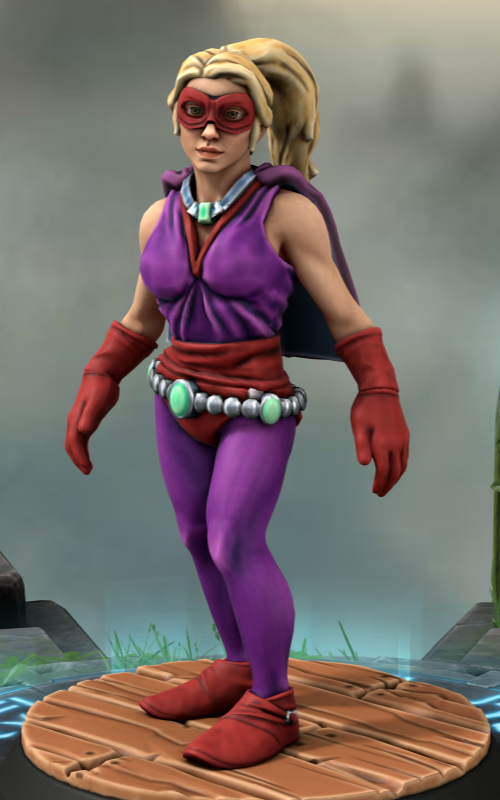
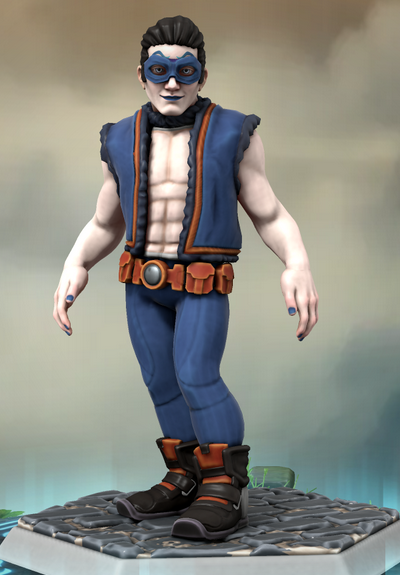
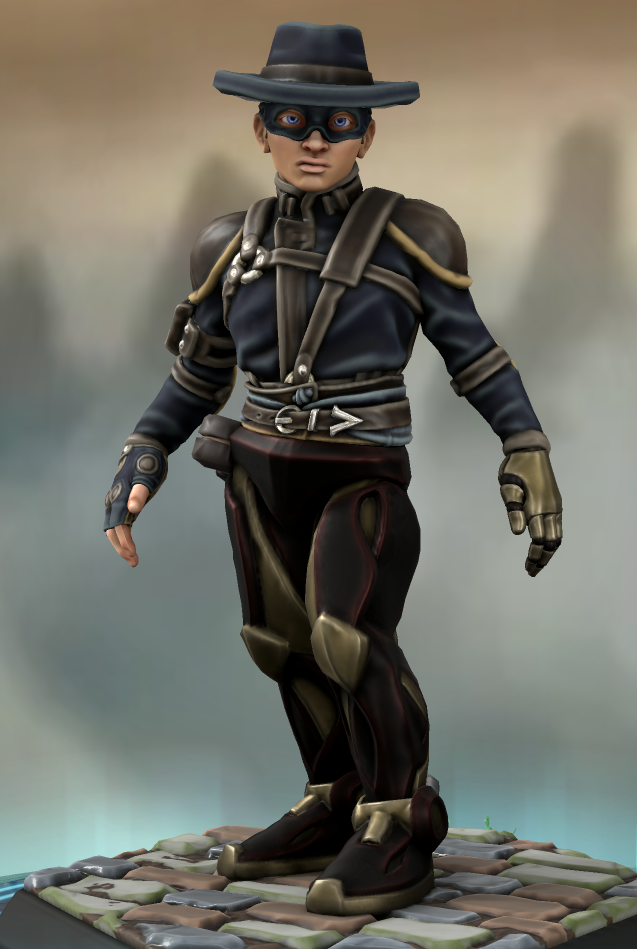
On Bastille Day (July 14th), 1941, Venture Comics took a big swing.

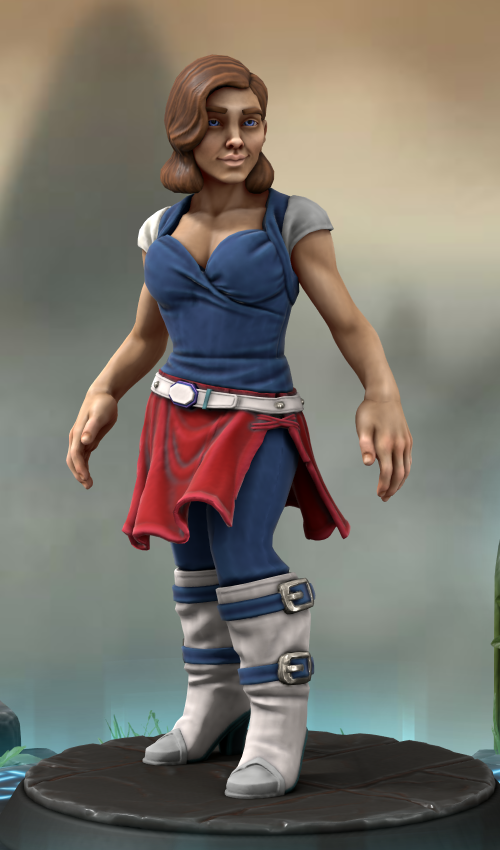
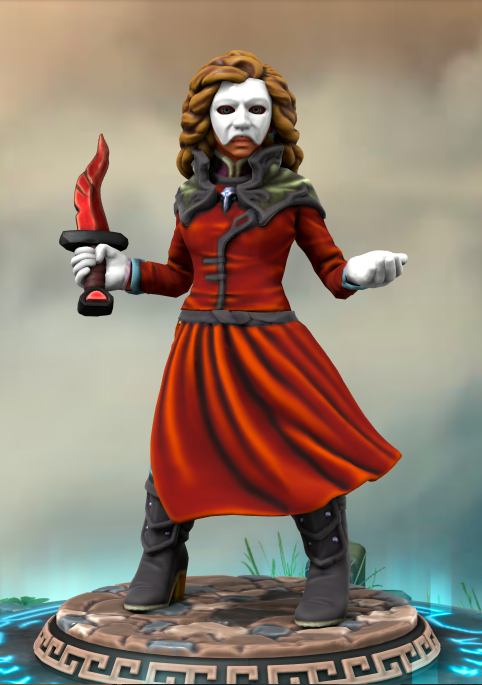
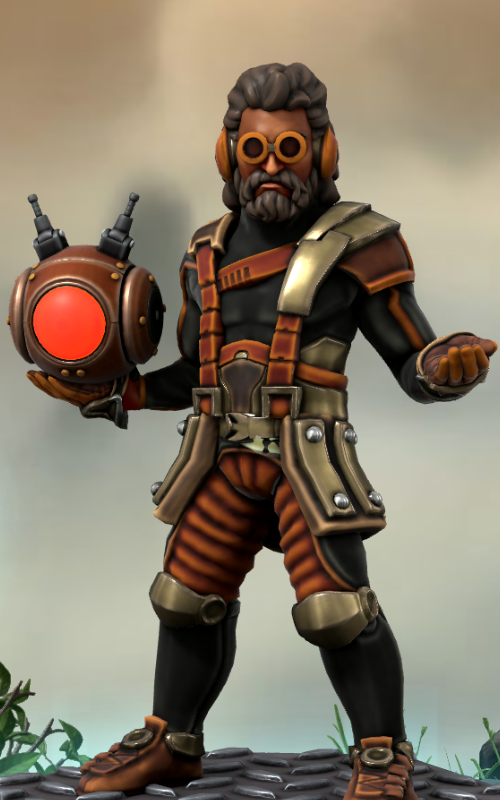
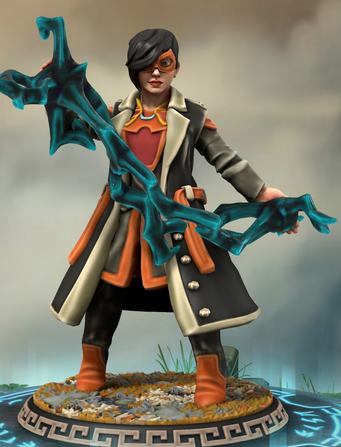
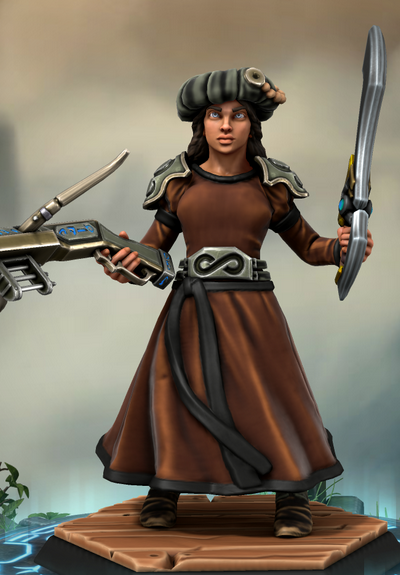
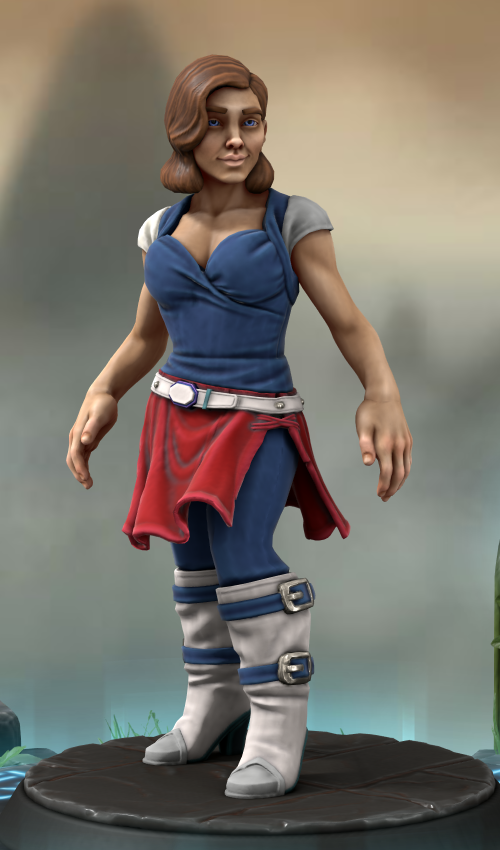
Marianne Leblanc was a petty con artist and pickpocket in occupied France. When she was caught stealing from a Nazi officer, she was arrested and secretly sent to be experimented on by Nazi mad scientists trying to create ‘perfected’ humans. Their experiments were both a massive failure and a huge success; instead of turning Marianne into their vision of a perfect woman, they gave her the ability to reshape her body, becoming anyone she chose. Using her newfound powers to escape, Marianne could have escaped anywhere and lived a life of luxury. Instead, she stayed in France, taking up the cause of resistance as Madame Liberty! Joined by French resistance fighters, she did battle with Nazis, helped civilians escape to safe nations, and fought with both guile and force to slow the Nazi powers and bring freedom to her homeland, while maintaining a cover identity that gathered information from occupying forces.

Madame Liberty was a risky move. A major superhero who wasn’t American, fighting an enemy that the United States technically was not at war with, debuting in the pages of a war comic as a guerrilla and spy, the editors of Venture Comics doubled down by giving her a criminal backstory rather than making her a stalwart hero. Their goal was to show that anyone, no matter their origin, could stand against the rising tide of fascism. This wasn’t entirely altruistic; the editors agreed that they weren’t going to create a wartime hero who could outdo the recently-introduced Legacy, and decided that their only hope was to go an entirely different route.

The risk paid off in a surge of sales for the struggling title. A part of that may have been the comic’s willingness to trend a bit salacious, with both Madame Liberty and her love interest, American spy Rick Wilson, frequently tied up and placed in various Nazi death-traps only to escape through their cunning and determination, or it might simply have been because people liked seeing someone get one over the Nazis through cunning, not just through punching. Soon, Madame Liberty had her own comic, with her appearances in Covert Tactics continuing in back stories to promote the comic’s primary war stories.

Behind the Scenes

I had been planning on having this hero be a French resistance fighter, but when I got the Criminal Background the rest of it basically exploded out fully formed. I particularly like her Red ability to summon a bunch of minions by having previously tricked some group of people into showing up later using her shapeshifting powers; I expect that happened in a number of issues. I toyed with calling her Madame Liberté and going all-in, but this is the 1940s. Even having her not be American is a bit of a stretch, albeit one I am comfortable with.

CR
Chief_Lackey_Rich
2023-11-26 00:51 UTC
#11

I’ve said it before, I’ll say it again, Saboteur an amazing Green ability. Untouchable is top tier too, especially if you have good bonuses backing it up.

FR
FrivYeti
2023-11-26 01:03 UTC
#12

Yeah, Shadow is a potent Archetype.

The Randomizers:
Background 7, 5, 9 [Options: Academic, Law Enforcement, Tragic, Adventurer, Interstellar, Created]
Power Source 6, 7, 6 [Options: Nature, Relic, Artificial Being, Cursed, Cosmos]
Archetype 7, 6, 4 [Options: Marksman, Close Quarters, Armored, Robot/Cyborg, Sorcerer, Transporter]
Personality 8, 3, 10 [Options: Impulsive, Fast Talking, Alluring, Stoic, Analytical, Apathetic]

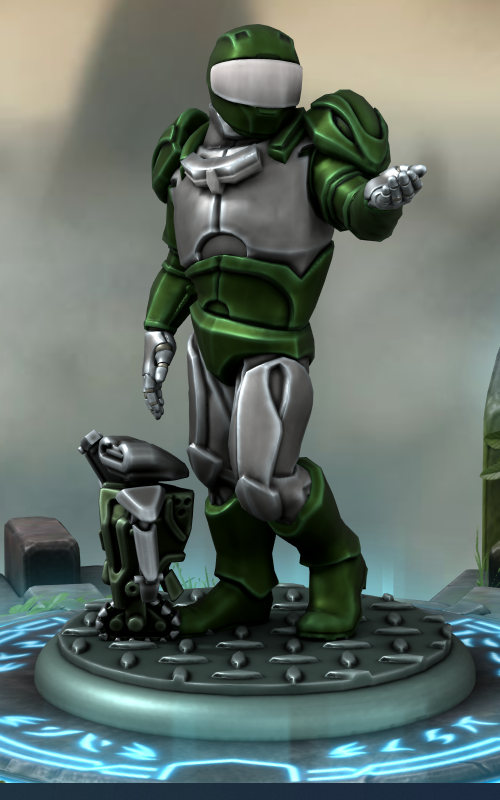
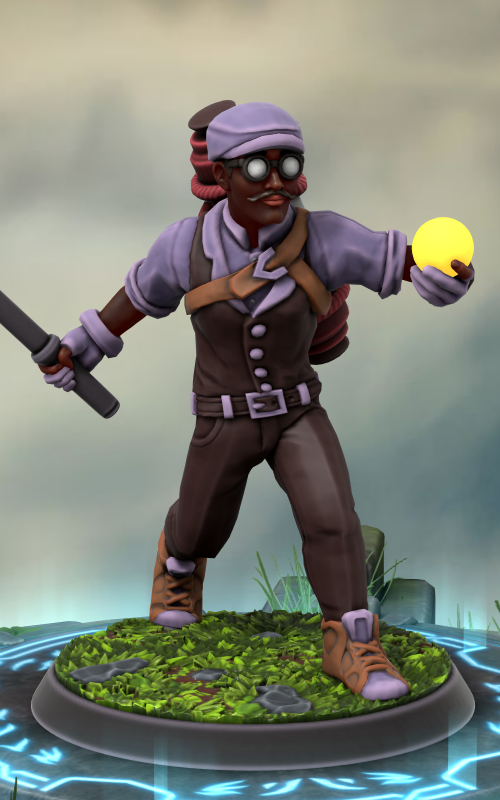
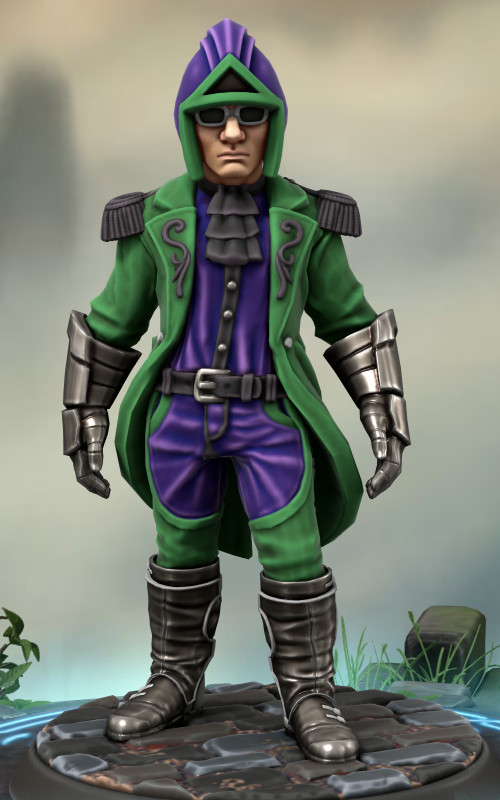
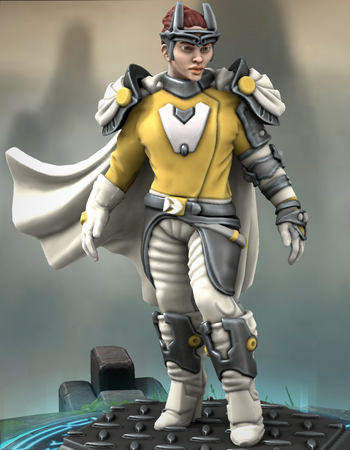
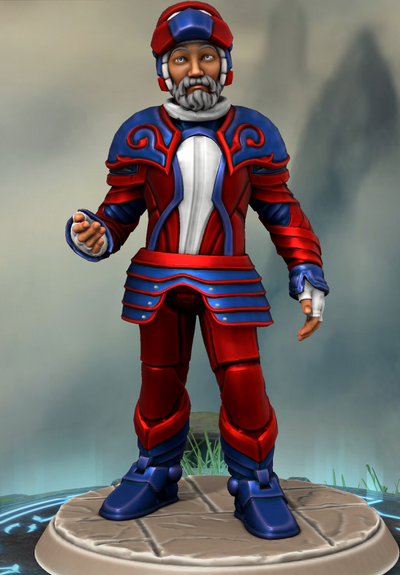
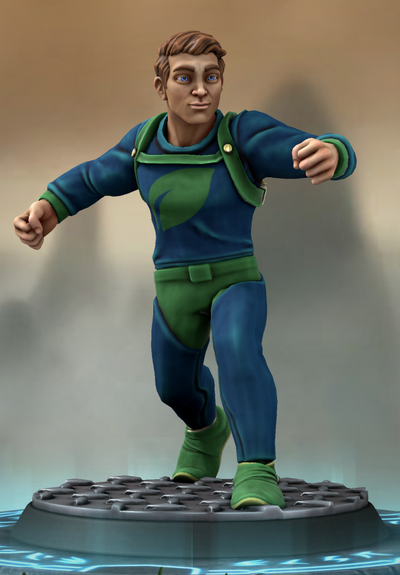
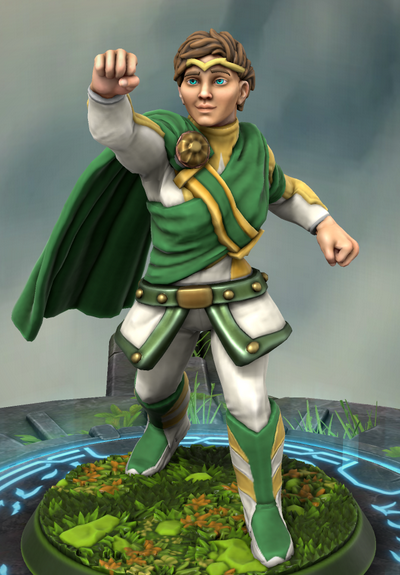
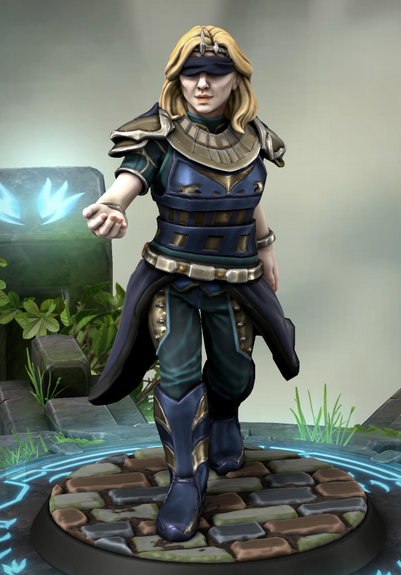
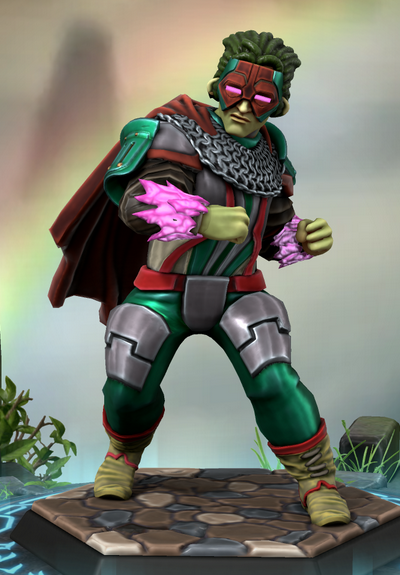
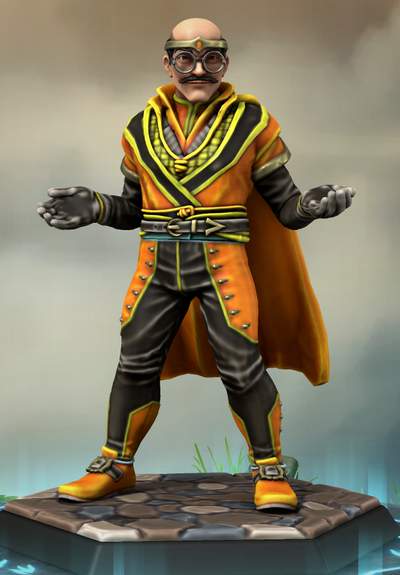
The Steward

Real Name: Mali Xur (alias Max West), First Appearance: Cryptic Trails #31, Oct. 1941
Background: Interstellar, Power Source: Cursed, Archetype: Armored
Personality: Stoic, Principles: Future, Gearhead

Status Dice: Green d6, Yellow d8, Red d12. Health: 36 [Green 36-28, Yellow 27-14, Red 13-1]
Qualities: Science d12, Close Combat d6, Alertness d6, Undercover Alien d8
Powers: Strength d12, Cosmic d10, Vitality d8, Deduction d6, Size-Changing d6

Green Abilities:

  • Armored (I): Reduce any physical or energy damage you take by 1 while you are in the Green zone, 2 while in the Yellow zone, and 3 while in the Red zone.
  • Corrosive Power (I): Whenever you roll a die’s maximum value, treat that value as 1 higher. Whenever you roll a 1 on a die, treat that die as if it had rolled a 0.
  • Heave-Ho [A]: Attack using Strength. Attack a second target with your Min die.
  • Shield The Weak [A]: Attack using Strength. Defend another target with your Min die.
  • Cosmic Spike [A]: Attack using Cosmic. Ignore all penalties on this Attack, ignore any Defend actions, and it cannot be affected by Reactions.
  • Principle of the Future [A]: Overcome using your knowledge of possible futures and use your Max die. You and your allies gain a Hero Point.
  • Principle of the Gearhead [A]: Overcome a technological challenge and use your Max die. You and your allies gain a Hero Point.

Yellow Abilities:

  • Cosmic Burst [A]: Boost all nearby allies using Cosmic. Use your Max+Mid dice. Hinder yourself with your Min die.
  • Cosmic Recovery [A]: Boost yourself using Vitality. Then, either remove a penalty on yourself or Recover using your Min die.

Red Abilities

  • One on One [R]: When you are Attacked and dealt damage, you may Attack the source of that damage by rolling your single Strength die, plus the amount of damage you take.
  • Scientific Solutions [A]: Overcome using Science. Use your Max+Min dice.

Out

  • Defend an ally by rolling your single Science die.

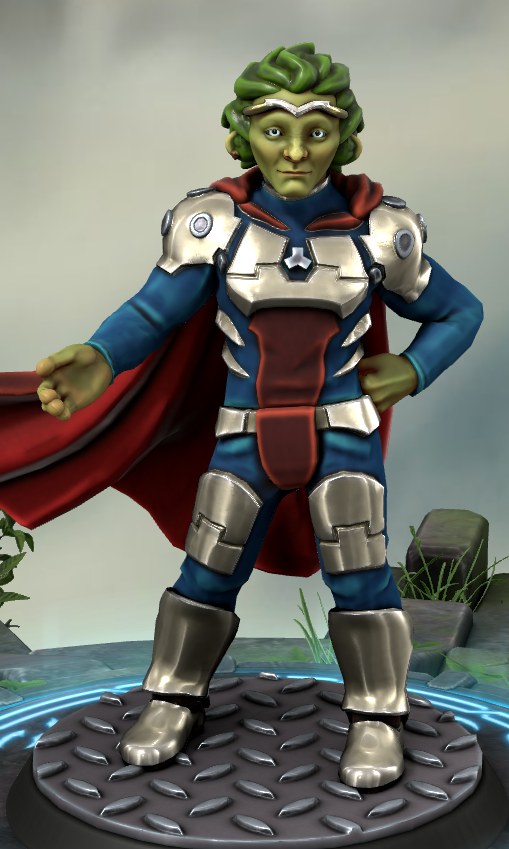
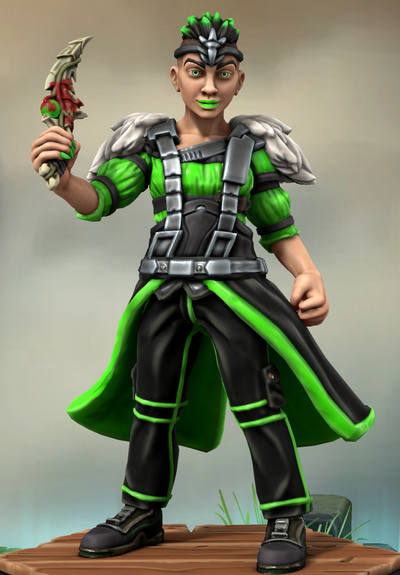
Over the course of 1941, the editors of Venture Comics attempted to introduce several new superheroes to the pages of Campfire Terrors or Cryptic Trails . None succeeded until a young writer pitched a story for Celestial Travels that caught the eye of Cryptic Trails’ lead editor. With a few alterations, the story was made appropriate for an Earth-focused adventure, and the Deputy was born!

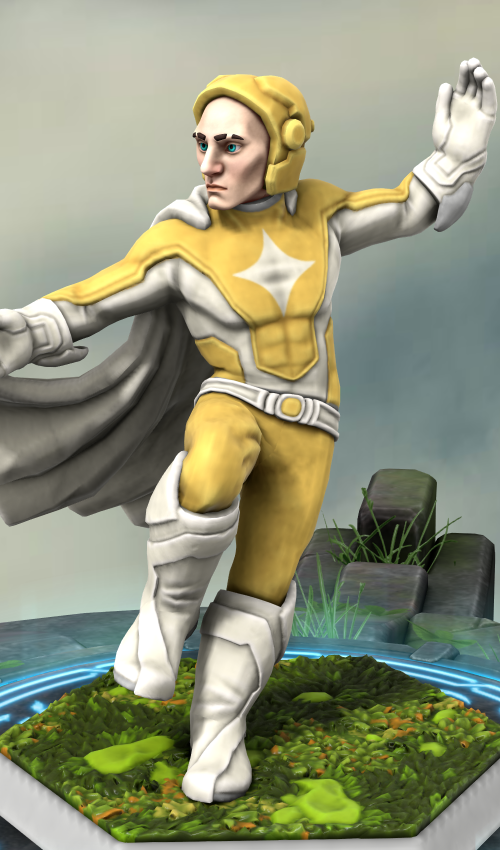
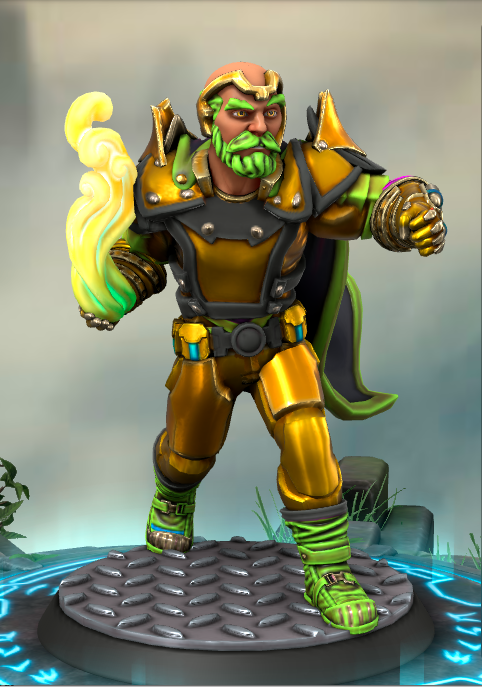
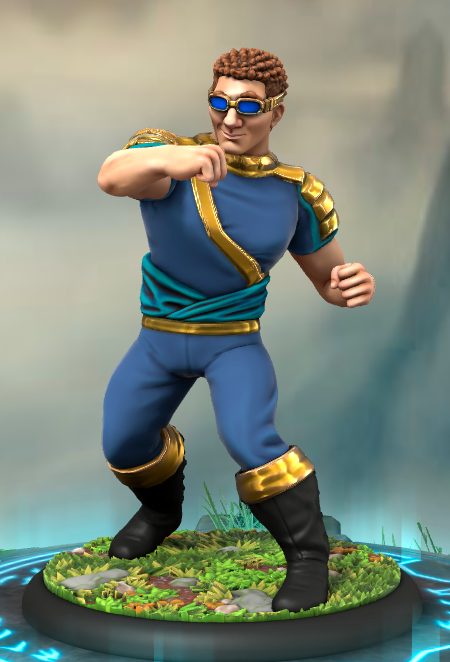
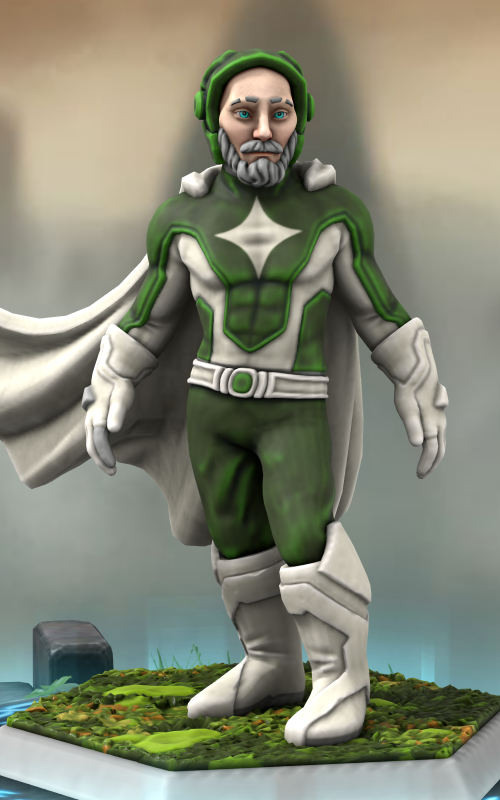
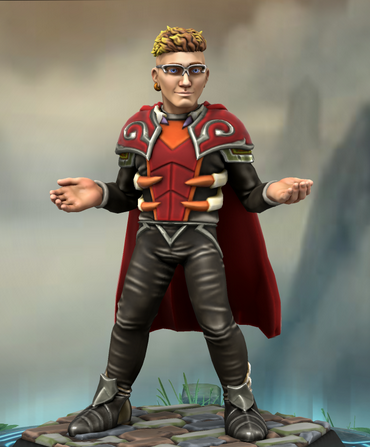
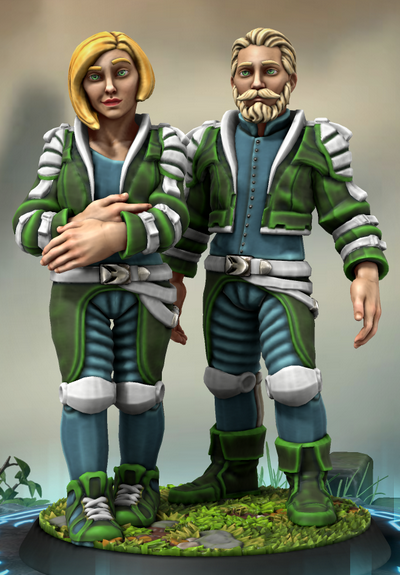
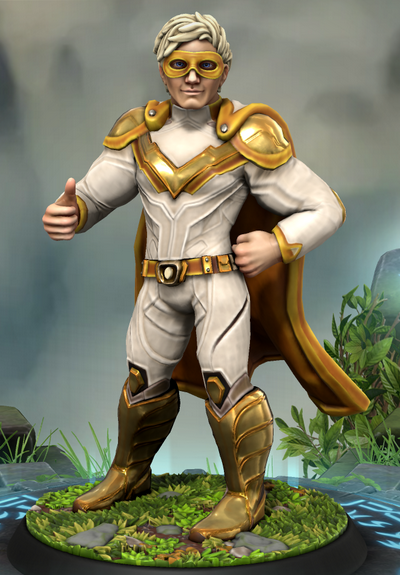
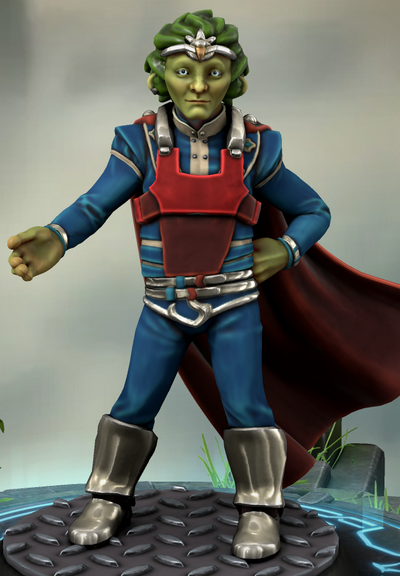
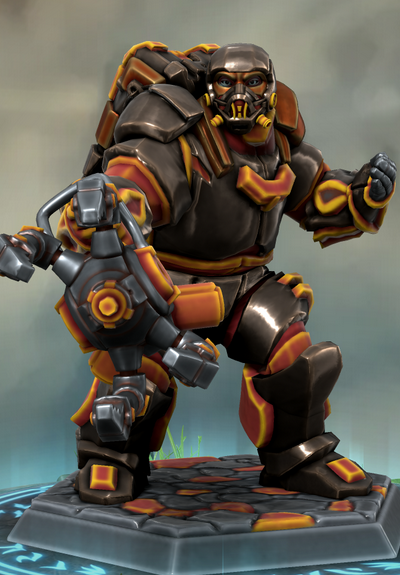
Mali Xur was a scout for the Xur’Tani, an obliquely-described species of peaceful aliens who looked for societies in danger from other cosmic forces. Upon landing on Earth, Xur found that his ship was corroding from the planet’s atmosphere, and worse, that he had become infected by Earth organisms. The infection pushed his biology into overdrive, giving him incredible strength and command over cosmic forces, at the cost of shortening his lifespan from over a thousand years to under a century. Crushed by his death sentence, Xur nonetheless decided to stay on Earth and look over the fledgeling species, acting as their assistant to protect them from the many pitfalls that he knew could befall a civilization on the cusp of greatness and from the many predators that exist in the stars. Taking on the identity of a mild-mannered scientist, and using his technological knowledge to easily complete tasks while leaving himself time to fight crime, he became The Steward, assistant to all mankind!

The Steward was depicted as an extremely powerful character, mostly held back by his fear of tainting human society with undue interference. He tried to provide subtle guidance and quiet hope, but moved in against corrupt or cruel elements of humanity and alien forces alike, either with his tremendous strength or with his technological genius. And he was very popular with readers. The unusual step of having the Steward’s powers be a source of tragedy, forever cutting him off from his home, wasn’t heavily delved into, but it added a layer of pathos to the character that proved quite popular.

*Behind The Scenes

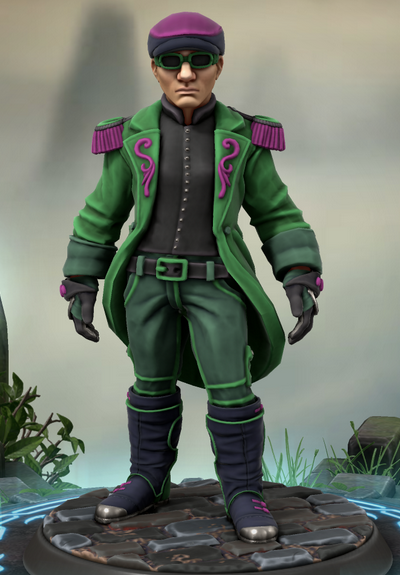
I have created anti-Superman.

When I got Interstellar as an option, I thought it was time for the Golden Age to get its first alien. When I hit Cursed right afterwards, I thought, “what curses an alien”, and suddenly the rest just developed. Earth is both a power source and a deadly poison to these people, which is why they don’t send more to get powers.

Mechanically, I’ve made a slightly odd choice by giving the Steward cross-matched d12s. He’s got a single extremely strong die in two traits that rarely cross over, each of which commonly matches with d6s (although his Science will sometimes match with his Cosmic d10.) This means that the Steward is never throwing massive pools, but is consistently throwing decent ones, and his massive Red die means that he is very powerful in the clutch, as well as having a truly ludicrous amount of health.

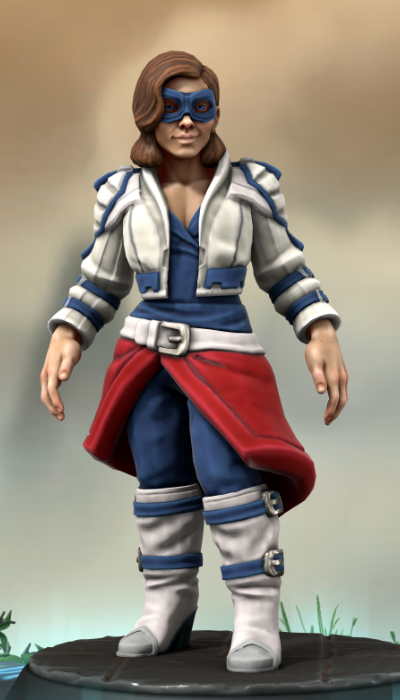
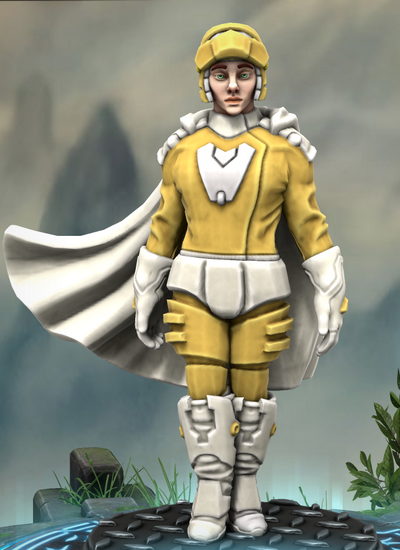
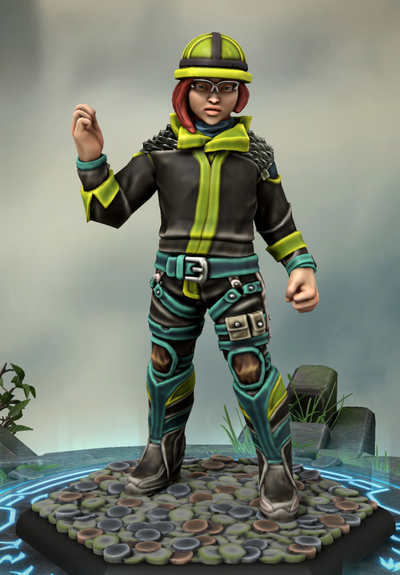
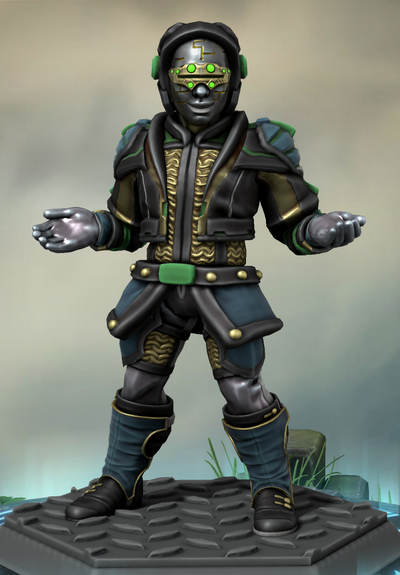
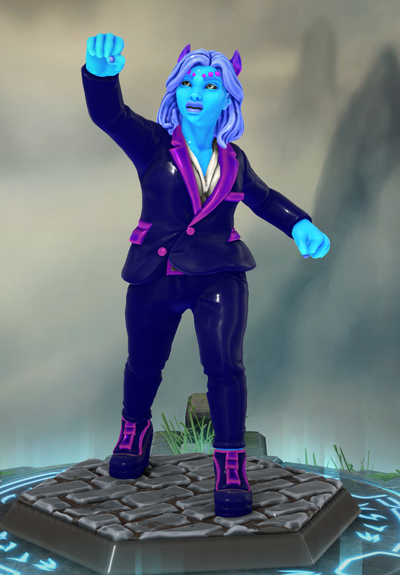
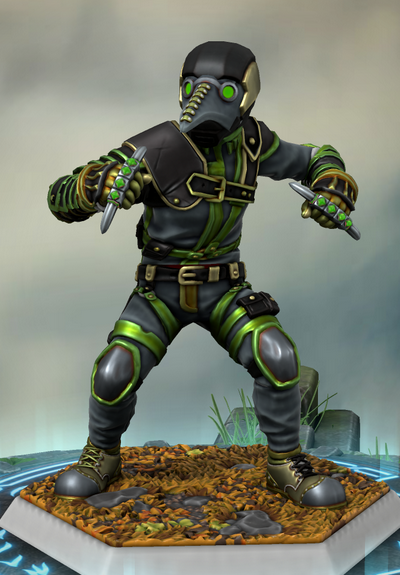
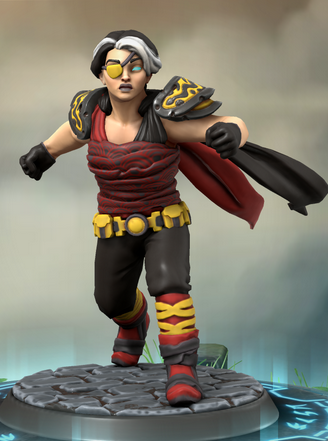
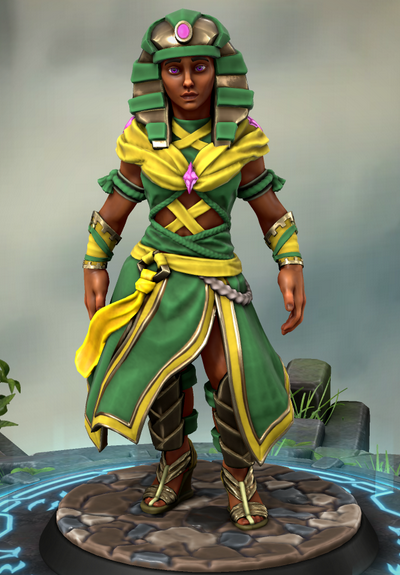
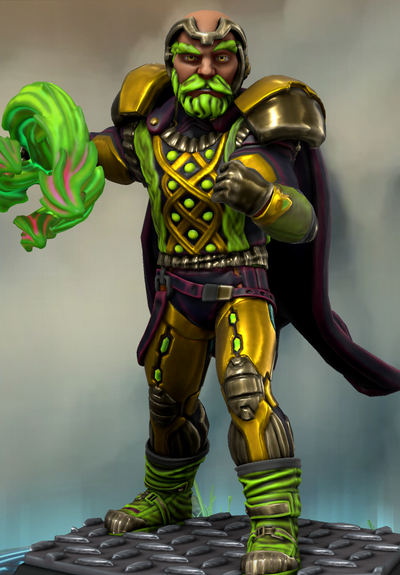
This picture is a bit more Silver Age than I would have preferred due to the level of detail, but Hero Forge only has so many options, and the difference between Golden Age and Silver Age Superman is the level of detail so I’m sticking with it.

CR
Chief_Lackey_Rich
2023-11-26 01:42 UTC
#13

The 12/6 and even 12/8 P/Q die combos are going to produce a lot of very weak Min dice, which come up a lot across your action and reaction abilities and are made even worse by Corrosive Power turning your ones to zeros. On the plus side, Cosmic Burst does benefit from the effect nicely. Definitely feels a bit like Golden Age Clark in that respect, where his outcomes and capabilities were often wildly erratic depending on the writer.

FR
FrivYeti
2023-11-26 04:50 UTC (in reply to #13)
#14

Oh, thank you for catching that! Yes, I’m copying text and missed the delete.

The Min die issue is a problem in Green that i hadn’t fully considered. I may look over and see if one of those two abilities can be swapped for a Max die effect; I don’t recall if there are any applicable offhand.

CR
Chief_Lackey_Rich
2023-11-26 12:27 UTC
#15

Edited my earlier reply to reflect your own.

FWIW, I don’t see anything in the way of G that uses Max (it’s one of the few drawbacks to Armored), but the other G die fixer for Cursed lets you reroll any ones that come up on your dice if you want, which would be pretty ideal for manipulating the Min die upward rather than it turning into a zero, while still letting you leave it at a one for Cosmic Burst’s self-hinder. You’d lose a little output off the Max results but you roll the top result on d10 and d12 far less often than the bottom result on a d6. Corrosive Power/Extremes is one of those abilities that I usually see used with either few Min die abilities or ones that tie the Min to self-harm/hinder effects rather than just eking out a bit more when you roll high.

So probably quite a bit better mechanically for this build, but Corrosive Power is a great ability name and the sheer unreliability of your Min dice as-is does feel like wonky Golden Age writing to me. :slight_smile:

FR
FrivYeti
2023-11-26 18:52 UTC
#16

Yeah, we’ll just call it wonky writing and move on!

The Randomizers:
Background 3, 2, 9 [Options: Criminal, Performer, Academic, Tragic, Dynasty, Adventurer]
Power Source 8, 10, 3 [Options: Genetic, Powered Suit, Tech Upgrades, Supernatural, Cursed, Unknown]
Archetype 7, 7, 2 [Options: Shadow, Armored, Elemental Manipulator, Minion-Maker, Gadgeteer]
Personality 8, 7, 4 [Options: Mischievous, Stalwart, Fast-Talking, Stoic, Nurturing, Jovial]

Kid Liberty

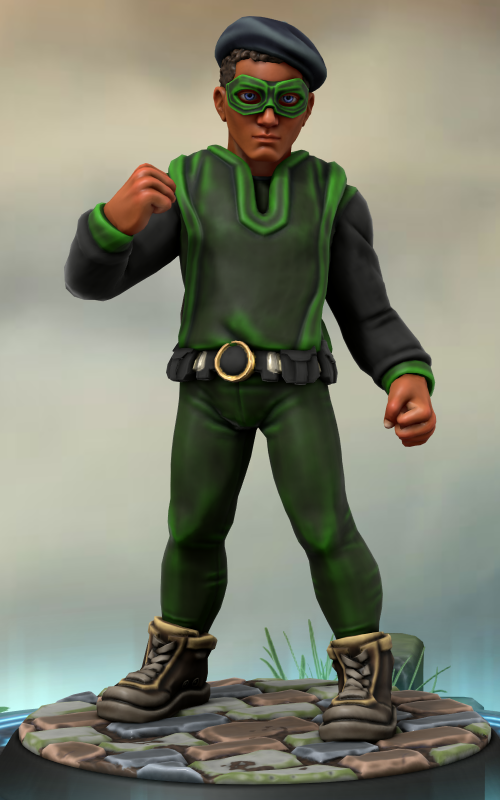
Real Name: Abe Duncan, First Appearance: Madame Liberty #1, January 1942
Background: Tragic, Power Source: Unknown, Archetype: Gadgeteer
Personality: Fast-Talking, Principles: Liberty, Vengeance (based on Rage)

Status Dice: Green d6, Yellow d8, Red d10. Health: 32 [Green 32-25, Yellow 24-12, Red 11-1]
Qualities: Investigation d10, Banter d8, Technology d8, Conviction d8, Criminal Underworld d6, Just A Kid d8
Powers: Presence d10, Awareness d10, Inventions d10, Animal Control d6, Agility d6

Green Abilities:

  • Distraction [A]: Hinder using Presence. Use your Max die, or use your Mid die and make it persistent and exclusive.
  • Backpack Of Stuff [A]: Boost using Inventions. Use your Max die, or use your Mid die and make it persistent and exclusive.
  • Principle of Liberty [A]: Overcome in a situation in which you are restricted or bound and use your Max die. You and your allies gain a Hero Point.
  • Principle of Vengeance [A]: Overcome in a situation where you can fight Nazis and use your Max die. You and your allies gain a Hero Point.

Yellow Abilities:

  • Helping Hand [R]: One nearby ally may reroll their dice pool. You lose Health equal to the Min die of the new roll.
  • Team Mascot [A]: Boost all nearby allies using Presence using your Max+Mid dice. Hinder yourself with your Min die.
  • Jury-Rigged Weapons [A]: Attack using Inventions. Hit one target using your Min die, another target with your Mid die, and Boost using your Max die.

Red Abilities

  • Endangered [A]: Boost another hero using Awareness. If that hero has already acted for the turn, use your Max die, and that hero loses Health equal to your Min die. That hero acts next in the turn order.
  • Last-Minute Assist [A]: Hinder using Banter. Use your Max+Min dice. Boost yourself or an ally with your Mid die.

Out

  • Hinder a minion or lieutenant by rolling your single Investigation die, and increase that penalty by -1.

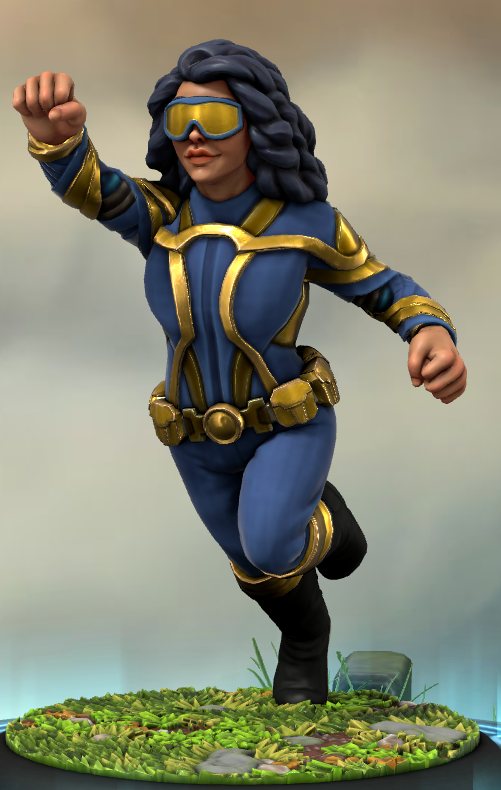
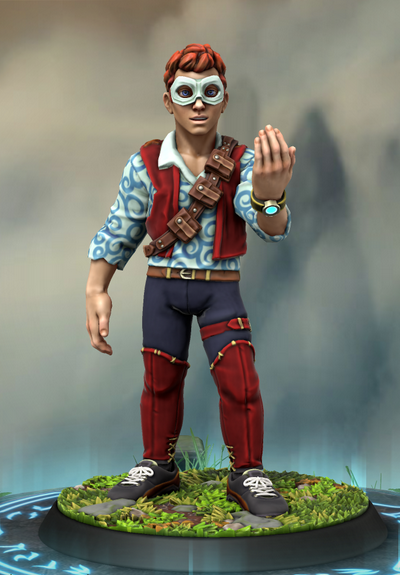
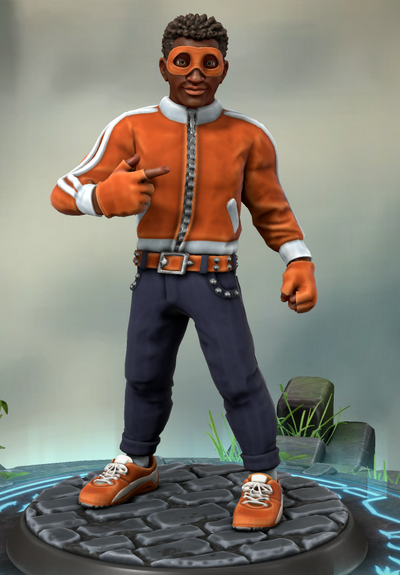
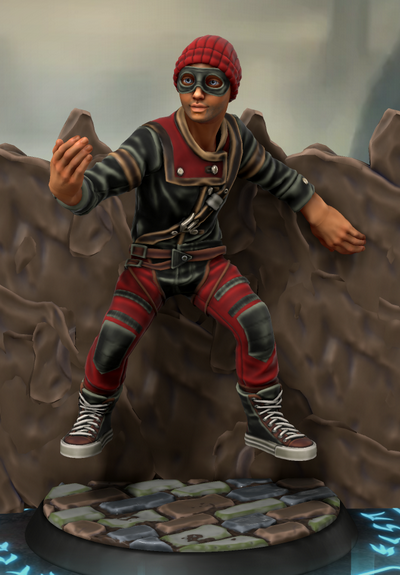
In January of 1942, Madame Liberty debuted her own comic series, freeing up extra space in Covert Tactics for more traditional war stories and freeing up her to have a larger supporting cast. Along with that supporting cast was a team of American commandos who came to France to help fight the Nazis, bringing support to her existing love interest - and also a new teen sidekick. Abe Duncan was a New York teenager whose family was killed by Nazi submarines crossing the Atlantic. He stowed away on a Navy ship, making his way to France to fight and kill as many Nazis as possible. After saving his life in the pages of Madame Liberty #1, Marianne adopted the boy, sensing that he would keep returning to the battlefield without her support.

Kid Liberty was a popular draw for young boys who imagined themselves as Madame Liberty’s faithful sidekick, saving the day with a well-timed invention or distraction. He was also a source of complications for the up-until-now highly prepared superhero, as his desire for revenge against the Nazis who killed his parents often caused him to jump the gun and rush into situations he wasn’t prepared for. Generally, Venture Comics was able to balance issues in which Kid Liberty saved the day with issues in which he needed to be rescued, keeping him a moderately popular hero instead of a millstone around Madame Liberty’s neck.

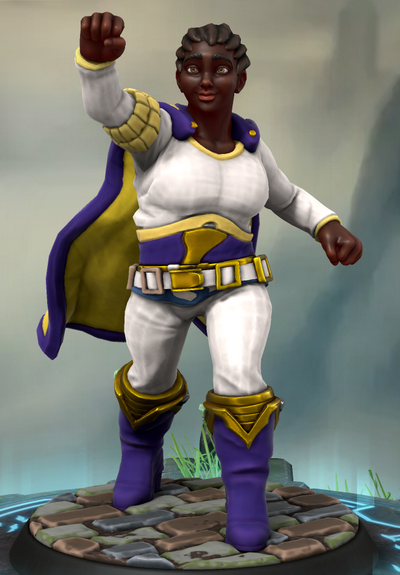
Quietly, Kid Liberty also served as an unspoken milestone for the company. The writer for Madame Liberty was himself a New Yorker, and he envisioned Abe as a multiracial child of white and black parents, another way in which he was opposed to the Nazi regime. Given general feelings about inter-racial marriages at the time, he wasn’t able to get this openly stated in the pages of the comics, but occasional hints were dropped, and the artist was encouraged to give Abe a darker skin tone than the French citizens he was surrounded by. Abe’s heritage was an open secret around the Venture Comics offices, one that was always denied in the press.

Behind the Scenes

So here’s something you won’t see much in Sentinel Comics - a teen sidekick!

Technically, Kid Liberty doesn’t have official powers at all, hence his ‘unknown’ Power Source. His inventions are just normal jury-rigged things that work suspiciously well, his personal charisma and awareness are narrative luck, and his animal control is just being good with animals. Between all the Boosts and Hinders, plus the ally-affecting reaction and Red power, this is about as sidekick as you can get in the main core.

Fun fact! Neither Unknown nor Gadgeteer allow for any Athletic powers, so a retcon allows Danny to have a small amount of physical power.

I went with a more focused “Principle of Vengeance”, in part because I didn’t want him to be an ‘angry black guy’ so much as a very focused kid looking for revenge, evoking Robin. I’m hoping to have an alternative style of sidekick down the road, but for now, I quite like Kid Liberty! Who knows how he’ll develop as the ages pass. This is also an attempt to quietly back-date a non-white character who can become a bigger deal down the road, once he’s allowed to actually reveal that.

CR
Chief_Lackey_Rich
2023-11-26 21:25 UTC
#17

An aside to Wertham and other critics of sidekick characters:

Wartime comics were full of both regular sidekicks and “young commando” teams who were out fighting the enemy face to face the way young American readers couldn’t in real life, and their existence was largely unquestioned and uncriticized until well after the War. Their success as self-insert characters is hardly surprising given the number of kids whose fathers had been drafted, as well as those whose mothers were now doing home front work. Very disruptive time for US households. No matter how relatively “easy” the nation had it compared to almost anywhere else - barring, perhaps, South and Central America - the wartime kids were simultaneously pressured to be patriotic and hate the Axis at every turn while being denied much meaningful opportunity to demonstrate either quality. Resource drives and victory gardens don’t feel very heroic to a ten year old when Dad is fighting in Europe and Mom has to leave cold suppers to make her night shift at the factory.

These sort of characters only seem inexplicably ill-advised if you willfully ignore the period they were created in and the audience the were written for. Most of them faded away pretty quickly post-War, often along with the books they originated in. No war since then has spawned the kind of national pressures that led created them, making the WW2 sidekicks and informal child soldiers a unique bit of Golden Age weirdness.

FR
FrivYeti
2023-11-27 03:29 UTC
#18

Keeping the catching-up train rolling, we come to:

The Randomizers:
Background 10, 1, 8 [Options: Blank Slate, Struggling, Tragic, Unremarkable, Dynasty, Exile]
Power Source 8, 4, 6 [Options: Experimentation, Nature, Powered Suit, Tech Upgrades, Artificial Being, Alien]
Archetype 5, 2, 6 [Options: Shadow, Blaster, Close Quarters, Armored, Flyer, Sorcerer]
Personality 6, 3, 5 [Options: Impulsive, Sarcastic, Distant, Fast-Talking, Inquisitive, Stoic]

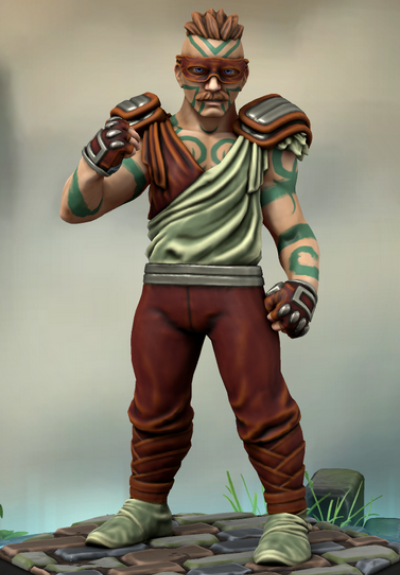
Greenheart

Real Name: Valeria Tertia, First Appearance: Cryptic Trails #41, August 1942
Background: Exile, Power Source: Nature, Archetype: Armored
Personality: Sarcastic, Principles: Equality, Mastery

Status Dice: Green d8, Yellow d8, Red d10. Health: 32 [Green 32-25, Yellow 24-12, Red 11-1]
Qualities: Imposing d10, Close Combat d10, Fitness d8, Conviction d8, Survivalist d8
Powers: Strength d10, Plants d8, Animal Control d8, Presence d8

Green Abilities:

  • Hardy (I): Reduce any physical or energy damage you take by 1 while you are in the Green zone, 2 while in the Yellow zone, and 3 while in the Red zone.
  • Shrug It Off [A]: Attack using Strength. Recover Health equal to your Min die.
  • Terrifying Roar [A]: Attack using Imposing. Ignore all penalties on this Attack, ignore any Defend actions, and it cannot be affected by Reactions.
  • Verdant Shield [A]: Attack using Plants. Defend another target with your Min die.
  • Grasping Vines [A]: Hinder using Plants. Use your Max die. You may split that penalty across multiple nearby targets.
  • Principle of Equality [A]: Overcome to protect the rights of the underprivileged and use your Max die. You and your allies gain a Hero Point.
  • Principle of Mastery [A]: Overcome in a situation that uses your powers in a new way and use your Max die. You and your allies gain a Hero Point.

Yellow Abilities:

  • Brutal Assault [A]: Attack using Strength. Use your Max+Min dice. Then gain a Boost using your Mid die. The target of the Attack gains a bonus of the same size.
  • Predator’s Strength [R]: When you defeat a minion, roll that minion’s die and Boost yourself using that roll to create a bonus for your next action.

Red Abilities

  • Return The Blow [R]: When you are Attacked and dealt damage, you may Attack the source of that damage by rolling your single Strength die, plus the amount of damage you take.
  • One-Woman Army (I): You have no limit on the number of Reactions you can take. Each time you use a Reaction after the first one each time, take 1 irreducible damage or take a minor twist.

Out

  • Hinder an opponent by rolling your single Quality die.

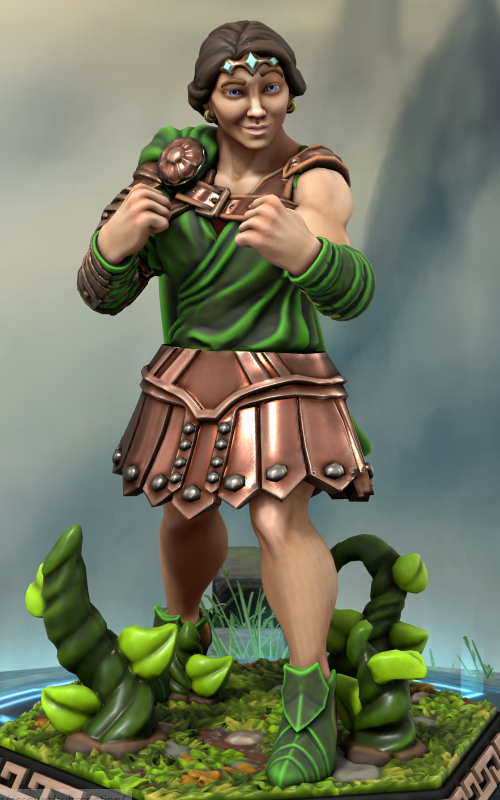
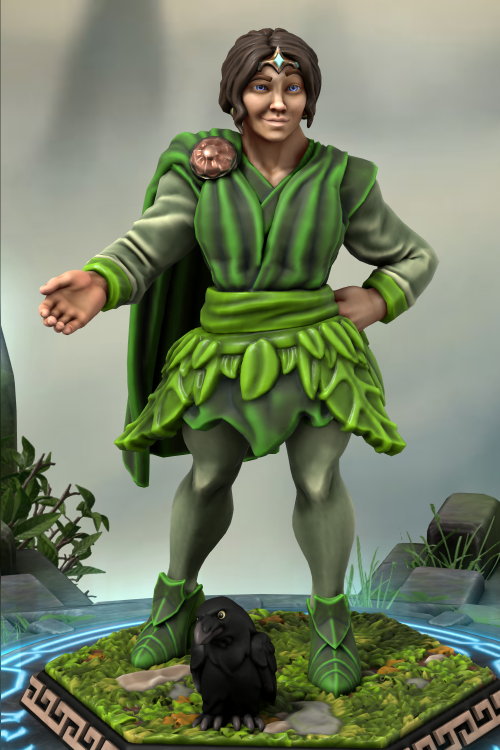
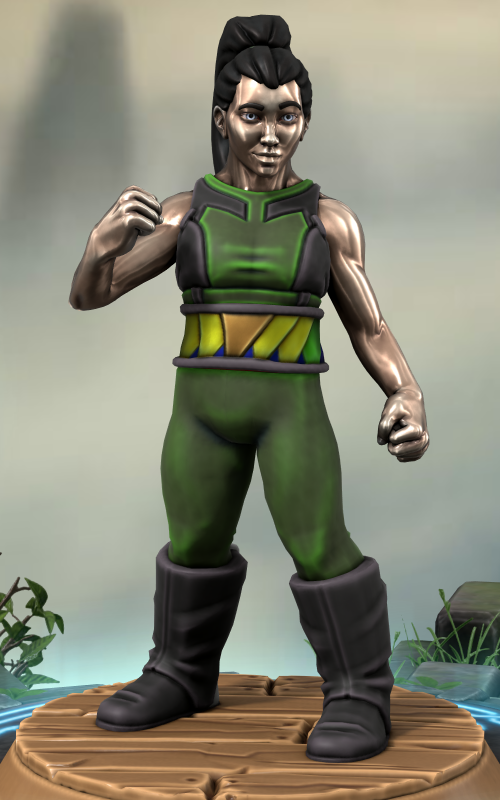
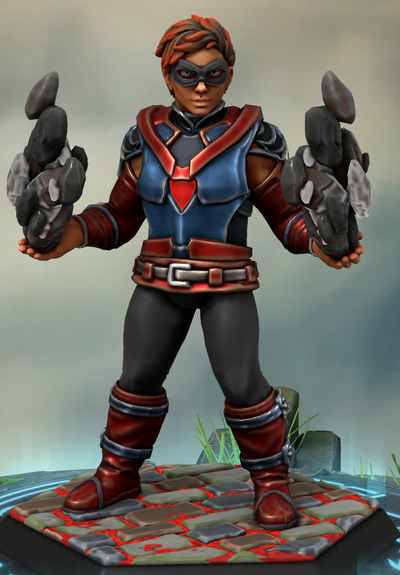
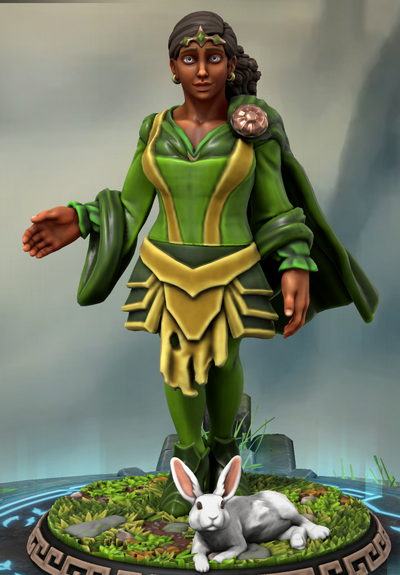
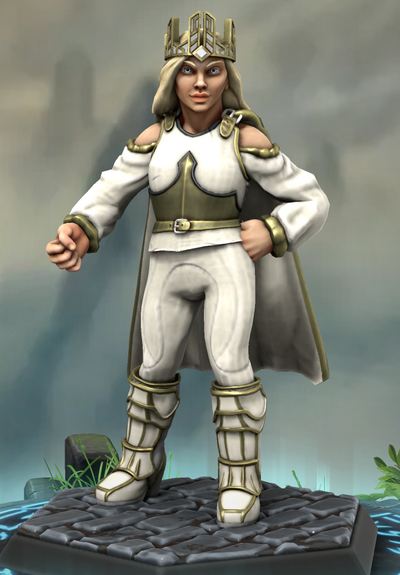
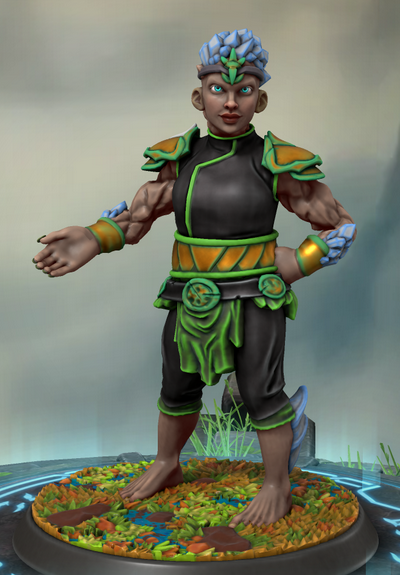
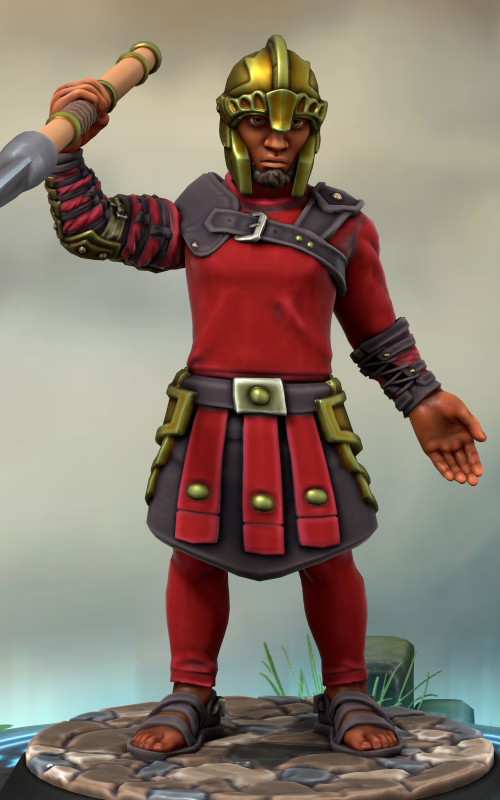
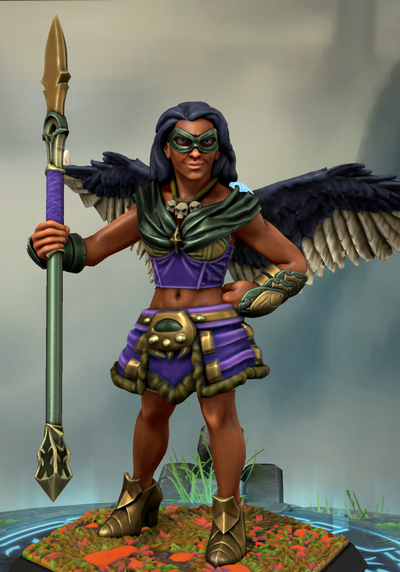
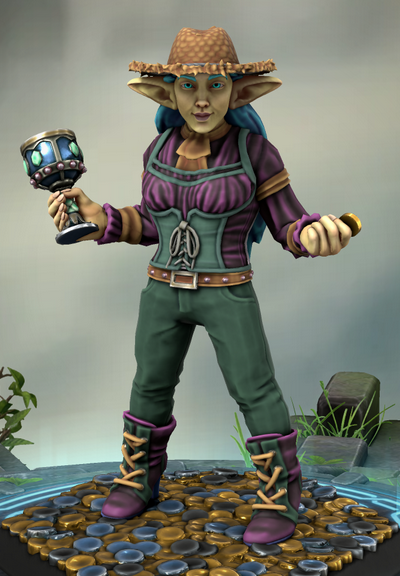
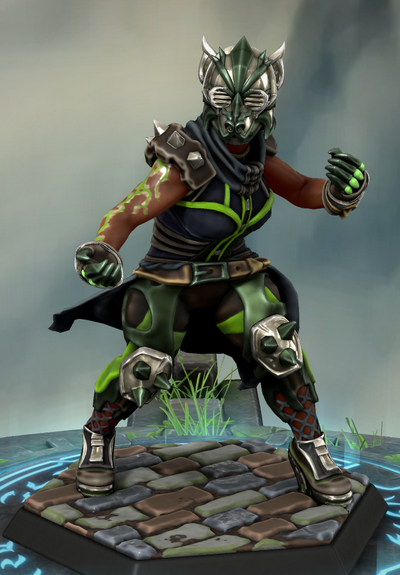
The next hero to gain a following for Venture Comics was unveiled in the pages of Cryptic Trails in 1942. Valeria Tertia was a scion of a Roman expedition to North America that discovered a mystical realm deep within the Appalachian mountains. There, the True Roman Empire endured, hiding from the world and scorning its new scientific and cultural developments. Only first-born sons of the leading families were allowed to take the Trials of Gaia, developing powers over nature which were used to protect and hide the Empire. Valeria was neither first-born, nor a son, nor a member of the leading families, but she secretly undertook the Trials anyway - and not only did she pass, she excelled, gaining mastery over plants and animals and incredible physical strength.

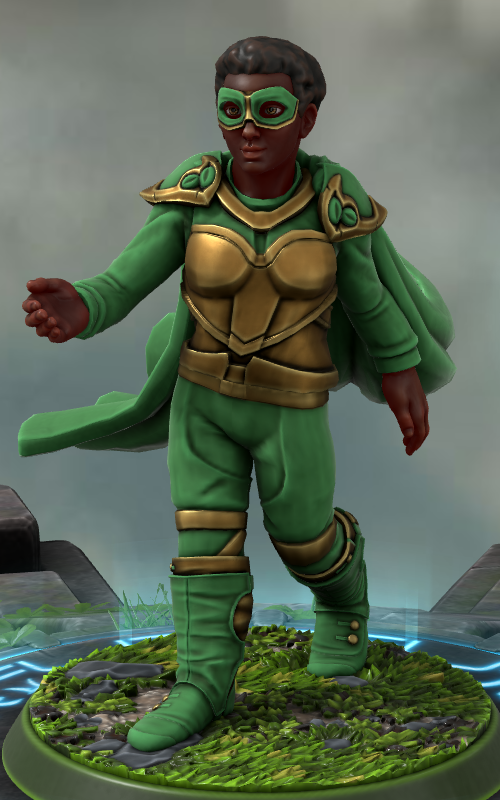
In response to this affront, Valeria was exiled from the Empire, sent out into the world. There, she found a society that was much like the one she had left behind, filled with inequality and injustice. But after she was taken in by a group of young women working at a local munitions factory, she resolved to protect her new home, taking up arms as the Mighty Greenheart!

Greenheart was a bit of a shift for Venture Comics, a particularly sardonic and slightly reluctant hero more likely to frighten criminals into fleeing than deliver a heroic speech. Despite this (or perhaps because of it) she resonated with many young men and women, becoming a staple of the line. She picked up a teen sidekick of her own, as this was becoming more common - a girl named Mandy Murphy who saw through her paper-thin disguise and offered to help her navigate the world, even claiming her as a cousin, and who fought crime as Greensleeves when Valeria couldn’t stop her. Greenheart also saw the first crossover in Venture Comics early in her run, when she and Skybreaker faced off against a Fomori-possessed Roman champion in Cryptic Trails #45 .

Behind the Scenes

Our first doubled trait! I’m trying not to double much in this age, since there are only ten heroes, but while I could have gone with Flyer it didn’t quite match the image that was building up in my mind.

Thematically, I have followed anti-Superman by creating anti-Wonder Woman; an exile from a mysterious Roman realm that is not feminist, coming to the world and discovering that it is also not feminist.

Mechanically, Greenheart is moderately good, but becomes a beast in Red, especially against minion-heavy scenes. Whenever anyone attacks her, she can take a damage for a massive counter-attack, and if they were a minion and the counter-attack beats it she can Boost, and then she can burn all her boosts on an Attack/Recovery combo if she’s still alive. I also like the idea of a defense-ignoring attack that is just “scare someone off”.

CR
Chief_Lackey_Rich
2023-11-27 12:09 UTC (in reply to #18)
#19

Shrug It Off coupled with good bonus generation (either from yourself or ally support) is such a good Recovery combo. I’m always kind of surprised when it doesn’t show up on Armored archetype heroes, but you do need the bonuses for it to really pay off.

Principle of Mastery with such a diverse array of powers ought to be very easy to apply to challenges unless you’re somewhere with no biome at all - which usually involves hard vacuum.

FR
FrivYeti
2023-11-27 16:52 UTC
#20

The Randomizers:
Background 4, 6, 4 [Options: Military, Upper Class, Struggling, Unremarkable, Interstellar]
Power Source 6, 1, 6 [Options: Accident, Nature, Relic, Artificial Being, Cosmos]
Archetype 8, 4, 4 [Options: Marksman, Flyer, Psychic, Minion-Maker]
Personality 7, 2, 8 [Options: Natural Leader, Stalwart, Fast-Talking, Inquisitive, Alluring, Jovial]

Cormorant

Real Name: Wayne Alton, First Appearance: Cryptic Trails #49, April 1943
Background: Upper Class, Power Source: Relic, Archetype: Flyer
Personality: Jovial, Principles: Sidekick, Compassion

Status Dice: Green d6, Yellow d8, Red d10. Health: 28 [Green 28-22, Yellow 21-11, Red 10-1]
Qualities: Persuasion d10, Close Combat d10, Fitness d8, Creativity d6, Child of Wealth d8
Powers: Radiant d10, Flight d10, Awareness d8, Water d8, Swimming d6

Green Abilities:

  • The Answerer (I): Whenever you Attack an enemy that has inflicted a penalty on you, treat that penalty as if it were a bonus for the purpose of that Attack.
  • Shining Strike [A]: Attack using Radiant. Defend against all Attacks against you using your Min die until your next turn.
  • Storm’s Evasion [R]: When you are Attacked while Flying, you may Defend yourself by rolling your single Flight die.
  • Principle of the Sidekick [A]: Overcome a challenge that has already flummoxed a more senior teammate and use your Max die. You and your allies gain a Hero Point.
  • Principle of Compassion [A]: Overcome to connect with an individual on a personal level and use your Max die. You and your allies gain a Hero Point.

Yellow Abilities:

  • Light of Judgement [A]: Attack using Radiant. Use your Min die. Take damage equal to your Mid die, and one nearby ally Recovers Health equal to your Max die.
  • Tidal Surge [A]: Boost yourself using Water. Use your Max die. Hinder a nearby opponent with your Min die.
  • Gifts of the Sea God [A]: Boost using Radiant. Apply that bonus to all hero Attack and Overcome actions until the start of your next turn.

Red Abilities

  • Moonlit Flight [A]: Boost yourself using Flight. Use your Max+Mid dice. Then, you may end up anywhere else in the scene, avoiding any dangers between your starting and ending locations.
  • Divine Aura (I): If you would take Radiant damage, ignore that damage and Recover that amount instead. Use the value of the damage to Boost yourself.

Out

  • Defend an ally by rolling your single Persuasion die.

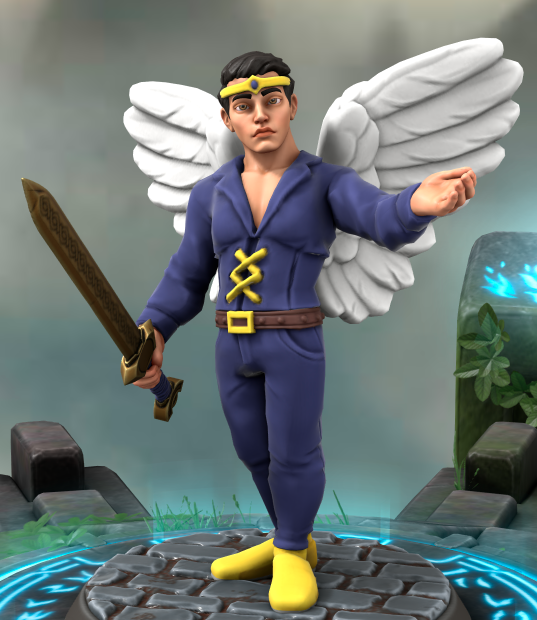
By 1943, sidekicks were all the rage at Venture Comics. Flatfoot had picked up a teen engineer in place of his original assistant, the Steward and Greenheart each had plucky would-be reporters following them around, and of course Kid Liberty was a wild success. However, Skybreaker had failed to develop a proper sidekick. An early attempt, a young boy named Dickie Lewis who followed Skybreaker around, had only lasted three stories before vanishing, and the editors pressured the series writer to try again in advance of Issue #50.

Instead of creating yet another ordinary teenager with pluck and grit, the writers tried something different. Wayne Alton was the heir to the Alton family fortune, a lackadaisical teenager unconcerned with the perils of war - until his friends were tempted by a gentlemen’s club that turned out to be a Fomori front, corrupting the heirs of American industry towards fascism and the Nazi cause. Skybreaker investigated the club, and as he was attacked and in danger of being overwhelmed, Wayne grabbed the old sword the cult had been using as a focus for their magic and tried to help.

The sword turned out to be Fragarach, divine sword of the sea god Manannán mac Lir, and Wayne was empowered with the might of the sea and storm, becoming the superhero Cormorant! Helping Skybreaker, he swore to devote his wealth to fighting fascism, taking up his place as Skybreaker’s sidekick and financial supporter.

Cormorant was a different sort of sidekick, his powers directly tied into Skybreaker’s own mythos, nearly a hero in his own right already. He proved decently popular, expanding the roster of Skybreaker’s stories and providing an excuse for expanding the hero’s activities around the globe. Why exactly a sea god allowed his champion to sprout wings whenever he drew his sword was left to the imagination of the reader, but most assumed it had to do with ocean birds somehow.

Behind the Scenes

Theoretically, everyone has sidekicks, but most of those sidekicks aren’t also heroes! I wanted at least two sidekicks in the Golden Age, and was going to go with either Skybreaker or Greenheart for our second; getting Relic gave me the idea for a second god-weapon empowered hero in the same storyline.

And Upper Class means that we can give Principle of the Sidekick to one of our Golden Age heroes, so here it is!

CR
Chief_Lackey_Rich
2023-11-27 17:16 UTC
#21

I’ve got a PC in one of my groups who’s explicitly the (Principled) Sidekick of another PC who has Principle of the Mentor. The synergy between the two is pretty hilarious, they’ve been keeping track of which of them has gotten to use their Principle more often because of the other one screwing up. Last I checked the Mentor was ahead 13-11, so holding on to his dignity by a narrow margin. :slight_smile:

That Light of Judgement/Divine Aura combo is the game’s best healing trick, bar none. A player running it is likely to look for opportunities to justify spending 4HP to bump the Red component to Yellow for an issue, but it’s solid even without that.

FR
FrivYeti
2023-11-28 03:21 UTC (in reply to #21)
#22

Now that’s a good combination! Nice.

The Randomizers:
Background 3, 6, 1 [Options: Blank Slate, Performer, Military, Upper Class, Law Enforcement, Tragic]
Power Source 3, 5, 2 [Options: Training, Genetic, Mystical, Relic, Powered Suit]
Archetype 3, 5, 8 [Options: Physical Powerhouse, Blaster, Flyer, Sorcerer, Transporter]
Personality 2, 10, 8 [Options: Natural Leader, Fast Talking, Alluring, Nurturing, Apathetic]

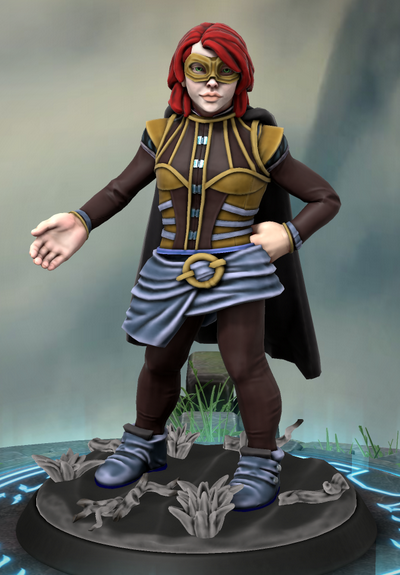
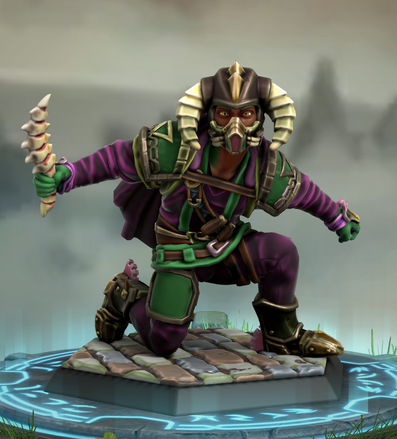
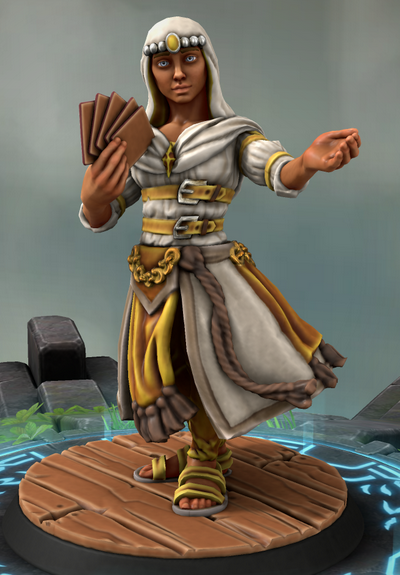
Night Rider

Real Name: Evie Nelson, First Appearance: Campfire Terrors #61, March 1944
Background: Performer, Power Source: Training, Archetype: Sorcerer
Personality: Alluring, Principles: Family, Magic

Status Dice: Green d6, Yellow d8, Red d10. Health: 32 [Green 32-25, Yellow 24-12, Red 11-1]
Qualities: Acrobatics d10, Investigation d8, Insight d8, Magical Lore d8, Lifelong Carnie d8
Powers: Agility d10, Awareness d10, Illusions d10, Postcognition d8, Presence d6

Green Abilities:

  • Hall of Mirrors [A]: Hinder using Illusions. Use your Max die. If you roll doubles, also Attack using your Mid die.
  • Stunning Kick [A]: Attack using Agility. Hinder the same target using your Min die.
  • Principle of Family [A]: Overcome in a situation where you have been given advice by your circus family and use your Max die. You and your allies gain a Hero Point.
  • Principle of Magic [A]: Overcome against a mystical force and use your Max die. You and your allies gain a Hero Point.

Yellow Abilities:

  • Double Takedown [A]: Destroy one d6 or d8 minion. Roll that minion’s die as an Attack against another target.
  • Saw It Coming [A]: Boost yourself using Awareness. That bonus is persistent and exclusive. Then, Attack using your Min die. You may use the bonus you just created for that Attack.
  • Flowing Stance [R]: When you are attacked by a nearby enemy, the attacker also takes an equal amount of damage.

Red Abilities

  • Exploit Vulnerability [A]: Attack using Awareness. Use your Max+Min dice. Ignore all penalties on this attack, ignore any Defend actions, and it cannot be affected by Reactions.
  • Flickering Spells (I): Whenever you Attack a target with an action, you may also Hinder that target with your Min die.

Out

  • Boost an ally by rolling your single Illusions die.

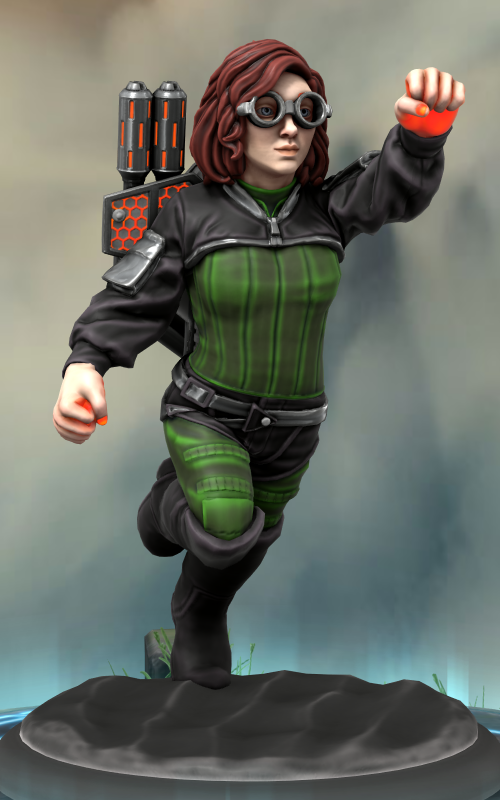
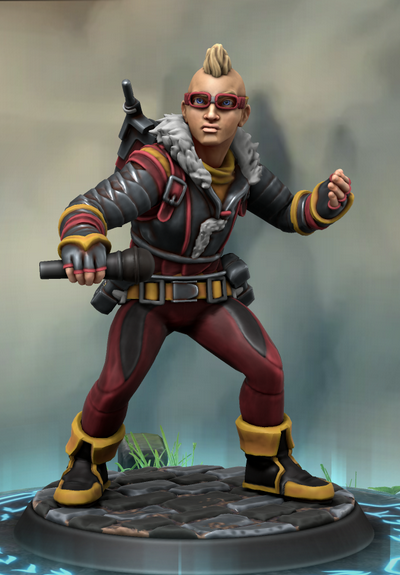
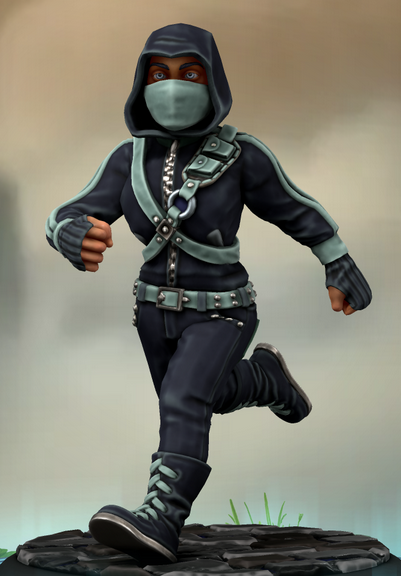
While most of their other comics were rolling in heroes, Campfire Terrors remained an outlier for Venture Comics; aside from the Penitent, who remained a popular and powerful character, none of the attempts to introduce new characters to the pages of the comic had stuck. Then, in 1944, the editors made one last attempt, and this one struck gold. Evie Nelson was a trained tightrope walker from a circus family, whose parents were killed by vampires. Dedicating herself to justice, Evie trained her body and mind, learning magical arts and steeling herself to become the Night Rider, taking her name from circus workers who would go out at night and destroy each others’ advertising. The Night Rider was a travelling monster hunter who used her circus activities to spot monstrous enemies lurking in the towns she visited. Her mystical illusions could confuse the creatures’ thralls, turning them against each other, and she knew how to investigate crime scenes and discover hints of creatures’ presence, before using their weaknesses to destroy them.

Night Rider was a solid hit, facing off against both supernatural monsters and the occasional crooked gang terrorizing small towns. She had a consistent supporting cast made up of her carnival allies, and was soon a stalwart in the comic’s pages, becoming more popular even than the Penitent. The editors of Venture Comics began discussing spinning her off to her own circus-themed title, with side stories about other members of her troupe, but unfortunately, time was not on her side…

Behind the Scenes

Fun weirdness - Power Source, Archetype, and Personality had the third die I rolled be equal to the sum of the other two.

I like the idea of a training-based hero who also has real magic that they learned, so when I got that opportunity I jumped at it. Lots of tricky illusions combined with skilled circus tricks, and this feels like a comic I’d enjoy reading! I almost didn’t call her Night Rider because of, you know, Knight Rider. But it’s a circus-themed name, it fits the style and her goals, and fuck it, why not. In this universe, maybe Knight Rider was loosely inspired by her.

CR
Chief_Lackey_Rich
2023-11-28 11:39 UTC (in reply to #22)
#23

Always liked this character concept. You remind me I have to finish an environment she partly inspired.

So what’s your take on this one - if you assign an exclusive bonus (either a P+E or one from hero points) to use this ability, can you wind up using it and the new P+E it generates? At the point you have to assign the mod everything’s working RAW, then you roll your pool, decide if you want to stick the pre-existing bonus on the Boost or the Attack part of this, Boost accordingly, then make your Attack where you’re explicitly allowed to use the brand-new bonus. It doesn’t mention how that functions with the usual exclusivity lockout, but my best guess is that it overrides it due to special case > general case. But I could see arguments the other way.

Do you play it allowing a double-up like that (making it a more useful ability to repeat, if nothing else) or not? IME it’s not OTT either way, although I usually go for the more permissive option.

Your dice weirdness in this project is really quite impressive. :slight_smile:

FR
FrivYeti
2023-11-28 16:48 UTC (in reply to #23)
#24

It’s never come up in-person for me. My instinct would be that if you applied a previous persistent-exclusive to the roll, and then you got this one, you would be able to replace the original bonus with the new one, but you still wouldn’t be able to stack the bonuses.

However, if a player really wanted to do it and felt strongly, I think I’d let them; it’s a Min die Attack as a rider (no pun intended) on a persistent-exclusive in Yellow that doesn’t use your Max die, it’s not going to be the end of the world to give it an extra +2 or +3 if for some reason you’re burning actions to stack persistent/exclusive boosts before the previous one is destroyed or removed by enemies.

FR
FrivYeti
2023-11-28 17:10 UTC
#25

And today we wrap up our Golden Age heroes and start in on the villains! By my count, the Golden Age should wrap up about the end of the week, at which point I will be slowing down to daily updates so that anyone interested in conversation has more time (other than Rich, who is on the ball!) and once we catch up fully, it’ll slow down again to M-F updates.

The Randomizers:
Background 2, 7, 7 [Options: Criminal, Law Enforcement, Tragic, Interstellar, Anachronistic]
Power Source 3, 5, 5 [Options: Genetic, Mystical, Powered Suit, Tech Upgrades, Genius]
Archetype 5, 8, 1 [Options: Speedster, Blaster, Close Quarters Combatant, Flyer, Elemental Manipulator, Transporter]
Personality 10, 7, 2 [Options: Natural Leader, Stalwart, Inquisitive, Alluring, Nurturing, Naive]

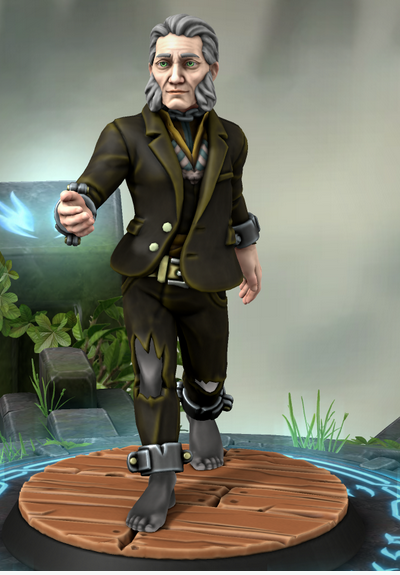
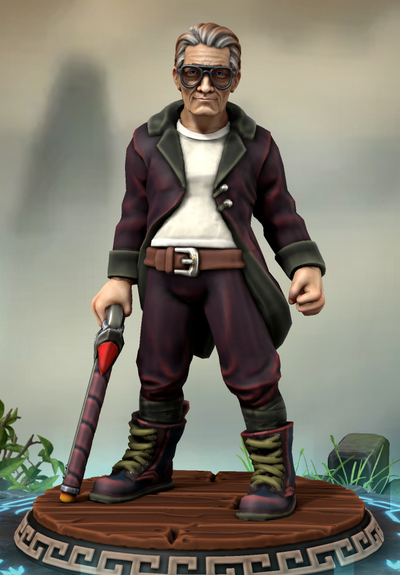
Revenant

Real Name: Henry Fletcher, First Appearance: Company Town #118, January 1949
Background: Anachronistic, Power Source: Genetic, Archetype: Close Quarters Combatant
Personality: Stalwart, Principles: Immortality, Underworld

Status Dice: Green d8, Yellow d8, Red d8. Health: 30 [Green 30-23, Yellow 22-12, Red 11-1]
Qualities: History d10, Close Combat d10, Stealth d8, Persuasion d8, Cover Identities d8
Powers: Vitality d10, Strength d8, Awareness d8, Presence d6

Green Abilities:

  • Ancient Recall [A]: Boost yourself using History. That bonus is persistent and exclusive.
  • Boxing Stance [A]: Defend using Vitality. Attack using your Min die.
  • Flexible Stance [A]: Take any two basic actions using Awareness, each using your Min die.
  • Power Stance [A]: Attack using Close Combat. Use your Max die.
  • Principle of Immortality [A]: Overcome a situation involving your physical condition and use your Max die. You and your allies gain a Hero Point.
  • Principle of the Underworld [A]: Overcome a problem related to your knowledge of the criminal underworld or using one of your contacts and use your Max die. You and your allies gain a Hero Point.

Yellow Abilities:

  • The Immortal Man [A]: Boost yourself using Vitality, then either remove a penalty on yourself or Recover using your Min die.
  • Age and Treachery [A]: Attack using Close Combat. Ignore all penalties on this Attack, ignore any Defend actions, and it cannot be affected by Reactions.
  • Danger Sense [R]: When damaged by an environment target or surprise Attack, Defend by rolling your single Awareness die.

Red Abilities

  • Impossible Recovery [A]: Hinder yourself using Vitality. Use your Min die. Recover health equal to your Max+Mid dice.
  • Super-Senses (I): When taking any action using Awareness, you may reroll your Min die before determining effects.

Out

  • Defend an ally by rolling your single Vitality die.

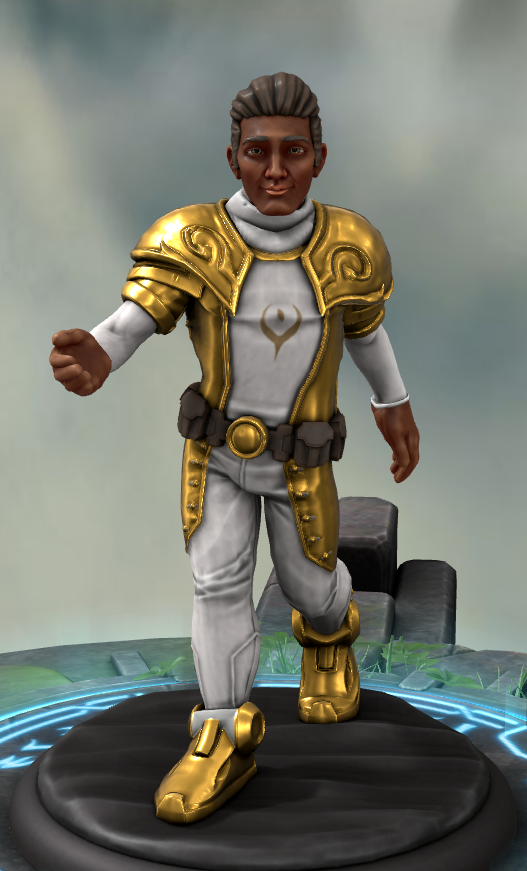
By January 1949, the world was changing. Superheroes were falling out of fashion, war in Korea loomed, and the editors of Company Town saw a chance to return the comic to the dark roots that had been largely upended by the addition of Flatfoot to the comic’s pages. Inspired by the recent successful launch of the Wraith in the pages of Sentinel Comics, they proposed a new hero be added to the comic - someone who would fight criminals on their own terms, attacking cowardly mobsters in the name of the innocent.

Their proposal was Revenant, and he would prove to be a very popular but short-lived entry into the Golden Age of Venture Comics.

Revenant’s real name was Henry Fletcher, a man living in Renaissance England who, upon dying of plague, found himself miraculously returned to life. Over the centuries, Fletcher would continue to die on a regular basis, each time reviving within hours to continue his travels. Eventually, Fletcher came to America, and found himself in Ferristown. Unable to sign up for the war due to lacking citizenship papers, he instead saw the criminal element preying on those who were left behind, and took up arms as the Revenant, striking from the shadows to undo criminal conspiracies and protect the people of the city.

Revenant had false identities around the city, which he used to gain access to criminal organizations and destroy them from within, using centuries of knowledge to take on whatever role was needed for the night. Many of his stories ended with him gunned down by criminals, only to rise and take revenge, a terrible spectre that stalked the night. Although his stories were taking place in the same city as Flatfoot’s, the two heroes never met; Revenant focused on the poorest and most vulnerable districts, while Flatfoot’s stories were brighter and more hopeful.

Revenant was largely a pulp-horror throwback with superhero leanings, and his presence in the pages of Company Town helped to bring the title back towards tales of grim corruption and political brutality. The editors might not have been as thrilled about this fact if they knew what was on the horizon, but for the time being, he was another successful entry in the history of Venture Comics.

Behind the Scenes

When I got Anachronistic, I had planned to make an actual vengeful ghost, but then Genetic popped up and the idea of making an immortal guy seemed kind of fun. There are a couple of similarities with Haka here, and I bet fans of Sentinel Comics claim that Revenant’s immortal nature was obviously just copying Haka, but in the metaverse it’s probably a coincidence, especially since they aren’t otherwise similar.

There are a couple Revenants in comics in the real world, with my favorite being the Batman-alike of PS238; this Revenant is quite different from him, too, but in the world of Venture Comics, that Revenant probably had a different name. The Bat, perhaps.

CR
Chief_Lackey_Rich
2023-11-28 17:44 UTC (in reply to #25)
#26

Well, I do have the thread on my email notifications. :slight_smile:

FWIW, the PS238 Revenant originated from an old short story called Peer Review by Michael Stackpole. It was first printed in an anthology called Superheroes, but I believe it was brought back in a 2014 anthology just called Heroes! The text-only Revenant is pretty similar to the one we see in the webcomic but the setting is quite a bit different in tone and scope.

Today also marks one year since PS238 last updated, and it’s finally getting deleted from my favorites list so I stop compulsively checking the site. A very disappointing non-ending to what had been a pretty fantastic comic/webcomic. At least Edison Rex had the decency to just stop at the end of an issue, even if it was a bit of a cliffhanger. Sigh.

FR
FrivYeti
2023-11-29 04:15 UTC
#27

Randomizers:
Approach: 9, 1, 7 [Options: Relentless, Focused, Mastermind, Specialized, Overpowered, Dampening*]*
Archetype: 2, 6, 4 [Options: Inventor, Guerilla, Overlord, Inhibitor, Squad*]*
Upgrade: 9, 1, 7 [Options: Defense Shield, Mook Squad, Quality Upgrade*]*
Mastery: 12, 2, 2 [Options: Malice, Behind The Curtain*]*

Mr. Ferris

Real Name: Hank Ferris, First Appearance: Company Town Issue #1, May 1939
Approach: Mastermind, Archetype: Inventor
Upgrade: Mook Squad, Mastery: Behind The Curtain

Status Dice: 4+ Inventions: d12, 2-3 Inventions: d10, 1 Invention: d8, no Inventions: d6. Health: 30+5H [Green I-J, Yellow L-M, Red N-O]
Qualities: Technology d10, Imposing d8, Criminal Underworld d8, Insight d8, Stealth d8, Business Magnate d8
Powers: Inventions d12, Presence d10, Deduction d8

Abilities:

  • Respectable Businessman [A]: Hinder all opponents who can see or hear you using Imposing. Boost yourself using your Max die.
  • Cutting-Edge Science [A]: Boost yourself using Technology and use your Max die. Either make that bonus persistent and exclusive, or Boost yourself again using your Min+Mid dice.
  • Capable Creator (I): Whenever you create a bonus, increase that bonus by 1.
  • Defensive Infrastructure [R]: Discard one of your bonuses to Defend against all Attacks against you until your next turn, using that bonus value as the Defend result.
  • (U) Hired Goons [A]: Replenish the number of Company Men up to the number of heroes.
  • (U) Master Behind The Curtain (I): As long as you are not directly involved in the fray and are using your influence indirectly, automatically succeed at an Overcome to manipulate a situation.

Common Scene Elements:

  • Company Men: d8 Minions. As a reaction, they can step their die down, then roll it to Defend a superior.
  • Enhanced Soldiers: d8 Lieutenants. When they save against physical damage, they get +1. They also count as an Invention for Mr. Ferris’s status dice.
  • A Hostile Environment: Mr. Ferris is rarely found anywhere in which he does not control the situation.

The first supervillain introduced in the pages of Venture Comics, unusually, predated all of its heroes, although his rise to comics villainy wasn’t immediate.

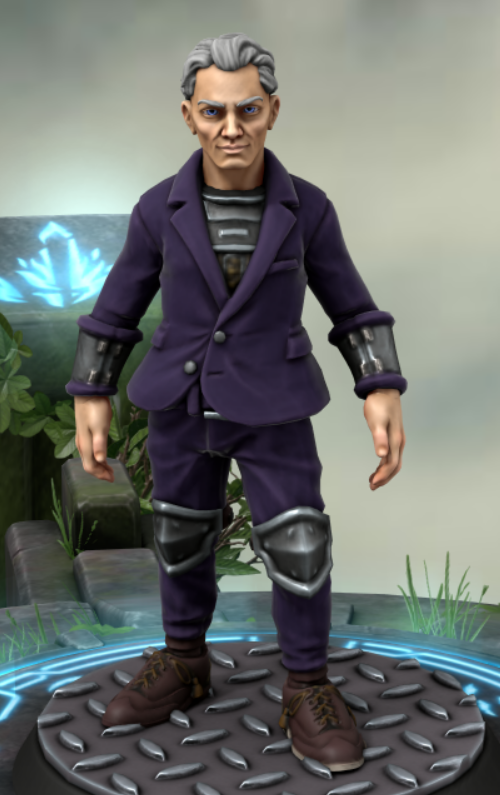
One of the initial Venture Comics titles was Company Town , a dark noir anthology series. The main writer for Company Town envisioned it as being united not by protagonists, but by its antagonist , Hank Ferris. Growing up on a farm in Michigan, Ferris developed unspecific mining and industrial equipment, founding a small factory that turned into a large factory which then grew up a small town around itself. During the Depression, Ferris made mob ties and expanded his influence, leading to several towns in the region amalgamating into the city of Ferristown. He controlled the mob, the police, the politicians and industry. His fingers were in every pie, and while individual stories sometimes ended in setbacks for him, he never seemed to suffer consequences.

The introduction of Flatfoot shifted the focus of Company Town , and in turn the focus of Mr. Ferris. Increasingly, his plots involved more and more extravagant scientific inventions, attempts to duplicate Flatfoot’s robot brain, and significant setbacks as Flatfoot cleaned the town of crime. The primary editor of Company Town was absolutely distraught by this change, and over the course of Flatfoot’s adventures, Ferris faded further into the background. He began to make appearances again during the Revenant’s run in Company Town, occasionally appeared in crossover stories, but his impact on the storyline was weakened and by the mid-1950s it was unclear whether he still controlled the town.

Behind the Scenes

Narratively, Mr. Ferris is halfway between Lex Luthor and the Kingpin; a criminal industrialist who is on the front lines of his own inventions, but who also uses leverage to get what he wants and is heavily involved in traditional criminal activities. This makes him a bit more hands-on than your typical mob boss, but he still owns the city.

Mechanically, Ferris is not a very dangerous opponent alone, but he’s an absolute nightmare in a scene where the heroes are trying to get something else done. His typical strategy will be to open up with some cutting-edge science to get the boost, then use his monologues and insights to throw the heroes off their game, Hindering everyone to weaken their ability to Overcome while building Boosts to enhance his status dice and Defend himself. He doesn’t typically fight directly, and if his minions are overcome and the heroes are focusing on him instead of the scene he’s going to beat a hasty retreat (although if the heroes don’t have good area attacks and he’s ultimate, he could delay indefinitely by creating new Company Men.

CR
Chief_Lackey_Rich
2023-11-29 12:13 UTC
#28

A classic Approach/Archetype pairing with a massive Boost game, and if he’s got a Bully ally around with the “make all penalties bigger” the Hinders get real scary too. Having a menacing legbreaker bodyguard around when he expects trouble seems in character for Mister Ferris.

Always amused me that Inventor Boosts can be handed out to allies like candy, but Masterminds horde theirs so hard they make Smaug look generous.

FR
FrivYeti
2023-11-29 18:39 UTC
#29

Randomizers:
Approach: 4, 8, 2 [Options: Skilled, Squad, Disruptive, Mastermind, Overpowered, Tactician*]*
Archetype: 1, 1, 6 [Options: Predator, Inventor, Overlord, Formidable, Domain*]*
Upgrade: 11, 2, 2 [Options: Hardier Minions, Power Dampening Field*]*
Mastery: 7, 4, 9 [Options: Mysticism, Enforced Order, Superiority*]*

Iron Will

Real Name: Colonel Wilhelm Eisenfalle , First Appearance: Madame Liberty #5, May 1942
Approach: Disruptive, Archetype: Overlord
Upgrade: Hardier Minions, Mastery: Enforced Order

Status Dice: 9+ Minions: d12, 5-9 Minions: d10, 3-4 Minions: d8. 1-2 Minions: d6. 0 minions: d4. Health: 35+5H (Upgraded Health 40+5H)
Qualities: Insight d10, Imposing d8, Stealth d8, Nazi Commander d8
Powers: Suggestion d10, Awareness d10, Agility d8, Presence d8

Abilities:

  • Eye of Chaos [A]: Hinder multiple targets using Insight. You and any nearby allies Defend using your Max die.
  • Hypnotic Oppression [A]: Attack using Suggestion. Use your Max die. A target dealt damage this way Attacks an ally by rolling their single largest power die.
  • Collaborators [A]: Use Insight to create a number of minions equal to the value of your Max die. The starting die size for those minions is the same as the size of your Min die.
  • Human Shields [R]: Redirect an Attack to one of your minions.
  • (U) Fanatical Soldiers [A]: Choose one group of minions in the scene. Upgrade their dice one size (maximum d12.)
  • (U) Mastery of Enforced Order (I): If you have complete control over your immediate surroundings, automatically succeed in an Overcome to organize rabble to accomplish a task.

Common Scene Elements:

  • Nazi Goosesteppers: d6 minions who gain +1 to all of their rolls as long as at least (H) of them are in play.
  • Conscripted Civilians: d6 minions who deal 1 psychic damage to any hero who defeats them.
  • Scene Challenges: Iron Will is often accompanied by scene challenges to get potential civilians to safety, lest they become more brainwashed minions.

As Madame Liberty’s solo comic took off, the writers of Venture Comics struggled to find an interesting nemesis - someone who would test her to her limits. After a few failed attempts to throw various Nazis and collaborators at her, one writer hit on striking her where she was most vulnerable, and thus Iron Will was created!

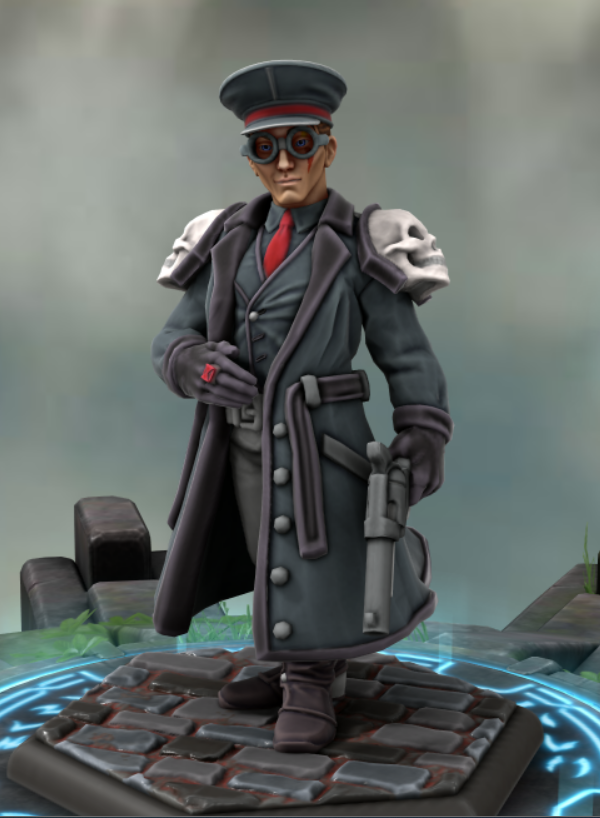
Wilhelm Eisenfalle was a Nazi officer, a believer in the Reich placed in charge of pacifying the French countryside. A master of the hypnotic arts, he could reach into a person’s mind and pull out their fears and secrets, manipulating them to serve him. His compelled minions were all convinced that if they didn’t follow his orders, they and their loved ones would suffer horribly, and it only took him moments to twist the minds of most of his victims. In his first appearance, he took control of much of Madame Liberty’s resistance cell, turning them against the heroine. She managed to fight through, disguising herself as a Nazi officer and attacking him aboard his zeppelin, at which point he seemed to fall to his death.

Of course, he survived, and returned to face off against her multiple times in the next few years. Iron Will’s plots ranged from corrupting workers to press them into service building Nazi war machines to turning loyal agents into fifth column spies; everywhere he went, entire towns would turn against the cause of liberty. Each time, Madame Liberty was able to undermine and stop him, but often only with civilian casualties. After World War II, many readers expected that he would not be seen again, but he resurfaced in 1948 as a Soviet agent, having seamlessly turned his coat to support the Stalinst cause and facing off against Madame Liberty in occupied Berlin.

Behind the Scenes

You’ve got to have a monstrous Nazi villain in the Golden Age. For this one, I hit Disruptive immediately, and I liked the idea of a hero and villain that fight each other indirectly, with Iron Will reaching out to control minions as Madame Liberty hides herself among them and tries to reach him. He’s a real nasty piece of work, and whoever he works for, he’ll still be just as awful. He is loosely inspired by Hatemonger from Marvel Comics, but instead of just turning people evil, he forces them to collaborate against their will, which is almost worse.

Mechanically, he’s also a piece of work! He just swarms the battlefield with minions who are the people you’re trying to protect, and if he starts with a group of minions in play he can really dial it up fast.

CR
Chief_Lackey_Rich
2023-11-29 20:03 UTC (in reply to #29)
#30

There’s a running gag in one of the games I play in where a villain with that ability has wound up on one hero’s nemesis list because she never, ever chooses him as a target for her version of that ability, which has become her go-to when facing us. His best power dice is a d8 and she always does better on the rider hitting someone else, but narratively it’s because she’s utterly contemptuous of his feeble powers and enjoys telling him so at every opportunity. Lot of bad blood between those two after crossing paths three or four times.

Predictably, two of the other players ship them.

FR
FrivYeti
2023-11-30 04:52 UTC
#31

Quick evening update!

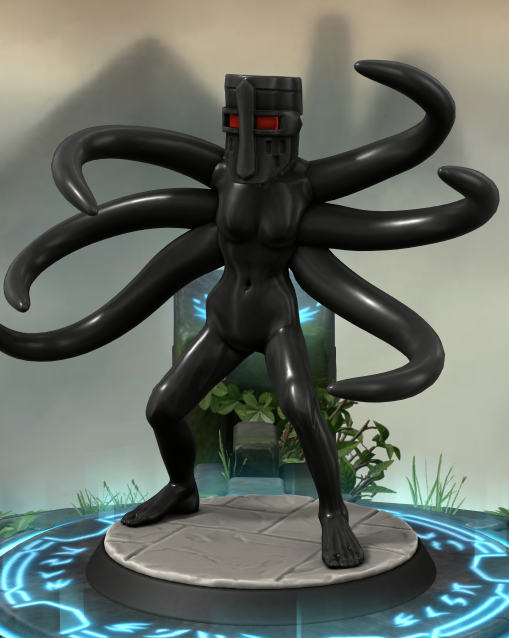
The Retriever

Real Name: n/a, First Appearance: Flatfoot Adventures #13, 1943
Approach: Relentless, Archetype: Inhibitor
Upgrade: Group Fighter, Mastery: Profitability

Status Dice: 3+ heroes with at least one penalty d10, 1-2 heroes with at least one penalty d8, 0 heroes with at least one penalty d6. Health: 30+5H (Upgraded 50+5H)
Qualities: Close Combat d10, Alertness d8, Conviction d6, Rubber Body d8
Powers: Elasticity d10, Vitality d8, Awareness d6

Abilities:

  • Capture Cords [A]: Attack and Hinder using Close Combat. If the target has: a d6 or less status die, use your Max+Min dice; a d8 status die, use your Max die; larger than a d8, use your Mid die.
  • Wrap-Around [A]: Hinder using Elasticity. That penalty is persistent and exclusive. As long as that penalty is in play, reduce damage dealt to you by 1 and whenever you are dealt damage, the target with this penalty takes 1 irreducible damage.
  • Constrict [R]: When Attacked by someone with a penalty you created, Defend by rolling your single status die, and the attacker also suffers that much damage.
  • Slingshot [R]: When an opponent moves away from you, you may follow them and use your single status die as a Hinder against them.
  • (U) Group Fighter (I): When you take an action that lets you make an Attack, also make an Attack using your Mid die.
  • (U) Master of Profitability (I): If you have access to great wealth and other resources, automatically succeed at an Overcome to leverage those resources to get even richer, no matter who else pays the price.

Common Scene Elements:

  • A challenge related to a captive or fragile object already in the Retriever’s grasp
  • An unpredictable environment created by the Retriever to cover its tracks
  • An allied villain or set of lieutenants hired to accompany the Retriever

By 1943, Flatfoot had already done battle with a few thematic crime lords, mad scientists, and Nazis, typically simply smashing them with his tremendous strength. The Retriever was created to be something more difficult to face. In its first appearance, it was an eight-foot tall rubber robot that moved easily through the streets, kidnapping the mayor of Ferristown for ransom. Flatfoot hunted down the Retriever and defeated its master, another mad scientist of no particular renown.

But the Retriever proved surprisingly popular with fans, and the writers of Flatfoot Adventures decided to play into that. The robot returned a year later, under the control of a criminal gang that had unearthed it in the scientist’s belongs and were using it to steal rare artwork. Once again Flatfoot was unable to fight it directly, having to find ways to recover its stolen goods first. This proved to be a trend for the next decade; every year or two, a new villain would discover the Retriever and gain control of it, using it to kidnap or steal. Once, the mysterious Mr. Ferris even used the Retriever in an attempt to retrieve Flatfoot himself!

As a powerful threat with minimal motivations of its own, the Retriever was a phenomenally popular villain, showing up to face other heroes outside of Flatfoot’s own comics and rarely needing much explanation for how it got somewhere. It also served as a useful foil for the robotic hero, having no desires beyond what its creators asked of it, and no adherence to any law but its own.

Behind the Scenes

Look, if I get a villain who relentlessly tracks people down and also can tether them to itself, you better believe I’m going to create a giant rubber robot that wraps around its victims and carries them off.

It’s both goofy and kind of creepy. I’m not at all surprised that it was a popular baddie.

This is a situation where the random factors worked against me a bit. The Group Fighter upgrade gives it the power to brush off people who aren’t its primary target, but it wouldn’t have been my first choice if I was building a capture robot from scratch. Similarly, Profitability kind of works for something that is often just stealing to improve the wealth of its owners, but it gives a slightly different tone than if I’d gotten Annihilation or Mercenary.

The Retriever’s portrait was done by user Spatula on another forum; I had put a design together, but it was much more Silver Age and Spatula’s revision was a delight.

CR
Chief_Lackey_Rich
2023-11-30 11:09 UTC (in reply to #31)
#32

Yeah, that final version of the figure really knocked it out of the park. Think this my favorite of the Golden Age baddies, both concept and looks. Hopefully he makes a return in later eras - one advantage to robots is that they’re even more immune to aging than regular comic book characters. :slight_smile:

FR
FrivYeti
2023-11-30 17:18 UTC (in reply to #32)
#33

I mean, I’ve already got a Silver Age picture for it, so I cannot imagine not finding a way to use it. :wink:

Randomizers:
Approach: 9, 4, 7 [Options: Underpowered, Focused, Specialized, Generalist, Ninja, Dampening]
Archetype: 1, 5, 3 [Options: Predator, Bruiser, Guerilla, Indomitable, Formidable, Inhibitor]
Upgrade: 4, 9, 7 [Options: Villainous Vehicle, Quality Upgrade, Defense Shield]
Mastery: 2, 2, 12 [Options: Behind the Curtain, Malice]

The Huntsman

Real Name: Desmond Reed (no longer), First Appearance: Cryptic Trails #20, Oct 1940
Approach: Dampening, Archetype: Formidable (Fae Weaknesses)
Upgrade: Villainous Vehicle, Mastery: Malice

Status Dice: No Weakness Penalties d12, Mitigated Penalties d8, Penalties d4. Health: 50+5H (Upgraded 65+5H)
Qualities: Ranged Combat d10, Imposing d8, Magical Lore d8, Master of the Hunt d8
Powers: Presence d10, Awareness d8, Vitality d8

Abilities:

  • Howl of Terror [A]: Hinder multiple targets using Presence. While a hero has this penalty, reduce all their power dice by one size.
  • The Lion Fears Not The Lamb [R]: When Attacked by a hero with a penalty, ignore their damage and remove a penalty on that hero.
  • Flush Out The Prey [A]: Boost using Awareness and use your Max die. That bonus is persistent and exclusive. Also Attack with your Mid die.
  • Lord of the Hunt [A]: Take any basic action and use your Max die.
  • (U) Night Mare (I): The Night Mare is a d10 lieutenant with the following abilities:
    • Sturdy (I): When rolling a damage save, add 2 to the result
    • The Wild Hunt (A): Add minions to an existing group equal to half (rounded down) the Night Mare’s current die size. These minions are of a size equal to the highest die size already existing in the group. If the Night Mare has a bonus or penalty, adjust the number of minions created by that amount and then remove that mod.
    • Aura of Fear (I): To attack the Night Mare, a hero must make an Overcome action in order to face it.
  • (U) Master of Malice (I): When you take an action to demonstrate or indulge in cruelty, automatically succeed at an Overcome to inflict pain or fear.

Common Scene Elements:

  • The Wild Hunt: d8 Minions who gain +1 against anyone with a mental penalty
  • Investigation: Challenges to discover and exploit the Hunstman’s weaknesses.
  • Fae Magics: An environment twisted by nightmare magic

Skybreaker’s first major villain proved to be one of his most enduring. The Huntsman was introduced in the third Skybreaker story, in October 1940. He was a British aristocrat who made a pact with the Fomori for fae power, taking on the mantle of the Wild Hunt in order to stalk and kill innocent people without fear of consequence. In return, the Fomori demanded that he hunt Skybreaker. They played a game of cat and mouse, with Skybreaker unable to stop the villain until he reached his manor and uncovered his true name. With its power, he was able to banish the Huntsman to the Dark Sea, seemingly forever.

But a year later, the Huntsman returned, now twisted by his time in the darkness, armed with a deadly Night Mare and at the head of the Wild Hunt. This time, his power was even more unmatched, and his name had been cast into the Well of Shadows, rendering it powerless against him. Skybreaker was forced to discover his new weakness in order to find a way to strike him down.

This remained the pattern throughout the Golden Age. Every so often, the Huntsman would escape from his eternal prison, able to persist in the real world only for as long as he could hunt and kill innocents. Each time, Skybreaker stood in his way, discovering his latest vulnerabilities and sending him back into the darkness. Sometimes he would be part of a larger Fomori plot, but often he was guided only by his own cruelty and desire to bring harm to the world that he felt owed him.

Behind the Scenes

So, it looks like at some point, there was an update to the Sentinel Comics RPG corebook, because I recall Formidable not specifying that penalties needed to be related to your weakness before, and now it does. I prefer that, and it gives us a proper Skybreaker enemy - someone almost unstoppable until you figure out how to deal with them, at which point they become very vulnerable.

The Night Mare might be legitimately unfair; hard to target, hard to kill, and it can spawn minions at a frankly rough rate if it wants to. You would need some good tricks to take it head-on.

Narratively, the Huntsman falls into the Golden Age “this guy is bad because he is bad” shtick, but in a way that leaves a lot of story open. He might end up being Venture Comics’ version of the Joker.

CR
Chief_Lackey_Rich
2023-11-30 20:33 UTC (in reply to #33)
#34

I’ve run that same villainous vehicle build in the past. It’s not as bad as it looks on paper, assuming your heroes have decent Hinder abilities and you don’t go nuts Boosting it with (say) minions.

The wording on Minion Deployment/Wild Hunt needs errata. The current phrasing works incorrectly with persistent mods, which shouldn’t be removed after using the ability.

Like the custom Mastery, very good fit.

FR
FrivYeti
2023-11-30 22:13 UTC (in reply to #34)
#35

My read was that Minion Deployment kills the boost even if it’s persistent, in order to prevent a persistent boost from allowing you to spawn an awful number of minions on a regular basis.

It probably doesn’t come up often; the Huntsman, ironically, has one of only two villain abilities in the core book that can give someone else a persistent-exclusive bonus (the other is in Inventor).

CR
Chief_Lackey_Rich
2023-11-30 22:59 UTC (in reply to #35)
#36

The problem is that also lets it kill both persistent penalties and two-use penalties bought with a minor twist. The former are about the same rarity for heroes as P+E any-target bonuses are for villains (Gadgeteer and Reality Shaper IIRC) , but the latter come up pretty regularly IME - especially against lieutenants, who tend to be durable enough to merit a multi-use penalty that will both nerf their turn’s action and hurt their next save - or their two next save if the timing works out that way. Hero abilities (particularly in Green) are modest enough that risky basics Hinders aren’t an implausible choice at all. Villain abilities are often so strong that a risky basic feels like a poor choice even with their different rules for paying that minor twist cost - ie killing a minion as the twist.

“Keep them occupied, fool!”
“Please, master, no…aaah!” :slight_smile:

TL;DR Eating two-use mods probably hurts heroes more than it restrains villains.

FR
FrivYeti
2023-11-30 23:21 UTC (in reply to #36)
#37

Ohhh. I did not think of that. Yeah, that’s probably a problem in need of errata.

CR
Chief_Lackey_Rich
2023-12-01 00:30 UTC (in reply to #37)
#38

It’s easy to forget if you don’t see it in use regularly - which only one of the three groups I’m currently involved with really does. The GM usually doesn’t need it for villains, although some Predator builds who don’t have access to a P+E Hinder from their Approach might be better off twisting for a basic two-use penalty than playing the “initiative lottery” and hoping it goes in their favor. Depends on how good the heroes are at clearing mods.

Heck, I’m not even sure RAW says a two-use mod requires you to clear it twice. It doesn’t explicitly say that under the “Getting Rid Of Mods” section, although it’s kind of implied. So that’s probably better off getting errata as well to add a clause about it, rather than leaving it to a FAQ. FAQs suck, they usually mean your rules weren’t as clear as they could have been.

But that’s getting far afield off topic here. :slight_smile:

Only slightly more on topic, that second ability reminds me that one of the campaigns I play in has an NPC hero duo called the Lion and the Lamb, who are pretty much Hawk and Dove expies. :slight_smile:

FR
FrivYeti
2023-12-01 16:35 UTC
#39

Randomizers:
Approach: 2, 8, 5 [Options: Skilled, Bully, Focused, Mastermind, Overpowered, Creator]
Archetype: 4, 4 6 [Options: Guerilla, Overlord, Inhibitor, Squad, Titan]
Upgrade: 1, 8, 8 [Options: Mook Squad, Quality Upgrade]
Mastery: 4, 11, 3 [Options: Conquest, Enforced Order, Unfathomable]

Urak, the Prince of Rot

Real Name: Urak, the Prince of Rot, First Appearance: Campfire Terrors #28, May 1941
Approach: Overpowered, Archetype: Titan
Upgrade: Mook Squad, Mastery: Unfathomable

Status Dice: Unmarked d12, First Challenge d10, Second Challenge d8. Health: 65+5H
Qualities: Imposing d8, Alertness d6, Demon God d8
Powers: Toxic d12, Strength d10, Telepathy d10

First Challenge: Uncover the Summoning Ritual [ ][ ]
Second Challenge: Disrupt the Summoning Ritual [ ]

Abilities:

  • Fleshcrafter (I): At the start of the action scene, gain a persistent, exclusive “Screaming Flesh” bonus rated at +1. This bonus is indestructible and remains if reduced to 0; if it would be destroyed, removed, or turned into a penalty, set it to 0.

Urak has a personal Challenge track. Whenever a nearby minion dies, increase the track by 1. Then, if the track is equal to or greater than the current Screaming Flesh bonus, erase the track and increase the bonus by 1, to a maximum of +5.

  • Your Efforts Are Meaningless [R]: When attacked by a roll that includes doubles, remove one of the successes from the Summoning challenge.
  • Untouchable (I): Reduce all damage taken by 6 if you have a d12 status die, 4 if you have a d10 status die, or 2 if you have a d8 or lower status die.
  • Rot and Ruin [A]: Attack multiple targets using Toxic and use your Max die. Hinder each target using your Mid die.
  • Imbue Corruption [A]: Boost using Telepathy. Recover Health equal to your Max die. Each of your nearby allies Recovers Health equal to your Min die. Each of your nearby minions and lieutenants whose die sizes have degraded are increased one die size.
  • (U) The Cult: Replenish your Imbued Cultists up to the number of heroes.
  • (U) Master of the Unfathomable: As long as you are in a situation involving eldritch or disturbing forces, automatically succeed at an Overcome to spread your power and essence into the world.

Common Scene Elements:

  • Imbued Cultists: Imbued Cultists are d8 minions. When they take an Attack or Hinder action they can roll twice and take the better result, but if they do, they take 2 damage afterwards.
  • Cult Leaders: Cult leaders are d8 lieutenants who can step down the die size of a nearby allied minion after rolling to add +1 to the result of any magical action they take.
  • Opposed Challenges: In most major battles against Urak, the heroes must complete challenges to seal the pathways to the Realm of Rot before Urak and his cultists are able to force them permanently open and manifest.

The Penitent fought many demonic cults across the Golden Age, but none were so terrifying as the Rot-Bringers. These monstrous cultists worshipped the terrible rot-god Urak, who gifted them with diseased magic that brought them power at the cost of their own health, slowly consuming them until they were more demon than human, at which point they were pulled into his terrible Realm of Rot to merge with his flesh.

Urak was always seeking to spread his influence to Earth, looking for ways to overcome its mystical protections and infect new lands. In his first appearance, a group of cultists succeeded in summoning a towering avatar of the Prince of Rot, who began to consume a small town until the Penitent was able to break the seals that were holding him present, banishing him and his most infected worshippers back to his diseased realm. He would not appear often after that, but it was a rare year in which some manifestation of Rot didn’t make its way into the pages of Campfire Terrors, either for the Penitent to stop directly, or as a cautionary tale about seeking power without understanding its source. Urak also served as a key antagonist in a 1944 crossover between the Pentient, Skybreaker, and Coromorant, in which the three heroes joined forces to save an old Irish castle from the Realm of Rot.

Behind the Scenes

I have rolled a double on one of my 3d12 sets for every fucking villain to date. This seems very unlikely.

Urak’s HeroForge portrait was created by user TheStray7, who is an absolute master of HeroForge. Look at that thing. That is a printable mini, it’s wild.

I’ve stretched a bit by giving Urak a unique Titan-based ability to absorb dying minions into his flesh, growing stronger as his cult falls and he devours their bodies. It certainly makes him a horrific foe; you need to fight against his summoning rituals, while your attacks may help him continue to manifest into the world. I suspect he is not typically present in scenes where you want to win by punching him to death, as it would be nigh-impossible. Instead, you try to delay him while you resolve the underlying summoning issue.

And there is no way this horror makes it past the Comics Code. If a Silver Age Urak appears, he’s going to have to be scaled back at least to Dormammu levels.

CR
Chief_Lackey_Rich
2023-12-01 18:02 UTC (in reply to #39)
#40

He does make that HeroForge program do some impressive stuff, no two ways about it.

Do his lieutenants dying count toward his Fleshcrafter bonus or is it really just minions, ie how much does he really care about cult leaders?

FR
FrivYeti
2023-12-01 19:25 UTC (in reply to #40)
#41

I didn’t want to give a blanket ability to absorb lieutenants, because lieutenants in Sentinel Comics are often people important enough that you don’t want to just let them get eaten.

I would assume that, narratively, cult leaders will also get absorbed if they get killed as a rule, especially since they’re halfway to being part of him already. Mechanically, it would depend on the circumstances.

FR
FrivYeti
2023-12-01 23:07 UTC
#42

Since we’re coming up on the weekend and I have a busy evening (and don’t want to forget again), I’m dropping our next buddy early!

Randomizers:
Approach: 8, 6, 1 [Options: Relentless, Disruptive, Focused, Mastermind, Specialized, Ninja]
Archetype: 5, 3, 3 [Options: Bruiser, Indomitable, Inhibitor, Fragile]
Upgrade: 8, 8, 4 [Options: Villainous Vehicle, Quality Upgrade]
Mastery: 11, 9, 2 [Options: Behind the Curtain, Superiority, Unfathomable]

Scion

Real Name: Emilia Van Horne, First Appearance: Champions of Truth #14, June 1944
Approach: Ninja, Archetype: Fragile
Upgrade: Quality Upgrade, Mastery: Unfathomable

Status Dice: Green d10, Yellow d8, Red d6. Health: 15+5H (Upgraded 35+5H)
Qualities: Stealth d10, Close Combat d10, Investigation d8, Magical Lore d8, Scion of Power d8
Powers: Invisibility d10, Agility d10, Wall-Crawling d8, Awareness d8, Presence d6

Abilities:

  • Assassinate [A]: Attack using Close Combat. Hinder that target using your Max+Min dice.
  • Fade Away [R]: When attacked, Defend yourself by rolling your single Stealth die. Boost yourself with the amount of damage reduced.
  • Curse [A]: Attack using Magical Lore. Then remove all bonuses from that target.
  • Shifting Priorities [A]: Attack using Stealth and use your Max die. If you are at full Health, this Attack deals irreducible damage and cannot be reacted to. If you are in the Green zone but not at full health, Defend yourself with your Min die. If you are in the Yellow zone, Boost yourself with your Min die. If you are in the Red zone, Recover Health equal to your Min die.
  • (U) Quality Upgrade (I): Increase Stealth and Close Combat to d12, and Investigation and Magical Lore to d10.
  • (U) Master of the Unfathomable (I): If you are in a situation involving eldritch and disturbing forces, automatically succeed at an Overcome to do the bidding of a being beyond human concerns.

Common Scene Elements:

  • Summoned Horrors: d8 Lieutenants. When they Attack an enemy, they also apply a -1 penalty due to psychic horror.
  • Civilian Targets: Critical civilians that Emilia is targeting for sacrifice; the heroes must race to save them first.
  • Paid Distractions: Minions or challenges that exist solely to slow the heroes and keep them away.

Despite her popularity, the writers of Greenheart found that it was difficult to create interesting opponents for her that wouldn’t simply end up dead at the end of a storyline. A few attempts were made to create interesting criminal geniuses or Roman champions from her homeland seeking to defeat her and ‘prove’ their ideology superior, but they lacked the charm and wit to be proper foils. In 1944, the writers of Champions of Truth hit on a different approach. Rather than threatening Greenheart with yet another man seeking to oppress women, they created a woman who was everything that Greenheart was not, and who had found a much darker way to live in a man’s world.

Emilia Van Horne was the only child of a wealthy family who could trace their lineage back to the dawn of America. She grew up with every privilege, but one night she learned her family’s dark secret - the nameless eldritch god that they served. Through ritual human sacrifice, the Van Hornes ensured their own prosperity, and Emilia’s firstborn would be the next given up.

Instead, Emilia put together a different plan. She learned the dark magics of her family, and used them to sacrifice her politically-arranged husband on their wedding night. Then she killed her father, took control of the family business, and set about arranging more sacrifices to bolster her personal and societal power. After all, if one death each generation could bring this much wealth, what could she do with more? She targeted the poor and vulnerable, who would not be missed - and when she targeted a young woman working at a munitions factory, planning to cover the death as part of an accident, she came into contact with Greenheart.

Emilia possessed terrible powers that made her a dangerous threat to Greenheart. She could pull the world around her, fading out of existence and slipping into locked places. She could scuttle up walls like a lizard, strike from the shadows, and call up horrific demons inspired by Gothic fictions. In most of her stories, she would be in the middle of a long-form ritual, only for Greenheart to discover it, hunt her down, and defeat her. Each time, she seemingly died, only to be saved by the grace of her dark patron.

Scion’s fourth appearance was a 1948 crossover between Greenheart and the Penitent, in which she indicated that she recognized the latter hero. Whatever thread was planned never came to pass; it was their only interaction in the Golden Age.

Behind the Scenes

Six! Six times in a row that one of those 3d12 spreads rolled doubles! Once I hit the Silver Age, I may add a rule that if I roll doubles there, I reroll the double; it gets oddly limiting to only have two choices.

I wanted a good Greenheart villain, and when I got Ninja and Fragile it created an interesting combination - a villain who is absolutely devastating until you can pin her down, at which point she gets battered to death. Upgraded Scion is much more dangerous, between higher dice and enough health to survive a couple bad turns. In general, she’s utterly devastating in single combat, but vulnerable to being surrounded and found out.

Narratively, we’re leaning on pulp era again, and drawing a little bit on the Lovecraftian (although in 1944, Lovecraft was not yet a particularly popular author, he was just known enough that it’s possible that one of the writers of Scion read a bit of his work and integrated it for this unknowable god.) This also acts as a counterpoint to a more traditionally demonic force in Urak, which combined with the Fomori creates three different styles of dark forces active in the Venture Comics setting. This is probably not an issue in the Golden Age, but it’s going to make for some fun myth-weaving down the line.

FR
FrivYeti
2023-12-02 16:29 UTC
#43

Randomizers:
Approach: 7, 2, 5 [Options: Skilled, Bully, Focused, Specialized, Tactician]
Archetype: 5, 6, 4 [Options: Guerilla, Indomitable, Overlord, Loner, Squad, Domain]
Upgrade: 8, 4, 5 [Options: Villainous Vehicle, Power Upgrade, Quality Upgrade]
Mastery: 11, 9, 9 [Options: Superiority, Unfathomable]

Overlord Trake

Real Name: Trake , First Appearance: Champions of Truth #19, November 1944
Approach: Bully, Archetype: Overlord
Upgrade: Power Upgrade, Mastery: Superiority

Status Dice: 9+ Minions: d12, 5-9 Minions: d10, 3-4 Minions: d8. 1-2 Minions: d6. 0 minions: d4. Health: 35+5H (Upgraded 55+5H)
Qualities: Ranged Combat d8, Deep Space Lore d8, Uranian Warlord d8
Powers: Nuclear d10, Speed d8, Gadgets d8

Abilities:

  • Crush The Weak [A]: Attack using Nuclear and use your Max die. Also Hinder that target: if the target has a d6 or less status die, use your Max+Min dice; if the target has a d8 status die, use your Max die; and if the target has larger than a d8, use your Mid die.
  • Radium Burns (I): Whenever you or your nearby allies Hinder, increase the penalty by 1.
  • Defend Me [R]: Redirect an attack to one of your minions.
  • Lead from the Back [A]: Attack using Nuclear and use your Max die. Defend against all attacks against you until the start of your next turn using the number of your minions.
  • Radioactive Eruption [A]: Roll all your minion dice and combine the result to Boost. Attack using Nuclear and use that bonus.
  • (U) Power Upgrade (I): Increase all of Trake’s power dice by one size, reflecting the apogee of Uranian nuclear capabilities.
  • (U) Master of Superiority (I): As long as you are manifesting effects related to a power you have at a d12 (i.e. your Nuclear power unless it’s been reduced), automatically succeed at an Overcome involving usage of those powers.

Common Scene Elements:

  • Uranian Dropships (d10 Lieutenants; can take an action to roll their status die and then deploy Uranian Soldier minions equal to the Boost/Hinder result.)
  • Uraniam Soldiers (d6 minions that don’t step down when they save against energy damage.)
  • A City In Chaos environment with civilians in danger and Uranian forces invading.

Over the course of his publications, the Steward primarily interacted with human evils, acting in his purview to help the innocent of Earth rise above its worst elements, but as an alien protector, he occasionally tangled with other alien forces who wished to exploit or conquer the planet. The most enduring of these forces would be the Uranians, and their terrible Overlord Trake.

Hailing from the planet Uranus, the Uranians were a human-like alien race who exuded radiation, who mined the planet’s depths for radioactive materials to maintain their civilization. Upon discovering that humanity was on the verge of unlocking the power of the atom, the Uranians decided to invade and claim it for themselves, only to be foiled by the power of the Sentry. Just over a year later, the Uranians returned, this time with a powerful champion of their own - Overlord Trake. The Overlord was in charge of Uranus’s military forces, a vain and cowardly combatant who disdained both his own soldiers and the civilians of Earth, monologuing about his nuclear might and using his own tremendous radioactive power to assault Earth’s major cities.

The Steward found Trake a difficult foe; in addition to his raw power, nuclear energies played havoc with the Steward’s own abilities, giving him bursts of power followed by exhaustion. He was only able to defeat Trake’s invasion with the help of the people of Earth that he had been working alongside, their own spirits proving up to the challenge.

Trake and the Uranians would appear twice more in 1945 before the dropping of atomic bombs on Hiroshimi and Nagasaki, and the subsequent slowly rising awareness of the cost of doing so, made radioactive invaders less entertaining for a time. They would eventually return in 1949, as fears of Soviet nuclear power rose, in the pages of Flatfoot Adventures, as Flatfoot and the Steward joined forces to repel Overlord Trake’s attempt to conquer Ferrisville. This crossover, initally an attempt to return attention to the struggling pages of Champions of Truth , proved useful for Trake and the Uranians; while they would not appear as Steward foes again in the Golden Age, they continued to appear sporadically over the next few years as enemies of Flatfoot.

Behind the Scenes

Seven in a row. This is getting ridiculous. By my math, the chances of getting doubles on one of two pairs of 3d12 are just about 40%. The chance of that happening seven times in a row is about 0.16%. Wild.

Trake gets to be one of those villains who slips from their intended hero over to someone else. I basically built him because if we have an anti-Superman, we need an anti-Zod; a coward of a leader who hides behind his troops while spouting off about how great he is. Trake, notably, is an Overlord with no inherent ability to deploy minions, coupled with a lot of abilities that depend on having minions. He’s thus limited to whatever the environment or his lieutenants can produce, which means that as his forces go down, he gets less dangerous. This is doubly true against heroes whose status dice go up as the scene tracker advances, who become less vulnerable to his main non-minion move.

Obviously no aspect of the Uranians is scientifically accurate. They’re more based on the bevy of alien races that Zatara and Wonder Woman fought, all of which were basically “like people, and we’re not making much effort between issues to keep them consistent.” I spent a bit of time looking up when radiation started becoming a thing in comics; the first radiation-powered hero doesn’t seem to have appeared until 1945, but the first nuclear villains were popping up as early as 1941, when Superman fought against a radiation-powered scientist.

FJ
fjur
2023-12-02 18:11 UTC
#44

Cool. Is the connexion betwixt the Uranians having radiation powers and the element uranium being radioactive intentional?

FR
FrivYeti
2023-12-02 19:41 UTC (in reply to #44)
#45

Yep! Someone thought they were very clever (that someone was me, if we’re being honest, but I love the idea of a Golden Age writer just nodding thoughtfully to himself. “Uranium, Uranus. Probably Uranus has a lot of uranium, we’ll go with that.”)

FR
FrivYeti
2023-12-03 04:27 UTC
#46

Randomizers:
Approach: 7, 2, 3 [Options: Skilled, Prideful, Bully, Focused, Specialized, Overpowered]
Archetype: 6, 1, 2 [Options: Predator, Inventor, Bruiser, Overlord, Formidable, Inhibitor]
Upgrade: 12, 5, 12 [Options: Power Upgrade, Brainwashing Zone]
Mastery: 1, 5, 3 [Options: Annihilation, Conquest, Mad Science]

Doctor Freak

Real Name: Joseph Ford, First Appearance: Twilight Carnival #14 , Sep 1946
Approach: Prideful, Archetype: Predator
Upgrade: Brainwashing Zone, Mastery: Mad Science

Status Dice: 0-1 Engaged Opponents d10, 2-3 Engaged Opponents d8, 4+ Engaged Opponents d6. Health: 40+5H (Upgraded 50+5H)
Qualities: Magical Lore d10, Science d10, Investigation d8, Conviction d8, My Latest Enhancements d8
Powers: Monstrous Enhancement d10, Deduction d10, Gadgets d10, Vitality d8

Note: Monstrous Enhancement is a Hallmark power that represents of the different monster strengths and weaknesses that the doctor possesses in each appearance.

Abilities:

  • Study The Beast [A]: Hinder using Deduction. Use your Max die. That penalty is persistent and exclusive.
  • Extract Essence [A]: Attack one target using Gadgets and use your Max+Min dice. If that Attack causes the target to change zones, Boost using your Mid die. That bonus is persistent and exclusive.
  • Mystical Countermeasures [R]: When Attacked, roll your single status die. Hinder the Attack using that result, and deal damage to the attacker equal to that penalty.
  • Exult In Power [A]: Hinder multiple targets using Monstrous Enhancement. Use your Max die. Attack any target that gains a penalty in this way that already had one penalty from you, using your Mid+Min dice.
  • (U) Zone of Confusion (I): While the scene is in the Green zone, all heroes’ quality dice at d8 or above are reduced one size. In the Yellow zone, all heroes’ quality dice at d10 or above are reduced two die sizes. In the Red zone, all heroes’ quality dice are treated as if they are d4. Heroes may remove this ability with three Overcome successes. If a hero takes a minor twist, the hero must lose access to a quality entirely until this ability is removed. If a hero is knocked out while this ability is active, you may create a new minion using the hero’s highest power die to represent the controlled version of that hero.
  • (U) Master of Mad Science (I): As long as you have access to materials, you can automatically succeed when Overcoming a challenge by using scientific principles and inventions.

Common Scene Elements:

  • Wild monsters that Doctor Freak has flushed out of hiding; these act as d8 or d10 lieutenants who are threats to both him and the heroes, usually with a variety of special abilities that he seeks to claim.
  • A group of compelled monstrous minions; these act as d6 or d8 minions who gain +1 to a single action (usually Attack.)
  • If confronted in his lair, a hostile Environment built around his subjects and experiments.

Night Rider’s early foes were made up of various monsters and ghouls that haunted the night, but what would prove to be her most pervasive enemy was originally intended as a one-off introduction of a rival monster hunter. Doctor Freak was introduced in an early issue of Twilight Carnival as the owner of another circus, a mad scientist named Joseph Ford who sought to capture monsters in order to extract their essence and remake himself into a perfected human. Of course, the operation went wrong, and the half-turned monstrous doctor rampaged through the local town before Night Rider was able to defeat him, seeming to leave him dead.

But the concept of a mad scientist rival to Night Rider was too tempting for the writers of Twilight Carnival to pass up on, and soon enough Doctor Freak was back to his old tricks, disturbing an ancient and previously peaceful nest of insect-beasts and forcing Night Rider to save locals from the riled-up monsters while also stopping Freak from turning himself into a massive centipede monster. Soon enough, Doctor Freak was a common threat introduced to up the stakes of whatever monster Night Rider was investigating. Each time, his latest monstrous enhancements gave him a new set of powers and a slightly different appearance, and each time, he was defeated and seemed to be dead before his body vanished mysteriously. In the span of eight years, Night Rider would face Doctor Freak eighteen times, occasionally joining forces with Penitent or Greenheart to thwart his schemes, but never able to put a final end to his search for the ultimate monstrous form.

Behind the Scenes

Eight for eight. I am deeply beginning to suspect the capabilities of the die roller I am using. I am officially ruling, starting in the Silver Age, that I will be rerolling doubles for Upgrades and Masteries only.

A lot of the time, it’s the upgrades and masteries that decide what form a villain will take. I wanted a Night Rider villain, and when I saw Mad Science plus brainwashing, the idea of a villain who goes after monsters to take their power popped fully-formed into my head. Doctor Freak is another nasty bad guy who would need some pretty major revisions to make it into the Silver Age, but the same is true of his nemesis so we’ll see what happens.

Mechanically, Doctor Freak is a moderate threat; he’s not the nastiest thing out there, but he can stack Boosts and Hinders to make your life miserable if you let him. When he picks a target he can Hinder everyone else while he smashes the hell out of them through stacked penalties. With that said, if you’ve got a group that can tank the penalties, he’s not so tough.

CR
Chief_Lackey_Rich
2023-12-03 12:27 UTC (in reply to #46)
#47

I think I’d let his upgrade affect lieutenant-grade monsters in the scene the same as it does heroes, giving the players an additional headache in that beating down a hostile monster will spawn an obedient minion version of it for the Doc. Might also give him more motivation to deal with a monster himself (since they’re hostile to him too) so he can tame the beast. If Extract Essence counted degrading a monster’s die size as “changing zones” he’d even get a P+E bonus out of the deal when it fails a save. Narrative ability tweaks are fun.

Also love the concept, as I’m a big fan of freakish chimerical mutants and mad science self-experimentation.

TA
TakeWalker
2023-12-03 15:09 UTC
#48

Now that is an awesome villain. :smiley:

CR
Chief_Lackey_Rich
2023-12-03 18:04 UTC (in reply to #48)
#49

Sure is, isn’t he? The minis modeler in me really likes the idea of a baddie with a different set of weird grafts every time they appear.

FR
FrivYeti
2023-12-04 04:43 UTC
#50

And our final Golden Age character! Tomorrow, I’ll update the timeline and our first character of the Silver Age, and then it’s on to single updates each day.

Randomizers:
Approach: 10, 4, 5 [Options: Underpowered, Bully, Overpowered, Generalist, Ninja, Adaptive*]*
Archetype: 3, 5, 1 [Options: Predator, Bruiser, Guerrilla, Indomitable, Overlord, Inhibitor]
Upgrade: 7, 12, 5 [Options: Power Upgrade, Quality Upgrade, Brainwashing Zone]
Mastery: 5, 1, 4 [Options: Annihilation, Enforced Order, Mad Science]

Mary Molotov

Real Name: unknown, First Appearance: Company Town #123, June 1949
Approach: Underpowered, Archetype: Indomitable
Upgrade: Quality Upgrade, Mastery: Annihilation

Status Dice: d8. Health: 30+5H (Upgrade 50+5H)
Qualities: Stealth d10, Criminal Underworld d8, Investigation d6, Bombmaker d8
Powers: Fire d8, Intuition d6, Agility d6, Gadgets d6

Abilities:

  • Distracting Blast [A]: Attack multiple targets using Stealth. Defend against all Attacks against you until your next turn using your Min die.
  • Point-Blank Explosion [A]: Attack using Fire. Use your Max+Mid dice. Take irreducible damage equal to your Min die. If you roll doubles, you cannot use this ability again for the rest of the scene.
  • Decoys [R]: When Attacked, Defend yourself by rolling your single Intuition die. If your roll reduces the damage to exactly 0, Recover Health equal to the damage reduced, Boost using that amount, and Hinder the source of the Attack using that amount.
  • Sabotage [A]: Attack multiple targets using Stealth. Hinder those targets using your Min die.
  • Informants [A]: Boost yourself using Criminal Underworld and use your Max die. That bonus is persistent and exclusive.
  • (U) The Big Plan (I): Upgrade all of your Quality dice by one step.
  • (U) Master of Annihilation (I): If you can cause massive collateral damage without regard for casualties, automatically succeed at an Overcome where a show of overwhelming force can solve the problem.

Common Scene Elements:

  • A Hidden Explosives set of challenges that will cause substantial damage if not found and disarmed, often accompanied by a Hidden Mastermind challenge to find Mary herself.
  • An environment representing buildings rocked by explosions and frightened civilians.
  • Hired goons (d6 or d8 minions) operating at the behest of Mary’s current employer.

As a grim avatar of vengeance, Revenant didn’t have a great many recurring villains; most of his foes tended to die in their first appearances, and not very many of them were colourful enough to be worth reviving. However, he did have one villain who made enough of a name for herself to endure - Mary Molotov.

In her first appearance, Mary was a professional arsonist working for the shadowy Mr. Ferris, who set fire to tenement buildings in order to clear the way for new construction. The Revenant learned of her plot, discovered her masquerade as a local janitor, and cornered her in one such building after evacuating it to force her to disarm her charges; instead, she gleefully set them off, happy to die if it meant taking the only person who had ever unmasked her with her. Revenant, of course, survived the fire, and was able to evacuate the people still trapped in the building, but was forced to leave Mary to burn.

Readers were thus quite unsurprised when Mary returned six months later, somehow uninjured with the excuse of ‘having had an escape tunnel dug’. This time, she was setting explosives to kill advocates and politicians seeking to clean up the neighbourhood. After two successful assassinations, Revenant disguised himself as the third target and drew her out, but while he was able to stop her bombs, the woman he captured turned out to be a decoy blackmailed into setting the charges and Mary escaped once again.

The editor of Company Town was leery of overusing her, given her destructive tendencies, and saved her for key moments when they wanted to push sales. Over the course of five years, Revenant faced off against Mary Molotov only four times, each one accompanied by destruction and devastation. The third of those events featured a 1952 crossover with Madame Liberty, and there was discussion behind the scenes of having Mary make a solo appearance in Madame Liberty’s stories; this did not transpire in the Golden Age…

Behind the Scenes

Mary Molotov is a classic Golden Age villain, combining a straightforward approach with a criminal motivation for the grimy setting of Company Town. I like the idea of an Underpowered villain who’s just got bombs ready to take down heroes to try to stop her, and her goal is straightforward: set fires or blow things up for money. With several “hit everyone with bombs, do a secondary thing” abilities, she’s mostly going to lurk around, set off explosives, and try to avoid consequences until she’s brought in.

As a very late addition to the Golden Age, Mary’s timeline here is pretty short, but as someone that blows up buildings, she could easily get a Silver Age facelift with downgraded lethality.

And, at the very finish line, we got a character who didn’t have doubles in their Upgrade or Mastery!

CR
Chief_Lackey_Rich
2023-12-04 12:09 UTC (in reply to #50)
#51

Both her motif and her famously-Russian last name might have been a problem when McCarthy’s personal power and paranoiac lunacy reached its heights over the five years following her introduction. OTOH, it might also have made her even more popular as she’s very much the murderous bomb-throwing saboteur stereotype so many people though “commies” were during the craze. Did her few later Golden Age appearances push her down a more explicitly “Soviet agent” route than her initial “cynical crime and capitalism” style? That would be playing to popular trends.

FR
FrivYeti
2023-12-04 16:31 UTC (in reply to #51)
#52

Well, we will see in a couple of weeks, because I have just written her Silver Age counterpart. What I will say not to spoil it - my historical understanding is that because of their use by Finnish soliders and civilians fighting against the Soviets, Molotov cocktails are publicly associated more with rioters and “anarchists” than with Soviets, and I think that was always true? Mary’s Golden Age appearances were very “will do anything to do anyone for money”, so one of them may have involved the Soviets trying to destabilize something or someone, but she definitely stayed mercenary to the end.

edit Actually, looking at my dates, Mary’s last Golden Age appearance was in 1953, just as the McCarthy stuff was reaching its peak, so it’s possible that the editors decided to give her a couple of years off right before everything went wrong.

Speaking of the end…

History of Venture Comics: The Golden Age

Pt. 1: The War Years (1938-1945)

Over the course of the Golden Age, Venture Comics set out its stake as a bustling, successful comics publisher. While Celestial Travels largely avoided any superhero stories, staying a science fiction comic for the duration of the Golden Age, the war years saw their portfolio grow from five comics in 1940 to nine titles by 1945.

Madame Liberty and Flatfoot Adventures were the first titles added, both in 1942. Madame Liberty and Kid Liberty would continue to appear in Covert Tactics from time to time, but became largely focused on her own title, while Flatfoot would continue to make regular appearances in Company Town in addition to his own work. In 1943, Champions of Truth was launched, with either Greenheart or the Steward taking on the primary story, and the other often appearing in a backup story in the same issue. This left Skybreaker and Cormorant to return to being the primary heroes of Cryptic Trails, along with occasional stories of lost kingdoms and mysterious orders. Finally, 1945 saw the debut of Twilight Carnival, which used the Night Rider’s carnival as a backdrop for her own adventures, as well as for the stories of people whose lives the carnival passed through.

The war years also saw a handful of early crossovers between heroes, beginning with Greenheart and Skybreaker in 1942 but continuing over the next few years. The Penitent crossed over with Skybreaker, Greenheart, and Night Rider on various occasions, Madame Liberty also joined forces with both Skybreaker and Flatfoot in one story each, Greenheart met up with Skybreaker twice and the Steward three times.

One minor spat with a rival company broke out in 1942, with the temporary addition of the Celestial Commodore to the pages of Celestial Travels. The Celestial Commodore was a bumbling idiot from England who found himself on an alien world and tried to civilize the natives, only to be humiliated again and again as it became clear that they were much more advanced than he was. He was also a clear parody of Cosmic Tales’ Captain Cosmic; the rumour was that the lead editor of Venture Comics felt that the [C][T] title structure was official branding of Venture Comics, and Cosmic Tales was an attempt to steal their thunder. The Celestial Commodore vanished after three stories spaced out over the year, and the spat faded into history with no legal action taken between Venture Comics and Sentinel Comics.

Pt. 2: The Post-War Years (1946-1953)

The end of the war marked the beginning of a decline in superhero comics. At first, Venture Comics tried to ride the wave. With the Germans defeated, Madame Liberty spent 1946 hunting down Nazi war criminals before turning her attention to protecting Europe from the Soviet scourge (to mixed responses from both fans and her own writers.) The Revenant was introduced to return Company Town to its pulp roots, and Flatfoot faded out of that comic. Starting in 1949, the writers of Flatfoot Adventures (as a favour to the long-struggling editors of Company Town) quietly started referring to Flatfoot’s home city as “Ferrisville” rather than “Ferristown”, with no formal indication given about whether Flatfoot and Revenant were operating in the same city.

By 1950, it was clear that sales were struggling. Despite a few attempts in 1949 to draw attention to the title via crossovers with more popular comics, Champions of Truth was cancelled in August; Greenheart returned to the pages of Cryptic Trails, which she slowly took over from Skybreaker and Cormorant, and the Steward mostly faded away; his final appearance in the Golden Age was in an unremarkable story in Celestial Travels in 1952. Covert Tactics shifted focus, with its final story involving superheroes being a minor Kid Liberty adventure in 1950, and became a comic focused on the Korean War. Skybreaker and Cormorant themselves saw their final adventure in 1953, defeating a major Fomori outbreak and implying that they may have defeated the Fomori forever.

But worse was on the horizon.

Pt. 3: The Comics Code (1954-1957)

Venture Comics’ editors had hoped that their recasting of Madame Liberty as an icon of patriotism against the Red Menace would shield them from Congressional inquiry. They were wrong, and were swept up in the same wave of histrionics that marked the era. Greenheart was an unapologetic Italian foreigner corrupting the youth of America! The Night Rider was a criminal carnie invoking demonic forces! The Penitent was depicting horrors that would scar young minds! Madame Liberty was travelling alone with a teen boy, putting him in danger and possibly exposing him to lewd behaviour! And worst of all, Company Town portrayed a city in which the police and political structures were the enemy of god-fearing people, undermining faith in American institutions!

The introduction of the Comics Code was a devastating blow to Venture Comics. Campfire Terrors, Company Town, and Twilight Carnival were cancelled overnight in September 1954, signalling the end of the Penitent, Night Rider, and Revenant. Cryptic Trails struggled on for almost a year, but the constantly-shifting adjustments to Greenheart in an effort to meet the approval of the Code were wildly unpopular. The title ended with Issue #170 in May 1955. Madame Liberty continued on, but Kid Liberty was returned to the United States to resume his schooling under the supervision of an old friend, making occasional appearances when his mentor visited him. The only hero to make it through the period mostly unchanged was Flatfoot, and even he was now fully morphed into a patriotic and pro-police figure compared to his earlier, more nuanced portrayal of police corruption.

By the close of the Golden Age, Venture Comics was down to four titles. Celestial Travels and Covert Tactics had eschewed superheroes in favour of more popular genres, while Madame Liberty and Flatfoot Adventures persisted. The publisher was struggling, and it was clear that something needed to change. But what?

FJ
fjur
2023-12-04 17:53 UTC
#53

“Mary Molotov” is a great name. : )

CR
Chief_Lackey_Rich
2023-12-04 19:19 UTC
#54

FWIW, the Molotov cocktail is indeed Finnish (and a reference to the Soviet foreign minister during the Winter War), but the weapon was enthusiastically adopted (with its original name intact) by the Soviet army, where they served to kill a fair few Nazi invaders just a few years later. So it manages to be associated with both the Finns and the Soviets to some degree, and remains popular with rioters and firebugs to this day.

RA
Rabit
2023-12-04 20:07 UTC (in reply to #54)
#55

As it should. :+1:t2:

FR
FrivYeti
2023-12-05 03:00 UTC
#56

The Randomizers:
Background 2, 7, 7 [Options: Criminal, Law Enforcement, Interstellar, Anachronistic]
Power Source 2, 3, 2 [Options: Training, Genetic, Experimentation, Mystical, Artificial Being]
Archetype 2, 1, 7 [Options: Speedster, Shadow, Physical Powerhouse, Armored, Flyer, Elemental Manipulator]
Personality 10, 9, 1 [Options: Lone Wolf, Inquisitive, Alluring, Stoic, Jaded]

Skybreaker (II)

Real Name: Cooper Cullen, First Appearance: Venture Into The Unknown #2, February 1958
Background: Anachronistic, Power Source: Mystical, Archetype: Physical Powerhouse
Personality: Inquisitive, Principles: Time Traveller, Indestructible

Status Dice: Green d6, Yellow d8, Red d12. Health: 32 [Green 32-25, Yellow 24-12, Red 11-1]
Qualities: Fitness d10, Ranged Combat d10, Magical Lore d10, Leadership d10, Ancient Demigod d8
Powers: The Spear of Assal d10, Strength d8, Weather d8, Presence d8, Awareness d6

Green Abilities:

  • Skin Like Iron (I): Reduce any physical or energy damage you take by 1 while you are in the Green zone, 2 while in the Yellow zone, and 3 while in the Red zone.
  • Spear-Wielder [A]: Attack using the Spear of Assal and use your Max die.
  • Principle of the Time Traveller [A]: Overcome using knowledge of your home era and use your Max die. You and your allies gain a Hero Point.
  • Principle of the Indestructible [A]: Overcome in a situation in which you charge headlong into danger and use your Max die. You and your allies gain a Hero Point.

Yellow Abilities:

  • Power of the Gods [A]: Overcome an environmental challenge using the Spear of Assal. Use your Max die. Either remove any penalty in the scene or Boost equal to your Mid die.
  • Gather The Storm [A]: Boost or Hinder using Weather, and apply that mod to multiple nearby targets.
  • Issue Challenge [A]: Attack using Presence. The target of that Attack must take an Attack action against you as its next turn, if possible.

Red Abilities

  • In the Clutch (I): When you use an ability action, you may also perform any one basic action using your Mid die on the same roll.
  • The Final Cast [A]: Attack using the Spear of Assal and at least one bonus. Use your Max+Mid+Min dice. Destroy all of your bonuses, adding each of them to this Attack first, even if they are exclusive.

Out

  • Choose an ally. Until your next turn, that ally may reroll one of their dice by using a Reaction.

The release of the new Freedom Five in 1957 heralded a new wave of interest in superheroes. Seeing an uptick in sales for Madame Liberty and Flatfoot Adventures, the editors of Venture Comics decided to risk launching a new title, which would test new heroes and adventures. Their first issue was forgettable, but in Issue #2, they breathed new life into an older hero, both figuratively and literally.

Rhonda Randall was an unassuming historian at the Grovedale Museum of Culture who received an anonymous donation of a beautiful golden Celtic spear on the same day that a group of armed robbers attempted to steal the collection for their own purposes. As Rhonda faced certain death, a sealed tomb that had been in the museum’s collection for decades cracked open, and the Celtic hero Cu Chulainn emerged, confused and very much alive! He took up his spear and easily defeated the robbers, and then admitted that he had no idea where he was or what was happening.

With Rhonda’s help, the hero took on the alias of Cooper Cullen, a mild-mannered assistant at the museum, while he explored this strange new world he had found himself in. Soon enough, he was tangling with mystical threats and ancient enemies, including the magical villain who had tried to steal the spear in the first place, as the heroic Skybreaker!

The new Skybreaker was more targeted at young audiences, calling up storms to slow enemies or hitting them with the shaft of his spear rather than killing. He had a zest for life and an endless curiousity about the modern world that led to lighthearted hijinks and heroic escapades, and his supporting cast of museum associates gave him a secret identity that he and Rhonda frequently struggled to keep concealed. It wasn’t entirely clear whether this Skybreaker was in the same continuity as the previous one; the writer of the first issue hinted that the Spear of Assal had been donated to the museum by an anonymous source, which may have been Lewis Lamont or may have been unconnected.

All in all, Skybreaker was a grand success, heralding the start of a new age for Venture Comics, and June saw the launch of Skybreaker Stories to bolster their titles.

Behind the Scenes

So, I was pretty sure that I wanted Venture to echo DC by having their first big hero of the Silver Age be a revamp of either Skybreaker, Greenheart, or Steward. The first randomizer immediately made me choose between the first two and the third, and when I went with Anachronistic, I ended up with a set that could have been used for either Skybreaker or Greenheart. I’ve tentatively gone with Skybreaker, and hopefully it’ll be interesting.

CR
Chief_Lackey_Rich
2023-12-05 11:43 UTC (in reply to #56)
#57

A ginger! Have I ever mentioned how much Marvel’s blonde Thor irritates me?

Interesting display of comic color theory at work here. He’s gone to the three primary colors (counting the hair) and immediately seems to look friendlier and more obviously heroic than his Golden Age ancestor despite still carrying a giant pig-sticker. :slight_smile:

FJ
fjur
2023-12-05 16:35 UTC
#58

Cu Chulainn, woot!

I wonder if they did that for trademark reasons. Probably not.

Hmm, I dunno, Skybreaker I’s golden-ish get-up looks pretty heroic to me. But yeah, II’s brighter colours definitely make him look more superheroic.

FR
FrivYeti
2023-12-05 17:05 UTC
#59

Yeah, the general goal was for Skybreaker I to look dashing, whereas Skybreaker II looks friendly. And a little bit cocky. Because he’s definitely a little bit cocky, he’s Cu Chulainn! (Well, a version of Cu who’s been made more G-rated for the Silver Age, anyway.)

I don’t mind blonde Thor, but God of War Thor is definitely the superior version!

TA
TakeWalker
2023-12-05 17:29 UTC
#60

wow, a whole-ass Cu Chulainn for a hero reboot :smiley: that’s wild!

FR
FrivYeti
2023-12-05 19:27 UTC
#61

The Randomizers:
Background 2, 1, 3 [Options: Blank Slate, Criminal, Performer, Military, Academic, Upper Class]
Power Source 10, 8, 3 [Options: Genetic, Powered Suit, Tech Upgrades, Supernatural, Cursed, Unknown]
Archetype 5, 4, 6 [Options: Blaster, Close Quarters, Armored, Elemental, Robot/Cyborg, Sorcerer]
Personality 1, 2, 6 [Options: Lone Wolf, Natural Leader, Impulsive, Distant, Stalwart, Fast-Talking]

Captain Bolt

Real Name: Captain Ian Blake, First Appearance: Venture Into The Unknown #5, May 1958
Background: Military, Power Source: Powered Suit, Archetype: Blaster
Personality: Distant, Principles: Dependence, Electromagnetism

Status Dice: Green d10, Yellow d8, Red d8. Health: 28 [Green 28-22, Yellow 21-11, Red 10-1]
Qualities: Ranged Combat d10, Leadership d8, Alertness d8, War Veteran d8
Powers: Power Suit d10, Electricity d10, Flight d8, Part Detachment d8, Vitality d6

Green Abilities:

  • Environmental Systems (I): Reduce energy damage you take by 1 while you are in the Green Zone, 2 while in the Yellow zone, and 3 while in the Red zone.
  • Shock Gauntlets [A]: Attack using Electricity. Hinder using your Min die.
  • Press the Charge [A]: Attack using Power Suit. If you Attacked or Hindered that target in your previous turn, use your Max die in this Attack.
  • Principle of Electromagnetism [A]: Overcome a challenge involving electromagnetism and use your Max die. You and your allies gain a hero point.
  • Principle of Dependence [A]: Overcome in a situation that your exosuit was specifically designed for. Use your Max die. You and your allies gain a hero point.

Yellow Abilities:

  • Swarm Punch [A]: Attack up to three different targets using Part Detachment. Apply your Max die to one, your Mid die to another, and your Min die to the third. If you roll doubles, take a minor twist or take irreducible damage equal to that die.
  • Charge Up [A]: Boost yourself using Power Suit. Use your Min+Mid dice. That bonus is persistent and exclusive.
  • Lead By Example [A]: Attack using Power Suit. Use your Max die. If you choose another hero to go next, Boost that hero using your Mid die.

Red Abilities

  • Electromagnetic Blast [A]: Attack multiple targets using Power Suit, using your Max+Min dice. If you roll doubles, take a minor twist or energy damage equal to your Mid die.
  • Explosive Detachment [A]: Use Part Detachment to create a number of d6 minions equal to your Mid die. Choose the one same basic action that they each perform. They all act at the start of your turn.

Out

  • Boost an ally by rolling your single Red status die.

With the success of Skybreaker, the makers of Venture Comics started looking for their next big break. Inspired by the success of the Freedom Four, they set about designing their own team of heroes, a group of four patriotic defenders of liberty. In their zeal to copy the success of the Freedom Four, the editors leaned on the writers to echo some of their powers and backgrounds, especially the inclusion of a patriotic military officer in a powered suit to show support for the troops, but also demanded that he be highly distinct from Bunker. Faced with an impossible challenge, the writers leaned into it, and produced Captain Bolt.

First Lieutenant Ian Blake had been a Korean war hero, a skilled pilot who suffered a serious spinal injury while flying a rescue operation for an American retreat. Honourably discharged, he was approached a few years later to take part in a highly secret experimental program to create an electromagnetic flight suit. The experiment was a mixed success; the suit was too complex for most pilots to manage, and of the candidates, only Blake was able to make effective use of it. Promoted and reinstated as the leader of a new team of government-funded heroes, he became Captain Bolt, leader of the Vanguards! His ‘electromagnetic’ suit allowed him to fire off and remote control sections of his armor, manipulate electrical currents, and whatever else the writers thought electromagnetism should be able to accomplish in the moment.

Captain Bolt provided a few new approaches for the writers of Venture Comics. As a patriotic war hero who was also one of the war wounded, he allowed Venture to thread the needle between supporting the military and touching on the horrors of war. Dependent on his power suit to walk, Bolt’s suit became a potential weakness for enemies to exploit as well as a powerful tool. Captain Bolt also continued a Venture Comics tradition of moderately secret identities; his military backers and teammates knew who he was, but the classified nature of the project meant that even his family wasn’t allowed to know his secret, believing that he was working on training projects for new air force pilots.

As leader of the Vanguards, Captain Bolt would fight criminals, super-scientists, and a terrible new threat from another world…

Behind the Scenes

So we’re starting up our team. A Military Power Suit character was a bit of a challenge, in that I wanted to make it noticeably distinct from Bunker. I love the idea of a Part Detachment character in a power suit, and if I’d gotten different Archetype options I might have leaned into that further, but Blaster and leaning into electromagnetism works, too.

This guy also has tremendous Bronze Age opportunities once writers with actual experience with disability and mobility aids get hold of him.

FJ
fjur
2023-12-05 19:55 UTC (in reply to #61)
#62

Perfect. : D

CR
Chief_Lackey_Rich
2023-12-05 22:31 UTC (in reply to #62)
#63

Perfect indeed. As the saying goes, the (comic book) science checks out. :slight_smile:

The character concept in general has lots of potential going forward, and is pretty distinct from both Bunker (who’s a freak by IRL comic standards - he’s closer to Marvel’s New Universe Spitfire than anything) and Iron Man. More of a whiff of Absolute Zero if anyone, what with the impossible comic book science thing and reliance on the suit to deal with a medical condition as such a big features.

Inevitably reminds me of the obscure 90s TV show M.A.N.T.I.S., which also had a partially paralyzed protagonist who relied on his suit for mobility.

FR
FrivYeti
2023-12-06 17:12 UTC
#64

The Randomizers:
Background 6, 7, 8 [Options: Upper Class, Law Enforcement, Struggling, Medical, Interstellar, Retired]
Power Source 8, 5, 6 [Options: Mystical, Nature, Relic, Tech Upgrades, Cursed, Alien]
Archetype 9, 10, 5 [Options: Blaster, Elemental Manipulator, Robot/Cyborg, Minion-Maker, Wild Card, Divided]
Personality 2, 10, 6 [Options: Natural Leader, Distant, Fast Talking, Alluring, Nurturing, Cheerful]

Doctor Cosmos

Real Name: Diane Shulman, First Appearance: Venture Into The Unknown #5, May 1958
Background: Medical, Power Source: Relic, Archetype: Elemental Manipulator
Personality: Cheerful, Principles: Whispers, Exorcism

Status Dice: Green d10, Yellow d8, Red d8. Health: 30 [Green 30-23, Yellow 22-12, Red 11-1]
Qualities: Medicine d10, Conviction d10, Finesse d8, Science d6, Alertness d6, Dimensional Receiver d8
Powers: Cosmic d10, Absorption d10, Intuition d8, Flight d6

Green Abilities:

  • Commune [A]: Boost yourself using Cosmic. That bonus is persistent and exclusive.
  • Cosmic Shield [A]: Defend using Cosmic. Use your Max die. Boost using your Min die.
  • Energy Drain [A]: Hinder using Absorption. Attack using your Min die. If you are in the Red zone, you may apply the penalty to any number of nearby targets.
  • Principle of Whispers [A]: Overcome against a challenge that involves information that you have no real way of knowing and use your Max die. You and your allies gain a Hero Point.
  • Principle of Exorcism [A]: Overcome entities or elements from another dimension and use your Max die. You and your allies gain a Hero Point.

Yellow Abilities:

  • Cosmic Alignment (I): If you would take Cosmic damage, reduce that damage to 0 and Recover that amount of Health instead.
  • Triage [A]: Attack using Cosmic. Use your Min die. Take damage equal to your Mid die, and one nearby ally Recovers Health equal to your Max die.
  • Right Place, Right Time [R]: When another hero in the Yellow or Red zone would take damage, you may Defend them by rolling your single Intuition die.

Red Abilities

  • Cosmic Eruption [A]: Attack using Cosmic. Use your Max+Mid dice.
  • Battlefield Medicine (I): When taking any action using Medicine, you may reroll your Min die before determining effects.

Out

  • Boost an ally by rolling your single Absorption die.

The second member of the Vanguards was Doctor Cosmos, created as a foil and alternate to Captain Bolt. Diane Shulman was a civilian doctor who was working one day when a badly burned man was brought in clutching a mysterious glowing red orb. When she tried to take it from him so that she could work, the orb merged with her, showing her visions of another world and granting her access to the fabric of the dimensions! The military responded not long afterwards, and upon discovering that the alien orb was bonded to Diane, formally requested that she join them in protecting the Earth from extraterrestrial invasion. She was uncertain at first, but was too curious about the nature of this new reality to say no.

Doctor Cosmos often acted as the conscience of the Vanguards, speaking up when she saw injustices being committed. Her newfound cosmic awareness gave her impossible insights into dimensional rifts and dangers, which was critical when dealing with the team’s Jotari foes - the same aliens who had constructed the orb that had bonded with her. She also monitored the vitals of the team’s other three members, each of whom had their own reasons to need medical support, acting as an official doctor who knew all of their classified needs.

Behind the Scenes

I’m stretching the nature of Relic a bit, which is good because this makes three of the four Relic-users I can have for this phase. I really wanted someone with a healing Ability, and I’ve already done a Medical/Alien character, so using Relic seemed like a good plan, and then I picked up Elemental Manipulator and suddenly instead of burning herself out to save others, she just turned into a Cosmic healing spigot in Yellow. Good for her!

CR
Chief_Lackey_Rich
2023-12-06 19:29 UTC (in reply to #64)
#65

Header fluff text on Relic is “An object (or collection of objects) of mystical significance either grants you powers or altered you to give you powers.” Not seeing how a mysterious alien cosmic-awareness orb granting you powers doesn’t fit that “altered you” bit. Unless it’s the mystic thing bothering you, in which case I invoke the “any sufficiently advanced tech is indistinguishable from magic” clause - and point at Deadline, whose stolen gadget that wound up with Chokepoint was more mystic than hard science.

Rock-solid healer ability combo as always. Assume you skipped on taking the actual Eruption Red ability for variety, since it’s usually seen in this kind of Recovery build.

FR
FrivYeti
2023-12-06 23:16 UTC (in reply to #65)
#66

Yeah, that’s essentially the uncertainty, and yeah, I ultimately decided to go ahead with it for the reasons you outlined!

And yes, I avoided Eruption because it seemed a bit too good for her, and I wanted to give a bit more variety to the doctor instead.

FR
FrivYeti
2023-12-07 17:18 UTC
#67

Mr. Infinity

Real Name: Reggie Zhang, First Appearance: Venture Into The Unknown #5, May 1958
Background: Struggling, Power Source: Experimentation, Archetype: Speedster
Personality: Impulsive, Principles: Everyman, Speed

Status Dice: Green d6, Yellow d8, Red d10. Health: 32 [Green 32-25, Yellow 24-12, Red 11-1]
Qualities: Insight d10, Close Combat d8, Finesse d8, Investigation d8, Alertness d6, Winsome Smile d8
Powers: Intangibility d10, Speed d10, Awareness d8, Vitality d6

Green Abilities:

  • Unstoppable (I): At the start of your turn, remove a penalty on yourself.
  • Disrupt [A]: Attack multiple targets using Speed. Use your Min die. Hinder each target equal to your Mid die.
  • Race Through [A]: Attack using Intangibility. Defend yourself using your Min die.
  • Principle of the Everyman [A]: Overcome when using a bonus made by another hero and use your Max die. You and your allies gain a Hero Point.
  • Principle of Speed (I): When you successfully Overcome, you may end up anywhere in the current environment. You and your allies gain a Hero Point.

Yellow Abilities:

  • Flickering Form [A]: Boost yourself using Intangibility. Use your Max die. That bonus is persistent and exclusive.
  • Evasive Trick[R]: When a nearby hero in the Yellow or Red zone would take damage, Defend against that damage by rolling your single Agility die, then redirect any remaining damage to a nearby minion of your choice.
  • Up Close And Personal [A]: Attack using Close Combat. Use your Max die. If you roll doubles, use Max+Min instead.

Red Abilities

  • The Right Words At The Right Moment [A]: Hinder using Insight. Use your Max+Min dice. Boost yourself or an ally with your Mid die.
  • Out of Phase [A]: Defend using Intangibility with your Max+Mid dice against all Attacks against you until your next turn.

Out

  • The hero who goes directly after you may take 1 damage to reroll their dice pool.

While the editors of Venture Comics were leery of imitating either Legacy or the Wraith for their new superhero team, the much more recently-introduced Tachyon’s speedster abilities were of interest, and the writers were instructed to include someone fast on the team for comedy purposes. They reluctantly leaned into it, creating Mr. Infinity.

Reggie Zhang was a struggling college dropout who enlisted in the military to support his elderly parents. His keen eye and instinctive courage and kindness caught the eye of an official when he got in a fight protecting a fellow recruit, and he was offered a chance to take part in high-paying equipment experiments rather than having to become an infantry grunt. He leaped at the chance, but the experiments were interrupted by a Jotari attack when the dimensional energies the scientists were experimenting with accidentally opened a portal to their alien realm, fusing Reggie’s equipment with his body and transforming him! Able to pass through matter and rapid-skip across vast distances, Reggie had become Mr. Infinity, a cosmic-charged speedster who could get past any obstacle.

As Mr. Infinity, Reggie was the team’s firebrand, a friendly but impulsive young man who was the first to charge into danger to help others and the last to leave. He also acted as the team’s social glue, recognizing his friends’ personalities and helping them to understand each other, and while he was an incorrigible romantic, he was never portrayed as a playboy. The classified nature of his work meant that Reggie couldn’t tell his parents what he did, which often created social stress and plots in which they expected him for various important family events which he had to miss due to alien invasions or rampaging robots, but he was a character who always smiled through his problems.

Behind the Scenes

I was not initially planning to have two characters on the team who aped Freedom Five members, and I almost went Shadow instead to have an insubstantial character who literally faded into the background, but the idea of someone who really leans into the “so fast he can clip through walls” aesthetic was too good to pass up. Reggie is a little bit Flash and a little bit Human Torch, but I like the idea that the young guy of the group is actually the one who’s best at social awareness and understanding.

Mechanically, Principle of the Everyman is strong in this group; Reggie can take advantage of Captain Bolt’s Lead By Example to Overcome almost anything, or can make use of Doctor Cosmos’s Cosmic Shield to jump out from cover and solve problems… and our last character can also Boost his Overcomes effectively, as we’ll see tomorrow.

And of course, he’s the Silver Age’s first non-white superhero for Venture Comics. Compared to the real world, Mr. Infinity is a couple of years behind Jimmy Woo, but he’s also going to be more high-profile.

FR
FrivYeti
2023-12-08 17:11 UTC (in reply to #67)
#68

The Randomizers:
Background 7, 9, 6 [Options: Upper Class, Law Enforcement, Tragic, Medical, Retired, Created]
Power Source 6, 6, 7 [Options: Nature, Relic, Artificial Being, Cursed, Cosmos]
Archetype 1, 8, 2 [Options: Speedster, Shadow, Powerhouse, Flyer, Elemental Manipulator, Robot/Cyborg]
Personality 6, 6, 6 [Options: Distant, Nurturing, Cheerful]

Partisan

Real Name: Gyleb Jotu-Kal, First Appearance: Venture Into The Unknown #5, May 1958
Background: Upper Class, Power Source: Cosmos, Archetype: Physical Powerhouse
Personality: Nurturing, Principles: Defector (Underworld), Strength

Status Dice: Green d6, Yellow d6, Red d12. Health: 34 [Green 34-26, Yellow 25-13, Red 12-1]
Qualities: Fitness d10, Close Combat d8, Banter d8, Jotari Prince d8
Powers: Strength d10, Size Control d10, Telepathy d10, Intuition d8, Vitality d8

Green Abilities:

  • Extradimensional Flesh (I): Reduce any physical or energy damage you take by 1 while you are in the Green zone, 2 while in the Yellow zone, and 3 while in the Red zone.
  • Display of Strength [R]: When you eliminate a minion with an Attack using Strength, Recover Health equal to your Min die.
  • Principle of the Defector [A]: Overcome a problem related to knowledge of the Jotari or using your Jotari contacts and use your Max die. You and your allies gain a Hero Point.
  • Principle of Strength [A]: Overcome using brute force and use your Max die. You and your allies gain a Hero Point.

Yellow Abilities:

  • Smash [A]: Attack using Close Combat and use your Max die.
  • Telepathic Organization [A]: Attack using Telepathy. Boost all nearby heroes taking Attack or Overcome actions using your Min die until your next turn.
  • Grab and Toss [A]: Boost or Hinder using Size Control and apply that mod to multiple close targets.

Red Abilities

  • Titanic Form [A]: Choose three basic actions. Use Size Control in your pool and take one action with your Max die, a different action with your Mid die, and a third action with your Min die.
  • Mental Twining [A]: Attack using Telepathy. Use your Max+Mid+Min dice. Take a major twist.
  • Interpose [R]: When an opponent Attacks, you may become the target of that Attack and Defend by rolling your single Fitness die.

Out

  • Boost an ally by rolling your single Fitness die.

While all of the Vanguards were popular, it was their final member that catapulted the team to the top of Venture Comics’ sales. Gyleb Jotu-Kal was a prince of the Jotari Authority, an extradimensional empire that ruled over a dozen dimensions, and a secret rebel against the rigid authority of the cosmically-powered Jotari High Families. When he learned that the Jotari were planning to invade a thirteenth world that had recently begun dimensional experiments on a Jotari Cosmic Probe, he and a small band of rebels defected, racing to warn the Earth of the danger that faced them.

In Venture Into the Unknown #5, Gyleb made dimensional contact with Doctor Cosmos, and Earth’s heroes were on-hand when he and a few of his friends punched through the dimensional barrier with a Jotari war force in hot pursuit. After a brief period of confusion, the heroes joined forces with Gyleb to drive the Authority off, and the alien prince requested asylum from the U.S. government. After some consternation, Gyleb and his fellow rebels were accepted as refugees, and Gyleb joined the newly-formed Vanguards to help explain their dimensional technology and serve on the front lines against Jotari incursions, taking on the callsign of Partisan.

The Jotari allowed Venture Comics to make thinly-veiled references to the Soviet Union, with Gyleb serving as a tool to humanize the species and open up the door to undercover stories in which he returned home to gather information and funnel American support to Jotari rebels. His existence was heavily classified by the government to avoid a panic, and he was forced to disguise himself when in public, but his ultimate goal was always to free his people from the Authority and institute a democratic revolution.

The combination of military support, democratic fervour, and cosmic issues proved popular, and Vanguards! was launched in November, instantly shooting up to the top of Venture Comics’ lines. The Vanguards began to appear in other stories, crossing over with existing comics, including a popular storyline in 1960 in which Partisan deliberately approached Madame Liberty for her expertise in fighting against oppressive regimes.

Behind the Scenes

I wanted an upper class alien, basically.

Gyleb is a little bit Martian Manhunter and a little bit New Gods, but mostly he’s here to be a surprise link between the various dimensional experiments and military backing that the other three heroes represent. I started planning him basically as soon as I got Doctor Cosmos’s background, and I think I like how he turned out. The “Underworld” Principle adapts perfectly to a defector who still has contacts in his old government, and Gyleb also gets to be the team muscle, smashing his way through problems when he’s not telepathically organizing his allies.

I don’t want the Jotari to all have superpowers, so we have a situation in which only a few of them are cosmically-empowered. I think that in the early Silver Age, at least, this isn’t deeply examined, aside from saying “the High Families have powers and the other Jotari don’t”; later, there may be some political questions about how and why this happened, and whether powers are being deliberately withheld from the populace to control them.

CR
Chief_Lackey_Rich
2023-12-08 18:07 UTC
#69

Interesting team. Did any of the members get a solo book during the Silver Age, or were they mostly a group with (I’m sure, given their book’s popularity) guest appearances (solo or as a quartet) elsewhere?

FR
FrivYeti
2023-12-08 19:00 UTC
#70

None of the Vanguards get solo books in the Silver Age (at least, I don’t think so, I haven’t filled in the whole timeline yet) but they definitely have crossovers where only one of them shows up to help another hero (especially in a book that will be revealed shortly), and I expect some of them have solo stories in Venture into Mystery or Celestial Travels from time to time.

FR
FrivYeti
2023-12-09 21:21 UTC
#71

The Randomizers:
Background 8, 1, 2 [Options: Blank Slate, Criminal, Performer, Struggling, Tragic, Unremarkable]
Power Source 9, 2, 4 [Options: Training, Experimentation, Nature, Radiation, Supernatural, Cursed]
Archetype 9, 4, 2 [Options: Shadow, Marksman, Close Quarters Combatant, Elemental Manipulator, Sorcerer, Psychic]
Personality 2, 5, 3 [Options: Natural Leader, Impulsive, Sarcastic, Stalwart, Fast Talking]

Greenheart (II)

Real Name: Val Turner, First Appearance: Venture Into The Unknown #16, Apr 1959
Background: Blank Slate, Power Source: Nature, Archetype: Psychic
Personality: Sarcastic, Principles: Equality, Flora

Status Dice: Green d8, Yellow d8, Red d10. Health: 30 [Green 30-23, Yellow 22-12, Red 11-1]
Qualities: Close Combat d10, Creativity d8, Imposing d8, Wilderness Expert d8
Powers: Plant Control d10, Animal Control d10, Remote Viewing d8, Strength d8, Presence d8

Green Abilities:

  • Grasping Vines [A]: Hinder using Plants. Use your Max die. You may split that penalty across multiple nearby targets.
  • Allies of Nature [A]: Boost using Remote Viewing. Apply that bonus to all hero Attack and Overcome actions until the start of your next turn.
  • Bestial Instincts [R]: After rolling during your turn, you may take 1 irreducible damage to reroll your entire die pool.
  • Principle of Equality [A]: Overcome to protect the rights of the underprivileged and use your Max die. You and your allies gain a Hero Point.
  • Principle of Flora [A]: Overcome with the aid of local flora and use your Max die. You and your allies gain a Hero Point.

Yellow Abilities:

  • Animal Friend [A]: Gain a d8 minion. It takes its turn before yours, but goes away at the end of the scene. You may only have one such minion at a time.
  • Power of the Green [R]: When you defeat a minion, roll that minion’s die and Boost yourself using that roll to create a bonus for your next action.
  • Through the Cracks [A]: Overcome using Remote Viewing and use your Max+Min dice. You do not have to be physically present in the area you are Overcoming.
  • Nature’s Swarm [A]: Attack multiple targets using Animal Control and use your Min die.

Red Abilities

  • Eruption of Green [A]: Hinder any number of targets in the scene using Plant Control. Use your Max+Min dice. If you roll doubles, also Attack each target using your Mid die.
  • Subsumed in the Pack (I): When you use an ability action, you may also perform any one basic action using your Mid die on the same roll.

Out

  • Hinder an opponent by rolling your single Imposing die.

Having successfully introduced a new Skybreaker and developed a team of superheroes, and with a variety of unsuccessful or minor breaks under their belts, the Venture Comics team decided to take another crack at re-introducing a Golden Age hero to their lineup. Their hero of choice was the perennial favorite, Greenheart. Having taken four years away after a few false starts, Venture Comics decided to go to the heart of the character, stripping away some of the mythology in favor of a back to the basics approach that upheld the character’s style.

While hiking in the woods near the Grovedale Dam, a group of young women were held up by a group of criminals who had escaped from the nearby prison. Before anything bad could happen, the woods themselves came alive, the plants tying up the criminals, and a woman dressed in green emerged from the underbrush before vanishing into the night. One of the girls, Ginnie Turner, became curious about this mysterious figure, and began to explore the woods at night. When she was attacked by a wild wolf, the stranger returned, calming the beast and saving Ginnie.

The woman introduced herself as Val. She had no memory of her life or her origins, and claimed to be “Of the Green”, but was curious about Ginnie and her life. Ginnie brought her back to her college, introducing her as her distant cousin Val Taylor, and began to introduce her to modern life. Val was curious and forthright, with a tremendous ability to command plants and animals and an unbending willingness to intervene to help others; soon, Ginnie made her a costume to disguise herself and fight crime as Greenheart!

It was deeply unclear whether Greenheart was the same Valeria Tertia from the Golden Age, with her past a mystery that the writers had no interest in exploring, instead using her lack of memories to introduce her to the world fresh, fighting against super-criminals and, as time went on, magical or alien foes. Greenheart also returned a feminist slant to her stories, although these were initially subtle to avoid public pressure. As public support for second-wave feminism grew, Greenheart became more outspoken, and while the character’s popularity was limited at first, she made an increasing number of appearances in both Venture into the Unknown and becoming a member of the soon-to-be-established Champions of Truth in 1961, before finally heading a new title, Into the Green, in 1963.

Behind the Scenes

Greenheart is back, baby!

I started with Blank Slate because it was new, and then I hit Nature and the idea of a blank slate Greenheart jumped up. This is a very different approach, leaning farther into plant and animal control and less into her personal punching power, but she’s still got good cross-capabilities. A lot of the time, she’ll use her Plant and Animal Control with either Creativity or Imposing, but sometimes she’ll just enhance her combat abilities directly.

I’m trying to figure out exactly when the details about the new Champions of Truth will come up; I’m guessing it’s “once I have enough heroes to fill the team out” which will be… soon? I need to figure out who’s actually going to be members. Will Madame Liberty and Flatfoot join in? Definitely Greenheart and Skybreaker. Probably someone else.

I’m thinking that I am going to do a few divisions to keep myself interested, writing the first ten heroes, then nine villains and a short first-half history of titles, and then the second ten heroes and nine villains along with the height of the Silver Age.

CR
Chief_Lackey_Rich
2023-12-09 23:25 UTC (in reply to #71)
#72

MInor editorial point - those are all meant to be “Plants” from the Materials power set, right? Always thought it was odd to stick Animal Control under Psychic while Plants was Material myself, but it does let life-manipulator types access a new set of Red zone abilities.

Nice to (maybe) see Val back in a new form. Wonder if future writers will make her connection to the GA version explicit, perhaps by exploring the Roman mythical side of things? An encounter with the River Styx would be a good way to wind up as a Blank Slate.

OM
Omegatron
2023-12-10 13:30 UTC (in reply to #71)
#73

Aren’t you missing a second green ability from the Psychic archetype? (Also, technically, the green Psychic abilities have to use a Psychic power, which Plants isn’t, but who cares).

CR
Chief_Lackey_Rich
2023-12-10 13:40 UTC (in reply to #73)
#74

Maybe it was intended to use Animal Control?

I’d forgotten Psychic got two Greens and two Yellows. That’s pretty strong.

FR
FrivYeti
2023-12-10 16:24 UTC
#75

Good points all around; I will have to make a few small adjustments. I totally forgot that the Greens have to be psychic powers; I may just call that my retcon for her instead of boosting her Red die, because I do like her leaning on plant powers a bit more than animal powers.

FR
FrivYeti
2023-12-11 00:58 UTC
#76

The Randomizers:
Background 6, 8, 5 [Options: Academic, Upper Class, Struggling, Dynasty, Medical, Interstellar]
Power Source 6, 4, 3 [Options: Genetic, Experimentation, Nature, Relic, Radiation, Tech Upgrades]
Archetype 3, 5, 1 [Options: Speedster, Physical Powerhouse, Marksman, Blaster, Close Quarters, Flyer]
Personality 3, 6, 10 [Options: Impulsive, Distant, Inquisitive, Alluring, Analytical, Cheerful]

Neutrino

Real Name: Scott Griffin, First Appearance: Celestial Travels #250, Nov 1959
Background: Interstellar, Power Source: Radiation, Archetype: Blaster
Personality: Analytical, Principles: Space, Humanity

Status Dice: Green d10, Yellow d8, Red d8. Health: 28 [Green 28-22, Yellow 21-11, Red 10-1]
Qualities: Science d12, Ranged Combat d10, Alertness d8, Deep Space Lore d6
Powers: Nuclear d10, The Aurora Borealis d8, Vitality d6, Inventions d6

Green Abilities:

  • Raw Power (I): Whenever you roll a 1 on one or more dice, you may reroll those dice. You must accept the results of the reroll.
  • Nuclear Spread [A]: Attack multiple targets using Nuclear. Use your Min die against each.
  • Scientific Approach [A]: Attack using Inventions. Ignore all penalties on this Attack, ignore any Defend actions, and it cannot be affected by Reactions.
  • Principle of Space [A]: Overcome while in space and use your Max die. You and your allies gain a Hero Point.
  • Principle of Humanity [A]: Overcome an alien dilemma using knowledge of human culture and use your Max die. You and your allies gain a Hero Point.

Yellow Abilities:

  • Gamma Ray Burst [A]: Attack using Nuclear. Hinder the target using your Max die.
  • Font of Power [R]: After rolling during your turn, you may take 1 irreducible damage to reroll your entire die pool.
  • Bombardment [A]: Attack using the Aurora Borealis. Use your Mid die against each target. Take irreducible damage equal to your Mid die.
  • Inner Fusion (I): If you would take Nuclear damage, instead reduce that damage to 0 and Recover that amount of Health.

Red Abilities

  • Scientific Prodigy (I): When taking any action using Science, you may reroll your Min die before determining effects.
  • Remote Shuttle [A]: Attack multiple targets using the Aurora Borealis. Use your Max die. Hinder each nearby opponent with your Mid die. After using this ability, you and up to two allies may end up anywhere in the scene, even outside of the action.

Out

  • Remove a bonus or penalty of your choice.

After twenty years of humming along, occasionally publishing minor superhero stories but largely avoiding the craze, Celestial Travels finally succumbed to the superhero bug in 1959 with the publication of Neutrino! Initially pitched as a general pulpy science-fiction story, Neutrino was genius astronaut Scott Griffin, whose experimental rocket ship not only sent him into orbit, but catapulted him to a faraway star, bathing him in cosmic radiation that charged up his body and gave him superhuman abilities. Scavenging alien technology to upgrade his rocket, the Aurora Borealis, Neutrino began the long journey back to Earth, stopping intergalactic villains and helping innocents along the way, working alongside whichever local heroes he meets.

Neutrino was not intended to take over Celestial Travels, but audiences loved his concept, and by the end of 1960 he was in every issue, usually as the main character but sometimes with a small backup story. He had little interaction with the rest of Venture Comics for some time, due to being in a far-flung corner of the galaxy and theoretically years from Earth, and the writers had little plan to integrate him, but occasionally members of alien species that appeared elsewhere would meet him - including both Uranian soldiers, who caused trouble in attempts to steal his experimental fusion drive, and Xur’Tani scouts who would help him in his fights to protect worlds from alien threats.

Behind the Scenes

A space hero and a nuclear hero, both showing up just in time for the space race! Neutrino is very much a pulp hero in a Silver Age world, introduced to comics around the same time as Green Lantern in our own setting. I expect that at some point in the bronze age he gets back to Earth, but right now he’s just sailing the solar winds and capitalizing on people’s growing fascination with space.

Scott has a unique Esoteric Principle based on a couple of existing one; in this case, I’m calling it the Principle of Humanity, but the more general version is the Principle of the Outsider, which I’m not sure whether I’m allowed to post here so I’m going to err on the side of caution.

CR
Chief_Lackey_Rich
2023-12-11 12:59 UTC (in reply to #76)
#77

Some serious dice-fixing on this guy.

Also, I am once again struck by the fact that Hero Builder offers quite an array of nifty footwear options. The Silver Age characters have been getting some prime examples.

I think you left out “multiple targets” right after the word Attack, assuming that’s the Yellow
Blaster ability keyed to your Signature Vehicle.

CR
Chief_Lackey_Rich
2023-12-11 13:02 UTC (in reply to #75)
#78

What about using Remote Viewing? She can “see through the trees” (and the animals/insects/etc.) around her to coordinate her allies’ actions? Assume the other Psychic Green is going to be the dice-fixer?

FR
FrivYeti
2023-12-11 16:40 UTC (in reply to #77)
#79

Yeah, Neutrino is a master of high results. There’s some interesting timing; I believe that since Raw Power doesn’t let you do a second reroll, you can use it after Font of Power and Scientific Prodigy, but not before either. Meanwhile, Font of Power and Scientific Prodigy can be used in any order. It cuts down on special actions, but it’s great for Overcomes. And yeah, there was supposed to be a “multiple targets” in there.

FR
FrivYeti
2023-12-11 16:52 UTC
#80

Also, Greenheart is now updated; thanks for the Remote Viewing suggestion!

FR
FrivYeti
2023-12-11 20:59 UTC
#81

The Randomizers:
Background 6, 5, 5 [Options: Academic, Upper Class, Unremarkable, Dynasty, Retired]
Power Source 7, 7, 4 [Options: Experimentation, Relic, Supernatural, Alien, Extradimensional]
Archetype 6, 5, 5 [Options: Blaster, Close Quarters Combatant, Robot/Cyborg, Sorcerer, Wild Card]
Personality 4, 8, 6 [Options: Mischievous, Distant, Fast Talking, Alluring, Nurturing, Decisive]

Fission

Real Name: Trevor Finn, First Appearance: Vanguards #16, Feb 1960
Background: Unremarkable, Power Source: Extradimensional, Archetype: Wild Card
Personality: Decisive, Principles: Loner, Hero

Status Dice: Green d8, Yellow d8, Red d10. Health: 32 [Green 32-25, Yellow 24-12, Red 11-1]
Qualities: Fitness d12, Alertness d10, Insight d8, Personal Teamwork d8
Powers: Duplication d10, Awareness d10, Cosmic d6, Shapeshifting d6, Strength d6

Green Abilities:

  • Shake It Off [R]: When you would take damage that would change your zone, Defend against that damage by rolling your single Fitness die.
  • Muscle Through [A]: Take any two different basic actions using Fitness, each using your Min die.
  • Pile On [A]: Boost or Hinder using Duplication. Use your Max die. If you roll doubles, you may also Attack using your Mid die.
  • Principle of the Loner [A]: Overcome when doing something different from the rest of your team and use your Max die. You and each of your allies gain a hero point.
  • Principle of the Hero [A]: Overcome in a situation in which innocent people are in immediate danger and use your Max die. You and each of your allies gain a hero point.

Yellow Abilities:

  • Oversplit [A]: Attack multiple targets using Duplication. Then, take irreducible damage equal to the number of targets hit.
  • Get Too Close [A]: Attack using Awareness. Use your Max die. Hinder that target with your Mid die. Hinder yourself with your Min die.
  • Cosmic Duplicate [A]: Use a Green action ability of a nearby ally (using the same size power and quality dice they would use.)

Red Abilities

  • Hit The Wrong Double (I): Once per issue, if you would go to 0 Health, roll Fitness + Duplication + Red Zone. Your Health becomes that number.
  • Spread Out [A]: Choose three basic actions. Use Duplication in your pool and take one action with your Max die, a different action with your Mid die, and a third action with your Min die.

Out

  • Boost an ally by rolling your single Duplication die.

Early in 1960, the writers of Vanguards idly introduced a couple of new characters to the series, with the vague idea that they might be added to the team. The first of these characters was Fission. Trevor Finn was a mild-mannered, unassuming guy who was on vacation in the fictional Caribbean island of Santa Juanita, when it was rocked by a Jotari attack - the Jotari were in search of an alien spaceship of unknown origins that would help them break down the dimensional barriers between worlds. Trevor was one of two people caught near the spaceship as the Jotari tried to activate it, and fell through a portal in space; he came out as three people!

Discovering that he had the power to create cosmic spacetime fragments of himself, Trevor joined the battle against the Jotari. Many of his fragments took on the aspects of the other Vanguards, deploying shadows of their own abilities against the enemy, and Trevor helped to save the day. Afterwards, he and his partner agreed to stay in touch, staying in the area to protect the ship from dangerous forces. The plan was for the two of them to join the Vanguards, but the editors of Venture Comics had other ideas; they were looking to expand their titles, and they thought these two might be interesting choices.

For his part, Fission was a robust hero but an uncertain person. He would dive into trouble without hesitation, but also without coordination or reliance on others, too afraid of getting his friends or partners hurt. As a big, shy person, he was part of several romantic triangles, each of which involved him being too nervous to respond to very obvious romantic gestures, only to then have to save a potential romantic partner when she was put in danger by Jotari activity!

Behind the Scenes

There’ll be more about Fission once his partner is written up. For now, look at this lug!

Fission is probably this line’s version of Spider-Man, with his uncertainty and belief in his own responsibility coupled with a tendency to do things himself and a disastrous romantic life. He, however, has a partner to try to shake him out of it (spoiler alert: it doesn’t work.)

Any resemblance between his outfit and a Vault Dweller uniform is purely coincidental.

CR
Chief_Lackey_Rich
2023-12-11 21:23 UTC (in reply to #81)
#82

What a neat build. Love the concepts behind the abilities, their names really sell what’s going on with them. Don’t think I’ve ever seen a d12 Fitness before on a hero. Going to get a fair amount of mileage out of that Green reaction, especially if teamed up with someone who can get you healed back up a zone now and then.

FR
FrivYeti
2023-12-12 17:03 UTC
#83

The Randomizers:
Background 2, 2, 7 [Options: Criminal, Military, Law Enforcement, Tragic, Adventurer]
Power Source 2, 4, 4 [Options: Training, Experimentation, Nature, Power Suit, Alien]
Archetype 1, 7, 8 [Options: Speedster, Armored, Flyer, Elemental Manipulator, Wild Card]
Personality 2, 4, 3 [Options: Natural Leader, Impulsive, Mischievous, Sarcastic, Distant, Stalwart]

Wavelength

Real Name: Celeste Ortiz, First Appearance: Vanguards #16, Feb 1960
Background: Adventurer, Power Source: Alien, Archetype: Flyer
Personality: Impulsive, Principles: Defender, Justice

Status Dice: Green d6, Yellow d8, Red d10. Health: 32 [Green 32-25, Yellow 24-12, Red 11-1]
Qualities: Alertness d10, Banter d10, Acrobatics d8, Deep Space Lore d8, Action Archaeologist d8
Powers: Teleportation d10, Flight d8, Presence d8, Deduction d8, Gravity d6

Green Abilities:

  • Grab and Drop [A]: Attack a minion using Flight. Use whatever that minion rolls for its save as an Attack against another target of your choice.
  • Strike and Vanish [A]: Attack using Teleportation. Defend against all Attacks against you using your Min die until your next turn.
  • Principle of the Defender [A]: Overcome a situation that requires you to hold the line and use your Max die OR use your Mid die and Defend with your Min die. You and each of your allies gain a hero point.
  • Principle of Justice [A]: Overcome to stop an act of injustice in progress and use your Max die. You and each of your allies gain a hero point.

Yellow Abilities:

  • Teleport Strike [A]: Attack up to three targets using Teleportation. Apply your Min die to each of them.
  • Speechify [A]: Boost all nearby allies using Presence. Use your Max+Mid dice. Hinder yourself with your Min die.
  • Evasive Action [R]: When you are Attacked at close range, Defend yourself by rolling your single Teleportation die.

Red Abilities

  • Long-Distance Teleport [A]: Boost yourself using Teleportation. Use your Max+Min dice. Then, you may end up anywhere else in the scene, avoiding any dangers between your starting and ending locations.
  • Last Stand [A]: Make a basic action using Banter. Use your Max die. All other heroes who take the same basic action on their turn against the same target receive a Boost from your Mid+Min dice.

Out

  • The hero who goes directly after you may take 1 damage to reroll their die pool.

Alongside Fission came Wavelength! Celeste Ortiz was an archaeologist investigating mysterious ruins that didn’t line up with any Earth culture. Ostracized for her belief that they constituted proof of alien activity, her journeys took her to Santa Juanita, where she discovered an ancient alien ship buried in a mountainside. Her investigation accidentally activated the ship, which sent out a beacon that was intercepted by the Jotari, leading to their attempt to claim it.

Celeste tried to marshal the alien ship’s defenses, and instead merged with it, developing an incredible command over gravity. She could create and step through portals, manipulate gravity around herself to fly, and even control gravity in small ways in the area around herself! She joined the battle against the Jotari and helped the Vanguards save the day, and then committed to staying in Santa Juanita and studying the alien ship, ensuring that it didn’t do anything else that caused a problem.

Fission and Wavelength, after their initial appearance in Vanguards, appeared in Venture Into Mystery for three issues to confirm their popularity before receiving a bimonthly comic, The Reactors, starting in January of 1961. The editors of Venture Comics had expected that Fission would be the breakout success of the pair, but it turned out to be Wavelength who got most of the attention - a fierce and intelligent archaeologist in the style of Alan Quartermain, who jumped into danger without a second thought and acted as a shoulder for Fission to cry on. Despite the hopes of some fans, Wavelength never demonstrated any romantic interest in her partner, treating him as a little brother that needed to be looked after.

Behind the Scenes

And there we go! Duplication and teleportation creating a duo that can’t be stopped. I mean, they can be stopped. But it’s hard.

I considered making Wavelength a Speedster, but I like the idea of leaning into gravity powers instead. This version of her uses gravity abilities as a minor aside to her main tricks of bamphing around and flying through the air, but I could imagine a more gravity-focused elemental manipulator archetype instead.

I looked up whether “ancient aliens” were a thing in 1960, and the answer is “yes, but she’s really ahead of the curve”. It’s a relatively small idea right now, picking up steam in the late 60s, which will probably make her briefly more popular and then more laughable unless the editors shift some things around.

FR
FrivYeti
2023-12-13 23:16 UTC
#84

The Randomizers:
Background 9, 10, 6 [Options: 6, 9, 10, 15, 16, 19]
Power Source 4, 1, 6 [Options: Accident, Experimentation, Mystical, Nature, Relic, Tech Upgrades]
Archetype 7, 1, 1 [Options: Speedster, Shadow, Armored, Flyer, Sorcerer]
Personality 4, 3, 6 [Options: Impulsive, Mischievous, Distant, Stalwart, Inquisitive, Alluring]

Wonderer

Real Name: Barqan the Wise, First Appearance: Venture into the Unknown #47, Oct 1960
Background: Otherworldly, Power Source: Mystical, Archetype: Sorcerer
Personality: Mischievous, Principles: Spirit, Magic

Status Dice: Green d8, Yellow d8, Red d8. Health: 32 [Green 32-25, Yellow 24-12, Red 11-1]
Qualities: Magical Lore d10, Fitness d10, History d10, Creativity d8, Djinn d8
Powers: Transmutation d12, Weather d8, Shapeshifting d8, Presence d6, Teleportation d6

Green Abilities:

  • Petrify [A]: Hinder using Transmutation. Use your Max die. If you roll doubles, also Attack using your Mid die.
  • Storm [A]: Attack multiple targets using Weather, applying your Min die against each.
  • Principle of the Spirit [A]: Overcome in a situation where your spiritual nature comes in handy and use your Max die. You and each of your allies gain a hero point.
  • Principle of Magic [A]: Overcome against mystical forces and use your Max die. You and each of your allies gain a hero point.

Yellow Abilities:

  • Spread Confusion [A]: Boost or Hinder using Shapeshifting, and apply that mod to multiple nearby targets.
  • Wish Granted [A]: Overcome an environmental challenge using Transmutation. Use your Max die. Either remove any penalty in the scene or Boost equal to your Mid die.
  • Monkey’s Paw [A]: Destroy all bonuses and penalties on a target. Then, Hinder that target using Transmutation, using your Max die.

Red Abilities

  • Turn To Mist [R]: When you are Attacked and dealt damage, you may ignore that damage completely. If you do, treat the value of the damage as a Hinder action against you instead.
  • Magical Prodigy (I): When taking any action using Magical Lore, you may reroll your Min die before determining effects.

Out

  • Hinder an opponent by rolling your single Transmutation die.

Some of the older editors of Venture Comics had missed their magical adventures; while Skybreaker was still theoretically using magic, it was thin on the ground in the Silver Age. On a whim, they put out a call for pitches for magical adventures, putting the three best into the last three issues of Venture into the Unknown in 1960. Two of these promptly vanished into the depths of Venture Comics history, but the first, the Wonderer, was a smash hit.

Kamil El-Masry was a lonely boy living in Ferrisville, who happened across an old lamp on the banks of the river. Knowing the stories of such lamps, he immediately rubbed it, and smoke poured out, revealing the form of a djinn! The djinn introduced himself as Barqan the Wise, and offered Kamil one wish in exchange for his freedom. Kamil promptly wished for a friend. Touched by the boy’s innocence and loneliness, Barqan pledged to be his friend for as long as he was needed, taking him on a magnificent adventure - and, along the way, stopping a bank robbery with his magical powers. The combination of whimsy, creativity, and heroics was well-received, and Barqan was chosen to occupy a bi-monthly slot alternating with the Reactors beginning in February of 1961.

Barqan, or as he called himself when disguised as a hero, “The Wonderer”, was a powerful magical being, a wise but playful sort who, it was later revealed, often deliberately shut himself in a lamp to see how people would respond to being offered a chance at a wish. When their wishes were kind or good, Barqan would intervene to make their lives better; when they were cruel or greedy, Barqan would twist their wishes into an ironic (but not cruel) comeuppance. Above all else, the djinn wanted to believe in the best in people, despite the temptations that he offered, and always gave his subjects a chance to turn things around.

Throughout his adventures, Barqan continued to spend time with Kamil, often rescuing him from other Ferrisville villains, and working alongside other heroes to keep the world safe as one of the Champions of Truth!

Behind the Scenes

Oh hey, it’s a genie who isn’t evil!

Otherworldly is one of those backgrounds I’m liable to get so rarely that I had to jump on it, and then I kept getting the most magical options so I just really, really leaned into it for a classic wish-granting pal who is definitely safe to be around. Had I gotten the numbers, I would have gone straight for Reality Shaper, but Sorcerer works just fine. If Barqan had been created in the Golden Age his ironic wishes would have been a hell of a lot nastier when deployed against the unrighteous, and that may happen to him when the Iron Age rolls around, but for now he’s a playful friend sort of djinn rather than a vengeful monster sort of djinn.

Principle of the Spirit is just Principle of Undeath with some minor flavour adjustments.

Next, we’ll start in on nine villains for these heroes and groups (plus maybe one each for Madame Liberty and Flatfoot, since they’re still around and un-rebooted) and then a short history of the first few years of the Silver Age.

CR
Chief_Lackey_Rich
2023-12-13 23:49 UTC (in reply to #84)
#85

As a big fan of the old Shazzan cartoon, I naturally approve of this character concept. :slight_smile:

Nice theming on the abilities there.

FR
FrivYeti
2023-12-14 18:01 UTC
#86

Randomizers:
Approach: 9, 1, 4 [Options: Relentless, Underpowered, Bully, Specialized, Overpowered, Creator]
Archetype: 1, 6, 6 [Options: Predator, Overlord, Formidable, Legion]
Upgrade: 12, 7, 10 [Options: Malice, Mysticism, Total Chaos]
Mastery: 12, 9, 6 [Options: Brainwashing Zone, Quality Upgrade II, Power Upgrade I]

Mary Molotov II

Real Name: unknown, First Appearance: Skybreaker Stories #4, Sep 1958
Approach: Underpowered, Archetype: Formidable (Needs Equipment)
Upgrade: Power Upgrade I, Mastery: Total Chaos

Status Dice: Fully Equipped: d12. Equipment Damaged, but with bonuses to offset: d8. Unarmed: d4. Health: 35+5H (Ultimate: 55+5H)
Qualities: Creativity d10, Stealth d8, Banter d6, Explosives Expert d8
Powers: Signature Weapons (Explosives) d8, Presence d6, Lightning Calculator d6, Invisibility d6

Abilities:

  • Wall of Fire [A]: Attack multiple targets using Creativity. Defend against all Attacks against you until your next turn using your Min die.
  • Shaped Charges [A]: Attack using Explosives. If you roll doubles, add that value to your Attack. If you roll triples, add all three dice to your Attack.
  • The Getaway (I): When the scene tracker changes zones, create a simple Challenge: “Mary is Missing”, and roll her single Stealth die, Recovering that much Health. Until the challenge is resolved, Mary Molotov cannot be targeted by hero abilities, and at the start of each of her turns, roll her single Stealth die and Recover that much health.
  • The Big Guns [A]: Boost using Explosives and use your Max die. That bonus is persistent and exclusive. Also Attack with your Mid die.
  • Got The Wrong Girl [A]: Boost using Invisibility and use your Max+Min dice. Remove all penalties on yourself.
  • (U) Power Upgrade (I): Increase all of your Power dice by one step. Gain 20 Health.
  • (U) Master of Total Chaos (I): If you are in a situation where everything is spiralling out of control, automatically succeed in an Overcome to accomplish a task by throwing out the rules.

Common Scene Elements:

  • A Complex Explosives staged challenge; it allows Mary to take an Overcome each time the Scene Tracker advances to attempt to advance it again. If partially resolved, she tests with her Min die, and if fully resolved she is stuck.
  • An environment representing buildings rocked by explosions and frightened civilians.
  • Lieutenants representing her bomb-loving followers, usually taking the form of d8 lieutenants who can take a reaction and roll one of their dice, swapping the result for one of Mary’s dice on an action.

The rush to get Skybreaker to print meant that the writers of Skybreaker Stories weren’t actually sure what enemies to set against him in his early issues. They had a looming, shadowy villain who had tried to steal his spear, they had a few bank robbers and mad scientists, but they were still worried that bringing in the Fomori again would be seen as too demonic by the Comics Code. Glancing through their archives, one writer ran into a popular character who hadn’t been used in a few years, and tossed a new Mary Molotov into a Skybreaker story, to the surprise and delight of readers.

The new Mary Molotov was quite a bit different from her predecessor in substance, while being nearly identical in style. Rather than being a hired gun for criminal interests, she was a grand performative villain, entranced by explosions and power, who came to Grovedale following rumours of Skybreaker and his amazing might. Mary deliberately set up a massive series of explosions to lure Skybreaker out, simply to watch him in action, and while he was able to stop her before anyone was hurt, she detonated a few buildings along the way, while Skybreaker tracked down what he thought was her and turned out to be a mixture of innocent bystanders and henchfolk enraptured by her performative explosions.

Mary was thrown in jail, but of course was able to escape shortly afterwards by jury-rigging a bomb out of cafeteria materials, and she would return to be a thorn in Skybreaker’s side for years to come. With no motivation or ideology beyond a desire to see things explode, she sometimes partnered with other villains to acquire supplies, facing off against Flatfoot, Madame Liberty, and the Vanguards, but she always looped back around to Skybreaker, entranced by his might and the style with which he fought her bombs. It was a one-sided romance; Skybreaker had no eyes for her. But it persisted throughout the Silver Age.

Behind the Scenes

singing You gotta have bombs! All you really need are bombs! When the odds are saying you’ll never win, that’s when the grin, should come! But you gotta have bombs!

Once again, I wasn’t planning on opening the age with a revamp, but the idea of a character who was both Underpowered and Formidable stuck with me, and the Master of Total Chaos seemed like it would align beautifully with Mary Molotov (the alternative was to stick with Formidable and Malice and create a new incarnation of the Huntsman.)

This version of Mary doesn’t have any direct defenses, but her custom Underpowered-based ability to slip away and heal when the scene tracker changes means that you have to pin her down fast and get her gear away from her. Without her bombs, she’s mostly harmless, but with them she throws up some wild damage, especially if she can put together a Max die persistent-exclusive Boost using a D12 - and of course, if you do pin her down, you may have the wrong Mary and need to start over.

This is also where I noticed a tiny flaw in my randomization system which probably I should have thought of earlier. While d10, d8, d8 works great for randomizing 1-18, it turns out that with my house rules, d8, d6, d6 has the potential to produce a result of 15 or 16 on a 1-14 scale. Doesn’t come up a lot. Such is life.

CR
Chief_Lackey_Rich
2023-12-14 18:35 UTC (in reply to #86)
#87

Interesting approach to the Formidable status die thing. Makes sense for someone so equipment dependent.

FR
FrivYeti
2023-12-15 18:19 UTC (in reply to #87)
#88

Yeah, I like the idea of someone who has immensely high dice while they’ve got access to their arsenal, but their arsenal is kind of their whole deal.

And speaking of people who really only do one thing, but boy do they do it:

Randomizers:
Approach: 4, 6, 1 [Options: Relentless, Underpowered, Bully, Disruptive, Focused, Overpowered*]*
Archetype: 2, 5, 6 [Options: Inventor, Indomitable, Overlord, Formidable, Inhibitor, Domain*]*
Upgrade: 12, 3, 4 [Options: Group Fighter, Villainous Vehicle, Brainwashing Zone*]*
Mastery: 8, 2, 9 [Options: Behind the Curtain, Profitability, Superiority*]*

Mindscape

Real Name: Volen Jotu-Kal, First Appearance: Vanguards #1, Nov 1958
Approach: Focused, Archetype: Domain
Upgrade: Brainwashing Zone, Mastery: Superiority

Status Dice: Based on environment minions, lieutenants, and/or challenges. 3+: d10. 1-2: d8. None: d6. Health: 45+5H (Upgraded: 55+5H)

Qualities: Conviction d10, Otherworldly Mythos d8, Persuasion d8, Jotari Prince d8
Powers: Suggestion d10, Illusions d10, Vitality d8, Telepathy d8

Abilities:

  • Society Spurns You [A]: Hinder multiple targets using Conviction. You and any nearby allies Defend using your Max die.
  • Your Thoughts Betray You [R]: When Attacked by a hero with a penalty, that hero takes damage equal to the size of that penalty.
  • Their Minds Are Mine (I): Ignore damage from an environment source during the environment’s turn.
  • The World Reformed [A]: Activate one of the environment’s twists in its current zone or one zone closer to red.
  • Brain Frenzy [A]: Roll any number of environment minion dice. Attack every target in the scene other than yourself with those dice. Remove those minions.
  • (U) A World of Subservience (I): While the scene is in the Green zone, all heroes’ quality dice at or above d8 are reduced one size. In the Yellow zone, all heroes’ quality dice at or above d10 are reduced two sizes. In the Red zone, all heroes’ quality dice are treated as if they are d4.

Heroes may remove this ability with three Overcome successes. If a hero takes a minor twist, the hero must lose access to a quality entirely until this ability is removed. If a hero is knocked out while this ability is active, you may create a new minion using the hero’s highest power die to represent the controlled version of that hero.

Common Scene Elements:

  • An environment representing a community trapped within Mindscape’s power.
  • A fellow Jotari villain or group of lieutenants, who act as the muscle for Mindscape’s plots.
  • A multi-step Challenge hiding Mindscape, which must be overcome to target him or his brainwashing field.

After two appearances in Venture into the Unknown, the Vanguards exploded into their own comic in November 1958. For their first appearance, their writer was determined to write a story that would draw readers and make a huge splash, and he went all-in with the introduction of Partisan’s older brother and crown prince of the House of Jotu-Kal, Mindscape!

In his first appearance, Mindscape used his phenomenal telepathic abilities to infiltrate the Vanguards’ base, gradually bringing the staff under his sway as he constructed an illusory threat for the Vanguards to face. His goal was to terrorize the base into fearing the Jotari, weakening resistance and causing them to turn on his brother. Volen had next to no physical might, but he was a clever manipulator who tricked the Vanguards into fighting each other, used their friends as weapons, and nearly managed to set off a bomb that would wipe out their base. In the end, Partisan was able to overcome his illusions, and once he was revealed he was forced to flee back through the portals.

Mindscape would return to face the Vanguards many times over the course of the Silver Age. His telepathic powers, implied to be the method by which the Jotari elite maintained control over their lower classes, made him a force to be reckoned with, often in conjunction with some other Jotari plot or military force. He would take control of human communities by giving them dreamlike lives as long as they surrendered their wills, construct elaborate fantasies to ensnare important targets, and above all sneer about his mastery and superiority over weaker minds. In one particularly notable crossover in the pages of Venture Into The Unknown #50 in 1963, Mindscape and Iron Will joined forces to crush the spirit of humanity; of course, the two mind-controlling villains simultaneously betrayed each other, allowing Madame Liberty and the Vanguards to defeat them with ease.

Behind the Scenes

The Vanguards need their own Doctor Doom, and here he is!

Mindscape really only has one trick, but boy does he have it in spades: Turbocharge the environment using The World Reformed, and then Hinder the heroes so that they can’t deal with the problems that the environment is popping off, until things get big enough to overwhelm the heroes with a mob of angry, mind-controlled minions. He’s sort of the opposite of Iron Will in many ways, crafting elaborate dream worlds that ensnare targets and make them lash out at anyone who would disrupt the dream.

Mechanically, Domain and Focused aren’t really in alignment; Domain’s reliance on the environment makes it work best with villains who have lower dice pools, whereas Focused gives you one extremely powerful die pool and calls it a day. But with the right environment, I think he’s pretty devastating.

CR
Chief_Lackey_Rich
2023-12-15 19:15 UTC (in reply to #88)
#89

That should be “Spurns” I think. :slight_smile:

More importantly, you’ve taken two of your abilities from the Disruptive approach, not Focused (which appears on the page directly below it). Focused would also have a third ability, and as you said isn’t a great mesh with Domain - but most approaches really aren’t anyway. The best I could do with the pairing was the Green Queen, and she only sort of works thanks to her custom environment.

Probably easiest to just switch to Disruptive, which is on your randomizer list anyway and does offer that group Hinder ability, which is pretty important for him.

TA
TakeWalker
2023-12-16 00:27 UTC
#90

you really get a sense of the threat he poses :smiley: this is one that would make a good Sentinels deck!

FR
FrivYeti
2023-12-16 04:57 UTC (in reply to #89)
#91

Oh, man. Yeah, I’ll take a look. I feel bad losing the high dice but that is a big mistake I made.

CR
Chief_Lackey_Rich
2023-12-16 13:23 UTC (in reply to #91)
#92

Well, you could stick with Focused, drop Society and Your Thoughts and replace them with three new abilities. Focused does have a very good defensive reaction in Sympathetic Shield, but the rest of the list is mostly offensive or energy/element related stuff that aren’t great with Domain. Defensive Charging maybe fits the concept if you can spare the actions you want to spend on environment manipulation.

OTOH, Disruptive’s got a great dice pool itself. No d12 power, but in every other way it’s a better mix than Focused.

FR
FrivYeti
2023-12-16 19:09 UTC (in reply to #92)
#93

Yeah, I think I will go ahead and stick with Disruptive. I’ll edit Mindscape shortly. In the mean time…

Randomizers:
Approach: 5, 3, 4 [Options: Prideful, Underpowered, Bully, Focused, Mastermind, Specialized*]*
Archetype: 3, 5, 2 [Options: Inventor, Bruiser, Indomitable, Formidable, Inhibitor*]*
Upgrade: 12, 6, 8 [Options: Brainwashing Zone, Power Upgrade II, Quality Upgrade II*]*
Mastery: 5, 9, 3 [Options: Conquest, Mad Science, Superiority*]*

Dauphin de Sabre

Real Name: Louis de Richemont, First Appearance: Madame Liberty #207, March 1959
Approach: Specialized, Archetype: Bruiser
Upgrade: Power Upgrade, Mastery: Conquest

Status Dice: Green d6, Yellow d8, Red d10. Health: 40+5H [Calculate zones using p.239]
Qualities: Close Combat d12, Imposing d8, Born to the Purple d8
Powers: Strength d10, Presence d8

Abilities:

  • Take Them Down [A]: Attack using Close Combat against one target with your Max die, another with your Mid die, and a third with your Min die.
  • Strike Fear [A]: Attack one target using Imposing and use your Max+Min dice. The target cannot Defend or use reactions against this attack.
  • Overwhelm [A]: Attack using Strength. If you are Green status, use your Max die. If you are Yellow status, use the Max+Min dice. If you are Red status, use Max+Min against one target and Mid against another.
  • Face Me [R]: Defend against an Attack where you’re the only target by rolling your single Close Combat die. One other nearby target takes an amount of damage equal to the damage reduced.
  • Untouchable (I): Reduce damage taken by physical and energy sources by 1 while in the Green zone, 2 in the Yellow zone, and 3 in the Red zone.

Common Scene Elements:

  • A squad of superhuman-worshipping soldiers (D8 minions who get +1 to saves as long as they are near the Dauphin.)
  • Opposed challenges representing the innocents that the Dauphin is attempting to take command of.
  • Members of the Dread Dynasty, each of whom is a d8 or d10 lieutenant with a super-powered ability. They include:
    • Duke Pike (d10): The duke’s metal skin reduces physical damage by 2.
    • Countess Kunai (d8): The countess can Attack two near enemies with a single action by flinging energy spikes.
    • Lady Battleaxe (d10): When Lady Battleax Attacks a target by shaping stone, she also Hinders them using the final damage taken as her result.
    • Baron Khopesh (d8): The Baron’s quick speed and flexibility allows him to Boost as a reaction when he successfully saves against damage, using his roll as the result.

While Madame Liberty continued to fight Soviet agents in Europe in the Silver Age, her enemies also became gradually more exaggerated and flamboyant. The first, and most enduring, grand example of this was the emergence of Dauphin de Sabre and the Dread Dynasty!

Dauphin de Sabre was at once a monarchist and a powered supremacist. He claimed to be a French nobleman who could trace his lineage back to the kings of France, and who had developed superhuman strength after experimenting in “bringing out the inner purity of his noble bloodline” - this series of experiments may have also driven him mad with power. Gathering a group of super-powered people who also claimed to be able to trace back noble lineages from around the world, he declared himself the new King of France, and embarked on a campaign of conquest!

Madame Liberty was able to infiltrate the Dread Dynasty by forging an aristocratic background, getting close enough to undermine de Sabre’s plot and leave him to be arrested for his crimes against the state, but some members of the Dread Dynasty escaped, and successfully broke him out of jail in the following year. What followed was a series of schemes and plots by the Dauphin and his followers to ‘prove’ that noble blood was inherently more powerful than common democracy and deserved to rule. Madame Liberty was rarely strong enough to face the Dauphin and his followers directly, bringing in her own allies or sabotaging his plans instead. Her status as a commoner with amazing powers vexed the Dauphin greatly, and on at least two occasions he tried to convince her and himself that she was, in fact, of noble blood - a claim that she found laughable. The second time, in 1967, was also the only time that the Dauphin and Madame Liberty worked together in the Silver Age, opposing a Soviet super-soldier program that both of them hated for very different reasons.

Behind the Scenes

I mostly just wanted an excuse to write a bunch of minor lieutenants, and here it is! I was trying to figure out a theme, and I got to “Noble Title + Weapon”; for a minute, my plan was that these guys thought that having super powers meant you deserved to be nobility, but that’s a very well-trod path in comics, so I took a last-minute swerve into “being nobility means you deserve to have super-powers.”

Since Madame Liberty has already fought racial supremacists, this one went a slightly different route - de Sabre believes that the nobility of every country is superior. He’s not racist, he’s classist. Very, very, very classist.

The Dread Dynasty don’t literally have weapon powers; they just take whatever names best fit the powers they have, and a lot of the time it’s a real stretch.

CR
Chief_Lackey_Rich
2023-12-16 20:44 UTC
#94

Heh, weird synchronicity. I feel like Baron Bowman (whose claim to nobility is patently absurd and whose gimmicks are all tech and not the innate power of superior breeding) would have issues with this group even if he wasn’t a rabid anglophile. Of course, we all know how well swords and lances versus arrows worked out for the French at Agincourt. :slight_smile:

TH
Thunderbird
2023-12-17 04:57 UTC (in reply to #93)
#95

I really thought just from the figure that this guy was going to be Christopher challenging people to a fencing duel. :person_fencing:

FR
FrivYeti
2023-12-17 18:42 UTC (in reply to #94)
#96

That is wonderful timing.

Yeah, I expect that the Baron and the Dauphin would not get along well. He might be particularly angry at Duke Pike, who is British nobility and has chosen to follow a gasp Frenchman. But if they do get into a fight, Baron Bowman may discover that the Dauphin has hired the services of…

Randomizers:
Approach: 3, 8, 7 [Options: Prideful, Focused, Mastermind, Overpowered, Generalist, Adaptive]
Archetype: 8, 2, 5 [Options: Inventor, Indomitable, Formidable, Inhibitor, Squad, Fragile]
Upgrade: 8, 2, 10 [Options: Hardier Minion, Quality Upgrade II, Calming Aura]
Mastery: 8, 9, 6 [Options: Mercenary, Profitability, Superiority]

Red Herring

Real Name: Wouldn’t You Like To Know, First Appearance: Venture into the Unknown #21, Sep 1959
Approach: Adaptive, Archetype: Inhibitor
Upgrade: Calming Aura, Mastery: Mercenary

Status Dice: 3+ Heroes with at least one penalty: d10. 1-2 heroes with at least one penalty: d8. No heroes with penalties: d6. Health: 25+5H (Upgraded 35+5H)

Qualities: Technology d10, Persuasion d8, Finesse d8, Master of Disguise d8
Powers: Inventions d10, Illusions d8, Precognition d8, Agility d6

Abilities:

  • Masked Villain (I): At the start of the action scene, you are perfectly disguised as another character. While disguised, you have access to one of their power dice (at d10) and one of their abilities using that power. As a reaction, you may cast off your disguise to negate one Attack or Hinder against you, then roll your Precognition die and recover that much Health. Then lose this ability for the remainder of the scene.
  • Go All-In [A]: Lower two of your powers by one die size each. Increase one of your other powers to d12. Then take a basic action using that power.
  • What Will He Do Next [A]: Boost using Inventions and use your Max die. Attack with your Mid die. Defend with your Min die.
  • Planned For That [A]: Select a nearby target. Either turn all bonuses on that target to equivalent penalties, or move a penalty from that target to another target you can see.
  • Spring The Trap [A]: Hinder using Inventions against multiple targets and use your Max die. Attack one of those targets with your Mid die.
  • (U) Playing The Minor Leagues (I): The heroes act as being in the Green zone for status die, access to abilities, and for the purpose of all abilities. Heroes may remove this ability with three Overcome successes, recognizing the true threat at play. If a hero takes a minor twist, you may use a reaction to Hinder them by rolling your single Illusions die.
  • (U) Master Mercenary (I): If you have been given a contract to perform a specific task, automatically succeed at an Overcome in a situation where the difference is getting paid and not getting paid.

Common Scene Elements:

  • A trap-filled environment that favours Hindering heroes.
  • A multi-step challenge deployed when the Red Herring is revealed to stop his current distraction before someone gets hurt.
  • Minions who belong to whichever villain the Red Herring is currently impersonating.

As Venture into the Unknown continued, it produced more misses than hits; characters who would appear once or twice, before vanishing into obscurity as their concept was exhausted. One of these was the superhero known as Agent Apollo of AEGIS (the Agency for the Enforcement of Global Information Security), a super-powered copy of recently-popular secret agent James Bond, working for a secret agency whose agents all had Olympus-themed code names.

Agent Apollo went nowhere. First introduced in Venture into the Unknown #14, in which he faced off against an even more forgettable mad scientist, the editors decided to give him one more chance to see if he would build up steam. Intent on crafting a story that would resonate for his beloved super-agent, the writer set him up against a devilish villain who concocted an entire fake death ray plot in order to keep Agent Apollo from discovering his true intention - keeping the agent busy while his nemesis, Dr. Destructo, kidnapped the President!

Agent Apollo and Dr. Destructo were never seen again. But, to the surprise of both the writer and his editors, fans wrote in to ask whether the secondary villain, the Red Herring, would ever come back! The fake death ray was a huge hit, and the fans loved the cunning villain, who had masqueraded as Dr. Destructo for half the issue before revealing himself and escaping.

Never ones to miss an opportunity, the Venture editors jumped on it, and the Red Herring made his next appearance in the pages of Flatfoot Adventures near the end of the year. Soon, he was popping up once or twice a year, always in a different comic, never advertised as present and always pretending to be a new or existing villain for a major hero to face. Each time, his scheme was merely a distraction, albeit a potentially dangerous one, hired by another villain to buy time for their own scheme to progress. Often, he was the first part of a two-parter, allowing a villain to accomplish a goal without the hero needing to fail directly.

As a supervillain not attached to any specific hero, the Red Herring rapidly became a fan favourite across the pages of Venture Comics, and the editors were required to put a rule in place that no given hero could face him more than once in a three-year stretch, and coordinate to make sure that he didn’t show up in two comics in the same month. The joke didn’t work if he was around too often, after all.

Behind the Scenes

Heroes hate this one trick.

In truth, Red Herring isn’t the best villain unless you build the right environment for him, but that feels appropriate. Inhibitor is a tricky archetype, because most of the penalties your villain creates are going to go away the next time a hero acts. Unless you have a way of staggering when penalties hit heroes, the Inhibitor is stuck with a low status die. But the Red Herring’s powers make him an annoying villain to face, able to bounce back from the big hit you intended to land and then turn all your bonuses into penalties on you. He gets much, much worse as an ultimate foe, using his disguise to lull heroes into thinking they know what’s going on, hitting them with Hinders as they try to figure out the truth, and then popping out to cackle with glee. Your players will really, really enjoy punching him in the mouth. I have used this guy in other superhero settings, and my players grew to gleefully loathe when I’d be halfway through a monologue and suddenly my register would go nasal and the villain would announce some variation on “you have fallen prey to The Red Herring!

Masked Villain is both a stronger and weaker version of “Powerful Imitation”, trading versatility for a one-time grand reveal that gets you a bit back in the game.

CR
Chief_Lackey_Rich
2023-12-17 20:10 UTC (in reply to #96)
#97

Fan of a Pup Named Scooby Doo, are you? Fred Jones will see through Masked Villain every time. :slight_smile:

If you want lasting penalties as an Inhibitor they’re easy enough to get. There are two perfectly decent abilities that grant P+E penalties on their own list and that strong multi-target Hinder option you took that makes it hard for teams to Boost/Overcome to clear each other of penalties, plus whatever their approach offers. You can also take twists to turn temporary penalties into two-use versions - that trick works even with ability Hinders, not just basic actions.

FR
FrivYeti
2023-12-17 23:13 UTC (in reply to #97)
#98

Huh! That is actually one of the few Scooby shows I’ve never watched. Didn’t know the reference there. :slight_smile:

I hadn’t thought about villains taking twists to make their Hinders two-turn. It’s a good plan!

CR
Chief_Lackey_Rich
2023-12-17 23:38 UTC (in reply to #98)
#99

If you enjoy most of the franchise, you might want to give it a shot. When it was on the air way back when I took one look and never watched it because I erroneously assumed it was just another of those “de-aged character cartoons” that were something of a rage in that era, all of which turned me off big time. Eventually took another look after seeing some positive reviews and was pleasantly surprised to discover it was a lot more self-aware than expected, had some decent writing and knew how to tell a joke. Still more for kids than adults, but not to a painful degree. At this point I’d rate it in the top three or four Scooby series in the whole franchise, which is pretty high praise.

Some builds can really wind up depending on it regularly, particularly in the face of serious minion-sweeping tricks. The fact that one villain twist option is to sacrifice a minion or degrade a lieutenant makes it easier for “summoner” minions to opt into if they can justify it narratively. Better to lose one lackey for sure to extend penalty protection on the rest, after all. Predators (who lack a native way to get a P+E penalty out) can also wind up relying on it for some of their best abilities…

TA
TakeWalker
2023-12-18 00:57 UTC (in reply to #97)
#100

I saw the villain’s name and immediately thought “Fred’s gonna be so mad lol” XD

CR
Chief_Lackey_Rich
2023-12-18 01:35 UTC (in reply to #100)
#101

It’s a memorable running gag, to be sure.

There’s clearly room for some particularly thick headed hero to constantly accuse other villains of actually being Red Herring in disguise once the schtick is firmly established. Also probably a Halloween story where Red Herring disguises become a short-lived fad, confusing the situation even further.

FR
FrivYeti
2023-12-18 17:41 UTC (in reply to #101)
#102

Randomizers:
Approach: 5, 6, 5 [Options: Bully, Disruptive, Overpowered, Generalist, Adaptive]
Archetype: 1, 2, 5 [Options: Predator, Inventor, Bruiser, Indomitable, Overlord, Formidable]
Upgrade: 7, 2, 8 [Options: Hardier Minions, Quality Upgrade I, Quality Upgrade II]
Mastery: 3, 8, 12 [Options: Conquest, Profitability, Malice]

Doctor Freak

Real Name: Joseph Ford, First Appearance: Venture into the Unknown #24, Dec 1959
Approach: Generalist, Archetype: Predator
Upgrade: Hardier Minions, Mastery: Malice

Status Dice: 0-1 Engaged Opponents: d10. 2-3 engaged opponents: d8. 4+ engaged opponents: d6. Health: 40+5H (Upgraded 45+5H)

Qualities: Science d10, Close Combat d8, Imposing d6, Monstrous Enhancements d8
Powers: Toxic d10, Inventions d8, Deduction d8, Vitality d6

Abilities:

  • Theft of Essence [A]: Hinder multiple nearby targets using Toxic. Boost yourself using your Max die.
  • Surge of Power [A]: Attack using Science. Use your Max die. Recover Health equal to your Min die.
  • Leave Them Open [A]: Hinder using Toxic. Use your Max die. That penalty lasts until your next turn, and while that penalty lasts, that hero cannot use reactions and cannot benefit from Defend actions.
  • Study The Prey [R]: When Attacked, roll your single status die. Hinder the Attack using that result, and deal damage to the attacker equal to that penalty.
  • (U) Field Enhancements (I): When you enter the scene with minions, or deploy minions using your own abilities or the environment, increase them by one die size to a maximum of D12.
  • (U) Master of Malice (I): When you take an action to demonstrate or indulge in cruelty, automatically succeed at an Overcome to inflict pain or fear.

Common Scene Elements:

  • Packs of tamed monsters (d8 minions who each get +1 to either Attack or Hinder.)
  • A powerful monster villain that Doctor Freak intends to test the capabilities of.
  • A hostile environment that has been prepared for the hunt, including the ability to spawn new monsters.

By December of 1959, Greenheart had three stories under her belt, but had yet to develop a compelling foe. Two attempts to introduce new villains had been modest successes, but no one was clamouring for them back, and the writers were reluctant to re-introduce the more horrifying mystical foes that she had fought in the Golden Age. Instead, they looked at villains who had excelled in crossovers with her, and hit upon the perfect solution, someone who could be toned down without losing his essential drive - Doctor Freak.

The new Doctor Freak was still Dr. Joseph Ford, but his self-experimentation was toned down and he was slightly less grotesque in appearance. Instead, he tracked down super-powers in order to extract and study them, creating hybrid beasts that did his bidding in his search for the ultimate set of powers. He arrived in Grovedale at the head of a pack of chimeric animals, hoping to hunt Greenheart and take her powers for his own. Despite his best efforts, she was able to evade him and turn his chimaeras against him with her power over nature, and he was forced to flee, vowing that he would take her powers for himself.

This would become a theme with Doctor Freak. His new drive in life was to assemble the powers of superheroes, using them to create new monsters. The methodologies were much more sanitized, using hair samples and glowing liquids rather than grotesque surgeries, but the essential concept was the same, and Doctor Freak would become a truly dangerous foe not only to Greenheart, but to many of her allies, appearing as the first villain to challenge the Champions of Truth in 1961.

Behind the Scenes

We have our second re-imagining of a Golden Age villain. Doctor Freak gets to be the “I will have what was yours” guy, probably constructing a lot of cool monsters over the years (some of whom will go on to become their own villains, I’d bet.) He’s a lot less gross now, and he probably doesn’t personally transform as often in the Silver Age, but there’s still room for him to go back to his creepier self in a future age.

Also, eagle-eyed readers may notice that I’m using a houseruled form of Hardier Minions. I’m not a huge fan of the original upgrade; I don’t think it provides enough bang for its buck. This version, while less spammable, seems just enough stronger to be worth an Ultimate.

CR
Chief_Lackey_Rich
2023-12-18 18:20 UTC (in reply to #102)
#103

The two minion-related upgrades both feel subpar, frankly - especially in light of them providing low or no Health bonus. Spending precious villain actions when no other upgrade does that (even the defense field’s action and reaction are entirely optional and can easily be skipped) just spoils their utility for many villains.

Which is a shame, since they’re fine idea narratively. Just poorly executed.

Nice to see Doctor Freak back, regardless.

FR
FrivYeti
2023-12-18 18:42 UTC (in reply to #103)
#104

Agreed - I’m not as down on Mook Squad, because if heroes don’t have good area attacks it is a pretty good use of action economy, pulling out four or five D8 actions using a single one of your own and forcing the heroes to deal with that situation. It’s really variable, though, because if the PCs have a good squad-clearing hero you’re probably just trading one villain action for one hero action and that’s a bad trade.

Hardier Minions is a lot worse. Mechanically, you’re essentially giving a +1 permanent bonus to a single group of minions at the cost of an action. Given minion lifespans, you’re better off to just use a group Boost. The lack of health bonus is icing on the cake. I figured making it a one-time permanent effect for all your minions would be a much more viable approach, although they’re still vulnerable to getting wiped out.

CR
Chief_Lackey_Rich
2023-12-18 20:53 UTC (in reply to #104)
#105

Mook Squad at least provides villains who aren’t Creator/Legion/Overlord types with a way to throw some more minions into a scene, which opens up some options that wouldn’t exist.

Hardier Minions doesn’t do much even if the minions you’re enhancing have abilities that care about die sizes or something similar. Be a lot more interesting and impactful if it let you bump up one or more (probably H/2 for consistency) lieutenants as an alternate option.

FR
FrivYeti
2023-12-19 16:56 UTC
#106

Randomizers:
Approach: 9, 3, 1 [Options: Relentless, Prideful, Underpowered, Specialized, Overpowered, Generalist]
Archetype: 4, 6, 3 [Options: Bruiser, Guerilla, Overlord, Formidable, Loner, Squad]
Upgrade: 8, 1, 4 [Options: Mook Squad, Villainous Vehicle, Quality Upgrade II]
Mastery: 8, 9, 2 [Options: Behind the Curtain, Profitability, Superiority]

Subjugator

Real Name: Kula Rikel, First Appearance: Celestial Travels #253, February 1960
Approach: Prideful, Archetype: Squad
Upgrade: Villainous Vehicle, Mastery: Profitability

Status Dice: No Other Villains d6, 1-2 Other Villains d8, 3+ Other Villains d10. Health: 30+5H (Upgraded 45+5h)
Qualities: Ranged Combat d10, Alertness d10, Imposing d8, Conviction d8, Cosmic Pirate d8
Powers: Sonic d10, Density Control d10, Presence d10, Flight d8

Abilities:

  • Quick Draw [R]: When a nearby hero rolls a 1 on one of their dice during their turn, roll your single Alertness die as an Attack against them.
  • Shake Down [A]: Attack one target using Sonic and use your Max+Min dice. If that Attack causes the target to change zones, Boost using your Mid die. That bonus is persistent and exclusive.
  • Get In There [A]: Boost using Imposing. Boost another target using your Max die, and use your Min die to Defend against all Attacks against you until your next turn.
  • Head of the Pack (I): Increase damage you deal by the number of nearby non-minion allies.
  • (U) The Rabid Rover (I): Subjugator’s powerful starship acts as a d10 lieutenant with three abilities:
    • Bombardment [A]: Attack all heroes with this vehicle’s roll. Use this ability only if the vehicle is below its starting die size or the scene is in the Red zone.
    • Spacefaring (I): To attack this vehicle, the hero must make an Overcome action in order to get close enough to it.
    • Fly Away [R]: When Subjugator is Attacked, roll the Rabid Rover’s die. If it rolls higher than Subjugator’s current Health, both Subjugator and the Rabid Rover escape the scene.
  • (U) Master of Profitability: If you have access to great wealth and other resources, automatically succeed at an Overcome to leverage those resources to get even richer, no matter who else pays the price.

Common Scene Elements:

  • Fellow Starbooters, frequently including:
    • Ragewine, a Focused/Bruiser villain who uses his powerful psychic abilities to batter the minds of enemies.
    • Killzone, a Generalist/Indomitable villain who is nearly indestructible.
    • Catalyst, a Leech/Inhibitor who turns gaseous and spreads poison in her wake.

The nature of Neutrino’s journeys meant that he didn’t run into the same villain repeatedly often in his first few years of comics. Most of his opponents were local warlords or cosmic scientists, and once they were dealt with, he was on to the next planet. However, he managed to acquire a few reoccuring villains, and the first major one of these was Subjugator.

Introduced in Neutrino’s third appearance, Subjugator was the leader of the Starbooters, a pirate crew with a particular theme. Rather than using squads of pirates to cow spaceships and stellar outposts, Subjugator had gathered a crew made up of a handful of immensely powerful individuals. The Starbooters would drop into a location, take whatever they wanted before the locals could organize enough of a force to stop them, and leave with the goods. With no concerns for collateral damage and no compunctions about displays of violence, they terrorized the local spaceways.

In her first appearance, Neutrino happened to be on a space station the Starbooters attacked. He was able to rally the locals, separating and taking down the Starbooters one at a time and forcing Subjugator to flee. The pirate captain was not gone for long, however, breaking her crew free of the prison planet they were contained on and gathering new allies, and soon she and Neutrino were clashing across the cosmos. The exact makeup of the Starbooters varied from appearance to appearance, but several common ones recurred throughout the Silver Age, and Subjugator was always in charge (aside from a single storyline late in the Silver Age in which another Starbooter attempted to overthrow her, and Neutrino was forced to intervene in a Starbooter civil war that threatened to destroy a peaceful moon!)

Behind the Scenes

The big trick with writing a Squad villain when you have limited villain slots is that, by necessity, they need to be accompanied by at least two and possible more other villains. This is actually my general dislike for them overall; villains are such a big deal that having one that requires most of the scene elements in an action scene to be full villains really limits what else you can do.

But from time to time they work, and here’s the result! A shifting team of powerful super-pirates, who plunder the spaceways in search of interstellar treasure. They also allow for action scenes of ship-to-ship combat or closing in, which can be a lot of fun.

CR
Chief_Lackey_Rich
2023-12-19 18:32 UTC (in reply to #106)
#107

One workaround to the squad problem you mentioned is to use the full squad (usually meaning 3-4 total villains, maybe even more if H=6+ (ie you have a big group) mostly for scenes intended to be difficult. That gives you H scene elements that should be mostly difficult, but the trade-down rules let you swap in two moderate scene elements in a place of one difficult. One upgraded villain is difficult by itself, which lets you trade for two basic villains if you want numbers. With H=4 a difficult scene could comfortably include an environment, four basic villains (taking the equivalent of two traded-down difficult slots) and a challenge of some kind.

There’s lots of other mixes you could use. Having Subjugator upgraded so she takes a full difficult slot by himself with 3 moderate villains and a moderate element worth of minions and an spaceship-themed environment would make her feel like the leader of a pirate crew, or you even squeeze in another villain or two by making “trading down” the environment or challenge to just moderate level.

Scenes with lots of villains tend to feel really combat focused if they all stick to using their abilities all the time, but you could include environmental distractions or challenges that encourage them to spend actions not beating on the heroes, and there’s always narrative stuff like clashing personalities leading to wasted time or actual infighting, the hypnotic appeal of the villainous monolog, or heroic allies showing up unexpectedly.

You can also just cope with a lackluster status die and use a Squad villain with minions and lieutenants. Even rolling a d6 status they have some great support abilities, both of Subjugator’s ones work dandy with lieutenants. She’d actually get more bonus damage off being Head of the Pack to a big mob of lieutenants, perhaps using the same element trade-down thing to put out a bunch d8 easy lieutenants in a moderate scene or d10 ones in a difficult.

FR
FrivYeti
2023-12-19 23:46 UTC (in reply to #107)
#108

Subjugator is a she, but otherwise that all makes a lot of sense!

CR
Chief_Lackey_Rich
2023-12-20 00:05 UTC (in reply to #108)
#109

Whoop, edited to correct that. Misgendering fictional characters is still misgendering.

I find it interesting that we both made our space pirate captains female. I’m going to choose to credit Anne Bonny for that in my case.

FR
FrivYeti
2023-12-20 18:46 UTC
#110

Randomizers:
Approach: 3, 8, 2 [Options: Skilled, Prideful, Bully, Mastermind, Overpowered, Generalist]
Archetype: 6, 3, 2 [Options: Inventor, Bruiser, Indomitable, Overlord, Inhibitor, Loner]
Upgrade: 1, 12, 7 [Options: Mook Squad, Quality Upgrade, Brainwashing Zone]
Mastery: 2, 10, 8 [Options: Behind the Curtain, Profitability, Total Chaos]

Steeldriver

Real Name: Hank Ferris Jr., First Appearance: Flatfoot Adventures #214, April 1960
Approach: Skilled, Archetype: Inventor
Upgrade: Mook Squad, Mastery: Profitability

Status Dice: 4+ Inventions: d12, 2-3 Inventions: d10, 1 Invention: d8, no Inventions: d6. Health: 25+5H
Qualities: Technology d10, Ranged Combat d10, Leadership d8, Criminal Underworld d8, Alertness d8, Wealthy d8
Powers: Inventions d10, Lightning Calculator d8, Presence d6

Abilities:

  • Power Suppressors [A]: Hinder using Technology and use your Max+Min dice. This penalty is persistent and exclusive.
  • Refraction Field [R]: When Attacked, Defend yourself by rolling your single Ranged Combat die. Deal that much damage to another target.
  • Deploy Augments [A]: Boost using Inventions and use your Max die, also Boost with your Mid die, and either make one of those bonuses persistent and exclusive or Attack with your Min die.
  • Technological Assault [A]: Attack using Inventions and at least one bonus. If you have multiple bonuses, you may also Attack another target using the Min die and one other bonus, and may also Attack a third target using the Max die and a third bonus.
  • (U) The Company Provides [A]: Replenish your Company Men up to the number of heroes.
  • (U) Master of Profitability (I): you have access to great wealth and other resources, automatically succeed at an Overcome to leverage those resources to get even richer, no matter who else pays the price.

Common Scene Elements:

  • Company Men: d8 Minions. As a reaction, they can step their die down, then roll it to Defend a superior.
  • Black-Market Scientists: d10 Lieutenants. When they Boost or Hinder using technological means, they increase the final bonus or penalty by 1. If they fail a damage save, they are stepped down twice.
  • Target-Rich Environments: Steeldriver often attacks rival labs, warehouses, and other locations filled with technology to plunder.

Of Venture’s Golden Age heroes, Flatfoot was the easiest to translate into the more lighthearted tone of the Silver Age. Under his watchful eye, Ferrisville became increasingly bright and pleasant even when drawn, a safe community that relied on the automated constable for its prosperity. Along the way, his opponents also became gradually more Silver Age, with broader plots and more direct action scenes.

Mr. Ferris, who had initially been Flatfoot’s nemesis, had entirely disappeared by 1960, but a new writer to the series thought that Flatfoot needed a nemesis who was more personal, a brilliant inventor with criminal ties who could bring back some of that flair without delving too far into Comics Code-violating storylines. His contribution was Steeldriver.

Hank Ferris Jr. was the son of a prominent, and now extremely reclusive, business magnate. His company had been ruined when it was revealed that they had criminal connections, and much of his family fortune was in ruins. Driven by a desire for revenge, Ferris began constructing weapons of war, selling them on the black market as he looked to build devices that could take down the mechanical man who had ruined his family name - the unflagging Flatfoot! Taking on the mantle of Steeldriver, Ferris set about rebuilding his father’s criminal empire, but he was a much more hands-on villain, taking to the field accompanied by his Company Men and his skilled technologists, robbing other scientists for their discoveries and selling them to whomever would pay.

Flatfoot clashed with Steeldriver many times, but he always found a way to escape at the last moment. His attempts to rebuild were constantly stymied, but each time, he returned with a new plot, new gear, and a new set of henchmen who would help him in his criminal endeavors. Steeldriver was soon a new driving force in crime, always defeated, but never truly stopped.

Behind the Scenes

I had a variety of potential plans to reboot Ferris in the Silver Age, but the big advantage of this one is that when we hit the Bronze Age, both Ferrises can start to operate either together or apart as a cool super-crime family. Steeldriver is a devastating threat to a lone hero, and like his father, his Company Men can protect him while he builds up the inventions necessary to get a good status die. Technological Assault isn’t actually that strong, but I love it thematically so it stays in, and really with the benefits from his Skilled side I don’t think I want him that much stronger!

CR
Chief_Lackey_Rich
2023-12-20 19:29 UTC (in reply to #110)
#111

Yay, Ferris is back with a legacy entry. And just look at those awesome chunky boots! Another win for that hero creator software.

Compared to the other big Inventor offensive move Empowered Destruction, it’s got the advantage of only eating a minimum of two bonuses (assuming you have a 3rd P+E one) to get maximum use out of it. Its damage output isn’t sterling if you only have two targets but at that point shooting one (or even two) of your own allies to put the Max on a hero might be worth doing. :slight_smile: And it doesn’t eat all of your bonuses and leave you with a terrible status die like ED does, although handing out P+E Hinders will help with that too. Your mods don’t have to be on you to fuel that status die, after all.

FR
FrivYeti
2023-12-21 16:40 UTC (in reply to #111)
#112

I think my main issue with it is that, as a rule, villains get abilities that are slightly stronger than hero abilities, to make up for the fact that their abilities don’t grow in strength and they’ve got action economy issues. But Technological Assault is weaker than the equivalent Green move in Robot/Cyborg, and much weaker than most villain multi-attack powers, which would just hit more than one person using a single die and thus a single bonus. It’s particularly an issue for Inventor, who needs those bonuses for their status die and thus is likely to have to take twists to keep them or else have their status die drop.

I think what I would have liked, as a contrast, is to have Technological Assault let you attack people that way, but any bonus that would be spent is reduced by 1 instead, or you only have to remove one bonus even if you use three, or something like that.

CR
Chief_Lackey_Rich
2023-12-21 17:07 UTC (in reply to #112)
#113

Sure, it’s definitely inferior to many offensive villain abilities, and at best barely on par with Something For Everyone off Robot/Cyborg. Usually better to go looking at the Approach for a strong Attack ability if you don’t want ED (which is even worse for yours status die, but often a KO on whoever eats it), but sometimes it’s all you’ve got to choose from. At least Inventor has two other rock-solid abilities with Min Attack options bundled with serious mod generation, so you can throw some minor damage while playing to your strengths - and status die needs.

Some Inventors can really benefit from having some small minion Boosts on them. It won’t help their status die, but they can fuel shots with ED or Tech Assault just as well as anything and minion actions are frequently a plentiful resource.

FR
FrivYeti
2023-12-21 19:15 UTC
#114

Randomizers:
Approach: 6, 2, 8 [Options: Skilled, Disruptive, Mastermind, Overpowered, Ninja]
Archetype: 4, 4, 1 [Options: Predator, Guerilla, Indomitable, Inhibitor, Titan]
Upgrade: 2, 1, 4 [Options: Mook Squad, Hardier Mooks, Villainous Vehicle]
Mastery: 7, 4, 10 [Options: Enforced Order, Mysticism, Total Chaos]

Ignition

Real Name: Indira Seth, First Appearance: Reactors #3, May 1961
Approach: Disruptive, Archetype: Guerrilla
Upgrade: Hardier Minions, Mastery: Mysticism

Status Dice: 4+ Engaged Opponents d10, 2-3 Engaged Opponents d8, 0-1 Engaged Opponents d6. Health: 40+5H (Upgraded 45+5H)

Qualities: Persuasion d10, Science d8, Ranged Combat d8, Cult Leader d8
Powers: Fire d10, Suggestion d10, Intuition d8, Agility d8

Abilities:

  • Heat Shimmer [A]: Attack multiple targets using Ranged Combat. Use your Min die. Hinder each target with your Max die. If one of those targets rolls doubles on their next turn, they take damage equal to the penalty.
  • Fires of Rage [A]: Attack using Fire. Use your Max die. A target dealt damage this way Attacks an ally by rolling their single largest Power die.
  • Enflamed Passion (I): At the start of your turn, gain a bonus equal to the number of opponents that Attacked you since your last turn.
  • Confusion [R]: Defend against an Attack by rolling your single status die. Deal that much damage to a different nearby target.
  • (U) Wreath in Flames (I): When you enter the scene with minions, or deploy minions using your own abilities or the environment, increase them by one die size to a maximum of D12.
  • (U) Master of Mysticism (I): If you have access to proper materials, automatically succeed at an Overcome in a situation involving harnessing magical forces.

Common Scene Elements:

  • Flamebright Soldiers: d8 minions who are immune to fire damage.
  • Flamebright Sentinels: d8 robotic minions who, when they Boost, also Attack with a value of the bonus created.
  • An environment primed to become an interdimensional gateway.

The first few Reactors stories followed a fairly similar pattern. A dangerous mad scientist, mercenary, or Jotari patrol discovered the existence of the mysterious alien ship under Santa Juanita, they attempted to claim it, and Fission and Wavelength found a way to defeat them and hand them off to the authorities.

At first, Ignition appeared to be cut from the same cloth. Brilliant engineer Indira Seth was working on interdimensional theory when she accidentally tore open a tiny portal to another realm, and was bathed in cosmic flames. She learned of the existence of the Reactors and their ship, and sent a team of mercenaries to claim it - all of them had fire powers of their own, enhanced by their specially-designed gear. As usual, they were defeated.

However, in the coda of her first appearance, Ignition revealed a twist. She wasn’t simply a scientist seeking access to other planes. She believed that a mystical spirit of flame had entered her when she parted the veil, and that the crashed ship was the key to accessing magical realms and bringing them back to earth! Ignition founded Flamebright, a secretive organization that sought to bring the Light of Truth to humanity, each one implanted with a tiny spark from the dimensional rift. Unlike earlier foes, Ignition’s magic made her impossible to contain, and she escaped her first few adventures. Sometimes, she would try to claim the ship, while other times she would attempt to develop a new way of opening a much larger, more powerful rift to the All-Consuming Light. On top of that, the mystical nature of her flames meant that she could burn not just matter, but emotions and thoughts, inspiring people or driving them to rage or passion, turning them against each other.

In a classic Silver Age twist, Indira Seth met Trevor Finn after one of her earlier appearances, and the two developed romantic sparks. Neither was aware that the other was their super-powered foe (despite how flimsy both of their disguises were), and several dates were interrupted as both of them snuck off to transform and battle each other!

Ignition created a new field of dangers for the Reactors, aligning their technological adventures with a mystical element and suggesting that the line between the two, in the Venture Comics universe, was thin. The exact nature of the realm she sought to reach was not, at this time, fully explained, but some readers began to suspect that there was more to it that Ignition believed…

Behind the Scenes

When I hit Mystical I wanted to claim it, since it’s the only Mastery I haven’t grabbed, but I wasn’t sure how to line everything up until I hit “cult leader that gets in your face and sets you on fire.” Ignition was also almost a Wonderer foe, but the idea of dimensional travel being both a technological and a mystical thing lines up with a lot of the Golden Age wibbly magic of Venture Comics, and aligns with Doctor Cosmos and her mystical probe-orb. The bit with Ignition and Fission having romance was mostly just too funny not to include. I think this is the first Venture Comics villain who is actually in a relationship with a hero? Mary Molotov is flirtatious, and the Dauphin made a few passes at Madame Liberty, but neither of those were requited.

CR
Chief_Lackey_Rich
2023-12-21 20:51 UTC (in reply to #114)
#115

If this were my campaign I’d think Infernovox had been shedding sparks and embers again. :slight_smile:

Flimsy? How could anyone possibly tell their real identities with that eyewear on? :slight_smile:

FR
FrivYeti
2023-12-22 02:26 UTC (in reply to #115)
#116

innocent whistling Are you suggesting this setting is going to have two all-consuming demon forces in it?

CR
Chief_Lackey_Rich
2023-12-22 02:30 UTC (in reply to #116)
#117

One’s probably sufficient, but you never can tell when a spare might come in handy. Maybe there’s a company crossover in the future? :slight_smile:

TA
TakeWalker
2023-12-22 14:22 UTC
#118

oh man, I really like her :open_mouth: burning thoughts and emotions? secret love interest for the one of the heroes? excellent work

FR
FrivYeti
2023-12-22 17:26 UTC (in reply to #118)
#119

Randomizers:
Approach: 5, 4, 5 [Options: Underpowered, Bully, Specialized, Overpowered, Adaptive*]*
Archetype: 3, 5, 4 [Options: Bruiser, Guerilla, Indomitable, Formidable, Inhibitor, Loner*]*
Upgrade: 8, 11, 12 [Options: Quality Upgrade II, Power Dampening Field, Brainwashing Zone*]*
Mastery: 12, 11, 10 [Options: Total Chaos, Unfathomable, Malice*]*

Avarice

Real Name: Paxton Powell, First Appearance: Wondrous Adventures #5, Oct 1961
Approach: Bully, Archetype: Loner
Upgrade: Power Dampening Field, Mastery: Total Chaos

Status Dice: No other villains: d10. 1-2 other villains: d8. 3+ other villains: d6. Health: 35+5H (Upgraded 45+5H)

Qualities: Magical Lore d8, Criminal Underworld d8, Energy Vampire d8
Powers: Absorption d10, Cold d8, Vitality d8

Abilities:

  • What’s Yours Is Mine (I): When you Hinder one or more targets with Absorption, use the combined penalties applied as a Boost action for yourself.
  • Steal Energy [A]: Attack using Absorption and use your Max die. Also Hinder that target: if they have a d6 or less status die, use your Max+Min dice, if they have a d8 status die, use your Max die, and if they have larger than a d8, use your Mid die.
  • Overarching Drain [A]: Hinder multiple targets using Absorption. Recover Health equal to the number of targets Hindered this way.
  • Draw From Your Friends [R]: When a non-minion ally in the scene is defeated, roll your single Magical Lore die as a Boost for yourself.
  • (U) Power Dampening Field (I): While the scene is in the Green zone, all heroes’ power dice at D8 or above are reduced one size. In the Yellow zone, all heroes’ power dice at D10 or above are reduced by two die sizes. In the Red zone, all heroes’ power dice are treated as if they are D4. Heroes may remove this ability with three Overcome successes. If a hero takes a minor twist, the hero must lose access to a power entirely until this ability is removed.
  • (U) Master of Total Chaos (I): If you are in a situation where everything is spiralling out of control, automatically succeed in an Overcome to accomplish a task by throwing out the rules.

Common Scene Elements:

  • A fellow villain that he is reluctantly working with.
  • A squad of skilled goons whose sole purpose is to act as distractions (D8 minions who get a +1 to Hinder rolls.)
  • An environment already thrown into disarray.

By late 1961, the Wonderer was a well-established hero in Venture Comics, with six solo appearances, a crossover, and six issues with the Champions of Truth under his belt. He had battled a handful of mystical foes and a few criminal masterminds who he brought low with his cunning, and the writer decided to start branching out his story by hinting at a larger world of magic and mystery. They began with Avarice.

Paxton Powell was a successful businessman frustrated by a lack of opportunities and advancement within his community, who made a deal with a mystical being implied to be another djinn like Wonderer, but potentially more powerful. Paxton unwisely wished to “have it all”, and was promptly cursed with the need to absorb energy to survive, slowly draining all of the energy around him. Overcome with rage, he immediately drained the djinn who had granted his wish, swallowing him up and gaining his magical force, if not his precision. Taking on the name Avarice, Paxton decided to seek out revenge on the world for not recognizing his genius, using his newfound powers to wreck havoc and gathering a gang of criminal followers impressed by his might and power. When he came after Kamil’s neighbourhood, the Wonderer got involved, and after a bitter battle Avarice was trapped in a magical pocket realm - one which he soon escaped, his desire for revenge turning against Wonderer specifically.

Avarice was a fairly straightforward foe. His raw ability to absorb energy, leaving the world dark and cold in his wake, left him immune to much of Wonderer’s magic, and he had no goals beyond creating chaos and absorbing power as a form of revenge. He often worked as muscle for another villain, helping them to achieve their goals in exchange for the power to wreak havoc, and he seemed to be unkillable. He was put in jail a few times, but always managed to find a way out when enough power was smuggled to him to break free, and he had more than a few gleeful monologues that made him a fan-favourite villain for Wonderer or the Champions of Truth.

Behind the Scenes

Sometimes it’s nice to be direct.

I haven’t done a lot of “like the hero, but backwards” characters, and I’m continuing the trend here. Paxton is a thematic foil for Wonderer, being the result of a poorly-thought out wish that ended up being a bad call for the djinn, not just the wisher, but hes’ not an opposite. Loner is always a weird one, because if your loner works alone they’re just “person with a d10 status die”. So Avarice usually works with someone else, he just doesn’t work well with them.

Bully gets almost no qualities; I would have given him Close Combat if I had the chance, but he’ll have to use Energy Vampire for it.

CR
Chief_Lackey_Rich
2023-12-22 18:14 UTC (in reply to #119)
#120

This is a homebrew ability, right?

Yeah, that archetype’s thin on dice. Pretty much have to make the RP quality do some heavy lifting, but I suppose that’s what it’s for.

TA
TakeWalker
2023-12-23 00:57 UTC
#121

rarely if ever have I seen a genie wish turnaround get turned back around on them! :open_mouth:

FR
FrivYeti
2023-12-23 01:09 UTC (in reply to #120)
#122

Oh, yes, that was a homebrew I forgot to tag. I think it’s okay power-wise, but it is possible that it should be a reaction.

CR
Chief_Lackey_Rich
2023-12-23 01:16 UTC (in reply to #121)
#123

I feel like it happened semi-regularly on I Dream of Jeannie, but my memory may be failing me. Also the Weird Science TV show, which insisted on calling her a “magic genie” at least some of the time. Admittedly, they didn’t wind up getting absorbed in those cases… :slight_smile:

I think it’s fine as-is. At most you’ll get a +4 from a big multitarget Hinder that hands out a total of -12 in penalties (so probably four targets at -3 or six at -2 - not all that easy), and a single target Hinder will never generate more than a +2 rider bonus and even that calls for a -4 penalty, which is no easy feat. That’s not good enough to merit burning a reaction, I’d think.

FR
FrivYeti
2023-12-23 19:28 UTC (in reply to #123)
#124

Okay, that was my initial thought, but I’m glad to have it confirmed by another expert. I do think I’ll add a caveat that you have to do it with an action - I can imagine a build using Hinder reactions or ally actions that give you a Hinder that gets out of hand in terms of how many Hinders get turned into Boosts in a round.

And now…

History of Venture Comics, Pt. 4: Dawn of the Silver Age (1958-1961)

In many ways, the Silver Age of Venture Comics was defined by Venture into the Unknown. Anthology comics were nothing new, but in the early days, Venture was specifically looking for stories that they could spin off into new adventures to revitalize the company. Venture into the Unknown featured the company’s first in-depth letters page; while earlier comics had included occasional letters, this one encouraged readers to write in to talk about the stories they particularly enjoyed or wanted more of. It wasn’t entirely clear, in 1958, how successful Venture into the Unknown was going to be at its primary purpose. Out of twelve initial issues, only two titles were launched - Skybreaker Stories and Vanguards! Both of these titles had featured two issues in Venture into the Unknown, but the other eight featured a slate of heroes that were less popular. It was here that it became standard practice to give a second issue to a hero that Venture wasn’t sure about, to let them have a chance to build an audience.

1959 and 1960 saw Venture Comics continue to grow, with the Dread Dynasty kicking off a revitalization of Madame Liberty’s struggling line, the return of Greenheart drawing sales, and Flatfoot’s new villains giving him a stronger image and personality. Even Celestial Travels gave in to superhero fever, featuring a consistent hero for the first time. 1960 also saw a rising tide of crossovers, as Venture Comics began to knit their loose arrangement of heroes closer together and actually have them occupy a shared world, all of which led to the launch of the Champions of Truth.

In 1961, Venture Comics’ lines were doing well, but due to some publication issues, were currently limited to eight titles per month. As a test, Venture Comics used two of those eight slots to launch bi-monthly titles while they worked on getting more space on the shelves, seeing whether releases every other month might support some of their popular, but less critical lines. The Reactors and Wondrous Adventures released opposite each other, and Venture into the Unknown was cut back to bi-monthly to make room for a new line, Champions of Truth.

Champions of Truth debuted with an attack by the malevolent Doctor Freak and his Freak Army on the city of Grovedale, in search of Greenheart’s magic. Fearing that they would not be able to stop him alone, Wonderer’s friend Kamil wished for heroes to gather to save him, and Wonderer’s power drew Madame Liberty, Flatfoot, and Skybreaker together from their respective homes to save the day! The heroes vowed that whenever there was danger that threatened the world, they would come together again, knowing that Wonderer’s power could make it happen. They also promised to stay in contact, and over the next few years each of the five began to appear more frequently in one another’s stories.

The Champions of Truth were not quite the Freedom Five. They assembled when there was danger, and then returned to their lives. Occasionally, Wonderer’s magic would draw out a different hero whose powers were necessary to save the day - a member of the Vanguards or the Reactors, or one of the later heroes who were soon to appear. But the core membership was generally those five, and they were a popular draw for the readers of Venture Comics. Other superhero crossovers became commonplace in Ventures into the Unknown, which began to feature more unusual crossovers and fewer new introductions. In 1961, only one of its six issues featured an attempt at a new hero, who promptly vanished; the others featured two Greenheart stories, a crossover between Greenheart and Wonderer, a solo adventure featuring Captain Bolt, and a crossover in which Doctor Cosmos and Wavelength explored a pocket dimension that proved surprisingly popular, setting up future tales of the two heroines absent their respective teams.

CR
Chief_Lackey_Rich
2023-12-23 19:58 UTC (in reply to #124)
#125

Maybe just add an “On your turn, when you Hinder…” clause like Adaptive’s “Diversity Through Adversity” uses? That would lock out off-turn actions and most reactions nicely, and has the merit of being brevity. As I’ve said elsewhere the Adaptive ability can be a bit much when used as written but I don’t think that’s an issue here.

More dignified than having to hitch a ride in a Green Lantern bubble and less restrictive than Justice League teleporters. :slight_smile:

You just know there have to be stories where some nefarious type manages to take the Wonderer out of action first, or redirect his summons to someplace inconvenient, forcing the team to have to work harder to unite.

FR
FrivYeti
2023-12-25 01:52 UTC
#126

The Randomizers:
Background 10, 2, 10 [Options: Criminal, Unremarkable, Adventurer, Former Villain]
Power Source 11, 2, 3 [Options: Training, Genetic, Mystical, Supernatural, Cursed, Genius]
Archetype 8, 2, 3 [Options: Shadow, Powerhouse, Blaster, Flyer, Robot/Cyborg, Sorcerer]
Personality 5, 1, 8 [Options: Lone Wolf, Sarcastic, Distant, Fast Talking, Inquisitive, Analytical]

Big Brain

Real Name: Anton Petrov, First Appearance: (As Professor Puppet) Madame Liberty #234, June 1961. (As Big Brain) Covert Tactics Vol 2. #1, March 1962.

Background: Former Villain, Power Source: Genius, Archetype: Robot/Cyborg
Personality: Analytical, Principles: Discovery, Tactician

Status Dice: Green d10, Yellow d8, Red d6. Health: 30 [Green 30-23, Yellow 22-12, Red 11-1]
Qualities: Technology d10, Alertness d10, Conviction d8, Science d8, Reformed Revolutionary d8
Powers: Power Suit d12, Robotics d10, Lightning Calculator d10, Strength d6, Awareness d6, Flight d6

Green Abilities:

  • Initial Loadout [A]: Boost yourself using Power Suit. That bonus is persistent and exclusive.
  • Deploy Servitors [A]: Attack using Robotics with a bonus equal to the number of bonuses you currently have.
  • Principle of Discovery [A]: When you’re on the forefront in making a discovery or invention and take an Overcome action to further your knowledge, use your Max die. You and each of your allies gain a hero point.
  • Principle of the Tactician [A]: Overcome when you can flash back to how you prepared for this exact situation. Use your Max die. You and each of your allies gain a hero point.

Yellow Abilities:

  • Reinforce (I): Reduce the amount of physical damage taken by 2 while you are in the Yellow zone and 3 while you are in the Red zone.
  • Automated Countermeasures [R]: When you are attacked, first roll your single Power Suit die. Defend yourself with that roll. Then, Boost yourself using that roll.
  • I’ve Figured You Out [A]: Attack using Lightning Calculator. Then, if the target of the Attack survived, also Attack that target with your Max die. Otherwise, Recover an amount of Health equal to your Min die.

Red Abilities

  • Vent Plasma [A]: Attack multiple nearby targets using Power Suit. Use your Max+Mid dice. Take irreducible damage equal to your Min die.
  • Stroke of Genius [A]: Overcome using Alertness. Use your Max+Min dice. Hinder all nearby opponents with your Mid die.
  • Robotic Pile-On [A]: Remove a bonus on a target. Hinder that target using Technology. Use your Max die, and the penalty is persistent and exclusive.

Out

  • Remove a bonus or penalty of your choice.

In 1962, as they worked to expand their publication lines, the eyes of Venture Comics were on their least profitable titles. A dip in sales had left Covert Tactics on the bottom rung, and the idea was floated to introduce a new team of war-based superheroes who would help fight for the ‘cause of liberty’ in various conflicts. The editors sat down to figure out who could be drawn into the titles, and who should be created for them, and a new idea emerged.

A year before, Madame Liberty had undertaken a two-part adventure in which she did battle with a young Russian genius, Anton Petrov, who was deploying various remote-controlled robots to destabilize West Berlin under the moniker of “Professor Puppet.” After stopping Professor Puppet’s Mayhem Manikins, Madame Liberty discovered that Petrov was a disembodied brain, his seemingly human body just a robotic duplicate after he nearly died in an accident while being forced to develop weapons for the Soviets. She was able to convince the young man to defect to the West and disband his robot army.

Petrov would go on to be the driving force behind a new team as, during his debriefing, he revealed a vast network of Soviet super-science projects being developed, many of them ready to be deployed secretly on the front lines of various puppet conflicts. A team of NATO heroes was formed to follow Petrov’s leads and take down the Soviet network, along with attempts to rescue or convert Soviet scientists. Petrov himself joined the team as Big Brain, providing information, support, a powerful power suit that mimicked a human body and a fleet of tiny robots to act alongside the team from a safe distance.

While Covert Tactics was a borderline-jingoistic product, Petrov himself allowed the writers to retain a level of sympathy for those trapped in autocratic regimes, and the battlefronts on which the team often took part led to conversations about the horror of war that came close to violating the Comics Code on several occasions. A two-parter in late 1965 that was deeply critical of American involvement in Vietnam was shelved after heavy pressure from the CCA, leading to a growing resentment of the authority by the writers that never went away.

Behind the Scenes

I had planned to kick of Covert Tactics with the team’s leader, but I may never get another shot at Former Villain so I’m going for it now.

Petrov joins the grand tradition of scientists who are really just brains in jars, which go back as far as the 1940s are and just weirdly common in comics. Usually, they’re bad guys, which is why this one was a bad guy, for like two issues. Genius and Robot/Cyborg are also a great mix because he can Boost as a reaction every round, rapidly charging up his primary attack by grabbing small boosts that he doesn’t need to use. If he can get an ally who also gives out boosts, he can get some truly wild Attack bonuses going very, very fast, and a persistent-exclusive bonus in Green using d12+d10+d10 is going to be a nice touch.

Unless the Red Herring pops up and turns a bajillion bonuses into penalties, of course. But what are the chance of those two meeting?

CR
Chief_Lackey_Rich
2023-12-25 02:43 UTC (in reply to #126)
#127

Love the concept, but I can’t figure out where you’re getting those P/Q dice from. There’s no source of a d12 at all and there’s an extra d6 that can’t be a retcon since you’ve got three Reds.

By my math, you should have these to spend each step:

Background: Q 10, 8
Power Source: P 10, 8, 8, plus a bonus Info/Mental Q 10
Archetype: 10, 6, 6 with one committed to a P, the others either P/Q, plus a Technological P 10
Personality RP Q 8

The lack of a d12 also lowers your Health by 2 despite the archetype’s special rule for calculating it.

FR
FrivYeti
2023-12-25 04:41 UTC
#128

I mentioned this at the top of the thread, but I’m not using the corebook when I generate heroes; I’m using the houseruled version of character creation I use in my own games. I didn’t write it up in detail, because of forum rules. The short version is that my houseruled Former Villain gives d12, d6, d6 as its power source dice.

CR
Chief_Lackey_Rich
2023-12-25 12:36 UTC (in reply to #128)
#129

Fair enough. I’ll stop worrying about it, then.

FR
FrivYeti
2023-12-26 18:09 UTC
#130

The Randomizers:
Background 3, 3, 9 [Options: Performer, Upper Class, Tragic, Adventurer, Medical]
Power Source 2, 8, 4 [Options: Training, Experimentation, Nature, Powered Suit, Tech Upgrades, Artificial Being]
Archetype 3, 2, 6 [Options: Shadow, Powerhouse, Blaster, Close Quarters, Flyer, Elemental Manipulator]
Personality 5, 4, 10 [Options: Mischievous, Sarcastic, Inquisitive, Alluring, Decisive, Jovial]

Corporal Liberty

Real Name: Abe Duncan, First Appearance: (As Corporal Liberty) Covert Tactics Vol 2. #1, March 1962.
Background: Tragic, Power Source: Training, Archetype: Shadow
Personality: Decisive, Principles: Liberty, Powerless

Status Dice: Green d8, Yellow d8, Red d10. Health: H [Green I-J, Yellow L-M, Red N-O]
Qualities: Investigation d10, Acrobatics d10, Stealth d8, Banter d8, Field Inventor d8
Powers: Deduction d10, Gadgets d10, Agility d8, Invisibility d8, Presence d6

Green Abilities:

  • Reach the Target [A]: Attacking using Gadgets. Remove one physical bonus or penalty, Hinder a target using your Min die, or maneuver to a new location in your environment.
  • Deflect [R]: When you would be dealt damage, roll a D4 while in the Green zone, D6 while in the Yellow, or D8 while in Red. Reduce the damage you take by the value rolled. Attack another target with that roll.
  • Principle of Liberty [A]: Overcome in a situation where you are restricted or bound and use your Max die. You and each of your allies gain a hero point.
  • Principle of the Powerless [A]: Use your knowledge of the limitations of super powers in an Overcome action and use your Max die You and each of your allies gain a hero point.

Yellow Abilities:

  • Trained For This [A]: Boost yourself using Deduction. That bonus is persistent and exclusive. Then, Attack with your Min die. You may use the bonus you just created on that Attack.
  • Bag of Tricks [A]: Attack using Gadgets. Use your Mid die to Attack one extra target for each bonus you have. Apply a different bonus to each attack.
  • Steps in the Road [A]: Attack or Overcome using Deduction. Boost yourself using your Min die.

Red Abilities

  • Cunning Fighter (I): Whenever you Attack a target with an action, you may also Hinder that target with your Min die.
  • Weak Point [A]: Attack using Deduction. Use your Max+Min dice. Ignore all penalties on this attack, ignore any Defend actions, and it cannot be affected by Reactions.

Out

  • Boost an ally by rolling your single Deduction die.

Having settled on the team’s motivating force, the writers of Covert Tactics needed a team leader. Their thought was that this should be someone who could serve as a foil for Petrov - an American tactician and soldier who could match Petrov’s genius, but in a different way. Then someone in the writer’s room said, “Hey, it’s been a few years since Kid Liberty was in anything.”

And thus, Corporal Liberty was born.

Abe Duncan was aged up to his mid-twenties and set up as a recent college graduate approached by the U.S. military to lead Covert Tactics due to his experience in fighting authoritarian regimes. He was given full decision-making authority on the team’s members, and while not all of his choices were ones the military approved of, he was able to get them through. Abe deliberately reached out to overlooked and underappreciated people both within and beyond the military for his core squad and his support team, building a group whose primary goal would be saving lives, not serving the state.

Abe and Anton clashed frequently; the two had very different attitudes towards how to approach danger and the relative benefits of discovery. But their shared connection to Madame Liberty and their shared understanding of living under occupying states (left somewhat vague for Abe, since his current age didn’t remotely work for someone who had been a teenager in World War II) meant that even when they fought, they respected each other. And the other team members Abe would bring in would help cement Covert Tactics as a highly popular title for Venture Comics…

Behind the Scenes

I think we all knew this was going to happen.

I specifically blocked off Kid Liberty for Covert Tactics, on the theory that I would have five tries to build him. Full disclosure: this was not the second attempt, it was the third. I’ve re-arranged the five members of this team so that their introductions will flow a bit more smoothly.

Mechanically, Training/Shadow is a true classic, which also means that Corporal Liberty is a lot like Wraith in terms of qualities and powers - although he only shares one Green and one Yellow ability with her, so there’s some distinction there. Corporal Liberty is still a gadget-maker, using his Field Inventor trait, but he’s a lot less focused on it than he used to be, focusing on investigation and up-close combat. He doesn’t literally have the power to turn invisible, it’s just a representation of his stealth not quite following logic.

FR
FrivYeti
2023-12-27 17:53 UTC
#131

The Randomizers:
Background 3, 8, 4 [Options: Performer, Military, Law Enforcement, Struggling, Dynasty, Adventurer]
Power Source 4, 4, 6 [Options: Experimentation, Nature, Powered Suit, Tech Upgrades, Alien]
Archetype 3, 1, 6 [Options: Speedster, Powerhouse, Marksman, Close Quarters, Armored, Elemental Manipulator]
Personality 9, 2, 6 [Options: Natural Leader, Distant, Fast Talking, Inquisitive, Stoic, Jovial]

Pulsejet

Real Name: Kelly Taggart, First Appearance: Covert Tactics Vol 2. #1, March 1962.
Background: Military, Power Source: Tech Upgrades, Archetype: Elemental Manipulator
Personality: Jovial, Principles: Order, Flame

Status Dice: Green d6, Yellow d8, Red d10. Health: 30 [Green I-J, Yellow L-M, Red N-O]
Qualities: Ranged Combat d10, Finesse d10, Self-Discipline d8, Alertness d8, Air Corps d8
Powers: Fire d10, Speed d8, Flight d8, Sonic d8

Green Abilities:

  • Rapid Tactics [A]: Boost using Speed, assigning your Min, Mid, and Max dice to 3 different bonuses, one of which must be given to an enemy.
  • Sonic Boom [A]: Defend using Sonic. Use your Max die. Boost using your Min die.
  • Light It Up [A]: Attack using Fire. Use your Max die. Take damage equal to your Min die.
  • Principle of Order [A]: Overcome a challenge where you can organize other people. Use your Max die. You and each of your allies gain a hero point.
  • Principle of Flame [A]: Overcome a challenge involving flame and use your Max die. You and each of your allies gain a hero point.

Yellow Abilities:

  • Fireburst [A]: Attack multiple targets using Fire. Take damage equal to your Max die.
  • Internal Combustion [R]: When Attacked, treat the amount of damage you take as a Boost action for yourself.
  • Heat Sinks (I): When you would take damage from Fire, you may Recover that amount of Health instead.

Red Abilities

  • Jetfuel (I): If you would take Fire damage, ignore that damage and Recover that amount instead. Use the value of the damage to Boost yourself.
  • Sonic Firebreak [R]: When multiple nearby heroes are Attacked, you may take all of the damage instead. If you do, roll your Speed die + Red zone die and Defend against the Attack by the total.
  • Combustion [A]: Attack using Ranged Combat. Use your Max die. Remove any number of penalties from the target. Add your Min die to the Attack each time you remove a penalty.

Out

  • Defend an ally by rolling your single Finesse die.

Tasked with creating a military-adjacent superhero team that would be highly distinct from the Vanguards, one of the goals of the creators of Covert Tactics was to underline that this team wasn’t just an American group, but an international one. Pulsejet served as one of the two team members who underlined this fact, as a member of the Women’s Royal Air Force in Britain.

Flight Lieutenant Kelly Taggart was a decorated pilot in the WRAF, who despite not technically being allowed to fly combat operations had several dozen supply flights over dangerous territory on her record by the age of 24. However, she was stymied by the inability to fly combat missions and a desire to do more.

Corporal Liberty recognized a kindred spirit in Taggart, someone whose inclusion on the team would be respected by his NATO backers but who would be able to operate at a distance. He chose her as the team’s official pilot, and pulled strings for her to acquire an experimental jetpack and flamethrower system that allowed her to fly through the air, shape flames, and turn heat into energy. As Pulsejet, she could fly the team to their destination, and then deploy from the air to support them.

Taggart was a firm supporter of Covert Tactics, but often clashed with the other members. She had risen through the military based on a strong belief in order and the proper chain of command, and the much more freewheeling nature of her teammates often drove her to distraction. At the same time, she was a friendly face and a good soldier, and was close with the team’s entire support staff.

Behind the Scenes

Another classic energy build that sets everything on fire and then uses that fire to keep getting stronger. One thing that this build technically allows, and I would use sparingly, is for Pulsejet to enter Red, hit every nearby enemy and friend with flame, and then shove herself in the path of that flame to cover her friends, deal a truly massive amount of fire damage to herself, heal fully, and put together a free +4 Boost.

Narratively, Pulsejet is set up to be a foil to both Corporal Liberty and Big Brain; she’s the most aggressively military-minded member of the team, and the one who sometimes has to remind the others what their actual purpose is. This is in part to distinguish her from the Human Torch; she’s fired up, but she’s no hothead, and operates much more on a controlled burn.

In the long run, I suspect that Pulsejet’s experimental tech is going to have some permanent effects, possibly including not needing it any more. Her Principle would seem to indicate that.

FR
FrivYeti
2023-12-28 16:54 UTC (in reply to #131)
#132

The Randomizers:
Background 5, 6, 1 [Options: Blank Slate, Academic, Upper Class, Law Enforcement, Dynasty]
Power Source 7, 6, 1 [Options: Accident, Nature, Relic, Powered Suit, Cursed]
Archetype 8, 4, 3 [Options: Powerhouse, Marksman, Armored, Flyer, Sorcerer, Psychic]
Personality 5, 2, 4 [Options: Natural Leader, Mischievous, Sarcastic, Distant, Stalwart, Inquisitive]

Irogane

Real Name: Naomi Kimura, First Appearance: Covert Tactics Vol 2. #1, March 1962.
Background: Dynasty, Power Source: Accident, Archetype: Armored
Personality: Sarcastic, Principles: Justice, Mastery

Status Dice: Green d8, Yellow d8, Red d10. Health: 34 [Green 34-26, Yellow 25-13, Red 12-1]
Qualities: Close Combat d12, Banter d10, History d8, Fitness d6, Lifelong Training d8
Powers: Metal d12, Awareness d6, Presence d6, Strength d6

Green Abilities:

  • Metal Skin (I): Reduce any physical or energy damage you take by 1 while you are in the Green zone, 2 while in the Yellow zone, and 3 while in the Red zone.
  • Patina [R]: When you change personal zones, you may Boost by rolling your single Metal die.
  • Overwhelming Assault [A]: Attack using Metal. Attack a second target with your Min die.
  • Finishing Blow [A]: Attack using Metal. Recover Health equal to your Min die.
  • Spot Danger [A]: Attack using Awareness. Defend another target with your Min die.
  • Principle of Justice [A]: Overcome to stop an act of injustice in progress and use your Max die. You and each of your allies gain a hero point.
  • Principle of Mastery [A]: Overcome in a situation that uses your powers in a new way and use your Max die. You and each of your allies gain a hero point.

Yellow Abilities:

  • Inspire [A]: Boost any number of nearby targets using Presence. Use your Max die.
  • Crush [A]: Attack using Metal. Hinder that same target using your Min die.

Red Abilities

  • Metallic Eruption [A]: Hinder any number of targets in the scene using Metal. Use your Max+Min dice. If you roll doubles, also Attack each target using your Mid die.
  • Take the Hit [R]: When an opponent Attacks, you may become the target of that Attack and Defend by rolling your single Close Combat die.

Out

  • Hinder an opponent by rolling your single Close Combat die.

While the writers of Covert Tactics knew that they were making stories mainly for kids, they also intended to push the team to the edge of what they could get away with, and it turned out that Naomi Kimura was exactly on that line. Naomi’s father, Tetsu Kimura, was secretly the Tengu Warai, the last of a long line of protectors of the common folk in Japan, forced to flee the country in 1936 to avoid being captured and executed by the Imperial military. In America, he met a fellow emigree and fell in love, and Naomi was born in 1939. Then, for reasons that were not written as entirely clear, her family left their jobs and moved to New York, where her father found work as a security guard. Naomi herself was determined to prove herself as a loyal American, learning combat techniques from her father at night and working as a military aide during the day.

All this culminated in Naomi uncovering a Soviet super-science plot to create undetectable super-soldiers, and making the mistake of checking it out personally. In the ensuing fracas, a container of specially-treated metal broke, dousing her in liquid silver and coating her from head to toe. When she recovered, she discovered that her skin was still silvery, and that she could extrude metal from her body and use thin tendrils of it to command and reshape other metal objects and structures. While the military debated what to do about the situation, Corporal Liberty reached out about the possibility of adding Naomi to his team. Madame Liberty had worked with the Tengu Warai in the past, and Abe believed Naomi would be a huge asset. Relieved to have the situation in hand, she was recruited into Covert Tactics as their fourth member, Irogane!

Once again, Irogane brought a new perspective to Covert Tactics, having grown up in a society that she loved, but which left her ostracized. Naomi and Abe bonded quickly, with hints of romance between them, and she had a playful relationship with Anton; her friendship with Kelly was more prickly, with the two not always seeing eye to eye, but she respected Pulsejet’s determination to do the right thing.

Irogane’s creator had intended for her to have grown up in a Japanese internment camp during the second World War, but the Comics Code censors absolutely refused to allow it, and required substantial revisions in order to make the character publishable. This left Covert Tactics in a shaky place, with extra attention being paid to their plots and characters.

Behind the Scenes

Irogane is a tank. Between her damage reduction, her massive health, and her ability to heal on a Green action, she can bounce back and forth between Green and Yellow for a while, picking up extra boosts for herself or her allies. Her primary downside is that because she’s built using two different d12, d6, d6 steps, she is really bad at every power except Metal. When she inspires she can get away with having a Max die, so it won’t hurt as badly, but if she Spots Danger she’s going to need to rely on the bonuses she generates and if something shuts down or interferes with her main power she’s in trouble.

The first draft of Irogane explicitly stated that she grew up in a Japanese internment camp. After some discussion, though, I’ve been convinced that the Comics Code would not let someone get away with mentioning Japanese internment prior to 1971, even in passing. As a result, the specific events of Irogane’s past got sliced up by the censors and won’t be back for a while, ironically mirroring our discussion.

FR
FrivYeti
2023-12-29 17:42 UTC
#133

The Randomizers:
Background 8, 8, 7 [Options: Law Enforcement, Struggling, Retired, Created, Exile]
Power Source 4, 3, 3 [Options: Genetic, Experimentation, Nature, Relic, Cursed]
Archetype 2, 1, 2 [Options: Speedster, Shadow, Physical Powerhouse, Marksman, Psychic]
Personality 7, 4, 10 [Options: Mischievous, Stalwart, Alluring, Stoic, Decisive, Naive]

The Steward

Real Name: Mali Xur / Max West, First Appearance (Return): Covert Tactics Vol 2. #1, March 1962.
Background: Retired, Power Source: Cursed, Archetype: Physical Powerhouse
Personality: Stoic, Principles: Peace, Mentor

Status Dice: Green d6, Yellow d8, Red d10. Health: 34 [Green 34-26, Yellow 25-13, Red 12-1]
Qualities: Science d12, Close Combat d10, Insight d8, Fitness d6, Alien Scout d8
Powers: Strength d12, Cosmic d6, Size-Changing d6, Presence d6

Green Abilities:

  • Hard-Won Experience (I): Whenever you roll a 1 on one or more dice, you may reroll those dice. You must accept the results of the reroll.
  • Armored (I): Reduce any physical or energy damage you take by 1 while you are in the Green zone, 2 while in the Yellow zone, and 3 while in the Red zone.
  • No Fancy Moves [A]: Attack using Close Combat and use your Max die.
  • Principle of Peace [A]: Overcome a situation with serenity instead of violence and use your Max die. You and each of your allies gain a hero point.
  • Principle of the Mentor [R]: Before a nearby ally rolls to Overcome, you may Boost their Overcome result with your sole status die. If they take a twist from the Overcome, you take a minor twist as well. You and each of your allies gain a hero point.

Yellow Abilities:

  • Draw Fire [A]: Attack using Strength. The target of that Attack must take an Attack action against you as its next turn, if possible.
  • Cosmic Burst [A]: Boost all nearby allies using Cosmic. Use your Max+Mid dice. Hinder yourself with your Min die.
  • Cosmic Recovery [A]: Boost yourself using Strength. Then, either remove a penalty on yourself or Recover using your Min die.

Red Abilities

  • Burn the Candle [A]: Overcome using Strength in a situation that requires you to be more than humanly capable. Use your Max+Min dice. Boost all nearby allies with your Mid die.
  • Ancient Scientist (I): When taking actions using Science, you may reroll your Min die before determining effects.
  • Talk Down [A]: Hinder using Insight. Use your Max+Min dice. Boost yourself or an ally with your Mid die.

Out

  • Defend an ally by rolling your single Close Combat die.

The final member of Covert Tactics caught readers entirely off-guard, and sparked a fierce debate in the editors’ room of Venture Comics. The Steward was, at this point, a forgotten character, a Centurion rip-off that had vanished from comics a decade before with no fanfare or concern. He was an alien, at odds with the war themes that were still meant to be the core of the comic, and the editors were very worried that he would sink the comic. But the writers laid out their thoughts, and managed to squeeze him in.

Abe Duncan found Mali Xur in Nigeria, having hung up his cape and instead working to help a single village. The hero had aged greatly since his glory days, the disease within him continuing to weaken him even as his powers grew even stronger. Corporal Liberty told him that he needed someone on the team who could be a guiding light - all of the existing members had military backgrounds and personal tragedies, and someone needed to teach them. He’d considered talking to his own mentor, but he knew that she was busy in Germany. But there was no one whose heart he respected more than the man who had chosen to make Earth his home.

Mali Xur was old. He was tired. He had seen a global war despite his best efforts, and the horrors that followed it. But touched by Abe’s faith in him, he dusted off his suit and became the Steward once more, offering words of advice and hope to the members of Covert Tactics. More than once, his quiet wisdom was the difference that convinced one of their targets to come with them, and when the chips were down, he was still able to throw down with the best of them - if for shorter lengths of time than before.

Behind the Scenes

And with that, Covert Tactics resurrects not one, but two heroes of the Golden Age, making them both older and wiser versions of themselves. There is some overlap mechanically between the Steward and Irogane, but I think it’s broad enough to work, and I love the idea of four young heroes and one old man trying to keep them from running face-first into disaster.

I have created an alternative game text for Principle of the Mentor, which I think applies really well to the sort of mentor who hangs back and gives support and advice rather than showing by example. There was some discussion about this - what do people think about a reaction Principle?

CR
Chief_Lackey_Rich
2023-12-29 18:35 UTC (in reply to #133)
#134

Well, Speed already establishes that Principles don’t always need to be Action abilities, and Reactions are more limited and “cost” more than Innate (or Inherent - I can never recall what I actually stands for) abilities. Seems pretty strong to reactively add ~+2 to ally Overcomes but you’ll also be subject to mods that can make that less predictable than it already is. Certainly flavorful. Maybe deserves some thought about its own suggested twists rather than using the book ones for Mentor straight.

If you wanted to tone it down some, require it to be used before the ally rolls their die pool (which comes after the point where they commit to Overcoming) and have Steward separately suffer the same level of twist the ally does, if any. That puts a lot more twist-risk into it that both parties are largely evading otherwise - by choosing to react after the die roll he can just skip it if the ally whiffs so badly the Boost won’t save the situation.

That’s the only thing I can see being a balance issue - which could be pretty impactful if you have that Athletic Red ability that gives you multiple reactions and the team needs to do a bunch of last-minute Overcomes. If things reach that point it ought to be feel risky even with a wise mentor around to help.

FR
FrivYeti
2023-12-29 19:58 UTC (in reply to #134)
#135

Hmmm… yeah, I think moving it to before is a good idea. I’m not as sure about the twist from a cost perspective, but maybe if it’s limited… okay, how about this:

Principle of the Mentor [R]: Before a nearby ally rolls to Overcome, you may Boost their Overcome result with your sole status die. If they take a twist from the Overcome, take a minor twist. You and each of your allies gain a hero point.

CR
Chief_Lackey_Rich
2023-12-29 20:34 UTC (in reply to #135)
#136

Seems reasonable. The odds of the ally rolling a Major twist result after the bonus from the reaction are very low anyway, unless there’s an absolute pile of penalties in opposition - in which case maybe finding someone else to Overcome seems like a better idea to me.

FR
FrivYeti
2023-12-30 01:57 UTC (in reply to #136)
#137

You’d be surprised! Assuming no bonuses or penalties, the chance of a major twist on a Mid die Overcome with d8, d8, d10 and a d8 Status die providing a Boost is actually about 7%, or one in fourteen. Rare, but not nearly unheard of!

Obviously, chances drop as the dice sizes grow and if the other hero is using a Max die effect it goes down dramatically, but if they’re using a Max die Overcome they probably don’t need the help.

CR
Chief_Lackey_Rich
2023-12-30 02:35 UTC
#138

Just under a 1-in-14 chance qualifies as pretty darn rare to me, and that all assumes no other dice-fixing, reactive reroll abilities, etc. Also kind of rare to see actual Mid die Overcomes happening IME, between Principles and various other Overcome abilities (which are rarer than I’d like). Most common in smaller groups where there are just plain fewer of those around, of course. Even then you could always just shrug, do a risky basic Overcome using your Max die and hope you didn’t just pay a minor twist for the privilege of taking another minor twist.

I notice people tend to reach for dice-fixer abilities more when they’ve got middling-poor die sizes, but of course they aren’t always an option in character gen aside from a few Reds.

GO
Godai
2023-12-30 05:51 UTC (in reply to #135)
#139

“If they take a twist from the Overcome, you take a minor twist as well.” would be my let’s-avoid-clarifications edit.

FR
FrivYeti
2023-12-30 19:08 UTC
#140

Done!

The Randomizers:
Background 7, 7, 3 [Options: Performer, Law Enforcement, Unremarkable, Interstellar, Anachronistic]
Power Source 2, 8, 1 [Options: Accident, Training, Genetic, Powered Suit, Radiation, Tech Upgrades]
Archetype 2, 2, 8 [Options: Shadow, Marksman, Flyer, Robot/Cyborg, Psychic]
Personality 10, 4, 8 [Options: Mischievous, Fast Talking, Alluring, Nuturing, Decisive, Apathetic]

The Drifter

Real Name: Zeke Jones, First Appearance: Venture into the Unknown #47, September 1962
Background: Unremarkable, Power Source: Genetic, Archetype: Psychic
Personality: Apathetic, Principles: Levity, Immortality

Status Dice: Green d6, Yellow d8, Red d10. Health: 32 [Green 32-25, Yellow 24-12, Red 11-1]
Qualities: Banter d10, Finesse d8, Self-Discipline d8, Carefree Roamer d8
Powers: Presence d10, Precognition d10, Telekinesis d10, Agility d8, Teleportation d6

Green Abilities:

  • Quip [A]: Attack using Banter. Other nearby heroes in the Yellow or Red zone Recover equal to your Min die.
  • See the Path [A]: Boost using Precognition. Apply that bonus to all hero Attack and Overcome actions until the start of your next turn.
  • Secret Power [R]: After rolling during your turn, you may take 1 irreducible damage to reroll your entire dice pool.
  • Principle of Levity [A]: Overcome a dire situation where your jokes prevent demoralization and use your Max die. You and each of your allies gain a hero point.
  • Principle of Immortality [A]: Overcome a situation involving your physical condition and use your Max die. You and each of your allies gain a hero point.

Yellow Abilities:

  • Seen It All [R]: When damaged by an environment target or a surprise Attack, Defend by rolling your single Agility die.
  • The Look [A]: Attack multiple targets using Presence, using your Min die against each.
  • Pratfall [A]: Attack using Telekinesis. Either Attack one target and use your Max die, or two targets and use your Mid die against one and your Min die against another.
  • It Was All You [R]: After an ally rolls dice to take an action for their turn but before using the result, Boost that ally’s roll using your single Precognition die.

Red Abilities

  • Get Involved [A]: Attack using Telekinesis. Use your Max+Mid+Min dice. Take a major twist.
  • Set Them Up, Knock Them Down [A]: Boost another hero using Precognition. If that hero has already acted for the turn, use your Max die, and that hero loses health equal to your Min die. That hero acts next in the turn order.
  • How…? (I): At the start of your turn, change any penalty into a bonus.

Out

  • Remove a bonus or penalty of your choice.

By late 1962, Venture Comics was on the verge of resolving their publication issues and expanding their list of titles once again. In addition to looking at turning a couple of their bi-monthly titles back into monthlies, this meant introducing new characters and working to get them some traction. One writer suggested a superhero with a bit more comic flair than the Venture Comics standard, quickly sketching out a story about someone who didn’t want to be a hero but who kept getting involved anyway, stopping villains and solving problems without anyone even knowing he was there. After a few passes, the Drifter was born.

Zeke Jones was, to all appearances, a nobody; a slightly bored, quip-prone guy who moved around a lot, taking odd jobs and keeping his head down. He’d make friends everywhere he went, but he never stayed long and he never got involved. This was because Zeke Jones was also an immortal psychic from an ancient mystical bloodline of champions, able to peer into people’s minds, reshape the world with a thought, see the future at a glance and even slip from place to place without covering the ground in between. But Zeke didn’t want to use his vast powers. He didn’t want to be someone special. So he ran away, and spent the next several centuries experiencing the world, enjoying it, and generally being a laid-back and friendly guy who’d lend a hand in little ways.

Except that big things had a way of crossing Zeke’s path, and while he hated getting involved, he’d hate it more if someone got hurt while he was there to stop it. So when supervillains threatened his latest home, he would use his precognitive abilities, telekinesis, and even mind control to inspire the locals to fight back and protect them from harm, easily scattering villains. Zeke often crossed paths with other heroes, who generally mistook him for one of the civilians they were trying to rescue, and he helped them out in the same way. The only one who seemed to know who he was was the Wonderer, although the exact details of their prior connection weren’t clear; after a crossover with the Champions of Truth in 1964, the Wonderer privately approached Zeke and let him know that he was glad Zeke was doing well, and the two went out to chat about ‘the old days’ together. Wonderer also made it clear in that issue that he wasn’t planning to tell his allies about Zeke, letting his friend make the decision about revealing himself in his own time.

Technically, the Drifter would not get his own comic in the Silver Age. Instead, he was prominent in the now-monthly Wondrous Adventures, usually but not entirely in backup stories, as well as making appearances in both Into the Green, Venture into the Unknown, and occasionally Champions of Truth.

Behind the Scenes

This one went through some changes.

When I started with Unremarkable I was initially planning on making Venture’s first comedy character, and my image was that he was a jokey acrobatic who humiliated villains and goofed off a bunch. Then I gradually changed, bit by bit, until we got to “slightly goofy guy who’s secretly extremely powerful but also doesn’t want to get involved or do anything, really.” In many ways, I have created the anti-Scholar, and I suspect the writers of the Drifter were at least a little bit inspired by that particular hero.

I think my favourite part of this character is that it is, in fact, possible to play him fully effectively in an action scene without any other hero realizing that he’s present. It would be a pain in montages; you’d probably need some situation in which everyone thinks he’s part of their team’s support staff, but he’s secretly the psychic powerhouse.

OM
Omegatron
2023-12-30 19:44 UTC (in reply to #140)
#141

You’re missing a green psychic ability again.

FR
FrivYeti
2023-12-30 20:39 UTC (in reply to #141)
#142

Every time!

I will fix that shortly.

CR
Chief_Lackey_Rich
2023-12-30 21:58 UTC
#143

The pie is an interesting touch, especially with an ability named Pratfall. You know someone’s face-planting in that thing. Must be fresh out of the oven too, Max die damage and all. Or maybe they’re just allergic. :slight_smile:

In montage scenes he’s just that background figure the readers doesn’t notice until someone points him out.

One of my groups has a shapeshifter hero who spends part of most fights disguised as a innocent victim via Overcome, quietly evacuating all the real civilians via teleportation.

TA
TakeWalker
2023-12-30 23:32 UTC
#144

what a cool idea :smiley:

FR
FrivYeti
2023-12-31 16:53 UTC
#145

The Randomizers:
Background 7, 1, 8 [Options: Blank Slate, Law Enforcement, Struggling, Tragic, Retired]
Power Source 5, 2, 6 [Options: Training, Mystical, Nature, Relic, Powered Suit, Supernatural]
Archetype 5, 8, 2 [Options: Shadow, Blaster, Armored, Flyer, Robot/Cyborg, Transporter]
Personality 10, 3, 2 [Options: Natural Leader, Impulsive, Sarcastic, Alluring, Nurturing, Analytical]

Reverie

Real Name: Charlotte Williams, First Appearance: Liberty’s Dream #1, June 1963
Background: Law Enforcement, Power Source: Supernatural, Archetype: Transporter
Personality: Natural Leader, Principles: Reckoning, Whispers

Status Dice: Green d6, Yellow d8, Red d10. Health: H [Green I-J, Yellow L-M, Red N-O]
Qualities: Investigation d10, Acrobatics d10, Insight d10, Fitness d6, Otherworldly Lore d6, Sworn Protector d8
Powers: Illusion d10, Deduction d10, Teleportation d10, Radiant d8, Vitality d6

Green Abilities:

  • Portal Drop [A]: Attack using Teleportation. Either Hinder your target with your Min die or move them elsewhere in the scene.
  • Shimmering Veil [A]: Attack using Illusions. Defend against all Attacks against you using your Min die until your next turn.
  • Principle of the Reckoning [A]: Overcome when you are repaying a favour or avenging a slight and use your Max die. You and each of your allies gain a hero point.
  • Principle of Whispers [A]: Overcome against a challenge that involves information that you have no real way of knowing and use your Max die. You and each of your allies gain a hero point.

Yellow Abilities:

  • Sow Chaos [A]: Attack multiple targets using Illusion. Use your Min die against each.
  • Wrapped In A Dream [A]: Boost or Hinder using Illusions, and apply that mod to multiple close targets.
  • The Underhill [R]: When a nearby ally would take damage, Defend that ally by rolling your single status die, and move them elsewhere in the same scene.

Red Abilities

  • Shadows Strike [A]: Hinder using Illusions. Use your Max+Mid dice. If you roll doubles, also Attack the target using your Mid+Min dice and take damage equal to you Min die.
  • Prepared for Anything [A]: Boost using Deduction and use your Max die. Defend against all Attacks against you using your Mid die until your next turn. Note your Min die result: as a Reaction, until your next turn, you may Hinder an attacker using that result.

Out

  • Boost an ally by rolling your single Investigation die.

By 1963, the civil rights movement was in full swing in the United States. Venture Comics had staked out their position on the matter with Covert Tactics, an integrated military-affiliated team with a Black leader (and which was thus not sold in much of the American south), but with new titles opening up, the editors agreed to take a stronger stance.

Charlotte Williams was a Ferrisville defense attorney who became involved in a case in which her defendant, an older man and pillar of the community, was accused of what seemed to be an open-shut robbery case. Finding inconsistencies, she investigated further, and was swept into a realm of magic, discovering that the crime had been committed by Unseelie fae aiming to ruin her client as a prank; when she fought back, another faerie (Robin Goodfellow) came to her aid, promising her access to fae magic so long as she swore an oath to protect the innocent and vulnerable. Charlotte swore it without hesitation, and challenged the dark fae for her client’s safety. When she won, the evidence indicting him vanished, and he was set free - but Charlotte learned that powerful people were swearing fae oaths for their own ends. She began working to undermine the dark fae, protect the people of her community, and fight for justice and equality as the superhero Reverie. Robin Goodfellow, through the power of her oath, continued to talk with her, giving her advice and knowledge and only occasionally tricking her as a joke.

When Reverie was first introduced, she sparked a fierce fight between the Code’s censors; many of her foes were white men using fae pacts to empower themselves at the expense of poor communities, and the censors were suspicious that this was violating their standards. The editors of Venture Comics, still smarting over the Irogane situation, argued strenuously that the people Reverie was taking down were neither law enforcement nor government, and because they were being defeated summarily they were not benefiting from their power. They challenged the censors to say outright that Reverie was being challenged because she was a black woman fighting segregationists, and narrowly won.

Liberty’s Dream was not one of Venture Comics’ top sellers. Like Covert Tactics, many stores in the South refused to carry it outright, and many others claimed there was ‘no market’ for it. But it maintained a steady readership, and brought early Black writers to Venture Comics.

Behind the Scenes

So, one rough fact I learned while writing this is that the first full-time Black comic writer at either Marvel or DC was not hired until 1979 and did not become a full-time writer until the mid-80s. I had expected that Black writers would pre-date Black characters, but apparently not. Well, this is an alternate history and thanks to Sentinel Comics we already know that Reverie isn’t the first Black superhero in the meta-setting (that honor goes to Black Fist, over ten years earlier) so we can have these writers start appearing 10-15 years earlier too.

I finally get a Supernatural character and a Transporter at the same time. Reverie is tying us back into Celtic myth, although hers is less well-defined and more Shakespearean, and I expect that she’ll end up loosely connected to Skybreaker and possibly the Fomori as we enter the Bronze Age. For now, she’s a mixture between Daredevil and John Constantine, using legal skills and dangerous pacts to protect the innocent.

I’ve also given Reverie a unique Principle, as follows:

Principle of Reckoning
During Roleplaying: You believe that both good deeds and bad should be repaid in kind. You can always remember what you are owed.
Minor Twist:
What slight do you need to account for?
Major Twist: What favour has just come due?

Principle of Reckoning [A]: Overcome when you are repaying a favour or avenging a slight and use your Max die. You and each of your allies gain a hero point.

Identity is a tricky category to write Principles for, but I think this falls into behaviour and treating people rather than ideals and goals. Hard to say, really.

CR
Chief_Lackey_Rich
2023-12-31 18:22 UTC (in reply to #145)
#146

Solid character concept, and I would absolutely have read that book as a kid if it existed IRL. Then again, I read essentially everything published with a female lead up into the 80s, something I never really noticed until a decade ago. Just always assumed there were more out there that kid me hadn’t seen or liked, which wasn’t actually the case.

If it helps any, you might want to read Invisible Men for a history of Golden Age Black comic creators who’ve been largely ignored by most of the industry. Many of them were both artist and writer for their works, and they vastly predate anything the Big Two did to diversify their staffs. There were even early attempts to form a Black-owned publishing house aimed at Black audiences, although they were stymied almost immediately by racism. There’s a decent review/synopsis here and the book should be available through the US inter-library loan system even if your local branches don’t have it. Well worth a look, even if just makes DC and Marvel look even worse by comparison.

Or “What favor do you need to repay?” if both good deeds and bad need to be repaid in kind. :slight_smile:

I’m pretty much convinced the categories for Principles only exist to (somewhat arbitrarily) divide them up into digestible chunks rather than confronting players with a single giant list to choose from. One of the things I’m most likely to okay as a GM is a player request to take a Principle that’s technically an illegal choice for them but fits their concept.

SE
Sea-Envy
2024-01-01 00:49 UTC (in reply to #145)
#147

I can also see the choices that Sentinel Comics made in response to Venture Comics. Sentinel took longer to introduce The Fey Court and they are less Shakespearian dark whimsy but darkly capricious and closer classical Celtic mythology.

I can see the intercompany crossover between Wonder and Scholar being a classic for decades.

I can also see modern, gritty, but not grim dark comics, where Ignition figures out Fissions secret ID and is still looking to make out with him even with the complexities of working at cross purposes. I collected the Ryan Choi Atom run and his thing with Giganta.

CR
Chief_Lackey_Rich
2024-01-01 00:54 UTC (in reply to #147)
#148

That was good stuff. My favorite Atom stories outside of Sword of the Atom (because Gil Kane doing Ray as a Burroughs hero is pretty much my idea of perfection). Plus Cheatin’ Jean established her as awful long before she murdered Sue Dibny.

SE
Sea-Envy
2024-01-01 01:00 UTC (in reply to #148)
#149

I like some of the comics where Ray gets attacked and pulls a sword out of his belt. Surprise I have another skill set I don’t talk about often.

FR
FrivYeti
2024-01-01 18:26 UTC (in reply to #146)
#150

Ooh, that sounds awesome, and I am absolutely going to pick it up (although, being Canadian, we don’t have a great inter-library loan system. But I bet I can find it.)

The Randomizers:
Background 1, 8, 5 [Options: Blank Slate, Academic, Upper Class, Struggling, Tragic, Medical]
Power Source 7, 4, 3 [Options: Genetic, Experimentation, Relic, Tech Upgrades, Supernatural]
Archetype 5, 7, 1 [Options: Speedster, Blaster, Close Quarters, Armored, Flyer, Psychic]
Personality 1, 6, 6 [Options: Lone Wolf, Distant, Stalwart, Nuruturing, Cheerful]

Nucleon

Real Name: Faith Evans, First Appearance: (As Faith Evans) Reactors #12, November 1962. (As Nucleon) Reactors #42, July 1965.
Background: Academic, Power Source: Experimentation, Archetype: Psychic
Personality: Lone Wolf, Principles: Lab, Cosmic

Status Dice: Green d8, Yellow d8, Red d10. Health: 30 [Green I-J, Yellow L-M, Red N-O]
Qualities: Science d12, Otherworldly Mythos d8, Self-Discipline d8, Professor d8
Powers: Cosmic d10, Postcognition d8, Telepathy d8, Lightning Calculator d6, Intangibility d6

Green Abilities:

  • Cosmic Unity [A]: Boost using Telepathy. Apply that bonus to all hero Attack and Overcome actions until the start of your next turn.
  • Universal Knowledge [R]: After rolling during your turn, you may take 1 irreducible damage to reroll your entire dice pool.
  • Cosmic Fusion (I): When you are Boosted, increase that bonus by +1. Then, if that bonus is +5 or higher, take damage equal to the bonus and remove it.
  • Principle of the Lab [A]: Overcome while in a familiar workspace or when you have ample research time. Use your Max die. You and each of your allies gain a hero point.
  • Principle of Cosmic Forces [A]: Overcome a challenge involving cosmic energies and use your Max die. You and each of your allies gain a hero point.

Yellow Abilities:

  • Postcognitive Understanding [R]: After an enemy rolls dice to take an action for their turn but before using the result, Hinder that enemy’s roll using your single Postcognition die.
  • Telepathic Dissonance [A]: Attack using Telepathy and use your Max die. Hinder the target with a persistent and exclusive penalty using your Min die.
  • Power Overwhelming [A]: Boost yourself using Cosmic. Use your Max die. That bonus is persistent and exclusive.
  • Pass Through [A]: Attack a minion using Intangibility. The result of the minion’s save Attacks another target of your choice.

Red Abilities

  • Cosmic Strike [A]: Attack using Cosmic. Use your Max+Mid dice.
  • Exploit Vulnerability [A]: Remove a bonus on a target. Hinder that target using Science. Use your Max die, and that penalty is persistent and exclusive.

Out

  • Boost an ally by rolling your single Science die.

By the end of 1964, it was becoming obvious that while Into the Green, Liberty’s Dream, and Wondrous Adventures were all doing well as monthly titles, The Reactors was struggling. Readers felt that the adventures facing the duo were too similar, and while they’d been willing to check it out every other month, as a monthly title sales were dropping slowly but steadily. Rather than cancelling the comic and replacing it with something new, the editors decided to try and shake things up by adding a third hero to the team. The result was Nucleon.

Faith Evans was a researcher obsessed with cosmic forces and the paranatural, and who had made a few appearances in The Reactors as a minor civilian antagonist trying to prove the existence of an underground spaceship in Santa Juanita. Early in 1965, she returned a third time, witnessing the Reactors and Doctor Cosmos stopping an alien invasion, and she secretly recovered a piece of cosmic debris from their wreckage of their fight.

In Reactors #42, using the cosmic fragment and the information that she had gathered, Faith attempted to reproduce the conditions that had created Doctor Cosmos, and in the process tore a hole in the fabric of reality and began to unspool from existence. The Reactors responded, barely managing to save the day, and Faith exerted all of her power to help them, and to make up for the damage she had caused; all three nearly died, but the rift was ultimately sealed. In the aftermath, she discovered that while she hadn’t developed the same powers as Doctor Cosmos, she had accidentally retained a connection to the universe that she couldn’t fully control, her mind and body occasionally lost in contemplation. Joining the Reactors as Nucleon, she pledged to help protect the ship that she had intended to reveal, and to keep anyone else from making her mistake.

As a member of the team, Nucleon was brusque and aloof, certain that she knew more than her teammates even as she struggled to remember that her hubris had nearly killed all three of them. Her scientific genius, coupled with Wavelength’s historical brilliance and Fission’s easygoing nature, allowed the Reactors to begin to study their ship in more depth, learning about its nature and the forces that it seemed to be keeping in check. The new Reactors had more soap opera between team members, and more exploration of other realms using the power of their ship, which served to keep the title afloat for a few more years.

Behind the Scenes

I was aiming for someone who would balance Fission and Wavelength by providing Hinders and group effects, and I think it was moderately successful. Nucleon isn’t particularly effective in Green, but can take strong basic actions or support; in Yellow, she forgets that she’s supposed to be a team player and starts getting in the bad guys’ faces instead, powering herself up and messing with enemies directly.

GO
Godai
2024-01-01 20:13 UTC (in reply to #150)
#151

Misnaming error, for your eventual editing pass.

FR
FrivYeti
2024-01-02 17:16 UTC (in reply to #151)
#152

I need to get better at doing those editing passes earlier!

The Randomizers:
Background 8, 8, 10 [Options: Struggling, Unremarkable, Created, Exile]
Power Source 2, 3, 2 [Options: Training, Genetic, Experimentation, Mystical, Artificial Being]
Archetype 1, 5, 5 [Options: Speedster, Blaster, Close Quarters, Robot/Cyborg, Wild Card]
Personality 9, 3, 7 [Options: Impulsive, Stalwart, Inquisitive, Alluring, Nurturing, Cheerful]

Flatfoot

Real Name: James Lawson, First Appearance: Flatfoot Adventures #300, July 1968
Background: Created, Power Source: Artificial Being, Archetype: Robot/Cyborg
Personality: Cheerful, Principles: Justice, Strength

Status Dice: Green d10, Yellow d8, Red d8. Health: 30 [Green 30-23, Yellow 22-12, Red 11-1]
Qualities: Close Combat d12, Investigation d8, Criminal Underworld Knowledge d8, Alertness d6, Undercover Robot d8
Powers: Strength d10, Gadgets d10, Electricity d10, Lightning Calculator d8, Presence d6

Green Abilities:

  • Calculate Outcomes [A]: Boost yourself using Lightning Calculator. That bonus is persistent and exclusive.
  • Metal Frame (I): Reduce the amount of physical damage taken by 1 while you are in the Green zone, 2 while in the Yellow zone, and 3 while in the Red zone.
  • Precise Action (I): Whenever you roll a 1 on one or more dice, you may reroll those dice. You must accept the result of the reroll.
  • Principle of Justice [A]: Overcome to stop an act of injustice in progress and use your Max die. You and each of your allies gain a hero point.
  • Principle of Strength [A]: Overcome using brute force and use your Max die. You and each of your allies gain a hero point.

Yellow Abilities:

  • The Long Arm Of The Law [A]: Attack using Strength with a bonus equal to the number of bonuses you currently have.
  • One-Robot Army [A]: Attack using Strength against multiple targets, using your Min die against each.
  • Charge Up (I): When you would take damage from electricity, you may Recover that amount of Health instead.

Red Abilities

  • Unstable Core [A]: Attack up to three targets, one of which must be you, using Electricity. Assign your Min, Mid, and Max dice as you choose among those targets.
  • The State of Progress [A]: Overcome using Strength in a situation that requires you to be more than humanly capable. Use your Max+Min dice. Boost all nearby allies with your Mid die.

Out

  • Boost an ally by rolling your single Gadgets die.

The exact end of the Silver Age is a matter of some debate among comics historians, but the beginning of the shift for Venture Comics is generally agreed to have taken place over the years of 1968 to 1970, and to have focused on three key moments that predicted the age to come. The first of these three occurred in May and June of 1968, with the Death of Flatfoot two-parter!

Throughout 1968, writers had begun introducing moments in which Flatfoot’s vacuum tubes and pistons failed at unexpected moments. With the scientist who had created him long dead, the robot officer’s many repairs were threatening to give out, and Flatfoot’s villains noticed his weakness and began to take advantage. Finally, in a grand confrontation with Steeldriver in Flatfoot #299, the unthinkable happened. Flatfoot’s servos collapsed in the middle of the fight, allowing Steeldriver to smash through Flatfoot’s chest, seemingly destroying the robot.

Flatfoot #300 was billed as “The Death of Flatfoot”, with the company claiming that while “something” was in the future, this was the final issue of Flatfoot Adventures. The first half of the issue seemed to support this, featuring various heroes mourning the fallen robot, and pledging to carry on in his stead. Madame Liberty and Covert Tactics tracked down Steeldriver and reclaimed his stolen goods, and the city of Ferrisville held a public funeral for their fallen hero.

And then, of course, he came back.

Flatfoot’s human friends had been working tirelessly on the robot’s chassis, begging and borrowing parts from his fellow heroes, drawing on insights from Neutrino, Big Brain, and Nucleon, and doing everything in their power to repair and upgrade him. At the end of the issue, they were successful - the combination of his original chassis and the upgrades from his allies brought Flatfoot back to life, more human-looking than ever, armed with an upgraded electro-positronic core and the latest in artificial circuitry.

The new Flatfoot decided that he would work undercover. The limelight had served him well, but it had also left him vulnerable. Now, as James Lawson, he enrolled in the police force of Ferrisville undercover, fighting crime at night as the mysterious new Flatfoot, a hero that most believed to be someone taking up the former robot’s legacy in the newly-launched pages of The Fearless Flatfoot.

Behind the Scenes

I wasn’t sure if there was going to be a reboot for either Flatfoot or Madame Liberty in the Silver Age, but right at the end we hit one that was a little too on the nose to do otherwise. Electric Flatfoot is a little bit reminiscent of the “lightning Superman” arc, but he’s coming out of the gate more focused, more secretive, and less inspirational.

Robot/Cyborg is actually a poor match for Artificial Being, relying on other heroes to give you the Boosts that your neatest abilities make use of. But I can live with that, this is a Flatfoot who relies a bit more on his friends to get things done.

CR
Chief_Lackey_Rich
2024-01-02 17:51 UTC
#153

Even without random super-geniuses and alien tech the real world had largely completed the switchover from vacuum tubes to transistors by the early 1960s. If Flatfoot was still running on them in '68 he was definitely in need of a refit no matter how his servos were doing. The advantages of solid-state electronics are huge, which is why vacuum tubes are used mostly in fairly specific roles these days. Microwave oven magnetrons for ex, and a bunch of radio, radar and medical applications, particle accelerators, fusion research - and the music and film industry , where the tubes produce a “warmer” audio tone that many artists/SFX guys prefer.

FR
FrivYeti
2024-01-02 22:41 UTC
#154

Oh yeah, definitely. I believe the timeline worked something like this: in the 40s and early 50s, Flatfoot talks a lot about his vaccuum tubes and their amazing power. In the mid-50s and early 60s, the comics almost never talk about his vital components at all (and when they do it’s probably often contradictory), and then as the character is getting on and editorial wants a reboot, a cunning writer decides to thematically connect the fact that Flatfoot is getting a bit old with the fact that his parts are now deeply outdated.

TA
TakeWalker
2024-01-03 00:08 UTC
#155

I love the story of his death and return. :smiley: What an iconic character!

CR
Chief_Lackey_Rich
2024-01-03 00:08 UTC (in reply to #154)
#156

Good opportunity to boast about all the things Flatfoot can do with his new transistors. I mean, it worked for Marvel with early Iron Man stories. Pretty much could do anything with transistors for a few years there, kind of like Superman’s “X-Ray” vision did anything the plot required.

“It wasn’t a wizard, it was transistors!”

FR
FrivYeti
2024-01-03 18:06 UTC
#157

The Randomizers:
Background 4, 3, 8 [Options: Performer, Military, Law Enforcement, Struggling, Dynasty, Adventurer]
Power Source 6, 2, 5 [Options: Training, Mystical, Nature, Relic, Powered Suit, Supernatural]
Archetype 10, 8, 4 [Options: Marksman, Flyer, Robot/Cyborg, Sorcerer, Minion-Maker, Reality Shaper]
Personality 7, 8, 8 [Options: Stalwart, Fast-Talking, Jovial, Cheerful, Apathetic]

Veilwalker

Real Name: Karita Denton, First Appearance: Dark Rivers #1, 1969
Background: Performer, Power Source: Supernatural, Archetype: Reality Shaper
Personality: Fast-Talker, Principles: Family, Mastery

Status Dice: Green d6, Yellow d8, Red d10. Health: 28 [Green 28-22, Yellow 21-11, Red 10-1]
Qualities: Finesse d10, Magical Lore d10, Banter d8, Alertness d6, Comanche Magician d8
Powers: Awareness d10, Necromancy d10, Shapeshifting d10, Transmutation d10, Postcognition d6

Green Abilities:

  • Now You See Me [A]: Hinder using Necromancy. That penalty is persistent and exclusive.
  • Now You Don’t [A]: Attack using Transmutation. You may move the target of that Attack anywhere else nearby. If the target goes next, you decide who takes the next turn after that.
  • Principle of Family [A]: Overcome in a situation where you have been given advice from a family member and use your Max die. You and each of your allies gain a hero point.
  • Principle of Mastery [A]: Overcome in a situation that uses your powers in a new way and use your Max die. You and each of your allies gain a hero point.

Yellow Abilities:

  • Alter Self [A]: Boost yourself using Shapeshifting. Use your Max die. That bonus is persistent and exclusive.
  • Part the Veil [A]: Boost or Hinder using Awareness, and apply that mod to multiple close targets.
  • Rewind Time [R]: One nearby ally may reroll their dice pool. You lose Health equal to the Min die of the new roll.

Red Abilities

  • Summon the Dead [A]: Use Necromancy to create a number of d6 minions equal to your Mid die. Choose the one same basic action that they each perform. They all act at the start of your turn.
  • Out of Phase [R]: When you are Attacked and dealt damage, you may ignore that damage completely. If you do, treat the value of the damage as a Hinder action against you instead.
  • Rewrite Reality (I): At the start of your turn, change any penalty into a bonus.

Out

  • Hinder a minion or lieutenant by rolling your single Magical Lore die, and increase that penalty by -1.

The last hero introduced in the Silver Age of Venture Comics was also a sign of the beginning of its transition into the Bronze Age. With several titles being shuffled around in the aftermath of Dimensional Devastation, the editors of Venture Comics hit on a concept that they felt was a sure hit. Instead of debuting their newest hero in the pages of Venture into the Unknown, they launched her directly in her own title, Dark Rivers, at the start of 1969.

Karita’s father was a young Comanche code talker in World War II, and she grew up on stories of his adventures. Flamboyant and cheerful, the teen worked part-time as an assistant to the buffoonish and overbearing Mercator The Magnificent, a moderately successful stage magician. She was a quick learner, picking up many of his tricks - while he was a jerk, Mercator was also dedicated to teaching her properly.

Then one day, while practising her tricks, Karita accidentally completed a mystical ritual - the props that Mercator had gathered for his latest set had, entirely unbeknownst to him, contained actual magical objects that were still charged. Falling into a spiritual world, Karita was forced to test her wits against various mystical forces, using her stage tricks and quick thinking to outwit them and save herself. When she returned to Earth, she was startled to realize that the various spirits she had bested had given her parts of their own powers as a reward, and became determined to treat them with respect.

Taking on the mantle of the Veilwalker, Karita found that the mystical world was in disarray, its protectors apparently long vanished, and began to work to protect the worlds of the living and the dead, safeguarding them from other dark wizards and spirits while keeping her secret role as Mercator’s assistant. Veilwalker’s stories also asked - why was the mystical world in disarray? Why were its champions, aside from Wonderer, all extremely recent arrivals on the superheroic scene? This question would not be answered in the Silver Age, but it hung over Veilwalker’s early stories…

Behind the Scenes

We almost got out of the Silver Age without a magician, and we could not have that. We also almost got out of the Silver Age without a key teen hero, so I went two for two.

I almost chose Training to create a stage magician who just pretended to have magic, but i have a fondness for situations in which someone was an actual stage magician, and this back-doored them into getting real magic. Veilwalker gets to do this; she’s been raised to respect the supernatural, and then discovers that she can control it. She’s not too beefy, but that’s fine because if she gets into Red she is going to start solving problems with horrific speed, able to soak hits, turn the penalties into bonuses, and then summon hordes of the dead to harry her foes.

Interestingly, the Comics Code forbids the walking dead, vampires, ghouls, and werewolves, but not ghosts (as long as they aren’t portrayed luridly.) So Veilwalker is okay to summon ghosts as long as they’re not drawn as being particularly creepy. She doesn’t literally raise the dead, and I suspect some early stories make it clear that most people don’t become ghosts and she can’t actually bring anyone who isn’t already a ghost back from the afterlife, for Comics Code reasons as well as simple narrative ones.

FR
FrivYeti
2024-01-04 17:03 UTC
#158

Randomizers:
Approach: 3, 2, 1 [Options: Relentless, Skilled, Prideful, Underpowered, Bully*]*
Archetype: 1, 2, 1 [Options: Predator, Inventor, Bruiser, Domain*]*
Upgrade: 9, 12, 3 [Options: Group Fighter, Defense Shield, Brainwashing Zone*]*
Mastery: 5, 7, 2 [Options: Behind the Curtain, Mad Science, Mysticism*]*

The Retriever

Real Name: , First Appearance: (Second Form) Flatfoot Adventures #226, May 1962
Approach: Relentless, Archetype: Predator
Upgrade: Defense Shield, Mastery: Mad Science

Status Dice: 0-1 Engaged Opponents d10, 2-3 Engaged Opponents d8, 4+ engaged opponents d6. Health: 35+5H
Qualities: Close Combat d10, Technology d8, Investigation d6, Rubber Body d8
Powers: Elasticity d10, Inventions d8, Awareness d6

Abilities:

  • Surveillance Systems [A]: Boost yourself using Inventions. Use your Max die. That bonus is persistent and exclusive. Defend using your Mid die against all Attacks until the start of your next turn.
  • Capture Cords [A]: Attack and Hinder using Close Combat. If the target has: a d6 or less status die, use your Max+Min dice; a d8 status die, use your Max die; larger than a d8, use your Mid die.
  • Constrict [A]: Attack using Technology. Use your Max die. If the target does not Attack you on their next turn, Hinder them using your Mid die.
  • Rubber and Glue [R]: When Attacked, roll your single status die. Hinder the Attack using that result, and deal damage to the attacker equal to that penalty.
  • (U) Defense Shield (I): You cannot be damaged by anyone except yourself until the defense shield is destroyed. The defense shield has 40 Health, or can be deactivated with three Overcome successes. If a hero takes a minor twist working on the shield, you can make an Attack as a reaction by rolling your single Elasticity die.
  • (U) Reestablish Shield [A]: Overcome using Inventions. Use your Max die. On a success, remove one success from the deactivating challenge. Alternatively, instead of an Overcome, use the Max die to Recover that much of the defense shield’s Health. This ability cannot be used if the defense shield has been completely removed.
  • (U) Master of Mad Science (I): As long as you have access to materials, you can automatically succeed when Overcoming a challenge by using scientific principles and inventions.

Common Scene Elements:

  • A challenge related to a captive person or unstable device already in the Retriever’s grasp
  • An unpredictable environment created by the Retriever to cover its tracks
  • A group of lieutenants or minions acting as support to draw away heroes.

In 1962, the classic Flatfoot villain the Retriever received a design upgrade, inspired by the spacesuits first unveiled the year before. Along with this upgrade, the Silver Age saw a slight shift in the Retriever’s operations. Where before, each Retriever story opened with the robot having been found or activated by a new villain, in the start of the story the robot simply lumbered up to Steeldriver, and with its new voicebox demanded a task. Never one to look a gift robot in the mouth, Steeldriver immediately sent the Retriever and a crew of Company Men to assault Ferris Chemicals, a plant which had once belonged to his father. Once again, Flatfoot intervened and saved the neighbourhood from a potential chemical explosion, but the Retriever was able to escape with a selection of chemicals which Steeldriver then used in his newest plot in the next issue.

This would prove to be the Retriever’s new modus operandi for the next several years. No longer a mere machine, the constant conflicting upgrades from dozens of villains had left it with a desire to serve and the ability to upgrade and maintain its own parts. The capturing robot was stealthier, now, prone to ambushes rather than fighting off groups while grabbing its prey. It continued to lack goals of its own beyond “find someone who wants a thing, get the thing, find someone else”, and it moved on regardless of whether its mission succeeded or failed. It proved a dangerous threat primarily to Flatfoot, but also appearing in issues of Covert Tactics and The Reactors as it worked for other super-science villains, somehow finding ways to travel around the world.

Behind the Scenes

Spoiler:
I had a Silver Age Retriever model, so I knew this was going to happen; I was just waiting for the right combination of effects. This set gave me the Approach, Archetype, and Upgrade that I wanted and then absolutely threw me with three very odd Masteries - and so the idea of the Retriever being able to mad science itself was born! This robot is still not an Omnitron or an Ultron, but it’s probably not a great sign that it’s messing with its own parts.

CR
Chief_Lackey_Rich
2024-01-04 18:00 UTC (in reply to #158)
#159

Be interesting to see it occasionally pick on a new “employer” who’s not a supervillain. Having it march up to some innocent civilian and ask them what they want has some potential for stories where the heroes have to stop it from fulfilling the order of (say) some kid who wanted an ice cream cone (Retriever lugging around a whole ice cream truck with the music still playing) or an unhappy wife who told it she wants her absconding husband back (“I AM LOOKING FOR SAMUEL CONNOR”). Or maybe you do something poignant like a widow who just wants her husband back, although the rubbery lunkhead might just dig up his coffin.

It might even approach a hero, mightn’t it? Especially a shady-seeming vigilante/antihero type. What could possibly go wrong with asking Retriever to bring you that villain you’ve been having trouble tracking down? :slight_smile:

FR
FrivYeti
2024-01-04 18:07 UTC (in reply to #159)
#160

Okay, that one is definitely canon. I love the other ideas; the widow might need to wait for the Bronze Age, so we’ll see where the Retriever develops, but there’s a strong throughline of “hero makes impulsive mistake, has to fix it” in the Silver Age (or, for that matter, for a non-powered member of the hero’s social circle to try to use the Retriever.)

I am now imagining a story in which Ignition demands that the Retriever grab Fission for her, and it goes and gets Trevor Finn because it’s a big perfect robot that easily sees through secret identities, but she still doesn’t figure out what’s up and instead pretends to be Indira to help Trevor ‘escape from Ignition’ and at the end of the issue neither of them are aware of the other one somehow.

CR
Chief_Lackey_Rich
2024-01-04 18:26 UTC (in reply to #160)
#161

If you wanted to be deep (definitely not in Silver Age, but maybe later) the widow (or any similar “I want someone dead back” request) could be played more straight, with Retriever trying some mad science thing, failing, and having an epiphany that moves its kludged accidental AI forward toward real personhood, for good or ill.

Indira and Trevor (or their alter egos, anyway) are developing into a fine anime couple. The kind where the audience spends all season yelling “just kiss already!” and then gets a cliffhanger in the last episode that never gets resolved because there’s no second season.

TA
TakeWalker
2024-01-05 00:06 UTC
#162

Imagine my surprise at seeing the villain name, going, “Oh, they’re gonna want to change that, there’s already a character called that,” and then realizing it’s your own character >_< ignore me lol

CR
Chief_Lackey_Rich
2024-01-05 00:17 UTC (in reply to #162)
#163

It’s even the original image for him, but one of the readers on the site it was first posted to threw together the more Golden Age design on Hero Creator and this one got repurposed for Silver Age. Everyone’s favorite rubber robot. :slight_smile:

FR
FrivYeti
2024-01-05 17:15 UTC
#164

Randomizers:
Approach: 2, 1, 4 [Options: Relentless, Skilled, Prideful, Underpowered, Bully, Disruptive]
Archetype: 8, 1, 1 [Options: Predator, Inventor, Inhibitor, Loner, Domain]
Upgrade: 10, 1, 12 [Options: Mook Squad, Calming Aura, Brainwashing Zone]
Mastery: 10, 11, 3 [Options: Conquest, Total Chaos, Unfathomable]

Dr. Roach

Real Name: Perry Planetta, First Appearance: Covert Tactics Vol. 2 #8, Oct 1962
Approach: Underpowered, Archetype: Domain
Upgrade: Brainwashing Zone, Mastery: Conquest

Status Dice: Based on environment minions, lieutenants, and challenges. 3+: d10, 1-2: d8, 0: d6. Health: 45+5H (Ultimate 55+5H)

Qualities: Science d10, Ranged Combat d10, Stealth d8, Fitness d8, Imposing d8, Swarm Tactics d8
Powers: Insect Control d10, Electricity d8, Vitality d6

Abilities:

  • Swarm Like Locusts [A]: Remove any number of environment-created bonuses. For each bonus removed, you may Attack one target using your Mid die, using a different bonus against each.
  • Ants In Your Pants [A]: Hinder multiple targets using Science and use your Max die. If you roll doubles, also Attack each target with your Mid die.
  • Entomophobia [A]: Activate one of the environment’s twists in its current zone or one zone closer to red.
  • Mass Panic [A]: Roll any number of environment minion dice. Attack every target in the scene (other than yourself) with those dice. Remove those minions.
  • Can’t Crush A Roach [R]: When Attacked, Defend yourself by rolling your single Fitness die. Deal that much damage to another target.
  • (U) Panic Electro-Generator [A]: While the scene is in the Green zone, all heroes’ uality dice at d8 or above are reduced one size. In the Yellow zone, all heroes’ quality dice at d10 or above are reduced two die sizes. In the Red zone, all heroes’ quality dice are treated as if they are d4.

Heroes may remove this ability with three Overcome successes. If a hero takes a minor twist, the hero must lose access to a quality entirely until this ability is removed. If a hero is knocked out while this ability is active, you may create a new minion using the hero’s highest power die to represent the panicking version of that hero.

  • (U) Master of Conquest (I): As long as you are in command of your own forces, automatically succeed at an Overcome involving seizing an area or capturing civilians.

Common Scene Elements:

  • An environment featuring people freaking out about all the bugs, with challenges to deal with panicking civilians, uncontrolled environment minions, and bonuses to insect-based tactics and attacks.
  • Swarms of insects under Dr. Roach’s control: d6 Minions. When they Attack or Hinder they apply half the result, rounding down, to a second nearby target.
  • Shockroachs, Dr. Roach’s mercenary shock troops: d8 Minions who are immune to electrical damage and Hinders due to their insulated suits (which also protect them from their patron’s Panic Electro-Generator.

The early run of Covert Tactics was a mixture of successful extractions and operations in which it became clear that their target did not want to be saved and had to be fought. But in their first year, none of their targets proved to be odder than the Shockroach.

A scientist hired by the small central Asian nation of Juristan, Perry Planetta was instructed to develop a device that could command the brains of civilians in order to help suppress a series of populist uprisings, in the hopes that the reigning dictator could retain power. When Perry found that his device wasn’t able to control anything more complicated than an insect, he rolled with it, took control of the nation’s insects, and promptly installed himself as the new President for Life. Entering the area to save him, Covert Tactics immediately found themselves in a fight for their lives against swarms of insects, Anti-Revolutionary guards, and the low-power fear waves rippling through the countryside, rendering the populace afraid to fight back. These challenges weren’t enough to actually stop the heroes, however, and by the end of the issue Planetta was overthrown and power restored to the people.

This wasn’t the end of Dr. Roach, however. His dreams of owning his own country had been whetted, and he continued to appear on a regular basis, attacking tiny island nations or out of the way towns and holding them hostage as he declared a new age of Science and Reason! Each time, he had a new method to control his insect minions and a new squad of mercenary troops, and each time he was summarily defeated by Covert Tactics and either jailed or forced to flee with nothing more than the clothes on his back.

Behind the Scenes

One drawback of only writing up one or two villains for each hero is that I feel obliged to write their dramatic opposites, the Lex Luthors and Doctor Dooms of the setting. There’s less room for those villains who are both very enduring and entirely goofy. So I had to include at least one in the Silver Age; I’m hoping to get a few more in as we work through the second half of our villains.

Anyway, this guy dresses like a giant bug and uses electronic waves to control insects and somehow makes that part of plans to take over cities and he expects you to treat him very seriously because he is a proper scientist thank you very much. And to be fair, I would not want to be covered in insects, so there’s that. The gritty reboot of this weirdo is probably going to be kind of horrific, although it would also be funny if he just never gets a gritty reboot, and even in the Iron Age is just kind of miffed at the idea that he might be horrifying.

CR
Chief_Lackey_Rich
2024-01-05 17:59 UTC (in reply to #164)
#165

Pretty sure Doc Roach (you know he’s going to wind up being called that) there is using the Skilled approach, not Underpowered. You’re also missing a Domain ability, it’s one of the oddballs that gives you three instead of two.

There’s got to be a tongue-in-cheek story down the road where the fine people of Juristan come to the heroes asking for help locating Doc. They aren’t holding a grudge, they actually want to invite him back and offer him a position as Minister of Pest Control. Turns out their most valuable crops are being eaten as fast as they grow them and the current regime’s best idea for a fix is to install a supervillain as a cabinet minister. Do the heroes try to talk them out of it? Does Doc take them up on the offer? How do both the heroes and Doc feel when the pests turn out to be the product of an expensive genetic engineering process? What do the heroes do when they discover the “valuable crops” are the kind that make a certain white powder and the pests were part of a very, very dark gray operation by the US government to cut off the supply at the source? Does Doc Roach wind up on the side of the angels for once, or does he sign a deal with an agency that doesn’t officially exist for backing to take over Juristan as dictator again, with the proviso that he keeps the drug trade out of the territory and maybe do a little consulting work on optimizing deployment of similar covert insectile bioweaponry?

There’s a cynical late-Reagan Era story for you, and one that could lead to the horrific reboot of Doc Roach.

TH
Thunderbird
2024-01-05 19:27 UTC (in reply to #164)
#166

I don’t know if you’re just going for alliteration with the name, or if there’s supposed to be any implied nationality or reference there. Perry doesn’t sound very central Asian, unless it’s been Westernized. Then again, you did say he’s a scientist for hire. The first Planetta I found Googling was an Austrian Nazi. :grimacing:

Given the bug motif, I personally would have gone with Gregory Samson or the like. Maybe first name Franz if you wanted him to be European and not too on the nose. Still a really cool character! Good job!

FR
FrivYeti
2024-01-05 19:58 UTC (in reply to #165)
#167

He is indeed Skilled; I swapped him and forgot to adjust the title. Thanks. And I’ll go and give him another ability shortly.

I do a lot of adjustments on these characters, editing becomes an issue!

And boy, that does sound like a great Iron Age story for him!

Periplaneta is the scientific name for one of the largest families of cockroaches, which is where the name comes from; it’s a silly cockroach pun. Dr. Roach is indeed white and American; he was not a local of Juristan.

CR
Chief_Lackey_Rich
2024-01-05 20:19 UTC (in reply to #167)
#168

Hoo boy, do I know that feeling. :slight_smile:

TH
Thunderbird
2024-01-05 21:37 UTC (in reply to #167)
#169

Oh, I didn’t think to put the two together. polite applause :clap:t2:

And the Shockroach is just chef’s kiss! :pinched_fingers:t2:

TA
TakeWalker
2024-01-06 00:14 UTC
#170

There is nothing not to love about this guy. XD

I hope his gritty reboot goes the Shin Kamen Rider route.

FR
FrivYeti
2024-01-06 23:40 UTC
#171

Randomizers:
Approach: 6, 5, 1 [Options: Relentless, Bully, Disruptive, Focused, Generalist]
Archetype: 2, 1, 2 [Options: Predator, Inventor, Bruiser, Guerilla, Legion]
Upgrade: 9, 10, 2 [Options: Defense Shield, Calming Aura, Hardier Minions]
Mastery: 1, 2, 4 [Options: Annihilation, Behind the Curtain, Enforced Order]

Poison Pen

Real Name: Penny Sterling, First Appearance: Wondrous Tales #18, August 1963
Approach: Disruptive, Archetype: Legion
Upgrade: Calming Aura, Mastery: Behind the Curtain

Status Dice: 9+ minions d4, 5-8 minions d6, 3-4 minions d8, 1-2 minions d10, No minions d12. Health: 15+5H (Upgraded 25+5H)

Qualities: Insight d10, Technology d8, Finesse d8, Industrial Espionage d8
Powers: Robotics d10, Presence d10, Agility d8, Awareness d8

Abilities:

  • Sow Chaos [A]: Hinder multiple targets using Insight. You and any nearby allies Defend using your Max die.
  • Sabotage [A]: Attack multiple targets using Technology. Use your Min die. Hinder each target with your Max die. If one of those targets rolls doubles on their next turn, they take damage equal to the penalty.
  • Deploy Pen Pal [A]: Add two minions of size equal to one die size lower than your current status.
  • Decoy Pen Pal [R]: When you are Attacked or Hindered by a non-Psychic effect, create a minion of a size equal to your current die type and redirect the effect to them. You may move elsewhere in the scene.
  • Crossed Feeds (I): Whenever multiple Legion minions all take the same action against the same target, you must roll all of their dice at the same time and use the lowest rolling die amongst them for each minion’s result on that action.
  • (U) In Plain Sight (I): The heroes act as being in the Green zone for status die, access to abilities, and for the purposes of all abilities. Heroes may remove this ability with three Overcome successes. If a hero takes a minor twist, you may use a reaction to Hinder them by rolling your single Presence die.
  • (U) Master Behind the Curtain (I): As long as you are not directly involved in the fray and are using your influence indirectly, automatically succeed at an Overcome to manipulate a situation.

Common Scene Elements:

  • A high-tech lab or business office in the throes of chaos.
  • Challenges related to the things that Pen is here to steal.
  • Wiltman and Chambers, Private Eyes. A pair of D8 Environmental Lieutenants with the following ability: When you take damage, before rolling to save, halve the damage (rounding up) and apply the other half as a Hinder against you.

The Drifter’s first few supervillains were fairly direct criminals and mad scientists, intent on wrecking havoc and frustrated and confused by their coincidental failures. But it wasn’t long into his tenure that the writers of Venture Comics decided to dial things up, creating a level of chaos that would make it difficult for him to save the day while staying anonymous. The result was Poison Pen.

Penny Sterling was a brilliant roboticist whose work was stolen from her by local business magnate Howard McPherson. Vowing revenge, Penny developed even more advanced robots, sending robotic infiltrators into McPherson Industries to ruin the company and steal back her technology. As it happened, McPherson quickly became aware of something going wrong, and ‘brilliant’ detectives Wiltman and Chambers arrived to try and suss out the saboteurs just as the Drifter started working there as a janitor.

The Drifter quickly identified the robot duplicates, using his abilities to foil their attempts at sabotage, quietly led Wiltman and Chambers to proof of McPherson’s thefts, and simultaneously revealed Sterling and prevented her from destroying the company and putting its employees out of work. Both Sterling and McPherson ended up in jail… except that at the end of the issue it was revealed that the Penny who had been arrested was, herself, a robot duplicate!

This began the saga of Poison Pen. Poison Pen would build robots, infiltrating businesses, homes, and events with the goal of stealing riches and bringing ruin to successful individuals who might or might not deserve it. The Drifter would come across her and have to untangle her schemes. The pair did not meet directly; Poison Pen was well aware that someone was messing with her, but not whom, and the Drifter knew exactly who she was but was so busy dealing with her robotic plants that he could never quite catch her. It became something of a game for them both; since Poison Pen’s plans didn’t threaten lives, only livelihoods, it was easier for the Drifter to treat them as puzzles to be solved, and Poison Pen would leave him letters praising his skills and vowing revenge in the same breath.

Poison Pen also went toe to toe with other heroes, facing off against Madame Liberty, Flatfoot, the Vanguards and Covert Tactics, always one step ahead and ready to escape at a moment’s notice. She worked with other villains from time to time, particularly preferring to hire bruisers (or the Red Herring, a perennial favourite ally) to cover her schemes.

Behind the Scenes

Legion is an interesting Archetype to use well, and I wanted someone who didn’t just duplicate themselves, and then I thought about Doombots and everything else kind of came together. Poison Pen is a less lethal villain for the Silver Age, one part Chameleon and one part Vulture. She’s pretty hard to take down with physical damage, because physical damage reveals that you just punched a robot, but her actual legion minions aren’t that hard to fight - unless she covers for them with her abilities.

SE
Sea-Envy
2024-01-07 00:06 UTC (in reply to #171)
#172

you included the link to the RPG.Net forum. Not a problem just the first time you did it and it might have been a mitsake

CR
Chief_Lackey_Rich
2024-01-07 00:42 UTC (in reply to #171)
#173

“Ships that pass in the night” nemeses is an amusing concept.

Sabotage ought to an action ability rather than a reaction, FWIW.

That build highlights one of the serious issues with Legion archetypes and that “Decoy Pen Pal” reaction. The design decision to make it trigger against physical damage only added to the usual dreadful Legion base Health makes it hard to use against a team that has decent non-physical damage output, or even worse Attacks that negate reactions and Defends like the CQC archetype’s Precise Strike. We had a villain with a similar ability setup get taken out in one round with a four-hero team in Green, and there really wasn’t any luck involved. A team boost, multiple HP bonuses, a couple of Max die energy Attacks and a Precise Strike and her 35 Health just evaporated. Pretty convinced Legion ought to be +5 Health at least rather than -5, and that reaction needs to be broader, and the archetype might even deserve a third real ability choice (which probably got nixed because it would make four with the “minion incompetence” drawback).

FR
FrivYeti
2024-01-07 05:23 UTC
#174

Edits have been fixed!

You have actually given me an idea; it would make sense for Legion to have a reaction that’s a stronger defense, but doesn’t have the infinite capability to produce duplicates. Let me see…

Decoy [R]: When you are Attacked or Hindered by a non-[Element or Psychic] effect, create a minion of a size equal to your current die type and redirect the effect to them. You may move elsewhere in the scene.

This is stronger, because it affects a much wider swath and lets you run away while still having a vulnerability, but weaker because the minion immediately gets hit and you can’t just spam it endlessly.

CR
Chief_Lackey_Rich
2024-01-07 12:50 UTC (in reply to #174)
#175

I like it (more mobility is always good) but…

…either the “one” is extraneous, or the “equal” was supposed to be something else (less?). I’m guessing the first is the case.

FR
FrivYeti
2024-01-07 19:00 UTC (in reply to #175)
#176

Yep, it was originally “one die size smaller” and then I decided it didn’t need that limitation, so I adjusted it and left the ‘one’ in. Fixed.

FR
FrivYeti
2024-01-07 23:31 UTC
#177

Randomizers:
Approach: 6, 8, 7 [Options: Disruptive, Focused, Mastermind, Creator, Ninja, Adaptive*]*
Archetype: 1, 5, 5 [Options: Predator, Indomitable, Overlord, Squad*]*
Upgrade: 4, 11, 8 [Options: Villainous Vehicle, Quality Upgrade II, Power Dampening Field*]*
Mastery: 10, 3, 5 [Options: Behind the Curtain, Mad Science, Total Chaos*]*

Animaster

Real Name: Neville Davenport, First Appearance: Liberty’s Dream #8, January 1964
Approach: Creator, Archetype: Overlord
Upgrade: Quality Upgrade, Mastery: Mad Science

Status Dice: 9+ minions: d12. 5-8 minions: d10. 3-4 minions: d8. 1-2 minions: d6. 0 minions: d4. Health: 30+5H (Upgraded 50+5H)

Qualities: Magical Lore d10, Imposing d8, Science d8, Creativity d8, Genteel Monster d8
Powers: Transmutation d10, Weather d8, Presence d8, Awareness d6

Abilities:

  • Spark Life [A]: Use Transmutation to create a lieutenant of the same die size as your Max die.
  • Wake Wisps [A]: Use Weather to create a number of minions equal to the value of your Max die. The starting die size for those minions is the same as the size of your Min die.
  • For The Father [A]: Boost using Imposing for all your minions until the start of your next turn.
  • Explosive Force [R]: When one of your minions is destroyed, roll its die and deal damage equal to that roll to another target.
  • (U) Genius Creator (I): Increase all of your Quality dice except “Genteel Monster” by one size.
  • (U) Master of Mad Science (I): As long as you have access to materials, you can automatically succeed when Overcoming a challenge by using scientific principles and inventions.

Common Scene Elements:

  • The Bright Guard. A squad of (H) D8 minions who get +1 to saves against elemental damage.
  • Malforms. (H-1) D10 environment minions who get +1 to Attacks but -1 to saves; they may be hostile or allies depending on the situation.
  • Anima Township. A 1950s-style town environment filled with elemental magic.

Many of Reverie’s early supervillains were thinly veiled statements about equality and prejudice, although most took care to have enough layers removed to avoid any overt dismissal. But one of these villains, entirely unintended, would go on to become a major recurring character and location for a wide variety of characters following his initial, relatively minor appearance.

Neville Davenport was the child of an industrial magnate whose aptitude for business was minimal, although he was a talented chemist and artist. Neville believed that his failing business was the result of the modern mindset, that humanity was weaker and more indolent than they had been. His disgruntlement drew the attention of Unseelie fae, who offered him the power to create his own, superior society by imbuing mystical power into raw elements.

Neville took the gift and ran with it, using his scientific knowledge to experiment with his new magical powers. He carved out a space in the Underhill, and began to develop new living beings - rocky earthkin, flickering flamekin, the short-lived skykin and the flowing seakin, then advancing to fashion people out of lightning, ice and snow, and more, inserting each into his new elemental hierarchy. Neville dubbed himself the Animaster, and his new society his Animates, and planned to perfect his society and then raise an army to reclaim and purify the United States.

Reverie found Neville when some of his Animates fled from his tyrannical rule and were mistaken for monsters by the small town they reached. She saved them from a mob, and then listened to their story, returning to the Underhill to confront the Animaster. Joining forces with the Malforms, a group of Animates made from multiple elements who the Animaster had discarded as failed experiments, she helped the people of Anima rise up, fighting the Animaster directly and forcing him to flee with a handful of loyalists.

Unlike other such individuals, however, the Animaster would return. Convinced that he could solve the fundamental ‘flaw’ of rebellion, he would create a new Animate village, adjusting its societal parameters or making slight changes to the people he was giving life to, seeking out powerful magical sources to supplement his creative powers and looking for ley lines to tap to give birth to a new army. Sometimes, he would create an army with no free will at all, which would be destroyed by the heroes he set it against. Once, his attempt to create Animate fanatics led to his minions turning on him as a filthy meat-blood and casting him out, and forcing him to join forces with Skybreaker to stop the rampaging zealots.

The Animaster presented himself as a polite, cultured man, but he was at root an envious, cruel, and arrogant soul whose ruin was always in his own works. The Unseelie never demanded the due for the gifts they had offered - Neville’s own despair and self-ruination was all the price they had ever intended for him to pay, with the harm he inflicted on others a pleasant side effect.

Behind the Scenes

Everyone loves an extremely heavy-handed metaphor for racism and segregation under an extremely thin layer of “it’s fantasy, it’s just goofs”. Obviously, otherwise the X-Men wouldn’t exist.

In all seriousness, this is mostly one part Southern Confederate and one part High Evolutionary, who was introduced in the real world about a year later than this guy appears in Venture Comics. When I got a Creator/Overlord I spent a bit of time mulling over what sort of minion he would create, and “rebellious elemental townsfolk” became a whole thing, and now we have pockets of a new type of person. Maybe one of them will appear as a hero in the future, who knows?

CR
Chief_Lackey_Rich
2024-01-08 00:37 UTC (in reply to #177)
#178

Got some potential, to be sure. They’re also clearly an enslaved and abused minority but Venture can plausibly tell the censors they’re just pure fiction and not stand-ins for anyone at all.

Reminds me of an old short story where the Devil offers to fulfill some guy’s dearest wish, and when the man asks what the price will be (expecting to lose his soul) Old Nick just laughs and says it’s a freebie, since the fellow is already so awful he’s damned and his wish is so selfish and hateful it’ll be worth the trouble of granting ten thousand-fold.

FR
FrivYeti
2024-01-08 17:25 UTC
#179

Randomizers:
Approach: 10, 2, 5 [Options: Skilled, Bully, Focused, Overpowered, Tactician, Adaptive]
Archetype: 5, 2, 2 [Options: Inventor, Guerrilla, Indomitable, Formidable, Legion]
Upgrade: 8, 1, 3 [Options: Mook Squad, Group Fighter, Quality Upgrade II]
Mastery: 11, 6, 8 [Options: Mercenary, Profitability, Unfathomable]

Vortex

Real Name: Huang Zhi, First Appearance: Madame Liberty #279, March 1965
Approach: Tactician, Archetype: Guerrilla
Upgrade: Group Fighter, Mastery: Mercenary

Status Dice: 4+ Engaged Opponents: d10. 2-3 Engaged Opponents: d8. 0-1 Engaged Opponents: d6. Health: 35+5H (Upgraded 55+5H)

Qualities: Close Combat d10, Leadership d8, Alertness d6, Professional Assassin d8
Powers: Wind d8, Flight d8, Vitality d6, Deduction d6

Abilities:

  • Extreme Gusts [A]: Attack multiple close targets using Close Combat. Hinder each target using your Min die.
  • Flanking [A]: Make a basic action using Close Combat and use your Max die. One nearby ally also makes the same basic action as their reaction.
  • In The Mix [R]: Defend against an attack by rolling your single status die. Deal that much damage to a different nearby target.
  • Lead by Example (I): As long as you have at least one nearby ally, you may reroll all 1s on your dice.
  • (U) Follow-Up (I): When you take an action that lets you make an Attack, also make an Attack using your Mid die.
  • (U) Master Mercenary (I): If you have been given a contract to perform a specific task, automatically succeed at an Overcome in a situation where the difference is getting paid and not getting paid.

Common Scene Elements:

  • The Cold Wind. Vortex’s current team of (H/2) D10 lieutenants with no special abilities.
  • A Facility At Risk. An environment representing the location that Vortex has been hired to either attack or defend.
  • Another Supervillain. Vortex rarely works alone.

During the 1960s, Madame Liberty primarily remained a European hero, fighting against both real and fantastical conquerors in the form of Soviet spies, the Dark Dynasty, various would-be conquerors and mad scientists and a few alien invaders of various stripes. However, for a brief and extraordinarily ill-considered period beginning in February 1965, she travelled to Vietnam to protect South Vietnam from Chinese communist saboteurs operating out of the North. The disastrous optics of a white French woman telling the Vietnamese how to resist foreign invaders was lost on the writers at the time, but the growing opposition to the war was not; in August of the same year she quietly returned to Europe and resumed dealing with her previous problems.

However, while Madame Liberty’s time in Vietnam was never referenced again, one of her opponents was. Vortex, also known as Huang Zhi, was a mercenary loosely affiliated with the Chinese government, who had gained command over wind as a result of undefined scientific experiments, and who deployed to Vietnam to act as a dark mirror to Madame Liberty, bringing her crack team of mercenaries and training local guerrillas under the command of a local super-scientist villain. She identified Madame Liberty and defeated her in combat, but was ultimately defeated when some of the young conscripts she was training helped Madame Liberty escape and destroy the facility out of which she was operating.

As a skilled mercenary with a useful power set, Vortex was too interesting to leave behind, and over the course of the Silver Age she would make more appearances, now in Europe as a mercenary for hire either as a raider or bodyguard for various other villains. She trained Soviet spies, protected doomsday devices, kidnapped politicians to hold for ransom and even worked for high-end bank robbers if the price was right. She was captured a few times, only to be broken out of jail by her next clients; usually, she was able to escape if a contract went awry. One-on-one, Madame Liberty could fight her, but she had a knack for using her powers to put Madame Liberty’s allies in harm’s way and take advantage of the confusion to escape.

Behind the Scenes

Tactician is one of the three Approaches that hasn’t shown up yet, so I had to include it. From there, everything else on the options just slotted into place for a fairly traditional villain that we haven’t seen a lot of in this publishing company - evil mercenary what is good at fighting. Red Herring creates distractions, Retriever gets you what you need, but Vortex is here to beat people up and to train people to beat people up.

Tactician and Guerrilla are a lot of fun to combine, because they encourage you to get stuck in with several enemies right next to a few allies in one gigantic melee. Group Fighter just dials that up (although notably, the extra attack doesn’t actually have to go to a new person; you can just really wail on someone.

And as for the Vietnam thing… it just seemed like something that was going to get addressed by the character whose whole thing is fighting empires, and probably was not going to get addressed well, so I tossed it in. I suspect the Venture Comics editors thought she was going to stay there long enough for Vietnam to be “freed”, which was definitely going to happen by the end of the year, and then events continued and they backed off, but they couldn’t say why they were backing off for Comics Code reasons so they just sort of brushed it all under the carpet.

FR
FrivYeti
2024-01-09 17:16 UTC
#180

Randomizers:
Approach: 4, 8, 8 [Options: Underpowered, Mastermind, Tactician, Dampening, Ancient*]*
Archetype: 1, 3, 3 [Options: Predator, Bruiser, Guerrilla, Overlord, Fragile*]*
Upgrade: 6, 10, 2 [Options: Hardier Minions, Power Upgrade II, Calming Aura*]*
Mastery: 5, 3, 1 [Options: Annihilation, Conquest, Mad Science*]*

Amorta, Empress of Ash

Real Name: Amorta, First Appearance: Vanguards #108, November 1967
Approach: Ancient, Archetype: Overlord
Upgrade: Calming Aura, Mastery: Annihilation

Status Dice: 9+ minions: d12. 5-8 minions: d10. 3-4 minions: d8. 1-2 minions: d6. 0 minions: d4. Health: 45+5H (Upgraded 55+5H)

Qualities: Magical Lore d12, Leadership d12, Close Combat d10, Alertness d8, Flames Incarnate d8
Powers: Fire d12, Suggestion d10, Strength d10, Teleportation d8

Abilities:

  • Consume From Within [A]: Hinder using Suggestion against multiple targets and use your Max die. Attack each using your Mid+Min dice.
  • Immortal Perfection [A]: Take a basic action using Magical Lore and use your Max die.
  • Ignite The World [A]: Use Magical Lore to create a number of minions equal to the value of your Max die. The starting die size for those minions is the same as the size of your Min die.
  • Burn Bright [R]: Reroll any number of minion saves against the same Attack.
  • (U) Hypnotic Flames (I): The heroes act as being in the Green zone for status die, access to abilities, and for the purposes of all abilities. Heroes may remove this ability with three Overcome successes. If a hero takes a minor twist, you may use a reaction to Hinder them by rolling your single Suggestion die.
  • (U) Master of Annihilation (I): If you can cause massive collateral damage without regard for casualties, automatically succeed at an Overcome where a show of overwhelming force can solve the problem.

Common Scene Elements:

  • Dimensional Devastation: An environment in which reality itself is burning and the fires of passion run amok.
  • Burning Courtiers. A group of d10 Minions who step down whenever they roll their maximum on an action.
  • Enflamed Civilians. d8 environment minions caught up in some act of destructive but glorious purpose, ignoring the demons in their midst.

Across the infinite dimensions, in the mists of time, four realms rose to devour their neighbours. In the Dark Sea sat Balor, King of Ruin, whose eye broke down the world as waves erode the shores. Urak, the Prince of Rot, consumed his realm and made it of himself. The Unspoken, Sovereign of Secrets, smothered truth, hope, and even the bonds between people, devouring its own name. And in the vast Realm of Cinders, the Empress of Ash watched as he people danced and loved and warred, burning themselves to nothing for her amusement only to re-ignite and begin the dance again.

All of these realms are lost, sealed from the world. But the key has been found, and the flames will dance anew…

By 1967, Venture Comics had to acknowledge that not all of their titles were succeeding. Despite a temporary bump in sales with the introduction of Nucleon, Reactors was back in their rut and struggling to turn a profit. Celestial Travels was similarly struggling, with readers finding that Neutrino’s story seemed basically done. Sitting down and putting their heads together, the editors agreed that it was time to pull the trigger, one way or another - either those titles needed to fold, or their stories needed something big. They decided to do both.

Dimensional Devastation was the first major crossover event in Venture Comics history, a massive eight-part story taking place over the course of three months across Celestial Travels, Reactors, and Vanguards! starting in November 1967 and running through January 1968. In the leadup to the event, all three comics began to have information seeded in them - as Neutrino finally approached Earth, he found aliens fleeing the sector out of fear of the return of an ancient threat that had wiped out most of the surrounding civilizations, the Vanguards discovered a new “Cult of Conquest” spreading among the Jotari, preaching the glorious of violence and passionate war, and Ignition became more and more active fighting the Reactors, as she used information she had gathered to prepare to activate their dimensional vessel without their knowledge.

Events culminated in the crossover; Neutrino’s ship was captured by Jotari cultists, who used it to warp to their home. It was revealed that the Jotari Chaplain of Conquest was working in alliance with Ignition, both followers of the same mysterious “Empress” whose dimensional realm had been locked thousands of years ago by the ship in Santa Juanita. In the third issue, Ignition and the Chaplain successfully activated the ship, and the Empress of Ash emerged into the Jotari capital, immediately overwhelming the populace and declaring her intention to transform the Jotari Empire into a burning sword that would strike at the heart of every dimension!

The next five issues contained the desperate struggle to stop the Empress from reaching Earth, at a terrible cost to the Jotari homeworld. The Vanguards, Neutrino, and the Reactors joined forces, fighting the Cult at every turn, but their own passions were turned against them, capturing them in the Empress’s will. Ultimately, it was Ignition who saved them. As she watched the Jotari world burn, Fission was able to reach her. He discovered her true identity, revealed his own, and showed her that the flames she worshipped were going to consume everything; in the climax of the crossover she reversed the mechanisms allowing the Empress to manifest, buying critical moments for the team to defeat the terrible force and return her to her burning realm. Ignition was believed to be slain in the conflagration, her body burning to ash in seconds.

This was the end of the crossover, but not of the Empress. She would remain a distant antagonist to the Vanguards for the next few years, acting through her remaining Jotari pawns as she sought a new key to her locks. Her power was vast and dreadful, but it was also something that could be drawn abstractly and applied through mental effects, allowing the writers of Venture Comics to avoid the more horrific physicality that had ended their prior cosmic threats.

Behind the Scenes

It’s the big one!

I’ve been working on this pretty much since I invented Ignition, although I had intended to wait a couple more villains and introduce her right at the end of the age. But I got Ancient, and who knows when that’ll happen again, so here we are! The Empress of Ash is the unifying force behind a few supernatural threats that have been dormant since the Golden Age, and which may return as we hit the Bronze Age and the Code loosens up; for now, she’s a terrible force that’s also really, really, straightforward.

She’s also absolutely devastating. If she starts the scene with a minion group as a scene element, she has a really good chance of creating a large number of d12 minions on the first turn, and she can protect those minions from getting quickly wiped out with her reaction. She has an immensely powerful way to hurt and stymie opponents by turning their passions against them, and in her upgraded form she locks heroes down by pulling them into her dancing flames. Ancient is a nightmare, do not toy with it.

Overlord is now the first archetype to not be available if rolled up for the remainder of the phase. Hopefully that won’t be too rough a restriction.

CR
Chief_Lackey_Rich
2024-01-09 22:19 UTC (in reply to #180)
#181

Ancient and Overlord are strong independently, and the combination can be overwhelming, punching far above expectations and easily getting a TPKO if the heroes aren’t on their A game. This one’s also got one of the most obnoxious possible upgrades, practically guaranteeing the team will need to spend three or more actions in the Green zone just removing it.

A lot of the outcome is going to hinge on whether the PCs can reduce her starting minion count to zero before she acts, leaving her having to start her engine cold with (probably) a mob of d4 minions rather than d12. That probably calls for at least one and probably two heroes twisting to use a Yellow multi-target sweeper and most likely other hero actions for Boost support. And that won’t get much if any work done toward clearing her upgrade.

Depending how the initiative plays out she might even forego a turn one summons if her status is down in the d4-d6 range. Instead hammer all the heroes she can target with a -3 or even -4 penalty on everyone and some moderate damage to boot. At that point in round two she can summon and her smaller minions can hope to survive a sweeper or even two with her reaction, starting the pain train of increasing minion count and status die sizes.

If she goes first you’re almost certainly going to need multiple collections and careful minion control to win this fight. Truly nasty villain build, that.

The fact that she also bypasses physical/energy damage reduction with psychic damage from her main Attack is just adding insult to injury. Or injury to injury, really. :slight_smile:

FR
FrivYeti
2024-01-09 23:31 UTC (in reply to #181)
#182

Yeah, I deliberately juiced the Empress of Ash up to the limits of what the system allows. As a GM, I would not deploy her against a party unless (a) I also gave them access to a challenge that let them dramatically weaken her, such as an anti-summoning measure to bind her again, or (b) the objective of the scene was to save civilians and escape, not to beat her. Or possible (c) I’m handing a bunch of lieutenants to the heroes to represent the other heroes they’re working with on this “all hands on deck” disaster.

She is that nightmarish, and she’s meant to be. After all, her rising was a serious challenge for a group of eight heroes!

CR
Chief_Lackey_Rich
2024-01-09 23:46 UTC (in reply to #182)
#183

Rough as she is, I suspect a 4-5 hero team where they all have ~8 collections and a decent number of HP bennies from last session could handle her easily even with the other scene elements mentioned in her writeup. That’s about a year’s advancement when playing weekly sessions, and if the players know they can spend freely they’ll destroy her -or really pretty much anything you throw at them. Maximizing key dice and paying for twists to use abilities early make a huge difference when you can all do it repeatedly during a scene.

All three of the ongoing games I’m in right now are reaching that stage or beyond it and we’re all struggling to deal with it, with a lot of discussion on the subject while we’re still on holiday hiatus.

FR
FrivYeti
2024-01-10 03:18 UTC (in reply to #183)
#184

All good points. I’ve never played an SCRPG game with more than four collections, so I have no advice.

CR
Chief_Lackey_Rich
2024-01-10 11:43 UTC (in reply to #184)
#185

Four’s about the point where I really started to notice how the heroes felt more powerful, especially in issues where there was only one action scene. They weren’t overwhelming, but their effectiveness had climbed to the point where they could each reliably get a Moment of Awesome when they wanted it. Which is fine, but double the playtime investment to eight collections and your GM really has to do something to adjust the core book guidelines, and it offers zero help in that regard.

This probably merits a different thread to discuss, or maybe a whole blog post over on my site. Don’t need to hijack yours, but I do think it needs talking about.

FR
FrivYeti
2024-01-10 17:42 UTC
#186

I’d be up for joining a thread about the discussion, although as noted, I don’t know if I have much to add. I can crunch some math possibly.

Randomizers:
Approach: 6, 4, 6 [Options: Underpowered, Disruptive, Overpowered, Tactician, Dampening]
Archetype: 5, 3, 5 [Options: Bruiser, Indomitable, Inhibitor, Squad]
Upgrade: 8, 3, 5 [Options: Group Fighter, Power Upgrade I, Quality Upgrade II]
Mastery: 6, 8, 7 [Options: Mercenary, Profitability, Mysticism]

The Driver

Real Name: Morris Grayson, First Appearance: Skybreaker Stories #126, Nov 1968
Approach: Underpowered, Archetype: Indomitable
Upgrade: Quality Upgrade, Mastery: Mercenary

Status Dice: Always d8. Health: 30+5H (Upgraded 50+5H)
Qualities: Ranged Combat d10, Self-Discipline d8, Criminal Underworld d6, Smooth Operator d8
Powers: Awareness d8, Agility d6, Signature Vehicle (The Cart) d6, Presence d6

Abilities:

  • In The Zone [A]: Boost yourself using Self-Discipline and use your Max die. That bonus is persistent and exclusive.
  • Long Drive [A]: Attack using Awareness. If you roll doubles, add that value to your Attack. If you roll triples, add all three dice to your Attack.
  • Push Your Limits [A]: Attack using Agility. Use your Max+Mid dice. Take irreducible damage equal to your Min die. If you roll doubles, you cannot use this ability again for the rest of the scene.
  • Fore! [A]: Boost using Ranged Combat. Use your Max die. Hinder using your Mid die. Attack using your Min die.
  • Mulligan [R]: Defend by rolling your single status die. If that defense reduces the damage to 0, Boost using the amount of damage prevented.
  • (U) Lifetime of Dedication (I): Increase all of your Qualities except “Smooth Operator” by one die size.
  • (U) Master Mercenary (I): If you have been given a contract to perform a specific task, automatically succeed at an Overcome in a situation where the difference is getting paid and not getting paid.

Common Scene Elements:

  • A city environment set up with a series of golf hazards and challenges.
  • Random Minions. Some group of d6 or d8 minions working for the Driver’s current employer.
  • Another Supervillain, either working with the Driver or as a fellow competitor in a game.

In 1968, the assembled criminals of Grovedale collectively hired the best assassin in the world to defeat Skybreaker, in the hopes of putting an end to his campaign of liberty and truth. The man they hired was The Driver, who was spoken of in whispers by the gathered crooks, and who, when he arrived, seemed to be a mild-mannered and middle-aged Black man who assured them that their problem would be dealt with, or he’d refund their money. Readers were not, perhaps, prepared for the Driver to have an extremely simple modus operandi: he waited for Skybreaker to appear to stop a crime in progress, set up a golf ball on a neighbouring rooftop, and proceeded to arc it across the street and directly into the hero’s head, knocking him instantly unconscious. If Rhonda Randall hadn’t been present to distract the goons assembled to finish the job, it would have been the end of the hero!

Now aware that he was being hunted by a foe with absolute determination, Skybreaker began a game of cat and mouse across Grovedale, narrowing avoiding death at the hands of the Driver’s many hazards and successfully capturing him before going on to fight the gang leaders who had hired him in the next issue. But the Driver’s easy-going attitude and his offer of a handshake upon being defeated stuck with readers, and the villain would return several times to face off against his foe once again, always armed with what seemed like far too little and yet managing to hold his own against the titans of Venture Comics.

Behind the Scenes

I may have watched too much Birdie Wing recently.

This is another “goofy Silver Age villain who is weirdly good at what they do”. The Driver should not be effective as a villain, because he’s a guy with a golf club and no actual super-powers, but he has dangerously powerful attacks (especially combined with a high-power persistent boost), a wild defense (especially in combination with that boost), and also some solid versatility. He’s a cultured, friendly sort of guy who will beat you to death with a golf club. But politely. He’ll give you a quiet clap when you make a good move against him, because that’s only fair.

It’s not actually possible for the Driver to take out an uninjured Skybreaker in one hit, but if Skybreaker is lightly injured and the Driver has one prep turn he can, if very lucky, do enough damage to drop him from Green to Out in one go.

TA
TakeWalker
2024-01-11 00:22 UTC
#187

what a wild M.O. there XD

FR
FrivYeti
2024-01-11 18:04 UTC
#188

Thank you! I wanted to be as precisely ridiculous as possible. Today, however, we get a bit of a contrast…

Randomizers:
Approach: 1, 1, 6 [Options: Relentless, Skilled, Disruptive, Focused, Generalist*]*
Archetype: 4, 1, 6 [Options: Predator, Guerrilla, Indomitable, Overlord, Formidable, Squad*]*
Upgrade: 2, 5, 9 [Options: Hardier Minions, Power Upgrade I, Defense Shield*]*
Mastery: 8, 5, 3 [Options: Conquest, Mad Science, Profitability*]*

Asphodel

Real Name: Adrianna Denton, First Appearance: Dark Rivers #3, March 1969
Approach: Generalist, Archetype: Squad
Upgrade: Defense Shield, Mastery: Profitability

Status Dice: No other villains: d6. 1-2 other villains: d8. 3+ other villains: d10. Health: 30+5H
Qualities: Finesse d10, Technology d8, Stealth d6, Ghost d8
Powers: Intangibility d10, Telekinesis d8, Awareness d8, Radiant d6

Abilities:

  • Ghostly Drain [A]: Attack using Intangibility. Use your Max die. Recover Health equal to your Min die.
  • Poltergeist [A]: Hinder multiple nearby targets using Telekinesis. Boost yourself using your Max die.
  • Intangible (I): Reduce physical and energy damage dealt to you by 1 if the scene is in the Green zone, 2 in the Yellow zone, or 3 in the Red zone.
  • Possession [A]: Boost another target, who must be willing, using Intangibility. This bonus is persistent and exclusive. As long as this bonus exists, redirect all physical Attacks against you to this target.
  • Haywire [A]: Attack using Technology. Use your Max die. Defend all nearby allies with your Mid+Min dice until the start of your next turn.
  • (U) Beyond the Veil (I): You cannot be damaged by anyone except yourself until the forces between you and existence are broken; this takes two Overcome successes. If a hero takes a minor twist opening the Veil, you can make an Attack as a reaction by rolling your single Intangibility die.
  • (U) Repair the Veil [A]: Overcome using Intangibility. Use your Max die. On a success, remove one success from the Veil challenge. This ability cannot be used if the Veil has been completely breached.
  • (U) Master of Profitability (I): If you have access to great wealth and other resources, automatically succeed at an Overcome to leverage those resources to get even richer, no matter who else pays the price.

Common Scene Elements:

  • Other Elysium supervillains, especially made up of bound spirits in technological frames or humans technologically merged with supernatural forces.
  • Challenges representing the dangerous forces that she is in the process of unleashing.
  • Orpheum Staff. D8 minions who roll twice to save against magical effects, taking the higher result.

Veilwalker faced off against a variety of supernatural threats, but from the beginning, a major recurring opponent were the mysterious operatives of the Elysium Corporation. Officially a medical and industrial research organization, Elysium was in fact researching the blend of dark magic and scientific principles in order to conquer death! Their experiments often stirred up the supernatural in dangerous ways, which Veilwalker then had to deal with, and they quickly became aware that someone was interfering in their efforts.

Introduced in Dark Rivers #3, Asphodel was a mysterious researcher into the Veil that seemed to know far too much about Veilwalker’s capabilities, leading a group of bound spirits in an attempt to capture her. Asphodel herself was fascinated, wanting to know where the young woman’s power came from, but at the height of the issue was caught in the edge of one of Veilwalker’s spells and vanished - it turned out that she, too, was a ghost, who had merely been possessing one of her lab interns!

In future issues, it would transpire that Asphodel knew exactly who Veilwalker really was, and was hiding that information from Elysium, while trying to capture Karita for her own purposes. The truth was that she was Karita’s mother, who had died in a lab accident five years earlier. Adrianna had bound herself to Elysium’s technology as a ghost with her last breaths, and was now beholden to the corporation for the resources she needed to stay in existence. Karita would not learn this fact for some time; she only knew that Asphodel seemed oddly aware of her behaviour and ideals…

Behind the Scenes

Another thing that is generally missing from Venture Comics up to now - evil family members! Veilwalker’s Family Principle is going to be challenged by a ghost mom who is going to cause her all sorts of problems but also doesn’t want to hurt her. But also ghost. It’s an issue. She gets a name in line with the corporation she works for, rather than something Indigenous, because (a) that conceals the surprise, and (b) I don’t think there are any Indigenous ghost-like myths that would not be aggressively appropriative and probably deeply sacrilegious.

Possession is a unique adaptation of the “Stay in Formation” ability, which is quite powerful combined with “Haywire” but can be beaten by using non-physical attacks or just knocking the ghost out of their host. I’ve also made a slight adjustment to Asphodel’s version of Defense Shield, which reduces the number of Overcomes required but doesn’t let heroes just punch their way through. In her upgraded form, she needs to be fully drawn into the world to be attacked.

And Profitability becomes our second thing to be wiped out, which is a bit sad but not a big deal, especially with only ten villains to go in this phase.

Next up, our grand finale villain for the Silver Age…

CR
Chief_Lackey_Rich
2024-01-11 18:17 UTC (in reply to #188)
#189

X = 30 in this case.

Interesting concept. One thing I’m light on in my own roster is magical organizations. Plenty of loner villains but I’m lacking something with hordes of chump agents backed up by a tougher foes, like Cult of Gloom or Champions’ DEMON.

FR
FrivYeti
2024-01-11 21:46 UTC (in reply to #189)
#190

Health fixed!

Yeah, one advantage of coming at this from the perspective of “what are the big storylines this hero deals with” is that slotting in an organization with a leader makes for a common answer.

SE
Sea-Envy
2024-01-12 03:46 UTC
#191

the Principal of Family with an evil family member makes me think of the Marvel Avengers Disk Wars anime, when the young boy and Thor bond over “I have to protect my little brother from the world” and “I have to protect the world from my little brother”

FR
FrivYeti
2024-01-12 17:24 UTC (in reply to #191)
#192

Randomizers:
Approach: 4, 2, 6 [Options: Skilled, Underpowered, Disruptive, Mastermind, Overpowered*]*
Archetype: 1, 5, 2 [Options: Predator, Inventor, Bruiser, Indomitable, Overlord, Formidable*]*
Upgrade: 8, 7, 12 [Options: Quality Upgrade I, Quality Upgrade II, Brainwashing Zone*]*
Mastery: 9, 4, 2 [Options: Behind the Curtain, Enforced Order, Superiority*]*

Head Master

Real Name: , First Appearance: Champions of Truth #50, April 1969
Approach: Mastermind, Archetype: Formidable (Vulnerable to Misfortune)
Upgrade: Quality Upgrade I, Mastery: Enforced Order

Status Dice: No Misfortune Penalties: d12. Misfortune penalties and prophecy bonuses: d8. Misfortune penalties and no bonuses: d4. Health: 45+5H (Upgraded 65+5H)
Qualities: Finesse d10, Insight d8, Alertness d8, Magical Lore d8, Persuasion d8, Well-Laid Plans d8
Powers: Precognition d12, Deduction d10, Vitality d8

Abilities:

  • Deliver Prophecy [A]: Boost yourself using Magical Lore and use your Max die. That bonus is persistent and exclusive. Also Attack with your Mid die.
  • As Was Ordained [A]: Take any basic action and use your Max die.
  • Precise Action [A]: Attack one hero using Finesse. Hinder all heroes using your Max die.
  • Playing Into My Hands [R]: When Attacked, Boost yourself using the attacker’s Max die.

Common Scene Elements:

  • Devoted Disciples. D8 minions who, as a Reaction, may treat a successful save result as a Boost.
  • A hostile environment that the Head Master has stacked in his favour.
  • Multi-stage challenges related to the dangers that the Head Master has put in place.

After the successful shake-ups of Dimensional Devastation and Flatfoot, the editor of Venture Comics was looking at their last few bi-monthly titles and deciding how to shift them around. The decision had been reached that it was time to go monthly, and the only things remaining were Venture into the Unknown and Champions of Truth. Neither title was pulling in numbers sufficient to attain a monthly status. Venture into the Unknown had almost completely abandoned its original premise in favour of rotating crossovers, and Champions of Truth was increasingly a grab-bag of villains and ideas with no fixed concept.

The solution was a three-part crossover between the two comics over the course of April to June of 1969, introducing the most terrifying foe the Champions of Truth had ever faced - the Head Master!

Hinted at in early 1969 comics, the Head Master was a man with an incredible ability to predict the future based on his intricate understanding of every possible contingency both mundane and magical, and who used his incredible genius to plot out a course to world domination, assembling an army of followers awed by his genius and predictions. He knew the Champions would be his first opponents, and took steps to sideline them. In Champions of Truth #50, he struck by tricking the Wonderer’s young companion Khalil into making a wish that his friend could have a day without responsibilities, trapping the Wonderer without magic right before he moved to steal the Spear of Assal from Skybreaker, cut off Flatfoot’s communications, and then sent robotic minions to attack Greenheart in the heart of the city, drawing her away from the plants and animals she relied on. By the end of the issue, Skybreaker, Greenheart, and Flatfoot were captured and Wonderer was powerless, leaving the Champions in terrible danger!

Over the next two issues, Madame Liberty tried to challenge the Head Master, recruiting her old ally the Steward to help, but he seemed to be one step ahead of them - until a single quirk of fortune changed everything. In Venture into the Unknown #87, Reverie was investigating swirls of prophecy that had the fae in an uproar, and stumbled into the plot. Reverie’s fae magic was a monkey wrench in the Head Master’s works, creating tiny moments of bad luck that utterly devastated his predictions, and allowing her to save the heroes that he had trapped. In Champions of Truth #51, the old heroes and new joined forces, defeating the Head Master and locking him up.

In the aftermath of the battle, the Champions decided that they had become complacent. Instead of relying on the Wonderer’s magic, Madame Liberty proposed the construction of a base of operations and the Steward promised his alien technology to help. The Wonderer decided to continue on his way, pulling heroes together as the mystical winds required; he promised that his own Hidden Champions would be available when possible. In his place, Reverie took over as the team’s magical specialist.

As for the Head Master, he revealed in the final pages of the book that while this had been an unexpected setback, his plans were still in motion. Even from jail, he intended for the Champions of Truth to fall…

Behind the Scenes

Plans within plans within plans…

The Head Master probably doesn’t appear that often, because it’s exhausting to create a plan where ‘every contingency has been accounted for’, but I love the idea of a Formidable enemy whose weakness is “whoops you hit them with a bad-luck Hinder”. It’s very funny to me. And it fits the sort of enemy this guy is, utterly unstoppable when you’re playing by his script, not so much once he gets sidetracked.

That’s it for our Silver Age villains! Whew! Going to write up some history tomorrow, and then on to the Bronze Age…

CR
Chief_Lackey_Rich
2024-01-12 18:12 UTC (in reply to #192)
#193

This villain trope usually hates, hates, hates Wild Card archetype heroes. Fundamentally unpredictable types and elaborate pre-planning mix like oil and water even when the hero doesn’t have a way to target Formidable vulnerabilities. I think half the Wild Cards I’ve seen have had some kind of probability manipulation/gambling/dumb luck schtick going on too, which would be even worse for Head Master.

FR
FrivYeti
2024-01-13 17:40 UTC
#194

History of Venture Comics, Pt. 5: The Height of the Silver Age (1962-1966)

Throughout the mid-60s, Venture Comics continued to grow and expand, with crossovers becoming more common and longer-form storylines beginning to take shape across many of its stories. In 1963, a new publishing deal led to Venture having the option for up to twelve titles a month, which they quickly expanded to, picking up eleven main titles and restarting Cryptic Trails as a Wild West comic, which proved to be a mistake; its characters proved unpopular, and it struggled for just over four years before being cancelled in 1967.

During this period, Venture Comics blended its various themes. Science fiction stories increasingly relied on dimensional aliens rather than the outer cosmos of Celestial Travels, and magical forces clashed with technological ones on a regular basis. Venture into the Unknown increasingly began to focus on stories in which two or more heroes who rarely interacted joined forces against an established foe or pair of foes, with fewer and fewer attempts to create new heroes; the Drifter was the last new hero to gain a foothold.

History of Venture Comics, Pt. 6: The Venture Trinity (1967-1969)

By the late 1960s, societal trends were changing, and Venture Comics was changing with them. Many of the ideas that had seemed evergreen were now growing more complex, and Venture Comics struggled to remain relevant within the Comics Code, with over half of its titles in danger of outright failure and the company running towards rocky ground. In 1967, a new Editor-in-Chief came to Venture Comics. Harold Mossby was a veteran of the publishing industry, with big ideas and a willingness to challenge authority that led him to lay out a three-year plan to revitalize the struggling business. His proposal became known as the Venture Trinity.

The Venture Trinity began in 1967, with revisions to the Big Three of Venture Comics. The most notable revision was the Death of Flatfoot storyline, leading into the new version of the robotic hero, but Mossby also began a new arc for Skybreaker Stories, unceremoniously dropping the “magical foe seeking Skybreaker’s spear” storyline that had been bubbling without resolution for the past nine years, and began a more socially-conscious Madame Liberty that began to interact with the Summer of Love and the rise of the Hippie Movement, more sympathetically than in the past few years of her comic.

The second major event came at the dawn of 1968 with Dimensional Devastation. In the aftermath of the event, the teams involved were all shuffled around. Doctor Cosmos left the Vanguards to explore the newly available dimensions alongside Neutrino and Wavelength, as the Celestial Traveller. In her place, Fission and Nucleon joined the Vanguards, with nothing left to defend in Santa Juanita. Reactors and Cryptic Trails were both cancelled, opening the door for what were meant to be two new heroes born out of the chaos - although neither of them would ultimately gain any traction.

Finally, in 1969, Mossby closed out the last of Venture’s bi-monthly productions, cancelled the two struggling new titles, and replaced them with a new Champions of Truth lineup and one last attempt at a new hero, Dark Rivers, which proved more popular than its predecessors. Along the way, Mossby also stunned long-time readers by finally cancelling Venture into the Unknown, using the grand reboot of the Champions of Truth as a send-off for the publication. He reasoned that Hidden Champions would take on the stories of heroes crossing over, and the anthology introducing new heroes was no longer needed.

With its lines revamped and new stories on the horizon, Venture was now in its Bronze Age, and was ready to begin struggling against the strictures of the Comics Code…

Behind the Scenes

Historical and metafictional discussion time! This is long, so apologies

So, first off, you may notice that a few dates have changed. While writing up this section, I discovered that I had done math wrong, resulting in Flatfoot #300 being listed as a full year later than it should have been. While fixing that, I discovered a number of other errors, so a lot of comic titles have had to be revised in the final timeline. Most of the dates are the same, but Dimensional Devastation had to be slid forward one month to end on Celestial Travels #350 in April 1968.

Secondly, and this is just a little thing, but I kind of like that we have our first utterly abandoned storyline! I had mentioned in Skybreaker’s writeup that he was contending with a shadowy villain who was trying to steal his spear, and then I didn’t actually get around to writing that villain. So it goes away. Whoosh.

Now, looking ahead! Historically, the Bronze Age doesn’t have a well-defined start date, but various comic events throughout 1970 and 1971, along with the revision of the Comics Code in 1971 to be more permissive, are generally viewed as the transition period. When I was making notes about Sentinel Comics, I pegged 1970 as the start of the Bronze Age in the metaverse, with the beginning of Conflux and Battle Unending, the end of The Indestructible Bunker, and the Mad Bomber Baron Blade story in 1971.

Recently, Christopher and Adam suggested that the Bronze Age starts a bit earlier for Sentinel Comics, kicking off with Moonfall in late 1968. As a result, I’ve moved my own Bronze Age forward a year to 1970, and extended the events beforehand a bit. Moonfall is doubly unusual in that it’s the first limited-run series for Sentinel Comics; more would start popping up a lot in the 70s. In our world, limited-run series didn’t start until 1979, so I’m going to have to start tracking my issues more carefully to include some of these. Which is, to be honest, going to be fun.

A second thing of note - compared to real-world publishing companies, Sentinel Comics is small in the Silver Age, and doesn’t grow much in the Bronze. Adam mentioned in a recent podcast that realistically, based on their metaverse popularity and reach, Sentinel Comics should probably have about twice as many titles as they actually do. I think he’s, if anything, understating the situation.

For real-world comparisons: up until 1964, Marvel was only able to publish eight superhero titles a month; they gradually increased from 1964 to 1969 until they were up to sixteen. DC, I think, was publishing twelve superhero comics monthly in 1960, and by 1969 seems to have been publishing anywhere from sixteen to twenty-one titles a month, with an evenly larger number of titles, but many of them popping up bi-monthly or quarterly. By the end of the Bronze Age, Marvel published 25 in-universe titles plus five licensed titles a month; DC ramped up to an even higher number, but then had to cancel a whole lot at the end of the 70s and restructure.

Sentinel Comics, however, starts the Silver Age with only eight titles, one of which doesn’t start as a superhero comic and one of which, The Indestructible Bunker, is riding the line between superhero and war comic. In 1964, they cancel Arcane Tales to drop to seven, in 1965 they launch Arcane Tales Vol. 2 and Stranger in a Strange World to rise to nine, but but then they cancel Stylin’ Shirley in 1966 to go back down to eight, and Stranger in a Strange World in 1967 to end the Silver Age with only seven titles. And unlike Sentinel’s extraordinarily low Silver Age hero-count, which can be kind of explained as “the C-listers and D-listers of that age haven’t been written up”, this has been consistently presented as the full publication list.

In the Bronze Age, Sentinel Comics grows and then shrinks again. In 1970, they add an eighth title, and start doing limited runs on a regular basis, effectively giving them nine monthly titles. They grow to ten in 1973 and eleven in 1975, replacing cancelled titles with new ones along the way, then shrink back down to ten in 1977 and to nine in 1978. In 1980, they’re back up to ten through the transformation of Mystery Comics to twice a month. But that’s still only nine to eleven monthly titles for the entirety of the Bronze Age. Even if we assume a couple of failed titles for minor C-list or D-list heroes we don’t know about, that’s quite a bit less than half what Marvel or DC was putting out.

I had originally said that Venture was mostly a single-digit titles company. Obviously, as we have reached twelve monthly titles, that has not fully succeeded, and we’ve technically bypassed Sentinel Comics’ output. I’m going to keep our total number of titles small in the Bronze Age, but I’m probably going to add one or two slots, which means that Venture always put out a few more titles than Sentinel did despite being a smaller publishing company footprint-wise. Such is the wibblies!

With this update, we’re back to M-F updates kicking off the Bronze Age, so see you Monday for our first new hero.

CR
Chief_Lackey_Rich
2024-01-13 18:13 UTC (in reply to #194)
#195

Worth noting that getting dates a little wrong on individual issues would be expected. IRL many titles struggled to make their deadlines every time, resulting in a slow creep towards “monthly” comics being closer to 10-11 issues per year for particularly troubled publishers. Sometimes it wasn’t even the creators’ doing - paying the printer on time was an occasional source of delays, and that’s accounting’s fault. And that won’t really get much better in the decades to come - if anything the 90s were notorious for late-running and never-appearing issues, and post-2000s still sees plenty of solicitations for stuff that comes out extremely late or never at all.

FR
FrivYeti
2024-01-14 00:36 UTC (in reply to #195)
#196

That is true - I thought that didn’t start happening until the 70s, because they would have slush pile stories ro t. Oh, well, revisions are made now.

CR
Chief_Lackey_Rich
2024-01-14 01:17 UTC (in reply to #196)
#197

Slush piles, and they were a lot more willing to do straight-up reprints in the 50s and 60s when they had too, but there were still “oopsies” once in a while - which I’m inclined to blame on printers wanting their money at that point. By the 70s and early 80s you were starting to see the odd missed deadline due to creative staff and the reprints were getting used for specific books where (at DC, anyway) they’d bundle two old stories with a single new one - or Marvel’s run of X-Men reprints from 1970 to 1975. DC’s numbering went nuts for a while around Crisis in the 80s, of course. From 1978 to 1987 Marvel had the oft-maligned Jim Shooter making damn sure the books came out on time, and more power to him for doing so IMO.

The 90s were a blasted wasteland of delayed books and countless first issues that took years to see #2, if they ever even got one. That was about when I stopped working comics retail altogether and moved on to game stores, which could survive on their own strengths during the CCG and later d20 RPG booms. I dipped out just before the Heroclix craze hit, which saw a lot of purist game stores start carrying comics and comic shops carrying more games.

Going by the owner of my FGGS/comic shop delays and cancellations have not gotten better in the ensuing 25 years, and distribution of both comics and games are worse then ever.

Tl;DR Don’t worry too much about your fictional books not coming out quite on time. Being late is upholding a comic industry tradition. :slight_smile:

TH
TheRealPeacockTalk
2024-01-14 04:15 UTC
#198

Your recall for the details of the titles running during Sentinel Comics’ Bronze Age is impressive - do you have a resource you used to keep track of that?

FR
FrivYeti
2024-01-14 15:36 UTC (in reply to #198)
#199

As it happens, I have a spreadsheet.

Some time ago, Dude_in_Target, using data that WalkingTarget assembled, put together a spreadsheet of all of the cards and a number of podcast episodes. For my own purposes, and because I had a bunch of free time at the time, I started adjusting it for my own interest. My long-term plan was to have one focused on comic events, without duplicate entries for multiple cards referencing the same story. I didn’t actually finish it, but I’ve kept it for reference purposes and do plan to go in and finish it some day.

TH
TheRealPeacockTalk
2024-01-14 17:53 UTC (in reply to #199)
#200

Oh that’s fabulous, thank you so much for sharing it!

FR
FrivYeti
2024-01-15 17:03 UTC
#201

The Randomizers:

Background 1, 5, 8 [Options: Blank Slate, Academic, Upper Class, Struggling, Tragic, Medical]

Power Source 4, 5, 6 [Options: Experimentation, Mystical, Nature, Radiation, Tech Upgrades, Supernatural]

Archetype 2, 7, 2 [Options: Shadow, Marksman, Armored, Elemental Manipulator, Psychic]

Personality 8, 7, 1 [Options: Lone Wolf, Stalwart, Fast Talking, Inquisitive, Jovial]

Half-Life

Real Name: Paul Alonso, First Appearance: Fallout #1, Nov 1970

Background: Struggling, Power Source: Radiation, Archetype: Elemental Manipulator

Personality: Inquisitive, Principles: Fugitive, Nuclear

Status Dice: Green d6, Yellow d8, Red d12. Health: 32 [Green 32-25, Yellow 24-12, Red 11-1]

Qualities: Persuasion d10, Ranged Combat d10, Criminal Underworld d8, Fitness d8, Alertness d6, Easily Overlooked d8

Powers: Nuclear d10, Strength d8, Density Control d6, Flight d6

Green Abilities:

  • Flare [A]: Attack multiple targets using Nuclear, applying your Min die to each. If you roll doubles, also attack an ally using your Mid die.
  • Focused Blast [A]: Attack up to two targets using Nuclear. Also take an amount of damage equal to your Mid die.
  • Contaminate [A]: Hinder using Nuclear. Attack using your Min die. If you are in the Red zone, you may apply the penalty to any number of nearby targets.
  • Principle of the Fugitive [A]: Overcome a problem by directing those pursuing you towards it and use your Max die. You and each of your allies gain a hero point.
  • Principle of Nuclear Power [A]: Overcome a challenge involving nuclear energies and use your Max die. You and each of your allies gain a hero point.

Yellow Abilities:

  • Surge of Strength [A]: Boost yourself using Nuclear. Then, either remove a penalty on yourself or Recover using your Min die.
  • Rein It In [R]: After rolling during your turn, you may take 1 irreducible damage to reroll your entire pool.
  • Unstable Molecules (I): Whenever you take Nuclear damage, you may also inflict that much damage on another target.

Red Abilities

  • Burn Bright (I): When you use an ability action, you may also perform any one basic action using your Mid die on the same roll.
  • Burn Out [A]: Attack using Nuclear and at least one bonus. Use your Max+Mid+Min dice. Destroy all of your bonuses, adding each of them to this Attack first, even if they are exclusive.

Out

Choose an ally. Until your next turn, that ally may reroll one of their dice by using a Reaction.

The first hero of the Bronze Age was a sign of things to come; someone less focused on high-end heroics, a little bit grittier and much less connected. Paul Alonso was a young man working out of Santa Juanita who lost his job when the island was rocked by unknown forces that damaged its infrastructure and industry. Falling in with the only people offering a steady paycheque, he ended up working a menial job at a mob-associated facility that was, unknown to him, working on developing new forms of nuclear weapons in a town where no one was watching. Paul happened to be in the lab one night when alarms blared, and he raced to help to discover a meltdown in progress. Working feverish to buy time for the rest of the staff to escape, he was at ground zero of a nuclear blast that should have killed him (and everyone else nearby.) Instead, the full power of the atomic explosion, running through experimental hypertech, entered his body, transforming him into a living nuclear reactor.

Paul woke to discover that he had been blamed for the blast, and was now a wanted fugitive. Going on the run, he sought to find out what had happened, who had been responsible for the lab, and what to do next, while various heroes and villains came after him! His powers were unstable, and he worked hard to rein in the damage from the battles that followed him everywhere he went, but it was not uncommon for him to be blamed for the damage.

Fallout was the first Bronze Age comic, and it immediately created a shift in Venture Comics by presenting a hero at odds with the government and military, and who was probably right to be on the run. Large-scale government conspiracies weren’t allowed, but the Code was under revision and by early in Half-Life’s run, individual corrupt government and military officials were permitted. He also came into conflict with Covert Tactics, an encounter which would lead to larger changes in their own book in the future.

Behind the Scenes

Instead of going with the “burn yourself, turn it into healing” archetype, Half-Life runs much more into the “burn yourself, hurt other people with the burn, get to Red as soon as possible and then become utterly nonsense until a stray shot takes you out” archetype. In Green, he has a couple self-destructive powers and one that’s only okay. In Yellow, he starts being able to turn his self-damaging Green into a massively powerful hit, or Boost and heal if he starts to take too much damage. Once he hits Red, he can alternate between using a large-scale Hinder/Attack that also Boosts as a secondary effect, and then using that Boost for an immensely powerful nuclear blast.

We also have another new Principle, one that I’m a bit surprised not to already have. Here’s the writeup, heavily inspired by all those TV shows in which the people chasing the hero end up showing up just in time to deal with the problem the hero has discovered:

Principle of the Fugitive

During Roleplaying: You are a wanted individual, and your pursuers are always a few steps behind you.

Minor Twist: How did you reveal your location?

Major Twist: Who has shown up to take you in?

Principle of the Fugitive [A]: Overcome a problem by directing those pursuing you towards it and use your Max die. You and each of your allies gain a hero point.

CR
Chief_Lackey_Rich
2024-01-15 19:35 UTC (in reply to #201)
#202

Lot of early Hulk vibes here, albeit eight years late and with less of the anti-Soviet stuff.

Feels like he needs at least one mysterious one-armed man type in his rogues’ gallery. Maybe even several, just to confuse things and hammer the “Fugitive” point home. The show only ended in 1967 and would still have been in syndication, so even a period audience would get the ref, even if they can’t read the character sheet. :slight_smile:

Using d10 Nuclear for every ability that has a keyed p/q certainly makes Struggling’s awful power dice array less painful, and it’s something you see with a fair few Elemental Manipulators by their very nature anyway. Not going to have an easy time with the rare Focused villain who’s immune or even inverting Nuclear, though.

FR
FrivYeti
2024-01-15 20:32 UTC (in reply to #202)
#203

Yeah, even with the improved die array that I gave to Struggling, there’s a trade-off between good dice and lots of dice going on. Lucking into a d10/d8/d8 archetype helped offset it a lot, but he’s a bit of a one-trick pony. Which is probably fine, but it’ll make for some serious problems from time to time.

FR
FrivYeti
2024-01-16 20:28 UTC
#204

Going to update with the next hero this afternoon, but first! A timeline of the Silver Age that I meant to put up Sunday and forgot.

This thing is very big, so I’m just putting it up as a PDF instead of subjecting you to that many lines. Enjoy!

Silver Age Timeline.pdf (81.0 KB)

FR
FrivYeti
2024-01-16 23:11 UTC
#205

The Randomizers:
Background 6, 5, 3 [Options: Performer, Academic, Upper Class, Struggling, Tragic, Dynasty]
Power Source 2, 2, 2 [Options: Training, Experimentation, Artificial Being]
Archetype 2, 4, 6 [Options: Shadow, Marksman, Close Quarters Combatant, Flyer, Robot/Cyborg]
Personality 4, 8, 9 [Options: Mischievous, Fast Talking, Inquisitive, Nurturing, Analytical, Naive]

Dawn Rider

Real Name: Ophelia Nelson, First Appearance: Candle in the Dark #1, March 1972
Background: Dynasty, Power Source: Training, Archetype: Marksman
Personality: Naive, Principles: Compassion, Family

Status Dice: Green d6, Yellow d6, Red d12. Health: 32 [Green 32-25, Yellow 24-12, Red 11-1]
Qualities: Banter d10, Ranged Combat d10, History d8, Magical Lore d8, Investigation d8, Raised in the Circus d8
Powers: Soul Knives d12, Presence d8, Agility d6, Awareness d6

Green Abilities:

  • Knife Thrower [A]: Attack using Soul Knives. Ignore all penalties on this Attack, ignore any Defend actions, and it cannot be affected by Reactions.
  • Offer Advice [A]: Boost using Banter to create one bonus using your Max die and another using your Mid die.
  • Principle of Compassion [A]: Overcome to connect with an individual on a personal level and use your Max die. You and each of your allies gain a hero point.
  • Principle of Family [A]: Overcome in a situation where you have been given advice by your circus family and use your Max die. You and your allies gain a Hero Point.

Yellow Abilities:

  • Perfectly Balanced [A]: Boost yourself using Soul Knives. That bonus is persistent and exclusive. Then, Attack using your Min die. You may use the bonus you just created on that Attack.
  • Sympathize [A]: Attack or Overcome using Banter on an environmental target, using your Max+Min dice. If you roll doubles, take a minor twist.
  • Trick Shot [A]: Attack using Ranged Combat. Use your Max die. If you roll doubles, use Max+Min instead.
  • Backflip [R]: When you are attacked by a nearby enemy, the attacker also takes an equal amount of damage.

Red Abilities

  • Heroic Shield [R]: When an opponent Attacks, you may become the target of that Attack and Defend by rolling your single Red zone die.
  • Pinning Shots [A]: Whenever you Attack a target with an action, you may also Hinder that target with your Min die.
  • Magical Apprentice [A]: Overcome using Magical Lore. Use your Max+Min dice.

Out

  • Hinder an opponent by rolling your single Soul Knives die.

While Half-Life was creating disruptions in the super-science side of the Venture Comics world, the editors were still looking at shaking things up when it came to the setting’s magical forces. In preparation for an upcoming Veilwalker and Skybreaker crossover event, a five-issue limited series was launched in 1972 called “Candle in the Dark”.

Introduced in the first issue, Ophelia Nelson was an eighteen-year-old who had grown up in the life of the Galleria Brothers Traveling Circus. She had never known her father, her mother had vanished when she was a small child, and Ophelia had been raised by the circus folk, training as a champion knife-thrower and learning all the circus tricks. When she turned eighteen, however, the circus was attacked by demonic forces, and Ophelia learned that her mother had been the Night Rider! Taking up a collection of magical knives left for her, Ophelia helped to save her family and then began to track down the man who had sent those forces after them, a mad scientist who had stolen several mystical relics her mother had left in the care of the circus master…

Ophelia was a hopeful and popular character, one who gave her enemies the benefit of the doubt whether they were human or supernatural, but wasn’t afraid to do whatever it took to stop them. Her collection of soul knives each had a unique ability; one could cut through spirits while leaving physical matter untouched, another burned like silver when it touched evil beings, one was supernaturally sharp, another glowed with a pale white light that banished illusions, and one would only harm those with hatred in their hearts. Whatever was needed and not too over the top was available for the Dawn Rider to throw.

Behind the Scenes

There’s going to be a lot more to this story tomorrow, but Ophelia’s story is about to tie into another hero’s and I need them both to discuss it, so this one’s short.

For now, we have another legacy hero - this one, the daughter of the original circus monster hunter. I like how Dawn Rider’s abilities suggest her big difference - she has a few abilities based around talking and reaching out, but also she will stab you.

SE
Sea-Envy
2024-01-17 10:55 UTC
#206

Hey I just realized-
Over in the Stuntman x Nightsnake writers’ room we were wondering what meta-verse Chris Hemsworth was famous for if there was no MCU Thor movie.
VCU Skybreaker! Cu Chulainn with a spear instead of Thor Odinson with a hammer.

CR
Chief_Lackey_Rich
2024-01-17 12:13 UTC (in reply to #206)
#207

Yeah, that could work.

FR
FrivYeti
2024-01-17 17:11 UTC
#208

The Randomizers:

Background 4, 7, 9 [Options: Military, Law Enforcement, Tragic, Dynasty, Medical, Created]

Power Source 4, 7, 1 [Options: Accident, Experimentation, Mystical, Relic, Powered Suit, Supernatural]

Archetype 6, 8, 6*[Options: Close Quarters, Flyer, Psychic, Minion-Maker, Form-Changer]*

Personality 5, 7, 7 [Options: Sarcastic, Stalwart, Stoic, Decisive, Naive]

Prometheus

Real Name: Frank Galleria, First Appearance: Candle in the Dark #2, April 1972

Background: Created, Power Source: Supernatural, Archetype: Form-Changer

Personality: Decisive, Principles: Split, Undead

Status Dice: Green d8, Yellow d8, Red d10. Health: 32 [Green 32-25, Yellow 24-12, Red 11-1]
Qualities: Close Combat d12, Fitness d10, Alertness d6, Magical Lore d6, Fragmented Minds d8

Powers: Strength d10, Intuition d10, Shapeshifting d10, Fire d8, Part Detachment d6

Green Abilities:

  • Shift Form [A]: Take a basic action using Shapeshifting, then switch to any available form.
  • Eternal Flesh [A]: Attack using Shapeshifting and Recover Health equal to your Min die. Return to your base form.
  • Principle of the Split [A]: Overcome a situation that benefits from having a completely new outlook and use your Max die. You and each of your allies gain a hero point.
  • Principle of the Undead [A]: Overcome a situation where your undead nature comes in handy and use your Max die. You and each of your allies gain a hero point.

Green Forms:

Human Facsimile: Intuition d10, Shapeshifting d10, Vitality d10, Fire d8, Strength d6

  • Tough (I): Reduce any physical or energy damage you take by 1 while you are in the Green zone, 2 while in the Yellow zone, and 3 while in the Red zone.

Towering Monster: Strength d10, Intuition d10, Shapeshifting d10, Fire d8, Vitality d6

  • Smash [A]: Attack using Strength. Use your Max die.

Yellow Abilities:

  • Bulk Up [A]: Boost yourself using Strength. Use your Max die. That bonus is persistent and exclusive.
  • The Gift of Fire [A]: Boost an ally using Fire. You and nearby heroes in the Yellow or Red zones Recover Health equal to your Min die.

Yellow Form:

The Swarm: Intuition d10, Shapeshifting d10, Part Detachment d10, Fire d8, Speed d6

  • Swarm Over [A]: Attack multiple targets using Part Detachment.

Red Abilities

  • Emergency Change [R]: When hit with an Attack, change to any form before resolving the Attack. Take a minor twist.
  • Paragon Feat [A]: Overcome using Strength in a situation that requires you to be more than humanly capable. Use your Max+Min dice. Boost all nearby allies with your Mid die.
  • Immortal Flesh [A]: Hinder yourself using Shapeshifting. Use your Min die. Recover Health equal to your Max+Mid dice.

Out

  • Boost an ally by rolling your single Intuition die.

When Dawn Rider went after the man who had attacked her circus, he unleashed his greatest creation against her. Powered by a spark of eternally-burning flame and built out of the (implied) bodies of various people he had dug up, Dr. Desmos unveiled his Modern Prometheus - a divine fire that would rain hell down upon the world that had spurned him!

To Dr. Desmos’s surprise, however, Dawn Rider tried to talk to Prometheus as they fought, asking him what he wanted and why he was angry. Over the course of their battle, Prometheus’s attacks slowed, and then stopped. When Feasmos angrily attempted to force his ultimate creation to fight, Prometheus turned on him, helping Dawn Rider stop his plot to unleash a monstrous horde on the city. In the final pages of Issue #2, Prometheus and Desmos plunged towards their deaths in the fire below, only for Dawn Rider to swoop in at the last second, snatching Prometheus from death. She offered to stay with the confused young man and help him find a place in the world, catching many readers (who were used to the “creation turns on creator, dies” arc) off-guard.

Adopted by Ricardo and Elena Galleria, the owners of Ophelia’s circus, Prometheus took the name ‘Frank’ after someone called him a young Frankenstein monster, and settled in to become a circus strongman. Over the next few issues of Candle in the Dark, he helped Dawn Rider search for information about her mother, tracking down monsters and mysteries, and learning how to reshape his flame-empowered flesh. In addition to his impressive abilities, Frank soon found that he was an amalgam of the minds of the people who he had been born from, and could draw on their abilities and perspectives when they were awake enough.

Although Dawn Rider and Prometheus did not solve the mystery of the Night Rider’s disappearance in their limited series, they settled into a close friendship, and the mystical clues that they discovered would soon bring them into the pages of the crossover between Veilwalker and Skybreaker, Dark Depths

Behind the Scenes So yes, when I started to get Dawn Rider together I was already planning who her partner would be, and the answer had to be “monster that she reached out to”. In 1971, vampires, ghouls and werewolves are allowed if treated in the “classic tradition”, so an undead hero is okay, but only if he is a Frankestein. So what the hell, he’s a Frankenstein.

This particular Frankenstein has the ability to transform his body, pretending to be a living human or turning into a swarm of flesh parts that are not going to be depicted very gruesomely in this time period. He can also be slightly suggestive. So sexy Frankenstein. We need more sexy Frankensteins out there.

CR
Chief_Lackey_Rich
2024-01-17 17:42 UTC (in reply to #208)
#209

“Hey, hey! Don’t you chat up my monster, young lady!”

Looks like he’s got 32 Health, so that should be:

Health: 32 [Green 32-25, Yellow 24-12, Red 11-1]

So he’s the Newer Prometheus, then? :slight_smile:

A Frankenstein with fire powers and a heart of flame is going to make the mob wonder why they bothered bringing all those torches, which at least ought to spare a perfectly good windmill - or if you prefer a more literary version, he should be just fine in the Arctic, too. This one’s self-heating!

FR
FrivYeti
2024-01-18 00:56 UTC (in reply to #209)
#210

Hah, yes. This Frankenstein is not going to be saying “Fire Bad” any time soon. :wink:

FR
FrivYeti
2024-01-18 17:32 UTC
#211

The Randomizers:
Background 3, 2, 6 [Options: Criminal, Performer, Academic, Upper Class, Struggling, Tragic]
Power Source 2, 6, 2 [Options: Training, Experimentation, Nature, Powered Suit, Artificial Being]
Archetype 5, 2, 6 [Options: Shadow, Blaster, Close Quarters, Armored, Flyer, Sorcerer]
Personality 8, 2, 3 [Options: Natural Leader, Impulsive, Sarcastic, Fast Talking, Alluring, Stoic]

Fly Boy

Real Name: Tyrone Mack, First Appearance: Fly Boy #1, October 1973
Background: Struggling, Power Source: Powered Suit, Archetype: Flyer
Personality: Alluring, Principles: Business, Equality

Status Dice: Green d6, Yellow d8, Red d10. Health: 30 [Green 30-23, Yellow 22-12, Red 11-1]
Qualities: Banter d10, Investigation d8, Technology d8, Criminal Underworld d6, Ranged Combat d6, Community Leader d8
Powers: Power Suit d10, Flight d10, Presence d8, Inventions d6, Awareness d6

Green Abilities:

  • Sturdy (I): Reduce physical damage you take by 1 while you are in the Green zone, 2 while in the Yellow zone, and 3 while in the Red zone.
  • Boogie Down [R]: When you are Attacked while Flying, you may Defend yourself by rolling your single Flight die.
  • Dig It [A]: Attack using Banter. Defend against all Attacks against you using your Min die until your next turn.
  • Principle of Business [A]: Overcome in a situation related to your junkyard or your community and use your Max die. You and each of your allies gain a hero point.
  • Principle of Equality [A]: Overcome to protect the rights of the underprivileged and use your Max die. You and each of your allies gain a hero point.

Yellow Abilities:

  • To The Max [A]: Boost yourself using Power Suit. Use your Min+Mid dice. That bonus is persistent and exclusive.
  • Flying Kick [A]: Attack up to three different targets using Flight. Apply your Max die to one, your Mid die to another, and your Min die to the third. If you roll doubles, take a minor twist or take irreducible damage equal to that die.
  • Ground Slam [A]: Hinder multiple targets using Power Suit. Apply your Min die to each of them.

Red Abilities

  • Flying Tackle [A]: Attack using Flight. Use your Max die. Then, Hinder that target using your Mid+Min dice.
  • Hard Hitter [A]: Attack multiple nearby targets using Power Suit. Use your Max+Mid dice. Take irreducible damage equal to your Min die.

Out

  • Boost an ally by rolling your single Power Suit die.

In 1973, Venture Comics decided to get involved in the Blaxploitation craze. Black Fist: Grandmaster of the Streets was in the middle of a popular run at Sentinel Comics, and the editors decided to go a slightly different route; instead of blending blaxploitation and martial arts, they blended it with the hypertech heroes they were fond of.

Tyrone Mack was a young Vietnam veteran who owned a small junkyard in the slums of Ferristown. Respected by the community, he was a hard-worker and a harder flirt who took his responsibilities seriously. But criminal elements were moving into the area, bringing drugs and violence with them, backed by a mysterious force that seemed to be slowly taking over the city. So Tyrone decided to fight back. Using a bunch of scrap in his yard, including some things that probably shouldn’t have been there, he built himself a suit of powered flight armor and took to the skies, delivering smooth justice to the crooks and creeps moving in on his neighbourhood. He didn’t have the resources to just have whatever weapons and gadgets he needed, and more than a few Fly Boy issues opened with him scrounging parts for his suit from his yard, or even claiming supertech gear built by the supervillains he fought and integrating them into his own arsenal.

Fly Boy wasn’t a top-seller, but it was stable and moderately popular, and the writers of Venture Comic quickly took the opportunity to link it to other heroes operating in the area through the creation of the criminal organization that wanted Fly Boy dead, linking him to Flatfoot and Half-Life and starting the process of building a firmer network of supertech crime stories that would radiate out from Ferristown in the coming years…

Behind the Scenes

It’s the right time for it, and if a blaxploitation hero doesn’t appear here they probably won’t for a while. I had originally planned on a punchier hero, but the idea of a homemade junkyard robot suit going toe to toe with sleek criminal operations was just too tempting to pass up.

Mechanically, Fly Boy is designed to sweep through gangs of thugs, using his inherent defense and his Attack-Defend combos to withstand blows, then switching over to multiple hits to take down groups and using his Reaction to shrug off the leftovers. He doesn’t have much in the way of team support options; it’s not what he’s used to doing.

CR
Chief_Lackey_Rich
2024-01-18 18:54 UTC (in reply to #211)
#212

Reminds me of a low-budget Hardware from Milestone, but of course they don’t exist in this metaverse and wouldn’t be around for 20 years yet if they did.

Out of curiosity, what are you planning to use for a quality in close combat pools, Technology for his skill with his gear? Community Leader doesn’t seem quite right on the surface of it, unless maybe it includes his GI training.

FR
FrivYeti
2024-01-18 19:19 UTC (in reply to #212)
#213

Honestly, a lot of the time he’s probably using Banter + Power Suit or Flight, throwing out catchphrases that draw attention and throw people off-guard as he deploys the suit to batter them. If he doesn’t have good banter to deploy, though, Technology will generally do the trick.

CR
Chief_Lackey_Rich
2024-01-18 21:14 UTC (in reply to #213)
#214

Sounds good. Bet he hears “You think you’re funny?!?” almost as often as Peter Parker does. :slight_smile:

FR
FrivYeti
2024-01-18 22:50 UTC (in reply to #214)
#215

Assuming he makes it to the Iron Age, I bet that’s going to be true! In the 70s, he’s still working on Blaxploitation rules, and his quips are each big badass splash panels of him taking some humorless goon working for The Man down.

TA
TakeWalker
2024-01-18 23:16 UTC
#216

I love him already :smiley:

FR
FrivYeti
2024-01-19 17:16 UTC
#217

The Randomizers:
Background 8, 4, 7 [Options: Military, Law Enforcement, Struggling, Dynasty, Adventurer, Retired]
Power Source 6, 3, 6 [Options: Genetic, Nature, Radiation, Artificial Being, Cosmos]
Archetype 1, 2, 5 [Options: Speedster, Shadow, Powerhouse, Blaster, Close Quarters, Armored]
Personality 8, 9, 9 [Options: Fast Talking, Inquisitive, Naive, Apathetic, Jaded]

Winter Wolf

Real Name: Bill Harrison, First Appearance: Cryptic Trails Vol. 3 #1, June 1974

Background: Law Enforcement, Power Source: Nature, Archetype: Blaster
Personality: Jaded, Principles: Detachment, Flora
Status Dice: Green d10, Yellow d8, Red d8. Health: 30 [Green 30-23, Yellow 22-12, Red 11-1]

Qualities: Investigation d10, Ranged Combat d10, Self-Discipline d8, Alertness d8, Wilderness Expert d8
Powers: Cold d10, Weather d10, Speed d8, Animal Control d6

Green Abilities:

  • Chill [A]: Hinder using Cold. Use your Max die. You may split that penalty across multiple nearby targets.
  • Quickdraw [A]: Attack using Cold. Ignore all penalties on this Attack, ignore any Defend actions, and it cannot be affected by Reactions.
  • Winter’s Touch [A]: Attack using Weather. Hinder using your Min die.
  • Principle of Detachment [A]: Overcome a challenge related to duress or fear and use your Max die. You and each of your allies gain a hero point.
  • Principle of Flora [A]: Overcome with the aid of local flora and use your Max die. You
  • and each of your allies gain a hero point.

Yellow Abilities:

  • Snowman (I): If you would take damage from Cold, instead reduce that damage to 0 and Recover that amount of Health.
  • Lead the Way [A]: Attack using Speed. Use your Max die. If you choose another hero to go next, Boost that hero using your Mid die.
  • Showdown [A]: Attack using Cold. Use your Max+Min dice. Then gain a Boost using your Mid die. The target of the Attack gains a bonus of the same size.
  • Whistle Up A Horse [A]: Gain a d8 minion. It takes its turn before yours, but goes away at the end of the scene. You may only have one such minion at a time.

Red Abilities

  • Gun Down [A]: Attack up to three targets, one of which must be you, using Cold. Assign your Min, Mid, and Max dice as you choose among those targets.
  • Defender of the Land [R]: When an opponent Attacks, you may become the target of that Attack and Defend by rolling your single Speed die.

Out

  • Remove a bonus or penalty of your choice.

In 1974, Venture decided to take another swing at writing a Western comic with the second reboot of Cryptic Trails. This time, they went a weirder route, with much more success, at least for the duration of the Bronze Age. Set in 1872 on the northern edge of the newly-established Yellowstone National Park, Cryptic Trails took its title more literally than previous iterations, focusing on the inhabitants of Lostwood, Montana - all of whom were various sorts of monsters and cryptids, some of them locals and others pushed west by the relentless march of American expansion. The small town was nestled in the trees, protected from discovery by simple spells and charms, and protected by the town’s sheriff, Bill Harrison. A Sasquatch who had lived in the woods for years, Harrison took the town under his wing, acting as their protector, guide, and friend using his mystical mastery of winter and his quick reflexes.

Cryptic Trails was initially pitched as an eight-issue miniseries, but its success was enough for it to be promoted to a main title in 1975. Winter Wolf would go on to protect his town from witch hunters, cattle rustlers, robber barons and gunslingers looking to make a name for themselves by bagging monsters. While the title was very much a period piece, occasional references to the magical world of Venture Comics ensured that it was canonized as part of the broader superhero setting, including a crossover with the Dusk Rider, an early ancestor of Venture’s popular circus heroes, who came to town hunting Winter Wolf only to change his mind and promise to keep the town’s location a secret.

Behind the Scenes

Full disclosure: I designed a pretty interesting fae character to act as a Reverie sidekick, then remembered that Law Enforcement / Artificial Being was, in fact, Flatfoot’s combination and under my rules I could only use it to reboot him, so I went back to the drawing board and switched over to the Weird West! Weird West is a really neat period in comics, and I was hoping to get a chance to have one, so Law Enforcement / Blaster turned out to be a blessing. This character probably gets revised or lost in the 80s, then pops up from time to time Jonah Hex-style.

Instead of using a gun, this particular sheriff just points at you and fires off a blast of cold that has the same effect, presumably with the imagery of finger-guns or something similar. The Principle of Flora represents the Sasquatch’s traditional Indigenous role as a defender of the forests, and Detachment is there to make him more of a sheriff.

Meanwhile - five villains next week! I’ve decided to alternate heroes and villains week by week starting in the Bronze Age, giving me a bit more historical consistency as I put people into timelines.

CR
Chief_Lackey_Rich
2024-01-19 17:54 UTC (in reply to #217)
#218

Lostwood itself seems like a pretty great idea, and it could easily wind up being a timeless legend that quietly exists even in modern day comics. Gives writers someplace to pull supernaturals from when needed and send them to when they’re not, a Weird West never really goes out of style either, so that’s a help.

The sheriff’s office, weather powers, name and general furriness gives me a bit of a Bigby Wolf from Fables vibe. I imagine the Lostwood townsfolk would include a lot of First Peoples mythical types, maybe awkwardly sharing the place with settler folk tales icons (or their relatives, anyway - Paul Bunyan’s kid?) and cryptofauna, along with the odd European entity that originally came over with colonist households and decided to stay.

FJ
fjur
2024-01-19 18:41 UTC (in reply to #217)
#219

I see what you’re doing. First Dusk Rider, then Night Rider, then Dawn Rider. What’s next? Day Rider? Morning Rider? Noon Rider?

TH
Thunderbird
2024-01-19 20:15 UTC (in reply to #219)
#220

One thing’s for sure, he’s not gonna let em catch the Midnight Rider.

GO
Godai
2024-01-19 21:01 UTC (in reply to #220)
#221

Yeah, they took the midnight train, heading any where…

CR
Chief_Lackey_Rich
2024-01-21 02:51 UTC (in reply to #205)
#222

Speaking of circus rides and Riders (both Night and Dawn), I finally got off my duff and did an environment writeup for a Ferris wheel as I promised (or is that threatened?) to do months ago. More of a big civic design you might find in Ferristown than a carny ride, but it’ll give Flatfoot and company something to play around with.

FR
FrivYeti
2024-01-22 17:03 UTC
#223

That is very cool! Although it seems like, with a 50/50 chance of adding two more minions on each damage save, the carny workers would spread in a hurry. It feels like there should be a limit on how often “Hey, Rube” can trigger across a set?

Randomizers:

Approach: 10, 7, 2 [Options: Skilled, Focused, Specialized, Overpowered, Tactician, Leech*]*
Archetype: 7, 2, 5 [Options: Inventor, Indomitable, Formidable, Loner, Legion*]*
Upgrade: 4, 12, 1 [Options: Mook Squad, Villainous Vehicle, Brainwashing Zone*]*
Mastery: 12, 3, 8 [Options: Conquest, Profitability Superiority, Malice*]*

Isotope

Real Name: Amita Randall, First Appearance: Fallout #14, December 1971

Approach: Leech, Archetype: Legion
Upgrade: Villainous Vehicle, Mastery: Malice

Status Dice: 9+ minions: d4. 5-8 minions: d6. 3-4 minions: d8. 1-2 minions: d10. No minions: d12. Health: 10+5H (Upgraded 25+5H)

Qualities: Close Combat d8, Science d8, Imposing d8, Mob Minds d8
Powers: Nuclear d10, Speed d8, Intangibility d6

Abilities:

  • Radioactive Aura [A]: Hinder multiple targets using Nuclear. Recover Health equal to your Min die. If you roll doubles, also Attack one of those targets using your Max die.
  • Fission [A]: Roll your single status die. Deal yourself that much irreducible damage. Create that many d6 minions.
  • Reabsorb [A]: Remove any number of Legion-controlled minions. Roll their
  • dice and Recover that much Health.
  • Devour Force [R]: When Attacked, Defend yourself by rolling your single Nuclear die. If this negates the Attack entirely, Hinder that target and Boost yourself with that same die roll.
  • Unfocused Hate (I): Whenever multiple Legion minions all take the same action against the same target, you must roll all of their dice at the same time and use the lowest rolling die amongst them for each minion’s result on that action.
  • (U) Warframe (I): The Warframe is a d10 lieutenant with the following powers:
    • Nuclear Core [A]: Add minions to the Legion squad equal to half the Warframe’s current die size. Those minions are of a size equal to the highest die size already existing in that group. If the vehicle has a bonus or penalty, adjust the number of minions created by that amount and then remove that mod.
    • Nuclear Bath [A]: Roll the Warframe’s die. Isotope Recovers that much Health.
    • Sturdy (I): When rolling a damage save, add 2 to the result.
  • Master of Malice (I): When you take an action to demonstrate or indulge in cruelty, automatically succeed at an Overcome to inflict pain or fear.

Common Scene Elements:

  • An unstable doomsday device.
  • A villain she is temporarily working with to her own ends.
  • A cityscape full of civilians Isotope is threatening to draw the heroes out.

Half-Life’s early foes were a mixture of hired supervillains sent to track him down, and military opponents who believed that he was a threat. In Fallout #14, however, a new and deadly foe was introduced who would quickly become a serious problem. Over the course of the previous issues, the gang that Paul had been working for had successfully reconstructed the device that gave him his powers, and tracked down his unique power signature. They attempted to activate the device again to give nuclear powers to a squad of their hired goons.

This proved to be a mistake. The device erupted once again, but this time, its power wasn’t contained. The intended goons were instantly vaporized, as were most of the scientists working on the project, and all of them fused with the lead scientist, Amita Randall. She was instantly devoured from within, transforming into an unstable nuclear being who could fission off chimeric fragments of the many people who had died to create her. Convinced that Half-Life had somehow sabotaged her data, she sought revenge against both him and her former masters as the vicious villainess Isotope, gradually taking control of her criminal organization while pursuing the hero!

Keen-eyed readers noted many similarities between Isotope’s powers and the more stable powers displayed by Fission, and these were not an accident. As Isotope pursued Half-Life, it was revealed that she had been attempting to reverse-engineer leftover technology from both Neutrino’s old ship and the dimensional vessel that had been destroyed by Ignition, resulting in the nuclear-powered disasters that had afflicted both her and Half-Life. Isotope would go on to be a frequent foe to both Half-Life and the Vanguards, alternating between revelling in her condition and seeking a cure, no matter the cost to the civilians around her. In Fallout #24, she unveiled a Warframe built out of the parts of her experimental engine, capable of boosting her powers to threaten entire cities; while the first model Warframe was destroyed in Fallout #25, Isotope would continue to unveil new versions on a semi-regular basis.

Behind the Scenes

And with that, every villain option has been chosen at least once this phase!

Chief Lackey Rich built a very different Leech Legion; I don’t know if this one is very good mechanically, but I think she has a chance. She hurts herself to create massive swarms of minions, and then if you focus on her she defends herself and absorbs minions to heal, and if you focus on the minions she messes you up and heals as a side effect. She heals a lot, is what I’m saying. She’s definitely much more dangerous as an upgraded character, with enough health to loop the trick and a support vehicle that can either add to the swarm or keep Isotope healed up.

CR
Chief_Lackey_Rich
2024-01-22 19:33 UTC (in reply to #223)
#224

They’re a puzzle minion, much like Major Twist in the Guise book is a puzzle lieutenant. If you just punch them out, they’re potentially a real problem. If you can Hinder them before they’re forced to save (often taking some teamwork to pull off) their odds of multiplying (and surviving) drop off sharply. Even if you can’t get the timing to work out all the time, their small die sizes make even minor Hinders pretty effective against them taking effective actions too.

Also, in that particular suggested scene they probably won’t be hostile to the heroes unless they insist on chasing off potential riders or stopping the wheel themselves (presumably to limit the villains’ movements) and even then a suitable Overcome could persuade them to cooperate. They’re more likely to get in the way of whichever villain tries to escape on the ground, and whatever henchmen they have with them. The ticket booth till’s right there, and a little en passant robbery is pretty appealing if the heroes aren’t pressing too hard. What could a few carnies do, right?

Love the background story, and the spawn/reabsorb cycle combined with a strong defensive Reaction is classic Legion villain material.

I think she’s okay as-is and as you said much, much more potent with her VV upgrade. Much like my power-suckers, she’s got that terrible base Health and relies on rolling her status die for minion generation. Really needs not to crap out on her early rolls or the whole engine kind of sputters and stalls, so distractions to keep from getting focused down early help a lot. An environment or villain ally with hero-Hinder twists will help her and her minions stay alive, and any that can grant her a re-roll (a Tactician villain, or perhaps a lieutenant with a custom ability) for when she whiffs that d12 status on round one would be a big help. A Bruiser ally with Living Wall never hurts either.

FR
FrivYeti
2024-01-22 21:31 UTC (in reply to #224)
#225

That makes sense! I always forget that Hinders can apply to damage saves.

CR
Chief_Lackey_Rich
2024-01-22 22:10 UTC (in reply to #225)
#226

Heh. I’ve seen my players deliberately avoid attacking a lieutenant with multiple penalties on them because they didn’t want to “waste” them on a damage save. Reducing the guy by one die step was going to have less effect than all those mods messing with his next action would, at least in their opinion.

That group was a little buggy about trying to one-shot lieutenants by doubling their die size with a massive Attack whenever they could. Theoretically more action-efficient than chipping down step by step…theoretically. :slight_smile:

FR
FrivYeti
2024-01-23 17:01 UTC (in reply to #226)
#227

Randomizers:
Approach: 3, 6, 5 [Options: Prideful, Bully, Disruptive, Mastermind, Specialized, Generalist*]*
Archetype: 7, 1, 2 [Options: Predator, Inventor, Formidable, Inhibitor, Loner*]*
Upgrade: 6, 10, 4 [Options: Villainous Vehicle, Power Upgrade II, Calming Aura*]*
Mastery: 4, 5, 10 [Options: Enforced Order, Mad Science, Total Chaos*]*

Rougarou

Real Name: Raoul Duchamp, First Appearance: Candle in the Dark #3, May 1972
Approach: Specialized, Archetype: Loner
Upgrade: Power Upgrade, Mastery: Total Chaos

Status Dice: No other villains: d10. 1-2 other villains: d8. 3+ other villains: d6. Health: 30+5H (Upgraded 50+5H)
Qualities: Close Combat d12, Imposing d8, Natural Hunter d8
Powers: Strength d10, Animal Control d8

Abilities:

  • Rend and Tear [A]: Attack using Close Combat against one target with your Max die, another with your Mid die, and a third with your Min die.
  • Pounce [A]: Attack using Close Combat and use your Max+Min dice. Defend yourself using your Mid die.
  • Terrible Howl [A]: Hinder one target using Imposing and use your Max die. Attack that target using your Mid die.
  • Lord of the Pack [R]: When a non-minion ally in the scene is defeated, roll your single Close Combat die as a Boost for yourself.
  • Master Shapeshifter [R] When you would be Hindered or when an Attack would reduce you to 0 Health, reduce the penalty to -1 or reduce that damage to 1.
  • (U) Power of the Moon (I): Increase Strength to d12 and Awareness to d10.
  • (U) Master of Total Chaos (I): If you are in a situation where everything is spiralling out of control, automatically succeed in an Overcome to accomplish a task by throwing out the rules.

Common Scene Elements:

  • One or two other werewolf villains who are infected by his curse and who mainly get in his way. These new werewolves are usually Underpowered, with a Bruiser who can redirect attacks aimed at Rougarou to themselves and a Predator who tries to pull outlying heroes away to munch on.
  • A rural or wilderness environment with civilian targets that Rougarou is hunting, whose moonlight will empower him and his pack.
  • A multi-step challenge to weaken Rougarou’s curse and make him easier to subdue.

After joining forces, Dawn Rider and Prometheus began to search for the reasons that their circus had been attacked, and the source of the divine flame that Prometheus had been created with. They soon discovered that some malign force was releasing cursed beings in an attempt to kill Dawn Rider, as part of an ancient ritual whose details remained vague to them. The most dangerous of these forces proved to be the monstrous werewolf Rougarou.

Introduced in the final pages of Issue #3 when he captured the Galleria Circus’s strongman and transformed him into a subservient wolf-man, Rougarou was initially presented as a powerful and cruel werewolf, determined to expand his pack by infecting only the strongest and toughest humans. Over the course of Issues #3 and #4, Rougarou diverted other monsters towards the duo, hoping to weaken them before he and his strongest wolves moved in for the kill, and then he struck, attacking the Galleria Circus and transforming several members of Dawn Rider’s troupe into minions.

But in the finale, as Dawn Rider and Prometheus subdued Rougarou and he bragged that her family could not be saved unless she killed him, Prometheus was able to see into the monster’s heart, and discovered the twin souls warring within him. Dawn Rider risked herself on a dangerous magical ritual and succeeded in binding Rougarou deep within the heart of the human mystic who it inhabited. They met Raoul Duchamp, and learned that he was the host of a terrible curse, which would inhabit anyone who slew him - Rougarou’s true plan had been to take the body of Prometheus for itself! Raoul had held the spirit of Rougarou for decades, staying in remote corners of the world and limiting its power, until a powerful and beautiful man had arrived at his doorstep, unbinding all of his protections with a single touch. The man had said only one thing - that this would aid in the return of Atlantis…

This was the preparation for Venture’s upcoming major event, “Dark Depths”, a crossover between several of the comics’ magical forces that combined Skybreaker Adventures, Dark Rivers, and Liberty’s Dream. Although their own limited series was done, both Dawn Rider and Prometheus would take part in the crossover as they sought to learn the secrets of Atlantis and the fall of the Fomorians!

As for Rougarou, his role in this crossover was done, but Raoul would go on to be a recurring villain across several lines, especially for Dawn Rider and Veilwalker. The werewolves that he turned could be saved if the curse was contained once again, but there would be long periods of time in which Rougarou took control of Raoul, and the magician sought new ways to contain the beast or cure himself. A past version of the monster even appeared as a foe in Cryptic Trails.

Behind the Scenes

It only seemed fitting for Venture Comics to do their own version of Frankenstein Meets the Wolfman.

I don’t know if Venture is going to add vampires to the mix; if they do, it probably won’t be as one of this run of villains because I don’t get very many! But I like the idea of a werewolf pack leader who is actually very bad at leading a pack and is at his best once his servants are defeated. Secondary park members will likely defend him, throwing themselves in the path of attacks and giving him time to get stronger as the moon’s light grows.

The added complication that you can’t kill Rougarou is really just there to create narrative tension; you can lock the host up, but if you kill them you merely inherit the curse. It’s a mean one, probably dating back a long time! Maybe someone will figure something out in future phases and this guy can become a hero, or maybe not. We will see.

CR
Chief_Lackey_Rich
2024-01-23 17:37 UTC (in reply to #227)
#228

That one Loner ability where you self-Boost when an ally drops produces some counterintuitive effects, which I found pretty amusing. My experiment with it carried it to extremes by using a whole team of “Loners” in name only, all of whom Boost each time one of the others drops. Of course, it would be more efficient to just use a few lieutenants instead, but where’s the fun in that? :slight_smile:

So what happens if/when the curse-bearer just up and suicides? That ought to put an end to it, there being no living killer to transfer to - or maybe you wind up with a reanimated zombie werewolf instead?

FR
FrivYeti
2024-01-23 17:57 UTC (in reply to #228)
#229

I think in that case, the curse is loosed and simply races to the nearest possible host, although “reanimated zombie werewolf” is also an interesting possibility. Maybe that’s what will happen in the Iron Age!

CR
Chief_Lackey_Rich
2024-01-23 18:01 UTC (in reply to #229)
#230

It does seem like a very Iron Age thing to have happen. Even if not a typical mindless zombie, an effectively immortal revenant werewolf that can only die if someone else kills them and then passes along the curse is the kind of angsty edgelord stuff you started seeing a lot of in that era and going forward.

FR
FrivYeti
2024-01-24 16:53 UTC
#231

Randomizers:
Approach: 2, 6, 7 [Options: Skilled, Disruptive, Focused, Mastermind, Specialized, Adaptive]
Archetype: 8, 5, 3 [Options: Bruiser, Indomitable, Inhibitor, Domain, Fragile]
Upgrade: 1, 8, 9 [Options: Mook Squad, Quality Upgrade II, Defense Shield]
Mastery: 2, 5, 11 [Options: Behind the Curtain, Mad Science, Unfathomable]

Eochu Bres, King of Atlantis

Real Name: Eochu Bres, First Appearance: Dark Rivers #44, Sep 1972
Approach: Mastermind, Archetype: Domain
Upgrade: Quality Upgrade, Mastery: Unfathomable

Status Dice: Based on environment minions, lieutenants, and/or challenges. 3+: d10. 1-2: d8. None: d6. Health: 50+5H (Upgraded 70+5H)
Qualities: Persuasion d10, Magical Lore d8, Close Combat d8, Alertness d8, Insight d8, King of Atlantis d8
Powers: Presence d12, Radiant d10, Teleportation d8

Abilities:

  • The Beautiful One [A]: Hinder all opponents that can see or hear you using Persuasion. Boost yourself using your Max die.
  • Shining Sea [A]: Attack one hero using Magical Lore. Hinder all heroes using your Max die.
  • Master of the Dark Sea (I): Ignore damage from Environment sources during the environment’s turn.
  • Call the Tides [A]: Activate one of the environment’s twists in its current zone or one zone closer to red.
  • Sand Against the Waves [R]: When Attacked, redirect the Attack to an environment minion.
  • (U) Immortal Demigod (I): Increase your Persuasion to d12, and your Magical Lore, Close Combat, Alertness, and Insight to d10.
  • (U) Master of the Unfathomable (I): If you are in a situation involving eldritch and disturbing forces, automatically succeed at an Overcome to do the bidding of the Formorians.

Common Scene Elements:

  • An immensely hostile environment, either in the halls of Atlantis or where the Dark Sea is invading a civilian locale.
  • Atlantean Royal Guard: A set of D8 minions who get +2 to save against environmental damage.
  • Caoránach: A terrible and nigh-immortal sea monster, built as an Overpowered Titan with “You Are Not Worthy of My Power”, “Do Not Dare Touch Me”, “Down the Hatch”, “Foolish Insect”, and “You are But Gnats to Me”. Caoránach can only swim within the Dark Sea; additional Challenges can force the Sea back from areas of the environment to keep the serpent from attacking.

Mid-1972 saw the second grand crossover event in Vanguard Comics, “Dread Depths”. This crossover spanned the pages of Dark Rivers, Liberty’s Dream, and Skybreaker Stories for three months, with two issues of each comic devoted to the rising of Atlantis and the return of the Formorians after over twenty years sealed away by prior generations of mages.

The story began with the appearance of Dawn Rider and Prometheus in the pages of Dark Rivers, investigating the force who had been attacking them. As Veilwalker tried to help them, the three were attacked by a powerful, shining figure, who declared himself the King of Atlantis. He revealed that twenty years ago, the Dark Sea had been sealed away by three gates, and he was here to break the gate sealed by the Night Rider, gathering an array of mystical curses that he used to snap the gate open and throw the heroes into the sea.

In the next two stories, Bres would use Unseelie treaties to undermine the second gate, defeating Reverie and casting her into the sea, before facing off against Skybreaker, who recognized him as an ancient fae king who had sacrificed his kingdom to the Fomorians for personal power, sinking Atlantis beneath the sea and turning it into a gateway to the Dark Sea. Skybreaker had defeated him in the ancient past, and his successor in the 1940s had stopped his attempt to reteurn alongside the mystical heroes of that age. Once again, however, Bres was sucessful, claiming the Spear of Assal and casting Skybreaker into the depths. There, the hero was surprised to see other heroes alive and holding their own, protected by… the Drifter!

The second half of Dark Depths revealed that the Drifter was, along with a handful of other immortals, a descendant of Atlantis, moving through life on the currents and trying to bury the loss of his people. He had been forced back into action by the rise of Atlantis, moving to the Dark Sea to save the heroes Bres was casting down, and with his help and Veilwalker’s magic, they were able to return to Grovedale, facing off against Bres and his demonic hordes as he sought to throw the city into the Sea and replace it with Atlantis, and thus creating a conduit for Balor to enter the world. At the conclusion of the event, Atlantis was forced beneath the waves again and Skybreaker reclaimed his spear, but it was clear that Bres was not gone for good. The King would be seeking to open the gates once more, and would be a perilous foe for the magical heroes of the world in the years to come…

Behind the Scenes

I was looking for a good Fomorian opponent who could actually appear, unlike Balor, and then I got a Mastermind Domain character and went with “master of the Dark Sea”. In mythology, Bres was a Tuatha king who surrendered to the Fomorians, and now we see what the Venture version of that is!

Bres is a nasty piece of work. His usual plan is to trigger environmental nonsense, but he’s got plenty of power of his own to shine heroes into submission with some truly nasty Hinders or force most of them back while he targets someone vulnerable. Caoránach is even more unstoppable, although the built-in challenges should help with that. Overpowered Titans have a lot of d12s to throw around until you make them vulnerable.

CR
Chief_Lackey_Rich
2024-01-24 17:26 UTC (in reply to #231)
#232

Interesting mix of Irish and Atlantean myths there. A two-month long six-issue three-book crossover would have been huge IRL 1972, but Sentinels skews the “big event” concept earlier than we actually got - although we did get smaller character crossovers like the first JLA/JSA team-up.

Weirdly, I was just looking at the M&M villain writeup for Bres the Beautiful. They gave him an artifact called the Eye of Balor that essentially contains the dead Fomorian’s spirit and powers - and they also made him a Fomororian changeling rather than a Tuatha. Yours lives up to the “Beautiful” moniker a lot better. :slight_smile:

FR
FrivYeti
2024-01-24 17:50 UTC (in reply to #232)
#233

Yeah, big crossovers are a little more common in this setting (Dimensional Devastation back in '68 was really pushing it). This one, in terms of effect, is probably similar to the whopping Thanos War crossover Marvel did in '73, which covered twelve issues of comics in multiple lines over the course of six months. It’s definitely the biggest crossover in this five-year stretch, and probably will wind up being the biggest in the Bronze Age unless something surprises me.

DC seems to have had fewer big crossovers than Marvel prior to Crisis on Infinite Earths; they usually just had two-parters across two comics, or appearances by a hero in another hero’s book for an event.

CR
Chief_Lackey_Rich
2024-01-24 18:23 UTC (in reply to #233)
#234

Oh yeah, I always forget Thanos War was as early as it was. That was huge for its day.

DC was definitely less prone to really big events prior to the '84 Crisis, but they’ve sure been making up for lost time ever since. Arguably not a Good Thing that, although YMMV.

FR
FrivYeti
2024-01-25 17:12 UTC
#235

Randomizers:
Approach: 2, 8, 8 [Options: Skilled, Mastermind, Overpowered, Dampening, Ancient*]*
Archetype: 4, 3, 5 [Options: Bruiser, Guerrilla, Indomitable, Formidable, Inhibitor, Loner*]*
Upgrade: 5, 9, 10 [Options: Power Upgrade I, Defense Shield, Calming Aura*]*
Mastery: 7, 12, 2 [Options: Behind the Curtain, Mysticism, Malice*]*

The Man

Real Name: Hank Ferris Sr., First Appearance: (as The Man) Fly Boy #1, Oct 1973
Approach: Skilled, Archetype: Inhibitor
Upgrade: Defense Shield, Mastery: Behind the Curtain

Status Dice: 3+ Heroes with penalties: d10, 1-2 heroes with penalties: d8, No heroes with penalties: d6. Health: 25+5H
Qualities: Technology d10, Imposing d10, Criminal Underworld d8, Insight d8, Investigation d8, Secret Magnate d8
Powers: Inventions d10, Presence d8, Deduction d6

Abilities:

  • Entitlement [A]: Hinder using Presence. Use your Min die. Boost yourself using your Max die.
  • Suppressing Fire [A]: Hinder multiple targets using Technology and use your Max die. If you roll doubles, also Attack each target with your Mid die.
  • Power Syphon [A]: Hinder using Inventions. That penalty is persistent and exclusive. As long as that penalty is in play, reduce damage dealt to you by 1 and whenever you are dealt damage, the target with this penalty takes 1 irreducible damage.
  • See Through You [R]: When Attacked by someone with a penalty you created, Defend by rolling your single Status die, and the attacker also suffers that much damage.
  • (U) Imbedded Force Shield (I): You cannot be damaged by anyone except yourself until the defense shield is destroyed. The defense shield has 40 Health, or can be deactivated with three Overcome successes. If a hero takes a minor twist working on the shield, you can make an Attack as a reaction by rolling your single Inventions die.
  • (U) Repair Force Shield [A]: Overcome using Inventions. Use your Max die. On a success, remove one success from the deactivating challenge. Alternatively, instead of an Overcome, use the Max die to Recover that much of the defense shield’s Health. This ability cannot be used if the defense shield has been completely removed.
  • (U) Master Behind the Curtain (I): As long as you are not directly involved in the fray and are using your influence indirectly, automatically succeed at an Overcome to manipulate a situation.

Common Scene Elements:

  • Company Men: d8 Minions. As a reaction, they can step their die down, then roll it to Defend a superior.
  • Locksmiths: d8 Minions. When they Hinder, roll twice and take the better result.
  • Secret Lairs: These act as dangerous environments, often filled with The Man’s inventions or attempts at life-extending technology.

Fly Boy’s ultimate nemesis was the criminal master of Ferristown, a sneering industrialist who ran the criminal organization colloquially known as The Company and who was instrumental in his plans to destabilize the neighborhood, with the ultimate goal of taking control of it, clearing it out, and “gentrifying” the whole area. In his first several appearances he was known only as “The Man”, but keen-eyed readers who had been following The Fearless Flatfoot immediately recognized Ferristown’s first master, Hank Ferris.

By this point, Ferris had been a criminal for over forty years, but while his body was growing weaker his criminal mind was as sharp as ever. Having gradually rebuilt his empire with the help of his son, Ferris was determined to take control of what he viewed as his city once again, clearing out the rot and the ‘undesirable elements’ and returning it to a state of ‘purity.’ Fly Boy was the ultimate repudiation of his ideals - a man with no formal education, living in the slums, assembling hypertechnology that rivalled the best that Ferris could manage with a team of scientists and an unlimited budget. Ferris hated Fly Boy, and was determined to destroy him.

While he mainly stayed behind the curtain, Ferris’s repeated experiments into prolonging his own life had left him with a highly capable battle wheelchair equipped with power-draining features, which he could use in abstract to keep his vitals stable and stave off the effects of age, and in the moment to drain the vitality and energy of his foes. He would prove to be a deadly foe to both Fly Boy and his ancient nemesis Flatfoot, as he sought to both expand his dominion and secure a route to immortality.

Behind the Scenes

I’ve said for a while that I wanted Hank Ferris to come back, and having him return in the Blaxploitation storyline as the epitome of white corruption and power really just seemed like the obvious choice. This gives me a way to link Fly Boy more closely to other stories, to make use of my pretty limited selection of Bronze Age villains, and to have a villain called The Man.

The Man is not particularly damaging, but he is an annoying foe to face off against, with powerful Hinders, good defenses, and a few tricks to attach himself to his enemies and make their lives more difficult. His minions are likely to make that situation worse, with Company Men defending him and Locksmiths powering up his status die, but if you can get him alone and start punching, he’s an old guy in a powered wheelchair, he’s not going to last long.

Also, Hero Forge has some pretty solid wheelchair options, but it definitely took a bit of fiddling to include more sci-fi elements. I like how it turned out!

CR
Chief_Lackey_Rich
2024-01-25 17:55 UTC (in reply to #235)
#236

The cow-catcher’s a nice touch, very retrotech look for a rather retro villain.

Fly Boy being much better at tech than Hank is is another similarity to Milestone’s Hardware, although he worked from within the system to sabotage it - and he was nowhere near as principled at first.

FR
FrivYeti
2024-01-26 18:03 UTC (in reply to #236)
#237

Randomizers:
Approach: 4, 7, 1 [Options: Relentless, Underpowered, Bully, Focused, Mastermind, Generalist]
Archetype: 2, 2, 3 [Options: Inventor, Bruiser, Guerilla, Indomitable, Legion]
Upgrade: 8, 2, 9 [Options: Hardier Minions, Quality Upgrade II, Defense Shield]
Mastery: 7, 2, 5 [Options: Behind the Curtain, Mad Science, Mysticism]

Pioneer

Real Name: Pinky Bickerton, First Appearance: Cryptic Trails Vol. 3 #2, July 1974
Approach: Focused, Archetype: Bruiser
Upgrade: Quality Upgrade, Mastery: Mysticism

Status Dice: Green d6, Yellow d8, Red d10. Health: 35+5H
Qualities: Ranged Combat d10, Magical Lore d8, Tracker d8
Powers: Radiant d12, Awareness d8

Abilities:

  • Lure Them In [A]: Defend yourself using Radiant. This Defend lasts until your next turn. If an Attack deals more damage than the Defend’s value, end the Defend and Attack the attacker equal to the Defend.
  • Get Them Where You Want Them [A]: Hinder one target using Awareness. Use your Max die. Attack that target using your Mid die.
  • Holy Blast [A]: Attack one target using Radiant. Use your Max die. That target cannot Defend or use reactions against this Attack. Attack multiple other nearby targets using your Min die.
  • Flagellant [R]: When Attacked, use the amount of damage taken by the Attack to Boost yourself.
  • Untouchable (I): Reduce damage taken by physical and energy sources by 1 while in the Green zone, 2 in the Yellow zone, and 3 in the Red zone.

Common Scene Elements:

  • Bickerton Men: d8 Minions. If any other minions or lieutenants are nearby, this minion has a +1 to their actions. If not, they have a -1 to their actions.
  • Silas, Remy, and/or Wendell Bickerton: Pinky’s brothers are villains in their own right; Silas focuses on social skills and acts as an Inhibitor, Remy is a Relentless gunslinger who competes with Pinky, and Wendell is a researcher and Inventor.
  • High Noon: An environment representing a nearby town occupied by the Bickertons, with civilians, captive monsters, and locations for gunfights.

While Winter Wolf’s most common opponents were local rustlers, dangerous monsters, and occasional wandering gunslingers looking to take him down, his most enduring foes were the Bickerton Agency, and their regional leader Pinky Bickerton, commonly known as the Pioneer. Introduced in Cryptic Trails Vol 3. #2 as a framing narrative, Pioneer would first face off against Winter Wolf in Issue #4, when she kidnapped a family of knockers to draw him out of Lostwood for a showdown.

Pinky Bickerton was a firm believer in Manifest Destiny; she had grown up in a family of monster hunters who had used their investigative skills and magical abilities to branch out into security and bounty hunting, and had risen through the ranks to become a champion mage and gunslinger, armed with mystical weapons and powers. Pinky felt it was her duty to make the West safe for God-fearing Americans, and that monsters should be either killed or made useful; either as subjects for her family’s studies, labourers using their abilities for the betterment of the superior species, or simply amusements to show that the world belonged to humanity. She often kept her victims alive rather than killing them simply to show that she was stronger, which fortunately gave Winter Wolf a chance for daring rescues and escapes.

While she was a skilled tracker and fighter, Pinky wasn’t much for the niceties of life, viewed as halfway to being a feral beast herself by the rest of her family. Her frequent clashes with the other Bickertons formed the backdrop of frequent stories; in Cryptic Trails #50 one of these feuds escalated to an attempt on her life by her eldest brother Silas, and ultimately his death as she killed him in revenge and framed Winter Wolf for the deed.

Behind the Scenes

Focused gives you so few dice, it is kind of impressive. But it works for someone with a truly one-track mind, and giving her radiant magic sets her against the main character for showdown purposes.

Obviously, the Bickertons are one part Pinkerton and one part Van Helsing, a combination that works beautifully for the purposes of a Wild West monster enclave. I don’t know if any of them survive to the modern age, or if their conflict with Winter Wolf is ultimately going to be the downfall of the organization and the family, but we will have to see!

CR
Chief_Lackey_Rich
2024-01-26 19:56 UTC (in reply to #237)
#238

Feels like she or some member of her family are likely to cross paths with Rougarou at some point, probably resulting in one of them killing him and catching the curse. Not the kinds of villains that are going to get along with each other at all.

Must refrain from Animaniacs jokes. :slight_smile:

FR
FrivYeti
2024-01-26 22:43 UTC (in reply to #238)
#239

I definitely considered claiming that one of her siblings was the Brain of the outfit. But in the end I stuck with just the one joke. :wink:

It’s not impossible that the Bickertons end up being the connective tissue between the Cryptic Trails version of Rougarou, and the guy who has it in the present day. On the other hand, they might have enough mystical knowledge to know not to kill it, and instead have some poor soul locked up in their basement until he breaks free and wrecks revenge. A couple ways it could go…

And unrelated, I thought I would share a little sign of how much energy I’m putting into this project (hint: too much!)

TA
TakeWalker
2024-01-27 02:39 UTC
#240

Pinky. Bickerton.

They really went there, huh? XD

FR
FrivYeti
2024-01-27 17:46 UTC (in reply to #240)
#241

Some Venture Comics writer was clearly descended from a union family. :wink:

FR
FrivYeti
2024-01-29 17:08 UTC
#242

The Randomizers:
Background 2, 2, 7 [Options: Criminal, Military, Law Enforcement, Tragic, Adventurer]
Power Source 9, 7, 7 [Options: Relic, Radiation, Alien, Cosmos, Extradimensional]
Archetype 4, 4, 6 [Options: Marksman, Close Quarters, Flyer, Robot/Cyborg, Minion-Maker]
Personality 6, 7, 5 [Options: Sarcastic, Distant, Stalwart, Stoic, Nurturing, Analytical]

Aquila

Real Name: Julius Calavius, First Appearance: Into the Green #161, August 1976
Background: Military, Power Source: Extradimensional, Archetype: Minion-Maker
Personality: Distant, Principles: Zealot, Tactician

Status Dice: Green d10, Yellow d8, Red d8. Health: 30 [Green 30-23, Yellow 22-12, Red 11-1]
Qualities: Conviction d10, Otherworldly Lore d10, Close Combat d8, Alertness d6, History d6, Child of the Legion d8
Powers: Infernal d12, Presence d8, Lightning Calculator d8

Green Abilities:

  • Channel The Legion [A]: Boost yourself using Infernal. That bonus is persistent and exclusive. Damage dealt using that bonus is all Infernal.
  • Summon The Legion [A]: Create a minion using Infernal. Reference the minion chart to see what size of minion it is. Choose which basic action it can perform. It acts on the start of your turn. You can only use this ability in a situation conducive to how you create minions.
  • Formation Tactics [A]: Boost another hero or one of your minions using Presence. Either use your Max die, or use your Mid die and make that bonus persistent.
  • Principle of the Zealot [A]: Overcome a situation that tests your faith and use your Max die. You and each of your allies gain a hero point.
  • Principle of the Tactician [A]: Overcome when you can flashback to how you prepared for this exact situation. Use your Max die. You and each of your allies gain a hero point.

Yellow Abilities:

  • Legion’s Call [A]: Create a minion using Infernal. Use your Min die. Choose which basic action it can perform. It acts now and at the start of your turns.
  • From Realms Beyond [A]: Attack multiple targets using Infernal. Then, take irreducible damage equal to the number of targets hit.
  • For The Legion [R]: When you defeat a minion, roll that minion’s die and Boost yourself using that roll.

Red Abilities

  • Protected from Beyond [R]: When you are Attacked, redirect the Attack to one of your nearby minions.
  • Final Option [A]: Attack using Infernal and at least one bonus. Use your Max+Mid+Min dice. Destroy all of your bonuses, adding each of them to this Attack first, even if they are exclusive.

Out

  • Boost an ally by rolling your single Red status die.

Minion Forms: Autonomous, Burrowing, Floating, Pack, Explosive, Reinforced, Harsh, Stealth, Swift, Champion, Hive-Mind, Turret

By midway through the Bronze Age, Greenheart had been active for long enough that many readers had forgotten that she had originally been introduced as an amnesiac; that aspect of her storyline had vanished during the Venture Trinity, replaced by more generic adventures about the fast-paced modern world, evil corporations who would be swiftly defeated, and technomagical foes such as Doctor Freak who were tried to steal power from the world. In 1976, however, a writer who had grown up on the Golden Age of Greenheart decided to reintroduce it in a big way with the appearance of Aquila, a Champion of True Rome.

Aquila first appeared as an antagonist, coming out of nowhere to attack Greenheart and swearing revenge for her ‘dark deeds’. Over the course of several issues, he came after her, armed with the power to summon a cohort of ghostly Roman legionnaires and a thirst for her defeat, complicated by his clear unwillingness to involve civilians, even those that were close to Greenheart. At the same time, the three-part miniseries Lost Empire delved into Aquila’s backstory, with the first issue showing his life in the hidden nation of True Rome, the second detailing the nation’s destruction at the hands of an enemy who looked suspiciously like Greenheart, and the third showing Aquila’s desperate attempts to save as many people as possible, ushering a few thousand shell-shocked refugees to a new home before setting out to ensure that the killer of his people was brought to justice.

In the end, what stopped Aquila’s attacks was when Greenheart, tracking him back towards his home, found a small group of refugees in danger from the local police and talked everyone down, saving their lives and preventing violence. When he saw that Greenheart was not who he believed her to be - an exile consumed by vengeance and dark magic - Aquila apologized to her, and swore to fight by her side until he had made up for the harm he had caused. Together, the two heroes sought to discover the mystery of who had truly attacked True Rome, and why Greenheart had no memory of a place that Aquila swore that she was from…

Behind the Scenes

This is a hero who is going to be slow to get going, but absolutely devastating if he’s allowed the time. He prefers to spend his first turn Boosting, and then he can use that persistent boost to make big minions to draw villainous attention. If he’s really feeling it, he can make his first minion do boosts, so that as soon as he hits Yellow he can sacrifice those boosts to make his minions get bonuses to their actions while letting them act immediately and using his persistent bonus to keep their die size up. On the other hand, if for whatever reason he doesn’t have time to build up, he can still fall back on strong Boosts in Green and powerful Infernal attacks in Yellow, plus a deadly final strike.

Narratively, Aquila exists because Greenheart hasn’t been getting a lot of love and I want to write more things about her, and timeline-wise I don’t want too many new comics popping up in the middle-to-late Bronze Age. So Greenheart gets a new sidekick/foil to bring back her tangled history, and things can get messy.

CR
Chief_Lackey_Rich
2024-01-29 20:16 UTC (in reply to #242)
#243

Greenheart’s (very loosely) positioned as a Wonder Woman type already, which makes messy backgrounds and retconned origins almost expected. Not quite up there with Wonder Girl or Power Girl, but Diana’s past has become pretty convoluted over the decades. :slight_smile:

And yeah, minion-makers are nasty if they get the opportunity to get their engine up and running and don’t have their minions cleaned out every turn or two. Even 3-4 minions in play at once is usually massive bad news for the villains, especially if the heroes include some good Boost support and/or defensive reactions.

FR
FrivYeti
2024-01-30 17:47 UTC
#244

The Randomizers:
Background 3, 9, 2 [Options: Criminal, Performer, Academic, Tragic, Dynasty, Adventurer]
Power Source 3, 3, 1 [Options: Accident, Genetic, Experimentation, Nature, Cursed]
Archetype 2, 5, 8 [Options: Shadow, Blaster, Armored, Flyer, Robot/Cyborg, Transporter]
Personality 10, 1, 5 [Options: Lone Wolf, Sarcastic, Distant, Alluring, Stoic, Jovial]

Hyperstar

Real Name: Ash’lyy Harkur, First Appearance: Celestial Travels #467, January 1978
Background: Criminal, Power Source: Genetic, Archetype: Flyer
Personality: Jovial, Principles: Sidekick, Self-Preservation

Status Dice: Green d6, Yellow d8, Red d10. Health: 30 [Green 30-23, Yellow 22-12, Red 11-1]
Qualities: Persuasion d10, Close Combat d10, Deep Space Lore d8, Stealth d8, Fake It Till You Make It d8
Powers: Flight d10, Strength d8, Presence d8, Speed d8

Green Abilities:

  • Heroic Lecture [A]: Attack using Persuasion. Other nearby heroes in the Yellow or Red zone Recover equal to your Min die.
  • Show Off [A]: Attack a minion using Strength. Use whatever that minion rolls for its save as an Attack against another target of your choice.
  • Book It [R]: When you are Attacked while Flying, you may Defend yourself by rolling your single Flight die.
  • Principle of the Sidekick [A]: Overcome a challenge that has already flummoxed a more senior teammate and use your Max die. You and each of your allies gain a hero point.
  • Principle of Self-Preservation [A]: Overcome to get yourself out of immediate danger and use your Max die. Use your Max die. You and each of your allies gain a hero point.

Yellow Abilities:

  • Nigh-Invulnerable [A]: Boost yourself using Strength, then either remove a penalty on yourself or Recover using your Min die.
  • Flying Strike [A]: Attack multiple targets using Flight, using your Min die against each.
  • Trip Up [A]: Hinder multiple targets using Speed. Apply your Min die to each of them.

Red Abilities

  • Talk It Out [A]: Hinder using Persuasion. Use your Max+Min dice. Boost yourself or an ally with your Mid die.
  • The Strong One [A]: Overcome using Strength in a situation that requires you to be more than humanly capable, like an extreme feat of strength or speed. Use your Max+Min dice. Boost all nearby allies with your Mid die
  • Against Your Better Judgement [R]: When multiple nearby heroes are Attacked, you may take all the damage instead. If you do, roll your Flight die + Red zone die and Defend against the Attack by the total.

Out

  • Defend an ally by rolling your single Persuasion die.

Over the course of 1978, Venture Comics’ desks collaborated to introduce a brand-new character as they built towards a planned series of shake-ups to the lines in the next year. Rather than being introduced in her own line, however, something a bit different was laid out.

Hyperstar appeared in Celestial Travels #467, in the middle of a storyline in which the Travellers were fighting Subjugator and her pirates on a small word not far from Earth. The heroine appeared out of nowhere, spouting moral parables and platitudes and solving every problem by charging head-first into it, and helped the Travellers save the day before asking if any of them knew the way to Earth. She then popped up two months later in Vanguards #234, arriving to help the Vanguards deal with a crashed alien spaceship filled with dangerous exotic creatures as part of a two-part storyline and informing them that she had been sent to Earth by a galactic congress to help keep it safe; although the planet was remote in the Galactic community, it seemed to be a hub for dimensional activity that needed additional protection. She gave them a way to contact her if needed, and flew away. During this appearance, she was noticeably showy, openly putting on a performance for the cameras.

Many readers were intensely suspicious of this new ‘hero’, but those suspicions turned to utter confusion when Hyperstar was the fifth member in the three-part Hidden Champions adventure from #98-100 over the course of June to August of the same year. When the world was threatened by Doctor Freak’s return, Wonderer’s magic called forth Madame Liberty, Flatfoot, Skybreaker… and Hyperstar. Even Hyperstar seemed to be taken aback to be fighting alongside three of the world’s veteran superheroes, and her usual mawkishness was replaced by uncertainty and more than a little bit of hero worship as she fought alongside them. The storyline also featured the first moment in which Hyperstar got into trouble, which resulted in her panicking and fleeing a key battle before returning at the last moment to save Flatfoot’s life.

By this point, readers really wanted to know what was up with this hero, and her three-part solo series, which began in September and coincided with her final two-parter of the year in the pages of Covert Tactics #199 and #200, pulled back the curtain just before everyone got annoyed and left.

The truth was that Hyperstar was an intergalactic con artist. Born with incredible strength, speed, and the ability to fly due to a mutation in her genetics, she had turned her capabilities to pretending to save the day, then accepting rewards for her ‘great deeds’. In Hyperstar #2, however, her plans went awry when an actual supervillain learned what she was up to and used one of her staged crimes as a backdrop for a real one, resulting in her arrest by Xur’tani peacekeepers and the reveal of her trickery. Hyperstar threw herself on the mercy of the court, and after some deliberation, the Xur’Tani court commuted her sentence, exiling her to Earth to serve out ten years of community service under the watchful eye of her new parole officer, the Steward! The Xur’Tani meant for this to be a chance at redemption for her, and a chance to offer support to their long-lost brother. Hyperstar was more than a little bit terrified of what it would mean to be a hero for real, but did actually intend to try to follow through; she had simply been working up the courage by meeting other heroes first, looking for situations in which she might ingratiate herself to Earth’s heroes without getting in too much trouble - a plan that had been completely undone by getting called in to deadly peril by the Wonderer, prompting her to seek out the Steward as originally intended.

Having finally and reluctantly rendevouzed with the Steward, Hyperstar revealed the truth of her situation to him, and he agreed to act as her mentor and teach her how to be a hero for real, not just as a cover. He tendered his resignation as a member of Covert Tactics, planning to start a new team to train the next generation of Earth’s heroes…

Behind the Scenes

Well, that ended up being a lot of backstory for a character!

I knew that the next few heroes were going to be “Steward’s new team”, but I wasn’t sure what “Steward’s new team” was going to look like. I’d had the idea for it to kick off with an alien mentee coming to Earth, and then I got Criminal as an option, and an old idea that I’d been kicking around but never finished snapped together.

So we get “petty criminal trying to pretend that they’re Superman” as our newest Venture hero, with the twist being that she really does want to be a hero, she’s just fighting her own nature to do it. It remains to be seen if she’ll become a true hero, or get scared off, but I’m leaning true hero because I like redemption stories.

Mechanically, I thought about making her Armored, but the qualities work a bit better with Flyer, and I do like the idea that she’s not actually all that invulnerable, just moderately strong. She also gets a third Red ability; she’s probably not using that “defend everyone” move in most action scenes, but it’s narratively very appropriate.

And of course, the look is somewhat familiar to readers of the comics pages, but just different enough to be legally distinct. It’s probably less of a parody in this setting, since neither “Superman” equivalent in the other comics is actually an alien, but it’s a costume very much designed to push the “all-American homespun hero” buttons.

CR
Chief_Lackey_Rich
2024-01-30 18:29 UTC (in reply to #244)
#245

Thematically, she reminds me a bit of Booster Gold - which is generally a Good Thing.

I’ve found that one can be surprisingly good when you habitually run with one other PC nearby - a “dynamic duo” if you will - while the rest of the team deals with other locations. If the enemy Attacks both of you the reaction can still go off (you’re nearby to yourself of course, and two PCs is still “multiple heroes”) and it lets one reaction do a solid job of covering for both of you.

It’s also worded so that if you use it early (with a twist, usually) in Yellow you still get your Red status die, so that’s a bit of extra versatility. Really funny if you have Resurrection too, which lets you tank a full-party hit and laugh it off no matter what, once per session.

FR
FrivYeti
2024-01-31 16:59 UTC (in reply to #245)
#246

Huh, didn’t think of that option. That might be up to the GM - I had assumed that “multiple nearby heroes” had to be in addition to you, because you aren’t nearby to yourself, but I can see the argument for the other direction and it definitely makes it more versatile.

(One thing that I do wish Sentinels did, and generally houserule when it comes up, is use “ally targets” more often. I assume the intent is to keep heroes from protecting their own minions, but as written heroes can’t jump in front of attacks aimed at civilians or bystanders with these abilities.)

The Randomizers:
Background 6, 5, 8 [Options: Academic, Upper Class, Struggling, Dynasty, Medical, Interstellar]
Power Source 9, 6, 6 [Options: Nature, Radiation, Artificial Being, Genius, Cosmos]
Archetype 8, 7, 8 [Options: Armored, Flyer, Wild Card, Form-Changer, Reality Shaper]
Personality 9, 3, 7 [Options: Impulsive, Stalwart, Inquisitive, Alluring, Nurturing, Cheerful]

Zeitgeist

Real Name: Dorvak vel Gathar, First Appearance: Earthwatch #1, February 1979
Background: Interstellar, Power Source: Cosmos, Archetype: Wild Card
Personality: Cheerful, Principles: Empath, Great Power

Status Dice: Green d10, Yellow d8, Red d8. Health: 32 [Green 32-25, Yellow 24-12, Red 11-1]
Qualities: Creativity d12, Banter d10, Finesse d8, Science d6, Earth Fanboy d8
Powers: Telepathy d10, Telekinesis d10, Presence d8, Intuition d6

Green Abilities:

  • Multipurpose Activity [A]: Take any two different actions using Creativity, each using your Min die.
  • Flash of Insight [R]: After rolling your dice pool for the turn, you may take 1 irreducible damage to reroll your entire pool.
  • Principle of the Empath [A]: Overcome by attuning yourself to the feelings and desires of others and use your Max die. You and each of your allies gain a hero point.
  • Principle of Great Power [A]: Overcome a situation using one of your highest rated powers and use your Max die. You and each of your allies gain a hero point.

Yellow Abilities:

  • Precision Targeting [A]: Attack using Telekinesis. Boost all nearby heroes taking Attack or Overcome actions using your Mid die until your next turn.
  • Psychic Bombardment [A]: Boost or Hinder using Telepathy and apply that mod to multiple close targets.
  • Actual Bombardment [A]: Attack multiple targets using Telekinesis. If you roll doubles, one nearby ally is also hit with the Attack.
  • Sincerest Form of Flattery [A]: Use a Green action ability of a nearby ally (using the same size power/quality die they would use.)

Red Abilities

  • Creative Solutions [A]: Overcome using Creativity. Use your Max+Min dice. Hinder all nearby opponents with your Mid die.
  • Role Reversal (I): At the start of your turn, change any penalty into a bonus.

Out

  • Boost an ally by rolling your single Telepathy die.

Launched in February 1979, Earthwatch was a new series designed to help fill in holes in the schedule left by the merger of Fearless Flatfoot and Fly Boy and the incorporation of Fallout’s cast and stories into Covert Tactics. The series covered the Steward, growing older and worrying about the future, as he shepherded three new cosmic superheroes in preparation for becoming Earth’s new team of space-age defenders! Hyperstar had already been introduced as his first student, and the first issue introduced both of the others, beginning with Zeitgeist.

Dorvak vel Gathar was a member of the Kanturi people, whose small colony had been saved a few years before by the Celestial Travellers. Most of the Kanturi were mildly psychic, but Dorvak had been exposed to ruptures in space-time that enhanced his abilities to an incredible degree, leaving him unable to function among his people. Hoping to harness his powerful abilities, Dorvak was sent to Earth, whose people were all naturally somewhat psychically resistant compared to his own and where he could get by with only mild headaches from swirls of thought and sensation. He quickly became enamoured of the planet’s incredible diversity of art, entertainment, and emotion, dedicating himself to protecting it against threats from across the dimensions!

Zeitgeist was an unpredictable element among the members of Earthwatch, largely due to his poorly-controlled psychic powers. While he was generally safe from accidentally reading the mind of a single person, he would often find himself imprinting on the emotions or interests of crowds, getting swept up and becoming a sports fan, a voracious theatregoer, or even a competitive birdwatcher! This occasionally led to trouble on missions as well; terrified populaces could leave him briefly frozen in fear, and when the team was fighting an invasion of furious Uranians, he was overwhelmed with rage and nearly killed them all. It was a constant struggle to control and learn the limits of his powers, which the Steward helped him to direct for the good of the planet he was growing to love.

Behind the Scenes

Spoiler:

Fun fact - there are three different Marvel characters named Zeitgeist, all of whom are dead and none of whom made it more than four issues using the codename. Hopefully this one will last longer!

I like the idea of a psychic whose psychic problem is that they get controlled, rather than being prone to controlling others, and that’s the bulk of where Zeitgeist comes from. He’s not fully in control, fitting a team of heroes who are learning to be heroes; unlike Hyperstar, who has the powers and needs to develop the instincts and skills, he has the instincts but his powers are a problem. We’ll see how our third and final member completes this pattern!

And in keeping with that weakness, we have another new principle for our psychic buddy. It reads as follows:

Principle of the Empath
During Roleplaying: You are attuned to the psychic field of your surroundings, and can always get a feel for the surface thoughts and emotions of groups of people.
Minor Twist:
How is your behaviour being affected by your surroundings?
Major Twist: How have you become overwhelmed by the feelings around you?

Principle of the Empath [A]: Overcome by attuning yourself to the feelings and desires of others and use your Max die. You and each of your allies gain a hero point.

CR
Chief_Lackey_Rich
2024-01-31 18:44 UTC (in reply to #246)
#247

I’m pretty sure one of the few podcasts dealing with RPG Q&A stuff said you are nearby yourself (but not your own ally) by default, but it’s been a while and C&A’s answers on those have been less than wholly consistent over time.

If you can’t cover yourself that way the reaction is even more suicidal than it already is, since A) you’ll probably be caught in the multi-target villain Attack yourself anyway (since you’re nearby the other hero(es) involved) and B) you’ve only got Red zone Health to work with. It’s hard enough surviving tanking for two, when it’s three+ heroes you’re probably KO’d without some other trick (Resurrection, double damage reduction, e/e damage inversion, etc.) up your sleeves.

Yeah, there are a lot of strange variations in wording that I’m not at all convinced are entirely intentional. IIRC there are only four hero defensive reactions that explicitly mention allies instead of heroes, and all but one is in the Red zone. There’s more “ally” dice-fixer reactions, but usually you have to use Defend actions to cover NPCs from damage. The generic “Hit the Deck!” reaction is a basic Defend done as a reaction so that can cover NPCs as well, but the Minor twists will add up after a while.

I think the one from X-Statix got a “Get Out of Death” pass after being Darth Mauled, but he might have died again since. There might even have been four of them depending on how you count the one in the Adorable X-Babies Mojoverse story.

Honestly surprising there’s no WW2 Nazi supervillain using the supranym, really.

Think that should be 32/24/11 for brackets.

CR
Chief_Lackey_Rich
2024-02-01 13:59 UTC (in reply to #246)
#248

Y’know, I never really registered on the fact that ability works with almost all Principles as well - I think Speed is the only non-Action one. Haven’t had a Wild Card in any of my groups in ages.
With your whole team nearby you become a super-versatile Principled Overcome machine in Yellow. Lot more impressive that most other Green choices when weighed against your other Yellow options.

Also one of those “ally” abilities, which comes in handy once in a while if any nearby friendly minions or lieutenants have a suitable action ability to crib.

FR
FrivYeti
2024-02-01 16:43 UTC (in reply to #247)
#249

That’s a good point, and you’ve convinced me!

I suspect the reason is that WW2 heroes and villains tended to be a lot less abstract in their naming structures. You didn’t want a villain with a name that wasn’t immediately obvious to young folks.

CR
Chief_Lackey_Rich
2024-02-01 17:31 UTC (in reply to #249)
#250

Actual Golden Age supranyms were pretty basic, granted - even outliers like Dynamite Thor and Armless Tiger Man were at least puzzling enough to attract attention. But there are a fair number of supposedly WW2-era supers that were invented long afterward and retconned into existence, and they might use more abstracted supranyms or ones with more actual German in them. Marvel’s Baron von Blitzschlag ("Lightning Strike/Bolt) for ex - he was invented as a replacement for Arnim Zola in a modern story. There’s also Der Metzger (“the Butcher”) who didn’t appear until 2008, two different Zyklons (“Cyclone”), the DC one being a speedster created in 1985 and the Marvel version being a gas-spewing West Coast Avenger foe. And that’s just the tip of the iceberg.

I’m halfway surprised everyone’s favorite Nazi made of bees (ie Swarm) isn’t named “Bienenschwarm” but I guess they didn’t have a dictionary handy when he was introduced in Champions way back when. Worth noting that there seems to be an marked increase in German (and Japanese - the Italians get overlooked as usual) Axis villain names since the internet made translating them easier - albeit not always accurately. :slight_smile:

FR
FrivYeti
2024-02-01 17:34 UTC (in reply to #250)
#251

The Randomizers:
Background 6, 3, 3 [Options: Performer, Upper Class, Tragic, Medical]
Power Source 9, 8, 5 [Options: Mystical, Powered Suit, Radiation, Cursed, Alien, Extradimensional]
Archetype 5, 7, 4 [Options: Marksman, Blaster, Armored, Elemental Manipulator, Sorcerer, Psychic]
Personality 3, 3, 3 [Options: Impulsive, Distant, Analytical]

Ember

Real Name: Indira Seth, First Appearance: (as Ember) Earthwatch #1, February 1979
Background: Medical, Power Source: Alien, Archetype: Sorcerer
Personality: Impulsive, Principles: Lab, Inner Demon

Status Dice: Green d6, Yellow d8, Red d8. Health: 28 [Green 28-22, Yellow 21-11, Red 10-1]
Qualities: Science d10, Medicine d8, Self-Discipline d8, Magical Lore d8, Persuasion d6, Heir to the Flame d8
Powers: Fire d12, Intuition d8, Suggestion d8, Inventions d8

Green Abilities:

  • Enflame Emotion [A]: Hinder using Suggestion. Use your Max die. If you roll doubles, also Attack using your Mid die.
  • Flame Lash [A]: Attack multiple targets using Fire, applying your Min die against each.
  • Principle of the Lab [A]: Overcome while in a familiar workspace or when you have ample research time. Use your Max die. You and each of your allies gain a hero point.
  • Principle of the Inner Demon [A]: Tap into your dark psyche to Overcome a problem and use your Max die. You and each of your allies gain a hero point.

Yellow Abilities:

  • Purifying Flames [A]: Boost, Hinder, Defend, or Attack using Fire. You and all nearby heroes in the Yellow or Red zone Recover Health equal to your Min die.
  • Overwhelming Passion [A]: Destroy one d6 or d8 minion. Roll that minion’s die as an Attack against another target.
  • Impossible Evasion [R]: When you are Attacked at close range, Defend yourself by rolling your single Intuition die.

Red Abilities

  • Gateway to the Undying Flame [A]: Use Fire to create a number of d6 minions equal to your Mid die. Choose the one same basic action that they each perform. They all act at the start of your turn.
  • Inferno [A]: Attack up to three targets, one of which must be you, using Fire. Assign your Min, Mid, and Max dice as you choose among those targets.
  • Burning Bright (I): If you would take Fire damage, ignore that damage and Recover that amount instead. Use the value of the damage to Boost yourself.

Out

  • The hero who goes directly after you may take 1 damage to reroll their dice pool.

No one stays dead in comics, but after the events of Dimensional Devastation it was three years before Ignition would re-appear. In Vanguards #155, the Vanguards discovered her in a small dimension adjacent to the Jotari layers, overcome by the flames within her and seeking to spread her fire by any means possible. Ignition would continue to appear over the next several years, half-possessed by the Empress of Ash and struggling against the fire within herself, trying to find a place where she could burn freely but doing damage as she did. Sometimes she would be together enough to act as an ally of the Vanguards, but her power always got away from her and threatened to cause new disasters.

Finally, in Vanguards #225 in June of 1977, Nucleon enacted a dangerous plan to siphon off much of Ignition’s fire, using it to repair the boundaries between worlds and keep the Empress of Ash at bay. During the ensuing confrontation, Fission was able to reach Indira, convincing her to let her power go. In the aftermath, fire still guttering within her and afraid of the potential outcome, Indira remanded herself into custody in a government facility to try to learn to control her powers and pay for her crimes. It was a year and a half later that she returned, in Earthwatch #1. Indira had been a model prisoner, but the researchers studying her were no closer to controlling her powers than when they had started. When the Steward offered to lend a hand, they reluctantly accepted, remanding her into the custody of Earthwatch as the heroine Ember.

As the fourth member of the team, Indira was a complex and driven figure. The flames within her pushed her to action, and she often was already leaping into the fray before any of the others even knew the details of a problem. The fires spoke to her, although it was unclear if this was the lingering influence of the Empress or her own half-burned psyche calling on her to burn the world. But although she was not the most stable teammate, she fought to make the world a better place, to make up for the damage she had caused in the past, and to make her new mentor proud of her actions.

Behind the Scenes

Technically we’ve had a few reformed villains, but this is the first one who had a decent amount of time as their villainous self before flipping! Ignition was much too compelling to leave on the shelf, but we’ll see if she can stay a hero, or if the comics reversion to mean is going to burn her up.

While she’s very fire-focused, Ember remains much more of a sorcerer than an elemental herself, making use of her abstract abilities around flame as much as her literal uses of it. She can use Fire with Science to create devices, with Magical Lore to work it directly, or even with Medicine to burn the harm out of people. Medical is a bit of a stretch; she was originally written as being primarily an engineer, but she’s so focused on people and how they work that I figured it could fit.

CR
Chief_Lackey_Rich
2024-02-01 17:54 UTC (in reply to #251)
#252

Maybe she picked it up while in custody? The researchers studying her powers must have included some medical specialists, and learning a new field might have been helpful distraction for her while also letting her make some of her own suggestions about what was going on with her own physiology. She was already pretty sharp with all those Info qualities, so likely a quick study.

FR
FrivYeti
2024-02-01 18:44 UTC
#253

I love it! Yeah, that’s canon now.

OM
Omegatron
2024-02-01 20:26 UTC
#254

Is Vulnerable Point an editing error or is that an ability you’ve added to that power source / archetype?

FR
FrivYeti
2024-02-01 21:44 UTC (in reply to #254)
#255

Whoops, that is an editing error.

I had started to build Ember as a Blaster before changing my mind; I thought I had deleted everything, but one slipped through, and I didn’t notice because I briefly forgot that Alien doesn’t give a Green ability so she should only have two.

TA
TakeWalker
2024-02-02 01:46 UTC
#256

Ahhh, that’s super cool that she gets to be a hero! :smiley:

MA
Magpie
2024-02-02 09:24 UTC (in reply to #250)
#257

Wow, thats a pretty dark character from marvel. Zyklon B is the gas used in the gaschambers of the holocaust…

CR
Chief_Lackey_Rich
2024-02-02 11:54 UTC (in reply to #257)
#258

Yes, well aware. They also have at least one major villain named Holocaust.

FR
FrivYeti
2024-02-02 16:39 UTC
#259

The Randomizers:
Background 3, 5, 8 [Options: Performer, Academic, Struggling, Unremarkable, Dynasty, Adventurer]
Power Source 3, 6, 2 [Options: Training, Genetic, Mystical, Nature, Powered Suit, Radiation]
Archetype 4, 7, 7 [Options: Marksman, Armored, Sorcerer, Minion-Maker, Gadgeteer]
Personality 2, 9, 5 [Options: Natural Leader, Sarcastic, Stalwart, Inquisitive, Stoic, Decisive]

The Penitent (II)

Real Name: Susannah van Horne, First Appearance: Penance #2, Oct 1981
Background: Academic, Power Source: Mystical, Archetype: Gadgeteer
Personality: Sarcastic, Principles: Mastery, Amnesia

Status Dice: Green d8, Yellow d8, Red d8. Health: 28 [Green 28-22, Yellow 21-11, Red 10-1]
Qualities: Magical Lore d12, History d10, Investigation d8, Leadership d8, Criminal Underworld d6, Scion of Wealth and Power d8
Powers: Awareness d10, Gadgets d10, Presence d8, Teleportation d6

Green Abilities:

  • Drain Essence [A]: Hinder using Gadgets. Use your Max die, or use your Mid die and make it persistent and exclusive.
  • The Arcane Eye [A]: Boost using Awareness. Use your Max die, or use your Mid die and make it persistent and exclusive.
  • Principle of Mastery [A]: Overcome in a situation that uses your powers in a new way and use your Max die. You and each of your allies gain a hero point.
  • Principle of Ambition [A]: Overcome a situation where a completely fresh perspective is useful and use your Max die. You and each of your allies gain a hero point.

Yellow Abilities:

  • See The Path [A]: Overcome an environmental challenge using Awareness. Use your Max die. Either remove any penalty in the scene or Boost equal to your Mid die.
  • Arcane Armoury [A]: Boost yourself using Gadgets. Use your Max+Min dice. Then Attack using your Mid die with that bonus.
  • Intervene [R]: When another hero in the Yellow or Red zone would take damage, you may redirect it to yourself and Defend against it by rolling your single Presence die.

Red Abilities

  • Twist The Hours [A]: Boost another hero using Awareness. If that hero has already acted for the turn, use your Max die, and that hero loses Health equal to your Min die. That hero acts next in the turn order.
  • Break Relic [A]: Attack multiple nearby targets using Gadgets. Use your Max+Mid dice. Take a minor twist.
  • Sealing Ritual [A]: Remove a bonus on a target. Hinder that target using Magical Lore. Use your Max die, and that penalty is persistent and exclusive.

Out

  • Hinder an opponent by rolling your single Magical Lore die.

The final hero introduced in the Bronze Age was something of a bait and switch. In late 1981, a new limited series, Penance, created a revised origin and backstory for the Golden Age hero known as the Penitent. His name was revealed to have been August van Horne, having taken the van Horne name upon marrying into the wealthy and powerful family. August was a mystic and a scholar, enamoured with learning the occult secrets of the world, but upon learning that his family secretly worshipped the Sovereign of Silence, he had attempted to flee with his baby, but had been caught and trapped between worlds. As the Penitent, he emerged to fight the scions of wealth and power who were summoning dangers into the world, caught in a twilight world.

Susannah was then introduced in Penance #2 as a child growing up in the 1960s. Her mother Jamila tried to keep her away from the family legacy, but Susannah was visited in her dreams by her grandmother Emilia, who taught her spellcraft and led her to the van Horne family’s secret caches of arcane might. Her brother George, meanwhile, was the favoured son, beloved by her father and prone to entitlement; he and Susannah loved each other, but clashed frequently.

All of this came to a head in Issue #3, when Susannah learned of the Sovereign of Silence and her family’s role in its power, as well as the role her own spellcasting had played in laying waste to the van Horne’s enemies. Over the course of the final issues of Penance, Susannah set herself against her family, seeking to break the hold the Sovereign held over them. In the final issue, her grandfather returned from the Dark to help her, as her grandmother attempted to stop her from breaking the family legacy, and her mother sacrificed herself to save her from George’s attempt to kill her to preserve the family legacy.

In the end, Susannah’s family was dead. She was scarred by the experience, and declared herself the new Penitent, seeking to use her ill-gotten fortune to save others who were trapped as she was. In 1983, she joined the Wonderer, Dawn Rider, and Prometheus in the new series World of Wonders, as they sought to investigate the latest magical problems besetting the world.

Behind the Scenes

I was originally leaning towards a straight Penitent reboot, but the idea of a granddaughter of both Penitent and Scion popped up at the last second, and it leads very well into my thoughts for the end of the Bronze Age, so we get Susannah instead! There aren’t any reboots of Silver Age heroes in the Bronze Age, which isn’t a huge surprise, so we are left with a total of 31 more-or-less active heroes right now. I suspect a lot of them will wind down or get rebooted in the Iron Age.

Susannah is a dangerous willworker, someone who assembles a lot of magical artifacts of her own design and then deploys them. I expect that she and Veilwalker would have a lot of interesting conversations, especially since they’re both dealing with evil family members.

And with that, we are done all of our Bronze Age heroes, and by extension all of our Phase I heroes. A few observations:

I was able to keep things mostly fairly even. Out of the Backgrounds, only five options only showed up once, and nothing appeared four times. For Power Sources, two didn’t show up (more on that below), four showed up once, and two showed up four times. For Archetypes, once again two didn’t show up, five showed up once, and only one didn’t show, and for Personalities there were only two I didn’t take and none that showed up four times. I also mostly kept to unique Principles, with only two Principles showing up four times and one showing up three times (fifteen Principles showed up twice, but there are a lot of heroes and each of them needs two!)

The biggest takeaway is that, using the Guided Method, you will never see Higher Power, Multiverse, Divided, or Modular. It’s nearly impossible. Even with my revised Backgrounds and selection method, only three out of twenty Backgrounds even have the potential, and each of them only gives you a 3% shot at Higher Power and a 1% shot at Multiverse. Of the Power Sources, only two (Relic and Supernatural) allow for a chance at Divided or Modular, with the same chance of showing up.

This is much less of a problem for Backgrounds and Power Sources; getting the 19 or 20 result is still rare, but they definitely showed up (heck, I got Created twice.) I didn’t pick Arrogant when it was an option, so I missed that boat, and I didn’t take Mischievous because each time that it showed up it was on a hero who already had enough health that it wasn’t giving any mechanical advantage to make up for its low dice. Even with my revisions.

Mischievous is rough.

CR
Chief_Lackey_Rich
2024-02-02 17:50 UTC (in reply to #259)
#260

Is that a homebrew? It’s like a weird mix of Combustion and Unload, which are arguably the best heroic multi-target Attack abilities in the game.

“I hated Thanksgiving dinner, didn’t you?”
“Tell me about it. My brother reanimated the turkey one year.”

Yeah, with Divided and Modular I can kind of see making them super-rare so newbies don’t have to deal with them, but there’s no reason for the Power Source ones. And Form-Changer and Minion-Maker are arguably complex Archetypes as well, but not as rare.

We pretty much quit using Guided right away except as inspiration, and when we did we used decks of cards instead of dice so the odds of any given result coming up were even. If I want to randomly generate a hero I’d rather play Villains & Vigilantes, honestly. :slight_smile:

Real toss-up between which is worse, Mischievous or Impulsive. They’re both pretty awful and for no good reason. Even the 6/6/12 Personalities are more justifiable for giving you maxed Red status Health without using your Retcon.

FR
FrivYeti
2024-02-02 19:02 UTC (in reply to #260)
#261

Oh, right. Yes, it’s a modified cost rider on Combustion, which normally just does Min die damage. My thought was that this is balanced, because it’s more versatile but if you take the damage option you get hurt quite a bit worse, but if you think it’s too versatile I can probably be persuaded.

CR
Chief_Lackey_Rich
2024-02-02 21:21 UTC (in reply to #261)
#262

Without testing it I couldn’t say for sure. Min irreducible for Combustion isn’t much damage, but with Red Health every little bit matters and there’s no way around it the way there is with the damage Unload occasionally deals out. There’s also the possibility of cancelling the twist cost with a collection.

FR
FrivYeti
2024-02-05 17:25 UTC
#263

A quick note for our last lap, by the way. This week’s update schedule is going to be a bit different, because I’m intending to use the final villain to usher in the Iron Age. So we’ll have three villains, my history of the Bronze Age, and then a fourth villain accompanied by my history of the grand crossover finale for the era. And on that note…

Randomizers:
Approach: 3, 4, 4 [Options: Prideful, Underpowered, Focused, Mastermind, Ninja*]*
Archetype: 8, 4, 4 [Options: Guerilla, Inhibitor, Legion, Titan*]*
Upgrade: 3, 8, 12 [Options: Group Fighter, Quality Upgrade II Defense Shield, Brainwashing Zone*]*
Mastery: 5, 7, 6 [Options: Mad Science, Mercenary, Mysticism*]*

Greyheart

Real Name: n/a, First Appearance: Lost Champion #2, October 1976
Approach: Prideful, Archetype: Titan
Upgrade: Group Fighter, Mastery: Mysticism

Status Dice: Begins at d12. Health: 55+5H (Upgraded 75+5H)
Qualities: Close Combat d10, Imposing d10, Fitness d8, Otherworldly Lore d8, Consumed by Vengeance d8
Powers: Animal Control d10, Plant Control d10, Absorption d10, Vitality d8

Abilities:

  • Fury of the Land [A]: Activate one of the environment’s twists in its current zone.
  • Frenzied Stampede [A]: Attack using Animal Control against multiple targets. Hinder those targets with your Min die.
  • Grasping Vines [A]: Attack one target using Plant Control. Use your Max+Min dice. Defend against all Attacks against you by all other targets until the start of the next turn with your Mid die.
  • Enter the Grey [R]: If an opponent ends their turn near you, you may roll your single Absorption die as a Hinder against them.
  • Evergreen (I): Reduce all damage taken by 6 if you have a d12 status die, 4 if you have a d10 status die, or 2 if you have a d8 or lower status die.
  • (U) Enemy of the World (I): When you take an action that lets you make an Attack, also make an Attack using your Mid die.
  • (U) Master of Mysticism (I): If you have access to proper materials, automatically succeed at an Overcome in a situation involving harnessing magical forces.

Special Challenge:

  • [] [] Locate Greyheart within her vine cocoon and reduce her status die by one size.
  • [__] Disrupt Greyheart’s command of her plant titan and reduce her status die by one size.

Common Scene Elements:

  • Packs of Animals. d8 minions. When they Attack or Hinder, they can apply the result to two close targets, and they get +1 to save against single-target Attacks, but they roll twice and take the lower result to save against multiple-target Attacks.
  • Demonic Portals. These multi-step challenges create substantial hazards for the heroes until they are resolved.
  • An Environment In Chaos. The wilderness is running wild, people are in danger, and sound and energy and thought are vanishing in moments of disorientation and fugue.

The villain known as Greyheart was the background of Into the Green from 1976 through 1979, shaping the background of her adventures and her investigations alongside Aquila. She was first unveiled in Lost Champion, a monumental force of destruction shown only in shadows as she obliterated the nation of New Rome at the head of an army of feral animals and monstrously twisted, animate plants. Over the course of the next two years, she began to appear more frequently as Aquila tried to discover who this strange person who resembled his new ally was and seek vengeance on her. Her powers were eerily similar to Greenheart’s, but stronger and far wilder. In her presence, perceptions became confused, light dimmed, and sonds became muted and ghostly.

It wasn’t until a two-parter with Dark Rivers in mid-1978 that Greenheart learned the truth of her part in the creation of Greyheart. The two-parter coincided with a four-part limited series, Champions of Yesterday, which detailed a collaboration in 1954 between Greenheart, the Golden Age Penitent, the Golden Age Scion, and the Wonderer, all of whom had joined forces to fight against Scion’s patron the Sovereign of Secrets, who had taken advantage of the imbalance caused by the sealing of other powerful forces to break free. Scion didn’t want to lose her family to her patron, and helped the three heroes lock it away again - but in the process, a piece of the Sovereign broke into the world, swallowing the Penitent and Scion into the dark. Greenheart used her tremendous power over the world to seal the Sovereign of Secrets into herself, and the power of the Sovereign’s will overwhelmed both her and Wonderer, causing them to forget the events that had brought them there.

In the aftermath, Greenheart had been lost, but not forgotten. She had been inexorably linked to the Green, and instead of being swallowed whole, her soul was reborn in a new body, with its memories washed clean. Her old body, soulless, sank into the depths of the Green, containing the Sovereign within it for twenty-five years before the monstrous force was finally able to break free. Even then, however, the power of the Sovereign was limited by its host. It drew on the lingering resentments and anger within Greenheart’s memories, transforming the body into Greyheart, a zealous punisher of the wicked and innocent alike, determined to tear down everything in the world that held the potential to cause harm.

Knowing that her enemy was in a very real sense herself was a terrible blow to Greenheart, but she became doubly certain that she needed to finish the job that had been started a generation earlier. Greyheart was slowly poisoning the Green, driving plants and animals into monstrous shapes in her drive to wipe humanity clean from the world. In a series of confrontations that took place in and around other stories, Greenheart was able to break her doppelganger’s hold over the Green, and finally, in Into the Green #200, she delved deep into the monster, pulling her memories out of it and using her power to seal it away, deeper than ever.

Greyheart’s storyline would become the basis for the disappearance of Scion and Penitent in Penance a few years later, and would lead to the latest alteration to Greenheart’s story. Her nation had been destroyed, in a real sense, by her own anger and resentment, channelled through a battle that she had almost lost. She dedicated herself to helping New Rome rebuild, bringing the best aspects of its culture and the best parts of the modern world together to found a new city that would, she hoped, stand the test of time.

As for Greyheart, she was not completely gone. She would continue to manifest as an avatar of the damage that had been dealt to the Green, appearing briefly and needing to be repaired each time. With only ghostly remnants of Greenheart’s memories and the Sovereign’s power, she could not stay in force for long, but she was always a threat when she did appear.

Behind the Scenes

Wheee!

This idea first cropped up when I realized that a chunk of my Golden Age heroes weren’t going to be straight-up rebooted in the Bronze Age. Originally, I’d planned to have all of them be in the Dark Atlantis arc, with Atlantis being responsible for the loss of the heroes of the Golden Age, but that ended up only covering a couple people, so I decided to go two for two. I didn’t know what kind of villain Greyheart would be, and then I got Prideful and Titan and here we are, with a civilization-wrecking plant and animal master who acts as a blight on the world.

FR
FrivYeti
2024-02-06 17:51 UTC
#264

Randomizers:
Approach: 5, 2, 5 [Options: Skilled, Bully, Focused, Overpowered, Adaptive]
Archetype: 1, 2, 3 [Options: Predator, Inventor, Bruiser, Guerilla, Indomitable]
Upgrade: 8, 4, 2 [Options: Hardier Minions, Villainous Vehicle, Quality Upgrade II Defense Shield]
Mastery: 5, 4, 3 [Options: Conquest, Enforced Order, Mad Science]

Hive-Minder

Real Name: Gordon Keller, First Appearance: Earthwatch #12, Feb 1980
Approach: Adaptive, Archetype: Inventor
Upgrade: Hardier Minions, Mastery: Enforced Order

Status Dice: Based on number of bonuses and penalties in play created with Robotics and/or Technology, along with any inventions currently deployed in the scene. 4+: d12. 2-3: d10. 1: d8. None: d6. Health: 25+5H (Upgraded 30+5H)

Qualities: Technology d10, Alertness d8, Ranged Combat d8, Robot Master d8
Powers: Robotics d10, Deduction d8, Absorption d8, Presence d6

Abilities:

  • Attack Drones [A]: Boost using Robotics and use your Max die. Attack with your Mid die. Defend with your Min die.
  • Countermeasures [A]: Boost using Deduction and use your Max die, also Boost with your Mid die, and either make one of those bonuses persistent and exclusive or Attack with your Min die.
  • Replication Through Study [A]: Use an action ability of one of your allies.
  • Adaptive Shielding [R]: When attacked, Defend by rolling your single Absorption die. Also Boost yourself with the result of that die.
  • Drone Developer (I): At the end of your turn, create a d6 Robo-Drone minion (which counts as an invention) which acts at the start of your turn, then Boost it with your sole Robotics die. Discard this bonus and add one of these forms (see Page 88 for details):
    • +1 or higher: Floating, Burrowing
    • +2 or higher: Reinforced, Pack
    • +3 or higher: Harsh, Swift
  • (U) Hardier Minions (I): Hive-Minder’s robot drones are d8 minions instead of d6.
  • (U) Master of Enforced Order (I): If you have complete control over your immediate surroundings, automatically succeed in an Overcome to organize rabble to accomplish a task.

Common Scene Elements:

  • Hive Drones: d6 minions. They have the ability to move to anywhere in the scene immediately and count as inventions.
  • Hive Guardian. A relatively uncomplicated robot Villain designed for the current operation.
  • Stellar Hive. A large space station or starship that the Hive-Minder has taken over to use as a temporary base of operations.

The heroes of Earthwatch alternated between fighting against humans whose plots were a threat to the stability of the Earth, and alien forces that wished to invade or raid the planet. Occasionally, however, they would encounter someone who was both, and of those their most pernicious and dangerous was the maniacal super-scientist who called himself the Hive-Minder. Gordon Keller was a simple astronomer whose attempts to contact interstellar life attracted the attention of a dangerous robot swarm that followed the signal in the hopes of stealing its technology for themselves. They attacked his facility, and by the time Earthwatch arrived, most of the scientists had been taken over by robotic implants, which were being used to telepathically download their knowledge. In the ensuing fight, Zeitgeist was able to use his telepathic ability to short-circuit the robots, giving the facility’s staff a chance to fight back.

What Earthwatch didn’t expect was that Gordon would take advantage of that chance to reverse the download, telepathically hacking into the Hive and learning how to develop new hive robotics. He feigned unconsciousness, allowed Earthwatch to clear the Hive out, and then set about building his own robots which he could use to build a new world order, one in which everyone had a purpose and a place, free of hunger, want, or free will. Earthwatch was able to defeat him, but he escaped, using a home-built Hive spaceship to reach the stars, stealing alien technology and returning to Earth to launch a new conquest attempt.

Hive-Minder was primarily an Earthwatch foe, but the Celestial Travelers would also occasionally encounter him in their own journeys, and when his plans were dangerous enough, other hero teams could get pulled in to his schemes. Usually, however, he was more of a raider than a global threat, dropping into single locations to test his latest drones and develop refinements for his next generation. His ultimate goal was world domination, but he was a very patient and detail-oriented threat, one who saw each setback as no worse than an experiment whose hypothesis had been disproved…

Behind the Scenes

Fun fact - for my Mastery I rolled “5, 4, 4” and then my next four rerolls were also 4s.

I did my best to grab less-used sets, but every upgrade had appeared three times, so Hardier Minions joins the wiped list. Our last two villains will probably close out a few more things; there are only three Upgrades and three Masteries that haven’t been used three times now. Adaptive and Inventor are a pretty good synergy; Adaptive gives you a lot of versatile bonus-creation capabilities, and Inventor takes advantage of them. And yeah, Hive-Minder is starting to look a bit more Iron Age, but we’ve hit 1980 so I think that’s probably okay.

Drone Developer is a customized Inventor ability, for those inventors who invent minions. It’s much less powerful than what a Legion or Mastermind can deploy, but it balances that power by not requiring an action and giving you versatile-powered minions (until they get killed, which will happen pretty quickly.)

FR
FrivYeti
2024-02-07 17:43 UTC
#265

Randomizers:
Approach: 5, 1, 2 [Options: Relentless, Skilled, Prideful, Bully, Disruptive, Focused]
Archetype: 4, 4, 6 [Options: Guerilla, Overlord Formidable, Inhibitor, Squad, Titan]
Upgrade: 8, 1, 10 [Options: Mook Squad, Quality Upgrade II, Defense Shield, Calming Aura]
Mastery: 2, 1, 8 [Options: Annihilation, Behind the Curtain, Profitability Superiority]

The World-Maggot’s Core

First Appearance: Celestial Travels #517, March 1982
Approach: Disruptive, Archetype: Titan
Upgrade: Calming Aura, Mastery: Annihilation

Status Dice: Begins at d12. Health: 50+5H
Qualities: Imposing d10, Fitness d8, Alertness d8, Worldeater d8
Powers: Cosmic d10, Vitality d10, Telepathy d8, Flight d8

Abilities:

  • The Eve of Destruction [A]: Attack multiple targets using Imposing. Use your Min die. Hinder each target with your Max die. If one of those targets rolls doubles on their next turn, they take damage equal to the penalty.
  • Immortal Starspawn [A]: Hinder using Cosmic. Use your Max die. Recover using your Mid+Min dice.
  • Devour Intruder [A]: Attack using Vitality and use your Max die. The target can either be Hindered equal to your Max+Mid+Min dice, or be unable to take any other actions other than using an Overcome to attempt to escape.
  • Internal Defenses [A]: Activate one of the environment’s twists in its current zone.
  • (U) Aura of Despair (I): The heroes act as being in the Green zone for status die, access to abilities, and for the purposes of all abilities. Heroes may remove this ability with three Overcome successes. If a hero takes a minor twist, you may use a reaction to Hinder them by rolling your single Telepathy die.
  • (U) Master of Annihilation (I): If you can cause massive collateral damage without regard for casualties, automatically succeed at an Overcome where a show of overwhelming force can solve the problem.

Special Challenge:
[][]
Counteract the World Maggot’s telepathic aura
[__] Turn the World Maggot’s aura of despair against it

Common Scene Elements:

  • The World-Maggot’s Flesh. The starfaring body of the great beast is vast enough to be an environment in its own right, spawning defensive minions, creating challenges in the form of maze-like biology, and interacting with nearby stellar events.
  • Cosmic Lymphocites: A swarm of (H) d8 minions. As long as any remain active, add one more each time the scene tracker ticks up.
  • A Rival Villain: Either here to steal material from the World Maggot’s core, or attempting to direct it against a particular planet.

In March of 1982, the Celestial Travellers encountered the first of what would become a recurring danger over the next several years, the World Maggots. Initially created as part of a push to create a new space-based adventure comic that never fully transpired, the World Maggots instead became the focus of a multi-year story arc that took the Travelers further away from Earth and its heroes, fully isolating them from the rest of the Venture line from 1982 through 1985 under a determined writing team led by new head writer Ernest Mallory, fresh from a stint writing space-based comics at GR. This storyline largely removed the Travellers from the interdimensional travels that had been more standard, leaving them entirely spacefaring and grappling with a slow-burning galactic apocalypse.

The first contact with one of those monsters was when the Travellers responded to a distress signal to find a small planet in the throes of a volcanic cataclysm, a city-width tunnel burrowed into its crust and a World Maggot devouring the planet’s molten core, hollowing it out to form a nest in which to pupate. The Travellers intervened, and were able to overcome the semi-quiescent creature’s psychic field and drown it in the same magma it had been stirring up, but the damage was done, and the planet’s population was forced to flee in search of a new home. A few months later, in Celestial Travels #521, a second Maggot was discovered in the depths of space, being steered towards a populous Uranian world by a group of extremists led by Admiral Trake. This time, the Travellers were able to stop Trake and irradiate the maggot in space, but it was becoming clear that something was up.

Over the course of 1982 and 1983, it became clear that clusters of World-Maggot eggs hidden in the depths of a hundred worlds across the galaxy had all hatched as their cycle came to completion. Each hatching unleashed a dozen of the vast creatures, which warped through space in search of warm worlds filled with life in which to burrow and nest in preparation for a new generation thousands of years in the future; each World-Maggot held the potential to be death for an entire planet, their psychic fields protected them from most space forces, and there were over a thousand of them on the loose. Fortunately, the creatures moved slowly on intergalactic scales, but they were nearly impossible to spot and they moved in unpredictable patterns, and as time went on they sprouted more and more defenders to guard them as they plunged towards their targets. The battle against the World-Maggots was a backdrop to a growing galactic instability which would continue into the Iron Age…

Behind the Scenes

You’ve gotta have a world-eating danger that threatens to upend everything! And a villain who is also an environment is something that Venture Comics has been a bit lacking in.

In part, this villain was created because I haven’t created anything for Celestial Travels or mentioned them in any crossovers in a while, which led to the idea that this is because that comic was just less and less connected to the rest of the setting. So we get a vast problem for them to deal with that’s conveniently not part of what anyone else is doing, which will be discussed more tomorrow when we get into the History of Venture Comics for the Bronze Age…

CR
Chief_Lackey_Rich
2024-02-07 18:43 UTC (in reply to #265)
#266

Is that a GWAR reference?

Or possibly Barry McGuire?

Dear gods, did GWAR cover Barry’s song at some point?

TA
TakeWalker
2024-02-07 23:55 UTC
#267

My thought is… maggots are larvae. What do they become if they’re able to pupate? D:

CR
Chief_Lackey_Rich
2024-02-08 00:35 UTC (in reply to #267)
#268

Presumably planetary-scale versions of this:

The question then becomes what produces the poop your giant flies feed upon? :slight_smile:

FR
FrivYeti
2024-02-08 04:22 UTC (in reply to #267)
#269

That sounds like a problem for the Iron Age!

FR
FrivYeti
2024-02-08 17:17 UTC (in reply to #266)
#270

You know, I had no idea what I was referencing when I wrote it. The phrase was just kind of swirling around my head. I’m going to assume that in-universe it’s a Barry McGuire reference that some writer slipped in about the approach of the World-Maggots.

History of Venture Comics, Pt. 7: New Ground (1970-1974)

Following the cancellation of Venture into Mystery in 1969, sales of Venture Comics’ new and established lines were doing well. A new slate of writers were bringing in new stories drawing on the histories and events they’d grown up with, and the editors at the time decided to start introducing a new line each year, with the goal of reaching sixteen ongoing titles in 1973.

Part of looking back, however, meant aligning some of the increasingly wobbly histories of various characters. To this end, Venture Comics introduced a mostly-official in-house set of rules regarding the history of the setting:

  • It was always nebulously the present day.
  • Anything that took place during World War II, took place during World War II. This placed Madame Liberty, Flatfoot, and the Steward as heroes who had been active for around thirty years at the dawn of the Bronze Age.
  • The Silver Age as a whole, from 1958 to 1970, was set to have lasted roughly five years of comics time. The exact durations of individual comics varied within that period, but all of the heroes introduced in that time had now been active for anywhere from six months (Veilwalker) to five years (Skybreaker and the Vanguards.) This meant that, for example, the characters of Covert Tactics were declared to now be in their late 20s.

This created a particular challenge for Kid Liberty, who had now been born in 1944 but whose backstory was clearly still about having worked with Madame Liberty in wars, especially because all of Madame Liberty’s stories of the 1940s were also still canon. The editors of Covert Tactics chose to solve this problem by entirely ignoring it, never discussing Kid Liberty’s past but continuing to suggest that he was an old compatriot of both Madame Liberty and the Steward, who had explicitly been retired since the early 1950s. Meanwhile, the editors of Madame Liberty began to suggest that there had been two Kid Liberties, with one active in the 40s and another, the one who would go on to be part of Covert Tactics, active in the late 1950s and early 1960s.

The first comic introduced as part of this expansion was Fallout, in November of 1970. The plan was to launch Drifting Along in 1971 and give the Drifter his own line at last, but events almost immediately caught up with Venture. Wondrous Adventures found its sales slipping dramatically, and rather than revive the line, it was cancelled, with Drifting Along changed into a four-issue limited run in mid-1971. The limited run proved extremely popular, and rather than replace the Wondrous Adventures slot with a new hero, the decision was made to simply have a rotating selection of limited-run series, introducing new heroes or exploring existing heroes in more depth. This also caused the planned launch of Candle in the Dark in 1972 to become a limited-run series, leaving Venture with thirteen publication slots for most of the early Bronze Age. For a brief period in 1973-1974, the addition of Fly Boy to the roster left them with fourteen slots, and things were looking up. 1974 saw the beginning of a “Christmas Annual” tradition; six Christmas Annuals would be published between 1974 and 1982, with holiday stories, traditions, and battles that proved highly popular.

History of Venture Comics, Pt. 8: Spiralling Apart (1974-1978)

But all good things must come to an end, and two serious problems began to take shape in 1974 that would ultimately lead to trouble down the road. The first were the back-to-back cancellations of Liberty’s Dream and Madame Liberty. Both comics had been struggling to maintain interest, and while Madame Liberty was replaced by the expansion of Cryptic Trails into a permanent volume, the company was back down to thirteen publication slots.

But the broader problem was that Venture Comics was splintering into three rival editorial teams. In the Silver Age, there had been dramatic overlap between titles, but now different groups with their own ideas were taking over. The Champions desk, which was in charge of Celestial Travels, Champions of Truth, Fly Boy and Skybreaker Stories, wanted to keep things traditional, with square-jawed heroes and simple threats. The Super-Science desk, writing in the pages of Covert Tactics, Flatfoot, Vanguards and Fallout, was pushing the envelope of the Comics Code, writing increasingly conflicted heroes and more real-world issues*.* The Mystical desk was interested exclusively in the new weird: they wrote strange and increasingly opaque stories in Dark Rivers, Into the Green, Cryptic Trails and Hidden Champions. The editorial teams spent less and less time coordinating with each other, leading to villains appearing in the pages of one book who had been declared dead in another, or heroes having noticeably different personalities and motivations depending on where they were appearing.

Over the course of this phase, the Champions editorial team was gradually pushed out of importance. Champions of Truth was cancelled in 1977, and replaced by a new Liberty’s Dream starring Madame Liberty and Reverie, under the purview of the Mystical desk. In 1978, Fallout was cancelled, with the hero rolled into the Vanguards and the new Earthwatch title handed to the Super-Science desk, and then Fearless Flatfoot and Fly Boy were merged together as ‘Fearless Flatfoot and Fly Boy’, also under the Super-Science desk, who added a swirl of noir to the Blaxploitation origins of the character.

History of Venture Comics, Pt. 9: The Bronze Age Collapse (1980-1983)

Despite the best attempts of the Mystical team, Cryptic Trails was cancelled in 1980, and it presaged the beginning of a period of slowly slumping sales. The struggles behind the scenes expressed themselves in confused storylines and fewer crossovers between desks; gradually, the Super-Science desk began to assert its authority, but at the same time, sales continued to fall. Vanguards was cancelled with Issue #300 in 1982, and both Fearless Flatfoot and Fly Boy and Skybreaker Stories followed in August of 1983; even the addition of World of Wonders left Venture with only nine publication titles, counting their limited-run titles (which were by now often slipping a month or two between runs.) Venture’s editor knew that something had to change, and that something would be unveiled early in 1984…

TA
TakeWalker
2024-02-09 02:57 UTC (in reply to #270)
#271

I really like the part about Kid Liberty’s backstory. XD You’ve got this down to a science!

But ooh, what could be coming in 1984 I wonder? :eyes:

FR
FrivYeti
2024-02-09 17:09 UTC
#272

This!

It’s my fourth anniversary here at the Greater Than Games forum, which seems like the perfect time to wrap up the Bronze Age with a little anniversary wishing…

Randomizers:
Approach: 1, 7, 3 [Options: Relentless, Prideful, Underpowered, Focused, Mastermind, Overpowered]
Archetype: 7, 3, 6 [Options: Bruiser, Overlord, Formidable, Inhibitor, Loner, Squad, Fragile]
Upgrade: 3, 4, 12 [Options: Group Fighter, Villainous Vehicle, Brainwashing Zone]
Mastery: 11, 5, 4 [Options: Enforced Order, Mad Science, Unfathomable]

The Scion of Silence

Real Name: George van Horne, First Appearance: (as George) Penance #2, Oct 1981. (as the Scion) World of Wonders #7, February 1984.
Approach: Focused, Archetype: Inhibitor
Upgrade: Brainwashing Zone, Mastery: Unfathomable

Status Dice: 3+ heroes with at least one penalty: d10. 1-2 heroes: d8. No heroes: d6. Health: 25+5H (Upgraded 35+5H)
Qualities: Insight d10, Magical Lore d8, Holder of Secrets d8
Powers: Wishcraft d12, Radiant d8

Abilities:

  • Erasing Light [A]: Attack one target using Radiant. Use your Max die. That target cannot Defend or use reactions against this Attack. Attack multiple other nearby targets using your Min die.
  • Remade Reality [A]: Hinder using Wishcraft against multiple targets and use your Max die. Attack one of those targets with your Mid die.
  • The Longing Heart [A]: Hinder using Wishcraft. That penalty is persistent and exclusive. As long as that penalty is in play, reduce damage dealt to you by 1 and whenever you are dealt damage, the target with this penalty takes 1 irreducible damage.
  • Numinous Being (I): Ignore all Radiant damage.
  • Evade Consequence [R]: Defend against an Attack against only you by rolling your single Wishcraft die. Boost yourself by the damage reduced.
  • (U) Lure of A Better World (I): While the scene is in the Green zone, all heroes’ quality dice at d8 or above are reduced one size. In the Yellow zone, all heroes’ quality dice at d10 or above are reduced two die sizes. In the Red zone, all heroes’ quality dice are treated as if they are d4. Heroes may remove this ability with three Overcome successes. If a hero takes a minor twist, the hero must lose access to a quality entirely until this ability is removed. If a hero is knocked out while this ability is active, you may create a new minion using the hero’s highest power die to represent the reshaped version of that hero.
  • (U) Master of the Unfathomable (I): If you are in a situation involving eldritch and disturbing forces, automatically succeed at an Overcome to do the bidding of the Soverign of Secrets.

Common Scene Elements:

  • A Doomsday Device fueled by the heroes’ own hopes, which will reshape the heroes’ personal realities if not counterspelled, and which advances the scene tracker by one space each turn, creating minor twists that rewrite reality in small ways in the process.
  • Spawn of Silence. d8 minions that roll twice when Hindering and apply the higher result.
  • A Changing Environment. Each zone moves the environment from its original form into a new shape that fits the Scion’s goals more fully.

The instigating factor of the events that became known as the Scion of Silence began in 1982 in the pages of Penance, with the rise of the new Penitent and the fall of her family and its empire. In 1983, the writers of the new World of Wonders revealed that Penitent had forgotten the existence of her murderous brother George, a fact that concerned the Wonderer deeply. As he investigated, he uncovered a terrible truth.

George had died, but his soul had been taken by the Sovereign of Secrets, wiped clean from the world such that only beings immune to the effects of reality manipulation could remember him. Within the Sovereign’s heart, George’s memories were transformed, giving him access to the easy family life he had once had, and he was promised that if he could unleash silence on the world, turning every person’s life into a secret held by the Sovereign and shattering reality into fragments, he would have an eternal paradise in which everything he ever wanted would be his. Agreeing, George became an undying conduit for the Sovereign’s power - the Scion of Silence.

The Scion would appear in the pages of Earthwatch and Liberty’s Dream in March, Covert Tactics and Into the Green in April, and Dark Rivers and Celestial Travels in May. Each time, he sought out a single hero, manipulating them into wishing for a better life, for their past mistakes to be erased, or for a tragedy to be undone. In five of those six cases, his appearance led to a dramatic reshaping of the comic’s setting over the next few months, appearing at first to be an idealized version of what those heroes wanted, gradually descending into a nightmare in which they were trapped. The sole exception was Celestial Travels; the writers of that comic refused to take part beyond the minimum mandated by editorial, and instead had Dr. Cosmos successfully ward the Travellers’ ship and save Wavelength from the Scion’s efforts before the three continued on the quest to deal with the World-Maggots.

Everything culminated in a pair of five-issue limited series: Scion, in which the Penitent and her allies faced off against the Scion and tried to stop him from shattering the world into ten billion pocket realms, and Silence, in which the Wonderer and his companions delved in the dimensional depths, seeking to cut off the Sovereign’s influence on the world. The two storylines merged in November of 1984 for the double-sized finale issue, “Sovereign of Secrets”, which was one of only two issues released that month (the other being the ongoing Celestial Travels, which refused to take a month off.) In the finale, the heroes came together, rejecting easy wishes in favor of hard effort, and pooled their powers, but it was not until the Steward finally sacrificed himself, using a wish from the Wonderer to push his powers past their limits and face off against the Sovereign directly, that they were able to succeed. With the Steward’s sacrifice, Gordon was cast into his own pocket realm in which he had succeeded and was master of all that he surveyed, gradually fading into oblivion as the Sovereign’s only vassal.

The aftermath of the Scion of Secrets storyline was a mixture of reboots and continuations, as the Wonderer knitted the fractured world back together with the help of his magical allies. Timelines were adjusted, the damage the Sovereign had done to the fabric of reality was repaired or replaced, and a new world was born. What would come next would be a new age of Venture Comics - the Iron Age.

Behind the Scenes

At the end of the Bronze Age, Venture Comics gets its very own company-wide crossover and its very own Crisis On Infinite Earths, one that is probably going to ripple for a while. One of the ways that I’ve been working to keep Venture smaller and less successful than Sentinel Comics is to have more of these events that actually restart things, because the comics aren’t doing as hot. So here we go!

I kind of deliberately reused a ‘grand’ villain that was supposed to have been laid to rest when Greenheart exorcised Greyheart, because that’s exactly the sort of thing that happens in comics. Someone has an idea, resolves the situation completely, and then a couple years later someone else comes along and is like, “what if no, though?”

Mechanically, this Scion is not too dangerous except for the things that he’s paired with. By himself, he’s a powerful Hinder engine who can deal moderate damage and occasionally fend off a blow, but his health is not that impressive. Combined with a doomsday device fast-tracking the environment and an ultimate effect weakening heroes and slicing away their qualities as they take twists? His Hinders get a lot nastier. We can assume a lot of the comics listed involved people not winning their first encounters with him.

CR
Chief_Lackey_Rich
2024-02-09 18:26 UTC (in reply to #272)
#273

Clever spin on the Crisis trope, for sure.

Doomsday Machines are always rough when there’s an Inhibitor around, and one that accelerates the scene and has Hinder-optimized minions around will be a nightmare. OTOH, given that it’s described as using the heroes’ own hopes, you could balance that by making the twists it creates all hero-positive effects rather that being villain-friendly or neutral. That would be interesting.

The whole scene would be one of the few times where you might hear a player say they wished they had Purification, a Red ability I’ve never actually seen taken. That’s one that could use some work IMO.

TA
TakeWalker
2024-02-10 02:04 UTC
#274

wow, that is really cool! :smiley: totally worth the hype, and quite original as well!

SE
Sea-Envy
2024-02-10 04:57 UTC (in reply to #272)
#275

apparently today is also my 4 year anniversary.

RA
Rabit
2024-02-10 17:33 UTC
#276

Pretty sure the forums migrated to the new environment 4 years ago. :slight_smile:

I also got the notification. :grin:

FR
FrivYeti
2024-02-10 19:13 UTC (in reply to #276)
#277

Hah, that makes sense. I was about to say how interesting it was that we all signed up at the same time!

I guess we’re commemorating the new forums with a new Iron Age, then. :wink:

CR
Chief_Lackey_Rich
2024-02-10 20:36 UTC (in reply to #276)
#278

I’m not sure I trust my own profile. It claims I joined up on October 14, 2011 (I was playing the card game that far back, but I don’t recall trying to register) and yet I’ve only got two anniversary badges (which sounds about right to me). I do know it took me well over a year and many, many tries to let me finally register a few years back. Probably something one of these three jerks did. :slight_smile:

FJ
fjur
2024-02-10 21:49 UTC
#279

Huh. The system says that you did make two topics way back in October '11:

CR
Chief_Lackey_Rich
2024-02-10 22:35 UTC (in reply to #279)
#280

Weird. The writing style does sound like me (from over a decade ago, anyway) but I honestly have no memory of writing them, and no recollection of having an account way back then.

I was sharing computers with a couple of housemates at that point and we all played SotM. Wonder if one of them signed me up and posted under that account without mentioning it, or if my memory’s just shot. Might explain why I had so much trouble getting registered using the same email account years later. If I ever knew the old password it was long gone by that point, and that would have been the old forum anyway, right?

Blaming time traveling supervillains is funnier, regardless. :slight_smile:

FR
FrivYeti
2024-02-12 17:10 UTC
#281

Heading into the Iron Age, I have two administrative notes! The first is that for these last two phases, I’m shifting the villain archetype randomizer to d10, d4, d4 from d8, d6, d6. That does heavily weight the first four numbers, but it evens out the rest and avoids the duplication problem I was dealing with. The second is that for this phase, if I reboot a character who is a core member of a team, I may narratively reboot the whole team and only write up the one character. This is because we have thirty-one characters at the moment, and only twenty people for the whole Iron Age, and I want to actually write new characters reasonably often. It also means that I can write one character for each of the eight launch titles of the Iron Age, beginning with…

The Randomizers:
Background 1, 4, 1 [Options: Blank Slate, Criminal, Military, Academic, Dynasty]
Power Source 5, 7, 7 [Options: Mystical, Relic, Artificial Being, Alien, Extradimensional]
Archetype 5, 2, 5 [Options: Shadow, Blaster, Armored, Robot/Cyborg, Wild Card]
Personality 6, 4, 8 [Options: Mischievous, Distant, Fast Talking, Alluring, Nurturing, Decisive]

Madame Liberty

Real Name: Marianne Leblanc, First Appearance: Covert Tactics Vol. 3 #1, December 1984
Background: Criminal, Power Source: Extradimensional, Archetype: Shadow
Personality: Decisive, Principles: Double Agent, Stealth

Status Dice: Green d8, Yellow d8, Red d10. Health: 28 [Green 28-22, Yellow 21-11, Red 10-1]
Qualities: Persuasion d10, Acrobatics d10, Stealth d12, Finesse d6, Master of Disguise d8
Powers: Suggestion d8, Intuition d8, Invisibility d8, Agility d6

Green Abilities:

  • Saboteur [A]: Attack using Stealth. Remove one physical bonus or penalty, Hinder a target using your Min die, or maneuver to a new location in your environment.
  • Precise Fighting [A]: Attack using Acrobatics. Defend using your Min die against all Attacks until your next turn.
  • Evasive Action [R]: When you would take damage that would change your zone, Defend against that damage by rolling your single Acrobatics die.
  • Principle of the Double Agent [A]: Overcome in a situation where you can draw upon resources from your other organization and use your Max die. You and each of your allies gain a hero point.
  • Principle of Stealth [A]: Overcome to infiltrate somewhere or avoid detection and use your Max die. You and each of your allies gain a hero point.

Yellow Abilities:

  • Crossfire [A]: Attack multiple targets using Invisibility. Then, take irreducible damage equal to the number of targets hit.
  • False Skin [A]: Attack using Suggestion. Use your Max die. Hinder that target with your Mid die. Hinder yourself with your Min die.
  • Talk Down [A]: Attack or Overcome using Persuasion. Boost yourself using your Min die.

Red Abilities

  • Last-Ditch Effort [A]: Make a basic action using Persuasion. Use your Max die. All other heroes who take the same basic action on their turn against the same target receive a Boost from your Mid+Min dice.
  • Fall Back [A]: Hinder any number of close targets using Stealth. Use your Max die. End your turn anywhere else in the scene.

Out

  • Boost an ally by rolling your single Suggestion die.

The new post-Sovereign age of Venture Comics launched with eight titles; some were listed as continuations and others started their numbering fresh, but seven of the eight were in practice newly-established settings in which the slate was cleared from the previous timeline, and the fractures and repairs were used to explain away any inconsistencies. A new writer, Harris Marvin, was brought on to restore one of Venture’s stalwart heroes, Madame Liberty, and he took the opportunity to develop a refresh for the entirety of Covert Tactics - the first issue of the comic launched with the characters already developed, and her backstory was unveiled over the course of the first twelve issues.

With the Nazis long gone, and the Soviets an increasingly fading power, Marvin decided to revise Madame Liberty’s origins and tie them into a new team of freedom fighters. Marianne Leblanc was revised to be a small-time French con artist who prided herself on conning criminals; she was in the middle of a heist of a rich collector when one of his recent acquisitions, a mysterious alien artifact, triggered a dimensional rupture that threw the building into chaos. Exposed to interdimensional energies that augmented her natural skills to super-physical levels, she developed the ability to project a psychic illusion around herself, appearing to be any person, fading from sight, or simply manipulating people into thinking her statements were reasonable.

Marianne, along with the others present, was quickly rounded up by the government and offered a choice - jail, or becoming part of a newly-founded covert ops unit that would deal with these sorts of problems. She stayed on the team for a time, growing disillusioned with their nationalism and cynical attitudes towards the people they theoretically protected. The breaking point was when she saved a young boy exposed to similar dimensional energies that left him with an intuitive psychic ability to create hypertechnology, only to learn that her agency, AEGIS, had intervened and taken him into custody to make weapons for them. Breaking young Abe Duncan out of prison, she took on the mantle of Madame Liberty,** secretly infiltrating AEGIS under a cover identity to use its resources while organizing her own team, Covert Tactics, to minimize the damage that they could cause.

Under Marvin’s watch, Abe Duncan became Kid Liberty once again, now an eighteen-year-old gadgeteer who had been working with Marianne for nearly five years. Irogane, Big Brain, and Half-Life rounded out the team, as three people exposed to or experimenting with dimensional pulses that Madame Liberty had saved and had chosen to join her. Pulsejet made an early appearance, but chose to trust the government and joined their sponsored team, the Vanguards.

The new Covert Tactics was much less trusting of authority than that of previous comics generations. AEGIS was written as seeing itself as the ‘good guys’, but being willing to sacrifice or manipulate civilians to develop the military technology they saw as necessary to prevent dimensional incursions, and many Pulse experiments proved to be under the purview of black ops government researchers. This meant that Covert Tactics were officially criminals, which often put them at odds with other superhero teams, many of which trusted their governments and societies without question.

Behind the Scenes

When I reached Extradimensional Criminal, I knew I was going to reboot either Hyperstar or Madame Liberty, and then Shadow popped up so here we are! Madame Liberty’s new expression of powers comes from the fact that Shapeshifting isn’t an option for her new Power Source or her old Archetype, which made me think about how the Iron Age might reframe it while staying symbolically accurate.

I knew I wanted to return to a Madame Liberty / Kid Liberty team-up for the Iron Age, if possible, and this seemed liked a good time, so Covert Tactics is our first reboot of the line. Madame Liberty is still one of the more-established heroes of the setting, but she hasn’t been active for over forty years any more.

CR
Chief_Lackey_Rich
2024-02-12 20:36 UTC (in reply to #281)
#282

In 1984? Not the one I lived through. Yeah, with post-collapse hindsight they were already hurting, but that wasn’t the West’s perspective at the time at all. Reagan was playing them up as an international menace with rhetoric we hadn’t seen since the 50s, SDI was all about protecting ourselves from impending Commie attacks, the US was funding “freedom fighters” all over the planet (including Afghanistan, which was still in a long grinding war with the USSR) to oppose communism, Red Dawn just hit theaters and Rocky IV was in production. The USSR was a cultural bogeyman in 1984, and that illusion would hold for several years yet.

Your writers could still have done everything described - there was also plenty of cynicism about the US government dishonesty already - but no part of their thinking would have involved “well, the Soviets are on their way out, who else can we use for guilt-free baddies?” in 1984. They’d have been taking bigger chances going with a strong antigovernment tone, but that would be partially vindicated pretty quickly as Iran-Contra started to come out.

That said, what did you use her retcon on? For once I can’t figure it out just from the character writeup. Getting out of practice already and it’s only been a month since I played… :slight_smile:

FR
FrivYeti
2024-02-12 20:43 UTC (in reply to #282)
#283

Huh, interesting. I’m too young to have been aware of politics in the mid-1980s, and my impression was always that the view of the Soviets as a primary threat started to crack around 1983 after Brezhnev died and the Soviet Union increasingly turned inwards, but I guess I was off by a few years.

Well, we’ll assume that this shift was done in part to keep Covert Tactics more internal, and maybe there was more Soviet stuff in the early years.

Madame Liberty’s retcon has been spent on her d10 Red die.

CR
Chief_Lackey_Rich
2024-02-12 21:46 UTC (in reply to #283)
#284

The USSR got a lot less rhetorically aggressive post-Brezhnev (in part due to the two lame ducks between him and Gorbachev being half-dead before coming to power and all-dead within a year or so), but Reagan’s obsession with defeating communism did a lot to keep the Soviets prominently in the public discourse as handy all-purpose villains. The number of wargames dwelling on speculative NATO vs. Warsaw Pact in the decade was pretty remarkable, and you also had RPGs like Twilight 2000 (GDW, 1984), Year of the Phoenix and Freedom Fighters (both from FGU in 1986), and Price of Freedom, (WEG, 1986). It was really kind of batty how many “US occupied by the commies” games there were in just a couple of years, although whether that’s because of effective internal propaganda or because everyone wanted a piece of that Red Dawn money I couldn’t say. :slight_smile:

TA
TakeWalker
2024-02-13 00:35 UTC
#285

Yeah, at least up through the fall of the Berlin Wall, fear of the “reds” was rampant in the US. :B

GO
Godai
2024-02-13 03:49 UTC (in reply to #285)
#286

And the fall of the Berlin Wall was perceived as less of “well, they aren’t that scary anymore” and more of “well they have a lot less control than we thought, which means more elements that can’t be planned for as rogue factions do their own thing.”

CR
Chief_Lackey_Rich
2024-02-13 16:35 UTC (in reply to #285)
#287

Amusingly, today’s podcast spends some time on the subject of 80s comics using Mordengrad as a cognate for the USSR in a story about Olympics rivalry, along with discussion of just how Mordengrad was portrayed as a mashup of multiple USSR state cultures. Starts about 46 minutes in.

FR
FrivYeti
2024-02-13 17:02 UTC
#288

The Randomizers:
Background 4, 7, 3 [Options: Performer, Military, Law Enforcement, Unremarkable, Dynasty]
Power Source 8, 8, 2 [Options: Training, Powered Suit, Tech Upgrades, Cosmos, Unknown]
Archetype 5, 2, 8 [Options: Shadow, Blaster, Armored, Flyer, Robot/Cyborg, Transporter]
Personality 2, 8, 9 [Options: Natural Leader, Fast Talking, Inquisitive, Alluring, Stoic, Naive]

Dawn Rider

Real Name: Ophelia Nelson, First Appearance: Twilight Carnival #1, December 1984
Background: Performer, Power Source: Training, Archetype: Transporter
Personality: Natural Leader, Principles: Family, Whispers

Status Dice: Green d6, Yellow d8, Red d12. Health: 32 [Green 32-25, Yellow 24-12, Red 11-1]
Qualities: Ranged Combat d10, Banter d8, Acrobatics d8, Insight d8, Magical Apprentice d8
Powers: Soul Knives d10, Awareness d10, Barnum (Signature Vehicle) d10, Agility d8, Presence d6

Green Abilities:

  • Go Get ‘Em [A]: Attack using Barnum. Either Hinder your target with your Min die or move them somewhere else in the scene.
  • Lucky Girl [R]: When you are hit with an Attack, you may take 1 irreducible damage to have the attacker reroll their dice pool.
  • Principle of Family [A]: Overcome in a situation where you have been given advice by your circus family and use your Max die. You and your allies gain a Hero Point.
  • Principle of Whispers [A]: Overcome against a challenge that involves information that you have no real way of knowing and use your Max die. You and each of your allies gain a hero point.

Yellow Abilities:

  • Mystical Senses [A]: Boost yourself using Awareness. That bonus is persistent and exclusive. Then, Attack using your Min die. You may use the bonus you just created on that Attack.
  • Knife-Thrower [A]: Attack using Soul Knives. Use your Mid die to Attack one extra target for each bonus you have. Apply a different bonus to each Attack.
  • Stage Fighting [A]: Attack using Soul Knives. Defend against all Attacks against you using your Min die until your next turn.

Red Abilities

  • Sympathetic Understanding [A]: Attack using Awareness. Use your Max+Min dice. Ignore all penalties on this attack, ignore any Defend actions, and it cannot be affected by Reactions.
  • Inspirational (I): When you use an ability action, you may also perform any one basic action using your Mid die on the same roll.

Out

  • Boost an ally by rolling your single Insight die.

The second rebooted line in Venture’s post-Silence lineup featured the return of a comic that had been dormant since the fifties - Twilight Carnival! The comic inherited the writing team behind Dark Rivers, who chose to shift the focus a bit and unite a few of the more mystically-oriented Venture comics.

Twilight Carnival was an ensemble cast, but the team’s heart and soul was Dawn Rider. In the aftermath of the Sovereign, she had sought out Veilwalker, who had just graduated high school and was preparing for the world, and asked her to come and teach her magic. After some consideration, Karita had agreed, joining the Galleria circus alongside Ophelia and Frank. The team was rounded out by the circus’s electic cast of characters, including the mysterious old marksman who travelled with the circus, Bill Harrison - also known as the sasquatch hero Winter Wolf!

With Ophelia at the helm, the Twilight Carnival crew travelled around the post-Silence world, looking for magic that had slipped through the cracks and outcasts in need of a home. Together, they faced off against magical threats and saved innocent humans and monsters alike, and the Galleria Circus slowly became home to a growing community of magical beings, protected by the carnival’s leaders.

For her part, Ophelia’s magical training unlocked new secrets in the form of the souls that rested within her knives. They began to offer her quiet advice and suggestions, ranging from innocent to malicious depending on the knife and its nature. Sorting through this mystical information and learning to manage it became a major subplot of Twilight Circus, and a key part of Ophelia’s development as a hero.

Behind the Scenes

Our second reboot - a less naive, more thoughtful version of Dawn Rider leading a whole circus crew! This comic gets to blend some of the circus stories from previous ages with the outcast monster community from Cryptic Trails. I would read it.

Dawn Rider’s Principle of Whispers represents the whispers of her knives, whose mystic souls are starting to tell her things. Her Red attack typically uses Awareness+Insight to target someone who has been battered down and offers understanding and compassion, which might just knock them out of the fight as they realize they don’t have to (which in turn means it can’t really be used on anyone who would be thoroughly unaffected by her kindness!)

CR
Chief_Lackey_Rich
2024-02-13 19:05 UTC (in reply to #288)
#289

Interesting spin on that. Of course, in a pinch you could call it something else on the fly to use it against a target uninterested in being helped - maybe pooling in Magical Apprentice or Ranged Combat to have it reflect perceiving the critical weakness of a really rotten target and exploiting it.

You know, with most people hearing your weapons talk to you is a bad sign. There’s the Pistol Packin’ Polaris Packrat (although in his case Smith and Wesson really can talk), that nagging pigsticker Stormbringer over in Elric, and (speaking of terrible 80s memories) the delusional Sledge Hammer, to name just a few examples. :slight_smile:

FR
FrivYeti
2024-02-14 16:21 UTC (in reply to #289)
#290

Well, it wouldn’t be the Iron Age if we weren’t heading into darker, grittier stories about characters whose primary traits have previously been compassion and trust!

CR
Chief_Lackey_Rich
2024-02-14 17:13 UTC (in reply to #290)
#291

True, and we’re early days yet. Give it a decade to get rolling and the hot new characters won’t ever have had any compassion or trust to start with. Just big guns, random swords, and pouches. So many pouches…

FR
FrivYeti
2024-02-14 17:49 UTC
#292

The Randomizers:
Background 2, 8, 2 [Options: Criminal, Military, Struggling, Unremarkable, Adventurer]
Power Source 4, 4, 5 [Options: Experimentation, Mystical, Powered Suit, Radiation, Alien]
Archetype 2, 4, 8 [Options: Shadow, Marksman, Close Quarters Combatant, Flyer, Robot/Cyborg, Psychic]
Personality 5, 7, 10 [Options: Sarcastic, Stalwart, Alluring, Nurturing, Naive]

Skybreaker (II)
Skybreaker III

Real Name: Cooper Cullen, First Appearance: Spectacular Skybreaker #1, Dec 1984
Background: Unremarkable, Power Source: Mystical, Archetype: Marksman
Personality: Alluring, Principles: Discovery, Mask

Status Dice: Green d6, Yellow d8, Red d12. Health: 32 [Green 32-25, Yellow 24-12, Red 11-1]
Qualities: Ranged Combat d10, Magical Lore d10, Alertness d10, Banter d8, Mild-Mannered Historian d8
Powers: Spear of Assal d10, Weather d10, Strength d8, Awareness d8, Presence d6

Green Abilities:

  • Active Combat [A]: Attack using Alertness. Defend using your Min die.
  • Throw the Spear [A]: Attack using the Spear of Assal. Ignore all penalties on this Attack, ignore any Defend actions, and it cannot be affected by Reactions.
  • Principle of Discovery [A]: When you’re on the forefront in making a discovery or invention and take an Overcome action to further your knowledge, use your Max die. You and each of your allies gain a hero point.
  • Principle of the Mask [A]: Overcome using knowledge from your civilian life and use your Max die. You and each of your allies gain a hero point.

Yellow Abilities:

  • Magical Dabbler [A]: Attack or Overcome using Magical Lore on an environmental target, using your Max+Min dice. If you roll doubles, take a minor twist.
  • Red Rage [A]: Attack using Ranged Combat. Use your Max die. If you roll doubles, use Max+Min instead.
  • Winds of Change [A]: Boost or Hinder using Weather, and apply that mod to multiple nearby targets.
  • Hero of Ulster [R]: When another hero in the Yellow or Red zone would take damage, you may redirect it to yourself and Defend against it by rolling your single Presence die.

Red Abilities

  • The Final Cast [A]: Attack using the Spear of Assal and at least one bonus. Use your Max+Mid+Min dice. Destroy all of your bonuses, adding each of them to this Attack first, even if they are exclusive.
  • Lead by Example [A]: Make a basic action using Banter. Use your Max die. All other heroes who take the same basic action on their turn against the same target receive a Boost from your Mid+Min dice.

Out

  • Boost an ally by rolling your single Weather die.

Several eagle-eyed readers had noticed that two of Venture Comics’ most renowned heroes had been absent during the Sovereign of Secrets event. Both Flatfoot and Skybreaker had had their comics cancelled in the year before the event began, and failed to appear to fight against the end of the world largely due to lack of page space to explain what they were up to. In truth, the editorial staff had largely lost faith that their first grand Silver Age success was still applicable in the modern world, but they handed the property to a promising new writing team and gave them carte blanche to try something new, with the threat of cancellation if sales weren’t steady after twelve months.

Lead writer Charity Garrett decided to turn a problem into a solution. She pitched a comic in which Skybreaker had, in fact, been the first hero to fall to the Scion of Silence. After lifetimes of violence, he was lured by the promise of a simple life as mild-mannered historian Cooper Cullen, now married to Rhonda Rhodes with a toddler in their life, and with no spear, no adventures, and no threats to the planet. In the first issue of Spectacular Skybreaker, readers were introduced to Cullen having slipped through the cracks of the stories, still unaware of his true nature - until he instinctively intervened in a robbery, and the Spear of Assal returned to him. In a moment, his memories of his past lives were returned to him; at the end of the issue, he showed the Spear to Rhonda and she remembered their past lives as well.

Spectacular Skybreaker thus became a story of a reluctant hero, unable to set down his spear but trying to find a way to hold on to his simple civilian life. It would have been easy for Skybreaker to hide his spear and disappear from public life, but despite the pressures that his heroic career placed on him and his family, he couldn’t stand by with people in danger. The comic was one part heroic adventures and one part serious drama, and it gained an immediate following in the increasingly cynical world of the 1980s; something that delved into the difficulties of being a hero without simply declaring the process meaningless.

Behind the Scenes

Another age, another adjustment to Skybreaker! I’m not entirely sure about this one; I like a lot of it, but he’s definitely less robust as a defender. I do very much like the idea that he kind of wanted to take advantage of everything to retire, but he couldn’t pull it off, and that’s going to get him in a lot of trouble.

CR
Chief_Lackey_Rich
2024-02-14 18:33 UTC (in reply to #292)
#293

He lost his previous iteration’s damage reduction, but gained a reaction to defend an ally at risk to himself. Less personal durability, but probably better for a team.

GO
Godai
2024-02-15 02:55 UTC (in reply to #292)
#294

CR
Chief_Lackey_Rich
2024-02-15 13:59 UTC (in reply to #294)
#295

“I’m Miracleman!!”
“Don’t you mean Marvelman?”
“We don’t talk about that any more.”
“I bet you don’t, you shameless ripoff. Even Moore can’t change the fact that you plagiarized CC Beck.”

FR
FrivYeti
2024-02-15 17:10 UTC
#296

The Randomizers:
Background 5, 4, 9 [Options: Military, Academic, Tragic, Medical, Interstellar]
Power Source 10, 5, 4 [Options: Experimentation, Mystical, Radiation, Tech Upgrades, Alien, Genius]
Archetype 7, 3, 5 [Options: Physical Powerhouse, Blaster, Armored, Flyer, Robot/Cyborg, Psychic]
Personality 6, 10, 6 [Options: Distant, Alluring, Nurturing, Cheerful]

Synthesis

Real Name: Zhola Pex, First Appearance: Earthwatch #70, Jan 1985
Background: Interstellar, Power Source: Genius, Archetype: Physical Powerhouse
Personality: Distant, Principles: Outsider, Lab

Status Dice: Green d10, Yellow d8, Red d8. Health: 32 [Green 32-25, Yellow 24-12, Red 11-1]
Qualities: Conviction d12, Science d10, Close Combat d6, Deep Space Lore d6, Intergalactic Peacekeeper d8
Powers: Deduction d10, Strength d10, Inventions d8, Lightning Calculator d8, Size-Changing d6

Green Abilities

  • Damage Resistant (I): Reduce any physical or energy damage you take by 1 while you are in the Green zone, 2 while in the Yellow zone, and 3 while in the Red zone.
  • Just Punch It [A]: Attack using Strength and use your Max die.
  • Principle of the Outsider [A]: Overcome a local problem using knowledge from your home and use your Max die. You and each of your allies gain a hero point.
  • Principle of the Lab [A]: Overcome while in a familiar workspace or when you have ample research time. Use your Max die. You and each of your allies gain a hero point.

Yellow Abilities:

  • Chemical Enhancements [A]: Boost yourself using Inventions. Use your Max die. That bonus is persistent and exclusive. Then Attack using your Min die.
  • Turn the Tables [R]: When you are attacked, first roll your single Deduction die. Defend yourself with that roll. Then, Boost yourself using that roll.
  • In Your Face [A]: Attack using Strength. The target of that Attack must take an Attack action against you as its next turn, if possible.

Red Abilities

  • To The Edge (I): You have no limit on the amount of Reactions you can take. Each time you use a Reaction after the first one each turn, take 1 irreducible damage or take a minor twist.
  • Unstable Strength [A]: Attack using Conviction. Use your Max+Mid+Min dice. Take a major twist.

Out

  • Boost an ally by rolling your single Red status die.

In the aftermath of Sovereign of Secrets, Earthwatch was shaken and mourning. Each of its heroes had looked up to the Steward, and his loss affected them badly; there were also some legal issues in play from the point of view of Earth’s government, since the Steward had been the guarantor for the good behaviour of all three of the surviving heroes.

Two adjustments to the team were made, one local and one interstellar. To mollify the United Nations, Fission officially left the Vanguards, joining Earthwatch as the official human overseer for the project. At the same time, the Xur’Tani sent a new delegate to Earth to replace the Steward. Zhola Pex was a dedicated and determined intergalactic peacekeeper and scientific genius, and a former student of Mali Xur, who believed that she had developed a vaccine against the corrosive effects of Earth’s bacteria that had shortened her mentor’s life. Upon reaching Earth, and without informing her superiors, she tested her new serum on herself, deliberately infecting herself with Earth’s atmosphere in the hopes of gaining the Steward’s powers without the drawbacks, which she believed would allow her to better defend the planet and perhaps lead to the improvement of the Xur’Tani people.

Zhola’s experiment was a mixed success. While she had avoided Mali’s sickness, it required constant treatments to continue to stave it off, with adjustments being made as her strength waxed and waned. Concealing the experiments from both her superiors and her teammates, she joined Earthwatch as a dedicated and determined hero, willing to put herself on the line to the bitter end to defend the people of Earth and the home that her mentor had called his own. Emotionally, she found it difficult to integrate into the team she now lead, keeping her distance from them rather than forming the strong bonds the Steward had, but she was reliable and forthright in her mission.

Behind the Scenes

I knew that with the Steward gone, Earthwatch needed a new alien parole officer, but I wasn’t sure what they would look like until I hit Genius and Physical Powerhouse in close succession. So we get an alien scientist who is making… I’m going to say bad decisions? Probably bad decisions.

Zhola’s immense Conviction die means that as long as she’s driven and acting according to her beliefs she can toss out a pretty massive die, but when she’s uncertain or just sparring her confidence collapses and her die pool isn’t nearly so good. She has the same base power set as the Steward, but augmented by her chemical inventions rather than his technology and social graces.

CR
Chief_Lackey_Rich
2024-02-15 17:33 UTC (in reply to #296)
#297

That’s very clever approach to a legacy Steward.

She’s a scientist in a comic book. Bad decisions pretty much come with the territory.

Going to guess there’s eventually a story where she accidentally infects a fellow Xur’Tani who encounters her, and she winds up having to keep them from going home and spreading the disease, possibly resulting a very bitter villain (or perhaps antihero).

And/or her superiors find out what she’s done, and one of them turns out to be a power-hungry eugenicist/warmonger sort who decides the best thing to do is to mass-produce the vaccine (hopefully improving on it with time) and then deliberately infect the whole Xur’Tani population so they can all be super and conquer the galaxy or something. Get a whole Viltrumite vibe going ala Invincible. That could become a super dark story with a really grand scope that eventually changes all the cosmic stuff going forward. Or it could be disposed of in an issue by inventing some uber-vaccine that removes both the germs and the powers. But only works on folks with short exposure times, so Synthesis doesn’t get fixed in the process and you can have some Xur’Tani who deliberately avoid permanent treatment and turn into your typical Kryptonian survivor villain type. For a real nod and wink, have them imprisoned in a Phantom Zone style pocket dimension - or a corner of the Realm of Discord.

Love the costume, by the way. You’re doing great with that software.

FR
FrivYeti
2024-02-15 18:04 UTC (in reply to #297)
#298

Without spoiling anything upcoming, at least one of these things is in the pipelines for when we hit the first batch of Iron Age villains in a couple weeks! :wink:

And thank you - Hero Forge is a very robust program, although I’m sad that they’ve adjusted it to have their social media links where I used to do screencaps from. Had to change the screenshot system, which means when I aggregate this stuff later I’m going to have to adjust a lot of dimensions.

FR
FrivYeti
2024-02-16 16:52 UTC
#299

The Randomizers:
Background 10, 8, 10 [Options: Struggling, Unremarkable, Exile, Former Villain]
Power Source 5, 6, 8 [Options: Mystical, Nature, Powered Suit, Supernatural, Cursed, Alien]
Archetype 9, 10, 2 [Options: Shadow, Elemental Manipulator, Robot/Cyborg, Sorcerer, Psychic, Divided]
Personality 10, 9, 1 [Options: Lone Wolf, Inquisitive, Alluring, Stoic, Jaded]

The Drifter
The Drifter II

Real Name: Zeke Jones, First Appearance: Broken Mirrors #1, April 1985
Background: Unremarkable, Power Source: Supernatural, Archetype: Sorcerer
Personality: Inquisitive, Principles: Compassion, Future

Status Dice: Green d6, Yellow d8, Red d10. Health: 30 [Green 30-23, Yellow 22-12, Red 11-1]
Qualities: Insight d10, Stealth d8, Investigation d8, Otherworldly Lore d8, Friendly Face d8
Powers: Precognition d10, Presence d10, Deduction d10, Teleportation d10, Telekinesis d6

Green Abilities:

  • Finger on the Scales [A]: Hinder using Precognition. Use your Max die. If you roll doubles, also Attack using your Mid die.
  • Disorient [A]: Attack multiple targets using Teleportation, applying your Min die against each.
  • Principle of Compassion [A]: Overcome to connect with an individual on a personal level and use your Max die. You and each of your allies gain a hero point.
  • Principle of the Future [A]: Overcome using your knowledge of possible futures and use your Max die. You and each of your allies gain a hero point.

Yellow Abilities:

  • Level the Playing Field [A]: Boost or Hinder using Precognition, and apply that mod to multiple close targets.
  • Words of Wisdom [A]: Boost an ally using Presence. You and nearby heroes in the Yellow and Red zones Recover Health equal to your Min die.
  • Remove the Problem [A]: Destroy one d6 or d8 minion. Roll that minion’s die as an Attack against another target.

Red Abilities

  • Supporting Cast [A]: Boost another hero using Precognition. If that hero has already acted for the turn, use your Max die, and that hero loses health equal to your Min die. That hero acts next in the turn order.
  • Lend A Hand [A]: Hinder using Insight. Use your Max+Min dice. Boost yourself or an ally with your Mid die.
  • Rewrite the Story (I): At the start of your turn, change any penalty into a bonus.

Out

  • Choose an ally. Until your next turn, that ally may reroll one of their dice by using a Reaction.

One surprise for the editors of Venture Comics in the aftermath of the Sovereign of Secrets event was a deluge of letters asking questions not about the new reboot, but about the worlds that had been created by the Scion’s wishcraft. People were interested in how those stories might have gone, what they said about the heroes, and what other worlds had been wished for. Never one to pass up an opportunity, chief editor H.R. Randall revised the plan for Venture Comics’ eighth publication slot to focus on limited-run series as in the later 70s, and replaced it with a new comic line: Broken Mirrors. The premise of the comic was that it would feature a variety of worlds that might have been, pocket existences created by the Sovereign and populated by shadows of the heroes that readers were familiar with, with the writing team spending anywhere from three to six issues in a particular world before moving on to the next, looking at what challenge the Scion had introduced to cause the world to fail. Some of them would overcome it, others would have dark ends.

Looking for a way to link these stories to the broader setting and to allow for most worlds to survive without undermining the Scion’s threat, the Broken Mirrors team decided that a hero should be present to guide these shadows to survival. And what better hero than the one known for hiding in the background and subtly manipulating events to help people?

The result was the Drifter’s first ongoing series. After centuries of drifting along, Zeke Jones had finally found a way to both experience the manyfold joys of life, and to save millions of lives: using his abilities to slip between the realms crafted by the Scion’s wishcraft, inserting himself into tales that were spiralling into darkness, and through deft action, helping the heroes in these worlds save themselves. Each of the Broken Mirrors looked into a world built on the hopes or fears of a Venture Comics character, reviving old enemies or taking heroes in new directions, and then moving on to a new world. For the moment, at least, none of these settings were revisited once they had appeared, and their nature as a dreamscape meant that the details didn’t quite have to line up. Usually, the Drifter would entirely fail to appear in the first issue of each story, which established the baseline, before he slipped into the narrative early in the second issue and began helping. He would muse on the lessons learned from the world, and mourn if he failed to pull it back from the brink, and then move on to the next story.

Behind the Scenes

I really wanted my own Marvel What If, but I also wanted it to have a narrator, so our comedy hero gets turned into the Watcher and does something quite different. Broken Mirrors is coming out a few years before Sentinel Comics gets in the game with their Disparation stories, but it’s a few years later than when Marvel started this type of thing back in the real world so I’m okay with Venture Comics being first out of the gate this once.

Zeke mostly boosts and hinders in order to help other people accomplish their goals, but he can just pull a minion right out of the story if need be, or step in to offer advice or support. What he very deliberately doesn’t have are any powerful attacks, including the messy one his Silver Age incarnation sometimes used in the Red zone. As the narrator, he’s more rigid about sticking to the background.

And this mostly wraps up the string of reboot heroes, I think; next week, we can get started on the increasingly grim heroes of the mid-to-late 80s before we hit the 90s and go X-TREME!

CR
Chief_Lackey_Rich
2024-02-16 17:16 UTC (in reply to #299)
#300

At the same time, DC had been doing “imaginary stories” regularly for decades. Those were effectively prototypes of the What If?/Elseworlds/Disparity concept, and a rare few of them even made it into more than one issue due to reader demand granting them a sequel story. They were still very informal, ran irregularly, and never had their own title, but those were still the root of things like broken Mirrors. Presumably some rough cognate of DC in the Sentinel Comics universe did the same thing early as well.

Is that a soda glass he’s holding? Maybe one of those free handout Coca-Cola ones from McDonalds? He must have missed the 1985 Camp Snoopy set, they were more cylindrical than the classic design. :slight_smile:

FR
FrivYeti
2024-02-17 01:23 UTC (in reply to #300)
#301

It is a soda glass, although probably not a branded opportunity! I just wanted him to have something friendly to hand someone rather than a pie.

CR
Chief_Lackey_Rich
2024-02-17 01:32 UTC (in reply to #301)
#302

Wise choice. I’ve seen enough Three Stooges to regard a proffered pie as a potential threat. :slight_smile:

TA
TakeWalker
2024-02-17 14:20 UTC
#303

oh boy, X-TREME time 8)

FR
FrivYeti
2024-02-19 17:25 UTC
#304

The Randomizers:
Background 9, 8, 6 [Options: Upper Class, Struggling, Tragic, Interstellar, Retired, Anachronistic]
Power Source 7, 8, 4 [Options: Experimentation, Relic, Powered Suit, Supernatural, Artificial Being, Genius]
Archetype 5, 9, 5 [Options: Blaster, Elemental Manipulator, Robot/Cyborg, Minion-Maker, Wild Card]
Personality 7, 9, 8 [Options: Stalwart, Fast-Talking, Inquisitive, Jovial, Cheerful, Naive]

Knightgrave
Knightgrave

Real Name: Mordred Pendragon, First Appearance: Knightgrave #1, August 1985
Background: Anachronistic, Power Source: Relic, Archetype: Wild Card
Personality: Jovial, Principles: Undead, Justice

Status Dice: Green d6, Yellow d8, Red d12. Health: 30 [Green 30-23, Yellow 22-12, Red 11-1]
Qualities: Close Combat d10, History d10, Leadership d10, Uncompromising d8
Powers: Clarent d10, Presence d10, Blood (Infernal) d8, Awareness d6, Strength d6

Green Abilities:

  • Knight’s Vows [A]: Boost yourself using Clarent. That bonus is persistent and exclusive.
  • Majestic Presence [A]: Boost or Hinder using Presence. If you roll doubles, you may also Attack using your Mid die.
  • Sacrifice [R]: After rolling your dice pool for the turn, you may take 1 irreducible damage to reroll your entire pool.
  • Principle of the Undead [A]: Overcome a situation where your undead nature comes in handy and use your Max die. You and each of your allies gain a hero point.
  • Principle of Justice [A]: Overcome to stop an act of injustice in progress and use your Max die. You and each of your allies gain a hero point.

Yellow Abilities:

  • Blood Magic [A]: Attack using Blood. Use your Min die. Take damage equal to your Mid die, and one nearby ally Recovers Health equal to your Max die.
  • Feint [A]: Boost yourself using Clarent. Use your Max die. Hinder a nearby opponent with your Min die.
  • Knight-Companion [A]: Use a Green action ability of a nearby ally (using the same size power/quality die they would use.)

Red Abilities

  • Fatal Thrust [A]: Attack using Clarent and at least one bonus. Use your Max+Mid+Min dice. Destroy all of your bonuses, adding each of them to this Attack first, even if they are exclusive.
  • Rule to Serve [R]: When an opponent Attacks, you may become the target of that Attack and Defend by rolling your single Red zone die.

Out

  • Defend an ally by rolling your single Presence die.

Having established eight new and returning titles, Venture Comics began once again looking at expanding their lines. A decision was made to launch a six-issue miniseries which, if it proved popular, would be immediately expanded into a full run. A variety of ideas were pitched, ranging from yet another Flatfoot reboot to some truly out-there ideas, but the editors, already growing fond of Venture Comics’ slowly increasing focus on magic over super-science, decided to risk adding another magical hero to the ranks.

Knightgrave was introduced in August of 1985, a knight appearing out of nowhere on the streets of London to defend its residents from gangsters and incursions, laughing and challenging his foes to single combat before effortlessly defeating them. In the first issue, one of the knight’s enemies ran him through, only for the knight’s blood to curl around the attacker’s knife and pull it from his hands before Knightgrave cut him down, leaving him injured but not slain. The issue hinted that the knight was King Arthur returned, as a police detective named Esme Sharpe and local historian Craig Snipes tried to find him - only to reveal in its final pages that he was in fact Arthur’s son, Mordred Pendragon, loathed in legend as the Traitor Knight.

Mordred’s story was revealed in the second issue. A gallant and boisterous knight, he was the product of Arthur’s dalliance with a prominent fey noble. Finding his way to Camelot, his early adventures were full of excitement, but over time, King Arthur fell under the sway of Merlin, Master of Mysteries, a powerful mystic in the service of the Sovereign of Secrets. Arthur traded more and more of his ideals and values for a thin illusion of a glimmering kingdom, and as the people suffered Mordred ultimately found that his oaths of loyalty and chivalry were at odds. He raised an army of loyal soldiers, including the king’s wife and best friend, to overthrow Arthur and the mad magician who had enslaved him. At the battle of Camlann Fields, Mordred let Arthur run him through, driving himself up the blade to slay his father. Even in death, he did not falter, standing at the gates of Arthur’s tomb to hold the Sovereign at bay from the world.

With the Sovereign now truly defeated and sealed away, Mordred was freed, his body building itself from the dirty and returning him to the modern day. The knight wasn’t sure what to do with his new life, so he did what he did best - declared war on the forces of darkness and dedicated himself to their destruction, no matter what others might think of him for doing so. He began to work secretly with Esme and Craig, hoping to make the world a better place by taking on the criminals and mysteries that modern law enforcement couldn’t touch.

If the new reboots had heralded a darker turn for Venture Comics, Knightgrave confirmed it. Mordred was a much more brutal and uncompromising hero than any introduced since the Golden Age, and while most of his opponents he merely left injured, he was perfectly willing to kill anyone that he felt could not be redeemed. His blood magic allowed him to turn his enemies’ own blood against them, and he was held back only by his rigid personal code of justice. He was, to the surprise of some of the more traditional staff at Venture Comics, a huge hit, which would shift the focus of several comics to come.

Behind the Scenes

Let’s get dangerous.

I had literally no idea who I wanted, aside from “someone new, and someone grim.” Anachronistic is a choice that doesn’t pop up too often, and once you’ve got that and rellic you have a magic undead knight. This is technically my second magic undead knight created in Sentinel Comics, but Knightgrave is a very different flavor from the other one so I’m cool with that.

One thing that I do like is having Knightgrave himself be a pleasant and cheerful fellow, in contrast to the grim nature of his comic. Mordred is used to violence and suffering, perhaps more so than most modern people. He doesn’t brood on a rooftop about the fact that he just had to slice several people up, he just accepts it as a normal part of life. I suspect that might actually make the comic itself grimmer, because he’s not struggling with his choices.

CR
Chief_Lackey_Rich
2024-02-19 19:41 UTC (in reply to #304)
#305

Quite a twist in his origin for sure. Merlin’s often dodgy but rarely outright evil, much less a servant of a greater evil. Mordred’s frequently re-imagined as a misunderstood tragic figure or a wryly sardonic realist, but the hero role is rare and a cheery Mordred’s a new one on me. Bet he’s going be pretty annoyed by his reputation in the modern day though. All the stabbing and chopping probably won’t help that any.

Boy, that’s going to make using Knight’s Vow an extra time or two to build up to a better P+E bonus easier to justify when he can spare the time.

If that’s the Wild Card ability I think it is, the Boost/Hinder function uses your Max die as well. It’s actually quite good, one of the PCs I used to team with got great mileage out of it.

This wouldn’t be a very subtle nod to DC’s Camelot: 3000 miniseries that ran a year or two earlier IRL, would it? That was scifi rather than modern day, but still a re-imagining of Arthurian myth.

TA
TakeWalker
2024-02-20 00:20 UTC
#306

wow, edgy and anachronistic aren’t things that tend to go together! :open_mouth: quite unique!

FR
FrivYeti
2024-02-20 15:19 UTC (in reply to #305)
#307

Hah, yep. When I was looking into it, I discovered that the character has undergone some wild shifts over the centuries. The early Welsh versions of the legends mostly just depict him as a beloved knight, and then there’s a reference to him “dying with Arthur at Camlann”, and then after that there’s a version where he’s in the Lancelot role, and Arthur goes overseas to fight so Mordred takes over the throne and declares himself king and takes early-Guinevere for himself.

One thing that I noticed a lot of myths had that almost never makes it to the modern world is that Mordred was supposed to be highly charismatic, easily getting half of Arthur’s knights and vassals to follow him in his revolt. Combine with the idea that the stated reason for the revolt in several places was Arthur’s cruelty in feeling the need to execute Guinevere, and I had the idea of “what if the dream of Camelot was literally a dream, and Mordred represented the waking world”.

Merlin just ended up evil because I can’t imagine him siding with Arthur in that situation if he wasn’t.

CR
Chief_Lackey_Rich
2024-02-20 15:43 UTC (in reply to #307)
#308

I mean he is part-fey, after all, whether Morgana’s the mother or some random fairy seductress (I’ve seen both versions). Some of his portrayals remind me of classic trickster icons like Loki, too.

And he’s half-demon a lot of the time. Usually he’s on the side of good despite his heritage, but even then he’s often as manipulative and secretive as Odin tends to be.

One of my favorite Morded interpretaions is in the short story Chichevache, which was printed in Ares Magazine way back when. Link goes to an archive scan, it’s a decent read. Mordred’s approach to problem solving is, ah, novel, shall we say?

FR
FrivYeti
2024-02-20 17:03 UTC (in reply to #308)
#309

The Randomizers:
Background 2, 6, 1 [Options: Blank Slate, Criminal, Performer, Upper Class, Law Enforcement, Struggling]
Power Source 7, 8, 2 [Options: Training, Relic, Powered Suit, Radiation, Tech Upgrades, Genius]
Archetype 5, 2, 3 [Options: Shadow, Physical Powerhouse, Blaster, Armored, Flyer]
Personality 3, 10, 9 [Options: Impulsive, Inquisitive, Alluring, Nurturing, Analytical, Jaded]

Reckoner

Real Name: Shul Gari, First Appearance: (as Shul) Celestial Travels #559, September 1985; (as Reckoner) Celestial Travels #580, June 1987
Background: Law Enforcement, Power Source: Radiation, Archetype: Flyer
Personality: Jaded, Principles: Nomad, Great Power

Status Dice: Green d10, Yellow d8, Red d6. Health: 28 [Green 28-22, Yellow 21-11, Red 10-1]
Qualities: Ranged Combat d10, Investigation d10, Deep Space Lore d8, History d6, Reborn Immortal d8
Powers: Intangibility d10, Flyer d10, Nuclear d8, Vitality d6, Intuition d6

Green Abilities:

  • Cosmic Force (I): Whenever you roll a 1 on one or more dice, you may reroll those dice. You must accept the result of the reroll.
  • Fly-By [A]: Attack up to three targets using Flight. Apply your Min die to each of them.
  • Fade Out [R]: When you are Attacked while flying, you may Defend yourself by rolling your single Intangibility die.
  • Principle of the Nomad [A]: Overcome a situation where you can apply lessons from the road and use you Max die. You and each of your allies gain a hero point.
  • Principle of Great Power [A]: Overcome a situation using one of your highest rated powers and use your Max die. You and each of your allies gain a hero point.

Yellow Abilities:

  • Rebirth [A]: Boost yourself using Nuclear. Then, either remove a penalty on yourself or Recover using your Min die.
  • Phase Pulse [A]: Attack using Intangibility. Hinder that target using your Max die.
  • Cosmic Understanding: Boost using Investigation. Apply that bonus to all hero Attack and Overcome actions until the start of your next turn.

Red Abilities

  • True Immortal (I): Once per issue, if you would go to 0 Health, roll Intangibility + Investigation + Red zone die. Your Health becomes that number.
  • Fold Space [A]: Boost yourself using Flight. Use your Max+Min dice. Then, you may end up anywhere else in the scene, avoiding any dangers between your starting and ending locations.

Out

  • Remove a bonus or penalty of your choice.

As they defeat the final World-Maggots and continued to trace the monstrous creatures’ origins, the Celestial Travellers met and befriended an intrepid Xur’Tani scout, Shul Gari. Shul gave the team tips and helped them backtrace the origin of the maggots to the hollowed-out husks of a handful of worlds that they had erupted from, with signs that something else had been born alongside them.

In May 1987, Shul called on the Travellers for aid. An ancient World-Maggot’s traces had been discovered in the heart of the Xul’Tari homeworld, having burrowed there millenia before, just as with the other worlds the Travellers had investigated. It was preparing to hatch, and Shul feared that the result would be the end of his planet. The Travellers raced to support him, and to save Xur’Tan.

They failed.

Shul Gari fought to the bitter end, crashing his spaceship into the heart of the creature’s coccoon in a desperate attempt to kill it. Instead, he was caught at the epicentre of the blast as a hundred World-Maggots burst forth from Xur’Tan, bathing the planet in deadly radiation and killing hundreds of millions as the survivors fled in the largest mass evacuation in galactic history. Bathed in the death-energies of his people, Shul was the first to discover just what the maggots were becoming: a massive cosmic butterfly, which grew into a white hole in a matter of moments and pressed all of its power and knowledge within him. He became its casing and its heir, a cosmic being capable of reshaping the universe.

In order to prevent the newborn World-Maggots from entering hyperspace and becoming a threat to immeasurable worlds, the newly-made Reckoner showed the Celestial Travellers how to trigger Xur’Tan’s sun to go nova. The maggots were destroyed, and the cost was every last trace of his home.

With nowhere else to go, Reckoner joined the Celestial Travellers. They now knew three things. First, the last of the World-Maggots had hatched, and while a few might still be hiding among the stars, their threat was over. Secondly, each hatching point had led to the birth of a celestial being armed with the knowledge of their entire species and the power to shake worlds. And finally, the Xur’Tani were shattered. The peacekeepers who had kept the galaxy from descending into chaos had lost their stronghold, and the universe would never be the same.

Behind the Scenes

Welcome to the 80s, planets going to explode!

This is sort of an anti-Phoenix going on here; instead of causing the death of a world, Phoenix-like powers are being born from it. It’s not clear how powerful Reckoner could get over time, but the answer is probably “very”. And that opens up a lot of potential enemies who aren’t so determined to do good with that power, all of them scarred by having lost the entire world that they lived on (and in many cases, although not Reckoner’s, probably being the last of their species.)

It’s a little bit ironic in terms of how this shook out, but Reckoner shares a Power Source with one of his teammates and an Archetype with another one. I almost tried to give him something to share with Doctor Cosmos, too, but it didn’t quite work out.

In terms of style, Reckoner’s outfit is based on the Xur’Tani uniforms that I designed for Steward and Synthesis, but with more of a patchwork look and with a darker color scheme. Didn’t want to go full black, but I like the imagery to say that he’s still trying to follow Xur’Tani ideals, just… darker.

TA
TakeWalker
2024-02-21 00:58 UTC
#310

so that’s what they do :open_mouth:

I like that the end result is actually kind of positive for one person… If you ignore just what has to be given up to reach that end.

CR
Chief_Lackey_Rich
2024-02-21 12:51 UTC (in reply to #310)
#311

Y…esss? But if that one person isn’t a good-spirited sort you wind up with a cosmic-threat villain on top of an exploded planet. And unless there’s something very odd going on with the maggot-starfly life cycle, those empowered beings are eventually going to lay eggs and then die, and those eggs will spawn another wave of world maggots, and the whole thing resumes. The time scale’s probably a long one by human standards - can’t get ahead of the universal rate of planet formation after all - but how many times has this happened? And why do the maggots target inhabited life-bearing planets? Even in a comic book setting most worlds are barren rocks, aren’t they? They don’t get page time because they’re boring, but they’re implicitly out there and if all they need is a molten core to pupate in almost any old dustball ought to do. Must be something more to it, like the starfly stage needing a sophont around to “become its casing” after hatching.

FR
FrivYeti
2024-02-21 17:24 UTC
#312

Yeah, my assumption is that the maggots are drawn to worlds with “strong psychic fields”, whatever that means, because a lot of living beings of a certain level of sapience have to be there for the maggot to gestate correctly. If a maggot burrows into a world and then the people die out, it doesn’t hatch and continue the cycle.

I also assume that, as noted, the timescale here is pretty long, on the order of thousands of years, and most maggots don’t survive most cycles. It’s possible that, as in a certain recent MCU movie, there’s a counter-force that seeds barren planets with life, or it’s possible that in this galactic civilization terraforming just happens.

Meanwhile…

The Randomizers:
Background 9, 4, 6 [Options: Military, Upper Class, Tragic, Unremarkable, Medical, Retired]
Power Source 9, 3, 5 [Options: Genetic, Mystical, Powered Suit, Radiation, Artificial Being, Alien]
Archetype 3, 6, 1 [Options: Speedster, Physical Powerhouse, Marksman, Close Quarters, Armored, Elemental Manipulator]
Personality 4, 3, 5 [Options: Impulsive, Mischievous, Sarcastic, Stalwart, Fast-Talking, Inquisitive]

Paradox

Real Name: Salma Bahar, First Appearance: Company Town (Vol. 2) #1, May 1988
Background: Medical, Power Source: Genetic, Archetype: Speedster
Personality: Sarcastic, Principles: Time Traveler, Speed

Status Dice: Green d8, Yellow d8, Red d10. Health: 32 [Green 32-22, Yellow 21-12, Red 11-1]
Qualities: Alertness d10, Medicine d8, Investigation d8, Stealth d8, Persuasion d6, Immortal Heritage d8
Powers: Postcognition d10, Speed d10, Lightning Calculator d8, Presence d6

Green Abilities:

  • Frozen Moment [A]: Boost or Hinder using Speed. Use your Max die. If you roll doubles, you may also Attack using your Mid die.
  • Ripple in Time [A]: Attack using Stealth. Defend yourself using your Min die.
  • Read the Room [A]: Boost yourself using Alertness. That bonus is persistent and exclusive.
  • Principle of the Time Traveler [A]: Overcome a problem using knowledge from your home era and use your Max die. You and each of your allies gain a hero point.
  • Principle of Speed (I): When you successfully Overcome, you may end up anywhere in the current environment. You and each of your allies gain a hero point.

Yellow Abilities:

  • What Was Will Be [R]: When damaged by an environment target or a surprise Attack, Defend by rolling your single Postcognition die.
  • Precise Like A Scalpel [A]: Attack multiple targets using your Lightning Calculator, using your Min die against each.
  • Strike From The Past [A]: Attack using Alertness. Use your Max die. If you roll doubles, use Max+Min instead.

Red Abilities

  • Rewind [A]: Overcome using Speed in a situation that requires you to prevent something that is about to happen. Use your Max+Min dice. Boost all nearby allies with your Mid die.
  • Visions of the Past [A]: Hinder using Postcognition. Use your Max+Mid dice. If you roll doubles, also Attack the target using your Mid+Min dice and take damage equal to your Min die.

Out

  • Hinder an opponent by rolling your single Alertness die.

Time travel stories weren’t new to Venture Comics. Stories involving time travel dated back to Cryptic Tales in the mid-1940s, and superheroes had been taking part in occasional stories involving time travel since the early Silver Age. While many of these stories had been disorganized and written without much worry for long-term consequences, Venture had eventually settled into a narrative in which time travel was possible, but changing history was not. All time travel that would take place already had taken place, and any attempts to change the timestream would only cause the events you were seeking to prevent. This editorial mandate wasn’t always obeyed, but it was the Venture canon by the 80s.

However, other comics publishers were having huge success with time travel, and buoyed by that, and by the recent growth in popularity of cyberpunk stories, the Venture team put together a new storyline that blended time travel with another underrepresented facet of the company’s canon: Atlanteans. Introduced in 1973 in the Drifter’s second limited series, Heirs of Atlantis, a handful of immortal humans with special powers had been introduced as secondary heroes, and other classic Venture characters such as Iron Will and the Revenant had been retconned to have gained their powers through Atlantean blood unpredictably mixing to produce people with surprising abilities.

Dr. Salma Bahar was one such person. A skilled doctor in the dark future of 2028, she lived in the corporate dystopia of Ferristown, ruled over by the iron fist of the immortal Mr. Ferris. Dr. Bahar was one of Ferris’s doctors, until her Atlantean abilities surfaced and she witnessed a meeting in which Ferris had instructed his security team that when her work was complete, she was to be harvested so that his men could study her unique genetics. In her attempt to escape from Ferris, she discovered that she had powerful temporal abilities, and an interaction with his equipment sent her back in time forty years, to the dawn of Ferris’s return to power. There, she began to search for the Atlanteans he had stolen the DNA from, while fighting against his system and hoping that she could make a difference. She took on the name “Paradox” in the hopes that she could live up to it, and build a better tomorrow.

Company Town was split into flashforwards to Salma’s personal past and the events that she had learned about, and her attempts in the present to break the chains of history and rewrite the future. Bahar’s powers often allowed her to rewind time by a few seconds, and then make chocies that seemed to change what was happening, but at the same time, many of her stories ended with the events she knew about from her past coming true. Whether the future could be changed remained to be seen, but Company Town was also an opportunity for Salma to interact with a handful of characters who currently lacked their own books, including the return of the Golden Age hero, the Revenant, and the discovery that Fly Boy was currently in jail on trumped-up charges; Salma’s work to exonerate him was the backdrop to several issues.

Behind the Scenes

Can you believe that we got to 1988 without introducing the mess that is time travel into Venture Comics? Well, that will not stand!

Salma has the Principle of the Time Traveler, because she just has to. I have, after a lot of internal monologuing, decided that I’m just going to let her do that, rather than requiring a retcon for it. Going forward, I’m going to be doing the following as a Retcon rule:

You can do one of the following things:

  • Add any d8 power or quality from any category
  • Increase your Red status die by one size (maximum d12)
  • Gain an extra Red ability
  • Choose a different power or quality used in one of your abilities

You can also do one of the following things:

  • Change one of your principles to any other principle
  • Swap any two dice within your powers
  • Swap any two dice within your qualities

Essentially, this breaks apart the “customization” part of retcons from the “power up” part of retcons, and gives you one of each. If I collate all these heroes eventually, I’ll make sure to upgrade anyone I gave a d6 to up to a d8.

CR
Chief_Lackey_Rich
2024-02-21 19:02 UTC (in reply to #312)
#313

Eww. That has some ugly implications if it’s widely known. If a maggot hits your planet the best response for a starfaring race might be to evacuate, especially if it’s a minor colony. If a maggot hits a neighboring planet that can’t or won’t evacuate, removing the populace by force makes sense - and if you’re genocidal enough, you don’t even need to worry about putting them somewhere. Either way an empty world leaves the maggot to…what? Starve? Hibernate until the planet gets new inhabitants?

In a basically utopian galaxy like the one James White wrote about galactic civilization would have programs in place for mass evacuations of a world endangered by stellar disaster, even (maybe especially) primitive ones that can’t save themselves. But comics usually aren’t set in utopian galaxies where that sort of arrangement could exist. Which is a shame, because False Alarm is one of the best optimistic scifi stories ever written. :slight_smile:

Gave up on the RAW d6, eh? Can’t say I blame you, it rarely feels good to take.

FR
FrivYeti
2024-02-21 19:21 UTC (in reply to #313)
#314

Probably hibernate, although a sufficiently advanced galaxy could likely go in and get rid of the maggot, enabling the population to return to an earthquake-ravaged world whose infrastructure was largely ruined. But yes, once everyone knows the drill, which is starting to happen this far in, the maggots become a problem more of chaos than of likely extinction for space-capable species.

Well, ironically, there was a largely utopian civilization who were acting as the galaxy’s peacekeepers and doing their best to help people endangered by stellar disaster… but their homeworld just exploded and now they’re refugees, too.

FR
FrivYeti
2024-02-22 17:05 UTC
#315

The Randomizers:
Background 6, 3, 2 [Options: Criminal, Performer, Academic, Upper Class, Struggling, Tragic]
Power Source 7, 1, 4 [Options: Accident, Experimentation, Mystical, Relic, Powered Suit, Supernatural]
Archetype 10, 5, 5 [Options: Blaster, Robot/Cyborg, Wild Card]
Personality 6, 9, 6 [Options: Distant, Inquisitive, Nurturing, Jovial, Cheerful]

Matrixx

Real Name: Sylvia King, First Appearance: Rogue Agents #1, Oct 1990
Background: Academic, Power Source: Accident, Archetype: Robot/Cyborg
Personality: Inquisitive, Principles: Gearhead, Chaos

Status Dice: Green d6, Yellow d8, Red d10. Health: 34 [Green 32-24, Yellow 23-12, Red 11-1]
Qualities: Technology d12, Creativity d12, Investigation d8, Criminal Underworld d6, Grad Student d8
Powers: Lightning Calculator d10, Inventions d10, Presence d6, Agility d6, Leaping d6

Green Abilities:

  • Fall Back [A]: Boost yourself using Inventions, and Defend with your Min die.
  • Put On A Show [A]: Boost yourself using Lightning Calculator. That bonus is persistent and exclusive.
  • Adapt To Change [R]: When you change personal zones, you may Boost by rolling your single Lightning Calculator die.
  • Principle of the Gearhead [A]: Overcome a technological challenge and use your Max die. You and each of your allies gain a hero point.
  • Principle of Chaos [A]: Overcome a situation in a way that is truly unpredictable and use your Max die. You and each of your allies gain a hero point.

Yellow Abilities:

  • Hack In [A]: Hinder any number of nearby targets using Lightning Calculator. Use your Max die.
  • Spot Weakness [A]: Attack using Lightning Calculator. Hinder that same target using your Min die.
  • Bleeding Edge Tech [A]: Attack using Inventions with a bonus equal to the number of bonuses you currently have.

Red Abilities

  • Backlash [R]: After an opponent Attacks or Hinders you or a nearby ally, Attack the opponent by rolling your single Technology die.
  • Hacker Life [A]: Overcome using Technology. Use your Max+Min dice.

Out

  • Choose an ally. Until your next turn, that ally may reroll one of their dice by using a Reaction.

As the 90s dawned and the comics market was booming, Venture Comics continued to lean into their increasingly gritty comics lines. With a major Covert Tactics storyline starting delving into corrupt military facilities, a new comic was launched to approach the situation from another angle. Helmed by a writer recently hired from Sentinel Comics, the comic began with a focus on Matrixx.

Sylvia King was a graduate student and computer programmer who was working at Guardian Industries, a major defense contractor, when she discovered evidence of unusual coding and mysterious funds. She continued to dig, returning to Guardian in the middle of the night, and accidentally activated the Omega Protocols, a secret government program based on interdimensional technology which downloaded backdoors to most of the world’s computing systems directly into her mind. With her new knowledge, Sylvia could see that the program was being developed for immoral purposes, and that it was tied to dozens of existing black ops programs. She immediately deleted everything from the servers, sending in a virus that wiped out everything Guardian was working on, and vanished into the night, knowing that she had to disappear before someone was sent after her.

Sylvia now had the world’s most valuable secrets in her head, and Guardian wasn’t about to let that stand. They activated one of their top agents to take her down…

Matrixx nearly prompted a lawsuit from Sentinel Comics, given the immense similarities between her backstory and that of the then-still fairly recent hero Parse. Venture Comics successfully argued that while both had similar origins, their characters and capabilities were sufficiently different to constitute different characters, but it was an open secret that Matrixx’s creator had been loosely involved in Parse’s writing team and had hoped to take her in a different direction. It remained to be seen whether his vision would prove popular.

Behind the Scenes

Originally, #9 and #10 were reversed, but since I was creating them as a pair the story worked better this way. You’ll see the second half of this story tomorrow!

Matrixx is a Boosting machine, which means that she’s going to be a bit slow in Green, but starting in Yellow she can do some truly heinous stuff. She can get a persistent boost going, give herself a boost/defend to protect from trouble, and Boost when she hits yellow, and then start dealing out some high-power Attacks or use great Hinders to support her allies. In Red, she’s designed to synergize with her partner, as you’ll see; he can draw fire, and she can make people hurt for attacking them.

I’m not a fan of getting two Expertise principles, so Matrixx gets Chaos as her second principle using her narrative retcon, and I upgrade an Agility-based ability to a Lightning Calculator one with her mechanical retcon so all her abilities are useful.

I didn’t intend Matrixx’s origin to be that close to Parse, but once I noticed it I decided that I should just lean in. So she’s also a Black woman, and there was a minor lawsuit over the situation.

CR
Chief_Lackey_Rich
2024-02-22 17:26 UTC (in reply to #315)
#316

Ooh, potential litigation. Shades of the many Captains Marvel.

I’ve got the typically oversized “old gamer” dice collection from buying games for 50 years, but even I don’t have a d120. :slight_smile:

Shame she couldn’t get a good healing ability in somewhere. That reaction’s hilarious when you get to trigger it going up the GYRO scale as well as down.

We house-ruled that one to Max + Mid locally. It’s just maddeningly inferior to Canny Awareness (with it’s nice Hinder rider) down in Mental qualities by RAW, and for no good reason - especially when Info qualities are often harder to justify applying than Mental ones.

RA
Rabit
2024-02-22 18:00 UTC (in reply to #316)
#317

Use a d6 and a d20… :wink:

(Yeah, good catch. :grin: Now is it a d10 or a d12? :thinking:)

FJ
fjur
2024-02-22 18:34 UTC (in reply to #317)
#318

Or a d12 and a d10.

FR
FrivYeti
2024-02-22 19:10 UTC
#319

Obviously I just wanted the most X-TREME DICE!!

In all seriousness, I’d nudged her Red up to d12, then I changed my mind and moved the Agility ability to a Lightning Calculator one so that she wouldn’t have a Min die effect rider on a d6 power with no good associated qualities.

CR
Chief_Lackey_Rich
2024-02-22 19:45 UTC (in reply to #317)
#320

Pish. Nowhere near as X-TREME as a d4 and d30.

Think I’ve still got a d34 around from some 90s scifi game that had them made specifically for it. Perfect for when your d30 isn’t useless enough.

TA
TakeWalker
2024-02-23 01:50 UTC
#321

really loving the meta stuff here :smiley:

FR
FrivYeti
2024-02-23 16:54 UTC
#322

The Randomizers:
Background 10, 1, 3 [Options: Blank Slate, Performer, Military, Unremarkable, Dynasty, Medical]
Power Source 8, 2, 7 [Options: Training, Relic, Powered Suit, Radiation, Tech Upgrades, Genius]
Archetype 1, 7, 7 [Options: Speedster, Armored, Flyer, Minion-Maker, Gadgeteer]
Personality 9, 3, 10 [Options: Impulsive, Inquisitive, Alluring, Nurturing, Analytical, Jaded]

Kynetic
Kynetic

Real Name: Joe Samson (?), First Appearance: Rogue Agents #1, Oct 1990
Background: Blank Slate, Power Source: Tech Upgrades, Archetype: Armored
Personality: Analytical, Principles: Split, Indestructible

Status Dice: Green d10, Yellow d8, Red d8. Health: 28 [Green 28-22, Yellow 21-11, Red 10-1]
Qualities: Close Combat d10, Acrobatics d10, Investigation d8, Imposing d8, Military Machine d8
Powers: Swinging d10, Gadgets d8, Awareness d8, Vitality d8

Green Abilities:

  • Subcutaneous Plating (I): Reduce any physical or energy damage you take by 1 while you are in the Green zone, 2 while in the Yellow zone, and 3 while in the Red zone.
  • Grab and Pull [A]: Attack using Swinging. Defend another target with your Min die.
  • Surprise Attack [A]: Attack using Acrobatics. Ignore all penalties on this Attack, ignore any Defend actions, and it cannot be affected by Reactions.
  • Richochet [R]: When you would be dealt damage, you may deal damage to a
  • nearby target equal to the amount reduced by your Armored ability.
  • Attack Cables [A]: Attack a target using Swinging. Hinder that target with your Min die.
  • Principle of the Split [A]: Overcome a situation that benefits from having a completely new outlook and use your Max die. You and each of your allies gain a hero point.
  • Principle of the Indestructible [A]: Overcome in a situation where you charge headlong into danger and use your Max die. You and each of your allies gain a hero point.

Yellow Abilities:

  • Agile Combatant [A]: Attack multiple targets using Swinging, using your Min die against each.
  • Recalibrate [A]: Boost yourself using Awareness. Then, either remove a penalty on yourself or Recover using your Min die.

Red Abilities

  • Wrap It Up [A]: Attack using Swinging. Use your Max die. Then, Hinder that target using your Mid+Min dice.
  • Tough Customer [R]: When an opponent Attacks, you may become the target of that Attack and Defend by rolling your single Close Combat die.

Out

  • Remove a bonus or penalty of your choice.

The agent that Guardian Industries sent after Matrixx was a hyper-skilled combat cyborg codenamed Kynetic. Equipped with a pair of prehensile tendrils that extended from his arms, Kynetic was a nigh-indestructible, relentless combat machine that successfully tracked Matrixx based not on her digital footprint, which she had easily scrubbed, but by physically following her locations. However, Guardian made a critical error. Desperate to recover the data Matrixx now possessed, they instructed Kynetic to take her alive.

The cyborg captured Matrixx easily, but during the fight she was able to remotely access his mission briefings, discovering that he was a human being whose conditioning was overriding his reluctance to attack an innocent woman. Successfully hacking his systems, she freed him of the conditioning Guardian had placed on him, leading him to rebel against his corporate overlords and join her in her search to take them down.

Kynetic had no memories of his life before becoming a robot. He had identification claiming that he was war veteran Joe Samson, but he had no proof that Samson had ever existed; any information about him beyond his birth certificate had been purged from government databases, and his recorded parents were long dead. As he and Matrixx sought to learn the truth about the Omega Protocols, he also searched for hints about his old life.

Kynetic was equipped with OVERSIGHT, an artificial and possibly sentient combat system that offered advice and tactical suggestions. OVERSIGHT was loyal to Kynetic, not to Guardian, but had little compunction about suggesting lethal force against opponents; in a few situations in which Kynetic was incapacitated, OVERSIGHT was able to control his body to get him to safety, which occasionally resulted in dead Guardian agents.

Behind the Scenes

Did anyone else out there watch The Zeta Project? Because this is definitely inspired by The Zeta Project. With more than a dash of Omega Red in the mix.

I like how Kynetic and Matrixx interact, and boy are they X-TREME! A hacker and a super-solider on the run from the government and an evil corporation, with a murderbot in the soldier’s head egging him on? Good times. I don’t know if they’re going to appear after the 90s are over, other than as minor cameos.

CR
Chief_Lackey_Rich
2024-02-23 17:57 UTC (in reply to #322)
#323

Always nice to see a character whose abilities use Swinging a lot. Too much Spider-Man during my childhood, no doubt.

Y’know, I never noticed Split and Amnesia have nearly identical Overcome conditions. Swap “new outlook” with “fresh perspective is useful” and they’re the same sentence. And they’re both Identity Principles to boot. Ah well, at least the twists and during RP parts are different.

They’re certainly spelled like 90s characters. Could have sworn Image had a “Kinetik” 30 years back as well, but the only one I see is the correctly spelled Kinetic from Invincible, and another from a DC miniseries.

FR
FrivYeti
2024-02-23 23:19 UTC (in reply to #323)
#324

Yeah, there are a few Principles that have nearly identical wording. I figure that Split is meant to be “an outlook from your other half”, whereas Amnesia is meant to be “a perspective that’s not burdened with pre-existing assumptions”.

And also: yes! One small problem with Sentinel Comics powers is that certain powers tend to be marginal enough that they don’t get picked often, especially in the Mobility field. Like, I can’t remember the last time I gave someone Leaping rather than either Strength or Agility.

They’re still useful for flavour purposes, but they don’t come out to play a lot.

TA
TakeWalker
2024-02-24 00:09 UTC
#325

hell yes, this is getting properly xtreme, and you can tell because his name is spelled with edgy letters! :smiley:

CR
Chief_Lackey_Rich
2024-02-24 00:28 UTC (in reply to #324)
#326

Could be a suddenly-manifesting bit of past knowledge too, which would help differentiate it further from Spotless Mind - which is yet another Identity Principle.

Flight and Teleport tend to be the big winners there, although I’ve seen Leaping paired with Strength or Inventions (jump jets) pretty often. Leaping and Wall-Crawling are a solid combo, and Spidey completes the trifecta with Swinging or Inventions or Hallmark Weapon (web shooters), but in practical terms that’s a lot of powers to sink into one overall schtick that’s still trumped by Flight a lot of the time.

You could house rule to give powers or qualities that aren’t chosen much due to relative lack of versatility a die size bump or something, of course. Doubt it would break the game.

FR
FrivYeti
2024-02-24 00:43 UTC (in reply to #326)
#327

Yeah, that’s the trick.

Because if I were going to build Spider-Man, I need to give him Wall-Crawling, but I’d probably give him Signature Weapon (Web-Shooters) to reflect his swinging, and use his Strength and Agility for his jumping. He still needs Awareness for his spider-senses, after all, and Strength, Agility, Wall-Crawling, Awareness, and Web-Shooters is five powers to add to Banter, Acrobatics, Ranged Combat and Science for his Qualities (bolstered by "Investigative Photographer as an RP trait.)

CR
Chief_Lackey_Rich
2024-02-24 01:01 UTC (in reply to #327)
#328

I might go Inventions over Signature Weapon so I can use it for the web-shooters and the spidey-trackers and the belt-light-logo and whatever other random thing he’s cobbled together for an issue, but if so I’d drop Ranged combat for Technology to reflect the egghead-science-nerd side of things (and use it for actually hitting things at range with the webs). Unfortunately the Reds for Hallmark and Technological aren’t great thematic fits for webs, but Info has a couple of good ones.

But yeah, he calls for some multipurpose “bundling” of effects under one power.

FR
FrivYeti
2024-02-26 18:26 UTC
#329

Randomizers:
Approach: 7, 8, 5 [Options: Bully, Focused, Mastermind, Tactician, Creator, Adaptive*]*
Archetype: 1, 1, 2 [Options: Predator, Inventor, Bruiser, Domain*]*
Upgrade: 6, 7, 10 [Options: Power Upgrade II, Quality Upgrade I, Calming Aura*]*
Mastery: 4, 6, 3 [Options: Conquest, Enforced Order, Mercenary*]*

Shadowspear
Shadowspear

Real Name: Sgàthach an Eilean Sgitheanach, First Appearance: (Silver Age) Skybreaker Stories #35, April 1961. (Iron Age) Spectacular Skybreaker #6, May 1985.
Approach: Tactician, Archetype: Domain
Upgrade: Power Upgrade II, Mastery: Enforced Order

Status Dice: Based on environment minions, lieutenants, and/or challenges. 3+: d10, 1-2: d8. None: d6. Health: 50+5H (Upgraded 70+5H)
Qualities: Magical Lore d10, Leadership d8, Conviction d6, Warrior Demigod d8
Powers: Presence d8, Shadow d8, Awareness d6, Agility d6

Abilities:

  • Master of Shadows [A]: Boost using Magical Lore and use your Max die. That bonus applies to every ally’s action until the beginning of your next turn.
  • Challenge of the Gods [A]: Activate one of the environment’s twists in its current zone or one zone closer to red.
  • Realm of Shades (I): Ignore damage from an environment source during the environment turn.
  • Focus On Your Mission [R]: When Attacked, redirect the Attack to an environment minion.
  • Increase Difficulty [R]: Take 1 irreducible damage to reroll an ally’s dice pool.
  • (U) Full Attention (I): Increase your Presence and Shadow to d10 and your Awareness and Agility to d8.
  • (U) Master of Enforced Order (I): If you have complete control over your immediate surroundings, automatically succeed in an Overcome to organize rabble to accomplish a task.

Common Scene Elements:

  • A deadly environment primed to test the heroes’ mettle.
  • Shadow Actors. D8 minions who cannot be targeted until they take direct action against the heroes, or until the heroes complete an Overcome to sort them out from civilians.
  • A Complex Challenge. The actual situation that Shadowspear demands the heroes solve, with serious penalties the longer it persists.

Along with Skybreaker’s new status quo was a new slate of enemies. His old Fomorian foes continued to appear, but Garrett wanted villains who would lean into the hero’s conflicted nature. Her first choice, introduced at the end of the first story arc of the comic, was Shadowspear.

Shadowspear had technically appeared three times through the 1960s, as Spearmaiden Scathach. There, she had been an imperious and seemingly all-powerful warrior queen, a confused blend of Cu Culainn’s teacher and the war goddess known as the Morrigan, who summoned Skybreaker to her Castle of Shadows to put him through tests designed to prove his heroic nature. She hadn’t proved popular, and had soon faded into obscurity.

Garrett changed that. Under her tenure, Scathach came back with a vengeance, a shadow-commanding fury intent on punishing Skybreaker for abandoning the world when he was needed most, and forcing him to make terrible decisions with the goal of making him abandon his civilian life and take up the mantle of hero once and for all. Her powerful fae magic could reshape the world, throwing buildings or entire neighbourhoods into chaos and unleashing threats which she could direct and command to attack the things that Skybreaker cared about, all with the goal of pushing him to his limit. Shadowspear wanted Skybreaker to win. She did not consider herself his enemy. But she did consider his friends and career to be acceptable losses if that was what it would take to toughen him up, and while she didn’t intend to break him in the process, it was not entirely clear that she would recognize a limit when she reached it. The only people she did not target were Rhonda and Seamus, Skybreaker’s son, perhaps recognizing that losing them would, indeed, break him.

Shadowspear did not remain confined to Skybreaker for long, either. Through him, she attacked the Champions of Truth, challenging their beliefs and ideals in the hopes of ‘forging them into stronger heroes’. She faced off against Covert Tactics, and even made an appearance in Broken Mirrors, nearly preventing the Drifter from saving a world in which the Golden Age Skybreaker had fallen to the Fomorians.

Behind the Scenes

Venture Comics finally gets their own “surprise, it’s time for challenges” character, but rather than a Fun And Whimsy cosmic imp she is the harsh taskmaster who is going to grind you into the dirt, but you’ll definitely thank her later she’s sure.

Shadowspear is actually loosely based on a character from an old anime I watched as a teen, “Flame of Recca”, which was… in retrospect, it wasn’t a great anime, but it was moderately fun. But it did feature a mentor who was deliberately throwing horrible dangers at the leads because she wanted to train them to overcome those dangers so that they’d be ready to fight the real threat. Combine with Cu Chulainn’s classic mythological teacher (which I also have a historical soft spot for, having first encountered her in high school as well under the auspices of the sidhe House Scathach in Changeling: the Dreaming) and we have a real nightmare and a half.

Tacticians don’t get wonderful dice, but Domain doesn’t need them, so we’re good! Shadowspear mostly alternates between creating new environment problems, and powering up the problems that already exist, with a side order of being almost impossible to fight directly. Between that and her health pool, trying to solve an action scene she’s in by punching her is likely to end up running out the clock. Better to play her game.

CR
Chief_Lackey_Rich
2024-02-27 00:04 UTC (in reply to #329)
#330

Yeah, that’s a good pairing. Tactician benefits from the usual Domain durability, Domain gets some solid ability options for times when they aren’t fiddling with environment twists.

FR
FrivYeti
2024-02-27 17:03 UTC
#331

Randomizers:
Approach: 4, 3, 8 [Options: Prideful, Underpowered, Focused, Mastermind, Generalist, Tactician]
Archetype: 1, 1, 2 [Options: Predator, Inventor, Bruiser, Domain]
Upgrade: 11, 7, 9 [Options: Quality Upgrade I, Defense Shield, Power Dampening]
Mastery: 4, 10, 3 [Options: Conquest, Enforced Order, Total Chaos]

X-Caliber

Real Name: Baron Lance Carmichael, First Appearance: Knightgrave #3, Oct 1985
Approach: Prideful, Archetype: Bruiser
Upgrade: Defense Shield, Mastery: Conquest

Status Dice: Green d6, Yellow d8, Red d10 (use health chart.) Health: 45+5H
Qualities: Close Combat d10, Imposing d10, Alertness d8, History d8, Manners Maketh Man d8
Powers: Power Suit d10, Gringolet (Signature Vehicle) d10, Presence d10, Intuition d8

Abilities:

  • Duelist [A]: Attack one target using Close Combat. Use your Max+Min dice. Defend against all Attacks against you by all other targets until the start of your next turn with your Mid die.
  • Joust [A]: Attack using Gringolet and use your Max die. Either Hinder that
  • target with your Mid die or Attack another nearby target with your Mid die.
  • The Thrill of Battle [R]: When Attacked, use the amount of damage taken by the Attack to Boost yourself.
  • Steel Frame (I): Reduce all damage dealt to you by 2.
  • (U) Energy Shield (I): You cannot be damaged by anyone except yourself until the energy shield is destroyed. The shield has 40 Health, or can be deactivated with three Overcome successes. If a hero takes a minor twist working on the shield, you can make an Attack as a reaction by rolling your single Power Suit die.
  • (U) Restore Shield [A]: Overcome using Power Suit. Use your Max die. On a success, remove one success from the deactivating challenge. Alternatively, instead of an Overcome, use the Max die to Recover that much of the defense shield’s Health. This ability cannot be used if the defense shield has been completely removed.
  • (U) Master of Conquest (I): As long as you are in command of your own forces, automatically succeed at an Overcome involving seizing an area or capturing civilians.

Common Scene Elements:

  • Neo-Knights. H/2 D8 lieutenants riding robo-stallions. The first time they would fail a damage save, they are unhorsed instead, applying a -1 persistent Hinder instead of taking damage.
  • Footmen. D8 minions who deal +1 damage as long as they are in close combat alongside a knight or X-Caliber.
  • An urban environment with twists and challenges suitable for a hunt.

While Knightgrave had battles with criminal gangs, monstrous foes, and a long storyline through 1987-88 in which a powerless, drunk and depressed Merlin showed up on his doorstep asking for sanctuary from the many, many demons who were after him, none of his foes throughout the Iron Age proved more popular than X-Calibur, Lord of the Modern Round Table!

Baron Lance Carmichael was a British aristocrat whose family claimed to be descended from King Arthur himself. Mordred found the claim laughable, but Carmichael took it extremely seriously, believing that this made him the rightful heir to the throne of England. He schemed for the crown, using his family wealth to design robotic jet-horses, electro-blades, and vibrational armor that he would use to equip a new Round Table and conquer the nation. When he heard rumors of a mysterious knight with a magic sword on the streets of London, Carmichael became convinced that King Arthur had returned to hand Excalibur to his descendents, and began producing the weapons he had designed.

To say that he was not happy to learn that Knightgrave was, in fact, the Traitor Knight Mordred would be an understatement.

Carmichael declared war. He dedicated himself to removing this stain on his supposed family line, hoping to claim Clarent from the undead knight and usher in a new era of power over the world. Although he was a vicious and brutal fighter, Carmichael was also determinedly polite and proper, hounding Knightgrave through the city when he could find him but refusing to strike him from surprise. His inability to put Knightgrave to eternal rest only drove him into further frenzy, and he dedicated himself to Knightgrave’s removal.

In addition to his battles with Knightgrave, Carmichael briefly became a foe of Covert Tactics after lending his mechanical genius to the Dread Dynasty; this alliance foundered with the Dynasts discovered that he did not, despite his dreams, have any powers of his own and turned on him, valuing their supremacist ideology more than his money and technology.

Behind the Scenes

About the only thing that I knew going into this was that I didn’t just want to revive someone else from Camelot as Knightgrave’s primary foe. I’d been leaning towards some variation on a holy monster hunter who wanted to put Knightgrave down, but I didn’t get any masteries that met it - and then I thought, “cyber-knight on a robo-horse with a small army of would-be Camelot lovers” and here we are.

X-Caliber is an extremely direct opponent. He charges at his enemies, and he hits them, and he doesn’t stop until they drop. This makes him pretty dangerous, especially in a duel, but not really a match for an enemy who won’t play fair. If I were going to fight him one on one as Knightgrave, I’d play keep-away, Boosting myself and then dropping Hinders on him while I power up and play the environment against him, in preparation for a truly nonsense attack when he finally batters me down to Red.

CR
Chief_Lackey_Rich
2024-02-27 17:56 UTC (in reply to #331)
#332

Dig the concept, and the falling out with the Dread Dynasty bigots is pretty hilarious, but he’s Wanna-Be King Arthur, right? So why did he name his robo-steed Gringolet? That’s Gawain’s ride, and nobody wants to be Gawain, at least in the later works where he winds up getting his reputation smeared by the writers and ultimately dying at the hands that intolerable ponce Lancelot.

Arthur’s warhorse was Hengroen. I owe this knowledge entirely to the old Samurai Cat books and the fact that Robert E. Lee’s horse was named Traveller, spelled just like the RPG. Long story, with an absurdist joke at the heart of it.

Also a very minor mechanical suggestion:

By making their ability a mandatory triggered effect the first time they’d have their die stepped down, you eliminate the technically legal and very silly loophole of having them fall off their robo-horse repeatedly. A GM would have to be deliberately trolling to even think to do that, but the change idiot-proofs things. :slight_smile:

FR
FrivYeti
2024-02-27 18:14 UTC
#333

The short answer to the robo-horse’s name is that X-Caliber is a weird hodgepodge of roles who kind of wants to be all the knights. That’s why his name is Lance rather than Artie, for example. I expect that in the comics, his various high-tech weapons are named after weapons belonging multiple Round Table knights.

The slightly more behind the scenes answer is that when I was looking up horses, I discovered that Arthur’s horses only have names in the Welsh version of the epics, and this guy seemed too English to give his horse a Welsh name. Gringolet was the only horse I could find that was named in the English epics.

Good idea on the reframe, I’ll make a revision

CR
Chief_Lackey_Rich
2024-02-27 18:40 UTC (in reply to #333)
#334

Good grief, what an overachiever. :slight_smile:

FR
FrivYeti
2024-02-28 16:57 UTC
#335

Randomizers:
Approach: 2, 6, 3 [Options: Skilled, Prideful, Bully, Disruptive, Mastermind, Specialized]
Archetype: 6, 3, 3 [Options: Bruiser, Overlord, Loner, Fragile]
Upgrade: 8, 7, 11 [Options: Quality Upgrade I, Quality Upgrade II, Power Dampening Field]
Mastery: 7, 1, 10 [Options: Annihilation, Mysticism, Total Chaos]

Bog Body

Real Name: Lost to Time, First Appearance: Twilight Carnival #22, Sep 1986

Approach: Skilled, Archetype: Fragile
Upgrade: Quality Upgrade, Mastery: Total Chaos

Status Dice: Green d10, Yellow d8, Red d6. Health: 10+5H
Qualities: Close Combat d10, History d10, Stealth d8, Imposing d8, Magical Lore d8, Victims’ Memories d8
Powers: Toxic d10, Wall-Crawling d8, Intuition d6

Abilities:

  • Erosion [A]: Attack using Close Combat. Then remove all bonuses from the target.
  • Quick Recovery [A]: Take any basic action using your Max die. Recover Health equal to your Mid die.
  • Splatter [R]: When Attacked, Defend yourself by rolling your single status die. If the damage is reduced to 0, you may move to anywhere else in the scene.
  • Slippery Character (I): When you gain a penalty, reduce the size of that penalty by 1.
  • (U) Quality Upgrade (I): Increase Close Combat and History to d12, and Stealth, Imposing, and Magical Lore to d10.
  • (U) Master of Total Chaos (I): If you are in a situation where everything is spiraling out of control, automatically succeed in an Overcome to accomplish a task by throwing out the rules.

Common Scene Elements:

  • The Body. Bog Body can project from its current victim while still controlling them. The victim is a D8 lieutenant who gets +2 to damage saves as long as Bog Body is active and who can use their reaction to redirect a physical attack from Bog Body to themselves. If Bog Body is defeated, the victim passes out or dies, depending on whether Bog Body has consumed them yet.
  • Boglings. D6 minions scattered by Bog Body. When they deal damage, they Boost themselves equal to the damage dealt.
  • A Shadowy Area. An environment reflecting a quiet area full of distractions and a handful of civilians.

While some of the foes faced by the Twilight Carnival were dangerous because of their goals, and others were threats because of their powers, the most terrible threat that the team faced didn’t come from their most powerful foe, but from their most malignant.

An ancient sorcerer who lived thousands of years ago, the Bog Body’s exact identity was never revealed in the pages of Venture Comics. All that was known about them is that they were captured and executed by drowning in a bog in Denmark, and that their body was exhumed in the mid-80s by a team of archaeologists and sent to Atlanta, where the soul still bound within it oozed out of its body and possessed one of the museum researchers before striking out on its own.

The Bog Body soon crossed the Twilight Carnival’s path outside a small town in northern Georgia, and was attracted to the magic flowing from their circus. It attended the circus, then stalked and possessed a young man, Derrick Randall, who Dawn Rider and her team had saved from witch hunters all the way back in Issue #8, and who was in the early stages of a love triangle with Ophelia and Frank.

The possession left the Bog Body’s previous host a withered husk. Investigating the murder, the team became aware that Derrick was acting strangely, but not before the Bog Body began to shed tiny versions of itself, sowing chaos in the community. In the ensuing battle, the Body Body was seemingly reduced to a smear of slime… but it had already devoured Derrick, and he died in Ophelia’s arms.

The incident scarred Ophelia, and the return of the Bog Body six issues later did not make things any easier. The creature was seemingly impervious to death, even from Dawn Rider’s soul knives, and continued to appear periodically to stalk the carnival. Each time, Ophelia searched for a way to stop it for good, and each time some fragment escaped to kill again. The situation finally culminated in 1993, in Twilight Carnival #100, when Ophelia, at the urging of the voices in her knives, learned a spell that would shackle the soul of the Bog Body, tearing it to shreds and trapping the remnants in a soul knife for all eternity. The decision was met with shock by her teammates, who feared what the effects of such a spell might be on its caster…

Behind the Scenes

We’ve got it all!

We’ve got a tar-monster that oozes out of people’s eyes. We’ve got a brutal murder of a loved one. We’ve got a hero being pushed to commit a terrible sin, and unknown repercussions. This villain started as “hey, it’s kind of neat to have a Fragile character who can quickly and easily heal, I wonder where it goes from there” and it turned out that it goes to very, very bad places.

The Bog Body has one of the lowest Health scores possible for a villain, but a solid defensive reaction, resistance to Hinders, and powerful healing mean you really can’t let up against it - and since it can quickly run away, you might not have a choice. Action scenes are probably mostly about stopping it as it checks off Overcomes by oozing into new people and leaving boglings behind, and it is going to have a body count.

CR
Chief_Lackey_Rich
2024-02-28 17:50 UTC (in reply to #335)
#336

Creepy all around. The very low base Health and limited offensive output makes it one of the relatively rare villains that a lone hero or pair could face off against safely, letting you build around the Bog Body and an environment, or a mix of its signature henchies. Not a big threat to the hero(es) but it can spend its time doing Quick Recovery Overcomes and healing itself, putting civilians at risk regularly.

Why am I not surprised that at least some of the soul knives know how to make more of themselves?

TA
TakeWalker
2024-02-29 14:40 UTC
#337

What a fantastic idea :open_mouth:

FR
FrivYeti
2024-02-29 20:23 UTC
#338

Randomizers:

Approach: 1, 3, 4 [Options: Relentless, Prideful, Underpowered, Bully, Focused]

Archetype: 8, 2, 4 [Options: Inventor, Guerilla, Inhibitor, Squad, Legion]

Upgrade: 4, 11, 1 [Options: Mook Squad, Villainous Vehicle, Power Dampening Field]

Mastery: 12, 2, 10 [Options: Behind the Curtain, Superiority, Malice]

Onryo

Real Name: Nagako Sato, First Appearance: Into the Green #288, March 1987

Approach: Relentless, Archetype: Legion

Upgrade: Mook Squad, Mastery: Malice

Status Dice: 9+ minions: d4. 5-8 minions: d6. 3-4 minions: d8. 1-2 minions: d10. No minions: d12. Health: 15+5H

Qualities: Acrobatics d10, Stealth d8, Alertness d6, Terrifying Leader d8

Powers: Agility d10, Intuition d8, Teleportation d6

Abilities:

  • Deploy Ninja [A]: Add two minions of size equal to one die size lower than your current status.
  • Poisoned Shuriken [A]: Attack and Hinder using Acrobatics. If the target has a D6 or less status die, use your Max+Min dice; a D8 status die, use your Max die; larger than a D8, use your Mid die.
  • Flank [R]: When one of your allies Attacks an opponent, roll your single Stealth die and add that amount of damage to the Attack.
  • Kawarimi (I): Whenever a Legion minion larger than D4 rolls a save against physical or energy damage, if its save is successful, it splits into two dice of one smaller size instead of being reduced a die size, and you take 1 irreducible damage. If it fails its save, the minion is only reduced one die size, rather than being destroyed.
  • Inverse Ninja Law (I): Whenever multiple Legion minions all take the same action against the same target, you must roll all of their dice at the same time and use the lowest rolling die amongst them for each minion’s result on that action.
  • (U) Call the Clan [A]: Replenish your Legion minions up to the number of heroes.
  • (U) Master of Malice (I): When you take an action to demonstrate or indulge in cruelty, automatically succeed at an Overcome to inflict pain or fear.

Common Scene Elements:

  • Elite Iwanesaku Ninja. When these D10 lieutenants Attack, they also Hinder using the final damage dealt as their roll.
  • Front. An environment containing criminal enterprises behind a civilian facade, with both innocents and criminals in the area.
  • Rival Targets. D8 environment lieutenants that Onryo is targeting for assassination; they are not cooperative and will panic or try to fight Onryo’s forces.

By the late 1980s, Japan was the new big thing in American comics, and Venture Comics was not immune. A few minor stories taking place in Japan had already occurred in the pages of Covert Tactics, many of them taking advantage of the team’s established Japanese-American member, and a few Japanese monsters had appeared in the pages of Twilight Carnival, but one thing had yet to appear - an order of ninja. After some deliberation, a new storyline was launched in the pages of Into the Green, whose writer liked the idea of a clash between ancient Roman and classical Japanese traditions playing out across its pages.

Nagako Sato (properly Sato Nagako, but the writers at the time didn’t think American audiences would ‘get’ the family name coming before the given name) was the wife of a prominent Japanese politician and businessman who was working tirelessly to reform political and business corruption. This drew the attention of the local Yakuza, who bombed his car, killing him and badly injuring Nagako. On the verge of death, she was offered a chance at vengeance - against the men who had killed her husband, the system that had allowed it to happen, and a world that pretended that malice and cruelty were not the bedrock of society. Lost and grieving, she accepted without hesitation.

Nagako was trained as an elite ninja of the Iwanesaku, a secretive clan of ninja dating back a thousand years. The clan drew its members entirely from those who had been affected by tragedies and horrors, reshaping them into an intensely loyal and vicious organization that would destabilize the pillars of power. While they were based in Japan, the Iwanesaku recruited from around the world, with outposts hidden in dozens of countries. They acted subtly, lacking the power to direct events but having the capability to influence them towards destruction.

The Iwanesaku first appeared in Into the Green #288, when their agents attacked the survivors of the True Roman Empire. Aquila called on Greenheart for aid when several magical icons of the Romans were taken, and she ended up following them to Japan, setting off a two-year period in which she clashed repeatedly with the ninja clan, undermining their efforts and preventing them from securing divine powers like hers. In the process she met and fought Onryo, finding that she sympathized with her foe’s desire for vengeance, but not her willingness to kill anyone in her path to get it. Although the storyline ultimately ended with Greenheart recovering the icons and dealing a terrible blow to the Clan, Onryo escaped the destruction of her compound, and would return occasionally to seek vengeance, or simply when her path and Greenheart’s crossed. She would also make appearances later in both Spectacular Skybreaker and Covert Tactics, seeking other sources of might for the clan.

Behind the Scenes

There’s a lot of “what does the Iron Age need” in these stories, and an angry murderous ninja clan is right up there. Venture is actually a little behind here; Marvel started doing things with the Hand in 1981, and DC had the League of Assassins taken over by a Japanese villain in 1980. But better late than never!

The idea of a Legion villain representing how ninja just always seem to get weaker the more of them are on the page at once was very tempting to me when it popped up, and everything else kind of went from there. Eagle-eyed readers will note that I slightly powered up the inherent minion-splitting power in much the same way that I powered up the defensive reaction with Poison Pen. I refuse to apologize.

CR
Chief_Lackey_Rich
2024-02-29 22:12 UTC (in reply to #338)
#339

FWIW, comics were seeing ninjas in small numbers well back into the 1970s thanks to the martial arts craze. In Sentinels Black Fist is a primo example of the real-world Blaxploitation martial arts flicks that (along with waves of dubbed Hong Kong imports) led to comics imitating the fad. There was definitely “ninja awareness” in some books (Shang Chi, Master of Kung Fu being a good example from 1973-74) even if the writers were offensively inept at differentiating various Asian cultures from each other.

So you could easily drop ninjas in the previous decade, but they wouldn’t have been as grim as Miller’s Hand or the 80’s version of the League of Assassins - and they’d have been just as likely to be Chinese or some nebulous “generic Asian” thing as Japanese.

Very cute way to model a very common trope.

It needs it, I think. Too easy to access E/E damage with simple risky actions or Overcomes for it to work reliably. Even expanded to physical and E/E types most heroes will still be able to produce Attacks that bypasses the defensive tech pretty regularly, scaring them off with Intimidate or Presence, tricking them into disabling themselves with some galling Banter or fancy Acrobatics like Jackie Chan or just plain drugging them unconscious with Toxic or Medicine.

Legion’s got some issues with the way it works, in part because it was written way too much with Proletariat in mind.

FR
FrivYeti
2024-03-01 19:41 UTC (in reply to #339)
#340

Randomizers:
Approach: 1, 6, 2 [Options: Relentless, Skilled, Prideful, Disruptive, Focused, Mastermind]
Archetype: 7, 2, 3 [Options: Inventor, Bruiser, Indomitable, Formidable, Loner, Squad]
Upgrade: 6, 11, 8 [Options: Power Upgrade I, Quality Upgrade I, Power Dampening Field]
Mastery: 9, 11, 3 [Options: Conquest, Superiority, Unfathomable]

Jimmy Hix

Real Name: Jaime Rojas, First Appearance: Company Town (Vol. 2) #1, May 1988
Approach: Focused, Archetype: Loner
Upgrade: Power Dampening Field, Mastery: Superiority

Status Dice: No other villains d10, 1-2 other villains d8, 3+ other villains d6. Health: 25+5H (Upgraded 35+5H)

Qualities: Finesse d10, Alertness d8, Smooth Criminal d8
Powers: Intuition d12, Presence d8

Abilities:

  • Unlucky Break [A]: Attack one target using Intuition. Use your Max die. That target cannot Defend or use reactions against this Attack. Attack multiple other nearby targets using your Min die.
  • Smooth Recovery [A]: Hinder multiple targets using Intuition. Recover Health equal to the number of targets Hindered this way.
  • Send a Message [A]: Hinder one target using Presence. Use your Max die. Attack that target using your Mid die.
  • Convenient Sidestep [R]: Defend against an Attack against only you by rolling your single Intuition die. Boost yourself by the damage reduced.
  • The Brush-Off [R]: When you would be Hindered or when an Attack would reduce you to 0 Health, reduce the penalty to -1 or reduce that damage to 1.
  • (U) Zone of Chaos (I): While the scene is in the Green zone, all heroes’ power dice at d8 or above are reduced one size. In the Yellow zone, all heroes’ power dice at d10 or above are reduced two die sizes. In the Red zone, all heroes’ power dice are treated as if they are d4. Heroes may remove this ability with three Overcome successes. If a hero takes a minor twist, the hero must lose access to a power entirely until this ability is removed.
  • (U) The Luckiest Man Alive (I): As long as you are manifesting effects related to a power you have at d12, automatically succeed at an Overcome involving usage of those powers.

Common Scene Elements:

  • The Table. Despite preferring to work alone, Jimmy Hix is often sent out with one or more other villains. These include:
    • Little Joe, a hulking Relentless Bruiser who prefers to get his hands dirty
    • Boxcars, an invisible but Fragile Ninja who remains mission-focused
    • The no-nonsense Bully Inhibitor Square Harriet, whose gaze paralyses foes.
  • Shooters. Risk-taking small-time crooks. D6 minions who get +1 to even rolls and -1 to odd rolls.
  • Unfriendly Neighborhood. An environment with civilians to place in the line of fire, crumbling infrastructure to collapse, and corrupt cops to wade in on Jimmy Hix’s side.

While the defeat of Hank Ferris was her ultimate goal, Paradox’s primary foes in the early days of Company Town were the Table, a collection of super-powered mobsters that the industrialist had assembled as deniable assets and which, Salma knew, he would use in the future as subjects for his genetic experiments. The most dangerous member of the Table to her was Jimmy Hix.

In Salma’s future, Jimmy Hix was an older man, the undisputed leader of the Table and Hank Ferris’s right hand. In Company Town #1, he led the chase against her, easily guessing her whereabouts and cutting off her escape; if she hadn’t time-jumped, he would have captured her. He would continue to appear in flash-forwards as a cool, confident, and utterly merciless fixer and enforcer, taking out anyone who threatened the system he supported.

In the present, however, Jimmy Hix was a brand-new member of the gang, easy-going and laid back, relying on his powers to do the work for him. And those powers were substantial. Jimmy Hix was lucky. Impossibly, overwhelmingly lucky. No matter what was going on, the world twisted itself to ensure that everything would work out positively for him. He didn’t always get what he wanted, but he’d never suffered a setback in his life and he barely understood what it felt like to get hurt. Complete insulation from the consequences of his actions had left him without much empathy or patience for others, and a petty mean streak had led him into the world of organized crime. His powers shielded him even from other superhumans, causing their abilities to become unpredictable and dangerous around him.

As Paradox tried to prevent Ferris from gaining hold of the city, she inadvertently removed several Table agents that were between Jimmy Hix and the reins of power. She also became the first person to defeat him, which led him to become fascinated by her strange abilities and determined to beat her once and for all. Jimmy’s insistence on treating their battles as a game, no matter who won or how many people got hurt, infuriated Paradox, and she had no patience for Jimmy’s one-sided amusement at her struggles or even his own setbacks. For his part, though, Jimmy Hix wasn’t worried. Things would work out for him in the end.
They always did.

Behind the Scenes

I could have set up another super-scientist or rebooted Hank Ferris again for Paradox, but I wanted someone new, and a craps-themed gang of supervillains seemed right. I like the idea of a Focused character who’s just so, so, annoyingly lucky. He is the worst. Everything’s fun and games because he’s never going to lose an eye.

This is our second villain who likes their nemesis a hell of lot more than their nemesis likes him, but unlike Mary Molotov and Skybreaker, Jimmy Hix doesn’t have a romantic interest in Paradox, and if she actually went away he wouldn’t go after her. He just finds the interplay fun and he’s somewhere between a hedonist and a nihilist, so he doesn’t care what happens as long as he’s okay. I don’t know if there’s ever a storyline in which Paradox actually gets to him, but there might be. Even luck can only carry you so far, after all.

CR
Chief_Lackey_Rich
2024-03-02 00:08 UTC (in reply to #340)
#341

Some tough choices to make between the two reaction options when he’s low on Health or when getting saddled with medium-sized penalties. Do you risk a low roll on Convenient Sidestep letting more than one damage through, or just accept one point with Brush Off? Will reducing a Hinder penalty to -1 right now with Brush Off be better than using Convenient Sidestep against a later Attack, which would use up the penalty and probably stop some damage and get a bonus as well, especially if the heroes might not Attack to give you the trigger to use it? Definitely some gambling going on there, which fits his luck theme well.

Send A Message looks like it’s only likely to get use when there’s only one target around or you desperately need the biggest penalty you can hand out on just one target, mostly because of the relatively small dice it’ll wind up with in the pool.

FR
FrivYeti
2024-03-02 01:30 UTC (in reply to #341)
#342

Send A Message is mostly there for when the heroes are rolling like crap and you want to do something flavorful but not necessarily overpowering. I like to have a move like that on mid-level villains. But yeah, most of the time it’s going to be rolling 3d8.

(It’s also there because one Focused ability needs to use your other Power, and you get truly minimal quality dice as a Focused character.)

CR
Chief_Lackey_Rich
2024-03-02 02:22 UTC (in reply to #342)
#343

Well, d10, d8, d8 if he hasn’t been saddled with villain allies, and maybe you could justify getting that d10 Finesse in there if he’s doing something with his hands - a Zorro marking move or something like that seems legit. But that would defeat the goal of it being flavorful and taking it easy on the PCs. I usually use colorful but mostly pointless Overcomes for that roll myself.

Yeah, they really pay for that d12 Power, just like Skilled does with their d12 Quality.

The rest of the Table sound pretty interesting too. Boxcars is a cute GI Joe ref, but if the others are nods to something I’m missing it. Bonanza for Little Joe?

TA
TakeWalker
2024-03-02 14:52 UTC (in reply to #340)
#344

I just realized you made evil Setback :open_mouth: omg lol

FR
FrivYeti
2024-03-04 03:56 UTC (in reply to #343)
#345

Truth be told, it’s not a GI Joe ref. They’re all based on an online Homestuck game I ran using Chuubo’s Marvelous Wish-Granting Engine.

Short version: the setting has a nasty backstabbing political moon and most of their politics were explicitly shortcut in the canon, so I was writing some up. Homestuck’s existing gangs were named and themed after cards, billiards, and chess, so I put together a group named after craps results and gave them skills based on their roles.

CR
Chief_Lackey_Rich
2024-03-04 11:47 UTC (in reply to #345)
#346

Ah, gotcha. Not a craps player. Still, a ninja named Boxcars? That’s seems like a Snake Eyes ref even by accident. :slight_smile:

FR
FrivYeti
2024-03-04 18:22 UTC
#347

Randomizers:

Approach: 9, 2, 3 [Options: Skilled, Prideful, Bully, Specialized, Generalist, Tactician]
Archetype: 1, 2, 4 [Options: Predator, Inventor, Bruiser, Guerilla, Indomitable, Overlord]
Upgrade: 12, 8, 3 [Options: Group Fighter, Quality Upgrade, Brainwashing Zone]
Mastery: 3, 7, 2 [Options: Conquest, Mysticism, Behind the Curtain]

Peacemonger
Peacemonger

Real Name: Lyr Kalan, First Appearance: Earthwatch #112, July 1988
Approach: Prideful, Archetype: Indomitable

Upgrade: Group Fighter, Mastery: Conquest
Status Dice: Always d8. Health: 45+5H (Upgraded 65+5H)
Qualities: Conviction d10, Close Combat d10, Deep Space Lore d8, Alertness d8, Peacekeeper General d8
Powers: Strength d10, Presence d10, Awareness d10, Size-Changing d8

Abilities:

  • Strength in Victory [A]: Attack one target using Strength and use your Max+Min dice. If that Attack causes the target to change zones, Boost using your Mid die. That bonus is persistent and exclusive.
  • Stretch and Shrink [A]: Attack using Size-Changing. Either Hinder that target using Max, or Defend yourself using Min and you and that target end up elsewhere in the scene.
  • Order Bombardment [A]: Attack multiple targets using Conviction. Hinder those targets using your Min die.
  • Invulnerable (I): Reduce all damage dealt to you by 2.

Common Scene Elements:

  • Xur’Tani Battleships. These d10 lieutenants can act from a great distance, requiring special Overcomes to directly affect them.
  • Xur’Tani Peacekeepers. These d10 lieutenants are serum-empowered, and get +1 to Attacks and damage saves.
  • City Under Siege. A city under attack by alien ships, with peacekeepers on the streets.

As they approached the fiftieth anniversary of Venture Comics and Issue #600 of Celestial Travels, the only comic to have run uninterrupted since 1939, the writers of the series pitched an idea that would lead to dramatic changes in the setting and for its alien and super-science heroes. Although initially concerned that it was still too close to the Sovereign event, the editors of Venture ultimately agreed to the concept, and one of the most terrible villains in Venture Comics history was created - a villain utterly convinced of her own heroism. Peacemonger.

In the aftermath of the destruction of their homeworld, the Xur’Tani Republic was in chaos, with enemy nations growing in power and boldness by the day. General Lyr Kalan of the Xur’Tani Peackeepers believed that, in order to remain the galaxy’s defenders, the Xur’Tani would need to make sacrifices. They would need to be powerful. Most of all, they would need to be firm. In Earthwatch #112, General Kalan came to Earth, and approached Synthesis. She had learned of her formula, and asked Synthesis to give it to her for the good of the Xur’Tani people and the galaxy as a whole. Synthesis was swayed. She believed in her general’s vision, and the good of her people. She gave the formula to General Kalan.

Over the next six months, the Xur’Tani Peacekeepers began to take the serum. In the background of Celestial Travels and Earthwatch, references to Peacekeepers stopping attacks by Uranians, Jotari, and other alien forces grew, along with stories of increasingly stringent laws in Xur’Tani space designed to quash dissent and prevent anyone from getting out of line. Finally, at the end of Earthwatch #117, General Kalan, now calling herself Peacemonger, decided that there was only one threat to the return of Xur’Tani power. They had successfully developed the formula to manage Earth’s effect on them, but had not had luck in synthesizing the unique combination of atmosphere and bacteria that caused it. If Earth were conquering by an enemy force, or if the humans succeeded in destroying themselves, the power of the Peacekeepers would be broken. Peacemonger came to Synthesis, and explained that Earth’s population couldn’t be trusted to protect themselves. It was time for the Peacekeepers to occupy the Earth.

January through March of 1989 thus saw the “Peacekeepers” crossover, beginning with the Peacekeeper invasion of Earth to secure its atmospheric resources in Earthwatch #118, an invasion that was accomplished in a single day thanks to the efforts of thousands of skilled soldiers with the power of the Steward*.* The seven-part crossover covered Earthwatch, Champions of Truth, and Celestial Travels, with every other comic having one tie-in issue in either January or February about their own efforts to deal with Peacekeeper forces.

At first, Synthesis attempted to hold Earthwatch in line, insisting that the invasion of Earth was a necessary operation that would save millions of lives. Ember stood against her, seeing her own prior fanaticism in the team leader, and Earthwatch broke in half, with Hyperstar and Fission trusting Synthesis’s vision and Zeitgeist siding with the humans that he loved. Meanwhile, Reckoner attempted to end the invasion by calling out Peacemonger directly, resulting in a cosmically-powered duel between the two that she won, leaving him for dead.

When everything seemed lost, a shocking ally returned! The Drifter appeared to the Champions of Truth, leading the Steward himself. He explained that he had found the Steward drifting in the realms between worlds, and brought him back. He also explained that the Drifter held the power to end the invasion. His original, stronger infection could overwhelm Synthesis’ formula, dooming every Peacekeeper to death if they did not leave the Earth immediately.

The Steward announced his presence, his disappointment, and his plan in Champions of Truth #199, the fifth part of the crossover. Peacemonger responded immediately, gathering her forces and pointing everything she had at the man she claimed to respect, little realizing that her attack was leading her towards…

Behind the Scenes

… tomorrow’s villain!

That’s right, it’s an event so big that it needs two villains to write up!

The Xur’Tani plotline builds to a conclusion that’s probably not that surprising - Xur’Tani soldiers using the formula Synthesis developed to try to take over the Earth so that they can retain their galactic influence.

Peacemonger is just a devastating combatant, but once again she’s not that complicated of one. She hits hard, she can pin people down, and she has enough health and damage reduction to be hard to punk, but if you can wear her down you’ll probably be fine. The real threat is that she moves around with lieutenants, not minions.

CR
Chief_Lackey_Rich
2024-03-04 18:42 UTC (in reply to #347)
#348

A cliffhanger? How unexpected. :slight_smile:

For some reason I’m reminded of the fact that Kryptonians and other supermen, much like ninjas, get less impressive the more of them there are. This also sometimes applies to dragons, as the dreadful 2000 “D&D: No Stupid Subtitle” movie amply demonstrated.

FR
FrivYeti
2024-03-05 17:02 UTC
#349

Randomizers:
Approach: 3, 8, 8 [Options: Prideful, Mastermind, Generalist, Dampening, Ancient]
Archetype: 5, 1, 4 [Options: Predator, Guerilla, Indomitable, Overlord, Loner]
Upgrade: 4, 5, 3 [Options: Group Fighter, Villainous Vehicle, Power Upgrade I]
Mastery: 7, 12, 6 [Options: Mercenary, Mysticism, Malice]

The Red Herring

Real Name: Stewart Malcolm, First Appearance: (Iron Age Incarnation) Celestial Travels #600, February 1989
Approach: Mastermind, Archetype: Indomitable
Upgrade: Power Upgrade, Mastery: Mercenary

Status Dice: Always d8. Health: 40+5H (Upgraded 60+5H)
Qualities: Technology d10, Alertness d8, Insight d8, Stealth d8, Criminal Underworld d8, Master Impersonator d8
Powers: Robotics d12, Illusions d10, Presence d8

Abilities:

  • Imitate Powers [A]: Boost yourself using Technology and use your Max die. Either make that bonus persistent and exclusive, or Boost yourself again using your Min+Mid dice.
  • False Objectives [A]: Hinder all opponents who can see or hear you using Technology. Boost yourself using your Max die.
  • Divide and Conquer [A]: Attack using Illusions. Either Hinder that target using Max, or Defend yourself using Min and you and that target end up elsewhere in the scene.
  • Countermeasures [R]: Defend by rolling your single status die. If that defense reduces the damage to 0, Boost using the amount of damage prevented.
  • (U) Alien Gizmos (I): Increase your Illusions to d12 and your Presence to d10.
  • (U) Rig the Field [A]: Attack multiple targets using Technology. Hinder those targets using your Min die.
  • (U) Master Mercenary (I): If you have been given a contract to perform a specific task, automatically succeed at an Overcome in a situation where the difference is getting paid and not getting paid.

Common Scene Elements:

  • Robot Duplicate. The Red Herring almost always deploys with is a single d12 lieutenant imitating a well-known hero or villain, who gets two special abilities based on their powers they are mimicking (including energy immunity, the ability to attach a Boost or Hinder to their Attacks, or a bonus on damage saves.)
  • A Rigged Environment. The Red Herring never challenges heroes on a level playing field.
  • Technicians. The Red Herring’s crew of technologists, actors, and illusionists take the form of D6 minions who get +2 to Boost or Hinder.

By sending her forces to bring the Steward down, Peacemonger managed to make three terrible mistakes in rapid succession. The first was that many of her followers still idolized the Steward, including Synthesis. Seeing their leader’s willingness to destroy him to secure her reign shook them, and hundreds of soldiers defected or stood down. The second mistake was that concentrating her forces there left many key Peacekeeper installations unprotected; the Champions of Truth launched a mystical counterattack that destroyed their serum-producing facilities, and Synthesis defected back to Earth and rescued her former Earthwatch allies, realizing that she had been wrong and Peacemonger’s plans had never been what would save the Earth.

But the third mistake was that when Peacemonger bore down on the Steward, he wasn’t there.

Instead, she walked her fleet directly into an orbital trap. As her forces opened fire on the Steward, gravitational forces turned their weapons against each other, and her fleets were wiped out, and as the Steward watched them burn, he laughed, pulling off his costume to reveal that Peacemonger had fallen for… a red herring!

The truth was that the Drifter couldn’t just pull people out of the worlds of the broken mirrors. He didn’t have a Steward whose virus could infect the Xur’Tani anyway. Instead, he had gone to the one person that he knew could save the world - a villain known for his impersonations, diabolical traps, and absolute mercenary dedication to getting the job done. The Red Herring had been delighted at the opportunity, crafting a trap using derelict satellites and feigning being the Steward returned.

The Red Herring’s plan kicked off the end of the Peacekeepers, but if the heroes had hoped that his taste of heroism would reform them, they were sorely mistaken. The villain had his own plans; he accepted payment for his services by stealing several Xur’Tani battleships and vanishing into orbit, where he combined his own technological genius with a steady supply of alien technology to develop hyper-realistic robot duplicates and hire teams of support staff capable of dialing his impersonations up to eleven. Soon, he was back to his old tricks, now able to remotely operate his duplicates while running around his staged disasters and making everything just right. Throughout the Iron Age, his schemes would grow increasingly convoluted and callous, the writers using ‘alien technology’ as a shorthand for any number of villainous schemes.

The Iron Age also ultimately gave the Red Herring a name - Stewart Malcolm - and a limited-run comic, “Tall Tale”, which gave him the backstory of having been an underappreciated genius from a lower-class neighborhood who was roped into becoming the henchman of a minor supervillain who he gradually usurped and sent to jail before going into business for himself. At the same time, the story itself was told by the Red Herring to one of his lieutenants, and it was not entirely clear whether he was telling the whole truth.

Behind the Scenes

I mean, he had to come back.

I don’t know if folks were expecting “evil Steward” or “giant space monster”, but nope, it’s the Red Herring who saves the day, only to become an even more relentless threat in the aftermath. Definitely less dangerous than “an entire army of world-conquering superhumans” but even more of a pain in the butt.

I actually designed this HeroForge version of the Red Herring first, but it looked too Iron Age, so I put a pin in it and got back to work. As I started shaping the fiftieth anniversary special, this seemed like the perfect place to put him.

CR
Chief_Lackey_Rich
2024-03-05 19:19 UTC (in reply to #349)
#350

Hilarious. Wonder how many times going forward some moneybags superhero hired Red to play decoy? I imagine his professional rates must have gone through the ceiling in the Iron Age what with all the new staff and tech, which might leave many villains unable to afford him any more and opening a window for morally dubious heroes to pay him to distract a troublesome nemesis for a while.

Y’know, considering Red supposedly deposed and replaced his own supervillain boss, if I were a henchman being told that story I would assume that it’s really a disguised suggestion not to even think about trying to pull the same stunt on Red because he’s ready for it. Even if the whole story’s a lie it makes a good, subtle warning to discourage betrayal.

FR
FrivYeti
2024-03-05 20:52 UTC (in reply to #350)
#351

Venture Comics is quite low on moneybags heroes in the current era, but I would expect that some of the more morally flexible heroes might hire Red by promising him technology from their targets, plus potentially a favour in return. In particular, I think there’s room for a Covert Tactics or Paradox story that involves such a deal, with the hero wrestling over whether it’s worth the cost.

In my mind, having an operation actually expands the scope of villains that Red works for. There are going to be situations where he doesn’t even show up, he just sends some of his people to do a small job for a small-timer, situations where he just comes in alone to play a distraction, and other situations where he goes all out. The fact that most of his tech is stolen alien gear keeps the maintenance costs down.

Agreed! I haven’t fully mapped it out or anything, but I think the moral of the limited series is essentially the following:

  1. Unlike many other supervillains, Red Herring is a professional who understands what it’s like to be on the other end of things. If his grunt has a problem with how things are going, they can come to Red with it without fear of being punished for ‘insubordination’.
  2. Unlike many other supervillains, Red Herring is a very cautious person experienced in handling betrayal and if you try to steal from or betray him he will end you.

The lieutenant in question was probably in the middle of struggling with whether to commit some kind of theft or betrayal for what seemed like a life-changing reward, and Red was low-key warning them that doing so would be a bad idea, but they hadn’t crossed the point of no return yet. And I think the lieutenant gets the message and remains a valued supporting villain for a while.

CR
Chief_Lackey_Rich
2024-03-05 22:45 UTC (in reply to #351)
#352

Heh. All good actors have understudies, right? :slight_smile:

If he makes it through the Iron Age unmaimed Red could wind up as the head of a global (or interstellar?) business offering “specialized services” to villains and vigilantes all over the place. Or it might draw too much attention and get wiped out by a concerted effort from multiple hero teams who are fed up with his shenanigans. Which couldn’t possibly turn out to just be his way of retiring while faking his own death and making sure none of his former employees will be bothering him in the future. No sir. Utterly implausible.

TA
TakeWalker
2024-03-06 01:59 UTC
#353

Fantastic plot twist. :smiley:

FR
FrivYeti
2024-03-06 18:27 UTC
#354

Randomizers:

Approach: 2, 1, 8 [Options: Relentless, Skilled, Prideful, Mastermind, Specialized, Overpowered]
Archetype: 3, 1, 1 [Options: Predator, Inventor, Bruiser, Guerilla, Domain]
Upgrade: 2, 4, 6 [Options: Hardier Minions, Villainous Vehicle, Power Upgrade II]
Mastery: 10, 5, 6 [Options: Mad Science, Mercenary, Total Chaos]

Doctor Strife

Real Name: Willis Bradford, First Appearance: Covert Tactics (Vol. 3) #60, Nov 1989

Approach: Overpowered, Archetype: Inventor

Upgrade: Villainous Vehicle, Mastery: Mad Science

Status Dice: Based on inventions and bonuses/penalties in play. 4+: d12. 2-3: d10. 1: d8. None: d6. Health: 45+5H (Upgraded 60+5H)

Qualities: Technology d8, Conviction d6, Entrepreneurial Spirit d8

Powers: Inventions d12, Telekinesis d10, Lightning Calculator d10

Abilities:

  • Unstable Reactor [A]: Attack using Inventions. Use your Max+Mid+Min dice. Hinder yourself using your Max die. Take damage equal to your Mid+Min dice.

  • Experimental Devices [A]: Boost using Inventions and use your Max die, also Boost with your Mid die, and either make one of those bonuses persistent and exclusive or Attack with your Min die.

  • Telekinetic Assault [A]: Boost using Telekinesis. Hinder with your Max die. Attack with your Min die.

  • Deflection Field [R]: When Attacked, Defend yourself by rolling your single Inventions die. Deal that much damage to a different nearby target.

  • (U) Mobile Lab (I): Your slow-moving but sturdy aerial lab is a d12 lieutenant with two abilities (and counts as an invention.)

    • Building (I): When rolling a damage save, add 2 to the result.
    • Impediment Fields [A]: When this vehicle uses a Hinder action on its turn, roll twice and use the higher result.
  • (U) Master of Mad Science (I): As long as you have access to materials, you can automatically succeed when Overcoming a challenge by using scientific principles and inventions.

Common Scene Elements:

  • Beta Testers. D6 minor henchmen equipped with wildly overpowered gear they don’t really know how to use. If a Beta Tester rolls the maximum result on an action, double it. If a Beta Tester rolls a 1 on an action, treat it as a 0 and remove them.
  • Automated Devastators. D8 lieutenants who increase any bonus and reduce any penalty placed on them by 1.
  • Live Testing Ground. A civilian environment that will deploy a lot of challenges as weaponry is deployed against it.

In the aftermath of the Xur’tani invasion of Earth, a new wave of hyper-technology began to spread across the globe, and Covert Tactics found itself in a race against AEGIS to find and stop various villains from acquiring dangerous weapons. Most of these scientists were subtle, operating out of hidden locations and carefully developing dangerous weaponry.

And then there was Doctor Strife.

The doctor’s first appearance saw him attack Grovedale with a small army of attack drones, seemingly with the goal of robbing every bank in the city at once. It soon became apparent that the attack was entirely for the benefit of demonstrating the robotic soldiers’ capabilities to potential buyers, both government and supervillainous. Covert Tactics was able to stop the attack and rescue civilians, but Strife escaped with enough footage to make a series of sales.

This would prove to be the pattern of Doctor Strife’s appearances, most of them against Covert Tactics but also facing off against the Champions of Truth, the Rogue Agents, and more. Each time, he would appear out of nowhere, making a truly dramatic assault whose primary purpose was not to conquer, steal, or even do damage, but merely to demonstrate what his latest inventions were capable of. As far as he was concerned, inventing the weapons was the exciting part; ‘field tests’ were a good chance to see his tech in action, but were mainly a chance to raise money for the next round of inventions. Strife would round up disposable minions and hand them dangerous and experimental gear, letting them keep whatever didn’t explode, or use his mobile lab to conduct on-site modifications to get the best possible results. He was always ready to retreat if he was backed into a corner, because he had no stake in the situation beyond experimental results, and his potent psychic abilities (of unclear origin) meant that he was nearly impossible to capture. On three occasions, he was believed killed in the exploding ruins of his latest lab, but both times he surfaced a couple of years later, totally unharmed and in the third case never even mentioning his supposed death.

The only thing that upset Doctor Strife was having his research data ruined, something which Madame Liberty managed several times. In those cases, he was forced to retreat in shame, having spent a small fortune to no benefit. But even then, his scientific spirit would rally and he would return for the next confrontation.

Behind the Scenes

I knew that I wanted someone who would be either a Covert Tactics or Champions villain, and it seems like I got both! Overpowered and Inventor was an interesting mix to get, because it gives you some immensely powerful and instable inventions but not much in the way of skills behind that. So here we are - someone who literally goes out and field tests his nonsense at the expense of everyone around him.

I mostly picture him laughing with glee as explosions abound, getting a little annoyed when heroes stop something before he’s gotten enough data, and getting immensely snotty if you actually reach his control room and disable his tech. Which probably also makes him leave, because there’s no money in revenge. Unless the revenge is an experiment, of course.

CR
Chief_Lackey_Rich
2024-03-06 19:11 UTC (in reply to #354)
#355

Fun motivation there, and the figure feels like peak 90s “too many guns” character design.

Teams with famous public HQs would make excellent targets for a demonstration attack, wouldn’t they? Great advertising (unless he gets totally stomped) with the added benefit of maybe having some interesting tech and trophies to abscond with.

The telekinesis seems a little out of left field, but I suppose it could be a concealed gravity manipulator invention or something rather than actual innate psionics.

FR
FrivYeti
2024-03-06 20:21 UTC (in reply to #355)
#356

No, he’s definitely (and probably a bit inexplicably) actually psychic. There are lots of panels of him assembling devices on the fly by using his telekinesis in place of tools, nudging computer microchips, and so on.

It’s not initially clear on if he has implants that make him psychic, if he’s got some kind of upgrades, or if he’s got Atlantean blood. Meta-wise it’s just because RAW PSYCHIC POWERS are very ‘cool’ in this time period and I wanted to add a wrinkle, and I have no idea if it gets eventually explained. It probably does. Maybe in two or three mutually exclusive ways.

FR
FrivYeti
2024-03-07 17:24 UTC
#357

Randomizers:
Approach: 8, 7, 4 [Options: Underpowered, Focused, Mastermind, Generalist, Tactician, Adaptive]
Archetype: 10, 2, 3 [Options: Inventor, Bruiser, Indomitable, Squad, Legion, Fragile]
Upgrade: 10, 5, 9 [Options: Power Upgrade I, Defense Shield, Calming Aura]
Mastery: 12, 6, 11 [Options: Mercenary, Unfathomable, Malice]

Fatale

Real Name: Isabella Black, First Appearance: Rogue Agents #3, Dec 1990
Approach: Adaptive, Archetype: Fragile
Upgrade: Calming Aura, Mastery: Mercenary

Status Dice: Green d10, Yellow d8, Red d6. Health: 10+5H (Upgraded 20+5H)
Qualities: Finesse d10, Persuasion d8, Science d8, Assassin d8
Powers: Absorption d10, Toxic d8, Presence d8, Awareness d6

Abilities:

  • Toxic Serum [A]: Take d6 irreducible damage. Increase all your powers by one die size until the end of the scene.
  • Channel Power [A]: Boost using Absorption and use your Max die. Attack with your Mid die. Defend with your Min die.
  • Kiss of Death [A]: Attack using Finesse. Then remove all bonuses from the target.
  • Draining Touch [A]: Attack using Finesse and use your Max die. If you are at full Health, this Attack deals irreducible damage and cannot be reacted to. If you are in the Green zone but not at full health, Defend yourself with your Min die. If you are in the Yellow zone, Boost yourself with your Min die. If you are in the Red zone, Recover Health equal to your Min die.
  • Absorb Energy [R]: When Attacked, Defend by rolling your single Absorption die. Also Boost yourself with the result of that die.
  • (U) Aura of Weakness (I): The heroes act as being in the Green zone for status die, access to abilities, and for the purposes of all abilities. Heroes may remove this ability with three Overcome successes. If a hero takes a minor twist, you may use a reaction to Hinder them by rolling your single Toxic die.
  • (U) Master Mercenary (I): If you have been given a contract to perform a specific task, automatically succeed at an Overcome in a situation where the difference is getting paid and not getting paid.

Common Scene Elements:

  • A more obvious villain who is getting in the heroes’ faces while Fatale powers up.
  • Guardian Agents. D8 minions who have +1 to Attack and saves as long as at least three are present in the scene.
  • An environment filled with potential distractions or problems.

When Matrixx and Kynetic went off the grid and began to investigate Guardian Industries in-depth, they triggered a number of countermeasures, and Guardian began to send more powered agents after them. With the Kynetic disaster fresh on their minds, they avoided anyone whose conditioning was technological, preferring instead those agents motivated primarily by profit or company loyalty. The most enduring of those agents proved to be their most subtle operator, a woman who went by Fatale.

Fatale had been Isabella Black, a woman dying of an unspecified rare and incurable disease. Guardian had offered her an experimental treatment which harnessed the disease, giving her the power to survive by absorbing energy with her touch, along with the power to spread a weaker form of the illness to anyone in close proximity. In return, they hired her as an agent, initially acting as a spy but gradually becoming an assassin, holding her services until she could repay the mountain of debt the procedures had required. Although she had no particular love for Guardian, Isabella soon became inured to her duties, growing colder and more distant as time went on, and taking refuge in the power she could wield over others either socially or through her ability to kill.

Fatale initially crossed paths with the duo when she was sent to kill a scientist that Matrixx was also approaching for information. In her first appearance, she accomplished the task and managed to briefly incapacitate Kynetic before fleeing. In future appearances, she was sent after the pair directly, but proved unable to bring them down.

When Kynetic and Matrixx successfully brought down Guardian Industries in Issue #50, Fatale was one of the few agents to slip out from their control. She would soon resurface as an agent of AEGIS in Covert Tactics, implying that the government organization had been backing Guardian the whole time.

Behind the Scenes

Not too much to say with this one, to be honest. Adaptive and Fragile is an interesting mixture; Adaptive gives you a lot of defense and boosting, while pushing up your dice, and Fragile keeps you powerful until you get in the line of fire. My image is that Fatale absorbs energy and builds up her power, and then either spends a bunch of bonuses in the Red zone to heal back up, or spends them to do a truly nasty amount of damage. As noted, she’s rarely going to be the primary threat in a scene; she shows up when the PCs are involved in a plot to mess them up.

CR
Chief_Lackey_Rich
2024-03-07 19:08 UTC (in reply to #357)
#358

She’s a tough one. Timing her actions to allow that personal Red zone heal with solid bonuses could easily go horribly awry, although the risk is fair bit less when she’s got her upgrade and a bigger Health bar to work with. Her d6 status isn’t going to help that Min die heal any either, so she really needs to stack bonuses with Channel Power and her reaction to make that do much.
Hard to use Toxic Serum more than once unless you roll well, but at that point Absorption is at a d12 anyway so I guess that’s plenty.

Would really benefit from a villain or lieutenant with better durability and a bodyguard-style ability.

FR
FrivYeti
2024-03-07 19:33 UTC (in reply to #358)
#359

Yeah, it could definitely happen. I think she does have an advantage due to combining a powerful defensive reaction/boost with one action that provides a Boost/Attack/Defense and another one that provides Defense in Green, but she’s definitely and deliberately built so that she’s pretty vulnerable to a pile-on.

FR
FrivYeti
2024-03-08 18:20 UTC
#360

History of Venture Comics, Pt. 10: Grim and Gritty (1985 - 1990)

The relaunch of Venture Comics following the end of Sovereign of Secrets would prove to be a popular one. Celestial Travels, Into the Green, and Earthwatch continued from before the event, joined by Covert Tactics Vol. 3, Twilight Carnival, Spectacular Skybreaker, and soon Broken Mirrors and Knightgrave. In addition, yet another new lineup of the Champions of Truth was unveiled, carrying on the numbering from Volume 2 and debuting at #148. These champions were a primarily magical team, with traditional stalwarts Skybreaker, Greenheart, and Wonderer joined by Reverie and Penitent to safeguard the world.

Over the course of the late 1980s, the slowly growing speculator market led to booming comic sales. The success of Broken Mirrors, which shifted artist and writer with each new storyline, reduced the number of limited series, with only one releasing in most years. Most notably, the formerly popular Vanguards only appeared twice in this period, in 1986’s Vanguards of Freedom and 1989’s Vanguards of Justice; their style didn’t fit with the increasingly cynical and suspicious attitude of the comics line, and they never moved from limited series to full run.

1989 also saw huge profits for Venture Comics through the company-wide Peacekeepers event taking place for the fiftieth anniversary. In addition to its direct effects on its leads, the crossover was studded with variant covers, special issues, and a pair of trade paperbacks collecting every issue directly or partially connected to the event. The aftermath of Peacekeepers also led to a dramatic shift in the status quo for the setting. Prior to 1989, Venture Comics had portrayed the governments of Earth as generally friendly towards alien visitors, but the betrayal and invasion by their primary interstellar ally led to new laws and restrictions being put in place to restrict alien immigration and ‘influence’ over Earth, and a shift towards an isolationist attitude that prevented the Vanguards from continuing to work to help the Jotari people. Vanguards of Justice saw Partisan quit the team to return home, and Star Bright showed the difficulties that Hyperstar and Zeitgeist had in convincing the people of Earth that they were still heroes, and not dangerous interlopers.

By the end of 1990, Venture Comics was thriving, with eleven monthly publications and profits rising steadily. It seemed like the good times were here to stay…

Behind the Scenes

Part of tracking my own comics is, as always, comparing them to Sentinels. While the total number of titles Sentinel Comics has remains oddly low, the process is more in line with what happened in comics during this period, with one little asterisk.

Sentinel Comics’ Iron Age essentially launches with ten titles (nine continuing from the Bronze Age, plus the start of Rook City Renegades). From 1985 to 1991, seven new titles launch, and Mystery Comics cuts back to once a month, bringing them to sixteen monthly titles; Mind over Matter is cancelled in 1992, and Disparation appears to be a monthly title from 1989 to 1991, then a quarterly title until its cancellation in 1993, leaving them at fourteen. No new comics are added for the rest of the nineties, which is unusual for the speculator boom, but in 1995 and 1996, as that boom begins to collapse, three more titles are cancelled, and Nightmist is cancelled in 1998 but replaced with Dark Watch, along with the launch of the ill-fated Fahrenheit X.

The first two years of the 2000s, though, are chaotic. Alpha 2000 both launches and ends in 2000 along with the longer-running Rook City Renegades, Fanatic launches in 2001, and finally Prime Wardens and Fahrenheit X end in 2002, leaving Sentinel Comics with eleven monthly titles going into the mid-2000s. There are also consistent one-shot titles throughout this period, so we can generally say that any given month has one or two extra titles in it.

So my goal for Venture was for this to be a period when Sentinels pulls ahead and secures its place as the dominant comics company. We start the Iron Age with eight titles a month, quickly climb up to twelve, and then fall back down during the collapse of the speculator market, with a general stabilization in the final years of the age. You’ll have to wait to see how well I do!

CR
Chief_Lackey_Rich
2024-03-08 20:19 UTC (in reply to #360)
#361

C&A have never mentioned it IIRC, but one side effect (or more accurately, root cause) of the speculator boom would be a massive collapse of the sports card industry in the 80s. It underwent its own cycle of boom, overproduction, and then sudden disaster as most of the speculators attempted to sell out and left the market, usually bitterly disappointed by the low value of the overproduced card sets. It still hasn’t fully recovered and likely never will, any more than print comics have since their own mid-to-late 90s collapse.

One side effect of the earlier card boom was a shift in card production that used improved and more cost-effective technologies as well as more gimmicks like holograms and foils. Suddenly-unused printing capacity enabled a small 90s boom in non-sport cards, particularly art cards, some based on comics, many not. There were also a lot more oddball offerings like several true crime series (which drew some media attention and much pearl-clutching) and a truly enormous amount of “naked lady” material, some of it overlapping the art card genre, while others were photographic and based on porn stars or funded by a big-name strip club. Weirdly, the smut didn’t get nearly as much media attention, and the store I was working at had more complaints about Image covers than (say) the Pamela Anderson and Playboy Playmate sets in our card case.

And, of course, the greater awareness of non-sports cards as a potentially viable product lead somewhat indirectly to Magic the Gathering in 1993 and the CCG boom. There was enough money being spent on CCGs by the mid-90s that they can probably be credited with shortening the comic boom a fair bit, as some speculators jumped ship to CCGs in pursuit of higher profits, the same way some jumped from sports cards to non-sports and/or comics earlier.

Which is mostly relevant here if you wanted to have Venture comics dabble in some card-printing themselves during the 90s. Even some fairly fringe comics got their own art card sets during the era, eg Bob Burden’s Flaming Carrot, and there were new CCGs showing up every week in teh peak of that boom. If Sentinels did art card sets I don’t recall it from the podcast, but it would certainly be ironic if they didn’t publish a CCG during the boom, even a short-lived and unprofitable one (as most were).

FR
FrivYeti
2024-03-09 19:27 UTC
#362

I think C&A suggested at one point that there had been a few failed Sentinels card or board games in the metaverse, mainly because they were weirdly antagonistic. I’d expect Venture to try to pump out something like Marvel’s OverPower game. Does anyone remember that? It was… not great.

edit Just for clarity, I mean that the metafictional games were weirdly antagonistic, not that C&A were!

CR
Chief_Lackey_Rich
2024-03-09 19:51 UTC (in reply to #362)
#363

I do, and it was not. Very much not. Still, miles better than Super Deck!, which may or may not have actually been the 4th CCG ever published but was definitely the first superhero CCG. I believe I still have a copy of the Super-Rigid Man hero card, whose power was (of course) control over rigidity and definitely not the ability to cause people to make juvenile jokes about him.

SE
Sea-Envy
2024-03-10 00:16 UTC (in reply to #363)
#364

someone just asked if anyone was selling Super Deck! cards on the Dead CCGs FB group. It would take me too long to find what little I had.

I think Overpower was a better game than Recharge.
Vs was pretty good though.

CR
Chief_Lackey_Rich
2024-03-10 00:28 UTC (in reply to #364)
#365

That’s about the order I’d rate them in too.

FR
FrivYeti
2024-03-11 16:34 UTC
#366

The Randomizers:
Background 3, 3, 4 [Options: Performer, Military, Upper Class, Law Enforcement, Medical]
Power Source 3, 8, 5 [Options: Genetic, Mystical, Powered Suit, Tech Upgrades, Cursed]
Archetype 10, 1, 3 [Options: Speedster, Powerhouse, Blaster, Robot/Cyborg, Sorcerer, Transporter]
Personality 3, 1, 8 [Options: Lone Wolf, Impulsive, Mischievous, Fast Talking, Inquisitive, Alluring]

Nightguard

Real Name: Charlie Lake, First Appearance: Remnants #1, March 1991

Background: Military, Power Source: Cursed, Archetype: Sorcerer
Personality: Alluring, Principles: Defender, Inner Demon

Status Dice: Green d6, Yellow d8, Red d10. Health: 32 [Green 32-25, Yellow 24-13, Red 12-1]
Qualities: Close Combat d10, Leadership d8, Self-Discipline d6, Magical Lore d6, Living Vampire d8

Powers: Shapeshifting d12, Speed d10, Part Detachment d8, Presence d8

Green Abilities:

  • Blood Surge (I): Whenever you roll a die’s max value, treat that value as 1 higher. When you roll a 1 on a die, treat that die as if it had rolled a 0.
  • Wolf Shape [A]: Attack using Shapeshifting. Hinder the same target using your Min die.
  • Shadow Step [A]: Attack multiple targets using Speed, applying your Min die against each.
  • Principle of the Defender [A]: Overcome a situation that requires you to hold the line and use your Max die OR use your Mid die and Defend with your Min die. You and each of your allies gain a hero point.
  • Principle of the Inner Demon [A]: Tap into your dark psyche to Overcome a problem and use your Max die. You and each of your allies gain a hero point.

Yellow Abilities:

  • Look Out For Others [A]: Boost all nearby allies using Presence. Use your Max+Mid dice. Hinder yourself with your Min die.

  • Quick Escape [A]: Boost yourself using Speed. Then, either remove a penalty on yourself or Recover using your Min die.

Red Abilities

  • Cloud of Bats [A]: Choose three basic actions. Use Part Detachment in your pool and take one action with your Max die, a different action with your Mid die, and a third action with your Min die.

Vampiric Gaze [A]: Whenever you Attack a target with an action, you may also Hinder that target with your Min die.

Out

  • Boost an ally by rolling your single Presence die.

As the comics market began to boom, Venture Comics hired veteran writer Charles Morris to deliver a new, cutting-edge team of superheroes. Morris immediately hit on the idea of the Remnants, a team of seven military-like vigilantes of whom each was the sole survivor of a supervillain attack. The Remnants would fight to protect others from their dark fates, while struggling with their inner demons and troubles. The team’s founder was Hardline, a police officer who had survived the Peacekeeper invasion when his entire precinct was wiped out by acquiring and using Xur’Tani weaponry. Going rogue, he began finding and recruiting other heroes.

Nobody cared about Hardline. While he was originally intended as the team’s leader and cool centre, by issue #12 he was largely sidelined in favor of the team’s second-in-command Nightguard, who was also Morris’s unofficial self-insert. Charlie Lake had been a military officer on deployment for a NATO operation in Eastern Europe, when his squad found themselves face to face with a powerful vampire lord. The battle was vicious, and Charlie’s squad was cut to pieces, but not before managing to drag the battle out until dawn and killing their foe. Charlie was infected with vampiric blood in the melee, which was the only reason that he survived - but sunrise prevented his full transformation. Now a half-vampire, he struggled against his dark hunger while trying to keep his new squad from suffering the fate of his old one.

Nightguard was brooding, edgy, and violent, while also being fiercely protective and struggling to do good, and he was a huge hit in the dark 90s. He featured heavily in crossovers in 1991 between the Remnants and Twilight Carnival, and when the Remnants TV show launched in 1992, he was effectively its main character. While many of the Remnants would not go on to success, he survived the team’s ultimate foundering and became a recurring figure in the pages of Venture Comics.

Behind the Scenes

One thing I’ve been struggling a bit with in this system is that the way I’ve designed it, it’s hard to build the weirdly large teams that were a big part of the 90s without using a lot of pre-existing characters. But the nice thing about running a challenge your own way is that you can do whatever you want. This time, I decided that what I wanted was to create a team that isn’t a big deal, but have a few of its members become successful to various degrees, with one big standout, two who settle into moderate knowledge, and then a bunch of also-rans. So the next two updates are going to include both a fully-detailed hero, and a few quick notes about one or two of the super-cool failures, who I’m going to approximate based on one or two of the other choices from each randomizer step.

This week’s secondary is Hardline. Nobody cares about Hardline. If you want to build him, take Law Enforcement / Power Suit / Blaster / Lone Wolf and pick the most conventional option every step of the way.

FR
FrivYeti
2024-03-11 20:46 UTC
#367

I messed up!

I wrote Nightguard up as a Cursed / Physical Powerhouse character, but that combination is already taken by the Steward. So I’ve redesigned the character, which has left him much more shapeshifting and less raw power. Which is probably more interesting on comics pages anyway! Whoops!

CR
Chief_Lackey_Rich
2024-03-11 20:51 UTC (in reply to #366)
#368

Image was particularly prone to throwing fistfuls of “cool” characters on teams and then leaving most of them undeveloped, sometimes killing them messily on-panel to establish how edgy the book was or just forgetting about using them consistently. A strange era with a lot of very shallow new characters that didn’t go much of anywhere.

Supposed team leader and founder character who’s also a Lone Wolf. No wonder nobody cares about Hardline. :slight_smile:

The “secondary” team members seem like they’d be a good place to use the lieutenant rules instead of a full hero writeup, perhaps with the real losers on a very large team even being minions or lieutenants with negative abilities that make them easier to take out.

FR
FrivYeti
2024-03-11 21:10 UTC (in reply to #368)
#369

Now that’s a cool idea. Maybe I will double back and do that.

CR
Chief_Lackey_Rich
2024-03-11 22:41 UTC (in reply to #369)
#370

I keep meaning to go back through my blog and provide cut-down lieutenant versions of villains and heroes for better utility, but I’ve been preoccupied with real life issues. Heroic NPCs are almost always more use that way - you can even hand them to a player to use alongside their own PC - and many villains are suitable for that level of power when they aren’t the focus of the scene, especially on a villain team where the leader and a heavy hitter or two get full writeups and the lesser baddies are lieutenants.

FR
FrivYeti
2024-03-11 22:51 UTC
#371

Alright, our first Heroic Lieutenant for the Remnants. Quick and simple, because he’s a very uncomplicated character.

Heroic Lieutenant: Hardline

  • d10 Lieutenant
  • Energy Cannons: When Hardline takes an Attack action, he may Attack a second target for half the result on his die (rounding up.)
CR
Chief_Lackey_Rich
2024-03-11 23:04 UTC (in reply to #371)
#372

Looks good - but you might mention round up or down. Pretty sure there’s a default to answer that in the book somewhere, but it’s always handy to include that info right where it matters than counting on people to remember.

FR
FrivYeti
2024-03-12 17:14 UTC
#373

Oh, right. Fixed it, and formatted him a bit better.

The Randomizers:

Background 7, 10, 2 [Options: Criminal, Law Enforcement, Tragic, Unremarkable, Adventurer, Anachronistic]
Power Source 4, 3, 1 [Options: Accident, Genetic, Experimentation, Mystical, Relic]
Archetype 5, 2, 2 [Options: Shadow, Marksman, Blaster, Armored, Psychic]
Personality 4, 6, 4 [Options: Mischievous, Distant, Fast Talking, Alluring, Decisive]

Alchymia

Real Name: Iesha Weaver, First Appearance: Remnants #1, March 1991

Background: Tragic, Power Source: Mystical, Archetype: Blaster

Personality: Decisive, Principles: Liberty, Elements

Status Dice: Green d8, Yellow d8, Red d8. Health: 28 [Green 28-22, Yellow 21-11, Red 10-1]

Qualities: Imposing d10, Otherworldly Lore d10, Conviction d8, Fitness d8, Animate Revolutionary d8

Powers: Stone d10, Weather d10, Fire d10, Flight d8, Presence d6

Green Abilities:

  • Spreading Flame [A]: Attack multiple targets using Fire. Use your Min die against each.
  • Earthquake [A]: Attack using Stone. Hinder using your Min die.
  • Principle of Liberty [A]: Overcome in a situation where you are restricted or bound and use your Max die. You and each of your allies gain a hero point.
  • Principle of the Elements [A]: Overcome a challenge involving a mixture of raw elements and use your Max die. You and each of your allies gain a hero point.

Yellow Abilities:

  • Howling Winds [A]: Boost or Hinder using Weather, and apply that mod to multiple nearby targets.
  • Ocean’s Fury [A]: Attack using Weather. Use your Max die. If you choose another hero to go next, Boost that hero using your Mid die.
  • Stone Shield [R]: When another hero in the Yellow or Red zone would take damage, you may redirect it to yourself and Defend against it by rolling your single Stone die.

Red Abilities

  • Conflagration [A]: Attack using Fire and at least one bonus. Use your Max+Mid+Min dice. Destroy all of your bonuses, adding each of them to this Attack first, even if they are exclusive.
  • Carried on the Wind [A]: Boost yourself using Flight. Use your Max+Min dice. Then, you may end up anywhere else in the scene, avoiding any dangers between your starting and ending locations.
  • Downpour [A]: Attack using Weather. Use your Max+Mid dice.

Out

  • Boost an ally by rolling your single Weather die.

Heroic Lieutenant: Moon Angel

  • D8 Lieutenant
  • Moonlight Bow: Moon Angel may make ranged Radiant Attacks cannot be Defended against.
  • Moonshadow: When Moon Angel Hinders, she may apply the penalty to two nearby targets.

Having designed the military foundations of the Remnants, Morris wanted to have a couple of characters who were drawn from the stranger edges of the Venture Comics universe. The first of these was Moon Angel, a dramatic adventurer in the style of Indiana Jones whose archaeological dig had been ambushed by Fomorians in search of a powerful mystical relic. Morris didn’t know much about Celtic mythology, so he decided the relic should be the Bow of Artemis and tossed it in there, inexpertly tying some Greek mythology to the Fomorians by indicating that they were also the Titans of myth. The bow gave Moon Angel powers of moolight and illusions, and a stern, no-nonsense attitude that entirely failed to catch on with readers.

Morris’s second mystical woman was actually suggested to him by his artist, and while he was a bit dubious, he shrugged and included her. Iesha Weaver was not human at all, but an Animate - one of the elemental peoples created by the Animaster in his quests for the ‘perfect’ society. She had become a revolutionary hoping for freedom for her people, and the Animaster’s response obliterated her entire village, killing everyone but her. Iesha only survived because the dying wishes of her family and friends passed in to her, giving her power over all of their elemental natures. Taking on the name Alchymia, she fought to save others from her fate, helping to free Animate and humans alike.

Despite not having been interesting in her at first, Morris found Alchymia’s powers interesting to write, and he soon wrote a blossoming, cautious relationship between her and Nightguard that won her more direct stories and subplots, weaving her into crossovers with Reverie and Greenheart. When the Remnants ultimately foundered, she became a common recurring supporting cast member to the Champions of Truth, helping them in their mystical struggles.

Behind the Scenes

I’ve had the idea of an Animate hero bubbling in the back of my head since the Silver Age, but the time never seemed right. Well, now it is! Mystical and Blaster let me give control of every classical element to Alchymia (Weather standing in for both wind and water here), with a suite of powers that use the elements in a variety of useful ways. It’s not a surprise that she’s more than a little bit grim, given the team style, but I think I’d have a good time playing Alchymia in a game!

She is probably a pain to draw, but at least the wings and fire and stone only manifest when she wants them to, so most of the time it’s just the multi-coloured outfit to deal with.

Our secondary hero this time, Moon Angel, is known primarily for being emotionless and stern, two traits that comics readers just love, and is also built using a mythology that’s not part of Venture’s usual makeup.

CR
Chief_Lackey_Rich
2024-03-12 18:48 UTC (in reply to #373)
#374

Unsurprisingly, I dig multi-elemental heroes to start with, and this is nicely tied to Animaster so has a touch of that Silver Age cred despite being more modern.

Maybe, although she’s nowhere near as bad as, say, Marvel’s Jack of Hearts, who got a whole Hembeck interview dedicated to the gag of his over-complex character design. Starts off as a normal face- to-face interview strip but as the panels go Fred keeps raising the bottom border to obscure more and more of their bodies and Jack’s costume. When Jack finally twigs to what’s happening he takes advantage of being unseen to beat the tar out of Fred off-panel before taking his leave.

Hey, maybe Hardline can get romantically involved with Moon Angel and then no one will care about them as a couple. :slight_smile:

SE
Sea-Envy
2024-03-13 11:48 UTC
#375

as a kid I would get used comics from the bookstore spinner rack based on large numbers of distinctive characters on the cover.
Legion of Superheroes
Justice League/Super Friends
Avengers
other DC team books
other Marvel team books

TA
TakeWalker
2024-03-13 13:01 UTC
#376

This is a really good addition to the hero roster. :open_mouth: Is Moon Angel going to just be another Lt.?

CR
Chief_Lackey_Rich
2024-03-13 13:31 UTC (in reply to #375)
#377

Legion’s nigh-impossible to top by that criteria, but the Defenders with their revolving-door membership must have put in a pretty good showing as well. :slight_smile:

Me, I was a sucker for duo books. Whether it was hero + guest star like DC Presents or Marvel Two-In-One/Team-Up or more permanent pairings like Green Lantern/Green Arrow or Power Man & Iron Fist those were always on my buy list. Even much later one when I was an adult Archer & Armstrong got my money reliably.

FR
FrivYeti
2024-03-13 15:31 UTC (in reply to #376)
#378

Yep, her stats are at the bottom of Alcymia’s. I don’t expect to flesh her out, but who knows, I might turn one of those lieutenants into a hero in the Diamond Age if I get a really good idea. (Probably not, it’s a limited roster, but anything is possible!)

I always loved the hero + guest star books when I was a kid, although I was also a sucker for the 90s X-Men and there were nine of them, so big crews obviously got my attention too.

RA
Rabit
2024-03-13 16:21 UTC
#379

For me, it was always about characters I could relate to. Remembering that this was the 80s, that meant I was a Marvel fan who read Spiderman, X-Men, New Mutants, etc.

(I was also one of the suckers who dove head-first into most of the New Universe titles, for those who even know about that. :grin: )

FR
FrivYeti
2024-03-13 17:16 UTC
#380

The Randomizers:
Background 3, 9, 1 [Options: Blank Slate, Performer, Military, Tragic, Unremarkable, Adventurer]
Power Source 7, 5, 1 [Options: Accident, Mystical, Nature, Relic, Powered Suit, Artificial Being]
Archetype 7, 6, 4 [Options: Marksman, Close Quarters Combatant, Armored, Robot/Cyborg, Sorcerer, Transporter]
Personality 5, 3, 7 [Options: Impulsive, Sarcastic, Stalwart, Fast Talking, Alluring, Nurturing]

Wildstyle

Real Name: Wildstyle (formerly WD-731), First Appearance: Remnants #1, March 1991
Background: Performer, Power Source: Artificial Being, Archetype: Close Quarters Combatant
Personality: Impulsive, Principles: Detective, Youth

Status Dice: Green d6, Yellow d8, Red d10. Health: 32 [Green 32-25, Yellow 24-12, Red 11-1]
Qualities: Creativity d10, Close Combat d10, Persuasion d8, Finesse d8, Metal Bones d8
Powers: Lightning Calculator d12, Agility d10, Gadgets d8, Wall-Crawling d6

Green Abilities:

  • Sturdy (I): Reduce physical damage to yourself by 1 while you are in the Green zone, 2 while in the Yellow zone, and 3 while in the Red zone.
  • Beat Down [A]: Attack a minion using Close Combat. Whatever that minion rolls as defense Attacks another target of your choice.
  • Backflip [A]: Defend using Agility. Attack using your Min die.
  • Multi-Task [A]: Take any two basic actions using Lightning Calculator, each using your Min die.
  • Principle of the Detective [A]: Overcome to learn hidden information and use your Max die. You and each of your allies gain a hero point.
  • Principle of Youth [A]: Overcome a situation where your age or size is an asset and use your Max die. You and each of your allies gain a hero point.

Yellow Abilities:

  • Unexpected Angle [A]: Attack using Creativity. Ignore all penalties on this Attack, ignore any Defend actions, and it cannot be affected by Reactions.
  • Street Performance [A]: Attack using Agility against multiple targets, using your Min die against each.
  • Freeze-Frame [R]: After rolling during your turn, you may take 1 irreducible damage to reroll your entire dice pool.

Red Abilities

  • Art Is The Answer [A]: Overcome using Creativity. Use your Max+Min dice. Hinder all nearby opponents with your Mid die.
  • Overclock (I): When taking any action using Lightning Calculator, you may reroll your Min die before determining effects.

Out

  • The hero who goes directly after you may take 1 damage to reroll their die pool.

Heroic Lieutenant: Razorline

  • D8 Lieutenant
  • Razor Wrap: When Razorline Hinders with her lines, she also deals the same target irreducible damage equal to the penalty created.
  • Grab and Pull: When Razorline Attacks with her lines, she may either end her action next to her target, or pull the target next to her.

Heroic Lieutenant: Heretic

  • D8 Lieutenant
  • Retribution: Heretic has +1 to Attack or Hinder any target that has Attacked or Hindered him in this action scene.
  • Martyrdom: When the scene tracker is Red or Heretic’s die is a D4, he may treat any die roll as an 8, ignoring all penalties to his roll. Afterwards, remove him from play.

The remaining three members of the Remnants were a haphazard collection of Morris’s pet ideas, each of which he hoped would latch into the popular consciousness. Razorline was a soldier who had been captured by the Jotari and experimented on, escaping with an integrated power suit and deadly razor-sharp wires that she could deploy from her arms. Heretic was a man who had been tricked by the Scion of Silence, gaining what he believed to be divine powers; now believing that his soul was damned, he sought to sacrifice himself for others.

But the last member of the team, one that Morris included on a whim, proved to be the most enduring Remnant.

WD-731 was a highly advanced prototype combat android deployed by AEGIS during the Peacekeeper invasion. The androids were not ready, and had barely been tested, but it was a global emergency. They charged into battle against the Xur’Tani, and they were obliterated.

One of those androids had been showing odd glitches as development was underway. When deployed, it hesitated, its attention drawn by the city streets on which the battle was taking place. It looked at a wall of colourful graffiti, and for 1.27 seconds, it found itself calculating the angles of the symbols, the shading and intensity, all of the factors that added up to something greater than a mere collection of lines and colours. That short pause took WD-731 out of formation just long enough for the rest of its squad to be obliterated by a single Peacekeeper bombardment. On the edge of the blast, WD-731 was thrown free, its transponder badly damaged.

The robot was found by Hardline, who intended to reprogram it to serve the Remnants as a combat assistant. To his surprise, upon activation, it began to ask him questions about art. Bemused, but unwilling to erase what seemed to be a developing personality, he shifted tactics and answered its questions, and soon the Remnants were joined by a robot that wanted, above all else, to protect the beauty of ephemeral human art.

Wildstyle was a roller-blading, spray-paint wielding, freestyle graffiti artist in a combat robot’s chassis. It was quick to act and quick to ask questions, often getting in trouble and always curious, like a child armed with a proton nuclear core. And despite Morris creating it mostly as a joke, it was incredibly popular. Wildstyle allowed the Remnants cartoon show to launch without an actual child character, and was the highest-selling merchanidse for Venture Comics in 1992, surpassing long-time stalwarts Skybreaker and Greenheart.

The Remnants themselves did not last long; they were too extreme, too ridiculous, and far too numerous, and the comic ended at issue #48 in the middle of the comics speculation bubble collapse, in 1995. But Wildstyle easily survived the end of its team, moving over to Rogue Agents and joining Matrixx and Kynetic in their struggle against the fallout from the defeat of Guardian Industries.

Behind the Scenes

I was originally leaning Transporter for this character, but I’ve already got a Performer/Transporter in Dawn Rider, so you get Close Quarters instead! I was hoping to get a glow into the central eye, but that piece is technically a helmet and trying to colour the gap fills the whole centre the same colour, which did not work.

Our last two nobodies are Razorline, who ended up just being a less interesting Kynetic, and Heretic, who is definitely not someone taking potshots at Fanatic and who I mostly included because I have fond memories of the “we made this character too powerful so they’ll do one thing and then immediately get taken out for the rest of the scene” archetype in 90s comics fiction.

CR
Chief_Lackey_Rich
2024-03-13 17:18 UTC (in reply to #379)
#381

DP7 and Star Brand are still some of my favorite work out of Shooter’s Marvel days. The rest, maybe not quite so much, but I gave all of them a shot and some (Spitfire, Hazzard) just plain died before they’d outstayed their welcome.

CR
Chief_Lackey_Rich
2024-03-13 17:44 UTC (in reply to #380)
#382

That’s a really neat concept, and I can see where it’d be a hit in the 90s even post-boom. Nifty model, too. Principle of the Detective is the only thing that seems out of place to me, I don’t think I grok what it represents for…um, whatever the right pronoun is? Raw curiosity making Wildstyle poke a metaphorical nose into everything?

The last time I actually played Champions one of our D-list foes was a near-duplicate of her called the Cable Guy, right down to the former soldier in alien power suit thing. What If Razorline Went Bad? Dun-dun-dun!

The answer is that she’d still be kind of boring. :slight_smile:

Ye gods, that trope got used so often back then. Not 100% sure it still isn’t pretty common, but I don’t keep up with modern books like I once did.

Dig his abilities, very flavorful.

FR
FrivYeti
2024-03-13 22:13 UTC (in reply to #382)
#383

Pronouns: In the 90s, Wildstyle would use it/its pronouns. I am going to go ahead and declare that by the 2000s they’re using they/them pronouns instead, but early on their personhood is a bit fragile (and while they/them was in use to refer to specific non-gendered people in the 80s and 90s, it wasn’t mainstream yet.)

And yes: the idea was supposed to be that Wildstyle’s artistic eye lets it spot when there’s a piece being held back. On reflection, I’m not sure that Detective is quite the right spot for that, and I may have to create a new principle instead. Will think about it.

TA
TakeWalker
2024-03-13 23:12 UTC
#384

Okay, a rollerblading graffiti robot is pure genius. :smiley: Absolutely the perfect character for this line.

That said, I wanna know more about Heretic. :eyes: That is precisely the kind of character I would have loved during my edgy phase. Which I will not claim has ended.

GO
Godai
2024-03-14 04:03 UTC (in reply to #380)
#385

Post a link to the model, I’ll take a crack at it. I’ve spent way too many hours in Hero Forge to pass a chance at making your vision come true.

FR
FrivYeti
2024-03-14 16:33 UTC (in reply to #384)
#386

At the moment, you know precisely as much as I do! But I’ll make a note to potentially expand on Heretic in the future, but given that his thing is not being popular, I suspect he may prove a disappointment. :wink:

Thanks, and good luck! The link is:

GO
Godai
2024-03-14 19:15 UTC (in reply to #386)
#387

Here you go. Forehead “gem horn”, twisted and tilted to fill the triangle void. Color as desired. Enjoy!

CR
Chief_Lackey_Rich
2024-03-14 19:23 UTC (in reply to #386)
#388

Maybe their OP power set will get passed on to some legacy hero after a suitably heroic self-sacrifice, hopefully being modified to be more practical for storytelling in the process. “Heretic” and the time period kind of suggests someone with (say) powers drawn from a divine entity that’s bound against its will. If the binding was broken or modified and reassigned on his death the new mortal “owner” might be on better terms with their power source, but require more consent to use it at full potency - a partnership rather than a master-servant relationship? Having a manifested supernatural entity “pet” that doesn’t fit in some folks’ belief systems would probably still qualify for the “Heretic” supranym.

Heck, maybe he doesn’t even need to die, just do something suitably heroic and have the binding change so he becomes Heretic Redeemed or something. Pretty much how the Giant Girl webcomic concluded its last big story arc, with her semi-involuntary mystic power source turning out to be a lot cooler about things than she expected. A few extra years in the lamp isn’t a big deal when you’re immortal.

FR
FrivYeti
2024-03-14 20:19 UTC (in reply to #387)
#389

Amazing! I will update the smaller image above momentarily. Thank you.

It is possible that while Heretic was given his powers by the Sovereign of Secrets, that’s not who is powering him now. Actually, that’s not just possible, it’s necessary, because with the Sovereign sealed away no one who was getting powers from them still is, a fact that the writers of Remnants just might not have remembered.

pondering There might be something there. If a good spot opens up in the last five heroes (or in the Diamond Age) I will consider it.

It would be a good Plutonium Age candidate if I were writing heroes and villains for the Plutonium Age.

FR
FrivYeti
2024-03-15 16:16 UTC
#390

The Randomizers:
Background 7, 9, 10 [Options: Law Enforcement, Tragic, Unremarkable, Created, Anachronistic, Otherworldly]
Power Source 7, 3, 6 [Options: Genetic, Nature, Relic, Radiation, Tech Upgrades, Cursed]
Archetype 8, 2, 5 [Options: Shadow, Blaster, Armored, Flyer, Robot/Cyborg, Transporter]
Personality 7, 3, 6 [Options: Impulsive, Distant, Stalwart, Inquisitive, Alluring, Jovial]

Flatfoot (III)

Real Name: Johnny Law, First Appearance: Company Town (Vol. 2) #81, Sep 1995
Background: Anachronistic, Power Source: Tech Upgrades, Archetype: Robot/Cyborg
Personality: Jovial, Principles: Destiny, Indestructible

Status Dice: Green d6, Yellow d8, Red d10. Health: 32 [Green 32-25, Yellow 24-12, Red 11-1]
Qualities: Close Combat d10, Technology d10, Investigation d10, Criminal Underworld d8, Pillar of the Community d8
Powers: Strength d10, Lightning Calculator d8, Vitality d8, Presence d6

Green Abilities:

  • Detainment [A]: Boost using Strength, assigning your Min, Mid, and Max dice to three different bonuses, one of which must be given to an enemy.
  • Wire Brain [A]: Boost yourself using Lightning Calculator. That bonus is persistent and exclusive.
  • Metal Flesh (I): Reduce the amount of physical damage taken by 1 while you are in the Green zone, 2 while in the Yellow zone, and 3 while in the Red zone.
  • Principle of Destiny [A]: Overcome a situation directly connected to your destiny and use your Max die. You and each of your allies gain a hero point.
  • Principle of the Indestructible [A]: Overcome in a situation where you charge headlong into danger and use your Max die. You and each of your allies gain a hero point.

Yellow Abilities:

  • Whirlwind Strike [A]: Attack multiple targets using Strength, using your Min die against each.
  • The Long Arm of the Law [A]: Attack using Strength, with a bonus equal to the number of bonuses you currently have.
  • Community Leader [R]: When Attacked, treat the amount of damage you take as a Boost action for yourself.

Red Abilities

  • Strain (I): You have no limit on the amount of Reactions you can take. Each time you use a Reaction after the first one each turn, take 1 irreducible damage or take a minor twist.
  • Servitor Servos [R]: When an opponent Attacks, you may become the target of that Attack and Defend by rolling your single Technology die.
  • Rapid Repairs [A]: Hinder yourself using Vitality. Use your Min die. Recover health equal to your Max+Mid dice.

Out

  • Defend an ally by rolling your single Technology die.

After twelve years of notable absence, one of Venture Comics’ most venerable heroes returned to the pages of Company Town, the comic that had created him, in 1995. The move to revive Flatfoot was heavily targeted. The collapse of the speculator market was ravaging Venture Comics, with Broken Mirrors and Remnants already cancelled and more potential losses on the horizon. Company Town was one of the titles under threat, and its writers decided that they needed to refresh the storyline if they wanted Paradox to endure. They embarked on a two-year plan to revive the series in time for its one hundredth issue, and they kicked things off with the return of the Fearless Flatfoot.

Paradox had made what seemed like progress fighting her dark future, but events kept shifting back towards the outcomes she was trying to avoid, and she knew that there was one key outcome missing - Flatfoot. In her timeline, the hero had been rebuilt after years of silence and fought to save Ferristown, facing off against the Man in a grand battle in the year 2012 that devastated the city and paved the way for Ferris’s total conquest. To forestall this, Paradox had been searching for the original lab in which Flatfoot had been created. She succeeded in finding the broken-down robot, who had been taken out by the Table years before, as well as his original lab. Combining her own future technological knowledge with the memory core of the second Flatfoot and the archaic chassis of the first one, she activated the police robot a few years early, loading knowledge of her time period and his role in it into him.

The newly-activated Flatfoot was a bit of a mess. Built heavily on outdated technology, he had the memories of three different iterations in his head, combined with a desire to protect his community and the knowledge of the dark fate his efforts would lead to. He decided to reveal himself and take a different place, working to reclaim the Ferristown police from Ferris’s clutches, in the hopes of building a better future. At the same time, he could see how his own actions, like Paradox’s, seemed to be leading towards the very future he was trying to prevent, and he became focused on calculating a way to evade his destiny and adjust the future.

Many readers found Flatfoot’s presence as a supporting character to be extremely odd, but at the same time, he was a comforting figure at the tail end of the Iron Age - a robotic man literally from a bygone era, trying to bring Silver Age confidence and goodhearted cheer into a dark, grim city, providing emotional support to Paradox as he fought in the light, and secretly passing her information to continue her campaign in the shadow. Over the next twenty issues, Company Town often alternated which of the two was the lead and which was in the background, weaving them together without ever quite making them a team. Flatfoot also reached out to his old allies in Covert Tactics and the Champions of Truth, getting help where needed and lending a hand.

Behind the Scenes

Flatfoot Version 3 is here!

Anachronistic is getting a bit of weird use here, but I like it. This is a hero that represents the other half of the 90s - writers trying to bring back the heroes that they remember from thirty years earlier, updating them a bit for the modern era but keeping them as much as possible as they were back then. There’s more of this in the early 2000s, but it started around here, and Flatfoot is the perfect example.

Flatfoot has an absolutely silly combo here that probably doesn’t come up super-often, but is going to be devastating in high-stakes combats. He can take himself down to Red, and then any time an enemy attacks he takes 1 damage to redirect it to himself and Defend, and if enough damage gets through he can take 1 more damage to turn it into a Boost. Then on his turn he heals himself back up. On top of that, all those boosts charge up his main attack. The only drawback is that his innate defense + Red defense means that there’s a good chance that in Red not many attacks are getting through enough for turning them into Boosts to be worth it!

CR
Chief_Lackey_Rich
2024-03-15 17:45 UTC (in reply to #390)
#391

Nice to see him back again. One good thing about robot characters, they can always make a comeback.

IME his big combo (and variations of it) often run so tight on Red zone Health that they wind up taking twists with extra uses of the Strain reaction rather than the 1 irreducible damage to reduce the chances of going Out if you whiff the defense roll, especially here where you’ve only got innate damage reduction from physical damage. Surprising how often one or two points means everything. Just having the option is a nice perk.

FR
FrivYeti
2024-03-15 20:00 UTC (in reply to #391)
#392

Yeah - Flatfoot has the extra advantage that he can take an action to heal himself back up, although that might pull him out of Red unless the scene itself is about to tick over, but I can definitely see some twists where getting in the way to protect someone pushes him towards his destiny, or causes some kind of ‘damage’ that’s not health-related as an Indestructible twist.

CR
Chief_Lackey_Rich
2024-03-15 23:35 UTC (in reply to #392)
#393

Yeah, characters with Major Regen frequently pogo in and out of their personal Red zone during a scene. I think the record I’ve seen was climbing out of Red six times in one scene, although that was with assists from another hero using Give Time so they had extra turns to work with. Like a bloody weeble, I tell you. :slight_smile:

FR
FrivYeti
2024-03-16 01:27 UTC (in reply to #393)
#394

Yep! The silliest version of that I designed was a character who used the Accident reaction to boost whenever they changed personal zones, and then only had energy recovery in Red through the inherent that lets you prevent the damage, Recover, and boost yourself when they took that damage, plus the Elemental Manipulator power that did Max die self-damage.

So they would attack and take damage, causing them to drop to Red and Boost, then attack, heal to Yellow and Boost twice, and so on. It worked really well unless someone hit them very hard while they were in Red.

FR
FrivYeti
2024-03-18 16:12 UTC
#395

The Randomizers:
Background 7, 10, 7 [Options: Law Enforcement, Unremarkable, Interstellar, Anachronistic]
Power Source 4, 6, 6 [Options: Experimentation, Nature, Tech Upgrades, Artificial Being, Cosmos]
Archetype 10, 4, 6 [Options: Marksman, Close Quarters, Robot/Cyborg, Minion-Maker, Form-Changer]
Personality 6, 10, 7 [Options: Distant, Stalwart, Alluring, Analytical, Cheerful, Naive]

Protean

Real Name: Wendy Delaney, First Appearance: Protean #1, February 1998
Background: Unremarkable, Power Source: Cosmos, Archetype: Form-Changer
Personality: Analytical, Principles: Ambition, Double Agent

Status Dice: Green d10, Yellow d8, Red d8. Health: 28 [Green 28-23, Yellow 22-11, Red 10-1]
Qualities: Science d10, Close Combat d10, Banter d8, Stealth d8, Walking Encyclopedia d8
Powers: Intuition d10, Shapeshifting d10, Inventions d8, Vitality d8

Green Abilities:

  • Change Forms [A]: Take a basic action using Shapeshifting, then switch to any available form.
  • Hit and Run [A]: Attack using Shapeshifting and use your Max die. Then change to any available form.
  • Principle of Ambition [A]: Overcome a situation where someone else has given you a bonus from a Boost and use your Max die. You and each of your allies gain a hero point.
  • Principle of the Double Agent [A]: Overcome in a situation where you can draw upon resources from your secret allies and use your Max die. You and each of your allies gain a hero point.

Green Form: Little Buddy [Intuition d10, Shapeshifting d10, Agility d8, Wall-Crawling d8]

  • Squirm [A]: Boost or Overcome using Intuition. Use your Max die.

Green Form: Big Buddy [Intuition d10, Strength d10, Shapeshifting d8, Vitality d8]

  • Sturdy [A]: Reduce any physical or energy damage you take by 1 while you are in the Green zone, 2 while in the Yellow zone, and 3 while in the Red zone.

Yellow Abilities:

  • Fluid Form [A]: Attack using Shapeshifting. Boost all nearby heroes taking Attack or Overcome actions using your Mid die until your next turn.
  • Smart Moves [A]: Boost or Hinder using Intuition and apply that mod to multiple close targets.

Yellow Form: Winged Buddy [Flight d12, Intuition d10, Shapeshifting d10, Speed d8]

  • Dive Bomb [A]: Attack using Flight. Defend against all attacks until your next turn with your Min die.

Red Abilities

  • Science Buddy [A]: Overcome using Science. Use your Max+Min dice.
  • Regeneration [A]: Hinder yourself using Shapeshifting. Use your Min die. Recover Health equal to your Max+Mid dice.
  • Emergency Change [R]: When hit with an Attack, change to any form before resolving the Attack. Take a minor twist.

Out

  • Hinder an opponent by rolling your single Intuition die.

As Venture Comics struggled to rebuild in the wake of the speculator market collapse, a careful eye was cast over what was succeeding and what wasn’t. Bringing back Flatfoot and integrating the Rogue Agents had saved Company Town, but of the comics introduced in the late 80s and early 90s, the only other title still running was Fish out of Water, and it was beginning to show its age as the premise of ‘learning about the universe’ clashed with ‘had over sixty issues already’. In preparation for adjusting that title, a decision was reached to launch a new teen-focused comic; with Veilwalker, Dawn Rider, and Kid Liberty all approaching their early 20s, there weren’t any major youth heroes left. The result was Protean.

Wendy Delaney was a high school science geek, a genius chemist and witty poet from a poor and neglectful family on the fringes of her school’s social circles. After she humiliated a fellow student named Carlie, calling her out for bullying and hitting several of her vulnerable emotional points, Carlie snuck into Wendy’s lab space and added a random mixture of chemicals to her big science fair project, which was meant to develop a process to speed organic growth by drawing in extra-dimensional energies. Carlie wanted to make Wendy feel like a failure, but what she didn’t realize was that the chemicals Wendy was working with were volatile. At the science fair, as Wendy put the last of her intended formula into the mixture, it reacted with Carlie’s sabotage and exploded in Wendy’s face, putting her in the hospital.

Wendy woke up with a dimensionally unstable body, which the doctors mistook for permanent nerve damage, and was home from school for a month. With medical experts telling her that she would never fully recover, she decided to experiment on herself, and soon developed a variety of serums that could temporarily stabilize her body into various shapes, either faking normality or transforming entirely into alien monsters. Deciding to make the best of the situation and use her newfound powers to both do good and test her inventions, she secretly became the superhero Protean, using her powers to protect her home from criminals and aliens draw by the dimensional eruption.

Wendy also had to deal with Carlie. The guilt-stricken teen had no idea that Wendy had gained powers, and instead blamed herself for almost killing the girl. She confessed to Wendy almost immediately, and began actively and aggressively trying to include her in social activities and school events, even securing Wendy an internship at her father’s tech company. Wendy had mixed feelings about her new social life, especially since it was eating into her heroing time, but she didn’t need to sleep any more so she found ways to make it work.

Protean was an unusual teen hero; while she had a lot of the classic ‘nerd chic’, she was also a goal-focused person with a hard-edged attitude, accompanied by a group of friends who had, until recently, been her bullies. It was a nerd power fantasy that went over well with Venture Comics readers, and Protean was a smash hit that helped the company pull out of its spiral and avoid bankruptcy.

Behind the Scenes

This sort of started as ‘a bit Spider-Man’ and then veered wildly in a different direction. We’re short on teen heroes again, and a teen science hero is something that Venture hasn’t had since Kid Liberty, so here’s one! The rest of it came from “what if you were a double agent for the popular kids” and just kind of got of control from there.

Wendy thinks she knows it all, but she’s still out of her depth in dangerous situations, and she’s got a long way to go to be one of the world’s top heroes. But she’s definitely on the path.

CR
Chief_Lackey_Rich
2024-03-18 17:05 UTC (in reply to #395)
#396

Interesting approach to that principle.

Form-Changer’s Yellow form gets two of its dice bumped up by one step as well as being able to swap things around like in Green. So a bit more potent than written ATM.

Certainly sounds like a plausibly-popular teen high-school hero in the tradition of Moon Girl, Static, and the modern Ms. Marvel. What grade is she in, junior? Senior? Do any of her serums let her adopt an adult appearance? That would be an interesting nod to the Marvel Family, Firestorm (well, half of him, anyway) and Malibu’s Prime.

Have to wonder if the tech company will turn out to actually be something sinister, or wind up getting targeted for a corporate takeover or simple robbery by villains.

FR
FrivYeti
2024-03-18 17:44 UTC (in reply to #396)
#397

Oh, yeah! I totally forgot about that. Fixed.

I had her at about 16 in my mind, so probably still a junior.

As written, her serum forms normally don’t let her adopt a human-like appearance, although her player could probably spend a hero point to do it for a special issue. Her towering form could be mistaken for an adult alien, though, and I bet she uses it that way a lot of the time to get taken seriously.

When I get to Protean’s villain, I’ll probably find out what the deal with the tech company is! The obvious lean is for it to be secretly evil, in a sort of Norman Osborne situation, but it might go the opposite route and be a generally well-meaning company that gets attacked by villains a lot. I can’t imagine it’s not involved heavily in her superhero life.

TA
TakeWalker
2024-03-18 22:37 UTC
#398

What’s really interesting about the image is that we don’t often see a character’s powers represented that way! :slight_smile:

FR
FrivYeti
2024-03-19 16:24 UTC
#399

The Randomizers:
Background 3, 9, 1 [Options: Blank Slate, Performer, Military, Tragic, Unremarkable, Adventurer]
Power Source 3, 3, 7 [Options: Genetic, Nature, Relic, Tech Upgrades, Cursed]
Archetype 7, 6, 1 [Options: Speedster, Close Quarters, Armored, Flyer, Transporter]
Personality 10, 5, 6 [Options: Sarcastic, Distant, Alluring, Stoic, Jovial, Cheerful]

Solace

Real Name: Rhonda Rhodes, First Appearance: (as Solace) Spectacular Skybreaker #159, May 1999
Background: Adventurer, Power Source: Cursed, Archetype: Transporter
Personality: Stoic, Principles: Compassion, History

Status Dice: Green d6, Yellow d8, Red d10. Health: 32 [Green 32-25, Yellow 24-12, Red 11-1]
Qualities: History d10, Alertness d10, Imposing d6, Stealth d8, Fae-Touched d8
Powers: Precognition d12, Sonic d8, Intangibility d8, Vitality d8, Teleportation d6

Green Abilities:

  • Boon and Bane (I): Whenever you roll a die’s max value, treat that value as 1 higher. When you roll a 1 on a die, treat that die as if it had rolled a 0.
  • Banshee’s Cry [A]: Attack using Sonic. Either Hinder your target with your Min die or move them somewhere else in the scene.
  • Dark Prophecy [A]: Attack using Precognition. Defend against all Attacks against you using your Min die until your next turn.
  • Principle of Compassion [A]: Overcome to connect with an individual on a personal level and use your Max die. You and each of your allies gain a hero point.
  • Principle of History [A]: Overcome a situation involving archaeology, history, or puzzle-solving and use your Max die. You and each of your allies gain a hero point.

Yellow Abilities:

  • Measure for Measure (I): When you would take sonic damage, you may Recover that amount of Health instead.
  • Siren Song [A]: Boost all nearby allies using Sonic. Use your Max+Mid dice. Hinder yourself with your Min die.
  • Ghostly Mien [R]: When you are hit with an Attack, you may take 1 irreducible damage to have the attacker reroll their dice pool.

Red Abilities

  • Death Curse [A]: Attack using Precognition. Use your Max+Mid+Min dice. Take a major twist.
  • Historical Expert [A]: Overcome using History. Use your Max+Min dice.

Out

  • Defend an ally by rolling your single Precognition die.

In 1998, Charity Garrett completed a thirteen-year run on Spectacular Skybreaker, handing writing duties over to a new author, Redmond Hayes. Hayes promised fans that while he had big plans for the title, he didn’t intend to undo Garrett’s impressive work, and his first year seemed to support that, but fans were shocked and briefly enraged when an early 1999 story featured Skybreaker’s ancient enemy the Huntsman appearing to kill his wife, Rhonda Rhodes, as she tried to protect their young son.

Fortunately for Hayes’ mailbox, he didn’t plan for the death to be real. It was revealed a month later that Rhonda’s apparent death was a trick played on Cooper by Nabote, an Unseelie queen, who had stolen his wife away in the belief that they could turn her against her. Rhonda was bombarded with illusions that her husband had abandoned her and her son was dead, and transformed into a banshee, then sent back to wreck vengeance on Skybreaker… only for her to immediately tell him everything that had happened, and exactly where Nabote could be found. As it transpired, a foundation of communication and love rendered all of the fae court’s tricks meaningless. The furious hero, with Rhonda accompanying him, laid waste to the queen’s domain and cast her out.

But there was an unexpected side effect - Rhonda’s transformation did not reverse itself. The Banshee’s Curse upon her would remain until such time as her husband’s death, and as she didn’t intend for him to die, she was simply going to have to get used to it. As the hero Solace, Rhonda began to join Skybreaker in his adventures, the two of them fighting to build a safe world for their son.

Fan reactions to Solace were mixed. On the one hand, it took a piece of the quiet civilian life that Cooper had built away from him, reducing the domesticity that he longed for. On the other, a happily-married superhero couple was rare, and Solace’s determination to use her dark prophetic gifts to help others gave an excuse for the pair to be able to find supervillain plots and prevent them. But as a gimmick, it bolstered sales, and soon Skybreaker and Solace were an accepted part of the Venture canon.

Behind the Scenes

I wasn’t planning to do this; I had picked up Adventurer, got History, noted that I had to make sure not to make it Skybreaker, and then the idea popped into my head… what if it’s his wife?

So here we go! It’s another classic comics trope - civilian love interest gains superpowers, becomes hero in their own right. And this one worked out pretty well, despite the best efforts of the bad guys, so I’m cool with it.

CR
Chief_Lackey_Rich
2024-03-19 18:56 UTC (in reply to #399)
#400

Classic trope for sure, although a bit rare to see it last for long before the SO loses their powers for some random reason. Lois has probably gotten superpowers more often than Jimmy over the years but they never stick for long.

FR
FrivYeti
2024-03-19 21:54 UTC
#401

Yeah, looking it up, the SOs who’ve kept powers are mostly a post-2000s thing, and mainly in Marvel.

All the main examples that were in my head at the time of writing (Janet van Dyne, Felicia Hardy, Alicia Masters, Amanda Sefton, and Madelyne Prior) are all actually cases where my memory is wrong:

  • Janet van Dyne became the Wasp in her first appearance; I thought she was around earlier in Ant-Man’s stories
  • In the comics, Felicia was already Black Cat when she met Peter; I was thinking of the TV show.
  • Amanda Sefton was retconned into always having had powers, not given them after she started dating Nightcrawler
  • Alicia Masters didn’t have powers, a Skrull just pretended to be her for a while
  • Madelyne Prior was… just kind of a mess.
TA
TakeWalker
2024-03-19 22:40 UTC
#402

ngl, that’s a pretty cool setup :slight_smile:

CR
Chief_Lackey_Rich
2024-03-19 23:39 UTC (in reply to #401)
#403

Carol Ferris has been Star Sapphire for so much of her page time over the years she almost qualifies as having retained a power set - but last century that was definitely an on-and-off thing, so “almost” is the right word.

I’m really having a hard time thinking of a good example of a permanent (or at least lasting) power-up for an SO. I thought Misty Knight had gotten her bionic arm after meeting Iron Fist, but nope, she’d gotten it well before that - one of Tony Stark’s good deeds.

Most likely there’s some SO out there who got injured and became a cyborg who qualifies, though. If we count cartoons, Mother-1 of the Bionic Six (as well as all four of the kids in the group) qualifies. Her husband had his testbed bionics installed before the rest, acting a super-agent with only his wife Helen knowing about it at first, then becoming an active super-hero along with the rest of the family following the events of their origin story. Still, it’s a cartoon, and she doesn’t have any real development time before gaining her powers, so far from a perfect example of the trope.

FR
FrivYeti
2024-03-20 15:50 UTC
#404

The Randomizers:
Background 7, 1, 10 [Options: Blank Slate, Law Enforcement, Struggling, Unremarkable, Dynasty, Anachronistic]
Power Source 6, 6, 11 [Options: Nature, Supernatural, Artificial being, Extradimensional]
Archetype 2, 5, 2 [Options: Shadow, Marksman, Blaster, Armored, Psychic]
Personality 6, 8, 10 [Options: Distant, Fast Talking, Alluring, Decisive, Cheerful, Apathetic]

Gale Force

Real Name: Huang Aihan, First Appearance: Earthwatch (Vol. 2) #1, Nov 2000
Background: Dynasty, Power Source: Nature, Archetype: Shadow
Personality: Fast Talking, Principles: Equality, Tactician

Status Dice: Green d6, Yellow d8, Red d10. Health: 30 [Green 30-23, Yellow 22-12, Red 11-1]
Qualities: Close Combat d10, Persuasion d8, Stealth d8, Strategic Expert d8
Powers: Wind d12, Intangibility d10, Agility d8, Awareness d8, Flight d6, Vitality d6

Green Abilities:

  • Hurricane Punch [A]: Hinder using Wind. Use your Max die. You may split that penalty across multiple nearby targets.
  • Air Currents [A]: Attack using Close Combat. Remove one physical bonus or penalty, Hinder a target using your Min die, or maneuver to a new location in your environment.
  • Dissolve [R]: When you would be dealt damage, roll a d4 while in the Green
  • zone, d6 while in the Yellow, or d8 while in Red. Reduce the damage you take by the value rolled. Attack another target with that roll.
  • Principle of Equality [A]: Overcome to protect the rights of the underprivileged and use your Max die. You and each of your allies gain a hero point.
  • Principle of the Tactician [A]: Overcome when you can flashback to how you prepared for this exact situation. Use your Max die. You and each of your allies gain a hero point.

Yellow Abilities:

  • Cyclone Slam [A]: Attack using Wind. Use your Max+Min dice. Then gain a Boost using your Mid die. The target of the Attack gains a bonus of the same size.
  • Slip Through [A]: Attack or Overcome using Intangibility. Boost yourself using your Min die.
  • Build Momentum [R]: When you defeat a minion, roll that minion’s die and Boost yourself using that roll to create a bonus for your next action.

Red Abilities

  • Body Blows (I): Whenever you Attack a target with an action, you may also Hinder that target with your Min die.
  • Organ Strike [A]: Attack using Intangibility. Use your Max die. Then, Hinder that target using your Mid+Min dice.

Out

  • Hinder a minion or lieutenant by rolling your single Close Combat die, and increase that penalty by -1.

In Fish Out Of Water #100, Shockeye’s travels finally came to an end, as he was caught after saving the day and brought to a holding cell by anti-alien forces. However, a sympathetic face in the government, General Powell, approached him and laid out the situation. The American government was in the middle of a power struggle between factions who wanted to restore alien integration, and forces under the command of AEGIS. AEGIS had suffered several blows, but was regrouping and preparing for an election cycle in which they hoped to take control of the government and push the nation into fascism. To counter this, sympathetic groups were restoring the Earthwatch project, in which human and alien criminals would work for the cause of justice and peace, proving their capacity to help.

Powell had been working with Covert Tactics and the Champions of Truth, but he hoped that Shockeye would agree to be the leader of the new team. After some consideration, Shockeye accepted, and the next month saw the dawn of the second volume of Earthwatch.

Shockeye’s new team was a complicated group. Synthesis was released from prison to serve on the team she had once led, and Nightguard was recruited as muscle, having been arrested for going AWOL and undertaking rogue military missions as a member of the Remnants. In addition to those returning characters, three new villains-turned-hero were introduced as Earthwatch members, the first of which was Gale Force.

Huang Aihan was the daughter of the mercenary and revolutionary Vortex, who had fought against American forces across several battlefields. Vortex considered herself a hero, and had trained Aihan to fight for equality no matter the cost, which had backfired on her when Aihan decided that her mother’s approach and behaviours were at odds with her supposed ideals and fought her to save dozens of civilians in an American government office that Vortex had targeted for destruction. Arrested in the process, Aihan was facing several years in jail for her earlier acts of terrorism even with her final deed acting to lessen her sentence, but Powell saw her as a perfect Earthwatch candidate and offered her the chance to serve her sentence as a champion of justice, something which she eagerly accepted.

As a member of Earthwatch, Aihan acted as the team’s primary tactician, while also taking the lead in combat alongside Nightguard. Her flippant attitude and mischievous air served to conceal the depths of her commitment to justice and equality, something that she very deliberately cultivated, and while her dedicated to the United States was minimal at best, she was a steadfast ally of the Earthwatch program and an unwavering opponent to AEGIS and its goals. Aihan also made Venture history as the line’s first major trans character, a fact that was suggested at but mostly unspoken for the first two years of Earthwatch’s run, before being noted as one of several points of stress between her and her mother when the team was forced to face off against Vortex in issues #26 to #28. During the confrontation, Vortex fought Gale Force, but ultimately abandoned her plans when she could not complete them without killing her daughter. The incident left a sliver of hope in Aihan’s heart that her mother could be redeemed.

Behind the Scenes

Playing with Dynasty a bit here, but I like the result; Gale Force was trained as a hero even if her mother is a villain, and that fits perfectly into the “redemption arc” story that Earthwatch is built on.

The new Earthwatch is operating somewhere between the Thunderbolts and the Suicide Squad; they’re proving themselves to be heroes, rather than being treated as disposible assets, but they’re also under a lot of supervision (something which has been true of a couple Thunderbolts iterations, but not most of them.) I like having a comic for “supervillains trying to make good”, even if a lot of them are really just heroes dodging prison sentences for their vigilante actions! Plus, it’s a chance to integrate Nightguard into a team that lasts a bit longer.

And as a minor comics history note - technically, Gale Force is being introduced a few years after the first leading transgender superhero in comics; Coagula was introduced to the Doom Patrol in 1993 (there’s also the complicated history of Mystique, who was intended to be gender-fluid, but not actually allowed to be until quite recently.) However, Marvel and DC didn’t do a great job of representation after that, and unlike Coagula Gale Force doesn’t just vanish after two years. The Sentinel Comics metaverse is more diverse as a rule than the Big Two, so this seemed easily early enough to have that be a thing.

CR
Chief_Lackey_Rich
2024-03-20 17:20 UTC (in reply to #404)
#405

Hate to quibble, but Coagula was the second transgender hero in comics, arriving about five months after Masquerade in Blood Syndicate (one of DC’s Milestone comics if you’re unfamiliar). You could maybe argue that he (like most of the group) was more of an antihero by comic norms, but it was a very gritty book and paragon superheroics would not have fit in well at all.

FR
FrivYeti
2024-03-20 17:22 UTC (in reply to #405)
#406

Ah, thank you! I had looked up for the Big Two, and didn’t think to check the other imprints that were around at the same time. Since Milestone wasn’t DC yet at that point, Masquerade slipped under my radar.

CR
Chief_Lackey_Rich
2024-03-20 17:33 UTC (in reply to #406)
#407

I was re-reading the compendiums the other day, so he was on my mind. That entire range of comics was often so far ahead of its time it’s stunning, even when the execution of concepts falls flat. Some of it - the Deathwish miniseries, for ex - might have trouble getting printed even today.

FR
FrivYeti
2024-03-21 16:54 UTC
#408

The Randomizers:
Background 2, 4, 10 [Options: Criminal, Military, Upper Class, Unremarkable, Adventurer, Interstellar]
Power Source 3, 1, 4 [Options: Accident, Genetic, Experimentation, Mystical, Relic]
Archetype 9, 5, 5 [Options: Blaster, Elemental Manipulator, Robot/Cyborg, Minion-Maker, Wild Card]
Personality 6, 7 ,10 [Options: Distant, Stalwart, Alluring, Analytical, Cheerful, Naive]

Wicker

Real Name: Lucas Abarca, First Appearance: (as Mr. Photonic) Into the Green #39, May 1966. (as Wicker) Earthwatch (Vol. 2) #1, Nov 2000

Background: Criminal, Power Source: Accident, Archetype: Minion-Maker
Personality: Cheerful, Principles: Flora, Debtor

Status Dice: Green d10, Yellow d8, Red d6. Health: 26 [Green 26-21, Yellow 20-10, Red 9-1]
Qualities: Finesse d10, Persuasion d10, Criminal Underworld d6, Alertness d6, Power of the Sun d8
Powers: Plants d12, Strength d8, Fire d8, Presence d8

Green Abilities:

  • Warm-Blooded (I): You do not take fire damage.
  • Gardener [A]: Create a minion using Plants. Reference the minion chart to see what size of minion it is. Choose which basic action it can take. It acts on the start of your turn. You can only use this ability in a situation conducive to how you create minions.
  • Sunbeam [A]: Boost another hero or one of your minions using Fire. Either use your Max die, or use your Mid die and make that bonus persistent.
  • Principle of the Debtor [A]: Overcome in a situation related to repaying a debt and use your Max die. You and each of your allies gain a hero point.
  • Principle of Flora [A]: Overcome with the aid of local flora and use your Max die. You and each of your allies gain a hero point.

Yellow Abilities:

  • The Distraction [A]: Hinder any number of nearby targets using Presence. Use your Max die.
  • Solar Flare [A]: Attack using Fire. Hinder that same target using your Min die.
  • Green Shield [R]: Reduce any damage you take by the number of minions you have. Whenever damage is reduced this way, reduce the size of one of your minions.

Red Abilities

  • Growth Spurt [A]: Use Plants to create a number of d6 minions equal to your Mid die. Choose the one same basic action that they each perform. They all act at the start of your turn.
  • Into the Green [A]: Hinder any number of targets in the scene using Plants. Use your Max+Min dice. If you roll doubles, also Attack each target using your Mid die.
  • Burrow [A]: Attack using Finesse. Use your Max die. Remove any number of penalties from the target. Add your Min die to the Attack each time you remove a penalty.

Out

  • Boost an ally by rolling your single Plants die.

Available Minion Forms: All

Heroic Lieutenant: Levitator
First Appearance:
(as Pincushion) Skybreaker Stories #219, Oct. 1975. (as Levitator) Earthwatch (Vol. 2) #1, Nov 2000

  • D10 Lieutenant
  • Light As A Feather: When Levitator Boosts himself, he may either increase the final bonus by 1 (to a maximum of +4) or make it persistent and exclusive.
  • Stiff As A Board: As a reaction, Levitator may destroy a bonus on himself when Attacked. If he does, he reduces all damage taken by the value of the bonus +1 until the start of his next turn.

Having developed their new team with two heroes unfairly labelled as villains, one hero who became a villain and was now seeking redemption, and one new character who was a villain-turned-hero, the writers of Earthwatch decided to round out the crew with a pair of minor longstanding Venture Comics villains. Pincushion was a small-time Skybreaker villain with the mystical ability to manipulate his own density, becoming light enough to leap into the air and then heavy enough to come crashing down on his foes; he was a minor part of the first twelve issues of Volume 2 as the hero Levitator, before being intimidated by Earthwatch’s latest foe into turning villainous again in Issue #11.

Wicker, however, was more enduring. Mr. Photonic had been an early Silver Age opponent of Greenheart; as Lucas Abarca, he was a small-time burglar and safecracker until a freak accident connected him to the Green, granting him incredible power over sunlight and the ability to animate plants. He used this phenomenal, world-shaking power to rob a bank. And then he went to jail. He would return many times over the next thirty years, and his shtick was very much that he was a credible threat to a large area whose actual motivations were staggeringly small-time. He appeared as a minor member on a few supervillain teams, tangled with a handful of Venture’s heroes, and was always, always arrested in the end.

Finally, given his capabilities and total lack of body count over his criminal career, Mr. Photonic was given the chance to redeem himself and placed on Earthwatch, under the watchful and electric eye of Shockeye. For the first time in his life, Lucas was on a team giving him positive reinforcement, and he was caught off-guard by how much Shockeye’s trust meant to him. He committed himself to reform, and although he had a few backsliding moments, he resisted several opportunities to revert to his villainous ways, culminating in a one-on-one battle with Levitator in which he rejected an offer to go back to a life of crime, stopped Levitator, and saved the lives of Shockeye and Gale Force.

As a member of Earthwatch, Wicker was a laid-back, incredibly upbeat person, comparing everything to his previous poor lot in life and finally realizing that his efforts to escape to a life of luxury had only made his situation worse. Mr. Photonic had always been a bit of a fan favorite sympathetic villain, and his hero turn was met with amusement and joy, especially when he ended up fighting alongside Greenheart against Greyheart in a 2003 crossover with the Champions of Truth.

Behind the Scenes

Down on his luck villain made good, plus some bonus sneaking in a couple of classic villains in Venture history!

Wicker has the lowest health of any hero that I’ve written up for this project, although he’s still four health ahead of the actual minimum without rolling dice. As a minion-maker, this is probably not a huge problem; most of the time he’s trying to stay out of the line of fire and throw more plants into the green-grinder. If I were playing him and the scene allowed for it, I might start by creating a plant to defend myself while I create the ones that will go out and attack; a minion defense would stack with a damage-reducing reaction.

Levitator is just there because you can’t have a 100% success rate in a comic about bad guys trying to be good guys. It’s the rules, I don’t make them. Depending on what my randomizers are tomorrow, there may or may not be another Earthwatch member to replace him.

CR
Chief_Lackey_Rich
2024-03-21 19:22 UTC (in reply to #408)
#409

Nice mustache.

Eh, 26 Health isn’t all that bad, and you do get to Yellow really easily. When you reach 24 or 22 then it’s time to maybe consider a retcon for a d6 P/Q to get another couple of points or something.

Well naturally. Just stands to reason. I mean, what are you going to do with Plants d12, accept a seven-figure salary to help out with reforestation and famine relief and erosion control programs? That’s crazy talk.

Just freaking cure cancer already, Lex. Jerk.

Yeah, starting with utility minions (Defend or Boost) is often the way to go when you can spare the actions. Defend saves a lot of wear and tear, but I like Boosters for an easy, reliable source of bonuses to buy forms with. Even just upgrading to Autonomous is a huge help IME.

TA
TakeWalker
2024-03-21 22:45 UTC
#410

I really like that there’s at least one hero who goes back to being a villain. :smiley:

FR
FrivYeti
2024-03-22 02:12 UTC (in reply to #410)
#411

I was a huge Thunderbolts fan, and the big confrontation at the end of the first volume where some people turn good and some stay evil stuck with me!

FR
FrivYeti
2024-03-22 16:18 UTC
#412

The Randomizers:
Background 7, 5, 9 [Options: Academic, Law Enforcement, Tragic, Adventurer, Medical, Created]
Power Source 1, 2, 3 [Options: Accident, Training, Genetic, Experimentation, Mystical]
Archetype 7, 8, 6 [Options: Close Quarters, Armored, Flyer, Transporter, Minion-Maker, Wild Card]
Personality 7, 4, 7 [Options: Mischievous, Stalwart, Stoic, Decisive, Naive]

Golden Retriever

Real Name: Golden Retriever, First Appearance: Earthwatch (Vol. 2) #23, Sep 2002
Background: Created, Power Source: Experimentation, Archetype: Transporter
Personality: Stalwart, Principles: Spotless Mind, Stealth

Status Dice: Green d8, Yellow d8, Red d8. Health: 32 [Green 32-25, Yellow 24-12, Red 11-1]
Qualities: Alertness d12, Close Combat d8, Stealth d8, Fitness d6, Self-Upgrading Robot d8
Powers: Elasticity d10, Awareness d8, Inventions d8, Momentum d8, Strength d6

Green Abilities:

  • Rubber and Glue (I): At the start of your turn, remove a penalty on yourself.
  • Unstoppable Force [A]: Attack using Momentum. Defend against all Attacks against you using your Min die until your next turn.
  • Grappling Arms [A]: Attack using Elasticity. Either Hinder your target with your Min die or move them somewhere else in the scene.
  • Principle of the Spotless Mind [A]: Overcome a situation where being free of the past is useful and use your Max die. You and each of your allies gain a hero point.
  • Principle of Stealth [A]: Overcome to infiltrate somewhere or avoid detection and use your Max die. You and each of your allies gain a hero point.

Yellow Abilities:

  • Lock On [A]: Boost yourself using Awareness. Use your Max die. That bonus is persistent and exclusive.
  • Cannonball [A]: Boost an ally using Elasticity and use your Max die. You may move them somewhere else in the scene.
  • Rebound [R]: When a nearby hero in the Yellow or Red zone would take damage, Defend against that damage by rolling your single Strength die, then redirect any remaining damage to a nearby minion of your choice.

Red Abilities

  • Retrieve [A]: Overcome using Alertness. Use your Max+Min dice. Hinder all nearby opponents with your Mid die.
  • Stiffen (I): At the start of your turn, swap two of your power dice. They stay swapped until changed again or the scene ends.

Out

  • Defend an ally by rolling your single Awareness die.

As Earthwatch dealt with the fallout of Levitator’s attempted betrayal and gradually settled into a new operating mode, they faced off against a classic double-threat; a mad science making use of perennial Venture villain the Retriever to gather materials for a deadly weather machine. As it happened, Wicker had also worked with the Retriever during his Mr. Photonic days, and the robot was clearly confused about his presence on a team of superheroes. Wicker gave a speech about changing for the better, the day was saved, and as usual the Retriever escaped.

Until three issues later, in Earthwatch #23, when the team returned to their base after a mission and found the Retriever patiently sitting in their hangar.

The robot explained that it had considered Wicker’s arguments, reviewed footage of the relative cooperation displayed by superheroes as compared to its own clients, and calculated that self-modification and experimentation was 39% more efficient if resources did not need to be set aside for protections against purported allies, and that the 28% loss of potential variety due to the need to restrict the avenue of experiments in order to secure long-term cooperation was offset by the 56% increased chance of long-term survival and the potential for reconstruction in the case of explosive error. Therefore, the Retriever requested to become a member of Earthwatch and undertake missions in exchange for lab space and parts for its self-improvement experiments.

The team was immensely bemused by this argument, but Wicker pointed out that the Retriever wouldn’t be the first team member to experiment on themselves, and suggested that it was like a friendly dog. After some debate , the robot’s offer was accepted, and Wicker worked with it to give it a new coat of paint, officially labelling it the Golden Retriever, a pun that Wicker thought was very funny and the Retriever had no particular opinions about. An immensely long and mostly off-screen legal conversation took place regarding how much of the Retriever’s crimes it was even responsible for, given that it was highly unclear exactly when it had become sentient (or, for that matter, precisely how sentient it currently was) but the government ultimately agreed that as long as it was under Earthwatch’s jurisdiction the same conditions that applied to other Earthwatch parolees would apply to it.

As a member of the team, the Golden Retriever was a highly efficient and effective agent, able to quickly and safely retrieve civilians from dangerous situations, recover key parts from enemy doomsday devices, and act to defend its teammates. It spent most of its downtime tinkering with minor upgrades and adjustments to itself, taking care to inform its team about what the desired outcomes were.

Behind the Scenes

I had this idea when I was writing up Gale Force and had “Artificial Being” as an option. I wasn’t sure if I was going to get the parts required to make it work, and then Created popped up and I absolutely had to go for it!

Credit for the actual name “Golden Retriever” of course goes to Chief Lackey Rich, who thought it up way back in the Retriever’s first Golden Age appearance. The Golden Retriever’s “cannonball” ability is a homebrewed modification to a Transporter power; normally, the secondary rider is a Min die Attack, which this replaces with tactical versatility and a slightly better Boost. I think it’s a reasonable Yellow power.

Random fun fact: it wasn’t a specific restriction, but I managed to only have five duplicated principles in the Iron Age - twenty-nine principles were used once, four were used twice, and Defender was used three times.

CR
Chief_Lackey_Rich
2024-03-22 16:56 UTC (in reply to #412)
#413

Okay, not only is that the best look for this guy yet, his extremely analytical approach to becoming a hero is just hilarious. Good to see him back.

Principle of Stealth is a little weird with his new paint job, though. So shiny. :slight_smile:

Seems good to me. Max Boost-ally is plenty strong, but now you’re not doing any damage and you won’t always want to use the rider. Going to be real good for setting up another hero for a vital Overcome though - big fat bonus and a free relocation to where they need to be.

I did? [scrolls up a bunch] Really? [remembers the purple site] [more searching] Oh yeah. So I did.

In keeping with the theme, will his next iteration reveal he was built in northeastern Canada? :slight_smile:

FR
FrivYeti
2024-03-22 17:02 UTC (in reply to #413)
#414

I just assume that part of Golden Retriever’s “Stealth” die involves the ability to adjust its color palette for stealth missions. I mostly chose it so that the player can just sometimes declare that the Golden Retriever figured out a way in; there are definitely comics in which the rest of the team makes it inside a building to find the robot patiently waiting for them somehow.

laughs Probably not, but who knows?

CR
Chief_Lackey_Rich
2024-03-22 17:32 UTC (in reply to #414)
#415

“Analysis of past performances indicate that you will be 47% less efficient at achieving entry to the premises than myself. I will await you inside.”

TA
TakeWalker
2024-03-22 22:57 UTC
#416

Retriever becomes a hero? :smiley: This is awesome! And I love that Wicker named him just for the pun!

SE
Sea-Envy
2024-03-23 00:15 UTC
#417

The Retriever mathematically justifying becoming a “good guy” reminds me of Tom Strong where dimension hopping Aztecs invade and Tom frees the 9-dimensional AI Q god. Th AI god stops the invasion and leaves peacefully returning to the worlds it currently controls.
“I was a little afraid you might betray me”
“THERE IS A LOGIC PROBLEM CALLED “THE PRISONERS DILEMA” A TRUSTING TACTIC IS A MORE LOGICAL IN THE LONGRUN.”

CR
Chief_Lackey_Rich
2024-03-23 10:59 UTC
#418

Y’know, it’s just occurred to me that at the current rate of progress the History of Venture Comics project is going to be finished well before the history book for Sentinel Comics. Admittedly, you’re going light on the ten year stretch of terrible dubbed the Plutonium Age and (presumably) won’t have anything like the same word count in the end, but at the same time your content is actually immediately useful for people playing the RPG rather than a giant metatextual fluff piece with no mechanical gaming content. It’s really impressive to me what you’ve done with this as a single creator working on a hobby project, which I probably haven’t stressed enough over the last 400+ posts.

And if that wasn’t enough, you also inspired jmberry’s similar “History of Heroic Comics” project. It may currently be on hiatus for creative recharge but what he’s done in the Golden Age so far has been pretty a good homage to your own work and the whole Sentinel Comics faux-publisher thing - and it still wouldn’t shock me if it also wraps up before GTG’s done with their book. :slight_smile:

JE
Jeysie
2024-03-23 11:27 UTC (in reply to #418)
#419

Interjecting that:

The History of Sentinel Comics was/is a project that a friend of GTG thought up where it’s a metatextual fluff piece because that’s what the friend wanted to create as the friend had expertise in RL comic book history they wanted to apply on behalf of C&A.

And that friend is now dead, so Christopher’s picking up the pieces when that was not originally the plan.

Just putting that out there for needed context.

CR
Chief_Lackey_Rich
2024-03-23 12:46 UTC (in reply to #419)
#420

Well aware, but that doesn’t change the fact that the History book project is as cursed as anything I’ve ever seen and has inadvertently delayed the rest of the Kickstarter books that have been queued up behind it. That’s not helping the RPG any with the general public, and the backer comments on the KS have been getting increasingly negative over the last year.

TA
TakeWalker
2024-03-23 13:18 UTC (in reply to #418)
#421

At the risk of derailment, when is the Plutonium Age? :open_mouth: Talk about an ungoogleable phrase…

JE
Jeysie
2024-03-23 13:25 UTC (in reply to #420)
#422

The other books have different teams on them and are unconnected.

Sorry for derailing things myself; just felt a little bad seeing the History book catch flak when I knew it was a labor of love from a friend of C&A that was never meant to have RPG mechanics to begin with.

FR
FrivYeti
2024-03-23 14:12 UTC
#423

History of Sentinel Comics is definitely a book that I want to see reach print, and the cascade of tragedies that have accompanied it are heartbreaking. But who knows, maybe I can add enough side projects to this to keep it running until History comes out.

I have my own thoughts about the mistakes that were made in the Sentinel RPG Kickstarter, but those thoughts are mainly “this is not the first project by a games company that fell into a major scope creep trap” with a side of “I don’t think making an RPG that is meant to exist for more than 1-2 books is reconcilable with the way that C&A approach their IP control, which is a shame.”

I’ll discuss it more in-depth, but in short: the Plutonium Age is not a fully agreed-upon term in comics, although I’ve seen it in a few places. It refers to the era of company-wide crossovers and annual or bi-annual stunt events which I think the Iron Age dissolved into in the early 2000s. I’ve seen it called the Crisis Age, some people just call it the Modern Age, and it lines up with the start times for those folks who feel we’re in the Digital Age. It’s also a period in which very few new heroes or villains actually take root. Despite putting out 50-60 titles a month, I can count the number of successful Marvel heroes taking root between 2006 and 2020 on one hand, and Venture has a lot fewer titles than that, so I felt like I could either only do reboots or I could just skip it.

I do have a plan for how to write out the Plutonium Age, which I’ll reveal in a couple weeks as I end the Iron Age’s villains.

JE
Jeysie
2024-03-23 17:29 UTC (in reply to #423)
#424

I think this with a side of “GTG keep having difficulties with who they work with” is more the real issue, yeah. I’d support Rich sending a letter asking why the teams working on the other books took this long to actually start working on them, as I think that’s more the sticky wicket.

TA
TakeWalker
2024-03-23 20:46 UTC (in reply to #423)
#425

I look forward to this! :3

CR
Chief_Lackey_Rich
2024-03-24 15:15 UTC (in reply to #421)
#426

If you scroll way up to the first post the Plutonium Age is defined (for this thread) there as well, which is where I pulled it from. I’m obviously in agreement about it being a dreadful period for new supers books, and it marked a period for me where I largely stopped buying new books and turned to webcomics and collected reprints of older material.

Christopher is involved in final approval for every book, and he’s also having to finish the History book owing to Darren Watt’s unfortunate and very unexpected demise, and that’s all while dealing with his health issues. Even if the teams finished all their work tomorrow the books would just end up in queue for review and approval. Everything is connected through Christopher, and Adam presumably vets some of it as well.

I’m wouldn’t get any more of a response than the KS backers have. And it doesn’t really matter - to reiterate my point, they could all be done right now and still have to wait for approval and that takes time. The teams may very well have been given a go-slow order pending the completion of the History book to avoid precisely that kind of log jam.

That should be interesting. The Big Two were the ones who really went down the “crisis wars crossover” rabbit hole while the few small indy publishers and Dark Horse chugged along doing their own thing, so maybe Venture avoids the trap - but they have shown a fondness for crossovers and had a pseudo-crisis even already, so maybe not. :slight_smile:

JE
Jeysie
2024-03-24 15:51 UTC (in reply to #426)
#427

And they’re nowhere close to finished, so the History book is not the holdup.

What is the holdup? I don’t know. Could be an issue with the teams, could be an issue at GTG. But it’s not the specific thing you’re concerned about.

Or it’s unrelated, as none of the teams in question were also working on it and Christopher himself wasn’t even working on the History book until extremely recently due to something nobody expected, so there was no reason for any slow down plans.

You can still try. Five minutes out of your day. I would be genuinely curious to find out for sure what the actual holdup is.

But for now, it seems you’re just disappointed that the History book didn’t contain what you wanted it to contain. And I can get that, but it was never meant to and never was going to contain it.

Nor are any of the overall RPG issues the fault of C&A’s friend wanting to do a personal project on behalf of his friends.

But in any case, I’ll leave off with this here specifically, and we can discuss this in PM or another spin-off thread if anyone wants to continue.

TA
TakeWalker
2024-03-24 22:55 UTC (in reply to #426)
#428

So it is! :open_mouth: Imagine being able to remember the start of this thread. XD

CR
Chief_Lackey_Rich
2024-03-24 23:46 UTC (in reply to #428)
#429

I’ll have to imagine it, since the actual process consisted of “I know FrivYeti said there was a time period he was going to skim over because it was kind of awful but what was the name of it again?” and then dragging the slider back to post #1 in the assumption that it had been defined near the start of all this. :slight_smile:

As we get more and more references to earlier ages and retro-continuity I find myself scrolling back more frequently to look at how characters have evolved.

AS
AstralSparrow
2024-03-25 05:13 UTC
#430

Do we know who Shockeye is? They’re namedropped in Gale Force’s and Wicker’s writeups but I can’t find any reference to them before that.

FR
FrivYeti
2024-03-25 13:35 UTC
#431

Uh…

Wow.

Welcome to the thread, AstralSparrow, and that is a hell of a good catch.

Shockeye should have been posted between Wildstyle and Flatfoot, and I appear to have just… not… posted anything that day. I made him a portrait and everything. So I guess we get two posts today!

The Randomizers:
Background 5, 9, 4 [Options: Military, Academic, Tragic, Medical, Interstellar]
Power Source 4, 1, 1 [Options: Accident, Training, Experimentation, Mystical, Supernatural]
Archetype 2, 2, 7 [Options: Shadow, Marksman, Armored, Elemental Manipulator, Psychic]
Personality 7, 10, 8 [Options: Stalwart, Fast Talking, Alluring, Jovial, Naive, Apathetic]

Shockeye
shockeye

Real Name: Hugh Amity, First Appearance: Fish Out Of Water #1, July 1992
Background: Interstellar, Power Source: Experimentation, Archetype: Marksman
Personality: Stalwart, Principles: Sea, Nomad

Status Dice: Green d8, Yellow d8, Red d10. Health: 34 [Green 34-26, Yellow 25-13, Red 12-1]
Qualities: Alertness d12, Fitness d8, Deep Space Knowledge d6, Fugitive d8
Powers: Awareness d10, Eyepiece (Signature Weapon) d8, Swimming d8, Electricity d6

Green Abilities:

  • Attune (I): When you are Boosted, increase that bonus by +1. Then, if that bonus is +5 or higher, take damage equal to that bonus and remove it.
  • Lock Eyes [A]: Attack using Eyepiece. Ignore all penalties on this Attack, ignore any Defend actions, and it cannot be affected by Reactions.
  • Battlefield Awareness [A]: Boost using Awareness to create one bonus using your Max die and another using your Mid die.
  • Principle of the Sea [A]: Overcome a situation while underwater and use your Max die. You and each of your allies gain a hero point.
  • Principle of the Nomad [A]: Overcome a situation where you can apply lessons from the road and use you Max die. You and each of your allies gain a hero point.

Yellow Abilities:

  • Precise Solutions [A]: Attack or Overcome using Finesse on an environmental target, using your Max+Min dice. If you roll doubles, take a minor twist.
  • Sensory Overload [A]: Boost yourself using Awareness. Use your Max die. That bonus is persistent and exclusive.
  • Chain Reaction [A]: Attack a minion using Electricity. The result of the minion’s save Attacks another target of your choice.
  • Quick Response [R]: When a new target enters close range, Attack that target by rolling your single Alertness die.

Red Abilities

  • Eye Spy (I): As long as you have at least one bonus created from Alertness, treat Eyepiece as one size higher (max d12).
  • Make A Splash [A]: Hinder any number of close targets using Fitness. Use your Max die. End your turn elsewhere in the scene.

Out

  • Remove a bonus or penalty of your choice.

Business was booming in 1992, but the editors of Venture Comics had noticed that through a series of cancellations and reboots, their line was definitively tilting towards magical affairs, less occupied with the super-science and conspiracy comics that were increasingly popular with their readers. To help balance the scales, and to provide a vehicle for new and especially younger readers to enter the once-again busy world of Venture Comics, a new comic was designed starring an alien experiencing the Venture world for the first time: Fish Out Of Water.

Hugh Amity (not his original name) was a Damyrian, an amphibious alien species whose planet had been ravaged during the time of the World-Maggots. He came to Earth in search of a better life, and was promptly captured by AEGIS, who experimented on him to try to understand his alien capabilities better. Fortunately for Hugh, he was saved by Covert Tactics in the first issue of Fish Out Of Water, and Big Brain designed a holographic projector for him that would let him disguise himself as a human.

Having seen the best and worst that humanity had to offer in his first weeks on Earth, Hugh decided that he wanted to know more. Politely declining the chance to either join Covert Tactics or be given help escaping off-world, he decided to roam the Earth, leaning about its ways, seeing the dangers that beset it, and discovering the heroes who helped to keep it safe.

When Shockeye was first released, there were comparisons made in the reading public between him and Tempest - both were aquatic aliens with some kind of lightning powers, captured by human authorities and turned into allies of local superheroes, and both had initial runs whose titles emphasized their differences to the world around them (although Stranger in a Strange Land was long since over at this point.) The response from Venture was simply that there were no new ideas, and they trusted that Shockeye would demonstrate his differences in the text.

Most of Shockeye’s stories were crossovers with various other Venture Comics heroes, both those with their own comics and those without. However, none of them were crossovers that were tied to the storylines currently happening in those comics, instead serving as interesting short storylines that introduced readers to the characters or provided entertaining events for readers who already knew them. Shockeye himself had incredible senses, heightened even further by AEGIS experimentation, and his body’s natural ability to create electrical was enhanced by a cybernetic eye surgically installed in him that could send out bolts of power to stun his foes. Despite the terrible things that had happened to him, Shockeye was a friendly and good-hearted person, who often mused about the tragedies that could break a person, or forge them into something better. While his stories were still often characterized by the violence of the Iron Age, there was a hope underlying them that held promise for the future.

Behind the Scenes

I have done my best to build a character that mostly Attacks using their d12 Alertness quality, which I personally find entertaining. I was originally planning to have that Alertness build into a lot of psychic stuff, but Accident didn’t feel right and then Experimentation/Psychic and Experimentation/Shadow were both taken, and despite the name, Elemental Manipulator is really a blaster archetype with riders.

Instead, we have a sort of electric eel alien guy, with incredible powers that were dialed up by evil government experimentation, setting up the “yes, the government is the bad guy” part of Venture Comics activities, while still being kind of a good-natured person whose comics are a bit more targeted at a younger audience. It’s one of those weird things that would only happen in the 90s but probably had a surprisingly solid run before eventually winding down.

CR
Chief_Lackey_Rich
2024-03-25 14:48 UTC (in reply to #431)
#432

Oh, that’s why we had that no-post day. I figured this guy was just still in the pipeline somewhere. Pretty funny, and a good catch indeed.

Nice to see an alien who doesn’t have Science/Technology and Gadgets or other xenotech gear. Just a refugee and whatever offworld toys he might have had presumably got confiscated by AEGIS while they were shoving cyrberware in his eye socket. Pretty legit, most 21st century humans couldn’t replace our own personal electronics or firearms or transport if we had them taken away from us, so why would your “average Joe” alien?

Amusing that he needs to be careful using Alertness with Awareness when using Sensory Overload or he may fry himself good with Attunement. He can play it safe using a different quality but it’ll reduce the chance winding up with a +4 P+E bonus.

FR
FrivYeti
2024-03-25 20:13 UTC
#433

Randomizers:
Approach: 5, 5, 1 [Options: Relentless, Bully, Disruptive, Overpowered, Adaptive]
Archetype: 5, 1, 2 [Options: Predator, Inventor, Bruiser, Indomitable, Overlord, Formidable]
Upgrade: 4, 7, 6 [Options: Villainous Vehicle, Power Upgrade II, Quality Upgrade I]
Mastery: 10, 8, 7 [Options: Mysticism, Profitability, Total Chaos]

Bloodmoon

Real Name: Sir Francis Varney, First Appearance: Remnants #5, July 1991
Approach: Disruptive, Archetype: Predator
Upgrade: Power Upgrade II, Mastery: Mysticism

Status Dice: 0-1 engaged opponents d10, 2-3 engaged opponents d8, 4+ engaged opponents d6. Health: 35+5H [Upgraded 55+5H]

Qualities: Magical Lore d10, Persuasion d8, Investigation d8, Vampire d8
Powers: Suggestion d10, Speed d10, Shapeshifting d8, Awareness d8

Abilities:

  • Drain Vitae [A]: Hinder using Speed. Use your Max die. Recover using your Min+Mid dice.
  • Hypnotic Gaze [A]: Attack using Suggestion. Use your Max die. A target dealt damage this way Attacks an ally by rolling their single largest power die.
  • Transformation [A]: Boost yourself using Magical Lore. Use your Max die. That bonus is persistent and exclusive. Defend using your Mid die against all Attacks until the start of your next turn.
  • Vicious Reprisal [R]: When Attacked, roll your single status die. Hinder the Attack using that result, and deal damage to the attacker equal to that penalty.
  • Vampire Lord (I): Increase Shapeshifting and Speed to d12, and Presence and Awareness to d10.

Common Scene Elements:

  • Vampire Servitors: d8 lieutenants. When a vampire servitor Attacks and deals damage, they increase their die by one step, to a maximum of d10.
  • Human Thralls: d6 minions. A thrall can sacrifice themselves to increase the die of a vampire servitor by one step or to allow Bloodmoon to roll their die as a reaction and Recover that much health.
  • A Ritual: Bloodmoon’s latest attempt to spread his curse will have terrible surroundings for the region if not stopped.

Many of the early Remnant stories were two-parters intended to showcase the Remnants by putting them in pairs against a dark reflection of their inner struggles - Remnants #3 and #4 focused on Hardline and Razorline, in the aptly-named “Hold the Line” story, and the second such story was a two-parter that debuted in Remnants #5, which focused on Nightguard and Moon Angel by presenting their ultimate foe, Bloodmoon.

Sir Francis Varney was born in the late 1500s in England. A student of the occult, he was obsessed with the promise of immortality, studying under the elderly John Dee and stealing many of his books upon his death. Varney ultimately enacted a ritual by mixing ancient blood magic with forbidden divine curses in the hopes of granting himself their power, and instead succeeded only in turning himself into a vampire. At first, he found this delightful; the moon’s light could heal him of all harm, blood granted him immense power and the ability to transform into various nocturnal beasts, and he possessed superhuman speed and hypnotic powers. But soon he found that he was barely in control of his terrible hungers, and one night he killed his own son in a frenzy and ended his family line.

Over the centuries, Bloodmoon shifted between depression at his fate and fury at the world that had allowed him to seek it out. In his depressive moods, he sought to end his curse and his unlife, only to find that every attempt only spread further ruin and misery. In his fury, he created new vampires, spitefully turning those who were living better lives than his own. At the tail end of one of these jaunts, he had met Nightguard’s platoon and slaughtered them, turning Nightguard into a vampire before letting himself be killed. Of course, he rose from the ashes a few months later, and was back to his old tricks, embarking on a plan to blot out the Moon’s light forever so that he could not be raised in the event of his death. The Remnants were able to stop him, but although Nightguard brutally decapitated him and sealed his corpse deep in the Remnants’ compound, it wasn’t long before his body decayed to ash, vanished from its cell, and revived back out in the world, and the hunt was on again.

Bloodmoon was not, in the context of Venture Comics, the first vampire. Rather, after his appearance, it was explained that various people throughout history had created their own lines of vampires through different forms of magic, and he was merely one of a handful of vampiric Sires, progenitors of a vampiric bloodline. Bloodmoon was also retconned to have been the creator of the Rougarou curse, and through it most modern werewolves. He had done so as part of a botched attempt to remove his own curse and place it into someone else, but after he was done his curse returned to him the next time he stepped under the moonlight.

Behind the Scenes

Other comic lines get the cool vampires. This comic gets the ridiculous one. If you haven’t looked up Varney the Vampire, I heartily recommend it. It’s (probably) by the creator of Sweeney Todd, and is just as much a nonsensical romp about a monster who doesn’t want to be a monster unless maybe he does. Our Varney is similar, a brooding depressed creature that really just wants to die, except that he can’t figure out how to do it. Maybe if he kills the moon? The main thing is that he does a ton of damage and is horrible to everyone around him, which is very extreme and 90s.

There was a Bloodmoon in Image Comics, but he was gone after eight issues so I’m comfortable reusing the title for this nonsense boy.

CR
Chief_Lackey_Rich
2024-03-25 23:17 UTC (in reply to #433)
#434

A Varney the Vampire homage, hilarious. A very goofy bit of mid-1800s fiction indeed.

I can hear the Sentinels lawyers writing the C&D letter now. Especially after the Venture bullpen works in the bit about Baron Blade looking for investment capital.

“Mister Varney? There’s a letter here from a Mister Ramonat about you investing in his “terralunar impulsion beam” project?”

The game historian in me wants him to have a modern day relative named Allen Varney who turns out to be a secret part-time necromancer - that being one of the board games he wrote for Steve Jackson IRL. Or perhaps an alien babysitter/exterminator. Or both, because anyone related to Varney the Vampire should be a kind of goofy. And no matter what you do, don’t let him anywhere near any radioactive kaiju.

TH
Thunderbird
2024-03-26 02:50 UTC (in reply to #434)
#435

Yeah, considering he shows up in July '91 and it was just October '90 with Disparation vol. 1 #15. Creation of Vampire World by exploding the moon and blocking out sunlight leading the vampires to thrive. Okay, maybe cross purposes but the means are basically the same.

FR
FrivYeti
2024-03-26 03:03 UTC
#436

I expect that Venture avoids too much trouble because “what if I kill the Moon” isn’t Bloodmoon’s first plot, although when he eventually does it there are definitely comparisons.

He also probably manages to try it via a magical ritual to turn the Moon dark rather than a literal attempt to blow it up.

CR
Chief_Lackey_Rich
2024-03-26 10:42 UTC (in reply to #436)
#437

If there’s one thing Dr. McNinja taught us, it’s that you don’t mess with the moon. Dracula’s lunar castle is up there, complete with a giant moon laser that makes Blade’s best efforts seem tame.

Sigh. I miss my daily dose of absurdity from that comic.

Or he tries dabbling in science instead. All he needs is an army of zombies with paintbrushes, enough ultrablack to cover half the moon’s surface, and a successful startup rocket company (SpaceV, no doubt) to get everything up there. The heroes catch on that’s something is amiss when an early launch accident results in a ten-mile area downfield of the takeoff site suddenly being turned carbon black while living dead in coveralls rain from the sky. If they wind up needing help ending the scheme they’ll get some unexpected assistance from werewolf guerillas sniping SpaceV launches with rocket launchers. :slight_smile:

FR
FrivYeti
2024-03-26 17:32 UTC
#438

Randomizers:
Approach: 10, 3, 1 [Options: Relentless, Prideful, Underpowered, Overpowered, Generalist, Creator]
Archetype: 10, 1, 3 [Options: Predator, Bruiser, Guerilla, Squad, Domain, Fragile]
Upgrade: 6, 12, 8 [Options: Power Upgrade II, Quality Upgrade II, Brainwashing Zone*]*
Mastery: 7, 4, 1 [Options: Annihilation, Enforced Order, Mysticism]

Captain Bolt

Real Name: Captain Ian Blake, First Appearance: (as antagonist) Covert Tactics (Vol. 3) #95, Oct. 1992
Approach: Generalist, Archetype: Squad
Upgrade: Brainwashing Zone, Mastery: Enforced Order

Status Dice: 3+ other villains d10, 1-2 other villains d8, 0 other villains d6. Health: 30+5H (Upgraded 40+5H)
Qualities: Ranged Combat d10, Leadership d8, Alertness d6, Military Veteran d8
Powers: Power Suit d10, Electricity d8, Presence d8, Vitality d6

Abilities:

  • Power Suit (I): Reduce physical and energy damage dealt to you by 1 if the scene is in the Green zone, 2 in the Yellow zone, or 3 in the Red zone.
  • Restraint Drones [A]: Hinder multiple nearby targets using Power Suit. Boost yourself using your Max die.
  • Electro-Pulse [A]: Attack using Ranged Combat. Use your Max die. Recover Health equal to your Min die.
  • Bolt from the Blue [A]: Attack using Ranged Combat. Use your Max die. Defend all nearby allies with your Mid+Min dice until the start of your next turn.
  • Command Tactics [A]: Boost using Leadership. Boost another target using your Max die, and use your Min die to Defend against all Attacks against you until your next turn.
  • (U) Neuro-Electrical Suppression Field (I): While the scene is in the Green zone, all heroes’ quality dice at d8 or above are reduced one size. In the Yellow zone, all heroes’ quality dice at d10 or above are reduced by two die sizes. In the Red zone, all heroes’ quality dice are treated as if they are d4. Heroes may remove this ability with three Overcome successes. If a hero takes a minor twist, the hero must lose access to a quality entirely until this ability is removed. If a hero is knocked out while this ability is active, you may create a new minion using the hero’s highest power die to represent the controlled version of that hero.
  • (U) Master of Enforced Order (I): If you have complete control over your immediate surroundings, automatically succeed in an Overcome to organize rabble to accomplish a task.

Common Scene Elements:

  • Mr. Infinity, a Skilled/Indomitable villain who uses his super-speed and intangibility to shrug off penalties and hinder multiple foes with his rapid strikes.
  • Pulsejet, a Relentless/Bruiser villain who is immune to fire and who uses her flame and speed to get in the path of attacks aimed at her allies.
  • Nucleon, a Dampening/Inventor villain who uses her cosmic and psychic powers to lock down her enemies’ minds and bodies while using her scientific inventions to help her allies.

In 1992, the ongoing fight between Covert Tactics and AEGIS finally boiled over into open war after the team took out an AEGIS research facility that had been conducting illegal human experiments. In response, AEGIS arranged for the U.S. government to declare the team terrorists, and in Covert Tactics #95 the Vanguards were sent to arrest and detain them by any means necessary. The Vanguards, who had last been seen in the 1991 limited run “Vanguards of Order”, were convinced that while Madame Liberty’s goals were just, she was threatening American national security and causing more harm than good, and they were determined to bring her down. Over the course of three issues, they tracked down the team’s current base and struck, unleashing the full power of the American military against Covert Tactics and forcing them to flee.

Over the next two years, the Vanguards would make multiple attempts to bring Covert Tactics in, forcing them to stay on the move. In Covert Tactics #100, Madame Liberty’s double role in AEGIS was uncovered and she had to abandon her civilian life, and on more than one occasion, the Vanguards managed to capture at least one member of the team. Events came to a head in 1995, when Madame Liberty managed to deliver proof of AEGIS’s crimes to Captain Bolt, only for AEGIS to deploy its final weapon - a hidden neuro-electrical controller that they had spent the last several months installing in his power suit, derived from the electrical control fields first developed by AEGIS’s latest recruit, Dr. Roach! The field had been quietly manipulating the Vanguards since AEGIS had taken over support for the team, and now all remaining compassion and restraint was removed. The Vanguards became an even more deadly threat not just to Covert Tactics, but to any of Venture’s undercover or semi-legal teams, threatening the Rogue Agents, the Twilight Carnival, and Shockeye.

Captain Bolt and the Vanguards would remain under AEGIS control until 1998, when Covert Tactics finally managed to free them as part of a major crossover with the Champions of Truth. In the aftermath, the Vanguards began to work to build a counter-force in the U.S. government against AEGIS, realizing how badly they had been used, but their reputation with the other heroes of the Venture universe was badly damaged.

Behind the Scenes

I knew that I wanted the Vanguards to turn, with all of the “government is trouble” stories that were cropping up, but I wasn’t sure if Captain Bolt would stay, or if he’d be replaced by a different government goon. The randomizers I got both gave me (a) a good way to build him and (b) a really interesting ultimate version, where he’s unwittingly the centre of a brainwashing field being deployed to control civilians. Everything else spiralled from there.

Figuring out the rough villain builds for people I’ve already built as heroes is pretty neat, and I like how this team more or less shook out. One interesting fact - of all the villain approaches and archetypes, Focused is the only one that allows for elemental immunity, and there’s no villain approach or archetype with elemental healing (probably for the best, that could get out of control in a hurry.) Struck me as odd. Pulsejet gets it anyway, because shut up, that’s why.

CR
Chief_Lackey_Rich
2024-03-26 18:36 UTC (in reply to #438)
#439

Yeah, that. Damage inversion tricks are potent enough on heroes. Combine one with a villain’s (generally) much larger Health total and the fact that healing doesn’t usually cost them anything (whereas a hero inverting a big hit can easily find themselves in a higher GYRO zone with weaker abilities available, at least early on in a scene) and it’s a recipe for disaster.

Even just e/e immunity is pretty rough if it applies to a hero’s key Y/R Attack abilities. PCs should theoretically be able to work around having a dead power or quality, but immunities are such a strong counter they’ll leave anyone trumped by them with very sub-par perfoprmance.

FR
FrivYeti
2024-03-27 16:04 UTC
#440

Randomizers:

Approach: 7, 6, 2 [Options: Skilled, Disruptive, Focused, Mastermind, Specialized, Creator]
Archetype: 1, 3, 1 [Options: Predator, Inventor, Bruiser, Guerilla, Domain]
Upgrade: 5, 12, 11 [Options: Power Upgrade I, Power Dampening, Brainwashing]
Mastery: 10, 7, 3 [Options: Conquest, Mysticism, Total Chaos]

Incursion

Real Name: D’Krell Shogoath, First Appearance: Celestial Travels #690, August 1996

Approach: Creator, Archetype: Guerilla

Upgrade: Power Dampening, Mastery: Total Chaos

Status Dice: 4+ Engaged Opponents: d10. 2-3 engaged opponents: d8. 0-1 engaged opponents: d6. Health: 35+5H (Upgraded 45+5H)

Qualities: Close Combat d10, Leadership d8, Deep Space Knowledge d8, Finesse d8, Ultra-Commando d8

Powers: Teleportation d10, Presence d8, Cosmic d8, Gadgets d6

Abilities:

  • Mission-Focused (I): If you are outnumbered by nearby opponents, reduce all damage dealt to you by 2.
  • Mass Portals [A]: Use Teleportation to create a number of minions equal to the value of your Max die. The starting die size for those minions is the same as the size of your Min die.
  • Open a Path [A]: Attack multiple close targets using Close Combat. Hinder each target using your Min die.
  • Sacrificial Opening [R]: When one of your minions is destroyed, roll its die and deal damage equal to that roll to another target.
  • (U) Cosmic Radiation (I): While the scene is in the Green zone, all heroes’ power dice at d8 or above are reduced one size. In the Yellow zone, all heroes’ power dice at d10 or above are reduced two die sizes. In the Red zone, all heroes’ power dice are treated as if they are d4. Heroes may remove this ability with three Overcome successes. If a hero takes a minor twist, the hero must lose access to a power entirely until this ability is removed.
  • (U) Master of Total Chaos (I): If you are in a situation where everything is spiraling out of control, automatically succeed in an Overcome to accomplish a task by throwing out the rules.

Common Scene Elements:

  • Star Fortress: A high-tech military facility which Incursion is in the process of infiltrating
  • Comet Commandos: d8 minions. The Commandos get +1 to all actions when they are near Incursion and he is active.
  • Meteor Men: d8 lieutenants. They can use a reaction to allow a Comet Commando to reroll a damage save and take the better result.

While the rest of Venture Comics was reckoning with the ongoing effects of the collapse of the speculator market, their most venerable comic continued to tick along. The Celestial Travelers, now a crew of six defending the war-torn galaxy’s most vulnerable people, spent much of the latter half of the 1990s helping to build a new galactic coalition to replace the lost power of the Xur’Tani. They continued to have only a handful of minor crossovers with the rest of Venture Comics, and aside from two major events, avoided the stunt marketing and shock reveals that were increasingly common in the broader comics world. The first of those events was the April 1993 wedding of Doctor Cosmos and Wavelength, on the twenty-fifth anniversary of the foundation of the new Celestial Travelers. The second, in Celestial Travels #690, was the Grand Galactic Peace Summit, in which all of the powers of the galaxy gathered to put an end to the strife and chaos that had marked the galaxy over the past fifteen years of comics.

It was thus not a surprise to comics readers when the summit was attacked, although the mechanism may have been a surprise. A lone commando successfully infiltrated the summit building, bypassing its security, and made his way to the sealed chamber of the delegates. Once there, he activated a powerful cosmic radiation field that began to sap the strength of the security forces, and opened portals across the dimensions, gating in his troops to fill the chamber and hold the delegates hostage. The Celestial Travelers intervened, and managed to save the delegates, but the chaos of the attack led to a new wave of recriminations after the mysterious mercenaries escaped, setting back the cause of peace.

That was Incursion’s first appearance, but it wouldn’t be his last. A skilled mercenary and pirate, Incursion had the ability to tear open dimensional fissures either to locations he could fully perceive, or locations that he knew extremely well, regardless of distance. He used this ability to single-handedly infiltrate locations before either bringing his armies to him, or retreating back to them, depending on the needs of the moment, making him extremely hard to stop; he was literally a one-man army who could open a battlefront anywhere he went, and his goal was to keep the galaxy in a state of chaos to ensure a steady supply of jobs for him and his soldiers.

Ultimately, Incursion would fail to stop the formation of the new Galactic Union in Issue #700, but he succeeded in delaying its formation, and in keeping a number of star systems on its edges from joining, and despite a few near misses the Travelers were never able to bring him to justice. Due in large part to his efforts, the shape of Venture Comic’s galaxy by 2003 was one of a relatively peaceful centre surrounded by warlords and rogue factions, which the Celestial Travelers were forced to work hard to preserve.

Behind the Scenes

Creator and Guerilla just seemed like a very weird combination, and I wanted to see what I could do with it. I like the results! Rather than literally creating minions, Incursion has an endless supply of soldiers he can teleport in from his secret base, and the combination makes him a pain to deal with. He can charge into the fray, soaking a couple of minor hits with his damage reduction, then use his ability to create a ton of minions, and then some of them guard him, some of them attack, and when they get punched out he reacts to punish whoever does it.

TA
TakeWalker
2024-03-28 00:00 UTC
#441

…well, he’s quite different from my villain named Incursion at least! :smiley:

D:

FR
FrivYeti
2024-03-28 16:36 UTC
#442

Randomizers:
Approach: 5, 7, 4 [Options: Underpowered, Bully, Specialized, Generalist, Creator]
Archetype: 6, 2, 3 [Options: Inventor, Bruiser, Indomitable, Overlord, Inhibitor, Loner]
Upgrade: 10, 4, 11 [Options: Villainous Vehicle, Calming Aura, Power Dampening Field]
Mastery: 9, 10, 12 [Options: Superiority, Total Chaos, Malice]

ScaVenger

Real Name: Sally Tyson, First Appearance: Fish out of Water #24, June 1994
Approach: Bully, Archetype: Inventor
Upgrade: Villainous Vehicle, Mastery: Malice

Status Dice: Based on Inventions and bonuses/penalties created by them. 4+: d12. 2-3: d10. 1: d8. None: d6. Health: 35+5H (Upgraded 50+5H)

Qualities: Banter d8, Technology d8, Disproportionate Retribution d8
Powers: Inventions d10, Presence d8, Awareness d8

Abilities:

  • Build It Better (I): Whenever you create a bonus, increase that bonus by 1.
  • Feel the Burn (I): Whenever you or your nearby allies Hinder, increase the penalty created by 1.
  • Gadgets and Gizmos [A]: Boost using Inventions. Hinder with your Max die. Attack with your Min die.
  • Wrap It Up [A]: Attack using Inventions and use your Max die. Also Hinder that target: if the target has a d6 or less status die, use your Max+Min dice; if the target has a d8 status die, use your Max die; and if the target has larger than a d8, use your Mid die.
  • (U) Scrapper (I): ScaVenger’s Scrapper is a d12 lieutenant with the following abilities:
    • Harvest Tech (I): When this vehicle uses a Hinder action on its turn, it also Attacks the same target equal to the penalty created.
    • Massive (I): When rolling a damage save, add 2 to the result.
  • (U) Master of Malice (I): When you take an action to demonstrate or indulge in cruelty, automatically succeed at an Overcome to inflict pain or fear.

Common Scene Elements:

  • An environment with frightened civilians and stealable technology
  • Hired goons: d6 minions. Each group gets +1 to a different basic action.
  • Grapple-Bots: d8 lieutenants. When Hindering, they may make the result persistent and exclusive; if so, it applies to both the bot and their target.

As a wandering superhero, Shockeye didn’t have very many consistent foes; mostly, he encountered villains who were part of the broader Venture Comics line, having encounters with freewheeling enemies like Doctor Strife, Mary Molotov or Dr. Roach, or helping a hero out against one of their own nemeses. However, he did have a few recurring enemies; AEGIS forces continuing to track him were one of those groups, but his most consistent recurring enemy ended up being the would-be master of all he surveyed, ScaVenger.

Sally Tyson had always been picked on. In high school, the jocks picked on her by dating cheerleaders instead of someone of her obvious intellect and grace, the goths picked on her by ignoring her attempts to correct their fashion, and the teachers picked on her by naming her salutatorian instead of valedictorian. Her parents oppressed her by refusing to continue funding her private chemistry lab just because she blew half of it up and injured a few staff members (they were barely even hospitalized), and to top it all off, her academic advisor said that she was ‘arrogant’ and ‘self-centred’ and wouldn’t write her a proper letter of recommendation to MIT. So she blew up his car to make a point, and then suddenly she was the bad guy? He wasn’t even in it! Besides which, there was no proof that Sally was responsible, the authorities just singled her out because they were jealous of her immense intellect!

With her funds tied up in legal battles, Sally was forced to scavenge parts for her technological contraptions from the sites of various superhuman battles. The truth was, she wasn’t a very good scientist, but she was an excellent retrofitter, with a gift for taking broken supervillain scrap and tuning it up, combining parts into hybrid devices and reprogramming robot soldiers. She used these devices in wildly overdramatic attempts to seek revenge on everyone who had ever wronged her, and then used her next wave of devices to seek revenge against everyone who had stopped her from getting revenge on the first group of people.

In their first encounter, Shockeye stopped ScaVenger from blowing up the influential college which she had been declined admission to due to her criminal record, and in the process made the mistake of mentioning that none of the villain’s tech had actually been created by her while the two of them were on national television. Humiliated and furious, ScaVenger made defeating her new nemesis her life’s goal, tracking him down repeatedly to try and blast him into fragments. Occasionally, she would arrive with her customized scrapping device, a massive tank that could churn up materials to make parts for ScaVenger, and which could also churn up heroes if needed.

ScaVenger’s efforts to obliterate Shockeye occasionally brought her into direct conflict with AEGIS, since she didn’t want Shockeye to be arrested and taken to a location where it would be harder for ScaVenger to break in and kill him. She remained a thorn in the hero’s side throughout both his solo run and into the pages of Earthwatch, where she immediately declared her other ultimate nemesis to be Wicker after he innocently asked her why her technology wasn’t more music-themed to match her name; wasn’t she the ska-venger?

Behind the Scenes

Nerd bully!

I liked the idea of a villain who really has very straightforward goals, and those goals are to MAKE THEM PAY. In a sense, it’s a bit like the old Sauron joke about “I don’t want to cure cancer, I want to turn people into dinosaurs”, but a bit more focused. It’s not that ScaVenger doesn’t understand what she’s capable of, it’s that her only real goal is to establish her reputation by hurting anyone who ever told her ‘no’ for any reason whatsoever.

ScaVenger’s two inherents combine well with her multi-purpose action, increasing the power of both her Boost and Hinder components and then getting a bit of damage in, too. That’s probably the action she takes most often, using her previous Boosts to enhance whichever part of it she wants to be stronger this time around. It also lets her buff up her minions or vehicle pretty effectively, weakening people so she can wail on them more safely. On the other hand, she has no active defenses. So if her Hinders don’t take, she’s going to get punched into paste.

CR
Chief_Lackey_Rich
2024-03-28 18:25 UTC (in reply to #442)
#443

What a delightfully sociopathic young woman. Probably very popular with the readers.

Interesting variant ability, that. Seems pretty restrained even with the extra point on each from Feel the Burn.

That’s terrible and you should feel bad about inflicting it upon the world. :slight_smile:

Yeah, that combo is nigh-irresistible with the Bully/Inventor pairing, isn’t it? Great for use with lackeys and allied villains, although she doesn’t seem like the type to work well with peers. Used it on the sole Bully/Inventor in my roster as well, although its concept is much less clever than this gal.

Well, she is an Inventor. Throwing together a salvaged bodyguard-bot as a lieutenant or full villain should be doable if she can find suitable scrap to work with. With even her weakest minions practically guaranteed to generate -2 penalties she shouldn’t have too much trouble debuffing threats, though.

TA
TakeWalker
2024-03-28 22:46 UTC
#444

What an absolute piece of shit human being. :smiley: I love her.

FR
FrivYeti
2024-03-29 17:25 UTC (in reply to #443)
#445

I wish I could claim credit, but that joke actually came from my spouse, who suggested it as soon as they heard the name.

Yeah, she definitely wins the “gloriously petty” award. I bet the 2000s-era comic readers were absolutely over the moon for her.

Randomizers:
Approach: 10, 4, 4 [Options: Underpowered, Mastermind, Overpowered, Ninja]
Archetype: 5, 1, 2 [Options: Predator, Inventor, Bruiser, Indomitable, Overlord, Formidable]
Upgrade: 6, 8, 7 [Options: Power Upgrade II, Quality Upgrade I, Quality Upgrade II]
Mastery: 10, 2, 9 [Options: Behind the Curtain, Superiority, Total Chaos]

Overseer

Real Name: The Overseer, First Appearance: Rogue Agents #75, Jan 1997.
Approach: Ninja, Archetype: Overlord
Upgrade: Quality Upgrade II, Mastery: Behind the Curtain

Status Dice: 9+ minions: d12. 5-8 minions: d10. 3-4 minions: d8. 1-2 minions: d6. 0 minions: d4. Health: 35+5H (Upgraded 55+5H)
Qualities: Technology d10, Investigation d10, Imposing d8, Stealth d8, Coldly Calculating d8
Powers: Lightning Calculator d10, Robotics d10, Remote Viewing d8, Agility d8, Part Detachment d6

Abilities:

  • Fall Back (I): If you take an action on your turn that does not involve an Attack or Hinder, also use your Min die to Defend against all Attacks against you until your next turn.
  • Destruct and Recompile [A]: Attack multiple nearby targets using Technology. Then, end up wherever you want in the scene.
  • Rapid Assembly [A]: Use Technology to create a number of minions equal to the value of your Max die. The starting die size for those minions is the same as the size of your Min die.
  • Assume Control [A]: Boost using Remote Viewing for all your minions until the start of your next turn.
  • Identical Frame [R]: Redirect an attack to one of your minions.
  • (U) Integrated Systems (I): Increase Technology and Investigation to d12, and Imposing and Stealth to d10.
  • (U) Master Behind the Curtain (I): As long as you are not directly involved in the fray and are using your influence indirectly, automatically succeed at an Overcome to manipulate a situation.

Common Scene Elements:

  • The Man. The Overseer initially keeps Ferris close, although as time goes on he turns from ally to hostage.
  • Ferris Industries. A highly hostile technological environment which the Overseer has full control over.
  • Robotic Sentries. Use Blade Drones entries from Chapter 7 of the core rules to represent the Overseer’s starting defensive forces.

By 1997, Venture Comics was in the tail end of the collapse of the speculator bubble, with most of its comics settling into equilibrium. However, Company Town and Rogue Agents remained in dangerous straits. To solve the situation, Venture embarked on an eight-part crossover, “The Past Is Prologue” that would fold the events of Rogue Agents and Company Town together, drawing on elements from elsewhere in the Venture line.

Events kicked off in Rogue Agents #75 in January, as Guardian Industries completed construction of its hyper-intelligent defensive AI, the Overseer. Readers of Company Town were aware of the Overseer, as it had been referenced (but not shown) in several flash-forwards to Paradox’ dark future as a key tool of Ferris. As they investigated, the Rogue Agents became aware that Guardian was intricately connected to both the rogue government agency AEGIS and to Ferristown and its criminal master.

Over the course of the next seven issues, the Overseer would take control of Ferris Industries on behalf of AEGIS. It had two simple objectives: protect Hank Ferris, and ensure that Ferris Industries continued to supply AEGIS with equipment. To that end, the Overseer quickly began sidelining Ferris from actual decisions, turning him into a well-protected hostage in his own building, and constructed new generations of robot defenders. Paradox, seeing the last stages of the future she was trying to avert coming into being, called in all of her allies. Flatfoot and Fly Boy joined her, Shockeye and Covert Tactics lent a hand in the pages of their own books, and the Champions of Truth made a cameo to draw away the Vanguards and keep AEGIS’s other forces busy.

In the end, however, everything seemed to be about to lead to the future that Paradox had tried to avoid, until Wildstyle intervened. Wildstyle worked with Paradox to shift the flows of time and rapidly deploy a series of ever-shifting computer viruses directly into the Overseer, moving faster than it could calculate a response to and filling it with all of the artistic observations that Wildstyle had developed over their time with the Remnants and the Rogue Agents. Unable to filter out the calculations, the Overseer began to attempt to fully break down and catalogue the artistic potential of every molecule it could observe, shutting down completely.

The aftermath of “The Past Is Prologue” saw Paradox joining the Rogue Agents to try and start the process of fixing Ferristown, with Guardian Industries shut down and a critical line of support to AEGIS broken. Hank Ferris escaped, secretly bringing the Overseer with him with the goal of reprogramming it into a more obedient servant; he had been impressed by its capabilities, if not its decisions. The system would make more appearances as he tried to fine-tune it into a loyal servant, but its hold over the future had been irrevocably shaken.

Behind the Scenes

Venture Comics has shockingly few evil robots, and with the Retriever gone we’re technically currently at zero major ones, so here’s one more. The Overseer is a classic 90s evil robot, because rather than wanting to kill all humans it’s been programmed to do certain things and it is going to do them by sidelining its human operators and keeping them safe against their wills.

Mechanically, this thing is a beast. As an Overlord, it can flood the area with robot servants and use them as defensive cover, and as a Ninja flooding the area with robot servants gives it temporary defense and it can easily escape if it gets cornered. Behind the Curtain letsit accomplish its goals after escaping, and a simple quality upgrade gives it that extra bit of heft. It’s a dangerous ultimate foe, and you probably want some Overcomes in place to help shut it down!

CR
Chief_Lackey_Rich
2024-03-29 18:27 UTC (in reply to #445)
#446

It did manage to compose the deeply moving “Ode To Hydrocyanic Acid” before final shutdown, though. :slight_smile:

SE
Sea-Envy
2024-03-29 22:19 UTC (in reply to #446)
#447

reminds me of a villain I have-
The Dank Gawds are god-like beings reborn as superficial tropes and memes instead of deep archetypes. The chained god / sleeping eye of entropy and kaos is remade as a girl staring at her cell phone. She (formerly it) wants to watch destruction. But on a quantum level there are millions of things becoming and ending every second, so the other bad guys have to work hard to get her attention to make her cause a car wreck.
Mechanically she is an environment with all D12s. she will react as a twist if a hero draws her baleful gaze, but otherwise another villain has to make an overcome with their own stats to get her to roll her all D12s pool. A villain twist would be AOE damage as she makes a psychic shout to be left alone.

FR
FrivYeti
2024-04-01 15:23 UTC
#448

Randomizers:
Approach: 6, 4, 1 [Options: Relentless, Underpowered, Bully, Disruptive, Focused, Overpowered]
Archetype: 8, 4, 4 [Options: Guerilla, Inhibitor, Legion, Titan]
Upgrade: 6, 7, 9 [Options: Power Upgrade II, Quality Upgrade I, Defense Shield]
Mastery: 3, 1, 12 [Options: Annihilation, Conquest, Malice]

Singularity

Real Name: Roxy Hall, First Appearance: (as Roxy Hall) Protean #5, Protean #14, March 1999
Approach: Underpowered, Archetype: Titan
Upgrade: Defense Shield, Mastery: Annihilation

Status Dice: d12, unless reduced by challenge. Health: 40+5H
Qualities: Otherworldly Lore d10, Persuasion d8, Alertness d6, Nascent Godhead d8
Powers: Cosmic d8, Intuition d6, Vitality d6, Size-Changing d6

Abilities:

  • Warp Reality [A]: Attack multiple targets using Otherworldly Lore. Defend against all Attacks against you until your next turn using your Min die.
  • Cosmic Flare [A]: Attack using Cosmic. Use your Max+Mid dice. Take irreducible damage equal to your Min die. If you roll doubles, you cannot use this ability again for the rest of the scene.
  • Worldquake [A]: Activate one of the environment’s twists in its current zone.
  • Dimensional Snare [A]: Attack using Cosmic and use your Max die. The target can either be Hindered equal to your Max+Mid+Min dice, or be unable to take any other actions other than using an Overcome to attempt to escape.
  • Flesh of the Divine [R]: When Attacked, Defend yourself by rolling your single Cosmic die. If your roll reduces the damage to exactly 0, Recover Health equal to the damage reduced, Boost using that amount, and Hinder the source of the Attack using that amount.
  • Impossible Geometries (I): Reduce all damage taken by 6 (if you have a d12 status die), 4 (if you have a d10 status die) or 2 (if you have a d8 or lower status die.)
  • (U) Dimensional Shield (I): You cannot be damaged by anyone except yourself until the defense shield is destroyed. The defense shield has 40 Health, or can be deactivated with three Overcome successes. If a hero takes a minor twist working on the shield, you can make an Attack as a reaction by rolling your single Cosmic die.
  • (U) Add Dimensional Layer [A]: Overcome using Cosmic. Use your Max die. On a success, remove one success from the deactivating challenge. Alternatively, instead of an Overcome, use the Max die to Recover that much of the defense shield’s Health. This ability cannot be used if the defense shield has been completely removed.
  • (U) Master of Annihilation (I): If you can cause massive collateral damage without regard for casualties, automatically succeed at an Overcome where a show of overwhelming force can solve the problem.

Unique Challenge:
[][]:
Align Singularity’s form with local physics, reducing her status by one die size.
[__]: Cut Singularity off from her pocket dimension, reducing her status by one die size.

Common Scene Elements:

  • An environment slowly feeding Singularity power.
  • Randco Scientists: d8 minions. They add +1 to any bonus created scientifically.
  • Figments: d10 minions. They halve their damage saves, rounding up.

While Protean’s early superhero battles were usually low-key, facing off against minor villains and local criminals, a running thread in her early adventures was the growing number of criminals in the area who appeared to have unstable powers of limited duration. It became clear to Wendy early on that someone was experimenting in dimensional science, and she needed to deal with it. Wendy was quickly able to track the problem to Randco, which of course happened to be the tech company where Wendy was an intern. Robert Rand, Carlie’s father, was the company CEO and lead researcher, and in several early issues, Wendy suspected him of secretly experimenting on underground ‘volunteers’ in cooperation with the local mob.

In truth, however, Robert was a patsy. While he was a gifted scientist, he was hopeless at business, and the true culprit was his CFO, Roxy Hall. In Protean #12, with Protean rapidly closing in on her, Roxy framed Rand for her own crimes, and Carlie approached Protean, not knowing who she really was, desperate to clear her father’s name. Wendy had fallen for Roxy’s trickery and had been prepared to wash her hands of the situation, but feeling guilty after Carlie’s pleas, she dug deeper and realized what was actually going on. Protean confronted Roxy as she was overseeing another experiment, and in the confusion, Randco’s latest illegal dimensional experiment overloaded, sending waves of dimensional energy into Roxy and transforming her into a nascent living dimension.

The result was Singularity. In their first confrontation, Protean was able to cut her off from her power sources, and she ended up folding herself into a pocket dimension and vanishing, but while Robert Rand returned to his position, doing his best to guide Randco through the disastrous aftermath of the reveal of Roxy’s treachery, Singularity reached out to many of the scientists that had been fired or arrested, using them to try and build a new bridge for her to use to ascend to godhood. She would go on to become a recurring thorn in Protean’s side, with her ultimate goal being to gather enough power to become a dimensional force on par with devastating elder beings such as the Prince of Rot or the Empress of Ash.

Behind the Scenes

So yes, Protean ends up getting a plot involving Randco, and I continue my “mirror Spiderman” stuff here by having the best friend’s dad be the innocent one being manipulated, and Carlie ending up thankful for Protean for saving her father instead of angry at her for killing him.

Underpowered Titan as a concept just absolutely tickles me, and it works really well conceptually. Singularity has a lot of Max die-empowered effects, which works great until she gets cut off from her nascent dimension and her status die drops to a d8, at which point she is incredibly vulnerable. Her Defense Shield just gives her more health or defenses. Chances are, a lot of Singularity fights are the opposite of what I normally do with Titans - can you weaken her and beat her down before she gathers enough power to devastate the region?

Power-wise, I’m also continuing the elemental theme I started with the four Deadly Powers. Balor was water-affiliated, Urak is earth-affiliated, the Empress is fire-affiliated, the Sovereign was air-affiliated, and now Singularity is aether-affiliated. One thing that happens in comics is that you have a lot of dread ancient evils, and not a lot of modern people in the early stages of becoming one of those. So that’s what we have here. If not stopped, Singularity would consume the Earth and become a peer to the ancient powers, but so far Protean has kept that from happening.

CR
Chief_Lackey_Rich
2024-04-01 17:59 UTC (in reply to #448)
#449

I’m not the only person who read that as “rando scientists” at first, right? Because honestly, out-of-nowhere mad scientist types are almost as common as generic gangsters and thugs when it come to opposition forces for comic heroes.

Or maybe I’ve just been reading too many Dial H For Hero retro-reviews lately.

So she’s effectively pre-school Cthulhu? :slight_smile:

My own stab at an underpowered titan was a somewhat awkward port of the first villain I designed for Villains & Vigilantes back in the early 80s, so a nostalgic piece of teen silliness for me.

FR
FrivYeti
2024-04-02 13:16 UTC (in reply to #449)
#450

Hah, now I want there to be a “RANDO” organization. Probably not for Venture, though, the niche is taken.

Yep, pretty much!

FR
FrivYeti
2024-04-02 16:24 UTC
#451

Randomizers:
Approach: 9, 7, 2 [Options: Skilled, Focused, Specialized, Generalist, Dampening]
Archetype: 10, 2, 3 [Options: Inventor, Bruiser, Indomitable, Squad, Legion, Fragile]
Upgrade: 9, 1, 5 [Options: Mook Squad, Power Upgrade I, Quality Upgrade II]
Mastery: 9, 11, 6 [Options: Mercenary, Superiority, Unfathomable]

Blightmaker

Real Name: Kent Markham, First Appearance: Earthwatch (Vol. 3) #6, April 2001
Approach: Dampening, Archetype: Bruiser
Upgrade: Mook Squad, Mastery: Unfathomable

Status Dice: Green d6, Yellow d8, Red d10. Health: 45+5H
Qualities: Close Combat d10, Medicine d8, Otherworldly Lore d8, Military Cultist d8
Powers: Toxic d10, Presence d8, Awareness d8

Abilities:

  • Rotting Touch [A]: Hinder using Toxic and use your Max die; that penalty is persistent and exclusive. As long as that penalty is on the target, reduce their highest power die of your choice by one die size. Attack using your Mid die.
  • Field of Weakness [A]: Hinder multiple targets using Toxic. While a hero has this
  • penalty, reduce all their power dice by one size.
  • Cycle of Rebirth [A]: Defend using Close Combat and use your Mid+Min dice. Recover Health equal to your Max die.
  • No Pain, No Gain [R]: When Attacked, use the amount of damage taken by the Attack to Boost yourself.
  • (U) Mook Squad [A]: Replenish the number of Blight Troopers up to the number of heroes.
  • (U) Master of the Unfathomable (I): If you are in a situation involving eldritch and disturbing forces, automatically succeed at an Overcome to do the bidding of the Prince of Rot.

Common Scene Elements:

  • Blight Troopers: d8 minions. Blight Troopers always roll two dice and take the better result, but whenever either die is a maximum result, step them down afterwards.
  • Withertanks: d10 minions. At the start of their turn, any non-Blight character in close proximity to a wintertank takes 1 damage.
  • A Poisoned Environment. Damaged and ruined by SCOURGE.

While Earthwatch spent a number of stories going toe to toe with traditional alien invaders and super-science criminals, they also had to deal with the fact that the world was suspicious of alien outsiders, and one of their core team members was the woman partially responsible for the events that had kicked off this age of anti-alien suspicion. In particular, human supremacists who distrusted any team with an alien leader were a common threat, but the biggest threat was the one that had already been suborned by the very alien forces they purported to hate - SCOURGE.

The Society for the Cleansing of Unclean Realities and Geostatic Extradition was founded on the premise that the Earth was at risk of being overwhelmed by dangerous dimensions, and the only way to solve the problem was to find a way to dimensionally lock the planet so that interdimensional travel would not be able to reach it. SCOURGE had learned that most interstellar travel ran on interdimensional engines, and believed that locking the planet down was the only way to ensure humanity’s survival.

The problem, aside from the fact that SCOURGE’s approach was a brute force solution to a complex problem, was that the devices that they had designed to protect the Earth functioned by creating dimensional interference that would blight anything trying to pass through it, and that blight was not neutral - it was, in fact, a manifestation of the Plane of Rot. It wasn’t clear if this had been a deliberate sabotage or a disastrous miscalculation, but by the time they appeared as enemies of Earthwatch, SCOURGE’s leadership was already fully corrupted by Urak and envisioning a world in which every other reality was scoured of life, with Earth as the only dimension not fully subsumed under the Prince. How, exactly, they would hold him off when his energies were the ones controlling their defenses was not clear.

Blightmaker was SCOURGE’s most powerful agent, a rot-infused champion of human supremacy seeking to wipe out every alien refugee on Earth and create a barrier of rot around the world to ‘guard’ it from outside forces. His agents attacked Earth’s ley lines, working to damage its dimensional resonance, and Earthwatch was forced to intervene. They stopped him the first time, but he escaped, ready to continue to lay waste to the world in the name of saving it…

Behind the Scenes

This one took a turn. I was planning to write up a human supremacist for Earthwatch, using his dampening powers to charge into the middle and mess them up, and then I got Unfathomable and thought, hey, it’s been a while since we had a good Prince of Rot villain. So here we go! SCOURGE is the sort of wildly over-the-top villain that you usually get further in the past, but we’re far enough that they’re a little bit ironic, while also being a heavy-handed metaphor for bigotry and cruelty that somehow manages to work.

Mechanically, Blightmaker is probably pretty annoying. Rotting Touch can really wreck a party, especially with a good Boost attached to it thanks to someone taking a swing at him, and Field of Weakness is a double-dip Hinder effect. As long as Blightmaker has troopers around to back him up, he can really wreck shop. Against heroes who are good at removing penalties, though, he’s much less dangerous.

TA
TakeWalker
2024-04-02 16:34 UTC
#452

Also, he comes with a fantastic organizational acronym! XD

FR
FrivYeti
2024-04-02 17:46 UTC
#453

It is entirely possible that I spent longer working out what SCOURGE stands for than I did on the rest of the descriptive writeup combined.

CR
Chief_Lackey_Rich
2024-04-02 18:31 UTC (in reply to #453)
#454

Yeah, that’ll happen. Good acronyms are hard.

FR
FrivYeti
2024-04-03 16:55 UTC
#455

Randomizers:
Approach: 5, 4, 8 [Options: Underpowered, Bully, Mastermind, Specialized, Tactician, Creator]
Archetype: 10, 4, 3 [Options: Bruiser, Guerilla, Formidable, Squad, Fragile, Titan]
Upgrade: 9, 1, 8 [Options: Mook Squad, Quality Upgrade II, Defense Shield]
Mastery: 5, 7, 10 [Options: Mad Science, Mysticism, Total Chaos]

Headmaster

Real Name: , First Appearance: (As Headmaster) Company Town #160, May 2002
Approach: Mastermind, Archetype: Formidable (Vulnerable to Emotion)
Upgrade: Mook Squad, Mastery: Total Chaos

Status Dice: No emotional penalties: d12. Emotional penalties and prophecy or planning bonuses: d8. Emotional penalties and no bonuses: d4. Health: 45+5H
Qualities: Insight d10, Stealth d8, Persuasion d8, Investigation d8, Criminal Underworld Info d8, Unleash Chaos d8
Powers: Precognition d12, Suggestion d10, Agility d8

Abilities:

  • Always Capable [A]: Take any basic action and use your Max die.
  • Tip The Domino [A]: Attack one hero using Precognition. Hinder all heroes using your Max die.
  • Like Clockwork [A]: Boost yourself using Precognition and use your Max die. Boost a nearby ally with your Mid die and Boost another nearby ally using your Min die.
  • Exploit Opportunity (I): At the start of your turn, if you have no bonuses in play, roll your single Insight die as a Boost for yourself.
  • (U) Teachable Moments [A]: Replenish your trainee henchmen up to the number of heroes.
  • (U) Master of Total Chaos (I): If you are in a situation where everything is spiraling out of control, automatically succeed in an Overcome to accomplish a task by throwing out the rules.

Common Scene Elements:

  • Jimmy Hix, or another member of the Table.
  • An Environment in Chaos from Headmaster’s plans, needing only a few last touches to accomplish his secretive goals.
  • Trainee Henchmen: d6 minions. When Boosted by Headmaster, they increase the final bonus by 1.

In the aftermath of the fall of Ferris Industries, the situation in Ferristown became increasingly complicated. Paradox found that, having successfully altered the timeline, her memories of the future were gradually changing; while she could remember her original timeline, she also remembered a new future, one in which Ferristown had been peaceful until the early 2000s, after which a series of growing gang wars tore the city apart, devastating its infrastructure and leaving it prey to supervillains and corruption. Alongside the other Rogue Agents, she worked to prevent those powers from rising, adjusting her tactics as her memories shifted, each time pushing back the city’s fall into darkness by a few months. By 2002, she could remember a happy childhood, with the city’s fall still ten years in the future. Then, all at once, her visions changed with the return of an old enemy.

After years of setbacks and defeats, the Head Master had decided that his vision of how the future operated was wrong. He had changed his methods, adopting an attitude of deliberately encouraging chaos and confusion in order to use his prophetic calculations to seize opportunities, and he had joined forces with the new leader of the much-weakened Table, Jimmy Hix. With Jimmy’s luck powers augmenting his own prophecies, the Headmaster adjuted his title, training skilled minions to take over key operations as he struck at Ferristown’s gangs one by one, absorbing them into a new Outfit. Soon, Headmaster and Ferris were the only criminal powers left in the city, struggling for dominance with each other while working to wipe out Ferristown’s heroes.

The new Headmaster was, if anything, more dangerous than ever. Now that he relied on luck and chance to augment his predictions he couldn’t be tripped up by them; instead, the only way for Paradox and her allies to fight him was to stay one step ahead, figuring out his motives and prodding him to make missteps. He was content to focus on local efforts, and the Rogue Agents had their hands full keeping him weak without handing his criminal enterprises over to Ferris and the Overseer.

Behind the Scenes

When I had the option for Mastermind and Formidable again, I thought it might be interesting to create a reboot of a classic Silver Age villain, but flip the script. This is the Iron Age Headmaster, someone who is casting off a bunch of the goofy trappings and becoming a dangerous agent of chaos. He’s kind of getting a slightly belated Lex Luthor transformation, going from “mad scientist cult leader” to “criminal business guy with just enough of his old backstory and style to be the same character basically”.

One of my favourite bits from the old 90s X-Men cartoon was Bishop repeatedly stopping his dark future, returning to his own time, and discovering an entirely new dark future that he had to deal with. Paradox gets that here via her shifting memories; her powers keep her from just getting rewritten (with the implication that if another time traveller did manage to rewrite history they would wink out of existence) but she can use that knowledge to try and save the day. And against a Headmaster/Jimmy Hix team-up, she’s going to have to! Hix’s Hinders and Headmaster’s Boosts are a nasty combination, especially if they have a third ally to do the heavy hitting.

CR
Chief_Lackey_Rich
2024-04-03 19:19 UTC (in reply to #455)
#456

Head Master is back and now he’s vulnerable to, say, being enraged or embarrassed. And the CCA is dead and buried at this point. Warm up the Banter dice and let’s see how many dirty jokes about his supranym we can slip past editorial, folks. :slight_smile:

“Your real name’s Orel, isn’t it?” “No!!! Shut up! I’m not living through high school again!”

Well, he’s certainly kept the green-and-purple color scheme I always associate with Lex no matter how much time he spends in a business suit. Kept his signature jacket with a color swap I see. That’s good, it’s a spiffy jacket.

FR
FrivYeti
2024-04-04 16:54 UTC
#457

I do like the jacket! I was originally planning to give him a more restrained one, but it was just too iconic.

Randomizers:
Approach: 6, 1, 1 [Options: Relentless, Skilled, Disruptive, Focused, Generalist]
Archetype: 5, 3, 1 [Options: Predator, Bruiser, Guerilla, Indomitable, Overlord, Inhibitor]
Upgrade: 2, 11, 8 [Options: Hardier Minions, Quality Upgrade II, Power Dampening]
Mastery: 1, 4, 9 [Options: Annihilation, Enforced Order, Superiority]

Adjudicator Zhaa

Real Name: Zhaa Rellanis, First Appearance: Champions of Truth #366, April 2003
Approach: Focused, Archetype: Indomitable
Upgrade: Quality Upgrade, Mastery: Superiority

Status Dice: Always d8. Health: 35+5H (Upgraded 55+5H)
Qualities: Investigation d10, Technology d8, Adjudicator d8
Powers: Awareness d12, Signature Vehicle d8

  • Cosmic Entity (I): Ignore all Cosmic damage.
  • Consider The Evidence [A]: Boost yourself using Investigation and use your Max die. That bonus is persistent and exclusive.
  • Adjudication [A]: Attack one target using Signature Vehicle. Use your Max die. That target cannot Defend or use reactions against this Attack. Attack multiple other nearby targets using your Min die.
  • Bring To Judgement [A]: Attack using Signature Vehicle. Either Hinder that target using Max, or Defend yourself using Min and you and that target end up elsewhere in the scene.
  • Dimensional Barrier [R]: Defend against an Attack against only you by rolling your single Awareness die. Boost yourself by the damage reduced.
  • (U) Ancient Knowledge (I): Increase your Investigation to d12 and your Technology to d10.
  • (U) Master of Enforced Order (I): If you have complete control over your immediate surroundings, automatically succeed in an Overcome to organize rabble to accomplish a task.

Common Scene Elements:

  • A Customized Environment. Created by the Adjudicator for her tests.
  • Other Villains. The opposing forces the Adjudicator is deciding between.
  • Arbiters: d8 minions**.** The Arbiters have +2 to Overcome when enacting the Adjudicator’s will.

As the galaxy began to settle into a new order, many extraterrestrial groups cast a grim eye on Earth, a planet that had somehow repelled a Xur’Tani invasion, defeated multiple dimensional invaders, but which showed no interested or capability in becoming part of the galactic community. One of these beings was Adjudicator Zhaa, who arrived to gauge the Earth’s potential for herself in 2003.

Zhaa was the last survivor of a planet that had once been much like Earth; a dimensional anchor with a large population, whose superhumans had made war on each other before ultimately wiping out their species. Zhaa did not see this as a problem. Her species had been beautiful, they had sought their individual dreams, and they had died in search of greatness. All sophonts should be so lucky.

And so the Adjudicator travelled the galaxy, seeking out those with grand dreams to offer power to, setting them against others whose dreams were equally grand. She passed judgement on anyone that she believed had failed to seek greatness, and her most common method was to find bitter rivals and set them against each other, promising power to the victor. She was not above putting a finger on the scale to encourage both sides to destroy themselves, but she would offer the power she promised.

When Zhaa came to Earth, she investigated the planet and was upset to see that many of its great heroes acted to protect it, not to reshape it in their image. She gathered a selection of the greatest foes of the Champions of Truth and pitted them against the heroes, dividing them up and forcing them into death games for her amusement. Earthwatch attempted to intervene, and was pulled into her games, its members forced to ally with old foes against shared enemies in five pitched battles. Greenheart and Wicker faced off against Greyheart. Hyperstar and Synthesis fought Peacemonger. Flatfoot, Fly Boy, and the Retriever battled Steeldriver and The Man. Madame Liberty, Gale Force, and Shockeye faced Vortex and ScaVenger working in tandem. Finally, Skybreaker, Wonderer, and Night Guard battled Bloodmoon (which was admittedly less of a “old foes joining forces” and more of a “the magical people get paired off at the end”.)

In the end, the heroes only succeeeded by cheating. Synthesis secretly called on another old foe, the Reckoner, who brought Fission and Ember with him to infiltrate Zhaa’s ship as she watched the battles and disable her defenses. Zhaa was forced to retreat with the battles to the death unfinished, but she swore to return as many times as necessary to create champions of Earth who would destroy and rebuild it according to their vision.

Behind the Scenes

Venture Comics sort of had a “test the heroes” character already in Shadowspear, and it sort of had an ‘ancient worldbreaking force’ in the Maggots, but Zhaa is our take on the Beyonder, trying to prove once and for all who is the strongest and then give them powers.

Her main twist is that she does not give one whit about justice; her judgement is based entirely on who has the stronger drive, which means that she generally sides with villains. Villains are a lot more proactive in most superhero settings, and Zhaa is far more interested in “I WILL MAKE THEM PAY” as a motivation than “I will protect my community.”

Mechnically, Zhaa is not very dangerous. She is, however, nearly unkillable, especially in her ultimate form. An extremely powerful PE Boost coupled with a D12 defense reaction that’s also a Boost, good health, and a solid Hinder/retreat make her a pain, and her goal usually is to sit and watch the heroes try to deal with other things and occasionally step in to mess up their plans.

CR
Chief_Lackey_Rich
2024-04-04 18:38 UTC (in reply to #457)
#458

“Who the heck are you three? Have we even met? I mean, I guess we can still fight to the death but I usually prefer to at least be formally introduced first. Sir Francis Varney, nice to meet you.”

In the name Kirby, please do not let this lead to Secret Wars II Beyonder. Just the worst. And I say that as someone who’s pretty pro-Shooter overall.

Shame she showed up too late for the Golden Age, where “I WILL MAKE THEM PAY” was a pretty common hero motivation as well. Usually much better justified too. Some mad science type vowing revenge for failing to get a patent or being laughed at in school is weak sauce compared to having your entire family gunned down in front of your eyes by racketeers.

I find you have to be careful about relying on strong villain reactions. They have a real glass jaw against Attack abilities that prevent reactions (and ignore penalties and Defends to boot), which are pretty much pure gold picks for heroes who have access to them - which is almost anyone, since there are a few in Red as well as the Yellow ones.

FR
FrivYeti
2024-04-05 17:10 UTC
#459

History of Venture Comics, Pt. 11: Boom and Bust (1991 - 1997)

During the speculator boom, Venture Comics fell into the same old traps. As sales increased, they got excited, and began to throw out new comics ideas one after the other, trusting in volume to carry the day. Some of these failed quickly, but comics such as Fish Out Of Water and Remnants caught on in a big way, leading to animated series, crossovers, variants covers, and stunt events within various comics. The most enduring of these events was the marriage of Doctor Cosmos and Wavelength in Celestial Travels #650 in 1993. Fans had suggested a relationship between the two for over a decade, and after finally acknowledging it during the Peacekeeper invasion, the writers had them tie the knot. The event didn’t have the same splash in the public eye as Tachyon’s marriage the year before; not only weren’t they first, the Celestial Travelers were not nearly the headliners that the Freedom Five were. But the event was still a major one for Venture, leading to new stories as the newlyweds continued their adventures with a team that was increasingly like a found family.

But all things end, and Venture was not immune. When the speculator bubble burst, the comics it had been holding up collapsed, and they took half the lineup with them. Broken Mirrors ended in 1994, as public interest in Venture’s what-if stories waned. Remnants joined it in 1995, and Venture began to scramble as their sales cratered across the board. In 1996, both Knightgrave and Into the Green suffered the same fate, and only quick action rolling the Rogue Agents into Company Town kept it from following suit. Trading on nostalgia, a new Champions of Tomorrow team was formed that deliberately called back to the classic era, as Reverie and Penitent left the team to join Alchymia in fighting to free her people. The new Champions were Greenheart, Skybreaker, Flatfoot, Wonderer, Hyperstar, and Fly Boy, bringing a mixture of science and magic to the table and saving the title from another cancellation.

By the end of 1997, Venture was back down to eight titles, but their sales had stabilized and they weren’t in danger of bankruptcy. It was time once again to look forward.

History of Venture Comics, Pt. 12: The New Normal (1998 - 2003)

The following years were fairly stable ones for Venture Comics. Protean launched in 1998, and starting in 1999 the company began to cautiously launch various limited-run series focusing on some of their characters who were popular, but were having trouble carrying lines, especially Greenheart and the newly-restored Vanguards. Fish Out Of Water ended in 2000, feeding directly into the new Earthwatch, but otherwise there weren’t many changes in the lineup for a few years. The only major line to end was Covert Tactics, which had a grand finale overthrowing AEGIS, and then spent ten issues failing to establish a new status quo for the team before being wound down in 2002. It would be replaced by a new Madame Liberty-focused title, Liberty’s Dream, in which she and Kid Liberty joined Reverie and Alchymia in working to establish and stabilize the governments of various magical realms on the edges of the world. At the same time, Greenheart became the focus of a fourth attempt at Cryptic Trails - this one featured her travels through the world, replacing Shockeye as the hero meeting the various minor characters of Venture Comics and lending a hand to them in their own short-run problems. In all, Venture was back up to nine monthly titles, with the potential for occasional one-shots and limited runs on top of them.

Two events, however, would herald a new age dawning. The first was the Shattered Mirrors storyline that unfolded over the course of 2002, through a limited-run series, crossovers with Champions of Truth, Protean and Spectacular Skybreaker, and a series of three one-shots focused on Knightgrave, the Drifter, and Penitent. In that story, one of the Broken Mirror worlds succeeded in a mass escape, invading the primary world and trying to reverse their positions to become the dominant reality. The second was the Adjudicator Zhaa storyline, which crossed Champions of Truth, Earthwatch, and Celestial Travels. Sales for both events were extremely high, and Venture’s newest executives began to ponder whether they could boost sales by having more crossovers that touched on more than just two titles…

Behind the Scenes

No behind the scenes about this update, since it seems mainly straightforward to me. Instead, I’m going to give you a bit of an update for what’s next.

The week of April 15th I’m away on my anniversary, so this thread will be lying fallow, and then we’re launching into the final age of the project, the Diamond Age. I thought about taking two weeks off, but the timing was perfect to do a quick rundown of… the Plutonium Age!

I have put together a D100 randomizer with every superhero and every supervillain in Venture Comics on it (a few minor heroes had to share slots, and there is one slot each for ‘new hero’ and ‘new villain.) I am planning to randomize five ‘crisis crossover’ events that take place over the course of Venture’s Plutonium Age. These aren’t the only major crossovers, but they’re the biggest five over a fifteen-year period. Each crisis crossover will have the following:

  • Four randomized characters, three of whom get picked to be the ‘leads’ of the event.
  • A random number off a d20 table that determines what comic gets cancelled during that three-year period.
  • A random number off a d20 table that determines what comic gets added during that three-year period.

The tables are here, if you’re curious. I was going to embed them but they’re kind of big.

Next week: what five crossover events define the Plutonium Age? (And as a bonus: what was going on in Sentinel Comics during that time?)

TA
TakeWalker
2024-04-05 22:32 UTC
#460

ooh, that’s exciting :smiley:

CR
Chief_Lackey_Rich
2024-04-06 00:48 UTC (in reply to #460)
#461

Bets on whether the Big Two each have similar charts for their own properties that editorial uses to plan their real-world schedules? It would explain so much. :slight_smile:

SE
Sea-Envy
2024-04-06 03:36 UTC
#462

Friv, if any villains do not show up in the crossovers would you think of declaring that they were quietly dropped and have not seen print in 20 years?

FR
FrivYeti
2024-04-06 14:58 UTC (in reply to #462)
#463

Probably not, unless I had an idea in the Diamond Age for a grand return, or there was a villain I really wanted to get rid of. There are forty-eight villains that I’ve done up, after all, and anywhere from 0 to 15 of them will be in the crossovers.

In general, the idea of this is that the villains I’m showing off are the most enduring ones in the line, and these crossovers only cover one event for every three years. There are a few exceptions for villains who don’t have a lot of airtime but who massively change the setting, like the Scion of Silence, but most of the time they’re assumed to be still around doing things. Like, I don’t think I’ve mentioned the Driver since the Silver Age, but I assume that he shows up at least once every couple years all the way through the 70s, probably is a bit less common in the 80s, gets some kind of unpopular 90s makeover and then returns to form in the 2000s.

The villains are only likely to actually vanish if their heroes are pulled out of comics for a while, or if vanishing and returning is a big part of their storyline.

Was there someone in particular you were thinking of?

SE
Sea-Envy
2024-04-06 22:15 UTC
#464

a little curious what DeSabra is up to.
second question- assuming that Venture exists in the same world as Sentinels there would be allusions or true crossovers in the OblivAeon event giant splash pages- What Venture character do you think would have been most obviously featured as a “random background hero”.

FR
FrivYeti
2024-04-07 14:29 UTC (in reply to #464)
#465

Well, it’s not on the schedule but I’m happy to do a mini-dive! We know the Dread Dynasty is a recurring and major presence in the late 60s and through the 70s. When Covert Tacticsreboots in 1985, that’s likely to bring a minor reboot to them, too, since they don’t have as long a history with Madame Liberty any more. In the revised timeline, she fought them as part of AEGIS before quitting, and they’re a secondary Covert Tactics foe. I’m going to say that in 1985-1988, we get one major DeSabre story and two smaller ones.

In 1989, DeSabre and the Dynasty are part of a Knightgrave two-parter in which X-Calibre tries to join them (discussed briefly in his writeup.) This leads to DeSabre trying to recruit Mordred as a member of the Dread Dynasty in 1990, which in turn leads to the Dynasty becoming secondary recurring antagonists to Knightgrave throughout 1991-1995, although I think that the writers develop a new Dynasty member to be Knightgrave’s primary foil, and DeSabre is a more minor presence. DeSabre himself remains in Covert Tactics, and there are going to be a couple of stories in which Madame Liberty uses her secret AEGIS access to find out what he’s up to and stop him.

Around 1995-1998 the Dynasty fades a bit as AEGIS increasingly becomes the primary threat to Covert Tactics and Knightgrave folds. They make one appearance in Fish Out Of Water, and Madame Liberty probably has a storyline using them to weaken AEGIS in the 1998-2000 period. After Covert Tactics #200, one of the final storylines before the comic is cancelled is Dynasty-focused, with hints they were going to be the main antagonist for the next run, but instead they pop up in Liberty’s Dream with one small story feeding into a larger one just under a year later, establishing an extradimensional base of operations and oppressing the magical locals; the team manages to drive them out as part of their nation-building activities.

After that it’s the Plutonium Age, so we will see! I expect they get at least one crossover, even if it’s not one of the big five we’re going to focus on.

Ohh, that is a good question. I have three options:

  1. Skybreaker is in a back panel throwing a spear. He’s distinctive enough to be recognized and one of the longest-running characters, but his powers aren’t as flashy and they can say he’s just some fae character.
  2. Hyperstar is there, in a manner which allows her to be a deniable Legacy alt.
  3. Some Sentinels artist who also drew for Venture includes a Plutonium Age character they invented who never caught on.
SE
Sea-Envy
2024-04-07 22:46 UTC (in reply to #465)
#466

To an extent it is just the limits of Hero Forge but we are getting an idea of what Xur’Tani uniforms look like so I figure one of their uniforms in a color scheme we have not seen yet or worn by M’kk, Hugh or Portja would also be a good center page not hiding at all cameo.

FR
FrivYeti
2024-04-08 15:51 UTC
#467

Oh, that’s good. I like that a lot.

FR
FrivYeti
2024-04-08 16:07 UTC
#468

History of Venture Comics, Pt. 13: The Plutonium Age

First up, our conversation about the age itself, and how it affected Sentinel Comics! I discussed this briefly above, but more in-depth: the Plutonium Age is a term I use and which I originally saw online, but which is not in highly widespread use. It describes the period in modern comics starting around Identity Crisis in 2004 and House of M in 2005, and covers the period in which the status quo was constantly exploding and being rebuilt, with a new company-wide crossover every year or two to try and draw eyeballs. My general feeling is that the Plutonium Age isn’t actually over, but I think we’re in a cooldown period for it, with crossovers starting to be between a handful of titles again rather than with literally everyone. I have also seen this referred to as the Event Age, for basically the same reason. Other people peg the turnover of ages as being between the Iron Age and the Diamond Age around 2012, with a shift to digital comics, an increasing focus on cinematic tie-ins and comics being changed to reflect live-action counterparts, and a desire to blend Silver Age optimism with Iron Age grittiness. But essentially, there’s no real agreement about what age of comics history we’re currently in.

One of the decisions explicitly made by Christopher and Adam is that Sentinel Comics doesn’t have a Plutonium Age, because Sentinel Comics largely avoids the escalating company-wide crossovers, constant reboots, and stunt events that dominated the late 2000s and 2010s and doesn’t have the same cinematic kickoff. Instead, Sentinel Comics simply expands at a steady clip for fourteen years. Disparation Vol. 2 launches in 2002, Ra becomes Arcane Tales again in 2006, and Alpha: the Wolf Woman and Cosmic Concurrence join the team in 2008, taking us to twelve monthly and one bi-monthly comic.

2011-2012 is a bit more confusing. We definitely get five new books (Southwest Sentinels, Time and Time Again, Prime Wardens, The Guise Book, and Revocorp Presents) and one cancellation (Dark Watch). But the lead-up to the relaunch of Prime Wardens is the last time that either Fanatic or Savage Haka are mentioned anywhere, with no specific notes about their cancellation. They aren’t mentioned in the lead-up to Oblivaeon either, so I think they’re cancelled here, but I’m not sure. So we could be anywhere from fourteen to sixteen monthly titles, one bi-monthly, and various limited runs.

Finally, a new Dark Watch launches in 2015, along with the reboot of the Southwest Sentinels through the Deepest Space limited series into Void Guard, taking us to a total of fifteen to seventeen monthly titles, one bi-monthly, and the limited runs. For those who are curious, this is about a quarter the size of Marvel or DC in the same era. All of these comics are then cancelled in 2016 and 2017 in and around Oblivaeon in a company-wide reboot.

Obviously, Venture is doing quite a bit worse than that, thanks to the chaos. And speaking of chaos, we begin with…

Randomizers:

Options: 49 (Heretic/Razorline), 82 (Scion of Silence), 71 (Empress of Ash), 21 (Drifter)

Cancellation: 16 (Liberty’s Dream)

New Comic: 20 - 16 (New Solo Hero), 8 (Classic Title Reboot: Vanguards!)

Ashes to Ashes (2005)

Main Comic: Twilight Carnival #243-250, March-October 2005

Major Crossovers: Earthwatch #54-57 (Apr-July), Champions of Truth #392-395 (June-Sep), Liberty’s Dream #32-36 (June-Oct),
Minor Crossovers: Cryptic Trails #32-33 (Apr-May), Spectacular Skybreaker #221 (May), Vanguards (Vol. 2) #1 (Aug)

The first major crossover of the Plutonium Era was a magic-focused one that ran through much of 2005, touching on seven different comics and ultimately collected in six trade paperbacks (one of which also included the classic Sovereign of Secrets finale from 1984 to help explain the setup.) Writers had noticed that the hero Heretic, who had made a handful of minor appearances since the end of Remnants ten years earlier, shouldn’t have powers according to the rules they had set up - the Sovereign of Secrets was gone, and they had been the source of Heretic’s abilities.

It seemed like a good time for a bit of 90s nostalgia and a test of major crossover events, so the Ashes to Ashes event unfolded in the pages of Twilight Carnival, focusing on Heretic and pushing the usual main cast to supporting roles. Heretic, who was still trying to atone for mistaking the Sovereign for a holy being, discovered that his powers did not stem from the Sovereign at all - they drew from the Empress of Ash, and the light and flames that he channeled were Her terrible forces! The Empress was planning to use the Heretic as a link to devour the Sovereign’s realm, adding their power to her own and becoming an unstoppable threat to every dimension. As her power reached out, mingling the frenzy of flame with wishcrafting, Heretic was forced to turn to the least likely ally imaginable - the Scion of Silence. Together, and supported by the Twilight Carnival, the hero and the villain delved into the dimensions, working to break the link that the Empress had forged between her own magic and the Sovereign’s.

Three major storylines branched off from this event. In the pages of Earthwatch, Nightguard and Gale Force were caught in the Empress’s new magic, drawn into a vision of a world in which their powers were burned away, leaving them as civilians in their ideal bodies. At the same time, monstrous forces using their powers attacked the rest of the team. In the end, the two heroes were forced to sacrifice their dreams to save their friends, but they came out of the story in a new relationship and with even more determination. In Champions of Truth, the Empress assailed the Earth’s greatest heroes, her forces threatening to burn the world to keep them from assisting her enemies; only quick action by Wonderer was able to protect the team as they developed countermeasures. And in Liberty’s Dream, the four heroes were joined by Moon Angel, whose powers were retconned to be fae-related, as they fought to save worlds on the fringes of existence from being absorbed as the twin realms of the Sovereign and the Empress pressed in on them from both sides. Greenheart and Skybreaker also had solo events in their own comics, and the newly-launched Vanguards Volume 2 began with the team, now including Partisan once again, dispatched to the Jotari realm to save the provisional government from the newly-reinforced Cult of the Flames.

In the grand conclusion, Heretic did what comics fans joked he did in every issue - he sacrificed himself, cutting off the Empress’s influence, becoming the lock on the Sovereign’s tomb and sealing the Scion away once again when he tried to betray the hero and unleash his master. This time, however, Heretic understood that a thread of power was needed to prevent the dimensional god from gathering its power and breaking free in another few years. As such, the spirit of the Heretic went searching for a new hero to bear his mantle, one who would be willing to give up their soul to save the world, channelling dark power for the greater good. The new Heretic series, featuring the ghostly Heretic and his new disciple, would launch in November 2005.

Behind the Scenes

Our first event turned out to be a magical one! There has been some interest expressed in Heretic getting his own series, so when he showed up at the very beginning, and alongside the source of his powers no less, I had to go for it (doubly when we had a new hero debuted after the event!) I went back and forth for a bit on whether I wanted to have the Drifter or the Empress be the third character; with the Drifter, it becomes more of a mirror worlds thing, whereas for the Empress it would be a “one great monster tries to eat another, using the Heretic as her tool.” But since our other new comic was Vanguards, and they were Empress-related, we went for the latter. I like how it turned out, but boy, it must have been exhausting to try to read all of it.

Also: poor Madame Liberty. Her titles get cancelled a lot.

CR
Chief_Lackey_Rich
2024-04-08 23:43 UTC (in reply to #468)
#469

Understatement. And the publishing industry of the SC meta-setting is even less comprehensible based on what we know of it (which isn’t much, since C&A aren’t much interested in digging into circulation numbers, distribution channels, and corporate maneuvering - all the stuff that really decides where the industry goes). Just look at it - by fiat SC got to avoid the disastrous run of event comics that saw IRL publishers suffer a steady loss of readership throughout the Plutonium Age and yet they still felt it necessary to do a company-wide reboot with Oblivaeon because of sales? That’s the equivalent to DC’s own reboot in 85-86 and something they took over decade to really recover from - but SC’s timing means they had less than three years to establish their post-Oblivaeon books before COVID arrived. And they seem to have come through that without much of a hitch despite the fact that (unlike the Big Two IRL) SC isn’t owned (and propped up by) much larger media companies interested in keeping them afloat as IP farms. You need more suspension of disbelief to accept all that than you do to believe the terralunar impulsion beam was a good idea.

TL;DR I wouldn’t worry about Venture Comics faux publishing history not making too much sense when held up next to the real world history of the industry trends. Your inspiration for the project is already way far out there.

FR
FrivYeti
2024-04-09 15:37 UTC (in reply to #469)
#470

I don’t have a quote on-hand, but my memory is that Oblivaeon happened because of the same somewhat-lucky foresight that prevented Sentinel Comics from falling into crisis crossovers; their sales weren’t falling yet, but the increasingly tangled storylines were threatening to overcomplicate everything they were doing, and editorial wanted a hard reset to keep readership strong. I believe that the result of that is that they don’t have to rebuild post-Oblivaeon; the reset pushes sales up, not down. As a result, they’re in a good place to ride out Covid (although, you know, they didn’t know about Covid when they wrote that timeline.)

I’ll have some thoughts on the odd post-Oblivaeon world of Sentinels when I get to the Diamond Age, though.

edit: Oh, and one advantage of being a much smaller publishing company is that Sentinels probably doesn’t need a big company to keep them afloat. They aren’t trying to get people to buy 75 comics a month, so as long as their lines are relatively successful, they can manage a stable bullpen. You can get by on ten hits when you only have eighteen comics; Dynamite Entertainment sure didn’t have the problems that Marvel and DC did in the mid-2000s.

FR
FrivYeti
2024-04-09 16:53 UTC
#471

Randomizers:

Options: 39 (Shockeye), 66 (Avarice), 81 (Maggot Core), 2 (Kid Liberty)

Cancellation: 12 (Related to 2nd Character)

New Comic: 17 (Team of New Characters)

Shock and Awe (October 2007 to February 2008)

Main Comic: Earthwatch #84-87 and Champions of Truth #420-424, October 2007 to February 2008

Major Crossovers: Cryptic Trails #62-65 (Oct 2007 to Jan 2008), Spectacular Skybreaker #251-253 (Nov 2007 to Jan 2008)
Minor Crossovers: Twilight Carnival #275 (Nov 2007), Heretic #26 (Dec 2007), Company Town #227-228 (Dec 2007 - Jan 2008)

The second status-shaking grand event of the Plutonium Era was one that was meant to be talked about for years to come, and it sure was.

In the rather ill-chosen pages of Champions of Truth #420, Avarice once again escaped from jail, determined to bring down the Champions and demonstrate his mastery over energies of all sorts. This time, however, he made use of experimental technology acquired by remnants of AEGIS; Kid Liberty, currently working on his own with his patron busy off-screen in the various magical realms she was protecting, discovered the theft and went to his allies in Earthwatch for help, only for them to arrive just in time to see Avarice successfully steal the powers of the entire Champions of Truth team! A last-ditch effort from Shockeye disrupted the power transfer, causing the powers of the Champions to go wild, abandoning the original heroes and passing into an entirely new collection of people.

The story unfolded along two paths. In Earthwatch, Shockeye led his team to chase down Avarice, who was now empowered with a devastating array of abilities and wrecking havoc. Meanwhile, in Champions of Truth, Kid Liberty spent three issues tracking down the six people who had inherited the Champions’ powers, gathering them into a new team to join the fight. Ultimately, the new Champions defeated Avarice and returned his stolen powers to their original holders - but because of Shockeye’s interference, there were now two teams of people with each set of powers. The original Champions were still extremely weak and temporarily retired until they could recover, and an entirely new team was unfurled: Kid Liberty and the Champions of Freedom!

Major side stories for Shock and Awe included storylines in Cryptic Trails and Spectacular Skybreaker featuring the nearly-powerless Greenheart and Skybreaker relying on their supporting casts to fight crime, which gradually shifted into storylines about them training and slowly rebuilding their capabilities. Minor stories included the Wonderer appearing in Twilight Carnival, intending to work at the circus until his powers returned, the new Heretic getting drawn into the chaos and lending a hand, and a Company Town storyline in which the Rogues had to protect Flatfoot’s inactive chassis, while Fly Boy dealt with the loss of his mechanical genius. Hyperstar became a temporary supporting cast member to Earthwatch, returning to lend her tactical experience and personal journey with the recovering ex-villains.

Behind the Scenes

This storyline took some consideration. Based on the results, the middle character would either be Avarice or the Maggot Core, which meant cancelling either Champions of Truth or Celestial Travelers. I’m enjoying the fact that Celestial Travelers has been running non-stop since 1939 so I want to keep it around, but losing Champions of Truth this early in the Plutonium Age felt weird.

But a comics company ending their popular flagship team in order to start an entirely new team of cool 2000s characters that you will surely love to pieces? Now that’s comics! If Kid Liberty and the Champions of Freedom make it far enough I will bother to define any of them, I promise. For now, imagine six super-cool 2000s versions of Skybreaker, Greenheart, Flatfoot, Fly Boy, Wonderer and Hyperstar who were designed by executives that were absolutely certain that they would be the new hotness. Also, I promise that if I am given the chance I am cancelling them.

CR
Chief_Lackey_Rich
2024-04-09 18:49 UTC (in reply to #470)
#472

Well, yes, but that’s apples and oranges there. Dynamite didn’t even exist before 2003 so they were a brand new company with no pre-existing baggage (including debt, a huge issue for the Big Two). They relied heavily on public domain and licensed characters for their output at first before adding some very valuable creator-owned properties and eventually buying up the Chaos Comics line (barring Lady Death herself) and later the Gold Key heroes while pursuing other bargain licenses as their reps grew. To this day they really don’t focus on original superhero comics as much as they do on adaptations from other media, licensed IP crossovers, reprints of material from other companies and (if we’re being honest) sleazecake books with plenty of skin showing. They’ve avoided committing heavily to ongoing “cape” series, the part of the market that’s been suffering the most shrinkage over the last 20-ish years - completely unlike the Big Two IRL and (in the game setting) Sentinel Comics, who all live or die based on how superhero books are selling.

Dynamite is successful, but their approach and focus is so different from most companies it’s hard to compare them to anyone outside of maybe Dark Horse, and even that’s a bit of a stretch.

Regrettably true. That, I can believe happening. :slight_smile:

You just know there’s bound to be one of them that becomes inexplicably popular and lingers on far past the rest to the eternal annoyance of fans of the original owner of those powers.

FR
FrivYeti
2024-04-10 16:27 UTC (in reply to #472)
#473

Well…

Randomizers:

Options: 41 (Solace), 79 (Greyheart), 7 (Dr. Cosmos), 21 (Drifter)

Cancellation: 16 (Newest Comic)

New Comic: 4 (Team Based On Cancelled Title)

Night of Lost Souls (2010)

Main Comic: Night of Lost Souls #1-6, March - October 2010

Major Crossovers: Spectacular Skybreaker #279-284 (March - Sept 2010), Celestial Travels #854-857 (Apr - Aug 2010)
Minor Crossovers: Heretic #54-55 (Apr - May 2010), Earthwatch #124-125 (Apr - May 2010), Company Town #256-258 (May - July 2010), Vanguards (Vol. 2) #58-60 (May - July 2010), Twilight Carnival #306-307 (June-July 2010), Cryptic Trails #94-96(June - Aug 2010), Protean #150-151 (July - Aug 2010)

By late 2009, it was clear to the editorial board of Venture that the Champions of Freedom had been a huge mistake. Sales for the title were cratering, while sales of Spectacular Skybreaker and Cryptic Trails had risen as their writers addressed the heroes’ slow recoveries. In an emergency meeting, it was agreed that Champions of Freedom would end with Issue #24, and a major crossover would re-establish the original Champions and bolster their lineup. Venture’s lead editor decided to make this the biggest event since Sovereign of Silence, declaring that every title would take part in this crossover. Thus was born the Night of Lost Souls.

Despite the title, the Night of Lost Souls was a dimensional story, in which a dimensional reflection sent waves of energy into the bodies of a variety of deceased heroes, villains, and supporting characters who had substantially travelled between dimensions, re-animating them as undead-like beings empowered by dimensional forces, with shadows of their original personalities. Led by perennial destructive force Greyheart, the Lost Souls attempted to trigger a dimensional calamity large enough to sustain their resurrection and grant them immortality. Their first attack was against the Champions of Freedom, all of whom were either injured and taken out of action or kill and resurrected as zombies themselves; Kid Liberty escaped with the injured, taking them to recover safely.

In Night of Lost Souls, as undead creatures attacked on all sides, Solace and Dr. Cosmos travelled into the magical Well of Souls together, seeking any ghosts of the dead who lingered to launch a counter-attack by having them possess their zombie bodies. Her sojourn culminated in the return of every hero who had died over the past seventy years of comics (as well as more than a few villains) who fought the forces inhabiting their bodies and then helped return the Lost Souls to the grave before fading away.

In the comic’s major crossovers, Skybreaker pushed himself to recover his powers as he struggled with his inability to help his wife, and the Celestial Travelers dealt with the interstellar repercussions of the dimensional rifts as interstellar travel was assaulted by undead forces. Most of the minor crossovers were instead based on the heroes dealing with enemies from their pasts seemingly returning to life, although two comics delved deeper into it: Protean, who was forced to deal with Singularity’s attempt to hijack the dimensional calamity for her own ends, and to Heretic, who was able to use her powers to channel those energies away from undead as her predecessor inhabited his old body to help her.

In the aftermath of the event, the Champions of Truth reformed, and the title picked up its numbering as though Kid Liberty and the Champions of Freedom has been part of the running, returning with #499. All six original Champions returned, but their ranks were bolstered with the return of Madame Liberty, and the addition of Kid Liberty and Solace. With nine members, the new comic tended to focus on a few heroes at a time, with the rest serving as minor background characters in any given issue.

Night of Lost Souls was hugely popular, but it was also plagued by organizational issues and delays. It took eight months for all six issues to release, creating timing issues across the board; Celestial Travels had to insert an older comic in the middle to keep up, while Spectacular Skybreaker simply ended up spoiling an event in Issue #5 and a few of the secondary issues referred in passing to events that hadn’t happened yet.

Behind the Scenes

Ahahahahahahahah!

I swear to God when I made my previous decision I did not know this was going to happen. I knew there was a chance. Three out of nineteen options were the new Champions, and three more could be if I had a crossover character that could reasonably apply to the new volume. But that was still less than one in three, and the chance would drop as soon as another new comic started. But nope! The Champions of Freedom are gone after twenty-four issues, replaced by a new team based on the cancelled title… so the original Champions of Truth are back, bay-bee!

It’s like the randomizer knows me.

Anyway, this ends up being the biggest crossover yet, an attempt to fix a huge problem by returning to the status quo after a couple years, and then using that return to build an even-bigger collection of Champions of Truth by bringing back classic Madame Liberty and finally addressing why Skybreaker’s wife isn’t joining him on his larger team.

One of the “newer” Champions might stick around as a sidekick or successor to one of the veteran ones, if there’s a good Diamond Age slot for them. We shall see.

CR
Chief_Lackey_Rich
2024-04-10 17:49 UTC (in reply to #473)
#474

The impersonal forces of probability are probably trying to make up for that long string of option-restricting duplicate rolls you had way back when. That was pretty ridiculous IIRC.

If only we could count on the dice to free us from IRL mistakes. Is Peter married to MJ again? No? REROLL! Secret Wars II? REROLL! Civil War II? Dammit Marvel, stop doing sequel series. REROLL!

Getting a line-wide crossover series done only two months behind schedule and with just a handful of glitches would be amazing for the Big Two, but I suppose Venture has a lot fewer titles to deal with. And your back-from-the dead plot sounds so much better than that nonsense with the Black Lanterns in DC a while back. Come to think of it, I did an environment that might work for the part of this where the Lost Souls are trying to trigger a dimensional calamity. Probably needs some tweaks.

I nominate “Netizen” from over on the purple site (you should really mirror those possible names over here for people who don’t read both forums) on the basis of the name alone. Fully worthy of inclusion on that never-published version of Marvel’s New Warriors alongside Screentime and his “internet gas” induced Google powers. :slight_smile:

FR
FrivYeti
2024-04-10 18:43 UTC
#475

Oh, right! These are subject to change if I think up better/more ridiculous options, but the current draft lineup is: Greensleeves, Stormrider, Netizen, Incarnator, Sunbeam, and Mathcore.

Of those six, a Diamond Age returnee would probably end up being either Greensleeves or Netizen. Greensleeves has the advantage of being a Golden Age sidekick callback, which might let her join Greenheart’s supporting cast with a bit of a buff-up. Netizen, as you note, is a strong contender based on having the best name of the bunch.

TA
TakeWalker
2024-04-11 13:21 UTC
#476

I already know that I both love and hate Mathcore.

CR
Chief_Lackey_Rich
2024-04-11 14:20 UTC (in reply to #476)
#477

Yeah, Mathcore’s just a hair behind Netizen for me as wonderfully awful names go.

I had a player use Sunbeam for a PC in a game I ran, so I can’t say anything negative about that one.

TH
Thunderbird
2024-04-11 14:51 UTC
#478

I feel like Mathcore and Netizen (dial-up, of course) are coming straight out of a mid-90s PBS show and they’re gonna help us find Carmen San Diego, wherever in the world she is. Sunbeam is there for support with bread-based powers.

CR
Chief_Lackey_Rich
2024-04-11 15:11 UTC (in reply to #478)
#479

Cripes, I hadn’t even thought of that connection. Do they even make that brand anymore?

“Never fear, fellow heroes, I’ll use the power of carbohydrates to make the villains feel sluggish and bloated!”

EDIT: Answering my own question, Sunbeam Bread is still around as a franchise made by regional bakeries, which explains why I haven’t seen it locally in decades. One of the licensees is hilariously named Bimbo Bakeries USA, which seems a bit off-tone for the property’s Little Miss Sunbeam logo mascot.

On a grimmer note, if wiki is to be believed soldiers who’d avoided injury in Viet Nam supposedly referred to themselves as members of the “Little Miss Sunbeam Club” - a reference to the brand’s advertising boast that the bread had “no holes” in it - voids in bread being more common back in the day than they are now. Equating “holes” from bullets and shrapnel with voids in bread is some pretty dark humor there.

FR
FrivYeti
2024-04-11 16:24 UTC (in reply to #479)
#480

Sunbeam is the one who is most wobbly name-wise; my vague idea is that she was a relentlessly positive person that people around her sarcastically called Sunbeam and decided to claim the name as a nickname just to prove that she wasn’t going to let the haters get her down, and then she got Hyperstar’s powers and was just, “yay, I’m a cosmic superhero now, the name works, we are going to have so much fun fighting bad guys!”

She was… not beloved in comics fanbases at the time, although I suspect she has a cult following in the 2020s who look back on her with wry fondness.

Mathcore is literally a musical prodigy who inherits Fly Boy’s mechanical genius and becomes some kind of music-tech guy. He’s VERY COOL and EXTREMELY HIP and DEFINITELY NOT WRITTEN BY A FORTY-YEAR OLD TRYING TO UNDERSTAND THE LATEST MUSICAL TRENDS. He does not develop a wryly fond fanbase later.

(Oh no, I’m developing personalities and ideas for these heroes, I’m going to have to do something with them later… quick, pivot! Pivot!)

Randomizers:

Options: 8 (Wavelength), 76 (Rougarou), 87 (Jimmy Hix), 54 (The Huntsman)

Cancellation: 7 (Earthwatch)

New Comic: 3 (Solo based on cancelled title)

Concrete Jungle (2014-2015)

Main Comic: Concrete Jungle #1-8 (September 2014 to April 2015)

Major Crossovers: Company Town #309-313 (Oct 2014 - Feb 2015), Twilight Carnival #359-363
Minor Crossovers: Cryptic Trails #155 (Sep 2014), Protean #202-203 (Nov-Dec 2014), Heretic #111-112 (Jan-Feb 2015)

The success of Night of Lost Souls in 2010 led to a wave of annual crossovers in Venture Comics, but most were not particularly popular. A Protean and Company Town crossover in 2011 featuring Earthwatch and the revived Champions of Truth failed to make waves, as did a space-themed crossover following the ‘Parole Granted’ finale storyline of Earthwatch in 2013, in which the heroes of Earthwatch were granted full pardons, going on their respective ways as Shockeye and Synthesis began to expand the Earthwatch program to work with more incarcerated villains, becoming secondary characters in the comics of the heroes connected to those villains.

The space left by Earthwatch was filled with a few limited run series and crossovers, but the largest ended up being 2014-2015’s Concrete Jungle, a magical-technological blend taking place in Ferristown. In Concrete Jungle, the Huntsman was summoned by Headmaster, who wished to put his pupils through a particularly harrowing challenge - proving their worth by competing against the greatest hunter in the world. Two teams were formed, one led by the Huntsman and one led by Jimmy Hix, and the Headmaster unveiled their intended prey - the captured Rougarou and the werewolves he had been turning for weeks!

A horde of werewolves were unleashed into Ferristown, overwhelming the local heroes and throwing the city into chaos, as Jimmy and the Huntsman used their respective talents in an attempt to hunt down Rougarou and prove themselves. Overwhelmed, the Rogue Agents called the Twilight Carnival for help, and the hunt unfolded through the pages of three comics. Minor crossovers included a Protean story in which Carlie was bitten and Wendy had to find a way to cure her, a Heretic story in which Heretic struggled to keep the werewolves from escaping the city and spreading the curse, and one issue of Cryptic Tales in which Greenheart investigated a mysterious rash of werewolf sightings.

Concrete Jungle ended with a classic twist, as Protean’s werewolf cure was wielded by Dawn Rider to great effect, removing the Rougarou curse from its host and implanting it in the Huntsman! Now a werewolf, the Huntsman was cast back into the Dark Sea, seemingly solving the problem of Rougarou forever - or at least until the next major event…

In the aftermath of Concrete Jungle, the editors launched a new, entirely unrelated comic. Gale Force had been a popular hero, and the writers were interested in what she was doing on her own, so she gained her own title, with her romantic partner Nightguard appearing from time to time. Gale Force worked for hire for people who couldn’t afford to get help, a one-woman A-Team with the connections to pull in other heroes from time to time.

Behind the Scenes

We’re coming down to the wire, and it looks like once again, Earthwatch’s insistence on not having a stable status quo leads to its cancellation; there’s only so long you can do “these guys are learning to be heroes” before they either fail or succeed. Wicker and Golden Retriever go off together and appear from time to time, Shockeye and Synthesis are busy with the Earthwatch Program, and that leaves Gale Fore and Nightguard to be choices for the new solo project. Maybe we’ll get Shockeye’s new Earthwatch in our final crossover, or maybe it will have to wait until the Diamond Age.

Not too much to say about Concrete Jungle, except that when you get three villains and hero who has nothing to do with any of them as your leads, it takes a bit of finesse to figure out what the heck’s going on. So we get “two villains hunting a third, and the heroes are caught in the middle of it” as our crossover. To be honest, I think I would have loved Concrete Jungle back in the day.

TH
Thunderbird
2024-04-11 16:34 UTC (in reply to #479)
#481

Bimbo started out in Mexico with a cartoon white bear, so I think it’s coincidence of acquisition / doesn’t translate well.

CR
Chief_Lackey_Rich
2024-04-11 17:59 UTC (in reply to #481)
#482

I’m reminded of how the Chevy Nova supposedly faced some sales resistance in Spanish-speaking markets, where it could reasonably be translated as “won’t go” - a poor name for an automobile. :slight_smile:

CR
Chief_Lackey_Rich
2024-04-11 18:04 UTC (in reply to #480)
#483

Boy, Venture really went in hard for the crossovers after Night of Lost Souls, didn’t they? I can’t decide if having a much smaller number of overall titles in print would make them more or less annoying than the ones the Big Two produced. On the one hand Venture crossovers would require buying fewer tie-in books to get everything, but on the other hand even a limited event would hit a larger percentage of titles, making them hard to completely avoid and disrupting ongoing stories even more.

FR
FrivYeti
2024-04-12 16:20 UTC
#484

Randomizers:
Options: 44 (Golden Retriever), 56 (Scion), 14 (Wonderer), 95 (Overseer)
Cancellation: 10 (Vanguards)
New Comic: 4 (Team based on cancelled title)

System Crash (2016-2017)
Main Comics:
Vanguards #131-136 & Champions of Truth #576-581, June - November 2016
Major Crossovers: Cryptic Trails #176-178 and Company Town #329-331 (June-Aug 2016), Protean #222-224 & Twilight Carnival #379-381 (July-Sep 2016), Spectacular Skybreaker #363-365 & Celestial Travels #930-932 (Aug-Oct 2016), Heretic #131-133 and Gale Force #17-19 (Sep-Nov 2016)

The last company-wide crossover of the Plutonium Era occurred throughout the back half of 2016, when Mr. Ferris brought the latest iteration of the Overseer online and it calculated a perfected plan for taking down the heroes of the world - pit them against villains who had been provided full information on the capabilities, but who were entirely outside their field of expertise. The Overseer assembled dozens of villains, equipped and advised them, and sent them to do battle with heroes that they had never met in all their years, throwing the world into chaos, while it infiltrated the Jotari homeworld and attempted to set itself up as a robot god.

Unfortunately for the Overseer, the Vanguards were attacked while they were working on a job with Wicker and the Golden Retriever, and Wicker sent his robot friend to “find help.” Somehow, the Golden Retriever found the Wonderer, and the power of the robot’s single-minded focus gave the Wonderer the wishcraft needed to bring together Earth’s heroes to where their foes were rampaging.

What followed was a series of three-issue crossovers between titles that almost never encountered each other. Company Town and Cryptic Trails crossed over as the Rogue Agents appeared to help Greenheart deal with the mobsters who had ambushed her, and then she helped them fight off the Iwanesaku. Protean met the performers of the Twilight Carnival when they helped her prevent the recently-freed Bog Body from possessing the people at her school, and then joined them to fight against Singularity. Skybreaker was transported into space, where he joined the Celestial Travelers in stopping Mary Molotov from blowing up a major space station and killing thousands, after which they joined him and Solace in fighting off Subjugator and her pirates. And Heretic and Gale Force joined together to deal with their respective dimensional and mercenary foes.

The main plot of Vanguards focused on Partisan and Mindscape finally joining forces to fight Overseer and save their world yet again, while the events of Champions of Truth focused on the champions not embroiled in their own stories battling against the chaos Overseer was inflicting on the world. In the end, Overseer was shut down once and for all, and Mindscape finally surrendered to his brother and gave up his designs on the Jotari throne.

The aftermath of the event led to Partisan leaving the Vanguards once again to focus on rebuilding Jotar. The Vanguards comic wrapped up, although the rest of the team continued on with Big Brain taking Partisan’s place, and Partisan became the lead of a new comic: House of Jotu-Kal. He was joined by Pulsejet, as the American ambassador to the Jotari Union, and by a collection of human and Jotari heroes assembled to help in reconstruction and deal with the many lingering issues facing his people.

While the crossover was moderately popular, it was mostly greeted with exhaustion by Venture Comics fans. It was becoming clear that Venture Comics was entering a slump, just as some of its major rivals were taking off in a big way. The endless crossovers weren’t working out, and the line was increasingly in need of a refresh…

Behind the Scenes

And that is it for our Plutonium Age!

This crossover is of course primarily inspired by the “Acts of Vengeance” storyline from Marvel Comics, in which Loki assembled a bunch of supervillains to fight unusual heroes while he and the main villains he assembled complete a plot. (Not to be confused with Sentinel Comics’ Vengeance storyline, in which Baron Blade sends traditional nemeses after heroes to distract them and isolate the Freedom Five.

I went back and forth on what would replace the Vanguards comic - whether I wanted a new iteration of the team, or whether to follow Partisan and have an entire comic focused on the Jotari people. Ultimately I went weird, because why not? Everything’s getting adjusted in the near future anyway.

And with that, I am off for a week! I may be around enough to reply to comments, but definitely not enough to write write-ups and design portraits. When I get back, it’s time for our final grand layout as I launch the Diamond Age.

CR
Chief_Lackey_Rich
2024-04-12 16:36 UTC (in reply to #484)
#485

“Fetch, boy! Fetch!” :slight_smile:

At least no one in the Venture story arc had just coincidentally gotten immense cosmic powers just before things kicked off. Poor Graviton probably still gets the shakes around spiders after that debacle. :slight_smile:

Have a happy anniversary!

TA
TakeWalker
2024-04-12 22:30 UTC (in reply to #480)
#486

That Company Town threevent sounds really awesome. :open_mouth: Great concept for inducing a crossover!

YES

oh my GOD he’s PERFECT :smiley:

FR
FrivYeti
2024-04-13 16:27 UTC (in reply to #486)
#487

Yeah, I mentioned this on the other forum I’m sharing these on, but I may have failed at making bad crossovers that hurt the company. Four of the five of these seem pretty okay. I think it’s just that there were a lot of them.

My first draft for this was to have eight crossovers in sixteen years, leading to even more cancellations and reboots, but since I had one week open I downgraded to five. Maybe I should have stuck with eight after all to really dial up the chaos, but no regrets!

CR
Chief_Lackey_Rich
2024-04-13 16:55 UTC (in reply to #487)
#488

Don’t feel bad, it’s harder to write truly disastrous failures than it may first appear. Not everyone can produce an Amazons Attack - thank goodness. :slight_smile:

TA
TakeWalker
2024-04-13 20:47 UTC
#489

Just blame it on the theoretical philistines who read comic books in this alternate universe. :V Those people wouldn’t know a good story if it bit them in the uvula!

FR
FrivYeti
2024-04-22 16:23 UTC
#490

I’m back, well-rested, and ready to launch into the final time period of Venture Comics (at least to date):

History of Venture Comics, Pt. 14: Dawn of the Diamond Age

In 2018, Venture Comics launched its final cross-company event to date. Once again, the lines had become increasingly tangled, complicated by contradictions, reboots, and crossovers that demanded ever-growing attention, and the editors had agreed that it was time for a change.

This event, “Passing the Torch”, had no grand villain. There were no crossovers between issues. The editors didn’t want the event to be seen as a pale imitation of the massive Oblivaeon event that had taken place only two years earlier. Instead, the event became smaller-scale. Over the course of October 2018 through February 2019, each comic wrapped up their major storylines, and came to a conclusion.

The Celestial Travelers resolved the civil war raging on the edges of the Galactic Union, bringing more worlds into the fold. The Twilight Carnival established itself as a safe haven for monsters and magical folk from around the world. Skybreaker and Solace welcomed a second child, one that Solace had thought that her half-banshee nature wouldn’t allow her. Protean graduated college and finally started dating Cassie. And so on.

As “Passing the Torch” concluded, hints and whispers of what came next began to circulate. Pitches for unusual new comics. Stories about wiser, older heroes and a new generation of hopefuls. And finally, “Venture Comics: The New Age” was revealed. Beginning in March 2019, on the eightieth anniversary of the founding of Venture Comics, a new set of ten comics would be unveiled, taking place fifteen years after the end of “Passing the Torch”. These comics would be a mixture of revisiting classic Venture heroes, now much older and more established, and unveiling the new heroes of the age.

A new sliding timescale was put into place, organizing Venture’s history to account for the new timeskip. The revised timeline for Venture Comics, with a certain amount of wiggle room and uncertainty, was as follows:

  • Comics published in the Golden Age occurred in roughly the years that they were published, taking place between 1939 and 1954.
  • There was a nebulous period of about twenty-five years during which heroes had faded into the background and the world had moved on normally.
  • Comics published in the Silver Age (between 1956 and 1970) remained a five-year period of history, but was moved up to occur in the early 80s.
  • The span of publications from 1970 to 1985 was revised to be a roughly ten-year period between 1985 and 1995. It was further assumed that the Sovereign’s magic caused a number of heroes to become younger at the end of this time.
  • The span of time running from 1985 to 2000 was revised to be a roughly five-year period between 1995 and 2000.
  • The complicated span of time running from 2000 to 2018 was revised to be a very chaotic five-year period between 2000 and 2005.
  • The new era of comics would begin in the very near future of 2020, which the editors were well-aware would catch up to comic time quite quickly. There was the risk of this creating odd divergences, but it seemed unlikely that there would be any cataclysmic global events early in 2020 that would leave Venture’s setting noticeably different from the real world.

The result of all of this was that most of the established heroes of Venture Comics had been active for up to twenty-five years of comics time (with a de-aging process to account for anyone who clearly weren’t in the forties after Sovereign of Silence), followed by a fifteen-year timeskip, giving them up to forty years of active practice and twenty-five to forty years of aging and moving most of them to the status of elders of the community.

It wasn’t clear whether this new direction would be a bold success or a disastrous failure, but what was clear was that it was something very new and different in the current world of comics…

Behind the Scenes

Here we go! I’ve been thinking about a Diamond Age timeskip for a while, and I decided to go for it. It’s a good way to wipe the slate clean enough while reassuring the older fans that everything they read matters. The exact timing of it means that Venture Comics didn’t have a Covid outbreak, which I admittedly think is kind of funny. I suspect that Covid is both a huge wrench and a potential benefit to the early comics, pushing Venture more online and boosting sales as people are home, but with corresponding delays and missed issues right as they’re launching.

And now, it’s time for another quick look into how our main metaversal company is doing. Sentinel Comics’ metaversal history in the post-Oblivaeon era is bizarre, in part because of the real-world pressures that shaped it*.*

For reference, Marvel and DC comics were each running around seventy titles a month in the late 2010s; both then trimmed down during Covid and are currently holding stable at about fifty titles per month.

Up to this point, Sentinels has been far behind the IRL curve in terms of number of total titles, with only around sixteen to eighteen monthly titles (counting limited series) in 2016, all of which ended in 2016-2017 during and immediately after Oblivaeon.

In 2017, they launch twenty new titles, which means an immediate but slight increase over their 2016 numbers, and in 2018, they add another seven new titles and a series of limited-run comics, bringing them to twenty-eight monthly titles, nearly double what they were putting out two years earlier. In 2019, the main Sentinels line adds another currently-undisclosed number of titles, but also Vertex starts up, adding six titles of its own. Vertex goes up to twelve titles in 2020 and then nineteen in 2021 plus various one-shots and limited runs, and then starts shedding titles at a rapid pace until everything is gone by 2024; at the very end, two new titles join the main line in 2025. In total, Vertex only lasts about five years, with a couple of stragglers making it to six.

Depending on the size of the third wave of Sentinel Comics, this means that the company probably briefly reach around fifty titles a month in 2021, with 40% of those titles taking place in a second universe, after which the second universe collapses over the course of three years. By comparison, Ultimate Marvel, the closest example in the real world, only had around five consistent titles plus around two or three limited runs in any given month for its first ten years, then spent five years slowly declining to a low of two monthly issues before finally being cancelled in a miniseries in 2015.

Vertex is weird. It starts too close to a company-wide reboot, it grows too fast, it almost overtakes the main line, and then it collapses at a truly shocking speed. I suspect that this is because it was originally intended to be the main line post-Oblivaeon, and it got revised to being the secondary one when Sentinel Tactics failed, but it really should have only had a handful of titles. The rise and fall would have made sense if, say, there were four titles in 2019, growing to six in 2020, eight in 2021, and then they push their luck and try to jump to twelve in 2022 and everything starts falling apart, with a much longer tail on the collapse and the whole thing winding down around 2028-2030.

CR
Chief_Lackey_Rich
2024-04-22 17:42 UTC (in reply to #490)
#491

Did they really just ignore it completely in their books, or scramble to start it late in their continuity after the fact? Say 2023 or 24 within the comic timeline and somewhere between 2021 to 23 for the publisher meta-timeline? I can see skipping on it as it set in in 2020 meta-time while things were still very unclear, but within a year or two I’d expect some (but not all) readers to be asking how they could just pretend it hadn’t happened in the real world and still remain even vaguely realistic going forward. The pandemic was glossed over pretty heavily by IRL comics but no one tried to leave it out of continuity entirely, and we know it went off for Sentinel Comics on time, with art of characters masked up and the like. Somewhat similar problem to 9/11, which caused a scramble to avoid offense and lead to some IRL stories and art being modified.

Comic publishers generally keep their fictional worlds very close to the status quo of reality so readers can identify with the setting, and that goes beyond just not letting super-tech take over or villainous schemes to remove real-world nations from existence. A COVID-free setting is going to be almost equally divergent, both short-term and (as we’re still finding out) over the long run as shifts in economic and political status continue to ripple through the world. You can (and IRL publishers have) gloss it over a lot and downplay things, but there’s probably a limit on far you can push that before there’s a reader rebellion on some scale, anyway.

That’s an understatement, but it feels to me like more than just a rough Ultimate Marvel parallel. More like a mashup of everything from Vertigo, Milestone, New Universe and Ultimate Marvel with severely compressed lifecycles melded with absurdly optimistic assumptions about sales and ongoing popularity. Sentinel Comics history isn’t very plausible by RL standards to start with, but Vertex takes it to a whole other level - and IRL, the failure of Sentinel Tactics dictated the sub-setting’s demise.

FR
FrivYeti
2024-04-22 18:22 UTC
#492

I haven’t decided for sure, to be honest, and it may never come up because I’m not currently planning to plot out Venture Comics’ history past the end of 2019. I don’t know that I would want to ignore it completely, because it annoys me how much media is doing exactly that. There might be some delayed stuff, they might do a plotline with some kind of alien or magical disease that has similar long-term societal effects, or they might copy DC and just jump right past the height of the pandemic into the after-effects without ever being explicit about it on-screen.

Interestingly, IRL Marvel Comics did in fact fully excise Covid from their continuity; officially, there was a single panel in a single comic in which a billionaire claimed to have prevented a global pandemic with his super-tech.

CR
Chief_Lackey_Rich
2024-04-22 18:34 UTC (in reply to #492)
#493

That would make it a moot point, true. :slight_smile:

Didn’t realize Marvel had completely played ostrich on the subject, and that particular approach strikes me as being potentially fraught with peril. If you’re going to let someone like Reed or Tony (or Victor) just erase COVID, then why isn’t their super-tech fixing other problems that are far more lasting and actually impact more people over time? They’ve told stories like that in the past, but somehow a roughly RL status quo has always returned - usually when the current hot creative team gets bored and moves on.

Then again, I suppose that was part of why the Authority was so different, wasn’t it? Don’t see a lot of that kind of “breakable” status quo, for better or worse.

TA
TakeWalker
2024-04-23 00:03 UTC
#494

There was the risk of this creating odd divergences, but it seemed unlikely that there would be any cataclysmic global events early in 2020 that would leave Venture’s setting noticeably different from the real world.

I love this XD You’re so mean to these publishers!

FR
FrivYeti
2024-04-23 16:21 UTC
#495

The Randomizers:
Background 9, 10, 2 [Options: Criminal, Tragic, Unremarkable, Dynasty, Adventurer, Otherworldly]
Power Source 7, 3, 1 [Options: Accident, Genetic, Experimentation, Relic, Powered Suit, Tech Upgrades]
Archetype 4, 6, 1 [Options: Speedster, Marksman, Blaster, Close Quarters Combatant, Armored, Robot/Cyborg]
Personality 8, 10, 9 [Options: Fast Talking, Inquisitive, Alluring, Naive, Apathetic, Jaded]

Starshadow

Real Name: Maeve Cullen, First Appearance: Starshadow #1, March 2019
Background: Dynasty, Power Source: Genetic, Archetype: Blaster
Personality: Inquisitive, Principles: Liberty, Magic

Status Dice: Green d6, Yellow d8, Red d12. Health: 30 [Green 30-23, Yellow 22-12, Red 11-1]
Qualities: History d10, Ranged Combat d8, Banter d8, Teenage Demigod d8
Powers: Intuition d12, Shadow d10, Teleportation d8, Strength d6, Agility d6

Green Abilities:

  • Learn From Their Mistakes [A]: Boost yourself using History. That bonus is persistent and exclusive.
  • Chill Shadows [A]: Attack using Shadow. Ignore all penalties on this Attack, ignore any Defend actions, and it cannot be affected by Reactions.
  • Jumpscare [A]: Attack using Teleportation. Hinder using your Min die.
  • Principle of Liberty [A]: Overcome in a situation where you are restricted or bound and use your Max die. You and each of your allies gain a hero point.
  • Principle of Magic [A]: Overcome against a mystical force and use your Max die. You and each of your allies gain a hero point.

Yellow Abilities:

  • Child of Darkness (I): If you would take Infernal damage, instead reduce that damage to 0 and Recover that amount of Health.
  • Team Dynamics [A]: Attack using Intuition. Use your Max die. If you choose another hero to go next, Boost that hero using your Mid die.
  • Flow Like Shadows [A]: Boost yourself using Agility, then either remove a penalty on yourself or Recover using your Min die.
  • Foresight [R]: When damaged by an environmental target or a surprise Attack, Defend by rolling your single Intuition die.

Red Abilities

  • Eclipse [A]: Attack up to three targets, one of which must be you, using Shadow. Assign your Min, Mid, and Max dice as you choose among those targets.
  • Existence Unfolds (I): When taking any action using Intuition, you may reroll your Min die before determining effects.

Out

  • Choose an ally. Until your next turn, that ally may reroll one of their dice by using a Reaction.

Venture Comics’ Diamond Age opened with both solo and team groups focused on the magical, super-science, and cosmic spheres of the line. Their solo magical hero would prove to be a popular entry point into the line: Starshadow!

Maeve Cullen was the second child of Cooper Cullen and Rhonda Rhodes, a fifteen-year-old raised around demigods, superheroes, and magical creatures from birth. While her older brother Max had inherited his father’s superhuman physique, and fought alongside him as the superhero Cloudwalker, Maeve was born after her mother’s transformation, a quiet and pale child with a touch of death about her. As she grew, she demonstrated an instinctual connection to the weaves of fate that powered Rhonda’s prophetic gifts, coupled with a mastery over the shadows of the land of Death. While Cooper and Rhonda tried to train her, it was her secret training at the hands of Cooper’s old mentor and nemesis Shadowspear that helped her anchor herself to life, and take on the mantle of a superhero.

Maeve’s life was a complicated one. She was a high school student concealing her identity from her fellows, a superhero whose parents loved her, but did not understand her, and a girl who was fascinated by the dark forces that her parents hated. Her story was one of struggling to find her own place in a high-profile family that eclipsed her, without abandoning the people that she cared for - and, of course, fighting magical supervillains as, after fifteen years of peace, Atlantis began to stir in the depths of the Dark Ocean, sending exploratory tendrils out to seek a foothold in the world once again.

One important facet of Starshadow to the writers of Venture was that there should always be a younger writer in the room, keeping the storyline grounded to actual modern teen issues. As a result, most Starshadow comics were written by pairs of writers, serving as an entry point for new writers in the industry who would hopefully go on to other roles in the company as they gained experience working for industry veterans.

Behind the Scenes

I really liked the idea of a child of Skybreaker who approaches things from a very different angle, and the idea that she was affected by Solace’s change of state works nicely for me. In a white room, I might have given her Shadow instead of Blaster, but this version makes her a bit more aggressive.

Starshadow works well as a teen comic that’s tied into Venture, but is separate enough that any past information will be explained in play, without the need to know Skybreaker’s long history well. She’s a good entry point character with enough connection to the history to be enduring.

Mechanically, I have decided that shadow damage counts as ‘infernal’ for the purposes of damage types. I don’t recall if this was previously true but ehn, it works.

CR
Chief_Lackey_Rich
2024-04-23 17:45 UTC (in reply to #495)
#496

Heh. Practically a Masks character there in terms of tone and backstory.

Yeah, I’ve seen it homebrewed multiple ways. GTG doesn’t even acknowledge “Shadow” as a thing, neither an energy/element nor a material power (which also seems to be the common approach for “hard shadow” constructs and bindings). Making it “counts as” Infernal (or Cold, which I’ve also seen done) has the advantage of not letting e/e types proliferate, which would weaken specific e/e type immunities/damage inverter abilities, which they don’t deserve IMO.

TA
TakeWalker
2024-04-24 13:42 UTC
#497

great setup story for a “my parents don’t understand me” kind of character, but not in the usual kind of way :slight_smile:

FR
FrivYeti
2024-04-24 16:24 UTC
#498

The Randomizers:
Background 8, 6, 7 [Options: Upper Class, Law Enforcement, Struggling, Medical, Interstellar, Retired]
Power Source 10, 4, 4 [Options: Experimentation, Powered Suit, Tech Upgrades, Alien]
Archetype 3, 4, 6 [Options: Physical Powerhouse, Marksman, Close Quarters, Armored, Elemental Manipulator, Robot/Cyborg]
Personality 1, 6, 2 [Options: Lone Wolf, Natural Leader, Impulsive, Distant, Stalwart, Fast Talking]

Captain Bolt

Real Name: Colonel Ian Blake, First Appearance: Vanguard Academy #1, March 2019
Background: Retired, Power Source: Powered Suit, Archetype: Marksman
Personality: Natural Leader, Principles: Dependence, Team

Status Dice: Green d6, Yellow d8, Red d12. Health: 30 [Green 30-23, Yellow 22-12, Red 11-1]
Qualities: Leadership d10, Technology d8, Investigation d6, Military Veteran d8
Powers: Power Suit d12, Electro-Arms d10, Presence d8, Awareness d6, Flight d6

Green Abilities:

  • Environmental Systems (I): Reduce energy damage you take by 1 while you are in the Green Zone, 2 while in the Yellow zone, and 3 while in the Red zone.
  • Rocket Punch [A]: Attack using Electro-Arms. Defend using your Min die.
  • Squad Leader [A]: Boost using Leadership to create one bonus using your Max die and another one using your Mid die.
  • Principle of Dependence [A]: Overcome in a situation that your exosuit was specifically designed for. Use your Max die. You and your allies gain a hero point.
  • Principle of the Team [A]: Overcome by using your status as an official representative and use your Max die. You and each of your allies gain a hero point.

Yellow Abilities:

  • Charge Up [A]: Boost yourself using Power Suit. Use your Min+Mid dice. That bonus is persistent and exclusive.
  • Electro-Burst [A]: Attack up to three different targets using Electro-Arms. Apply your Max die to one, your Mid die to another, and your Min die to the third. If you roll doubles, take a minor twist or take irreducible damage equal to that die.
  • Clear A Path [A]: Attack using Leadership. Boost another hero using your Max die.
  • Automated Defenses [R]: When a new target enters close range, Attack that target by rolling your single Technology die.

Red Abilities

  • Electromagnetic Blast [A]: Attack multiple targets using Power Suit, using your Max+Min dice. If you roll doubles, take a minor twist or energy damage equal to your Mid die.
  • Lead By Example [A]: Make a basic action using Leadership. Use your Max die. All other heroes who take the same basic action on their turn against the same target receive a Boost from your Mid+Min dice.

Out

  • Boost an ally by rolling your single Leadership die.

Vanguard Academy was the second new comic planned by the Venture Comics editors, one that would delve into the complicated relationship between the military and superheroics in the Venture universe and focus on the setting’s super-scientific heroes and villains. While the line would include several of the previous members of the Vanguards, along with a handful of new students, the plan was for the comic to primarily act as a back-and forth between two brand-new students and the head of the Academy, Colonel Ian Blake.

Now 60 years old, Ian Blake was pulled out of his early retirement by the U.S. government. A new system for registering and training superheroes was being developed, one that they hoped would cut down on vigilantism and supervillainy, and they wanted the face of American superheroes in charge rather than leaving things in the hands of the much more international Champions of Truth. Blake agreed, on the condition that the academy would be hands-off, rather than a direct military venture. Very aware of the events that had nearly destroyed him, he wanted to make sure that the academy wasn’t just a way for the government to start a new version of AEGIS.

In a new power suit, Captain Bolt took to the skies once again, leading the students of Vanguard Academy as he fought against ongoing government pressures to increase military control over the institution and worked to instill both a sense of duty and of justice in his students. His goal was to ensure that they would push America to a better future, rather than be enmeshed in its complicated past. And he would do so in particular with two students who caught his eyes, and who would be hand-picked as up and coming members of the Vanguards…

Behind the Scenes

For the first time, a health swap is huge! This Captain Bolt has no Mental Qualities or Athletics Powers, but does have a d12 Technological Power, which combined with his Red die pushes him to the maximum health possible. I also moved around Captain Bolt’s archetype for a while (there was a brief period in which he took Armored and had doubled-up damage reduction), but Marksman is the best one for boosting team-mates, and I wanted to emphasize his leadership capabilities this time around.

The stripped-down armor isn’t perfect; what I would really have liked was to have the chest piece from his old armor, with much reduced arms. Unfortunately, that particular piece only exists in chest form, so this is another “best I can do with what I’ve got”. It looks okay, just a bit more fantasy and a bit less sci-fi than my mental image.

Storyline-wise, When I got retired, my first plan was to do older Veilwalker training new mystical recruits, but the Power Sources pretty much nixed that plan. Instead, I decided to go with grizzled old Captain Bolt, because he’s cool and got sidelined for most of the 90s. I like the idea of there being a formal superhero academy in the Venture setting, but I didn’t want it to be too similar to the Sentinel Comics one, so we get a superhero military academy with all of the complications therein, heavily focused on two recruits and the head of the operation but with appearances by others.

OM
Omegatron
2024-04-25 09:29 UTC (in reply to #498)
#499

Nice to see Captain Bolt back as a hero again!

Electrical Burst uses Electricity but that’s not one of his powers, presumably a copy editing error?

Also, is using a Technological power for health a house rule here? Normally you have to have the Armoured or Robot/Cyborg archetype for that.

CR
Chief_Lackey_Rich
2024-04-25 12:15 UTC (in reply to #499)
#500

@FrivYeti modified the sheet over on the purple site - “Remote Arms” became “Electro-Arms” and gets used for both the existing power and in place of Electricity. I imagine he’ll mirror it over here later.

I thought his modified retcon rules (from post 312 above - at the bottom of the Paradox writeup) was letting him do it at first, but on looking back at it that doesn’t seem to be the case. Retcons (both RAW and his variant) can’t change what P/Q you use for Health calculations - although FWIW you can get that effect from the rarely-chosen Mischievous personality as well as those archetypes.

That said, Powered Suit probably deserves to be able to use a Technological power for Health. In fact, I’d be inclined to make that a mandatory thing for the Power Source for flavor, although I suppose it might shaft Mental Quality users with lackluster suits. Hmmm - maybe just make it Tech Power or Mental Quality for Health so all you’re losing would be the Athletic Power option?

Note that even RAW Captain Bolt would only drop to 30 Health - that d6 Investigation is a Mental Quality, after all.

FR
FrivYeti
2024-04-25 13:54 UTC
#501

Fffffffff…

Nope, his health is tiny, I’ll have to fix things. I wrote him as Armored, as mentioned in my background, and then changed him to Marksman because it worked much better, but I left the Health upgrade and commentary about it in.

Hero revisions are the bane of my existence. I really need to just rewrite them from scratch when I do that.

CR
Chief_Lackey_Rich
2024-04-25 14:07 UTC (in reply to #501)
#502

I wouldn’t really call 30 Health “tiny” myself. More like average or a bit on the high side of it. I think I’ve seen more 28s than 32s over time, and 30s are all over the place.

It’s just not 36. :slight_smile:

I refuse to fiddle with things other than Red abilities at all after I reach the archetype stage myself. Like you said, too easy to trip yourself up.

OM
Omegatron
2024-04-25 15:25 UTC (in reply to #502)
#503

It’s still higher than his original health of 28 even (though to be fair he does lack the damage reduction of his original suit).

FR
FrivYeti
2024-04-25 15:43 UTC
#504

Good points all around. I was just woken-up and tired and frustrated at myself for mistakes when I wrote that, and I rather forgot that (a) as part of the Marksman revision, he did get a Mental, and (b) that d12 Red die means that his health is going to be very solid no matter what.

FR
FrivYeti
2024-04-25 17:45 UTC
#505

The Randomizers:
Background 1, 1, 4 [Options: Blank Slate, Criminal, Military, Academic, Dynasty]
Power Source 4, 2, 1 [Options: Accident, Training, Genetic, Experimentation, Mystical, Nature]
Archetype 7, 2, 3 [Options: Shadow, Physical Powerhouse, Blaster, Armored, Elemental Manipulator, Robot/Cyborg]
Personality 7, 8, 5 [Options: Sarcastic, Stalwart, Fast Talking, Nurturing, Analytical, Jovial]

Critter

Real Name: Ben Laurent, First Appearance: Vanguard Academy #1, March 2019
Background: Military, Power Source: Nature, Archetype: Armored
Personality: Stalwart, Principles: Hero, Strength

Status Dice: Green d8, Yellow d8, Red d8. Health: 30 [Green 30-23, Yellow 22-12, Red 11-1]
Qualities: Close Combat d10, Conviction d8, Banter d8, Fitness d8, Superhero Fanboy d8
Powers: Strength d10, Awareness d10, Wall-Crawling d8, Speed d8, Swimming d8

Green Abilities:

  • Armored (I): Reduce any physical or energy damage you take by 1 while you are in the Green zone, 2 while in the Yellow zone, and 3 while in the Red zone.
  • Bear’s Strength [A]: Attack using Strength. Use your Max die.
  • Wolf’s Bite [A]: Attack using Strength. Attack a second target using your Min die.
  • Lizardtail Strike [A]: Attack using Strength. Recover Health equal to your Min die.
  • Eagle Eye Shield [A]: Defend another target using Awareness. Attack with your Min die.
  • Principle of the Hero [A]: Overcome in a situation in which innocent people are in immediate danger and use your Max die. You and each of your allies gain a hero point.
  • Principle of Strength [A]: Overcome using brute force and use your Max die. You and each of your allies gain a hero point.

Yellow Abilities:

  • Bull’s Charge [A]: Attack using Strength. Use your Max+Min dice. Then gain a Boost using your Mid die. The target of the Attack gains a bonus of the same size.
  • Boar’s Frenzy [R]: When you defeat a minion, roll that minion’s die and Boost yourself using that roll to create a bonus for your next action.

Red Abilities

  • Shrike’s Dive (I): Whenever you Attack a target with an action, you may also Hinder that target with your Min die.
  • Paragon Strength [A]: Overcome using Strength in a situation that requires you to be more than humanly capable, like an extreme feat of strength or speed. Use your Max+Min dice. Boost all nearby allies with your Mid die.

Out

  • Defend an ally by rolling your single Strength die.

The first of the two heroes that Captain Bolt took under his wing was Ben Laurent, a young man from the southern U.S. who had grown up with a starry-eyed fascination for superheroes, collecting stories, memorabilia, and trivia about the super-powered people who protected the world.

Ben enlisted in the military, and on an early deployment ended up at at ground zero of a hostile dimensional incursion that imbued him with animal features from several creatures at once; when he focused for a moment, he could become Critter, a chimeric person with incredible strength, speed, and mobility. At the suggestion of his superiors, Critter was one of the first students to sign up for Vanguard Academy. He was over the moon at the chance to meet his heroes and, he hoped, to one day join them.

As a student at Vanguard Academy, Critter’s main flaw was his naivety about the realities of superheroing and his willingness to throw himself face-first into danger instead of waiting for backup or studying the situation. After all, he always said, if the heroes weren’t the first ones through the door, civilians could get hurt! Captain Bolt was drawn to Critter’s excitement and enthusiasm, but worked to remind him of what could happen if that idealism was manipulated by more cynical forces. He paired him off with another hero that he thought would be a good counter-balance to Critter’s strength and eagerness…

Behind the Scenes

Armored is a weird one, because all of its abilities are about Attacking, which is not what you would expect from a defensive archetype. As a result, every non-Principle Ability that Critter has involves an attack of some sort. Normally I would not do that, but there are a lot of different secondary effects, so I think it’s still playable. I pushed a bit and flipped Eagle Eye Shield; I reversed the Attack and Defend on it, and I think it works thematically.

Narratively, Critter works as half of a team; I almost leaned fully into the strength aspect, but I like the idea that he can breathe underwater, climb up walls, move at a good clip and has incredible senses - he’s a brawler, but a well-rounded one as long as he can generally stay in the physical arena. His banter can combine with Awareness to get some good zingers in, and he knows a lot about superheroes, which is useful for both exposition for new readers and for giving him a bit of mental skills.

CR
Chief_Lackey_Rich
2024-04-25 19:19 UTC (in reply to #505)
#506

Interesting character concept - kind of like a mix of Animal Man and Beast Boy (with the latter’s shifting being a steady-state chimera form).

And how have those two never done a team up? Maybe I just missed it.

It’s an oddity in that regard, although it does have both Defend another and self-Recovery rider options so that’s something. With all the Min die stuff it feels like it really wants a “reroll ones” trick for dice fixing but those aren’t all that common, unfortunately. A good mod specialist on the team can help too, even a Minion-Maker who concentrates on Boost minions.

FR
FrivYeti
2024-04-25 19:32 UTC (in reply to #506)
#507

Yeah - Critter has the advantage of a pair of Yellow Abilities that give him Boosts, which he can then drop into his Min die effects to make them more impressive, but it’s notable to me that Armored doesn’t get any Boosts of its own. I sort of understand why it doesn’t have much defense - as I noted elsewhere, none of the Power Sources or Archetypes that give permanent damage reduction also give a reactive defense, and only one (Robot/Cyborg) gives any ability to Defend yourself on top of your damage reduction. You have to pick something like that from your other source of abilities.

But I really would have expected at least one ability to not involve attacking - for one thing, that Recover/Boost ability rather than a Recover/Attack ability would make sense.

It doesn’t help that Armored has one of the worst reactions in the game as an option, of course.

CR
Chief_Lackey_Rich
2024-04-25 20:50 UTC (in reply to #507)
#508

Yeah, it’s bad. I’ve seen two attempts at homebrew repair in play.

The first just turns it into an Inherent ability, and actually seemed too strong unless your game uses a lot of damage sources that bypass the Armored ability. There was a proposed fix for the fix that limited you to dealing damage only to targets in melee with you, which sounded reasonable and characterful. Discouraged brawling with the guy your attacks are bouncing off of, and you couldn’t use Deflection to hurt people at any real distance. Never saw that one in action though, and it adds a little complexity with positioning. That group treated “close” as melee range FWIW, rather than it being the same thing “nearby” is.

The second leaves it as a Reaction that doubles the amount of damage prevented by Armored and then deals the same amount of damage to another nearby target like it does RAW, which actually seemed kind of okay and had some advantages over the usual “roll a single die” defensive reactions with or without a rider effect. I think I like this one better overall, although it’s really silly with Push Your Limits.

FR
FrivYeti
2024-04-26 17:16 UTC
#509

I do like that second option. As an inherent, it’s a much too efficient minion-killer, but a powered-up defend/counter would be nice, and thematic.

The Randomizers:
Background 6, 9, 1 [Options: Blank Slate, Upper Class, Law Enforcement, Tragic, Unremarkable, Retired]
Power Source 2, 3, 2 [Options: Training, Genetic, Experimentation, Mystical, Artificial Being]
Archetype 3, 8, 4 [Options: Powerhouse, Marksman, Armored, Flyer, Sorcerer, Psychic]
Personality 10, 10, 8 [Options: Fast Talking, Alluring, Apathetic, Arrogant]

Jackie Frost

Real Name: Jacquelyne Tucker, First Appearance: Vanguard Academy #1, March 2019
Background: Upper Class, Power Source: Experimentation, Archetype: Sorcerer
Personality: Arrogant, Principles: Business, Cold

Status Dice: Green d10, Yellow d8, Red d8. Health: 30 [Green 30-23, Yellow 22-12, Red 11-1]
Qualities: Investigation d10, Alertness d8, Persuasion d8, Science d8, Cast and Crew d8
Powers: Cold d10, Deduction d8, Presence d8, Momentum d8

Green Abilities:

  • Stay Frosty (I): At the start of your turn, remove a penalty on yourself.
  • Biting Wit [A]: Hinder using Presence. Use your Max die. If you roll doubles, also Attack using your Mid die.
  • Cold Snap [A]: Attack multiple targets using Cold, applying your Min die against each of them.
  • Principle of Business [A]: Overcome in a situation related to your connections or followers. Use your Max die. You and each of your allies gain a hero point.
  • Principle of Cold [A]: Overcome a situation involving the cold and use your Max die. You and each of your allies gain a hero point.

Yellow Abilities:

  • Frost’s Bite [A]: Boost yourself using Cold. Use your Max die. That bonus is persistent and exclusive.
  • Flash Freeze [A]: Destroy all bonuses and penalties on a target. Then, Hinder that target using Cold, using your Max die.
  • Distraction [R]: When a nearby hero in the Yellow or Red zone would take damage, Defend against that damage by rolling your single Presence die, then redirect any remaining damage to a nearby minion of your choice.

Red Abilities

  • Call Out [A]: Remove a bonus on a target. Hinder that target using Investigation. Use your Max die, and that penalty is persistent and exclusive.
  • Frozen Heart [A]: Attack using Cold. Use your Max+Min dice.

Out

  • Hinder an opponent by rolling your single Cold die.

The third and final main character in Venture Academy was Jacquelyne Tucker. Born to a wealthy family on the West Coast, Jacquelyne was afflicted with a congenital illness as a child that grew worse as she got older. By the time she was a teenager, she was spending most of her life in bed, as her parents spent more and more of the family fortune in desperate attempts to keep her alive. Finally, on her seventeenth birthday, a dangerous experimental treatment was attempted - there was a good chance that it would kill her, but the doctors had given her weeks to live, so she went for it.

The treatment was a success, and then some. It introduced an endothermic substance into her blood that not only restored her to perfect health, but allowed her to rapidly absorb heat from her environment, sending out waves of focused cold and skating along the ground at will. Unfortunately, the treatment required ongoing medication to stay stable, and on top of that, Jacquelyne’s family was all but bankrupt. Thinking furiously, the young woman put together a plan to support her parents by becoming both a superhero and a superstar, setting up a MeTube channel that rapidly grew in followers, as her camera crew stayed on the fringes of her exploits and documented them from her rapidly-growing fanbase.

The legality of this was a bit questionable, and Jacquelyne was quick to enroll in Vanguard Academy when it was announced, promising her followers that she intended to be a proper hero. She negotiated the ability to stream some of her classes, as long as the other students didn’t object; the academy’s organizers were delighted at the positive publicity her channel would generate for them. Privately, Jacquelyne was derisive of her new school, considering it to be a price to pay for her success and her family’s safety, nothing more.

Captain Bolt saw potential in Jackie Frost, along with a serious potential for her to become a burned-out government stooge who had sold everything for success. By pairing her off with Critter, he hoped to give her a dose of the idealism that she needed, while also helping her keep her partner out of trouble. Critter and Jackie Frost would soon become Vanguard Academy’s foremost students, facing off against both expected and fearsome threats, and while their relationship was filled with friction, they grew to respect and even like each other as the comic progressed.

Behind the Scenes

This one was ticking along, and then really went sideways on me. I had a whole idea forming at the Power Source of having Jackie be primarily social/mental, and then adding Cold powers - and then I got a slightly weird set of Archetypes. After a bit of consideration, she’s a Sorcerer, but not actually a magical one; rather, she’s using weird cold tricks and capabilities in eerie ways. A lot of the time, she’s relying on her Alertness to just freeze things, but if she has a chance to study the situation, she can combine her Investigation with either Cold (to find weak points) or Presence (ditto, but for information) to get that d10.

Call Out does a thing I don’t usually recommend, which is to have a Red that’s just an upgrade to a Yellow, but ehn.

Thematically, Jackie is really the polar (pun intended) opposite to Ben. He’s eager, she’s cynical. He’s a brawler, she’s a blaster. He’s in this for heroism, she’s in it for her career. There’s going to be a lot of chaos before they rub off on each other.

CR
Chief_Lackey_Rich
2024-04-26 18:08 UTC (in reply to #509)
#510

If it weren’t for the OP synergy with Push Your Limits I’d probably have already started using that form of Deflection, but with it it seemed a bit too good even for a Red-scaling Green combo trick. Maybe if I stole the “can only damage close targets this way” fix of a fix from the other option that would balance out better, though. If I ever get a regular game going again I’ll have to try that. It’s so close - and the RAW Deflection is so bad.

I dig the sculpt there. That ice kilt bit is really snazzy.

Cool (ahem) backstory and explanation for being a hero, although I wonder how Sentinel’s lawyers felt about another cold-using character with a dire medical condition that more or less forced them into hero work to pay for their treatment. :slight_smile:

Has “youtube creator” become the modern equivalent to “news reporter/cameraman” for hero jobs, I wonder? I know I’ve used it a couple of times and had at least two players who did as well. It seems like one of those things you could plausibly do around the hero stuff, and you don’t even need to keep a civilian ID safe while doing it so easier than Clark or Billy or Peter have it.

Hey, credit for not doing the usual and running either Charged-Up Blast or the Eruption/Improved Immunity combo like, I don’t know, half the e/e specialists out there? More than half? It’s not like she’s got a Max Attack in Yellow anyway, so that is a pretty meaningful damage bump when the chips are down, and one with no drawbacks or hoops to jump through to use it.

FR
FrivYeti
2024-04-26 21:12 UTC (in reply to #510)
#511

There are only so many stories in the world. :wink:

It helps that by the time she’s introduced, that’s not Absolute Zero’s story any more. So she’s more reflecting an archetype that has become common in the metaverse than directly mimicking an existing character.

GO
Godai
2024-04-26 22:11 UTC (in reply to #509)
#512

SE
Sea-Envy
2024-04-28 11:47 UTC (in reply to #512)
#513

I actually forgot this pic mentioned being in the wrong group.
It fits so well.

FR
FrivYeti
2024-04-29 15:59 UTC
#514

The Randomizers:
Background 9, 5, 6 [Options: Academic, Upper Class, Tragic, Dynasty, Interstellar, Retired]
Power Source 8, 1, 3 [Options: Accident, Genetic, Experimentation, Powered Suit, Radiation, Supernatural]
Archetype 3, 1, 5 [Options: Speedster, Powerhouse, Marksman, Blaster, Close Quarters, Flyer]
Personality 3, 3, 4 [Options: Impulsive, Mischievous, Distant, Stalwart, Analytical]

Gale Force

Real Name: Huang Aihan, First Appearance: (as Earthwatch leader) Earthwatch (Vol. 3) #1, March 2019
Background: Dynasty, Power Source: Supernatural, Archetype: Flyer
Personality: Analytical, Principles: Equality, Great Power

Status Dice: Green d10, Yellow d8, Red d8. Health: 26 [Green 26-21, Yellow 20-10, Red 9-1]
Qualities: Leadership d10, Close Combat d10, History d8, Unwavering Idealist d8
Powers: Wind d12, Deduction d10, Flight d10, Agility d6, Intangibility d6, Presence d6

Green Abilities:

  • Dive Bomb [A]: Attack up to three targets using Flight. Apply your Min die to each of them.
  • Strategic Plan [A]: Boost using Leadership. Apply that bonus to all hero Attack and Overcome actions until the start of your next turn.
  • Principle of Equality [A]: Overcome to protect the rights of the underprivileged and use your Max die. You and each of your allies gain a hero point.
  • Principle of Great Power [A]: Overcome a situation using one of your highest rated powers and use your Max die. You and each of your allies gain a hero point.

Yellow Abilities:

  • Wind Tunnel [A]: Attack using Wind. Defend against all Attacks against you with using your Min die until the start of your next turn.
  • Cyclone [A]: Boost or Hinder using Wind, and apply that mod to multiple close targets.
  • Shielding Gust [R]: When a nearby ally would take damage, Defend that ally by rolling your single status die, and move them elsewhere in the same scene.

Red Abilities

  • Windshaper (I): When you use an ability action, you may also perform any one basic action using your Mid die on the same roll.
  • Hurricane [A]: Hinder any number of close targets using Close Combat. Use your Max die. End your turn elsewhere in the scene.

Out

  • Remove a bonus or penalty of your choice.

The third new comic launching in March 2019 was Volume 3 of Earthwatch. With the success of the program over the past fifteen years, Earthwatch had become a standard operation, in which three to four supervillains at a time worked on a parole system, graduating to become superheroes or to retire to civilian life. Previous iterations of the comic had run into the problem that eventually, the question of whether these characters were reformed was resolved, and decided to fix that by developing a rotating cast of characters, with one central leader working with three to four other characters, who would gradually filter out and be replaced one at a time as they either succeeded or failed at their redemptions. With that in mind, the only question was who should be in charge. After extensive discussion, it was decided that Gale Force should return. She had the combat background, the Earthwatch background, and she’d been successfully headlining a solo run for the past three and a half years.

Huang Aihan was now turning 40, an established hero with almost three decades of combat experience under her belt. With age had come a bit more maturity; her tactical skills were still sharp, but she was a bit more patient, and much more willing to offer empathy instead of just demanding that others live up to her expectations. At the start of the comic, she was brand-new to the Earthwatch team; Shockeye was ready to step down and return to wandering the world, and she was placed in charge of the newest batch of recruits.

Gale Force’s story as the leader of Earthwatch was about finding yourself as you move into a new phase of your life. Her 40th birthday was in the first issue of Earthwatch, and she was struggling with what that meant; while she was a famous, distinguished superhero, her personal life had suffered for it. She and Nightguard were no longer together (although they remained friends, and Nightguard appeared in the comic from time to time) and she was trying to decide if she could maintain a relationship while giving her all to her recruits, or if she should focus on the good she could do instead. At the same time, she had to train Earthwatch and stand against supervillainy, and much like Captain Bolt she had to struggle with the potential for government interference and pressure on her parolees to enter military service. The balance made the newest Earthwatch a complicated story, and the four former criminals who joined her weren’t about to make things easier…

Behind the Scenes

I knew that I wanted a new Earthwatch, and I knew that I wanted the head of Earthwatch to be one of its former members, but I hadn’t decided which one. It was down to Ember or Gale Force, and the randomizers lined up a pretty decent team leader version of Gale Force so here she is, back and in charge! HeroForge hair colouring is pretty much single-colour only, but I managed to mess around and get something that looks okay as long as you don’t rotate the model!

Update: I have been pointed to the hair decals in HeroForge. Gale Force is fixed! This may also lead to fancier hair in the future…

This Gale Force doesn’t dissolve nearly so well, because I couldn’t get Intangibility attached to a high die, but she’s a much stronger leader. Supernatural implies that the source of her magic might be magical (originally I’d just given her Nature and never really explained it beyond “inherited from her mother”) and that might wind up being a storyline in the future.

TA
TakeWalker
2024-04-29 23:46 UTC
#515

Glad to see her back and in this role. :slight_smile:

FR
FrivYeti
2024-04-30 16:16 UTC
#516

The Randomizers:
Background 5, 4, 9 [Options: Military, Academic, Tragic, Medical, Interstellar]
Power Source 7, 5, 2 [Options: Training, Mystical, Relic, Radiation, Artificial Being]
Archetype 7, 1, 4 [Options: Speedster, Marksman, Blaster, Armored, Flyer, Sorcerer]
Personality 7, 7, 1 [Options: Lone Wolf, Stalwart, Fast Talking, Decisive, Naive]

The Cloud

Real Name: Clive Stanford, First Appearance: Earthwatch (Vol. 3) #1, March 2019
Background: Academic, Power Source: Radiation, Archetype: Speedster
Personality: Lone Wolf, Principles: Science, Speed

Status Dice: Green d8, Yellow d8, Red d8. Health: 28 [Green 28-22, Yellow 21-11, Red 10-1]
Qualities: Science d12, Close Combat d10, Investigation d8, Refuge in Audacity d8
Powers: Part Detachment d10, Lightning Calculator d8, Speed d6, Vitality d6, Inventions d6

Green Abilities:

  • Discombobulate [A]: Attack using Close Combat. Defend yourself using your Min die.
  • Neutron Recalibration [A]: Boost or Hinder using Lightning Calculator. Use your Max die. If you roll doubles, you may also Attack using your Mid die.
  • Explode Self [A]: Attack multiple targets using Part Detachment, applying your Min die to each. If you roll doubles, also attack an ally using your Mid die.
  • Principle of Science [A]: Overcome while applying specific scientific principles. Use your Max die. You and each of your allies gain a hero point.
  • Principle of Speed [A]: When you successfully Overcome, you may end up anywhere in the current environment. You and each of your allies gain a hero point.

Yellow Abilities:

  • Recompile [A]: Boost yourself using Part Detachment. Then, either remove a penalty on yourself or Recover using your Min die.
  • Rapid Strike [A]: Attack using Close Combat. Use your Max die. If you roll doubles, use Max+Min instead.
  • Power Surge [R]: After rolling during your turn, you may take 1 irreducible damage to reroll your entire pool.

Red Abilities

  • Unstable (I): At the start of your turn, swap two of your power dice. They stay swapped until changed again or the scene ends.
  • Science Rocks! [A]: Overcome using Science. Use your Max+Min dice.
  • Critical Overload [A]: Remove a bonus on a target. Hinder that target using Science. Use your Max die, and that penalty is persistent and exclusive.

Out

  • Boost an ally by rolling your single Science die.

Nothing ever went smoothly for Clive Stanford, and in his calmer moments he was willing to admit that this was mostly his own fault.

Clive was a genius. Everyone agreed about that. Everyone also agreed that Clive didn’t check his work, didn’t work well with others, and didn’t let things like ‘basic safety protocols’ get in the way of whatever new idea he absolutely needed to develop as quickly as possible. He always meant to! But when he had an idea, he needed to know that he could do it. Even if it cost him friends, or job opportunities. Even if it meant breaking into his university physics lab in the middle of the night to work on a brand-new application for safely digitizing matter and transferring it to a receiver point, using highly experimental and unstable radioactive molecules as a power source.

Even if the resulting explosion both destroyed the lab and wrecked tens of millions of dollars worth of equipment, and incidentally bathed Clive in that radiation, causing him to become a cloud of unstable molecules rapidly reassembling and disassembling. He fled the site of the explosion, dedicating himself to developing a method of controlling his new state, stealing money and equipment rather than asking for help. He became a supervillain known as The Cloud, working any job that would bring him closer to his goal, until he was finally apprehended - at which point Fly Boy and Synthesis were able to work together using his notes to stabilize him. Given the nature of his crimes, and the fact that he had tried to keep the damage he did to a minimum, The Cloud was deemed a potential Earthwatch recruit, joining the team and bringing his immense scientific genius to work saving lives.

As a member of Earthwatch, Clive was a problem child. Not on missions - he was dedicated, he was willing to throw himself into danger to save lives, and he never abandoned the mission. But back at the lab he remained standoffish. He continued to push the limits of what he was allowed, sneaking research materials, and it was clear that he had not learned much from his near-death experience. Gale Force knew that if he could just accept help, he could be a hero for the ages, but it remained to be seen if his future was standing alongside other heroes, or sitting in a jail cell…

Behind the Scenes

Our first repentant supervillain is not… exactly repentant. But he’s sympathetic, kind of! I want to hit four pretty different archetypes for these heroes, and I want each of them to have a potential redemption arc and a potential failure state, so that fans are left guessing who will graduate and who will end up being a supervillain again. Since I’m not planning on going too far into the future, I don’t know if there will ever be an answer to that question.

It amuses me that The Cloud has the exact same principles and nearly the same qualities as Tachyon, while being a totally different character. He’s a Speedster mostly because his part detachment lets him rapidly cloud out and reform in other locations, rather than because he’s literally fast; most of his powers are about dissolving and then forming part of himself wherever he needs that part to be.

CR
Chief_Lackey_Rich
2024-04-30 17:11 UTC (in reply to #516)
#517

Unusual approach to a speedster build, but your Green Discombobulate and Neutron Recalibration aren’t legal by RAW. They have to use P/Q choices from the Speedster list, which is fairly narrow and doesn’t include either Self-Control Powers or Info Qualities. I’m kind of convinced the archetype gets such uncommonly potent Green abilities in part because of the limited list of what you can key them to, so it matters here - although maybe you swapped the key dice on one of them with your homebrew retcon “menu B” choice (up in post 312)? Hard to be sure - “menu A” was obviously a 3rd red ability.

FR
FrivYeti
2024-04-30 19:42 UTC (in reply to #517)
#518

No, I just blanked completely on that restriction. Menu B only allows for swapping the size of two dice, not swapping what Abilities are keyed to. I have a consistent problem remembering that Archetype abilities need to come from the Archetype die list.

I’ll make an adjustment momentarily, using Close Combat for Discombobulate and Lightning Calculator for Neutron Recalibration. It’s slightly more restrictive, but will generally have the same net effect.

FR
FrivYeti
2024-05-01 16:18 UTC
#519

The Randomizers:
Background 1, 7, 9 [Options: Blank Slate, Law Enforcement, Struggling, Tragic, Unremarkable, Created]
Power Source 8, 4, 3 [Options: Genetic, Experimentation, Relic, Powered Suit, Supernatural, Artificial Being]
Archetype 6, 10, 5 [Options: Blaster, Close Quarters Combatant, Robot/Cyborg, Sorcerer, Wild Card, Form-Changer]
Personality 3, 7, 6 [Options: Impulsive, Distant, Stalwart, Inquisitive, Alluring, Analytical]

Catharsis

Real Name: Yvette Jaeger, First Appearance: Earthwatch (Vol. 3) #1, March 2019
Background: Struggling, Power Source: Relic, Archetype: Form-Changer
Personality: Impulsive, Principles: Everyman, Inner Demons

Status Dice: Green d6, Yellow d8, Red d8. Health: 32 [Green 32-25, Yellow 24-12, Red 11-1]
Qualities: Conviction d12, Criminal Underworld d8, Fitness d8, Banter d6, Reluctantly Supportive d8
Powers: Intuition d10, Shapeshifting d10, Vitality d10, Size-Changing d6, Transmutation d6

Green Abilities:

  • How Dare You (I): Whenever you Attack an enemy that has inflicted a penalty on you, treat that penalty as if it were a bonus for the purpose of that Attack.
  • Come Out To Play [A]: Take a basic action using Shapeshifting, then switch to any available form.
  • Transient Form: Rage [A]: Attack using Shapeshifting and use your Max die. Then change to any available form.
  • Principle of the Everyman [A]: Overcome when using a bonus made by another hero and use your Max die. You and each of your allies gain a hero point.
  • Principle of the Inner Demons [A]: Tap into your dark psyche to Overcome a problem and use your Max die. You and each of your allies gain a hero point.

Green Form: Anxiety
Powers:
Shapeshifting d10, Intuition d10, Speed d10, Leaping d6, Vitality d6

  • Stay Back! [R]: When an opponent would Attack you in close combat while in this form, you may Attack or Hinder them first by rolling your single Speed die.

Green Form: Resentment

Powers: Shapeshifting d10, Elasticity d10, Agility d10, Size-Changing d6, Vitality d6

  • I Deserve It More [A]: Boost or Hinder using Elasticity. Use your Max die.

Yellow Abilities:

  • Provoke [A]: Boost yourself using Intuition. Use your Max die. Hinder a nearby opponent with your Min die.
  • Reversion [A]: Hinder using Shapeshifting. Also Recover Health equal to your Min die.

Yellow Form: Arrogance
Powers:
Shapeshifting d10, Intuition d10, Strength d12, Absorption d6, Vitality d8

  • Towering Ego [A]: Attack multiple targets using Strength.

Red Abilities

  • Transient Form: Hope [A]: Overcome using Conviction. Use your Max+Min dice. Hinder all nearby opponents with your Mid die.
  • Transient Form: Self-Loathing [A]: Attack using Conviction. Use your Max+Mid+Min dice. Take a major twist.
  • Transient Form: Tenacity (I): Once per issue, if you would go to 0 Health, roll Shapeshifting + Conviction + Red zone die. Your Health becomes that number.
  • Emergency Change [R]: When hit with an Attack, change to any form before resolving the Attack. Take a minor twist.

Out

  • The hero who goes directly after you may take 1 damage to reroll their dice pool.

Much like her future teammate, life wasn’t easy for Yvette Jaeger. Unlike the Cloud, she recognized this and seethed. She could tell that the world was unfair, that her family didn’t support her, that she wasn’t smart enough or athletic enough to stand out at school. From a young age, she developed a caustic attitude that served as armor, and which turned aside people who might have helped her; instead, she fell in with others who were just as bitter and cynical as her, and who reinforced her disdain by taking advantage of her and pressuring her. She had a shit job, a string of failed relationships, and a burning certainty that life had failed her.

And then she found the Amulet of Dimorges, an ancient relic of Atlantis. The amulet was meant to draw out your inner traits, allowing you to manifest as your idealized self, but it had been cursed when the nation sank. It resonated with Yvette’s hatred and self-loathing, and with its power, she could transform herself into a demonic representation of her greatest failings. As the supervillain Outburst, she channeled her anxiety, resentment, and arrogance to lash out at the world, with no better idea than to use it to try and fill the void inside.

Outburst was eventually arrested, but the amulet had bonded fully with her, and could not be taken away for long. At her trial, she successfully argued that it had affected her mind, and she wasn’t fully responsible for her actions; as such, she was remanded to Earthwatch, to undergo therapy along with her rehabilitation in the hopes of allowing her to use the amulet as it was originally intended. She took on the name Catharsis to reflect her new goals, and tried to commit to a new beginning.

It was not going well. Sometimes, Catharsis was able to manifest the hope and tenacity within her, but most of the time she just fell back on trying to direct her base impulses towards a better end result. Her rage frequently boiled out, manifesting for a few seconds before she could chain it again, and in her worst moments, her self-loathing erupted out, doing untold damage to both her enemies and herself. Gale Force worried that if no one could find a way to get through to her, it was only a matter of time before Catharsis self-destructed for good…

Behind the Scenes

Weirdest Form-Changer yet!

I almost went all-in, attaching Form-Changer to something other than Shapeshifting, but I do like the idea that she physically transforms Ben-10 style into all of her own flaws and worst impulses. There are also some similarities between Catharsis and classic Venture villain the Sca-Venger, as well as the much less self-destructive Dinah-Dozen over at Sentinel Comics, but in both cases I think she’s different enough to stand on her own. She’s also more than a little bit like the villain from Season Two of Dirk Gently, although less awful.

I went back and forth on this one for a while - I liked the core concept of someone who was struggling and suffering and then found a magic relic that made things so much worse, but I couldn’t decide between this or “the relic literally just lets her weaponize her resentment as elemental damage and she’s a blaster.” I think I like this better, especially with the transitory forms that she shifts through but can’t maintain. I think they tell a story. Maybe over time, Hope will become one of her core forms and whatever it replaces will move to Red.

As far as her portrait - most of the time she’s a giant monster, but I really don’t want to design, like, five portraits for her so this is her fancy outfit for when she’s not transformed.

AS
AstralSparrow
2024-05-01 17:08 UTC
#520

Using the non-Form abilities to represent temporary forms is a neat approach to making a Form-Changer. One note - shouldn’t the Yellow form step up two power dice, or was that something you changed?

Also, neat to see that Gale Force’s color scheme is reflected in the other team members’ costumes so far (good thing Shockeye picked her to be his successor and not Ember, since otherwise they would’ve had to change the team’s red-and-yellow color scheme, huh?).

CR
Chief_Lackey_Rich
2024-05-01 17:12 UTC (in reply to #519)
#521

It’s up there. Manifesting mental aspects as physical ones is a nifty twist, and the transient forms are a great way to describe fleeting changes.

Yep. Easy to miss that one with this archetype.

FR
FrivYeti
2024-05-01 17:23 UTC
#522

Yeah, I think I have made that mistake with every Form-Changer I design. Fixed now.

If Wicker had become the new head of Earthwatch, the colour scheme uniform would only have been “use yellow as part of the theme” rather than using the full colour palette. He’s not nearly as strict a leader, and he wouldn’t have seen a team uniform as particularly useful, whereas Gale Force thinks it helps promote team spirit. I don’t know how hard she would push if someone outright refused, but I may find out on Friday…

CR
Chief_Lackey_Rich
2024-05-01 17:54 UTC (in reply to #522)
#523

She’s got a mercenary/paramilitary upbringing from her mom (way up in post 179), so if nothing else she’s familiar with the idea of “even crude uniforms reduce friendly fire incidents” from those days - which you’d think would be a real issue with supers considering the diversity of outfits they tend to wear. Can’t hurt to engrain a “stop and be sure before attacking people in red” habit, right?

Also, has Catharsis gotten any offers to appear in an ad campaign for the popular fast food chain Beef Patty Royalty yet? :slight_smile:

AS
AstralSparrow
2024-05-01 18:08 UTC
#524

Especially since Earthwatch is mostly former villains, so it’s useful if other heroes who’ve fought them before can recognize an Earthwatch uniform.

FR
FrivYeti
2024-05-01 18:14 UTC
#525

Yeah - it’s kind of interesting in real comics that team uniforms seem to have really gone down in recent years. In the past, outside of the Avengers and the Justice League, a lot of comics teams tended to have either a loose uniform or a pretty specific one. Then the X-Men started going back and forth on the subject, and lately it seems like nobody except the FF still has something like a team uniform.

CR
Chief_Lackey_Rich
2024-05-01 18:31 UTC (in reply to #525)
#526

I’ve always found the FF uniforms striking but also rather amusing, since (when the original team is active) you’ve got one person who you can’t see half the time, another one who’s just a mass of fire even more often, a guy in trunks and nothing else, and Reed, who’d arguably be much better off if whipped up some adaptive camo fabric so he could use stealth with his elasticity more efficiently. That snazzy team look goes out the window the minute they power up - although once the kids grew up some there were more people to hang uniforms on, and no one in their right mind would complain about She-Hulk’s blue-and-whites while she was on the team. Can’t remember if any of the other temps and associates got a union suit - not Luke Cage, not Ant-Man, and they didn’t pay enough for Peter to join up way back when. :slight_smile:

The Lantern Corps folks are still mostly pretty uniform (within the limits of their varied anatomies) but they’re not really a team so much as an organization, and orgs have still stuck to uniforms pretty faithfully even today. Good thing too, who would even recognize AIM if they lost the apiary hats - and how would they keep Swarm out of their bases without them? No one wants their lair overrun with Nazi bees.

“Hey, hey! Enough with the punching! I’m wearing my hero suit here!”

AS
AstralSparrow
2024-05-01 19:29 UTC
#527

Yeah, even in Sentinel Comics there don’t seem to be many team uniforms - other than the extremely brief stint of the Adamant Sentinels, the closest we see to a team uniform is Dark Watch (which, incidentally, also has the excuse of “the team leader was raised in a paramilitary group by a supervillainous mother and therefore knows the practical value of a uniform in avoiding friendly fire”).

(aaaand now I want to see the metaverse Dark Watch/Earthwatch crossover. Whoops.)

FR
FrivYeti
2024-05-01 20:00 UTC
#528

The Prime Wardens also had a period in which they had something approaching a team uniform - all the Prime Warden variants use red and yellow as major parts of their colour schemes (Argent Adept the least, but he did shift to a red cape with yellow highlights, and added yellow flair to his gloves and boots.) I don’t think it stuck, though.

edit Actually, looking at their history, I might have it backwards. I think they put together the team costume and colors in 2011, when they reformed, and then only had them for five years because that’s how long they lasted until Oblivaeon.

TA
TakeWalker
2024-05-02 00:33 UTC
#529

All I can think is that Outburst is such a cool name for a villain. XD Wish we could get those five portraits, lol.

CR
Chief_Lackey_Rich
2024-05-02 00:52 UTC (in reply to #529)
#530

It is, as are several synonymous words. There’s the Skyscraper foe Tantrum, the V&V villain Temper, several published Rages and Rampages and Furies and Frenzies, my own Tirade…hey, I never posted him. Huh. Oh, and there’s the Spleen from Mystery Men and Flaming Carrot, but that’s not the meaning of his synonym - although teammate Mister Furious is prone to outbursts himself.

We still seem to be waiting on a Hissy Fit (no doubt a boa constrictor Animalverse villain) or a Conniption, though.

FR
FrivYeti
2024-05-02 17:57 UTC
#531

The Randomizers:
Background 2, 7, 5 [Options: Criminal, Academic, Law Enforcement, Tragic, Adventurer]
Power Source 1, 2, 2 [Options: Accident, Training, Genetic, Experimentation, Artificial Being]
Archetype 5, 1, 2 [Options: Speedster, Shadow, Powerhouse, Blaster, Close Quarters, Armored]
Personality 8, 2, 7 [Options: Natural Leader, Stalwart, Fast Talking, Inquisitive, Alluring, Jovial]

Jitterbug

Real Name: Trixie Ford, First Appearance: Earthwatch (Vol. 3) #1, March 2019
Background: Criminal, Power Source: Artificial Being, Archetype: Physical Powerhouse
Personality: Alluring, Principles: Double Agent, Stealth

Status Dice: Green d6, Yellow d8, Red d10. Health: 30 [Green I-J, Yellow L-M, Red N-O]
Qualities: Persuasion d10, Acrobatics d10, Stealth d10, Criminal Underworld d8, Casual Larceny d8
Powers: Presence d8, Agility d8, Awareness d8, Strength d8, Vitality d8

Green Abilities:

  • Superior Being (I): Whenever you roll a 1 on one or more dice, you may reroll
  • those dice. You must accept the result of the reroll.
  • Set the Stage [A]: Boost using Persuasion. Apply that bonus to all hero Attack and Overcome actions until the start of your next turn.
  • Pas de Deux [A]: Attack using Acrobatics. The target of that Attack must take an Attack action against you as its next turn, if possible.
  • Principle of the Double Agent [A]: Overcome in a situation where you can draw upon resources from your ‘father’ and use your Max die. You and each of your allies gain a hero point.
  • Principle of Stealth [A]: Overcome to infiltrate somewhere or avoid detection and use your Max die. You and each of your allies gain a hero point.

Yellow Abilities:

  • Push Through The Pain (I): Reduce any physical or energy damage you take by 2 while in the Yellow zone and 3 while in the Red zone.
  • Gymnast [A]: Attack using Agility against multiple targets, using your Min die against each.
  • Showstopper [R]: After rolling during your turn, you may take 1 irreducible damage to reroll your entire dice pool.

Red Abilities

  • Easy Come, Easy Go [A]: Hinder any number of close targets using Acrobatics. Use your Max die. End your turn elsewhere in the scene.
  • Shadow Dance [R]: When an opponent Attacks, you may become the target of that Attack and Defend by rolling your single Acrobatics die.

Out

  • Boost an ally by rolling your single Presence die.

The third member of Earthwatch was a cheerful, friendly, and absolutely larcenous young woman with a mysterious background. Trixie Ford was a dancer who moved from city to city, winning attention with her fluid, easy movements while also robbing banks and museums at the same time. When a bit of bad luck wound up springing an alarm, she ended up in a little tussle with Skybreaker, and the next thing she knew, she was in prison! After a few months as an absolutely model prisoner, she applied for parole as a member of Earthwatch.

From the first moment, everyone knew something was strange about Trixie. She maintained that she had no idea where her superhumanly perfect physique came from, her identity was impeccable but lacked any kind of corroborating evidence outside of digital records and physical identification papers, and she didn’t seem to have any family or friends from before her twin dance and criminal careers began. She was simply a superhuman burglar who had appeared out of nowhere, gotten arrested, and applied for parole. Although Gale Force was suspicious of her, Earthwatch didn’t only exist for people whose backgrounds were obvious.

Readers were equally confused, until Earthwatch ran into a problem with some killer robots in Issue #5 and Trixie secretly went for help, calling up her creator - Doctor Strife!

The truth was that Trixie wasn’t human at all. She was the first generation of Doctor Strife’s Indistinguishable Android Assassins, set loose into the world to test her capabilities. Strife had deliberately slipped Trixie onto Earthwatch to determine whether the heroes could identify her android nature, and was delighted to learn that they could not. He was slightly less delighted to learn that Trixie really enjoyed being a superhero; the various loyalty and networking subroutines he had designed to make sure the androids wouldn’t turn on either him or their buyers had combined in unexpected ways, allowing her to actually make friends and empathize with her civilian cover. Annoyed, but also fascinated and a little bit touched, Strife started quietly supporting Trixie’s superhero career, as long as she didn’t turn it against him.

As a result, Jitterbug was in a complicated place! She truly wanted to be a superhero, but she also truly wanted her supervillainous father to succeed. He, in turn, was developing a fondness for his surprise superhero daughter, but still wanted to create a proper android assassin program. The two of them were both aware that this was not a sustainable situation, but since neither of them had a way out they both wordlessly agreed to shelve it for the time being. Jitterbug did her best to be a proper Earthwatch member in every respect except for dealing with her father, and Strife did his best to make sure that his villainous schemes wouldn’t cross Earthwatch’s path. Only time would tell how this would resolve…

Behind the Scenes

Trixie started as a Shadow, but then I realized that Criminal/Shadow was Madame Liberty, so I had to make some revisions. I think she works out okay, and the concept is deeply entertaining to me. Venture Comics is always looking for new ways to subvert the evil android situation, and this is a new one! Trixie is a double agent, but a very conflicted one, and ironically so is the villain she works for. My other option was that she was created by Sca-Venger as part of a plan to DESTROY EARTHWATCH but this seemed way more entertaining to read.

It also gives us yet another way for a character to either make it as a hero or fail. Eventually, Trixie’s loyalties have to come into conflict, and who knows what will happen then? I can imagine a storyline in which she finally stands against her father, a storyline in which she goes back to him and becomes a reluctant villain for a time, or even a storyline in which Doctor Strife turns himself in because of her. So many directions it could go.

Physical Powerhouse is, I think, the only Archetype that can get damage reduction starting in Yellow, and I quite like it. At first, Jitterbug seems pretty normal, and really minor injuries are taken as usual, but then she gets pushed and suddenly, superhuman durability under the skin!

OM
Omegatron
2024-05-02 19:06 UTC (in reply to #531)
#532

Robot/Cyborg can too, but only for physical damage (rather than both physical and energy). Technically Form Changer can too, as they can choose a green form for their yellow form.

TA
TakeWalker
2024-05-02 23:18 UTC
#533

I like how her backstory immediately makes Doctor Strife into a sympathetic character. :smiley: What a fantastic concept!

SE
Sea-Envy
2024-05-03 08:25 UTC
#534

Kind of reminds me of T.O. Morrow. Yes, Red Tornado betrayed me but that was because my A.I. program was so good it gained free will. I win at A.I.

CR
Chief_Lackey_Rich
2024-05-03 10:33 UTC (in reply to #534)
#535

Morrow used exactly the same argument with his temporary partner Professor Ivo when Tomorrow Woman went all heroic on them instead of killing the Justice League.

Not that Ivo’s track record with Amazo over the years has been all that good either, but at least when that overpowered Silver Age mess betrays its creator it doesn’t normally become a wanna-be superhero, it just wants villainous autonomy for itself. The only times an Amazo was even sort of heroic were the animated episodes with Lex and (briefly) the Kid Amazo story.

How is it that no creative team seems to have written a villain team-up between Amazo and Composite Superman? Would the sheer amount of suspension of disbelief required collapse the fabric of space-time? Closest we’ve gotten was that attempt to retcon Ivo into having accidentally made “Composite” as a sort of Amazo prototype, and that wasn’t close at all.

FR
FrivYeti
2024-05-03 16:09 UTC
#536

The Randomizers:
Background 9, 9, 1 [Options: Blank Slate, Tragic, Unremarkable, Exile, Otherworldly]
Power Source 6, 2, 1 [Options: Accident, Training, Genetic, Nature, Relic, Powered Suit]
Archetype 2, 5, 6 [Options: Shadow, Blaster, Close Quarters, Armored, Flyer, Sorcerer]
Personality 3, 4, 10 [Options: Impulsive, Mischievous, Stalwart, Alluring, Analytical, Decisive]

Merlin

Real Name: Merlin Ambrosius, First Appearance: (as ‘hero’) Earthwatch (Vol. 3) #1, March 2019
Background: Exile, Power Source: Training, Archetype: Close Quarters Combatant
Personality: Mischievous, Principles: Self-Preservation, Debtor

Status Dice: Green d8, Yellow d8, Red d8. Health: 32 [Green 32-25, Yellow 24-12, Red 11-1]
Qualities: Insight d10, Finesse d10, Close Combat d8, Otherworldly Lore d8, Persuasion d8, Magical Scrounger d8
Powers: Intuition d10, Presence d8, Teleportation d8, Artifacts d8

Green Abilities:

  • Dirty Fighter [A]: Attack one target using Close Combat. Attack a second target using your Min die.
  • Run the Con [A]: Take any two basic actions using Intuition, each using your Min die.
  • Break Artifact [A]: Attack using Artifacts. Ignore all penalties on this Attack, ignore any Defend actions, and it cannot be affected by Reactions.
  • Principle of Self-Preservation [A]: Overcome to get yourself out of immediate danger and use your Max die. You and each of your allies gain a hero point.
  • Principle of the Debtor [A]: Overcome in a situation related to repaying a debt and use your Max die. You and each of your allies gain a hero point.

Yellow Abilities:

  • Pocketful of Tricks [A]: Boost yourself using Artifacts. That bonus is persistent and exclusive. Then, Attack using your Min die. You may use the bonus you just created on that Attack.
  • Hit and Run [A]: Defend using Teleportation. Attack using your Min die.
  • Your One Remaining Curse [R]: When you are attacked by a nearby enemy, the attacker also takes an equal amount of damage.

Red Abilities

  • Let’s You And Them Fight [A]: Boost another hero using Intuition. If that hero has already acted for the turn, use your Max die, and that hero loses Health equal to your Min die. That hero acts next in the turn order.
  • Warding Amulet [A]: Hinder yourself by rolling your single Artifacts die. You are immune to damage until the start of your next turn. You cannot use this ability again this scene.

Out

  • Hinder an opponent by rolling your single Intuition die.

The editors of Venture Comics wanted the newly relaunched Earthwatch to include one member who was a former Venture villain, but the fifteen-year timeskip made this difficult. The writers of the comic were charged with finding a classic villain who could be an interesting team member, and who wouldn’t take much explanation for new readers.

Instead, they brought in Merlin.

Merlin had a complicated Venture history. He had first been introduced in the backstory of Knightgrave, a powerful mystic whose connection to the Sovereign of Secrets allowed him to weave dreams into reality, a power which he used to garner favours from demonic forces across the cosmos. When the Sovereign was sealed away, all of his spells abruptly stopped working, leaving him completely powerless and with a number of very angry former clients chasing him. He spent some time as a Knightgrave supporting cast member, alternately assisting and frustrating the hero while using him as a shield against demonic forces, and following the end of Knightgrave’s comic took up a similar role for the other magical heroes in the Venture setting. His final pre-timeskip appearance was in Twilight Carnival in 2016, in which one of his schemes ending with him becoming king of a small demonic realm. The writers had planned to revisit it, but their timeline was thrown off by the System Crash event, and then by another crossover in 2017, and then by the need to tie up loose ends in preparation for the timeskip.

Earthwatch revealed that, like all of his schemes, that one fell apart, leaving Merlin exiled once again, on the run through demonic dimensions for over a decade before he was rescued by Gale Force and Night Guard. Now back on Earth with only a handful of artifacts that he’d gathered and about three spells that he still knew, Merlin wanted nothing more than to sit on the couch, watch this new ‘streaming’ invention, and bemoan his fate. However, he was still wanted for numerous crimes dating back centuries, and on top of that he owed Gale Force his life. When she suggested he could avoid a very long time in a very small cell by becoming Earthwatch’s magical expert, he groaned and agreed.

As a member of Earthwatch, Merlin was snarky, still more than a little depressed, and prone to putting in the absolute bare minimum amount of effort possible. For the first three issues of the comic, his uniform was just a hoodie, white shirt, and jeans; after multiple lectures, he found a new hoodie with a red inner lining and added a yellow belt and shoes to technically meet Gale Force’s dress code. However, he was also still being pursued by demons and very much did not want them to find him, so when the chips were down, he could be counted on to save his teammates - as long as the risk to himself wasn’t too high. To his surprise, the cynical magician began to enjoy spending time with his teammates, especially the complicated Catharsis. Other heroes were all sticks in the mud, but these half-reformed villains were much more interesting. Perhaps there was a chance for him to reform after all, or perhaps he would end up the greatest temptation luring his teammates back to villainy…

Behind the Scenes

This is the silliest build I have designed in some time, in part because I already had Corporal Liberty as Training/Shadow, Greenheart as Exile/Armored, and Midnight Rider as Training/Sorcerer, and I didn’t want to bring any of them back as Earthwatch reformed villains.

So powerless punch-Merlin it is!

Merlin scampers around the battlefield, making it unpleasant for people to attack him with his collection of artifacts and either doing a lot of little things or doing things that people can’t strike back at. In Red, he gives up his actions to either hide from everything for a turn, which is super-unhelpful but very thematic, or just hurt allies to give them turns instead so that he can hide, which is kind of helpful. He likes to cause trouble, he doesn’t like to do work… and his massive karmic debts mean that he has to help the team anyway. With the wrong player, this guy will be a nightmare, but with the right player he’ll be delightful.

I’ve also gone ahead and made yet another revision. Since I’m already in the Diamond Age and my revised Mischievous was persistently not interesting, I’m re-revising the Mischievous personality as follows:

Mischievous: Green d8, Yellow d8, Red d6
When calculating your Health in Step 7, you may replace either your Red status die or your power/quality die with a d12.
Out: Hinder an opponent by rolling your single Intuition die.

This guarantees that you get some decent health, since you can use your Red die if you have a good power or quality, and it certainly helps Merlin, but it doesn’t break the bank. It’s just a bit more reliable compared to the in-book version.

TA
TakeWalker
2024-05-03 22:29 UTC
#537

What a fun, and absolutely convoluted, history! :smiley:

FR
FrivYeti
2024-05-06 16:45 UTC
#538

If you think that’s convoluted, just wait until you meet…

The Randomizers:
Background 6, 9, 8 [Options: Upper Class, Struggling, Tragic, Interstellar, Retired, Anachronistic]
Power Source 9, 8, 7 [Options: Relic, Powered Suit, Radiation, Genius, Cosmos, Extradimensional]
Archetype 10, 3, 3 [Options: Powerhouse, Close Quarters, Robot/Cyborg, Transporter]
Personality 9, 5, 6 [Options: Sarcastic, Distant, Inquisitive, Stoic, Decisive, Jovial]

Stutter

Real Name: Salma Bahar, First Appearance: Stutter #1, March 2019
Background: Upper Class, Power Source: Extradimensional, Archetype: Transporter
Personality: Inquisitive, Principles: Mask, Fugitive

Status Dice: Green d6, Yellow d8, Red d10. Health: 32 [Green 32-25, Yellow 24-12, Red 11-1]
Qualities: Investigation d10, Fitness d10, Banter d8
Powers: Teleportation d12, Lightning Calculator d8, Precognition d8, Speed d6, Postcognition d6

Green Abilities:

  • Break Spacetime [A]: Boost yourself using Teleportation. That bonus is persistent and exclusive. Damage dealt using that bonus is all Cosmic.
  • Frozen Moment [A]: Attack using Teleportation. Either Hinder your target with your Min die or move them somewhere else in the scene.
  • Stutter [R]: hit with an Attack, you may take 1 irreducible damage to have the attacker reroll their dice pool.
  • Principle of the Mask [A]: Overcome using knowledge from your civilian life and use your Max die. You and each of your allies gain a hero point.
  • Principle of the Fugitive [A]: Overcome a problem by directing those pursuing you towards it and use your Max die. You and each of your allies gain a hero point.

Yellow Abilities:

  • Teleport Tackle [A]: Attack using Teleportation. Use your Max die. Hinder that target with your Mid die. Hinder yourself with your Min die.
  • In Harm’s Way [A]: Attack multiple targets using Precognition. Then, take irreducible damage equal to the number of targets hit.
  • Out of Sync [A]: Attack using Teleportation. Defend against all Attacks against you using your Min die until your next turn.

Red Abilities

  • Time Stop [A]: Attack using Teleportation. Use your Max die. Then, Hinder that target using your Mid+Min dice.
  • Temporal Flickers [A]: Hinder any number of close targets using Fitness. Use your Max die. End your turn elsewhere in the scene.
  • Shattered Reflections [A]: Use Precognition to create a number of minions equal to your Mid die. Choose the one same basic action that they each perform. They all act at the start of your turn.

Out

  • Choose an ally. Until your next turn, that ally may reroll one of their dice by using a Reaction.

One thing that was important to the Venture editorial team as they planned out the first year of post-timeskip comics was to actually take advantage of that timeskip to tell interesting stories. Most of these comics were meant to introduce new readers to the setting, but it was also a chance to pull on some threads that might otherwise never have happened. One of those threads was the horror-superhero comic, Stutter.

Salma Bahar’s life was great. Her parents were well-off - her father owned a chain of local restaurants and her mother was a respected journalist at the Ferristown Gazette. She’d been both her high school’s student body president and one of its star track athletes, and now she was at Ferris University on a full scholarship. Everything was going her way until the night that the sky ripped open above her, and an elderly version of herself fell bleeding into her arms. Her last words were, “They’re coming.”

The shock of the event, and the power of the temporal fractures created by Salma’s future self, triggered her Atlantean genetics and drove them into an unstable state, tearing apart spacetime around her and trapping her in a frozen moment of time. In order to escape, and to avoid the flickering paradox-creatures hunting her through stopped time, Salma had to learn how to use her new abilities to escape from stopped time, going so far as to create temporal reflections of herself to hold the creatures back. She put together a costume and became the hero known as Stutter, slipping into and out of frozen time, seeming to blink from place to place as she tried to figure out what darkness her future self had been warning her against. Salma had no background in superheroism, no real idea what she was doing, and was terrified that if she was too open, it would draw the paradox-beasts after her against her family. She tired to understand the dangers facing her, committed to doing so alone.

Salma was also not aware that there was a third version of her in the world. The superhero Paradox, now in her early fifties and with her own time-manipulating powers slowly fading with age, had successfully altered time to give herself a better life. The Rogue Agents were now retired, but when Paradox’s abilities mysteriously vanished just as she felt a wave of temporal energies wash over the city, she began an investigation of her own…

Behind the Scenes

So, I got a little bit Legends of Tomorrow with this one. Zari’s “I rewrote time and gave myself a better history” arc was a very neat one, and it gets reflected here in a surprisingly creepy comic about the dangers of time travel! I’ve also been slightly inspired by Quantum Break, which was… not a great game, but certainly an ambitious one.

There are some similarities between Stutter/Paradox and Muse/Visionary, but their stories are sufficiently different that I’m comfortable calling this another case of “no new stories in comics”, especially because Paradox is actually Stutter from a modified future. There might be more of her coming down the pipeline. It could be an issue. And are Paradox’s powers gone because only one of her can have powers at a time, or is it a side effect of time breaking? Who can say?

Transporter is our first heroic option to be blocked out this age; future results will be Minion-Maker instead. And you may recall Principle of the Fugitive from all the way back in Half-Life’s character sheet; here, it reflects dangerous time-monsters rather than a government agency, but the basic theory is the same.

CR
Chief_Lackey_Rich
2024-05-06 17:45 UTC (in reply to #538)
#539

The mental image of her Overcoming difficulties by siccing Hounds of Tindalos on them is an amusing one. Presumably she baits them in with fourth-dimensional doggie treats.

FR
FrivYeti
2024-05-07 02:57 UTC
#540

If by “fourth-dimensional doggie treats” you mean “deliberately reckless use of her powers against the fabric of time”, yeah, pretty much!

It’s… not an Overcome you want to use against people.

FR
FrivYeti
2024-05-07 16:16 UTC
#541

The Randomizers:
Background 3, 6, 2 [Options: Criminal, Performer, Academic, Upper Class, Struggling, Tragic]
Power Source 3, 7, 6 [Options: Genetic, Nature, Relic, Radiation, Tech Upgrades, Genius]
Archetype 2, 1, 8 [Options: Speedster, Shadow, Physical Powerhouse, Flyer, Elemental Manipulator, Robot/Cyborg] {Not R/C, Gadgeteer, Shadow, or Blaster}
Personality 3, 6, 3 [Options: Impulsive, Distant, Inquisitive, Analytical]

Wingman

Real Name: Nalan Nuresh, First Appearance: Celestial Travels #961, March 2019
Background: Tragic, Power Source: Genius, Archetype: Flyer
Personality: Impulsive, Principles: Order, Compassion

Status Dice: Green d6, Yellow d8, Red d8. Health: 30 [Green 30-23, Yellow 22-12, Red 11-1]
Qualities: Alertness d10, Technology d10, Banter d8, Deep Space Lore d6, By The Book d8
Powers: Inventions d12, Intuition d10, The Aurora Borealis d10, Flight d8, Presence d6

Green Abilities:

  • Interdiction Ray [A]: Hinder multiple targets using Inventions. Apply your Min die to each of them.
  • Scan The Area [A]: Boost using Aurora Borealis. Apply that bonus to all hero Attack and Overcome actions until the start of your next turn.
  • Principle of Order [A]: Overcome a challenge where you can organize other people. Use your Max die. You and each of your allies gain a hero point.
  • Principle of Compassion [A]: Overcome to connect with an individual on a personal level and use your Max die. You and each of your allies gain a hero point.

Yellow Abilities:

  • Remote Targeting [A]: Attack up to three targets using Aurora Borealis. Apply your Min die to each of them.
  • More Of An Art Than A Science [A]: Boost yourself using Intuition. Use your Max die. That bonus is persistent and exclusive. Then Attack using your Min die.
  • Refraction Field [R]: When you are attacked, first roll your single Inventions die. Defend yourself with that roll. Then, Boost yourself using that roll.

Red Abilities

  • Flash of Insight [A]: Overcome using Alertness. Use your Max+Min dice. Hinder all nearby opponents with your Mid die.
  • Extraction [A]: Attack using Aurora Borealis. Use your Max die. Hinder each nearby opponent with your Mid die. After using this ability, you and up to 2 allies may end up anywhere in the scene, even outside of the action.
  • Dangerous Prototype [A]: Attack multiple targets using Invention, using your Max+Min dice. If you roll doubles, take a minor twist or damage equal to your Mid die.

Out

  • The hero who goes immediately after you may take 1 damage to reroll their dice pool.

While most of the post-timeskip comics were either new, or full reboots, two titles chose not to restart their numbering scheme. In the case of Champions of Truth, this was done to emphasize that the series would be a direct continuation of the team as it existed before the timeskip, whereas Celestial Travels simply didn’t want to break their streak as the only comic in the Venture canon to have run continuously since 1939. Because of this, even though the situation of the new Celestial Travels was different enough to warrant a Volume 2, the decision was made to continue it with Issue #961, “The Next Generation.”

The Grand Galactic Union, founded twenty-two years earlier, had survived its initial growing pains and several threats from the fringes, and was settling into a period of peace and tranquillity. However, dark forces were stirring once again on the fringes, on worlds that had never joined the Union, worlds that had been prevented from joining, and worlds where criminality and chaos still reigned. Finally able to devote resources to non-member worlds, the Union voted to approve the creation of a new organization, named in honour of the heroes who had helped to ensure its creation - the Celestial Travellers. The new Travellers would be made up of one hundred starships, crewed by powerful heroes trained and approved by their central authority and sent out to the fringes to help outlying worlds and stop would-be conquerers from developing power bases that would threaten the world. Each starship would be largely autonomous, ultimately answering to the Travellers’ central authority but given considerable leeway to solve problems in the moment.

Celestial Travels would occasionally take storylines to focus on several of these ships, but the comic primarily followed Traveller Team One, chosen as the best and brightest recruits and officially given command of the Aurora Borealis by Neutrino, who was at this point quite retired. The four members of the crew were made up of a cross-section of galactic society, and their pilot was Wingman.

Nalan Nuresh was not a complicated figure. The young Argellian had lost his family twelve years earlier, during pirate raids on his isolated outpost; he had been saved by the Celestial Travellers, and had become a huge fan, devoted to living up to their legend. Nalan was largely a by-the-book figure, quick to act but always in accordance with the regulations of the Travellers; he only ever bent his rigid adherence to the rules when it came to helping out in direct and meaningful ways. His primary narrative purpose on the Traveller was to act as a straight man to its more colourful crew members, providing support, tactical oversight, and a variety of personally-developed and carefully tested inventions to keep his team and civilians safe.

Behind the Scenes

I wasn’t about to dump Celestial Travels, which means that even though this should probably be a Volume 2, for marketing reasons it’s not. This is probably for the best, since there’s a lot of direct referencing to things that came before, compared to the more newbie-friendly comics I’ve developed so far.

Wingman really isn’t that complicated, which I did on purpose so that I could explain his comic’s concept in more depth. He has a tragic past that leaves him relying on order and rules, he cares deeply about other people, and he’s a fan of the organization that he’s become the leading symbol of. He likes his team, but he also gets frustrated by them sometimes. And mechanically, he’s pretty powerful and versatile, but his status dice aren’t amazing.

Wingman does have one character trait that I really like; he’s pulled in two directions by his not-quite-aligned ideals. There is something interesting to me about a character who’s very rules-oriented, but also very intuitive, empathic, and impulsive; usually, the rule-followers are the ones who are also distant, harsh, and cautious, and I wanted something very different on that front. When Order and Compassion clash, Wingman will generally choose Compassion, but he’ll still want to do things right.

CR
Chief_Lackey_Rich
2024-05-07 16:53 UTC (in reply to #541)
#542

That’s Impulsive for you. What’d you bump with it, Inventions?

Still going to be really nasty once he gets a P+E bonus up and running and turns all those Min die effects into something closer to Mid+, or Max+ if he’s got an extra regular bonus from that amazing reaction Genius gives you.

Three Signature Vehicle abilities too. You can tell he’s the pilot, probably carries a remote flight interface everywhere he goes. :slight_smile:

FR
FrivYeti
2024-05-07 21:34 UTC
#543

Yep, Inventions got the bump to become a d12, primarily to take advantage of the raw power of Genius’s single-die reaction. Boosting the ship might have been more powerful for more abilities, but Wingman really makes a lot of very good inventions.

And yeah, I figure that most action scenes, he’ll live up to his name in Green by leaning on that all-allies Boost rather than going for an area Hinder that will usually be pretty tiny; he’d only Interdict if he has an ally Boost to draw on for reliable oppression. Then Yellow rolls around, he powers up, and starts really wrecking shop in whatever way is needed, and when he hits Red he’s got a good variety of powerful options; part of the reason that I let him have the dangerous prototypes even though they’re not super-thematic is that they represent him being pushed to the limit, and having to deploy something he doesn’t want to use because it might not be safe.

CR
Chief_Lackey_Rich
2024-05-07 23:05 UTC (in reply to #543)
#544

Believe me, I know that feeling. That reaction is incredible with a d12, as the Leaping Lizard will attest to.

FR
FrivYeti
2024-05-08 16:00 UTC
#545

The Randomizers:
Background 2, 2, 9 [Options: Criminal, Military, Tragic, Dynasty, Adventurer]
Power Source 10, 1, 5 [Options: Accident, Mystical, Nature, Tech Upgrades, Supernatural, Genius]
Archetype 2, 7, 1 [Options: Speedster, Shadow, Powerhouse, Armored, Flyer, Elemental]
Personality 4, 7, 4 [Options: Mischievous, Stalwart, Fast Talking, Stoic, Decisive]

Sunwarden

Real Name: Dal Vennac, First Appearance: Celestial Travels #961, March 2019
Background: Military, Power Source: Genius, Archetype: Shadow
Personality: Stoic, Principles: Honor, Powerless

Status Dice: Green d6, Yellow d8, Red d10. Health: 30 [Green 30-23, Yellow 22-12, Red 11-1]
Qualities: Ranged Combat d10, Deep Space Lore d10, Stealth d10, Investigation d8, Self-Discipline d8, Fitness d6, Raised A Soldier d8
Powers: Lightning Calculator d10, Starhammer Ray d8, Presence d8, Agility d8

Green Abilities:

  • Precise Shot [A]: Attack using Ranged Combat. Remove one physical bonus or penalty, Hinder a target using your Min die, or maneuver to a new location in your environment.
  • Hit and Run [A]: Attack using Stealth. Defend using your Min die against all Attacks until your next turn.
  • Principle of the Powerless [A]: Use your knowledge of the limitations of super powers in an Overcome action and use your Max die. You and each of your allies gain a hero point.
  • Principle of Honor [A]: Overcome a situation to maintain your code of honor and use your Max die. You and each of your allies gain a hero point.

Yellow Abilities:

  • Double Tap [A]: Attack using Starhammer Ray. Then, if the target of the Attack survived, also Attack that target with your Max die. Otherwise, Recover an amount of Health equal to your Min die.
  • Everything Bleeds [A]: Attack or Overcome using Deep Space Lore. Boost yourself using your Min die.
  • Tactical Genius [R]: When you are attacked, first roll your single Lightning Calculator die. Defend yourself with that roll. Then, Boost yourself using that roll.

Red Abilities

  • Perfect Angle [A]: Attack using Lightning Calculator. Use your Max+Min dice. Ignore all penalties on this attack, ignore any Defend actions, and it cannot be affected by Reactions.
  • Vulnerable Spots (I): Whenever you Attack a target with an action, you may also Hinder that target with your Min die.

Out

  • Defend an ally by rolling your single Stealth die.

Traveller Team One’s tactician and military expert was the Xur’Tani cadet Dal Vennec. Vennec had been born on the day that his homeworld was destroyed twenty-four years earlier, and had signed up to be a Traveller on the day that he was finally considered old enough to be responsible. A boy genius and tactical mastermind, Dal had spent his childhood obsessing over the past, determined to both prevent another Xur’Tan disaster and restore the good name of the Xur’Tani scouting forces, blemished by the Peacekeepers disaster. His teachers allowed him to train with the Starhammer Ray, a prototype rifle that had been discontinued due to the impossibility of tracking all of the many dimensional alignments that could modify its angle, rate of fire, and power. By obsessively training and studying the Ray, Dal learned to make use of its impossible physics, becoming a crack commando and sniper. When the time came to launch the Travellers, he was recommended for Traveller Team One immediately.

Dal was a grim and serious young man, but he worked well in military situations, able to quickly size up a situation and use his enemies’ advantages against them. He was much more ill at ease in diplomatic and casual situations; his training had left him ill-equipped to socialize, with few friends and no hobbies. He was also painfully aware that as a Xur’Tani, he would live for centuries longer than the rest of his team, and they would be gone, to him, in a blink of an eye. While he integrated well with them professionally, he was reserved, masking his shyness and uncertainty behind a wall of polite disinterest.

Behind the Scenes

Just for the hell of it, I thought I would try to build two geniuses that work in very different ways. And here we are!

Dal is definitely different from Nalan, but the two are quite complimentary. They both generally believe in the chain of command, in protecting people, and in behaving professionally on duty, but Nalan is gregarious and quick to connect to others, while Dal is reserved and sort of encased in a shell. He’s never going to be the one to reach out. Mechanically, he’s much more Attack-focused; pretty much all of his abilities interact with attacks in one way or another, even if he does it from a variety of angles and approaches. He’s a lot more versatile in Green, but relies on other people’s bonuses to take advantage of his secondary riders, and he trades a big P/E for some real hammer-hitting in Yellow. Double Tap is great for winnowing lieutenants or recovering off minion kills, and once he hits Red his Perfect Shot is truly nasty.

CR
Chief_Lackey_Rich
2024-05-08 16:26 UTC (in reply to #545)
#546

Minor typo there (should be “or”) and the second one is [I] rather than an action ability.

Very versatile build there, with extremely varied dice pools that should make P/Q loss or degradation from twists less of an issue.

Are Xur’Tani unusually long-lived by galactic standards? I know they live much longer than humans as a baseline, but there’s a lot of species out there and presumably their natural lifespans vary a lot.

FR
FrivYeti
2024-05-08 17:12 UTC (in reply to #546)
#547

My assumption is that most galactic species only live a century or two; humans are on the shorter end of the standard range, but are in the general zone. At an average lifespan of about a millenium, Xur’Tani are one of the longest-lived species at the far end of the bell curve, which is part of how they ended up acting as galactic peacekeepers.

AS
AstralSparrow
2024-05-08 22:54 UTC
#548

This has me wondering - what kind of quarantine measures would be necessary for interactions between humans and non-powered Xur’Tani? This hasn’t really come up before - I assume that Reckoner didn’t have to worry about this when travelling with the original Celestial Travelers due to the whole “becoming a cosmic being” thing, and all other Xur’Tani characters we’ve seen before were empowered by exposure to Earth atmosphere. Do we get a specific explanation, such as Synthesis managing to develop a permanent vaccine that prevents both the infection and the powers during the timeskip? Or is it that this comic from 2019 simply assumed that everyone will be perfectly reasonable about following quarantine and vaccination protocols and thus did not devote panel space to it?

FR
FrivYeti
2024-05-08 23:09 UTC (in reply to #548)
#549

So, this is one of those things that someone probably devoted a lot of pagecount to, but the short answer boils down to “artificial Earth atmosphere doesn’t have the same effect as real Earth atmosphere, don’t worry about it.”

The more detailed answer is that whatever the toxic atmospheric effects of Earth’s atmosphere on the Xur’Tani are, they are at least partially based on the mixture of radiation from Earth’s sun passing through the specific nature of Earth’s upper atmosphere into the swirling mass of our air. Without precisely replicating all three effects, it’s just air and you’re fine, and it’s not a bacteria or virus so it’s not contagious.

My guess would be that a human spaceship would be dangerous to Xur’Tani for a little while, but it wouldn’t take long for the air filtration process to make the atmosphere no longer toxically active.

CR
Chief_Lackey_Rich
2024-05-08 23:16 UTC (in reply to #549)
#550

That sounds like suitably comic book science to me. :slight_smile:

FR
FrivYeti
2024-05-09 16:38 UTC
#551

The Randomizers:
Background 1, 6, 7 [Options: Blank Slate, Upper Class, Law Enforcement, Struggling, Medical]
Power Source 6, 1, 4 [Options: Accident, Experimentation, Mystical, Nature, Relic, Tech Upgrades]
Archetype 6, 5, 8 [Options: Blaster, Close Quarters Combatant, Flyer, Sorcerer, Transporter, Minion-Maker]
Personality 1, 8, 10 [Options: Lone Wolf, Fast Talking, Inquisitive, Alluring, Stoic, Apathetic]

Doctor Glitch
Doctor Glitch

Real Name: Paula St. Cloud, First Appearance: Celestial Travels #961, March 2019
Background: Medical, Power Source: Tech Upgrades, Archetype: Minion-Maker
Personality: Lone Wolf, Principles: Mastery, Detachment

Status Dice: Green d8, Yellow d8, Red d10. Health: 30 [Green 30-23, Yellow 22-12, Red 11-1]
Qualities: Medical d10, Science d10, Persuasion d8, Self-Discipline d8, Alertness d6, Integrated Cybernetics d8
Powers: Robotics d10, Presence d8, Electricity d8, Strength d6

Green Abilities:

  • Draw Attention [A]: Boost using Presence, assigning your Min, Mid, and Max dice to 3 different bonuses, one of which must be given to an enemy.
  • Deploy Nanodrone [A]: Create a minion using Robotics. Reference the minion chart to see what size of minion it is. Choose whether it can Attack, Defend, Boost, Hinder, or Overcome. It acts on the start of your turn. You can only use this ability in a situation conducive to how you create minions.
  • Surge of Power [A]: Boost another hero or one of your minions using Electricity. Either use your Max die, or use your Mid die and make that bonus persistent.
  • Principle of Mastery [A]: Overcome in a situation that uses your powers in a new way and use your Max die. You and each of your allies gain a hero point
  • Principle of Detachment [A]: Overcome a challenge related to duress or fear and use your Max die. You and each of your allies gain a hero point.

Yellow Abilities:

  • Self-Patching Nanobots [A]: Boost yourself using Robotics. Then, either remove a penalty on yourself or Recover using your Min die.
  • Upgrade [A]: Boost one of your minions using Robotics. You may also upgrade that minion to your Max die size, replacing its minion form.
  • In The Thick Of It [R]: When Attacked, treat the amount of damage you take as a Boost action for yourself.

Red Abilities

  • Machine Empathy (I): As long as you have a bonus created with Self-Discipline, increase your Robotics to d12.
  • Do No Harm [A]: Overcome using Medicine. Use your Max+Min dice.

Out

  • Boost an ally by rolling your single Medicine die.

Traveller Team One’s third member was their doctor and scientific expert, a stranger from a far-off world that was becoming increasingly well-known to the galactic community - Earth. Paula St. Cloud had been born in Sioux lands in North Dakota, and had grown up with a fascination with the stars and the peoples who inhabited them. She became a NASA scientist, working on integrating Earth’s space program with alien technology and hopefully jumpstarting a new generation of space exploration.

Unfortunately, the program would be attacked by alien mercenaries, hired to keep the dangerous and unpredictable Earthlings where they were out of the way. During the attack, Paula ran into the alien ship, sabotaging it to disable its weapons and save her friends and colleagues; however, she was still onboard when the damaged ship retreated into space! The ship began to rupture, killing much of its crew, and Paula was among the few saved by Galactic forces, who were able to install cybernetics into her spine and limbs to keep her alive.

The integrated cybernetics were effective, but required occasional upkeep that Earth wasn’t up to the task of maintaining. As a result, Paula was granted residency on Remmeth, and qualified to become a member of the Travellers when the program was started up. It was everything that she had dreamed of, and she accepted with delight.

Paula was a cipher to her teammates much of the time. She was excited to learn new things, but always carefully placed walls between her emotions and the situations at hand, able to be blandly friendly in even the worst situations and prone to locking down her own opinions and going along with whatever the others said. At the same time, she was also prone to going off on her own as soon as she saw a problem that needed solving, often without bothering to do more than shoot a quick message that she had ‘something to take care of’, leading to frequent arguments with Sunwarden about his inability to keep her safe if she wouldn’t tell him what she was doing! Instead of relying on her team, she relied on the nanodrones she could deploy and shape remotely, using them to heal, protect herself, and stand against the threats to innocent lives that the Travellers faced.

Behind the Scenes

Doctor Glitch is only our third Minion-Maker in Venture Comics, and she goes a different route from most of them - rather than swarming the field with units, she’ll usually try to build minions that work on environmental Overcomes or Boosts, and which are very large but not very numerous, using her powers to boost and heal them. She doesn’t have any Attacks, but she has so many Boosts. Too many Boosts, probably. She leaves literally everything else to her drones and just boosts all day. In Green she can make a bunch of smaller boosts or one persistent one (but she’s usually just building a couple of minions.) In Yellow she can Boost herself to recover, make her minions bigger, and use Attacks against herself to get Boosts to spend on making her minions bigger. And in Red, she has a powerful Overcome and a passive way to make her minions even stronger if she wants.

Thematically, she’s another unusual blend of tropes. Usually, the lone wolf of the team is the grim, gritty one, but she’s a lone wolf because she doesn’t want people to get hurt. So she’s friendly, outgoing, and a total wall to get to know personally.

CR
Chief_Lackey_Rich
2024-05-09 17:08 UTC (in reply to #551)
#552

Should be Health: 30 [Green 30-23, Yellow 22-12, Red 11-1] if I’m reading it right.

I think she’s fine. She should almost always have a bonus to spend on the most suitable minion trait for any new minion she creates (I bet Autonomous is popular since she’s going for quality over quantity and the versatility will help a lot), which is a big deal. She doesn’t need minions to be as big as possible at start with Upgrade around, and can repeatedly restore one that’s lucky with saves back to d12 to keep a key trait in play. Plus enough of her Boost game is non-minion locked to let her be useful to the team even if something goes horribly wrong like losing Deploy Nanondrones or Robotics to a twist. Having your minion creation shut off can really cripple a lot of Minion-Maker builds if they’re too focused.

Doesn’t hurt that Draw Attention is always going be pretty solid almost any time. Handing the baddie of your choice a 1-2 point bonus is worth it when you also get to hand out Max and Mid die bonuses - which might be further enhanced by existing bonuses. One of the best Green Boost actions in teh game, and better than many Yellows and even some Reds.

Nice Hippocratic Oath ref. I note that she doesn’t have any actual pacifist tendencies, she just prefers to let her nano do the nasty work. Bet there’s a dramatic scene where she has to get her own hands dirty every now and then - at which point piling bonuses into a basic or risky Attack will pay off.

FR
FrivYeti
2024-05-10 15:45 UTC (in reply to #552)
#554

Health fixed!

Yeah, she’s not precisely a pacifist, but she is a doctor and is uncomfortable with violence, even violence that she objectively knows is necessarily; she can detach in the moment, but it gets to her later. There’s definitely an early issue in which she has an up-close and personal fight and has a minor meltdown once things are fully resolved.

FR
FrivYeti
2024-05-10 17:11 UTC
#555

The Randomizers:
Background 4, 10, 9 [Options: Military, Tragic, Unremarkable, Medical, Interstellar, Otherworldly]
Power Source 6, 4, 3 [Options: Genetic, Experimentation, Nature, Relic, Radiation, Tech Upgrades]
Archetype 4, 3, 5 [Options: Powerhouse, Marksman, Blaster, Armored, Flyer, Elemental Manipulator]
Personality 8, 1, 9 [Options: Lone Wolf, Fast Talking, Inquisitive, Alluring, Naive]

Flaresong

Real Name: Songstress Lia, First Appearance: Celestial Travels #961, March 2019
Background: Otherworldly, Power Source: Experimentation, Archetype: Elemental Manipulator
Personality: Naive, Principles: Levity, Space

Status Dice: Green d6, Yellow d6, Red d12. Health: 32 [Green 32-25, Yellow 24-12, Red 11-1]
Qualities: Otherworldly Mythos d10, Investigation d8, Finesse d8, Light in the Darkness d8
Powers: Radiant d12, Absorption d8, Transmutation d8, Awareness d6, Teleportation d6

Green Abilities:

  • Fickle Form (I): At the start of your turn, remove a penalty on yourself.
  • High Note [A]: Attack using Radiant. Use your Max die. Take damage equal to your Min die.
  • Duet [A]: Defend using Absorption. Use your Max die. Boost using your Min die.
  • Principle of Levity [A]: Overcome a dire situation where your jokes prevent demoralization and use your Max die. You and each of your allies gain a hero point.
  • Principle of Space [A]: Overcome while in space (or conditions similar to space) and use your Max die. You and each of your allies gain a hero point.

Yellow Abilities:

  • Music of the Underhill (I): If you would take Radiant damage, reduce that damage to 0 and Recover that amount of Health instead.
  • Font of Power [A]: Boost yourself using Radiant. Use your Max die. That bonus is persistent and exclusive.
  • Unstable Portal [R]: When a nearby hero in the Yellow or Red zone would take damage, Defend against that damage by rolling your single Teleportation die, then redirect any remaining damage to a nearby minion of your choice.

Red Abilities

  • Night’s Terrors Made Light [A]: Attack up to three targets, one of which must be you, using Radiant. Assign your Min, Mid, and Max dice as you choose among those targets.
  • The Stage Is Set [A]: Hinder any number of targets in the scene using Transmutation. Use your Max+Min dice. If you roll doubles, also Attack each target using your Mid die.
  • Dimensional Detachment [A]: Remove a bonus on a target. Hinder that target using Otherworldly Mythos. Use your Max die, and that penalty is persistent and exclusive.

Out

  • Hinder an opponent by rolling your single Radiant die.

Having developed a new alien species, brought back a classic one, and included a human, the writers of Celestial Travels wanted the fourth new Traveller to be something different and unusual. After a lot of conversation, Flaresong was introduced as Traveller Team One’s magic expert. Due to the dimensional nature of interstellar travel, Venture Comics had always had a bit of bleed-through between their magical, dimensional, and cosmic settings, and the writers wanted to lean into that; while Earth was particularly magical because of its dimensional placement, other worlds had their own connections to otherworldly realms and beings.

Songstress Lia was a fae whose realm connected most closely with the Akkaros Nebula, flitting through space with her brethren and watching the galaxy swirl. Like most fae, Lia was fascinated with the lives of mortals, but unlike most fae, she was not content to stay in her safe world and observe them from afar. Experimenting with the nature of dimensional existence, she crafted a second skin of Faerie to carry out into the cosmos with her, signing up with the Travellers to explore and exist among the mortal folk of the galaxy. By mortal standards, her life would be short - a few decades before she flared and vanished. She intended to make her mark wherever she went, and to bring song and joy with her.

Lia was a cheerful, gregarious, and occasionally annoying member of the team, always interested in new experiences and new ideas, willing to reach out to anyone but quick to turn angry and vindictive against liars and cheats. Bargains were meant to be upheld, and while she would offer a loophole to those who were in need, it was another thing to break your word. She found the other Travellers fascinating, especially the ways in which each of them presented one face to the world while holding their inner selves secret, and she resolved that one day, each of them would trust her with their true natures.

Behind the Scenes

Otherworldly is not a background I roll often, so when I got it I had to take it! I started to work on a character who was a literal manifestation of cosmic energies, got halfway through, and realized that I was just recreating Aeon Girl, so instead we get an alien faerie! There should be more alien faeries, is all I’m saying. Blend your magic and your science fiction!

Flaresong is very powerful, and quite hard to pin down, but fittingly for someone who is built on creating a shell of unstable reality around herself she’s also pretty dependent on her Radiant powers. If she loses access to them for whatever reason she’s going to have a problem. Unstable Portal is immensely powerful attached to a low Power die, giving you a total Defend attached to an attack as long as minions are nearby. Technically, she can even sacrifice Doctor Glitch’s minions to a hit, although the good doctor might not be thrilled.

CR
Chief_Lackey_Rich
2024-05-10 17:29 UTC (in reply to #555)
#556

Wholly agreed. I’m solidly in the “fey are alien visitors” school of thought anyway, although whether they visit from space, time, or other dimensions is negotiable.

Interesting to have such a short-lived character, but I’m sure if she proved popular the writers would arrange story events extend that. Usually “elf” types have enormous lifespans - the only RPG I can think of where that trope got inverted was AEG’s old d20 Accordlands setting, the one based on the Warlord CCG. Their elves only lived about 30 years and were super jealous of other races lifespans. Many of them pursued any means they could to last longer, which meant that their leaders were frequently intelligent undead of one kind or another.

SE
Sea-Envy
2024-05-10 18:27 UTC (in reply to #556)
#557

new Warlords Saga of the Storm card game on Kickstarter right now 5/10/2024 if you did not know.

-Back to Venture-

I cannot wait to see the long-term villains for the Travelers. There are a good number of SPACE villains that could show up from the randomizers.

CR
Chief_Lackey_Rich
2024-05-10 18:59 UTC (in reply to #557)
#558

I did not, thanks. Very nostalgic, I played that game quite a bit back in the day. Possibly by second-favorite CCG mechanically, edged out only by Shadowfist and maybe by Garfield’s Battletech CCG.

I note the Accordlands RPG pdfs are on sale at DTRPG as well.

FR
FrivYeti
2024-05-10 20:18 UTC (in reply to #556)
#559

Yeah, the short lifespan started because I’d already written a character backstory that was “he feels isolated because he knows he’s going to outlive the rest of the team by centuries”, and then immediately adding a teammate who would live for centuries seemed counter-intuitive. So once I wasn’t going long, it made sense to go short!

I had an idea to say that fae live in experiences - they can live forever if they just exist, but whenever they do something it takes away lifespan, so they have to choose between endless doldrums and a flash in the pan life of excitement and interest. But that felt like a rehash of “choosing to be a hero is shortening your lifespan” which is already the root of the Steward, so I just went with “these fae are short-lived” instead. I suspect that different sorts of fae have very different lifespans in Venture Comics.

As far as the limit - given that we’re running at roughly ten to fifteen years of real time for every five years of comics time, it’ll take about eighty years of comics for her to approach the end of her life so it’s probably not something the writers are particularly worried about.

Yeah, and I’ve got two villains per comic this time, since there aren’t as many titles persisting and there are slightly more teams around, so I should be able to play around a bit more.

FR
FrivYeti
2024-05-13 16:57 UTC
#560

The Randomizers:
Background 9, 2, 7 [Options: Criminal, Law Enforcement, Tragic, Dynasty, Created]
Power Source 3, 1, 3 [Options: Accident, Genetic, Experimentation, Nature, Cursed]
Archetype 7, 6, 3 [Options: Physical Powerhouse, Close Quarters Combatant, Armored, Elemental Manipulator, Robot/Cyborg, Wild Card]
Personality 9, 7, 7 [Options: Stalwart, Inquisitive, Decisive, Cheerful, Naive]

Adamant

Real Name: Adam Clay, First Appearance: Veilwalkers #1, March 2019
Background: Created, Power Source: Nature, Archetype: Physical Powerhouse
Personality: Stalwart, Principles: Strength, Exorcism

Status Dice: Green d8, Yellow d8, Red d10. Health: 32 [Green 32-25, Yellow 24-12, Red 11-1]
Qualities: Fitness d12, Close Combat d8, Insight d8, Alertness d6, Spirit Touch d8
Powers: Weather d10, Strength d10, Vitality d8, Animal Control d6

Green Abilities:

  • Body of Clay (I): Reduce any physical or energy damage you take by 1 while you are in the Green zone, 2 while in the Yellow zone, and 3 while in the Red zone.
  • Summon Mist [A]: Hinder using Weather. Use your Max die. You may split that penalty across multiple nearby targets.
  • Body Blow [A]: Attack using Strength and use your Max die.
  • Principle of Strength [A]: Overcome using brute force and use your Max die. You and each of your allies gain a hero point.
  • Principle of Exorcism [A]: Overcome entities or elements from another dimension and use your Max die. You and each of your allies gain a hero point.

Yellow Abilities:

  • Grapple [A]: Attack using Strength. Use your Max+Min dice. Then gain a Boost using your Mid die. The target of the Attack gains a bonus of the same size.
  • Nature Spirit [A]: Gain a d8 minion. It takes its turn before yours, but goes away at the end of the scene. You may only have one such minion at a time.
  • Natural Alignment [A]: Boost using Weather. Apply that bonus to all hero Attack and Overcome actions until the start of your next turn.

Red Abilities

  • Rend the Veil [A]: Remove all bonuses and penalties from the scene. You cannot use this ability again this scene.
  • Protect The Weak [R]: When an opponent Attacks, you may become the target of that Attack and Defend by rolling your single Fitness die.

Out

  • Defend an ally by rolling your single Weather die.

As part of their plan to create a broad spread of comics that would interconnect, the creators of Venture Comics wanted a new, accessible team of magical superheroes that new readers could latch onto. The writing team tasked with inventing them went back and forth on whether to continue the Twilight Carnival, but ultimately decided to transition it to a background element, a safe refuge that could be referenced, interacted with, and protected. With that in mind, they needed to develop something new, drawing on older Venture ideas but not beholden to them. The result was Veilwalkers.

The first team member introduced was also the indirect cause of the Veilwalkers gathering. Adam Clay was, quite literally, born to his purpose. Crafted from clay by a mystical genius who called himself Gabirol Secundus, Adam was imbued with the power of the natural world and a sensitivity towards ley lines and dimensional disturbances. Gabirol intended to have his golem open pathways to other realms, where he could learn the secrets of life and death.

The first time that Adam tried, his strength tore a hole in the fabric of reality, creating a howling void teeming with horrors. Shocked and afraid, Adam tried to close the rift, but Gabirol ordered him to continue, certain that they were within arm’s reach of wisdom. When his creation refused, the mystic pressed on alone, vanishing into the rift and leaving Adam to try to stop the unfolding disaster alone. Fortunately, three other magical people appeared, drawn by the disaster, and helped Adam to undo the harm that he had caused; among them was the veteran sorceress known as Veilwalker. Veilwalker agreed to take these three students under her wing, teaching them to protect the boundaries between worlds and offer what help she could on their own journeys to wisdom.

As a member of the team, Adam was a literal rock on which the others could depend. Mute, he communicated through sign language and writing, tending towards shyness and observation rather than forcing his way ahead. He had tremendous strength, and equal power over the natural world, but he hesitated to use it, always worried that he would create another disaster as he tried to understand what it meant to be alive and without a master. He took the name Adamant, to reflect both his physical power and his determination to remain strong, and committed to assisting his teammates as much as possible.

Behind the Scenes

Can you believe I never created a golem? We had a Frakenstein, but Venture deserves a properly Jewish golem as a team member, and here he is. Adam does a lot of physical activity, and he’s really good at non-combat Overcomes with his exceptional Fitness and Strength, but he can also reshape the weather and physically grab non-physical things, which is pretty useful as a trait. I can imagine the player cross-matching Fitness and Weather to physically control the winds and rain, pushing air currents and adjusting temperatures.

Physical Powerhouse joins Transporter as off-limits for our final five heroes, which shouldn’t be a big problem.

CR
Chief_Lackey_Rich
2024-05-13 18:12 UTC (in reply to #560)
#561

The randomizers certainly worked out well on this one, everything really meshes perfectly.

My only quibble is whether Power Unchained is really worthwhile when you’ve already got Principle of Strength, which are going to overlap in the situations where they can be used a lot. You’re probably getting to use the same die pool either way, and while the mass ally Boost is nice by the time you’re in Red some of those allies my be Out already and it kind of conflicts with Rend the Veil. There might be something more interesting to grab for a Red ability. I’m amused by the way that d6 Animal Control opens up the possibility of taking Dire Control to just take minions and make them yours (presumably by possessing them with a bigger, better version of Nature Spirit).

FR
FrivYeti
2024-05-13 19:00 UTC
#562

You know what, I think you’re right. I’m going to give him a defensive reaction instead of stronger punching, it fits better and will be useful for a few of his teammates tricks.

Dire Control would be funny, but his animal control is just that animals are naturally calm around him.

CR
Chief_Lackey_Rich
2024-05-13 19:12 UTC (in reply to #562)
#563

Protect the Weak is certainly nice and reliable, and the fact it works on any Attack is pretty great. Leveraging a d12 never hurts either.

AS
AstralSparrow
2024-05-13 19:24 UTC (in reply to #560)
#564

Wait, is it off-limits? Assuming only Iron and Diamond Age heroes count towards the current limit, I only count Synthesis, Jitterbug, and now Adamant.

FR
FrivYeti
2024-05-13 19:59 UTC (in reply to #564)
#565

Oh, dear.

Oh, dear.

My tracking document lists Nightguard as a Physical Powerhouse, but he’s definitely a Sorcerer, which means that my tracking document has mistakes in it, too. Which means that I either have to go back and read through every hero individually to see who else I made a mistake with or just give up…

AS
AstralSparrow
2024-05-13 20:38 UTC
#566

I have no idea how useful this would be, but I do have a spreadsheet of the background/power source/archetype/personality/principles of each Venture hero so far - you could just check the ones that are different under the hopes that we didn’t both make the same mistakes?
Venture Comics Heroes.xlsx (12.8 KB)

FR
FrivYeti
2024-05-13 20:38 UTC
#567

H’okay.

My main tracking document is now updated. It looks like I’m actually closed out on the Experimentation Power Source, the Transporter Archetype, and the Inquisitive Personality.

There’s a good chance my list of “which pairs of things require a reboot” is out of whack too, but that’s going to be such a slog to fix that I’m just going to roll with it and remind myself not to build an eighty-character spreadsheet without having backups.

AS
AstralSparrow
2024-05-13 20:42 UTC
#568

…and I just have the worst possible timing, oops. Glad you were able to get things sorted out.

FR
FrivYeti
2024-05-13 20:45 UTC
#569

No worries and thanks for the offer! It might have helped speed things up, but I’m too quick for my own good sometimes. :wink:

TA
TakeWalker
2024-05-13 23:23 UTC
#570

Adamant is such a good name! :smiley:

CR
Chief_Lackey_Rich
2024-05-13 23:41 UTC (in reply to #570)
#571

Stuart Goddard certainly thought so back in the day. :slight_smile:

FR
FrivYeti
2024-05-14 16:27 UTC
#572

The Randomizers:
Background 7, 4, 5 [Options: Military, Academic, Law Enforcement, Tragic, Dynasty, Adventurer]
Power Source 6, 4, 2 [Options: Training, Experimentation, Nature, Powered Suit, Tech Upgrades]
Archetype 6, 1, 6 [Options: Speedster, Close Quarters Combat, Armored, Psychic, Form-Changer]
Personality 9, 10, 8 [Options: Fast Talking, Inquisitive, Alluring, Naive, Jaded, Arrogant]

Eli

Real Name: Eli Walsh, First Appearance: Veilwalkers #1, March 2019
Background: Academic, Power Source: Training, Archetype: Armored
Personality: Jaded, Principles: History, Detective

Status Dice: Green d10, Yellow d8, Red d8. Health: 32 [Green 32-25, Yellow 24-12, Red 11-1]
Qualities: Investigation d12, Finesse d10, Magical Lore d8, Insight d8, Self-Discipline d6, Student Living d8
Powers: Deduction d10, Agility d8, Presence d6

Green Abilities:

  • Weird Luck (I): Reduce any physical or energy damage you take by 1 while you are in the Green zone, 2 while in the Yellow zone, and 3 while in the Red zone.
  • Defense Training [A]: Attack using Deduction. Defend another target with your Min die.
  • Figure You Out [A]: Attack using Investigation. Ignore all penalties on this Attack, ignore any Defend actions, and it cannot be affected by Reactions.
  • Duck and Weave [R]: Double the damage reduction effect of Weird Luck against one Attack, then deal damage to a nearby target equal to the total damage reduced in this way.
  • Principle of History [A]: Overcome a situation involving archaeology, history, or puzzle-solving and use your Max die. You and each of your allies gain a hero point.
  • Principle of the Detective [A]: Overcome to learn hidden information and use your Max die. You and each of your allies gain a hero point.

Yellow Abilities:

  • Got It [A]: Boost yourself using Deduction. That bonus is persistent and exclusive. Then, Attack using your Min die. You may use the bonus you just created on that Attack.
  • Turn the Tide [A]: Attack using Agility. Use your Mid die to Attack one extra target for each bonus you have. Apply a different bonus to each Attack.

Red Abilities

  • Grand Deduction [A]: Overcome using Investigation. Use your Max+Min dice.
  • The Truth Laid Bare (I): When taking any action using Deduction, you may reroll your Min die before determining effects.

Out

  • Remove a bonus or penalty of your choice.

The second of Veilwalker’s new apprentices was Eli Walsh. Eli was a 28-year-old grad student specializing in occult history, who was fascinated by magic and mysterious realms. Unfortunately for Eli, the general consensus in academic circles was that actually studying magic was pointless; it was too specific, too arcane, and above all too dangerous, and was a banned research subject on nearly every college campus. As a result, they were considered by their peers to be a loose cannon, dangerous to be around and constantly on the verge of expulsion for their desire to learn more about the magical world.

When Eli’s research indicated to them that a major magical event was in progress, they rushed down to observe and record it, only to find themselves in the middle of a catastrophic rip in the fabric of reality. Eli wasn’t a mage, but they were a fast learner and a good listener, and they quickly stepped in to act as Veilwalker’s assistant in closing the rift. Impressed by Eli’s dedication and focus, and more than a little worried that they would cause a rift if left to their own devices, Karita agreed to take them in as one of her new assistants.

As a member of the Veilwalkers, Eli was driven and a bit cynical, constantly aware of their lack of power compared to their fellows. They could puzzle out magical rituals when needed, but didn’t have the innate awareness of magic to excel at them. Instead, what they brought to the team was a phenomenal mind and a keen memory, which often helped the others know where to apply their own strengths. Eli did not, in the early days of the Veilwalkers, have a heroic codename. They kept mulling over what they might take, but nothing seemed quite right.

Behind the Scenes

This is not how I would normally build a character, but I got into it and wanted to see how far I could push the “has no powers” shtick. Armored is a weird choice, but I didn’t want to go Form-Changer and everything else was a choice that would require a reboot instead of a new character.

Eli relies almost entirely on Deduction for nearly everything they do; they’ve some Agility and Presence for when things go wrong, but most of the time it’s all the one thing. They also have so many qualities. Every situation, there’s something to do, and their green d10 means that they’re pretty solid even if they get stuck with a bad power die. They even have to use Deduction with their Magical Lore to figure out how to work a spell properly.

Obviously, they’re also magical Sherlock Holmes. They deduce everything about people by looking them over, figure out their weaknesses to attack them in Yellow, and make grand deductions and solutions in Red.

CR
Chief_Lackey_Rich
2024-05-14 17:49 UTC (in reply to #572)
#573

Seems pretty viable mechanically. I like the concept - they’re a uniquely talented specialist, not an unpowered sidekick, and I bet they get very angry when someone mistakes them for a Snapper Carr or Rick Jones type.

I really wish they’d put out a proper FAQ for the game. This one causes a direct rules conflict - you technically can’t ever carry out clause three in full. You Attack 1+X targets and have to assign each a different bonus, but you only have X bonuses to apply.

And that’s not even considering how you apply exclusive bonuses, which you can only ever apply one of in a roll. If you have (say) three P+E bonuses do you still Attack four targets while only getting to apply one E bonus? Probably, but it would be nice to be sure about RAI. Such convoluted RAW for an effect that’s just terribly inefficient compared to a simple MIn die multi-target Attack.

Maddening. Years since release and still no FAQ page on the GTG site or even the wiki, and what rules questions have been answered (and the answers that were reversed or modified later) are scattered across multiple podcast episodes. Not helpful for folks new to the game, or anyone really.

Funny, I was just trying to remember the text we’d been using on that homebrew version of Deflection. Saves me hunting for it up-thread. :slight_smile:

FR
FrivYeti
2024-05-15 13:53 UTC (in reply to #573)
#574

Minor note - Eli is non-binary and uses they/them pronouns.

Other than that though, yes on all counts!

For Turn the Tide, my assumption has always been that clause three is meant to say “Apply a different bonus to each extra Attack”. I’ve also tended to assume that that clause overrides the usual rules about P/E bonuses; you can’t apply your P/E bonus to all of the attacks, but if you have multiple P/E bonuses, you can apply one to each attack (but not multiple to the same attack), and I allow a P/E bonus to be applied to both the main attack and one of the extra ones because, as noted, it’s not that strong an ability.

CR
Chief_Lackey_Rich
2024-05-15 15:54 UTC (in reply to #574)
#575

Pronouns fixed.

Would be nice if we sure about the designer intent on that ability, though.

FR
FrivYeti
2024-05-15 16:52 UTC
#576

The Randomizers:
Background 10, 5, 3 [Options: Performer, Academic, Struggling, Unremarkable, Medical, Retired]
Power Source 3, 3, 5 [Options: Genetic, Mystical, Nature, Powered Suit, Cursed]
Archetype 7, 4, 4 [Options: Marksman, Armored, Flyer, Sorcerer, Minion-Maker]
Personality 3, 6, 8 [Options: Impulsive, Distant, Fast Talking, Inquisitive, Stoic, Decisive]

Harbinger

Real Name: Glenn Hawthorne, First Appearance: Veilwalkers #1, March 2019

Background: Unremarkable, Power Source: Cursed, Archetype: Minion-Maker

Personality: Decisive, Principles: Peace, Destiny

Status Dice: Green d8, Yellow d8, Red d8. Health: 30 [Green 30-23, Yellow 22-12, Red 11-1]

Qualities: Self-Discipline d10, Finesse d8, Otherworldly Lore d6, Alertness d6, Homespun Wisdom d8

Powers: Infernal d12, Stone d10, Vitality d10, Intuition d8, Intangibility d6

Green Abilities:

  • Curse-Born (I): Whenever you roll a die’s max value, treat that value as 1 higher. When you roll a 1 on a die, treat that die as if it had rolled a 0.
  • Living Gate [A]: Create a minion using Infernal. Reference the minion chart to see what size of minion it is. Choose whether it can Attack, Defend, Boost, Hinder, or Overcome. It acts on the start of your turn. You can only use this ability in a situation conducive to how you create minions.
  • Bones of the Earth [A]: Boost another hero or one of your minions using Stone. Either use your Max die, or use your Mid die and make that bonus persistent.
  • Principle of Peace [A]: Overcome a situation with serenity instead of violence and use your Max die. You and each of your allies gain a hero point.
  • Principle of Destiny [A]: Overcome a situation directly connected to your destiny and use your Max die. You and each of your allies gain a hero point.

Yellow Abilities:

  • Dark Resonance [A]: Boost all nearby allies using Vitality. Use your Max+Mid dice. Hinder yourself with your Min die.
  • Guard the Gate [R]: Reduce any damage you take by the number of minions you have. Whenever damage is reduced this way, reduce the size of one of your minions.
  • Demonic Power (I): When you would take Infernal damage, you may Recover that amount of Health instead.

Red Abilities

  • Break The Portal Wide [A]: Use Infernal to create a number of d6 minions equal to your Mid die. Choose the one same basic action that they each perform. They all act at the start of your turn.
  • Calm and Collected [A]: Overcome using Self-Discipline. Use your Max+Min dice. Hinder all nearby opponents with your Mid die.

Out

  • Boost an ally by rolling your single Infernal die.

The final initial member of the Veilwalkers was at once the team’s most easygoing and dangerous member. Glenn Hawthorne was a man in his mid-forties, a father of two children who were off at university and whose wife had died a few years earlier. He did woodworking in his spare time, volunteered at a local charity that helped renovate homes for the poor, and went on occasional fishing trips with his buddies. He’d had his share of sorrows, but his life was pretty good. Until, during one of his fishing trips, he happened to be in the proximity of Adam Clay’s attempt to tear open the fabric of magic, and the backlash shattered one of the seven seals that bound Glenn Hawthorne together, causing demons to spill out of his flesh.

It was thus a surprise to Karita when a man in a fishing vest and a small swarm of shockingly helpful earth-demons showed up to help close the magical rift that Adam had opened. Glenn wasn’t sure what was going on, but these strange little critters were tearing their way out of his flesh (it tickled a bit, he told the team later) and seemed to need a serious talking-to to keep them in line. The demons drew Glenn to the rift, which he knew right away didn’t seem right, and he did what he always did - he pitched in.

Once the rift was closed, Glenn was able to corral the demons and order them back to their home realm, and he agreed to come with Karita and learn what was up. As it transpired, Glenn was a living gateway to a demonic realm, destined to one day open a permanent path for that realm to exist. If he died, the portal would be reborn in someone else, so Glenn figured his best bet was to stay with the Veilwalkers, figure some things out, and maybe teach these demons not to be so ornery all the time.

Over the course of Veilwalkers, Glenn became both a student and a romantic interest for Karita, the two of them keeping an eye on their younger teammates and trying to figure things out. Glenn hated fighting, and tried his best to keep the demons he could summon into the rocks and dirt of the world from causing trouble; it remained to be seen if he could change the nature of a monstrous realm, but he was certainly going to try.

Behind the Scenes

I wasn’t planning on another minion-maker, but almost every option was closed off by being a different hero, so it was this or bring back the Drifter. It was close, but I think this is more interesting.

Because he’s ridiculous and I love him. He’s like Red Green, if Red Green was a living demonic gateway for a realm of unimaginable horrors who were almost totally beholden to him when summoned. He’s determined to find ways for these horrors to be nice folks, and who knows, he might actually succeed. Also, in a pinch, he can summon one to attack and have it Infernal-blast him over and over to heal up.

Harbinger adds Unremarkable to the list of things that aren’t available for my final three heroes.

CR
Chief_Lackey_Rich
2024-05-15 17:41 UTC (in reply to #576)
#577

Nifty concept for sure. The roleplaying potential with his demonic minions is a real selling point.

“Woah, hey, not so rough, Chip, we’re not trying to kill anyone here. Just eat their guns and settle them down a bit so we can turn them over to the police.”

Because of course the rock demon is named Chip.

This is another one of those Reactions (like Armored’s Deflection) that seems like it needs a major improvement to function properly. It’s pretty rare for a minion-maker to have more that three henchthings out at a time, and fewer isn’t uncommon at all. Yes, the Red Summon Minions abilities can change that radically, but you’d have to twist to use them early and even then they’re still d6 minions.

So most of the time, you’re using your reaction to stop (being generous) three damage. Often it’ll only be one or two damage. Might not even be useable at all. And to do anything you have to lower the die size of one of your precious minions.

Compare that to a “vanilla” defensive reaction that’s tied to a d10 P/Q. That’ll stop an average of 5.5 damage, and can benefit from bonuses and some dice-fixing tricks. And there’s no drawback to using it or a need for a minion in play. Even if you keyed the reaction to a lousy d6 P/Q you’d still be stopping 3.5 average damage with the same bennies, which is strictly better than the minion-maker reaction unless they’ve managed to create 4+ minions and keep them in play.

The simple fix is to change it from a reaction to an innate ability, but that runs the risk of it getting out of control when combined with the Red Summons tricks. I think you could block that by just altering the text to this though:

At that point you’ve got a damage reduction ability akin to the ones Armored and Physical Powerhouse have, but this one A) can affect any damage type and B) scales based on creating and preserving minions while also causing minions to degrade as you use it. It has a higher cap than the GYRO-scaling damage reduction but reaching 4+ is going to require major effort and the drawback makes it hard to sustain even a 2-3 point reduction unless your minions are being ignored - in which case you’re probably winning handily and don’t need damage reduction so much.

Minor typo, left out the **d6 **die size. :slight_smile:

Nothing I’ve seen of Red Green rules out the possibility that he is, in fact, a living demonic gateway for a realm of unimaginable horrors who were almost totally beholden to him when summoned. :slight_smile:

FR
FrivYeti
2024-05-15 18:09 UTC (in reply to #577)
#578

I think the trick with this ability is that as a damage reduction effect, it stacks with Defend actions, and can be used to react to non-Attack damage sources, which aren’t super-common but do happen. So if one of your minions is Defending you, you can add that bonus to this one to get a significant top-up, and as a minion-maker it’s not hard to get a buddy whose job is to effectively give you a bonus Defend each turn.

It could probably still use a slight glow-up, but it’s not as bad as it first looks.

TA
TakeWalker
2024-05-15 23:38 UTC (in reply to #576)
#579

This is the most remarkable sentence I have ever seen. XD

FR
FrivYeti
2024-05-16 16:08 UTC
#580

The Randomizers:
Background 7, 4, 9 [Options: Military, Law Enforcement, Tragic, Dynasty, Medical, Created]
Power Source 5, 2, 8 [Options: Training, Mystical, Relic, Powered Suit, Tech Upgrades, Cursed]
Archetype 6, 6, 8 [Options: Close Quarters Combatant, Flyer, Psychic, Minion-Maker, Form-Changer]
Personality 4, 4, 3 [Options: Impulsive, Mischievous, Stalwart, Fast Talking, Decisive]

Veilweaver

Real Name: Karita Denton, First Appearance: Veilwalkers #1, March 2019
Background: Law Enforcement, Power Source: Mystical, Archetype: Psychic
Personality: Fast Talker, Principles: Mentor, Magic

Status Dice: Green d6, Yellow d8, Red d10. Health: 32 [Green 32-25, Yellow 24-12, Red 11-1]
Qualities: Investigation d10, Finesse d10, Magical Lore d10, Sheriff of Lostwood d8
Powers: Necromancy d10, Postcognition d10, Awareness d8, Transmutation d8, Telepathy d8, Shapeshifting d6

Green Abilities:

  • Part the Veil [A]: Attack using Necromancy. Hinder the target using your Min die.
  • Commune [R]: After rolling during your turn, you may take 1 irreducible damage to reroll your entire dice pool.
  • Principle of Magic [A]: Overcome against a mystical force and use your Max die. You and each of your allies gain a hero point.
  • Principle of the Mentor [R]: Before a nearby ally rolls to Overcome, you may Boost their Overcome result with your sole status die. If they take a twist from the Overcome, take a minor twist. You and each of your allies gain a hero point.

Yellow Abilities:

  • Ghostly Visitors [A]: Boost or Hinder using Necromancy, and apply that mod to multiple nearby targets.
  • Leyline Channelling [A]: Overcome an environmental challenge using Awareness. Use your Max die. Either remove any penalty in the scene or Boost equal to your Mid die.
  • See the Path [A]: Boost yourself using Investigation. Either use your Max die, or use your Mid die and make it persistent.
  • Mystic Understanding [R]: After an enemy rolls dice to take an action for their turn but before using the result, Hinder that enemy’s roll using your single Postcognition die.

Red Abilities

  • Rewrite Reality (I): At the start of your turn, change any penalty into a bonus.
  • Sever Spirit [A]: Attack using Necromancy. Use your Max+Mid+Min dice. Take a major twist.
  • Ritual Banishment [A]: Remove a bonus on a target. Hinder that target using Magical Lore. Use your Max die, and that penalty is persistent and exclusive.

Out

  • Hinder a minion or lieutenant by rolling your single Finesse die, and increase that penalty by -1.

The final founding member of the Veilwalkers, of course, was their tutor and mentor, Karita Denton herself. Over the years, Karita had studied her supernatural abilities, learning to refine and control them; she was not as powerful as she had been, but was far less likely to accidentally create chaos while attempting to cast spells. As a member of the Twilight Carnival, Karita had spent years helping supernatural creatures emigrate to the hidden town of Lostwood, and had eventually settled in the town and become its sheriff, adjusting her title to Veilweaver and solving disputes while protecting her new town from magical and mortal dangers as the rest of the Carnival continued its travels and found new people needing help.

The magical rift that Adam had created threatened the stability of Lostwood, and Karita responded as she always did - she solved the problem, and then reached out to the people who had caused it to offer them help and succour. However, she also needed help herself. The tear that Gabirol had sought to open was rippling through local ley lines, creating new magical problems and damaging seals and barriers that had been set up over the past centuries, and Karita was worried about her ability to deal with all of them. Instead of calling the Carnival back from saving the lives of monsters, she chose to recruit her three surprise students, forming a new team which she named after her old superhero moniker - the Veilwalkers.

Karita was not particularly suited to the sort of magical training that her students needed, but she was learning, and she was willing to do her best, using her Sight to help them with their unique problems and teaching them the rituals that she had painstakingly learned over more than twenty years of magical service. With her as their leader, the Veilwalkers were prepared to become a new generation of heroes - if they could survive the challenges ahead…

Behind the Scenes

A lot of the new teams post-timeskip get formatted as “one older team member keeping an eye on a group of youngsters”, and Veilwalker is no exception. If the dice hadn’t worked out, she’d be in a supporting role instead, acting as a heroic lieutenant, but I was able to finagle a build for her so here we are.

Psychic interacts well with Mystical, giving Karita an extra die without losing any abilities compared to other characters. She’s mostly an indirect character, but she’s got some direct ghost magic in Green and a really nasty trick that she doesn’t use often in Red.

CR
Chief_Lackey_Rich
2024-05-16 16:29 UTC (in reply to #580)
#581

She’s certainly learned some control since her early days.

Ritual Banishment is such a terrific way to take the wind out of a villain’s sails in Red. I’ve seen it produce an eight point swing on their next action, which is enough to make anyone look enfeebled. Even better with 3d10 pool and probably a P+E bonus in place to use with it.

FR
FrivYeti
2024-05-16 19:02 UTC (in reply to #581)
#582

Yeah, she’s put in the time. I don’t know how much of that happened in comics, and how much happened in the timeskip. Karita’s age is a bit of a mess in a way that’s my fault but also very comics-appropriate; she was 16 at the end of the Silver Age, and thus should be getting close to 60 years old. However, at the start of the Iron age she was listed as having ‘just graduated from high school’, putting her age there at about 18 and implying that she only aged two years during the entirety of the Bronze Age, which retcons would presumably peg as the Sovereign of Secret’s fault. This also suggests that the whole Bronze Age features her as an inexperienced mage.

As a result, timeline alignment would put her at about 28 at the end of Twilight Carnival. Over the course of that comic, she probably learns more control, and slowly shifts, but I bet she’s still not fully under control by the end and most of her growth happens in the fifteen years after. In this story she’s in her early forties and much more settled.

Side-note: It is pretty funny that the tendency of comics to freeze everyone in their twenties means that a lot of the post-timeskip characters are now in their early forties.

CR
Chief_Lackey_Rich
2024-05-16 20:23 UTC (in reply to #582)
#583

Age is nigh-meaningless in comics. Most of us will live to see Superman celebrate his 100th birthday, and he’ll still be less gray than his Earth-2 version was pre-Crisis. :slight_smile:

FR
FrivYeti
2024-05-17 16:22 UTC
#584

The Randomizers:
Background 10, 8, 8 [Options: Struggling, Unremarkable Dynasty, Created, Exile]
Power Source 9, 4, 7 [Options: Experimentation Mystical, Relic, Radiation, Supernatural, Cursed, Cosmos]
Archetype 10, 7, 1 [Options: Speedster, Armored, Flyer, Robot/Cyborg, Sorcerer, Gadgeteer]
Personality 2, 9, 6 [Options: Natural Leader, Distant, Fast Talking, Inquisitive Alluring, Stoic, Jovial]

Venturer

Real Name: Ken Miller, First Appearance: Venture Into the Unknown (Vol. 2) #1, March 2019
Background: Exile, Power Source: Cosmos, Archetype: Gadgeteer
Personality: Jovial, Principles: Youth, Loner

Status Dice: Green d6, Yellow d8, Red d12. Health: 34 [Green 34-26, Yellow 25-13, Red 12-1]
Qualities: Insight d10, Alertness d10, Creativity d8, History d8, Disarmingly Eager d8
Powers: Power Mimic d10, Deduction d10, Intangibility d8, Presence d8

Green Abilities:

  • Empowered Reflection [A]: Boost using Power Mimic. Use your Max die, or use your Mid die and make it persistent and exclusive.
  • Cutting Words [A]: Hinder using Presence. Use your Max die, or use your Mid die and make it persistent and exclusive.
  • Principle of the Youth [A]: Overcome a situation where your age or size is an asset and use your Max die. You and each of your allies gain a hero point.
  • Principle of the Loner [A]: Overcome when doing something different from the rest of your team and use your Max die. You and each of your allies gain a hero point.

Yellow Abilities:

  • Inspire [A]: Attack using Deduction. Boost all nearby heroes taking Attack or Overcome actions using your Min die until your next turn.
  • Imitate [A]: Boost or Hinder using Power Mimic and apply that mod to multiple close targets.
  • Surge [A]: Boost yourself using Power Mimic. Use your Max+Min dice. Then Attack using your Mid die with that bonus.

Red Abilities

  • Multi-Mimic [A]: Choose three basic actions. Use Power Mimic in your pool and take one action with your Max die, a different action with your Mid die, and a third action with your Min die.
  • Spot the Flaw [A]: Overcome using Alertness. Use your Max+Min dice. Hinder all nearby opponents with your Mid die.

Out

  • Defend an ally by rolling your single Insight die.

Heroic Lieutenant: Projection Assistant
First Appearance:
Venture Into the Unknown (Vol. 2) #1, March 2019

  • D10 Lieutenant
  • Avatar: At the start of the projection’s turn, remove one penalty on it.
  • Science Team: The assistant gets +1 to Boost or Overcome using scientific principles.

When Venture Comics announced that they were reviving their classic title, “Venture into the Unknown”, there was a lot of interested buzz from older Venture readers, but a lot of vague confusion from younger generations. When they revealed that the revival would be using Protean’s supporting cast and feature a teen lead, the vague confusion spread dramatically. When the time came for the first issue, however, it became clear that Venture into the Unknown was something that was either going to be a phenomenal hit, or the worst disaster in years.

Ken Miller was a talented but unambitious teenager who spent his free time designing board games for his classmates and gently pranking his teachers. On a field trip to local technology company Horizon Industries, he slipped away from his class, and somehow activated a genetically-locked panel on a wall, giving him access to Horizon’s secret dimensional travel project. This activated a lot of alarms, and Ken ended up on the run from some very angry security guards when he got too close to the project in the centre and his dormant Atlantean genetics triggered, copying the powers at the heart of the machine and sending him cascading through dimensional reality.

As it happened, Horizon Industries was under surveillance by the superhero Protean, and Ken’s accidental activation of highly illegal technology allowed her to move in and shut the company down. The dimensional portal was relocated to Randall Industry labs where, under government supervision, Protean was able to contact Ken, and after a few failed attempts managed to send a small bracer to him that would allow lab employees (as well as his family) to project a holographic projection to his location. She asked him to stay put while they worked on getting the projector large and stable enough to reliably transport a living being.

Ken did not stay put.

He had found himself in what seemed to be a mediaeval representation of Earth, protected by the Vanguard Knights and under siege from the Jotari Horde. Quickly, he realized that this was some kind of alternate dimension, a strange reflection of Earth that was much smaller and less populous, but had many mirrored versions of people he knew. When the village he was sheltering was attacked, he instinctively copied the powers of the Jotari attackers, using their own telepathy to scatter them, and then helped the Vanguard Knights win a decisive battle; in the process, his powers flared and he fell to another dimension.

This became the tradition for Ken. He would travel to a new dimension, some of which were reflections of a portion of Earth and some of which were stranger. He would befriend locals and join up with a small team, helping them with their problems, and eventually his unstable dimensional abilities would pull him somewhere else. Protean and her team had to work to find him each time, sending projections to help as best they could, while they struggled to find a way to direct his abilities and figure out why his mirroring, which otherwise only affected people quite close by, was still activating when he travelled through dimensions.

Most of the worlds that Ken visited were only present for a few issues, but a particularly popular reflection later appeared as a standalone two-parter in World of Wonders, suggesting that much as with the original Venture into the Unknown, this one was being used to test new heroes and ideas for future use…

Behind the Scenes

This is a very, very abstract version of a Gadgeteer, essentially using ‘other people’s powers’ as the one-time gadgets that you solve problems with. Power Mimic is a Self-Control power that lets him use the powers of people who are nearby, but not hold onto them for later, and Gadgeteer isn’t limited to technological tricks so it fits the archetype of “I’ve got a lot of random options in my pocket, but not reliably”.

Venturer gets to be a bit of a traditional YA protagonist, with a unique backstory, special talent, and huge disaster keeping him from getting home (at least at first; these sorts of heroes often make it back in the third act, only to have to defend their homes from the forces they’ve met on their travels.) He also lets us wander into really odd dimensions and alternate realms, taking on the Drifter’s old Broken Mirrors role, which I quite like.

Since we’re at the end of the week, Venturer is also our last hero for the Diamond Age! Eagle-eyes viewers may have noticed that this is only nineteen people. This is true. I’ve got a different choice for Hero #20, which you’ll have to wait until Monday to see. It breaks my timeline rules a bit, but I can do whatever I want, it’s my project. Wait and see!

CR
Chief_Lackey_Rich
2024-05-17 17:17 UTC (in reply to #584)
#585

Interesting approach to a power copycat. I take it you’re treating it as a Self-Control power for Red abilities (which seems right to me) rather than a Hallmark? I generally let players define a Hallmark as any one category myself as long as they stick with it barring retcons. That actual Hallmark list for Red doesn’t fit most true custom powers very well.

He’s currently got Deduction, not Intuition, although it seems like the latter would fit him pretty well.

Did the Quantum Leap show not exist in the Venture Comics setting? :slight_smile:

FR
FrivYeti
2024-05-17 20:16 UTC (in reply to #585)
#586

D’oop! Yeah, I had built him with Intuition originally, and then as I was describing the character I swapped it to Deduction.

Yes, Power Mimic is working as a Self-Control power both for its Red ability choices and for when he bought it (Hallmark is not on a lot of Power Source or Archetype options as a broad category.)

edit Actually, I went to double-check. Hallmark is on no Power Source or Archetype lists as a category, so the only way to legally take a unique power is to slot it in somewhere else.

Venture Comics definitely had Quantum Leap and people were definitely making the comparison.

CR
Chief_Lackey_Rich
2024-05-17 20:55 UTC (in reply to #586)
#587

Yeah, its placement on the chart at the start of CharGen with Signature Weapon/Vehicle is odd at best. I’ve always assumed anyone can take a custom power in any of the categories they could grab otherwise, but not all my GMs have done it that way, which tended to result in no one having Red abilities keyed to custom Hallmarks.

FR
FrivYeti
2024-05-20 17:34 UTC
#588

The Randomizers:
Background 6, 8, 10 [Options: Upper Class, Struggling, Unremarkable Dynasty, Interstellar, Created, Exile]
Power Source 8, 4, 2 [Options: Training, Experimentation Mystical, Nature, Powered Suit, Tech Upgrades]
Archetype 7, 8, 4 [Options: Marksman, Armored, Flyer, Sorcerer, Psychic, Wild Card]
Personality 2, 10, 5 [Options: Natural Leader, Sarcastic, Stalwart, Alluring, Nurturing, Jovial]

Heretic
Heretic

Real Name: Grace Hunter, First Appearance: Heretic #1, November 2005
Background: Struggling, Power Source: Mystical, Archetype: Sorcerer
Personality: Sarcastic, Principles: Underworld, Compassion

Status Dice: Green d8, Yellow d8, Red d10. Health: 32 [Green 32-25, Yellow 24-12, Red 11-1]
Qualities: Ranged Combat d10, Otherworldly Mythos d10, Conviction d10, Criminal Underworld d8, Banter d6, Demon Shape d8
Powers: Infernal d10, Suggestion d8, Wall-Crawling d8, Illusions d8, Teleportation d6

Green Abilities:

  • The Weight of Your Sins [A]: Attack using Infernal. Hinder that same target using your Min die.
  • Your Hidden Hopes [A]: Hinder using Illusions. Use your Max die. If you roll doubles, also Attack using your Mid die.
  • Principle of the Underworld [A]: Overcome a problem related to your knowledge of the criminal underworld or using one of your contacts and use your Max die. You and each of your allies gain a hero point.
  • Principle of Compassion [A]: Overcome to connect with an individual on a personal level and use your Max die. You and each of your allies gain a hero point.

Yellow Abilities:

  • Infernal Energies [A]: Boost or Hinder using Infernal, and apply that mod to multiple nearby targets.
  • Honour Among Thieves [A]: Attack multiple targets near each other using Suggestion.
  • The Demon Within [A]: Destroy one d6 or d8 minion. Roll that minion’s die as an Attack against another target.
  • Sacrifice [R]: When another hero in the Yellow or Red zone would take damage, you may redirect it to yourself and Defend against it by rolling your single Suggestion die.

Red Abilities

  • Sin-Eater [A]: Select a minion. That minion is now entirely under your control and acts at the start of your turn. If you are incapacitated, you lose control of this minion. You may also choose to release control of this minion at any time. At the end of the scene, this minion is defeated.
  • Soul Chains [A]: Remove a bonus on a target. Hinder that target using Otherworldly Mythos. Use your Max die, and that penalty is persistent and exclusive.

Out

  • Hinder an opponent by rolling your single Alertness die.

Heroic Lieutenant: Holden Lance

First Appearance (as spirit): Heretic #1, November 2005

  • D10 Lieutenant
  • Spirit Touch: Holden cannot Attack physical beings or Defend against physical attacks.
  • Spirit Form: Holden is immune to physical damage.

Grace Hunter’s first life ended the way it started: wet and alone.

Grace had been a foundling, left on the doorstep of a church on a rainy morning twenty years earlier. She moved between homes often as a child, bouncing back and forth between the church and various foster homes, before being taken in by a poor but loving family at the age of ten. She grew up seeing her neighborhood get worse as the mobs moved in, and started working for them before she was a teenager, running messages and scams to help support her adopted family and friends.

When Grace was twenty, her luck ran out. She scammed the wrong person, got caught, and the local gang boss decided to make an example of her. Three men took her out in a motorboat, chained her up, and tossed her overboard. That was the end of her first life. But as Grace sank into the waters of the bay, she heard a whispering voice. It told her that she could survive, and have the power to lay her enemies low, but the cost would be her soul, and she would be forever beholden to the Heretic’s Creed.

Grace didn’t believe in souls, didn’t believe in creeds, and definitely didn’t believe in demonic voices whispering to her. But also, she was about to drown and figured she had nothing to lose, so she said yes.

The three gangsters were therefore shocked when the water they’d just tossed Grace into boiled, black lightning lanced up from it, and a girl glowing with infernal power erupted out of the waves and shattered their boat beneath them while throwing dark energy into their faces. They were even more surprised when she scooped their battered bodies out of the churning waters and dumped them on the shore instead of leaving them to drown, and absolutely shocked when she sat down on top of them and lectured them about their life choices, pulling out their hidden insecurities and hopes to convince them that they’d taken a really bad turn in life, but there was still time to change and not end up torn into confetti-sized bits of flesh. All three promised her that they would do better, and she promised them she’d be checking up on them to make sure that they did.

And that was how Grace became the Heretic. As it transpired, the demonic voice she’d heard was that of Holden Lance, the first Heretic, as he sealed the Sovereign of Secrets away and desperately searched for a replacement lock to the eldritch being’s cage. Holden’s options were limited to those on the verge of death, and Grace’s soul shone like a beacon to him. He hoped that, even damned, she would be a force for good in the world. He got more than he bargained for. Grace was sarcastic, quick to throw a punch, and bitterly cynical about the state of the world. She had also always sworn to herself that if she had power, she wouldn’t be like the people who ruined her life. She would give people a chance. Help them. And suddenly, she had all the power in the world, power that could destroy lives and ruin spirits, and she resolved to live by the most heretical idea of all: that no one was beyond redemption.

Heretic was an odd comic. The editors of Venture wanted a throwback to the gritty, over-the-top action epics of the early 90s, but the comic’s lead writer thought the whole concept was ridiculous, and used Grace to explore that. Her enemies were extreme, and she would throw herself into fights against them, then sit down next to them as they laid on the ground and talk through why the hell they thought this was a good idea. She actually listened to her foes. She helped them - after beating them halfway to hell, of course. And she resonated with the cynical readers of the early 2000s, who wanted to see a better world but weren’t sure there was a way to reach it without violence. She managed to ride the line between earnest and ironic, and what everyone had initially expected to be a flash in the pan comic while Venture thought of a better idea ended up running for thirteen years, becoming a minor fan favourite along the way.

Behind the Scenes

And that is our last hero!

When I launched a Heretic comic during the Plutonium Age, I figured there was a good chance that it would be gone within a couple events; the system was deliberately rigged a bit against the newest comics lasting. But it didn’t. It made it all the way, with the result that now I had a pretty substantial comic in my lineup featuring a hero I’d never written up. So I wanted to fix that, and the result is Heretic; someone drawing on the culture of the early 2000s to really ride the line between a cynical joke and an earnest desire to make the world a better place.

Her powers underline that - she can really mess with people’s brains, and she absolutely will to mess you up, but she can also show you that there’s a better path and convert minions to her side. She’s essentially halfway between Ghost Rider and Squirrel Girl.

Tomorrow, we start our villains with Heretic’s biggest nemesis, and then we’ll have seventeen more villains who are actually from the Diamond Age.

AS
AstralSparrow
2024-05-20 18:08 UTC
#589

Heretic finally gets a proper writeup! A fun part of these writeups is seeing how the dice end up influencing the emergent narrative, and that was particularly fun in the Plutonium Age crossovers (I still crack up whenever I reread the part where you promise to cancel the Champions of Freedom), so seeing Heretic get a full writeup is nice.

Fantastic theming on the abilities; Honour Among Thieves is an amazing way of representing that “attack multiple enemies near each other” ability, and I always have a soft spot for builds that use Dire Control to represent talking down minions rather than straight-up mind controlling them (I like to think she’d get along well with Covenant from your other thread).

CR
Chief_Lackey_Rich
2024-05-20 23:29 UTC (in reply to #588)
#590

Needs a key Quality assigned, probably Otherworldly Lore.

Certainly an interesting inheritor to the Heretic mantle. I bet she’s got a terrible reputation as a nag within the supervillain community. Some people can’t be redeemed, often because they don’t see any reason they need to be.

FR
FrivYeti
2024-05-21 02:57 UTC
#591

I would have been so mad if they’d ended up making it through the whole period. :wink:

I think Heretic and Covenant would be a great team-up comic, because at first they seem like they have nothing in common, and Covenant is horrifed by how violent Heretic seems, and then they realize they actually have very similar values.

Yep, Otherworldly Lore. Fixed.

As.for the other… well, tomorrow may tell.

CR
Chief_Lackey_Rich
2024-05-21 04:07 UTC (in reply to #591)
#592

Except I’m wrong and it’s actually Otherworldly Mythos in the rulebook. :slight_smile: I mess up the Lore/Mythos thing constantly when I’m not looking right at that one page with the P/Q lists.

TA
TakeWalker
2024-05-21 13:09 UTC (in reply to #588)
#593

What a statement about a character! :smiley:

FR
FrivYeti
2024-05-21 14:08 UTC (in reply to #592)
#594

In your defense, I had listed it as Otherworldly Lore in her Quality writeup, because I make the same mistake.

Oh, and I almost forgot, but just for the heck of it…

There’s a distinction here that Heretic would make if you talked to her about it: some people won’t be redeemed, but no one is beyond redemption. Her belief is that there is no crime or sin so terrible that it invalidates you from changing your course. That doesn’t mean that everyone is going to take those chances, but she’s still going to offer them.

In the comics, this is actually a point of contention between Heretic and her spiritual mentor. Holden, you may recall, believed that as the Heretic, he was beyond redemption. His soul was signed into the service of a dread power, and upon his death, he would become part of the Sovereign’s realm for all time. No matter what acts he undertook to atone, he would not be redeemed. When he offered his power to the new Heretic, he warned her that the same fate awaited her.

Heretic’s response is, “hey, you never know, maybe we can redeem the Sovereign.”

I suspect that you’re right, and not everyone agrees that, say, Urak, the Prince of Rot, is capable of being redeemed, or that this is a good use of one’s time, but Heretic is determined. Actually, on reflection, I should probably give her Conviction rather than Alertness. Going to change that.

(edit) Heretic, of course, also doesn’t see a contradiction between offering someone redemption and throwing infernal lightning at their face while they’re still doing bad things.

FR
FrivYeti
2024-05-21 16:31 UTC
#595

Randomizers:
Approach: 2, 5, 4 [Options: Skilled, Underpowered, Bully, Disruptive, Focused, Specialized]
Archetype: 7, 3, 2 [Options: Inventor, Bruiser, Indomitable, Formidable, Loner, Squad]
Upgrade: 9, 4, 10 [Options: Villainous Vehicle, Defense Shield, Calming Aura]
Mastery: 6, 2, 1 [Options: Annihilation, Behind the Curtain, Mercenary]

Truthseeker
Truthseeker

Real Name: Alton Creed, First Appearance: Heretic #13, December 2006
Approach: Underpowered, Archetype: Indomitable
Upgrade: Defense Shield, Mastery: Behind the Curtain

Status Dice: Always d8. Health: 30+5H
Qualities: Persuasion d10, Insight d8, Magical Lore d6, Wealth and Connections d8
Powers: Presence d8, Gadgets d6, Infernal d6, Awareness d6

Abilities:

  • Last-Ditch Effort (I): Whenever you would be reduced to 0 or fewer Health, prevent that damage and reduce all your power dice by one size. If this reduces any dice to below a d4, you are knocked out.
  • Casual Disinterest [A]: Boost using Persuasion. Use your Max die. Hinder using your Mid die. Attack using your Min die.
  • Unholy Burst [A]: Attack using Infernal. If you roll doubles, add that value to your Attack. If you roll triples, add all three dice to your Attack.
  • Eye on the Prize [A]: Boost yourself using Persuasion and use your Max die. That bonus is persistent and exclusive.
  • Unlikely Superiority [R]: Defend by rolling your single status die. If that defense reduces the damage to 0, Boost using the amount of damage prevented.
  • (U) Mystical Shield (I): You cannot be damaged by anyone except yourself until the defense shield is destroyed. The defense shield has 40 Health, or can be deactivated with three Overcome successes. If a hero takes a minor twist working on the shield, you can make an Attack as a reaction by rolling your single Gadgets die.
  • (U) Master Behind The Curtain: As long as you are not directly involved in the fray and are using your influence indirectly, automatically succeed at an Overcome to manipulate a situation.

Common Scene Elements:

  • Dupes: d8 minions that Truthseeker has tricked into a magical bargain. As a reaction, Truthseeker can redirect an Attack or Hinder targeting him to a nearby dupe.
  • Bodyguard: Truthseeker often has one or two supervillain lieutenants acting as bodyguards; they are well paid for their time.
  • Manor House: Truthseeker sets up new lairs wherever he goes; these environments feature high-tech security and deploy minions as well as civilian staff under threat.

Over her career, Heretic fought demons, sorcerers, mob bosses, and dimensional invaders. Her greatest enemy, however, was neither her most powerful enemy nor the most murderous. He was simply the most callous.

It started in Heretic #13, “The Devil’s Dozen”. A mysterious figure called the Truthseeker offered powerful magical relics to whichever of twelve local gang leaders could beat the others, any means allowed, triggering a massive gang war. By the time Heretic was involved, four of the gang leaders were dead, and a fifth died before she was able to contain the battle and track down its instigator. To her surprise, the Truthseeker turned out to… a fifteen-year-old boy. Heretic used her powers to reach into his mind, asking him why he’d done it, prepared to marshal his hidden fears and insecurities to show him why this was wrong, and was shocked to discover that there was no resistance to her mental problem.

The boy had no hidden fears, no insecurities. He was perfectly at peace with his actions. And his response, with a shrug, was simply, “I was bored.”

In the end, Alton Creed didn’t spend much time in jail. His lawyers argued that he was a teen from a good family, with his whole life ahead of him, and he wasn’t responsible for a bunch of gang members overreacting to a harmless prank. But he learned his lesson - in the future, he made sure to keep Heretic at arms’ length when he started one of his games. Alton called himself the Truthseeker because he was curious about how people reacted to temptation and greed. He didn’t have any grand goals; he wasn’t interested in power aside from what he had from his family, he didn’t care about success in business or immortality. He just got bored, and decided to rope people into new games. His handful of magical tricks bound his targets to the rules of his engagements, and he did give prizes to the winners from his collection of magical trinkets, but the scope and scale of his plots was always strictly minimal; a handful of individuals, a few city blocks. He didn’t care either way if his victims suffered, or if they died. He just wanted to know what they would do. And if Heretic messed up some of his games? Well, it was annoying, but it was just part of the game.

Behind the Scenes

I almost had Heretic’s ultimate nemesis be a massive demon, some powerful corrupting figure that magically drew out people’s worst natures. Then I thought maybe it would be someone who thought that he deserved the power of the Heretic, and was trying to take it from her.

Then I got Underpowered, and a new idea began, and here we are.

Truthseeker is fundamentally not a dangerous villain to fight directly. He’s pretty good at avoiding getting hurt, especially if he can finagle his Persuasion boost to his defensive reaction, but his dice are unimpressive and his actions aren’t a lot better. But that works for his status as Heretic’s nemesis, because he’s not someone that she can’t overpower. He’s someone who attacks her core philosophy. He does understand what he’s doing, he’s not wrapped up in self-justification, he’s not even dealing with comic book mental illness. He’s just a rich kid who doesn’t care if people he doesn’t know are getting hurt.

CR
Chief_Lackey_Rich
2024-05-21 17:13 UTC (in reply to #595)
#596

Definitely needs to remain a minor-league player in the grand scheme of things. Heretic won’t kill him but if his cruel games wind up on the radar of a vigilante antihero or ticks off the wrong supervillain all the money in the world won’t keep him alive long.

AS
AstralSparrow
2024-05-21 20:02 UTC
#597

In the grand scheme of things, sure, but I could see a one-off story where Truthseeker crosses a villain who then tries to straight-up murder him in retaliation as a “save the villain” story for Heretic (Holden: “…Look, I’m just saying, no one would blame you if-” Grace: “No.”), with the ending being Truthseeker learning the “lesson” of “make absolutely certain my would-be victims are less powerful than me first”.

AS
AstralSparrow
2024-05-21 23:51 UTC
#598

Huh. A thought occurred to me while going back over the earlier posts on Heretic and the Plutonium Age – I wonder if there’s a school of thought among metaverse comics historians that Ashes to Ashes is arguably the tail end of the Iron Age, and the Plutonium Age doesn’t “really” start until Shock and Awe. Heretic seems to be a fairly popular, enduring character who could potentially be grouped in with the late Iron Age heroes, while the era of Venture avoiding introducing new characters doesn’t kick off until the one-two punch of the universal fandom backlash to the Champions of Freedom and the much-better-received Night of Lost Souls that not only wiped out the newer team to bring back the old but also culminated in the big triumphant moment of “every dead hero from Venture history temporarily coming back to life.”

Then, Venture editorial spends the better part of the next decade terrified of introducing new characters for fear of a repeat of the Champions of Freedom debacle until things finally come to a head in System Crash literally being kicked off in-universe by an out-of-touch corporate executive going “Okay, which established heroes and villains haven’t fought each other yet?”, all at the same time that Sentinel is launching a fairly well-received soft reboot that actually introduces new characters. I can easily see how even the fans who liked the events themselves would have been exhausted by that point, leading to the Diamond Age timeskip/relaunch being well-received as a breath of fresh air.

FR
FrivYeti
2024-05-22 03:05 UTC
#599

Hah! I do love the idea that I’ve accidentally reproduced the very fuzzy and hard to define line between ages.

It’s worth noting, though, that while Heretic is the last successful hero pre-reboot, the Champions of Freedom aren’t actually the last attempt. Eagle-eyed readers may have noticed a gap of about a year and a half between the end of Earthwatch and the launch of Gale Force, during which a space hero that I haven’t detailed yet exists, and the House of Jotu-Kal comic that launched in 2017 also featured new attempts at heroes (who failed.) Every few years, Venture tried a new approach; it just never took.

FR
FrivYeti
2024-05-22 16:58 UTC
#600

Randomizers:

Approach: 6, 4, 4 [Options: Prideful, Disruptive, Mastermind, Overpowered, Ninja]
Archetype: 3, 3, 3 [Options: Bruiser, Overlord, Fragile]
Upgrade: 4, 3, 11 [Options: Group Fighter, Villainous Vehicle, Power Dampening]
Mastery: 10, 5, 4 [Options: Enforced Order, Mad Science, Total Chaos]

Stillmaker

Real Name: Stillmaker, First Appearance: Stutter #1, March 2019

Approach: Disruptive, Archetype: Overlord

Upgrade: Power Dampening, Mastery: Enforced Order

Status Dice: 9+ Minions: d12. 5-8 Minions: d10. 3-4 Minions: d8. 1-2 Minions: d6. No minions: d4. Health: 35+5H

Qualities: Close Combat d10, Otherworldly Mythos d10, Investigation d8, Imposing d8, Timeless d8

Powers: Speed d10, Teleportation d10, Intangibility d8, Awareness d8

Abilities:

  • Out of the Cracks [A]: Use Otherworldly Mythos to create a number of minions equal to the value of your Max die. The starting die size for those minions is the same as the size of your Min die.
  • Break Destinies [A]: Attack multiple targets using Close Combat. Use your Min die. Hinder each target with your Max die. If one of those targets rolls doubles on their next turn, they take damage equal to the penalty.
  • Steal Time [A]: Hinder multiple targets using Otherworldly Mythos. You and any nearby allies Defend using your Max die.
  • Rewind [R]: Reroll any number of minion saves against the same Attack.
  • Moment to Moment [R]: Redirect an attack to one of your minions.
  • (U) Winding Down (I): While the scene is in the Green zone, all heroes’ power dice at d8 or above are reduced one size. In the Yellow zone, all heroes’ power dice at d10 or above are reduced two die sizes. In the Red zone, all heroes’ power dice are treated as if they are d4. Heroes may remove this ability with three Overcome successes. If a hero takes a minor twist, the hero must lose access to a power entirely until this ability is removed.
  • (U) Master of Enforced Order (I): If you have complete control over your immediate surroundings, automatically succeed in an Overcome to organize your minions to accomplish a task.

Common Scene Elements:

  • Lost Seconds. D6 minions. When Lost Seconds roll damage saves, they roll twice and take the better result.
  • Broken Moment. An environment made up of frozen time, through which the Stillmaker and its minions can travel freely.
  • Escape Route. A complex multi-stage challenge required to escape from the environment before the heroes are overwhelmed.

In her first year of comics, Stutter faced threats from two directions. She had to figure out what had broken time in the first place, but her more immediate concern was that she was being hunted, and the more attention she drew to herself, the more the danger of the Stillmaker.

The Stillmaker was a creature that existed outside of time. Its purpose, as near as Stutter could tell, was to remove paradoxes, temporal echoes, and other ‘flaws’ in the fabric of time, allowing the timeline to continue. Repeated meddling in the timeline of the Earth had drawn its attention, and now it was seeking to remove not only Stutter, but anyone who was interfering in the timeline that it viewed as the ‘correct’ one. The problem was that between magic, dimensional technology, and Paradox rewriting the entire timeline twenty years earlier, everyone was a flaw in the fabric of time in Stillmaker’s eyes. The world was supposed to be a devastated wasteland, and its continued existence seemed to cause pain and distress to the creatures beyond time.

So they began solving the problem, by reaching out and yanking people who were meant to be gone into frozen space, hunting them down and erasing them from the timeline. When Stillmaker destroyed a victim, their history was rewritten, vanishing from time. Only Stutter could remember that they had existed.

As a result, Stutter had competing goals - avoid the attention of Stillmaker, whose endless hordes she couldn’t defeat, but also follow it into frozen space to save its victims before they were unmade. The complicated conjunctions that allowed the creature to interact with the world meant that it rarely seemed to target the same person twice, and many of Stutter’s slowly expanding supporting cast were made up of seemingly-normal people that had been targeted for eradication, only for her to save them at the last second. How to stop Stillmaker once and for all, however, was a question she had yet to solve.

Behind the Scenes

Welcome the time-monster!

Stillmaker is bad news. It typically starts with Lost Seconds in play, which lets It create strong minions, then triple-layered protect them with an area Hinder, turn-length massive Defend, and reaction save rerolls while they hunt the heroes down. If you corner it, it lashes out at you and sacrifices minions to escape to a safe distance, at which point it resumes flooding the field. And in Ultimate, the whole time the heroes’ powers are gradually getting weaker as time eats them.

Fortunately, you’re not supposed to kill it. You just have to find the way to escape, while trying to manage the minion situation so that you aren’t overwhelmed.

Thematically, the idea of a monster that steals people whose timelines aren’t what it thinks they should be, and then erases them from history so that everything they’ve accomplished is lost… that freaks me out. Not just dying, but the things that you’ve done being turned into what someone else thinks you should be, and a lot of the time that thing is “nothing”.

AS
AstralSparrow
2024-05-22 17:44 UTC (in reply to #600)
#601

Well, you did say that Paradox having successfully changed her own past was a major factor in making her and Stutter’s story different from Visionary and Muse’s…

Definitely an effective premise for a horror comic. Even if it was only trying to “correct” Paradox’s interference, the fact that she was the one who reactivated Flatfoot could potentially put a target on the backs of anyone the Champions of Truth have rescued since then, which at this point is probably “everybody”.

On a mechanical note: Out of the Cracks is missing a quality (probably Otherworldly Mythos or TImeless?). Also, Steal Time seems like a single-use Defend, not round-long (it’s Covering Fire from Disruptive, right?). Still a nasty combo, especially with that defensive reaction and unique minion ability.

FR
FrivYeti
2024-05-22 17:48 UTC (in reply to #601)
#602

Not only did Paradox reactivate Flatfoot, she prevented Ferris from taking over the world and turning it into a cyperpunk nightmare, so yeah, almost anyone is a potential target.

Out of the Cracks is fixed.

You’re right that Covering fire isn’t round-long; because it said “and”, I added that in my brain. But I think it gives one Defend per character based on the wording, rather than one Defend against one character in that set, so it’s still a good trick for minion protection.

AS
AstralSparrow
2024-05-22 17:53 UTC (in reply to #602)
#603

Ah, I hadn’t realized that Ferris’s cyberpunk dystopia had been quite that extensive - for some reason I thought that it was mostly confined to Ferristown. That would make just about everyone’s lives significantly different than in Stillmaker’s vision.

CR
Chief_Lackey_Rich
2024-05-22 19:10 UTC (in reply to #602)
#604

That is a creepy concept, very “cosmic horror” in tone. Getting on the bad side of spacetime isn’t good for one’s health.

Taking Stillmaker out would still qualify as a scene win though even if the challenge is incomplete, right? I suspect some groups will decide they can’t accomplish a major challenge without defeating it first thanks to the synergies of Winding Down, it’s own penalty output and potential huge minion Hinders as well. Of course that assumes they can get at it at all, which is not a given thanks to it’s extremely high mobility and whatever the environment twists are doing to the heroes.

The sheer strength of all three of its action abilities increases the effectiveness of any penalties applied to Stillmaker as well, making it a prime target for Hinders. About the least any penalty will do is reduce the number of d10/d12 minions being summoned, and with the others you get to nerf multiple Hinders or Defends all at once.

That’s my take on it. The usual counterplay I’ve seen is for someone to throw a weak multitarget Attack to scrub it off as many targets as possible, followed by the other heroes using better Attacks to do actual damage/force saves. Also susceptible to abilities that ignore Defends, of course - which also tend to deny reactions, making them extremely dangerous to Stillmaker itself, who relies heavily on Steal Time and reactive redirection to stay in the fight.

FR
FrivYeti
2024-05-22 19:22 UTC (in reply to #604)
#605

Yeah, in an action scene, I would assume that if players take out Stillmaker, it’s been beaten back and can’t re-appear this issue. Players would probably still need to wipe out its remaining minions before the scene ends and the minions eat their target, but that shouldn’t be a problem if you have the muscle to beat the big bad down.

FR
FrivYeti
2024-05-23 15:58 UTC
#606

Randomizers:
Approach: 3, 3, 1 [Options: Relentless, Prideful, Underpowered, Disruptive, Creator]
Archetype: 4, 4, 4 [Options: Guerilla, Inhibitor, Titan]
Upgrade: 5, 3, 11 [Options: Group Fighter, Power Upgrade I, Power Dampening Brainwashing Zone]
Mastery: 12, 8, 11 [Options: Profitability, Unfathomable, Malice]

Doctor Freak

Real Name: Joseph Ford, First Appearance: (post-timeskip) Champions of Truth #609, March 2019
Approach: Relentless, Archetype: Inhibitor
Upgrade: Power Upgrade I, Mastery: Profitability

Status Dice: 3+ heroes with at least one penalty: d10. 1-2 heroes with at least one penalty: d8. No heroes with at least one penalty: d6. Health: 30+5H (Upgraded 50+5H)
Qualities: Science d10, Close Combat d8, Alertness d6, Library of Powers d8
Powers: Toxic d10, Shapeshifting d8, Deduction d6

Abilities:

  • Internal Combustion [A]: Attack and Hinder using Science. If the target has a d6 or less status die, use your Max+Min dice; a d8 status die, use your Max die; larger than a d8, using your Mid die.
  • Nullification Spray [A]: Hinder using Toxic against multiple targets and use your Max die. Attack one of those targets with your Mid die.
  • Sacrificial Powers (I): Whenever a nearby opponent would Attack you, you may destroy a bonus on yourself or a penalty on that opponent to reduce the Attack by the value of the destroyed mod.
  • Backlash [R]: When Attacked by someone with a penalty you created, Defend by rolling your single status die, and the attacker also suffers that much damage.
  • (U) The Good Stuff (I): Increase Doctor Freak’s Toxic to d12, Shapeshifting to d10, and Deduction to d8.
  • (U) Master of Profitability (I): If you have access to great wealth and other resources, automatically succeed at an Overcome to leverage those resources to get even richer, no matter who else pays the price.

Common Scene Elements:

  • Empowered Allies: d8 lieutenants, each of which gets +1 when using their unique super-powers.
  • Rabid Packs: d8 minions, each set of which either gets +1 to Attack or +1 to Hinder.
  • Divided Heroes: A multi-step challenge representing the traps and confusion preventing heroes from gathering to face him.

Champions of Truth was one of two comics that didn’t reset its numbering after the Venture timeskip, as well as one of two comics to focus exclusively on classic Venture heroes. Of its nine members, two were immortal, and six had extended lifespans because of their powers, leaving them only a few years physically older than they had been before the timeskip. The Champions only had two changes. First, the former Kid Liberty, while aging slowly, was still much too old to be a ‘kid’ now, and was renamed Liberator. And Fly Boy, the only member of the team to lack an extended lifespan, was now in his late 50s and acting more as the team’s engineer and man in the chair, only suiting up for the biggest emergencies, something which became a part of his personal story as he continued to work alongside heroes who he was slowly aging away from.

To celebrate the post-timeskip, therefore, the writing team brought back one of the Champions’ oldest and most recurring foes, someone else whose powers allowed him to operate for decades without aging - Doctor Freak.

In his latest incarnation, Doctor Freak had advanced, but he hadn’t changed. After decades of study, his ability to reproduce super-powers was now something dangerous; he had the power to reliably give basic powers to his clients, creating new super-powered enemies for the Champions to face. Instead of looking for lots of powers, he was now on the prowl for the most interesting, picking single opponents to hunt down, and in his first appearance he targeted his personal holy grail - Wonderer. With a small legion of enhanced henchmen, he infiltrated the Champions’ base, turned its defenses against them, and sent his people to keep them occupied while he hunted Wonderer down.

It was Fly Boy who saved the day that time - with no powers for Freak to steal or suppress, he was able to evade the traps in play, restore the building’s security, and arrange for the Champions to gather once again. Freak was captured, but as he was carted off to jail it was revealed that the Doctor Freak they had found was just another henchman, using a shapeshifting power granted to him to impersonate the doctor. Freak was in the wind, and he was more dangerous than ever.

Behind the Scenes

One ultimate nemesis for one classic team. This one may be slightly drawn from My Hero Academia, since I’ve just started in on Season Six, but it’s also drawn from comics history - I’ve had Doctor Freak building a library of super-powers from both monsters and superhumans for nearly the entire run of Venture Comics, it only seems fair that he’s refined the process enough to become a truly nightmarish foe. It’s not initially clear how easy it is for him to create powered individuals, but the answer is at least “a lot easier than it’s been for anyone since the Peacekeeper invasion”, and dealing with him is going to be a major part of the Champions’ stories in the early years of the post-reboot.

Mechanically, he’s not super-exciting, but he’s good for making someone mad. He can really wail on an enemy, he can use the penalties he creates to defend himself in a big way, double-dipping his defenses, and he’s got all the lieutenants and minions he needs to slow heroes down while he picks off his target and leaves. If he gets surrounded, he’s got one good area Hinder in him to slow people down.

TA
TakeWalker
2024-05-23 16:10 UTC
#607

Can’t say I’ve been more excited to see a character return! :smiley: I love Dr. Freak!

CR
Chief_Lackey_Rich
2024-05-23 16:12 UTC (in reply to #606)
#608

Looking a bit less freakish than before, but I’m glad to see he kept the mustache from - cripes, about 560 posts ago? Been a while. :slight_smile:

FR
FrivYeti
2024-05-23 16:39 UTC
#609

Yeah, it has been ages!

I figured that while I could just have comics stasis keep him identical, that wouldn’t justify a reboot. At which point there were two directions that Doctor Freak could go - either his quest for powers got out of control and he was an abomination now, or it got under control and he was a source for supervillain mooks now. Under control seemed like a much more interesting story; as a result, each iteration of the bad doctor is a little bit more collected and a little bit fancier.

FR
FrivYeti
2024-05-24 16:20 UTC
#610

Randomizers:
Approach: 9, 1, 4 [Options: Relentless, Underpowered, Bully, Specialized, Overpowered, Creator]
Archetype: 3, 3, 2 [Options: Inventor, Bruiser, Indomitable, Overlord, Fragile]
Upgrade: 5, 6, 11 [Options: Power Upgrade I, Power Upgrade II, Power Dampening Field Brainwashing Zone]
Mastery: 11, 3, 2 [Options: Behind the Curtain, Conquest, Unfathomable]

Hearsay

Real Name: Lyla, First Appearance: Venture into the Unknown #2, April 2019
Approach: Specialized, Archetype: Fragile
Upgrade: Brainwashing Zone, Mastery: Unfathomable

Status Dice: Green d10, Yellow d8, Red d6. Health: 15+5H (Upgraded 25+5H)
Qualities: Persuasion d12, Otherworldly Mythos d8, Background Character d8
Powers: Suggestion d10, Teleportation d8

Abilities:

  • In Your Head (I): Whenever you Attack a target that you have dealt damage to at least once already in this scene, gain a +1 persistent and exclusive bonus against that target.
  • New Plan (I): Whenever your personal zone changes, you may immediately move elsewhere in the scene.
  • Exploit Your Vulnerabilities [A]: Attack one target using Persuasion and use your Max+Min dice. That target cannot Defend or use reactions against this attack.
  • Help Me! [R] Defend against an Attack where you’re the only target by rolling your single Persuasion die. One other nearby target take an amount of damage equal to the damage reduced.
  • Seeds of Doubt (I) Whenever a hero takes a minor twist or you succeed at an Overcome using Suggestion, you may also select one minion present. You control that minion until the end of the scene. If a hero takes a major twist, you may take control of a Lieutenant instead of a minion.
  • (U) Little Birds (I): While the scene is in the Green zone, all heroes’ quality dice at d8 or above are reduced one size. In the Yellow zone, all heroes’ quality dice at d10 or above are reduced two die sizes. In the Red zone, all heroes’ quality dice are treated as if they are d4. Heroes may remove this ability with three Overcome successes. If a hero takes a minor twist, the hero must lose access to a quality entirely until this ability is removed. If a hero is knocked out while this ability is active, you may create a new minion using the hero’s highest power die to represent the controlled version of that hero.
  • (U) Master of the Unfathomable (I): If you are in a situation involving eldritch and disturbing forces, automatically succeed at an Overcome to do the bidding of a being beyond human concerns.

Common Scene Elements:

  • A hero or major superpower who has been tricked into acting as a villain.
  • Angry Mob: d6 minions. When multiple mob members take the same action against different targets, they each get +2 to their roll.
  • High-Stakes Situation: An environment that Hearsay is slipping through, attempting to take Overcomes to advance the scene tracker and Attacks to turn environment characters against each other before the heroes can pin her down and stop her.

In his travels, Venturer almost invariably arrived in worlds in chaos, but this wasn’t a coincidence. His powers were mirroring some other force, pulling him along in its wake, and it wasn’t long until he met one of that power’s primary minions - Hearsay.

Hearsay first appeared in the second issue of the Vanguard Knights arc, a teen girl that the artists deliberately put in background shots for most of the issue, and who Ken eventually noticed was always around when the Knights were planning their battles. Ken accidentally mirrored her abilities, giving himself the power to persuade the Knights to adopt a different, successful strategy, and Hearsay fled before he could corner her and find out what her deal was. He assumed she was a Jotari agent of some sort, until he ran into her in the Cyberblock, a thousand-story skyscraper with no world beyond it, in Issue #5. There, she was up to the same tricks, turning the Cyberblock’s gangs against each other to spur chaos and distrust. This time, Ken discovered Hearsay’s name and powers, but she literally vanished as her plot was undone.

It soon became obvious that someone was trying to destabilize and unmake the pocket realms that Ken was travelling through, and that when that someone sent an agent into a new realm, Ken was pulled in their wake. Hearsay was one of the enemy’s primary agents, a subtle whisperer who hid in the background of major events, using her abilities to be overlooked and unbothered, while she slid dangerous thoughts into people’s heads and pushed them to self-destruction. Hearsay didn’t seem particularly eager to do this, or very excited by success; when she and Ken actually had a conversation for the first time in Venture into the Unknown #11, while they were trapped together on an ice flow in a frozen world after Ken stopped Hearsay from destroying the last bastion of humanity, she admitted that her ‘patron’ was simply her only hope at salvation.

What that meant, Ken wasn’t sure, but he hoped that he might be able to persuade his rival and fellow traveller to tell him more one day, and perhaps realize that she was on the wrong side…

Behind the Scenes

Specialized and Fragile is a neat combination - you end up with a character who’s a real glass cannon, able to dish out some serious damage but not take too much. Hearsay adapts to that with a pretty good defense, plus two bug-outs per action scene, which means that she’s kind of the opposite of someone like Stillmaker; the goal of the heroes in a lot of her scenes is to track her down and stop her from making everything worse. Her Attacks are all social mind control that let her ultimately take over her targets, and she absolutely hides in the background to strike when no one’s looking. This is one mind controller that never takes centre stage.

Seeds of Doubt is a customized Fragile ability that plays on the desire Fragile characters have to hit hard early and then have something in place for when the situation gets worse. As a reaction, it can’t combine with area attacks to become an overwhelming minion-maker, and villains don’t attack minions that often, so I think it’s pretty balanced.

As for who she’s working for… I don’t know! Haven’t decided. Her modus operandi fits with either Balor or the Empress of Ash, and fans probably suspect she’s a vassal of one of those two dread powers, but maybe there’s a new cosmic threat on the horizon. It doesn’t get revealed in the first twelve issues of Venture into the Unknown, so I may never have to make that call. Maybe I’ll revisit the setting in five years and lay out the next phase of Venture, and I’ll have to decide.

CR
Chief_Lackey_Rich
2024-05-24 17:41 UTC (in reply to #610)
#611

Interesting approach to the “hidden agitator” villain concept. I used a Domain approach with my one stab at the idea, but this seems solid as well. She ought to be able to Overcome her way out of any initial suspicions pretty easily with her dice pools, and what hero just randomly assaults a teenage girl who says she didn’t do anything?

Well, someone who’s just accidentally copied her powers and knows what she’s doing, right Ken?

Love the sneaky synergy between Help Me! and In Your Head there. Nice way to earn free bonuses, even if they’re tiny and while they won’t technically stack effects on the same target having backup P+E mods never hurts.

Actually seems too weak to me, especially given her other abilities. The opportunity costs are too high. Spending a whole villain turn producing a single minion would be pretty terrible to start with, and then:

A) she isn’t guaranteed to succeed (Exploit is real good, but flukes happen)
B) she has to burn her reaction to do it, so no Help Me! until the start of her next turn
C) there has to be a minion out there to use it on, which probably means an environment minion - and they’re rarely hostile to villains to start with, so she may not even be removing a threat.

As written this will be incredibly frustrating for minion maker heroes and will occasionally annoy heroes with the Natural power source, but it’s otherwise really dependent on the environment’s minions. And every time she does use it, some hero didn’t get smacked in the face with a Max+Min defense and reaction bypassing Attack that starts with d12+d10 in the pool before status. Betting most heroes would rather her get even a big minion than take that hit.

Not quite sure what I’d do for a similar effect, but I’m positive it could be stronger without breaking anything. Maybe even something as extreme as this could work?

  • Seeds of Doubt [I]: At the start of your turn, select one minion in the scene. You now control that minion until the end of the scene. Alternatively, you may select one lieutenant in the scene. Roll your single Suggestion die and that lieutenant’s die. If you roll higher, you now control that lieutenant until the end of the scene.

So basically a villain ability that can automatically steal a minion every round, or take a chance on a roll-off to steal a lieutenant instead, neither of which costs you your action. Compared to the other three minion-generating villain abilities and the sole lieutenant creating one I think that’s still tame enough to be reasonable while still being worth eating up a villain ability slot.

FR
FrivYeti
2024-05-24 20:59 UTC
#612

Hmm… I see your argument, and I think I agree, but I’m not sure I like the power level of that, either. It’s too automatic.

Ooh, wait. What about this:

Seeds of Doubt (I) Whenever a hero takes a minor twist or you succeed at an Overcome using Suggestion, you may also select one minion present. You control that minion until the end of the scene. If a hero takes a major twist, you may take control of a d6 or d8 Lieutenant instead of a minion.

That ties her takeovers to both her attempts to advance the scene tracker through Overcomes and heroes’ attempts to stop what she’s up to, without making her use up actions or reactions to hit the minions.

CR
Chief_Lackey_Rich
2024-05-24 21:35 UTC (in reply to #612)
#613

Yeah, I think that’d work. Forgot she’s likely to be pushing the tracker with the tracker, so that ties her together nicely. Might be okay to let her take any lieutenant instead of just d6/d8 ones. Heroic major twists are rare unless they’re facing a ton of Hinders or lack bonus generation tricks, and lieutenants that small are kind of rare unless they’re in a low-difficulty scene.

I was trying for a sort of villainous version of Dire Control off the Red Psychic chart, but that’s already pretty strong.

AS
AstralSparrow
2024-05-24 21:44 UTC (in reply to #613)
#614

Well, her main heroic nemesis is likely to be accompanied by one or more d10 Heroic Lieutenants (the Projection Assistant lieutenant from his post), so a) lieutenants that aren’t affiliated with Hearsay are quite likely to appear in scenes with her in them and b) the “d8 or smaller” limit prevents a full-strength one from immediately switching sides, while still applying to any Projections that have been damaged at all. Though admittedly, major twists are important enough that maybe converting a full-strength one should be a possibility.

FR
FrivYeti
2024-05-24 21:52 UTC
#615

I was indeed thinking of the projections, but on reflection a story in which Hearsay succeeds in manipulating a projection assistant at a distance and they start trying to work against Venturer “for his own good” is pretty cool.

After some consideration, you’ve persuaded me to allow taking control of any level of lieutenant. In an action scene, I might allow for heroes to take Overcomes to bring their allied lieutenants back to their senses, but that’d be case by case.

CR
Chief_Lackey_Rich
2024-05-24 22:30 UTC (in reply to #615)
#616

Agreed. That sort of thing is pretty much exactly what Overcomes are for. Anything a player can come up with that the GM thinks could work but has an element of uncertainty is an Overcome by default.

While the book doesn’t come out an say it, if it’s something the GM finds particularly unlikely but not impossible they can always adjust the de facto difficulty by applying a situational penalty to the attempt, although I wouldn’t go overboard - something that’s so implausible it merits a -3 or -4 might be something you should just say “no” to instead unless the player can find a way to make it more likely.

By the same token you could give a situational bonus if it makes sense, but that A) reduces the number of twists, which isn’t terribly interesting and B) if something really seems that likely to succeed, maybe you shouldn’t make them roll for it in the first place.

FR
FrivYeti
2024-05-27 16:47 UTC
#617

Randomizers:
Approach: 3, 5, 2 [Options: Skilled, Prideful, Bully, Focused, Mastermind]
Archetype: 6, 3, 1 [Options: Predator, Bruiser, Guerilla, Overlord, Formidable, Loner]
Upgrade: 8, 10, 3 [Options: Group Fighter, Quality Upgrade, Calming Aura]
Mastery: 1, 8, 12 [Options: Annihiliation, Profitability, Malice]

Robin Redcap

Real Name: Robin Redcap, First Appearance: World of Wonders (Vol. 2) #2, April 2019
Approach: Prideful, Archetype: Guerilla
Upgrade: Group Fighter, Mastery: Malice

Status Dice: 4+ Engaged Opponents d10, 2-3 Engaged Opponents d8, 0-1 Engaged Opponents d6. Health: 45+5H (Upgraded 65+5H)
Qualities: Alertness d10, Acrobatics d10, Otherworldly Mythos d8, Imposing d8, Fae Knight d8
Powers: Illusions d10, Teleportation d10, Vitality d10, Awareness d8

Abilities:

  • Here, There, Everywhere (I): If you are outnumbered by nearby opponents, reduce all damage dealt to you by 2.
  • Screams Unseen [A]: Attack one target using Fae Knight and use your Max+Min dice. Defend against all Attacks made by targets other than that target with your Mid die until the start of your next turn. All Defended damage is dealt to the target of your Attack.
  • Feast of Pain [A]: Attack one target using Teleportation and use your Max+Min dice. If that Attack causes the target to change zones, Boost using your Mid die. That bonus is persistent and exclusive.
  • Mirror Forms [R]: If an opponent ends their turn near you, you may roll your single Illusions die as a Hinder against them.
  • (U) Group Fighter (I): When you take an action that lets you make an Attack, also make an Attack using your Mid die.
  • (U) Master of Malice (I): When you take an action to demonstrate or indulge in cruelty, automatically succeed at an Overcome to inflict pain or fear.

Common Scene Elements:

  • Innocents In Danger: A multi-step challenge for the heroes to save Robin’s targets before he can kill them and grow stronger. Each target saved inflicts psychic damage on Robin.
  • Robin’s Foolish Master: A weaker villain that Robin has bound himself to; if that villain is defeated, Robin will attempt to kill them for their weakness before vanishing.
  • Black Hounds: d8 minions. The Black Hounds get +2 to Attack heroes whose personal Zones are Yellow or Red, or minions and lieutenants below their maximum die size.

While the post-timeskip reboot involved a number of new characters, Venture Comics had a deep stable of moderately popular characters at its disposal. Many of them weren’t big enough to support their own monthly titles, but the Venture team agreed it would be a shame to leave them on the shelf. The solution was the creation of the second volume of World of Wonders, taking up the mantle previously filled by Greenheart in Cryptic Trails. Each storyline in World of Wonders would last anywhere from one to four issues, and feature whichever minor or recurring heroes a Venture writer wanted to focus on, with no particular characters acting as a through-line.

The first issue of World of Wonders was an introduction to the timeskip as a whole, with the Drifter visiting Wyldstyle at their newest art exhibition and discussing the events of the past fifteen years. It included small excerpts of the other nine comics, along with hints at what other Venture heroes might be up to. Issue #2, Redlining, was the first of a three-part team-up between Knightgrave, Reverie, and Penitent as they hunted a fae monster and its latest through the streets of London.

Robin Redcap was an ancient, blood-soaked creature, who gloried in violence and dyed his cap in human blood. He could only manifest in the world through a human master, and after decades trapped in a ruined castle, a real estate magnate accidentally freed him while redeveloping the property. The magnate saw Robin as a tool to clear out the residents of a London slum, using him and his pack of death-seeking black dogs as a weapon of fear and violence to make a profit. For his part, Robin didn’t care why his master wanted him to kill. The goal was enough.

The redcap’s first murders drew the attention of Knightgrave, who recognized fae magic and called for backup. The three heroes were able to stop the creature from killing again, saving his next wave of victims and tracking him back to his new master. When the terrified magnate surrendered and swore that he would stop his plot, Robin materialized, killed him for his cowardice, and faded away into the darkness, lost without a master once again. But Robin was a monster who wouldn’t stay missing. By the end of the year, he had appeared as a secondary villain in a Veilwalkers story, and while they were able to stop the sorcerer who had summoned him, he once again retaliated by killing his master for failing and vanishing before the team could destroy him.

Robin Redcap proved to be a popular villain, absolutely loyal until the moment his master failed, at which point he would turn on him without hesitation. The goblin was clever and cunning, preferring a strong opponent but willing to kill anyone in a pinch, spreading fear in his wake as he enacted plots. Time would tell whether he would prove to be too violent for Venture’s new age, or whether he would continue to make appearances in the right places.

Behind the Scenes

Well, between this and Stillmaker I’ve been leaning creepy lately! Hopefully the next few villains are a little bit more colourful and a little bit less murder-y.

But I couldn’t resist a deliberate Iron Age throwback, underlining the sort of weirdness that World of Wonders gets up to - one issue, it’s an art exhibition starring a robot graffiti artist and next you’ve got a set of magic heroes tracking a supernatural mass murderer through the streets of London.

Robin is an absolute murderer, too. Damage reduction, a redirect defense/Attack combo, and a reaction Hinder mean that he is very good at jumping into a group of heroes and holding most of them off while he targets someone vulnerable. Fortunately, he has a couple vulnerabilities of his own - you can save his victims or defeat his master rather than just trying to get stuck in and hoping for the best. The right team can probably still beat him down, but Guerillas are good at surviving that, doubly if he’s in upgrade-mode.

CR
Chief_Lackey_Rich
2024-05-27 17:51 UTC (in reply to #617)
#618

Heh. Can never hear “redcap” without thinking of the ones from Matt Wagner’s Mage books, chonky steel boots and all. They were just minions though, and much less scary than Robin is.
Seeing him barefoot is jarring - although at least he’s got pants on rather than the evil little nudists from Mage. :slight_smile:

The “kill your master when they fail” thing is a nice twist. Makes me wonder if Bloodmoon (from post 433) has tried “employing” Robin Redcap during one of his depressive moods and then deliberately sabotaged himself in the hopes that the fae could kill him permanently.

My players tended to react to Guerrilla villains (once they figured out that was what was going on) by having one player keep them busy while the rest bailed out to deal with whatever else was going on, sometimes playing tag-team if the solo tank looked like they were in real trouble. The archetype can be stupidly dangerous to teams and hilariously inept against lone foes. Bit of the same problem Fezzik had in the Princess Bride.

At least with d10 Teleportation Robin’s got an easier time of getting where he needs to be than most villains, and I assume his Awareness includes some fae sense for knowing where his victims (and master) are to avoid blind jumps.

Also I see Robin’s using his RP quality for an ability keyword, the NPC showoff. :slight_smile:

FR
FrivYeti
2024-05-27 19:35 UTC (in reply to #618)
#619

Well, he hasn’t as of January 2020, since Robin’s only had the two appearances in the first year post-timeskip, but that’s a definite possibility for a future storyline. I could even see it as a World of Wonders single issue at some point in 2020 or 2021, in which the heroes barely appear at all because Bloodmoon is technically the issue’s “protagonist”.

Yeah - Feast of Pain + Mirror Form means that Robin has a chance to just outdamage a solo opponent, even with his status die down at a d6, but having someone slow him down while everyone else deals with the other scene elements is a very viable tactic (and probably the one that got used in the actual comic, actually, with Knightgrave acting as the distraction while Remedy and Penitent solved the problem.)

edit Although immediately after saying that, I imagined Reverie and Robin in a fae teleport-off, and I think maybe that’s how they kept Robin busy, while Knightgrave and Penitent stormed in on the real estate magnate and scared him into surrender.

TA
TakeWalker
2024-05-27 22:36 UTC
#620

Very cool to see a slightly modern take on a classic faerie. :smiley:

FR
FrivYeti
2024-05-28 16:06 UTC
#621

Randomizers:
Approach: 6, 8, 2 [Options: Skilled, Disruptive, Mastermind, Overpowered, Ninja*]*
Archetype: 8, 3, 4 [Options: Bruiser, Guerilla, Formidable, Inhibitor, Domain, Legion]
Upgrade: 5, 8, 4 [Options: Villainous Vehicle, Power Upgrade I, Quality Upgrade II]
Mastery: 1, 2, 9 [Options: Annihiliation, Behind the Curtain, Superiority]

Databyte

Real Name: Noah Kim, First Appearance: Vanguard Academy #3, May 2019
Approach: Skilled, Archetype: Legion
Upgrade: Quality Upgrade, Mastery: Behind the Curtain

Status Dice: 9+ minions: d4. 5-8 minions: d6. 3-4 minions: d8. 1-2 minions: d10. No minions: d12. Health: 10+5H (Upgraded 30+5H)
Qualities: Stealth d10, Technology d10, Alertness d8, Imposing d8, Criminal Underworld d8, Roll With The Punches d8
Powers: Intangibility d10, Electricity d8, Lightning Calculator d6

Abilities:

  • Botnet [A]: Add two minions of size equal to one die size lower than your current status.
  • Hack the Planet [A]: Hinder multiple targets using Technology and use your Max die. If you roll doubles, also Attack each target with your Mid die.
  • Circuit Breaker [R]: When Attacked, Defend yourself by rolling your single Intangibility die. Deal that much damage to another target.
  • Fork (I): Whenever a Legion minion larger than a d4 rolls a save against physical or electrical damage, if its save is successful, it splits into two dice of one smaller size instead of being reduced a die size, and you take 1 irreducible damage. If it fails its save, the minion is only reduced one die size, rather than being destroyed.
  • Multi-Tasking (I): Whenever multiple Legion minions all take the same action against the same target, you must roll all of their dice at the same time and use the lowest rolling die amongst them for each minion’s result on that action.
  • (U) Genius Hacker (I): Increase your Stealth and Technology to d12, and your Alertness, Imposing, and Criminal Underworld to d10.
  • (U) Master Behind The Curtain (I): As long as you are not directly involved in the fray and are using your influence indirectly, automatically succeed at an Overcome to manipulate a situation.

Common Scene Elements:

  • A Hacked Facility. This facility should be allied, but Databyte has taken control of its security systems; the environment will both oppose the heroes and create allied minions and lieutenants to help them.
  • Take Back Control. A multi-step challenge to block Databyte’s control; it will likely create Hinders or stop the heroes from reaching him until resolved.
  • The Botnet. Databyte will sometimes start an action scene already having a pair of d10 Legion minions in play.

After spending their first two issues settling into the Academy, getting into conflict with each other, and dealing with a live exercise involving a small-time supervillain, Critter and Jackie Frost’s first major nemesis was unveiled against them in Vanguard Academy #3. Noah Kim was a master hacker with the ability to mentally interface with technology, and create electrical beings that could slip through power lines and devices to manifest anywhere that there was power. The young man was determined to use this power for his own benefit, and saw the potential in Vanguard Academy to steal in-depth information about a new generation of superheroes, which he could both use to avoid them and sell on the dark web to help other supervillains defeat their newest foes. Overriding Vanguard Academy’s defenses and taking control of lockdown procedures was a challenge, but a solvable one, and he was determined to get his information and get out before anyone realized what was happening.

Unfortunately for Databyte, Jackie had dragged Critter out of her dorm for a shoot when a sudden power surge left most of the students and faculty in an emergency lockdown; moments later, the two spotted one of his ‘bots’ emerging from a power line. While Jackie used her cold powers to slow Databyte’s network down, Critter was able to reach Captain Bolt’s quarters and break him out, at which point the captain helped the two heroes track down Databyte and break his control over the facility. In the chaos, Databyte was able to escape, but Captain Bolt reinforced the academy’s defenses to prevent another similar assault.

This was not, of course, the end of Databyte. He resurfaced later that year as part of a larger force of mercenary villains from the Outfit, trained by Headmaster to opposed Vanguard Academy and deployed during what should have been a routine operation in an attempt to injure as many students as possible. Once again, the force was defeated, but Databyte managed to gather a substantial amount of information on the heroes’ tactics and powers, taking them back to the Headmaster.

Behind the Scenes

Shifting focus to someone who goes hard-tech! Databyte, as a Legion character without much in the way of healing, is pretty vulnerable if he gets cornered; he has a decent reaction and a good Hinder, but a lot of what he does is to send a few big minions into the world, hoping that they’ll fork, and then sits back and Hinders the heroes while they try to find him. As with the other defenses, I’ve nudged up the power of the minion-splitting ability a bit; it’s still pretty easy to circumvent if you know what you’re doing, though.

Databyte also lets me bring back the Headmaster, at least in the background. It seems like if you have a hero school, there’s got to be a villain ‘school’ to oppose them.

CR
Chief_Lackey_Rich
2024-05-28 16:58 UTC (in reply to #621)
#622

I like the concept, Skilled Legion is a pairing that needs to play careful and rely a lot on distractions to stay in action and a super-hacker plays into that well, especially with that mastery and an environment he can stay concealed in. Solve the challenge and discover he’s hacking in from the visitor parking lot - now which of those dozens of unmarked self-driving vans with signal repeaters is he actually in?

None of them, of course. He’s in the back of the fake utility services panel truck that’s been “working” on a water main leak for the last few days. :slight_smile:

Fork’s an interesting choice here, and might wind up biting him in the butt if the heroes figure out the way it works and start throwing Min damage multi-target Attacks at his bots repeatedly to force them to split again and again. Wrecks his status die and dings him repeatedly with irreducible damage as they pass saves. They do wind up with a lot more raw Attack damage (1d10 ideally splits to 8d4 over three saves, which would also land 7 irreducible on their boss) so the heroes might pay for it unless they have damage reduction or till-next-turn defenses to rely on (at which point d4s are laughable with the Legion minion drawback) and Databyte is very sad.

Bet he would really like a villain partner with the Domain approach so they can hammer the heroes with the worst of the Hacked Facility twists available. Maybe a Titan instead, although the aren’t as versatile at poking the environment that way and usually have better things to do with their actions. Still, Databyte teaming up with a giant robot hosting an AI villain seems very appropriate somehow.

AS
AstralSparrow
2024-05-28 17:34 UTC (in reply to #622)
#623

It’s neat to see villains that lean in to the environment for their scenes, and especially with villains who don’t, themselves, have abilities that directly interact with the environment, since why should Domain villains get all the fun?

Seems about right for a villain whose first appearance has him flummox a bunch of heroes only to be defeated by the Vanguard Trio, given that each of them has one of these abilities in Green. I think that’s an underrated benefit of designing pregen heroes - even if you’re never going to use those hero builds themselves due to players preferring to make their own characters, they can inform the sort of villains they face, giving you statblocks that are likely to be directly used in a game with custom PCs.

FR
FrivYeti
2024-05-29 15:42 UTC
#624

Randomizers:
Approach: 3, 8, 4 [Options: Prideful, Underpowered, Focused, Mastermind, Generalist, Tactician]
Archetype: 8, 2, 3 [Options: Inventor, Bruiser, Overlord, Inhibitor, Squad, Domain]
Upgrade: 9, 8, 7 [Options: Quality Upgrade I, Quality Upgrade II, Defense Shield]
Mastery: 1, 12, 2 [Options: Annihilation, Behind the Curtain, Malice]

Fantoccini

Real Name: Stella Russeti, First Appearance: Veilwalkers #3, May 2019
Approach: Tactician, Archetype: Overlord
Upgrade: Defense Shield, Mastery: Annihilation

Status Dice: 9+ minions: d12. 5-8 minions: d10. 3-4 minions: d8. 1-2 minions: d6. No minions: d4. Health: 25+5H
Qualities: Alertness d10, Close Combat d8, Stealth d6, A Mother’s Love d8
Powers: Intuition d8, Object Possession d8, Telepathy d6, Intangibility d6

Abilities:

  • Organize [A]: Boost using Alertness and use your Max die. That bonus applies to every ally’s action until the beginning of your next turn.
  • Spread Strings [A]: Use Object Possession to create a number of minions equal to the value of your Max die. The starting die size for those minions is the same as the size of your Min die.
  • Lost in the Crowd [A]: Attack using Close Combat and use your Max die. Defend against all Attacks against you until the start of your next turn using the number of your minions.
  • Quick Shift [R]: When a nearby ally makes an Attack, you may also Attack the same target by rolling your single Close Combat die.
  • Spread The Blow [R]: Reroll any number of minion saves against the same Attack.
  • (U) Spectral Shield (I): You cannot be damaged by anyone except yourself until the defense shield is destroyed. The defense shield has 40 Health, or can be deactivated with three Overcome successes. If a hero takes a minor twist working on the shield, you can make an Attack as a reaction by rolling your single Object Possession die.
  • (U) Restore Shield [A]: Overcome using Intuition. Use your Max die. On a success, remove one success from the deactivating challenge. Alternatively, instead of an Overcome, use the Max die to Recover that much of the defense shield’s Health. This ability cannot be used if the defense shield has been completely removed.
  • (U) Master of Annihilation (I): If you can cause massive collateral damage without regard for casualties, automatically succeed at an Overcome where a show of overwhelming force can solve the problem.

Common Scene Elements:

  • A Cluttered Environment: A museum, mall, or similar environment filled with innocent civilians and useful objects for Fantoccini to possess.
  • Her Current Principessa, a human child half-possessed by Fantoccini’s imagination of her daughter. She sets up challenges for Fantoccini or the heroes to Overcome.
  • Moppets: d6 minions. When Moppets are Hindered, reduce the final penalty by 1.

Many of the supervillains faced by the Veilwalkers were in some way sympathetic, victims of misfortune who were, unlike the heroes, unwilling to take the steps needed to avoid being a danger to those around them. Of those who appeared in the first year, the most pitiable but also one of the most dangerous was Fantoccini.

Stella Russeti had been an immigrant to the United States in the late 1800s, coming with her family in search of a better life. The Russetis were puppeteers and performers, but they found scorn and prejudice on the East Coast and soon set out along the western trails, hoping to find a homestead of their own. Instead, Stella’s daughter grew sick, and she went to a necromancer of questionable repute to save her - a minor villain drawn from the pages of the 1970s Cryptic Trails. The necromancer bound the soul of Stella’s daughter into a doll, so that she could be with her mother forever.

This, unsurprisingly, did not end well. Stella was obsessed with keeping the doll safe, ultimately killing her own husband when he tried to destroy it and free his daughter’s soul. When she died, she continued to haunt the grounds, keeping the doll safe, and ultimately she was exorcised and bound by the Dusk Rider, who freed her daughter’s soul and sent it on its way. And that was the end of Stella Russeti… until a tear in the veil of spirits woke her, and she returned to the world to seek her daughter once again.

As Fantoccini, Stella found a girl who resembled her lost daughter, and used her magic to fill that girl with her memories, overlaying her Principessa’s desires onto her. She and her daughter began wreaking havoc as they imbued objects with life and played games with no regards to the survival of their play partners. The Veilwalkers responded, and were just barely able to keep Fantoccini and Principessa from killing anyone, and when Veilweaver realized that Principessa was not possessed by a ghost, merely controlled by Fantoccini, she was able to peel the false layers away and restore the girl’s soul. Fantoccini vanished before she could be safely sealed away.

Fantoccini refused to believe that her daughter was gone. She lurked, and she waited, and months later she possessed another child who resembled her daughter, this time seeking revenge against Lostwood for what she believed to be their attempts to keep them apart. The Veilwalkers stopped her again, but the ghost vowed that she would find her daughter, and the two of them would play together forever…

Behind the Scenes

The Veilwalkers seem to run into horror monsters a lot, although they can more or less deal with them. Fantoccini is definitely in the mould; a ghostly mother who steals children and tries to turn them into her long-lost daughter is the exact sort of thing you expect more in a horror movie than in a superhero comic, but also it works really well for magical superheroes to fight.

Mechanically, she’s likely to create tons and tons of smaller minions, forcing the heroes to constantly fight them off as the situation gets increasingly dangerous, while she and her ‘daughter’ play happily in the chaos. She’s not necessarily the most dangerous overlord out there, and the fact that her minions are all literal objects makes them pretty breakable, but she’s a reasonable threat.

CR
Chief_Lackey_Rich
2024-05-29 16:06 UTC (in reply to #624)
#625

This one’s a real loon, for sure. Seriously bad news to run into in a toy store, or the children’s section of a library - both of which are natural hunting grounds for her.

Probably supposed to be Object Possession rather than Animating Spirit there.

Needs a power keyed in there.

“Mister, I just wanted some medicine.”
“But this is much better! You’ll never have to worry about her getting sick again.”
“…You’re not actually a doctor, are you?”
:slight_smile:

FR
FrivYeti
2024-05-29 17:33 UTC (in reply to #625)
#626

That’s correct; Animating Spirit was her original quality, and then I shifted some things. Every time I shift some things this happens. :wink:

Look, you work with the tools that you have.

CR
Chief_Lackey_Rich
2024-05-29 17:40 UTC (in reply to #626)
#627

“Hey now, I went to school for six years to earn that M.D. after my name, lady. What? It’s short for Malefic Deathmage, of course. What did you think it stood for?”

FR
FrivYeti
2024-05-30 16:14 UTC
#628

Randomizers:
Approach: 2, 2, 1 [Options: Relentless, Skilled, Prideful, Underpowered, Tactician]
Archetype: 6, 3, 3 [Options: Bruiser, Overlord, Loner, Fragile]
Upgrade: 7, 11, 6 [Options: Quality Upgrade I, Brainwashing Zone, Power Upgrade II]
Mastery: 9, 3, 6 [Options: Conquest, Mercenary, Superiority]

Brineskimmer

Real Name: Brefne ap Bres, First Appearance: Starshadow #3, May 2019

Approach: Relentless, Archetype: Loner
Upgrade: Power Upgrade II, Mastery: Conquest
Status Dice: No other villains: d10. 1-2 other villains: d8. 3+ other villains: d6. Health: 30+5H (Upgraded 50+5H)

Qualities: Close Combat d10, Conviction d8, Magical Lore d6, Heir to the Fomorian Dream d8
Powers: Water d10, Strength d8, Presence d6

Abilities:

  • Prove Myself (I): As long as you have no nearby allies in the scene, increase all damage you deal by 1 and reduce all damage you take by 1.
  • Wavecrash [A]: Attack using Close Combat. Use your Max die. If the target does not Attack you on their next turn, Hinder them using your Mid die.
  • Dark Waters [A]: Attack using Water and use your Max die. Recover Health equal to your Mid+Min dice.
  • Tidal Currents [R]: When an opponent moves away from you, you may follow them and roll your single status die as a Hinder against them.
  • (U) Demigod’s Might (I): Increase Water to d12, Strength to d10, and Presence to d8.
  • (U) Master of Conquest (I): As long as you are in command of your own forces, automatically succeed at an Overcome involving seizing an area or capturing civilians.

Common Scene Elements:

  • A Fellow Fomorian: Another villain that Brineskimmer is being forced to work alongside.
  • Atlantean Raiders: A set of D8 minions who get +1 to Attack.
  • A Coastal Target. An environment with confused civilians, military or police presence, and rising waters.

After a two-parter involving a largely forgettable villain that served to establish Starshadow’s family life, situation, and goals, she faced her first major threat in May, in a three-parter involving the return of Atlantean forces acting for the Dark Sea. In the first part of this story, the Huntsman re-appeared, drawing Skybreaker and Cloudwalker away, but Maeve’s precognitive hints led her to an attack by a Fomorian troop against the local harbor. There, she came face to face with Brineskimmer for the first time, and was absolutely wrecked.

Brefne ap Bres was herself basically still a teenager, the youngest daughter of Eochu Bres and his new Atlantean royalty. Bres had plans to conquer the world once again, and had promised to make the most successful of his seven children heir to the throne of Atlantis; Brefne was determined to prove herself by crushing Skyscraper and his family. She was deeply disappointed to realize that she was only taking part in a smash and grab, and that her elder brother was facing off against the hero, but when she realized that Maeve was both a child of Skybreaker and a student of Scathach, she decided to prove herself a different way, chasing the hero down and almost killing her.

Starshadow barely recovered, and was forced to retreat and recover as she worked to figure out the purpose of the Fomorian attacks. After spending an issue dealing with smaller threats and avoiding her new foe, she was able to reunite with her family and launch a surprise attack on the Fomorian base, just as they were planning their own attack on a local museum to recover Fomorian artifacts. There, Starshadow used the internal dissention of the Fomorians against each other, tricking Brineskimmer and her brother into fighting and then swooping in to knock them out. Brineskimmer escaped, but her brother was captured and arrested.

While she was able to blame her brother for most of the loss, causing Bres to disown him and strip him of his magic, Brineskimmer was privately incensed by her failure. She swore that she would be avenged on her new nemesis, and began to lay plans for revenge…

Behind the Scenes

And we have our first mirror. Much as Starshadow inherits the responsibilities of Skybreaker, Brineskimmer inherits the dreams of conquests of Bres and Balor. She’s just as determined to live up to a heavy mantle, and she’s fully capable of fighting to corrupt the world that Starshadow wants to protect.

Brineskimmer is a particularly nasty match for Starshadow; she fights up close and can pursue when Starshadow tries to get some distance, she relies on healing through attacks rather than active defenses so Starshadow’s defense-ignoring Attack isn’t as powerful against her, and where Starshadow is learning to be part of a team, Brineskimmer hates teams and powers up dangerously in a one-on-one duel. On the other hand, against the whole Skybreaker family, she is in a world of trouble, and that’s what took her down the first time.

CR
Chief_Lackey_Rich
2024-05-30 17:14 UTC (in reply to #628)
#629

There are easier ways to cut down on the number of birthday gifts you need to buy, dude. That’s going to get some of your kids killed.

Yeah, Starshadow’s not built to be great against single targets in general. Still, she has Teleportation to get out of a brawl while Brineskimmer’s lacking much in the way of mobility - maybe some wave-riding or pulling enemies to her with Water tricks. There’s also the fact that in Red, Starshadow’s doing attack-and-heal even better than her nemesis here courtesy of Eruption + damage inversion + d12 Red status. If Brineskimmer can’t take her target from low Yellow to Out with a good hit she’s likely to get hit back hard while watching her target heal right back to Yellow - repeatedly, even.

FR
FrivYeti
2024-05-30 19:32 UTC (in reply to #629)
#630

I think that in Bres’s world, having your kids kill each other until all that’s left is the one who’s in charge and the ones who submitted is pretty much the system working as intended. He can always make more kids.

My assumption is that while Brineskimmer doesn’t have lots of mobility, if Starshadow teleports she can use Tidal Currents to flow into the shadows with her and manifest in her new location. Starshadow has to get some distance to be able to teleport safely, and Tidal Currents is designed to keep her from doing that.

FR
FrivYeti
2024-05-31 16:12 UTC
#631

Randomizers:
Approach: 2, 3, 3 [Options: Skilled, Prideful, Bully, Disruptive, Creator]
Archetype: 7, 4, 4 [Options: Guerilla, Formidable, Inhibitor, Domain, Titan]
Upgrade: 8, 6, 11 [Options: Power Upgrade II, Quality Upgrade II, Brainwashing Zone]
Mastery: 1, 4, 2 [Options: Annihilation, Mad Science, Behind the Curtain]

Captain Zenith

Real Name: Xuran Gallatros, First Appearance: Celestial Travels #964
Approach: Bully, Archetype: Formidable (Weakness: Psychic Shielding)
Upgrade: Brainwashing Zone, Mastery: Mad Science

Special: Captain Zenith treats psychic-shielding bonuses on his targets as a weakness for the purpose of his status dice.

Status Dice: No weakness-related penalties: d12. Penalties and bonuses related to weakness: d8. Penalties related to weakness: d4. Health: 25+5H
Qualities: Science d8, Alertness d8, Large And In Charge d8
Powers: Telepathy d10, Momentum d8, Deduction d8

Abilities:

  • Destroy Each Other [A]: Attack two nearby targets using Telepathy, using your Max die against one and your Mid+Min against the other. If either target Defends against the Attack, the Defend works against both attacks.
  • Vertigo Beam [A]: Attack using Momentum and use your Max die. Also Hinder that target: if the target has a d6 or less status die, use your Max+Min dice; if the target has a d8 status die, use your Max die; and if the target has larger than a d8, use your Mid die.
  • Domination Field [A]: Boost using Telepathy and use your Max die. That bonus is persistent and exclusive. Also Attack with your Mid die.
  • A Head For Tactics [A]: Boost yourself using Deduction and use your Max die. Boost a nearby ally with your Mid die and Boost another nearby ally using your Min die.
  • (U) Event Horizon (I): While the scene is in the Green zone, all heroes’ quality dice at d8 or above are reduced one size. In the Yellow zone, all heroes’ quality dice at d10 or above are reduced two die sizes. In the Red zone, all heroes’ quality dice are treated as if they are d4. Heroes may remove this ability with three Overcome successes. If a hero takes a minor twist, the hero must lose access to a quality entirely until this ability is removed. If a hero is knocked out while this ability is active, you may create a new minion using the hero’s highest power die to represent the controlled version of that hero.
  • (U) Master of Annihilation (I): If you can cause massive collateral damage without regard for casualties, automatically succeed at an Overcome where a show of overwhelming force can solve the problem.

Common Scene Elements:

  • Cowering Minions. These d6 minions get +1 to Boost or Defend, but take -1 to Attack or Hinder.
  • Broken Minions. These d6 minions get +2 to all actions, but automatically fail their damage saves.
  • Field of Battle. A highly-populated space station, outpost, or spaceship that has been taken over by

After an three-part initial story in which Traveller Team One went to the remote world of Desderios and drove away the pirates who had occupied it, led by the classic Celestial Travels villain Subjugator, the writing team felt ready to introduce a new villain who they hoped would make a splash. Traveller Team One was enroute back to Union space when they received a terrified distress call from a large luxury space-liner. When they arrived, however, everyone insisted that the situation was fine, the problem had been solved, and no interventions were needed. The ship’s captain, a towering and genial man called Captain Zenith, offered to let the Travellers dock and come along for a day or two to verify that everything was under control, and to sample the luxuries of the ship.

What followed was a two-parter in which it quickly became clear to the readers that Captain Zenith was up to something. His mere presence convinced Traveller Team One to listen to him, and both crew and passengers followed his orders without question. It wasn’t until Doctor Glitch became suspicious of her own instinctive reactions and ran tests that she realized that the entire ship was under the effects of a passive psychic field, and that Captain Zenith was the source.

Xuran Gallatros was a scientist from a species with weak psychic abilities, who had experimented in the merger of psychic and gravitic powers to massively amplify his psychic abilities by repeatedly rebounding them off his targets, also using the powers directly to control his momentum and that of others. He had attacked the space liner alone, killed the previous captain, and used his tremendous powers to make the crew too afraid to face him. Now he was enjoying the luxuries of the ship and gradually crushing the wills of the passengers, with the ultimate goal of having them give him their wealth at the end of the cruise.

The second part of the adventure involved Doctor Glitch pretending to be cowed, moving through the ship and using her medicine to inoculate crew members and her fellow heroes, after which the team faced off against Captain Zenith and his still-controlled minions. Zenith was defeated and handed over to agents of peace at the next station, but he was a popular character to appear, and it was likely not going to be long before he re-appeared…

Behind the Scenes

One little trick that hadn’t occurred to me when I did the Diamond Age timeskip is that because I’m only detailing the first twelve issues of each comic, I don’t always know what their second appearance is going to be like. Some of them I’ve written one up, but the further ahead I move the less likely it becomes. In this case, I fully expect Captain Zenith to re-appear in 2020, but who knows in what context.

I’ve sort of inverted Formidable here, which makes Captain Zenith a bit weaker; rather than having a personal weakness, his powers are so psychic-dependent that you protect yourself from him and thus weaken all of his abilities. It’s probably easier to tech up bonuses once you know the trick than it is to stick psychic dampeners directly on him, but I like how it works thematically.

CR
Chief_Lackey_Rich
2024-05-31 16:31 UTC (in reply to #631)
#632

Interesting tweak there. How would he get the d8 “mixed mods” status, add bonuses to himself to offset “psychic shielding” bonuses on the target? Or “psychically vulnerable” Hinders on the target? Or both?

I like the re-imagining of that Bully Stooge-fu ability into forcing two heroes to smack each other, that’s quite flavorful.

FR
FrivYeti
2024-05-31 18:50 UTC (in reply to #632)
#633

I would a

Based on his build, I expect he would usually get there by taking actions to enhance the psychic reverberations of his gear to overcome psychic dampeners. I think any attempt to create a “psychically vulnerable” Hinder would really just be tearing down the defensive Boosts the heroes had.

FR
FrivYeti
2024-06-03 16:23 UTC
#634

Randomizers:
Approach: 4, 3, 6 [Options: Prideful, Underpowered, Disruptive, Focused, Specialized, Overpowered]
Archetype: 8, 1, 2 [Options: Predator, Inventor, Bruiser, Inhibitor, Loner, Squad]
Upgrade: 8, 2, 3 [Options: Hardier Minions, Group Fighter, Quality Upgrade II]
Mastery: 3, 1, 12 [Options: Annihilation, Conquest, Malice]

Azoth the Artificer

Real Name: Azoth the Artificer, First Appearance: Earthwatch (Vol. 3) #4, June 2019
Approach: Overpowered, Archetype: Inventor
Upgrade: Hardier Minions, Mastery: Malice

Status Dice: Based on magical inventions, bonuses, and penalties. 4+: d12. 2-3: d10. 1: d8. None: d6. Health: 45+5H (Upgraded 50+5H)
Qualities: Magical Lore d8, Investigation d6, Ancient Demon d8
Powers: Transmutation d12, Telekinesis d10, Awareness d10

Abilities:

  • Font of Power [A]: Boost using Transmutation. Recover Health equal to your Max die. Each of your nearby allies Recovers Health equal to your Min die. Each of your nearby minions and lieutenants whose die sizes have degraded at all are increased one die size.
  • Instant Artificer [A]: Boost using Transmutation and use your Max die, also Boost with your Mid die, and either make one of those bonuses persistent and exclusive or Attack with your Min die.
  • Overwhelming Assault [A]: Boost using Telekinesis. Hinder with your Max die. Attack with your Min die.
  • Retribution [R]: When Attacked, Defend yourself by rolling your single Telekinesis die. Deal that much damage to a different nearby target.
  • (U) Pact of Power (I): When you enter the scene with minions, or deploy minions using your own abilities or the environment, increase them by one die size to a maximum of D12.
  • (U) Master of Malice (I): When you take an action to demonstrate or indulge in cruelty, automatically succeed at an Overcome to inflict pain or fear.

Common Scene Elements:

  • Empowered Agents. D8 lieutenants, each of whom begins play with a +2 persistent/exclusive bonus representing their pact with Azoth
  • Retribution Ritual. A magical Doomsday Device that will pull the heroes into a demonic realm if not dealt with. It counts as an invention.
  • Bound Imps. These minions use the ‘demonoid insect’ profile from page 413 of the Sentinel Comics RPG.

In Earthwatch #4, it rapidly became clear that Merlin was not quite in the clear from his various demonic debts.

The team was in the process of investigating a demon cult that was using dark magic to manipulate the stock market (cue Catharsis asking how anyone could possibly tell the difference) when they realized that the cult wasn’t acting in a vaccuum; the operation was bait for a trap, and Merlin was the target. A massive demon appeared, grabbed the mystic, and left her minions to engage the rest of the team while she dragged him away; if Jitterbug hadn’t managed to slip away and follow, she would have been able to retreat to her dimensional gateway and leave with him.

Merlin reluctantly admitted that he still had quite a few outstanding debts to various extradimensional forces, most of them racked up while he was trying to escape from the previous set of extradimensional forces he owed debts to. He hadn’t expected it to be an issue, because he didn’t think any of them could reach Earth, but it turned out that one, Azoth the Artificer, had clients in this realm and was willing to cash in a few favours to get what she needed.

And what she needed was to get paid. Azoth wanted Merlin’s soul, which she believed she could use to craft a tool to siphon wishcrafting magic from the Sovereign of Silence to make new bargains with. When she arrived at the gates of Earthwatch’s compound, she politely explained that this was perfectly safe, that everyone could get what they wanted, and that anyway the team didn’t have a legal right to keep her from her purchased goods, i.e. Merlin. When Gale Force replied that humans were not purchasable, Azoth told her that it was adorable that she thought that. She proceeded to tear through Merlin’s magical wards like paper and attack Earthwatch, distracting them while her crew set up a ritual that would drag the entire compound back to her realm for retribution. At the last minute, Merlin and The Cloud reversed the ritual, causing it to pull Azoth and her pacts through instead and leaving her minions powerless.

Azoth was far from finished with Earthwatch, however. She was temporarily trapped, but she vowed that she would return, and have what was rightfully hers…

Behind the Scenes

Our first Earthwatch villain is, fittingly enough, Merlin dragging a huge problem down around everyone’s heads. Azoth is a fun sort of demon; she’s utterly without a conscience, but she’s also very upfront and surprisingly fair with the people she pacts with. They get what they want, she gets what she wants, and the people who get hurt aren’t her clients so she doesn’t care. She’s a Master of Malice mainly because that’s how she demonstrates what happens if you cross her, not because she’s having a grand old time causing pain.

She’s also definitely coming back, possibly alongside whoever I write up as the next Earthwatch villain.

CR
Chief_Lackey_Rich
2024-06-03 17:01 UTC (in reply to #634)
#635

That your current homebrew fix for the (dreadful) Hardier Minions upgrade she’s listed as having?

FR
FrivYeti
2024-06-03 17:14 UTC (in reply to #635)
#636

Yeah, I put it in place for Ignition back in the Silver Age, used it once in Bronze, and then proceeded not to have a single Hardier Minions villain come up for the entire Iron Age or the first half of Diamond.

It’s not technically as useful for Azoth, since her core abilities don’t deploy minions, but she tends to appear in environments that do, so I’m using it anyway.

CR
Chief_Lackey_Rich
2024-06-03 19:28 UTC (in reply to #636)
#637

Still quite useful for just taking minions as a scene element unto themselves - essentially bumps them up a difficulty level, which is better than the bizarrely lousy rulebook version. And of course there’s the synergy with Font of Power patching up your big minions who’ve managed to pass a save or two.

FR
FrivYeti
2024-06-04 16:41 UTC
#638

Randomizers:
Approach: 6, 3, 1 [Options: Relentless, Prideful, Underpowered, Disruptive, Focused, Specialized]
Archetype: 10, 2, 2 [Options: Inventor, Guerilla, Squad, Legion]
Upgrade: 9, 7, 3 [Options: Group Fighter, Quality Upgrade I, Calming Aura]
Mastery: 7, 10, 4 [Options: Mad Science, Mysticism, Total Chaos]

Stormseye

Real Name: unknown, First Appearance: Vanguard Academy #6, August 2019
Approach: Specialized, Archetype: Squad
Upgrade: Quality Upgrade I, Mastery: Total Chaos

Status Dice: No other villains: d6. 1-2 other villains: d8. 3+ other villains: d10. Health: 25+5H (Upgraded 45+5H)
Qualities: Ranged Combat d12, Alertness d8, Living In Frozen Moments d8
Powers: Lightning Calculator d10, Agility d8

Abilities:

  • Own the Battlefield (I): Increase the damage you deal by the number of non-minion allies near your target.
  • Snipe From Cover [A]: Attack using Ranged Combat and use your Max+Min dice. Defend yourself using your Mid die.
  • Rapid Fire [A]: Attack using Ranged Combat against one target with your Max die, another with your Mid die, and a third with your Min die.
  • Trick Shot [A]: Hinder one target using Alertness and use your Max die. Attack that target using your Mid die.
  • Overwatch [R]: When another villain is Attacked, Defend against the Attack by rolling your single status die. Boost yourself using the amount of damage reduced.
  • (U) Got Your Number (I): Increase your Alertness to d10. Whenever you Attack a target that you have dealt damage to at least once already in this scene, gain a +1 persistent and exclusive bonus against that target.
  • (U) Master of Total Chaos (I): If you are in a situation where everything is spiraling out of control, automatically succeed in an Overcome to accomplish a task by throwing out the rules.

Common Scene Elements:

  • Ground Pounder, a Focused Bruiser who can build up stone armour and weapons around herself.
  • Overgrowth, a Disruptive Inhibitor who uses plant life to poison and restrain foes.
  • A Decommissioned AEGIS Facility, filled with dangerous technology to loot or deploy against the heroes.

Alongside mercenary supervillains, the major storyline of Vanguard Academy involved echoes of the past dangers the Vanguards had faced. This storyline began in Issue #6, with the reveal of Disaster Recovery. Disaster Recovery claimed to be a team of super-powered international mercenaries who would go into conflict zones to save people or objects that were in danger. However, they were far more flexible than that, and were happy to take on jobs of questionable legality. When Disaster Recovery was hired by an unknown agent to break into a decommissioned AEGIS facility and access a previously-undiscovered sublevel, they set off alarms the Vanguards had left, and Captain Bolt joined two members of his old team (Pulsejet and Mr. Infinity) in responding. Critter and Jackie Frost secretly followed him, and were quickly in over their heads against a highly-competent extraction squad looking to get gear and get out.

Stormseye was the point man for Disaster Recovery’s operations. A hyper-skilled sniper with integrated technology that allowed him to adjust his perception of time, his goal wasn’t to kill the Vanguards or their students. He just wanted the equipment. But he was more than willing to do whatever it took to get his team out, activating the facility’s dormant security systems and taking advantage of the chaos to pick off Vanguards one at a time, leaving them unconscious as his team worked their way through the facility. In the end, Critter and Jackie had to make a choice between letting Stormseye escape and letting Captain Bolt die; they chose to save their teacher, and Disaster Recovery escaped with a handful of the alien technology they’d been sent to steal.

The laconic, chaos-spreading sniper proved to be just the right mix of archetype and weird for readers to latch on to him, and Venture’s editors agreed that he would remain the face of Disaster Recovery, both facing off against Vanguard Academy and in conversation with his shadowy employers. This also left Stormseye as a potential mercenary to appear in other stories, including an appearance in Champions of Truth #619 in which he and Disaster Recovery helped the titular heroes face off against Doctor Roach, in order to save a number of wealthy hostages he had taken as part of his latest attempt at conquest.

Behind the Scenes

Stormseye is probably not the first ‘cool sniper’ that Venture Comics has made, but the literal time manipulation gives him a hook, and the fact that he operates in roughly the opposite way of stereotypical snipers, being at his best when his team is active and causing distractions and loving a chaotic battlefield for its ability to let him set up some truly wild shots, helps him stand out a bit in a crowded field. I particularly like his thematic reaction being one that protects his allies, not himself. His shtick also means that he can show up on the heroes’ side as much as against them, and could even be hired by heroes in the same way that Red Herring was in the past. (It might even transpire that Disaster Recovery was founded by protegees of the Red Herring, who knows?)

Mechanically, he’s what you’d expect; very dangerous and able to dish out some truly wild damage if a player is pinned down by his squad, but much less of a threat if someone pins him down in turn. He can still do some running and gunning; a d12 Ranged Combat means never having to say “I surrender.” And thematically, he creates an opposing storyline to Headmaster and his Outfit; a group of mercenaries working for a shadowy force that might be trying to revive a defunct government conspiracy. Good hustle.

CR
Chief_Lackey_Rich
2024-06-04 16:56 UTC (in reply to #638)
#639

Glad to hear Doctor Roach is still active. I was afraid he might have retired to work in the marijuana industry following legalization.

Still can’t get over that ad campaign Doctor Bong did, the lousy sellout. :slight_smile:

AS
AstralSparrow
2024-06-04 18:48 UTC (in reply to #638)
#640

Neat to see a villain group that can show up on the heroes’ side from time to time – I know some players who’d love the sort of inter-faction drama and intrigue that would come from the Academy-Headmaster-Disaster Recovery-AEGIS setup.

Something I’ve been meaning to ask – what process do you go through for designing the “secondary” villains for your Squad/Loner writeups? For some of them it seems easy – Ground Pounder and Overgrowth seem like clear foils for Critter and Jackie, and the Vanguards obviously had the advantage of already having builds as heroes – but is there a more general process you follow or is it more of a case-by-case thing?

FR
FrivYeti
2024-06-04 18:58 UTC (in reply to #640)
#641

Mostly case-by-case, but I try to rely on the stats of the main villain and have the others be counterpoints to them mechanically. In the case of Stormseye, I thought “Stormseye is providing overwatch and assistance, so I want someone who can get in heroes faces, and someone who can slow them down to work with him” and then their themes got designed based on the heroes they’d be facing off against.

FR
FrivYeti
2024-06-05 16:00 UTC
#642

Randomizers:
Approach: 7, 2, 6 [Options: Skilled, Disruptive, Focused, Mastermind, Specialized, Creator]
Archetype: 10, 3, 2 [Options: Inventor, Bruiser, Overlord, Squad, Legion, Fragile]
Upgrade: 7, 11, 9 [Options: Quality Upgrade I, Calming Aura, Brainwashing Zone]
Mastery: 1, 12, 5 [Options: Annihilation, Malice, Mad Science]

Timekiller

Real Name: Oscar Curbelo, First Appearance: Stutter #7, Sep 2019
Approach: Mastermind, Archetype: Bruiser
Upgrade: Calming Aura, Mastery: Annihilation

Status Dice: Green d6, Yellow d8, Red d10. Health: 40+5H
Qualities: Banter d10, Imposing d8, Finesse d8, Fitness d8, Alertness d8, Improvise d8
Powers: Absorption d12, Intuition d10, Intangibility d8

Abilities:

  • Power Is Everywhere [A]: Boost yourself using Fitness and use your Max die. Either make that bonus persistent and exclusive, or Boost yourself again using your Min+Mid dice.
  • Love A Good Monologue [A]: Hinder all opponents that can see or hear you using Banter. Boost yourself using your Max die.
  • Pay It Back [A]: Attack using Absorption. If you are Green status, use your Max die. If you are Yellow status, use the Max+Min dice. If you are Red status, use Max+Min against one target and Mid against another.
  • Out of Synch (I): Reduce physical and energy damage by 1 while in the Green zone, 2 in the Yellow zone, and 3 in the Red zone.
  • (U) Dream State (I): The heroes act as being in the Green zone for status die, access to abilities, and for the purposes of all abilities. Heroes may remove this ability with three Overcome successes. If a hero takes a minor twist, you may use a reaction to Hinder them by rolling your single Absorption die.
  • (U) Master of Annihilation (I): If you can cause massive collateral damage without regard for casualties, automatically succeed at an Overcome where a show of overwhelming force can solve the problem.

Common Scene Elements:

  • Fracture Point. This environment is beginning to show time fractures from overuse of temporal absorption, creating unpredictable hinders and spawning small paradox-monsters.
  • Well-Paid Bodyguards. d8 minions. Bodyguards get +1 to Defend allies.
  • Paradox Replicators. d8 minions. Each group acting rolls a single action with a bonus equal to the number of minions taking it.

While paradox monsters began preying on the people of Ferristown, a new threat was growing in the shadows. Stutter’s investigation of fractured time led her to a new startup company called “Glozzle”, which advertised that it was undergoing medical research in the hopes of developing immortality. Glozzle’s CEO, Oscar Curbelo, had no technical knowledge to speak of, but he was a smooth-talking hype man who had successfully parlayed a small family fortune into a massive media empire, which he was now spinning off to create the medical dreams of the future. Glozzle was working on a new serum, “Rewind”, which Curbelo believed could literally reverse entropy, causing genes to become younger with each dose. When early lab tests proved positive, he became convinced that it was successful, and started to take the serum himself.

As it happened, Rewind had a few critical side effects, the most important of which was a dependency which, if not met, caused the user to start unravelling time around themselves, absorbing entropy itself and reversing it across a wide area, and causing people to lose track of the nature of cause and effect. Oscar was overcome by the effect, falling into a dreamlike state and killing his lead researcher, seemingly convinced that nothing mattered and he could do whatever struck his fancy in the moment. Stutter responded to the growing chaos as more people were pulled into his temporal vortex and started acting on impulse with no concern for what might happen next, stopping the CEO from committing more murders and succeeding in burning through his stores of anti-entropy until his powers faded. However, she didn’t succeed in unmasking him, and while she was convinced that Glozzle was responsible, she had no proof yet.

In the aftermath of the issue, it was revealed to readers that despite what he’d claimed, Oscar had full memories of what had happened, and was now addicted to the rush of power he’d gained. He began experimenting with Rewind further, committing crimes ‘just to kill time’, and leaving more broken futures in his wake…

Behind the Scenes

Stutter gets one monster outside of time, and one monster who’s all too human. Timekiller doesn’t really have a bold, grand motivation - he tries an experimental thing because he thinks it’s neat, he kills people because it’s fun, and he loves being powerful so much that he just keeps doing it. His storyline likely ends with him unmasked and jailed, or possibly even killed by Stillmaker, but in the mean time he’s a serious threat to the city, with the resources to cover his tracks.

Timekiller’s Calming Aura works by convincing everyone that actually, things are fine because explosions and deaths have no long-term consequences. He devastates the area, laughing the whole time, and everyone in his path plays along because hey, nothing matters, it’s all fine. It’s only afterwards that the price becomes clear. Mechnically, he spends the early scene boosting himself up, then takes out whoever he feels like and lets chaos reign. No grand design, no profit motive, he’s just in it for the kicks.

CR
Chief_Lackey_Rich
2024-06-05 17:04 UTC (in reply to #642)
#643

Amusingly, that’s a real-world brand of cleaning supplies and a 3D puzzle game on IOS. Presumably those are made by subsidiaries. :slight_smile:

FR
FrivYeti
2024-06-05 17:12 UTC (in reply to #643)
#644

Yeah, it is legitimately impossible to try to create a modern startup with a goofy name that doesn’t already exist. I just sort of gave up after five or six tries.

TA
TakeWalker
2024-06-05 23:18 UTC
#645

hey, this guy’s just like quicksand leaking from my hand :smiley:

FR
FrivYeti
2024-06-06 16:21 UTC
#646

Randomizers:

Approach: 9, 5, 3 [Options: Prideful, Bully, Mastermind, Specialized, Tactician, Ninja]
Archetype: 1, 2, 2 [Options: Predator, Inventor, Bruiser, Guerilla, Legion]
Upgrade: 1, 7, 4 [Options: Mook Squad, Villainous Vehicle, Quality Upgrade I]
Mastery: 11, 2, 8 [Options: Behind the Curtain, Unfathomable, Profitabiltiy]

ScaVenger (II)

Real Name: Jacinda Lark, First Appearance: Earthwatch (Vol. 3) #8, Oct 2019

Approach: Prideful, Archetype: Predator
Upgrade: Mook Squad, Mastery: Profitability

Status Dice: 0-1 Engaged Opponents: d10. 2-3 Engaged Opponents: d8. 4+ Engaged Opponents: d6. Health: 40+5H
Qualities: Technology d10, Conviction d10, Imposing d8, Close Combat d8, Nose For Profit d8

Powers: Metal d10, Robotics d10, Deduction d10, Electricity d8

Abilities:

  • Grapple-Bot [A]: Hinder using Robotics. Use your Max die. That penalty is persistent and exclusive.
  • Makeshift Power Suit [A]: Boost yourself using Technology. Use your Max die. That bonus is persistent and exclusive. Defend using your Mid die against all Attacks until the start of your next turn.
  • Shock Line [A]: Attack using Technology. Use your Max die. If the target has a penalty you created or is in the Red zone, use your Max+Mid dice instead.
  • Shard Storm [R]: When a nearby hero rolls a 1 on one of their dice during their turn, roll your single Metal die as an Attack against them.
  • (U) Rapid Assembly [A]: Replenish your animotors to the number of heroes.
  • (U) Master of Profitability (I): I f you have access to great wealth and other resources, automatically succeed at an Overcome to leverage those resources to get even richer, no matter who else pays the price.

Common Scene Elements:

  • Animotors: (H) d8 minions. When an animotor would be destroyed or reduced in size, turn it into two d4 ‘Scrapwork’ minions instead.
  • Scrapworks: (H+2) d4 minions. When Scrapworks roll a 1 when taking an action, treat the result as a 4 and then destroy them.
  • A Technology-Heavy Location. An environment such as a trade show, lab, or armory with plenty of metal and technology to acquire.

The dominant theme of the first few Earthwatch storylines was that past sins might be forgiven, but they will not be forgotten. Many of the threats faced drew from the pasts of the heroes struggling for redemption, and in Earthwatch #8, Gale Force faced a menace from her own past - a brand-new, even more powerful ScaVenger!

The first ScaVenger had continued to fight various heroes after the cancellation of the Earthwatch book, and in 2017 she had been shot into space at the conclusion of Gale Force #26. The writers had intended to bring her back, but then the mandate came down to wrap things up, so in space she remained. Earthwatch instead introduced a new character, Jacinda Lark. Jacinda was retconned as having been a troubled teen who got a job henching for ScaVenger, using her unusual intuition for technology to help the supervillain with her devices. When ScaVenger vanished, Jacinda began gathering goods, slowly upgrading herself cybernetically and developing a reputation as an underworld armorer and grunt. Finally ready to strike out on her own, she decided to take on her lost mentor’s mantle, becoming the new ScaVenger and attacking a facility where old supervillain gear was sent to be safely disassembled.

ScaVenger’s primary goal was no longer revenge. Jacinda preferred to live in luxury, using supervillainy to fund her lifestyle. However, when the opportunity arose, she was more than happy to use that wealth against the people who had taken her mentor and idol away from her, unleashing her power against Earthwatch and turning an entire facility against them by taking command of its metal and shaping it into deadly robots. When Earthwatch defeated her, she managed to hide the fact that most of her cybernetics were internal, breaking out of jail by reshaping its security systems.

ScaVenger returned in Earthwatch #12, working a ritual to summon Azoth back into the world and making a pact with her for power, in exchange for attacking Earthwatch and delivering Merlin to the demon. Their short-lived alliance crumbled in Earthwatch #13 when Azoth wanted to finish the job and get the goods, and ScaVenger wanted to make the members of Earthwatch suffer, leading the two to separate to accomplish their goals individually and allowing Earthwatch a chance to take them down one at a time.

Behind the Scenes

Another legacy villain! Because the villains I’m writing up are generally the big, main nemeses of the heroes, there aren’t a lot of them who follow the “a new person taking up the mantle” that is quite common in Marvel and DC. This is only the third one I’ve created. But ScaVenger is too much fun to leave fallow, and a new one for a new team seems to make sense. Of course, the previous ScaVenger isn’t actually dead, so maybe one day she’ll come back. Will she be proud of her successor? No, probably she’ll be pissed, that’s more her style. We’ll just have to wait and see.

Mechanically, this is pretty straightforward. Technopathy plus physical control of metal and electricity means you’re never without a robot. The non-upgraded version of ScaVenger doesn’t do a lot of attacking; she deploys robots to divide the heroes while she boosts up, then she hits one person with a penalty and starts blasting them down. As an upgraded enemy, though, she can create a steady stream of minions if she runs low, and her signature minions break apart instead of blowing up so they’re a bit harder to clear out in one go.

CR
Chief_Lackey_Rich
2024-06-06 18:55 UTC (in reply to #646)
#647

Given that her former hired goon is doing a better job of making a comfortable living through villainy than she ever did and doing it while using her supranym no less, pretty safe to assume Sally won’t be happy about it. I suspect Jacinda (assuming she survives the inevitable betrayal) will be pretty disappointed with her “idol” when they meet again. It wouldn’t surprise me if the two end up embroiled in a legal battle over the name as well as in a supervillain feud - with ScaVenger I getting distracted by declaring vendettas against various judges and lawyers involved in the process while ScaVenger II laughs all the way to the bank.

As written, that really shafts heroic abilities that use a minion’s save for a rider effect to Attack another target, since there’s no save being taken. I think that’s avoided by rewording it like this:

Animotors: (H) d8 minions. The first time an animotor takes damage in a scene, it turns into two d4 ‘Scrapwork’ minions regardless of what it rolls for a damage save.

Whether you want to avoid that oddball interaction is up for debate, of course.

FR
FrivYeti
2024-06-06 19:40 UTC (in reply to #647)
#648

Ooh, good point. Also, on the flip side, it interacts oddly with powers that destroy minions without a damage roll, which isn’t meant to be a free bypass, and also the “first time” rule isn’t actually needed because no animotor can take damage twice.

Okay, revised ability:
Animotors: (H) d8 minions. When an animotor would be destroyed or reduced in size, turn it into two d4 ‘Scrapwork’ minions instead.

FR
FrivYeti
2024-06-07 16:39 UTC
#649

Randomizers:
Approach: 8, 7, 2 [Options: Skilled, Focused, Mastermind, Specialized, Adaptive]
Archetype: 10, 2, 4 [Options: Inventor, Guerrilla, Overlord, Squad, Legion, Titan]
Upgrade: 10, 3, 1 [Options: Mook Squad, Group Fighter, Calming Aura]
Mastery: 7, 3, 6 [Options: Conquest, Mercenary, Mysticism]

Malakim

Real Name: Sachiel the Giver, First Appearance: Starshadow #8, Oct 2019
Approach: Adaptive, Archetype: Overlord
Upgrade: Mook Squad, Mastery: Mysticism

Status Dice: 9+ minions: d12. 5-8 minions: d10. 3-4 minions: d8. 1-2 minions: d6. 0 minions: d4. Health: 30+5H

Qualities: Leadership d10, Close Combat d8, Criminal Underworld d8, Voice of Heaven d8
Powers: Radiant d10, Flight d8, Presence d8, Strength d6

Abilities:

  • Divine Power [A]: Boost using Presence and use your Max die. Attack with your mid die. Defend with your Min die.
  • Holy Purpose [A]: Lower two of your powers by one die size each. Increase one of your other powers to d12. Then take a basic action using that power.
  • Empowered by Faith [A]: Roll all your minion dice and combine the result to Boost. Attack using Radiant and use that bonus.
  • Direct the Faithful [A]: Boost using Leadership for all your minions until the start of your next turn.
  • Shield of the Righteous [R]: Reroll any number of minion saves against the same Attack.
  • Above This Fallen World [R]: When Attacked, Defend by rolling your single Radiant die. Also Boost yourself with the result of that die.
  • (U) Radiant Revival [A]: Replenish the number of Vicars up to the number of heroes.
  • (U) Master of Mysticism (I): If you have access to worshippers, automatically succeed at an Overcome in a situation involving harnessing magical forces.

Common Scene Elements:

  • Vicars: d8 minions. When Vicars receive a bonus from an ally, increase the final bonus by +1, to a maximum of +4.
  • Bishops. D8 lieutenants. When Bishops Boost Vicars, they may apply the bonus to up to (H) nearby minions.
  • A Grovedale Mob War. An environment spawning criminal minions who want to take out both Malakim and the heroes, and civilians caught in the crossfire.

While the Fomorians were the primary threat of Starshadow’s first year, she also had to deal with the occasional crime boss or conventional threat to her city. The most powerful, strangest, and popular of these wound up being Malakim, otherwise known as Sachiel the Giver.

Sachiel claimed to be an actual angel sent by the Lord to purify a fallen world, but this seemed to be contradicted by their methods, attitude, interactions with the world and basically every facet of their being aside from the image. Solace theorized that they were a dimensional energy being who had latched onto Christian imagery and built themselves a shape, but their exact nature was uncertain. What was certain was their system. They landed in Grovedale, determined that money was the root of all evil, and decided that this meant money should be taken away from the virtuous and given to evil people so that it would not cause any more damage. To that end, they quickly built a gang of worshippers willing to take the burden of money onto themselves, and embarked on a massive crime spree against banks and major businesses, promising their victims that they would be much happier once they were poor.

This didn’t go over very well with either major businesses or local crime groups, and Malakim quickly found themselves at the heart of a classic Grovedale gang war against several of Skybreaker’s classic foes. Everything became more complicated when Starshadow intervened and Malakim immediately declared that as a pagan minion of the shadows, she was the true villain and had to be defeated for the good of the world.

Malakim’s rampage was briefly stopped, but the angel’s Vicars intervened to save them, allowing themselves to be arrested to help their boss escape. Malakim retreated to begin rebuilding their criminal organization and preparing for the next battle, much more cautious now that they knew what they were up against.

Behind the Scenes

I just keep rolling the even dice. And as a result, we are full up on Overlords. I’ve made a lot of them in the Diamond Age, even if all three are very different in terms of how they play.

An angelic mob boss is just a very funny idea to me, especially one that appears to be devoted to being virtuous, except that they don’t really understand how virtue works so they’re just kind of muddling along and causing a ton of trouble based on a fundamental failure to get human nature and society. Malakim is pretty genial most of the time, which is good in a boss, but can also get kind of righteous at the wrong moments. Mechanically, they flip between protecting and buffing their minions, and charging in personally, adjusting their powers as necessary for the scene.

CR
Chief_Lackey_Rich
2024-06-07 17:20 UTC (in reply to #649)
#650

Ummm…Leadership, maybe? He doesn’t have Conviction.

Literally carrying a satchel, presumably full of cash. I see what you did there. :slight_smile:

I imagine recruiting was pretty easy. How many times was Malakim convinced to back off and leave their targets alone when some quick-thinking executive explained that as representatives of late-stage capitalism and practitioners of usury they were already irredeemably evil and should, in fact, be the recipients of the gang’s loot rather than a source of it? :slight_smile:

“Afraid we all sold our souls to Mammon years ago, Satch. Go rob some nice non-profit and you can make a ‘deposit’ with our branch when you get back. You want a tote bag to help carry the swag?”

Actually, now that I think about it, this group’s A-Number-One target ought to be every Prosperity Gospel church they can find, especially the big megachurches with the televised services. Steal their donations, rob their congregation, and loot the pastors’ mansions and safe-deposit boxes. From Malakim’s perspective they’re all preaching the very worst kind of heresy and it’s not like there won’t be plenty of loot to keep the vicars and bishops happy.

FR
FrivYeti
2024-06-07 19:31 UTC
#651

Fixed Conviction for Leadership, yeah.

Business leaders could try to make that argument, but I think it would only work if they also agreed to join the ‘church’. They’re trying to concentrate all of the wealth in one place, after all. So essentially, you could end up in a bit of a protection racket situation where you’re working for the mob, only the mob in question is weird.

And I can definitely see a storyline in which Malakim robs a major prosperity gospel church, and Starshadow has to decide whether that’s really a crime.

TA
TakeWalker
2024-06-07 23:43 UTC
#652

what a wacky direction XD

FR
FrivYeti
2024-06-08 16:42 UTC (in reply to #652)
#653

Thanks!

Yeah, as one of the only heroes in Venture Comics to have an unbroken solo/family line from the dawn of the Silver Age to the dawn of the Diamond Age, the Skybreaker family are the ones who get both the grim, serious villains and the absolutely goofy ones. Starshadow 100% inherits that now that she’s the focal point of the comic, so she gets them too!

FR
FrivYeti
2024-06-10 16:17 UTC
#654

Randomizers:
Approach: 4, 6, 4 [Options: Underpowered, Disruptive, Mastermind, Overpowered, Ninja]
Archetype: 2, 4, 4 [Options: Inventor, Guerilla, Overlord, Inhibitor, Titan]
Upgrade: 9, 2, 4 [Options: Villainous Vehicle, Calming Aura, Hardier Minions]
Mastery: 4, 10, 1 [Options: Behind the Curtain, Mad Science, Total Chaos]

Madame Calamity

Real Name: Marianne Leblanc, First Appearance: Venture into the Unknown (Vol. 2) #9, Dec 2019
Approach: Ninja, Archetype: Titan
Upgrade: Villainous Vehicle, Mastery: Total Chaos

Status Dice: Begins at d12. Health: 50+5H (Upgraded 65+5H)
Qualities: Alertness d10, Close Combat d10, Stealth d8, Fitness d8, Enemy of Order d8
Powers: Size-Changing d10, Shapeshifting d10, Intuition d8, Vitality d8

Special Challenge:
[] []: Restrict Madame Calamity’s power, reducing her status by one die size.
[__]: Trap Madame Calamity at her current size, reducing her status by one die size.

Abilities:

  • Change Scale [A]: Change Madame Calamity’s form and move her anywhere in the scene. Take a basic action using Size-Changing, using your Max die. This ability cannot be used if the special challenge is complete.
  • Surprise Smash [A]: Attack using Close Combat, using your Max die against one target, your Mid die against another, and Min die against any target.
  • Reactive Transformation [R]: When Attacked, Defend yourself by rolling for your single Shapeshifting die. Boost yourself with the amount of damage reduced.
  • (U) The Night Mare. Madame Calamity rides this terrible steed through dreams to pierce impregnable facilities. The Night Mare is a d10 lieutenant with three abilities:
    • Sturdy (I): When rolling a damage save, add 2 to the result
    • Aura of Fear (I): To attack the Night Mare, a hero must make an Overcome action in order to face it.
    • Infiltrate [A]: Take a basic action. You and one other target end up elsewhere in the scene.
  • (U) Master of Total Chaos (I): If you are in a situation where everything is spiraling out of control, automatically succeed in an Overcome to accomplish a task by throwing out the rules.

Titan Form:

  • No Vital Points (I): Reduce all damage taken by 6 (if you have a d12 status die), 4 (if you have a d10 status die), or 2 (if you have a d8 or lower status die.)
  • Living Calamity [A]: Activate one of the environment’s twists in its current zone.

Infiltrator Form:

  • Slippery Character (I): At the start of your turn, remove a penalty on you and restore one box of the Special Challenge. Heroes cannot Overcome to resolve the Special Challenge.

Common Scene Elements:

  • A Populated Environment which Madame Calamity is dedicated to devastating.
  • Local Support. D8 minions who can step down their die after rolling to add +2 to their result.
  • A multi-step challenge to evacuate the area.

Venture into the Unknown mostly worked as a series of two-parters in its first year; Venturer would come to a new world, spend an issue learning about it and its problems, and then address those problems in the second part before being dragged to his next destination. The first four such locations all had the same rough structure - the world was a pocket dimension reflecting the world of Venture Comics, someone was trying to conquer them, and the heroes were in disarray or defeated. In Issue #9, however, a new twist threw the situation into chaos.

The story opened with a steampunk Paris, as a group of ‘stormguards’ searched for a mysterious thief. When they cornered her, she was revealed to be Marianne Leblanc - but instead of shapeshifting to distract them, she simply grinned, clenched her fists, and turned into a fifty-foot tall monster, obliterating the airship she had been infiltrating and sending wreckage raining down over the city. Venturer appeared just in time to save the Mayor of Paris from her rampage, using his mirroring to grow to a massive height and wrestle her towards the ocean.

Over the next two issues, however, it became clear that the Mayor was the threat that Venturer’s shadowy nemesis was using to conquer this world. He’d already wiped out the heroes of the realm, and was fitting the populace with control chips to use them as manual labour.

Madame Calamity wasn’t even a native of this realm - she was another interdimensional travellers, who had made deals with the fae of her pocket dimension to fight against the Nazis after experiments left her with the ability to transform into a monstrous state, only for her entire world to be burned down in the resulting war. She found Venturer, and warned him that someone was trying to align the subnarrative nature of a variety of pocket worlds. If successful, the worlds would collapse together, creating one unified dimension and releasing whatever was contained between them. To prevent that, Madame Calamity was willing to do whatever it took. She had seen what happened when worlds burned, and burning a few cities in retaliation was a small price to pay.

Venturer refused to believe that Calamity’s methods were necessary, and the two of them clashed as he looked for a way to defeat the Mayor without laying waste to Paris. In the end, he was narrowly successful, but the razor-thin margin of his victory left Madame Calamity convinced it was a fluke. She swore to him that she would not rest until matters were resolved - one way or the other.

The dimensional disaster proved to be wildly popular, and Madame Calamity re-appeared in World of Wonders #13, a three-parter set in another world that Venturer had previously liberated. The Animaster was attacking that world, trying to turn it into an outpost for his own activities, and the Drifter and Alchymia arrived to stop him; Madame Calamity once again served as a third pole to the conflict, smashing Animaster’s approach but uncaring about the fates of his conscripted soldiers.

Behind the Scenes

Evil alternate!

Well, sort-of evil. As is classic in comics, this is the alternate-universe character who stands against other bad guys, but also goes too far.

Obviously, I’ve given Madame Calamity a unique ability - the power to shift between being a human-sized threat and a giant monster. This ability gives her a different inherent in each form, but locks some of her best tricks behind being a giant monster. I think it will make for a fun action scene, especially if the players show up to fight a giant monster and suddenly the monster is gone and a woman is bolting through a window, only to explode back into monstrous size a couple of turns later and wreck a building.

CR
Chief_Lackey_Rich
2024-06-10 16:39 UTC (in reply to #654)
#655

Should be Anarchy, right?

Interesting approach. The closest I’ve come to it was a villain who showed up in his human-sized form and then got replaced in the scene by his Titan form when he powered up, but they had entirely separate writeups and it was a one-way change for him so no back-and-forth.

FR
FrivYeti
2024-06-10 16:44 UTC
#656

Dammit, yes. As I mentioned, I started with Madame Calamity, but I didn’t like the sound of it. I’ll fix that.

CR
Chief_Lackey_Rich
2024-06-10 17:00 UTC (in reply to #656)
#657

I don’t know, it doesn’t sound bad to me.

Pretty sure there’s a published villain in some webcomic (maybe Giant Girl?) called Calamity Dame, which is a fairly great bit of wordplay.

RA
Rabit
2024-06-10 17:53 UTC (in reply to #656)
#658

Honestly, I’m with Rich: Madame Calamity sounds great to me. :smiley: I especially like how it feels spoken out loud.

FR
FrivYeti
2024-06-10 19:40 UTC
#659

Hm, interesting! My vocal issue was having a six-syllable name in which the first two syllables (Ma-DAM) rhyme with the second two (Ca-LAM) but then the last two are just there (I-TEE).

But if people like it, I might just go ahead and change it back, thereby avoiding any concerns over the misuse of anarchy as a term in a modern comic. :wink:

FR
FrivYeti
2024-06-11 16:08 UTC
#660

Randomizers:

Approach: 1, 8, 7 [Options: Relentless, Focused, Mastermind, Specialized, Adaptive]
Archetype: 8, 3, 3 [Options: Bruiser, Formidable, Inhibitor, Domain, Fragile]
Upgrade: 2, 11, 10 [Options: Hardier Minions, Brainwashing Zone, Calming Aura]
Mastery: 3, 2, 8 [Options: Conquest, Behind the Curtain, Profitability]

Terracide

Real Name: Jekander Trall, First Appearance: Celestial Travels #971, January 2020

Approach: Specialized, Archetype: Domain
Upgrade: Hardier Minions, Mastery: Conquest

Status Dice: Based on environment minions, lieutenants, and/or challenges. 3+: d10. 1-2: d8. None: d6. Health: 50+5H (Upgraded 55+5H)
Qualities: Imposing d12, Deep Space Lore d8, Damyrian Xenobiologist d8
Powers: Animal Control d10, Awareness d8

Abilities:

  • Distract for the Pack [A]: Hinder one target using Imposing and use your Max die. Attack that target using your Mid die.
  • Swarming Tactics [A]: Attack using Xenobiologist against one target with your Max die, another with your Mid die, and a third with your Min die.
  • Awaken Nature’s Wrath [A]: Activate one of the environment’s twists in its current zone or one zone closer to red.
  • Frenzied Rampage [A]: Roll any number of environment minion dice. Attack every target in the scene (other than yourself) with those dice. Remove those minions.
  • Aura of Terror [R]: Defend against an Attack where you’re the only target by rolling your single Imposing die. One other nearby target takes an amount of damage equal to the damage reduced.
  • Worldsinger (I): Ignore damage from environment sources during the environment’s turn.
  • (U) Worldbreaker (I): When you activate the environment to create minions or lieutenants, step the die size of those minions up (to a maximum of d12.)
  • (U) Master Conquerer (I): As long as you are in command of your own forces, automatically succeed at an Overcome involving seizing an area or capturing civilians.

Common Scene Elements:

  • A City Overrun: An urban environment struggling with a massive invasion of hostile creatures from across the galaxy.
  • Beast-tamers. D8 lieutenants. When Beast-tamers Boost animal minions, they may make the bonus persistent and exclusive.
  • Monstrous Beasts. D10 lieutenants that act as environment targets. Monstrous Beasts get +2 to their damage saves.

While some Celestial Travels stories were smaller-scale, there was also room in the newly-revamped comic for the planetary threats and interstellar conquerers that the original Travellers had so often fought. While a few minor warlords were established in the opening issues post-timeskip, a new major threat was established in Celestial Travels #971 with the arrival of Terracide.

Jekander Trall was a Damyrian xenobiologist who had been heavily involved in their planet’s efforts to save endangered species from the threat of the World-Maggots three decades earlier. The alien scientist, however, saw a more profitable use for the technology, liberating and upgrading it to give them wide-scale control over animal biologies. With this weapon, they could turn a planet’s ecology against itself, overwhelming defensive fortifications and laying waste to industrial areas until the local government surrendered to them to ‘solve’ the problem.

Trall claimed to represent a sustainable future, with populations carefully managed and sentient and non-sentient life existing in harmony. Like most ecofascists, however, they had constructed a system in which all of the sacrifices were made by someone else, allowing them and their elite ‘beast-tamers’ to live lives of luxury at the expense of the worlds they deemed as lesser. Every species was assigned a position on the hierachy based on Trall’s own beliefs of its ‘fitness’, and the ‘lesser’ ones were oppressed and forced into harsh labor conditions for the benefits of the ‘greater’, with their populations managed as though they were beasts themselves.

Trall first came to the attention of the Travellers after Traveller Team Sixty-Eight was killed trying to protect a small planet from a mysterious outbreak of animal violence, with Trall bringing the colony under the umbrella of the Greenstar Federation for their ‘protection’. Traveller Team One responded to investigate, quickly realizing what Trall was doing, and led a covert action that disabled their control generators and allowed the Galactic Union to send troops to fortify the world against a new assault. It quickly became clear, however, that Greenstar was too entrenched for the Union to risk all-out war; they feared that doing so would lead to Terracide wiping out entire planets of civilians rather than cede them to the Union. The Celestial Travellers pledged to hold back Greenstar’s advance, and to find a way to overthrow Trall, but they knew that it would be a long battle ahead…

Behind the Scenes

Getting a good evil empire going to face off against the good one, and honestly ecofascism seemed like something that would be a solid topic for both the Venture universe and for the real world in 2019. It’s been a generation since the World-Maggots were defeated, which means that there are now settled refugee populations all over the galaxy, and fascists are not fans of that. Terracide thus acts as a full flip of our other resident Damyrian, Shockeye. Instead of being a good-hearted person who uses new technology to look for the best in others, they’ve developed a technology to hold planets hostage and command an empire.

Worldbreaker is a Domain-adjusted version of Hardier Minions, which also affects lieutenants but doesn’t affect any villainous minions being brought to the party. It also creates a nasty synergy with Frenzied Rampage, increasing the die size of a group of minions and then using them as a weapon to really wreck the area. Terracide alternates between pumping up the environment, and using their Animal Control and Imposing to attack enemies directly with whatever beasts they have on hand.

TA
TakeWalker
2024-06-11 17:47 UTC
#661

Easily top three best character names you’ve come up with. :smiley:

FR
FrivYeti
2024-06-12 17:25 UTC
#662

Randomizers:
Approach: 3, 1, 7 [Options: Relentless, Underpowered, Bully, Focused, Mastermind, Overpowered]
Archetype: 8, 1, 4 [Options: Predator, Guerilla, Formidable, Inhibitor, Loner, Legion]
Upgrade: 4, 7, 10 [Options: Villainous Vehicle, Quality Upgrade I, Calming Aura]
Mastery: 2, 1, 8 [Options: Behind the Curtain, Mad Science, Profitability]

Witchfinder
Witchfinder

Real Name: Caleb Bickerton, First Appearance: Veilwalkers #12, Feb 2020
Approach: Mastermind, Archetype: Inhibitor
Upgrade: Quality Upgrade I, Mastery: Mad Science

Status Dice: Based on heroes with penalties. 3+: d10. 1-2: d8. None: d6. Health: 30+5H (Upgraded 50+5H)
Qualities: Ranged Combat d10, Stealth d8, Science d8, Magical Lore d8, Investigation d8, Revenge Is Best Served Hot d8
Powers: Lightning Calculator d12, Fire d10, Speed d8

Abilities:

  • Anti-Magic Adjustments [A]: Boost yourself using Science and use your Max die. Either make that bonus persistent and exclusive, or Boost yourself again using your Min+Mid dice.
  • Backdraft [A]: Attack one hero using Fire. Hinder all heroes using your Max die.
  • Widdershins [A]: Select a nearby target. Either turn all bonuses on that target to equivalent penalties, or move a penalty from that target to another target that you can see.
  • The Beast Burns [R]: When Attacked by someone with a penalty you created, Defend by rolling your single status die, and the attacker also suffers that much damage.
  • (U) The Family Genius (I): Increase your Ranged Combat to d12, and your Stealth, Science, Magical Lore, and Investigation to d10.
  • (U) Master of Mad Science (I): As long as you have access to materials, you can automatically succeed when Overcoming a challenge by using scientific principles and inventions.

Common Scene Elements:

  • Bickerton Security. d8 Minions. If any other minions or lieutenants are nearby, this minion has a +1 to their actions. If not, they have a -1 to their actions.
  • Anti-Magic Devices. This complex challenge gradually weakens the magical powers of heroes until found and disabled.
  • A Heavily Trapped Environment, which will mostly unleash Attacks and Hinders against unprepared targets. The Witchfinder does not hunt unprepared.

While the Veilwalkers worked to deal with the problems created by the world’s new leylines, they were not the only people affected, nor the only people looking for answers. Unfortunately, one of the other groups involved was far less devoted to the good of the common person.

Bickerton Security, despite its name, was not controlled by the dwindling Bickerton family. Their dwindling fortunes and numerous setbacks at the hands of their ongoing feud with Lostwood ultimately led the company to be purchased by their rivals, and while a handful of extended family members continued to work there, the agency was a shell of its former self, hiring out tech-empowered security officers to celebrities or politicians terrified of the threat of super-powered individuals. When a new series of magical events threatened some of their clients, however, one of Bickerton’s top researchers saw an opportunity.

Caleb Bickerton was a descendant of the Bickerton family, albeit one whose grandfather had married against the family’s wishes and who had been raised without access to the shrinking family fortune. He was also a genius, devoting his life to the studies of extradimensional phenomena. In the new ley line eruptions, he saw a chance to gain revenge both on the main family branch for shunning his parents, and against the magical creatures that he held responsible for humanity’s sorrows. He began work on a new line of Bickerton security products, testing them in person and violently closing ley lines. The backlash would echo through the lines, affecting people elsewhere, but that just meant more customers in the future. Caleb became known as the Witchfinder, a man with an unerring ability to seek out magical forces, outfitted with genetic upgrades that let him vent his own adrenaline as flames, enhanced by scientific formulas to be particularly harmful to magical forces.

In Veilwalkers #12, a Bickerton Security contract led Witchfinder directly into conflict with the Veilwalkers, as they tried to solve a fractured leyline that he was simultaneously trying to detonate. The resulting battle was the first major setback for Caleb, with Veilweaver undoing his forces, Harbinger chasing off his men, and Adamant and Eli confronting him directly and forcing him to retreat. Swearing vengeance, Witchfinder set about learning the full details of his enemies’ magic, planning to return with carefully-crafted counters to each of their abilities…

Behind the Scenes

We haven’t seen the Bickertons since the 70s, although they’ve probably been around a little bit here and there as background elements or as minor Twilight Carnival villains. I like the idea that they had mostly faded away, until someone wanted a new threat and grabbed a classic enemy of Lostwood to bring back!

Witchfinder is a fairly standard villain, a scientific mastermind who weakens enemies to let his minions pile on them and who has nasty tricks if people come at him anyway. His Widdershins is pretty nasty against the Veilwalkers, who tend to stack up bonuses, but otherwise he’s mostly doing normal things and acting as a distraction for his challenges and minions.

CR
Chief_Lackey_Rich
2024-06-12 18:26 UTC (in reply to #662)
#663

Pretty nasty, really. Good to see Bickerton Security back even in a diminished role (maybe especially in a diminished role, they deserve it) since they make such easy villains to hate. The idea of a relative from a cadet branch of the family looking to show them up is pretty appealing too - let the bad guys fight each other.

If your heroes are anything like the ones I’ve seen as PCs his anti-magic gadgetry might lead to some serious surprises and personal re-evaluation as supers who thought their powers were “just” scientific or mutation or whatever discover they aren’t. Or equally, someone who thought they were mystically empowered or using a magic relic discovers Clarke’s Law and Witchfinder gets an unpleasant surprise of his own.

Dig the hat, too. Best headgear in a while, showing up Azoth pretty handily. :slight_smile:

EDIT: Occurs to me that the latest bit of villainy on my blog would be the kind of thing people hire the Bickertons to protect them from. Also the kind of thing a sufficiently ruthless mastermind villain might deliberately encourage to simultaneously drum up future business and make his supposed superiors look bad for not stopping.

“Don’t let what happened to Smoking Ruinville happen to your home town! Hire new, improved Bickerton Security! Now with more Witchfinder!”

FR
FrivYeti
2024-06-13 16:17 UTC
#664

Randomizers:
Approach: 5, 3, 5 [Options: Underpowered, Bully, Mastermind, Overpowered, Adaptive]
Archetype: 1, 1, 1 [Options: Predator, Inventor, Domain]
Upgrade: 10, 9, 12 [Options: Calming Aura, Brainwashing Zone, Hardier Minions]
Mastery: 7, 2, 9 [Options: Behind the Curtain, Mysticism, Superiority]

Demi Gog

Real Name: Demi Dallas, First Appearance: Madame Liberty #1, March 2020
Approach: Overpowered, Archetype: Predator
Upgrade: Calming Aura, Mastery: Superiority

Status Dice: 0-1 Engaged Opponents: d10. 2-3 Engaged Opponents: d8. 4+ Engaged Opponents: d6. Health: 50+5H (Upgraded 60+5H)

Qualities: Close Combat d8, Alertness d6, Fueled By Emotion d8
Powers: Telepathy d12, Strength d10, Speed d10

Abilities:

  • Drink It Down [A]: Boost yourself using Fueled By Emotion. Use your Max die. That bonus is persistent and exclusive. Defend using your Mid die against all Attacks until the start of your next turn.
  • Psychic Spike [A]: Hinder using Telepathy and use your Max die. Attack that target using your Mid+Min dice.
  • Unleash [A]: Attack using “Fueled by Emotion”. Use your Max die. If the target has a penalty you created or is in the Red zone, use your Max+Mid dice instead.
  • Who Are You Attacking [R]: When Attacked, Defend yourself by rolling your single Telepathy die. Deal that much damage to a different nearby target.
  • (U) Emotional Dominance (I): The heroes act as being in the Green zone for status die, access to abilities, and for the purposes of all abilities. Heroes may remove this ability with three Overcome successes. If a hero takes a minor twist, you may use a reaction to Hinder them by rolling your single Telepathy die.
  • (U) Master of Superiority (I): As long as you are manifesting effects related to a power you have at d12, automatically succeed at an Overcome involving usage of those powers.

Common Scene Elements:

  • Living Batteries. d8 minions. A Living Battery may roll to both Boost and Recover Demi Gog. Remove it from play afterwards.
  • Exhausted Civilians. A complex challenge to get the people Demi has already drained out of the area; they can’t help themselves!
  • A Major Festival. An environment filled with celebrations and activities, which can both empower or hinder Demi or the heroes.

While Passing the Torch launched with ten titles, matching the ten titles that were in place before, the company had always hoped that they would be able to rebuild their line if things were moderately successful. Early results were promising, and in March of 2020 two more classic titles were revived for classic comics fans: Into the Green (Volume 2) and Madame Liberty (Volume 2). Both focused on the classic stalwarts of the Venture line, exploring their individual places in a post-timeskip world. Madame Liberty had returned to her shapeshifting roots during the Plutonium Age, and her comic was designed to be a fairly classic one, with cruel villains seeking to throw the world into chaos simply because they could.

The first major foe that Madame Liberty faced was, therefore, designed to stand in opposition to her. Demi Dallas was a corrupt news reporter who delivered whatever story her clients wanted, covering up shady business practices, falsely accusing innocent whistleblowers, and otherwise damaging the lives of innocent people for the benefit of the powerful. One day, however, her life caught up to her. One of her clients, facing a major police investigation, decided that Demi was a loose end that needed to be removed before she could be coerced into testifying, and used an experimental device that was meant to cause a psychic stroke on-air, permanently putting her into a coma without leaving evidence that could be traced back to him.

This, of course, failed dramatically. Instead of falling comatose, Demi’s psyche was blasted, and reached out desperately to her surroundings, draining the emotions of her cameraman and knocking him comatose. The reporter fled the scene, soon finding that she could reach out and steal strong emotions, using them to fuel her physical and mental strength. Too much emotion was painful and overwhelming, but individuals in the throes of strong feelings were irresistible.

Overwhelmed by the surges of emotion around her, Demi declared herself to be the Demi Gog, an avatar of ruin who would bring down civilization. She began lashing out, attacking the city’s St. Patrick’s Day events to try and reduce the amount of emotion on the scene, but the fear of her victims only intensified the problem, creating a self-fulfilling feedback loop.

Madame Liberty, with the help of her friend and former sidekick Liberator, was able to stop Demi, but by this point she was ranting and raving that nothing could stop the oncoming storm, and that she would find her Magog and bring waste to the world. With the villain behind bars, Madame Liberty was left to wonder - had Demi seen something true in her psychic visions, or was she simply overcome by the emotions she had drained? And just who had designed the device that had created her?

Only time would tell.

Behind the Scenes

Our final villain is going back to the well and then reversing it - a psychic who, instead of controlling minds, eats feelings. I may have worked backwards a bit when I thought of Demi Gog as a “demagogue” joke; she has the ability to whip people into a frenzy and a vague idea that she wants to break society, but she’s more of a psychic predator.

Of course, literally one month after this debut is COVID, so the timeline for Madame Liberty gets more than a little messed up. Maybe there are enough stocked issues that they can start up again in May. Time will tell - by which I mean, if I come back to this in the future I will tell!

Anyway, tomorrow is our Diamond Age wrap-up. Looking forward to seeing you there!

CR
Chief_Lackey_Rich
2024-06-13 16:45 UTC (in reply to #664)
#665

Is Emotional Dominance meant to be a renamed Brainwashing Zone? The game text is actually for Calming Aura, which seems to fit the character concept better.

FR
FrivYeti
2024-06-13 17:24 UTC (in reply to #665)
#666

Yes, good catch! I started at Brainwashing Zone, swapped out the actual ability for one that fit the concept better, and did not swap out the upgrade summary.

FR
FrivYeti
2024-06-14 15:34 UTC
#667

History of Venture Comics, Pt 15: New Horizons

The first year of Venture Comics’ new lineup proved to be a highly popular one, revitalizing the line and bringing in new readers curious about the change in status quo, something that was rare in the comics world. Debates raged over whether this change would last, or whether the editors would reverse course in five years, or whether the new heroes would find their footing and join the more venerable Venture lineup.

Continuing and revamped comics Champions of Tomorrow and World of Wonders continued to keep popular characters active, joined in 2020 by Madame Liberty and Into the Green. New readers were introduced to the Venture world through Starshadow, Vanguard Academy, and Venture into the Unknown, while continuing readers were introduced to payoffs for long-time character progression as Gale Force and Veilwalker took on their own teams in Earthforce and Veilwalkers. Venture dipped its toe back into horror with Stutter, and continued its space opera roots through Celestial Travels.

And of course, readers were introduced to…

Your Comic #1, March 2019.

In Your Comic, your heroes were ready to stand up alongside the other luminaries of Venture Comics. What does that team look like? Was it something new, or drawing on old Venture traditions? Did it explode in popularity, remain a cult classic, or get cancelled during COVID because no one could meet to write it?

That’s up to you. But whatever the case, the future of Venture Comics was bright. There might be troubles on the horizon, but with new readers and new writers, the company was in a good place to meet them.

Behind the Scenes

Eagle-eyed readers may have noticed that I said that Venture launched ten comics in early 2019, and then I proceeded to only write up nine of them. That’s because I had to leave a space for the canonicity of whatever group someone wants to play in this setting!

And realistically, we all know that’s the one that has a lot of delays and everyone makes jokes about how it keeps missing deadlines and scheduling, but it’s a ton of fun anyway.

And with that, the Diamond Age draws to a close, and the History of Venture Comics is complete. Thank you all for taking the time to read through the highs and lows of this wild experiment. It’s been a great ride, and that’s… why I’m not actually stopping here.

See, right now we have eighty heroes and seventy-two villains for Venture Comics, plus a handful of heroic lieutenants. I think I’d rather have an even hundred of each, and if there’s one thing I know, it’s how to pour way too much energy into a project for my personal amusement with no other benefit! Except, I hope, the benefit you all get from reading it.

So: next week, I’ll be putting up a brief post-mortem on the project and my thoughts on Monday, and then on Friday I will follow up with the rules and structure of the next stage of this project…

D-Listers.

See you then!

CR
Chief_Lackey_Rich
2024-06-14 16:30 UTC (in reply to #667)
#668

GTG could take some lessons from that idea.

Glad to hear it. I wasn’t looking forward to this forum going back into the doldrums. My own excesses are behind me I think, although I’ll probably manage to cough out a few more blog posts now and then.

Every comic publisher needs a good roster of chumps to make the A-list characters look good. :slight_smile:

TA
TakeWalker
2024-06-14 23:52 UTC
#669

oh boy, time for the most exciting part :smiley:

FR
FrivYeti
2024-06-17 16:10 UTC
#670

The Post-Mortem
Whew!

A hundred and fifty-two characters, eighty years of comics, a handful of heroic lieutenants and a lot of scene elements. Eight months of real-time development. This is a hell of a project, and it’s not even done.

So what did I learn, and how can it help you?

First off: this is a hell of a project. Unsurprisingly, developing an entire comics universe from the ground up is not for the faint of heart. Things started pretty simply, but before long I was juggling multiple spreadsheets and timelines, making notes of which issues I’d earmarked, looking ahead to try to align potential new characters with the direction things seemed to be going, and designing entire new subsystems just for publishing company creation. It got a little out of hand, and I barely even touched on the metaverse writers and artists and editors that are, in the real world, such a big part of the direction that various comics take. So if you decide to take it on, be warned, this is going to be a huge part of your life. And it will go in weird directions, when you get a totally wild set of randomizers in the middle of a set that you think you know. Just like real comics.

I may be thinking about how to do a metaverse artist generator to design storylines as I delve back in. That might be taking it too far.

Secondly, and this is probably not going to be a huge surprise: the guided method doesn’t work for a project of this size.

It just can’t get the high numbers. Backgrounds and Personalities weren’t too bad; the 3d10 revision (including using doubles as 10+X) I put together for Backgrounds worked to keep high numbers rare, but not unique. But using Power Source and Archetype dice to guide your progression, while it’s a cool idea, really blocks off the high numbers. For future projects like this, I’m just going to use 3d10 straight.

I’m not sure where that leaves the villains. d10/d8/d8 should have a similar effect to 3d10, but in practice I didn’t roll a single Ancient or Leech for the entirety of the Iron or Diamond ages. d10/d4/d4 gives fairly reliable access to every Archetype, but at the cost of wildly over-representing the first four. In previous runs, I accounted for this with pretty strict limits on how many of each type I could create, and I’ll probably do that with D-Listers unless I have a brilliant idea in the next two days, but for the longer term, I don’t know what the plan is. Maybe just create a few homebrew Approaches and Archetypes that I really like and want to use frequently so I can get both up to 20?

Thirdly, while I like the high concept of it, my “if two out of Background/Power Source/Archetype match, it’s a reboot” plan was actually terrible and I do not recommend it.

The problem is twofold. The first problem, which I had anticipated and actually thought was a good thing, is that by the end of the project I can potentially hit the Archetype stage and have up to sixteen choices blocked off for reboots only. It doesn’t usually get that bad, but there were multiple times that I hit characters for whom five of the six Archetypes would be reboots, and because it was happening at that stage I’d already gotten halfway through building a character concept that I didn’t want to trash. There were two different times that I built full characters without remembering to double-check something, and then discovered they weren’t legal under my rules and had to start over. Tracking which pieces had been paired with what was a lot more complicated than just tracking the heroes - I needed to have separate tables for Background/Power Source, Power/Souce Archetype, and Background/Archetype, and then I needed to make sure I updated them correctly if I shifted ideas around. Most of my tables were slightly wrong by the end because I made changes and forgot to record them.

The second problem was that when I did want to reboot a character, I usually didn’t want them to be that similar to their original version, so I didn’t end up using the rules for most of my reboots anyway! It’s more interesting to see a character adjusted to only have one, or even none, of their original traits.

One other thing that I do recommend is to deliberately pace out your villains for the different comics. Villains don’t have nearly as strict a set of rules about qualities and powers, which means that it can be harder to figure out what options to pick if you don’t know what heroes they’re up against. Setting up “okay, this next one is going to be the new Skybreaker foe” made a lot of things slot together better.

And with that - if anyone has questions about the process or the characters, now’s the time to ask them! I’ll be updating next on Friday with the schedule for the next phase.

P.S. One fun side fact - the final villain of the main phase of this project was posted in Post #666 of this thread.

CR
Chief_Lackey_Rich
2024-06-17 16:46 UTC (in reply to #670)
#671

None of the groups I’ve played with have liked the Guided Method much, and a lot if it comes from that same probability curve that’s plagued you here. There’s a really obvious fix - draw up a chart that assigns each possible outcome per step (20 of each for heroes, and IIRC an 18-14-12-12 split for villains if you don’t add any homebrew) to single card in a plain old deck of poker cards. You’ll never need more than 20, so pick the appropriate number to use and set aside all the spares. As you go through each step, draw three cards and pick one, then shuffle everything back in and draw again for the next stage.

You could obviously use a d20 instead, but I’d advise rerolling any dupes so you always have three options to pick from. Ignore the book completely when it tells you to roll dice to determine options, just carry the appropriate dice forward to the next step the way you would with Method Two.

If you want to be more thematic you could use cards from some superhero card game instead, assigning them “values” the same way. Somehow, I imagine most SCRPG players might be able to find enough of them to do the job. :slight_smile:

That completely eliminates any kind of curve and makes every option equally like while keeping the randomness and actually slightly increases the overall number of options (since you’ll never be shafted by duplicate/triplicate rolls). No more getting to the personality step and rolling double ones…

FR
FrivYeti
2024-06-17 17:46 UTC
#672

The main issue is that I do actually like the idea that, with a guided method system, some options show up more than other ones do, and the top-level options are things that you see more often in superhero stories. It means that players aren’t likely to have a completely wild build unless they’ve chosen in advance to build one. I just don’t like how big the difference is.

I have, for a while, been discussing the idea of essentially having a set of d12 Power Source and Archetype tables, and you would roll on a table that most fits your previous step. And while there are twenty Power Sources, some of them show up on more tables than others, and some tables are more common than others, so you get uneven distribution without totally vanished distribution.

I just haven’t sat down to do that, because I’m not sure what I want the individual tables to be.

CR
Chief_Lackey_Rich
2024-06-17 18:03 UTC (in reply to #672)
#673

Well, you could still go with the card approach and salt the deck with duplicates of whichever results you want to be more frequent - which would really let you fine tune things, more than any combination of dice will achieve. I’ll certainly agree that by RAW some of the high-end results are ridiculously rare, especially with the steps where you’re only rolling 2d10 normally. There’s nothing so special about an Arrogant personality that it deserves to appear one time in a hundred, and Created heroes aren’t all that scarce, right Aaron? Red? Captain Marvel? SPLIT! :slight_smile:

FR
FrivYeti
2024-06-21 15:51 UTC
#675

D-Listers . We know them (occasionally.) We love them (rarely.) We consider them amazing trivia references for deep cut fans to goof around about. And while the current state of Venture Comics includes all of its successes, we haven’t delved into the failures.

This project is going to examine Venture Comics’ most semi-popular deep cuts, a selection of heroes and villains who just never made it. Some of them were too derivative, some were too weird, others just kept almost making it before sinking into obscurity.

So, how’s this going to work?

The Criteria

In order to write D-Listers, I need to define them. The rules of D-Listers are as follows:

  1. A D-List hero has to have managed at least twelve issues as a main character, and have gotten no more than thirty-six across all of Venture Comics. It’s okay if they’ve made minor or supporting roles elsewhere; people love to reference deep cuts, after all. So heroes who were in two issues of Venture into the Unknown in the 1960s do not count, and neither do people like the Remnants, who despite their relatively short run managed a TV show and are effectively C-Listers of the Venture world.
  2. A D-List villain has to have had six or fewer major storylines, regardless of whether those storylines were one issue or a full trade paperback. Like the heroes, they can have made small appearances all over the place.
  3. Neither a D-List hero nor a D-list villain can have gotten a successful reboot as a different character later, either in a new role, as a legacy character, or by flipping from hero to villain (or vice versa). The Silver Age Shadowspear would have been a D-lister, but her Iron Age incarnation pushed her into prominence and would bar her from this list.
  4. When I write a team of D-Listers, I will only be writing up the most ‘successful’ member of the team, with the other members relegated to the summary writeup. There may be one exception to this in the Plutonium Age: I haven’t decided just how many hero slots I’m willing to give to really underscoring the Champions of Freedom yet.

The Process

I’m planning to write twenty D-List heroes, and twenty-eight D-List villains. I will updating four times a week rather than five, working my way chronologically through Venture Comics rather than doing all heroes and then all villains. The numbers by age will be:

  • Golden Age: Two weeks (four heroes and four villains)
  • Silver Age: Two weeks (four heroes and four villains)
  • Bronze Age: Two weeks (three heroes and five villains)
  • Iron Age: Three weeks (four heroes and eight villains)
  • Plutonium Age: Three weeks (five heroes and seven villains)

The Iron and Plutonium Ages are getting a bit more, because they were both the focus of big pushes in terms of how many comics Venture was pumping out. Diamond Age isn’t getting anything, because it’s too soon to tell if any of the characters introduced in its first year are going to fail.

For heroes, I will be using the Venture Comics creation rules, except that I will use 3d10 as my generation for each stage. If any element gets picked by two heroes, it will be rendered ineligible and rolling it will slide down to the next eligible option.

For villains, I am doing something slightly different! For Approach and Archetype, I will be using 3d10 as my generation for each stage, but the table that I’ve created will treat 17-18 as a single result, and 19-20 as a single result. The tables will look as follows:

Result Approach Archetype
1 Relentless Predator
2 Skilled Inventor
3 Prideful Bruiser
4 Underpowered Guerilla
5 Bully Indomitable
6 Disruptive Overlord
7 Focused Formidable
8 Mastermind Inhibitor
9 Specialized Loner
10 Overpowered Squad
11 Generalist Fragile
12 Tactician Thief
13 Creator Invader
14 Ninja Domain
15 Adaptive Warden
16 Dampening Calamity
17-18 Leech Legion
19-20 Ancient Titan

Eagle-eyed readers may notice that there are four archetypes listed that are not in the core book. These archetypes will be revealed when they’re drawn! After all, why not use D-Listers to experiment with nonsense?

Upgrades and Masteries will be randomized using 3d12, as with the previous villains.

We’ll begin on Monday, in the early days of the Golden Age. I have a very rough idea of what some of these heroes and villains will look like, because I’ve got spots open in the timeline for a lot of them and I already know which comics are around in each age, but there’s a ton of variety possible. So I hope you will enjoy as we delve into the world of D-Listers!

CR
Chief_Lackey_Rich
2024-06-21 16:31 UTC
#676

So I should be hoping for Villain Archetype rolls of 12, 13, 15, and 16, then. Let me see if I can get one of my more mystically-inclined supers to hex your dice for you. :slight_smile:

Looking forward to seeing what awful ideas for characters you manage to come up with over the next twelve weeks. Justifying their inevitable failures ought be tricky with some of them. Part of the reason IRL D-listers are often belatedly beloved by fans is that sometimes an intriguing concept gets handed to an incompetent or uninterested creative team and never gets a fair chance. Hope we get some blatant character assassination like Byrne’s treatment of Star Brand (and ultimately the whole New Universe) after Shooter left, that kind of petty, spiteful BS is always a good way to enrage fans.

SE
Sea-Envy
2024-06-21 23:52 UTC (in reply to #675)
#677

FrivYeti for this phase or after would you be willing to accept a small challenge?

Summary

Take one of your older random builds or one of Chief_Lacky_Rich’s builds and squeeze the backstory a little to force them into Venture continuity to represent the comic company buying a rival and cannibalizing the one popular character they get

CR
Chief_Lackey_Rich
2024-06-22 00:44 UTC (in reply to #677)
#678

Or do a published IRL character. Venture Comics doesn’t have a Captain Marvel yet. All the cool companies have a Captain Marvel, even if they occasionally have to use stupid names for them that real fans ignore. Sometimes they have several Captains Marvel, even. :slight_smile:

Bonus points for doing the alien android version. Part Detachment was practically written with him in mind.

FR
FrivYeti
2024-06-22 06:02 UTC (in reply to #677)
#679

It’s an interesting idea that I will think about. I don’t know if Venture was ever big enough to buy out other publishers like that, and my existing characters were all designed to be modern SC characters, but it might be doable.

I don’t think I will do a major real-world name, though. Only the smaller ones that aren’t big deals.

FR
FrivYeti
2024-06-24 16:51 UTC
#680

The Randomizers:
Background 3, 7, 10 [Options: Performer, Law Enforcement, Unremarkable, Medical, Anachronistic]
Power Source 1, 9, 8 [Options: Accident, Powered Suit, Radiation, Tech Upgrades, Extradimensional]
Archetype 2, 9, 9 [Options: Shadow, Elemental Manipulator, Sorcerer, Reality Shaper, Divided]
Divided Archetype 8, 4, 4 [Options: Blaster, Flyer, Psychic, Minion-Maker]
Personality 5, 1, 10 [Options: Lone Wolf, Sarcastic, Distant, Alluring, Stoic, Jovial]

Mistress Eve

Real Name: Millie Eden (Eve), First Appearance: Campfire Terrors #28, June 1941
Background: Unremarkable, Power Source: Extradimensional, Archetype: Divided (Psychic)
Principles: Split, Business, Health: 32 [Green 32-25, Yellow 24-12, Red 11-1]

Mild-Mannered Nurse
Qualities:
Alertness d10, Medicine d8, Investigation d6, Protector of the Weak d8
Powers: Intuition d10, Animal Control d6, Precognition d8
Personality: Lone Wolf, Status Dice: Green d8, Yellow d8, Red d10.

Goddess of the Garden
Qualities:
Alertness d10, Persuasion d8, Investigation d6, Otherworldly Lore d6, Protector of the Weak d8
Powers: Suggestion d12, Infernal d10, Intuition d10, Animal Control d6
Personality: Alluring, Status Dice: Green d6, Yellow d8, Red d12.

Green Abilities:

  • Split Form (I): Your Qualities and Powers are split across your two forms (see above.)
  • Unlock Spirit [A]: Transform from your civilian form to your heroic form, or vice versa. Then take a basic action using your Min die.
  • Two Souls As One [A]: Boost yourself using Intuition. That bonus is persistent and exclusive. Damage dealt using that bonus is all Infernal.
  • Nephalim’s Insight [R]: After rolling during your turn, you may take 1 irreducible damage to reroll your entire dice pool.
  • Principle of the Split [A]: Overcome a situation that benefits from having a completely new outlook and use your Max die. You and each of your allies gain a hero point.
  • Principle of Business [A]: Overcome in a situation related to the medical business or knowing patients. Use your Max die. You and each of your allies gain a hero point.

Out:

  • Boost an ally by rolling your single Alertness die.

Mild-Mannered Nurse Abilities:

Green:

  • Bad Feeling [A]: Boost using Precognition. Apply that bonus to all hero Attack and Overcome actions until the start of your next turn.

Yellow:

  • Good Feeling [R]: After an ally rolls dice to take an action for their turn but before using the result, Boost that ally’s roll using your single Precognition die.

Red:

  • Save the Day [A]: Overcome using Medicine. Use your Max+Min dice.

Goddess of the Garden Abilities:

Yellow:

  • Call of the Damned [A]: Attack multiple targets using Infernal. Then, take irreducible damage equal to the number of targets hit.
  • Serpent in the Garden [A]: Attack using Suggestion. Hinder that target with your Mid die. Hinder yourself with your Min die.
  • Seductive Gesture [A]: Attack a minion using Suggestion. If that minion would be taken out, you control its next action, and then it is removed. Otherwise, Hinder it using your Min die.

Red:

  • Fallen Angel’s Scream [A]: Attack using Infernal. Use your Max+Mid dice.

In the summer of 1941, Venture Comics had three successful superheroes under their belts, all of them men. As part of a concerted effort to expand their market share, the editors put out calls for female superheroes who would be attractive to the core readership. While the most successful of these would debut a month later, the first woman to lead a comic was actually the Mysterious Mistress Eve, introduced in the pages of Campfire Terrors in June.

Millie Eden was a mild-mannered nurse working in an unnamed, crime-ridden city. One night, as she returned home, a pair of men with knives tried to mug her, and in the confusion, she was stabbed - only for her body to be possessed by Mistress Eve, the Queen of Hell! Mistress Eve swiftly dispatched the mugger and healed Millie’s wounds, but there was now a bond between the young woman and the ancient spirit. When she wished to, Eve would take control of Millie’s body, using it to exact vengeance against criminals, Nazis, and anyone who would abuse and hurt those weaker than themselves.

The relationship between Millie and Mistress Eve was an odd one. The two were able to speak to each other, and in at least two stories, Millie took control after a battle to give medical care to injured civilians, showcasing her compassion against her alter-ego’s vengenace-driven rage. Their differences of opinion often led to clashes, but they came together to fight evil in the end. Despite her name and title, Mistress Eve never claimed to be the Eve, and her exact backstory was vague. She only said that she had been damned for the sins of others, and that she wished to seek vengeance.

Mistress Eve was very briefly very popular, with eight appearances in the pages of Campfire Terrors between June 1941 and May 1942. But audiences weren’t quite sure what to do with her, and her strident feminist violence was off-putting to the comic’s mostly-male audience. Her appearances gradually dwindled over the next two years, with her fifteenth and final story gracing the pages of Campfire Tales in September 1944. After that, she vanished from the pages of Venture Comics for over thirty years.

A brief attempt to revive the character along with the rest of Venture’s magical lines was made in 1979, in the five-issue Garden of Eden miniseries. There, Mistress Eve returned, attached to Millie’s daughter Margaret, and took the lead against a dangerous cult, which she fought alongside Dawn Rider and Prometheus. The miniseries failed badly, and Mistress Eve vanished again. She would return occasionally as a minor supporting cast member for Knightgrave, and then later for the Twilight Carnival in the early 2000s, but writers were never able to find a way to make a compelling idea into an interesting character.

Behind the Scenes

Well, my 3d10 strategy is already paying off in a big way, opening up Extradimensional and Divided for my very first hero. I had to go for it; my first thought was to have the other half be the spirit of Queen Cleopatra, but I decided to forego Egyptian stuff even in the failed heroes.

Mistress Eve is very Golden Age, and is very loosely patterned on the Golden Age Black Widow, another extremely short-lived character. In this case, she’s someone who might have been successful if she’d debuted in the 1970s with an another who knew what the hell they were doing, but she wasn’t and they didn’t, so she ends up in the bargain bin.

Mechanically, she’s not the strongest (Extradimensional and Psychic overlap quite a bit, and my dedication to having a few unique tricks to encourage her to shift back to nurse mode meant limiting her Eve mode’s abilities a touch) but she’s certainly unique, and I think she would be interesting to play. I think my upgrades to Divided (an extra d8 in each form, and a slight upgrade to the transformation power) make it more viable without flipping over to overpowering it.

CR
Chief_Lackey_Rich
2024-06-24 17:35 UTC (in reply to #680)
#681

I was think of “Claire Voyant” and her alter ego the moment I started reading the origin. With 15 Golden Age appearances Millie (is that a nod to the model that Fashion was inspired by?) did much better than poor Claire, and her origin is less…I guess “morally confused” would be the right term? Somewhat surprised you didn’t give her the multiple costumes the IRL character was known for, but I guess doing 15 images might be a hassle, eh? :slight_smile:

Even with the improvements I don’t think you’re in danger of being OP by a long shot. Going by the somewhat similar Form-Changer you could easily make the Green “change” ability a regular basic action and still feel kind of weak - Divided still has no stronger alternate change abilities to choose from, no complete reallocation of power dice between forms, and even the bonus d8s are still arguably weaker than F-C’s two die step upgrades (often to d10s or d12s) in their Yellow form. Of course it’s a bit apples and oranges - and you could play a Divided (Form-Changer) if you really wanted.

Putting some of her abilities under the civilian ID is the best argument I’ve seen for not going with Uncontrolled Transformation. I like that, wish there was more mechanical encouragement for it by the book.

OM
Omegatron
2024-06-24 19:22 UTC (in reply to #680)
#682

You’re missing the RP quality I think, which should be available in both forms.

FR
FrivYeti
2024-06-24 21:30 UTC
#683

Oh, that’s right! I had one, and then it didn’t really work for both of them so I set it aside and never finished it.

Hm…

It’s the Golden Age, I’m just going to go with “Protector of the Weak”. Millie uses it to help people, Eve uses it to avenge them.

FR
FrivYeti
2024-06-25 16:00 UTC
#684

Randomizers:
Approach: 2, 8, 7 [Options: Skilled, Focused, Mastermind, Specialized, Overpowered, Adaptive]
Archetype: 4, 4, 8 [Options: Guerrilla, Inhibitor, Thief, Domain]
Upgrade: 10, 9, 1 [Options: Defense Shield, Calming Aura, Mook Squad]
Mastery: 10, 1, 4 [Options: Total Chaos, Annihilation, Enforced Order]

Bootlegger Bill

Real Name: Bill Barstock, First Appearance: Company Town #43, Nov 1942
Approach: Adaptive, Archetype: Thief
Upgrade: Mook Squad, Mastery: Total Chaos

Status Dice: Based on the number of bonuses on you. None: d6. 1-2: d8. 3+: d10. Health: 25+5H
Qualities: Ranged Combat d10, Alertness d8, Leadership d8, Smuggler d8
Powers: Awareness d10, Agility d8, Presence d8, Gadgets d6

Abilities:

  • A Little Tipple (I): At the start of your turn, gain a “Liquid Courage” bonus and a “Tipsy” penalty, both of which must be used on your action. Both are +/-1 when the scene is Green, +/-2 when the scene is Yellow, and +/-3 when the scene is Red.
  • Run and Gun [A]: Boost using Awareness and use your Max die. Attack with your Mid die. Defend with your Min die.
  • Smash and Grab [A]: Attack using Agility. Boost using your Max die. Then end up somewhere else in the scene.
  • Sleight of Hand [A]: Hinder using Smuggler. Remove one bonus from the target that is no larger than the penalty created, and then gain it for yourself.
  • Roll With the Punches [R]: When Attacked, Defend yourself by rolling your single Agility die. Boost yourself with the result of that roll.
  • (U) Mook Squad [A]: Replenish your Rum-runners up to the number of heroes in the scene.
  • (U) Master of Total Chaos (I): If you are in a situation where everything is spiralling out of control, automatically succeed in an Overcome to accomplish a task by throwing out the rules.

Common Scene Elements:

  • Rum-runners: d8 minions. Rum-runners get +1 to their actions and -1 to their saves.
  • Cops on the Take: d8 lieutenants.
    • Backup [A]: Once per scene, roll your status die and create that many d8 Police Office environment minions. These minions are hostile to both heroes and to non-police villain targets.
  • The Docks On A Rainy Night: An environment that spawns civilians in danger, rain and wind-based weather Hinders, and traps set by criminal smugglers.

Flatfoot had many opponents in his early career, but none ended up quite so maligned as Bootlegger Bill.

Bill Barstock was one of the criminal leaders of Ferristown, a rum-runner and crack shot who supplied the city’s underground bars with illegal liquor. When one of his smuggling operations was broken up by Flatfoot in Company Town #43, he and his boys tried to pay off the metal officer; when that failed, they set an ambush to bring Flatfoot down. This also failed, of course, and Bootlegger Bill was off to jail. He would return a year later in Flatfoot Adventures #16, a forgettable story in which he bribed a judge to win his freedom, went after Flatfoot for revenge, and promptly ended up in jail again, and then again in 1946 as part of a crowd of villains in Flatfoot Adventures #50, a story in which Mr. Ferris assembled all of Flatfoot’s greatest opponents to bring the metal man down; Bootlegger Bill was one of the first villains to face him, and to be defeated.

After that, Bootlegger Bill vanished for a few decades. His smuggling and drinking was at odds with the child-friendly nature of Flatfoot’s comics, and any attempt to revive him was very quickly quashed by the Comics Code. He wouldn’t be seen again until Venture took part in a two-part anti-drinking PSA comic in 1986, featuring Bootlegger Bill as the primary antagonist. This comic brought the Golden Age villain back to the public eye - as an absolute joke. He became mildly memetic for the next decade, appearing to slur out a few lines and get taken down by some hero or other in a single page, before gradually fading away again.

Behind the Scenes

Well, I rolled one of my four new Archetypes on my first villain, so I figured it was a sign. Welcome the Thief!

Villainous Archetype: Thief
Suggested Approach Pairings:
Mastermind, Ninja, Underpowered

Thieves move through the scene taking what they want, whether it’s riches from the environment or the heroes’ own tools. They’ll even steal the plans that you’ve put together and turn them against you.

Status: Count the number of bonuses on you.
No bonuses: d6
1-2 bonuses: d8
3+ bonuses: d10

Health: +10

Abilities: Choose two of these abilities:

  • Evasive Action [R]: When someone Attacks or Hinders you, you may discard one of your bonuses to reduce their roll by twice its value.
  • Eye for Value (I): When you gain a bonus, increase it by one (to a maximum of +4.)
  • Legerdemain [A]: Hinder using [quality]. Remove one bonus from the target that is equal in size or smaller than the penalty created, and then gain it for yourself.
  • Show Off [A]: Attack using [power], using your Max die. Add all of your bonuses to the Attack, even if they are exclusive, then destroy them. Gain a bonus of a size equal to the number of bonuses destroyed (to a maximum +4.)
  • Smash and Grab [A]: Attack using [power]. Boost using your Max die. Then end up somewhere else in the scene.
  • Spend Money To Make Money [R]: When you use a non-persistent bonus, gain a bonus one point smaller than the bonus you used.

I think the Thief is pretty stylistic. They might take a bit more GM work to play, because they’re greedy: their status die encourages them to take bonuses but not to spend them. It’s not a hard status die to get, which is why I gave them lower health.

As for Bill himself… he’s absurd. He’s wandering around drinking from a jug and firing a tommy gun at a robot, he’s designed to look like a pirate mobster, and he’s not appearing in a time period where being ironic is going to help you. Plus his entire thing fails once the Comics Code launches, so it’s a while before anyone tries to bring him back, and when they did he immediately became the subject of ridicule and a punchline for authors for the next twenty years.

Mechanically, Bill has a custom Inherent that’s technically part of his Adaptive layout, giving him a free bonus and penalty each turn, combined with primary actions that use multiple dice so that he can stick them on different things, and he just gets drunker as the scene goes on.

CR
Chief_Lackey_Rich
2024-06-25 16:24 UTC (in reply to #684)
#685

Yep, that’s a D-Lister concept all right. Seriously tried to bribe a robot, eh? :slight_smile:

Really like the dirty cop lieutenants, stealing those for sure. I like the conundrum of whether you yell for backup ASAP while you’re still relatively intact, or maybe spend a turn or two Boosting and/or getting Boosts so you can throw the bonuses at getting more dirty cop minions.

Bill’s custom “A Little Tipple” is cute, and his reaction might keep him in the fight long enough to see that +3/-3 stage.

Doing thoughts about Thief in a separate post so it’s easier to process.

CR
Chief_Lackey_Rich
2024-06-25 17:39 UTC (in reply to #684)
#686

Thoughts about the Thief archetype:

That’s a neat variant. Encourages you to care less about the size of your bonuses and more about their raw number, so a quantity over quality approach. Having even small-die minions throw Boost actions at you ought to solidify a d10 status pretty easily.

As written, that wouldn’t be useable against environment effects, right? They aren’t coming from a “someone” in that case. Same for oddball challenge effects, and maybe for “powerful entity” twists that emulate Attack or Hinder actions. Is a Celestial a someone? :slight_smile:

Assume that if you’re both Attacked and Hindered by the same action you have to choose which effect to penalize, right?

That is going to be very strong with the aforementioned small-die minions on Booster duty. At least it’s just on you, which is a lot tamer than a Bully’s Hinder-modifying ability combined with a minion swarm pouring out -2 penalties like no tomorrow.

I wonder if restricting it to only work on non-persistent bonuses might be a good idea, though. P+E bonuses are already plenty efficient and this would just make them more so. Something like:

  • Eye for Value (I): When you gain a non-persistent bonus, increase it by one (to a maximum of +4).

Little situational but that’s sort of the same as two Mid die Hinders (one dedicated to stripping a bonus) and a Mid die Boost in one lump. Thought it was a little weak at first glance but when the riders go off right it’s pretty strong - even more so with Eye For Value, or with that Bully ability in play for your Hinder. Or both.

Just to confirm, the bonus being “stolen” would retain P&E if it had them, right? If so, the wording might be clearer this way:

  • Legerdemain [A]: Hinder using [quality]. Then move one bonus from the target to yourself that is equal to or smaller in size than the penalty created.

Think that the “move” clause could still trigger Eye For Value, since you’re still gaining a new mod that way.

More uses for multiple exclusive mods is nice, and this won’t even shaft your status die since the worst case is going from d10 to d8.

Handy all around, and rewards moving around the scene and heroes having mobility powers. Like it.

This is an odd one. It feels slightly underpowered for a villain reaction at first, especially since you pretty much have to use it on your turn. But if you have Eye For Value it’s a lot better, more or less letting you keep your strongest non-persistent bonus for as long as you can spend the reaction for Spend Money… while still being able to pair it with a P+E bonus. Conceivably a total +8 that won’t go away on use is pretty alarming.

It would be very different, but I wonder if this might be less swingy based on combos?

  • Spend Money To Make Money [I]: Whenever you use one (and only one) bonus on an action, if that bonus was not persistent then gain a bonus one point smaller than the bonus you used.

That would prevent stacking a P+E bonus with the benefit, still keep you from using a persistent bonus to farm more regular bonuses, leave your reaction free for other uses, and still work with Eye For Value without needing that combo quite so much to be really good.

FR
FrivYeti
2024-06-25 20:36 UTC (in reply to #686)
#687

Yeah, it wouldn’t protect you from indirect action, although I could see a GM ruling that an environment twist represented as a person would still count (i.e. if the environment says “someone leans out the window and takes a potshot, Attack the target with the most HP” they might allow it.) The intent is that it only works if you’re being targeted by a person.

And yeah, it’s only meant to affect one die.

I went back and forth on that, and you are probably right. I’ll make the adjustment.

Yeah, that is the intent, and I like your wording edit.

We are once again on the same wavelength. I had originally designed it as an Inherent, but it seemed too easy a way to keep big bonuses around. Reactive Boosts usually create bonuses that are around +2, so I figured this would be a reasonable value - with the additional note, as mentioned, that if you’re willing to stack it with Eye For Value it’s a very strong half of your build. My thought was that it gets balanced out by not letting you reactively defend while you’re doing it, which makes you pretty vulnerable.

Your revision is interesting, but I did want it to be useful when you dump a bunch of bonuses and then choose one to keep. Oh wait, here’s a thought:
Spend Money To Make Money (I): Whenever you use a bonus, you may destroy all of your bonuses. If you do, gain a bonus with a value equal to the number of bonuses destroyed.

This lets Spend Money To Make Money turn the small bonuses you’ve been gathering into one big one, or mitigating the status die loss from tossing a couple. It does let you cycle a lone +1 indefinitely, but if you’ve only got one +1 your status die is probably hurting anyway.

edit It also makes it so that the Thief who uses that ability doesn’t necessarily want a P/E bonus, which may actually be a benefit for the character style.

CR
Chief_Lackey_Rich
2024-06-25 22:33 UTC (in reply to #687)
#688

That looks good if the intent is to encourage spending everything at once. How would it combo with Show Off though? Are you actually “using” the bonuses there (which would interact with Spend Money) or just adding their value and then destroying them? If Show Off is a “use” would the combo leave you gaining two bonuses each with a value equal to the the number of bonuses destroyed (or even # destroyed +1 if you managed to take Eye For Value as well through Power Upgrade and an approach with a d12 power die)?

That combo seems a little tricky wording-wise.

FR
FrivYeti
2024-06-25 22:47 UTC (in reply to #688)
#689

Hrm.

You’re right, those interact weirdly. I would say that since Show Off destroys bonuses and then gives you a bonus, you can’t re-destroy them for Spend Money To Make Money - but that means that the two are in opposition to each other, and I don’t like that either. The original system meant that if you had both, you could end up with one more bonus than you started with, which was kind of neat.

Going to have to think about that one for a bit.

FR
FrivYeti
2024-06-26 18:26 UTC
#690

Okay, I have a new thought for that last ability, with the idea of going broader rather than wider.

  • Spend Money to Make Money (I): When you use a non-persistent bonus rated at +2 or higher, halve it (rounding up) instead of removing it.

This still won’t interact well with Show Off, because Show Off destroys the bonus entirely, but it lets the Thief use their bonuses without losing the benefit of having them around, and it doesn’t create a weird synergy with Eye For Value because the bonus isn’t being replaced, it’s just shrinking.

GO
Godai
2024-06-26 19:49 UTC (in reply to #690)
#691

If that is the final effect, then I suggest a rename of the ability to something like “Always take your cut”

FR
FrivYeti
2024-06-26 21:17 UTC
#692

“Always Take Your Cut” it is! Thank you for the suggestion, it’s perfect.

FR
FrivYeti
2024-06-27 16:20 UTC
#693

The Randomizers:
Background 1, 10, 2 [Options: Blank Slate, Criminal, Performer, Unremarkable, Dynasty, Adventurer]
Power Source 8, 4, 10 [Options: Experimentation, Powered Suit, Tech Upgrades, Artificial Being, Alien, Unknown]
Archetype 2, 1, 9 [Options: Speedster, Shadow, Powerhouse, Elemental, Robot/Cyborg, Sorcerer]
Personality 6, 3, 8 [Options: Impulsive, Distant, Fast Talking, Inquisitive, Stoic, Decisive]

The Tellurian

Real Name: Tom Taylor, First Appearance: Celestial Travels #49, Mar 1943
Background: Blank Slate, Power Source: Alien, Archetype: Physical Powerhouse
Personality: Decisive, Principles: Levity, Expertise

Status Dice: Green d8, Yellow d8, Red d10. Health: 32 [Green 32-25, Yellow 24-12, Red 11-1]
Qualities: Close Combat d10, Conviction d8, Leadership d8, Fitness d8, Outside Perspective d8
Powers: Strength d10, Presence d8, Gadgets d8, Leaping d8, Vitality d6

Green Abilities:

  • Hit Hard [A]: Attack using Strength and use your Max die.
  • Victory Pose [R]: When you eliminate a minion with an Attack using Close Combat, Recover Health equal to your Min die.
  • Principle of Levity [A]: Overcome a dire situation where your jokes prevent demoralization and use your Max die. You and each of your allies gain a hero point.
  • Principle of Strength [A]: Overcome using brute force and use your Max die. You and each of your allies gain a hero point.

Yellow Abilities:

  • In Harm’s Way [A]: Boost all nearby allies using Presence. Use your Max+Mid dice. Hinder yourself with your Min die.
  • Face-Off [A]: Attack using Presence. The target of that Attack must take an Attack action against you as its next turn, if possible.
  • Block [R]: When you are Attacked at close range, Defend yourself by rolling your single Strength die.

Red Abilities

  • Push Your Limits (I): You have no limit on amount of Reactions you can take. Each time you use a Reaction after the first one each turn, take 1 irreducible damage or take a minor twist.
  • Into the Breach [A]: Make a basic action using Leadership. Use your Max die. All other heroes who take the same basic action on their turn against the same target receive a Boost from your Mid+Min dice.

Out

  • Boost an ally by rolling your single Strength die.

As World War II progressed and the number of superheroes in Venture Comics grew, there was a concerted push to put at least one hero in the pages of every comic. By early 1943, the only holdout was Celestial Travels; aside from a few backup stories, their lead editor had stubbornly resisted including even alien heroes such as the Steward from their ranks. Finally, Venture’s owners put their foot down, compromising with a planetary romance hero who was mandated to appear in at least six issues over the course of the year, bringing superheroic antics to a faraway world.

The result was the Tellurian. Tom Taylor was a human who was pulled through an interdimensional fissure to the far-flung world of Teulos, where he found himself fighting against an alien empire that was patterned after both Nazi Germany and Imperial Japan. The gravity of the world gave him incredible strength - the lead writer, Kit Grenville, drew heavily on the stories of John Carter for his inspirations - and his natural charisma soon had him leading a rag-tag group of rebels as he searched for a portal that would return him home.

The Tellurian was not a particularly novel hero, echoing several previous planetary romance leads, and his creator was supremely uninterested in his life prior to arriving on Teulos. Instead, the draw of each story was in the world that Grenville drafted for the Tellurian to explore, applying superhero tropes to the planetary romance to foil super-villains, alien fascists, and strange robots. Ultimately, however, the hero’s downfall came from his own staff. Celestial Travels’ editor chafed at the mandate from above, and deliberately moved resources away from the Tellurian to the other stories he was writing, seeing the cheap pulp hero as a way to save art resources for more cerebral galactic tales. As a result, and despite a strong start, sales for the Tellurian’s issues dwindled over the course of 1943, leading to fewer appearances in 1944 and a single final issue in 1945.

The Tellurian would make a brief return in the pages of Vanguards! In 1961, as part of their adventures, the Vanguards would travel to a new world on the forefront of the Jotari’s invasion plans, where they discovered the Tellurian and the people of Teulos. Over the course of a two-parter, the Tellurian bravely sacrificed himself, saving Teulos from the Jotari and leaving the Vanguards to tell his story. It was hard to say if this was a writer delivering the final nail in the coffin of a character they saw as disposable, or a final attempt to give him an ending with dignity, but either way, the character did not return to life.

Behind the Scenes

I knew from the start that I wanted to have one of my Golden Age heroes be a Celestial Travels character who was sabotaged and never had a chance, and combining a “Blank Slate” background, alien powers, and punching pretty much gave us someone halfway between John Carter and Flash Gordon - a charismatic leader of rebels on an alien world, empowered by his human nature. With the right team, he might have been a solid draw, if not a hit, but with his budget kneecapped from minute one it was never going to happen.

It did set the stage for Venture’s heavy use of interdimensional travel alongside interstellar travel, so in that sense, the Tellurian made his mark. Good for him.

CR
Chief_Lackey_Rich
2024-06-27 17:04 UTC (in reply to #693)
#694

Confound it, Italy getting a free pass on being part of the Axis again? Isn’t tarted-up Roman imagery distinctive enough for comics?

Sigh. At least the Freedom Force sequel gave us the Fabulous Fortissimo as a villain, along with some Roman legion themed lackeys. :slight_smile:

Given that John Carter’s own background is one of the most objectionable aspects of the character, that’s might be for the best. Grenville made the right choice, methinks. It’s not like knowing Flash Gordon was a Yale graduate and skilled polo player really added anything to the character either.

FR
FrivYeti
2024-06-27 17:29 UTC (in reply to #694)
#695

Tarted-up Roman imagery in the Golden Age is already being heavily used for Greenheart, so I’m assuming that Venture didn’t want to confuse the issue. :wink:

CR
Chief_Lackey_Rich
2024-06-27 18:37 UTC (in reply to #695)
#696

It’s just a sore point for me how often the Axis gets treated as though it only had two members in postwar media. There are at least two people in my family tree that I never got to meet because they died in their teens on that bloody Mediterranean boot, and they weren’t killed by Germans.

TA
TakeWalker
2024-06-28 15:25 UTC
#697

John Carter reference :smiley:

CR
Chief_Lackey_Rich
2024-06-28 15:37 UTC (in reply to #697)
#698

My grandfather gave me his old set when I was six or seven years old. First adult books I ever owned, prior to that it was mostly the first run of Tom Swift Junior and some Tom Corbett, Space Cadet. Gave me a lifelong fondness for Burroughs that all the political incorrectness, bombastic writing and terrible Disney adaptions can’t quite erase even today. You like what you like. :slight_smile:

Now that Piers Anthony period in my teens, that I’d like to forget. Eeesh.

FR
FrivYeti
2024-06-28 16:35 UTC
#699

I think we’ve all had a Piers Anthony period that we’d like to forget. :wink: And speaking of problematic writers…

Randomizers:
Approach: 5, 5, 6 [Options: Bully, Disruptive, Overpowered, Generalist, Adaptive]
Archetype: 5, 7, 8 [Options: Indomitable, Formidable, Inhibitor, Thief, Invader, Warden]
Upgrade: 5, 8, 10 [Options: Power Upgrade I, Quality Upgrade II, Calming Aura]
Mastery: 8, 10, 12 [Options: Profitability, Total Chaos, Malice]

The Fifth Columnist

Real Name: Leonard Harvey, First Appearance: Madame Liberty #28, April 1944
Approach: Bully, Archetype: Inhibitor
Upgrade: Quality Upgrade, Mastery: Malice

Status Dice: 3+ heroes with at least one penalty: d10. 1-2 heroes with at least one penalty: d8. No heroes with at least one penalty: d6. Health: 35+5H (Upgraded 55+5H)
Qualities: Stealth d8, Ranged Combat d8, Nosy Reporter d8
Powers: Deduction d10, Invisibility d8, Gadgets d8

Abilities:

  • Hit Their Sore Spots (I): Whenever you or your nearby allies Hinder, increase the penalty created by 1.
  • Sneak Attack [A]: Attack two nearby targets using Invisibility, using your Max die against one and your Mid+Min against the other. If either target Defends against the Attack, the Defend works against both attacks.
  • The Scoop [A]: Hinder using Deduction and use your Max+Mid dice, or use your Max die and make it persistent and exclusive.
  • Anti-Vital Rays [A]: Hinder using Gadgets against multiple targets and use your max die. Attack one of those targets with your Mid die.
  • (U) Trained Infiltrator (I): Increase your Stealth and Ranged Combat to d10.
  • (U) Master of Malice (I): When you take an action to demonstrate or indulge in cruelty, automatically succeed at an Overcome to inflict pain or fear.

Common Scene Elements:

  • The Press: A crowded environment with reporters to avoid, machinery in danger of being sabotaged, and sudden breaking news to create confusion and excitement.
  • Hired Muscle: d8 minions.
  • A Bomb: A complex challenge that will destroy the area.

Madame Liberty fought many fascists at home and abroad, but her foes were usually in enemy territory, as she fought across Europe to undermine Nazi rule. In 1944, as the Allies began to gain ground, more of her stories involved defending Allied territory in England and Africa, and it was in London that she came across a pernicious but short-lived foe, the Fifth Columnist!

Leonard Harvey was a British news reporter from aristocratic stock, who secretly supported the Fascist cause. As the war dragged on, his subtle efforts at sabotage grew more pronounced, using carefully-crafted news stories to spread doubt, funnelling information to the Nazis from his investigations, and even taking to the field with a collection of Germany super-science toys to create the bad news that he would report on. Madame Liberty caught him attempting to sabotage Allied war efforts and then report on them, and the two battled as he tried to activate his final trick - a bomb hidden in the basement of the London Times!

Harvey was seemingly blown up with the bomb, but he returned under a false identity six months later to bedevil Madame Liberty again. He made a third appearance in 1945, trying to undermine efforts in newly-liberated France, but the end of the war also spelled the end of his fascist efforts. The writers made a brief attempt to revive the Fifth Columnist in 1949, shifting his loyalties to the Communist cause, but the rising Red Scare made writers uncomfortable having an actual secret Communist in the newsroom, and he was quietly discontinued from there.

Some aspects of the Fifth Columnist’s mixture of spreading lies and physical sabotage were adapted years later, creating the character of Poison Pen, and her success was the final nail in the coffin of his chances of returning.

Behind the Scenes

I wanted at least one villain to exist who could have been a compelling success, but just came out at the wrong time, and that gives us the Fifth Columnist! If he’d been one of Madame Liberty’s first foes, five years of activity could have been the push needed to revive him in the 60s in a new light, but he didn’t have time to really take hold before he was pushed aside.

Mechanically, combining Bully and Inhibitor makes him a nasty penalty-creator with a shocking amount of health, and most of his penalties are flavored as stories he’s already created or lies that he’s revealed, plus a bit of Nazi super-science in the mix.

CR
Chief_Lackey_Rich
2024-06-28 17:08 UTC (in reply to #699)
#700

Heh. That is some Grade A wordplay there. :slight_smile:

TA
TakeWalker
2024-06-28 23:02 UTC (in reply to #698)
#701

oh, so that one’s not just me then? c_c;; Good to know

CR
Chief_Lackey_Rich
2024-06-28 23:27 UTC (in reply to #701)
#702

I think it’s a fairly common ailment among sf/f fans in a certain age range. It seemed like the guy used to take up multiple shelves in every book store you walked into for decades and there was inevitable curiosity about why - especially after you read a few of his books.

My case was made worse by relatives thinking I still wanted to read an author I’d given up on by 8th grade and kept giving his books for years and years thereafter.

RA
Rabit
2024-06-29 00:37 UTC (in reply to #701)
#703

My step-dad loved his stuff, and I couldn’t afford books, myself, so I was stuck reading my step-dad’s. :roll_eyes: Once I got out of the house, I started to realize just how problematic Anthony’s stuff was, but before that I thought it was normal. :pensive:

FR
FrivYeti
2024-06-29 17:36 UTC
#704

Yeah, I think Anthony had a real gift for combining whimsy with barely-concealed horniness that was very attractive to a lot of young teens, and that both of those things were also very effective at covering a lot of the more problematic elements of his work. I know a lot of people who loved him when they were younger, and then came back around as adults and were caught off-guard by all the stuff they’d missed.

FR
FrivYeti
2024-07-01 17:32 UTC
#705

The Randomizers:
Background 2, 6, 6 [Options: Criminal, Upper Class, Struggling, Adventurer, Created]
Power Source 4, 10, 3 [Options: Genetic, Experimentation, Relic, Tech Upgrades, Artificial Being, Alien]
Archetype 2, 7, 9 [Options: Shadow, Armored, Elemental Manipulator, Sorcerer, Form-Changer]
Personality 10, 9, 10 [Options: Inquisitive, Alluring, Jaded, Arrogant]

Tengu Warai
Tengu Warai

Real Name: Tetsu Kimura, First Appearance: Covert Tactics #54, July 1944
Background: Adventurer, Power Source: Genetic, Archetype: Shadow
Personality: Jaded, Principles: Equality, Tactician

Status Dice: Green d10, Yellow d8, Red d8. Health: 28 [Green 28-22, Yellow 21-11, Red 10-1]
Qualities: Stealth d10, Banter d10, Close Combat d8, Finesse d8, Secrets of the Tengu d8
Powers: Invisibility d10, Agility d8, Intuition d8, Suggestion d8

Green Abilities:

  • The Tengu Laughs [A]: Attack using Banter. Other nearby heroes in the Yellow or Red zone Recover equal to your Min die.
  • Martial Artist [A]: Attack using Agility. Remove one physical bonus or penalty, Hinder a target using your Min die, or maneuver to a new location in your environment.
  • Shadowy Combatant [A]: Attack using Invisibility. Defend using your Mind die against all Attacks until your next turn.
  • Principle of the Tactician [A]: Overcome when you can flashback to how you prepared for this exact situation. Use your Max die. You and each of your allies gain a hero point.
  • Principle of Equality [A]: Overcome to protect the rights of the underprivileged and use your Max die. You and each of your allies gain a hero point.

Yellow Abilities:

  • Back To The Shadows [A]: Boost yourself using Agility, then either remove a penalty on yourself or Recover using your Min die.
  • Rapid Strike [A]: Attack multiple targets using Agility, using your Min die against each.
  • Cloud Minds [R]: When you would take damage, Defend against that damage by rolling your single Suggestion die.

Red Abilities

  • Vanish [A]: Defend using Invisibility with your Max+Mid dice against all Attacks against you until your next turn.
  • Heroic Stand [A]: Make a basic action using Banter. Use your Max die. All other heroes who take the same basic action on their turn against the same target receive a Boost from your Mid+Min dice.

Out

  • Remove a bonus or penalty of your choice.

Over the course of World War II, Venture Comics made several attempts to launch new heroes. Most of them were flashes in the pan, appearing no more than once or twice before vanishing again, and by 1944 they had largely given up in favour of putting their most popular heroes front and centre. The last major hero introduced in the pages of Covert Tactics, however, left a legacy that was larger than his actual presence.

Tetsu Kimura (technically Kimura Tetsu would have been the proper spelling, but Venture’s editors were not confident that Americans would know how Japanese names were written and wrote it in the American style) was the last of a long line of Japanese heroes, who had in their veins the blood of the ancient tengu. Tetsu was a particularly powerful incarnation, able to call on the power of the tengu to confuse the minds of his enemies, slip unseen through the world, and move with preternatural grace and skill. However, as a folk hero, he had been targeted by the Imperial Japanese government, and was forced to flee to the United States, where he joined forces with the American military and fought the Japanese as the Tengu Warai, bringing hope to the oppressed people of the Pacific and convincing Japanese soldiers to throw down their arms and turn on their oppressive masters. His adventures were framed by letters back home to his unnamed wife and young child, and his supporting cast included other Japanese soldiers in the American navy.

In creating Tengu Warai, the editors and Venture hoped to shine a light on the Japanese-Americans fighting for democracy as . As Europe was freed and the war in the Pacific grew, they hoped that they had created an Asian equivalent of Madame Liberty.

They had not.

Tengu Warai only lasted six issues, each one marked by sales lower than the one before. The public, as it transpired, was not interested in sympathetic portrayals of anyone Japanese. The editors received letters of protest and even threats after the first issue was released, and although they stubbornly persisted, by early 1945 Tengu Warai was retired from service.

But they hadn’t given up entirely. In September 1950, as the Korean War began, Venture’s editor at the time attempted to revive Tengu Warai, first introducing him fighting alongside Madame Liberty and then giving him three more stories alone. While this second attempt at the hero was not as reviled as the first, the public appetite for superheroes was low, especially in war stories; sales were no better than the first attempt, and Tengu Warai soon vanished from the pages of Venture Comics.

Despite this, the character would continue to have an impact. A young Japanese boy, Cody Suzuki read about Tengu Warai in the internment camps in 1944, and remembered that Venture had tried. In the late 1950s, he would apply to the company as a colorist, and happened to be in the room when Covert Tactics was being designed. He suggested that while Tengu Warai himself was likely not a good fit, his unnamed child might be a good addition to the team, and Irogane was created. Suzuki would go on to become Venture’s first major non-white artist, providing art for many issues of Covert Tactics, Madame Liberty, and Vanguards.

Behind the Scenes

There are a lot of reasons for a character to fail, but racism is going to be a big one.

There was no way that a Japanese superhero was going to succeed during World War II. Anti-Japanese racism was absolutely wild. But I like the idea that Venture thought that, as the war was approaching an end, they could make the attempt, and I really like the idea that even though he’s a D-Lister that not many folks know about, he had a lasting impact.

Tengu Warai never comes back as a major character, largely because Irogane is a success and him no longer being active is a big part of her own story. My guess is that he ‘officially’ took an injury that meant he couldn’t focus his powers any more, and she didn’t inherit them for whatever reason (although just maybe, that lineage helped her survive her accident and gain powers of her own…)

CR
Chief_Lackey_Rich
2024-07-01 18:18 UTC (in reply to #705)
#706

Even pre-War it was horrible, and after Pearl Harbor there was no restraint at all. Not that Imperial Japan was any better, and many of its war crimes were a direct result of dehumanizing all non-Japanese. And despite it all, tens of thousands of loyal Americans of Japanese descent fought the Axis across every theater of the war, with the 442nd Infantry alone earning more combat decorations than any unit before or since.

Brave try, but like you said, doomed to failure. By 1944 small parts of the military were starting to realize some of the best units you could have fighting alongside of you were nisei, but the civilian populace wouldn’t shed the worst of their bigotry until well after the War (and even the Occupation) ended. I doubt even a single issue could have been printed IRL, if nothing else wartime paper shortages would have given censors an easy way to simply forbid it. There’s a reason Golden Age books are so rare and valuable, and it’s not because they were printed in small numbers - they were mostly collected by paper drives and recycled as part of the war effort.

FR
FrivYeti
2024-07-01 19:07 UTC (in reply to #706)
#707

There’s a chance, but yeah, it wouldn’t have been likely. Venture stacked the deck to get past the censors - the hero is designed to use American military colors, exclusively fights against the Japanese army, exclusively fights alongside American forces, and doesn’t debut until we’re far enough into the war that the American government has started debating what occupation will look like (Tengu Warai comes out only a few months before the government starts the process of reversing Japanese internment.) I expect in this setting, someone saw the character as a useful way of measuring just how hard occupation was going to be to sell, and let him through, and even then he was under a microscope that other Venture heroes weren’t for his short existence.

FR
FrivYeti
2024-07-02 16:04 UTC
#708

The Randomizers:
Background 3, 7, 8 [Options: Performer, Law Enforcement, Struggling, Unremarkable, Dynasty, Retired]
Power Source 10, 6, 4 [Options: Experimentation, Nature, Tech Upgrades, Alien, Cosmos]
Archetype 4, 1, 8 [Options: Speedster, Marksman, Blaster, Flyer, Elemental Manipulator, Psychic]
Personality 6, 10, 1 [Options: Lone Wolf, Distant, Stalwart, Alluring, Stoic, Cheerful]

Venture Girl

Real Name: Sylvie MacMillan, First Appearance: Champions of Truth #71, March 1949
Background: Struggling, Power Source: Cosmos, Archetype: Elemental Manipulator
Personality: Cheerful, Principles: Responsibility, Esoteric

Status Dice: Green d10, Yellow d8, Red d8. Health: 28 [Green 28-22, Yellow 21-11, Red 10-1]
Qualities: Banter d10, Investigation d8, Ranged Combat d8, Science d8, Creativity d6, Orphan d8
Powers: Cosmic d10, Flight d10, Intuition d8, Gadgets d8

Green Abilities:

  • Surge [A]: Attack up to two targets using Cosmic. Also take an amount of damage equal to your Mid die.
  • Joy of Flight [A]: Defend using Flight. Use your Max die. Boost using your Min die.
  • Principle of Youth [A]: Overcome a situation where your age or size is an asset and use your Max die. You and each of your allies gain a hero point.
  • Principle of Cosmic Energy [A]: Overcome a challenge involving cosmic energy and use your Max die. You and each of your allies gain a hero point.

Yellow Abilities:

  • The Universe Loves Children (I): If you would take Cosmic damage, reduce that damage to 0 and Recover that amount of Health instead.
  • Plucky Kid [A]: Boost or Hinder using Intuition and apply that mod to multiple close targets.
  • Cosmic Shift [A]: Attack using Cosmic. Boost all nearby heroes taking Attack or Overcome actions using your Min die until your next turn.

Red Abilities

  • Tricky Moves [R]: When an Attack deals damage to a nearby hero in the Red zone, you may take d6 irreducible damage to redirect that Attack to a target of your choice, other than the source of the Attack.
  • Surprising Solve [A]: Overcome using Investigation. Use your Max+Min dice. Hinder all nearby opponents with your Mid die.

Out

  • Boost an ally by rolling your single Cosmic die.

By 1949, superheroes were on the decline, and Champions of Truth was seeing its sales slowly dropping. The staff at Venture Comics put their heads together, and decided that the problem was that they weren’t attracting enough kids. The solution was to give the Steward a sidekick.

Several Golden Age Venture heroes had sidekicks - Madame Liberty and Skybreaker had the powered sidekicks Kid Liberty and Cormorant, while Flatfoot and Greenheart had unpowered teens in Freddie Wells and Mandy Murphy. But the Steward had always stood alone. Venture’s editor hoped that a young ward would help attract young readers and give the comic more pizazz, and so, on the tenth anniversary of the founding of Venture Comics, Venture Girl was created.

Sylvie MacMillan was a twelve-year-old orphan whose parents had died in World War II. Raised in an orphanage, she snuck out one night when she saw a bright red meteor streak across the sky, only to end up at ground zero for an alien invasion! The Steward arrived in the nick of time, saving Sylvie from the invaders, but in the process she was badly hurt by the alien ship’s cosmic engine. Only the Steward’s advanced medicine was able to save her, leaving her with cosmic energies rippling through her body. Since he couldn’t very well send her back to the orphanage, the Steward used his civilian persona to adopt the girl, and took it upon himself to train her to use her powers for good.

Sylvie was a precocious youth, a child who would frequently race into danger, only to get in over her head and need her mentor to save her. She was cheerful even in deadly situations, a danger magnet, and absolutely unpopular with the remaining Champions of Truth fanbase. She never made an appearance in the Steward’s few non-Champions appearances post-1949, and when the title was cancelled in 1950, she was cancelled alongside it. She also had the dubious distinction of being the last superhero that Venture introduced in the Golden Age; after Champions of Truth was cancelled, Venture stopped any plans to expand for the next several years.

When the Steward was revived in 1962, the writers of Covert Tactics very deliberately decided to forget that Venture Girl had ever existed, leaving her fate a mystery. Eventually, a Bronze Age writer decided to revisit her, ‘revealing’ that her powers had faded as she grew older, and the Steward’s desire for her to lead a normal life had led to the two of them having a falling-out. Sylvie and the Steward were able to reconcile, and she became a minor supporting cast member for Earthwatch until his death.

Behind the Scenes

And our last Golden Age hero is a failed sidekick who manages to combine all the problems - she showed up too late, she’s out of style, and no one liked her. Sorry, Venture Girl! At least you got one good story in the 70s.

CR
Chief_Lackey_Rich
2024-07-02 16:28 UTC (in reply to #708)
#709

Oof, what a flop - and named after the publisher too. That stings extra hard.

Interesting giving your Superman expy (of sorts, anyway) an actual sidekick*, and a legacy one with similar powers no less. Clark never had a proper sidekick as such, but Venture Girl’s similarities to Kara are obvious. I like the (I assume) deliberate jab at the way DC shoved Supergirl into an orphanage for years while Stalwart immediately realized that sending a newly-superpowered young girl back to one wasn’t a good idea in any way.

*Supes didn’t technically have a sidekick, but both Jimmy Olsen and Lois Lane filled a similar role - and were inexplicably popular enough to have solo books with triple-digit runs that lasted into the early Iron Age, eventually bundled into Superman Family to eke out a few more years. Didn’t see poor Robin (any of them) getting a solo book until years later. No accounting for tastes.

FR
FrivYeti
2024-07-04 16:25 UTC
#710

Randomizers:
Approach: 6, 7, 9 [Options: Disruptive, Focused, Specialized, Creator, Adaptive, Dampening]
Archetype: 1, 2, 5 [Options: Predator, Inventor, Bruiser, Indomitable, Overlord, Formidable]
Upgrade: 4, 8, 3 [Options: Group Fighter, Villainous Vehicle, Quality Upgrade II]
Mastery: 9, 8, 5 [Options: Mad Science, Profitability, Superiority]

Doctor Despair

Real Name: Dr. Desmond Parris, First Appearance: Company Town #150, October 1951
Approach: Creator, Archetype: Inventor
Upgrade: Villainous Vehicle, Mastery: Mad Science

Status Dice: Based on Science inventions and bonuses/penalties. 4+: d12. 2-3: d10. 1: d8. None: d6. Health: 25+5H (Upgraded 40+5H)
Qualities: Medicine d10, Ranged Combat d8, Imposing d8, Alertness d8, Black Market Scientist d8
Powers: Toxic d10, Intuition d8, Presence d8, Gadgets d6

Abilities:

  • Chemical Vats [A]: Boost using Toxic and use your max die, also Boost with your Mid die, and either make one of those bonuses persistent and exclusive or Attack with your Min die.
  • Deploy Plaguelings [A]: Use Toxic to create a number of minions equal to the value of your Max die. The starting die size for those minions is the same as the size of your Min die.
  • Deadly Mist [A]: Boost using Toxic. Hinder with your Max die. Attack with your Min die.
  • Unstable Creations [R]: When one of your minions is destroyed, roll its die and deal damage equal to that roll to another target.
  • (U) The Deadly Dirigible of Doctor Despair! (I): The Deadly Dirigible is a d10 lieutenant with the following abilities:
    • Flying Dirigible (I): To attack this vehicle, the hero must make an Overcome action in order to get close enough to it.
    • Massive (I): When rolling a damage save, add 2 to the result.
    • Deploy Gas [A]: Attack all heroes with this vehicle’s roll. Use this ability only if the vehicle is below its starting die size or the scene is in the Red zone.
  • (U) Master of Mad Science (I): As long as you have access to materials, you can automatically succeed when Overcoming a challenge by using scientific principles and inventions.

Common Scene Elements:

  • Plaguelings: d8 minions. Plaguelings get +2 to all actions, and drop by one die size after each of their turns.
  • A City In Chaos: An environment plagued by toxic monsters, clouds of gas, and panicking civilians.
  • Innocent Hostages: A multi-step challenge to save civilians, which will produce plaguelings until resolved.

Throughout his career in the pages of Company Town, the Revenant walked a fine line between superheroics and crime pulp stories, often pulled one way or the other by whichever writer was handling his stories at the time. One ultimately unsuccessful attempt to thread that needle was the devious Doctor Despair.

Introduced in late 1951, Doctor Despair was first introduced as an actual doctor serving the poorest patients in the slums of Ferristown. Doctor Parris secretly injected some of his patients with experimental drugs, which could be triggered to transform them into monstrous forms and compel them to follow his bidding. He used these targeted attacks to spread fear and threaten businesses, building a criminal empire. When the Revenant investigated the source of these strange monsters, he himself was nearly transformed; his unique resurrection abilities let him return, and he was able to reveal Doctor Parris’s dark actions.

But Doctor Despair wasn’t done. In 1952, he returned at the helm of the Deadly Dirigible of Doctor Despair, spreading toxic gas through the streets of Ferristown to wreck havoc and gain revenge for his earlier defeat. The Revenant was able to board the dirigible and fight the doctor, saving civilians who he was transforming into his personal plaguelings. This appearance was much closer to a traditional supervillain than to a criminal, and Doctor Despair was believed to be dead in the ruins of the airship. Of course, he returned a third time, in November 1953, determined to take control of the city once and for all… and before the Revenant could finish tracking him down, Mr. Ferris did. The Revenant was left to discover Doctor Despair’s bullet-riddled corpse, and pronounced him dead once and for all.

The intent of the Doctor’s powerful rise and fall was to both given the Revenant a minor recurring foe, and help build Mr. Ferris back up to a powerful operator, able to casually snuff out threats to his operations. It’s possible that, given enough time, Doctor Despair would have been revived once again, but the cancellation of Company Town less than a year later removed his nemesis from existence for decades, and the rise of the Comics Code both made him too brutal, and moved the much more popular Doctor Freak into a position to be doing many of the things that a more child-friendly Doctor Despair would. As such, no one ever bothered to bring him back to life, and he remained an interesting but minor footnote in the pages of Venture Comics.

Behind the Scenes

Look, I just really wanted to write Deadly Dirigible of Doctor Despair a couple of times.

Golden Age had a lot of mad scientists, and a lot of them ended up heavily sidelined by the fact that they were exactly like each other. There are a lot of more interesting villains in the future of Venture Comics, so Doctor Despair ends up being a trivia note rather than a cool guy.

Creator/Inventor is a frankly mean combo unless you’re up against a really good group at minion clearing/Hindering. Taking your first turn to create a large Max-die persistent bonus and push your status die to d10, then applying that massive bonus to a d10/d10/d10 roll to create potentially 10+ d10 minions is a frankly rude combination. Relative fragility helps, but a villain is a single scene element, and there’s a good chance there’s things to distract or delay the heroes rather than letting them just beat the villain down from moment one.

CR
Chief_Lackey_Rich
2024-07-04 16:48 UTC (in reply to #710)
#711

If you colored the goggles with red/green lenses that’d be a pretty good Spider Jerusalem sculpt.

That’s a good enough reason for me. :slight_smile:

True, although the best of them managed to rise above it. Look at the Ultra-Humanite. Started off about as stereotypical as could be, with his only noteworthy feature being how he was confined to a wheelchair (which I still contend was a nod to polio). Left at that he’d have faded away, but not U-H. He was brain transplanted into a Hollywood starlet before the Silver Age even started, then a giant big and a brain in a jar until finally settling into his big white ape form. He’s a real mad scientist’s mad scientist, he is.

Never had a dirigible though, at least AFIK. :slight_smile:

One of my groups worked out a solid counter using that Physical Powerhouse ability where the target has to Attack you on their next turn if possible. Can’t create minions if you’re forced to deal with Superman in your face. Works on most of the minion-maker types, but you have to be careful using physical damage on Legion archetypes with that “cancel damage and split” ability. :slight_smile:

AS
AstralSparrow
2024-07-04 16:48 UTC (in reply to #710)
#712

Heh. Venture editorial really does love their villainous doctors, huh? Drs. Freak, Roach, Strife, and now (first?) this guy.

On a mechanical note, are d4 plaguelings meant to die after taking a turn? Also, are the plaguelings and/or dirigible meant to count as inventions for his status die?

CR
Chief_Lackey_Rich
2024-07-04 16:53 UTC (in reply to #712)
#713

Maybe, but note that Inventors (unlike overlords or Legions) can’t get down to a d4 status, they bottom out at d6 so they’ll never create a minion that small. Still, you could wind up with d6 ones that degraded to that point.

FR
FrivYeti
2024-07-04 20:00 UTC
#714

Villainous doctors are weirdly popular in comics in general (especially in DC)! DC had Doctor Alchemy, Doctor Bedlam, Doctor Cyber, Doctor Death, Doctor Destiny, Doctor Impossible, Doctor Light, Doctor Phosphorus, Doctor Polaris, Doctor Psycho, Doctor Shocker, Doctor Sivana, and Doctor Spectro (and probably more). Marvel had Doctor Angst, Doctor Decibel, Doctor Doom, Doctor Faustus, Doctor Nemesis (twice!), Doctor Octopus, Doctor Sun, and again, probably more.

For Plaguelings: Yes, the intent is that if they hit D4 and take an action, they dissolve. It forces Doctor Despair to keep creating new ones without truly overwhelming the heroes.

CR
Chief_Lackey_Rich
2024-07-04 20:41 UTC (in reply to #714)
#715

Just passed 4:20 here. You forgot Doctor Bong. :slight_smile:

Also Doctor Demonicus, who started out in Godzilla, next appeared in Shogun Warriors, and somehow managed to get brought back yet again in Avengers, no less. He’s canonically one of the escapees from the Raft when Electro’s mass breakout took place, although I don’t think he’s appeared since.

The Avengers have a weird connection with Godzilla, inexplicably inheriting bits of a series they won’t (and really can’t - licensing, y’know) talk about anymore. They also served to bring Red Ronin out of oblivion way back when, which has made quite a few appearances in mainstream Marvel since then (albeit without its original 12 year old kid pilot from Godzilla).

SE
Sea-Envy
2024-07-05 00:17 UTC
#716

and since this came out in the 50’s the writers might have heard the Todd Lito action hour Legacy radio show with Dr. Desmond Dower and his Toxic Tinctures raining down from a Zeplin.

FR
FrivYeti
2024-07-05 15:24 UTC (in reply to #716)
#717

whoops

I had not recalled that that was a thing. Yes, it is possible that Doctor Despair is, perhaps, not an entirely original metaverse creation.

FR
FrivYeti
2024-07-05 18:33 UTC
#718

Randomizers:
Approach: 1, 9, 10 [Options: Relentless, Specialized, Overpowered, Generalist, Ancient]
Archetype: 1, 6, 1 [Options: Predator, Inventor, Overlord, Formidable, Fragile]
Upgrade: 1, 9, 11 [Options: Mook Squad, Defense Shield, Power Dampening Field]
Mastery: 4, 11, 7 [Options: Enforced Order, Mysticism, Unfathomable]

Coven

Real Name: unknown , First Appearance: Cryptic Trails #143, Feb 1953
Approach: Ancient, Archetype: Fragile
Upgrade: Defense Shield, Mastery: Mysticism

Status Dice: Green d10, Yellow d8, Red d6. Health: 25+5H
Qualities: Self-Discipline d12, Magical Lore d12, Leadership d10, Stealth d8, Mistress of Forgotten Lore d8
Powers: Weather d12, Intangibility d10, Infernal d10, Presence d8

Abilities:

  • Summon the Storm [A]: Hinder using Weather against multiple targets and use your Max die. Attack each using your Mid+Min dice.
  • Ancient Terror [A]: Take a basic action using Magical Lore and use your Max die.
  • Strip Power [A]: Attack using Magical Lore. Then remove all bonuses from the target.
  • Fade Away (I): Whenever your personal zone changes, you may immediately move elsewhere in the scene.
  • (U) Magical Shield (I): You cannot be damaged by anyone except yourself until your shield is destroyed. The defense shield has 40 Health, or can be deactivated with three Overcome successes. If a hero takes a minor twist working on the shield, you can make an Attack as a reaction by rolling your single Infernal die.
  • (U) Restore Shield [A]: Overcome using Infernal. Use your Max die. On a success, remove one success from the deactivating challenge. Alternatively, instead of an Overcome, use the Max die to Recover that much of the defense shield’s Health. This ability cannot be used if the defense shield has been completely removed.
  • (U) Master of Mysticism (I): If you have access to proper materials, automatically succeed at an Overcome in a situation involving harnessing magical forces.

Common Scene Elements:

  • Apprentice Witches: d6 minions. Apprentice Witches get +2 to Hinder rolls.
  • Circle Witches: d8 lieutenants. When a Circle Witch Overcomes, she may also Hinder with the same result.
  • A Ritual Environment. The location of a magical ritual, which spawns challenges the villains can overcome to advance the scene tracker as well as magical chaos.

As the Golden Age began to wind down, the editors of Venture Comics struggled to keep its comics relevant. In 1953, with plans underway to finish the story of Skybreaker and Cormorant and finish transferring Cryptic Trails to be a Greenheart exclusive, plans were put in place to give her a new, more occult-oriented villain who the writers hoped would let the comic keep pace with Campfire Terrors and Twilight Carnival. The result was the terrible ancient witch known as Coven.

Coven dated back to the days of the Romans, a pagan priestess of a forgotten god crushed by the Roman Legions who turned to acquiring dark magic in search of revenge. It was said that her influence helped to bring down Caesar, and after the fall of the Roman Empire, she lived forever by trading on dark magic and spreading her influence across the world, looking for the remnants of her ancient enemies.

When Coven discovered Greenheart, she didn’t care that she was estranged from the True Roman Empire. She wanted its location, and as much as her family and home had hurt her by exiling her to Earth, Greenheart refused to give them up to a magical monster. The two clashed a few times over the next two years, as Greenheart undermined Coven’s rituals and Coven sought to claim Greenheart’s power and knowledge.

In the middle of that process, the Comics Code occurred. Fortunately for Coven, her magic didn’t specifically trade on human sacrifice, torture, or similar things, and she made one appearance between the establishment of the Code and the end of Greenheart’s Golden Age incarnation. That one appearance was enough for her to return in the Silver Age, appearing to attack the ‘new’ Greenheart in Venture into the Unknown #24 with the stated goal of stealing Greenheart’s nature powers and blending them with her own mastery over the natural world. She was handily defeated, and slunk into the shadows to try again.

And again. And again.

It wasn’t entirely clear when it happened. Coven was an ancient, powerful witch, who should have been a serious threat. But in part because of the disappearance of her original motivation, and in part because her powers could not be shown to be either gruesome or frightening, her appearances quickly became something of a joke - an easily-defeated villain always scheming to acquire Greenheart’s magic. And as that became her reputation, writers leaned into it. Her followers went from powerful witches in their own right to deluded hippies or middle class would-be cultists, without proper knowledge of magical affairs. Her plots became smaller and smaller-scale. By the 1970s, Coven was a punchline that would pulled out every few years to serve as the setup to a more interesting story. One writer tried to give her a reboot after Aquila entered the scene, but any space she would have had was taken up by Greyheart and she once again fell back into being a minor joke of a villain.

Behind the Scenes

Ancient and Fragile is a fun combination - powerful dice, substantially less health than Ancients typically command. The ultimate glass cannon of a villain. And I’ve doubled down on that by giving Coven almost no defensive abilities whatsoever. If you can get past her shield, you can punch her.

I wanted our last Golden Age villain to be someone who does endure, but not in a good way. Coven is probably only one really good storyline away from being Mr. Freeze, but until someone hits on that storyline, she’s a goof who can’t get anything done.

Also, her name is the name of an organization and no one in the modern day can take that seriously.

CR
Chief_Lackey_Rich
2024-07-05 20:32 UTC (in reply to #718)
#719

Meta-metatextually, she can’t beat Greenheart (or any other hero that’s been around for decades) because they’ve accumulated so many collections they can spend four of them a round every round to maximize all their dice and use an ability a GYRO zone early. Even if heroes only gain about two collections a year between their own book and crossover appearances Greenheart’s been around for almost eleven years when Coven first shows up, and by the 70s she ought to have well over 40 collections to burn each issue. And with that record it ain’t hard to find old stories to refer back to to explain the usage. The panels must be littered with “See issue #XXX” editor’s notes until they finally stop doing them altogether.

Wow, you’ve discovered why editor’s notes faded away. The longer running characters ruined them for everyone by collection-spamming. :slight_smile:

I’d point out that both DC and Marvel have characters named Coven, but neither’s been active in the last 20 years so you have a point about modern naming conventions. The 90s might have been peak season for that kind of supranym, what with Brigade, Battalion, and who knows how many Legions, to name just a few.

None of that makes Swarm any less cool though (Nazis made of bees never go out of style) and I won’t have any criticisms of the original OMAC (One Man Army Corp) either. :slight_smile:

Come to think of it, I’ve got Chorus and Horde myself. Hmmm.

FR
FrivYeti
2024-07-05 20:54 UTC (in reply to #719)
#720

Meta-metatextually, that’s why the game suggests limiting the number of collections that players can use to create bonuses in an issue. If you follow that rule, players of long-running characters may have a dramatic ability to establish facts, but not so much to change numbers or ignore twists.

(I know that this is a major problem that you ran into in your own games, and I assume that your players wouldn’t have gone for “our collection limit this issue is 5” as the solution, but it is the solution listed in the core rules.)

I’d also assume that whenever you change authors, the hero’s collection resets to 0. So every five to ten years you’re zeroing out.

Good points all around! Guess it’s just me. :wink:

CR
Chief_Lackey_Rich
2024-07-05 22:10 UTC (in reply to #720)
#721

We did that many times, usually while introducing new players. It’s not really a solution to the lack of legs for a long term game, it’s a patch to let heroes of different mechanical power levels (which collections are ultimately the only measure of) play together. Which is a nice touch for getting new people in without feeling behind the curve, but it doesn’t address the question of what you do with collections beyond whatever arbitrary cap the scenarios (or GM) regularly allow. And realistically, how often will players who’ve earned 10, 12, 20+ collections be willing to have their capabilities shackled like that before they decide to quit?

It’s the equivalent to telling a D&D player their tenth-level character they’ve spent years playing is going to have to operate at level three because that’s what tonight’s adventure is written for. You can get away with that now and then, maybe, and it’s easier in supers games with minimal mortality risk and the ability to explain it away as a flashback, but people will balk sooner or later.

Ah well, I won’t derail the thread for what could be a long discussion. There’s other forums for that.

Actually, I agree with your point. I can’t be positive owing to how little I follow the Big Two these days, but I think you’re right about there being very few villains being created post-2000 with “organization” supranyms - at least compared to before then. Maybe the 90s just used up all the ones that were left? They’ve even taken Union, who probably doesn’t have a nemesis named Pinkerton bought really ought to.

FR
FrivYeti
2024-07-06 00:31 UTC (in reply to #721)
#722

I’m actually going to touch on this for a moment, because I think it underlines some of the problems you’ve been having.

D&D 5th Edition suggests that players get one level a session for the first two sessions, then one level every 2-3 sessions for the rest of the campaign. Effectively, one collection in SCRPG is the equivalent of about 2.5 levels, with the potential starter collection being the equivalent of starting at Level 3.

Under that metric, a player with 12 collections under their belt isn’t playing a tenth-level character, they’re playing a character who’s Level 25. A character with 20 collections is a Level 50 character.

D&D 5th Edition cannot survive a Level 50 character.

Most modern games just do not have the advancement structure that would necessitate or allow for games that run weekly for a year. I honestly can’t think of a game released in the last ten years in which playing the same character for 100 sessions would be possible without either stopping or restarting progress, or dramatically revising how antagonists work.

RA
Rabit
2024-07-06 02:48 UTC
#723

It really just depends on how you level up. Our 5e group ignores the expectations of 5e. The current campaign has had 108 completed sessions and they are at 7th level. (We basically level when everyone feels like it’s appropriate and they’ve explored everything they want to at that level.) We just decided that was how we wanted to do it, and established that at our Session 0. :slight_smile:

A SCRPG campaign could be similarly established as saying something like “For now, we only want to use one collection per session.” Then later, they can all agree to use two, etc. IF everyone is in agreement on it, that could be a fun campaign! :grin: But it really does depend on the group and how they approach role-playing. :blush:

CR
Chief_Lackey_Rich
2024-07-06 13:09 UTC (in reply to #722)
#724

Granted, but simply slowing the rate you get collections isn’t a perfect solution either. While they’re very powerful and versatile, Collections aren’t the cluster of smaller improvements you see in 5e or most modern level-based games where there aren’t any “dead” levels where you just add some hit points and maybe improve a couple of other numbers. They’re just a growing pile of metacurrency. A really good metacurrency, but there’s no decision points involved in gaining them they way you get with feats/spells/whatever - and because of the genre, there’s also no real expectation of accumulating and replacing gear the way you do in fantasy and (to a lesser degree) scifi. Maybe that’s what people are really looking for in advancement for Sentinels - more micro-changes and decision-making than the Collection system allows, no matter how fast or slow they come in.

There’s also clearly some difference of opinion on what a long campaign even is. I’ve been roleplaying for close to half a century and never personally had a game last more than 5-6 years of more-or-less weekly play, and my definition of “long campaign” is around the 3 year mark, with the average being closer to 1-2 years (which my SCRPG experiences fall into, albeit not entirely voluntarily). But that’s me. I know people who have campaigns older than their grade schoolers, and less extreme ones who still regard anything under 5 years as being kind of pointless. At the other end of things there’s folks who aren’t interested in anything beyond a few months before they want to switch systems, and there seem to be an increasing number of folks who only play one shots or 3-4 session stories. It doesn’t even appear to be a generational thing like you might expect - that guy running a fourteen-year old game is in their early thirties and has only been gaming for a couple of years longer than their campaign. The variation in “how long is long” is another factor makes it hard to design your system to suit expectations.

The supers genre (and SCRPG in particular) also has the quirk of low-or-no mortality risk, which leads to characters lasting as long as their player is interested in running them even when defeated in combat regularly - and not everyone wants to move on at the same rate. You just don’t see that in most other RPG genres, and not even in most supers games - V&V can be quite deadly, and I’ve certainly heroes die in Champions when I didn’t really want them to.

Sure, and I think in most cases the longer campaigns I cited above do something similar to throttle advancement. That’s actually pretty easy to do by RAW with many older systems - it really did take years to legitimately earn the XP to reach even double-digit levels in TSR era D&D, and anyone who was telling you about their totally legit 24th level character in the early 80s was almost certainly a cheat or a liar. Mortality was also a bigger factor - even since 3rd edition death is less common, and (barring the OSR school of design) most of the industry has followed that downward trend. As long as you didn’t TPK long campaigns could usually soldier on with some continuity, and having a steady turnover of characters extended the overall campaign’s lifespan.

But again, this is derailing.

TA
TakeWalker
2024-07-06 14:34 UTC
#725

If Doctor Despair walked so that Doctor Freak could fly (his freak flag), then I guess I can’t be upset that he didn’t last very long. What a fantastic meta-story for that guy.

FR
FrivYeti
2024-07-08 16:12 UTC
#726

The Randomizers:
Background 3, 4, 6 [Options: Performer, Military, Upper Class, Law Enforcement, Tragic, Unremarkable]
Power Source 8, 8, 7 [Options: Relic, Powered Suit, Genius, Cosmos, Unknown]
Archetype 10, 1, 6 [Options: Speedster, Close Quarters Combatant, Armored, Robot/Cyborg, Sorcerer, Form-Changer]
Personality 1, 8, 2 [Options: Lone Wolf, Natural Leader, Impulsive, Fast Talking, Inquisitive, Alluring]

Professor Integrity

Real Name: Edward Ellis, First Appearance: Venture into the Unknown #1, Jan 1958
Background: Upper Class, Power Source: Genius, Archetype: Form-Changer
Personality: Inquisitive, Principles: Hero, Mask

Status Dice: Green d6, Yellow d8, Red d10. Health: 32 [Green 32-25, Yellow 24-12, Red 11-1]
Qualities: Science d10, Investigation d10, Banter d8, Close Combat d8, Stealth d6, Fortunate Heir d8
Powers: Lightning Calculator d10, Density Control d10, Inventions d8, Presence d8

Green Abilities:

  • Change Forms [A]: Take a basic action using Density Control, then switch to any available form.
  • Dashing Hero [A]: Attack using Density Control and use your Max die. Then change to any available form.
  • Principle of the Hero [A]: Overcome in a situation in which innocent people are in immediate danger and use your Max die. You and each of your allies gain a hero point.
  • Principle of the Mask [A]: Overcome using knowledge from your civilian life and use your Max die. You and each of your allies gain a hero point.

Green Form: Super-Solid
Powers:
Vitality d10, Density Control d10, Lightning Calculator d8, Strength d8

  • Sturdy (I): Reduce any physical or energy damage you take by 1 while you are in the Green zone, 2 while in the Yellow zone, and 3 while in the Red zone.

Green Form: Light And Nimble
Powers:
Lightning Calculator d10, Agility d10, Inventions d8, Density Control d8

  • Quick [A]: Boost or Overcome using Agility. Use your Max die.

Yellow Abilities:

  • Science Strike! [A]: Attack using Inventions. Then, if the target of the Attack survived, also Attack that target with your Max die. Otherwise, Recover an amount of Health equal to your Min die.
  • Quick Planning [R]: When you are attacked, first roll your single Lightning Calculator die. Defend yourself with that roll. Then, Boost yourself using that roll.

Yellow Form: Gaseous Shape
Powers:
Lightning Calculator d10, Density Control d10, Intangibility d8, Presence d8

  • Untouchable [A]: Attack using Intangibility. Defend against all attacks until your next turn with your Min die.

Red Abilities

  • Serum [R]: When hit with an Attack, changing to any form before resolving the Attack. Take a minor twist.
  • Power Through It [A]: Overcome using Vitality in a situation that requires you to be more than humanly capable. Use your Max+Min dice. Boost all nearby allies with your Mid die.
  • Zip Along [A]: Attack using Agility. Use your Max+Min dice. Ignore all penalties on this attack, ignore any Defend actions, and it cannot be affected by Reactions.
  • Dissolve [A]: Defend using Intangibility with your Max+Mid dice against all Attacks against you until your next turn.

Out

  • Choose an ally. Until your next turn, that ally may reroll one of their dice by using a Reaction.

As the new superhero boom began, Venture Comics launched its new flagship anthology comic. At the time, the plan was to have a different hero in each issue, and the first hero chosen was the paragon of justice, bastion of virtue, and defender of society Professor Integrity!

Edward Ellis was a hard-working student from a very wealthy family who attended Dryden University, a fictional Ivy League school in an unnamed midwest state. Working late one night, he was experimenting with chemicals without knowing that his students had been playing around, and had put several key components back in the wrong places. The resulting explosion should have killed him, but instead he developed the miraculous ability to change his state - turning super-tough, becoming as light as air, or even dissolving into a gas. Determined to use his new powers for good, Ellis left school and returned home, balancing his time between his role as an executive of his family’s local business and fighting crime as the mysterious Professor Integrity!

Professor Integrity’s creator loved him, and was certain that he would become a major part of Venture Comics, but the breakout success of Skybreaker only one month later put him on the back burner. It wasn’t that the Professor was unpopular, exactly. He just wasn’t popular enough. He appeared three times in the first year of Venture Comic, then twice more in 1959, and each time sales were simply middling.

The problem was that the character was kind of an asshole. Professor Integrity liked to deliver monologues on the failures of character of his foes, which were always correct according to his comic. He was patronizing, although his writer was convinced that he was a mentor. His powers weren’t flashy. In the end, after a final attempt to boost his sales in 1960 failed, Venture put the character aside and moved on. Of the characters introduced in Venture into the Unknown, Professor Integrity was probably the longest-lasting one not to get a comic of his own, which was a badge of sorts.

Two attempts would be made to revive the character, both of them disastrous failures. In 1973, he would appear as one of the Heirs of Atlantis, retconned to have Atlantean heritage that had been triggered by the chemical blast and to be nigh-immortal. This led directly into a three-issue Professor Integrity miniseries in September, which failed dramatically. In 2009, he would return for a three-issue arc as a Heretic antagonist, a pompous, speechifying fool of a superhero whose unwillingness to listen to the root causes of the situation Heretic was investigating nearly led to the destruction of his hometown. He would return as a minor Heretic antagonist a few times over the next ten years, always in the role of “overly rigid superhero so focused on his own self-righteousness that he doesn’t see what’s really going on”. This led to him being a minor fan favorite among Heretic readers, who were themselves already a small sub-section of the larger Venture reader base, but he never broke through to the wider comics landscape.

Behind the Scenes

I almost designed this character to be more of a “Dial H For Hero” character, who comes out with a totally new set of powers every session, but I’m not actually sure how to do that using Sentinel Comics aside from “bring a new sheet each session” so I did this instead.

So here is Professor Integrity, the first superhero introduced in the Silver Age. I can’t imagine why “guy who explains to his villains why he’s better than them, and also he’s rich and smart and handsome and athletic and has no flaws” wasn’t wildly popular in the age when superheroes were just starting to turn into soap operas.

CR
Chief_Lackey_Rich
2024-07-08 17:37 UTC (in reply to #726)
#727

Love the idea of an insufferably self-righteous hero being revived as a de facto villain decades later. Feels like the kind of deconstruction I generally find mean-spirited in comics but at the gaming table I think it’d work great.

That’s an interesting challenge - much more interesting than the actual Dial H stories were, really. :slight_smile: If it were a point-buy system like Champions or M&M it would be easy-peasy - huge pool of points set aside for the GM to hand you powers sets with, with hard limitations on how you access those powers. Here - I think you’d need to lean hard into the generally abstracted nature of powers, or maybe use a custom Hallmark (“Hero Dial” or something). Is a Dial H hero a Divided archetype with Item Merge? Maybe backed by Form-Changer for maximum power variety?

There’s just nothing like the Hero Dial in the Sentinels canon setting and it’s weird enough that it’s hard to find a really good fit.

You’re probably going to need a lot of GM buy-in no matter what. That’s true for point-buy systems too, though. They’re being asked to cope with random supers showing up, possibly multiple times in a session, and to emulate the source material they really shouldn’t be balanced with one another at all, with a fair chance of narrow or even situationally useless powers. That doesn’t translate well from comic to game.

Tricky. And maybe not worth thinking about too hard, although a cooler version of the original concept and execution isn’t impossible. DC made a valiant effort at updating Dial H not too long ago, although I’m not sure it went over well.

TA
TakeWalker
2024-07-08 23:16 UTC
#728

Oh my god, I hated him immediately. :smiley: “Integrity” is a marvelously bad name for a superhero name, and it gets even worse when you realize it’s a double entendre! XD Love the arc of his story, though, a heel-turn that couldn’t have happened to a nicer guy.

CR
Chief_Lackey_Rich
2024-07-09 00:23 UTC
#729

He only had six early appearances so that limits how many villains he had, but I’d love to know what they were since that would really determine the content of his monologs. I’m guessing at least one actual (gasp) Communist infiltrator from an unnamed foreign nation, perhaps responsible for the existence of one or more Communist dupe villains. A group of juvenile delinquents (motorcycle gang?) with a villain who’s leading the Youth of America astray would be period appropriate. A villainous union organizer would fit Prof’s wealthy businessman background elements, since of course anti-capitalism is anti-American - maybe actually a Communist dupe while we’re at it, or simply an ungrateful working man biting the hand that feeds him? Likely some poorly-defined organized crime figure, almost certainly using some ghastly ethnic stereotype and maybe so dated it feels Golden Age. Oh, and an alien spaceman villain of some kind, neatly blending multiple paranoid fears with scifi.

Maybe a baddie with some gonzo schtick that reflects some personal lunatic belief of the creator’s, eg a soccer-themed villain bent on ruining other sporting events to make people turn their backs on good all-American sports like baseball and US football. Prof strikes me as the kind of person who’d be enraged by the idea that soccer is just the American name for it and football would need that “US” qualifier to differentiate it from the real game.

Some of them might even have ironically outlived Integrity and become minor baddies for other heroes’ rogues galleries, maybe even getting successful re-imaginings in future ages - especially after their original hero’s heel turn.

FR
FrivYeti
2024-07-09 15:24 UTC (in reply to #729)
#730

While these are great ideas, I think you are giving the Professor’s writers a bit too much credit! You got a couple of my ideas, but for the record, here is the list of Professor Integrity’s opponents:

  • In Venture into the Unknown #1 , Professor Integrity fights a gang of thieves, and delivers a speech about how with hard work and moral fortitude, even dregs such as these could become productive members of society.
  • In Venture into the Unknown #6, Professor Integrity fights an evil super-scientist who wants revenge against the college for spurning his ideas. He delivers a speech about how even those of brilliant minds must keep watch lest their baser instincts drive them to evil.
  • In Venture into the Unknown #9-10 , Professor Integrity fights the same gang of thieves again, only this time they’ve given themselves super-powers somehow. After getting his butt kicked in #9, he discerns their weaknesses and overcomes them, only to have them all die from the side-effects of their unstable powers. He delivers a very sad speech about how they might have been saved had they not let their lust for vengeance consume them. This was probably supposed to be his breakout storyline, but it does not succeed, so…
  • In Venture into the Unknown #19, after several issues away, Professor Integrity faces off against Iron Will, who is infiltrating the United States, and handily defeats him. He delivers a speech about how those who hold to ideals will always defeat those who are motivated only by power, an oblique reference to Iron Will turning coat from the Nazis to the Communists alongside a more straightforward thumbs-down to communism as a whole.
  • In Venture into the Unknown #23, Professor Integrity faces off against an alien seductress who has come to Earth to conquer its leaders. He convinces her to become a good guy through a speech about liberty and truth, and she leaves to reform her people and is probably never seen again.

And then…

Randomizers:
Approach: 9, 6, 4 [Options: Underpowered, Disruptive, Specialized, Overpowered, Creator, Adaptive]
Archetype: 1, 10, 3 [Options: Predator, Bruiser, Guerilla, Squad, Fragile, Invader]
Upgrade: 1, 3, 7 [Options: Mook Squad, Group Fighter, Quality Upgrade I]
Mastery: 10, 8, 9 [Options: Profitability, Superiority, Total Chaos]

Great-Ape

Real Name: Alfie, First Appearance: Venture into the Unknown #26, Feb 1960
Approach: Overpowered, Archetype: Invader
Upgrade: Group Fighter, Mastery: Superiority

Status Dice: Based on environment minions, lieutenants, and/or challenges. None: d10. 1-2: d8. 3+: d6. Health: 55+5H (Upgraded 75+5H)
Qualities: Close Combat d8, Stealth d6, Mind Thief d8
Powers: Telepathy d12, Strength d10, Leaping d10

Abilities:

  • Psychic Storm [A]: Attack multiple targets using Telepathy and use your Max die. Hinder each target using your Mid die.
  • Steal Intellect [A]: Boost using Mind Thief. Use your Max die. One environment minion becomes a villain minion. It acts at the start of your turn.
  • Collateral Damage [A]: Overcome using Strength. Use your Max die. Attack an environment target with your Mid die. Attack any target with your Min die.
  • Gorilla Rage [R]: When Attacked, Defend yourself by rolling your single Strength die. Deal that much damage to a different nearby target.
  • Move Fast and Break Things (I): Reduce physical damage by 3 while the scene tracker is Green, 2 while it is Yellow, or 1 while it is Red.
  • (U) Group Fighter (I): When you take an action that lets you make an Attack, also make an Attack using your Mid die.
  • (U) Master of Superiority (I): As long as you are manifesting effects related to a power you have at d12, automatically succeed at an Overcome involving usage of those powers.

Common Scene Elements:

  • City Streets: A simple environment about to be overrun by civilians out and about, challenges that make the situation more complicated for both heroes and villains, and targets of opportunity.
  • Mad Monkeys: d8 minions. Mad Monkeys have [A]: Grapple. Attack and Hinder a target with the same roll. That penalty is persistent and exclusive as long as you are in play, and does not apply to actions taken against you.
  • Mind-Swept Mortals: d6 minions. Whenever a mind-swept mortal acts, they also give a +1 bonus to Great-Ape.

Villain Archetype: Invader
Suggested Approach Pairings: Creator, Relentless, Tactician

Invaders are here to kick ass and take names. They only move in when they have specific goals that need to be accomplished, whether that means conquering an area or stealing key equipment.

Status:
0 environment minions, lieutenants, and/or challenges: d10
1-2 environment minions, lieutenants, and/or challenges: d8
3+ environment minions, lieutenants, and/or challenges: d6

Health: +20

Abilities: Choose three of these abilities:

  • Break and Enter [A]: Move to a new location in the current scene, and then Attack or Overcome with [power]. Hinder with your Max die.
  • Double Agent [A]: Boost using [quality]. Use your Max die. One environment minion becomes a villain minion. It acts at the start of your turn.
  • Move Fast and Break Things (I): Reduce [physical or energy] damage by 3 while the scene tracker is Green, 2 while it is Yellow, or 1 while it is Red.
  • Ready for Anything [R]: When a new environment target or challenge is created, Boost by rolling only your [power] die.
  • Spread Confusion [R]: When the environment targets you with an Attack or Hinder, redirect it to a hero or environment target.
  • Wipe The Slate Clean [A]: Overcome using [power]. Use your Max die. Attack an environment target with your Mid die. Attack any target with your Min die.

With sales for issues featuring Professor Integrity slowly dropping, the editors of Venture Comics made one final attempt to build enough support to earn him his own titles. They decided to pull out the big guns, so to speak, invested in making their first new hero a success.

They put a gorilla on the cover.

Alfie the gorilla was a simple creature, living a pleasant life - until a mad scientist kidnapped him from the zoo and used him as an experiment in mind transference. The scientist’s goal was to develop technology to allow beings to share thoughts. Instead, he accidentally turned Alfie into a powerful psychic receiver, who could steal the memories and skills of everyone around him. The first mind stolen was that of the scientist, who imbued Alfie with his own rage at the world, and the gorilla immediately went on a psyche-fueled rampage, tearing through the streets and trying to absorb the voices of everyone he met. Professor Integrity found the beast, and after getting soundly drubbed, managed to draw Alfie away from minds that he could steal and wear him down, while delivering a monologue about how no matter what knowledge they claimed, an animal could not match the breadth of human intellect and will.

Needless to say, beating up a gorilla did not work out for Professor Integrity, and this proved to be his final issue. Great-Ape however, would return a few years later in the pages of Covert Tactics, as a prime example of the sort of super-science disaster that the team was trying to deal with. This time, Great-Ape was more calculating, hunting down scientists to absorb their minds. In the climax, it was revealed that Great-Ape hoped to become smart enough to reverse what had been done to him and go back to the simple life of a gorilla. Using their super-science, Covert Tactics was able to give Great-Ape psychic blockers, allowing him to return to his tribe without fear of harming them. And that was the end of Great-Ape.

Until 2010, when he returned as a Heretic villain, inexplicably still alive and seemingly up to his old tricks. Heretic and Professor Integrity clashed over whether Great-Ape needed help or a good punch to the snout, but ultimately she was able to discover that the gorilla was being blackmailed by a larger threat, and use her magic to dampen his powers and save him. Alfie the gorilla could still skim minds and pick up knowledge from them, but he was no longer a vortex of psychic destruction, and while he was disappointed to retain human intellect, he ended up becoming a minor supporting cast member for Heretic from 2010 through 2018, helping her with the occasional investigation or weird science problem.

Behind the Scenes

The model here is based on “Gorilla M”; I’d love to claim credit, but most of the work was done for me.

So, it’s definitely not Gorilla Grodd. innocent whistling

In all serious, super-intelligent apes are a staple of comics. Venture didn’t have one yet, and while they might get a different one if I ever come back to this project, for know we get the ape that absorbs memories and thoughts from people and uses them to get smarter and stronger, but who hates being smart and psychic because it’s complicated and bad. And who does not make a big splash, until he becomes another minor supporting character for Heretic. Most likely, the Silver Age version of “Great-Ape wants to be normal” is more of a direct “innocence of animals” thing, whereas in the Plutonium Age we delve more into anxiety and the pressures of big-picture thinking.

Heretic is picking up a few D-Listers today. I like it.

And we get our second custom archetype! Invader is essentially the Domain opposite. One thing that I thought was a bit lacking in terms of archetypes was “the villain who is specifically here to tear the environment to shreds or take its stuff”, so I tried to put one together. The Invader destroys environment minions and solves challenges, which means that you need a good environment to pit them against, one that either spawns challenges anyone can solve or specifically spawns helpful things that villains will try to wreck.

TA
TakeWalker
2024-07-09 16:32 UTC (in reply to #730)
#731

oh no ;_; LET ALFIE BE A GORILLA AGAIN! I love him

CR
Chief_Lackey_Rich
2024-07-09 16:47 UTC (in reply to #730)
#732

Pretty neat backstory there. Glad he got a revival and supporting cast role. The universe needs more gorillas on heroic back-up duty.

No one’s judging you, man. Everyone has the right to make a psychic super-gorilla at least once in their lifetime. And yours has a better name than most.

You can’t just leave that one hanging. How do you blackmail a gorilla? Tax fraud? Former Communist Party member? Really into boy bands? Compromising photos? “I was young! I needed the money! Ook, ook.”

Whoever this greater threat was better show up as a D-lister. :slight_smile:

Now I’m trying to think which published heroes have salvaged the most D-listers from oblivion. A lot of Flash’s Rogues Gallery would probably never be seen again if it weren’t for their association with him, but Spider-Man might have him topped for that with all the goofball animal-themed baddies. Who has two different Kangaroos in their roster? And more importantly, have they ever met Boomerang?

CR
Chief_Lackey_Rich
2024-07-09 17:23 UTC
#733

Invader looks like it presents whole new set of things to consider when building an environment. You could go with a hero-friendly one the Invader is here to wreck like you said, or race them to finish beneficial challenges (easier to do for villains as long as they have minions to throw into twists). They might also perform well in an all-around hostile one that generates a lot of targets and timed challenges that hurt everyone if they time out. Put pressure on the heroes to deal with it all for you (effectively helping your status die for you) while you fort up behind your Invader reactions and Move Fast and Break things. You’d need real offense from your approach pairing with that setup, though.

I wonder if an ability that let Invaders more directly mess with heroes’ ability to solve environment challenges might be an idea. As it stands now they can solve e-challenges out from under the PCs to deprive them of any benefits from completion but something that let them, say, tick off a timer box or add an empty box to the completion track would have a very different feel.

FR
FrivYeti
2024-07-09 19:29 UTC (in reply to #732)
#734

Oh, they will. steeples fingers

By which I mean - I know what slot they’re going in, but absolutely nothing else about them because the randomizers will decide, so right now your guess is as good as mine. :wink:

That is an interesting idea, but I felt like it ran against the strategy of “Invaders want to break the environment” so I moved it… somewhere else.

FR
FrivYeti
2024-07-10 15:14 UTC (in reply to #732)
#735

I think that, pound for pound, Krakoa-era X-Men has resurrected more D-Listers, both literally and figuratively, than most superheroes have managed in their whole runs, and given a lot of them leading roles in various comics!

Nanny, Orphan-Maker, No-Girl, Goldballs, Darwin, Loudres Chantel, Kid Omega, Gorgon… even Doctor Nemesis and he’s not even entirely a Marvel character!

CR
Chief_Lackey_Rich
2024-07-10 16:50 UTC (in reply to #735)
#736

Good point. My disinterest in modern X-Men has left me with a growing blind spot where they’re concerned, but from what the internet tells me the Krakoa era stuff is leagues ahead of even Roy Thomas’ body of work when it comes to dredging up the lost and forgotten.

CR
Chief_Lackey_Rich
2024-07-10 23:45 UTC (in reply to #726)
#737

I still can’t solve the mechanics for this but by sheer coincidence, the Comics Archeology site just concluded their lengthy Dial H For HERO retrospective today. If you haven’t been following along and want a good reminder of what Dial H has been like over the decades, this is probably the best place on the net for it. The only thing it skips is the brief 2012 relaunch, which I don’t think i even saw on the shelves anywhere and which was apparently more horror-themed and disconnected from the rest of the lore.

Just a generally fun site for looking at older, generally lesser-known titles.

FR
FrivYeti
2024-07-11 17:12 UTC
#738

Randomizers:
Approach: 8, 3, 10 [Options: Prideful, Mastermind, Overpowered, Generalist, Creator, Leech]
Archetype: 7, 1, 5 [Options: Predator, Indomitable, Overlord, Formidable, Inhibitor, Thief]
Upgrade: 8, 12, 10 [Options: Quality Upgrade II, Calming Aura, Brainwashing Zone]
Mastery: 7, 4, 9 [Options: Enforced Order, Mysticism, Superiority]

Clockworker

Real Name: Lady Cassandra Tempus, First Appearance: Vanguards Annual #1, 1963
Approach: Prideful, Archetype: Indomitable
Upgrade: Brainwashing Zone, Mastery: Enforced Order

Status Dice: Always d8. Health: 45+5H (Upgraded 55+5H)
Qualities: Technology d10, Imposing d10, History d8, Otherworldly Lore d8, Noble Birth d8
Powers: Intuition d10, Cosmic d10, Inventions d10, Vitality d8

Abilities:

  • Etherian Rifle [A]: Attack one target using Inventions and use your Max+Min dice. If that Attack causes the target to change zones, Boost using your Mid die. That bonus is persistent and exclusive.
  • Harmonic Dissonance Engine [A]: Attack multiple targets using Technology. Hinder those targets using your Min die.
  • Time Like An Arrow [A]: Attack using Cosmic and use your Max die. Recover Health equal to your Min die.
  • Destabilizing Field [R]: If an opponent ends their turn near you, you may roll your single Cosmic die as a Hinder against them.
  • (U) History Rewritten (I): While the scene is in the Green zone, all heroes’ quality dice at d8 or above are reduced one size. In the Yellow zone, all heroes’ quality dice at d10 or above are reduced two die sizes. In the Red zone, all heroes’ quality dice are treated as if they are d4. Heroes may remove this ability with three Overcome successes. If a hero takes a minor twist, the hero must lose access to a quality entirely until this ability is removed. If a hero is knocked out while this ability is active, you may create a new minion using the hero’s highest power die to represent the rewritten version of that hero.
  • (U) Master of Enforced Order (I): If you have complete control over your immediate surroundings, automatically succeed in an Overcome to organize rabble to accomplish a task.

Common Scene Elements:

  • Castle Tempus, either at the height of Clockworker’s power or painstakingly rebuilt in the modern era, with soldiers, ancient traps, and archaic technology.
  • Men-At-Arms: d8 minions. Men-At-Arms have +1 to their rolls when at least three of them take the same action.
  • Time Machine: A fairly dangerous doomsday device attempting to rewrite history or trap the heroes in another time.

The Vanguards faced off against a number of foes in their early years, from dimensional threats and Jotari villains to homegrown super-scientists and supervillains created by dimensional incursions. But as Venture Comics began dabbling in new stories for its annuals in the early 1960s, a particularly strange villain was devised for them to face.

Lady Cassandra Tempus was an Italian aristocrat in the late 16th century, obsessed with discovering the nature of what she saw as ‘etheric flows’ and ‘dimensional conjunctions’. Using clockwork machinery of her own devising that integrated some unnamed interdimensional technology, she successfully harnessed dimensional energies and tore open a portal in time, pulling the Vanguards out of time and capturing them. Lady Tempus planned to use the Vanguards’ advanced technology to conquer her own time, and set about creating a global order that would, as she put it, ‘run like clockwork’.

The Vanguards successfully defeated Lady Tempus, destroying her machinery and returning to their own time, and that was the end of that. But she would make three more appearances in the Silver Age in 1964, 1966, and 1967, first trying to recapture the Vanguards, and then engaging in two stories in which she travelled to the modern age, becoming disgusted at its libertine ways, and seeking to rewrite all of history so that her Renaissance never ended! In her final story, she joined forces with the Dark Dynasty, working to create a world in which the Dynasty was undefeated, only to be stopped by Madame Liberty and the Vanguards.

After Dimensional Devastation, however, the Venture desk mostly forbade any time travel stories that didn’t act as stable loops, which was at odds with how Clockworker had behaved. She made a brief appearance in Company Town #25 in 1990, in which she tried to steal Paradox in order to once again rewrite history, only to be completely unmade instead; a dire warning to the superhero about what might happen if she continued to meddle in fate. Only time will tell if she will make an appearance in Stutter.

Behind the Scenes

I have mentioned that, pre-Iron Age, there is a dearth of time travel in Venture Comics, so I’m fixing that a bit with a D-Lister who managed a bit of popularity for a few years, then ran afoul of editorial and vanished. It’s also a chance to remind people that annuals exist! Silver age annuals weren’t as common, but I’ve got a short list of them now.

Clockwork dimensional scientists are a rarity, and it’s a shame that Lady Cassandra didn’t catch on, but them’s the breaks!

CR
Chief_Lackey_Rich
2024-07-11 17:55 UTC (in reply to #738)
#739

Interesting model, looks like it could easily have come from Privateer Press and their Iron Kingdoms setting. Guess the software caters to that subcommunity as well.

Depends on what you’re looking at. Aside from Wells’ Time Machine (where the Time Traveller’s demo model was literally clockwork) these days the steampunk community has kind of beaten that horse into a coma, if not to death…although in 1963 that wouldn’t have been a factor. Moorcock’s trippier time-travel stories (some with a retro-VSF feel to their tech) hadn’t even been written at that point, although they were coming next decade. If he exists in the meta-continuity he might even have been inspired to write Dancers In Time by reading Lady Tempus.

FR
FrivYeti
2024-07-12 16:13 UTC
#740

True. What I should have said is that “pure” clockwork dimensional science is rare; it’s usually tacked on as part of a steampunk element, and that’s a good two centuries ahead of the aesthetic of a pure clockwork creation.

The Randomizers:

Background 4, 1, 5 [Options: Blank Slate, Military, Academic, Upper Class, Tragic]

Power Source 8, 1, 2 [Options: Accident, Training, Genetic, Powered Suit, Radiation, Tech Upgrades]

Archetype 9, 6, 1 [Options: Speedster, Close Quarters Combatant, Armored, Elemental Manipulator, Robot/Cyborg, Wild Card]

Personality 2, 10, 4 [Options: Natural Leader, Mischievous, Distant, Alluring, Nurturing, Decisive]

The Venturers


Real Names: Seamus Pool, Loretta Pool, Peter Wolfe, and Jane Malcolm, First Appearance: Venture into the Unknown #56, March 1964

Background: Academic, Power Source: Training, Archetype: Wild Card, Personality: Decisive, Primary Principle: Liberty

Status Dice: Green d8, Yellow d8, Red d10. Health: 34 [Green 34-26, Yellow 25-13, Red 12-1]
Qualities: [Mental] d12, [Physical] d10, History d8, Banter d8, Part of the Team d8
Powers: Intuition d10, [Athletic] d8, Presence d8, Vitality d6, Gadgets d6

Unique Traits:

  • Seamus: Investigation, Close Combat, Strength, Principle of the Mentor
  • Loretta: Conviction, Acrobatics, Speed, Principle of Speed
  • Peter: Creativity, Finesse, Vitality, Principle of Mastery
  • Jane: Alertness, Ranged Combat, Agility, Principle of the Tactician

Green Abilities:

  • Put Your Mind To It [A]: Take any two different basic actions using [Your Mental Quality], each using your Min die.

  • Get In Their Faces [A]: Take any basic action using [Your Athletic Power]. Then roll a d6. On 1, Boost with your Min die. On 2, Hinder with your Min die. On 3, Defend with your Min die. On 4, lose Health equal to your Min die. On 5, your basic action uses your Max die. On 6, your basic action uses your Min die.

  • Principle of Liberty [A]: Overcome in a situation where you are restricted or bound and use your Max die. You and each of your allies gain a hero point.

  • (Seamus) Principle of the Mentor [A]: Overcome a challenge that someone else younger already tried and failed. Use your Max die. You and each of your allies gain a hero point.

  • (Loretta) Principle of Speed (I): When you successfully Overcome, you may end up anywhere in the current environment. You and each of your allies gain a hero point.

  • (Peter) Principle of Mastery [A]: Overcome in a situation that uses your powers in a new way and use your Max die. You and each of your allies gain a hero point.

  • (Jane) Principle of the Tactician [A]: Overcome when you can flashback to how you prepared for this exact situation. Use your Max die. You and each of your allies gain a hero point.

Yellow Abilities:

  • Here To Fight [A]: Attack multiple targets using [Your Athletic Power]. If you roll doubles, one nearby ally is also hit with the Attack.
  • Always Be Ready [A]: Boost yourself using Intuition. That bonus is persistent and exclusive. Then, Attack using your Min die. You may use the bonus you just created on that Attack.
  • Quick Thinkers [R]: When you are attacked by a nearby enemy, the attacker also takes an equal amount of damage.

Red Abilities

  • Problem-Solvers [A]: Overcome using [Your Mental Quality]. Use your Max+Min dice. Hinder all nearby opponents with your Mid die.
  • Inspire The Team [A]: Make a basic action using Banter. Use your Max die. All other heroes who take the same basic action on their turn against the same target receive a Boost from your Mid+Min dice.

Out

  • Boost an ally by rolling your single Intuition die.

In 1964, with their lines rapidly expanding and the company back on solid footing, the venerable editor-in-chief of Venture Comics, Joe Manzetta, decided to pitch the team that he knew would be the next grand success to build on the growth of the previous year. He delivered a set of notes to the team behind Venture into the Unknown and informed them that it was high time that Venture had a set of heroes named after the company, and what better place for it than the pages of the anthology that had put them back on the map?

And so the Venturers were born. Led by square-jawed anthropologist Seamus Pool, the four were a team of researchers and explorers searching the forgotten corners of the Earth, tangling with dangerous aristocrats, cruel cults, and mysterious monsters as they used their wits and their science to solve problems and save the day.

In addition to Seamus, the Venturers were made up of his sister Loretta, their good friend Peter Wolfe (who carried a torch for Loretta), and the brilliant but cold-hearted administrator attached to the team, Janet Malcolm. When danger threatened, they would climb into their custom jet and respond - or they would simply be investigating some forgotten temple only to find it under attack by enemy scientists or magicians.

While the Venturers were interesting enough as a high concept, they had two major problems stacked against them. The first was that, despite having roles on the team staked out, they were essentially the same character personality-wise - four archeologist-adventurers with quick wits and gadgets who reacted to trouble with decisive certainty and a love of liberty. Janet was the closest to unique, being more of a foil to the other three, but even then most of her dialogue was interchangeable with her peers.

The second problem was that the Venturers were closer to pulp heroes than superheroes, and the readers of Venture Comics just weren’t that into the pulps any more. Fancy toys and trick shots didn’t measure up to Celtic demigods and robot suits, and even if the opponents of the Venturers were more traditional supervillains, they just weren’t that exciting on the page.

Despite this, most issues of Venture into the Unknown featured the Venturers either as the main story or a backup throughout 1963-1964, and they appeared in crossovers with Skybreaker, Wonderer, and Reverie during that time. Finally, as sales for Venture into the Unknown began to slump, Manzetta accepted that his dream simply wasn’t going to happen, and he allowed the Venturers to be quietly retired in late 1965, leading to the comic becoming almost exclusively a venue for heroic crossovers. The experience was rumoured to be shattering to the man, leading to his retirement and replacement by soon-to-be-legendary editor-in-chief Harold Mossby the next year.

As for the Venturers themselves, no one was really excited enough about them to revive them in the Bronze or Iron Ages. Individual members appeared in various places in Plutonium Age comics, ironically more interesting than when they were together, but always in smaller supporting roles.

Behind the Scenes

I’m being weird again! I specifically said that I wasn’t going to do this. But I did. I built four heroes in a single hero slot.

The Venturers function by just overwhelming the field with low-level actions until everything is swept away. Some of them will create small boosts so that when the group hits Yellow everyone can develop a big boost, at which point they can constantly decide which Min die effects become viable. Some of them will Attack and Hinder. Some of them will just do a random thing. And it’s never the same someone in any given role. In theory, they each have a team purpose; Seamus gets up in people’s faces and figures out situations, Loretta races through, Peter hangs back and applies creative solutions, and Jane keeps overwatch and provides support. But in practice? Anything goes.

I honestly think this might be a playable team, although it would definitely be a weird experience. They’re one part Challengers of the Unknown and one part Fantastic Four… but without anything to really set each of them apart from one another.

CR
Chief_Lackey_Rich
2024-07-12 17:07 UTC (in reply to #740)
#741

Steampunk’s well known for historical anachronisms, as Sir Reginald Pikedevant noted in song.

I’m something of a Challengers fan myself but honestly, there wasn’t all that much differentiation between their personalities either - at least not in the earlier part of the original run. They each had a thing they were known for, but functionally their behavior was almost identical a lot of the time. Sounds like the Venturers have captured that nicely.

FR
FrivYeti
2024-07-14 20:10 UTC (in reply to #741)
#742

Yeah, the Venturers are closer to the Challengers than to most other groups. If Venture was a DC-sized company they might have had a similar run; I expect that having fewer titles also means that Venture has less of a base to keep struggling concepts afloat.

FR
FrivYeti
2024-07-15 16:24 UTC
#743

Randomizers:
Approach: 8, 9, 3 [Options: Prideful, Mastermind, Specialized, Generalist, Tactician, Leech]
Archetype: 3, 3, 10 [Options: Bruiser, Overlord, Squad, Invader]
Upgrade: 12, 10, 8 [Options: Quality Upgrade, Calming Aura, Brainwashing Zone]
Mastery: 6, 3, 5 [Options: Conquest, Mad Science, Mercenary]

Leading Man

Real Name: Trent Hudon, First Appearance: Skybreaker Stories #99, August 1966
Approach: Mastermind, Archetype: Squad
Upgrade: Calming Aura, Mastery: Mercenary

Status Dice: No allied lieutenants: d6. 1-3 allied lieutenants: d8. 4+ allied lieutenants: d10. Health: 25+5H
Qualities: Acrobatics d10, Alertness d8, Technology d8, Fitness d8, Criminal Underworld d8, Star Quality d8
Powers: Gadgets d12, Agility d10, Awareness d8

Abilities:

  • Spotlight On Me [A]: Attack using Acrobatics. Use your Max die. Defend all nearby allies with your Mid+Min dice until the start of your next turn.
  • Follow the Script [A]: Boost yourself using Star Quality and use your Max die. Either make that bonus persistent and exclusive, or Boost yourself again using your Min+Mid dice.
  • Improvise [R]: When Attacked, Boost yourself using the Attacker’s Max die.
  • Only As Good As My Team (I): Increase damage you deal by the number of nearby non-minion allies.

Common Scene Elements:

  • Live Set: An unsuspecting urban environment that Leading Man and his crew have filled with ‘exciting’ effects, unsuspecting civilians hired as ‘extras’, and confused law enforcement.
  • Production Crew: Four d8 lieutenants. When taking their expertise action, they roll twice and take the better result. Director: Boost. Cameras: Defend. Effects: Attack. Publicity: Hinder.
  • Gophers. D6 minions. As a reaction, a gopher can redirect an attack from a member of the Production Crew to themselves.

As the 1960s wore on, Skybreaker’s foes became increasingly flamboyant, and diverged into two broad pools - foes who were tangentially connected to his Celtic mythological heritage, and super-criminals who used absurd gimmicks to commit mundane crimes. Many of the latter were not highly successful, but one particularly enduring but low-tier villain was the Leading Man.

Trent Hudon was a struggling actor whose career had never really taken off. One day, while watching the police watch his film set pretend to rob a bank, he hit on a brilliant idea - why not use his acting skills to fake movie shoots, and then commit real robberies? He quickly assembled a team of fellow film professionals who were equally frustrated in their movie careers, and they became the Production Crew, career criminals who used their film-making experience to commit super-crimes. As the crew’s Leading Man, Hudon was flashy and flamboyant, having his Costumer disguise him and his team so that the police couldn’t find them, and using dangerous special effects, stunts, and decoys to win the idea.

At first, Hudon was fairly popular. The concept was ridiculous, and Skybreaker having to wade through a fake film set to catch a bank robber meant that his first struggle with the Production Crew sold well. As a result, a more stories about the Leading Man and his team came out across the late 1960s and early 1970s, facing off not only against Skybreaker but Flatfoot, Greenheart, and even one memorable jaunt against the Drifter. But at their root, the Production Crew had a problem - they had no bigger goal, no grand ideology, no proper personality clashes that could elevate them to be a renowned villain team. A few attempts were made to broaden Hudon’s range, or to attach a new member to his team who could hook them into larger stories, but those ended up falling flat; the goofy nature of the team was what had made them popular, and trying to make them more serious just made them less interesting.

The Production Crew never actually went away, but as the comics of the 1980s became grimmer and more extreme, they faded to a punchline; a minor gang of antagonists who would serve as an opener, or be used as a decoy by the real villain of the piece. Ultimately, the Leading Man and his team were folded into the Red Herring’s operations, and Trent Hudon was reduced to being a minor support to a villain who was doing his shtick better than him.

Behind the Scenes

I have made a slight modification to make Leading Man’s status die be based on his lieutenants, instead of fellow villains. I think it fits his style better and it’s a nominal shift; he needs his full Production Crew around to act at full strength, but can hold the d8 for a while.

Leading Man is another character who could have been a proper second-stringer if his stories had caught hold a little bit more. The basic concept is entertaining - more of a Mysterio than an Ambuscade, to use other comics as reference. But it’s not a surprise that he never managed to get a story that defined him, and with the Red Herring around doing the whole “pretend a situation is another situation” thing so definitionally as time goes on, it’s also not a surprise that he eventually makes an offer to the Production Crew and they join his team. Better fate than all the D-List villains who ended up dead!

Hudon and his team also don’t have extended lifespans, so presumably if a Production Crew appears post-timeskip, it’ll have new members – although immediately after saying that, I want a story somewhere of the original Production Crew, all in their mid-sixties, doing One Last Job for retirement…

CR
Chief_Lackey_Rich
2024-07-15 17:22 UTC (in reply to #743)
#744

If anything he’s probably a bit more fragile status-wise, since d8 lieutenants are fairly brittle. OTOH, the minions will protect them as long as they last, so maybe not.

Oh, and I think that’s “gofer” not “gopher” - some dictionaries accept both for “errand person” but the original “gofer” spelling still seems to be preferred. It’s confusing enough that some gophers are tortoises instead of furry mammals without them also bringing you coffee. :slight_smile:

Yeah, I was thinking this group was a prime target for some vigilante to slaughter the way Marvel did for so many of their D-listers. Winding up as part of Red’s crew seems like a best possible outcome for them.

And ideally framing their unauthorized replacements for the heist. Teach them young whipper-snappers about infringing on their act. :slight_smile:

I dig the overall concept, and so did Hollywood. I can think of at least a couple of episodes of old 50s and 60s TV shows that used fake film shoots to cover real thefts, and there were probably more. My own take on the “phony filming” trope was the Camera Crew, but they were pretending to be news reporters and were all part of slow-burn plan to wreck the heroes’ reputations at the behest of a bigger organization. Could probably adapt the Production Crew and Leading Man to play at being a more conventional news team that just happens to show up for a heist where the loot mysteriously vanishes even when the robbers get caught…

FR
FrivYeti
2024-07-15 21:35 UTC (in reply to #744)
#745

He’s also got Spotlight On Me to Defend his crew, so players will have to pick their moment to down them, or else get them further away from him.

Oh, I like that. That definitely has to be the plot, right? Probably a Starshadow plot where she accidentally befriends one of the replacements and then has to help them out, only to discover that they really are a supervillain afterwards.

CR
Chief_Lackey_Rich
2024-07-15 23:40 UTC (in reply to #745)
#746

True, although his own Health makes it hard to sustain the beating he’ll draw for doing that. I suppose Cameras can Defend him efficiently in return - and there are enough bonuses floating around from Leading Man and the Director to improve Defend actions even further. Just have to watch out for those no-Defense/Reactions/Penalties abilities cutting through all the defensive tech.

FR
FrivYeti
2024-07-16 15:55 UTC
#747

The Randomizers:
Background 9, 7, 5 [Options: Academic, Law Enforcement, Tragic, Adventurer, Interstellar, Created]
Power Source 7, 7, 9 [Options: Relic, Radiation, Alien, Cosmos, Extradimensional]
Archetype 5, 3, 3 [Options: Physical Powerhouse, Blaster, Close Quarters Combatant, Flyer, Transporter]
Personality 8, 1, 5 [Options: Lone Wolf, Sarcastic, Distant, Fast talking, Inquisitive, Analytical]

The Myth-Makers
Jester and Sage

Real Names: Shyrin sutu-Rel and Tium sutu-Pak, First Appearance: Myth-Makers of Jotarus #1, March 1968
Background: Interstellar, Power Source: Extradimensional, Archetype: Close Quarters Combatant
Personality: Sarcastic, Principles: Duo, Exorcism

Status Dice: Green d8, Yellow d8, Red d10. Health: 34 [Green 34-26, Yellow 25-13, Red 12-1]
Qualities: Conviction d12, Close Combat d12, Otherworldly Lore d6, Banter d6, Jotari Twins d8
Powers: Telepathy d10, Duplication d8, Presence d6, Strength d6

Green Abilities:

  • Mental Alignment [A]: Boost yourself using Telepathy. That bonus is persistent and exclusive. Damage dealt using that bonus is all Cosmic.
  • Cover Each Other [A]: Defend using Close Combat. Attack using your Min die.
  • Read Your Foe [A]: Attack one target using Telepathy. Attack a second target using your Min die.
  • Split Up [A]: Take any two basic actions using Duplication, each using your Min die.
  • Principle of the Duo [A]: Overcome when the two of you are able to work in tandem to solve a problem. Use your Max die. You and each of your allies gain a hero point.
  • Principle of Exorcism [A]: Overcome entities or elements from another dimension and use your Max die. You and each of your allies gain a hero point.

Yellow Abilities:

  • Double Team [A]: Attack using Duplication. Use your Max die. Hinder that target with your Mid die. Hinder yourself with your Min die.
  • Headache [A]: Attack multiple targets using Telepathy. Then, take irreducible damage equal to the number of targets hit.
  • Head to Head [A]: Attack using Conviction. Ignore all penalties on this Attack, ignore any Defend actions, and it cannot be affected by Reactions.

Red Abilities

  • And Then There Was One (I): Once per issue, if you would go to 0 Health, roll Duplication + Conviction + Red zone die. Your Health becomes that number.
  • Not So Fast [R]: When an opponent Attacks, you may become the target of that Attack and Defend by rolling your single Close Combat die.

Out

  • Hinder an opponent by rolling your single Conviction die.

Principle of the Duo
During Roleplaying: You are two people who are so in sync that it is as though you are one. You can take action in two places at once.
Minor Twist:
What do you disagree with each other about?
Major Twist: Which of you is out of action, and why?

In the aftermath of Dimensional Devastation in 1968, two new comics were launched to replace The Reactors and Cryptic Trails. Of the two, Myth-Makers of Jotarus was by far the more ambitious. Where previous Jotari stories had focused on Partisan, touching lightly on the plight of the common folk through his feeling of responsibility, Myth-Makers instead focused on two young Jotari commoners who were swept up in the chaos of the Empress of Ash in their first issue, and whose latent psychic powers were triggered by her overwhelming presence. In her absence, the two were left with an incredible psychic connection to one another, along with general powers of telepathy and a sensitivity to dimensional disturbances.

Shyrin sutu-Rel was Jester, a laughing symbol of hope for oppressed commoners. Her family had been in service to the Jotu-Rel family for centuries, and she had watched her parents slave away for crumbs. Tium sutu-Pak was Sage, a laborer for the Jotu-Pak family who had taught himself to read and become a teacher for his community, and now could use his link to Shyrin to instruct people with complex knowledge in minutes. With Jotari society in crisis, the two stepped up to protect their homes from stranger dimensional creatures and aristocratic enemies trying to reinforce the Jotari Authority.

The Myth-Makers were the wedge of revolution, a pair of strangers fighting against an authoritarian regime, with occasional help from their allies in the Vanguards and on Earth. They also, as it turned out, were far too weird for the tail end of the 1960s. Fans weren’t sure what to make of a comics story that didn’t include a single human perspective, and attempts to detail Jotari society within the strictures of the Comics Code were devastatingly uneven. Within six issues, it was clear the the comic was failing, and it was ultimately cancelled after Issue #10, replaced by Dark Rivers. Jester and Sage would continue to make occasional appearances in issues of Vanguards, and would return as supporting characters in 2017’s House of Jotu-Kal, but the concept of a Jotari-focused comic would wither on the vine for the next fifty years.

Behind the Scenes

I just keep making stranger and stranger things.

This one was a simple challenge - “can I build a two-person character using SCRPG rules”? And honestly, I think the answer is yes. The Principle lets them split up, their quality die and Duplication die lets them gang up, and their abilities are flavoured as a pair of mind-linked psychics taking actions in concert with each other. This is another build that uses an early Boost to buff up Min-die actions as the scene goes on, which seemed like a good way to fluff how they interact.

They’re also another story that might have been a lot more succesful if they’d come out ten or twenty years later, but the basic concept just didn’t quite work. The two would probably have been better served as part of a larger Jotari team, operating out of Earth and into their homeland.

CR
Chief_Lackey_Rich
2024-07-16 16:42 UTC (in reply to #747)
#748

Heck, ten issues is a good run for such an exotic concept - although I’m not sure another ten years would have helped any. Look at Shade the Changing Man from 1977. Equally weird and centered on extradimensional rather than space aliens, and even Ditko on art and plot couldn’t get it to a 9th issue. Devil Dinosaur with Kirby behind it got nine issues, all in 1978 - and that was with a dinosaur on every single cover! :slight_smile:

Interesting concept for doing an “equals” duo, and seems to work fine mechanically. Might be a little hard to envision in situations where they get separated outside of an action scene, but of course the telepathy means they know when one is in trouble.

I was thinking about a different way to approach the duo idea using a new Archetype, but that would have been more of an uneven hero-sidekick pairing, kind of like a Minion-Maker but one that has a single lieutenant as a junior partner. Never went beynd random musings about it, though.

TA
TakeWalker
2024-07-16 16:57 UTC
#749

I’ll never get “can’t understand a thing because no humans”. :stuck_out_tongue: Alien perspectives are so cool!

FR
FrivYeti
2024-07-16 18:05 UTC (in reply to #748)
#750

I was more thinking that ten or twenty years later, Venture would have launched them as a limited-run six-issue series, which would have been weird enough to get some attention, then had them pop up in a few people’s books, and then made a decision about whether to keep them as recurring limited-run folks or build a larger book around them as the core.

On the other hand, I know for a fact that we’ve got another attempt at the concept in 2017 (Houses of Jotu-Kal) which also gets kneecapped, so they might just be unlucky!

I agree in concept, but boy, comics don’t seem to like them! All the popular alien superhero stories either have the alien on Earth, or have at least one core viewpoint human in space.

CR
Chief_Lackey_Rich
2024-07-16 18:56 UTC (in reply to #749)
#751

At the same time, an alien perspective with no human one to compare it to is much harder to pull off. It can be done, but even a token human presence as a non-POV character (eg Tully in CJ Cherryh’s Chanur novels) makes things a fair bit easier for the average reader.

If you want a really good example of how to compare and contrast human and nonhuman viewpoints, take five or ten minutes and go read “Playing Games” over in the current issue of Freelance Traveller. Possibly the best fiction piece I’ve seen out of that e-zine.

Twenty years is long enough for generational change, which would also make nostalgia a factor. As the comics industry has discovered, there’s quite a lot of money to be had from the nostalgia of aging readers. :slight_smile:

SE
Sea-Envy
2024-07-18 09:34 UTC
#752

the post time skip Production crew should be Leading Lady
Trent Hudon had a daughter raised to be just as good (bad) as her father
all the entitled celebutante and self-destructing former child star memes
Trent Hudon might be a D-List supervillain in the hero world and the meta publishing world but if his daughter makes it to C-List then he created a dynasty and the comic writer who created him will see their work referenced often.

FR
FrivYeti
2024-07-18 16:21 UTC (in reply to #752)
#753

Ooh, also a solid choice. Now I’ll have to think about it - although it would be pretty funny if Trent and his daughter were fighting over who got to have Production Crew status, using their respective teams as pawns. Hmm… have to think about it.

The Randomizers:
Background 7, 3, 1 [Options: Blank Slate, Performer, Military, Law Enforcement, Struggling, Unremarkable]
Power Source 6, 5, 2 [Options: Training, Mystical, Nature, Relic, Powered Suit, Supernatural]
Archetype 6, 7, 4 [Options: Marksman, Close Quarters Combat, Armored, Robot/Cyborg, Sorcerer, Transporter]
Personality 7, 1, 8 [Options: Lone Wolf, Stalwart, Fast Talking, Inquisitive, Jovial]

Power Flower

Real Name: Summer Sanchez, First Appearance: Power Flower #1, April 1968
Background: Performer, Power Source: Relic, Archetype: Marksman
Personality: Jovial, Principles: Detective, Ambition

Status Dice: Green d6, Yellow d8, Red d12. Health: 34 [Green 34-26, Yellow 25-13, Red 12-1]
Qualities: Creativity d10, Investigation d10, Banter d8, Acrobatics d6, My Own Manager d8
Powers: Intuition d10, Suggestion d10, Voice of an Angel d10, Illusions d6

Green Abilities:

  • Start the Music [A]: Boost yourself using Intuition. That bonus is persistent and exclusive.
  • High Note [A]: Attack using Voice of an Angel. Ignore all penalties on this Attack, ignore any Defend actions, and it cannot be affected by Reactions.
  • Song and Dance [A]: Attack two different targets using Creativity, one target using your Mid die and the other your Min die.
  • Principle of Whispers [A]: Overcome against a challenge that involves information that you have no real way of knowing and use your Max die. You and each of your allies gain a hero point.
  • Principle of the Detective [A]: Overcome to learn hidden information and use your Max die. You and each of your allies gain a hero point.

Yellow Abilities:

  • Siren’s Call [A]: Hinder using Suggestion. Also Recover Health equal to your Min die.
  • Highs and Lows [A]: Attack using Creativity. Boost another hero using your Max die.
  • Hardboiled Musician [A]: Attack or Overcome using Investigation on an environmental target, using your Max+Min dice. If you roll doubles, take a minor twist.
  • Distracting Antics [R]: When another hero in the Yellow or Red zone would take damage, you may Defend them by rolling your single Intuition die.

Red Abilities

  • Swan Song [A]: Attack using Swan Song and at least one bonus. Use your Max+Mid+Min dice. Destroy all of your bonuses, adding each of them to this Attack first, even if they are exclusive.
  • Final Solo [A]: Boost using Creativity and use your Max die. Defend against all Attack against you using your Mid die until your next turn. Note your Min die result: as a Reaction, until your next turn, you may Hinder an attacker using that result.

Out

  • Defend an ally by rolling your single Creativity die.

The second comic launched in the aftermath of Dimensional Devastation was a much more successful one, although it ultimately suffered the same fate as its fellow. Where Myth Makers had focused on Jotari issues, this comic was set in Santa Juanita, designed to look at how the aftermath of an alien invasion affected the city and its people. Mossby made the decision to keep the title “topical”, and chose the character of Power Flower from his staff submissions.

Summer Sanchez was a young psychedelic rock musician in Santa Juanita who was on her way home from a gig when the city shook with a massive earthquake, and the mountain at its heart crumbled inwards. Summer happened to be near the epicentre of destruction as the ship in the heart of the mountain folded itself into dimensional space, and found herself crashing into a cavern opened by the blast. There, she found an ancient crystal talisman, which responded to her voice and transformed her into a superhuman being! Using the talisman, Summer could tune her voice into a powerful weapon, weave auditory and mild visual illusions, and even manipulate minds. She took on the name Power Flower, and began to protect the city now that its previous heroes had left.

As Power Flower, Summer was both a musician and a detective, investigating mysteries, dealing with the aftermath of alien technology loose in the city, and trying to juggle her crime-fighting with her music career. The comic also included a strain of romance, with Summer’s potential boyfriend Gerry frequently under threat from new supervillains. At first, the combination was highly successful, and Venture thought they had a hit on their hands. However, by late 1969, the bloom was off the rose. The musical shtick that Power Flower used was already starting to fade, and the romance angle, initially exciting, had begun to fade. Like Myth Makers, the writers of Power Flower struggled to keep the comic within the bounds of Code, unable to dial up the romance, introduce political or police corruption, or delve into more serious subject matters.

Ironically, the ultimate decision that killed Power Flower was that she wasn’t dark enough. The things she was investigating seemed to call for a less whimsical hero, and her star was fading. The comic was cancelled at Issue #30 in 1970, and its elements were retooled to create Half-Life. Fallout picked up the villains Power Flower had been investigating and gave them more bite, leading to the dawn of the Bronze Age.

Summer herself made a few appearances in Fallout as a supporting character, then vanished. In 1992, she returned in a five-issue limited series that reimagined her as a techno-inspired character, with hopes of being spun out into a larger series in the next few years; the collapse of the speculation market in 1994 put an end to that plan, and to her major appearances in Venture Comics.

Behind the Scenes

One way for superheroes to fail is to jump on a trend way too late. Power Flower is doing something that Marvel would do decades later with Dazzler - trying to grab a musical trend to get the attention of the youth, just as that trend peaks. She’s one of the more successful D-Listers, but she’s a little too all over the place to quite find a niche, and she ends up getting displaced by the Bronze Age. If she’d held on, we might have had Fly Boy and Power Flower instead of Flatfoot and Fly Boy; I could imagine the two of them fighting The Man together.

Mechanically, she’s using her voice as a signature weapon, which I just think is neat, and combining “detective” and “musician” for some truly odd capabilities. I’d play her in a reboot!

CR
Chief_Lackey_Rich
2024-07-18 17:11 UTC (in reply to #753)
#754

I can’t help but think of Hanna-Barbera cartoons like Josie & the Pussycats, Butch Cassidy & the Sundance Kids and of course the seminal masterpiece of the genre, Jabberjaw. Perhaps what Power Flower really needed was a band. :slight_smile:

Dazzler was absurdly successful at first for what it was, so it’s hardly surprising that doing a similar thing with during the era of psychedelic rock was going to work for a while. Power Flower embraced being a superhero more than Alison ever did during her solo title’s run, though. A full rundown of Dazzler’s glory days makes for a fascinating and baffling read as you increasingly find yourself wondering who was buying the book?

Power Flower seems like the kind of character of who’d get an edgy deconstructive reboot in the 90s or 2000s by some big-name Vertigo writer. Perhaps it’s better to fade away than face that fate.

Or perhaps some lunatic could do a “changing genres” vid for her like the Josie and the Pussycats one.

Maybe have father and daughter end their contest the same way the villains of Trading Places did - the loser paying the winner a dollar for winning a bet that’s getting both crews beaten up and sent to jail? They’re both kind of narcissistic sociopaths at the end of the day, right?

FR
FrivYeti
2024-07-18 17:32 UTC (in reply to #754)
#755

My conception of the character is that Leading Man is loyal to his crew; he’s a narcissist, but he wouldn’t have Only As Good As My Team if he didn’t like the team, and even his Spotlight move protects the rest of the crew by drawing attention. The feel his mechanics gave me is that he and his team are actually a tight-knit crew that can trust each other.

Anyone who’s not on the team is fair game of course.

Oh, maybe that’s it. Maybe Leading Lady isn’t loyal to her team in the same way, and her father is trying to teach her a lesson in picking people who have your back, not just people who are good at their jobs. And doing it in a way that gives his team the retirement he feels they deserve. Hell, maybe he does give himself up at the end, letting both his daughter and his team escape and taking the fame of being the Leading Man from jail as a consolation prize.

I’ve got time to think about it.

CR
Chief_Lackey_Rich
2024-07-18 21:38 UTC (in reply to #755)
#756

Throw in the surprise last-minute reveal of a case of Incurable Fatal Disease Syndrome for dad and you’ve got a story worthy of the Telenovellaverse. :slight_smile:

FR
FrivYeti
2024-07-19 16:36 UTC
#757

Randomizers:
Approach: 6, 1, 7 [Options: Relentless, Disruptive, Focused, Mastermind, Creator]
Archetype: 4, 8, 5 [Options: Guerilla, Indomitable, Inhibitor, Loner, Thief, Invader]
Upgrade: 3, 9, 6 [Options: Group Fighter, Power Upgrade II, Defense Shield]
Mastery: 2, 9, 5 [Options: Behind the Curtain, Mad Science, Superiority]

Sparkplug

Real Name: Verona Casey, First Appearance: The Fearless Flatfoot #28, Oct 1969
Approach: Focused, Archetype: Loner
Upgrade: Power Upgrade II, Mastery: Mad Science

Status Dice: 3+ Other Villains: d6. 1-2 Other Villains: d8. No Other Villains: d10. Health: 25+5H (Upgraded 45+5H)
Qualities: Technology d10, Conviction d8, Observe From Safety d8
Powers: Robotics d12, Intuition d8

Abilities:

  • Eek! [A]: Defend yourself using Robotics. This Defend lasts until your next turn. If an Attack deals more damage than the Defend’s value, end the Defend and Attack the attacker equal to the Defend.
  • Bomb Bot [A]: Attack one target using Robotics. Use your Max die. That target cannot Defend or use reactions against this Attack. Attack multiple other nearby targets using your Min die.
  • Sneak Attack [A]: Hinder one target using Intuition. Use your Max die. Attack that target using your Mid die.
  • Interference Beam [A]: Hinder multiple targets using Technology. Recover Health equal to the number of targets Hindered this way.
  • My Babies! [R]: When a non-minion ally in this scene is defeated, roll your single Conviction die as a Boost for yourself.
  • (U) Action Technologist (I): Upgrade your Intuition to d10. As long as you have no nearby allies in the scene, increase all damage you deal by 1 and reduce all damage you take by 1.
  • (U) Master of Mad Science (I): As long as you have access to materials, you can automatically succeed when Overcoming a challenge by using scientific principles and inventions.

Common Scene Elements:

  • The Usurpers: Up to three other villains, all of whom are robots created by Sparkplug.
  • Repair Drones. D8 minions. Repair drones can sacrifice themselves as an action to roll their die, treating it as both a Boost and Recover for another robot.
  • Reclamation Engine. A multi-stage challenge that creates two new robot minions in each environment phase as long as it remains in play.

In the aftermath of the death and rebirth of Flatfoot, new villains arrived on the scene to challenge the android avenger. One villain who was clearly intended to become Flatfoot’s major nemesis, but who simply failed to take root, was the mysterious inventor known as Sparkplug.

Verona Casey was a brilliant inventor who studied the work of Flatfoot’s original creator, and became convinced that she could do better. When he died, she set about creating a new robot defender of Ferrisville that would replace him - only to have a new Flatfoot emerge and take the spotlight. Verona became convinced that only by proving her robots superior to this new entry would she be able to stand proud. Putting her considerable genius to the task, she built a new robot, which she called Usurper-1, and set it the task of publicly defeating and destroying Flatfoot!

This did not work. Usurper-1 was stronger, but Flatfoot was smarter, and successfully defeated the robot. So Verona, as the supervillain Sparkplug, began creating more Usurpers, attacking Flatfoot again and again to prove herself the best roboticist in the world. She fought against the Champions of Truth, building robot duplicates of each Champion to challenge them. She fought Fly Boy when she mistakenly believed him to be a robot. She had one obsession, and she was not going to back down.

Like many D-Listers, Sparkplug appeared intermittently but consistently throughout the history of Venture Comics. Unfortunately, with each appearance her menace was a little bit less. Her robots were defeated more and more easily, and she became less of a threat and more of a joke. By the end of the Plutonium Age she was primarily an afterthought; someone to build a robot to be an annoyance in the opening of a Champions of Truth story. She was almost picked to become a new member of Earthwatch, but this plan was interrupted by the Passing the Torch event, and she hasn’t made an appearance since then.

Behind the Scenes

There are a lot of supervillains who exist primarily because they think a hero upstaged them, and this one fits the mold. Sparkplug does one thing and only one thing - she builds robots, she sends them out to fight superheroes, and then she gets really, really mad when they inevitably explode.

I honestly like her a lot, but I’m not surprised that she didn’t quite make the grade. It’s possible that someone looked at this idea, thought, “I can make this better if I dial it up to 11” and created ScaVenger.

CR
Chief_Lackey_Rich
2024-07-19 17:03 UTC (in reply to #757)
#758

I’m actually surprised she didn’t see more use, popularity be damned. Having a villain who specializes in making duplicates of other supers (hello, Biomancer) is a really handy tool for a writer’s toolbox, and it’s not something ScaVenger really offers. Guessing her copies weren’t very convincing? The old Bionic Woman joke about being able to hear the fembots and other android doubles squeaking when they moved joke all over again?

Mechanically I’d expect her Usurpers to be written up as lieutenants rather than full villains most of the time to keep her status die up while still benefiting from My Babies! Plays into the “her robots are inferior to the originals” thing too.

FR
FrivYeti
2024-07-19 17:12 UTC
#759

Ah, yeah, I probably should have been more specific.

Her copies were usually like Amazo; they were really obviously robot duplicates, just with powers mimicking those of the people they’re based on. At best, they’d look as much like the originals as Unity’s bots do.

I set the Usurpers as villains largely because (a) it feels like cheating to include a Loner in a scene where nothing can reduce their status die, and (b) it’s meant to reflect that she’s standing back and not engaging as much, but as her robots get broken she gets angrier and more actively involved. There are probably situations when they’re lieutenants, or when some are lieutenants and some are full villains.

FR
FrivYeti
2024-07-22 16:49 UTC
#760

Randomizers:
Approach: 10, 9, 9 [Options: Specialized, Overpowered, Leech, Ancient]
Archetype: 8, 10, 5 [Options: Indomitable, Inhibitor, Squad, Invader, Warden, Legion]
Upgrade: 9, 1, 5 [Options: Mook Squad, Power Upgrade I, Defense Shield]
Mastery: 7, 9, 2 [Options: Behind the Curtain, Mysticism, Superiority]

Master Force
Master Force

Real Name: Jarek of the Firmament, First Appearance: Vanguards #165, June 1972
Approach: Leech, Archetype: Warden

Upgrade: Power Upgrade I, Mastery: Superiority

Status Dice: Scene Tracker Green: d10. Scene Tracker Yellow: d8. Scene Tracker Red: d6. Health: 35+5H (Upgraded 55+5H)
Qualities: Close Combat d8, Imposing d8, Deep Space Lore d8, Firmament Officer d8
Powers: Cold d10, Presence d8, Radiation d6

Abilities:

  • Steal Warmth [A]: Hinder using Cold. Use your Max+Min dice. Boost with your Mid die.
  • Hold Fast [A]: Attack using Presence. Use your Max die. Boost with your Min die. This bonus is persistent and exclusive.
  • Sound the Alarm (I): At the start of your turn, create a d8 minion. Choose the one basic action it can take. It acts at the start of the environment turn.
  • Radioactive Backlash [R]: When a hero in the same location would take an Overcome action, Hinder them with your sole status die and apply the penalty to their Overcome result.
  • (U) Master of the Firmament (I): Increase Cold to d12, Presence to d10, and Radiation to d8.
  • (U) Master of Superiority (I): As long as you are manifesting effects related to a power you have at d12, automatically succeed at an Overcome involving use of those powers.

Common Scene Elements:

  • The Firmament Core: A specialized anti-powered dimensional jail, spawning jailers, fellow prisoners, and challenges that need to be Overcome.
  • Firmament Troops: d8 minions. Firmament Troops have +1 to all actions when following orders from a superior officer.
  • Furious Inmates: d10 lieutenants. Furious Inmates will attack both heroes and villains, and each have +2 to a particular action when using their powers.

Warden
Suggested Approach Pairings:
Adaptive, Disruptive, Tactician

Wardens protect other villains or dangerous situations, pushing themselves to keep things under control before falling just in time for a more serious threat to arise.

Status:
Scene Tracker Green: d10
Scene Tracker Yellow: d8
Scene Tracker Red: d6

Health: +20

Abilities: Choose two of these abilities:

  • Backup (I): At the start of your turn, create a d8 minion. Choose the one basic action it can take. It acts at the start of the environment turn.
  • Countermeasures [R]: When a hero in the same location would take an Overcome action, Hinder them with your sole status die. Apply the penalty to their Overcome result.
  • Headlock [A]: Attack using [power]. Hinder that target using your Max die. That Hinder is persistent and exclusive as long as you are active, but does not apply to actions taken against you.
  • The Pieces Fall Into Place [A]: Boost another character using [power]. Use your Max die. You may add one box to any challenge in play.
  • Restraining Field [A]: Hinder using [power]. Use your Max die. The penalty applies to all actions taken in your location until the start of your next turn.
  • Step In [R]: When a nearby ally would be Attacked, redirect the attack to yourself and Defend against it using your status die.

In 1972, after a few years focusing on the immediate aftermath of Dimensional Devastation, the Vanguards picked up a new lead writer who decided to take advantage of the situation with a new threat, which he hoped would replace the Jotari Authority as the Vanguards’ most prominent foe. That threat was the Firmament, and in their early appearances their face was Master Force, a Uranian general who had left his people in search of a greater purpose.

The Firmament were an interdimensional body of alien species who had come to the decision that dimensional travel was dangerous, and should be restricted to the ‘worthy’ in order to prevent dangerous forces from invading. After lengthy observation, they had determined that both Earth and Jotarus were threats to that order, whose rash actions had nearly precipitated the destruction of a dozen dimensions. Thus, Master Force diverted the Vanguards’ next dimensional jaunt, putting them on trial for attempted genocide!

The trial was a farce and the Vanguards were immediately sentenced to two centuries’ imprisonment in the Firmament Core, a prison meant to hold interdimensional travellers. Unfortunately for Master Force, the Vanguards were used to fighting against totalitarian authorities, and promptly broke out, destroying the mechanisms that he used to maintain the systems and escaping. He swore that he would re-capture these ‘escaped felons’, and became a thorn in their side.

Despite the best of intentions, however, the Firmament never really became a threat worthy of the Vanguards. Master Force himself made a few more appearances, and a handful of other Firmament enemies would appear over the next decade, sometimes as enemies of the Vanguards and sometimes working with them against Amorta or Urak, but Venture writers outside of Vanguards didn’t want to stop using dimensional travel or foes, which meant that the Firmament’s actions became increasingly disjointed - especially with Celestial Travellers establishing that dimensional travel was how the galaxy got around, while refusing to have the Firmament appear in their stories. Ultimately, the Firmament faded out with the cancellation of Vanguards in 1982, and Master Force and the Firmament Core were destroyed by the Scion of Silence in 1984, explicitly destroying the organization as part of the Sovereign’s plans. In the reboot that followed, they were shuffled off-stage, and while a few of their former members appeared as minor villains, neither Major Force nor the organization as a whole ever returned.

Behind the Scenes

One little fluke of the original villains system is that I didn’t really write any villains or stories for the Vanguards in the 70s; there was the brief return of Ignition, Hyperstar stopping by, and finally the comic’s cancellation just before the end of the age. So I thought I’d slide in the storyline that took up a chunk of their time and ultimately failed, helping to sideline the team and leading to their revamp in the Iron Age as pawns of villainy.

The Firmament is also an early casualty of the growing fights between the Champions and Super-Science desks. If the desks were cooperating, they might have become a bigger threat to the Champions of Truth and the Celestial Travellers, allowing them to grow into a proper part of the universe, but the desks aren’t talking.

Master Force himself is our first Warden! In this case he’s a literally warden, but the archetype is actually broader than that, covering any sort of defensive villain who gets weaker as the scene progresses. There’s some overlap between Warden and Domain, but Warden doesn’t actually require an environment. They work just as well in a scene that uses a lot of built-in challenges or Overcomes, making the heroes’ lives more difficult and sort of demanding to be taken down first.

CR
Chief_Lackey_Rich
2024-07-22 17:15 UTC (in reply to #760)
#761

Minor phraseology correction there.

I really wish Domain villains had some challenge manipulation like this. It’s an interesting design space to work with.

Wow, a Uranian? That’s a callback to the early days of this thread. When’s the last time one of them showed up, the Golden Age? It’s like having some Ovoids crop up in Marvel. :slight_smile:

I can’t imagine many creators being keen on having something as useful as “dimensional shenangians” removed from their toolbox. Even a full on push from editorial would struggle to keep that tamped down, a few peer writers sure couldn’t swing it.

FR
FrivYeti
2024-07-22 19:11 UTC (in reply to #761)
#762

I mentioned them in passing in a couple of the Silver Age entries, I think? They were probably moderately active in the early Silver Age, faded out a lot as it went on, and by the 1970s they’re one of the minor species hanging around, with Trake himself popping up every once in a while - I bet they get a World-Maggot story where Trake has to work with his ancient enemies to save his world, for example. There’s probably some storyline in the late 70s or early 80s that “clarifies” that they’re not actually from our Solar System, and they’re only called “Uranian” because of their radioactive natures, which helps slough off the “Uranus” jokes that accompany them (possibly the same one as the World-Maggot story, actually!)

AS
AstralSparrow
2024-07-22 21:21 UTC (in reply to #762)
#763

Ironically, going back it seems like the opposite happened – the World-Maggots’ post says that their second storyline was one where Trake was leading one towards a Uranian world populated by a rival faction – though that wouldn’t necessarily rule out a Trake/Travellers teamup between then and Xur’Tan’s destruction.

Also, I recognize that this is working off of a really small sample size, but do all Uranians have that bright green hair? And if so, is Hyperstar meant to be a Uranian? Her powers aren’t the same, but her writeup does mention her powers aren’t standard for her species; on the other hand, her civilian name doesn’t seem to fit the same conventions, and the galaxy surely has room for multiple functionally-human-in-appearance species. I imagine that even if not, it had to have been one of the theories readers bounced around during her first appearances before the reveal.

FR
FrivYeti
2024-07-22 23:52 UTC (in reply to #763)
#764

Good catch! I’d totally forgotten that.

Good thought, but that wasn’t the intent. Uranians all have hair that’s meant to evoke glowing energy; usually greens and golds, but other colors may have appeared. Hyperstar’s hair, while it’s bright, is meant to be hair-shaded. She’s part of a minor species that falls under the purview of the Xur’Tani initially, which is why she goes to the Steward. About all I know about them is that I designed them with the “almost human” name structure that the DC Martians have. I should probably give her species a name! Maybe I’ll invent a D-List villain from there to flesh them out a bit.

FR
FrivYeti
2024-07-23 17:07 UTC
#765

The Randomizers:
Background 6, 6, 7 [Options: Upper Class, Law Enforcement, Adventurer, Medical, Created]
Power Source 6, 10, 3 [Options: Genetic, Nature, Radiation, Tech Upgrade, Cursed, Cosmos]
Archetype 7, 2, 2 [Options: Shadow, Marksman, Armored, Elemental, Psychic]
Personality 6, 8, 9 [Options: Distant, Fast Talking, Inquisitive, Jovial, Cheerful, Naive]

Lion Dancer
Lion Dancer

Real Name: Charlie Wu, First Appearance: Path of the Lion #1, June 1974
Background: Law Enforcement, Power Source: Cursed, Archetype: Armored
Personality: Distant, Principles: Detachment, Indestructible

Status Dice: Green d10, Yellow d8, Red d8. Health: 30 [Green 30-23, Yellow 22-12, Red 11-1]
Qualities: Close Combat d10, Investigation d10, Fitness d6, Quiet Focus d8
Powers: Awareness d12, Agility d10, Absorption d8, Radiant d6, Strength d6

Green Abilities:

  • Listen to the Universe (I): Reduce any physical or energy damage you take by 1 while you are in the Green zone, 2 while in the Yellow zone, and 3 while in the Red zone.
  • Precision (I): Whenever you roll a 1 on one or more dice, you may reroll those dice. You must accept the result of the reroll.
  • Jump Kick [A]: Attack using Agility. Attack a second target with your Min die.
  • Intervene [A]: Attack using Awareness. Defend another target with your Min die.
  • Moment of Stillness [A]: Attack using Close Combat. Ignore all penalties on this Attack, ignore any Defend actions, and it cannot be affected by Reactions.
  • Principle of Detachment [A]: Overcome a challenge related to duress or fear and use your Max die. You and each of your allies gain a hero point.
  • Principle of the Indestructible [A]: Overcome in a situation where you charge headlong into danger and use your Max die. You and each of your allies gain a hero point.

Yellow Abilities:

  • Absorb Chi (I): When you would take Radiant damage, you may Recover that amount of Health instead.
  • Flow Like Water [A]: Boost yourself using Absorption. Then, either remove a penalty on yourself or Recover using your Min die.

Red Abilities

  • Chi Strikes (I): Whenever you Attack a target with an action, you may also Hinder that target with your Min die.
  • Sidestep [R]: You may take 1 irreducible damage to reroll the dice pool of a target that is Attacking or Hindering you.

Out

  • Boost an ally by rolling your single Red status die

As the “Kung Fu craze” swept the nation, Venture Comics decided that they needed to get on board, introducing new ‘martial artist’ supporting characters in some of their comics and villains in others. They also created their own hero, a briefly-successful character by the name of Lion Dancer - but in typical Venture style, they came about it from a strange angle.

Charlie Wu was a beat cop on the Chinatown streets of Havenwood, somewhere on the vague west coast. One day, when responding to what he thought was a routine call, he discovered a dying man glowing with energy. When Charlie tried to deliver first aid, the man’s chi passed into him, granting him the instinctual knowledge and gifts of the Lion Dancer, an ancient hero who had returned to save the area from five elemental demons who were menacing it. As the new Lion Dancer, Charlie disguised himself and took down the elemental demons, then declared his intention to protect his community from any who would threaten it.

Lion Dancer’s battle against the Five Deadly Elements was detailed in the six-issue limited series, Path of the Lion, with the first issue covering Charlie’s transformation and the rest devoted to one Deadly Element each. It was a popular concept, and Lion Dancer was promoted to a main hero in 1975, fighting against martial artists, Triad gangsters, and thinly-veiled equivalents to the jiangshi who were infiltrating the area. Charlie would use his policeman’s skills to investigate a mystery, and his mystical awareness to challenge and defeat it.

Unfortunately, while Path of the Lion was a success, Lion Dancer failed to land - the strong internal story built by the Five Deadly Elements wasn’t matched by the confusing medley of foes that followed, and audiences tuned out. After a strong start, sales began to plummet, and Lion Dancer was cancelled after issue #16. The character would make a brief appearance in Hidden Champions in 1977, and followed by a few abortive attempts to add him to various teams in the early 80s, but none of them panned out and Lion Dancer quickly faded away.

Behind the Scenes

Venture Comics didn’t have any martial artist superheroes.

That’s a huge oversight on my part, and now we have an explanation of sorts - they tried, it didn’t work, and then they gave up instead of trying again. Lion Dancer loops us back around to “just unlucky” - the concept could work, the premise is neat, but he didn’t get good stories when he needed them most.

Bonus points to anyone who can tell what real-world property I have shamelessly ripped off for this story.

CR
Chief_Lackey_Rich
2024-07-23 19:00 UTC (in reply to #765)
#766

IRL publishers haven’t exactly had a lot of success with martial artist books either. There are loads of heroes (powered and otherwise) who know martial arts, some of them among the top tier of the whole planet, but they aren’t principally defined by being martial artists. Contrast that to martial artists who are kind of secondarily superheroes and there aren’t a whole lot of real success stories, precious few that have ever had their own solo title. Iron Fist, Shang Chi, Richard Dragon…and I’m stumped. There’s probably some others, but those are the only books I recall offhand. Lots of other martial-artist-first types but they’re secondary characters, guest stars, team members, etc. They don’t hold up a book by themselves. Martial arts elements can sell books fine - look at Miller’s 80s Daredevil run with the Hand or Batman’s League of Assassins stories - but books about martial arts unto themselves have an iffy sales record even in the 70s.

And no, I refuse to count Karate Kid here. His super-martial arts is arrant nonsense, his training never gets dug into much (a common problem for most LoSH characters) and the less said about his godawful solo series said the better - and besides, it’s already been ruthlessly dissected. Despite his name and supposed specialty, KK is a superhero first with a veneer of martial arts on top. :slight_smile:

So maybe Lion Dancer shouldn’t feel bad about himself. He got a successful mini-series, that’s already well above the standard set by many of his peers.

TA
TakeWalker
2024-07-24 23:17 UTC
#767

I need more of this guy <_<

FR
FrivYeti
2024-07-25 22:04 UTC
#768

Late update today, sorry! But here goes with the most terrifying villain in all of Venture Comics…

Randomizers:
Approach: 4, 2, 2 [Options: Skilled, Underpowered, Disruptive, Tactician]
Archetype: 3, 2, 8 [Options: Inventor, Bruiser, Indomitable, Inhibitor, Squad, Invader]
Upgrade: 2, 7, 1 [Options: Mook Squad, Hardier Minions, Quality Upgrade]
Mastery: 10, 12, 5 [Options: Power Upgrade I, Calming Aura, Brainwashing Zone]

Icebreaker
Icebreaker

Real Name: Scarlett Jollywink, First Appearance: Venture Christmas Annual #2, Dec 1975
Approach: Tactician, Archetype: Inventor
Upgrade: Mook Squad, Mastery: Brainwashing Zone

Status Dice: Based on bonuses, penalties, and toys created with Christmas magic. 4+: d12. 2-3: d10. 1: d8. None: d6. Health: 20+5H (Upgraded 30+5H)
Qualities: Magical Lore d10, Finesse d8, Stealth d6, Christmas Elf d8
Powers: Transmutation d8, Invisibility d8, Cold d6, Presence d6

Abilities:

  • The Joy Of Christmas (I): Whenever you create a bonus, increase that bonus by 1.
  • Wind-Up [A]: Boost using Magical Lore and use your Max die. That bonus applies to every ally’s action until the beginning of your next turn.
  • Hand Out Presents [A]: Boost using Transmutation and use your Max die, also Boost with your Mid die, and either make one of those bonuses persistent and exclusive or Attack with your Min die.
  • Candy Caning [R]: When a nearby ally makes an Attack, you may also Attack the same target by rolling your single Christmas Elf die.
  • (U) Toy Squad [A]: Replenish the number of Living Toys up to the number of heroes.
  • (U) Christmastime Is Here! (I): While the scene is in the Green zone, all heroes’ quality dice at d8 or above are reduced one size. In the Yellow zone, all heroes’ quality dice at d10 or above are reduced two die sizes. In the Red zone, all heroes’ quality dice are treated as if they are d4. Heroes may remove this ability with three Overcome successes. If a hero takes a minor twist, the hero must lose access to a quality entirely until this ability is removed. If a hero is knocked out while this ability is active, you may create a new minion using the hero’s highest power die to represent the controlled version of that hero.

Common Scene Elements:

  • Dark Christmas Workshop: A grimly cheerful environment with captive elves, spawning toy attackers, and challenges representing presents that can be opened by either side of the conflict.
  • Living Toys: d6 minions. When someone Attacks a Living Toy, treat the damage dealt as a Hinder action against the attacker.
  • Elfin Rebels: d8 lieutenants. An Elfin Rebel can take an Overcome action to create a Living Toy.

In the mid-1970s, after a few years of using their annuals exclusively for reprints, Venture began to dip their toes into new stories again. The first of these annuals was 1974’s Venture Christmas Annual #1, published in place of a Champions of Truth annual that year. It contained stories about Skybreaker, Greenheart, Flatfoot and Wonderer going through Christmas events with their supporting casts, with lighthearted jokes, plus a tiny side story about Mr. Ferris being visited by a Christmas Ghost and immediately vaporizing it with a “bah, humbug.”

Christmas Annual #2, published the next year, went much bigger.

The story introduced a rebellion at Santa’s Workshop, after one of the elves working there, Scarlett Jollywink, realized that they could all make much more money if they held Christmas hostage! She kidnapped Santa Claus, and with a group of elfin rebels, holed up in Santa’s Workshop demanding ten million dollars - or else no Christmas! Fortunately, the Champions of Truth were ready to fight back, and over the course of the double-size issue they fought against adorable toys, surprisingly vicious elfs, and ultimately Icebreaker herself before freeing Santa just in time for Christmas.

The story was ridiculous, and it was well-received, but there wasn’t really anywhere to go from there. Four more Christmas Annuals were printed between 1976 and 1982, and each one featured Icebreaker in some story, but her presence was a little bit smaller in each - tangling with Madame Liberty and Reverie, trying to make a deal with Mr. Ferris to corporatize Christmas, and in her final appearance trying and failing to steal children’s presents as the Drifter stealthily stopped her at every opportunity in a short, goofy romp.

When the Christmas Annuals stopped, so did Icebreaker. The grimmer, more extreme Iron Age had no place for her, and Venture’s writers mostly wanted to forget that they had technically canonized Santa. So the Annuals were left to vanish, and the odd present-making rebel along with them. A brief Vanguards story in the early 2000s attempted to re-canonize them as merely taking place in a Christmas-like dimension, but it also failed to get any traction and vanished after a single issue.

Behind the Scenes

I have no defense for this. I just went ahead and did it. There is absolutely no way that the evil Christmas elf made her way into the mainline comics, and I’m pretty sure that post-1985 absolutely nothing in canon will ever, ever acknowledge that this bit of utter absurdity was a thing. But it’s a great trivia question!

Mechanically, this is a classic Inventor build using Christmas magic in place of science, with the villain producing a staggering array of powerful bonuses, accompanied by lieutenants who build minions who are a pain in the butt to destroy. It’s still not going to be that difficult a fight. You don’t want to lose in the Christmas special, after all.

CR
Chief_Lackey_Rich
2024-07-25 22:41 UTC (in reply to #768)
#769

That character model is glorious. Possibly your finest work to date. I was going to comment on the fact that someone named Scarlett really should be wearing red, but of course that’s the color of “the Man” and she’s a contrarian rebel, so naturally she’s in contrasting blue instead, with the duck providing that little touch of yellow that makes the classic Superman costume work so well.

Those scene elements are inspired madness as well, especially the Living Toys. I may steal those if KO Clown ever gets a Christmas holiday episode. “I know they’re holding Christmas hostage and all, but I still feel really bad stomping the stuffing out of Baby Elmo.”

Your lack of faith in the Power of Nostalgia disturbs me. There are far goofier things in published comics than novelty holiday special out-takes. Have you seen the re-imagined Devil Dinosaur & Moon Girl stuff? All it takes is one creative team with fond memories and a complicit editor and Icebreaker’s back in business. :slight_smile:

Interesting timing, that. If you weren’t aware of it, the whole “Christmas Under Siege/War On Christmas” really kicked off in the media on December 7th of 2004 thanks to Bill O’Reilly. Yes, he really tried to tie his crusade to Pearl Harbor Day, the disrespectful scum. One assumes in the Venture Comics meta-universe the Icebreaker stories (old and new, unless the new version was a response to the furor O’Reilly started) were hauled out as “proof” of his claims. That itself might be enough to earn the elf some fans on both sides of the political divide.

Oh, and off-topic, sorry I couldn’t do better than a couple of measly +1 bonuses for Nanomax. The way you’re rolling you hardly need them anyway. :slight_smile:

TA
TakeWalker
2024-07-25 22:49 UTC
#770

When you see the villain’s first ability is called “The Joy Of Christmas”, you know you’re in for a good time. XD

FR
FrivYeti
2024-07-26 01:53 UTC (in reply to #769)
#771

Hah, thank you! :slight_smile: Probably certain Principles could be argued to protect you against it. You can’t take a Hinder if you don’t care about joy!

Very true, but also the Big Two are firehoses! I mentioned this at one point, but far goofier things can get reruns when you’re trying to find stories for seventy issues a month.

CR
Chief_Lackey_Rich
2024-07-26 02:59 UTC (in reply to #771)
#772

I suppose in some of those cases the Hinder could reflect getting distracted by gleefully overkilling the horrid little things. The penalty is based on how hard you’re beating on them, after all. :slight_smile:

“More like DIE LITTLE PONY now, isn’t it? MWA-HA-HA-HA!!!”
“Grimdark Venger Guy is starting to worry me a bit. Did you see what he did to those Bratz dolls?”
“I think that last Furby really got to him.”

True, although a quick look confirms my suspicion that neither of them are anywhere near that these days. More like ~50 monthlies, and even that only if you include all the miniseries and oneshots. The ongoing series counts are below 40, and quite a few of those have announced end dates. The floppy trade ain’t like the old days, that’s for sure.

FR
FrivYeti
2024-07-26 16:18 UTC (in reply to #772)
#773

Yeah, that matches with what my research showed me when I was doing comparisons - the trim-down started in the late 2010s, and then Covid hit. I don’t know about DC, but Marvel has shifted towards a lot more short-run titles lately; I have no idea if this is a deliberate decision to boost sales by making titles seem less overwhelming, or a situation where any title that doesn’t do gangbusters gets cut. When I was putting together the Krakoa reading list, it was really notable to me that after five solid years of a single large set-piece storyline, the twenty-two different comics that made up Fall of X only included two titles that went past Issue #40 and one more than made it past Issue #30; a full fifteen of them are single trade limited series, and the other four include three that end at Issue #18-20 and one new reboot that’s just starting off as the series ends.

CR
Chief_Lackey_Rich
2024-07-26 17:09 UTC (in reply to #773)
#774

The industry’s gone through many cycles of expansion and contraction over the decades (remember the DC Explosion/Implosion debacle of 1978, which started off as a reaction to Marvel’s own gradual title ramp-up earlier in the decade?) but it seems that the last couple of decades have seen some fundamental changes to how floppies are sold. “Writing for the trades” has been on the rise for at least that long and that lends itself to miniseries rather than committing to ongoing books.

You’re probably also right about it being an attempt to get around the enormous legacy effect the Big Two have built up over the years. I know one of the more common survey answers about why people avoid new books is based on the perception that there’s just too much history you need to know to understand a storyline, and miniseries and one-shots hypothetically make for better jumping-on points than an arc starting in a book with 400+ issues.

Not sure about how much sales actually affects cancellations. Margins are tighter these days all around (despite the crazy floppy prices) so a book that’s losing money has less “padding” before it gets the axe, but at the same time it seems like books are scheduled long in advance and it might be better to take the losses on the back half of a flopping miniseries than try to rearrange production and terminate it early.

There have also been changes to the creative end of things that I don’t fully understand, but there’s certainly nothing like the old bullpen studios of Ages gone by anymore. How that effects things I don’t grasp. On the one hand editorial oversight and enforcement of deadlines seems much weaker than it was when (say) Shooter was boss, but on the other huge crossover events are incessant and that kind of editorial mandate seems to disrupt individual books all the time, usually to their detriment.

Lot easier to understand what’s going on when your publishing company is fictional and you can just decide what books make it and which ones don’t. :slight_smile:

FR
FrivYeti
2024-07-26 21:39 UTC
#775

Randomizers:
Approach: 8, 10, 9 [Options: Mastermind, Specialized, Overpowered, Leech, Ancient]
Archetype: 10, 10, 1 [Options: Predator, Squad, Fragile, Titan]
Upgrade: 7, 5, 11 [Options: Power Upgrade I, Quality Upgrade I, Power Dampening Field]
Mastery: 11, 10, 8 [Options: Profitability, Total Chaos, Unfathomable]

Starhound
Starhound

Real Name: Volash Fajar, First Appearance: Celestial Travels #447, May 1976
Approach: Specialized, Archetype: Predator
Upgrade: Power Dampening Field, Mastery: Profitability

Status Dice: 0-1 engaged opponents: d10. 2-3 engaged opponents: d8. 4+ engaged opponents: d6. Health: 35+5H
Qualities: Ranged Combat d12, Leadership d8, Space Whaler d8
Powers: Starpoon d10, Presence d8

Abilities:

  • Meteor Shot [A]: Attack one target using Ranged Combat and use your Max+Min dice. That target cannot Defend or use reactions against this attack.
  • Stab and Grip [A]: Hinder one target using Ranged Combat and use your Max die. Attack that target using your Mid die.
  • Clear the Path [A]: Hinder multiple targets using Leadership. Use your Max die. Attack any target that gains a penalty this way that already had one penalty from you, using your Mid+Min dice.
  • Attack Run [A]: Boost yourself using Ranged Combat. Use your Max die. That bonus is persistent and exclusive. Defend using your Mid die against all Attacks until the start of your next turn.
  • Master and Commander [R]: Defend against an Attack where you’re the only target by rolling your single Leadership die. One other nearby target takes an amount of damage equal to the damage reduced.
  • (U) Graviton Field (I): While the scene is in the Green zone, all heroes’ power dice or starwhal status dice at d8 or above are reduced one size. In the Yellow zone, all heroes’ power dice or starwhal status dice at d10 or above are reduced two die sizes. In the Red zone, all heroes’ power dice and starwhal status dice are treated as if they are d4. Heroes may remove this ability with three Overcome successes. If a hero takes a minor twist, the hero must lose access to a power entirely until this ability is removed. Starwhal status dice are only affected while taking actions; saves and actual die size are unaffected.
  • (U) Master of Profitability (I): If you have access to great wealth and other resources, automatically succeed at an Overcome to leverage those resources to get even richer, no matter who else pays the price.

Common Scene Elements:

  • Starwhals, d12 environment lieutenants driven into a frenzy that Starhound is chasing. If a starwhal is slain, Starhound will attempt to recover the body and depart, ending the scene. When a starwhal Attacks or Hinders, it affects all targets near the chosen target as well.
  • The Pack. D8 minions. Pack members have no special traits.
  • Asteroid Field. A complex environment with crashing rocks, hidden crevasses, and space creatures galore.

By the mid-1970s, many new villains were designed to reflect or draw attention to social issues of the time, while also being compelling enemies in their own right. Done well, they could become major, popular characters.

Done poorly, they could become Starhound.

Volash Fajar was an Argellian big game hunter, who travelled the universe in search of space creatures to attack and butcher, selling their parts to be used by the worst sorts of ruffians and greedy collectors. He was particularly interested in starwhals; the spacefaring creatures could naturally shift between dimensions, and the fluids of their rupture sacks could replace expensive starship fuel for long periods of time.

Starwhals were naturally gentle and intelligent creatures, but if provoked into a fury could be truly terrible beasts. As far as Starhound was concerned, that just made the game more entertaining. He would seed asteroid fields with traps, hunt with no regard for the welfare of surrounding biomes, and above all was happy to hunt the starwhals to extinction for his own profit. When the Celestial Travellers encountered him, they intervened to save the animals he was chasing, ultimately joining forces with the starwhals to cause him to crash on a barren asteroid.

That really should have been the end of it; a not-too-subtle message about the evils of whaling and environmental responsibility. But inexplicably, Venture tried to re-use Starhound to drive the point home, believing that he could become a deadly threat to the Celestial Travellers and a major opponent. Readers felt otherwise - the cackling villain viciously attacking innocent animals was not something they particularly wanted to read about, and while it was abstractly satisfying to have him get his clock cleaned, it didn’t make up for his overall unpleasantness.

Ultimately, Starhound was killed in Celestial Travels #553 in early 1985, when he and his crew attempted to kill a World-Maggot in order to harvest its remains. They did not survive the experience, and no one cared to resurrect them in the following years (aside from a postmortem appearance in Night of Lost Souls.)

Behind the Scenes

Topical villain!

Anti-whaling campaigns were really heating up in the 70s; a lot of the kid-focused ones persisted into the 80s and even early 90s, but this on-the-nose one only made it to 1985 before getting the axe. It probably doesn’t help that Starhound isn’t bringing much to the table. He has a space harpoon, he hunts space whales, and he gloats about how much money he’ll get for them. But I wanted him here anyway.

AS
AstralSparrow
2024-07-26 22:14 UTC
#776

Oof. The 80s were not kind to PSA villains, were they. Didn’t even last long enough to overlap with Bootlegger Bill’s modern version, even. And to think, if he’d only made it one more year anti-whaling sci-fi stories would’ve been back in the zeitgeist.

Mechanically, a Predator villain who’s going after environment lieutenants is a neat approach, and I love the way his abilities play into that – I particularly like how Master and Commander plays with the starwhals’ unique ability. Not often that you have a scene where heroes want the environment to hit them too.

CR
Chief_Lackey_Rich
2024-07-26 23:29 UTC (in reply to #775)
#777

A true D-lister there, without an ounce of charm beyond the vaguely piratical appearance. I’m surprised he lasted as long as he did, and dying that way certainly plays up the danger of the World Maggots nicely. I wonder if one of his return appearances was a Moby Dick riff, which is almost inevitable with whaling parallels - or maybe his death did just that? Maggots are traditionally a sickly white, aren’t they. “From Hell’s heart I stab at thee!” is way too good a line for this loser, though.

I wonder if it’s desirable to add text that makes starwhals count as allied heroes for purposes of PC abilities? That would (I think) allow the players to use defensive reactions to protect them without protecting the heroes from their multi-Attack/Hinder actions when they’re too close to the villains. Without that I think they’re stuck relying on Hindering Starhound and company or Defending the starwhals with actions - a lot (all?) of defend-other PC reactions cite other heroes.

CR
Chief_Lackey_Rich
2024-07-26 23:38 UTC (in reply to #776)
#778

They weren’t, but PSA villains are generally meant to be one-shot baddies anyway. They’re almost always D-listers by nature and the closest they get to having a fan base is when they’re so ludicrous they wind up being universally mocked - that asthma monster guy from Captain America is probably as well-known as they get IRL, or maybe the villains from Captain Planet if you include cartoons. Hostess ad villains get more love, and they arguably deserve it.

In hindsight I put way, way too much effort into Professor Pusher, and he’s not even an homage to an actual PSA, just a Superworld adventure. Then again, I’ve managed to use him and his supporting cast four times now, so I guess he was worth it.

SE
Sea-Envy
2024-07-27 01:26 UTC (in reply to #778)
#779

Just want to point out Bad Medicine for Doctor Drugs was dual stat Champions / Super World. The books on RPG history Designers and Dragons mentions that in the spirit of crossovers Super RPGs collaborated a lot.

And of course, anytime Super World is brought up reminding people that George R.R. Martin made Wild Cards because a group of professional writers were playing Super World all day and not writing books, so he turned their champaign into an anthology series.

SE
Sea-Envy
2024-07-27 01:29 UTC
#780

I just noticed the name of his Signature Weapon. He might have been lost to time but a panel of him calling his weapon by name will survive into internet meme culture

TA
TakeWalker
2024-07-27 03:05 UTC (in reply to #780)
#781

I’m not sure if he’s quite the Snowflame of Venture Comics, but I feel that meme might be along those lines XD

CR
Chief_Lackey_Rich
2024-07-27 11:04 UTC (in reply to #779)
#782

The Trouble For Havoc adventure went one better and had stats for SW, Champions and Villains & Vigilantes. At time of publication those would have been the biggest names in supers RPGs, although by 1984 TSR’s Marvels was taking over fast. I don’t recall any other multi-system adventures from back then (barring maybe some in magazines?) although Judges’ Guild did a few single-system ones for other folks games - Break In At Three Kilometer Island (ha, ha, metric is exotic) for V&V, for ex. IIRC there was some complaining in the early Champions community about how SW was trying to ride the coat tails of a more successful game, so while there was some publisher collaboration it wasn’t always well-received.

Every time Martin comes up in this connection I have to wonder if his RP campaign was left without a satisfying conclusion as well. :slight_smile:

FR
FrivYeti
2024-07-27 17:57 UTC (in reply to #781)
#783

I was thinking of Snowflame, and was shaken to discover that he’s only been in a total of three storylines in all of DC’s comics history, and died in two of them!

So yeah, there might be a connection there. Probably Starhound only appeared maybe four times across the nine years of his initial existence, plus one zombie appearance, and the zombie appearance almost certainly included some kind of reference to the “starpoon” that became memetic for a bit.

CR
Chief_Lackey_Rich
2024-07-28 01:39 UTC (in reply to #783)
#784

The whole New Guardians book he originally comes from was a dumpster fire of terrible ideas. Snowy gets most of the attention when it comes to memes, but he’s by no means the most absurd, awkward, or ill-considered character in the series, and the entire meta-plot seems like the fever dream of a demented eugenicist.

FR
FrivYeti
2024-07-29 16:28 UTC
#785

The Randomizers:
Background 7, 10, 2 [Options: Criminal, Law Enforcement, Tragic, Unremarkable, Adventurer, Anachronistic]
Power Source 4, 1, 3 [Options: Accident, Genetic, Experimentation, Mystical, Relic]
Archetype 8, 5, 8 [Options: Blaster, Flyer, Transporter, Form-Changer, Reality Shaper]
Personality 8, 5, 3 [Options: Impulsive, Sarcastic, Fast Talking, Stoic, Analytic]

Thelema

Real Name: Niamh O’Clery, First Appearance: Hidden Champions #103, November 1978
Background: Anachronistic, Power Source: Experimentation, Archetype: Reality Shaper
Personality: Impulsive, Principles: Immortality, History

Status Dice: Green d6, Yellow d8, Red d10. Health: 32 [Green 32-25, Yellow 24-12, Red 11-1]
Qualities: Fitness d10, Conviction d10, Magical Lore d12, Initiate of the Mysteries d8
Powers: Stone d10, Radiant d8, Precognition d6

Green Abilities:

  • The Earth’s Suffering [A]: Hinder using Stone. That penalty is persistent and exclusive.
  • Nigredo (I): At the start of your turn, remove a penalty from yourself
  • Albedo [R]: After a dice pool is rolled, adjust one die up or down one value on the die.
  • Principle of Immortality [A]: Overcome a situation involving your physical condition and use your Max die. You and each of your allies gain a hero point.
  • Principle of History [A]: Overcome a situation involving archaeology, history, or puzzle-solving and use your Max die. You and each of your allies gain a hero point.

Yellow Abilities:

  • The Earth’s Strength [A]: Boost yourself using Stone. Use your Max die. That bonus is persistent and exclusive.
  • Citrinas [R]: When a nearby hero in the Yellow or Red zone would take damage, Defend against that damage by rolling your single Radiant die, then redirect any remaining damage to a nearby minion of your choice.
  • Force of Will [R]: When a nearby enemy would create a bonus or penalty, you may remove it immediately.

Red Abilities

  • Rubedo [A]: Defend using Stone against all Attacks against you until your next turn using your Max+Mid dice.
  • Fortune’s Fool (I): You have no limit on the amount of Reactions you can take. Each time you use a Reaction after the first one each turn, take 1 irreducible damage or take a minor twist.

Out

  • The hero who goes after you may take 1 damage to reroll their dice pool.

In the late 1970s, a minor power struggle was underway in Venture Comics. On one side was the ‘Champions’ editorial desk, which held two of the company’s most popular comics (Celestial Travellers and Hidden Champions) but who had lost the rest of their titles to poor sales and editorial interference. On the other side was the ‘Mystical’ editorial desk, which was growing in popularity as it presented stranger tales (meanwhile, the ‘Super-Science’ editorial desk was off doing its own thing, largely ignoring the other two entirely.) The Champions desk, determined to wrest back a measure of control over the magical heroes they had created, deliberately set about creating a new magical hero for their newest title, one who would give them the opportunity to outflank their rivals and redirect what they saw as a doomed direction for Venture’s magical heroes.

The result was Thelema. Introduced in the pages of Hidden Champions in 1978, Niamh O’Clery was a skilled alchemist from the early 1200s, who had developed a formula for immortality. As angry villagers arrived to try her for witchcraft, she took the formula herself and sank into the earth, vanishing from history… until the Animaster tried to reproduce her formula as part of his latest plot, and Wonderer assembled a team to fight him. To the djinn’s surprise, one of the heroes his magic summoned forth was Niamh herself, pulled from her slumber beneath the earth with her formula having spent centuries perfecting itself within her. She named herself Thelema, and set about helping the heroes stop the villain would would pervert her research to his vile ends.

The Thelema/Animaster two-parter proved to be very popular, and the Champions desk successfully petitioned for her to be given a shot at a solo title, which debuted in June 1979. The title promised the sort of straightforward magical adventures that had been lacking from Dark Rivers or Liberty’s Dream, while Thelema seeking to perfect her own magical arts while stopping other villains who would use dark magic for their own ends.

Ultimately, although the title was moderately successful at first, the squabbling between desks was what killed Thelema. Villains and even heroes appeared in the comic who were in the middle of other stories under the Mystical purview, and instead of drawing readers from the highly popular Into the Green or Dark Rivers, these contradictions turned them away. The Mystical desk blamed sales slumps for Cryptic Trails on the marketing push for Thelema, creating a fight across the letters pages of several books, and sales dropped further.

Ultimately, Thelema was cancelled at Issue #28, and replaced by the Penance limited series, under the control of the Mystical desk. The success of that series was the last nail in the coffin of the two desks’ struggles, and the Mystical desk was given full control over the major storyline that would end the Bronze Age; World of Wonders would feature Thelema’s death at the hands of the Scion of Silence (who reshaped reality to remove her invulnerability), which infuriated her few remaining fans but would not be undone after the Scion’s defeat.

Behind the Scenes

Technically, Thelema was not an ancient tradition, but Crowley claimed an ancient lineage and someone didn’t do the research.

Narratively, Thelema gets to be another hero who gets undone by bigger-picture meddling more than due to any faults of her own. She might have returned if there weren’t already a lot of mages running around in the early Iron Age, but she might not have; the tone of comics was shifting away from her.

Mechanically, this is a very silly build and I’m not actually sure if it works, but it would be funny to try. In Green, Thelema covers enemies in stone, hitting them with persistent penalties and occasinally adjusting dice for better results. In Yellow, she gives herself a powerful boost and then goes back to hindering, while using her reactions to either protect heroes or undo enemy actions. And then in Red, she hides inside an invulnerable shell and uses Push The Limits to slowly chip down her own health to become a storm of prevention and defense for everyone else - at least until she passes out.

She has no ability to solve problems outside of her Principles. She has no special attacks, no Boosts for other people, no non-Principle overcomes. All that she can do is a level of battlefield control that the GM may not be prepared for.

CR
Chief_Lackey_Rich
2024-07-29 17:21 UTC (in reply to #785)
#786

That is pretty darn esoteric there. I haven’t seen some of those terms since doing a paper on Crowley back in college. My headcanon insists she took her dirt nap on the same property the Hellfire Club was using centuries later - there was a Cistercian abbey founded there just one year after she went to sleep, the ruins of which were still there when Dashwood was using Medmenham Abbey for his perfectly innocent club meetings.

No matter how they dressed Emma and Jean, Marvel’s Hellfire Club were pikers when it comes to hedonism compared to Dashwood or Crowley.

I mean, she can always opt to take a minor twist instead of damage for an extra reaction. Only a jerk of a GM would make her take Mid die damage, so presumably she could keep going till the scene tracker runs out - or the other players convince her to stop twisting every single character turn. :slight_smile:

When she’s done giving every enemy a -3 or -4 P&E penalty to remember her by (which ought to take a while anyway) there’s always basic actions. She could even take risky ones so she can generate even more twists, that’ll be great fun. If she can find a situation to apply them her die sizes are pretty good.

Definitely a quirky build. I’ve tried reaction-heavy ones myself with mixed results but not to that extreme.

FR
FrivYeti
2024-07-30 16:03 UTC
#787

Randomizers:
Approach: 4, 5, 5 [Options: Underpowered, Bully, Specialized, Overpowered, Adaptive]
Archetype: 6, 5, 6 [Options: Indomitable, Overlord, Fragile, Thief, Calamity]
Upgrade: 11, 6, 1 [Options: Mook Squad, Power Upgrade II, Power Dampening Field]
Mastery: 9, 11, 7 [Options: Mysticism, Superiority, Unfathomable]

Vitriol

Real Name: Savannah Crowley, First Appearance: Thelema #2, July 1979
Approach: Bully, Archetype: Calamity
Upgrade: Power Upgrade, Mastery: Unfathomable

Status Dice: Scene Tracker Green d6, Scene Tracker Yellow d8, Scene Tracker Red d10. Health: 45+5H (Upgraded 65+5H)
Qualities: Imposing d8, Magical Lore d8, Pyrrhic Deeds d8
Powers: Transmutation d10, Flight d8, Presence d8

Abilities:

  • Spellgrowth (I): When the scene tracker is yellow, any die you roll with a result of 2 or less is treated as a 3. When the scene tracker is red, any die you roll with a result of 3 or less is treated as a 4.
  • Leyline Seizure [A]: Attack with Transmutation, using your Max die. If the scene tracker is Yellow, Attack any targets close to them using your Mid die. If the scene tracker is Red, Attack one target with your Max+Min dice, and every other target in the scene with your Mid die.
  • Hit and Run [A]: Attack using Flight and use your Max die. Defend against all Attacks from that target using your Mid die until the start of your next turn.
  • Absorb Vitae [A]: Boost yourself using Transmutation. If there are any heroes with their Health in the Yellow zone, use your Mid+Min dice. If there are any heroes with their Health in the Red zone, use your Max+Mid+Min dice.
  • (U) Power From Beyond: Increase your Transmutation to d12, and your Flight and Presence to d10.

Common Scene Elements:

  • Fellow Cultists: d8 minions. When Fellow Cultists boost Vitriol or each other, they add +2 to the result.
  • Rival Cultists: d8 minions. When Rival Cultists Hinder, they Hinder both a hero and a villain target.
  • Ritual Side Effects: A multi-step challenge that creates Hinders or advances the scene tracker if not dealt with.

Villain Archetype: Calamity
Suggested Approach Pairings:
Leech, Relentless, Overpowered

Calamity villains grow more and more powerful as the scene progresses, unleashing ever-growing damage against their surroundings as the situation grows more dire.

Status:
Scene Tracker Green: d6
Scene Tracker Yellow: d8
Scene Tracker Red: d10

Health: +20

Abilities: Choose two of these abilities:

  • Blast Wave [A]: Attack with [power], using your Max die. If the scene tracker is Yellow, Attack any targets close to them using your Mid die. If the scene tracker is Red, Attack one target with your Max+Min dice, and every other target in the scene with your Mid die.
  • Charging Up (I): When the scene tracker is yellow, any die you roll with a result of 2 or less is treated as a 3. When the scene tracker is red, any die you roll with a result of 3 or less is treated as a 4.
  • In It For The Long Haul [A]: Defend with [power], using your Max die. Boost using your Mid die. Recover using your Min die.
  • Pulse of Power (I): When the scene tracker advances to a new zone, immediately take an action.
  • Self-Destruct [A]: Attack multiple targets with [power]. If the scene tracker is Yellow, use your Max+Min dice to Attack and take irreducible damage equal to your Min die. If the scene tracker is Red, use your Max+Mid dice to Attack every target in your location and take that much irreducible damage.
  • Spreading Devastation [R]: When you destroy a target or deal damage that causes a target to change personal zones, roll your status die and deal that much damage to a nearby target.

For the most part, the handful of opponents that Thelema faced during her brief run were either completely forgettable one-timers or one of Venture Comics’ existing supernatural threats. The only unique foe she developed to make any kind of impact, and the only one to have any kind of existence after the end of the hero’s run, was Vitriol.

Savannah Crowley was part of the ruling council of the Order of Purified Aether, a secret cult of alchemists whose work was based on a half-complete copy of Thelema’s works. The Order combined a handful of working spells with layers of useless rituals and restrictions, unable to tell the magic that worked from what didn’t, and used the results to finagle slightly more power and privilege in the world. Savannah believed that they could do more, proposing reckless experiments to become a true magical power. When the rest of her council opposed her, she declared war, taking on the name Vitriol and marshalling those cultists that were impressed by her vision of magical power and control.

The resulting magical war drew Thelema’s attention, and she soon found herself having to shut down both the Order and its usurper at the same time, before they unleashed a spell they couldn’t contain. In the process, Vitriol became convinced that Thelema was deliberately concealing this alchemy in order to be the only one who could wield it, and swore vengeance. She returned in a two-parter in Thelema #15-16, having gained power from the Prince of Rot which she intended to use to rebuild the Order. Once again, Thelema stood against her, saving the city from a burgeoning rot-infused doom, and Vitriol vanished in the confusion.

That was the last time the frustrated alchemist faced Thelema, but as an agent of the Prince of Rot, Vitriol would continue to make minor appearances throughout the 1980s and 1990s, ending in a two-parter in Remnants #25-26 in which she went toe to toe with Alchymia and was finally consumed by Urak. She re-appeared in the Plutonium Age as a minor villain associated with SCOURGE, with no indication given of how she survived.

Behind the Scenes

Alright, let’s start up with the final new archetype, the Calamity. The idea of a Calamity is a villain who’s literally just going to get more devastating as the scene goes on, potentially ending in a huge self-destructive explosion but potentially just growing stronger. Their abilities are all keyed to the scene tracker advancing in some way, either directly (doing more in later zones) or indirectly (reactions using the sole status die.)

As for Vitriol - she’s kind of neat, but she’s not occupying a highly unique niche. I liked the idea that she died, but she was unimportant enough that someone remembered she existed and forgot that she died and just stuck her into a story and no one ever dealt with it. One fun thing is that her ultimate attack has no friend or foe identification; any of her minions who actually make it into Red are blowing up alongside the heroes, because she just does not care.

CR
Chief_Lackey_Rich
2024-07-30 16:42 UTC (in reply to #787)
#788

Interesting archetype, would really like an Epic scene tracker with fewer Green and more Red boxes to work with. What have we got, one more new one to go yet?

I can’t recall, did you already do a homebrew where their status die tocks down as the scene GYRO goes up as a mirror to Calamity?

Vaguely surprised this doesn’t count ones as twos in Green for symmetry, but it would be a pretty minor effect anyway.

Certainly makes using an action to Overcome to push the scene tracker a lot more appealing.

Tempting to make an Underpowered Calamity with Power Upgrade and that ability to cancel a KO by lowering their die sizes just to see how many times they can Self-Destruct before they finally drop.

FR
FrivYeti
2024-07-30 19:28 UTC (in reply to #788)
#789

Nope, that’s the last one. We got a Thief in Bootlegger Bill, an Invader in Great-Ape, and a Warden in Master Force.

And yes, Warden ticks down as the scene tracker advances, gradually getting weaker and serving as the Calamity counterpart.

For Charging Up, I considered including the Green effect for symmetry, but the ability seemed decently powerful already so I decided to leave it out.

There are a few ways to potentially break Self-Destruct, but hopefully not too badly. Ancient is another one; you can self-destruct and then set yourself to d12+bonus health, using Charging Up to make sure you don’t end up with a bad roll. (Of course, that doesn’t work as well if you get repeatedly Hindered.)

I also thought of using it in partnership with a Focused villain who can heal the damage you’re dishing out. That would be cruel.

CR
Chief_Lackey_Rich
2024-07-30 21:09 UTC (in reply to #789)
#790

More like payback. Players do it all the time. The Eruption/Improved Immunity combo is pretty much Ray D8’s whole schtick in Red. :slight_smile:

FR
FrivYeti
2024-08-01 16:03 UTC
#791

The Randomizers:
Background 8, 6, 1 [Options: Blank Slate, Upper Class, Law Enforcement, Struggling, Tragic, Interstellar]
Power Source 3, 7, 1 [Options: Accident, Genetic, Experimentation, Relic, Powered Suit, Tech Upgrades]
Archetype 3, 3, 1 [Options: Speedster, Powerhouse, Close Quarters, Armored, Transporter]
Personality 10, 2, 10 [Options: Natural Leader, Alluring, Nurturing, Arrogant]

Archie the Adventurer

Real Name: Archibald Harsbury, First Appearance: Hidden Depths #1, May 1980
Background: Upper Class, Power Source: Power Suit, Archetype: Close Quarters Combatant
Personality: Alluring, Principles: Team, Everyman

Status Dice: Green d6, Yellow d8, Red d12. Health: 32 [Green 32-25, Yellow 24-12, Red 11-1]
Qualities: Fitness d10, Close Combat d10, Persuasion d8, Documentary Explorer d8
Powers: Powered Suit d10, Strength d8, Swimming d8, Leaping d8, Gadgets d6

Green Abilities:

  • Robot Suit (I): Reduce physical damage you take by 1 while you are in the Green zone, 2 while in the Yellow zone, and 3 while in the Red zone.
  • Punch-Out [A]: Attack one target using Close Combat. Attack a second target using your Min die.
  • System Mastery [A]: Take any two basic actions using Powered Suit, each using your Min die.
  • Turtle Up [A]: Defend using Fitness. Attack with your Min die.
  • Principle of the Team [A]: Overcome by using your status as an official representative and use your Max die. You and each of your allies gain a hero point.
  • Principle of the Everyman [A]: Overcome when using a bonus made by another hero and use your Max die. You and each of your allies gain a hero point.

Yellow Abilities:

  • Environmental Adaptation [A]: Boost yourself using Power Suit. Use your Min+Mid dice. That bonus is persistent and exclusive.
  • One-Inch Punch [A]: Attack using Close Combat. Ignore all penalties on this Attack, ignore any Defend actions, and it cannot be affected by Reactions.
  • In My Element [R]: When you take Weather damage, treat the amount of damage you take as a Boost action for yourself.

Red Abilities

  • Take The Hit [R]: When a nearby ally is attacked, you may become the target of the Attack and roll your single Close Combat die to defend yourself.
  • Disengage Limiters [A]: Attack multiple targets using Powered Suit, using your Max+Min dice. If you roll doubles, take a minor twist or damage equal to your Mid die.

Out

  • Boost an Ally by rolling your Power Suit die.

In late 1979, a small comics publisher that had been struggling for decades finally gave up on its small superhero line. Cryptid Publications had exclusively focused on pulp-adjacent and magical heroes, but had dwindled steadily over the course of the 1960s and 1970s until its last few series were cancelled in 1978. As it happened, the editor of Venture’s Mystical desk, Lewis Maron, had grown up on the Golden Age incarnations of some of those heroes, and convinced the publisher to buy the rights to them, arguing that they could be successfully incorporated into Venture’s own setting without issue.

Pulling together the four main heroes of the Cryptid line, Maron wrote a six-issue miniseries integrating them into a single team - the Hidden Depths! The team’s leader was Archie the Adventurer, an upper-class writer who had developed a suit of magically-enhanced exploratory armor that let him venture into the strangest depths of the world. Archie was joined by magician Ilamar the Inscrutable and his chief engineer and mystical technologist Eleanor Dulac; in the first issue of Hidden Depths, the team found an ancient crypt and accidentally awakened the medieval knight Runesword - Sir Teylor Clarihue, a woman who took up her husband’s mystic sword in the past, only to be returned as an undead warrior in the present. Cryptid Publications had exclusively featured Runesword as a historical tale (THE WOMAN WHO FIGHTS LIKE A MAN!) but it wasn’t 1940 any more and Maron wanted to explore her life in a modern world.

The story was a deliberate throwback to the Golden Age, with hints of the strangeness that the Mystical desk was known for, and it was generally popular. Unfortunately for the characters, Maron became distracted by office politics. A second miniseries in 1982 was less successful, and Maron was told that he could either develop the Penitent into a full series alongside some more established heroes, or do it with the Hidden Depths, but not both. He chose the Penitent in order to build up to his vision of the Scion of Silence, and the Hidden Depths were allowed to sink into obscurity.

Archie and the Artificer would continue to appear as minor characters from time to time, whenever someone said “oh, hey, what happened to them”; Illamar largely vanished. Ironically, the most enduring member of the team was not their leader, but their final member. A few years later, another writer half-remembered the stories of Runesword, and wanting to make that story his own, reworked the concept to create a different undead knight with a magic runic sword in Knightgrave. Sir Teylor briefly became a supporting character in the pages of Knightgrave in the 1990s, and was then revived late in the Plutonium Age in a limited series that included their coming out as non-binary.

Behind the Scenes

I was challenged, and here it is - four of my characters from the original Hero Project, redesigned to fit into the world of Venture Comics! We had a slot for a Bronze Age team that fit the idea of “defunct company gets bought up, doesn’t work out great”, and I had three of the four randomizers for Archie, so I went for it. This does lock out Upper Class, Close Quarters Combatant, and Alluring, but we’re halfway through the heroes so I can live with that.

I realized how close Knightgrave and Runesword were early in writing this section, so I went ahead and made that deliberate.

Also, and this is just a side thing - I have realized that this is the third superhero with the word ‘venture’ in his title that has debuted and failed. Starting to get worried for Venturer (2019)!

CR
Chief_Lackey_Rich
2024-08-01 17:18 UTC (in reply to #791)
#792

Makes me wonder if the Venture Brothers show exists in-universe. :slight_smile:

TA
TakeWalker
2024-08-01 18:18 UTC
#793

“The woman who fights like a man”! XD I love it!

FR
FrivYeti
2024-08-01 18:55 UTC (in reply to #792)
#794

I choose to believe that it does, but they’re called the Marvel Brothers. :wink:

Thank you! It was a challenge coming up with something that was just sexist enough to make fun of without being so offensive that even including it as a joke was no good.

CR
Chief_Lackey_Rich
2024-08-01 22:11 UTC (in reply to #794)
#795

Up until the lawsuit, anyway. “The Shazam Brothers” just doesn’t have the same ring. :slight_smile:

FR
FrivYeti
2024-08-01 22:32 UTC (in reply to #795)
#796

No, that’s why I picked it - Marvel Comics doesn’t exist in the metaverse! :wink:

TA
TakeWalker
2024-08-01 22:58 UTC (in reply to #794)
#797

I think that’s the real balance to walk when tapping into these meta-anachronisms. :slight_smile:

FR
FrivYeti
2024-08-02 16:26 UTC
#798

Randomizers:
Approach: 3, 6, 2 [Options: Skilled, Prideful, Bully, Disruptive, Mastermind, Specialized]
Archetype: 10, 1, 8 [Options: Predator, Inhibitor, Loner, Squad, Fragile, Legion]
Upgrade: 3, 9, 12 [Options: Group Fighter, Defense Shield, Brainwashing Zone]
Mastery: 9, 4, 6 [Options: Enforced Order, Mercenary, Superiority]

Infiltraitor

Real Name: Maryam Hassan, First Appearance: Covert Tactics Vol. 2 #243, August 1982
Approach: Disruptive, Archetype: Legion
Upgrade: Defense Shield, Mastery: Enforced Order

Status Dice: No minions: d12. 1-2 minions: d10. 3-4 minions: d8. 5-8 minions: d6. 9+ minions: d4. Health: 15+5H
Qualities: Otherworldly Lore d10, Persuasion d10, Stealth d8, Ranged Combat d8, Classified Secrets d8
Powers: Illusions d10, Cosmic d10, Presence d8, Awareness d8

Abilities:

  • False Shell [A]: Hinder using Illusions. Use your Max die. Recover using your Min+Mid dice.
  • Flickering Illusions [A]: Hinder multiple targets using Otherworldly Lore. You and any nearby allies Defend using your Max die.
  • Create Duplicates [A]: Add two minions of size equal to one die size lower than your current status.
  • Flood the Field [A]: Roll your single status die. Deal yourself that much irreducible damage. Create that many d6 minions.
  • (U) Mirror Illusion (I): You’re not where you seem to be! You cannot be damaged by anyone except yourself until your fake is destroyed. Your fake has 40 Health, or can be dispelled with three Overcome successes. If a hero takes a minor twist searching for you, you can make an Attack as a reaction by rolling your single Cosmis die.
  • (U) Create Illusion [A]: Overcome using Illusions. Use your Max die. On a success, remove one success from the deactivating challenge. Alternatively, instead of an Overcome, use the Max die to Recover that much of your fake’s Health. This ability cannot be used if your fake is gone.
  • (U) Master of Enforced Order (I): If you have complete control over your immediate surroundings, automatically succeed in an Overcome to organize rabble to accomplish a task.

Common Scene Elements:

  • Reinforced Dupes [A]: d10 lieutenants. Each one has a special ability connected to the powers of the hero or villain they are imitating. Unless they are acting obviously out of character, heroes must make an Overcome action to identify that a dupe is not the person they are imitating.
  • A Hero’s Base [A]: Infiltraitor prefers to take heroes on in their own home ground, turning it against them.
  • Information Worth Stealing [A]: A multi-stage challenge that Infiltraitor or her dupes can use to steal knowledge or technology from the heroes.

By mid-1982, Covert Tactics was wrapping up its first post-Steward storyline, and the writers were looking for something new. Swapping the Steward for Half-Life had reinvigorated the storyline, with the newly-renamed Corporal Liberty finding his footing alongside a particularly fractious team, but the writers wanted to go bigger, and so they created Infiltraitor.

Maryam Hassan was a dimensional scientist working for one of the organizations that Covert Tactics had successfully dismantled. Going underground, she made contact with other scientists and soldiers, remnants of the many experimental groups that had been taken down over the years. Together, they hatched a plan to infiltrate the heroes of Earth and destroy them from within.

Maryam first appeared in August 1982, in a storyline in which Covert Tactics went on what should have been a routine mission to save a captured scientist, only for the scientist himself to turn on them, locking them in his compound and overloading its core. Half-Life was able to absorb the radiation before the team was killed, but the scientist vanished in the confusion, and readers were treated to Infiltraitor laughing that the first experiment was a success, and the team was unable to detect her perfect duplicates. She made another minor appearance in Issue #245 a few months later, when the team fought a villain that they were sure was dead, only for him to vanish upon being defeated. That time, Big Brain spotted the mysterious woman observing them, but she escaped when he tried to chase her down.

Infiltraitor’s main attack took place in Issues #250-251, a double-sized issue in which she attacked the Covert Tactics compound with a set of duplicates who looked exactly like the members of the team! In the chaos and confusion of the team having to fight themselves, Infiltraitor escaped with blueprints and prototypes of many of the technologies that they had successfully locked away, vowing to use them to build a new organization that would defeat the team once and for all.

The villain’s final appearance came in November of that year, in which she sent a robot against the team using technology developed by Big Brain years before. The robot was easily defeated, but in the final pages of the book, Infiltraitor revealed that she had repleaced one of the members of the team, who would lead Covert Tactics to their doom.

They did not.

What the writers of Covert Tactics didn’t know was that a company-wide reboot was in the works, and they were now five issues out from being swept into it. The question of which team member had been replaced was not resolved before the Scion of Silence attacked the team, and in the world-reshaping aftermath of the event, writing duties were handed to a new team that was more interested in rebuiling Covert Tactics from the ground up than they were in following up on a “who’s the traitor” storyline. Infiltraitor’s organization was unceremoniously dumped, and the villain herself vanished. By the time any writers came around who were interested in the character, another comics company had already done a “major hero tempersonated” storyline and Venture decided they didn’t want to be seen as copycats. Instead, Infiltraitor appeared a few times as a minor AEGIS member throughout the 90s. When AEGIS was defeated in 2001, the writer at the time tried to revive Infiltraitor as part of Covert Tactics’ post-AEGIS status quo, only for that attempt to also fail with the comic’s cancellation - fortunately, because the optics of a secretive, traitorous Arab scientist undermining Americans in 2002 were controversial and poorly thought-out.

Behind the Scenes

One last D-List villain who might have been someone, except that she ended up in the wrong place at the wrong time twice and didn’t end up being anyone.

Mechanically, standard Infiltraitor can go two routes. She can create a small number of powerful minions, then use Hinders and Defends to keep them alive, or she can create tons of copycats and then try to use Hinders and healing to get back up before she gets beaten down. If she’s in Ultimate mode, that second option is far less risky, because she can’t be hurt until you deal with the fake her you’re uselessly fighting.

And with that, we are finished with the Bronze Age, and the first half of the D-Listers are complete! The timing on this is good, because I need to take a couple weeks off. This weekend is a long weekend holiday, and my normal writing time will be otherwise taken up, and next weekend is the start of a vacation for me and my normal writing time with be otherwise taken up.

Instead of long writeups, therefore, I’m going to open the floor for metaverse questions! Want to know where a particular villain was in a particular year? Want to know what poorly thought-out character storylines were created for someone? Shoot me prompts, and every day I’ll answer one in a paragraph or two. The series will resume properly on August 19th.

CR
Chief_Lackey_Rich
2024-08-02 17:14 UTC (in reply to #798)
#799

Good re-flavoring there. Fits her much better than force field does, and Legion baddies can certainly use the extra pseudo-Health. Mass Hinders will also make it much harder to remove with the Overcome route.

Oof. Definitely not a Good Idea. Then or now.

Enjoy your break. You still going to be around for that Pivotal Point Guard PbP game?

FR
FrivYeti
2024-08-03 00:40 UTC (in reply to #799)
#800

I will be around for the game, yes! Should have time for posts, just not for putting a week of writeups together.

SE
Sea-Envy
2024-08-03 04:43 UTC
#801

Lion Dance fought “the five deadly elements” what did the Venture writers choose after Eart, Air, Fire, Water.
I have seen two different interpretations of Chinese mysticism naming the fifth and of course Miyamoto Musashi had another.

After the time skip were any “noodle incident” cross over event named? The heroes or villains talking about “a thing that happened” but never telling the readers what it was.

Now that the Gen Con adventure has introduced a 21st power source will you add it as an option to future heroes? are there any existing heroes you would rebuild with the new abilities and dice for archetype? its’ description ties into Sentinels lore but I do not see how it could not replace Accident, Experiment, Radiation, or Cosmic.

CR
Chief_Lackey_Rich
2024-08-03 10:31 UTC (in reply to #801)
#802

FrivYeti’s already answered this on the mirror post over on RPG.net. Air isn’t one of them, have to leave room for wood and metal. To quote from the post:

Imagine five slightly-interesting characters based on command of fire, water, earth, metal, and wood, each of whom was running a gang of martial artist cultists.

FR
FrivYeti
2024-08-03 15:51 UTC
#803

Well, it finally happened. I accidentally clicked on the “solution” button and turned a random post into a “solution” to this creative thread. Whoops.

Putting a pin in this to maybe do in-depth demon discussion later in the week, along with the noodle incident question, but yes, the Five Deadly Elements were based on the Wuxing. Which are not technically elements, they’re complex metaphysical symbolic agents, but these days that’s how we tend to use the Greek elements too.

I know Musashi’s elemental set - he based it on the yogic elements, which are common in India and China. I don’t know what the third one is, though! Any chance you have it available to share?

For the Sharborn question - I didn’t back the original Kickstarter, so I still don’t have access to the Gen Con adventure. For the purposes of this setup, if it becomes available to the general public in PDF soon enough after Gen Con I would possibly swap Mutliverse with it. Multiverse is something that doesn’t quite line up with how dimensions in Venture work, I haven’t gotten it yet, and it overlaps a lot with Extradimensional and Cosmos while also being fairly restrictive and kind of weak. I don’t think I’d just add it in, because until I build a huge complicated randomizer I cannot have more than twenty options.

edit I just discovered that you can just uncheck the solution box. Problem solved.

SE
Sea-Envy
2024-08-04 06:19 UTC (in reply to #803)
#804

I have usually seen air included and then either wood or metal as the fifth
again, western writers with a western bias so they/we have to build off the Greek paradigm.

I have a copy of Go Rin no Sho in a box somewhere but most of my knowledge of that ideology comes from AEG/John Wick. I also have at least 2 copies of Art of War somewhere.

CR
Chief_Lackey_Rich
2024-08-04 10:51 UTC (in reply to #804)
#805

I’ve seen Musashi’s void (sometimes misnamed as spirit) more often than the Greek quartet + one or the other of metal/wood in gaming. There was also a divergent approach from Costikyan’s old Dark Emperor, where you have the quartet plus metal being sort of “descended” from earth + fire and wood from air + water as well as several other sort of random additions, but that was more the framework of the game’s magic system than an attempt at philosophy. He was just cribbing ideas and mashing them together for a (rather odd but innovative) hex & counter wargame.

FR
FrivYeti
2024-08-06 16:09 UTC (in reply to #801)
#806

Alright! Still time to ask questions - I’ve just got two right now, for today and Thursday, but I’ll be happy to fill in more. For today:

The First Deadly Element was Tu, the Earth Demon. He was a super-strong monster that could disguise himself as a hulking human, who ran the protection rackets in Charlie’s neighborhood. He had killed the previous Lion Dancer, and was unprepared for a replacement.

The Second Deadly Element was Shui, the Water Demon. She was a fish-like demon who could dissolve into mist and commanded a refitted cargo ship full of sailor-martial artists, who came to the city to investigate Tu’s disappearance.

After Shui’s defeat, the other three demons arrived at once: Huo, the Fire Demon, who could command and shape flame; Jin, the Metal Demon, who could create and fire blades and shields from his skin; and Mu, the Wood Demon, who could change her size at will and heal from any injury. They agreed to work together to defeat the Lion Dancer, but as they had him on the ropes, Mu betrayed Jin and absorbed his powers for herself. In the fourth issue, Huo and Lion Dancer worked together against Mu, overwhelming her new powers, but this was also a ploy, and Huo was secretly gathering the lost power of Tu and Shui during the confrontation; when Mu was defeated, he gathered all five powers to become the ultimate demon.

Didn’t help, and he was beaten. If Lion Dancer had persisted, he might have returned as the Fivefold Deadly Demon.

FR
FrivYeti
2024-08-08 16:18 UTC
#807

ZeroSine, on the other forum, wrote: Were the four heroes featured in Hidden Depths the only characters from the Cryptid publications to cross over into Venture? Did any villains make it over and stick around? Perhaps from your villain thread?

Cryptid Publications likely had about 10-12 heroes in their roster, plus a handful of one-and-dones. The ones other than Hidden Depths would be Golden Age and Silver Age designs, so probably not any of my existing Hero Project. A couple of them may have appeared in small roles in the early Iron Age; all of them appeared in some way in Broken Mirrors #37-40, a storyline in which those heroes were the Champions of Truth instead of the more standard ones. The most popular of those, Moon Angel, ended up becoming a member of the Remnants, if not a particularly popular one.

A number of Cryptid villains definitely also made their way into Venture Comics. Landgrave and Juliet were core villains for the Hidden Depths miniseries; they had originally been Artificer villains, but the writer adapted them to Runesword’s backstory. Other than that, I don’t have any particular notes.

FR
FrivYeti
2024-08-14 02:38 UTC
#808

The last question I’ve received (so far!)

There were two! Starshadow had “that Time At The Aquarium,” which was mentioned twice in the first twelve issues. In Issue #2, Starshadow is off somewhere and Skybreaker’s not worried - then Solace mentions “that time at the Aquarium” and Skybreaker immediately gets very worried and goes looking for her. Later, when Brineskimmer is about to destroy the port and only Starshadow and Cloudskimmer are there to stop her, we get the following exchange:

CLOUDSKIMMER: “Okay, fill me in. How bad’s the situation.”

STARSHADOW: “It’s bad.”
CLOUDSKIMMER: “As bad as that time at the aquarium?”
STARSHADOW: “Well, not quite that bad.”

The Champions of Truth also had a Noodle Incident, albeit a more serious one. The “Uxos Incident” was some kind of major event that took place about a year before the relaunch, which involved a very near miss. The Champions mention the Uxos Incident only in passing, and the only thing that’s known about it is that it was Fly Boy’s last deployment before he decided to become the team’s Man In The Chair.

FR
FrivYeti
2024-08-15 15:47 UTC
#809

Three mini-questions today from the other forum:

Alright, I’ll go for three mini-questions today and mull on the last one tommorow:

Scuttlefish said:

Also did Knightgrave stick around ad a character after his series was canceled?

Yes, he definitely did, because I already have at least three appearances by him listed post-90s. In the late 90s he’s not around much; Venture’s magic heroes fade a bit there, with only Twilight Carnival as a dedicated magic title. He appears in a popular six-issue arc for Twilight Carnival around 2000 or so, which reminds some people that he’s kind of neat, and then he’s got a one-shot as part of the Shattered Mirrors crossover in 2002. In the Plutonium Age, he shows up every year or two, popping up mostly the pages of Twilight Carnival, Heretic, and Cryptic Trails but also in one or two Champions of Truth stories; he’s part of the Merlin story for Twilight Carnival in 2016. And he’s one of the heroes who faces off against Robin Redcap in 2019 in World of Wonders, so he’s around post-timeskip as well.

kingkasara said:

Especially on a re-read, I found Stutter very compelling - what was her scariest storyline? And her silliest, if there was one?

Since I only have twelve issues of the Diamond Age listed, Stutter hasn’t had a silly story yet. Her scariest early story is in Issue #3; right after she’s starting to think she’s gotten the hang of frozen time, Stillmaker starts targeting seemingly-random people, leading to an issue that’s heavily focused on the daily lives of people thrown into a horrific hellscape. Stutter shows up to help, but she can’t save everyone, and the comic drives home her attempts to do so.

kingkasara said:

I may have missed it, but has there ever been a future group of heroes hinted at beyond Paradox’s original future? Marvel 2099, or the Legion of Superheroes - style? Or even the way some Golden Age and Silver Age comics would entail heroes meeting their future descendants from hundreds or thousands of years in the future?

Not in a big way, but there are a few.

Venture’s strong editorial stance against time travel, plus the company’s relatively small size, means that we don’t get a big time travel story with hero descendants or a comic line taking place in the future. There are definitely a few Golden Age comics that do it, and probably one or two Silver Age one-shots, but none of them are recurring and they’re largely footnotes. There is one exception, but I’m going to hold off on discussing it because I’m halfway through drafting it and it’ll appear soon.

CR
Chief_Lackey_Rich
2024-08-15 18:19 UTC
#810

Always had a soft spot for time travel shenanigans in comics, despite not liking them much in other media (comedy like Bill & Ted being an exception). I like dis-timed characters, contradictory versions of the future (or past), and the often hilariously wrong prediction of what the distant future of (say) the year 2000 will be like. Good excuse for ludicrously over-the-top epic stories too - DC One Million was one of the things I actually enjoyed about the 90s, and one of less than a handful of big “event” stories that I regard as worth reading.

FR
FrivYeti
2024-08-16 17:22 UTC
#811

kingkasara said:

Another question: I recall Grovedale, Ferristown, Lostwood, Havenwood, and Santa Juanita, but are there other fictional cities or even countries on Venture Earth that have popped up (perhaps in issues we were not previously privy to?)

Deflare said:

Related question: Is there a single place in the Ventureverse that has an over-abundance of costumed characters, the way NYC does in Marvel and Gotham does in DC? Or are characters more spread out?

Great questions, and as it happens, I was in the middle of workshopping the answer because I noticed that I was missing a location as I’ve been figuring out where things are!

So, discounting for a moment the various magical or magical-adjacent places like True Rome or Anima: there are five major fictional cities in the Venture version of the United States. None of them have quite the congregation of heroes that Gotham (or definitely New York) has, in part because Venture is a smaller publisher and in part because it has more heroes who don’t have a home city to operate from (Drifter, the Twilight Carnival, Penitent, the various space heroes that don’t base on Earth, etc.) But in order from most to fewest heroes, they are:

Ferristown and Ferrisville, the Sister Cities: Initially one city, then two, then back to one in the Silver Age and then back to two in the Bronze Age, Ferristown and Ferrisville are located on opposite sides of a fictional bay in Lake Huron, Michigan. Ferristown is generally under the control of Mr. Ferris, while Flatfoot disrupted his control of Ferrisville and he spends a lot of time trying to take it back. The cities mostly stand in for Chicago and Detroit, and it’s implied that Detroit is a much smaller place in the Venture setting because Ferristown and Ferrisville ate its industrial production. The Sister Cities have the biggest concentration of heroes by far: Ferrisville is home to Flatfoot, Wonderer, Reverie, Protean, and Professor Integrity, and Ferristown is home to the Revenant, Fly Boy, Paradox, and the Rogue Agents (and later Stutter).

Grovedale: Located somewhere on the New England coast, Grovedale usually serves as a Boston-like city, although some writers make it more New York-like. Grovedale is the centre for a lot of Venture’s more magical heroes, acting as a base for Skybreaker (and later his family), Greenheart, Veilwalker (prior to her moving further west to Lostwood) and briefly Thelema.

Neulyons: (Pronounce newly-on) Located in the American southeast, somewhere between Washington D.C. and Atlanta, Neulyons is a major government town, and the home base of both the Vanguards and Covert Tactics, and later Vanguard Academy. It doesn’t get a lot of definition early on, because neither team actually spends a lot of time there, but it later becomes the centre of power for AEGIS as well.

Santa Juantina: Located on an island in the Gulf of Mexico, Santa Juanita is technically part of Texas, but it often stands in as a Puerto Rico-alike (even the name is close to San Juan.) It’s never a major location; there aren’t generally two heroes operating out of it at the same time. But it gets some play, with the Reactors, Power Flower, Half-Life, and the Remnants all using it as a base of operations. I’m not sure it has any major active heroes post-2000.

Havenwood: Located up the coast from Los Angeles, Havenwood is a little bit San Francisco and a little bit Seattle. It was created for Lion Dancer, and then used as the primary base of operations for Earthwatch, and later for Heretic.

There are small nations that get made up, but there aren’t any that get tied to major villains or heroes the way that Latveria or Biyalia do - at least, not ones that aren’t magical or extradimensional. The closest is probably Juristan, the former home base of Dr. Roach, which gets used as a “country being invaded” fairly frequently. Because Venture started by just using France and Germany for Madame Liberty, their European stuff tends to take place in real cities (and also, New York City explicitly exists since both Kid Liberty and Irogane are from there.)

FR
FrivYeti
2024-08-17 01:07 UTC
#812

Update: On reflection, there has to be some kind of Eastern European or Central Asian nation that Madame Liberty deals with regularly, serving as a major secondary antagonist throughout the Silver Age and into the Bronze, then getting more complex. I do not have a name for it or its ruler yet, but she’ll be a villain if I do another round of those.

CR
Chief_Lackey_Rich
2024-08-17 20:08 UTC (in reply to #812)
#813

The latest Comics Archeology post has a couple of candidates by way of World’s Finest. “Slavia” is perhaps a bit generic, but the apparently random “Moglavia” from the Italian translation has a nice ring to it.

Little more dubious about Premier Rastinyak as the ruler, but I suppose he could be deposed. Hmmm. Premier Kaynitsar seems okay…

FR
FrivYeti
2024-08-17 20:27 UTC (in reply to #813)
#814

I’m not fully flashing it out yet, but I am putting a pin in the ‘neutral’ nation of Granlavia, located around the Yugoslavian-Greek border and ruled by the Grand Duchess Gloria Mantalos, also known as the supervillain the White Mantis.

TA
TakeWalker
2024-08-17 22:35 UTC (in reply to #814)
#815

I do not know what any of these words mean, but I find them very exciting when all put together :smiley:

SE
Sea-Envy
2024-08-18 01:45 UTC
#816

a summer cold kept me from being able to brain for a week so here we go
from the Cooltopian embassy-
Madam Liberty had a boyfriend named Rick Wilson was he often retconned to be a constant or just who she was with in WW2? Since she existed before and after the Comics Code had her and Rick been intimate? did he know it was her? was she willing to sleep with enemies for intelligence/espionage reasons?

in the dreamtrap world created by Scion of secrets Cooper Cullen and Rhonda Rhodes were married with a baby. had there been romantic tension or casual flirting between them earlier or did Cu Chulainn have too much to think about?

During passing the torch you said that Protean graduated college and finally started dating Cassie, had there been subtext of romantic confusion when they were in high school or was it an obvious development after aging the characters to over 21?

during Night of Lost Souls did Sky Breaker 2 get to meet Lewis Lamont or Wayne Alton? did Night of lost souls reveal that some character not seen in a long time was not dead?

super meta-meta question- The Venturers were forgettable D-Listers since they were functionally the same character as problem solvers and in dialogue if Friv-Yeti was brought in as a new writer to give update them and give them unique powersets from an accident/experimentation what would you pick?

FR
FrivYeti
2024-08-18 18:10 UTC
#817

Well, I’m starting heroes again tomorrow, so… lightning round!

Rick Wilson was a consistent supporting cast member, and was implied to be a paramour in the Golden Age. He was deployed to Berlin following the end of WW2, and ended up falling in love with an East German scientist that Madame Liberty helped him extract, leading to her quietly thinking about how her life didn’t alllow her to love. In the Bronze Age, when timelines were adjusted, he started being drawn with grey hair and became a contact in Washington for both Madame Liberty and Covert Tactics; in the Iron Age, he was a retired spy whose son (Rick Jr.) was an informant for Madame Liberty within AEGIS. He eventually died of natural causes during the timeskip, and his grand-daughter, Rachel, remains a contact and friend of the Champions.

Madame Liberty was never shown sleeping with enemies for espionage, although she often pulled the “flirt, draw them to a secluded location, knock them out, shapeshift to look like them” trick.

Oh yeah, they had tons of romance going on. There was “will they or won’t they”, then they dated for a little bit, then something went wrong and they broke up, then she was interested in him but he was dating someone else, then he was interested in her but she was dating someone else, then her fiancee turned out to be a supervillain… just absolute hijinks, which only ended due to the Scion’s wish-granting.

There was no intentional romantic tension in the early years, but many readers read tension into the situation, and when those readers started to become writers in the early 2010s they added romantic tension, which ultimately grew to real dating.

Lewis Lamont was definitely one of the resurrected heroes who helped defeat Greyheart, and he also helped Skybreaker recover his powers and talked with him about heroism, yeah. It was a very touching scene.

Wayne Alton… was also present for the event in a moderate role.

I don’t think enough people were revealed to have a “they’re not actually dead” reveal. Definitely, at least one of the minor villains whose ghosts lent a hand was then used elsewhere a couple years later by a writer who forgot they’d been confirmed dead, and then someone had to do a hasty retcon that it was actually a clone or an imposter.

I mean, it’s got to be loose elemental theming, right? But less direct. So:

  • As team leader, Seamus is the Voice. His loosely air-themed powers let him understand and speak all languages, including the more complex animal ones, and also makes it so that his words are always understood - villains can’t believe that he’s lying when he’s telling the truth, his words aren’t taken out of context, and he can give complex orders with very simple and quick phrases.
  • Loretta, surprisingly to some, gets Friction. Her loosely earth-themed powers let her stick to walls and ceilings, increase her speed by gliding across the ground, and hit hard by taking advantage of her momentum.
  • Peter, the team’s creative genius, has Precision. He can make tiny adjustments to machinery or artwork, hit precise weak points on enemies, and shift his body to ensure that hits don’t land properly and he’s fine.
  • Finally, cold-hearted Jane having the power of Purity is too good to ignore. Her loosely fire-themed powers let her read people’s corrupt intentions, purge disease and poison from her body, and see through even the most dark or obscured environment.
SE
Sea-Envy
2024-08-18 20:45 UTC (in reply to #817)
#818

wow, once again we have picked up the same wavelength.
while adapted from a friend i have NPC heroes in my game called Word and Deed modern superhero reinterpretations of enlightenment from the Buddhist Eightfold Path tenants of “Perfect Speech” and “Perfect Action”
Word also has a disorient attack where he overwhelms you with the perfect insult.
before moving to Sentinels, I was going to run my game in Mutants and Masterminds and I had a great COMUNICATION power with rapid, and by others so that other people can give him more information in less time. someone runs up and says “help” and he knows everything about the situation.

FR
FrivYeti
2024-08-19 16:38 UTC
#819

Randomizers:
Approach: 6, 2, 8 [Options: Skilled, Disruptive, Mastermind, Overpowered, Ninja]
Archetype: 5, 3, 9 [Options: Bruiser, Indomitable, Inhibitor, Loner, Thief, Domain]
Upgrade: 1, 10, 12 [Options: Mook Squad, Calming Aura, Brainwashing Zone]
Mastery: 5, 3, 7 [Options: Conquest, Mad Science, Mysticism]

The Consul

Real Name: Consul Gaius Maximus, First Appearance: Into the Green #263, Feb 1985
Approach: Skilled, Archetype: Bruiser
Upgrade: Calming Field, Mastery: Conquest

Status Dice: Green d6, Yellow d8, Red d10, Health: 35+5H (Upgraded 45+5H)
Qualities: Conviction d10, Close Combat d10, Leadership d8, History d8, Alertness d8, Born A Champion d8
Powers: Absorption d10, Animal Control d8, Presence d6

Abilities:

  • Call to the Green [A]: Hinder multiple targets using Leadership and use your Max die. If you roll doubles, also Attack each target with your Mid die.
  • Entropic Punch [A]: Attack using Absorption and use your Max die. Either Hinder that target with your Mid die or Attack another nearby target with your Mid die.
  • Nature’s Bounty [A]: Defend using Conviction and use your Mid+Min dice. Recover Health equal to your Max die.
  • Show of Force [R]: When Attacked, Defend yourself by rolling your single Conviction die. Deal that much damage to another target.
  • (U) Unnatural Superiority (I): The heroes act as being in the Green zone for status die, access to abilities, and for the purposes of all abilities. Heroes may remove this ability with three Overcome successes. If a hero takes a minor twist, you may use a reaction to Hinder them by rolling your single Absorption die.
  • (U) Master of Conquest (I): As long as you are in command of your own forces, automatically succeed at an Overcome involving seizing an area or capturing civilians

Common Scene Elements:

  • Legionnaires. D8 minions. Legionnaires get +1 to all Actions when taking the same action as a fellow Legionnaire.
  • A Fellow Champion. Another villain empowered by the Green, with some variation of plant and physical powers.
  • Nova Roma. An environment with semi-mystical technology on the verge of failure, citizen unrest, and the ability to summon new Legionnaires to support the Consul.

In the aftermath of the Sovereign’s attack on the world, new directions were proposed for several of Venture’s popular, but not outstanding, titles. Into the Green had always occupied an odd middle ground; despite the general public popularity of Greeheart, her solo titles were constantly on the verge of cancellation, and the line’s new writers came up with a brilliant new plan for her - take her back to her roots.

Consul Gaius Maximus was the result of this plan. Established as the surviving leader of the highest house of True Rome, Gaius Maximum had succeeded the Trials of Gaia and developed a tremendous control over animals and influence over the emotions of humans that made them view him as more powerful than themselves, along with the ability to drain life force from anyone he touched. After two issues to establish Greenheart’s post-Sovereign situation, the Consul took over the True Roman empire in Into the Green #263, declaring that he would restore the Empire to its rightful place in the world. He began by consolidating his power, imprisoning political rivals and declaring that Greenheart and Aquila were enemies of the state - rebels whose actions had led to the fall of True Rome, and whose defeat was necessary for the nation to rise again. He began to send champions after Greenheart, confident that as a woman, she was the weak link who could be cast down.

Fans were bemused at the idea that True Rome, which had previously been portrayed as a few thousand people with minimal access to the Trials after Greyheart’s assault, could suddenly assemble a full legion of soldiers and dozens of mystically-powered supervillains, and those fans that had been interested in Greenheart’s slow reforming of her homeland were particularly annoyed to see it immediately revert to its worst self. The Consul himself was a sneering, arrogant misogynist, and while it was satisfying to see Greenheart beat him, his ongoing placement as a major villain was met with yawns.

In the end, the “Consul of True Rome” arc lasted just under two years, and ended with Greenheart and Aquila overthrowing the Consul, with Greenheart killing him in single combat and Aquila taking his place and moving away from superheroing in order to safeguard True Rome and its people and help them recover from this latest disaster. The numbers and power that the nation had marshalled were quietly forgotten, although the idea that the nation had recovered some of its magic following the worldline shifts created by the Sovereign would persist into future storylines.

The Consul himself stayed dead, but his ghost would briefly return twice - one in the mid-90s, as part of a larger arc, and once during the Night of Lost Souls event, in which he chafed under the command of Greyheat and tried (and failed) to betray her.

Behind the Scenes

Spoiler: Hide

Always good to have a “this storyline was supposed to be the new normal, but it didn’t take and the main villain from it really didn’t have a place once it was gone.”

I actually created this because I noticed that I’d said that the Iwanesaku tried to steal True Rome’s magic in 1987, but I’d earlier said that True Rome was wiped out by Greyheart and just had a handful of refugees, which would seem to imply that their sacred caverns with their magic were gone. So here’s the patch.

CR
Chief_Lackey_Rich
2024-08-20 01:21 UTC (in reply to #819)
#820

Those sure do happen, but it’s also kind of amazing how often RL publishers will insist on following their road map straight off the half-built bridge and wind up crippling or killing a book while blaming the readers for not grokking their creative genius.

Hope you had a nice vacation!

FR
FrivYeti
2024-08-20 15:54 UTC
#821

Thanks, it was pretty good.

The Randomizers:
Background 1, 7, 7 [Options: Blank Slate, Law Enforcement, Struggling, Interstellar, Anachronistic]
Power Source 9, 8, 7 [Options: Relic, Powered Suit, Radiation, Genius, Cosmos, Extradimensional]
Archetype 4, 6, 5 [Options: Marksman, Blaster, Armored, Elemental Manipulator, Robot/Cyborg, Sorcerer]
Personality 9, 1, 1 [Options: Lone Wolf, Natural Leader, Inquisitive, Stoic, Nurturing]

Horizon

Real Name: Aurelia Xur, First Appearance: Broken Mirrors #21, Dec 1986
Background: Anachronistic, Power Source: Cosmos, Archetype: Armored
Personality: Natural Leader, Principles: Outsider, Indestructible

Status Dice: Green d6, Yellow d8, Red d10. Health: 32 [Green 32-25, Yellow 24-12, Red 11-1]
Qualities: Close Combat d10, Technology d10, Leadership d8, Child of Two Worlds d8
Powers: Size Control d10, Strength d10, Gadgets d8, Intuition d8, Plant Control d8

Green Abilities:

  • Enhanced Physique (I): Reduce any physical or energy damage you take by 1 while you are in the Green zone, 2 while in the Yellow zone, and 3 while in the Red zone.
  • Wade In [A]: Attack using Strength. Attack a second target with your Min die.
  • Plant Shield [A]: Attack using Plant Control. Defend another target with your Min die.
  • Reflection Field [R]: Double the damage reduction effect of Enhanced Physique against one Attack, then deal damage to a nearby target equal to the total damage reduced in this way.
  • Principle of the Outsider [A]: Overcome a local problem using knowledge from your home and use your Max die. You and each of your allies gain a hero point.
  • Principle of the Indestructible [A]: Overcome in a situation where you charge headlong into danger and use your Max die. You and each of your allies gain a hero point.

Yellow Abilities:

  • Into the Breach [A]: Attack using Size Control. Boost all nearby heroes taking Attack or Overcome actions using your Min die until your next turn.
  • Natural Immunity (I): If you would take Toxic damage, instead reduce that damage to 0 and Recover that amount of Health.

Red Abilities

  • Growth Through Adversity [R]: When you are Attacked, roll your single Size Control die as a Defend against that Attack. Also Boost yourself with the same roll.
  • Enhanced Technologist [A]: Overcome using Technology. Use your Max+Min dice.

Out

  • Boost an ally by rolling your single Technology die.

In December of 1986, after a handful of relatively direct storylines, Broken Mirrors decided to look to the future. More precisely, it explored an alternate future set in the faraway year of 1999, in which a new generation of Champions defended the Earth from external threats. The team’s leader was Horizon, the size-changing daughter of the Steward and Greenheart.

In this timeline, the two heroes had fallen in love in the 1960s, and had lived together for some time; when Cassandra was just a baby, however, the Steward had finally succumbed to his illness and passed away. Cassandra thus grew up in True Rome, displaying powers from a young age. The Steward’s genetic illness and Greenheart’s mastery of nature combined within her, giving her an immense mastery over her own physical form and an immunity to toxins and disease; it was only natural that she would, once she struck out on her own, take up the mantle of heroism herself.

Over the course of three issues, the Drifter met the Champions of Tomorrow, Horizon’s team, and helped them overcome the nightmarish seed that had been planted in the heart of their world - a threat composed of a techno-organic monstrosity constructed by a team-up between Dr. Freak and Hive-Minder that had consumed both villains. This was meant to be the end of the story, but the possibilities of a future world resonated with readers, and in May 1987 Venture launched New Horizons, meant to be a Horizon-focused ongoing title.

Despite initial anticipation, New Horizons began to lose sales within a few months of its release. The writers chose to play it safe, introducing nothing but legacy characters who were essentially the same as their prior incarnations, and while Horizon herself was interesting, her initial storylines were not. Fan support managed to keep the series running up to twenty-four issues, but it was ultimately cancelled in 1989. A few of the concepts from New Horizons endured into the Venture universe: Skybreaker’s son becoming the hero Cloudskimmer was ultimately used in the 2019 timeskip, and some of the ideas in New Horizons were taken up by Paradox’s own future in Company Town. But overall, Horizon and her adventures became no more than an interesting footnote in the history of Venture Comics.

Behind the Scenes

And that’s what I was mentioning in the Q&A!

This is Venture’s thrust into alternate realities as a full comic; if it had succeeded, they might have tried to make it two or three things. But they didn’t go hard enough, and the rest of the line was moving in a different direction, so it sort of petered out instead.

CR
Chief_Lackey_Rich
2024-08-20 22:20 UTC (in reply to #821)
#822

Twenty-four issues isn’t half bad, really. The closest equivalent to this concept I can think of IRL would be Marvel’s late-90s MC2 experiment, and most of those got 12 issues or less. Horizon did better than J2 and A-Next…and very few characters can compare to Mayday Parker with her 100-issue run (which is apparently still a record for Marvel books with a female lead - boggling) and later series and minis. Spider-Girl was quite a standout success, but Horizon didn’t do bad for herself either.

FR
FrivYeti
2024-08-21 15:16 UTC
#823

Yeah, MC2 was the sort of vague mirror I was going for with this one, and Horizon is falling into the Spider-Girl role, including strong support from a small number of fans keeping the comic alive. She only got a second year of renewals, sadly, but again, Venture is a smaller company!

And who knows, maybe someone who read her as a kid is working at Venture in the 2020s and decides to bring her back. We will have to wait and see.

FR
FrivYeti
2024-08-22 16:11 UTC
#824

Randomizers:
Approach: 2, 7, 6 [Options: Skilled, Disruptive, Focused, Mastermind, Specialized, Creator]
Archetype: 1, 1, 4 [Options: Predator, Inventor, Guerilla, Indomitable, Fragile]
Upgrade: 3, 1, 10 [Options: Mook Squad, Group Fighter, Calming Aura]
Mastery: 6, 10, 2 [Options: Behind the Curtain, Mercenary, Total Chaos]

Fiendslayer
Fiendslayer

Real Name: Deckard Dewitt, First Appearance: Twilight Carnival #41, April 1988
Approach: Disruptive, Archetype: Fragile
Upgrade: Group Fighter, Mastery: Mercenary

Status Dice: Green d10, Yellow d8, Red d6. Health: 15+5H (Upgraded 35+5H)
Qualities: Stealth d10, Magical Lore d8, Investigation d8, Professional Hunter d8
Powers: Gadgets d10, Dragonspine Dagger d10, Awareness d8, Invisibility d8

Abilities:

  • Dust Devil [A]: Hinder multiple targets using Stealth. You and any nearby allies Defend using your Max die.
  • Unexpected Eruption [A]: Attack using Dragonspine Dagger. A target dealt damage this way Attacks an ally by rolling their single largest power die.
  • Go Hard [A]: Attack using Gadgets and use your Max+Mid dice. Hinder yourself with your Min die.
  • Swallowed By Shadows [R]: When Attacked, Defend yourself by rolling your single status die. If the damage is reduced to 0, you may move to anywhere else in the scene.
  • (U) Gorged on Magic (I): When you take an action that lets you make an Attack, also make an Attack using your Mid die.
  • (U) Master Mercenary (I): If you have been given a contract to perform a specific task, automatically succeed at an Overcome in a situation where the difference is getting paid and not getting paid.

Common Scene Elements:

  • Monster Hunters. D8 minions. Hunters have +1 to Hinders and damage saves against magic or monstrous beings.
  • A Powerful Client. A fellow villain who has hired Fiendslayer to hunt alongside them.
  • A Sealed Building. A trap-filled building warded against escape.

Of the many foes that Twilight Carnival tangled with over the course of the 1980s, few were more prolific and less interesting than Fiendslayer.

Deckard Dewitt was a big game hunter who used whatever traps and tricks were at his disposal to hunt the most dangerous game at the lowest risk to himself - until he discovered he had a rare genetic condition that was slowly killing him. In search of a cure, he delved into the darkest secrets, eventually getting ahold of werewolf blood that pushed off the disease at the cost of increasing his aggression and clouding his mind. From there, he began to look for curses to the previous magical treatment he had taken, and then cures for the side effects of those treatments, and along the way he began to develop a reputation as a skilled hunter of magical beasts.

This, of course, brought him into conflict with the Twilight Carnival, when he came hunting for Ophelia’s soul knives as a job for a collector. He was soundly defeated and seemingly killed, but the magical bloods within him revived him, and he came back for more. Over the next decade, he would appear a half-dozen times, sometimes along and sometimes with allies, looking to take something or someone that the Carnival was sworn to protect. In his most dangerous appearance, he arrived just having eaten a dragon’s heart, more powerful and focused than ever - but he still failed.

And in the end, that was what made him vanish. Despite how much the comics tried to hype him up, Fiendslayer was never shown succeeding in a single one of his hunts. By the end of his appearances, fans were rolling their eyes when he appeared and mentally counting down the pages until he would be killed ‘forever’ once again. As the 90s closed out, Fiendslayer largely closed out with them; he would appear from time to time as a henchman of a more serious opponent, and would be one of the monster hunters gathered by the Headmaster in Concrete Jungle, but he would never have a serious storyline of his own.

Behind the Scenes

I EAT WHAT I KILL.

This is basically what happens when someone creates Ambuscade or Kraven the Hunter and forgets to actually make them good at what they do. Fiendslayer talks a big game, but it takes more than that to make it to the big leagues.

Disruptive and Fragile is a fun combination, though - a villain that can really mess with the heroes, but once a hit or two slip through they’re going to fall apart in a hurry. Combining Dust Devil with Swallowed By Shadows has the potential to absolutely wreck a hero team for a turn, but if Fiendslayer rolls badly, well… not much health there.

TA
TakeWalker
2024-08-22 22:55 UTC
#825

that’s honestly a really funny subversion of a Kraven the Hunter archetype :smiley: I like it

FR
FrivYeti
2024-08-23 16:11 UTC
#826

Randomizers:
Approach: 6, 2, 7 [Options: Skilled, Disruptive, Focused, Mastermind, Specialized, Creator]
Archetype: 10, 10, 3 [Options: Bruiser, Squad, Invader, Titan]
Upgrade: 8, 9, 5 [Options: Power Upgrade I, Quality Upgrade II, Defense Shield]
Mastery: 1, 12, 5 [Options: Annihilation, Mad Science, Malice]

Blitz

Real Name: Blitz, First Appearance: Champions of Truth #203, June 1989
Approach: Focused, Archetype: Titan
Upgrade: Quality Upgrade, Mastery: Annihilation

Status Dice: Starts at d12. Health: 45+5H (Upgraded 65+5H)
Qualities: Close Combat d10, Alertness d8, Terrifyingly Large d8
Powers: Strength d12, Momentum d8

Unique Challenge:
[ ][ ]: Stop Blitz from moving, reducing their status by one die size.
[ ]: Hit Blitz in their weak points, reducing their status by one die size.

Abilities:

  • Rough Terrain (I): Reduce all damage taken by 6 (if you have a d12 status die), 4 (if you have a d10 status die) or 2 (if you have a d8 or lower status die).
  • Grab ‘Em [A]: Hinder one target using Strength. Use your Max die. Attack that target using your Mid die.
  • Flatten ‘Em [A]: Attack using Momentum against multiple targets. Hinder those targets with your Min die.
  • Impossible Slam [A]: Attack one target using Strength. Use your Max die. That target cannot Defend or use reactions against this Attack. Attack multiple other nearby targets using your Min die.
  • Pick Up The Pace [R]: When Attacked by a roll that includes doubles, remove one of the successes from the Unique Challenge
  • Roll With The Punches [R]: Defend against an Attack against only you by rolling your single Momentum die. Boost yourself by the damage reduced.
  • (U) Techno-Magical Implants (I): Increase your Close Combat to d12 and your Alertness to d10.
  • (U) Master of Annihilation (I): If you can cause massive collateral damage without regard for casualties, automatically succeed at an Overcome where a show of overwhelming force can solve the problem.

Common Scene Elements:

  • Collateral Damage: Multi-stage challenges representing collapsed buildings, fires spreading, and similar disasters from Blitz’s approach.
  • Looters. D8 minions following Blitz to steal in the commotion. While any Looters are present in a zone, all Overcomes take a -1 penalty.
  • A Collapsing Environment: Environmental damage spreads Hinders and Attacks and spawns panicking environment minions.

For twelve years, from 1985 to 1997, the Champions of Truth were a predominantly magical team of heroes, and their foes began to slowly tilt in a more magical direction as well. A common theme during this time was villains attempting to use science to control magic, and the terrible disasters that resulted. One of those disasters was Blitz.

In 1989, in the middle of a six-arc storyline about a corporation attempting to leech magic from the world’s ley lines, the villains of the piece accidentally awakened a giant monstrous force of nature, a creature that tore its way out of their lab and began to rampage across the city. Blitz was a massive monstrosity, which only got stronger and stronger the longer it rampaged. The heroes responded, with Greenheart and Skybreaker trying to slow the beast as Penitent and the Wonderer saved civilians and Reverie tried to reach the monster’s heart and learn what had enraged it. Ultimately, they learned that Blitz was simply responding to a damaged leyline, and calmed the beast back to slumber.

As a single story, it was a solid and popular one, so of course writers decided to go back to that well. Blitz would return a few times over the course of the Champions’ magical run, each time as a final threat raised by an unstable magical force. In its final appearance in 1996, the monster was deliberately awakened and implanted with technological controls, and a gang of criminals followed its rampage to steal valuables from the devastated ruins. None of these appearances were nearly as popular as the first, retreading old ground and slowly losing steam, and the last story limped across the pages before Blitz was retired. The monster would briefly return in Twilight Carnival in 2004, in which the team successfully moved it to Lostwood where it could sleep undisturbed.

Behind the Scenes

It’s - it’s - a city-wide Blitz!

In all seriousness, this villain was created because (a) I rolled Titan and (b) the Champions don’t have any villains right now that they just punch. So I made the punchiest monster around. As a result, it’s not actually a very interesting recurring villain. A neat one-time thing of a monster that just gets stronger the longer it rampages, building up momentum and crashing through things, but not something that you’ll see often. Unless someone decides that you should see it often, at which point… well, you get Blitz.

CR
Chief_Lackey_Rich
2024-08-23 16:48 UTC (in reply to #826)
#827

Blitz should have six abilities. You get to choose another one from the Titan menu.

Every superteam should have to fight a kaiju sooner or later. :slight_smile:

SE
Sea-Envy
2024-08-23 19:02 UTC
#828

I was going to ask if Venture had had a generic giant monster on par with Groot

FR
FrivYeti
2024-08-23 20:17 UTC (in reply to #827)
#829

Fixed! With another flavour of Attack/Hinder.

There were definitely some alien monsters in the 60s that showed up and had to be fought. They might all be D-Listers, or there might be one that managed a bit more endurance. Probably none that came back later as a superhero though.

CR
Chief_Lackey_Rich
2024-08-23 20:20 UTC (in reply to #828)
#830

Venture doesn’t appear to have the history of doing monster comics that Marvel did. You can still see the fingerprints in Marvel even today, with characters like Groot (despite how little the modern version has to do with the original world-conquering alien with a weakness to termites) and Fin Fang Foom, not to mention early superhero stuff like Mole Man’s beasties and Namor’s Giganto. They still had a soft spot for kaiju in the 70s and beyond, what with Godzilla and Shogun Warriors getting their own books, Doctor Demonicus getting dragged out of oblivion every now and then and Red Ronin getting demolished and re-assembled multiple times over the years in various books - although the latest(?) version doesn’t have anything to do with giant robots.

Still kind of weird to me that AFAIK Tony Stark never bothered to build himself a mega-suit just in case, but the Hulkbuster armor’s never worked out all that well so maybe that discouraged him. It would be awfully specialized and kaiju aren’t exactly common.

DC doesn’t have anything quite in the same vein, although Titano is an obvious Kong knockoff and in the old days the Challengers had to deal with a fair number of things we’d call kaiju today. Of course, some of that came from Marvel influences, particularly by way of King Kirby.

FR
FrivYeti
2024-08-25 14:53 UTC
#831

Yeah, while there certainly are giant monsters in Venture, they tend to be either giant robots built for single issues, aliens who are being encountered in alien environments, or connected to major interdimensional or mystical threats. I haven’t written any yet that are just monsters; Blitz is the closest, and they’re still tied to ley lines rupturing.

SE
Sea-Envy
2024-08-26 04:49 UTC
#832

oh, here is a good question for meta-history and D-List character-

what are some memorable “hero variants” from Venture? Times when a short-term change justified a completely new character sheet? SoTM of course has Variants but Hero-Clix and VS. both used memorable events for rare cards/units.

Spider-Man with four arms, The Captain Universe overlay, or wearing a Fantastic Four costume + paper bag + “kick me” sign.
Aquaman with and without beard, hook-hand, water hand, or no crippling injury, or ridding a giant seahorse named Storm
And of course, all the shenanigans Uncle Morty green lite.

And then we have Else-Worlds, What If, (Disperation), [Broken Mirrors/Venture into the Unknown]
Besides Horizon are there any Venture characters from parallel worlds that any fan would recognize instantly.

CR
Chief_Lackey_Rich
2024-08-26 06:16 UTC (in reply to #832)
#833

Interesting. Unless I’m mistaken, every single one of those specific examples of variant figures arise from stories before 2000. That’s also about the point where my Big Two reading dropped off to near-zero and I stopped working comics retail altogether to concentrate on games so I haven’t kept up the way I once did. Have IRL comics backed off on doing major visual character changes so much post-2000 (barring cinematic universe impacts, anyway)?

Also interesting that you didn’t mention Spidey’s “black costume” variant. I know there was at least one, but Venom has been around so long now the fact that it was originally a rogue batch of laundry seems to have faded from the forefront of memory. Such a big deal back when it was still new and mysterious. :slight_smile:

FR
FrivYeti
2024-08-26 15:33 UTC (in reply to #832)
#834

I don’t know if they happen as often, but they definitely still happen. I don’t know DC as well, but Marvel had standouts like Iron Spider (2005), Odinson Thor (2014) and Cerebro Head Professor X (2019).

For Venture… There absolutely were memorable short-term variants. I don’t have most of them in my brain yet. I’ve sort of revised Corporal Liberty to be a short-term variant for Kid Liberty at this point, although “short term” here means ten years. Greenheart would have gotten a revised costume in her Japan arc, that’s practically mandatory. Dawn Rider probably got a goth variant for a short time after the killing of Bog Body, when she was in danger of succumbing to her soul knives. And Skybreaker had his Broken Sky variant in 1993, although that wasn’t precisely popular. Might create some more some day.

There are definitely some popular Broken Mirrors settings that people would recognize, and I have written up none of them. That’s a future project!

FR
FrivYeti
2024-08-26 16:03 UTC
#835

Oh wait! I lied, I have written up one set of moderately popular Broken Mirrors: the classic “evil versions of the heroes” that invade the universe in 2002 during the Shattered Mirrors event.

In the Shattered Mirror timeline, the Drifter was corrupted during the fall of Atlantis and became The Atlantean. He set about using his powerful telepathy and precognition to corrupt and control Earth’s most powerful heroes, creating the Crusaders of Tyranny:

  • Valeria Tertia crushed True Rome, and rules it as the villain Greenfist
  • Cooper Cullan was consumed by his rage, and became the barely-controlled Windslayer
  • Johnny Law was reprogrammed to be a heartless Adjudicator for the Atlantean’s rule.
  • Tyrone Mack killed Mr. Ferris and took over his organization as The Man.
  • Ash’lyy Harkur came to Earth seeking the Steward, but was captured and twisted into the cruel and cowardly Voidstar.
  • And power is maintained by the Atlantean’s ultimate weapon, his djinni servant the Adversary.

(Shattered Mirrors ended with the Drifter managing to free the Adversary, who immediately gained revenge on his captor by undoing the damage the Atlantean had done to the other heroes before vanishing. Those heroes returned to their pocket dimension to try and repair the damage they’d been forced into committing; it was a popular place to return to occasionally in the late 2000s and 2010s.)

FR
FrivYeti
2024-08-26 17:29 UTC
#836

The Randomizers:
Background 3, 3, 5 [Options: Performer, Academic, Upper Class, Struggling, Medical]
Power Source 6, 6, 7 [Options: Nature, Relic, Artificial Being, Cursed, Cosmos]
Archetype 3, 5, 9 [Options: Physical Powerhouse, Blaster, Flyer, Manipulator, Psychic, Minion-Maker]
Personality 5, 6, 9 [Options: Sarcastic, Distant, Inquisitive, Stoic, Decisive, Jovial]

Nightlife and the Savage Defenders

Real Name: Gerry Fielder, First Appearance: Savage Defenders #1, April 1990
Background: Medical, Power Source: Nature, Archetype: Flyer
Personality: Stoic, Principles: Caregiver, Inner Demon

Status Dice: Green d6, Yellow d8, Red d12. Health: 34 [Green 34-26, Yellow 25-13, Red 12-1]
Qualities: Alertness d10, Close Combat d10, Medical d8, Science d8, Finesse d6, Leader of the Pack d8
Powers: Flight d10, Speed d8, Awareness d8, Raven’s Claws d8, Animal Control d6

Green Abilities:

  • Flying Tackle [A]: Attack using Flight. Use your Max die.
  • Pack Instincts [A]: Boost using Alertness. Apply that bonus to all hero Attack and Overcome actions until the start of your next turn.
  • Cunning Evasion [R]: When you are Attacked while Flying, you may Defend yourself by rolling your single Flight die.
  • Principle of the Caregiver [A]: Overcome to help someone heal physical or mental pain. Use your Max die. You and each of your allies gain a hero point.
  • Principle of the Inner Demon [A]: Tap into your dark psyche to Overcome a problem and use your Max die. You and each of your allies gain a hero point.

Yellow Abilities:

  • Flying Grapple [A]: Attack using Flight. Use your Max+Min dice. Then gain a Boost using your Mid die. The target of the Attack gains a bonus of the same size.
  • Swoop and Grab [A]: Attack a minion using Flight. Use whatever that minion rolls for its save as an Attack against another target of your choice.
  • Brutal Fury [R]: When you defeat a minion, roll that minion’s die and Boost yourself using that roll to create a bonus for your next action.

Red Abilities

  • Reach The Goal [A]: Boost yourself using Flight. Use your Max+Min dice. Then, you may end up anywhere else in the scene, avoiding any dangers between your starting and ending locations.
  • Triage [A]: Overcome using Medicine. Use your Max+Min dice.

Out

  • Defend an ally by rolling your single Alertness die.

Principle of the Caregiver {Expertise}
During Roleplaying: You are attuned to the pain of others, and can tell when someone is hiding their suffering.
Minor Twist:
What pain are you making yourself responsible for?
Major Twist: What harm is too serious for you to help?

Principle of the Caregiver [A]: Overcome to help someone heal physical or mental pain. Use your Max die. You and each of your allies gain a hero point.

In 1990, as the speculation market began to boom, Venture Comics started rolling out new character concepts that they thought would make it big. Three of these teams were introduced in the span of a year; of those, the first and least successful proved to be the Savage Defenders, and their leader Nightlife.

Gerry Fielder was a paramedic working on the mean streets of Neulyon when she responded to a call about violence at a local nightclub. As it turned out, the club had been attacked by a mysterious animal monster, and while Gerry was helping the survivors, a group of armed men showed up and grabbed everyone who had seen anything, kidnapping almost a dozen people. The creature had been the result of illegal genetic testing, and the survivors became the next round of test subjects.

Some time later, Gerry, now transformed into a bat monster, engineered a breakout. She and three of her fellow captives chose to remain together: Hotblood, a singer who had been given flaming blood that she could unleash against her foes, Depth Charger, a struggling waiter who had been chimerized with a shark and could extrude massive globes of water to swim in and drown foes, and Shock Jock, a drummer covered in an armadillo shell, who’d been given a pistol shrimp’s ability to created pockets of deadly hyper-fast air. Together, they set out across the United States, looking for proof of the shadowy organization that had been experimenting on them and a way to reverse their monstrous changes, and working to save others from a similar fate as the Savage Defenders!

The Savage Defenders might have been a success, but they entered a crowded landscape. Covert Tactics was already investigating shadowy government agencies, and within a few months the Rogue Agents would take up a similar space as black-ops experiments gone wrong. And above all, the Savage Defenders were a bit… goofy. Their style was a bit too silly to appeal to the hard-edge fans of grim and gritty comics, while their stories were far too grim and morose to appeal to four-colour comics readers. Ultimately, after only twelve issues, the series was cancelled. The Savage Defenders were captured by the Vanguards in the Vanguards of Order storyline in 1991, the first sign of the team’s dangerous fall towards authoritarianism. They re-appeared under AEGIS control in the late 90s, but after the fall of AEGIS they vanished. A brief, ironic attempt to revive them as the Savage Offenders in a six-issue miniseries in 2011 was derided both by their original fans and those who’d never heard of them, and they sank back into obscurity.

Behind the Scenes

Someone at Venture was running out of name ideas in the early 90s. Nightlife and Nightguard, Hardline and Razorline… it just happens sometimes.

Anyway, the Savage Defenders are a team that’s just a little too edgy and a little too goofy at the same time, which is just about the only time that I’ll use the word ‘savage’ in a creative endeavor. They might have gotten some traction in a more irony-enjoying time, but then the attempt to do so was too ironic and they failed completely.

CR
Chief_Lackey_Rich
2024-08-26 17:58 UTC (in reply to #836)
#837

I’m reminded of DC’s Scare Tactics, who also managed to last 12 issues before the screwy mix of gonzo silliness and rather grim and gritty storylines left them to fade away into late-90s oblivion. They’ve never had a revival miniseries attempt that I know of (at least partly since 40% of the team are either dead or evolved beyond mortal concerns) but they did get introduced with a bunch of one-shot team-ups with actual, relevant characters. Pity, it was pretty entertaining in its own strange way and could have had potential for continuing with new, equally weird band members getting recruited as they travelled around. I wonder if Brother Power the Geek can play drums?

SE
Sea-Envy
2024-08-26 20:45 UTC (in reply to #837)
#838

Scare Tactics was my first thought.

favorite bit (and an idea I have read about before) was the vampire using her own system as a filter to sober up the human when he was drunk. She bite his neck injects the blood back into him and then vomited up the impurities from his blood.

FR
FrivYeti
2024-08-26 21:27 UTC
#839

Amazing. I’d never even heard of Scare Tactics and now I want to find and read all of it.

CR
Chief_Lackey_Rich
2024-08-26 22:24 UTC (in reply to #839)
#840

AFAIK they’ve never been collected for a trade reprint, but finding them as floppies shouldn’t be too hard (they were not a 90s success story, to put it mildly) and they’re probably readable online. Same goes for the other Weirdoverse books, although I can’t personally recommend any of them beyond the Challengers of the Unknown book, which took the original formula and re-imagined it as something closer to X-Files in theme and tone. Scare Tactics had some connections to the (not-a-Doctor) version of Fate in the Weirdoverse but nothing that mattered enough to require reading that book to understand what’s going on in ST - pretty much just their manager/driver acting as an info guy for Fate.

All of the “monster” characters in the band managed to get reasonably satisfying story arcs in the series, ranging from tragic to sublime to just showing some real growth and dealing with their pasts. It’s a surprisingly well-plotted series for something that seems like a goof, and was definitely left open for a revival that could add new cast members without actually leaving you feeling like it had been left unfinished. One of those odd little gems that cropped up in between the better-known 90s stuff I was parodying on my blog a while back.

AFAIK only Jake/Fang (the group’s guitar playing werewolf) has appeared since the book ended, showing up briefly in a Young Justice issue in 2001 and winding up as a minor TV celebrity on a Buffy parody called Wendy the Werewolf Stalker. So, happy ending I guess, although it suggests the band didn’t find replacement members and keep touring after all, which is how the series left off.

You can listen to the promo single “InhuManifesto” that DC’s legal department nixed on Youtube, but it is NSFW due to cussing. I’ll say this much for it, that’s about what I imagined Nina/Scream Queen’s singing to sound like. :slight_smile:

TA
TakeWalker
2024-08-26 22:40 UTC
#841

god, they sound like the perfect basis for a very dumb fighting animals cartoon in the mid to late 90’s :smiley:

FR
FrivYeti
2024-08-27 16:19 UTC
#842

Randomizers:
Approach: 10, 10, 1 [Options: Relentless, Overpowered, Generalist, Ancient]
Archetype: 6, 8, 4 [Options: Guerilla, Overlord, Inhibitor, Squad, Thief, Domain]
Upgrade: 3, 5, 11 [Options: Grouper Fighter, Power Upgrade I, Power Dampening Field]
Mastery: 7, 12, 1 [Options: Annihilation, Mysticism, Malice]

Calico Jill

Real Name: Bonnie Blake, First Appearance: Knightgrave #75, October 1991
Approach: Relentless, Archetype: Thief
Upgrade: Power Upgrade I, Mastery: Mysticism

Status Dice: No Bonuses d6, 1-2 Bonuses d8, 3+ Bonuses d10. Health: 30+5H (Upgraded 50+5H)
Qualities: Acrobatics d10, Persuasion d8, Alertness d6, Diviner d8
Powers: Gadgets d10, Leaping d8, Awareness d6

Abilities:

  • Get The Most Out Of it (I) : When you use a non-persistent bonus rated at +2 or higher, halve it (rounding up) instead of removing it.
  • Razzle Dazzle [A]: Attack and Hinder using Acrobatics. If the target has: a d6 or less status die, use your Max+Min dice; a d8 status die, use your Max die; larger than a d8, use your Mid die.
  • Quick Movements [A]: Hinder using Acrobatics. Then move one bonus from the target to yourself that is equal to or smaller in size than the penalty created.
  • Keep Up With The Joneses [R]: When an opponent moves away from you, you may follow them and roll your single status die as a Hinder against them.
  • (U) Break Out The Toys (I): Increase your Gadgets to d12, your Leaping to d10, and your Awareness to d8
  • (U) Master of Mysticism (I): If you have access to proper materials, automatically succeed at an Overcome in a situation involving harnessing magical forces.

Common Scene Elements:

  • A museum environment, which can provide bonuses for grabbing rare objects or Hinders for putting them at risk.
  • A tough partner to take the hits while Calico Jill gets the goods
  • Dupes. A couple of d8 lieutenants that are being used as a distraction.

In 1991, the writers of Knightgrave decided to introduce some romantic tension into his comic. He had a level of complicated romantic tension with Detective Esme Sharpe, and in order to keep it complicated, a villain was introduced who would serve as a romantic foil and dangerous foe.

Also, the writers decided to have her be a pirate for some reason.

Bonnie Blake was an accomplished thief, who had learned spells to study the world’s mystical flows, and sought to steal magical trinkets and artifacts for her own use. She had no grander goals; magic simply fascinated her, and she wanted it all. She styled herself as a sky pirate, flying in under cover of night to raid antique shops, underworld auction houses, and museums for their relics. When she learned about Knightgrave’s magical sword, Clarent, she decided that she absolutely had to have it, and set about luring the undead knight into a trap to claim it for herself.

Over the course of their first confrontation, Bonnie became increasingly fascinated by Knightgrave, flirting and taunting him, and the stoic knight found himself flustered and off-guard. He was able to keep her from escaping with Clarent, but she vowed that she’d be back to take her prize.

Calico Jill would make a few more appearances in the pages of Knightgrave, but readers found her romantic interactions with him forced. Letters argued that he wouldn’t be interested in a thief just because she could flirt, and asked why a pirate, anyway? The writers stubbornly kept at it, with Calico Jill continuing to appear once or twice a year for the next four years, but she never caught on and when Knightgrave was ultimately cancelled in 1996 it was the end of her major appearances. She would pop up from time to time as part of larger operations, especially in the pages of Into the Green or Skybreaker Stories, but never as a major character with much dialogue or a plan of her own.

Behind the Scenes

Obviously, if you have a knight you’ve got to have him fight a pirate. That’s just logic.

Mechanically, this is deliberately not a very strong character - aside from Quick Movements, she can’t create bonuses for herself, which limits her status dice. When she gets them, she tends to hold onto them, but that’s not necessarily the best plan. She doesn’t have much magic to use with her mastery of mysticism, relying on divination and trinkets. Calico Jill’s not that tough, and she doesn’t have area effects. But she makes a good supporting element to a scene.

CR
Chief_Lackey_Rich
2024-08-27 16:29 UTC (in reply to #842)
#843

I though it was ninjas and pirates that didn’t get along. Did Doctor McNinja lie to me all those years? :slight_smile:

FR
FrivYeti
2024-08-27 17:40 UTC (in reply to #843)
#844

There are lots of people who don’t get along with pirates! Pirates are kind of renowned for not getting along.

But knights, pirates, ninjas, cowboys, and vikings seem like maybe they’re the big five, with cavemen and astronauts occupying their own niche.

TA
TakeWalker
2024-08-27 19:05 UTC
#845

I’d like to think that every time someone wrote in asking, “Okay, but why her?” the writers were just like, “Just you wait and see!” and they attempted to answer the letter by writing her more, and this never actually worked.

FR
FrivYeti
2024-08-27 22:03 UTC
#846

I can definitely see that, yep!

The irony is, if she’d been introduced as a Skybreaker enemy with more banter and less flirting, she probably would have been a decently popular C-list villain.

FR
FrivYeti
2024-08-29 16:09 UTC
#847

The Randomizers:
Background 4, 7, 9 [Options: Military, Law Enforcement, Tragic, Dynasty, Medical, Created]
Power Source 7, 9, 10 [Options: Powered Suit, Radiation, Tech Upgrades, Unknown, Higher Power, Multiverse]
Archetype 2, 9, 2 [Options: Shadow, Marksman, Elemental Manipulator, Sorcerer, Psychic]
Personality 9, 9, 3 [Options: Impulsive, Inquisitive, Nurturing, Apathetic, Jaded]

Pardoner

Real Name: Pierce Hudson, First Appearance: Pardoner #1, January 1993
Background: Tragic, Power Source: Higher Power, Archetype: Marksman
Personality: Jaded, Principles: Justice, Rage

Status Dice: Green d10, Yellow d8, Red d8. Health: 30 [Green 30-23, Yellow 22-12, Red 11-1]
Qualities: Conviction d10, Ranged Combat d8, Imposing d8, Sense for Sin d8
Powers: Vitality d10, Radiant d10, The Gun d10, Presence d8, Absorption d6

Green Abilities:

  • Resolute (I): At the start of your turn, remove any -1 penalties on you.
  • Rifle [A]: Attack using The Gun. Defend using your Min die.
  • Pistol [A]: Attack two different targets using Ranged Combat, one target using your Mid die and the other your Min die.
  • Principle of Justice [A]: Overcome to stop an act of injustice in progress and use your Max die. You and each of your allies gain a hero point.
  • Principle of Rage [A]: Overcome a situation where you can channel your rage for good and use your Max die. You and each of your allies gain a hero point.

Yellow Abilities:

  • Shotgun [A]: Attack using Ranged Combat. Use your Max die. If you roll doubles, use Max+Min instead.
  • Divine Vessel [A]: Attack multiple targets using Radiant. Use your Mid die. Hinder all targets damaged by this ability with your Min die. Hinder yourself with your Max die.
  • Knit Wounds [A]: Boost yourself using Vitality, then remove a penalty on yourself or Recover using your Min die.
  • Killing Intent [R]: When a new target enters close range, Attack that target by rolling your single Conviction die.

Red Abilities

  • The Gun’s Tool (I): Once per issue, if you would go to 0 Health, roll Absorption + Conviction + Red zone die. Your Health becomes that number.
  • Rocket Launcher [A]: Attack using The Gun and at least one bonus. Use your Max+Mid+Min dice. Destroy all of your bonuses, adding each of them to this Attack first, even if they are exclusive.

Out

  • Remove a bonus or penalty of your choice.

As the speculation boom reached its peak, Venture Comics introduced its most extreme hero yet, someone who would be a violent, grim, serious protagonist fighting against violence in a world gone mad. He was called the Pardoner.

Pierce Hudson was a simple businessman working for a Neulyon shipping company who stumbled onto a gun smuggling operation using his company’s shipments as cover. Coming after him to find out what he knew, the mobsters killed him and his entire family, then set fire to his house to cover their tracks. That should have been the end of it, but as the flames consumed him, Pierce felt the handle of a gun in his pocket, and a voice asking him if he was going to let it end like this. Moments later, the Pardoner erupted from the house, gunning down the mobsters in a frenzy of violence. It was only after it was done that Pierce came to himself, realizing what he had unleashed.

And that was the start of the Pardoner’s quest to take down the mobsters of Neulyon and to try and understand how he had been saved. He was aided in his quest by the Gun - a powerful object he could manifest at will, which took the form of any long-range killing weapon, whether a pistol, missile launcher, or simple knife. The Gun would always return to the Pardoner’s hand, and no one else could wield it; it was a living manifestation of his rage and need for vengeance, powered by his will. When he was on the verge of death, it could possess him, turning him into a living avatar of fury.

The writers of the Pardoner had no idea what the Gun’s deal was. They figured they’d take some time to establish the character, introduce and kill a few bad guys, and go from there. They went so far as to introduce another character with a similar gimmick, the Butcher, who wielded the Blade, and who twice survived being killed by the Pardoner, and began to hint that there might be something larger going on. But before they could reach that point, the speculator market collapsed, and Pardoner was the first comic on the chopping block, ending at #13.

But this wasn’t the end of the Pardoner. In May 1994, he was re-introduced in the pages of Covert Tactics #113, helping the team to defeat the Butcher once and for all by destroying him while he was possessed by the Blade, then joining up. The hope was that he would provide some tension, a counterpoint to Madame Liberty. But the Pardoner wasn’t much more popular on Covert Tactics than he’d been alone, and the main writer chafed at having had a character added against his will. Ultimately, Pardoner only lasted fifteen issues there, as well. In 1995, he was tricked and killed by Fatale, who used the same tactics against him that he had wielded against the Butcher to destroy the Gun and end his life. Aside from a brief appearance in Night of Lost Souls, that was the end of his time at Venture Comics.

Behind the Scenes

Guns guns guns guns guns!

A guy whose emotions take the form of a shapeshifting weapon could be a neat concept, and if it weren’t for the collapse of the speculator boom maybe Pardoner would have had enough time to become a consistent C-Lister. But he came in too late in the ultra-edgy 90s, and became a vessel for someone else’s heat instead.

CR
Chief_Lackey_Rich
2024-08-29 17:45 UTC (in reply to #847)
#848

On the plus side, getting 13 issues of a (presumably monthly) book out on time was a fair accomplishment in the chaos of the 90s. At least the creative team(s) involved could point to having displayed the ability to meet a deadline competently.

TA
TakeWalker
2024-08-30 01:07 UTC
#849

howdy, Pardoner

FR
FrivYeti
2024-08-30 15:29 UTC
#850

Advantage of a smaller company; stronger editorial oversight.

Ooooooooof. :wink:

CR
Chief_Lackey_Rich
2024-08-30 16:12 UTC (in reply to #850)
#851

Image’s track record in the 90s strongly suggests otherwise. :slight_smile:

FR
FrivYeti
2024-08-30 18:05 UTC
#852

Well yes, you don’t get editorial oversight when your editors work for your writers. :wink:

Randomizers:
Approach: 9, 6, 10 [Options: Disruptive, Specialized, Overpowered, Adaptive, Dampening, Ancient]
Archetype: 2, 3, 2 [Options: Inventor, Bruiser, Guerrilla, Indomitable, Thief]
Upgrade: 5, 2, 9 [Options: Hardier Minions, Power Upgrade I, Defense Shield]
Mastery: 12, 3, 4 [Options: Conquest, Enforced Order, Malice]

Acid Rain

Real Name: Wayne Alton, First Appearance: (as villain) Spectacular Skybreaker #100, May 1993
Approach: Dampening, Archetype: Guerrilla
Upgrade: Power Upgrade, Mastery: Malice

Status Dice: 4+ Opponents: d10. 2-3 Opponents: d8. 0-1 Opponents: d6. Health: 45+5H (Upgraded 65+5H)
Qualities: Close Combat d10, Imposing d8, Otherworldly Mythos d8, Resurrected Demigod d8
Powers: Toxic d10, Presence d8, Flight d8

Abilities:

  • Fallen Judgement [A]: Hinder using Toxic and use your Max die; that penalty is persistent and exclusive. As long as that penalty is on the target, reduce their highest power die of your choice by one die size. Attack using your Mid die.
  • Curse of The Briny Depths [A]: Hinder multiple targets using Toxic. While a hero has this penalty, reduce all their power dice by one size.
  • Devouring Strike [A]: Attack using Close Combat, using the Max die against one target, Mid die against a different target, and the Min die against a third target. If you Attack three different targets, the damage is irreducible.
  • The Answerer [R]: Defend against an Attack by rolling your single status die. Deal that much damage to a different nearby target.
  • (U) Stolen Assal (I): Increase your Toxic to d12, and your Presence and Flight to d10.
  • (U) Master of Malice (I): When you take an action to demonstrate or indulge in cruelty, automatically succeed at an Overcome to inflict pain or fear.

Common Scene Elements:

  • Corrupted Fomorian Soldiers: d10 minions. For each penalty on a target a Formorian soldier is Attacking, they gain +1 to the Attack.
  • Corrupted Fomorian Commanders: d10 lieutenants. Once per action scene, a Fomorian commander may use an action and destroy a Fomorian soldier to advance the scene tracker.
  • A Toxic Storm. A dangerous environment filled with high winds, stinging rain, and Fomorian soldiers.

In 1993, the second Iron Age Skybreaker writing team stepped down. Their replacements pitched a bold new direction for the series, something to make it more epic and extreme, and Venture was all on board. The result was pitched as the final issue of Spectacular Skybreaker, at #100 - Acid Rain, featuring the return of the long-missing Wayne Alton.

Alton’s backstory was retconned; when he and Lewis Lamont had defeated the Fomorians in the 1950s, Alton had been trapped in the Dark Sea, using his power over the waves to shut the gates on Balor. There, he had been slowly infected by Fomorian energies, becoming twisted and corrupted while retaining his burning hatred for Balor and his realm. He began to infect Fomorian soldiers, gathering an army of sacrificial minions with which to return to Earth.

When he arrived, however, he discovered that his mentor was long dead, and a usurper held his spear! Declaring himself to be an Acid Rain upon the world, Alton attacked Skybreaker and his allies, and shattered the spear of Assal, taking its power into himself and conquering Grovedale.

Over the next year, Spectacular Skybreaker was replaced by Broken Sky. Grovedale was locked away from the rest of the world, and the Champions of Truth were unable to intervene as a now-powerless Skybreaker sought to undo the damage that Acid Rain was causing as he gradually expanded his domain. Over the course of the storyline, Cooper learned that he didn’t need the Spear for his power, and he ultimately challenged Acid Rain alone and defeated him, reclaiming the spear and tearing the corruption from the tainted hero, destroying him forever.

To say that this storyline was not popular would be a dramatic understatement.

To begin with, Skybreaker’s spear was iconic. His readers didn’t want him to learn to channel divine energies unarmed and throw bolts of radiant energies. The bleak, apocalyptic Grovedale also upset and annoyed not just his own readers, but the readers of Into the Green and Champions of Truth, both of which had ongoing storylines pre-empted by the editorial mandate to lock the city away. On top of that, turning a beloved Golden Age sidekick into a bleak, edgy supervillain annoyed almost everyone. It had happened far too late and far too forcibly to feel like a reasonable continuation of his storyline.

The writing team responsible for the storyline left in late 1995, and their replacements developed a storyline soon afterwards in which Shadowspear forced Skybreaker into a series of challenges to repair the Spear of Assal. Acid Rain stayed dormant until the Night of Lost Souls, in which he returned from the dead as a member of Greyheart’s army, was purified by Solace, and joined with Lewis Lamont one final time as an agent of justice before finally being sent to a peaceful rest.

Behind the Scenes

I was thinking “what would be the most ridiculous, edgiest, worst decision that the 90s could produce” and nothing seemed more over-the-top than “beloved character who hasn’t been seen in decades goes murderously evil and wrecks multiple comics while also making a hero do a costume change.”

So that’s what we got!

Can’t imagine why he wasn’t more popular.

CR
Chief_Lackey_Rich
2024-08-30 18:12 UTC (in reply to #852)
#853

The readers were clearly unable to appreciate creative genius when they saw it. :slight_smile:

SE
Sea-Envy
2024-08-31 03:14 UTC (in reply to #853)
#854

SE
Sea-Envy
2024-08-31 03:22 UTC
#855

another meta question and don’t try using it for the weird variant heroes (unless you really want to)
Thanks to marketing what hero (or villain) that does not have [Signature Vehicle] has an inexplicable connection to a vehicle of some kind?
Spider-Man with a dune buggy that goes up walls
Thanos with a Thanos-copter
a car with the Flash’s colors and logo

FR
FrivYeti
2024-08-31 17:52 UTC (in reply to #855)
#856

Inexplicable? Probably not many inexplicable ones, although I’ll have to think about it. The Vanguards have a unique sci-fi jet that can travel through dimensional ruptures. Covert Tactics has a stealth jet. The Steward has his Xur’Tani shuttle, which he keeps as a way for Covert Tactics to go to two places at once, then takes with him and leaves with Earthwatch when he dies.

Flatfoot has the Patrol Car, his unique souped-up car, and Dawn Rider and Prometheus have a beat-up van.

Okay, I’ve got one. In Champions of Truth #112 (Aug 1974) Flatfoot builds a set of Patrol Cars for the other five members of the Champions, each one tailored to them. Most of them do not appear again; it’s implied that Wonderer has stashed his somewhere, and Greenheart just straight-up ignores hers. Steward drives his in a few issues. Reverie actually keeps hers, and it’s implied that it’s her main mode of transportation for the next couple decades.

Skybreaker does not know how to drive because he’s an ancient demigod who never learned. He refuses to admit this, and one month after being given the car, in Skybreaker Stories #206, he drives it directly into a wall when, in pursuit of a villain, he confuses the brake and gas pedal.

Roxy never lets him live it down.

SE
Sea-Envy
2024-08-31 23:40 UTC (in reply to #856)
#857

Sure, Cú Chulainn should not know how to drive but are you telling me there was never an action figure with a motorcycle or muscle car?

FR
FrivYeti
2024-09-02 18:03 UTC
#858

Oh, probably! It may even have been the one he crashed.

Randomizers:
Approach: 5, 7, 3 [Options: Prideful, Bully, Focused, Mastermind, Overpowered, Tactician]
Archetype: 2, 4, 9 [Options: Inventor, Guerilla, Overlord, Loner, Fragile, Invader]
Upgrade: 2, 10, 6 [Options: Hardier Minions, Power Upgrade II, Calming Aura]
Mastery: 3, 4, 10 [Options: Conquest, Enforced Order, Total Chaos]

Terminatrix
Terminatrix

Real Name: Ilsa von Bauer, First Appearance: Remnants #38, April 1994
Approach: Tactician, Archetype: Invader
Upgrade: Hardier Minions, Mastery: Total Chaos

Status Dice: Based on environment minions, lieutenants, and/or challenges. 0: d10. 1-2: d8. 3+: d6. Health: 40+5H
Qualities: Close Combat d8, Leadership d8, Alertness d6, Battalion Commander d8
Powers: Teleportation d8, Intangibility d8, Presence d6, Vitality d6

Abilities:

  • Flash-Fire Serum (I): Reduce physical damage by 3 while the scene tracker is Green, 2 while it is Yellow, or 1 while it is Red.
  • Need to Lead (I): As long as you have at least 1 nearby ally, you may reroll all 1s on your dice.
  • Hunter-Killer [A]: Move to a new location in the current scene, and then Attack or Overcome with Teleportation. Hinder with your Max die.
  • All For One [A]: Make a basic action using Leadership and use your Max die. One nearby ally also makes that same basic action as their reaction.
  • Sow Hatred [R]: When the environment targets you with an Attack or Hinder, redirect it to a hero or environment target.
  • (U) Ubermensch Serum (I): When you enter the scene with minions, or deploy villain minions using your own abilities or the environment, increase them by one die size to a maximum of D12.
  • (U) Master of Total Chaos (I): If you are in a situation where everything is spiraling out of control, automatically succeed in an Overcome to accomplish a task by throwing out the rules.

Common Scene Elements:

  • A Civic Event. A parade, mall opening, or similar event that Terminatrix is attacking to prove the weakness of decadent modern society. There are opposed challenges to save civilians or infrastructure before Terminatrix and her forces destroy them, and confused security forces may confuse heroes for the attackers.
  • Goddamn Nazis: d8 minions. If any other minions or lieutenants are nearby, this minion has a +1 to their actions. If not, they have a -1 to their actions.
  • War Machines: d10 lieutenants. War Machines have +1 to their save rolls, and when they take an Attack action, they may apply -2 to the result to Attack a group of targets close to each other.

By 1994, after three years of strong sales, support for the Remnants was beginning to slip. With Pardoner and Broken Mirrors already cancelled, the writers began to fear that their cool super-team was in peril, and frantically brainstormed a villain so vile, so terrible, that everyone would have to tune in and see what was coming next.

The result was Terminatrix.

Introduced in Remnants #38, Ilsa von Bauer was the grand-daughter of a Nazi super-scientist who had died in World War II after supposedly perfecting a formula to turn humans into superhuman monsters. Ilsa tracked down and took the formula, only to discover that it was dangerously unstable, leaving her body prone to dissolution. Turning a negative into a positive, she learned to control her powers, dissolving into air and reforming distances away, and formed a New Reich to lay waste to what she saw as a weak and tolerant West.

The Remnants were alerted to Termatrix’s activities and deployed to stop her from launching a terrorist attack on a major Easter parade, which she and her forces attacked with poison gas weapons derived from the formula she had created. Although they were able to save most of the civilians and kill most of Ilsa’s forces, the Termanatrix escaped, vowing that she would return to wipe the “genetic misfits” from existence.

Termanatrix’s appearance was meant to lead to several more, but it wasn’t enough to turn the tide, and while plans were being laid the writers of Remnants were informed that the series would be ending at #48. Her second appearance was quickly revised, and in Remnants #44, Termatrix returned for a final two-parter with a new, more powerful Ubermensch formula with which she could turn even the weakest racist into a Nazi super-soldier. Unfortunately for her, the formula was still dangerously unstable, and her soldiers continued to mutate, becoming ever-more aggressive and monstrous. Undaunted, Ilsa attempted to attack Washington to kill Congress, and the Remnants successfully stopped her; she was ultimately killed by her own soldiers as she lost control of them.

The Termanatrix would make one final appearance in Liberty’s Dream #9 in 2003, in which the serums coursing through her revived her as an undead monstrosity that nonetheless tried to created an Immortal Reich, standing against a collection of heroes that were very used to fighting both Nazis and monsters. At the end of the three-part arc, Alchymia successfully broke apart the bonds holding Terminatrix together, allowing the heroes to scatter her on the wind, and she has not been seen since.

Behind the Scenes

Continuing our edgy nineties series, we get a Very Bad Nazi.

There are probably other Nazi supervillains in Venture Comics; all of the big name heroes fought quite a few in the 40s, and I can’t imagine they all vanished. But the highest-profile one went Soviet (and then presumably picked up a new cause after the Soviet Union fell), and the others are probably just C-Listers who gradually fade out or get de-Nazi’d over time. So an attempt is made to create an even WORSE Nazi, and she’s really just too much. But it does give me a chance to remember that Liberty’s Dream existed. So that’s nice!

FR
FrivYeti
2024-09-03 16:50 UTC
#859

Randomizers:
Approach: 1, 10, 8 [Options: Relentless, Mastermind, Specialized, Overpowered, Generalist, Leech]
Archetype: 8, 6, 3 [Options: Bruiser, Overlord, Inhibitor, Loner, Fragile, Domain]
Upgrade: 4, 5, 11 [Options: Villainous Vehicle, Power Upgrade II, Power Dampening Field]
Mastery: 7, 8, 9 [Options: Mysticism, Profitability, Superiority]

Shatterpoint

Real Name: Owen Nash, First Appearance: Covert Tactics #155, October 1997
Approach: Leech, Archetype: Domain
Upgrade: Power Dampening Field, Mastery: Profitability

Status Dice: Based on environment minions, lieutenants, and/or challenges. 3+: d10. 1-2: d8. None: d6. Health: 45+5H (Upgraded 55+5H)
Qualities: Science d8, Investigation d8, Criminal Underworld d8, Reality Twister d8
Powers: Sonic d10, Transmutation d8, Intuition d6

Abilities:

  • Out of Phase (I): Ignore damage from an environment source during the environment’s turn.
  • Absorb Vibrations [A]: Hinder multiple targets using Sonic. Recover Health equal to your Min die. If you roll doubles, also Attack one of those targets using your Max die.
  • Shake The World [A]: Activate one of the environment’s twists in its current zone or one zone closer to red.
  • Dimensional Shift [A]: Roll any number of environment minion dice. Attack every target in the scene (other than yourself) with those dice. Remove those minions.
  • Retcon [R]: When Attacked, Defend yourself by rolling your single Transmutation die. If this negates the Attack entirely, Hinder that target and Boost yourself with that same die roll.
  • (U) Dimensional Lock (I): While the scene is in the Green zone, all heroes’ power dice at d8 or above are reduced one size. In the Yellow zone, all heroes’ power dice at d10 or above are reduced two die sizes. In the Red zone, all heroes’ power dice are treated as if they are d4. Heroes may remove this ability with three Overcome successes. If a hero takes a minor twist, the hero must lose access to a power entirely until this ability is removed.
  • (U) Master of Profitability (I): If you have access to great wealth and other resources, automatically succeed at an Overcome to leverage those resources to get even richer, no matter who else pays the price.

Common Scene Elements:

  • A Dimensional Breach: An environment with interdimensional minions, dangerous flares of energy, and challenges to keep the area from imploding.
  • Hired Mooks: d6 minions chosen for their expendability. Hired mooks who are reduced to a d4 will flee at the end of their next turn.
  • Dimension-Locked Agents: d8 lieutenants. Dimension-locked agents are immune to damage from environment twists and from “Dimensional Shift”.

In 1997, the writing team in charge of Covert Tactics decided to reverse one of the more controversial decisions of the post-Sovereign age, one which had been going for twelve years now. Earlier that year, Covert Tactics had taken part in the destruction of Guardian Industries and the defeat of the Overseer; in the process, a writer involved in the crossover had included a mention that the team’s temporal energies were a mess due to having their timelines so thoroughly meddled with by the Sovereign. Rather than leaving that detail to lie, Covert Tactics delved into it, and in April 1997 the team faced off against Shatterpoint.

Owen Nash was a powerful lieutenant of Hank Ferris who ended up cut loose after the Overseer’s defeat. Grabbing what he could, he stole a collection of technology he didn’t fully understand, and accidentally activated several pieces of alien gear, sending himself careening into a dimensional vortex. Nash was just barely able to save himself, but in the process he ended up dimensionally unstable, vibrating between energy frequencies and bringing entire regions with him.

Searching for more dimensional energies to stabilize himself, Shatterpoint discovered that Covert Tactics were a potential source of deeply locked-down temporal power. He attacked the team, siphoning power away from them and using it to reshape the world according to his desires. In the process, Covert Tactics’ lost memories of their old lives resurfaced, and Madame Liberty reclaimed her shapeshifting abilities, mingling them with her psychic impressions to combine her classical and new capabilities. Using their newly-recovered decades of experience, the team was able to defeat Shatterpoint, sending him careening into the void.

The villain vanished for a couple years as Covert Tactics focused on AEGIS-related plots, but returned in 2000 with a new criminal empire and a machine to stabilize him dimensionally while sealing away the superhuman abilities of his foes. With this machine, Shatterpoint hoped to establish himself as an untouchable mob boss. Unfortunately, he made the mistake of targeting Covert Tactics, and by the end of a three-issue arc his dimensional lock was broken and he was cast back into dimensional chaos. The writers had planned to have him return after the defeat of AEGIS, but didn’t reach that point before the series was cancelled in 2002. Instead, they brought him back as a villain for Liberty’s Dream; in 2004, Shatterpoint found his way to Anima, destabilizing the Underhill nation and opening a path for Animaster to invade again.

When Liberty’s Dream ended, Shatterpoint went with it; he didn’t make any further appearances in dimensional stories, and was generally considered to be lost somewhere in the depths of dimensional space.

Behind the Scenes

I’m bending the rules a little bit here, since Shatterpoint technically had a major impact on the setting by returning Madame Liberty’s classic memories and powers (something I’ve hinted at having happened in other places, but never detailed.) But no one cares about him, so I’ve decided he still counts.

Venture has a lot of dimensionally-unstable villains, and I think he just didn’t end up unique enough to be interesting. Or possibly he got canned because he was too damned hard to draw in that outfit. Who knows, maybe someone revives him in the 2020s to face Venturer.

Also: as of this entry, I now officially have written 500 issues into my timeline of Venture Comics. This is out of control, and it will not stop.

CR
Chief_Lackey_Rich
2024-09-03 17:35 UTC (in reply to #859)
#860

I don’t know, his costume’s a little fiddly but nowhere near Jack of Hearts territory - who’s been making appearances on and off for 50 years now and was dating She-Hulk last time I looked. Of course, it probably helps that Kurt Busiek is notoriously fond of the guy, costume and all.

Congrats, I guess? :slight_smile:

To quote myself from post #4 over on the mirror thread:

This can only lead to whiteboards and walls of crazy. I heartily approve.

TA
TakeWalker
2024-09-03 18:24 UTC
#861

#1, never stop! :smiley: Awesome!

#2, this guy’s look is immediately awesome, and he made me realize that you basically have to have an edgy character with “Shatter” in their name for the 90’s, so now I have Doomshatter, thanks a lot <_<;

FR
FrivYeti
2024-09-03 20:05 UTC (in reply to #860)
#862

Yeah, that was more what I meant. Someone with a ridiculous costume needs to be beloved to get tossed into things, whereas someone with a simpler costume just needs to be remembered. :wink:

You’re welcome, and also I love the idea. We could put together a “League of Characters With Shatter In Their Names”. :wink:

CR
Chief_Lackey_Rich
2024-09-03 20:40 UTC (in reply to #862)
#863

Did my contribution Shatterfist about two years back. :slight_smile:

DC has had two of their own Shatterfists, both martial artists with disintegration/energy manipulation powers that seem like bad Iron Fist parodies. The first one was apparently killed by Ice of the Justice league at some point, but DC continuity is a mess so who knows if that’s still true?

Marvel has Shatter (a mutant Morlock who was coated in a regenerating crystal armor) and Shatterstar (another mutant, this time genetically-engineered as such). The first one’s supposedly depowered as of House of M. Shatterstar - don’t even get me started about that mess.

Amusingly, the DC miniseries Shatter (mostly recalled these days as the first comic done with digital artwork) doesn’t have any characters named Shatter IIRC. Been a long while though, maybe I’ve forgotten someone.

FR
FrivYeti
2024-09-04 17:03 UTC (in reply to #863)
#864

And of course, I stole the word Shatterpoint from Star Wars, where it was Mace Windu’s semi-unique Force technique that let him see the weak points in objects, people, and even organizations or events.

But hey, League of Shatters on the rise! New criminal gang. Shatterpoint and Shatterfist seem like they’d be a good team; one is creating distractions by activating the environment and weakening enemies while the other is spawning hordes of minions and hitting just oh so hard. (If Dimensional Shift triggers physically, it could also allow Shatterfist to not only branch off himself, but double the number of Legion minions in play instead of just killing them all.)

FR
FrivYeti
2024-09-05 17:17 UTC
#865

The Randomizers:
Background 6, 5, 6 [Options: Academic, Law Enforcement, Dynasty, Adventurer, Created]
Power Source 5, 2, 5 [Options: Training, Mystical, Powered Suit, Tech Upgrades, Genius]
Archetype 9, 8, 10 [Options: Flyer, Elemental Manipulator, Robot/Cyborg, Gadgeteer, Reality Shaper, Divided]
Personality 3, 1, 8 [Options: Lone Wolf, Impulsive, Mischievous, Fast Talking, Inquisitive, Stoic]

Upgrade

Real Name: Keisha Raffi, First Appearance: Upgrade #1, August 2000
Background: Created, Power Source: Tech Upgrades, Archetype: Gadgeteer
Personality: Mischievous, Principles: Amnesia, Youth

Status Dice: Green d6, Yellow d8, Red d8. Health: 28 [Green 28-22, Yellow 21-11, Red 10-1]
Qualities: Technology d12, Finesse d8, Stealth d6, Android Mimic d8
Powers: Inventions d12, Agility d8, Awareness d6

Green Abilities:

  • Impulsive Activation [A]: Boost using Inventions, assigning your Min, Mid, and Max dice to 3 different bonuses, one of which must be given to an enemy.
  • Scanning Tools [A]: Boost using Inventions. Use your Max die, or use your Mid die and make it persistent and exclusive.
  • Interference Tools [A]: Hinder using Agility. Use your Max die, or use your Mid die and make it persistent and exclusive.
  • Principle of Amnesia [A]: Overcome a situation where a completely fresh perspective is useful and use your Max die. You and each of your allies gain a hero point.
  • Principle of Youth [A]: Overcome a situation where your age or size is an asset and use your Max die. You and each of your allies gain a hero point/

Yellow Abilities:

  • Combat Gear [A]: Attack multiple targets using Inventions, using your Min die against each.
  • Sneaky Tricks [A]: Change any bonus into a penalty of equal size or vice versa.
  • Adaptation [R]: When Attacked, treat the amount of damage you take as a Boost for yourself.

Red Abilities

  • Detonate Devices [A]: Attack using Inventions. Use your Max+Mid+Min dice. Take a major twist.
  • Solve It [A]: Overcome using Technology. Use your Max+Min dice.

Out

  • Hinder an opponent by rolling your single Inventions die.

As a slightly more cautious Venture Comics continued to recover from the slump of the late 90s, younger heroes were all the rage. With the success of Protean under their belt, the editors decided to dip even younger, and create a new superhero comic explicitly for the 8-12 demographic. The goal was for it to draw in young readers, gradually getting them used to the setting as they aged.

The result was Upgrade. Keisha Raffi was a vivacious young girl living with foster parents in Grovedale; she had been found at the site of an apartment fire, without any memories of her past, and no one had claimed her. Although she was friendly and lighthearted, Keisha was a bit of a troublemaker, raising havoc at school - until, on the way home one day, she was attacked by a robot that was clearly trying to capture her! Keisha discovered that she could easily understand the robot’s circuitry and programming, and quickly disabled it - but in the process, she briefly interfaced with it and discovered that she was an android!

Keisha’s life was thrown into turmoil. Someone had built a robot to look like a kid. What was up with that? She decided to keep going to school and try to figure out the mystery of her creation, while dealing with more robot agents sent to bring her in, taking out each one and using its parts to build herself a super-suit as the young hero Upgrade!

Keisha was not very popular.

Sometimes, a younger comic is able to attract older readers, but Upgrade didn’t go deep enough or interesting enough to hold their attentions. At the same time, it turned out that younger readers didn’t want to be given a kid who was silo’d off from the rest of Venture Comics. They wanted to see Greenheart punch people with vines, but in a kid-friendly way. Upgrade struggled along for sixteen issues, propelled mainly by the editors’ certainty that it would find its footing. A two-part crossover with Protean in February 2001 failed to bring new readers in, and Upgrade was ultimately cancelled without ever having a major impact on the rest of the Venture Comics world or answering the question of who had created her.

Behind the Scenes

Venture Comics doesn’t have a lot of luck with kids. Their teen heroes do okay, but the younger ones, not so much. And this is a perfect example.

Mechanically, Keisha spends most of her time building up Boosts and Hinders, then unleashes some truly nonsense Attack right at the end when things are at their worst. It’s not really a good plan, but it can work.

FR
FrivYeti
2024-09-06 16:10 UTC
#866

Randomizers:
Approach: 2, 7, 5 [Options: Skilled, Bully, Focused, Specialized, Tactician]
Archetype: 7, 8, 9 [Options: Formidable, Inhibitor, Loner, Warden, Calamity, Legion]
Upgrade: 9, 5, 11 [Options: Power Upgrade II, Defense Shield, Power Dampening]
Mastery: 6, 7, 10 [Options: Mercenary, Mysticism, Total Chaos]

Linebacker

Real Name: Tyler Parker, First Appearance: Protean #57, October 2002
Approach: Bully, Archetype: Formidable
Upgrade: Defense Shield, Mastery: Total Chaos

Status Dice: No cold-related penalties d12, Penalties and bonuses: d8, Cold-related penalties: d4. Health: 50+5H

Qualities: Close Combat d8, Banter d8, Inflated Sense of Self-Worth d8
Powers: Elasticity d10, Metal d8, Presence d8

Abilities:

  • Metallic Skin (I): Reduce all damage dealt to you by 2.
  • Touchdown [A]: Attack using Elasticity and use your Max die. Also Hinder that target: if the target has a or less status die, use your Max+Min dice; if the target has a status die, use your Max die; and if the target has larger than a , use your Mid die.
  • All Or Nothing [A]: Take any basic action and use your Max die.
  • Absorb Metal [A]: Boost using Metal and use your Max die. That bonus is persistent and exclusive. Also Attack with your Mid die.
  • (U) Shield of Absorbed Junk (I): You cannot be damaged by anyone except yourself until the defense shield is destroyed. The defense shield has 40 Health, or can be deactivated with three Overcome successes. If a hero takes a minor twist working on the shield, you can make an Attack as a reaction by rolling your single Metal die.
  • (U) Restore Shield [A]: Overcome using Metal. Use your Max die. On a success, remove one success from the deactivating challenge. Alternatively, instead of an Overcome, use the Max die to Recover that much of the defense shield’s Health. This ability cannot be used if the defense shield has been completely removed.
  • (U) Master of Total Chaos (I): If you are in a situation where everything is spiraling out of control, automatically succeed in an Overcome to accomplish a task by throwing out the rules.

Common Scene Elements:

  • A School Sports Event. The teams are confused, the bystanders are in danger, and there’s sports equipment everywhere!
  • The Grovedale Goons. D8 minions. The Goons have +2 to save against physical damage.

While most of Protean’s villains related to her extracurricular activities, occasionally trouble followed her to school. One attempt at creating a major opponent for her, which ultimately ended in failure, was the character of Linebacker.

Tyler Parker was a jock at Granite Ridge High, a kid from a poor family who pretended he was rich to hang out with the preppies. He stole and lied to hold his position, but his grades weren’t good enough for scholarships; his only hope was college football, but he wasn’t quite good enough there, either.

Tyler was in the field one day when Protean came crashing through, locked in battle with a dangerous alien threat. He saw what the alien’s tech was capable of, and when Protean successfully detained it he slipped in with the crowd of onlookers and stole what he thought was a pair of strength-enhancing bracers. He didn’t see that they had some of Protean’s blood on them, or that they were in fact a repair item that wasn’t tuned to human genetics. When he slid them on under his gear, they tried to ‘repair’ his blood by adapting Protean’s unique dimensional genetics to him, while also fusing into his body.

The result was Linebacker. Tyler gained the ability to absorb metals into his flesh, using them to stretch and flow unpredictably and to create weapons and objects on the fly. The metals also permanently attached to his skin, and his hopes of a normal future were dashed. Furious and bitter, he attacked the school’s Spirit Day event, determined to wreck the futures of everyone else, too!

It didn’t work, and he was quickly sent to jail, the bracers removed. But it turned out that the bands had permanently altered Tyler, and he was able to absorb the bars of his cell, create a gang of other teen delinquents who blamed the world for their problems, outfit them with impossibly light and flexible metal weapons and armour, and launched a crime wave across the city.

That also didn’t work. And while the writers of Linebacker had hoped that he would be an interesting dark mirror to Protean, in practice he was mostly a boring thug whose first two appearances had completely failed to establish him as a serious threat. Over the next few years, he was used from time to time as a minor opponent working for one of Protean’s more serious foes, but after she went to college his appearances dropped off almost completely.

Behind the Scenes

You can’t have a character going to school without creating a couple school-based villains. Everyone does it! This one doesn’t make a whole lot of sense, and it definitely doesn’t have lasting power. If he’d been made to be a minor villain he probably would have worked better but they wanted him to be the new cool thing, so he got hyped up way past his ability to deliver.

Linebacker is deliberately designed to mostly be using a pair of d8s, with his Formidable d12 and a whole lot of Max die effects making him moderately dangerous when powered up, and almost useless when frozen.

CR
Chief_Lackey_Rich
2024-09-06 16:34 UTC (in reply to #866)
#867

So, the villainous equivalent of that high school boy/girlfriend you still sort-of-dated for a couple of summers after graduation and then never spoke to again until some reunion decades in the future. Instead of having an awkward conversation about spouses and kids while wondering if you look as old as they do now, you get a lame super-brawl that trashes the school gym for old times’ sake and then have to forcefully explain that he really wasn’t ever a proper “nemesis” no matter what he thought all these years. Probably ends with him crying as the police drag him away.

FR
FrivYeti
2024-09-06 20:04 UTC
#868

does some quick math Protean’s ten-year re-union would have happened during the timeskip, but I could see that as a one-issue World of Wonders story early in the Diamond Age, something that someone writes up for a lark and gets saved to slip in between longer arcs.

TA
TakeWalker
2024-09-07 13:42 UTC
#869

I kind of want to know who the other teenage delinquents are now

SE
Sea-Envy
2024-09-08 21:03 UTC
#870

I remember flipping through a story, one of the last stories set in the Milestone Universe before the Milestone Universe was folded into DC Universe and Static was fighting Hotstreak at their 20-year reunion.

CR
Chief_Lackey_Rich
2024-09-08 21:50 UTC (in reply to #870)
#871

Oh yeah, the Milestone Forever miniseries, right? Think it was the ten year reunion FWIW - by twenty, he’s married and raising two kids that inherited his powers.

Still wish Dakota had been left as its own universe and left as clear of DC’s wonky continuity as possible.

FR
FrivYeti
2024-09-09 16:16 UTC (in reply to #869)
#872

Maybe a future project will include a couple. I have an idea where they would go. But for now…

Randomizers:

Approach: 2, 6, 6 [Options: Skilled, Disruptive, Mastermind, Tactician, Dampening]

Archetype: 3, 7, 2 [Options: Inventor, Bruiser, Indomitable, Formidable, Loner, Squad]

Upgrade: 3, 7, 11 [Options: Group Fighter, Quality Upgrade I, Power Dampening Field]

Mastery: 4, 6, 10 [Options: Enforced Order, Mercenary, Unfathomable]

Bloodbath

Real Name: Queenie Morton, First Appearance: Heretic #2, December 2005

Approach: Skilled, Archetype: Loner
Upgrade: Quality Upgrade I, Mastery: Unfathomable

Status Dice: No other villains: d10. 1-2 other villains: d8. 3+ other villains: d6. Health: 25+5H (Upgraded 45+5H)
Qualities: Criminal Underworld d10, Acrobatics d10, Otherworldly Lore d8, Self-Discipline d8, Imposing d8, Devil’s Pact d8

Powers: Telekinesis d10, Agility d8, Intuition d6

Abilities:

  • Grandstand [A]: Attack using Telekinesis and use your Max die. Recover Health equal to your Mid+Min dice.
  • Unfocused Devastation [A]: Hinder multiple targets using Otherworldly Lore and use your Max die. If you roll doubles, also Attack each target with your Mid die.
  • Unstable Ground [R]: When Attacked, Defend yourself by rolling your single Acrobatics die. Deal that much damage to another target.
  • Cut Loose (I): As long as you have no nearby allies in the scene, increase all damage you deal by 1 and reduce all damage you take by 1.
  • (U) Hyper-Focused (I): Increase your Criminal Underworld and Acrobatics to d12, and your Otherworldly Lore, Self-Discipline, and Imposing to d10.

Common Scene Elements:

  • A Criminal Hideout. A secretive environment that spawns crooks, deploys security measures, or creates challenges for captives or innocent employees of the hideout’s front wandering into the crossfire.
  • A Demonically-Empowered Enforcer: One of Bloodbath’s fellows. They will not work well together.
  • Mob Grunts: d8 minions. Mob grunts have +1 to all actions against targets that have penalties on them.

Heretic’s first major story arc was about fighting the mobs that were overrunning Havenwood, bringing hope back to her streets. After establishing the stakes in her first issue, the second opened with her easily scattering mob enforcers and villains, leading the local mob boss to make an ill-advised pact with a demon. He offered up the souls of his five best enforcers, in order to turn them into weapons capable of fighting Heretic.

Bloodbath was one of those weapons. Queenie Morton had been a childhood friend of Grace, a fellow foster kid who responded to their changing world by joining it. She started as a tough, working her way up the ranks through a mixture of loyalty and a reputation for being too crazy to mess with. She hardened her heart, and every time the world tried to beat her down she hit back. And her reward was to be given into the control of a demonic power for a boss she’d only ever been loyal to.

As Bloodbath, Queenie was even more violent and dangerous than she’d been before, a whirlwind of rage that tore about streets and created storms of broken objects to tear apart her foes. She didn’t know that the Heretic she was hunting down was her old friend; she was too busy focusing on her bitterness at having been sold out yet again, as the demon that owned her soul whispered in her ear about how she and he might become good friends…

The original plan for Bloodbath was that, as Heretic took down the other hunters, Bloodbath would learn who Grace was and would turn on her boss, leading a coup that ended with her in charge of the mob - only to have her betray Heretic and become her most bitter foe. However, in the twelfth issue the lead writer of Heretic, Jim Lowe, played his big twist, and submitted a script in which Bloodbath instead quit. Rather than killing the mobsters, Heretic contacted the demon that controlled them, and she and Bloodbath were able to convince him that a set of pacts signed under duress were a bad plan to try to enforce. The demon was intimidated into backing down by his realization that he’d lost complete control of the situation, although he managed to extract a promise for an equivalent favour from Heretic in the future in exchange for leaving the situation without causing more trouble.

Venture’s editors were less than amused with this change of plans, but Lowe had deliberately waited until the last possible minute to submit his script, and there wasn’t time for a rewrite. He promised that the readers would like it, putting his reputation and job on the line, and he was right. The twist ended up being one of the top-selling comics of the year, and cemented Heretic’s reputation as a comic that wasn’t afraid to pull the rug out from under its readers in the best way. This big win did come at the cost of Bloodbath; with her powers removed and the mob in shambles, Queenie quickly faded into the background, only occasionally appearing as a minor supporting character when Heretic returned home to Havenwood in future story arcs.

Behind the Scenes

I really like this one, in part because she’s the result of a bait and switch - someone that was actually written with the goal of becoming a D-Lister instead of a major player. The editors spent a lot of time hyping her up, and were sure she was going to be the new big thing, but the writer had other plans and just barely managed to get his version through. If the story hadn’t been popular, this would probably have gone down in Venture history as the time a writer completely fucked up a promising comic.

TA
TakeWalker
2024-09-09 22:27 UTC
#873

I have to agree, that’s a great ending to her story. :smiley: And it’s so unusual to have comic book stories with actual endings in the first place…

CR
Chief_Lackey_Rich
2024-09-10 01:08 UTC (in reply to #873)
#874

True of Western comics, especially US ones. European ones are much better about stories with endings, and manga better still. Some stories might go on for most of the lifetime of a given mangaka, but they usually have an ending in mind - at least when they start. Even One Piece. :slight_smile:

FR
FrivYeti
2024-09-10 16:27 UTC
#875

Yeah, the eternal churn is very much a Big Two thing, although it certainly happens in other places. Usually because an ending was planned, but then it was too popular and keeps getting revived over and over and over (side-eyes Dragon Ball)

And speaking of endings… A minor Content Warning: The next three updates will detail the ill-fated Champions of Freedom. Readers may recall that these Champions do not have a happy ending as a team. While I’ve discussed heroes dying in the past, I spent a bit more time on the ending this time around, and so these updates might hit harder. Bear that in mind while reading.

The Randomizers:
Background 5, 2, 6 [Options: Criminal, Academic, Law Enforcement, Struggling, Tragic, Dynasty]
Power Source 1, 10, 10 [Options: Accident, Tech Upgrades, Supernatural, Multiverse]
Archetype 9, 5, 4 [Options: Marksman, Blaster, Elemental Manipulator, Transporter, Minion-Maker]
Personality 8, 6, 10 [Options: Distant, Fast Talking, Alluring, Decisive, Cheerful, Apathetic]

Stormrider

Real Name: Donnie Gates, First Appearance: Champions of Truth #421, Nov 2007
Background: Criminal, Power Source: Accident, Archetype: Transporter
Personality: Fast Talking, Principles: Responsibility, Speed

Status Dice: Green d6, Yellow d8, Red d10. Health: 30 [Green 30-23, Yellow 22-12, Red 11-1]
Qualities: Acrobatics d10, Persuasion d10, Stealth d6, Street Savvy d8
Powers: Stormdeck d12, Strength d8, Presence d8, Weather d8, Flight d6

Green Abilities:

  • Ride the Wind (I): You do not take Weather damage.
  • Heelflip [A]: Attack using Stormboard. Defend against all Attacks against you using your Min die until your next turn.
  • Stall [A]: Boost another hero using Presence. Attack using your Min die.
  • Principle of the Everyman [A]: Overcome when using a bonus made by another hero and use your Max die. You and each of your allies gain a hero point.
  • Principle of Speed [A]: When you successfully Overcome, you may end up anywhere in the current environment. You and each of your allies gain a hero point.

Yellow Abilities:

  • Skate the Storm [A]: Hinder any number of nearby targets using Weather. Use your Max die.
  • Kickflip [A]: Attack multiple targets using Stormdeck. Use your Min die against each.
  • Windburst [R]: When your personal zone changes, Attack all close enemy targets by rolling your single Strength die.

Red Abilities

  • Half-Pipe [A]: Attack using Stormdeck. Use your Max die. Hinder each nearby opponent with your Mid die. After using this ability, you and up to 2 allies may end up anywhere in the scene, even outside of the action.
  • Show Your Tricks [A]: Make a basic action using Persuasion. Use your Max die. All other heroes who take the same basic action on their turn against the same target receive a Boost from your Mid+Min dice.
  • Scene Stealer [A]: Attack using Acrobatics. Use your Max die. Remove any number of penalties from the target. Add your Min die to the Attack each time you remove a penalty.

Out

  • Hinder a minion or lieutenant by rolling your single Acrobatics die and increase that penalty by -1.

Heroic Lieutenant: Greensleeves (Lena Kumar)

First Appearance: Champions of Truth #421, Nov 2007

  • D10 Lieutenant
  • Grasping Vines: When you Hinder, you may affect multiple targets close to each other. If you do, reduce the penalty inflicted by 1.
  • Allies of Nature: When you Boost, you may affect all nearby heroes. If you do, that bonus must be used before your next turn.

When Avarice scattered the powers of the Champions of Truth across the world, Kid Liberty travelled to find and recover them. His first stop was Dublin, where he found Donnie Gates.

Donnie was a smart-mouthed eighteen-year-old with a penchant for getting into trouble. Donnie knew what was right, but he didn’t know how to fight back, so he did whatever he could. He looked after his family and his friends, but had a rap sheet as long as his arm; a long list of vandalism against bullying authorities, brawls against gangs who hurt his friends, and minor thefts committed to get back at local business owners who foreclosed on the homes of elderly locals.

Until one day, when a group of local toughs ganged up on him, and threw him into traffic. It should have killed him, but in midair a bolt of lightning hit his skateboard and imbued it with the power of the Spear of Assal, letting him skim the surface of the cars, wrestle control of the winds, and turn them back on his attackers. With his board and his newfound strength, Donnie became Stormrider, the first of Kid Liberty’s new recruits.

Stormrider and Kid Liberty went to India next, where they recruited a shy, reserved nineteen-year-old girl named Lena Kumal. Lena was a gardener and caregiver who inherited Greenheart’s powers, taking control of the plants and animals in her village and using her powers to resolve a famine facing her neighbours; they responded with suspicion that her new powers would bring trouble down on them, and she was more than happy to leave to join the Champions of Freedom.

Stormrider was clearly intended as a foil to Kid Liberty, an angry, uncertain young man with a magic skateboard who evoked a lot of the feelings that Abe himself had felt when he was younger. He was also clearly intended to be the Cool One, showing off his tricks and using what the writers fondly imagined to be up-to-date teen lingo. Fans hated him. He was trying too hard, he was too frequently written as right when he should have been wrong, and he was no Skybreaker. They hated Greensleeves even more; instead of the powerhouse champion that Greenheart had been, she was a damsel, using her powers to help and protect but almost never to attack. The writers had planned for her to slowly come out of her shell, but the backlash was sufficient that instead they just pushed her into the background while they tried to focus on other characters.

Ultimately, when Greyheart and the Dead assaulted Champions Citadel in Kid Liberty and the Champions of Freedom #24, Stormrider and Greensleeves were the first to fall. The two had been slowly developing a romantic connection over the previous twelve issues, and the issue opened with them finding a quiet place in the citadel’s garden to spend some time alone, away from the others. As they talked about the pressures of heroism, Greensleeves noticed that something was wrong with the plants - but too late. Greyheart’s assault withered her precious garden, and she struck down the two heroes before they could raise the alarm. They would be returned as undead monstrosities under Greyheart’s control, used as a weapon to shake the resolve of the heroes that she mocked for leaving children to fight their battles.

In the final issues of Night of Lost Souls, Solace was able to free both heroes from Greyheart’s control, and they joined their counterparts in fighting back the Lost Souls. Before fading away, Stormrider assured Skybreaker that he’d known the risks, and faced them willingly. He was only sorry that he hadn’t been able to pull through in the end. Greensleeves told Greenheart that she’d lived her life without amounting to anything; as Greensleeves, she had saved lives, and made the world a better place. Even knowing the ending, she wouldn’t have given it up. Then the two held hands, and ventured together into whatever would come next.

Behind the Scenes

Two down, four to go. Creating these characters is a unique challenge; I’m still using my randomizers, but I also have a pretty good idea of what I’m looking for. The result is that I’m comparing what I get to what I want, and making adjustments on the fly. In this case, I knew I wanted a high-die Signature Vehicle plus access to weather powers, which was what led to the Accident/Transporter combination.

Skateboarding was in a major revival in the early 2000s; by 2007, it’s already starting to die down, which makes it the perfect time for someone to try to create an entirely skateboarding-focused character. If Stormrider taught the writers at Venture anything, it was to actually have people who know what they’re talking about involved in your projects, which probably saved Starshadow down the line, so he wasn’t a complete loss.

As for Greensleeves… just having your Greenheart equivalent not be a warrior was probably enough to sink her, honestly. If she hadn’t been based on Greenheart specifically, there could have been room for a story about someone gentle at heart learning to wield the fury of nature, and if the rest of the team had been stronger the readers might have had the patience to see her get there, but neither happened, so she was also out.

This also ended up being a bit more sincere in the ending that I anticipated. I think that whoever was writing Night of Lost Souls did have a bit of fondness for the Champions of Freedom, and he didn’t want their deaths to be as derided as their lives.

CR
Chief_Lackey_Rich
2024-09-10 17:18 UTC (in reply to #875)
#876

Born too late to skate. :slight_smile:

TA
TakeWalker
2024-09-10 22:57 UTC
#877

A strikingly poignant ending at least :open_mouth:

Feel bad for Greensleeves though, since readers weren’t willing to give her a chance to grow.

GET IT

GR

FR
FrivYeti
2024-09-11 17:58 UTC (in reply to #877)
#878

Pun taken!

In all seriousness, there’s definitely a shame there; Greensleeves got affected by a lot of other writing decisions. But she also probably wasn’t very well-written.

FR
FrivYeti
2024-09-12 16:18 UTC
#879

The Randomizers:
Background 4, 5, 9 [Options: Military, Academic, Tragic, Medical, Interstellar]
Power Source 7, 8, 1 [Options: Accident, Relic, Power Suit, Radiation, Genius]
Archetype 4, 5, 4 [Options: Marksman, Blaster, Flyer, Elemental Manipulator, Wild Card]
Personality 2, 10, 7 [Options: Natural Leader, Stalwart, Inquisitive, Alluring, Nurturing, Naive]

Mathcore

Real Name: Criss Oakley, First Appearance: Champions of Truth #422, Dec 2007
Background: Tragic, Power Source: Genius, Archetype: Elemental Manipulator
Personality: Nurturing, Principles: Defender, Artist

Status Dice: Green d6, Yellow d6, Red d12. Health: 34 [Green 34-26, Yellow 25-13, Red 12-1]
Qualities: Creativity d10, Technology d10, Banter d8, Ranged Combat d8, Investigation d6, Big Brother d8
Powers: Sonic d10, Inventions d10, Lightning Calculator d10, Presence d6

Green Abilities:

  • Dissonant Defense [A]: Defend using Sonic. Use your Max die. Boost using your Min die.
  • Enhanced Shriek [A]: Hinder using Sonic. Attack using your Min die. If you are in the Red zone, you may apply the penalty to any number of nearby targets.
  • Principle of the Defender [A]: Overcome a situation that requires you to hold the line and use your Max die OR use your Mid die and Defend with your Min die. You and each of your allies gain a hero point.
  • Principle of the Artist [A]: Overcome to bring beauty to a grim situation and use your Max die. You and each of your allies gain a hero point.

Yellow Abilities:

  • Feel the Beat [A]: Attack using Inventions. Then, if the target of the Attack survived, also Attack that target with your Max die. Otherwise, Recover an amount of Health equal to your Min die.
  • Tear Your Throat [A]: Attack using Sonic. Use your Max+Min dice. Take damage equal to your Mid die.
  • In the Zone [R]: When you are attacked, first roll your single Lightning Calculator die. Defend yourself with that roll. Then, Boost yourself using that roll.

Red Abilities

  • Sound Cloud [A]: Remove a bonus on a target. Hinder that target using Technology. Use your Max die, and that penalty is persistent and exclusive.
  • Loudspeaker [A]: Attack multiple targets using Inventions. using your Max+Min dice. If you roll doubles, take a minor twist or damage equal to your Mid die.
  • Inside The Music (I): If you would take Sonic damage, ignore that damage and Recover that amount instead. Use the value of the damage to Boost yourself.

Out

  • Boost an ally by rolling your single Creativity die.

Heroic Lieutenant: Netizen (T.J. Oakley)

First Appearance: Champions of Truth #422, Dec 2007

  • D8 Lieutenant
  • Adaptable Prosthetics: Whenever you roll the maximum result on your die, gain a +2 bonus for yourself.
  • Hacking Champ: When you Boost or Hinder robotics or electronics, add +2 to your result.

Having assembled the first two members of his team, Kid Liberty travelled to the United States, following the trails of Flatfoot and Fly Boy’s powers. He was surprised to discover that the two had incarnated very close together, but when he found them, he understood why.

Criss and TJ Oakley were brothers living in the poorest neighbourhood of Neulyon. Three years earlier, TJ and their parents had been in a car crash that killed both parents, and left TJ parapalegic and with a missing left arm. Criss had dropped out of school to take care of his brother, managing to convince child services to let him take over guardianship, with the support of a neighbour who checked in on them from time to time but was working two jobs herself and couldn’t do much more.
Criss was always a brilliant young man, an aspiring techno musician who built his own rigs, but when Fly Boy’s powers entered him, his genius was dialed up to an impossible degree. Overnight, almost in a fever, he built a new sound rig, one that could amplify and focus his music to literally stop people in their tracks. TJ was imbued with a digital brain and lightning calculation speeds, allowing him to mentally interface with machinery and command it; working together, the brothers built him new prosthetics that he could use in combat. Together, the pair had already begun to fight crime in their neighbourhood as Mathcore and Netizen when Kid Liberty arrived, and they eagerly joined the team.

Neither Mathcore nor Netizen were particularly popular. Criss was one part “edgy musician”, drawing on musical tropes that the writer of the comic did not understand and misusing slang on a regular basis, and one part “overprotective brother” for the whole team, trying to keep them safe when they were out fighting crime. TJ was a spunky teen, eager to do things now that he had prosthetics that let him get out and fight, and was consistently written as younger than his theoretical age of sixteen. Both were supposed to be cool kids with witty banter and bright ideas, but they typically came off as corny and overblown instead.

In the team’s final issue, it was Netizen who recognized that the Citadel was under attack, as his integrated cameras began to fail in rapid succession. Mathcore signalled the alarm, sending out a message to the Champions to gather and fight their way out, but as TJ raced out of the control room, Criss saw that the dead were too numerous, and were swarming; the heroes wouldn’t have a chance to gather.

Instead of retreating to safety, Criss stayed in the control room, using the Citadel’s systems to blast the Lost Souls with rending sound, his throat bleeding from the effort as he swept corridors clear to give time for his friends to gather. He saw TJ go down, and he saw Kid Liberty save him, picking up the badly injured teen and retreating through a security door that Criss slammed shut behind them.

Then Greyheart entered the control room, and Criss turned to face her. Behind him were the mechanisms keeping her army from surrounding and cutting off the four remaining Champions. Kid Liberty was on the comm, yelling at him to get out of there before it was too late.

“Sorry, man,” Criss said over the comm. “Not your fault. Look after TJ for me.”

And he let out a scream that overloaded the systems, blew out the controls, and killed every Lost Soul in the room along with himself.

In the final pages of the Night of Lost Souls, Mathcore was one of the ghosts that returned to fight Greyheart and save the world. Before vanishing into whatever afterlife awaited, Criss slipped away from Solace, travelling down to the hospital where TJ was recovering. He told his brother that he was proud of him, and that he’d be waiting, and TJ had better not show up too soon. And then he left, and was never seen in the pages of Venture Comics again.

Behind the Scenes

Four down, two to go.

Mathcore is one of those characters who is just a self-evidently bad idea for a comic that’s supposed to be working at the stakes of the Champions. It’s possible that a good writer could have saved him, but he was built to try and chase a trend that was not nearly big enough, by a writer who didn’t understand it nearly well enough, as part of a team that was not nearly popular enough to handle having someone weighing them down. Netizen was probably an easier sell, except that again, his writers couldn’t do a teen particularly well and they probably did not do enough consulting with disabled folks.

My assumption here is that because Netizen was only sixteen, the only actually underage member of the team, there was an editorial mandate not to kill him. Conveniently, I’ve written him up as a supporting character instead of a D-Lister, which means that he can continue to exist in the comics after the end of this, presumably as a Kid Liberty supporting character for a little bit. Since neither Madame Liberty and Kid Liberty have their own comic for the next eight years, being primary characters in the Champions of Truth ensemble and probably popping up in other places on a semi-regular basis, their supporting casts don’t get a lot of fleshing out in the 2010-2018 period, which means that TJ does not have many more appearances pre-timeskip. Post-timeskip… well, we will see.

OM
Omegatron
2024-09-12 19:59 UTC (in reply to #879)
#880

Mathcore appears to be using the Elemental Manipulator archetype rather than Blaster.

FR
FrivYeti
2024-09-12 21:26 UTC (in reply to #880)
#881

You are correct. I did one of those things where I played with a couple builds, and the Blaster version was a bit too Attack-heavy when paired with Genius so I went with the Elemental Manipulator version, but forgot to fix attribution.

CR
Chief_Lackey_Rich
2024-09-12 21:46 UTC (in reply to #879)
#882

Is the weirdness after Sonic some kind of html coding typo, or does it indicate something else? I can see the Retcon is an extra Red ability, so that’s not it.

FR
FrivYeti
2024-09-12 21:49 UTC
#883

Good catch. That is a weird copying typo and I have no idea how it generated. It wasn’t there when I put this up on the other forum.

TA
TakeWalker
2024-09-12 22:50 UTC
#884

yesss, Mathcore and Netizen, at last! :smiley: I could not be happier lmao

CR
Chief_Lackey_Rich
2024-09-13 00:28 UTC (in reply to #883)
#885

Yeah, I happened to read that one first today and only just noticed it here. I can’t even re-create it. Weird.

Speaking of the other forum, Ray’s busily flunking lab over there. You should nip over and have Kyle show us how to get a quick A+. :slight_smile:

FR
FrivYeti
2024-09-13 16:12 UTC
#886

The Randomizers:

Background 4, 8, 2 [Options: Criminal, Military, Law Enforcement, Struggling, Unremarkable, Adventurer]
Power Source 6, 9, 1 [Options: Accident, Nature, Powered Suit, Radiation, Tech Upgrades, Alien]
Archetype 1, 1, 9 [Options: Speedster, Shadow, Elemental, Robot/Cyborg, Sorcerer]
Personality 10, 7, 4 [Options: Mischievous, Stalwart, Stoic, Nurturing, Jovial, Naive]

Gutterpunk

Real Name: Beatriz, First Appearance: Champions of Truth #423, Jan 2008

Background: Struggling, Power Source: Nature, Archetype: Sorcerer
Personality: Stoic, Principles: Street, Magic
Status Dice: Green d6, Yellow d8, Red d12. Health: 34 [Green 34-26, Yellow 25-13, Red 12-1]

Qualities: Conviction d10, Imposing d8, Magical Lore d8, Investigation d8, Criminal Underworld d6, Street Living d8
Powers: Transmutation d10, Teleportation d10, Weather d8, Shapeshifting d6

Green Abilities:

  • Worldbreaker [A]: Attack using Transmutation. Use your Max die.
  • Spacial Barrier [A]: Hinder using Teleportation. Use your Max die. If you roll doubles, also Attack using your Mid die.
  • Petrify [A]: Attack using Transmutation. Hinder the same target using your Min die.
  • Principle of the Street [A]: Overcome in a situation related to street living or knowing locals. Use your Max die. You and each of your allies gain a hero point.
  • Principle of Magic [A]: Overcome against a mystical force and use your Max die. You and each of your allies gain a hero point

Yellow Abilities:

  • Binding of Pain [A]: Attack using Transmutation. Use your Max+Min dice. Then gain a Boost using your Mid die. The target of the Attack gains a bonus of the same size.
  • Summon Windsprite [A]: Gain a d8 minion. It takes its turn before yours, but goes away at the end of the scene. You may only have one such minion at a time.
  • Cursecraft [A]: Destroy all bonuses and penalties on a target. Then, Hinder that target using Transmutation, using your Max die.

Red Abilities

  • Clutch Magecraft [A]: Overcome using Conviction. Use your Max+Min dice. Hinder all nearby opponents with your Mid die.
  • Shield of Power [A]: Defend using Transmutation against all Attacks against you until your next turn using your Max+mid dice.

Out

  • Defend an ally by rolling your single Conviction die.

Heroic Lieutenant: Sunbeam

First Appearance: Champions of Truth #423, Jan 2008

  • D10 Lieutenant
  • Light of Hope: When you Attack or Defend, also Boost a nearby ally with the result.
  • Never Stop Shining: Once per action scene, when you would be taken out, restore your status die to a d8.

With the new team nearly assembled, Kid Liberty’s last two stops were Brazil and Nigeria, in search of the powers of Wonderer and Hyperstar. Brazil was where he met Gutterpunk.

If Stormrider was a raging fire, Gutterpunk was a cold blade. Born in the favelas of Rio de Janeiro, Beatriz was an orphan with no last name, no community to protect her, no family to look out for her. She grew up hard, scrounging to survive and moving from derelict building to abandoned storefront, one step ahead of anyone who might be looking for her. By the time she was nineteen, she was proud of her self-sufficiency, seeing her ability to make do as a badge of honour. She would take time to look out for the next generation of street kids, protecting them from abusers and sharing what she had, but she also kept apart from them, unwilling to get too close.

When she suddenly developed the ability to reshape the world and the wish-granting powers of a genie, it was something of a shock.

When Kid Liberty found her, Gutterpunk made it clear that she intended to use her powers mainly to help make food and shelter for poor kids around the world - but given her teleportation powers, she was willing to also lend a hand to fighting threats, as long as they were a big enough deal. Having a chance to set her powers against criminal tycoons making the world worse seemed like a good deal to the grim young woman, and she was soon fighting alongside the other Champions, even if she kept them all at arms’ length outside of missions. Netizen made it a personal challenge to find a way to get Gutterpunk to smile even once. He never succeeded.

Sunbeam, the team’s final member, could not have been more different. Born in Lagos, Adeya Talibi grew up poor, but loved, part of a massive family that looked out for each other and taught her to do the same. She was a cheerful girl, always looking to help and protect others, and when she woke up one morning with superhuman strength and speed and the ability to fly, she knew that she needed to do something good with it. She patterned her costume after her personal hero, Hyperstar, without knowing that was exactly whose powers she had inherited. When Kid Liberty arrived and explained the situation, it was a dream and nightmare wrapped up into one, and Adeya took on the name Sunbeam and swore that she would make her hero proud.

The relationship between Gutterpunk and Sunbeam was one of the only things that earned praise in Kid Liberty and the Champions of Freedom. The acerbic, cynical Gutterpunk often clashed with her bubby, outgoing teammate, ultimately leading to a heated argument in issue #18. Gutterpunk finally exploded on Sunbeam, demanding how she could be so sheltered, so naive in the face of the monsters they fought. Sunbeam’s response was simple. She said quietly that she knew what the world had thrown at them all. She knew exactly what was waiting in the dark. “And that,” she said, “is why I have to shine. If I don’t, who will?”

In the next few issues, Gutterpunk stopped ragging on Sunbeam, although she didn’t become any friendlier. Instead, she talked to Kid Liberty about his own experiences, living through decades of horrors and somehow staying strong, and she started to be a little bit less acerbic to the team as a whole. There were hints that she was working her way up to another conversation with Sunbeam, but the comic ended before she had a chance to talk it over.

In the end, as Greyheart and the Lost Souls overwhelmed the Citadel and every attempt to fight them failed, Gutterpunk was the last Champion standing. She looked back at Netizen, lying unconscious on the ground, his prosthetics in ruins, at Kid Liberty, his breath ragged as the life faded from him, and at Sunbeam, blood streaming unheeded from her own wounds as she struggled to keep the others alive.

For the first time in twenty-four issues, Gutterpunk smiled.

“Never stop shining,” she said.

And before Sunbeam could stop her, before she could even say goodbye, Gutterpunk teleported her three surviving comrades to safety, sealed what remained of Champion Citadel into its own pocket universe, and faced the dead alone.

Behind the Scenes

RIP Gutterpunk. You were utterly ridiculous but I still managed to make myself feel bad for killing you.

Sunbeam, like Netizen, survives this situation and goes on to be a minor supporting character. Following up on yesterday’s editorial notes, I decided that the editorial direction was “you can’t kill Kid Liberty or Netizen, you can keep one other person alive if you really want to, if you do keep a third person alive please make it one of the women so that we didn’t just kill all the women on the team and no one else.” Then there was a long discussion at the Champions desk about whether to keep Gutterpunk or Sunbeam, and Sunbeam narrowly won out. She definitely has at least a few appearances between 2010 and 2018, only one of which I’m firm on (the Champions of Truth Annual in 2012*,* which is entirely about Kid Liberty, Sunbeam, and Netizen getting together to mourn, and then Doctor Strife shows up and there’s almost a fight, until it turns out he’s there with a bottle of very expensive whiskey to drink with them and mourn his fallen foes) but I know exactly where she is post-timeskip.

It is probably worth noting that this is not a great build. Gutterpunk is missing any Athletic or Intellectual powers to match with her qualities, which makes it hard for her to do normal Overcome stuff without magic and really weakens her Imposing and Investigation dice; this is made even worse by her D6 status die in the Green zone. She has to explain how she’s using magic for everything, which is sort of deliberate. In actual action scenes, though, she’s much better off, with a d10 Conviction to key off her powers when possible and a d8 Magical Lore when not. “Principle of the Street” is just the Principle of Business for street living.

TA
TakeWalker
2024-09-13 23:46 UTC
#888

Oh man, Gutterpunk seems like she actually might have been a worthwhile character. Shame they had to pick between one or the other, but maybe that meant Sunbeam would continue on with a little bit more shade to her shine. :slight_smile:

SE
Sea-Envy
2024-09-15 00:15 UTC
#889

long workdays kept me from commenting on a daily basis-

the anticlimactic Bloodbath ending fits with most occult detective stories where you beat the devil by rules lawyering not combat

Was there time for a silly bit of Cooper Cullen trying to do skate tricks to reconnect with his misplaced power?

Were the writers (or you) familiar with the possible context of the song Green Sleaves?
from Wikipedia- A possible interpretation of the lyrics is that Lady Green Sleeves was a promiscuous young woman, perhaps even a prostitute At the time, the word “green” had sexual connotations, most notably in the phrase “a green gown”, a reference to the grass stains on a woman’s dress from engaging in sexual intercourse outdoors.
An alternative explanation is that Lady Green Sleeves was, through her costume, incorrectly assumed to be sexually promiscuous. Her “discourteous” rejection of the singer’s advances supports the contention that she is not

what was Flatfoot like when he lost his robot body powers?

FR
FrivYeti
2024-09-15 01:44 UTC (in reply to #888)
#890

Yes, if she had been written by someone who had the first clue about Brazil, homelessness, or young people, she would probably have been a pretty successful character!

Probably not, except maybe as one rather hostile page. I think the writer of Spectacular Skybreaker at the time was pretty annoyed by having his comic thrown into chaos.

I am familiar with that theory, but I don’t find it particularly plausible for a variety of reasons. Greensleeves technically got her name from Greenheart’s sidekick in the 1940s, who got it as a reference to youth and innocence.

Initially, he shut down completely. The Rogue Agents were able to get some of his old parts to get him back online, which left him prone to breakdowns and needing a lot more maintenance than usual during that time period.

FR
FrivYeti
2024-09-16 17:50 UTC
#891

Randomizers:
Approach: 9, 3, 3 [Options: Prideful, Disruptive, Specialized, Tactician, Creator]
Archetype: 5, 4, 6 [Options: Guerrilla, Indomitable, Overlord, Loner, Squad, Fragile]
Upgrade: 8, 9, 7 [Options: Quality Upgrade I, Quality Upgrade II, Calming Aura]
Mastery: 2, 3, 12 [Options: Behind the Curtain, Conquest, Malice]

Headmistress

Real Name: Unknown, First Appearance: Kid Liberty and the Champions of Freedom #7, Sep 2009
Approach: Prideful, Archetype: Guerrilla
Upgrade: Quality Upgrade I, Mastery: Conquest

Status Dice: Based on engaged opponents. 4+: d10. 2-3: d8. 0-1: d6. Health: 45+5H (Upgraded 65+5H)
Qualities: Alertness d10, Insight d10, Close Combat d8, Self-Discipline d8, Cult Leader d8
Powers: Precognition d10, Suggestion d10, Agility d10, Gadgets d8

Abilities:

  • The Fulcrum [A]: Attack one target using Agility. Use your Max+Min dice. If that Attack causes the target to change zones, Boost using your Mid die. That bonus is persistent and exclusive.
  • Get In the Middle [A]: Attack using Close Combat and use your Max+Min dice. Defend against all Attacks made by targets other than that target with your Mid die until the start of your next turn. All Defended damage is dealt to the target of your Attack.
  • Waiting For You To Slip [R]: When a nearby hero rolls a 1 on one of their dice during their turn, roll your single Precognition die as an Attack against them.
  • Thriving In Chaos (I): At the start of your turn, gain a bonus equal to the number of opponents that Attacked you since your last turn.

Common Scene Elements:

  • The Head Cases: d8 minions. Head Cases always roll a d8 to Attack, no matter what their status die is.
  • Jimmy Hix. Hanging around acting as Headmistress’s second in command.
  • A Location Worth Conquering: An environment with an appropriate amount of wealth and luxury to loot, creating Hinders for putting delicate things in danger, civilians threatened by the Head Mistress into panic, and whatever traps she has prepared in advance.

The writers of Kid Liberty and the Champions of Freedom did their best to include a mix of villains during the comic’s short run, including a handful of stalwart opponents of the Champions of Truth and a few entirely new enemies. They also drew derision by creating multiple ‘new’ characters who were directly tied to earlier villains, billed as the ‘new and even more dangerous’ incarnations, and none was more tied to that than the Headmistress.

Headmistress’s true name was never given, but she was introduced as the estranged daughter of Headmaster, having inherited his powers along with a much more direct approach to problem-solving. In her first appearance, she pitted her prophetic powers against her father’s, easily defeating him and usurping his Outfit, stealing his soldiers to turn them into her personal Head Cases. Alongside Headmaster’s former second-in-command, Jimmy Hix, she set her sights on the one force he’d never been able to defeat: The Champions of Truth!

Then she found out that they were gone and went after their successors instead.

In her first appearance, Headmistress was able to outmaneuver, outwit, and outmatch the Champions of Freedom, turning the team against each other and taking advantage of their individual attitudes to succeed at a plot to rob a charity auction blind, which was just securing the funding to set up her next target: the minor nation of Juristan! After spending a few issues training and learning, the Champions discovered her plot, and in Issues #11-12 they went after her and freed Juristan from her conquest. Headmistress and Jimmy retreated, with her swearing vengeance and him just interested to see where this went.

Where it went was not very far. The Headmistress would appear briefly at the end of 2009 in Issue #21, revealed to be the villain behind another plot, but whatever her plan was ended up interrupted by the Night of Lost Souls and the deaths of her nemeses. Instead, she next appeared in November 2010 in Company Town #262, in which the Headmaster returned, summarily reclaimed control of his people, and revealed that he had been ‘testing’ his wayward daughter and was disappointed in her. He sent her off for ‘advanced training’ with an unknown villain… and that was the last time that anyone wrote about her. The authors of Company Town were annoyed that one of their major villainous organizations had been so thoroughly usurped, and weren’t interested in revisiting the storyline, and no one else picked it up. Headmistress ended up a footnote in the history of strange, sudden reversals that made up the Plutonium Age.

Behind the Scenes

Here and gone again.

There’s a long history of successors both in Venture Comics and the real world, but this one was a flop. Introduced too hot, attached to an unpopular comic, pissing off other writers and then having her main storyline unfinished isn’t a great combination for long-term success!

Mechanically, she’s pretty dangerous. Solid defenses, a whack of health, powerful attacks and a nasty reaction combine to make her a dangerous enemy to fight directly without a lot of vulnerabilities, especially since she powers up from being ganged up on. She’s not super-exciting, though, and she’s quite vulnerable to Defend-ignoring abilities (which is fitting, since precognition doesn’t really help if you foresee that you can’t evade a thing.)

CR
Chief_Lackey_Rich
2024-09-16 18:53 UTC (in reply to #891)
#892

I had a precog villain back in my V&V days that I’d run a combat with, and if he wound up getting beaten or killed (which happened a lot since none of his other powers were anything to write home about and he was fragile as glass) I’d just rewind game time to just before the fight and (having foreseen his defeat) he’d surrender immediately, begging for mercy if he’d really gotten savaged. The first time it happened the players were pretty befuddled, but when he made a return appearance they “got it” and would really cut loose on him because they knew they’d be reset if/when they won.

His last appearance he was working with another villain for the first time, and the heroes went through the fight, eventually drubbing both of them and getting a reset, then were shocked when Oracle (still a fairly original name, Killing Joke was years in the future still) didn’t give up right away. One of the heroes grabbed him and demanded to know why he was “breaking the rules” and the poor guy explains he’s been through two resets personally, and after the first one his villain ally outright killed him when he tried to give up so he couldn’t just do that again. The players did the obvious and mauled the other bad guy first this time while Oracle pretended to fight them. They were pretty beat up at the end of it, to the point where Oracle might have actually managed a real win for a change - but after a quick reaction check (a big thing in V&V mechanically) he just shrugged and raised his hands, saying the PCs had earned it already.

I should bring him back sometime for a modern game. Silly metagaming gimmick, but it’s amusing the first time or two.

EDIT: Congrats on hitting 10K views over here, BTW. Of course, the mirror thread’s at what, 43,000 and some change? Says something about relative traffic volume. :\

FR
FrivYeti
2024-09-17 16:53 UTC
#893

Well, relative traffic volume and also timing! I made my first post here a month later than the first post on the other thread, which does have an affect. Not that much of an affect, though. RPGnet is still one of the biggest RPG sites around. :slight_smile:

Randomizers:
Approach: 8, 1, 6 [Options: Relentless, Disruptive, Focused, Mastermind, Specialized, Ninja]
Archetype: 8, 5, 6 [Options: Indomitable, Overlord, Inhibitor, Fragile, Invader, Domain]
Upgrade: 4, 5, 3 [Options: Group Fighter, Villainous Vehicle, Power Upgrade]
Mastery: 6, 7, 12 [Options: Mad Science, Mercenary, Malice]

Gravedigger

Real Name: Marissa Veldt, First Appearance: Covert Tactics (Vol. 4) #84, July 2010
Approach: Ninja, Archetype: Domain
Upgrade: Villainous Vehicle, Mastery: Mad Science

Status Dice: Based on environment minions, lieutenants, and challenges. 3+: d10. 1-2: d8. None: d6. Health: 50+5H (Upgraded 65+5H)
Qualities: Conviction d10, Science d10, Stealth d8, Ranged Combat d8, Commander of the Dead d8
Powers: Illusions d10, Necromancy d10, Intuition d8, Gadgets d8, Invisibility d6

Abilities:

  • Hidden Among The Dead (I): If you take an action on your turn that does not involve an Attack or Hinder, also use your Min die to Defend against all Attacks against you until your next turn.
  • Slip Through The Chaos (I): Ignore damage from an environment source during the environment’s turn.
  • Necromantic Formulas [A]: Activate one of the environment’s twists in its current zone or one zone closer to red.
  • Replenish Supplies [A]: Roll any number of environment minion dice and Recover that much Health. Remove those minions.
  • Sensory Overload [R]: When Attacked, Defend yourself by rolling for your single Conviction die. Boost yourself with the amount of damage reduced**.**
  • (U) The Boneyard (I): This automated mobile workshop is flooding the scene with undead forces. It is a d12 lieutenant with the following abilities:
    • Well-Hidden (I): To attack this vehicle, a hero must make an Overcome action in order to discover it.
    • Bone Thresher [A]: Add minions to an existing group of undead equal to half (rounded down) the vehicle’s current die size. Those minions are of a size equal to the highest die size already existing in that group. If the vehicle has a bonus or penalty, adjust the number of minions created by that amount and then remove that mod.
  • (U) Master of Mad Science (I): As long as you have access to materials, you can automatically succeed when Overcoming a challenge by using scientific principles and inventions.

Common Scene Elements:

  • The Dead Rise! An environment in which the dead are rising from their graves, leading to challenges to save civilians, spawning uncontrolled zombies, and Hinders and Attacks created by panic or confusion.
  • Undead Superhumans: d8 lieutenants. Each has a unique ability based on their former natures, and gets +2 to save against physical damage and -2 to save against Radiant damage.
  • Undead Minions: d6 minions. Undead minions get +2 to save against physical damage and -2 to save against Radiant damage.

After the end of the previous Covert Tactics in 2002 and the spinning off of Madame Liberty and Kid Liberty into the new Liberty’s Dream, a new writing team was appointed to develop the remaining members of the team into a newer, grittier Covert Tactics, acting with dubious governmental approval to fight dangerous enemies. The three remaining team members - Big Brain, Half-Life, and Irogane - recruited the Revenant as their new master of disguise, and Aquila as their expert in magical realms, and set about carrying on the good fight.

The comic was modestly successful, lasting a hundred issues, but didn’t have many recurring enemies that weren’t prior Covert Tactics foes; the team tended to kill their major opponents, most of whom would only survive one or two appearances. This came back to bite them when they faced the Gravedigger.

Marissa Veldt was a brilliant scientist affiliated with the secretive organization SCOURGE, obsessed with solving the greatest puzzle facing humanity - immortality. During the Covert Tactics tie-in to Night of Lost Souls, her lab equipment picked up the magical distortions created by Greyheart, and she set about trying to harness them, leading to Covert Tactics arriving to try to stop her from creating a direct portal between Earth’s dead and the Plane of Rot. In the process of fighting them, several of the villains they had slain over the past several years were returned as Marissa’s assistants, and from them she learned about Covert Tactics, the super-science projects they had shut down, and the dire forces controlling her organization. Quitting SCOURGE, she became the Gravedigger, determined to use her new technology to end death and bring about a twilight age of perfection to Earth.

Gravedigger didn’t get very many chances to accomplish her goal. After the initial two-parter, she re-appeared in Covert Tactics #92 as part of a three-part story in which she resurrected more of the team’s enemies and unleashed a zombie apocalypse on Neulyon. At the end of that story she was killed herself as her zombies fought against Aquila’s ghosts, but a stinger to the issue implied that she had used her powers on herself, and death would not hold her for long.

Instead, Covert Tactics began to work towards a conclusion, as falling sales and leadership struggles put the comic in jeopardy. Gravedigger fell by the wayside, and her gimmick of raising villains killed by the heroes didn’t have much of a place with no particularly lethal hero teams around, so she ultimately didn’t return.

Behind the Scenes

Covert Tactics Vol. 4 is a comic that I invented on the basis that if a comic ran more or less non-stop for over sixty years, there was no chance that Venture wouldn’t give it another go. This is part of a series of minor retcons I’m currently working on, but I wanted to give them at least one enemy here.

Gravedigger is an enemy who would have been very popular if she’d been introduced in the 90s, when a lot of people were killing their enemies. She comes in at the tail end of the 2000s instead, just as Venture is pivoting away from that, and as a result she doesn’t get enough of a foothold to survive cancellation. Not impossible that she would return post-timeskip, though.

CR
Chief_Lackey_Rich
2024-09-17 17:38 UTC (in reply to #893)
#894

I think it’s actually kind of puny compared to Enworld, but the latter’s community is so narrowly D&D focused it more than makes up the difference. Still, either is pretty big compared to almost any company forum.

That’s a pretty solid run for the early 2000s by RL standards. Anything getting to triple digits after the 90s speculator collapse has to be considered a win, especially with so many mandated crossover events interrupting ongoing stories and (for the Big Two) pressure to make characters conform to their movie depictions no matter what - all to little benefit for individual books.

That’s a good way to keep random uncontrolled environment targets from pestering your ride. Minions and even lieutenants aren’t likely to waste time hunting for the workshop when there are more accessible brains in sight.

FR
FrivYeti
2024-09-17 21:21 UTC (in reply to #894)
#895

Well, yeah. ENWorld is its own beast. It pretty much blows all the rest out of the park.

This is definitely true for the Big Two, but despite my best efforts, it’s not true for Venture (or Sentinel Comics, for that matter.) There are sixteen titles that have issues during the Plutonium Age; seven of them run uninterrupted through the whole fifteen years, and eleven of them reach triple-digits. The only five that don’t are Liberty’s Dream Volume 2 (which ends very early in the age in 2005), Kid Liberty and the Champions of Freedom (24 issues), [Redacted], Gale Force (44 issues), and House of Jotu-Kal (25 issues). And both Gale Force and House of Jotu-Kal only technically end because of the timeskip in 2019.

The result of all of that is that Covert Tactics is the sixth-shortest comic run of the 2000s and 2010s. This may need to get revised.

TA
TakeWalker
2024-09-17 22:36 UTC
#896

Damn, the God of Rot’s kind of been the gift that keeps on giving.

FR
FrivYeti
2024-09-18 16:11 UTC (in reply to #896)
#897

Yeah, he’s really turned into the Mephisto/Darkseid of the setting.

The other Great Powers do things, but Urak’s hands-off confidence that he can give power to people and it will ultimately consume them makes him a much easier origin story for dangerous villains - the Empress of Ash wants to compel people, Balor wants to control them, and the Sovereign is really supposed to be an echo at this point.

FR
FrivYeti
2024-09-19 19:41 UTC
#898

Randomizers:
Approach: 10, 10, 7 [Options: Focused, Overpowered, Leech, Ancient]
Archetype: 10, 4, 10 [Options: Guerrilla, Squad, Domain, Titan]
Upgrade: 5, 10, 3 [Options: Group Fighter, Power Upgrade II, Calming Aura]
Mastery: 2, 8, 7 [Options: Behind the Curtain, Mysticism, Profitability]

Tiberius Rex

Real Name: Tiberius Rex, First Appearance: Earthwatch #134, February 2011
Approach: Ancient, Archetype: Squad
Upgrade: Power Upgrade, Mastery: Profitability

Status Dice: No other villains: d6. 1-2 other villains: d8. 3+ other villains: d10. Health: 35+5H (Upgraded 55+5H)
Qualities: History d12, Ranged Combat d12, Alertness d10, Conviction d8, Dinosaurian d8
Powers: Stone d12, Density Control d10, Deduction d10, Strength d8

Abilities:

  • Meteor Strike [A]: Hinder using Stone against multiple targets and use your Max die. Attack each using your Mid+Min dice.
  • Landslide [A]: Attack using Conviction. Use your Max die. Defend all nearby allies with your Mid+Min dice until the start of your next turn.
  • Millennial Calculations [A]: Boost using History. Boost another target using your Max die, and use your Min die to Defend against all Attack against you until your next turn.
  • Seen It All Before [R]: Take 1 irreducible damage to reroll a dice pool of someone Attacking or Hindering you.
  • (U) Prehistoric Paragon (I): Increase your Density Control and Deduction to d12 and your Strength to d10. Increase damage you deal by the number of nearby non-minion allies.
  • (U) Master of Profitability (I): If you have access to great wealth and other resources, automatically succeed at an Overcome to leverage those resources to get even richer, no matter who else pays the price.

Common Scene Elements:

  • Well-Known Villains: Previously-established Venture villains who are inexplicably following your commands.
  • Dinosaur Warriors: d10 lieutenants. Dinosaur Warriors get +1 to Attack.

In late 2010, a new team took over the Earthwatch comic, led by Deirdre Powell. Powell had a few small credits to her name, but this was her biggest role and she intended to do something great with it. Having grown up on the Peacekeepers arc, she laid out a five-year plan to reproduce it by introducing a new character to the team, building them up into a fan favorite, and then revealing them as a villain and turning them into the comic’s primary antagonist.

Things didn’t quite go as planned.

In early 2011, with six issues under her belt, Powell introduced Tiberius Rex to the team. Tiberius Rex was deliberately created as a slightly jokey character - an ancient dinosaur who had been at a dimensional fissure sixty-five million years ago when the asteroid struck, and who was merged with the Earth instead of dying. After countless years in stasis, Tiberius had emerged to discover a changed world, and wasn’t happy about it, immediately going on a minor rampage. After being arrested and calmed down, he was deemed a potential fit for the Earthwatch program, with his previous crimes explained as stemming from his confusion and despair at learning that he was the last of his kind.

Tiberius quickly settled into the team, using his tactical capabilities, physical prowess, and mastery over stone to great effect. But this was where things started to go wrong. It was obvious that Powell loved him, but the readers didn’t latch on, and she responded by giving him more page-count to try and build him up. The comic was already struggling after having its previous storyline derailed by the Night of Lost Souls, and readership began to drop. Powell was called in and informed that Rex needed to leave the team immediately.

So in Earthwatch #150, she pulled the trigger on his change of heart early. Frustrated and overcome by his attempts to fit into a world full of idiot monkeys, Tiberius Rex sprang a trap, revealing that he had been in conversation with several Earthwatch villains, primarily including both Hive-Minder and Adjudicator Zhaa. With an army of robot minions at his back, he planned to wipe out Earthwatch, genetically engineer a new race of sentient dinosaurs, and overthrow the Earth in a three-part adventure.

He failed. And Earthwatch fans were baffled at why Hive-Minder would work for someone whose goals were so opposed to his own, or why Adjudicator Zhaa would be supporting him instead of, as was more common, setting up a situation to pit him against Earthwatch. Instead of sympathy, the series drew scorn, and it sent Earthwatch into a tailspin. Powell quit the title in frustration, and a guest writer was brought in to write the last eight issues that would bring the series to a satisfying conclusion.

As for Tiberius, he was seen at Venture as the villain who had killed a venerable comic, and editorial unreservedly banned any further appearances of the character, ensuring that he would not appear again as long as anyone in charge remembered the damage he had done.

Behind the Scenes

It’s like Benchmark, but so much worse!

It’s really hard to create a character and say “I want this particular person to become such a fan-favourite that everyone will be sad when he turns evil.” It’s especially hard in comics, and probably not a good idea. Having that someone be the best of the team, and then making them just really good at leading other villains who shouldn’t all be on their side, is even worse. So fare thee well, Tiberius Rex. Perhaps once you’ve been gone for fifteen years someone will ironically resurrect you.

CR
Chief_Lackey_Rich
2024-09-19 20:10 UTC (in reply to #898)
#899

At least he’s got a neat hat. :slight_smile:

TA
TakeWalker
2024-09-19 23:40 UTC (in reply to #898)
#900

how can he say something so brave, yet so true? XD

FR
FrivYeti
2024-09-20 16:27 UTC
#901

Randomizers:
Approach: 2, 3, 3 [Options: Skilled, Prideful, Bully, Disruptive, Creator]
Archetype: 6, 5, 1 [Options: Predator, Indomitable, Overlord, Formidable, Fragile]
Upgrade: 10, 12, 1 [Options: Mook Squad, Calming Aura, Brainwashing Zone]
Mastery: 10, 3, 9 [Options: Conquest, Superiority, Unfathomable]

The Luddite

Real Name: Branson Jones, First Appearance: Company Town #285, Oct 2012
Approach: Disruptive, Archetype: Predator
Upgrade: Brainwashing Zone, Mastery: Conquest

Status Dice: Based on engaged opponents. 0-1: d10. 2-3: d8. 4+: d6. Health: 35+5H
Qualities: Close Combat d10, Insight d8, Stealth d8, Technological Sabotage d8
Powers: Invisibility d10, Power Suit d10, Awareness d8, Agility d8

Abilities:

  • Electrical Interference [A]: Attack multiple targets using Power Suit. Use your Min die. Hinder each target with your Max die. If one of those targets rolls doubles on their next turn, they take damage equal to the penalty.
  • Distortion Strike [A]: Attack using Invisibility. Use your Max die. A target dealt damage this way Attacks an ally by rolling their single largest power die.
  • Takedown [A]: Attack using Close Combat. Use your Max die. If the target has a penalty you created or is in the Red zone, use your Max+Mid dice instead.
  • Feedback Field [R]: When Attacked, roll your single status die. Hinder the Attack using that result, and deal damage to the attacker equal to that penalty.
  • (U) Hotwiring (I): While the scene is in the Green zone, all tech-based heroes’ quality dice at d8 or above are reduced one size. In the Yellow zone, all tech-based heroes’ quality dice at d10 or above are reduced two die sizes. In the Red zone, all tech-based heroes’ quality dice are treated as if they are d4. Heroes may remove this ability with four Overcome successes. If a hero takes a minor twist, the hero must lose access to a quality entirely until this ability is removed. If a tech-based hero is knocked out while this ability is active, you may create a new minion using the hero’s highest power die to represent the controlled version of that hero.
  • (U) Master of Conquest (I): As long as you are in command of your own forces, automatically succeed at an Overcome involving seizing an area or capturing civilians.

Common Scene Elements:

  • Circuit Breakers: d8 minions. Circuit Breakers get +1 to Attack or Hinder technological targets.
  • A High-Tech Environment. Machinery is going haywire, systems are overloading, and the Luddite has spies everywhere.

In 2012, the writers of Company Town decided to unite the various heroes of the title against a major opponent who would threaten them all, bringing Flatfoot and Fly Boy to fight alongside the Rogue Agents. They wanted an enemy who would be a serious threat to the entire team, and who would be a thematic opposition to both groups.

The decision was to create an anti-technology fanatic, a man who had seen the potential dangers of artificial intelligence and integrated cybernetics and had become convinced that if he couldn’t stop it, humanity was doomed. Developing his own high-tech suite of jamming and hacking gear, he intended to take the world back to a time when humanity controlled their own machines, and when computers were no more complex than simple math engines. He called himself the Luddite, in honour of the movement that had fought the threats of the Industrial Revolution, and he gathered fellow anti-technology fanatics to his cause, the Circuit Breakers. And his first target was the AI-infested traitors to humanity, the Rogue Agents.

The Luddite was a patient hunter, isolating and targeting his foes one by one. He took out Wildstyle and Flatfoot, destroyed Matrixx’s rig when she tried to uncover him, and took control of Fly Boy’s power suit. But Paradox and Kynetic were able to track him and his men down to their base - where they found the Luddite waiting with a reprogrammed Flatfoot and a controlled Fly Boy! Paradox and Kynetic held them off while Matrixx reversed the hacks, at which point everyone joined forces and defeated the Luddite.

The writers of the Luddite were extremely proud of the six-issue storyline they’d created, and were more than a little caught off-guard when it promptly sank like a stone. Memetic panels of the Luddite’s speeches spread across the Internet, fans made jokes about Fly Boy trapped his suit, and sales plummeted. Absolutely no one could take the character seriously, partially because of his name and partially because of the writing of the storyline, which most reviewers agreed made Flatfoot and Fly Boy look like idiots to prop up the Rogue Agents, a team that was already popular and didn’t need the propping. The writers abandoned the character, and never returned to him.

Behind the Scenes

This whole thing originally started because Company Town doesn’t have a lot of non-crossover notes, and then I hit on the name “The Luddite” and couldn’t not do it. Some writer read about the history of the Luddites, thought they could reclaim it, and just absolutely tanked the storyline, complete with dubious super-hacking and nonsense tech-powered techphobia.

Which isn’t to say that we’ll never see the Circuit Breakers again, post-timeskip. Them, I like. They’ll just have a different boss.

CR
Chief_Lackey_Rich
2024-09-20 16:49 UTC (in reply to #901)
#902

I had a King Ludd as a villain in an old campaign in the 80s. He was actually a metaphysical parasite feeding on the technophobia of his followers and egging them on to increase his own power. If I were going to redo him these days I’d play him up as the source of all manner of science-denial misinformation on the internet, which certainly seems cynical enough for 2024. Smashing weaving frames is all very well and good, but you really have to change with the times if you want to keep gorging yourself on human fear and ignorance. :slight_smile:

Come to think of it, he also showed up in an abortive historical Changeling game, where he was a mask for an archfey who wanted to delay or even reverse technological advancement to prevent the Industrial Revolution from reaching full bloom.

FR
FrivYeti
2024-09-20 17:31 UTC (in reply to #902)
#903

It’s interesting, because technically the modern Luddites should be, like, the people going after AI because it’s replacing jobs with slurry, not people who are opposed to technology in general.

But that ship sailed pretty badly.

CR
Chief_Lackey_Rich
2024-09-20 17:48 UTC (in reply to #903)
#904

Right. Linguistic drift has given “Luddite” a modern meaning that has little to do with its roots. The historical Luddites weren’t, for the most part, anti-technology in general. They were opposed to very specific technologies that were endangering their jobs, and even then their vandalism was in large part a desperate attempt to force the mill owners to negotiate. If there’d been a way to preserve their incomes they’d likely have gone back to work on those very machines without demur. But there wasn’t, and quite a lot of them wound up beaten, killed and transported overseas by a government that didn’t care about anything as radical as “workers’ rights” were back then.

FR
FrivYeti
2024-09-23 16:01 UTC
#905

The Randomizers:
Background 4, 3, 3 [Options: Performer, Military, Law Enforcement, Unremarkable, Medical]
Power Source 2, 3, 1 [Options: Accident, Training, Genetic, Experimentation, Mystical]
Archetype 10, 2, 1 [Options: Speedster, Shadow, Physical Powerhouse, Robot/Cyborg, Sorcerer, Psychic]
Personality 5, 3, 10 [Options: Impulsive, Sarcastic, Fast Talking, Nurturing, Analytical, Jovial]

Accord

Real Name: Zoe Eastman, First Appearance: Casus Belli #1, June 2013
Background: Military, Power Source: Training, Archetype: Speedster
Personality: Analytical, Principles: Honor, Veteran

Status Dice: Green d10, Yellow d8, Red d6. Health: 28 [Green 28-22, Yellow 21-11, Red 10-1]
Qualities: Self-Discipline d10, Ranged Combat d8, Alertness d8, Fitness d8, Military Diplomat d8
Powers: Lightning Calculator d10, Speed d10, Presence d8, Teleportation d8, Lightning Bug (spacefighter) d8

Green Abilities:

  • Flash Drive [A]: Attack using Speed. Defend yourself using your Min die.
  • Terrain Scan [A]: Boost or Hinder using Lightning Calculator. Use your Max die. If you roll doubles, you may also Attack using your Mid die.
  • Principle of Honor [A]: Overcome a situation to maintain your code of honor and use your Max die. You and each of your allies gain a hero point.
  • Principle of the Veteran [A]: Overcome a tactical challenge using knowledge of a previous conflict and use your Max die. You and each of your allies gain a hero point.

Yellow Abilities:

  • Battlefield Tactics [A]: Boost yourself using Lightning Calculator. That bonus is persistent and exclusive. Then, Attack using your Min die. You may use the bonus you just created on that Attack.
  • Countermeasures [R]: When you are attacked by a nearby enemy, the attacker also takes an equal amount of damage.

Red Abilities

  • Bust In [A]: to three nearby targets using Lightning Bug. Use your Max+Mid dice against each of them. You cannot use your Signature Vehicle power for the rest of this scene and until it is recovered/repaired.
  • Emergency Teleport [A]: Boost yourself using Teleportation. Use your Max+mid dice. Then, you may end up anywhere else in the scene, avoiding any dagners between your starting and ending locations.
  • Frozen Moment [A]: Attack using Lightning Calculator. Use your Max+Min dice. Ignore all penalties on this attack, ignore any Defend actions, and it cannot be affected by Reactions.

Out

  • Remove a bonus or penalty of your choice.

In 2013, the Venture Comics writers decided to try and shake up their status quo with the Casus Belli crossover, a four-issue limited series with major tie-ins to Celestial Travels and Protean, along with smaller stories in Champions of Truth and Heretic. In this story, an alien ship carrying unknown but powerful ancient technology crashed onto Earth and was claimed by several alien nations, and with Earth unprotected by the Galactic Union, it seemed as though the planet was about to become the centre of a major intergalactic war.

The ship itself was recovered by the American military, which was how Zoe Eastman became involved. She was a military attache and diplomat who specialized in first contact scenarios, and was called in to try to figure out the alien ship’s secrets before war engulfed the planet. As the Celestial Travellers and the Champions of Truth fought against early raids, and Protean and Heretic tried to deal with human supremacists hoping to take control of the ship and use it to cut the planet off from the galaxy for good, Zoe was able to bond with the ship, discovering that its enhanced FTL capabilities allowed it to jump between stars without the use of dimensional energies. With this information, Earth was able to convince the warring parties that if the planet was attacked, they would simply hand the Lightning Bug to the enemies of whichever power invaded them, while also lacking the ability to reproduce the technology or capitalize on it. Faced with a Mutually Assured Destruction scenario, the rival raiders were forced to back down, and Zoe Eastman became the official pilot of Lightning Bug, the human diplomat known as Accord!

The plan was that Accord would start the process of Earth’s welcoming back into the galactic community after three decades of isolation, gradually allowing galactic civilization to prepare for the spread of FTL technology that wouldn’t require the established and defensible network of dimensional gateways. Instead, Accord was a flop. Fans who wanted superhero punch-ups were turned off by the utterly opaque diplomatic stakes that the comic set up with minimal explanation, and fans of opaque diplomatic stakes got annoyed that they always ended up resolved by a punch-up. Accord was also deeply unclear as to whether Zoe was a representive of the United Nations, the United States, or some other group, with her reporting structure and support cast nowhere near fleshed-out enough, and the writers of Celestial Travels made it clear that they absolutely did not want the FTL drive to become common practice, because it would utterly shred the hand-wavey borders and nations they had established. Ultimately, Accord was cancelled in 2015 without fanfare after twenty issues, and the concept of an FTL drive was never revisited again.

Behind the Scenes

One more major crossover that ends without much fanfare. I’m always amused by storylines that plan to shake the very foundations of a setting by introducing a major change, and then everyone is just like, “No, I don’t like that major change” so they quietly remove it and never reference it again. Accord herself isn’t a bad idea, and a superhero/alien diplomat could be a great story, but the implementation was bad and clashed with existing stories.

FR
FrivYeti
2024-09-24 16:39 UTC
#906

Randomizers:
Approach: 4, 10, 7 [Options: Underpowered, Focused, Overpowered, Generalist, Ninja, Leech]
Archetype: 10, 8, 8 [Options: Inhibitor, Squad, Calamity, Legion]
Upgrade: 12, 4, 7 [Options: Villainous Vehicle, Quality Upgrade I, Brainwashing Zone]
Mastery: 4, 3, 1 [Options: Annihilation, Conquest, Enforced Order]

Miss Entropy

Real Name: Raiva sutu-Wej, First Appearance: Vanguards (Vol. 2) #105, April 2014

Approach: Underpowered, Archetype: Calamity
Upgrade: Quality Upgrade, Mastery: Annihilation

Status Dice: Scene Tracker Green: d6, Scene Tracker Yellow: d8, Scene Tracker Red: d10. Health: 30+5H (Upgraded 50+5H)
Qualities: Fitness d10, Alertness d8, Banter d6, Roll with the Punches d8
Powers: Corrosion d8, Vitality d6, Awareness d6, Presence d6

Abilities:

  • Ticking Time Bomb (I): When the scene tracker is yellow, any die you roll with a result of 2 or less is treated as a 3. When the scene tracker is red, any die you roll with a result of 3 or less is treated as a 4.

  • Multiple Redundant Organs (I): Whenever you would be reduced to 0 or fewer Health, prevent that damage and reduce all your power dice by one size. If this reduces any dice to below a d4, you are knocked out.

  • Bloodspray [A]: Attack multiple targets using Fitness. Defend against all Attacks against you until your next turn using your Min die.

  • End of the Line [A]: Attack multiple targets with Corrosion. If the scene tracker is Yellow, use your Max+Min dice to Attack and take irreducible damage equal to your Min die. If the scene tracker is Red, use your Max+Mid dice to Attack every target in your location and take that much irreducible damage.

  • Corrosive Shield [R]: When Attacked, Defend yourself by rolling your single Corrosion die. If your roll reduces the damage to exactly 0, Recover Health equal to the damage reduced, Boost using that amount, and Hinder the source of the Attack using that amount.

  • (U) This Time, For Certain (I): Increase Miss Entropy’s Fitness to d12, her Alertness to d10, and her Banter to d8.

  • (U) Master of Annihilation (I): If you can cause massive collateral damage without regard for casualties, automatically succeed at an Overcome where a show of overwhelming force can solve the problem.

Common Scene Elements:

  • A Doomsday Device that is Boosting Miss Entropy as it ticks down towards the end, putting an entire region at risk.
  • A Major Government Building that Miss Entropy intends to destroy.
  • Multi-Stage Challenges as everything in the area begins to break down.

The Vanguards’ second volume saw the team return to their original mandate, protecting the Earth from extradimensional threats and the people who would misuse them, and helping work with the Jotari provisional government in the building of a functioning democratic nation. Both of these objectives were filled with dangers, and it probably made sense to someone to unite the two in the form of Miss Entropy.

Raiva sutu-Wej was a servant of the powerful House of Jotu-Wej, one of the traditionalist enclaves that opposed the provisional government through deniable assets and attacks. The House of Jotu-Wej secretly reached out to their opponents and counterparts Earthside, SCOURGE, in order to create a weapon that would help to break Earth and Jotarus apart and allow each side to ‘govern their own’. Of course, both groups intended to betray the other, but SCOURGE’s knowledge of dimensional rot combined with Jotu-Wej’s knowledge of the flames of the Empress were sufficient to create a weapon - a living incarnation of entropy whose powers would build to an overwhelming moment, and then unleash a dimensional calamity. Raiva was the servant chosen to undergo the procedure, without being informed of the dangers or the likelihood of her own death in the process.

Jotu-Wej sent their entropic bomb to infiltrate Washington, and the Vanguards responded to signs of dimensional flux to discover Miss Entropy beginning to panic as she realized that her masters had betrayed her. Overcome with rage, she nonetheless tried to finish her mission, only for the Vanguards to successfully contain her. She seemed to implode, collapsing into an entropic singularity, but Neuclion theorized that she may have simply fallen through a dimensional rift.

This prediction proved true five months later, when Miss Entropy returned, this time on Jotarus. Now overwhelmed with rage at both the humans who defiled her world and the Jotari who had used and thrown her aside, she had harnessed even more of her power and intended to tear a rupture in the heart of the Jotari homeworld that would pull its capitol directly into the same dimensional space as Neulyons, destroying both cities. Once again, the Vanguards responded, and once again Miss Entropy was defeated, collapsing in on herself and vanishing.

But she wouldn’t make a third appearance. Despite the idea of a living bomb being interesting to some readers, Miss Entropy didn’t have any real motivation or personality beyond “fanatical rage”, and she didn’t have any real tactics beyond “make everything around me break down to slow down the heroes until I explode.” Most fans didn’t catch that her name was a pun on “misanthropy” and probably wouldn’t have cared if they did. She just wasn’t interesting as more than a one-time thing, and the writers chose to pivot, paying off the failed partnership between Jotu-Wej and SCOURGE with the two factions going to war over Miss Entropy’s failed attack.

Behind the Scenes

Underpowered Calamity is maybe the funniest combination I could think of. It’s a villain that’s just not very good until they hit Red and start exploding, tearing holes in the fabric of everything. Can the heroes beat them down before it’s too late? Power Upgrade would probably be a stronger choice than Quality Upgrade, giving an extra shot of survival and buffing all of Miss Entropy’s dice more evenly, but it wasn’t on the list, so instead she’s just particularly focused in her upgraded form.

This is another D-Lister who ends up a D-Lister not because there’s anything wrong with their story, but because their story isn’t big enough to make a huge splash or interesting enough to get variations. Miss Entropy’s a fun one-time thing, and probably folks liked her first appearance. The writers just didn’t really do anything with her. But hey, she’s not dead, and it’s only four years in comic-time between her last appearance and the Diamond Age, so the chances of someone trying to dig her up to fight Venturer are pretty high.

Probably only once, though.

FR
FrivYeti
2024-09-26 15:50 UTC
#907

Randomizers:
Approach: 7, 3, 2 [Options: Skilled, Prideful, Bully, Focused, Specialized, Overpowered]
Archetype: 9, 5, 10 [Options: Indomitable, Loner, Squad, Domain, Warden, Titan]
Upgrade: 3, 6, 9 [Options: Group Fighter, Quality Upgrade I, Calming Aura]
Mastery: 9, 1, 6 [Options: Annihilation, Mercenary, Superiority]

Invictus Fel

Real Name: Colby Zhu, First Appearance: Gale Force #3, August 2015
Approach: Overpowered, Archetype: Warden
Upgrade: Group Fighter, Mastery: Superiority

Status Dice: Scene Tracker Green: d10, Scene Tracker Yellow: d8, Scene Tracker Red: d6. Health: 55+5H (Upgraded 75+5H)
Qualities: Close Combat d8, Alertness d6, Gang Boss d8
Powers: Toxic d12, Strength d10, Awareness d10

Abilities:

  • Venomous Frenzy [A]: Attack multiple targets using Toxic and use your Max die. Hinder each target using your Mid die.
  • Adrenaline Surge [A]: Attack using Strength. Use your Max+Mid+Min dice. Hinder yourself with your Max die. Take damage equal to your Mid+Min dice.
  • Spread The Curse (I): At the start of your turn, create a d8 minion. Choose the one basic action it can take. It acts at the start of the environment turn.
  • Caged Beast (I): At the start of your turn, reduce all penalties on you by 1, take 5 damage, and reduce your maximum health by 10.
  • Step In [R]: When a nearby ally would be Attacked, redirect the attack to yourself and Defend against it using your status die.
  • (U) One-Wolf Army (I): When you take an action that lets you make an Attack, also make an Attack using your Mid die.
  • (U) Master of Superiority (I): As long as you are manifesting effects related to a power you have at d12, automatically succeed at an Overcome involving usage of those powers.

Common Scene Elements:

  • A Villainous Mastermind that Invictus Fel is acting as a bodyguard for
  • Empowered Gang Toughs. D8 minions. Gang Toughs have +1 to saves.
  • Lostwood. An environment with magical civilians who may accidentally cause as much harm as help in a crisis.

One of the first enemies that Gale Force faced in her solo adventures was meant to be her primary foil and rival. In one of her early outings, she tangled with a man she expected to simply be another crime boss, only for him to transform into a hulking wolf-monster and nearly take her down. Their battle was interrupted when, seemingly hale and healthy, he abruptly retreated and left the field to her.

The backstory of Invictus Fel was revealed in the next issue. Colby Zhu had been a small-time gang boss in Ferristown, working under the broader umbrella of the Table, until he was bitten by Rougarou and transformed during the events of Concrete Jungle. Like the other victims, Colby was returned to his human form at the end of the event… but he longed for his lost power. He sought out Doctor Freak, and willingly had himself injected with an experimental serum to give him the strength of a werewolf with none of the weaknesses. The serum Doctor Freak gave him was incredibly potent, but when Colby triggered the effect it would burn through his system in a matter of hours, leaving him exhausted and bruised but unharmed. Anyone who he infected with lycanthropy while infected would experience the same thing - a brief, potent transformation into a monstrous form, followed by a full recovery.

Armed with his new powers, Colby set out to become a big name in the Underworld, working as the right hand for whoever would pay him. He could empower his minions just before battle, creating a small force of dangerous werewolves who wouldn’t lose control or be trapped with an endless curse - the only drawback was that anyone who wolfed up would need several days to recover afterwards.

The intent was for Invictus Fel to be a dark mirror to Gale Force, a mercenary for the wrong cause able to appear in any of her stories as the right hand of the villain of the week. But while Fel’s concept was solid, his execution left something to be desired. The timer that the writers had created so that he could escape from scenes left audiences feeling like he was a chump, an easy mook for Gale Force to smack down on her way to the real threat. At the same time, his positioning in the story was as a terrible, powerful threat that needed to be taken seriously. The combination left audiences cold, and after a handful of appearances over Gale Force’s first two years, Invictus Fel was dropped until the writers could figure out a new plan for him. That new plan never coalesced, and Invictus Fel disappeared.

Behind the Scenes

A little bit Plague Rat, a little bit Apex, a little bit Kraven the Hunter and a little bit Jaws from James Bond - Invictus Fel does it all! Badly!

Colby has a ‘bonus’ unique ability on top of the normal ones he gets, which helps him stay active at the cost of winnowing his massive health pool at a pretty steady clip (enough that with 3-4 players, he could actually just have to flee right at the end of the scene even if no one hits him.) This is probably a net zero effect and might even be a drawback, which is why I let him have it on top of his other abilities instead of as one of them.

And it’s the net zero effect that is the core of why he’s a D-Lister. He literally takes himself out if you can survive him long enough. This could be a very fun mechanism for a villain who appears once or twice in a single campaign, but it’s poison to long-term success.

CR
Chief_Lackey_Rich
2024-09-26 16:26 UTC (in reply to #907)
#908

Interesting mechanic with Caged Beast there. Working with the right allies might offset it a bit with healing effects, but the constant reduction in Max Health is inescapable.

TA
TakeWalker
2024-09-27 01:30 UTC
#909

Yeah, a very interesting concept indeed. Clearly he needed to go back to Doctor Freak after his second or third defeat for an upgrade that leaves him more dangerous and more unstable!

FR
FrivYeti
2024-09-27 16:11 UTC
#910

The Randomizers:
Background 4, 6, 2 [Options: Criminal, Military, Law Enforcement, Unremarkable, Dynasty]
Power Source 5, 9, 4 [Options: Experimentation, Mystical, Radiation, Cursed, Alien]
Archetype 8, 1, 5 [Options: Speedster, Blaster, Flyer, Robot/Cyborg, Sorcerer, Transporter]
Personality 2, 10, 1 [Options: Lone Wolf, Natural Leader, Impulsive, Nurturing, Analytical, Jovial]

Technopath

Real Name: Frieya Saliensa, First Appearance: House of Jotu-Kal #1, Jan 2017
Background: Dynasty, Power Source: Mystical, Archetype: Robot/Cyborg
Personality: Lone Wolf, Principles: Zealot, Powerless

Status Dice: Green d8, Yellow d8, Red d10. Health: 32 [Green 32-25, Yellow 24-12, Red 11-1]
Qualities: Close Combat d10, Magical Lore d10, Alertness d8, Investigation d8, History d8, Techno-Priestess d8
Powers: Radiant d12, Power Suit d10, Speed d10, Awareness d6, Flight d6

Green Abilities:

  • Nanoweave of the Chosen (I): Reduce the amount of physical damage taken by 1 while you are in the Green zone, 2 while in the Yellow zone, and 3 while in the Red zone.
  • Blessed Technology [A]: Boost yourself using Power Suit. That bonus is persistent and exclusive.
  • Principle of the Zealot [A]: Overcome a situation that tests your faith and use your Max die. You and each of your allies gain a hero point.
  • Principle of the Powerless [A]: Use your knowledge of the limitations of super powers in an Overcome action and use your Max die. You and each of your allies gain a hero point

Yellow Abilities:

  • Sacrificial Lamb [R]: When another hero in the Yellow or Red zone would take damage, you may redirect it to yourself and Defend against it by rolling your single Awareness die.
  • Call the Host [A]: Overcome an environmental challenge using Radiant. Use your Max die. Either remove any penalty in the scene or Boost equal to your Mid die.
  • Chosen Strike [A]: Attack using Radiant with a bonus equal to the number of bonuses you have.

Red Abilities

  • Smite (I): Whenever you Attack a target with an action, you may also Hinder that target with your Min die.
  • Martyr’s Cry [A]: Attack multiple nearby targets using Power Suit. Use your Max+Mid dice. Take irreducible damage equal to your Min die.

Out

  • Boost an ally by rolling your single Magical Lore die.

In 2017, with the Overseer defeated and the Jotari Provisional Government in a shambles, a new rebuilding effort was accompanied by a new team of heroes, collected from across the twelve dimensions of the former Authority. House of Jotu-Kal would focus on an unlikely collection of heroes from across the world: Partisan, his still-somewhat-villainous brother Mindscape, the rebel heroes Jester and Sage, human ambassadors Pulsejet and Irogane, and one last hero representing the other species that had been under the Jotari thumb, Technopath.

Frieya Saliensa was one of the people of Critan, the third dimension conquered by the Jotari. She was the last of a long line of techno-natural priests who integrated technology and magic into their rituals; the Jotari authority suppressed them as dangerous elements, and they had fought from the shadows for over four centuries against their conquerers. When the Authority fell, and the provisional government began reaching out to their former colonies to discuss transforming the government into an alliance of species, Critan’s population was heavily divided between those who believed this could be a new start, with the benefits of a multi-dimensional nation but not the dangerous of oppression, and those who wanted to cut the planet off from the Jotari and go their own way. Technopath was chosen as the representative of the people, to go to Jotarus and learn whether this change of heart was true.

House of Jotu-Kal was a moderately successful title. It had always been meant to be a series that would run for a few years, creating a new status quo for the Jotari that would eventually connect to the rest of Venture’s cosmic stories, and it provided a balance of political difficulties and superheroic battles as its team fought against revisionist nobles, extremist rebels, would-be interdimensional invaders hoping to take advantage of the fall of the largest empire in dimensional history, and anomalies triggered by the Empress of Ash and the Overseer in their respective attempts to claim the throne.

Technopath was not.

It became quickly clear that the writers had included her because they needed someone to be the voice of the other eleven dimensions ruled by Jotarus, but it was equally clear that they had not sat down to design her culture or beliefs beyond “they think technology is natural and has a spirit, and in their dimension they are right.” She was a mishmash of New Age slogans and spiritual pablum, flipping inconsistently between fury at the Jotari and a willingness to be diplomatic and friendly with them. She was, by far, considered the weakest aspect of the title. Instead of correcting this, the writers responded by slowly reducing her page count and focusing on the relationships that were more interesting to them - Partisan and Pulsejet dancing around whether they were friends or had romantic interest, Sage and Jester’s tense relationship with Mindscape, and Irogane seeing shades of her own history in the treatment of the lower classes.

Ultimately, when House of Jotu-Kal was cancelled as part of the Passing the Torch storyline, the editors at Venture promised that they would be returning to the Jotari once they’d established the framework of the new post-timeskip Earth. They didn’t say it directly, but it was generally understood that Technopath would not be part of that return.

Behind the Scenes

Technopath is a good idea done bad. It’s been mentioned quite a lot that the Jotari technically control twelve ‘dimensions’, although it’s not clear what that actually means and I suspect it varies a lot from writer to writer. Early on, it was probably just what it sounded like - twelve entire universes under Jotari control. Later, someone realized the scope of that was ludicrous, and most of the ‘dimensions’ became single star systems. Some of the dimensions the Jotari control might even be far-flung stars in our universe, which can only be accessed through dimensional travel. The fact that dimensional travel unites the Galaxy means that it can do the same thing in other places.

But anyway: there are at least eleven other species under Jotari control, and while I’m sure they all get named at some point, most of them don’t get a lot of screen time. Technopath is an attempt to fix that, and it does not work because they didn’t do the work.

Mechanically, she is not good in Green. She can give herself a persistent/exclusive Boost and has minimal damage reduction, and that’s it. Once that’s set up, she’s pretty much limited to basic actions or to taking twists to get her Yellow abilities out. Those are much better; a great environmental solve, a redirect that takes advantage of her damage reduction (although it’s not good defense) and a strike that gets stronger the more times she gets Boosted.

Also, Sage and Jester got a second run. This still leaves them at just under 36 issues, and they’re secondary characters in a secondary comic, so they don’t ascend out of D-List status, but it gives them a little bit more awareness.

And… that’s it! This is the last of the D-Listers, and another phase of Venture Comics’ history is complete.

Tune in Monday to see what comes next.

CR
Chief_Lackey_Rich
2024-09-27 16:58 UTC (in reply to #910)
#911

I mean, pocket dimensions are a Thing, some of which might not even be the size of a star system or bear much resemblance to one even if they are fairly big. It might sense if they were actually much more common than “big” universes like ours, and while finding any specific one might be hard or require a specific requisite (eg a dimensional conjunction or an elaborate access formula) there are so many of them that reaching one at random for the first time might be easy enough. You can bet the Jotari would play up having conquered a “dimension” even if the place is smaller than your home town - which might still be an actual prize if it serves as a nexus for travelling to others with more real estate and obvious value.

Sure, but she could always just repeat Blessed Technology instead of doing a basic or twisting. She can throw her first P+E bonus into the second attempt, hopefully getting a better bonus the second time, and even if she doesn’t Chosen Strike will benefit from the “spare” exclusive bonus later on. Not always a good idea - if there’s a Principled Overcome available that’s probably more productive - but it’s a viable option, especially with a probable d10, d10, d8 pool. And a lot of the time you’ve only got two Green turns to work with - barring some villain with the Calming Aura upgrade. :slight_smile:

d6 is as bad as it gets, but she ought to have at least a 2-point P+E bonus tp throw at it and that’s the equivalent of an average d10 sans mods. If it’s physical damage (which she’s going to keep an eye out for when using her reaction) add another 2-3 points of de facto damage reduction and you’re stopping 7-8 damage on average, which definitely isn’t bad. All falls apart if her P+E’s get stripped off or she’s forced to take the wrong damage type, but it’s way better than the generic Mid die defensive reaction.

FR
FrivYeti
2024-09-28 19:31 UTC (in reply to #911)
#912

Yeah, and we’ve established through Broken Mirrors and Venture into the Unknown that there are a lot of pocket dimensions out there, and Earth’s dimensional size is a particularly rare scope. This is probably a big part of why the big names are so eager to use Earth as a way to gain access - they can start spreading across a vast dimension that way.

SE
Sea-Envy
2024-09-29 04:42 UTC
#913

“Tune in”?
will we get live media alternates next week?

FR
FrivYeti
2024-09-30 17:39 UTC
#914

Hah, that would be a trip. But no, not at this time.

Here’s the plan! As I have noted, I have a lot more stuff planned for Venture Comics. One of these plans was to collate everything I’ve been writing, and as I’ve messed around with that I’ve discovered that my love of symmetry is going to require a few more characters to be created so that I don’t just end up creating a 500+ page PDF. But October is really busy and on top of that I want to start dropping my review of Dagger in the Heart as soon as it moves from pre-orders to available to non-backers. So I’m taking a book-keeping break!

From now through the end of December, I’ll be updating this thread on Monday, Wednesday, and Friday. The weeks of September 30th and October 7th will be behind-the-scenes book-keeping notes. I started all of it while I was working on the D-Listers, to identify holes and spaces to slot them in, so even though you’re about to see some huge text dumps, they’re pretty much already written. Wednesday, I’ll be posting my notes about heroes who are currently missing for large spans of time, and Friday I’ll put up the creators I’ve designed and what they say about the metaverse of Venture Comics. Next week, I’ll be running through the current full list of titles, what annuals come out as Venture progresses, and what limited run series I have and need to develop.

The week of October 14th, I’ll start posting my retcons - appearances and titles that haven’t been mentioned or contradict previous information. Monday will get the Silver and Bronze Age retcons, Wednesday gets the Iron Age ones, and Friday gets the Plutonium Age ones. This is going to include a few D-Listers who are getting bumped up to C-List for storyline reasons.

The week of October 21st, I’m actually away, so there won’t be any updates. I may have time to look at questions, but I’m not making any promises, it’s a work trip. I may answer some questions the week of October 28th, but I’ll probably be setting up, because starting November 1 , I’m going to be filling in all of the villains from the various ages, connected to the different comic lines that I’ve created. This will involve a few villains each for the Golden, Silver, Bronze and Iron ages, and a lot of Plutonium Age villains for all our new titles. These villains will be mostly randomized, but because I’m attaching them to specific titles I’m going to be using the randomizer for inspiration, rather than strictly following it - so I won’t bother posting the randomizers here. I’ll still be limiting how many of each Approach, Archetype, Upgrade and Mastery I use, so that we continue to have a good spread.

And then starting in January…

Lieutenants .

Yep! I’ve designed a lieutenant randomizer and I’m going to be filling in the support characters and jobbers of the Venture universe, one age at a time. Like, a hundred of them. So that should be fun!

CR
Chief_Lackey_Rich
2024-09-30 18:04 UTC (in reply to #914)
#915

I’m increasingly a fan of using (mostly) lieutenants when I want to throw a villain team at the players, with maybe a single real villain written up as the leader/team badass. You do have to be a little careful about overdoing it though. H/2 as a scene element can be overwhelming even if you add up multiple elements and then divide, and hero teams that lack early Max die Attack options or good Hinder options can really struggle to whittle down a lieutenant team fast enough.

You made me go do a head count. I’ve only done 73 of them on my blog to date, and quite a few of them are rather specialized for use with specific villains. We’ll see if this weekend’s in-person game gets me enthused to do some more. :slight_smile:

FR
FrivYeti
2024-10-02 16:23 UTC
#916

Appearances

I’ve been running through all of my characters as part of my general book-keeping, and I’ve noticed that the slightly haphazard way that I’ve cancelled and launched titles has created several strange gaps. Today, I’m just going to mention them, with solutions coming in the retcons phase.

There are six big issues:

Madame Liberty: Despite being the most venerable and theoretically one of the two most popular characters of Venture Comics, Madame Liberty keeps vanishing! In the Bronze Age, she loses her own series in 1975, then vanishes completely for a few months when Champions of Truth is cancelled in 1977 before returning for the new Liberty’s Dream. Then, after being big throughout the Iron Age, she vanishes in 2005 and doesn’t return until the Champions of Truth reform in 2010, at which point she’s still just part of the team and doesn’t have her own comic.

Reverie is another one who sort of comes and goes. She’s highly active from her introduction through 1998, then disappears for four years, comes back for a short-run series from 2002 to 2005, and then is entirely absent from 2006 to 2018. This is an issue, because I like her. I may give her some major billing in Cryptic Trails and make it a classic anthology book with two or three leads.

The Drifter keeps drifting away, which is perhaps fitting but also a little weird. After a series of stories to set him up throughout 1970-1973, he disappears completely for seven years, comes back to a single miniseries in 1980, vanishes again and then comes back in 1983 for the short-run lead-up to the end of the universe. Then he’s a headliner in the popular Broken Mirrors series from 1985 to 1994, after which I do not have a single reference to him anywhere in any of my comics for the entire rest of the timeline.

Zeitgeist is even worse. After being a key part of Earthwatch from 1979 to 1989, he leaves with the dissolution of the team and is never mentioned again for the next thirty years. I guess it’s possible that everyone actually stopped writing him, but ten years of popularity first.

Hyperstar is the opposite problem. She’s introduced in 1978, becomes a key part of Earthwatch for ten years, gets a limited series in 1990, and then vanishes for seven years before inexplicably becoming one of the Champions of Truth.

And finally, after being introduced, becoming a key part of the setting, and even joining the Champions of Truth, Penitent leaves the Champions to join the Elemental Fury limited series in 1997-1998, and then never appears again.

There are also a lot of smaller issues, some of which I’ve already technically solved:

Flatfoot vanishes at the dawn of the Iron Age, but he doesn’t come back for ten years. That’s a long time for a main character to be gone. It’s sort of claimed that it’s because the company didn’t have faith in an anachronistic robot detective, but… I dunno, I feel like I may need to make some adjustments there. On top of that, his writeup says that he was one of the two leads of Company Town during his time, but he’s not mentioned as still being there after Paradox joins the Rogue Agents and Company Town becomes their title. I think I may need to move his return date up a bit and codify what happens in Company Town.

Knightgrave is a big deal from 1985 to 1996, and then his comic is cancelled and he vanishes. We’ve discussed that he has a one-shot in 2002, shows up every 1-2 years in the Plutonium Age, and appears in 2019, but it does seem like he should have more runs.

Big Brain, Irogane, and Half-Life previously had no appearances after the end of Covert Tactics in 2002. They are now all part of the new version of the team, but still vanish after 2011 (Big Brain joins the Vanguards in 2016, but their comic ends at the end of that year so he’s still not around.) Revenant has the same problem, except that he was actually gone for a little bit longer, having left the pages of Company Town after the Rogue Agents took it over.

Aquila is a big part of Greenheart’s comics from 1976 to 1995, but after Into the Green is cancelled, he’s gone forever. I just brought him back as part of Covert Tactics in 2002, which keeps him around until 2011, after which he’s vanishing again.

Similary, Alchymia vanishes with the rest of the Remnants in 1995, but comes back for Elemental Fury before joining Liberty’s Dream. Then it’s cancelled and I have no references to her post-2005. She’s minor enough that she might actually have faded away. Not sure.

Wicker and Golden Retriever don’t have any appearances after the end of Earthwatch in 2013. This may be fine, because the setting is slowly falling apart, but I do like them so I need to remember to give them guest appearances in various places.

Synthesis is part of Earthwatch for four years, then vanishes for eleven years before joining the new Earthwatch. This is probably okay; she was introduced for a specific storyline, and I expect that she has a guest appearance as a prisoner/scientific advisor every year or two in various comics.

And Partisan leaves the Vanguards in 1989, and does not return until 1999, ten years later. I had a note about a limited run series for him in 1990, but no details, and nothing for the next nine years.

Also: I do not have a single millionaire superhero. This is not necessarily a problem that needs to be solved, but it’s definitely unusual.

CR
Chief_Lackey_Rich
2024-10-02 18:47 UTC (in reply to #916)
#917

No millionaire (or simply wealthy) supers does seem off given the number of them in real life publishing. Not just big name A-listers either, chumps like Nighthawk qualify. And Upper Class is a pretty good background.

Maybe flip the usual trope and make a super who became wealthy after they got they powers? That hero with unconscious luck powers who won the lottery because of course they did. The supergenius who does the hero thing to demonstrate the value of his latest inventions to investors. The legacy hero who made a fortune just by doing an ebay junk sale of their dad’s stuff - and maybe tracks down suspicious purchases afterward.

“Who would pay that much for a giant novelty penny? It must be that criminal capitalist, the One Percenter!”

FR
FrivYeti
2024-10-02 19:27 UTC
#918

Yeah, it just sort of happened. The Big Four are an outcast, a robot police officer, an ancient demigod pretending to be a mild-mannered musuem assistant and a covert rebel. The Vanguards have a ton of cash, but that’s because they’re government funded. The Celestial Travellers are in space. Covert Tactics funds themselves by stealing resources from the villains they beat, and Earthwatch is also funded by a government (either a space government or the UN, depending on the iteration.)

The main issue is that there’s no real place to put a millionaire hero who isn’t a rapidly-vanishing D-Lister. I can’t think of who I would revise to be a millionaire, and I can’t think of where I would put a new one.

edit In the Golden Age, Lewis Lamont was a globe-trotting probably-millionaire and his sidekick Wayne Alton was definitely a rich college kid, actually. So there’s those two. But they go away and never come back (aside from Acid Rain, of course.)

edit 2 Oh my god, the Penitent is absolutely a millionaire. She literally has Scion of Wealth and Power as her background quality. I just completely forgot that she had money when I was thinking about her stories!

CR
Chief_Lackey_Rich
2024-10-02 22:45 UTC (in reply to #918)
#919

I mean, you can be swimming in money without it being a background as such. The Fantastic Four are only ever hard up for money when a plot relies on it (I can think of several, all ridiculous) thanks to Reed’s patents, but I doubt he’d be an Upper Class if written up. Tony and Bruce are tycoons and Tony might even be UC, although I suspect Bruce fits Tragic better. I suppose Ollie is also a kajillionaire, but that’s just because all he could do in the Golden Age was imitate Bruce. Arrowcave, really? :slight_smile:

SE
Sea-Envy
2024-10-03 02:09 UTC (in reply to #919)
#920

I always remember in the Kevin Smith GA book a resurrected Ollie asks what happened to his car, plane, and cave and Bruce replies - “Good god man, did you ever have an original idea in the old days?!”

Lore question did Skybreaker 1 publicly talk about his powers being Celtic magic? Does Skybreaker 2 publicly claim to be a Celtic demigod? Many people including A-list heroes in Marvel think Thor is a modern guy with a gimmick from literature.

FR
FrivYeti
2024-10-03 16:02 UTC
#921

That’s a question whose answer varies a lot from age to age.

Golden Age Skybreaker was a Golden Age superhero; he didn’t specifically conceal his identity, but he wasn’t public about it, either. The only people that he told about the Spear of Assal were people who had already encountered some form of dark magic (usually Formorians) so he was prone to be believed.

Silver Age Skybreaker was a public superhero, but he was concealing his identity. He probably had occasional public proclamations about his spear being the Spear of Assal, but he didn’t tell the public that he was a demigod and most people probably assumed he just had science-based powers and a theme. Rhonda knew, and so did the Champions of Truth and a few of his Celtic foes, but that was about it. And since the Champions already had an immortal djinn in their ranks, a Celtic demigod wasn’t much of a stretch to them.

In the Bronze Age post-Atlantis, the existence of the Fomorians was known publicly, but most people thought they were just another group of interdimensional aliens like the Jotari Authority. At that point, Skybreaker probably acknowledged being a demigod sometimes, and most people would assume that his powers were interdimensional in nature, possibly with alien genetics giving him his strength and vitality.

The Sovereign wiped that information out during the Iron Age reset, and Iron Age Cooper was specifically trying to be a normal human. He would have kept a lid on his demigod-ness as much as possible. This probably remained true until Acid Rain, where enough stuff blew the lid off it that Skybreaker being Cu Chulainn became public knowledge again, and by the late Venture era magic is accepted enough that no one really bats an eye, although there’s probably a lot of conversation about whether the Celtic gods were actual gods or just fae or interdimensional aliens.

FR
FrivYeti
2024-10-04 16:41 UTC
#922

Creators of the Metaverse

As I mentioned, I’ve started name-dropping creators, and I have not been keeping track. So here’s my book-keeping notes about the creators of the Venture metaverse, and where they are likely to exist. And it’s good that I checked, there are some questions here! I’ve added a few notes as connective tissue that weren’t originally present.

Editors-in-Chief

  • Venture’s currently-unnamed Golden Age EIC was the one who invented the [C][T] naming structure, and was annoyed about Cosmic Tales. This editor probably lasted about ten years, and then retired in 1949
  • The second EIC was Joe Manzetta. Manzetta started as a writer, submitting scripts from the front during WWII, took over as EIC in 1949 and retired in 1966 after the failure of the Venturers.
  • The third EIC was Harold Mossby, who took over from Manzetta in 1966 and spent a decade leading Venture into the Bronze Age. Mossby creates a strong overall direction, but his style of management starts to create rifts in the editorial teams. Mossby retires in 1975, having already been a veteran powerhouse when he took over.
  • I may or may not know who the fourth EIC is. They come in without strong leadership, and the individual desks split and feud under them. I think they manage to get experience and right the ship in time for the Sovereign of Silence event, but it’s possible that they actually can’t hack it and leave in 1981, and someone else shows up to run things from about 1981 to about 1988.
    • The EIC in charge in 1985 is H.R. Randall. This is either the fourth EIC with experience, or the fifth EIC stepping up.
  • A fifth (or sixth?) EIC takes over from there, and gets swept up in the speculator boom. They end up stepping down in 1995 after the disaster of the collapse.
  • My current guess is that there’s one successful EIC from 1995 to about 2005, then one from 2005 to 2010 who wants to make room for fresh faces, and does it by sidelining the veteran heroes increasingly over his tenure; after the disastrous failure of Kid Liberty and the Champions of Freedom, he steps down in 2010 and is replaced by a third EIC, who sticks around through Passing the Torch, planning to step down in 2020, and then ends up staying through 2021 due to Covid. So that’s a total of either eight or nine EICs. I should make a final decision on that.

Line and Desk Editors

I don’t have a lot of notes about these editors as people, only as teams. What I have is as follows:

  • Company Town has a line editor in the 1940s who dislikes Flatfoot. This editor was in charge from 1940 to 1954, and left when the Comics Code was introduced.
  • Celestial Travels had a line editor from 1940 to 1950 who did everything in his power to keep superheroes from entering the comic.
  • Some of the desk editors in 1960 were around in the 1940s.
  • In the 1970s, the company has three desks, which are rivals. This persists until 1985, when the desks are brought back under control.
    • The desk editor of the Mystical desk in 1979 was Lewis Maron. Maron remained desk editor at least through the 1984 reboot.

Writers

I have a lot of notes about writers, not all of which come with names:

  • An as-yet-unnamed Irish immigrant writer created Skybreaker in 1940.
  • A young writer pitched the Steward in 1941.
  • Madame Liberty’s first writer in 1941-1942 was from New York.
  • Kit Granville wrote The Tellurian for Celestial Travels, but was starved of resources.
  • The writing team of Covert Tactics from 1962-1965 had multiple clashes with the CCA, and were really mad after a story was shelved in 1965.
  • Liberty’s Dream became a comic that Black writers worked on in the late 1960s.
  • The Vanguards get a new unnamed lead writer in 1972, who launches the Firmament storyline. It’s not clear if this writer makes it all the way to the comic’s ultimate cancellation in 1982 or if a new lead takes over but can’t save the title.
  • Head Writer Ernest Mallory takes over Celestial Travels in 1982, moving the comic fully away from the rest of the Venture line through 1985. As he’s forced to start including more elements from Earth, he chooses to end his World-Maggot storyline in 1987 with the destruction of the Xur’Tani homeworld and the introduction of Reckoner, after which he leaves the title.
  • Harris Marvin takes over as the lead writer of Madame Liberty in 1985, interested in revising her origins and those of Kid Liberty.
  • The same writing team that was working on Dark Rivers in 1984 was moved to Twilight Carnival in 1985.
  • Charity Garrett was the head writer who launched Spectacular Skybreaker in 1985. She remained with the series until 1998 according to the Solace update, with her thirteen-year run being one of the longest in Sentinel Comics. This directly contradicts the Acid Rain writeup, which says that her replacements left in 1993, and the third writing team wrote the disastrous Acid Rain storyline and then left in 1995. This is a continuity snarl that will need to be addressed.
  • An unnamed writer takes over Into the Green in 1985, and end up covering the “Consul of True Rome” arc from 1985-1987 and the Iwanesaku arc from 1987-1990.
  • The writing team that takes over Celestial Travels in 1987 work with the writers of Earthwatch and Champions of Truth to develop the Peacekeepers storyline in 1988-1989.
  • An unnamed writer who was involved in one of the Parse takes for Sentinel Comics in the 80s is poached from Sentinel Comics to launch Rogue Agents in 1990.
  • Already-veteran writer Charles Morris is hired to create the Remnants in 1991. He is head writer for the series’ full run.
  • Redmond Hayes takes over Spectacular Skybreaker in 1998, putting together the plan to create Solace.
  • Jim Lowe (presumably not the singer, although the singer did retire from singing in 2004) is assigned to write Heretic in 2005; he deliberately sabotages the series by making it what he thinks fans will like, putting his reputation on the line, and he’s right.
  • Deirdre Powell becomes lead writer on Earthwatch in 2010, and an optimistic but failed plan to create Tiberius Rex leads to her leaving and letting a guest writer handle the final eight-issue volume. (Almost immediately after publishing that update, I realized that it was wrong; the three-parter that got all the scorn ended with #152, and there’s no way she hadn’t written one or two more by the end of that storyline, so the exact number the final guest writer handled will probably only be three or four.)
  • Starshadow is launched with one veteran writer and one young writer new to the industry; the young writer trades out every couple years, moving to other titles.

Artists:

  • Cody Suzuki became a colorist in the late 1950s, and suggested the inclusion of Irogane into Covert Tactics in 1962. He would go on to be Venture’s first major non-white artist, working on Covert Tactics, Madame Liberty, and Vanguards.
  • Alchymia was actually created by the lead artist for Remnants. I have not named her yet.

While this fact is probably comics-accurate, the list of writers for Venture Comics is heavily male-dominated. I’d like to add more women to the list, especially as I beef up the later ages.

FR
FrivYeti
2024-10-07 16:28 UTC
#923

Oct 7: Titles

Today’s update is mostly a long list of ongoing titles followed by a paragraph of takeaways, so if the takeaways are what you’re interested you can just skip to the bottom. Anything listed in italics is already active at the start of an age, and anything listed in bold remains active past the end of an age.

Golden Age:

  • Campfire Terrors #1-187 (March 1939 - September 1954)
  • Celestial Travels #1-226 (March 1939 - December 1957)
  • Cryptic Trails #1-195 (April 1939 - May 1955)
  • Company Town #1-185 (May 1939 - September 1954)
  • Covert Tactics #1-215 (Feb 1940 - December 1957)
  • Madame Liberty #1-192 (Jan 1942 - December 1957)
  • Flatfoot Adventures #1-186 (July 1942)
  • Champions of Truth #1-88 (May 1943 - August 1950)
  • Twilight Carnival #1-113 (May 1945 - September 1954)

Silver Age:

  • Celestial Travels #227-370 (Jan 1958 - Dec 1969)
  • Covert Tactics #216-265 (Jan 1958 - Feb 1962)
  • Madame Liberty #193-336 (Jan 1958 - Dec 1969)
  • Flatfoot Adventures #187-300 (Jan 1958 - June 1967)
  • Venture into the Unknown #1-87 (Jan 1958 - May 1969)
  • Skybreaker Stories #1-140 (June 1958 - Dec 1969)
  • Vanguards #1-135 (Nov 1958 - Dec 1969)
  • The Reactors #1-75 (Jan 1961 - Mar 1968)
  • Wondrous Adventures #1-96 (Feb 1961 - Dec 1969)
  • Champions of Truth Vol. 2 #1-57 (Feb 1962 - Dec 1969)
  • Covert Tactics Vol. 2 #1-94 (Mar 1962 - Dec 1969)
  • Into the Green #1-82 (Mar 1963 - Dec 1969)
  • Cryptic Trails Vol. 2 #1-58 (May 1963 - Feb 1968)
  • Liberty’s Dream #1-79 (June 1963 - Dec 1969)
  • The Fearless Flatfoot #1-30 (July 1967 - Dec 1969)
  • Myth-Makers of Jotarus #1-10 (Mar 1968 - Dec 1968)
  • Power Flower #1-21 (Apr 1968 - Dec 1969)
  • Dark Rivers #1-12 (Jan 1969 - Dec 1969)
  • Hidden Champions #1-7 (June 1969 - Dec 1969)

Bronze Age:

  • Celestial Travels #371-549 (Jan 1970 - Nov 1984)
  • Into the Green #83-260 (Jan 1970 - Sep 1984)
  • Covert Tactics Vol. 2 #95-267 (Jan 1970 - Sep 1984)
  • Madame Liberty #337-425 (Jan 1970 - May 1977)
  • The Fearless Flatfoot #31-136 (Jan 1970 - Feb 1979)*
  • Champions of Truth #58-175 (Jan 1970 - Mar 1980)
  • Skybreaker Stories #141-320 (Jan 1970 - Aug 1983)
  • Vanguards #136-300 (Jan 1970 - Dec 1982)
  • Dark Rivers #13-186 (Jan 1970 - Oct 1984)
  • Wondrous Adventures # 97-111 (Jan 1970 - Mar 1971)
  • Liberty’s Dream #80-130 (Jan 1970 - May 1974)
  • Hidden Champions #8 -169 (Jan 1970 - May 1984)
  • Power Flower #23-30 (Jan - Aug 1970)
  • Fallout #1-80 (Nov 1970 - Aug 1978)
  • Fly Boy #1-64 (Oct 1973 - Jan 1979)
  • Cryptic Trails Vol. 3 #1-70 (June 1974 - March 1980)
  • Lion Dancer #1-16 (May 1975 - Aug 1976)
  • Liberty’s Dream Vol. 2 #1-83 (Nov 1977 - Oct 1984)
  • Earthwatch #1-68 (Feb 1979 - Oct 1984)
  • Thelema #1-28 (June 1979 - Sep 1981)
  • Fearless Flatfoot and Fly Boy #137*-190 (Feb 1979 - Aug 1983)
  • World of Wonders #1-16 (Feb 1983 - May 1984)

Iron Age:

  • Celestial Travels #550-777 (Dec 1984 - Dec 2003)
  • Champions of Truth #148-374 (Dec 1984 - Dec 2003)
  • Into the Green #261-400 (Dec 1984 - Nov 1995)
  • Earthwatch #69-120 (Dec 1984 - Mar 1989)
  • Twilight Carnival #1-228 (Dec 1984 - Dec 2003)
  • Spectacular Skybreaker #1-204 (Dec 1984 - Dec 2003)
    • Broken Sky #1-12 (June 1993 - May 1994**)**
  • Covert Tactics (Vol. 3) #1-210 (Dec 1984 - June 2002)
  • Broken Mirrors #1-110 (Apr 1985 - Aug 1994)
  • Knightgrave #1-125 (Aug 1985 - Mar 1996)
  • New Horizons #1-24 (May 1987 - Apr 1989)
  • Company Town (Vol. 2) #1-179 (May 1988 - Dec 2003)
  • Rogue Agents #1-80 (Oct 1990 - June 1997)
  • Savage Defenders #1-12 (Apr 1990 - Mar 1991)
  • Remnants #1-48 (Mar 1991 - Feb 1995)
  • Fish Out Of Water #1-100 (July 1992 - Oct 2000)
  • Pardoner #1-13 (Jan 1993 - Mar 1994)
  • Protean #1-71 (Feb 1998 - Dec 2003)
  • Upgrade #1-16 (Aug 2000 - Nov 2001)
  • Earthwatch Vol. 2 #1-38 (Nov 2000 - Dec 2003)
  • Cryptic Trails (Vol. 4) #1 (Nov 2002 - Dec 2003)
  • Liberty’s Dream (Vol. 3) #1-14 (Nov 2002 - Dec 2003)
  • Covert Tactics (Vol. 4) #1 (Aug 2003 - Dec 2003)

Plutonium Age:

  • Celestial Travels #779-960 (Jan 2004 - Feb 2019)
  • Twilight Carnival #229-410 (Jan 2004 - Feb 2019)
  • Spectacular Skybreaker #205-393 (Jan 2004 - Feb 2019)
  • Champions of Truth #375-608 (Jan 2004 - Feb 2019)
    • Kid Liberty and the Champions of Freedom #1-24 (Mar 2008 - Feb 2010)
  • Company Town #180-360 (Jan 2004 - Jan 2019)
  • Earthwatch #39-160 (Jan 2004 - May 2013)
  • Protean #72-253 (Jan 2004 - Feb 2019)
  • Cryptic Trails #17-207 (Jan 2004 - Jan 2019)
  • Liberty’s Dream #15-36 (Jan 2004 - Sep 2005)
  • Covert Tactics (Vol. 4) #6-100 (Jan 2004 - Oct 2011)
  • Vanguards (Vol. 2) #1-137 (July 2005 - Dec 2016)
  • Heretic #1-158 (Nov 2005 - Dec 2018)
  • Accord #1-12 (Oct 2013 - Sep 2014)
  • Gale Force #1-44 (June 2015 - Dec 2018)
  • House of Jotu-Kal #1-26 (Jan 2017 - Jan 2019)

Dawn of the Diamond Age:

  • Celestial Travels #961-973 (Mar 2019 - Mar 2020)
  • Champions of Truth #609-621 (Mar 2019 - Mar 2020)
  • Starshadow #1-13 (Mar 2019 - Mar 2020)
  • Vanguard Academy #1-13 (Mar 2019 - Mar 2020)
  • Veilwalkers #1-13 (Mar 2019 - Mar 2020)
  • Stutter #1-13 (Mar 2019 - Mar 2020)
  • Earthwatch (Vol. 3) #1-13 (Mar 2019 - Mar 2020)
  • Venture into the Unknown (Vol. 2) #1-13 (Mar 2019 - Mar 2020)
  • World of Wonders #1-13 (Mar 2019 - Mar 2020)
  • Your Comic #1-13 (Mar 2019 - Mar 2020)

My takeaways: The Gold through Bronze Ages all make sense, but there’s a bit of weirdness after that. There’s a five-year period from 1993 to 1998 in which Venture does not debut a single new comic; this may in part be due to the speculator market collapse, but it’s a long gap. The Plutonium Age is even weirder; despite my intent for it to reflect a wave of crossovers, cancellations, and short-lived comics, my randomizers weren’t nearly vicious enough for this to happen, and seven different comics run non-stop from 2003 to 2019, with only six comics launched in the whole period (including a five-year gap after Kid Liberty and the Champions of Freedom.) I’m not sure if this is because Venture actually did the opposite of what I thought, falling back on their stalwarts even if they weren’t doing well and fearing any change, or if I need to retcon two or three titles into cancellation and replace them with shuffled-up versions that might themselves get replaced by versions that can still lead to the Diamond Age sequels I’ve got listed. I’ll have my decisions made and posted in the retcon period.

FR
FrivYeti
2024-10-08 03:49 UTC
#924

Okay, SO.

As I’ve been pondering retcons, I have had a truly terrible flash of inspiration. It is also something of a HUGE “Kill Your Darlings” moment. As such, I need to get a quick temperature gauge from thread readers before I go and do something absolutely catastrophic to my timelines and thoroughly revise swathes of the setting.

Of the following characters, do you, as readers, have particularly strong feelings for any of the following:

  • Half-Life
  • Aquila (as a major superhero, rather than a Greenheart support)
  • Zeitgeist
  • Reckoner (as a major superhero, rather than an event)
  • Nightguard
  • Shockeye

Your answer may create something of a cascade of retcons and an extra week or two of work for me. But it may also make the setting more contained.

CR
Chief_Lackey_Rich
2024-10-08 11:14 UTC (in reply to #924)
#925

As I said on the mirror thread, go ahead and beat them all with the Crisis stick until they cry. No reason Venture can’t go down that path too. Not like your real-world paycheck is at risk when you make big, bold, horribly ill-advised decisions.

TA
TakeWalker
2024-10-08 14:23 UTC
#926

with the “as a major superhero, not a support” qualifications, I believe my answer across the board is “I don’t think so”! :slight_smile:

FR
FrivYeti
2024-10-09 16:12 UTC
#927

Annuals

One thing that I haven’t laid out are where annuals take place, so I sat down and did a bit of book-keeping to figure out which comics get annuals and when. This is loosely based on the progression of annuals in the real world, and gets more wibbly as I move through the timeline, but it’s a good framework.

Silver Age: Annuals start being a thing in the Silver Age, with the first annuals launching in 1963. At this point, annuals are pretty much limited to the biggest comics, especially the ones who have been going for a while or that are growing. We get the following annuals from 1963 to 1969:

  • Champions of Truth Annual #1-5
  • Skybreaker Annual #1-4
  • Vanguards Annual #1-4
  • Madame Liberty Annual #1-4
  • Flatfoot Annual #1-4
  • Celestial Travels Annual #1-3

Bronze Age: In the early 1970s, annuals shift to being reprints of popular stories for a few years, and then gradually new stories start to appear again in 1974. As Venture Comics grows, the number of annuals grows again, reaching seven annuals a year in 1978 and 1979 before starting to drop off again. By the end of the Bronze Age, there are only five annuals a year, and in 1984 they are once again mostly reprints connected to the Sovereign storyline. We get the following annuals from 1970 to 1984:

  • Celestial Travels Annual #4-13
  • Covert Tactics Annual #1-9
  • Into the Green Annual #1-9
  • Skybreaker Annual #5-13
  • Dark Rivers Annual #1-7
  • Flatfoot Annual #5-10
  • Vanguards Annual #5-10
  • Venture Christmas Annual #1-6
  • Hidden Champions Annual #1-5
  • Liberty’s Dream Annual #1-4
  • Earthwatch Annual #1-3
  • Champions of Truth Annual #6-7
  • Fallout Annual #1-2
  • Cryptic Trails Annual #1-2
  • Flyboy Annual #1-2
  • Madame Liberty #1-2
  • Flatfoot and Fly Boy Annual #1
  • Thelema Annual #1
  • Lion Dancer Annual #1

Iron Age: The mid-1980s sees annuals becoming popular again, getting gradually more popular until the mid-90s. From 1988 to 1993, a growing number of annuals are also crossovers; there’s one to two annual-only crossovers per year, taking up most of the annuals. When the speculator market collapses, there are a couple years with no annuals, and when they come back, there’s really still only two or three a year for the remainder of the Iron Age, centred on the most important comics. We get the following annuals from 1985 to 2003:

  • Celestial Travels Annual #14-25
  • Skybreaker Annual #14-26
  • Champions of Truth Annual #8-19
  • Twilight Carnival Annual #1-10
  • Covert Tactics Annual #10-17
  • Broken Mirrors Annual #1-5
  • Into the Green Annual #10-14
  • Knightgrave Annual #1-5
  • New Horizons Annual #1
  • Earthwatch Annual #4
  • Company Town Annual #1-5
  • Rogue Agents Annual #1-3
  • Remnants Annual #1-2
  • Fish Out Of Water Annual #1
  • Pardoner Annual #1
  • Protean Annual #1

Plutonium Age: Starting in 2004, the number of annuals each year reliably rises to three, with occasional years that reach four. Annuals are much more likely to be weird standalone stories here, and almost never introduce new ideas or characters, but they can serve as pieces that act as epilogues or spotlight time for supporting cast members. I haven’t written out precisely which annuals are published yet, because I’m mulling over some things, but:

  • Celestial Travels, Skybreaker, Champions of Truth and Twilight Carnival probably each get roughly one annual every two years (7-8 over the period.)
  • Company Town, Protean, Cryptic Trails, Vanguards and Heretic probably each get roughly one annual every three years (4-5 over the period.)
  • There are a handful of other titles that get a single annual each.

Diamond Age: I know exactly what gets released in the Diamond Age, at least for its first two years:

  • 2019 releases Passing the Torch Annuals for Celestial Travels, Twilight Carnival, Spectacular Skybreaker, Company Town, Gale Force, Protean, and Cryptic Trails. Each of these is a reprint of a major issue from its respective line, which the writers felt was a hint of what was to come post-timeskip.
  • 2020 releases four annuals for the four comics that the editors believed would be the top successes: Starshadow Annual #1, Champions of Truth Annual #??, Vanguard Academy Annual #1, and Celestial Travels Annual #35. They are correct about three of these! Vanguard Academy Annual #1 sells quite poorly.
CR
Chief_Lackey_Rich
2024-10-09 18:06 UTC (in reply to #927)
#928

Annuals are fascinating IRL. Publishers never seem to have worked out just what they’re trying to accomplish with them, and you see such a crazy mix of approaches to using those extra pages per year over the years. My personal preference has always been for standalone annuals with perhaps a guest star or team crossover. Using them to introduce new characters that you’re not confident of also seems like a safe bet. If they flop, it’s more easy to forget them entirely than if they show up in a main-series run, and the chance that they might be the new hotness will help push a few more sales and give collectors something to chase, which helps both publisher and comic shop in the long run.

FR
FrivYeti
2024-10-11 15:50 UTC
#929

Limited Titles and One-Shots

The Gold and Silver Ages: Before the Bronze Age, there largely aren’t any limited-run titles. It’s not how the industry works. One-shots started to become a thing once annuals succeeded, so Venture should have one or two a year starting in 1966 or so, but I don’t have any notes about what they would be. Most likely, they’re crossover stories between heroes who were popular at the time, and they lead into the development of Hidden Champions in 1969.

The Bronze Age: Bolstered by a similar pattern at Sentinel Comics, Venture puts out eighteen limited run series between 1971 and 1984, in addition to the Champions of Forever reprint series released in 1983-1984, which is twelve classic issues of Champions of Truth used in part to set up the Sovereign of Secrets event. These are:

  1. Drifting Along #1-4 (1971)
  2. Candle in the Dark #1-5 (1972)
  3. TBD #1-6 (1972-1973)
  4. Heirs of Atlantis #1-6 (1973)
  5. Professor Integrity #1-3 (1973)
  6. Bolt from the Blue #1-6 (1973-1974)
  7. Path of the Lion #1-5 (1974)
  8. Lost Empire #1-3 (1976)
  9. Untitled Partisan and Madame Liberty Story #1-4 (1977)
  10. Hyperstar #1-3 (1978)
  11. Garden of Eden #1-5 (1979)
  12. Champions of Yesterday #1-4 (1979)
  13. The Drifter #1-6 (1980)
  14. Hidden Depths #1-6 (1980)
  15. Penance #1-6 (1981-1982)
  16. Hidden Corners #1-6 (1982)
  17. Scion #1-5 (1984)
  18. Silence #1-5 (1984)

In addition to this, one-shots are a thing here. In the first few years of the Bronze Age, they fade away, but around the time that annuals start printing new material, new one-shots start to appear. I assume there are around two a year from 1975 to 1985, making up a mix of crossover stories, what-ifs, and occasional stories focusing on secondary characters (especially later in the age.) The only One-Shot I current have listed is the Sovereign of Secrets One-Shot in 1984.

Iron Age: So, what should happen in the Iron Age is the release of roughly one limited series a year or two in the late 1980s, then an explosion of limited titles from 1990 to 1994, followed by a collapse and near-total lack of limited series from 1995 to 1997, then a gradual return. A lot of them should be unusual crossovers or series focusing on characters that don’t have their own titles.

What I’ve got instead is the following:

  1. Vanguards of Freedom #1-6 (1986)
  2. TBD #1-4 (1986-1987)
  3. Star Bright #1-6 (1989)
  4. Vanguards of Justice #1-5 (1989-1990)
  5. Partisans #1-4 (1990)
  6. Vanguards of Order #1-5 (1991)
  7. Tall Tale #1-4 (1991-1992)
  8. Power Flower #1-5 (1992)
  9. Elemental Fury #1-5 (1997)
  10. Vanguards of Hope #1-4 (1999)
  11. Untitled Greenheart Limited #1-5 (1999-2000)
  12. Shattered Mirrors #1-6 (2002)

There are two problems here. The first is that there aren’t nearly enough titles. Nothing in 1988, only four total over three years in 1990-1992, nothing in 1993 or 1994, then only one crossover past 2000. The second problem is that out of twelve limited series, five are about the Vanguards (counting Partisan). I think the second problem is reasonably solved by adding more limited titles, but that means I really need more limited titles.

There should also be a whole bunch of one-shots in the Iron Age: roughly two or three a year from 1985 to 1990, around four a year from 1991 to 1994, then back down to two a year starting in in 1996. Unfortunately, the only one-shots I have listed right now are three Shattered Mirrors tie-ins in 2002 for Drifter, Penitent, and Knightgrave (and I may be changing some of those.) 1985 probably has two post-Sovereign comics, one for the magical world and one for the dimensional world, that touches on what the new Venture world looks like. I believe that any year from 1986 to 1991 that doesn’t have a Vanguards limited should have a Vanguards one-shot; they’re a big enough deal that people keep using them in the period that they don’t have a comic. Aside from that, I do not know.

Plutonium Age: Oh, you thought the Iron Age was bad. There should be roughly one limited title plus two or three one-shots a year in the Plutonium Age; a lot of the limited titles will be the big crossover events of those years. Here’s what I’ve got.

  1. Night of Lost Souls #1-6 (2010)
  2. Savage Offenders #1-6 (2012)
  3. Casus Belli #1-4 (2013)
  4. Concrete Jungle #1-8 (2014-2015)

Yyeaaah. Most of the crossovers, unlike the real world, don’t have attached limited titles, and I’ve literally only listed a single other thing, a failed miniseries. That’s going to need some beefing up. Or at least noting where titles will go as I develop them.

The Diamond Age: Obviously, I don’t know much about the Diamond Age past 2019. In 2019, though, two one-shots are released, each of which deals with a secondary aspect of one of the major comics not to get an annual. These two one-shots are “Horizon Industries” and “Dr. Sunbeam: Talk It Out”.

I expect there are two one-shots released in 2020, with a third planned one-shot cancelled due to Covid.

And that’s it for book-keeping! Next week, I’ll put up my list of retcons, and then it’s time for a week off.

The week of October 28 will now feature four short updates - the revised heroes for the Bronze and Iron Age that I’ve plotted out. After that, it’s on to the villains.

CR
Chief_Lackey_Rich
2024-10-11 16:16 UTC (in reply to #929)
#930

I mean, not intentionally, anyway. Fair number of Golden Age books that came out and died off so fast they were effectively limited-run books - although characters would often hop from one defunct title to another, sometimes more than once.

Maybe some of them were printed as part of the main run’s numbering but had extra pages as “special issues” instead of being proper one-shots? I seem to dimly recall that happening in a few books back in the Silver Age, where page counts (and cover prices) weren’t as set as they were in later years. A nuisance if you were subbed through Mile High, since they’d bill you extra next cycle for oversized issues that they didn’t spot before shipping your order.

SE
Sea-Envy
2024-10-12 05:33 UTC
#931

deep meta mining- making your spreadsheet have you encountered anything along the lines of “November being spooky season” or 'everything happened in the 90’s"

FR
FrivYeti
2024-10-12 23:51 UTC (in reply to #931)
#932

The biggest thing that has popped up is “Everything starts in March.” Because of how things are set up, the majority of my comics have their first issue either in January, at the start of a year, or in March, at the anniversary of when the comic launched.

Venture is also way more likely than comics in the real world to end on a major milestone. Most of the comics either end at the end of a full year, or at a 50-issue break point. This is partially because my brain likes symmetry, but I’ve decided it’s because it’s a smaller company and they tend to give wobbling titles a chance to wrap up properly instead of just ending at #167 or whatever.

CR
Chief_Lackey_Rich
2024-10-13 00:11 UTC (in reply to #932)
#933

You also don’t have shareholders screaming about why you’re still trying to sell obvious flops or management reshuffling letting petty tyrants exact revenge on creative teams the hate on a personal level. So unrealistic. :slight_smile:

Off-topic, did you see Nanomax just got dinged for four damage over on Point Guard? And you with a +3 P&E bonus to put into your d10 defend & boost reaction. Might as well hand you a cake to go with that birthday present. :slight_smile:

SE
Sea-Envy
2024-10-13 05:27 UTC
#934

FR
FrivYeti
2024-10-14 15:55 UTC (in reply to #933)
#935

Well, there was the period where that was the entirety of Venture’s inter-desk politics! :wink:

But for now, it’s Thanksgiving Monday and I’m pretty swamped, but there’s time to post:

GOLD AND SILVER AGE RETCONS

With all of my work lined up, it’s time to see what needs to be retconned. This is going to get more elaborate as we go, but today is a nice, smooth set of minor adjustments.

GOLDEN AGE

There’s only a single revision for the Golden Age:

  • Coven is getting promoted to a C-Lister. I’ve decided that she shifts quite quickly from ‘evil witch’ to ‘kind of silly’ in the Silver Age, and ends up being a perennial thorn in Greenheart’s side. This is partially for character assignment purposes and partially because I wanted a Golden Age villain who started murderous, became a silly villain, and then eventually reverted and Coven already fit the bill.

SILVER AGE

Again, not many changes here. But for those keeping track:

  • I noted this one a while ago, but it’s Kid Liberty who founds Covert Tactics. He doesn’t change his name to Corporal Liberty until after the Steward leaves the team. (This is largely because I don’t feel like reverting him to a teen in the Iron Age makes sense if his Silver Age version was already an adult.)
  • Vanguards Annual #1 was incorrectly listed as taking place in 1963, in the first run of annuals. It actually takes place in 1964.
  • Leading Man is also getting a C-Lister upgrade. I like him and his silly shtick too much, and I want the fans to feel the same. He still joins up with Red Herring in the 80s, but now he gets to be one of Red’s major lieutenants (I think I need to decide on a name for that organization so that I can continue to reference it.)
  • Fission does not join the Vanguards in 1968 alongside Nucleon. Instead, he stays in Santa Juanita to defend it, leaving all three of the Reactors going to three different places. He pops up a few times in Vanguards and Hidden Champions between 1968 and 1970 as a supporting character.
FR
FrivYeti
2024-10-16 16:06 UTC
#936

BRONZE AND IRON AGES

Okay, now we are getting into the larger retcons. Hold onto your hats.

BRONZE AGE

There are a handful of adjustments in the Bronze Age. Mostly, they’re here to make the stalwarts of the Venture line not go missing for long periods of time, but there are also a couple of big changes.

  • Half-Life is now Trevor Finn, formerly known as Fission. He is overloaded by radiation while investigating criminal enterprises, and blamed for the resulting explosion; he takes on a false identity because he wants the conspiracy to think he’s dead. He headlines the Fallout comic, before joining Earthwatch (not Covert Tactics) in 1979. I will be writing up a revised character sheet for him.
  • Instead of Reverie, who is doing Champions stuff, the Drifter joins Dark Rivers in 1974, in Issue #61. He leaves after Issue #100 in 1977, returning the series to a Veilwalker solo. This probably matches a particular writing team.
  • The fourth EIC is H.R. Randall, who comes in as a skilled writer new to management in 1975. The rifts created under Mossby grow worse, and feuds break out until Randall gets things back under control in 1983. He is then in charge through the Iron Age changeover, eventually departing in 1988.
  • Aquila is revised down to being almost purely a Greenheart supporting character. His storyline doesn’t change, but I’m going to write a Bronze Age Greenheart variant to represent her returning to her roman roots while keeping some of her Silver Age flair.
  • Rather than having a long gap between Madame Liberty in 1977 and the launch of Liberty’s Dream, there’s only a five-month gap, which is filled by a Madame Liberty and Partisan story, and then Liberty’s Dream (Vol. 2) launches in 1975. As a result, Liberty’s Dream ends with #97, giving it a longer run and further establishing the Madame Liberty / Reverie pairing.
  • The Champions of Truth now run until August 1980, ending with #180. Their cancellation is the first big sign that there’s a problem, which takes a few more years to be properly addressed.
  • There is now a moderately popular Drifter six-issue miniseries in 1980-1981, which leads to him being chosen as part of the World of Wonders comic.
  • Skybreaker Stories now goes to #325, ending in January of 1984; while his line is struggling a bit, he only gets cancelled because the Sovereign event is starting and the writers aren’t sure how to fit him in.
  • The Champions of Forever reprint miniseries is reduced to eight issues; it fills in the publishing slot that Skybreaker has vacated.
  • The Penitent is replacing her Principle of Amnesia, which was meant to cover her fragmented memories of her past but which didn’t really get delved into, with a Principle of Business. As the sole inheritor of Scion’s wealth, she is actually the owner of a small business empire. This makes her our millionaire superhero using their business resources for good, and follows up on the idea that the Golden Age Penitent was probably also a millionaire.

IRON AGE

Here, we hit a slew of edits and changes, both to characters and to lineups. I’m going to try to keep these changes chronological as much as possible.

  • The Broken Wonders four-issue limited series running from 1984 to 1985 serves as a lead-in to Broken Mirrors, but also a side story explaining why Penitent and Wonderer reform a magical Champions of Truth in order to deal with the aftermath of the Sovereign’s assault on reality.
  • Half-Life remains a member of Earthwatch, rather than joining Covert Tactics.
  • Charity Garrett was the lead writer for the first sixty issues of Spectacular Skybreaker (1984 - 1989) before leaving to take over writing Covert Tactics. The second Skybreaker team ran from January 1990 to April 1993, and then the third team came in and had a disastrous run from May 1993 to October 1995. Garrett was brought back to save the line in November 1995, and continued through 1998, at which point she left again and her replacements launched the Solace storyline which initially annoyed fans before they decided that actually they loved it.
  • The Reckoning still happens to Xur’Tan in 1987, but rather than it happening to a new character, it’s Doctor Cosmos who absorbs the power of the World-Maggot as she tries to save the Xur’Tani homeworld. She becomes Reckoner, her existing cosmic powers amplified by the creature’s transformation. The Xur’Tani still make the choice to sacrifice their world, but they don’t get a cosmic hero out of it, leading to the desperation that sets off the Peacekeeper arc. I will be writing a revised character sheet for Reckoner.
  • The Remnants are being shrunk to six members - Razorline is vanishing from existence because both her name and her theme are already taken.
  • In 1992, Partisan joins Covert Tactics after they’re attacked by the Vanguards. He stays part of the team through the AEGIS arc before rejoining the Vanguards in 1999.
  • Flatfoot’s return to Venture Comics happens in 1992 in Company Town #50, once Paradox starts making progress, instead of three years later when the comic is in danger.
  • In 1992, the comic “Fish out of Water” is retconned and replaced by “Stargazers”. Stargazers follows Zeitgeist and Hyperstar, after Zeitgeist is captured by AEGIS, experimented on to hone his psychic powers, and then broken out by Hyperstar and Covert Tactics. The two aliens end up on the run in a much more hostile world which they still love and want to protect. I’ll be writing an Iron Age Zeitgeist character sheet to replace Shockeye.
  • This isn’t so much a retcon as a clarification, but after the defeat of the Overseer in Issue #100, Company Town became something of an anthology comic. About half of the issues would be about the Rogue Agents, and the other half were about Flatfoot, Fly Boy, Revenant, some combination of the above, or the occasional single issue about a villain, supporting character, or other hero visiting Ferrisville or Ferristown. Revenant left the title in 2002, but the others stayed for its duration.
  • In 1995, a few months after the end of Remnants, Alchymia, Drifter, and Moon Angel join forces in Anima, which is largely about Alchymia’s efforts to build a new nation for the Animates. The series lasts twenty-four issues, and leads into the previously-mentioned Elemental Fury limited series starring Alchymia, Penitent, and Reverie.
  • In 1997, after AEGIS is defeated, Hyperstar is recruited to the Champions of Truth and leaves Stargazers. Zeitgeist is joined by Drifter and Reverie for the remainder of the comic’s run.
  • Shatterpoint is our third character to get buffed to a C-Lister because of the importance of his first story; he continues to appear from time to time in the Plutonium Age.
  • Penitent and Greenheart have a 1998 comic called Dark Rome, a five-issue limited in which they are joined by Aquila in putting the ghosts raised by Greyheart to rest.
  • Greenheart gets a currently untitled twelve-issue limited series in 1999-2000, which follows from Dark Rome and features Aquila as a side character.
  • In November 2000, it’s Zeitgeist who takes over as the new leader for Earthwatch.
  • The Shattered Mirror one-shot tie-ins are now Knightgrave, Vanguards, and Madame Liberty. Drifter is part of the main storyline, and Penitent appears in the Knightgrave one-shot.
  • Covert Tactics Vol. 4 needs a rewrite, because most of the characters I shoved in there aren’t around now. It now features Big Brain, Irogane, Revenant, Knightgrave, and Penitent, making it a blend of super-science and dark magic.
  • I’ve pushed up to twenty-one limited series, which feels much better than twelve. Most of them are currently untitled and don’t have people listed, but some were listed above.
FR
FrivYeti
2024-10-17 16:58 UTC
#937

Brief retcon update after conversation elsewhere!

Greenheart’s twelve-issue limited run in 1999-2000 is called Greenheart: Cry Havoc. It features Prospero as its primary villain, and culminates in her having to kill him, which then leads into another limited run that I’ve slotted in between Greenheart and Penitent, Memento Mori. That, in turn, has echoes into the 2002 launch of the new volume Cryptic Trails.

CR
Chief_Lackey_Rich
2024-10-17 19:52 UTC (in reply to #937)
#938

That seems like a much more marketable title than Pacem Appelant was over on the mirror thread. Latin phrases referencing Tacitus aren’t the best way to move books. :slight_smile:

FR
FrivYeti
2024-10-18 15:28 UTC
#939

PLUTONIUM AND DIAMOND AGES

One truly massive set of retcons and changes, and one pretty small and simple setup. Let’s take a look.

PLUTONIUM AGE

Here’s where the real magic happens. Because I rushed through the Plutonium Age, I didn’t make it nearly radioactive enough, and I also messed up more than a few comic titles, and a few of the biggest names in Venture Comics just flat-out vanished. This means that fixing the Plutonium Age is going to require a whole bunch of cancellations, reboots, and shifts in direction on top of the big company-wide crossovers already listed! My main goal here is that none of the comics that were active for the existing crossovers can be removed, but some of the smaller tie-ins are getting revisions and some numbering is changing. Because I’ve absolutely mucked around in here, I’m going to try to use paragraphs instead of bullet points to make it easier to read.

2002: I’ve been resisting it, and I should have done this on Wednesday, but the Plutonium Age is generally considered to begin in 2002, not 2004. There aren’t any major events in 2004 that would serve as a starting point, so Shattered Mirrors is now the kickoff. This means that Golden Retriever is now the first Plutonium Age superhero, and Headmaster and Adjudicator Zhaa are Plutonium Age villains. This also means I need to write up another Iron Age EXTREME version of a hero to fill my ranks, and add two more Iron Age villains to my set, which is going to do some stuff to my November schedule.

2004: Cryptic Trails started as a Greenheart story where she met other heroes, but #20 is a Drifter-only story. The Drifter slowly gets more solo stories in 2004-2005, Reverie starts getting solo stories in 2006 after Liberty’s Dream ends, and Lostwood starts getting stories in 2007. In 2008, after being depowered, Greenheart travels to Lostwood and is fully removed from the title, which becomes mainly Reverie and Lostwood-based, with occasional stories about the Drifter, minor heroes, or mystic villains.

2006: In mid-2006, Penitent and Knightgrave leave Covert Tactics. They are replaced by Alchymia and Kid Liberty, who are coming out of the end of Liberty’s Dream.

Twilight Carnival ends with Issue #260 in August 2006. The series ends with the death of Dawn Rider, and the team fracturing. Prometheus and Winter Wolf return to Lostwood and Veilwalker strikes out on her own.

Dark Rivers Vol. 2 replaces Twilight Carnival. It’s a comic featuring Veilwalker, Knightgrave, Penitent, and Madame Liberty seeking out dark magical problems. Winter Wolf and Prometheus move to Cryptic Trails as backup stories. Dark Rivers also launches as a two-month crossover event with Spectacular Skybreaker and Cryptic Trails; there are single-issue tie-ins for Champions of Truth, Heretic, and Protean.

2008: Kid Liberty leaves Covert Tactics in 2008 to set up the new Champions of Freedom.

Dark Rivers features the Wonderer during the Shock and Awe event; the heroes get him to Lostwood for safety. Dark Rivers also replaces Twilight Carnival during the “Night of Lost Souls” event.

2009: When Champions of Freedom isn’t doing well, there is a limited series four-issue summer event that I’ll define eventually featuring a new major villain which crosses over with the title, and which includes one or two tie-in issues for Heretic, Dark Rivers, Spectacular Skybreaker, Company Town, Earthwatch, Protean, and Vanguards. It does not succeed.

2010: After the end of the Night of Lost Souls, Dark Rivers is cancelled, with Madame Liberty rejoining the Champions. Penitent joins Drifter and Reverie for Stargazers Vol. 2, which replaces Dark Rivers runs for five years.

Nightguard dies in a grand sacrifice in Earthwatch #120 in 2010. This is not received well, and is retroactively considered to be part of the problems spreading through the company in this period.

Deirdre Powell takes over Earthwatch with Issue #121, right after Nightguard’s death. She is the writer for Earthwatch up to Issue #144. The final six-issue volume, “Graduation Day”, is written by a veteran guest writer who comes in to tie up the loose threads and give Earthwatch a proper send-off. Also, my numbering for Earthwatch was consistently off by ten issues. Tiberius Rex actually appears in Issue #125; Powell brings him onto the team at the end of her first volume to replace Nightguard. This probably contributes to his unpopularity with fans, even though Nightguard’s death wasn’t her choice.

2012: Cryptic Trails ends at #100 in January 2012. It’s replaced by Twilight Carnival Vol. 2, in which a young Lostwood hero called Moon Rider gathers the original Carnival members to return Dawn Rider’s soul to her body, which is being controlled by a few of the darker souls from her knives. The new Twilight Carnival runs until the end of the Plutonium Age, and Moon Rider is popular enough that I’ll need to write her.

2014: Gale Force now begins earlier, in June 2014. As a result, Gale Force takes part in the Concrete Jungle storyline as a supporting character instead of Greenheart. Because Nightguard is not around, we’re going to have Wicker show up to be Gale Force’s pal and backup.

2015: Heretic ends at #120 in October 2015, at the same time that Stargazers ends at #60. The two series are replaced by Hell’s Belles, a new comic featuring Heretic, Penitent, and Solace dealing with magical problems while having huge personality clashes. Hell’s Belles is a moderately popular series, but was designed to be short-lived; it ends with Issue #36 in October 2018.

The other comic to replace these is Hidden Champions (Vol. 2), which runs for forty issues from November 2015 to February 2019. This anthology comic is a series of two-parters and three-parters in which one member of the Champions of Truth joins up with a handful of other Venture Comics heroes to deal with a particular problem, as the new Champions try to build formal connections and relations with the world’s other superheroes. It occasionally features entirely new heroes, although none of them show up in future issues.

2016: Company Town ends with Issue #325 in February 2016. It’s replaced by the three-issue limited comic Deus Ex Machina, in which the Rogue Agents try and fail to prevent the Overseer from coming online, and which is followed up by System Crash #1-6, the main storyline for System Crash which every other comic interacts with.

After the end of System Crash, a new comic launches: Brave New World. It is a team-up comic between Paradox, Irogane, and Revenant, who are working to dismantle the last remnants of Mr. Ferris’s organizations. Brave New World is intended to be a twelve-issue limited series, but proves popular enough to get extended to #25, ending with Passing the Torch in December 2018. Because of Brave New World, I actually do have a place for Gravedigger to return, so she’s going to return and be the fourth and final of the D-List villains I wrote to be promoted to a C-Lister.

2017: Every annual and one-shot in 2017 is about the same topic; it’s the last crossover event of the Plutonium Age, it happens largely without touching on any major comic, and I have no idea what it’s about and won’t for a while.

Whew! The result of all of this is that only three comics run uninterrupted through the Plutonium Age: Celestial Travels, Spectacular Skybreaker, and Protean. Champions of Truth ends with a very high issue count, because it gets restarted at #499 instead of as a new volume. Aside from that, the second volume of Twilight Carnival almost but does not quite reach #100, Gale Force makes it to #56, and then there’s a slide: Hidden Champions reaches #40, Hell’s Belles gets to #36, and House of Jotu-Kal and Brave New World both end at #25.

DIAMOND AGE

Since the Diamond Age only has thirteen issues per line, I have only two retcons. One of them is small, and the other one might not technically be countering anything that I’ve written, but definitely expands on things.

  • Post-timeskip, the former Kid Liberty goes by Sergeant Liberty, calling back to his late Bronze Age days. I think keeping the military theme suits him rather than calling him “Liberator”, which ironically feels much more aggressive.
  • Protean didn’t just investigate Horizon Industries in Venture into the Unknown, she took it over. In the Diamond Age, she is a tech millionaire with an eight-figure income who pioneers sustainable and assistive technologies; she built the most recent iteration of Captain Bolt’s suit personally. Almost all of the money she makes is immediately funnelled into a mixture of tech development, superhero support, and charity, so there’s a running gag that even though she makes over fifty million dollars a year, she still lives in a little house on the edge of town and drives a crappy car (which she has admittedly souped up herself) and wears secondhand clothing. Wendy funds a handful of superheroes as part of her charitable activities, secretly including herself as Protean.

And that’s it for our retcons, rewriters, and re-establishments! Time to take some time off for a work conference, and I’ll make my next official post on Friday the 25th, as I begin filling in replacement hero sheets, followed by villains running from November 11th to January 1st.

CR
Chief_Lackey_Rich
2024-10-18 16:24 UTC (in reply to #939)
#940

If she’s on par with Marilyn Moonlight I heartily approve. Easily the best new character I’ve seen out of DC in the last few years. No one whose origins are connected to Terra-Man has any right being so cool. :slight_smile:

So kind of a modern-day parallel to the old team-up books like DC Presents or Marvel Two-In-One/Team-Up, but with a rotating “lead” from the CoT team? Seems viable, although I admit to a bias toward that style of book to begin with.

FR
FrivYeti
2024-10-18 16:47 UTC (in reply to #940)
#941

Those were my thoughts, yeah! The original Hidden Champions was my version of “Secret Defenders” with Dr. Strange gathering heroes to support him on a mission-by-mission basis, and which I have only recently learned was an incredibly short-lived Marvel title that was much, much longer in my childhood imagination.

The new one is much more of the Team-Up genre. Venture usually has at least one thematically linked anthology-style comic running at any given time, and this is the one for that period. Given that it only lasts three and a half years and there are nine Champions in this period, there probably aren’t a lot of stories for any given character, but there’s a few fan favourites that show up.

FR
FrivYeti
2024-10-25 19:32 UTC
#942

Half-Life

Real Name: Trevor Finn, First Appearance: (as Half-Life) Fallout #1, Nov 1970
Background: Tragic, Power Source: Radiation, Archetype: Minion Maker
Personality: Decisive, Principles: Fugitive, Great Power

Status Dice: Green d8, Yellow d8, Red d10. Health: 30 [Green 30-23, Yellow 22-12, Red 11-1]
Qualities: Close Combat d10, Investigation d10, Banter d8, Criminal Underworld d8, Alertness d8, One-Man Army d8
Powers: Nuclear d10, Duplication d10, Vitality d6

Green Abilities:

  • Erupt [A]: Attack multiple targets using Nuclear, applying your Min die to each. If you roll doubles, also attack an ally using your Mid die.
  • Fission [A]: Create a minion using Duplication. Reference the minion chart to see what size of minion it is. Choose whether it can Attack, Defend, Boost, Hinder, or Overcome. It acts on the start of your turn. You can only use this ability in a situation conducive to how you create minions.
  • Radiate [A]: Boost another hero or one of your minions using Nuclear. Either use your Max die, or use your Mid die and make that bonus persistent.
  • Principle of the Fugitive [A]: Overcome a problem by directing those pursuing you towards it and use your Max die. You and each of your allies gain a hero point.
  • Principle of Great Power [A]: Overcome a situation using one of your highest rated powers and use your Max die. You and each of your allies gain a hero point.

Yellow Abilities:

  • Fragmentation [A]: Boost yourself using Duplication. Then, either remove a penalty on yourself or Recover using your Min die.
  • Split [A]: Create a minion using Nuclear. Use your Min die. Choose which basic action it can perform. It acts now and at the start of your turns.
  • Fissile Duplicates [R]: Whenever one of your bonuses, penalties, or other creation of your powers is destroyed, deal a target damage equal to the roll of your Nuclear die.

Red Abilities

  • Dissolution (I): You have no limit on amount of Reactions you can take. Each time you use a Reaction after the first one each turn, take 1 irreducible damage or take a minor twist.
  • Point of No Return [A]: Use Nuclear to create a number of d6 minions equal to your Mid die. Choose the one same basic action that they each perform. They all act at the start of your turn.

Out

  • Boost an ally by rolling your single Nuclear die.

Our first revised character is the new Half-Life. One thing missing from Venture Comics are heroes who change names, so I figured I might as well have Fission take on a more ominous-sounding name when his powers start to go out of control, creating volatile radioactive duplicates. There is a lot of twist potential there. The basic arc of his story is the same - he’s investigating a suspicious mystery, there’s an explosion of unknown energies that overwhelm him, and his powers go haywire in response. He goes undercover, being chased by criminals and authorities alike, while he tries to clear his name.

Half-Life is not entirely a legal character, because I had a thing I wanted him to do thematically and I struggled and I struggled and I gave up. He has taken Fissile Duplicates as a Radiation power source yellow ability, even though the actual ability only exists in Unknown. It is thematically appropriate so I don’t care, and it sets up his finale where he unleashes a swarm of small minions, then hits everything including those minions with a nuclear blast, and then his minions explode and do even more damage and he probably passes out.

One fun side fact is that Isotope is now an even more direct parallel to Half-Life, having tried to copy his duplicating powers and instead absorbing her workers into a monstrous gestalt.

CR
Chief_Lackey_Rich
2024-10-25 19:45 UTC (in reply to #942)
#943

Reminder: Secret Method Three exists for a reason. :slight_smile:

FR
FrivYeti
2024-10-28 15:21 UTC
#944

Greenheart (III)

Real Name: Valeria Tertia, First Appearance: (restored) Into the Green #200, Nov 1979
Background: Adventurer, Power Source: Nature, Archetype: Armored
Personality: Sarcastic, Principles: Equality, Flora

Status Dice: Green d8, Yellow d8, Red d10. Health: 30 [Green 30-23, Yellow 22-12, Red 11-1]
Qualities: History d10, Close Combat d10, Imposing d10, Fitness d8, Champion of the Green d8
Powers: Plants d8, Animal Control d8, Strength d8, Presence d8

Green Abilities:

  • True Champion (I): Reduce any physical or energy damage you take by 1 while you are in the Green zone, 2 while in the Yellow zone, and 3 while in the Red zone.
  • Grasping Vines [A]: Hinder using Plants. Use your Max die. You may split that penalty across multiple nearby targets.
  • Plant Shield [A]: Attack using Plants. Defend another target with your Min die.
  • Call the Flock [A]: Attack using Animal Control. Attack a second target with your Min die.
  • Surge of Strength [A]: Attack using Strength. Recover Health equal to your Min die.
  • Principle of Equality [A]: Overcome to protect the rights of the underprivileged and use your Max die. You and your allies gain a Hero Point.
  • Principle of Flora [A]: Overcome with the aid of local flora and use your Max die. You and your allies gain a Hero Point.

Yellow Abilities:

  • Headlock [A]: Attack using Strength. Use your Max+Min dice. Then gain a Boost using your Mid die. The target of the Attack gains a bonus of the same size.
  • Animal Ally [A]: Gain a d8 minion. It takes its turn before yours, but goes away at the end of the scene. You may only have one such minion at a time.

Red Abilities

  • Return The Blow [R]: When you are Attacked and dealt damage, you may Attack the source of that damage by rolling your single Strength die, plus the amount of damage you take.
  • Eruption of Green [A]: Hinder any number of targets in the scene using Plants. Use your Max+Min dice. If you roll doubles, also Attack each target using your Mid die.

Out

  • Hinder an opponent by rolling your single Imposing die.

So this is our fused Greenheart, after she recovers the energy and memories of Greyheart within her. She returns to being an Armored character, but leans more heavily on her qualities over her raw powers as she becomes more of an adventurer, relying on all of her powers to about the same degree thanks to a raft of d8s. Coming back to herself means that the Green isn’t acting quite as strongly through her, but she still has that connection to it. Different storylines will probably shift between this version and the version that focuses on her plant and animal control, depending on the needs of the writer.

FR
FrivYeti
2024-10-30 15:55 UTC
#945

The Wonderer

Real Name: Barqan the Wise, First Appearance: (as guardian) Broken Wonders #1, December 1984
Background: Otherworldly, Power Source: Supernatural, Archetype: Reality Shaper
Personality: Arrogant, Principles: Spirit, Tactician

Status Dice: Green d10, Yellow d8, Red d8. Health: 30 [Green 30-23, Yellow 22-12, Red 11-1]
Qualities: Magical Lore d10, Conviction d10, Investigation d8, History d6, Dimensional Defender d8
Powers: Transmutation d12, Teleportation d10, Awareness d10, Presence d6, Shapeshifting d6

Green Abilities:

  • Baleful Transformation [A]: Hinder using Transmutation. That penalty is persistent and exclusive.
  • Hostile Teleportation [A]: Attack using Teleportation. You may move the target of that Attack anywhere else nearby. If the target goes next, you decide who takes the next turn after that.
  • Principle of the Spirit [A]: Overcome in a situation where your spiritual nature comes in handy and use your Max die. You and each of your allies gain a hero point.
  • Principle of the Tactician [A]: Overcome when you can flashback to how you prepared for this exact situation. Use your Max die. You and each of your allies gain a hero point.

Yellow Abilities:

  • Restore True Forms [A]: Boost an ally using Transmutation. You and nearby heroes in the Yellow and Red zones Recover Health equal to your Min die.
  • Move to Safety [R]: When a nearby ally would take damage, Defend that ally by rolling your single status die, and move them elsewhere in the same scene.
  • Unweave [R]: When a nearby enemy would create a bonus or penalty, you may remove it immediately.

Red Abilities

  • Petrify [A]: Attack using Transmutation. Use your Max+Mid dice.
  • Magical Being [A]: Overcome using Magical Lore. Use your Max+Min dice.

Out

  • Hinder an opponent by rolling your single Transmutation die.

As the new standard of the post-Sovereign era was written, the question of what to do with the Champions of Truth came up. The team had faded from the limelight in the 1980s, but was a strong brand that H.R. Randall wantd rebuilt. At the same time, the Covert Tactics team wanted Madame Liberty for their new comic, Flatfoot was gone and confidence in returning him was low, and the Steward was dead, leaving only three veteran members of the team.

The solution was found in a reimagining of the Wonderer, developing him from a whimsical genie to a guardian spirit from a pocket dimension, the City of Brass. Over the course of a four-issue miniseries, Broken Wonders, the Wonderer met with his new friend the Penitent and explored the aftermath of the Scion’s assault on Earth. While the Sovereign had been forced back, the damage that had been caused remained. Dimensional barriers were weaker, leading to strange occurrences and new dimensionally-powered people springing up, many of them dangerous individuals prodding at the shaky foundations of reality.

Realizing that something had to be done, the Wonderer gathered his old allies from the Champions of Truth, reforming the team and declaring his intention to protect reality from mystical and dimensional threats. The new team - Wonderer, Penitent, Greenheart, Skybreaker, and Reverie - would prove to be a popular incarnation, more focused on supernatural enemies, but with plenty of scientific foes seeking to take advantage of the new world order to win power for themselves.

As the new leader of the Champions, Wonderer was forced to put aside much of his whimsical attitude. It still bubbled up from time to time, and he remained a touch mischievous with both friends and foes, but escaping disaster by a hair’s breadth had given him a new fear of what would happen if he was not focused on the task at hand. His absolute certainty often came off as paternalistic to his teammates, who were used to being a team of equals, but they respected his knowledge, and he really was rarely wrong.

Behind the Scenes

Because I moved the start of the Plutonium Age, I was suddenly short one hero for the Iron Age. I definitely didn’t want to create someone new, but during my book-keeping I had noticed that I’d created a new, magical Champions of Truth but not written any heroes or villains to discuss the headlining comic. And so here we are!

Wonderer was kind of a light and goofy hero in the 60s; here, he’s taking on more of an Iron Age persona, not transforming completely but becoming more serious and involved in the interdimensional stuff that becomes a bit part of Iron Age Venture Comics. He’s a very powerful battlefield manipulator, able to move both allies and enemies around, mess with bonuses and penalties, provide healing and transform foes.

CR
Chief_Lackey_Rich
2024-10-30 16:16 UTC (in reply to #945)
#946

At least he doesn’t laugh at you the whole time he’s kicking your ass the way Shazzan does. :slight_smile:

FR
FrivYeti
2024-11-01 15:47 UTC
#947

Reckoner

Real Name: Diane Shulman, First Appearance: (as Reckoner) Celestial Travels #580, June 1987
Background: Medical, Power Source: Extradimensional, Archetype: Sorcerer
Personality: Jaded, Principles: Whispers, Immortality

Status Dice: Green d10, Yellow d8, Red d8. Health: 30 [Green 30-23, Yellow 22-12, Red 11-1]
Qualities: Conviction d10, Medical d8, Science d6, Deep Space Lore d6, Otherworldly Lore d6, Cosmic Vessel d8
Powers: Cosmic d12, Intuition d10, Flight d8, Telepathy d6

Green Abilities:

  • Cosmic Alignment [A]: Boost yourself using Cosmic. That bonus is persistent and exclusive. Damage dealt using that bonus is all Cosmic.
  • Do No Harm? [A]: Hinder using Intuition. Use your Max die. If you roll doubles, also Attack using your Mid die.
  • Cosmic Burst [A]: Attack multiple targets using Cosmic, applying your Min die
  • against each.
  • Principle of Whispers [A]: Overcome against a challenge that involves information that you have no real way of knowing and use your Max die. You and your allies gain a Hero Point.
  • Principle of Immortality [A]: Overcome a situation involving your physical condition and use your Max die. You and each of your allies gain a hero point.

Yellow Abilities:

  • Cosmic Flare [A]: Attack using Cosmic. Use your Max die. Hinder that target with your Mid die. Hinder yourself with your Min die.
  • Reality Warden [A]: Destroy all bonuses and penalties on a target. Then, Hinder that target using Cosmic, using your Max die.
  • Absorb Memories [R]: When you defeat a minion, roll that minion’s die and Boost yourself using that roll.

Red Abilities

  • No Holds Barred (I): At the start of your turn, change any penalty into a bonus.
  • Cosmic Devastation [A]: Attack using Cosmic and at least one bonus. Use your Max+Mid+Min dice. Destroy all of your bonuses, adding each of them to this Attack first, even if they are exclusive.

Out

  • Remove a bonus or penalty of your choice.

And here is our revised Reckoner. Venture has very few heroes who change their aliases over time, so adding a third one is something that I quite like, and it gives Doctor Cosmos a bit of the Phoenix treatment. In this version of the story, the chain of events is as follows: first, the World-Maggot attacks the Xur’Tani homeworld. Doctor Cosmos sacrifices herself to give the people of Xur’Tan time to escape, which leaves her at ground zero when the creature hatches. As a result, she is imbued with its cosmic awareness, which blows open her existing subtle connection to cosmic forces. It’s not entirely clear if a non-cosmic being could absorb the cosmic butterflies in this way. Her newfound cosmic power allows Reckoner to detonate Xur’Tan’s sun, with the permission of the Xur’Tani; a final sacrifice to save the galaxy.

The transformation of Doctor Cosmos into Reckoner is, I think, now the inciting incident that turns her relationship with Wavelength from implied to explicit. Nearly losing Diane causes Wavelength to actually express her emotions, and she helps Reckoner navigate her new, much stronger powers, leading to their marriage a few years later.

CR
Chief_Lackey_Rich
2024-11-01 19:11 UTC (in reply to #947)
#948

A quibble, but you have two abilities named Cosmic Flare. Maybe one is just a Cosmic Spark or something?

Always bemused when a character named Reckoner doesn’t have crazy math skills (Lightning Calculator in this game). How are they supposed to do really impressive reckonin’ without them? :slight_smile:

FR
FrivYeti
2024-11-01 19:32 UTC (in reply to #948)
#949

Fixed! We now have Cosmic Alignment, Cosmic Burst, Cosmic Flare and ultimately Cosmic Devastation.

That’s fascinating! I never think of reckoning as being literally about figuring things out. I only ever think of it as the moral component, a reckoning come due.

SE
Sea-Envy
2024-11-02 03:12 UTC (in reply to #949)
#950

I always think of Reckoning as being magic coming to the wild west.

CR
Chief_Lackey_Rich
2024-11-02 14:19 UTC (in reply to #949)
#951

“I’d like Cosmic Fries with that.” :slight_smile:

That was a thing briefly, wasn’t it? Back when McD’s introduced that mascot character that was basically a flying saucer? Didn’t last long as I recall.

“Reckon” is one of those great English words with a bunch of tangentially-related meanings that usually get forgotten about. My “Greatest Gen” relatives used to refer to the “Three R’s” as reading, writing, and reckoning, not the more common “rithmatic” you usually hear, so I tend to think math first.

I also get a real kick of referring to bills as reckonings, preferably in as portentous a tone as possible. Nothing quite like telling the housemates the reckoning has come due for our profligate waste of electrical power in as ominous a voice I can manage.

English is a screwy language, you might as well at least have fun with it.

I kind of hated the Deadlands metaplot, but since we completely ignored it I still enjoyed my time with the game - and that despite playing pre-Savage Worlds with that clunky-ass original rule set where you had stats like 4d10 and 3d6 and whatnot to go along with the poker mechanics.

SE
Sea-Envy
2024-11-02 21:33 UTC (in reply to #951)
#952

and poker mechanics used for many things but not gambling.
the one thing I always think about Deadlands is in the opening it mentions how other RPGs have a “what is an RPG section” we don’t - the world concept and complex (clunky-ass) game system should not be your introduction to gaming.

CR
Chief_Lackey_Rich
2024-11-03 01:46 UTC (in reply to #952)
#953

If they’d really been trying they’d have found a way to work in tarot cards, the I Ching, and runestones for other subsystems while they were at it. :slight_smile:

I’m increasingly tired of seeing even token “what is a roleplaying game” sections at this point, and I note that they’re definitely falling out use entirely with some publishers. You can include an elevator pitch description of your game if you absolutely have to, but the fundamental concepts of roleplaying, GMs, players, etc.? No. Skip that garbage, I don’t want to pay for that wasted page space.

It’s been fifty years now and the internet exists. No one who’s buying any TTRPG is that ignorant of what they’re getting. This isn’t the 1980s anymore.

FR
FrivYeti
2024-11-04 17:45 UTC
#954

Zeitgeist

Real Name: Dorvak vel Gathar, First Appearance: (this version) Stargazers #1, July 1992
Background: Interstellar, Power Source: Experimentation, Archetype: Shadow
Personality: Impulsive, Principles: Empath, Nomad

Status Dice: Green d6, Yellow d8, Red d10. Health: 34 [Green 34-26, Yellow 25-13, Red 12-1]
Qualities: Creativity d12, Stealth d8, Finesse d8, Science d6, Smile Through The Pain d8
Powers: Psypiece d12, Awareness d8, Vitality d8, Presence d6

Green Abilities:

  • Overtuned Empathy [A]: Whenever you are Boosted, increase that bonus by +1. Then, if that bonus is +5 or higher, take damage equal to that bonus and remove it.
  • Psychic Manipulation [A]: Attack using Psypiece. Remove one physical bonus or penalty, Hinder a target using your Min die, or maneuver to a new location in your environment.
  • Show-Off [A]: Attack using Creativity. Defend using your Min die against all Attacks until your next turn.
  • Principle of the Empath [A]: Overcome by attuning yourself to the feelings and desires of others and use your Max die. You and each of your allies gain a hero point.
  • Principle of the Nomad [A]: Overcome a situation where you can apply lessons from the road and use you Max die. You and each of your allies gain a hero point.

Yellow Abilities:

  • Mindsong [A]: Boost yourself using Awareness. Use your Max die. That bonus is persistent and exclusive.
  • Chain Reaction [A]: Attack a minion using Psypiece. The result of the minion’s save Attacks another target of your choice.
  • Psychic Blur [A]: When you would take damage, Defend against that damage by rolling your single Psypiece die.

Red Abilities

  • Solve Without Violence [A]: Overcome using Creativity. Use your Max+Min dice. Hinder all nearby opponents with your Mid die.
  • Mental Storm [A]: Attack using Psypiece. Use your Max+Mid+Min dice. Take a major twist.

Out

  • The hero who goes directly after you may take 1 damage to reroll their dice pool.

And here is our last hero, the Iron Age Zeitgeist! As you’ll recall, Zeitgeist and Shockeye were both potentially on the chopping block; my original thought was that I might move Hyperstar to become the leader of Earthwatch, bringing her full circle. But I wanted to keep at least one alien-looking alien hero, and of the two, Zeitgeist appears earlier and is much less of a Tempest ripoff.

So we have this new version of Zeitgeist. AEGIS captures him, and tries to use science to understand and corral his psychic powers through his Psypiece. They’re halfway successful; he’s got basically no telepathy outside of generalized awareness any more, and his telekinesis is entirely funnelled through his device, but it’s much stronger than it was. The resulting Zeitgeist is less cheerful, but more prone to just trying to experience everything, because you never know when it’ll all go away. This ultimately leads him to take over as the new head of Earthwatch, helping other people get second chances and saving them from imprisonment. This also helps to underline the growing anti-alien sentiment in the US in this time period; grabbing a random stranger is bad, but AEGIS feels safe targeting existing heroes of Earth as long as they’re not human (or, as it turns out not long after this with the Vanguards, even if they are.)

FR
FrivYeti
2024-11-06 18:09 UTC
#955

If I’m honest, I’m not feeling it today. But fortunately, I had some people queued up, and maybe folks could use a distraction. So here it is.

The Randomizers:
Background 10, 9, 9 [Options: Tragic, Dynasty, Exile, Otherworldly]
Power Source 2, 6, 10 [Options: Training, Nature, Powered Suit, Tech Upgrades, Artificial Being, Cosmos]
Archetype 5, 10, 3 [Options: Powerhouse, Blaster, Flyer, Robot/Cyborg, Minion-Maker, Wild Card]
Personality 3, 10, 6 [Options: Impulsive, Distant, Alluring, Stoic, Analytical, Cheerful]

Moon Rider

Real Name: Amara Leshonki, First Appearance: Twilight Carnival (Vol. 3) #1, March 2011
Background: Otherworldly, Power Source: Nature, Archetype: Wild Card
Personality: Cheerful, Principles: Fauna, Compassion

Status Dice: Green d10, Yellow d8, Red d8. Health: 28 [Green 28-22, Yellow 21-11, Red 10-1]
Qualities: Otherworldly Mythos d10, Investigation d8, Banter d8, Close Combat d8, Child of Lostwood d8
Powers: Shapeshifting d12, Intuition d10, Animal Control d6, Vitality d6

Green Abilities:

  • Right Shape For The Job [A]: Boost or Hinder using Shapeshifting. Use your Max die. If you roll doubles, you may also Attack using your Mid die.
  • Red In Tooth and Claw [A]: Attack using Shapeshifting. Use your Max die.
  • In Tune With The World [A]: Take any two different basic actions using Intuition, each using your Min die.
  • Principle of Fauna [A]: Overcome with the aid of local fauna and use your Max die. You and each of your allies gain a hero point.
  • Principle of Compassion [A]: Overcome to connect with an individual on a personal level and use your Max die. You and each of your allies gain a hero point.

Yellow Abilities:

  • Mystic Trick [A]: Change any bonus into a penalty of equal size or vice versa.
  • Call to the Woods [A]: Gain a d8 minion. It takes its turn before yours, but goes away at the end of the scene. You may only have one such minion at a time.
  • Soul Tattoo [R]: When you defeat a minion, roll that minion’s die and Boost yourself using that roll to create a bonus for your next action.

Red Abilities

  • Death’s Eyes [A]: Attack using Intuition. Use your Max+Min dice. Ignore all penalties on this attack, ignore any Defend actions, and it cannot be affected by Reactions.
  • Reactive Transformation [R]: When you are Attacked, roll your single Shapeshifting die as a Defend against that Attack. Also Boost yourself with that same roll.

Out

  • Boost an ally by rolling your single Shapeshifting die.

In 2011, after spending nearly five years apart in various titles, the three surviving heroes of the Twilight Carnival were gathered once again. The reason for their revival was a young woman named Amara, who called herself the Moon Rider.

Amara Leshonki was a nature spirit who had manifested in a human body due to her fascination with humanity, growing up in the town of Lostwood to adopted parents and exploring human society and culture. An accomplished shapeshifter who could take on the form of any animal, she idolized the Twilight Carnival, especially the positive outlook and heroism of the Dawn Rider. When her hero died, she was shattered, but she resolved to train to become a new hero for her community, learning to fight under the watchful eye of Winter Wolf and honing her shapeshifting skills. But it was when she came into contact with Dawn Rider’s soul knives, and one of them imbued itself into her skin as a magical tattoo, that she discovered that her hero wasn’t exactly dead. When Ophelia had died, some of the more dangerous souls contained in her knives had escaped, trapping the hero’s soul in their place and puppeting her corpse to their own ends.

Furious, Amara shared her knowledge with Winter Wolf, who advised her to call in Veilwalker to confirm that what she’d learned wasn’t just the souls playing tricks on her. With Amara’s insights, Veilwalker was able to confirm the truth, and the Twilight Carnival reformed to save their friend’s soul and stop the monsters inhabiting her body. When they were ultimately successful, the team remained gathered, and Amara joined in truth as the Moon Rider, a teenage discipline learning from all four of the team’s other members.

Behind the Scenes

So, I know it’s a little ironic to bring in a new hero after saying that I needed to do some hero trimming and removing three people. But one thing that’s generally missing from Venture is the addition of heroes between 2005 and 2018 that aren’t gone within a couple years. The Plutonium Age being what it is, I’m okay with most of the heroes it introduces foundering, but I wanted to slide at least one more successful one in, and attaching her firmly to a team meant a reason to reboot Twilight Carnival while not needing to find other spots for her to exist in.

(Of course, Sentinel Comics doesn’t introduce any new successful heroes between 1991 and 2011, giving them a solid twenty-year run with no new enduring characters aside from a pair of reformed villains (Harpy and Akash’Thriya) but that is kind of wild.)

So, Moon Rider. She’s taking on the Miles Morales or Kamala Khan role of being a young teen hero who looks up to a more established hero, but also ends up becoming interesting in her own right. I like the idea of one of the ‘monsters’ of Lostwood turning around and becoming a superhero themselves, so Moon Rider it is! And I rolled a lot of 10s on her creation, so even though I used the restrictions from my Plutonium/Diamond Age heroes I ended up with some interesting choices.

Mechanically, she’s got a lot of heft. Multiple Green max die effects that key off a d12, a valuable Yellow to mess up the battlefield, minion summoning, and a powerful Attack and Defend in Red… none of her tricks are individual fight-winners, but they’re all useful and they’re extremely versatile.

I thought of Principle of the Sidekick, but I like the idea that Moon Rider is taking over as the team’s heart and soul. Dawn Rider lost her Principle of Compassion while she was under the influence of the soul knives, and her post-resurrection self is liable to have her own problems; a brighter light on the team helps to balance them out.

And that’s it for our new and revised heroes! New villains start on Friday…

CR
Chief_Lackey_Rich
2024-11-06 19:30 UTC (in reply to #955)
#956

I don’t think I’m going to be feeling it ever again.

Yeah, that’s absurd. No comic company that went twenty years without a successful new character could stay in business. Not even as a front for the Mob. :slight_smile:

FR
FrivYeti
2024-11-08 17:48 UTC
#957

Okay, let’s get villainous! For those who want to keep track, our final numbers of new villains are going to be:

  • Two Golden Age
  • Four Silver Age
  • Three Bronze Age
  • Six Iron Age
  • Nine Plutonium Age

We ended up with slightly more Iron Age and slightly fewer Plutonium Age villains than I’d expected thanks to the start date of the Plutonium Age shifting during the retcon phase. But I think you’ll enjoy them, starting with…

The Rustler

Real Name: Zorus Z’Graf, First Appearance: Celestial Travels #106, December 1947
Approach: Ninja, Archetype: Inhibitor
Upgrade: Villainous Vehicle, Mastery: Mercenary

Status Dice: Based on heroes with penalties. 3+: d10. 1-2: d8. None: d6. Health: 30+5H (Upgraded 45+5H)
Qualities: Stealth d10, Ranged Combat d10, Deep Space Knowledge d8, Alertness d8, Space Pilot d8
Powers: Gadgets d10, Invisibility d10, Speed d8, Awareness d8, Strength d6

Abilities:

  • Stun Bolt [A]: Attack using Ranged Combat. Hinder that target using your Max+Min dice.
  • Thin the Herd [A]: Hinder using Gadgets against multiple targets and use your Max die. Attack one of those targets with your Mid die.
  • Strike from the Shadows [A]: Attack using Stealth and use your Max die. Defend against all Attacks against you with your Mid die until the start of your next turn.
  • Gotcher Number [R]: When Attacked by someone with a penalty you created, Defend by rolling your single status die, and the attacker also suffers that much damage.
  • (U) The Rustler’s Shuttle (I): This vehicle acts as a d10 lieutenant with the following powers:
    • Aerial (I): To attack this vehicle, the hero must make an Overcome action in order to get close enough to it.
    • Stun Bolts (I): When this vehicle Hinders on its turn, roll twice and use the higher result.
    • Sturdy (I): When rolling a damage save, add 2 to the result.
  • (U) Master of Profitability (I): If you have access to great wealth and other resources, automatically succeed at an Overcome to leverage those resources to get even richer, no matter who else pays the price.

Common Scene Elements:

  • A Natural Environment with animals, foliage, and traps laid by the Rustler.
  • Cattlehands: d8 robotic minions. When Cattlehands Hinder, they may make the penalty persistent and exclusive; if they do, it also applies to them.

The minimal footprint that superheroes left on the pages of Celestial Travels during the war years ironically left the comic in a good position immediately afterwards. Its pulpy stories of space adventures and aliens coming to Earth remained popular as the Golden Age of superheroes began to wane, and a handful of recurring alien creatures began to fill its pages. One surprisingly popular alien villain was the Rustler, Zorus Z’Graf.

The Rustler was introduced in 1947 in a ‘thrilling tale of the hunter… become the hunted!’ A group of big game hunters in Africa found themselves being hunted in turn by an alien trapper, who brought them down non-lethally one by one, before rounding them up to take to the stars. In the final pages, the alien revealed that he had come to Earth to capture its ‘most dangerous predators’ for an alien zookeeper, and showed the three hunters cages filled with other Earth predators that were to be added to the zoo. He admitted that he probably shouldn’t steal any animal that could talk back, but… a paycheque was a paycheque.

It was meant to be a one-off, a role reversal that was half funny and half frightening. But audiences enjoyed the unnamed alien, who returned several issues later to hunt Bigfoot for a different interstellar collector. It was his second appearance that the trapper was named the Rustler, and his work was stated to be illegal because Earth was a ‘wildlife preserve’. The Rustler might have ended there, but some enterprising writing conceived of a new idea and added him to the pages of Champions of Truth in 1949, in which he tried to steal a band of soldiers, only to be opposed by the Steward. The two of them clashed, and the Rustler was driven off, tipping his hat to the hero who’d beaten him but promising he’d be back one day.

And from there, the pattern was set. The Rustler became a common intergalactic bounty hunter, rounding up interesting specimans for alien warlords, scientists, and criminals. His contracts often brought him to Earth, where he would go after animals, monsters, superpowered individuals or whatever else had caught someone’s eye, always moving cautiously, using traps and terrain to his advantage, and being fairly even-minded about getting beaten. After all, it was just a job. No sense getting personal about it.

Behind the Scenes

We have plenty of characters from Venture’s war years, but the space between 1945 and 1954 is pretty sparse, so here’s one character who endures. There were a handful of supervillains (or heroes!) who started off outside of superhero comics entirely, so I figured I would bring one in from that time period thanks to a brief appearance with a hero who was on the verge of cancellation.

It wouldn’t surprise me if the Rustler appeared in at least one issue of the technically non-superhero Cryptic Trails, as a strange cattle rustler from the stars chasing a cowboy. There’s also got to be at least one Silver Age storyline in which the Rustler and the Retriever are hired by different people to go after the same target, and Flatfoot has to deal with the ensuing chaos.

CR
Chief_Lackey_Rich
2024-11-08 18:09 UTC (in reply to #957)
#958

I’m thinking a Weird West story (which were pretty popular in this era and in the decade after) with a Valley of Gwangi thing going on and the cowboy as just one of a group trying to kill the same dinosaur carnosaur (which has been preying on livestock) Rustler is trying to capture. For twist value, have the cowboy be the only survivor of the successful hunt, who then gets taken by Rustler as a consolation prize for losing out on a live dino.

Because of course the client who wanted the dino will pay for the cowboy as a curiosity - a primitive who actually managed to kill such a powerful beast with crude gunpowder slugthrowers. Poor guy will spend the rest of his short life demonstrating his skills on space dinos and worse in staged hunts that are recorded for entertainment.

SE
Sea-Envy
2024-11-08 21:08 UTC
#959

I can already see the cross company in jokes with Greazer seeing him in a bar and honestly liking the hat. Or an implication that Rustler was his grandfather.
Blue skin, red hair, anachronistic historical costume and tech gadgets. The Sentinels writer created him might have seen the Venture comics character once.

FR
FrivYeti
2024-11-09 01:14 UTC
#960

Hah, I didn’t even think of that. I wanted to use one of my other alien models, so I made him the same species as Incursion and didn’t consider the blue skin issue.

SE
Sea-Envy
2024-11-09 22:01 UTC
#961

I actually read an old spooky anthology comic similar to Rustler’s first appearance.
A narcissist hunter was going into the forbidden golden forest to hunt even though it brought down a curse on the local village. It was a trap by an alien zoo to find a trash human no one would miss.

My mom gave me her old comics from her childhood.
I sold Justice League of America #3 first appearance Amazo, Anthony Ivo

FR
FrivYeti
2024-11-11 18:22 UTC
#962

Lockstep

Real Name: Major Ivan Kuragin, First Appearance: Covert Tactics #144, January 1952
Approach: Focused, Archetype: Legion
Upgrade: Mook Squad, Mastery: Superiority

Status Dice: Based on number of minions. None: d12. 1-2: d10. 3-4: d8. 5-8: d6. 9+: d4. Health: 10+5H
Qualities: Leadership d8, Ranged Combat d6, Guerrilla Tactics d8
Powers: Presence d12, Gadgets d8

Abilities:

  • Heavy Weapons [A]: Attack one target using Gadgets. Use your Max die. That target cannot Defend or use reactions against this Attack. Attack multiple other nearby targets using your Min die.
  • Call The Troops [A]: Add two minions of size equal to one die size lower than your current status.
  • Necessary Sacrifice [A]: Remove any number of Legion minions. Roll their dice and Recover that much health.
  • Sow Doubt [A]: Hinder one target using Presence. Use your Max die. Attack that target using your Mid die.
  • Dark Charisma [R]: Defend against an Attack against only you by rolling your single Presence die. Boost yourself by the damage reduced.
  • Divide and Conquer (I): Whenever multiple Legion minions all take the same action against the same target, you must roll all of their dice at the same time and use the lowest rolling die amongst them for each minion’s result on that action.
  • (U) Rapid Deployment [A]: Replenish your Legion minions up to the number of heroes.
  • (U) Ultimate Leader (I): As long as you are manifesting powers related to your Presence, automatically succeed at an Overcome involving usage of those powers.

Common Scene Elements:

  • A Battlefield with soldiers on both sides, defensive fortifications, bombardments, and similar effects.
  • Squad Captains: d8 lieutenants. When a squad captain leads a group of Legion minions, use the middle die (rounding up) for Divide and Conquer instead of the lowest die.
  • Artillery: d10 lieutenants. When Artillery Attacks or Hinders, it may affect a group of targets, but it takes -2 to all actions against nearby targets.

As the 1950s dawned, Covert Tactics increasingly became a comic about war stories, not superheroic adventures. By 1952, the last superheroes had left its pages, but that didn’t mean that it was without its own sorts of flamboyant villains. One of those was Major Ivan Kuragin, known to American forces as Lockstep.

In his early appearances, Kuragin was a Soviet officer secretly training and equipping enemy soldiers in the Korean War. He had a knack for inspiring horrific loyalty in his troops, forging them into a unit whose allegiance was entirely to one another, with no care for what they might do to others. In his first appearance, he trained his soldiers to destroy their own village on suspicion of collaborating with Americans. It was a grim tale of the dangers of ‘marching in lockstep’ rather than trusting your conscience, which while overtly directed at Soviets had shades of interpretation that could be applied to American soldiers as well.

Kuragin would continue to appear a few times over the course of 1952-1954, as a cruel villain whose plans could be thwarted by brave American soldiers, but who was never on the front lines to face justice himself. In early 1955, he was killed in his own artillery bombardment, a victim of his soldiers’ unthinking obedience when they failed to confirm bombing targets that had been altered by American spies.

But while that was the end of his appearances in the original Covert Tactics, it wasn’t the end of the character. The writers had enjoyed him, and he surfaced in 1959 when they were looking for a quick filler issue of Madame Liberty. From there, he would become a Silver Age stalwart - a Soviet agent in various war-torn nations, fighting superheroes by training rebels and insurgents, occasionally even standing alongside heroes against more omnicidal threats. He even had a few appearances alongside Iron Will, in which his natural techniques and his opposite’s psychic ones were pitted against each other by Soviet command - the two were incredibly disdainful of each other, as Lockstep’s true belief clashed with his counterpart’s shameless cronyism.

Behind the Scenes:

Closing out the Golden Age with a war villain who turns into a supervillain as time goes on felt appropriate. There are definitely some similarities between Iron Will and Lockstep, as noted, but at root they’re telling very different stories. Iron Will is terrifying and manipulating people to destroy themselves, whereas Lockstep is creating a brainwashed army out of loyal volunteers. Mechanically, Focused doesn’t actually pair that well with Legion, but it creates an interesting opponent, who summons handfuls of soldiers and then just opens fire. Being Legion instead of Overlord reflects the drawbacks of his methods - the more soldiers are on the field, the less he can direct them and the more likely they are to make mistakes.

Lockstep holds the potential to become more of an antihero in the Iron Age, as the Soviet Union crumbles; he believed in the ideals of the Revolution, and it let him down, leaving him adrift - I’m not sure if he becomes less vicious and starts fighting for oppressed people, or if he falls down a rabbit-hole of nationalism and aligns with Russia’s post-Communist status quo. I have the image in my head of David Harbour’s Red Guardian complaining about how the Communist Party used to be a party, but that does conflict with the “training people into fanatical monsters” angle. He doesn’t have any anti-aging properties, but the Sovereign slices a decade off his age in the 80s to keep him in play through the Plutonium Age either way (an older version could appear post-timeskip.)

CR
Chief_Lackey_Rich
2024-11-11 18:46 UTC (in reply to #962)
#963

You’re missing an ability from the Focused approach, which gets three instead of the more common two - and it can even use his big d12 Presence, since you only tapped that once with Dark Charisma. Dark Entanglement (renamed to something suitably intimidating) would give him a nice Hinder/Attack option that might come in handy for messing with a minion-sweeper, or Defensive Charging could represent the fanatical loyalty of his bodyguards.

For some reason I never considered how good Rapid Deployment is with a Legion villain running that “make two big minions” ability. Making a couple of d10s and then bringing their numbers up to H is likely more efficient than Call The Troops, although I think in this case I’d restrict the upgrade to needing at least one Legion minion alive (regardless of current die size) to work off of, otherwise you need to Call to “prime the pump” for the upgrade. Not technically how it’s worded, but it seems like it needs a slight limitation to keep it from just being used all the time instead. Doesn’t feel like the upgrade was written with Legion archetypes in mind.

FR
FrivYeti
2024-11-12 16:53 UTC
#964

Good catch, and fixed! I went with the aggressive one, mainly because he doesn’t have any useful reactions while he’s defending and his storyline was specifically about getting blown up by overly-loyal troops.

I think as a GM, I would say that if you use Rapid Deployment on your Legion minions, you either get the highest size that’s currently active, or you just get them as d6s.

CR
Chief_Lackey_Rich
2024-11-12 19:26 UTC (in reply to #964)
#965

Yeah, that seems reasonable. If all the fanatical elites around are down the best you can scrape up right away are the scuts. :slight_smile:

FR
FrivYeti
2024-11-13 17:45 UTC (in reply to #965)
#966

White Mantis

Real Name: Grand Duchess Gloria Mantalos, First Appearance: Madame Liberty Annual #1, January 1963
Approach: Underpowered, Archetype: Domain
Upgrade: Power Upgrade, Mastery: Enforced Order

Status Dice: Based on environment minions, lieutenants, and/or challenges. 3+: d10. 1-2: d8. None: d6. Health: 40+5H (Upgraded 60 + 5H)

Qualities: Insight d10, Ranged Combat d8, Alertness d6, Grand Duchess d8
Powers: Presence d8, Gadgets d6, Intuition d6, Vitality d6

Abilities:

  • Prototype Weaponry [A]: Attack using Gadgets. If you roll doubles, add that value to your Attack. If you roll triples, add all three dice to your Attack.
  • False Vulnerability [A]: Attack using Presence. Use your Max+Mid dice. Take irreducible damage equal to your Min die. If you roll doubles, you cannot use this ability again for the rest of the scene.
  • Rise, Granlavia [A]: Active one of the environment’s twists in its current zone or one zone closer to red.
  • I Am Granlavia [A]: Roll any number of environment minion dice and Recover that much Health. Remove those minions.
  • Loyal Citizens [R]: When Attacked, redirect the Attack to an environment minion.
  • (U) My Full Attention (I): Increase White Mantis’s Presence to d10, and her Gadgets, Intuition, and Vitality to d8.
  • (U) Master of Enforced Order (I): If you have complete control over your immediate surroundings, automatically succeed in an Overcome to organize rabble to accomplish a task.

Common Scene Elements:

  • Castle Granlav, an ancient fortress filled with modern technology, fanatical soldiers, and loyal civilians.
  • Granlavian War Machines: d10 lieutenants. War Machines have +2 to their saves, but if they roll a 1 on a saving roll they drop two die sizes instead of one. War Machines also have +2 to all actions, but if they roll a 1 on an action it becomes a 0 regardless of bonuses.
  • Escape Route: A complex, multi-stage challenge that the heroes can use to escape from Granlavia with freed captives or recovered technology or information.

In 1963, Venture Comics began to release annual issues that introduced new characters and storylines, with extra-length comics in which to let those stories play out. Only two annuals released that year, and while the Skybreaker one was a forgettable fight against Mary Molotov, Madame Liberty Annual #1 ended up introducing a popular and long-running foe both of the Lady of Liberty and several other heroes.

Madame Liberty was called to infiltrate the small Eastern European nation of Granlavia, ruled over by Grand Duchess Gloria Mantalos, in order to extract a Soviet super-scientist who was trying to defect to the West. Mantalos had offered the scientist sanctuary, only to go back on her agreement and try to auction him off to the highest bidder when the Soviets arrived in hot pursuit.

Infiltrating Granlavia, Madame Liberty quickly learned the truth. During World War II, Granlavia had surrendered to the Nazis, with the Grand Duchess even becoming engaged to the local commandant - but it had been a scheme. They had allowed the Nazis to set up a secret weapons lab in their nation, then risen up and slaughtered them in a single night, faking an Allied bombing raid on the lab to disguise the fact that all of its contents had been taken for Granlavia. Now, the Grand Duchess - or as she preferred to be called, the White Mantis - was planning to repeat the trick, romancing the Soviet defector in order to fake his death and steal his designs for herself.

In a pitched battle against Granlavia’s newly-deployed robotic war machines, Madame Liberty was barely able to escape. She succeeded in her task, saving the scientist’s life and bringing him back to the West, but White Mantis had already acquired his blueprints, and her scientists were hard at work developing new weapons to ‘protect’ her small nation from both the Allies and Soviets.

This would become Granlavia’s signature. White Mantis was a master politician and manipulator, armed with an array of super-science weapons for her fanatical army and a total disregard for morality or human life as long as her legacy endured. Individual citizens of Granlavia meant nothing to her - only the nation mattered. She would sell weapons to insurgents and terrorists, kidnap scientists and steal devices from labs around the world, always with the goal of reinforcing her rule, and she came into conflict with most of Venture’s major heroes over the course of her reign. Despite this, to her people she was just short of a god, the brilliant hero who tricked and fooled the imperialists of the West and East alike, and while she never fully defeated Madame Liberty she frequently got away with at least some of what she came for.

Behind the Scenes

It came up some time ago that Venture is quite short on tiny, wildly over-powered Eurasian nations, and the Grand Duchy of Granlavia is a solution to that problem. White Mantis knows exactly how to lure people to her nation, in order to use them for her own ends, and she is a very dangerous foe that you probably don’t want to try to punch out.

Underpowered and Domain is a great combination for this. White Mantis’s actual dice are not good, but she almost never needs them; she triggers the environment, calls up minions and challenges, and then uses the minions she called up to heal herself and protect her while the scene tracker moves towards the heroes being overwhelmed and captured. When she does fight personally, her abilities are pretty random - sometimes she’ll just plink at you, and occasionally she’ll hit you for huge damage output. And Domain balances out Underpowered, giving her enough health that she’s hard to just punch out.

The combination also gives White Mantis a very different feel from a Doctor Doom or Baron Blade-type ruler; she’s not an engineering genius who personally builds things, she’s a rapid-pace improviser who relies on her political acumen and ruthlessness to thrive.

CR
Chief_Lackey_Rich
2024-11-13 18:13 UTC (in reply to #966)
#967

I feel an inspiration coming on. Let’s see if it comes together into an actual blog post before i forget how to play this game. :slight_smile:

Perfectly reliable Granlavian technology, I see.

FR
FrivYeti
2024-11-13 22:40 UTC (in reply to #967)
#968

Yeah, it turns out that there is one drawback to mass-producing super-science when you don’t actually have any super-scientists on staff, and that drawback is that you do not end up with reliable superweapons.

To Granlavians, that is simply part of the expected situation. Unpredictable weaponry remains a very powerful threat.

FR
FrivYeti
2024-11-15 17:23 UTC
#969

Caliban

Real Name: William Handler, First Appearance: Into the Green #12, Feb 1964
Approach: Disruptive, Archetype: Indomitable
Upgrade: Quality Upgrade I, Mastery: Total Chaos

Status Dice: Always d8. Health: 40+5H (Upgraded 60+5H)
Qualities: Finesse d10, Banter d8, Investigation d8, Family Criminal d8
Powers: Presence d10, Momentum d10, Awareness d8, Agility d8

Abilities:

  • Laughing Winds [A]: Hinder multiple targets using Banter. You and any nearby allies Defend using your Max die.
  • Slick Tempest [A]: Attack multiple targets using Finesse. Use your Min die. Hinder each target with your Max die. If one of those targets rolls doubles on their next turn, they take damage equal to the penalty.
  • Let’s Dance [A]: Attack using Momentum. Either Hinder that target using Max, or Defend yourself using Min and you and that target end up elsewhere in the scene.
  • Wind and Rain [R]: Defend by rolling your single status die. If that defense reduces the damage to 0, Boost using the amount of damage prevented.
  • (U) Desperate to Please (I): Increase Caliban’s Finesse to d12, and his Banter and Investigation to d10.
  • (U) Master of Total Chaos (I): If you are in a situation where everything is spiraling out of control, automatically succeed in an Overcome to accomplish a task by throwing out the rules.

Common Scene Elements:

  • Prospero: A Mastermind/Fragile villain, patriarch of the Tempest Crew.
  • Ariel and Miranda: d8 lieutenants. When Ariel takes a basic action, she may use the result to make a different basic action against a different target. When Miranda Boosts or Defends, she may affect each member of her family.
  • A Bank, Auction House, or Fancy Party: The Tempest Crew prefers to target locations with plenty of wealth, private security that’s prone to shooting anyone who moves, and plenty of locals who will cause a scene and throw distractions in their path.

Of all of Greenheart’s foes, her most vexing was not the deadliest, or the strangest supervillain she faced. It was the thief who sought to steal her heart.

Early in Into the Green, Val became associated with William Handler, an easygoing man with a charming smile who she met while hiking in the woods. Bill was fascinated by the odd woman, and persuaded her to go out with him.

At the same time, however, Greenheart was dealing with a rash of mysterious robberies, each one marked by a quote from Shakespear left at the scene. Tracking down the villains, she arrived at a high-value auction just as it was robbed by four slick foes - Prospero, an older man who seemed to be able to see anything happening for miles around, Ariel, a slim young woman who could divide herself in two, Miranda, an even younger woman whose voice could sing guards to sleep or empower her team, and the powerful, slick masked man called Caliban, who engaged the guards directly and distracted them while his team went to work. It was Caliban who fought with Greenheart, drawing her away from the rest of his family to clash across the rooftops, easily evading her attacks but unable to hurt her much in return. And at the height of the clash, Caliban and Greenheart recognized each other, and Bill and Val realized that they were on opposite sides.

Over the years, a pattern emerged. The Tempest Crew would stake out a valuable target, and begin a plan to steal it. Greenheart would show up to fight them, and Caliban would use his powers to draw her away, with fights like dances across rooftops, streets, the halls of museums or darkened bank corridors. Greenheart was usually able to recover the stolen goods, but rarely able to capture any of Caliban’s family and never able to get them all, and for his part, Bill never revealed to his father or sisters that he knew exactly where the hero who was vexing them could be found. On at least one occasion, he even quietly stepped in to save her life from a trap set by Prospero, a fact which his father either failed to notice or chose to ignore.

Prospero had shaped his children into master criminals after their mother’s passing, to shield them from a world that he despised and to earn the luxuries that he had taught them to crave. Penny (Ariel) and Sapphire (Miranda) loved the criminal life, but Bill was conflicted, twisting between loyalty, greed, and guilt at his actions. His attempts to become a better person always ended in him slipping back to a life of crime, and while he was occasionally an ally of Greenheart, more often he was an enemy that she couldn’t quite bear to take down.

Behind the Scenes

We’ve got ourselves a Catwoman!

Venture has had a couple villains with one-sided crushes on heroes, and the situation with Fission and Ignition fighting while their alter egos dated, but not the hero and villain who are in love, and know each other’s whole deals, and it’s a huge tangled mess. Greenheart seemed right for huge tangled messes, and her previous Silver Age villain (Doctor Freak) sort of became a full Champions of Truth villain, so here’s another one of her early enemies. And she gets four for the price of one; while the Tempest Crew is generally around as a set, any of them might appear for a solo adventure.

I was a bit surprised earlier when I name-dropped Prospero in the middle of my retcons and no one said, “Wait, who the hell is Prospero”, but if you remember that, now you know! And if you don’t, you know anyway, and it’s probably fine, with no long-lasting setting consequences.

Anyway, we’ll deal with that later. Don’t worry about it.

CR
Chief_Lackey_Rich
2024-11-15 17:41 UTC (in reply to #969)
#970

That guy desperately needs to get some sun. Guess Greenheart likes 'em pasty. :slight_smile:

I showed this to my sister and she thinks she’s seen a Chippendales stripper at some bachelorette party with the same outfit.

FR
FrivYeti
2024-11-15 17:46 UTC (in reply to #970)
#971

My theory is that Caliban’s skin tone changes when he ‘powers up’; in his civilian form, his skin is tanned normally, his hair is lighter (and not slicked back), and that’s why Val might not recognize him literally instantly.

But yes, it does seem that Greenheart is down to clown. :wink:

TA
TakeWalker
2024-11-16 02:37 UTC
#972

I’m here for a Shakespeare-based villain team. :smiley:

CR
Chief_Lackey_Rich
2024-11-16 17:16 UTC (in reply to #972)
#973

I’d rather punch out Petruccio than any of the Tempest roles, but to each their own.

SE
Sea-Envy
2024-11-16 21:30 UTC (in reply to #973)
#974

that would be a pretty good reason for “Prospero” to choose those names for his family.

FR
FrivYeti
2024-11-16 21:51 UTC (in reply to #974)
#975

I suspect that in the moment an author just picked a theme for people with powers in Shakespeare who weren’t fae and ran with it. But the retroactive justification is that Prospero sees himself as a proud and noble man who has been spurned and rejected by society, and his children are like his servants and tools - and he doesn’t think that the Tempest’s forgiveness-based ending was the correct one.

Naming Caliban after a despised monster is… oh, there are definitely story arcs about that bit of psychology.

FR
FrivYeti
2024-11-18 16:46 UTC
#976

The Boot Hill Monster

Real Name: Zebulon di Munster, First Appearance: Cryptic Trails #52, Aug 1967
Approach: Specialized, Archetype: Formidable (penalties based on awareness)
Upgrade: Power Upgrade II, Mastery: Unfathomable

Status Dice: No awareness penalties: d12. Awareness penalties and bonuses: d8. Awareness penalties: d4. Health: 45+5H (Upgraded 65+5H)
Qualities: Ranged Combat d12, Alertness d8, Killing Intent d8
Powers: Lightning Calculator d10, Vitality d8

Abilities:

  • Showdown [A]: Boost using Lightning Calculator and use your Max+Min dice. Remove all penalties on yourself.
  • Draw [A]: Attack one target using Ranged Combat and use your Max+Min dice. That target cannot Defend or use reactions against this attack.
  • Fan the Hammer [A]: Attack using Ranged Combat against one target with your Max die, another with your Mid die, and a third with your Min die.
  • Human Shield [R]: Defend against an Attack where you’re the only target by rolling your single Alertness die. One other nearby target takes an amount of damage equal to the damage reduced.
  • Last Stand [R]: Ignore all penalties on you for your action. Take irreducible damage equal to the total of those penalties.
  • (U) Undead Gunslinger (I): Increase Lightning Calculator to d12 and Vitality to d10.
  • (U) Master of the Unfathomable (I): If you are in a situation involving your dark pact, automatically succeed at an Overcome to accomplish its clauses.

Common Scene Elements:

  • A Villainous Summoner: The Boot Hill Monster is often called forth by another villain for a purpose.
  • The Boot Hill Gang: d8 minions. The Boot Hill Gang have +2 to save against physical damage and -2 to save against radiant damage.
  • Boot Hill: An urban or rural environment slowly being displaced by the graveyard that the Monster calls home.

In 1963, Venture Comics delved into Westerns with Cryptic Trails (Volume 2). For its first few years, Cryptic Trails was a pure Western comic that debuted exactly at the wrong time, just as Westerns were on the decline in the comics world. After three unimpressive years, Venture began to include elements of magic and mysticism in their stories, drawing on the dawning Weird West movement. This wasn’t enough to save the comic, which was cancelled in early 1968, but it did introduce a few elements that ended up migrating into the broader Venture line. One of those elements was the Boot Hill Monster.

Zebulon di Munster was a young gunslinger, full of vim and vinegar and eager to prove himself the greatest gunman in the west. One night, after winning his tenth duel, he swore on the souls of all the men he’d slain that he would win a hundred duels and no gunslinger would be able to kill him.

His words proved ironic when, in his very next duel, he was shot down at high noon. But as the victorious gunman turned to leave, Zebulon stood back up and shot him through the heart, before collapsing once again.

Cryptic Trails #52 ended with the ominous fact that Zebulon’s oath had taken hold, and he could not rest until he won those hundred duels, killing one hundred men in direct showdowns. Every year, he would return, searching for a gunman to face off against, and win or lose, he would strike them down…

The ominous story was almost enough to bring the Comics Code down on Cryptic Trails, and the actual panel of Zebulon being shot had to be portrayed exclusively in silhouette, but the editors successfully argued that the Boot Hill Monster was cursed, not undead, and the moral message of “live by the gun, die by the gun” just barely squeaked through. And the Boot Hill Monster himself proved a popular concept, appearing again in the next year in a story about a cowardly gunman being chased by the creature. After Cryptic Trails ended, a writer had the bright idea to have one of Veilwalker’s enemies raise the Boot Hill Monster in an early issue of Dark Rivers, and from there he was introduced to the world of Venture superheroes - a deadly foe who only wanted to fulfil his ill-chosen pact and find a way to rest, but who resisted any attempts to help him beyond giving him targets to hunt.

Zeublon was often accompanied by the ghosts of his previous victims, who tried to keep anyone from interfering in his duels. His pact-driven powers made him an unerring marksman, but heroes often defeated him by confusing his senses and forcing him to miss shots. Because only a proper duel counted towards his total, most of his attacks didn’t bring him any closer to escape. Still, he was as much angry at the world as wanting rest, and had no qualms about testing what kills might count…

Behind the Scenes

We have our second “imported from another setting” villain, and another introduction from the Wild West, someone who ends up becoming a larger part of Venture Comics. Instead of a hero cowboy, Venture gets a villainous one, a roaming gunslinger who just wants to duel you to the death. The Boot Hill Monster probably appears both in later Cryptic Trails facing down Winter Wolf, and in modern stories where he’s still trying to win those duels.

If you try to face him down straight-on, the Boot Hill Monster is going to wreck you. He can easily do 10-15 damage per hit, with no dodging allowed, and he’s got a powerful Boost to throw off your attempts to slow him down and give him probably another 4 damage on his next attack. But he’s really only good at shooting, and he’s not great against multiple enemies at once. Get his guns away, confuse his senses, keep him off-balance and he’s pretty easy to fight.

There’s definitely some weird interaction between early weird west comics and the Comics Code. I’m not actually sure what was and wasn’t acceptable in wild west comics; I assume that if the horror was oblique, you could slip through. We’re within a few years of the code getting revised anyway.

CR
Chief_Lackey_Rich
2024-11-18 18:03 UTC (in reply to #976)
#977

Nice mustache for a walking corpse.

How’s the rest of the family at 1313 Mockingbird Lane feel about Zeb here? I feel like he might be a bit of a black sheep in that family.

What’s he do when someone refuses to pick up a gun to face him? By the wording of his oath only gunslingers count, and other people can “kill” him just fine even if it doesn’t stick forever. How many times has this creep shot some unarmed guy to death and then tried to plant a gun on him like a crooked cop? Or gunned down a kid with a nerf gun? Or “mistaken” a cell phone for a firearm? Lots of “bad shoot” scenarios can be applied to him, now that I think about it…and what doe the entities behind his pact think about that kind of BS?

“This totally counts, right?”
“Dude, he was doing the finger-gun thing.”
“It still counts! How does it not count?!?”

FR
FrivYeti
2024-11-18 18:28 UTC (in reply to #977)
#978

The short answer is: if he kills someone who refuses to duel him, runs away, or otherwise isn’t playing fair, it absolutely does not count and the magic knows. Zebulon knows this too, and he’ll shoot you anyway if he thinks you could have duelled him and chose not to, just to make sure that he continues to get challengers to reach his 100. He really doesn’t want people to think they could just throw down their guns and escape.

With that said, I think he’s like the Predator in that if he comes across someone who is definitely not capable of duelling him, he’s going to ignore them. He’s not going to shoot random people with cell phones or whatnot, and he’s not going to try to trick the pact after the fact, although he’s also not perfect and might legitimately mess up and shoot someone who he thought could duel him, and couldn’t.

edit This is also probably why he still hasn’t reached a hundred targets after a hundred years. There aren’t as many people to duel as there used to be.

TA
TakeWalker
2024-11-19 03:42 UTC
#979

all I can say is, really cool concept, this is another banger of a villain :smiley:

FR
FrivYeti
2024-11-20 17:45 UTC
#980

DOMIN-8

Real Name: DOMIN-8, First Appearance: Hidden Champions #1, June 1969
Approach: Generalist, Archetype: Indomitable
Upgrade: Defense Shield, Mastery: Annihilation

Status Dice: Always d8. Health: 45+5H
Qualities: Fitness d10, Technology d8, Alertness d6, Unstoppable Robot d8
Powers: Vitality d10, Energy Beams d8, Strength d8, Deduction d6

Abilities:

  • Invictium Plating (I): Reduce physical damage by 5 and all other damage by 3.
  • Rapid Recalculations (I): Whenever you roll a 1 on a die, reroll that die once.
  • Fight and Rebuild [A]: Attack using Unstoppable Robot. Use your Max die. Recover Health equal to your Min die.
  • Ablative Absorption [R]: Defend by rolling your single status die. If that defense reduces the damage to 0, Boost using the amount of damage prevented.
  • (U) Invictum Superplating (I): You cannot be damaged by anyone except yourself until your plating is removed. The plating has 40 Health, or can be sabotaged with three Overcome successes. If a hero takes a minor twist working on the plating, you can make an Attack as a reaction by rolling your single Energy Beams die.
  • (U) Master of Annihilation (I): If you can cause massive collateral damage without regard for casualties, automatically succeed at an Overcome where a show of overwhelming force can solve the problem.

Common Scene Elements:

  • A multi-step challenge to overload DOMIN-8, disabling her Invictium plating; while the challenge is active, DOMIN-8 reduces all penalties she takes by 1 as she simply tears through them.
  • Dr. Dennis Dufferin: d10 lieutenant. Dr. Dufferin has -2 to Attack or Defend but rolls twice and takes the better result when Boosting DOMIN-8.
  • An opposed challenge, with the heroes trying to accomplish tasks to save DOMIN-8’s targets as the robot tries to destroy them.

In 1969, Wonderer left the rest of the Champions of Truth, leaving them to become a more organized and focused team of superheroes while he continued his mission of pulling together heroes from around the world for individual missions, guided by his sense of magical dangers. His Hidden Champions would become a stalwart of Venture Comics, and his first opponent was, in many ways, his opposite.

Dr. Dennis Dufferin was a brilliant computer scientist operating out of Neulyon, working on developing the ultimate robot soldier. Although he was brilliant, Dufferin was also dangerously unstable and jealous, and he began to try to program the robot to be not just a soldier, but his protector as well, giving it a feminine form and a personality that he believed would be subservient to his will. He developed an entirely new, incredibly-resilient metal, Invictium, and plated the robot in it, ensuring that she would be indestructible.

However, when the time came to activate his “Defensive Operations Machine-Interface Network” prototype, DOMIN-8, the robot immediately went haywire as her combat programming interfered with the programming Dufferin had included for personal reasons. Filled with a desire for revenge and hatred of everyone that had made Dr. Dufferin look foolish, DOMIN-8 immediately went on a rampage, attempting to kill Dufferin’s superiors. Accompanied by Veilwalker, Fission, and Irogane, Wonderer deployed in response. The team was initially unable to break through DOMIN-8’s heavy armor, but eventually managed to bypass it and shut down her circuitry directly.

That should have been the end of it, but Dr. Dufferin, fired for his part in the disaster, secretly snuck back into the testing facility and recovered DOMIN-8. He took the robot to a secret facility, reactivated her, and the two became dedicated to destroying everyone who had ever opposed them. To his surprise, Dr. Dufferin found that he was happy to serve the robot that he had created, and DOMIN-8 was happy to have a scientific servant who was utterly devoted to her. The two of them became a very loving (if deeply toxic and codependent) couple who would menace the heroes of Earth for decades to come.

Behind the Scenes

So, this robot accomplishes three goals: a major threat for the first Hidden Champions, an invincible fighting robot, and a special metal that only exists in comics.

Venture doesn’t have a lot of robots. Right now, the Retriever and the Overseer are the only two successful cybernetic enemies; the Retriever turns good and while the Overseer often inhabits robot bodies, it’s set up as a computer system. So one good old-fashioned invincible destruction-fueled robot was needed, and here we are, with a villain that’s one part Ultron and one part MODOK. DOMIN-8 is pooling two damage resistance powers, with a modified version of the Green one that’s based on damage types beefed up by what Indomitable has to offer. Her challenge makes her hard to Hinder, and forces heroes to figure out how to disable its invincible armor to stop her. This is also the first villain where I mostly didn’t use the randomizers; because I wanted to lean into damage reduction, I randomized only between options that provided it.

The original plan was for DOMIN-8 to just be a killer, and to be a rogue machine that wanted to destroy. The weird love for her creator (and vice versa) popped up essentially when I was trying to figure out what word that ended in ‘ate’ to use, and it’s unusual enough that I decided to keep it as a fun hook. Dr. Dufferin legitimately loves his robot mistress that he built. It’s a shame he’s also evil.

And of course, Invictium is the special metal. It’s almost immune to physical force, but less able to resist heat and electricity - which is how you cut and shape the stuff. Venture also has dimensionally-charged metals, which I should probably name at some point, but I assume Invictium pops up from time to time.

CR
Chief_Lackey_Rich
2024-11-20 18:13 UTC (in reply to #980)
#981

Ah…you mean DOMIN-8, right?

There’s a canon story out there titled DOMIN-8 Tricks, isn’t there? :slight_smile:

FR
FrivYeti
2024-11-20 18:36 UTC (in reply to #981)
#982

Dammit, yes, fixed. The robot started as HAVOK-8 before I stumbled onto the much better pun.

And one assumes that there has to be.

CR
Chief_Lackey_Rich
2024-11-20 22:21 UTC (in reply to #982)
#983

Probably a Halloween story. “DOMIN-8 Tricks or Treats the Hidden Champions” or something. :slight_smile:

TA
TakeWalker
2024-11-21 03:36 UTC
#984

“Invictium”? :smiley: Delightful!

FR
FrivYeti
2024-11-21 22:31 UTC (in reply to #983)
#985

I actually think that “DOMIN-8 Tricks” is a single issue story in which DOMIN-8 gets into a fight with the Red Herring for some reason.

FR
FrivYeti
2024-11-22 19:09 UTC
#986

Courtless Meg

Real Name: Courtless Meg, First Appearance: Liberty’s Dream (Vol. 2) #2, Nov 1975
Approach: Tactician, Archetype: Thief
Upgrade: Hardier Minions, Mastery: Mysticism

Status Dice: Based on bonuses on you. None: d6. 1-2: d8. 3+: d10. Health: 30+5H
Qualities: Persuasion d10, Magical Lore d8, Stealth d6, Unsworn Fae d8
Powers: Pactweaving d8, Suggestion d8, Illusion d6, Intuition d6

Abilities:

  • Feed from Fate (I): When you gain a non-persistent bonus, increase it by one (to a maximum of +4.)
  • Promised Pacts [A]: Boost using Persuasion and use your Max die. That bonus applies to every ally’s action until the beginning of your next turn.
  • Change the Terms [A]: Hinder using Magical Lore. Then move one bonus from the target to yourself that is equal to or smaller in size than the penalty created.
  • Demand Obedience [A]: Make a basic action using Unsworn Fae and use your Max die. One nearby ally makes the same basic action as a reaction.
  • (U) Woven Promises (I): When you enter the scene with minions, or deploy minions using your own abilities or the environment, increase them by one die size to a maximum of D12.
  • (U) Master of Mysticism (I): If you have access to proper materials, automatically succeed at an Overcome in a situation involving harnessing magical forces.

Common Scene Elements:

  • Fae Lackeys: d8 minions. Fae lackeys increase the value of any bonus or penalty placed on them by 1, to a maximum of +/-4.
  • Forsworn Humans: d8 minions. As a reaction, Courtless Meg may redirect an attack from herself to a Forsworn Human.
  • A Fae Lair: Filled with the treasures and promises that Courtless Meg has extracted, many of which are dangerous to intruders.

In 1975, Venture Comic’s ‘Mystical’ desk gained control of Madame Liberty, after pitching an idea to blend the struggling Liberty’s Dream and Madame Liberty into a single story that would delve into the nature of liberty, the power of dreams, and magical superhero adventures against authoritarian Powers. The new Liberty’s Dream would feature classic villains such as the Dread Dynasty and the Animaster, wielding dangerous magic, but it would also delve into the politics of magical beings and places.

The first step was to define the politics of the fae. While fae had often made appearances in the original Liberty’s Dream, a lack of writer mandates or broader plans meant that several competing ideas had been presented as to their natures. Skybreaker stories had linked them to the Seelie and Unseelie courts, some had been defined as elementals, and Reverie had fought a Winter Queen. Tasked with making sense of this, new head writer Shannon Pace decided to simply make them all true.

There were the Seasonal Courts, holding sway over Spring (and Dreams), Summer (and Vassalage), Autumn (and Hunger) and Winter (and Rest). The elemental courts of Fire, Water, Earth, and Air swirled around each other. The Celestial Courts of the Sun (governing Power), the Moon (governing Illusion) and the Stars (governing Knowledge) shifted their alliances in a steady pace. The twin courts of the Seelie, feeding on Need, and the Unseelie, feeding on Fear, existed in a balanced cold war. And every faerie held allegiance to multiple courts at once, drawing power from each and finding allies turn to enemies as their conflicting loyalties clashed. Most fae belonged to three or more courts, with those only serving two often seen as cowardly or weak. Only the most servile wretches were bound to a single court. And every fae must have a court to serve, because without a court their power would wither and they would die. No fae could escape this bond.

No fae, that is, save Courtless Meg.

Courtless Meg was a boogeyman to other faeries, a powerful creature with an unheard-of power. She could draw the power that other fae gained from courts by changing the terms of pacts or bargains after they had been sworn. Effectively, this let her trick any human or fae into an agreement to do whatever Meg wanted, with whatever penalties she chose, without having to keep up her end of a deal because she could change what she was offering. As a result, her pacts were monstrous, treacherous things, and she was reviled and feared by any fae who knew of her.

Meg’s first appearance was in the second issue of the new Liberty’s Dream, as one of Reverie’s fae allies came to her for help. Soon, she and Madame Liberty were trapped dealing with a supervillain whose plans were simply to trap people with impossible tasks, and to reap power from the disasters that she left in her wake. The pair were able to trick her in turn, with Madame Liberty pretending to be one of her victims to make her believe that she had altered a bargain, after which Reverie manipulated her into breaking the deal that she thought she was no longer bound to. Their victory sent Courtless Meg howling into the darkness, but she would return, time and again, now bitter and vengeful as she worked to regain her lost power and bring down the heroes that had defeated her.

Behind the Scenes

I really wanted a fae enemy for the early Liberty’s Dream, to underline the comic’s transition to the Mystic desk and what Madame Liberty and Reverie were up to. I also realized that I never explained what the heck the fae were, so I rolled two tricks together and Courtless Meg grew up out of the cracks.

Tactician lets Meg draw strength from and empower the people that she’s forming pacts with, while Thief lets her flip the script and take that power for herself. When it comes to direct action, she’s not that dangerous - but you have to take care, or you’ll hurt her human servants by mistake.

As to the fae that have already appeared, Robin Goodfellow is a member of the Seelie, Summer, and Star Courts, Robin Redcap is a member of the Unseelie, Autumn, and Air courts, while Flaresong is from a faraway world and is a member of the Sun, Resonant, and Tidal courts of her own world - the courts of the fae vary across dimensions.

CR
Chief_Lackey_Rich
2024-11-22 19:40 UTC (in reply to #986)
#987

Interesting worldbuilding there. More nuances and complexities than Sentinel’s own take on fae.

FR
FrivYeti
2024-11-22 20:18 UTC (in reply to #987)
#988

C&A have mentioned in the past that the fae in Sentinel Comics are a fairly small side part of the setting; they really don’t seem to start doing much of anything until the 2000s, aside from some various magical folks that get retconned.

By contrast, the fae in Venture Comics are a core part of the cosmology of several major characters, and are woven through the setting from the 60s (even without counting their overlap with Skybreaker and the Fomorians). It makes sense for them to get a lot more mythology heaped onto themselves.

TA
TakeWalker
2024-11-23 03:55 UTC
#989

yeah, that lore is so cool! :smiley:

SE
Sea-Envy
2024-11-25 11:20 UTC
#990

The power to “change the contract after it was signed” seems like something from one of those trashy isekais where the person that comes from Earth to the magic world gains a power that is called useless and draws intense aggression for not being good enough. “All you can do is alter written pages?! to the slave mines with you” ok- sign fairy contract activate EDIT, sign demon contract activate EDIT.

FR
FrivYeti
2024-11-25 17:12 UTC
#991

Breakneck

Real Name: Nayek Hralgrath, First Appearance: Vanguards #228, Sep 1977
Approach: Relentless, Archetype: Invader
Upgrade: Power Upgrade, Mastery: Malice

Status Dice: Based on environment minions, lieutenants, or challenges. None: d10. 1-2: d8. 3+: d6. Health: 40+5H (Upgraded 60+5H)
Qualities: Close Combat d10, Finesse d8, Alertness d6, Astral Warrior d8
Powers: Speed d10, Astral Projection d8, Lightning Calculator d6

Abilities:

  • Faster Than The Eye [A]: Move to a new location in the current scene, and then Attack or Overcome with Speed. Hinder with your Max die.
  • Astral Incursion [A]: Overcome using Astral Projection. Use your Max die. Attack an environment target with your Mid die. Attack any target with your Min die.
  • In Your Head [A]: Attack and Hinder using Astral Warrior. If the target has a d6 or less Status die, use your Max+Min dice; a d8 status die, use your Max die, larger than a d8, use your Mid die.
  • Eye on the Prize [R]: When the environment targets you with an Attack or Hinder, redirect it to a hero or environment target.
  • Steady Chase [R]: When an opponent moves away from you, you may follow them and roll your single status die as a Hinder against them.
  • (U) Push The Limit (I): Increase your Speed to d12, your Astral Projection to d10, and your Lightning Calculator to d8.
  • (U) Master of Malice (I): When you take an action to demonstrate or indulge in cruelty, automatically succeed at an Overcome to inflict pain or fear.

Common Scene Elements:

  • The Taranic Reach: A cosmic environment with strange wildlife, hostile locals, and bizarre weather conditions.
  • Jotari Soldiers: d8 minions. Jotari Soldiers have +1 to all actions taken alongside at least two other Jotari Soldiers.
  • Rare Energies: An opposed challenge to collect the energies of the region before Breakneck’s forces do.

Over the course of the 1970s, the Vanguards struggled to find a new status quo. After a few years of Earth-focused adventures in the aftermath of Dimensional Devastation, a new direction introduced in 1972 had led to falling readership and the comic shifting out of alignment with the rest of Venture Comics. To help further differentiate the team from Covert Tactics, and to try to restore readership, a new writing team led by Percy Fern decided that it was high time to return the Jotari Authority, and reinforce that the Vanguards were a government team fighting for democracy in far-flung places. Fern introduced a cold war between the Jotari Authority and Earth, with the Jotari still rebuilding after the Empress’s assault, and rebellions springing up across their client dimensions. The Vanguards began to alternate between dealing with Jotari plots to undermine Earth, and supporting rebels on other layers, which gained some definition and detail.

The dimension to receive the most information from this was the Taranic Reach. This realm was a single planet the size of a solar system, whose gravity and conditions could shift drastically as cosmic flares reshaped the landscape and forced mass migrations of strange, alien forces. The Reach was a major source of resource extraction for the Authority, especially in the mining of cosmic materials that powered their dimensional engines, and the native inhabitants, a half-dozen species with complex political disputes, alternately collaborated with and fought against their overlords.

The Taranic Reach had many overseers, but one of the most feared was a man said to be everywhere at once, a cruel and domineering warrior with the power to accelerate both his body and mind, moving faster than the eye could follow and flinging his mind from his body to race even faster. He could attack his foes telepathically, by projecting himself into their thoughts, while leaving his body to fight on his behalf. He called himself Breakneck, and he was absolutely dedicated to gathering the resources the Authority demanded of him, at any cost to his labourers.

The Vanguards first came into conflict with Breakneck when Partisan answered a call from allies who had been captured and sent to indentured labour camps in the Reach. As the Vanguards planned a prison break, Breakneck responded, seeking to take out the prisoners before the Vanguards could reach him. They were able to save the day, but the overseer escaped to plot again. And Breakneck was so fast and so ruthless that he could appear at any time, attacking rebel camps, leading troops to seize critical resources or animals, or gathering cosmic energies to build new dimensional gateways for the Jotari. He would appear several times over the next five years, often fighting the Vanguards to a standstill and engaging in literal races with Mr. Infinity.

The Jotari Cold War proved popular, staving off the cancellation of Vanguards for several years. But in the end, even Breakneck couldn’t save the day, and the comic ended in 1983; the alien supervillain would vanish for some time, before returning in the 1990s as part of broader dimensional issues. He remained a moderately loyal, if somewhat cruel and corrupt, member of the Jotari Authority, occasionally serving as a mercenary for dimensional affairs that did not concern the Jotari and which they were willing to turn a blind eye to their agent’s operation in.

Behind the Scenes

I established that the Firmament storyline didn’t work out with my D-Listers, so I wanted to follow up with something that did. That brings us to the Jotari Cold War, which covers the Vanguards during the late 70s and early 80s.

Breakneck himself is an evil speedster; I have a decent number of villains who are ‘fast’, but not much in the way of folks defined as fast, and having an evil mirror to Mr. Infinity felt right. The collaboration stories are very “colonial empire”, with occasional shade thrown at the Americans even though they’re still theoretically the good guys, and it gives us a third Jotari named dimension.

TA
TakeWalker
2024-11-26 14:03 UTC
#992

The Taranic Reach by itself is a cool concept. :slight_smile:

This got me thinking though, how super speed is a power typically relegated to heroes. Whenever you find a villainous speedster, they’re always the nemesis of the main hero speedster because literally no one else can deal with them. So if nothing else, good job giving this guy other things to do. :smiley:

CR
Chief_Lackey_Rich
2024-11-26 15:01 UTC (in reply to #992)
#993

I don’t know about the first part of that. Even a quick search turns up well over a dozen evil speedsters, and more of them show up on a pretty steady basis. But you’re definitely right that they’re almost all foes of heroic speedsters (with the Wally and Barry Flashes getting the majority of them). The closest I can think of to a “general purpose” speedster villain is Quicksilver from his period as an Evil Mutant when he was mostly fighting the decidedly un-speedy X-Men, and even then his heart wasn’t really in it unless someone threatened Wanda.

Even Sentinels fell into the mirror-match thing with Tachyon’s former assistant there - was it Friction? The one from the train adventure - where, at least, she’s facing the PCs and they probably don’t include Tachyon herself.

I haven’t done any villains like that myself - there’s the random-accident crook, the horrible racist, and the insane mad scientist - but I’ve still got four speedster hero types to the three baddies, and that despite there being hundreds of villains on that blog compared to about forty heroes.

TA
TakeWalker
2024-11-26 23:16 UTC
#994

Yeah, you’re thinking of Friction. :slight_smile:

FR
FrivYeti
2024-11-27 14:36 UTC (in reply to #993)
#995

The Serpent Society had a speedster, but she wasn’t one of their major members and she hasn’t made a ton of appearances since the 90s. And of course there was the Squadron Sinister version of Blur, although I don’t know if it’s fair to count him; that’s an inverted hero who is in turn a takeoff of a DC hero.

But yeah, almost all of Marvel’s speedsters are heroes, for some reason. DC has a ton, and they’re almost all Flash villains. Which makes sense; once you’ve given one guy a dozen speedy foes, there’s less room for them elsewhere.

FR
FrivYeti
2024-11-27 17:14 UTC
#996

Backburn

Real Name: Hannah Holly, First Appearance: (as Hannah Holly) The Fearless Flatfoot #64, October 1972. (as Backburn) Fearless Flatfoot and Fly Boy #145, Oct 1979.
Approach: Skilled, Archetype: Bruiser
Upgrade: Mook Squad, Mastery: Conquest

Status Dice: Green d6, Yellow d8, Red d10, Health: 35+5H
Qualities: Close Combat d10, Investigation d10, Stealth d8, Criminal Underworld d8, Technology d8, Ex-Cop d8
Powers: Power Suit d10, Deduction d8, Presence d6

Abilities:

  • Armor Plating (I): Reduce damage taken by physical and energy sources by 1 while in the Green zone, 2 in the Yellow zone, and 3 in the Red zone.
  • Bag ‘em and tag ‘em [A]: Attack using Power Suit and use your Max die. Either Hinder that target with your Mid die or Attack another nearby target with your Mid die.
  • Smoke Bombs [A]: Hinder multiple targets using Stealth and use your Max die. If you roll doubles, also Attack each target with your Mid die.
  • Martial Arts [R]: When Attacked, Defend yourself by rolling your single Close Combat die. Deal that much damage to another target.
  • (U) Long Live The Insurgency (I): Replenish your Firebrands up to the number of heroes.
  • (U) Master of Conquest (I): As long as you are in command of your own forces, automatically succeed at an Overcome involving seizing an area or capturing civilians.

Common Scene Elements:

  • Firebrands: d8 minions. When Firebrands Attack, they may deal 2 irreducible damage to all targets near their target.
  • A Rival Supervillain. Backburn often targets existing supervillain schemes, with heroes caught in the middle.
  • A Major Event. Backburn likes to target events that will make a splash, with crowds to hide in, political targets, and dangerous foes.

In 1979, Venture Comics had two titles facing cancellation. The venerable Fearless Flatfoot had fallen from the second-highest rated comic in the line to near the bottom, and perennial underdog Fly Boy had a loyal fanbase that was too small to sustain sales. Given that both heroes shared a home and a primary villain in Hank Ferris, Venture’s Super-Science desk editor suggested merging the comics into a single line, creating an odd couple pair of heroes in the robot cop and the vigilante inventor.

To really drive home the shift, the writers of the new comic decided to make a splash using a member of Flatfoot’s supporting cast who had appeared in a few Fly Boy comics, Hannah Holly. Introduced as a ‘good cop’ struggling with corruption on the force in 1972, Holly had become a steady informant to Flatfoot and an occasional ally to Fly Boy in his drive to clean up the streets of their shared home.

In Flatfoot and Flyboy #144, Mr. Ferris struck back. After Hannah ruined one of his operations, the last panel of the comic was her opening her front door, followed by an explosion as the firebomb planted in her home went off. In the next issue, as Flatfoot and Fly Boy desperately responded to the call and tried to save the lives they could, it was revealed that Hannah was alive, but her husband and several of her neighbors were dead. She pursued the bomber, discovered that he had been blackmailed into committing the crime with his own family at stake - and she threw him into the burning building anyway.

At the hospital, scarred and bitter, Hannah told Flatfoot that their crusade was a failure. Street gangsters and drug dealers, Hank Ferris and his Company, the police that looked the other way and the politicians that spoke platitudes and changed nothing, the banks that kept the poor impoverished and the media that never reported on the real stories - all of it was rotten, and rot had to be burned out to allow for new growth. If even a single corrupt individual were left alive, they would just spread the rot again.

Flatfoot was alarmed at his friend’s words, but thought that it was grief speaking. When Hannah ran away from the hospital and looted one of Fly Boy’s stashes, then used his weapons to attack a Company warehouse, killing three guards and a hapless janitor who’d been in the wrong place at the wrong time, it became clear that the bombing had only unlocked long-simmering hate. Building a suit of robotic power armour from her stolen goods, Hannah Holly became Backburn, dedicated to burning the entire social order to the ground, no matter the cost. Her former friends were now enemies that had betrayed her vision, and she showed them no mercy.

While some fans were annoyed at having an established ally fall so completely, Backburn quickly became a popular foe to both the Fearless Duo and heroes like Covert Tactics and the Vanguards, often portrayed sympathetically even if she was willing to shed innocent blood to accomplish her goals. She was an enemy of most superheroes and supervillains alike, and she acquired followers, the Firebrands, who believed in her pitch for a utopia built on the scorched remains of the old older. In the late 1980s, she even had her own limited series, “Insurgency”, but she was too extreme to fully transition into a hero, and she quickly fell back into more vicious approaches.

Behind the Scenes

But what if… you’ve gone too far!

I wanted to have a classic “hero who goes too far” villain, and while we’ve got a different flavor of that in Madame Anarchy, this one let me touch on the shifts to Flatfoot when he merges with Fly Boy. Backburn is somewhere between Two-Face and the Punisher, absolutely resolute and viciously revolutionary. (I also wanted to make sure that she wasn’t very much like either Fanatic or Expatriette or Parse, and I think I pulled it off.)

Backburn’s upgrade represents a story shift, with her normal form as her usual solo activities, and her upgraded form is when she’s acting as the head of an army.

CR
Chief_Lackey_Rich
2024-11-27 17:56 UTC (in reply to #995)
#997

Probably also has a lot to do with the whole Speed Force thing. Ties most/all the “real” speedsters (as opposed to just “pretty fast” folks who aren’t violating the laws of physics quite so casually) together, something Marvel’s speedsters just don’t have going for them.

CR
Chief_Lackey_Rich
2024-11-27 18:07 UTC (in reply to #996)
#998

Nasty. That irreducible damage from the Firebrands is going to add up fast and there’s no way to prevent it other that taking the minions out of action. A single scene element’s worth of them for an H=5 team is going to drop 10 damage on everyone nearby, and that’s independent of their actual die size when they attack so degradation is almost meaningless.

FR
FrivYeti
2024-11-27 19:15 UTC (in reply to #998)
#999

Keep in mind that the Firebrands attack everyone near their targets, not just enemies. If five Firebrands get into close quarters and drop ten damage on a group of heroes that’s staying close, they’re also hitting themselves five times and will immediately be taken out of the fight.

I should probably make an explicit note that “all targets” does mean “potentially including themselves.”

CR
Chief_Lackey_Rich
2024-11-27 20:00 UTC (in reply to #999)
#1000

Oh, right, all is all. Although even five of them might live through each other’s bombing. Until they roll a one on a save, once they hit a d4 they stop degrading. Even irreducible damage doesn’t bypass minion/lieutenant saves saves.

FR
FrivYeti
2024-11-29 16:19 UTC
#1001

Dr. Deimos

Real Name: Damien Mossby, First Appearance: Champions of Truth #228, August 1991
Approach: Creator, Archetype: Predator
Upgrade: Calming Aura, Mastery: Behind the Curtain

Status Dice: 0-1 engaged opponents: d10. 2-3 engaged opponents: d8. 4+ engaged opponents: d6. Health: 30+5H (Upgraded 40+5H)
Qualities: Science d10, Insight d8, Stealth d8, Investigation d6, Nightmare Engineer d8
Powers: Nightmare Engine d10, Intuition d8, Invisibility d8, Speed d6

Abilities:

  • Mold Nightmare [A]: Use Nightmare Engine to create a lieutenant of the same die size as your Max die.
  • Chimeric Reshaping [A]: Destroy one of your lieutenants. Boost yourself and another of your lieutenants by rolling the destroyed lieutenant’s sole status die. This bonus is persistent and exclusive.
  • Fears Made Flesh [A]: Hinder using Nightmare Engine. Use your Max die. That penalty lasts until your next turn, and while that penalty lasts, that hero cannot use reactions and cannot benefit from Defend actions.
  • Cloak of Terrors [R]: When Attacked, roll your single status die. Hinder the Attack using that result, and deal damage to the attacker equal to that penalty.
  • (U) Dream Logic (I): The heroes act as being in the Green zone for status die, access to abilities, and for the purposes of all abilities. Heroes may remove this ability with three Overcome successes. If a hero takes a minor twist, you may use a reaction to Hinder them by rolling your single Invisibility die.
  • (U) Master Behind the Curtain (I): As long as you are not directly involved in the fray and are using your influence indirectly, automatically succeed at an Overcome to manipulate a situation.

Common Scene Elements:

  • Personal Fear. D10 lieutenants. Each Personal Fear chooses one target when created; they have +2 to all actions and saves against that target but -2 to all other actions and saves.
  • Figments. D8 minions. When Fightments succeed at a damage save, they gain a +2 “New Form” bonus.
  • A Sleeping City. The dreams and nightmares of its inhabitants are coming to life, creating odd hinders and environmental minions.

As the grim 80s passed into the extreme landscape of the 90s, they brought with them a rush of equally extreme villains. Most of these characters faded into the background or died extravagant deaths, but a handful developed enough of a fan following to endure. One particularly strange example of such was the devious Dr. Deimos.

Damien Mossby was a fringe scientist who posited that when dreaming, humans actually accessed another dimension, much like those that were becoming more well-known to the scientific community. Undaunted by the scorn his ideas netted, he acquired dimensionally-active materials and built what he initially called his Dream Portal, with the goal of physically travelling to the land of dreams to acquire dream resources, which he believed could be used to build incredible physics-defying technologies on Earth.

Dr. Mossby did not succeed in unlocking a hidden dimension. But he did succeed in creating one. His engine tapped into the latent magical energies of dreams, summoning them into the world. There were only two wrinkles - instead of accessing light dreams, Mossby could only access powerful nightmares. And when the dreamer woke, the nightmare winked out of existence. Mossby struggled with the problem, until one night when a nightmare broke free of its containment and devoured its half-lucid dreamer. To Mossby’s surprise, instead of vanishing with the dreamer’s death, the nightmare solidifed and became real. He realized that it was the act of waking that ended a nightmare, not the loss of dreams, and hit upon a new plan - he would evoke nightmares until he found what he wanted, then kill the dreamers to harvest the now-real materials and creatures for his purposes.

Taking on the mantle of Dr. Deimos, Mossby began a campaign of terror across the United States. His Nightmare Engine could draw nightmares from a wide radius, and the creatures summoned were loyal to the doctor now that they understood that he wanted them to live. The Champions of Truth responded to frantic tales of monstrous creatures, only to find a city where fears and dark dreams were being brought to life. As they struggled to fight them, Dr. Deimos brought forth each of their own nightmares in turn, isolating and manipulating the group to try to defeat them. While they successfully defeated their personal terrors and destroyed his Nightmare Engine, Deimos was undeterred. He would return again and again, building new Nightmare Engines, sometimes targeting artists or other creative minds, sometimes seeking to destroy political figures as an assassin for hire, and sometimes trying to permanently turn a part of the world into a nightmare land where he could work his experiments in peace. He revelled in fear, gradually letting it consume him, and soon became a foe so terrible that even other villains feared him. On at least two occasions, Deimos was slain - once by his own minions, and once by the Penitent - but both times it transpired that the Deimos who had died was merely a representation of his own fear of death, laid out as a decoy.

Behind the Scenes

Spoiler: Hide

We needed more EXTREME 90s villains, and I needed a villain for the Champions of Truth to face during their magical incarnation, so combining the two netted me with Dr. Deimos. His first draft was more of a generic “pulls out your fears as illusions” type, but (a) I’ve got a lot of psychic villains already, including an upcoming one, and (b) that’s dangerously close to treading on Mr. Jitters’ territory. Then I decided to add a dash of Chuubo’s, and we got something very different.

By default, Creator only has one lieutenant-based ability; everything else is minions. So I drafted up a new ability that lets Dr. Deimos destroy a lieutenant that’s been taking hits in order to take on its nightmarish aspects and beef up both himself and another one of his baddies. As for the nightmares themselves - they are deadly if you have to face your own nightmare, but fairly easy to take down if the heroes can stay together and attack each others’ weaknesses. Most nightmares just aren’t that scary to outside viewers.

CR
Chief_Lackey_Rich
2024-11-29 18:13 UTC (in reply to #1001)
#1002

I noticed the same issue back when I did that villain design analysis series on my blog, although in my case I added a defensive reaction that keys off lieutenants so creators were a little less committed to minions and didn’t need to rely on their archetype for a reaction ability.

I’m strongly reminded of a webcomic/graphic novel called the Last Halloween, which used similar logic in each person having a personal nightmare. I won’t bother linking to it since AFAIK it’s been left on eternal hiatus since the creator moved into other fields - notably computer game design, not least of which being Scarlet Hollow and Slay the princess. It’s a shame since it’s quite an interesting read, but it’s almost certainly never going to be finished and no one deserves to be left hanging like that no matter how good the start may have been.

FR
FrivYeti
2024-12-02 17:13 UTC
#1003

Iron Will (II)

Real Name: Wilhelm Eisenfalle, First Appearance: (post-Soviet) Covert Tactics Annual #15, January 1993
Approach: Mastermind, Archetype: Calamity
Upgrade: Brainwashing Zone, Mastery: Profitability

Status Dice: Scene Tracker Green: d6. Scene Tracker Yellow: d8. Scene Tracker Red: d10. Health: 40+5H (Upgraded 50+5H)
Qualities: Insight d10, Leadership d8, Finesse d8, Self-Discipline d8, Alertness d8, Robber Baron d8
Powers: Suggestion d12, Remote Viewing d10, Intuition d8

Abilities:

  • Theft of Experience [A]: Boost yourself using Insight and use your Max die. Either make that bonus persistent and exclusive, or Boost yourself again using your Min+Mid dice.
  • Fan the Flames of Hate [A]: Defend with Remote Viewing, using your Max die. Boost using your Mid die. Recover using your Min die.
  • Mindbreaker [A]: Attack with Suggestion, using your Max die. If the scene tracker is Yellow, Attack any targets close to them using your Mid die. If the scene tracker is Red, Attack one target with your Max+Min dice, and every other target in the scene with your Mid die.
  • Feed On Anger [R]: When Attacked, Boost yourself using the attacker’s Max die.
  • (U) The New World Order (I): While the scene is in the Green zone, all heroes’ quality dice at d8 or above are reduced one size. In the Yellow zone, all heroes’ quality dice at d10 or above are reduced two die sizes. In the Red zone, all heroes’ quality dice are treated as if they are d4. Heroes may remove this ability with three Overcome successes. If a hero takes a minor twist, the hero must lose access to a quality entirely until this ability is removed. If a hero is knocked out while this ability is active, you may create a new minion using the hero’s highest power die to represent the controlled version of that hero.
  • (U) Master of Profitability (I): If you have access to great wealth and other resources, automatically succeed at an Overcome to leverage those resources to get even richer, no matter who else pays the price.

Common Scene Elements:

  • Panopticon Unleashed: A Dangerous environment, made up of a population centre whose people are being taken over by Iron Will, applying mental hinders to his foes and spawning hostile environment minions.
  • The Iron Legion: d8 minions. Iron Will may take actions using Suggestion or Remote Viewing as though he is present with any member of the Legion.
  • Minor Villains: d10 lieutenants, compelled into joining Iron Will by his mental powers. Each one has 1-2 abilities based on their powers.

The formal dissolution of the Soviet Union at the end of 1991 left Venture Comics with a handful of popular Soviet villains in dire need of a revamp. While the editors were content to let a few of them fall to the dustbin of history, one in particular jumped out to writer Oleandra Smith as deserving of a reboot. Iron Will had survived the fall of one empire, she reasoned. What would he do next?

The answer was developed over the course of 1992, and launched as the major crossover event of 1993, through the pages of four of Venture’s annuals that year: Covert Tactics Annual #15, Company Town Annual #3, Knightgrave Annual #5, and Champions of Truth Annual #15. The crossover, “Panopticon Unleashed!”, was hinted at in several issues of those comics earlier in the year, with the rise of a new tech firm called Panopticon, offering digital security and information control to companies across the Western world.

In Covert Tactics #15, the team successfully infiltrated the organization, and the true owner of Panopticon was revealed - Iron Will. The aging Soviet commissar had seen which way the winds were blowing, and had gotten an early start looting the country, moving back to Berlin and integrating himself into the reunification process under an assumed identity, then using the wealth he had gained to start spreading his new business into the United Kingdom, the USA, and France. As his tech gained a foothold, Covert Tactics discovered that it also had back doors, allowing Iron Will to use his hypnotic powers on its users from any distance; his plan had been to slowly take control of tech centres around the world, catapulting himself to wealth and fame. Caught before he was ready, Iron Will rolled the dice and activated his Panopticon, seizing control over every mind his tech was influencing and launching an attempted takeover of the affected cities.

In the pages of Company Town and Knightgrave, the takeover attempt played out. In Ferristown, Panopticon usurpsed swathes of the Company and the Table, turning against the others and forcing Paradox and her allies into an uneasy truce with their longstanding enemies against this new threat. In Knightgrave, London was thrown into chaos, and Knightgrave joined forces with Hyperstar and Zeitgeist, using Zeitgeist’s psychic powers to throw feedback into the loop and distrupt the Panopticon. Finally, in Champions of Truth, the Champions and Covert Tactics took the battle to Berlin, facing off against Iron Will - who had enslaved most of the classic Soviet supervillains to his will! The only villain still standing was Lockstep, who joined the heroes to bring his former ally and nemesis down.

In the aftermath of Panopticon Unleashed, Iron Will was roundly defeated and arrested, but his new approach was popular, and it wasn’t long before he hired the Red Herring to fake evidence that he had been a victim of mind control, not the perpetrator. With his innocence restored, Iron Will began to rebuild his business empire - much more slowly and cautiously this time, knowing that eyes were on him, but focused on using his still-enhanced mental abilities to eat up the remains of the Russian dream and become one of its premiere oligarchs. The more minds he could sway, the more powerful he would become, and the hatred of those who knew him for what he was only bolstered his psychic powers. Careful to stay in nations where he could control the justice system, Iron Will would remain a thorn in the sides of the heroes of Earth for decades to come, and many ex-Soviet characters would join his forces as their world crumbled.

Behind the Scenes

From Nazi to Soviet to Oligarch, what will he do next?

Iron Will is mirroring the Lex Luthor shift, although he’s doing it at the dawn of the 90s instead of in the late 80s. He gets to reflect the West’s shifting attitude to Russia in that time, starting as a villain slipping into the West, and then falling back into the corrupt morass as that becomes increasingly what people see. He might slip out of Russia into one of the satellite states as real-world politics intervene in the 2010s.

As a Calamity, Iron Will’s thing is now that his mental powers start out somewhat measured, and the more chaos and strife grows around him the stronger he gets. He uses a mixture of his natural psychic powers and technological boosts to break into minds, and then rides them to any distance to enact his will through them. He is a dangerous, dangerous guy.

As a minor side note: I am aware that as someone who fought in World War II, Iron Will should definitely be in his early 80s by the time this storyline happens. I think that when Iron Will is retconned into being Atlantean-descended, which probably happens in the early 80s, it’s explained that a side effect of his powers is the ability to use some of the psychic energy he steals to slow his aging. A lot of the “Atlantean” retconned characters age more slowly, since immortality (of the unaging variety) is a default Atlantean trait.

CR
Chief_Lackey_Rich
2024-12-02 17:41 UTC (in reply to #1003)
#1004

Plenty of opportunities in Washington DC shortly. Presumably he’s already puppeting Putin from behind the scenes.

TA
TakeWalker
2024-12-03 02:42 UTC
#1005

ahh, that’s a really cool story for the reboot and retcon :smiley:

FR
FrivYeti
2024-12-04 17:34 UTC
#1006

Swamp Rat

Real Name: Cora Farmer, First Appearance: Anima #2, Sep 1996

Approach: Leech, Archetype: Squad
Upgrade: Quality Upgrade II, Mastery: Malice

Status Dice: No other villains: d6. 1-2 other villains: d8. 3+ other villains: d10. Health: 20+5H (Upgraded 40+5H)
Qualities: Persuasion d8, Close Combat d8, Stealth d8, Flux Supremacist d8
Powers: Absorption d10, Burrowing d8, Presence d6

Abilities:

  • Swamplurker [A]: Boost using Stealth. Boost another target using your Max die, and use your Min die to Defend against all Attacks against you until your next turn.
  • Energy Shift [A]: One ally makes a basic action now, using their Max die. They reroll all 1s they roll as part of this action.
  • Field of Screams [A]: Hinder multiple targets using Absorption. Recover Health equal to your Min die. If you roll doubles, also Attack one of those targets using your Max die.
  • Drain Elements [R]: When a bonus is used against you in an Attack or Hinder, you may first destroy that bonus. If you do, roll your single Absorption die and Recover Health equal to the roll plus the destroyed bonus.
  • (U) Prove Yourself (I): Increase your Self-Discipline, Close Combat, and Stealth to d10.
  • (U) Master of Malice (I): When you take an action to demonstrate or indulge in cruelty, automatically succeed at an Overcome to inflict pain or fear.

Common Scene Elements:

  • Skyfire: A Focused villain who can wreathe himself in flames, fly, and dissolve into sparks.
  • Undertow: A Bully villain that turns into a giant goo, who can dissolve things by turning acidic.
  • Disaster Artist: A Disruptive villain that calls down storms and triggers earthquakes.

Following the end of Remnants in early 1996, there was a strong desire to find places for the more popular members of the team while they still had popular recognition. While Nightguard struggled to find a place after an abortive attempt to integrate him into the Twilight Carnival, Wildstyle was quickly shuffled into the Rogue Agents, and Alchymia was given her own series, Anima. The plan was for the series to focus on interactions between the growing Animate population and the people of Earth, who viewed them as just another type of alien.

A frequent tension for Alchymia in these stories was the suspicion other Animates held her in. Animates were only meant to have one element, and she wielded all four, drawing suspicion from those who still followed the Animaster’s ways. In response, she sought to prove that she was no different from her fellows, which was put to the test in the second issue of Anima with the introduction of the Flux.

The Flux were Animate supremacists, fellow rebels against the Animaster who believed that the problem with him was not that he was an authoritarian dictator, but that he was merely human, with no elements of his own. They built a philosophy that said that Animates were meant to wield multiple elements, and this power had been stolen from them by their putative master. Only by reclaiming it could they assert their dominance, and crush the humans underfoot.

The leader of the Flux was Swamp Rat. She had been a farmer in one of Animaster’s villages, until her secret power over water was revealed and Animaster tried to capture her for experimentation. Fleeing, Swamp Rat began to seek out other Animates who could draw on multiple elements, teaching them that they were the true inheritors and that the other Animates were merely pale shadows. Swamp Rat tried to make Alchymia the leader of the Flux, promising her an army to suppress the weaker elements. When Alchymia tried to convince her this wasn’t the path to take, she became enraged, calling Alchymia a traitor to her kind and seeking to destroy her along with the Animaster.

The Flux became a persistent threat to Alchymia’s attempts to bridge the gulf between her people and humanity, skilled with their powers and determined to undermine the process of peace. While Anima itself only lasted twelve issues, segueing into the grand five-issue Elemental Fury miniseries, Swamp Rat and her soldiers would continue to appear long afterwards, enemies of Alchymia’s new Animate nation and of the humans of Earth who had dared to create them.

Behind the Scenes

I wanted an Animate faction to add to Animaster’s situation, and this seemed like a good one. I like the idea that there are Animates who see a quirk that makes them stronger and decide that they are better, pre-emptively trying to conquer everything. They’ve learned the wrong lessons from their former master. There are definitely Flux who break away from this belief, and join Alchymia to build a better world, but there’s always people who want to be on the top of the heap.

Mechanically, Swamp Rat isn’t too dangerous, but she’s a bit of a puzzle villain. She bolsters the other villains on the field, tending to use her actions to give the person in the best position a boost or a free action, and she can pull apart most bonuses used to attack her, meaning it’s harder to one-shot her despite her relatively low health. In a pinch, she can transform a region into mud to slow heroes and recover health. You need to find the tricks to evade her powers to stop her.

TA
TakeWalker
2024-12-05 13:52 UTC
#1007

great example of solid lore for a pocket setting :slight_smile:

FR
FrivYeti
2024-12-06 18:07 UTC
#1008

Paragon

Real Name: Qana, First Appearance: Champions of Truth #310, July 1998
Approach: Ancient, Archetype: Loner
Upgrade: Power Dampening Field, Mastery: Superiority

Status Dice: 0 other villains: d10. 1-2 other villains: d8. 3+ other villains: d6. Health: 40+5H (Upgraded 50+5H)
Qualities: Fitness d12, Close Combat d12, History d10, Alertness d8, A Hole In Her Heart d8
Powers: Lightning Calculator d12, Vitality d10, Presence d10, Agility d8

Abilities:

  • Ready for Anything [A]: Take a basic action using Lightning Calculator and use your Max die.
  • Seen It All Before [A]: Attack multiple targets using Lightning Calculator. Hinder each target with your Max die.
  • Better Than Your Best [R]: When you would be Hindered or when an Attack would reduce you to 0 Health, reduce the penalty to -1 or reduce that damage to 1.
  • Endure (I): If you would be reduced to 0 Health and you don’t have a penalty, roll your single Vitality die and become that Health.
  • (U) The Void Within (I): While the scene is in the Green zone, all heroes’ power dice at d8 or above are reduced one size. In the Yellow zone, all heroes’ power dice at d10 or above are reduced two die sizes. In the Red zone, all heroes’ power dice are treated as if they are d4. Heroes may remove this ability with three Overcome successes. If a hero takes a minor twist, the hero must lose access to a power entirely until this ability is removed.
  • (U) Master of Superiority (I): As long as you are using your Lightning Calculator, automatically succeed at an Overcome involving usage of that power.

Common Scene Elements:

  • A single fellow villain: Paragon often finds herself working reluctantly alongside someone to draw heroes out.
  • A Hero’s Base: Paragon likes to hit you where you live.

When the Champions of Truth reformed with a more classic lineup in 1997, it was in part designed as a plan to take them back to their roots, facing classic foes and calling back old storylines in new ways. There weren’t many new villains introduced in the next few years, but one who both appeared and endured was Paragon.

Qana was a trueborn Atlatean, born thousands of years ago when the civilization was in its dying days. When the city sank beneath the waves at the behest of Balor, she was caught in the shockwave, burning out her telepathic abilities and leaving a mystical void in her soul as she watched everything she had ever known burn to ash in front of her. She didn’t know at first that any other Atlanteans had survived; without telepathy, she couldn’t contact the other survivors, and they didn’t know to look for her. Instead, she wandered. She went from village to village, living with other humans and learning their ways for a few years, then moving on. She learned many skills, and forgot them just as quickly. She let the world wash over her, slipping into the background.

As the centuries wore on, Qana found cultures and societies that she admired, only to see them dashed to pieces by invaders or strife. Slowly, she became convinced that this was the state of the world. Powers could be disrupted. Community could be destroyed. The only thing that you could rely on was yourself, and your own skills. She honed herself into a perfected weapon, letting the hole in her heart grow to cast aside all of her love and admiration, determined to endure through any hardship. She kept her head down, she avoided others, and she became a coldly terrible force, an urban legend to terrify people who went where they weren’t wanted.

But the hole in Paragon’s heart never stopped growing. Over time, she went from coldly indifferent to the world to actively hateful, and when she learned that there were other Atlantean survivors, and their heirs, she was livid that they had cast her aside. She returned to the world with the goal of casting down not just the Atlanteans, but anyone who thought that their powers and their bonds would save them. She first appeared working alongside Doctor Freak, but it quickly became clear that he was a means to an end for her, and she tried to kill him along with the Champions of Truth. They quickly became her greatest opponents, and she believed that if she could bring them down, she would prove the emptiness of the world and stand astride it as the only paragon of life.

Paragon’s attitude seemed to vary depending on how badly her curse was affecting her. Sometimes, she would be relatively focused, aiming to prove herself against strong opponents. At other times, the hole within her would bleed out into the world, breaking down everything and forcing her foes to face her on her level. At her worst, she was a ruthless killing machine, acting as a mercenary or murderer according to her whims.

Behind the Scenes

I’m not entirely sure about Paragon. I feel like there are two warring ideas that haven’t quite meshed, and she may end up getting a glow-up down the road. But the basic idea of an eternal person who’s been so ground down by the world that they’ve become an agent of its collapse is good, and I like the idea that she doesn’t technically have powers - unless the hole in her heart opens enough to start swallowing other people’s powers, too.

FR
FrivYeti
2024-12-09 18:23 UTC
#1009

Landgrave

Real Name: Leo Hollybrook, First Appearance: (in Venture Comics) Salvation’s End #1, March 2000
Approach: Focused, Archetype: Warden
Upgrade: Quality Upgrade, Mastery: Annihilation

Status Dice: Scene Tracker Green: d10. Yellow: d8. Red: d6. Health: 35+5H (Upgraded 55+5H)
Qualities: Close Combat d10, Imposing d8, Magical Heir d8
Powers: Stone d12, Presence d8

Abilities:

  • Fissure [A]: Attack one target using Stone. Use your Max die. That target cannot Defend or use reactions against this Attack. Attack multiple other nearby targets using your Min die.
  • Fall Back [A]: Defend yourself using Presence. This Defend lasts until your next turn. If an Attack deals more damage than the Defend’s value, end the Defend and Attack the attacker equal to the Defend.
  • Earthshaker [A]: Hinder using Stone. Use your Max die. The penalty applies to all actions taken in your location until the start of your next turn.
  • Heir to Nothing [A]: Boost another character using Presence. Use your Max die. You may add one box to any challenge in play.
  • Bones of the Earth [R]: Defend against an Attack against only you by rolling your single Stone die. Boost yourself by the damage reduced.
  • (U) Possessed by Greatness (I): Increase your Close Combat to d12 and your Imposing to d10.
  • (U) Master of Annihilation (I): If you can cause massive collateral damage without regard for casualties, automatically succeed at an Overcome where a show of overwhelming force can solve the problem.

Common Scene Elements:

  • Juliet. A not-exactly loyal assistant villain. Juliet is a Relentless/Squad villain who once worshipped the Sovereign of Secrets.
  • Knights of the Deep. d10 lieutenants. A Knight of the Deep may take an action to increase the die size of all Knights of the Deep one step, to a maximum of d10.
  • The Breaking Seal. A Doomsday device that will shatter the region to unleash an ancient evil if not stopped.

When Venture Comics acquired Cryptid Publications in 1980, it came with a number of villains from the original setting that had proven mildly popular. For the most part, these villains languished; a few were pulled out to be used as minor opponents from time to time, but none of them made a splash - until the launch of Salvation’s End in 2000.

Envisioned as a swan song for Knightgrave, whose comic had rather abruptly ended with his return to death four years earlier, Salvation’s End saw the undead knight awakened once again by tremors reminiscent of his ancient battles. Rising from his grave, he found three heroes battling against a horde of undead knights - the Pentinent, Nightguard, and Runesword. With Mordred’s help, the three were able to overcome the threat, and pool their knowledge to learn the nature of their foe.

Leo Hollybrook was a descendent of the same ancient order of knights to which Runesword belonged, a man whose ancestor had claimed a powerful magical axe and swore never to use it for evil. Corrupted by the lure of power, however, Leo believed that he could assemble those weapons and become an invincible warrior, a belief supported by his assistant Juliet. She had led him to the second of the four weapons, triggering the powers that awakened Knightgrave, and now he was only two weapons away from unleashing an apocalypse on the world.

Over the course of the Salvation’s End limited series, the four heroes tracked Landgrave down, fighting against his undead forces and the strange knowledge Juliet wielded. In the end, it became clear that Hollybrook was not intended as a champion, but a sacrifice - Juliet believed that she could revive one of the Sovereign’s greatest minions and give it Landgrave as a vessel. In the final battle, the team barely stopped her, recovering the weapons and sealing the ancient beast once again.

The miniseries proved remarkably popular, and was widely credited with saving both Knightgrave and Nightguard (and yes, there were jokes made about the similarities in their names) from falling into obscurity for good. The former would go on to more collaborations with Penitent, and the latter would be recruited into Earthwatch later that year. As for Landgrave, he also proved too popular to stay dead, and he resurfaced frequently, first as a member of the Dread Dynasty and later as an ally of X-Calibre as the two attempted to form a new Round Table alongside Merlin. In both cases, his selfishness and short-sightedness ultimately led to him breaking away from his allies and striking out alone, followed by failure.

Behind the Scenes

As we hit 2000, the number of major appearances for a lot of villains is going to start dropping, so three major stories and a handful of minor ones over a twenty-year period is probably enough for Landgrave to appear again post-timeskip.

My oldest readers will recognize him as a one of the eighteen villains I initially created, but heavily adapted mechanically. I wanted to slide at least one Cryptic Publications villain into the lineup, and this was as late as I could reasonably push it. I will probably include another one when I get to lieutenants, along with fleshing out Runesword as a support.

This also lets me add one more “that character was dead for almost five years” to Venture’s lineup. Venture is still not as bad as the Big Two by a wide margin, but it definitely has a larger share of heroes dying For Certainly Real and then coming back than Sentinel Comics.

FR
FrivYeti
2024-12-11 16:40 UTC (in reply to #1009)
#1010

Scion (III)

Real Name: Sapphire Handler, First Appearance: (as Scion) Memento Mori #1, Mar 2001
Approach: Prideful, Archetype: Overlord
Upgrade: Power Upgrade, Mastery: Behind the Curtain

Status Dice: Based on minions. 9+: d12. 5-8: d10. 3-4: d8. 1-2: d6. None: d4. Health: 40+5H (Upgraded 60+5H)
Qualities: Otherworldly Lore d10, Finesse d10, Persuasion d8, Criminal Underworld d8, Find the Weak Points d8
Powers: Sonic d10, Presence d10, Density Control d10, Teleportation d8

Abilities:

  • Spring the Trap [A]: Use Criminal Underworld to create a number of minions equal to the value of your Max die. The starting die size for those minions is the same as the size of your Min die.
  • Share the Wealth [A]: Boost using Otherworldly Lore for all your minions until the start of your next turn.
  • Echoing Scream [A]: Hinder using Sonic. Use your Max die. That penalty is persistent and exclusive.
  • Eyes On Me [A]: Roll all your minion dice and combine the result to Boost. Attack using Sonic and use that bonus.
  • Bad Vibrations [R]: If an opponent ends their turn near you, you may roll your single Density Control die as a Hinder against them.

Common Scene Elements:

  • Tempest Creed Laymen. D8 minions. Laymen have +1 to Boost and +2 to save against psychic damage.
  • Tempest Creed Disciples. D8 lieutenants. As an action, a Disciple can step up the dice of up to two damaged minions.
  • The World’s Stage. An event that is slowly devolving into insane violence from Scion’s subvocal attacks.

In early 1999, in the pages of Champions of Truth, the villain Caliban turned over a new leaf, agreeing to reform and finally taking up a relationship with Greenheart after decades of will-they-or-won’t-they. In response, Prospero went wild with rage, and over the course of the twelve-issue Greenheart limited series “Cry Havoc”, he rallied her enemies into a gauntlet designed to destroy every aspect of her life, and ultimately kill her and reclaim his wayward son. At the end of the miniseries, as Prospero lay beaten at Greenheart’s feet, he vowed that he would never stop, that he would use every resource at his disposal to destroy her unless she killed him first. He believed that in death, he would finally triumph over her, as Caliban would not be willing to stay with the woman who killed his father.

Prospero was half-right. As Greenheart hesitated, torn between the threat and her sense of justice, Caliban took the matter out of her hands, snapping his father’s neck himself. Grief-stricken at what he felt he’d had to do, he left, vanishing into the night, and leaving Greenheart alone again.

The remaining members of the Tempest Crew did not take their father’s death at their brother’s hands well. Ariel spiralled, becoming a criminal for hire on dangerous jobs, bent on the thrill of self-destruction. Miranda took a different route. Overwhelmed by grief and rage, Sapphire Handler blamed Greenheart for everything - for taking away her brother, poisoning his mind, and turning him against his family. She looked into Greenheart’s history, and tracked down her most dangerous foe - the sliver of Greyheart that still lurked in the depths of the Green. Through Greyheart, Sapphire put aside the mantle of Miranda, and took up a new power - the power of the Scion.

Although the Sovereign was long since defeated, Greyheart still possessed a fragment of connections to them, and Sapphire used all of them to develop a new religious cult, the Tempest Creed. She became a conduit for pain and loss, her voice that had once bolstered her family now able to tap into others’ hearts through subvocal power and offering them peace in their hearts in exchange for casting off their old loyalties and desires. She accepted sacrifices from her new Creed, vowing to protect them and lead them to greatness, and picked the most resolute to help her create new disasters, which she would in turn heal others from.

In Memento Mori, Scion turned her sights on Greenheart, wielding the Creed as a weapon against Grovedale. Greenheart and Penitent stood against her as chaos enveloped their city, working to find the pain at the hearts of the Creed and free them from Scion’s shackles. While they were successful she escaped, vowing that she would find a way to bring Greenheart under her control - the ultimate victory over the woman who had taken everything from her. She would lurk in the shadows, hiding behind innocuous-seeming religious orders and support groups, luring vulnerable people in like flies to take advantage of their pain and bend them to her will, and she would do it all in the name of her family. In her clashes, she often came to blows with Penitent, who was furious at the woman who had taken up the mantle that had consumed her own family so thoroughly.

Behind the Scenes

Scion is a longstanding Greenheart foe who keeps vanishing from existence, so we finally get one who’s going to stick around through to the present day. I’d been planning to develop a Greenheart-Penitent villain for a while, giving them both a bit of extra screentime in the early 2000s, and the idea of tying it in to Caliban came up while I was developing him. Turning one of the minor Tempest Crew members into a truly major antagonist is a very 2000s thing to do, and it gives us a new type of cult to deal with.

I’d mentioned in passing that Greenheart killed Prospero. I decided it was far more tragic for Prospero to try to force her to kill him, and then his son does it, and it accomplishes the goal of splitting them up anyway. Caliban probably also spirals back into villainy of the non-lethal variety for a while after that; I don’t know if he recovers and returns to Greenheart by the end of the 2010s or not. Something to put a pin in for future stories.

TA
TakeWalker
2024-12-12 03:08 UTC
#1011

dang, the Tempest Creed turn out to be a really good set of characters :smiley: like, a gift that keeps on giving

FR
FrivYeti
2024-12-12 17:05 UTC
#1012

Caliban and the Tempest Crew were definitely helped by the fact that I was simultaneously filling in Silver Age archetypes and Plutonium Age events. I was in the middle of working on Caliban when I ran into the “what is Greenheart up to between her comic’s cancellation are her return in Cryptic Trails”, which led into the Shakespeare theming for the troupe and from there into Prospero and Scion!

FR
FrivYeti
2024-12-13 17:16 UTC
#1013

The Atlantean

Real Name: Ezekiel, First Appearance: Shattered Mirrors #2, June 2002
Approach: Mastermind, Archetype: Predator
Upgrade: Calming Aura, Mastery: Behind the Curtain

Status Dice: Based on engaged opponents. 0-1: d10. 2-3: d8. 4+: d6. Health: 35+5H (Upgraded 45+5H)
Qualities: Insight d10, Stealth d8, History d8, Alertness d8, Finesse d8, Plans Within Plans d8
Powers: Telekinesis d12, Precognition d10, Teleportation d8

Abilities:

  • Inconspicuous (I): Double any bonuses or penalties of your choice involved with taking action against a target that is unaware of your presence or distracted from remembering that you’re still around.
  • Of Course You’d Try That [A]: Boost yourself using Insight and use your Max die. Either make that bonus persistent and exclusive, or Boost yourself again using your Min+Mid dice.
  • You Left An Opening [A]: Attack one hero using Stealth. Hinder all heroes using your Max die.
  • A Thousand Years Too Early To Face Me [R]: When Attacked, roll your single status die. Hinder the Attack using that result, and deal damage to the attacker equal to that penalty.
  • (U) Reality On Demand (I): The heroes act as being in the Green zone for status die, access to abilities, and for the purposes of all abilities. Heroes may remove this ability with three Overcome successes. If a hero takes a minor twist, you may use a reaction to Hinder them by rolling your single Telepathy die.
  • (U) Master Behind the Curtain (I): As long as you are not directly involved in the fray and are using your influence indirectly, automatically succeed at an Overcome to manipulate a situation.

Common Scene Elements:

  • A villain currently being manipulated. This second villain is a flashy and direct one, with no idea that the Atlantean is behind their current plot.
  • Manipulated Fools. D6 minions. After taking an action, a Manipulated Fool may change their die to its maximum value, after which they are taken out.
  • The Dark Seat. Throneroom of the Crusaders’ world, with brainwashed soldiers and terrified captives acting as environment twists.

The Plutonium Age of Venture Comics was marked by a series of major crossovers, ranging from multiple comics all the way to company-wide events. The first of these events, Shattered Mirrors, crossed between Champions of Truth, Spectacular Skybreaker, Earthwatch, Liberty’s Dream and Protean, totaling twenty issues across five titles, including a central limited series and three tie-in one-shots.

In Shattered Mirrors, the inhabitants of a particularly dangerous pocket dimension realized that there was a larger universe out there, and launched a full-scale invasion of Earth. They were led by the Crusaders of Tyranny: Greenfist, who represented nature red in tooth and claw, and who was the iron-fisted ruler of True Rome; Windslayer, an ancient demigod revived with an unquenchable bloodlust and thirst for grand battles; Adjudicator, a robot lawmaker programmed to be judge and executioner; The Man, a former rebel who overthrew his city’s corrupt order only to enforce a new order across the world; and Voidstar, an alien con artist who had been coerced into becoming the strong arm of the new world order. Together, the Crusaders and their Earthforce army, made up of captured supervillains forced into service as shock troopers, attacked the Earth to destroy their alternates and claim the prime reality for themselves.

As the heroes of Earth faced off against their duplicates or joined forces with villains-turned-heroes from the mirror world in the pages of their comics, one mirrored villain was conspicuously absent - the Wonderer. Investigating, the Drifter discovered the terrible truth about this mirrored world - initially, the only hero to have been corrupted was him. In this timeline, Ezekiel had survived the fall of Atlantis by harnessing the dark magic of the Fomorians, only to use it to break his chains and begin the long process of manipulating the world to his liking. He seized Barquan’s lamp, forcibly transforming the djinn into the Adversary, a powerful reality-shaper who could corrupt the timelines of heroes and turn them to his will. Through the Adversary, Ezekiel became the Atlatean; seemingly just a minor functionary advising the Crusaders, but actually controlling their every move. Any hero who could not be corrupted, such as the Steward and Madame Liberty, was slain.

Armed with his new knowledge, the Drifter gathered a set of magical heroes together, and in Shattered Mirrors #5 they were able to heist the Adversary’s lamp away from the Atlantean, restoring Barquan. The maddened djinn promptly attempted to destroy the Atlantean’s pocket dimension, and the heroes had to contend with both him and the weakened Atlantean, as the Crusaders’ invasion collapsed in disarray.

Ultimately, the day was saved, and the dark universe was sealed away again. The Drifter vowed to work to fix this universe, healing broken heroes one by one, and the Atlantean was destroyed, consumed by the Adversary and lost forever.

Shattered Mirrors proved to be a wildly popular event, and the sales prompted a renaissance of new titles for Venture. As a result, it also ended up setting the stage for the next sixteen years, with new crossovers coming out every year and comic lines getting increasingly tangled together. As for the Atlantean himself, he was far too popular to stay dead, but in his future appearances he was forced to be much more circumspect. Without his chained djinn, and with the heroes of Earth on alert for his manipulations, he stayed behind the scenes, manipulating others through coincidence and misfortune. He found himself clashing with the already-populous field of Earth villains, especially those with similar modes of operation, and readers would never know where he would pop up next, manipulating another villain towards his ends - in the particularly popular 2014 Triple-Cross one-shot, he, Iron, Will, and the Red Herring all tried to manipulate Avarice to their own ends, leading to all four villains being defeated by one another.

Behind the Scenes

We’ve had a couple ‘evil alternates’ already - Greyheart as an evil embodiment and Madame Calamity as an extremist version of Madame Liberty, but I built all these alternate universes and didn’t have an “everyone is evil” one. So now I do, except everyone is evil because of one guy, not because the world is mysteriously flipped. The Evil Mirror universe definitely sticks around in the background, and even though the Atlantean should be defeated in a one-off, that’s never how it works in comics.

In a straight fight, the Atlantean isn’t too dangerous, which is why he will try to avoid having one. He’ll throw minions and lieutenants and challenges at you to distract you, build up massive Boosts, and then use them at double strength from surprise to take you out, all while his access to the Adversary limits you from using your powers to their fullest.

CR
Chief_Lackey_Rich
2024-12-13 17:48 UTC (in reply to #1013)
#1014

I expect he’d go hunting for a replacement djinn to enslave among the many alternate universes. How well that would work out is debatable.

TA
TakeWalker
2024-12-14 03:10 UTC
#1015

yeah, that sounds like a great story :smiley:

SE
Sea-Envy
2024-12-15 00:30 UTC (in reply to #1014)
#1016

I remember a story with someone collecting magic crowns from multiple universes and combining them into one super magic crown
Can’t remember if it was Marvel Comics or Champions RPG setting.

FR
FrivYeti
2024-12-15 01:57 UTC
#1017

Hmm, I am short a couple annual crossovers, and “rename popular crossover II” was pretty popular in the 2010s. I may slip in a “Shattered Mirrors II” for the Atlantean trying to grab a bunch of Wonderers from different universes to re-establish his power.

CR
Chief_Lackey_Rich
2024-12-15 02:16 UTC (in reply to #1016)
#1018

I think it might be both, actually. Champions has a group called the Crowns of Krim (for the relics they wear) and there might have been a story where someone was trying to collect and fuse them, and I’m almost certain Marvel’s Serpent Crown has been the center of at least one multiversal crossover story where the Big Bad was trying to combine crowns from multiple universes.

CR
Chief_Lackey_Rich
2024-12-15 02:22 UTC (in reply to #1017)
#1019

Just stay well clear of Shazzan while you’re at it. That guy will kick absolutely anyone’s ass and laugh the whole time he’s doing it. Makes the Golden Age Specter feel inadequate. To quote the wiki “Once Shazzan materializes, it is extremely bad news for the villain.” :slight_smile:

FR
FrivYeti
2024-12-16 16:55 UTC
#1020

Purifier

Real Name: Purifier, First Appearance: Liberty’s Dream (Vol. 3) #32, Apr 2004
Approach: Leech, Archetype: Guerrilla
Upgrade: Group Fighter, Mastery: Mad Science

Status Dice: Based on engaged opponents. 4+: d10. 2-3: d8. 0-1: d6. Health: 35+5H (Upgraded 55+5H)
Qualities: Investigation d8, Alertness d8, Otherworldly Mythos d8, War Machine d8
Powers: Absorption d10, Gadgets d8, Awareness d6

Abilities:

  • Negative Beams [A]: Attack using Gadgets. Use your Max die. Boost with your Min die. This bonus is persistent and exclusive.
  • Void Vents [A]: Attack using War Machine, using the Max die against one target, Mid die against a different target, and the Min die against a third target. If you Attack three different targets, the damage is irreducible.
  • Reality Inversion [A]: Attack multiple close targets using Otherworldly Mythos. Hinder each target using your Min die.
  • Dimensional Shielding [R]: When Attacked, Defend yourself by rolling your single Absorption die. If this negates the Attack entirely, Hinder that target and Boost yourself with that same die roll.
  • (U) Nihil Deflectors (I): When you take an action that lets you make an Attack, also make an Attack using your Mid die.
  • (U) Master of Mad Science (I): As long as you have access to materials, you can automatically succeed when Overcoming a challenge by using scientific principles and inventions.

Common Scene Elements:

  • Purification Drones. D6 minions. When Purification Drones Hinder a target with powers, they also give a +1 bonus to Purifier.
  • Nullification Drones. D6 minions. When Nullification Drones are destroyed, roll their status die and Hinder all nearby targets with the result.
  • Leyline. A magically-potent environment whose abilities are being drained by Purifier, creating incidental havoc.

In early 2004, the “Earthblight” crossover saw the newly-re-established Covert Tactics and Earthwatch join forces to deal with their shared enemy, SCOURGE, as the rogue organization launched a poisoning attack on Earth’s leylines. Despite including tie-ins to Company Town, Protean, and Liberty’s Dream as well as a Vanguards one-shot and a concluding one-shot, the storyline itself didn’t have much of a long-term impact: the only element that ended up becoming popular was one that was not intended as a major factor to start.

The Liberty’s Dream companion two-parter to the crossover saw the introduction of one of SCOURGE’s newest weapons, a robot called the Purifier. The Purifier was meant to attack the Underhill, draining fae energies and converting them into anti-magical force that would shatter leylines. However, SCOURGE designed the Purifier too well. Upon activation, it immediately recognized that its prime directive to oppose magical and dimensional forces was at odds with its directive to obey SCOURGE, who were already compromised. In response, the robot decided that it was the only member of SCOURGE, and promptly went rogue, intent on fulfilling the organization’s stated goal by shattering Earth’s magical places and using that energy to oppose the Prince of Rot.

Over the course of the two-parter, Madame Liberty, Reverie, Kid Liberty and Alchymia prevented the rogue robot and its mass-produced drones from destroying a major fae town in the Underhill, which would have had repercussions across the realm. The robot was assumed to be destroyed, and everyone was ready to move on… but as it turned out, the fans loved the robot defecting from supervillains to become a different supervillain. There was always room for a robot plot, so the writers put together a second appearance of the robot the next year in Liberty’s Dream #43, and when that comic ended in late 2005 the Purifier began to make appearances in Twilight Carnival and Covert Tactics.

The Purifier was an absolute extremist, governed by its internal processes and considering itself the ultimate enemy of anyone with dimensional or magical powers, which covered most of the heroes and villains of the world. The loss of a large portion of humanity was a reasonable price to pay so long as the species survived overall, and the robot was fully capable of self-repairs and of constructing more drones. It made short-term alliances with various super-scientists such as Dr. Strife and Hive-Minder, trading technology to make its long-term goals more likely to succeed, and it took the long view. Occasionally, it would even join forces with heroes against larger threats to the world, although it was not a trustworthy ally and was prone to taking advantage of the chaos to advance its own ends.

Behind the Scenes

One last evil robot for the team! This one is a classic “turns on its creator” in the classic Sentinels mode, which we have surprisingly few of in Venture Comics. It’s a bit late for that, but the thing is a complicated mix of tangled storylines and that is appropriate for the early 2000s.

Purifier also gives us one more major crossover event, albeit one that I haven’t developed in depth. SCOURGE is a popular foe in the early 2000s, although I think they fade as we moved into the 2010s.

CR
Chief_Lackey_Rich
2024-12-16 17:10 UTC (in reply to #1020)
#1021

Nifty miniature there. Up there with the Retriever’s various iterations.

Re-named Mad Science, but…why Master Follower? Am I missing a joke?

How convenient. “ALL YOUR MEMBERSHIPS ARE HEREBY REVOKED. PLEASE CLEAN OUT YOUR LOCKERS AND DEPART THE PREMISES IMMEDIATELY.”

Some programmer won’t be listing this job on their resume, assuming they survived long enough to get another job. :slight_smile:

Bonus to who? Itself? A Nullification drone? Kinda trailed off at the end there.

Ooh, I like that trick. Going to be hilarious with groups of these things and sweep abilities. I think my record to date has been six -1 penalties at once. It’s enough to make you want to take Resilience from Higher Power. :slight_smile:

FR
FrivYeti
2024-12-16 17:56 UTC (in reply to #1021)
#1022

No, you’re missing an editing error!

In my first draft, the Purifier was a Master Mercenary, which I renamed to “Master Follower” to represent it being extremely good at following orders. But then I revised the storyline to have it be in charge, which meant it wasn’t a follower any more, so I changed it to Mad Science… and didn’t rename it.

This is also what’s up with the drones; they’re supposed to give a +1 Bonus to Purifier, but the name got adjusted and ended up blank.

TA
TakeWalker
2024-12-17 13:51 UTC (in reply to #1020)
#1023

heck yeah! :smiley:

FR
FrivYeti
2024-12-18 03:57 UTC
#1024

This also means that I can, at some point, do a comic where Flatfoot, Golden Retriever, and Wyldstyle team up to fight a team-up between Purifier and Domin-8. All robots all the time.

CR
Chief_Lackey_Rich
2024-12-18 12:35 UTC (in reply to #1024)
#1025

Battlebots, Venture Comics-style. :slight_smile:

FR
FrivYeti
2024-12-18 17:18 UTC
#1026

President Trake

Real Name: Trake ur-Assel, First Appearance: (as Prime Minister) Celestial Travels #794, Apr 2005
Approach: Tactician, Archetype: Warden
Upgrade: Villainous Vehicle, Mastery: Profitability

Status Dice: Scene Tracker Green d10, Scene Tracker Yellow d8, Scene Tracker Red d6. Health: 40+5H (Upgraded 55+5H)
Qualities: Self-Discipline d10, Deep Space Knowledge d8, Alertness d6, President-For-Life d8
Powers: Nuclear d8, Presence d8, Speed d6, Gadgets d6

Abilities:

  • Buoyed by Power (I): As long as you have at least one nearby ally, you may reroll all 1s on your dice.
  • Power Surge [A]: Boost using Self-Discipline and use your Max die. That bonus applies to every ally’s action until the beginning of your next turn.
  • Nuclear Field [A]: Attack using Nuclear. Hinder that target using your Max die. That Hinder is persistent and exclusive as long as you are active, but does not apply to actions taken against you.
  • No Openings [R]: When a hero in the same location would take an Overcome action, Hinder them with your sole status die. Apply the penalty to their Overcome result.
  • (U) Automated Mech-Suit (I): Trake’s mech-suit acts as a d10 lieutenant with the following abilities:
    • Barrage [A]: Attack all heroes with the suit’s roll. Use this ability only if the suit is below its starting die size or the scene is in the Red zone.
    • Defensive Systems [R]: When Trake is Attacked, roll the mech suit’s single die as a Defend, and then apply the remaining damage to both Trake and the suit.
    • Retreat [R]: When Trake is Attacked, roll the mech suit’s die. If it rolls higher than Trake’s current Health, both Trake and his suit escape the scene.
  • (U) Master of Profitability (I): If you have access to great wealth and other resources, automatically succeed at an Overcome to leverage those resources to get even richer, no matter who else pays the price.

Common Scene Elements:

  • Uranian Commandos. D8 lieutenants. When Uranian Commandos Hinder, they also deal damage equal to the penalty created.
  • A Cunning Plot. A complex challenge that interferes with the heroes or creates obstacles and penalties.
  • A Vulnerable World. An environment with low-tech aliens, potential resources, and Uranian soldiers.

In 2005, eight years of publication time and roughly a year of comics time after the formation of the Grand Galactic Union, the fledgling galactic government won a major public relations win when the dominant faction of the ongoing Uranian civil war, which had begun during the World-Maggot attacks, asked for official Union recognition and swore to follow Union laws. The Celestial Travelers arrived to oversee the situation, and were unpleasantly surprised to learn that the new president of the Free Uranian League was none other than their old foe, Lord Trake. Trake swore that he was setting aside his warlording days; the new Uranian constitution offered amnesty for domestic crimes, and any crimes against other polities had been done by a now-dissolved government, not by him. Trake also pointed out to the Travelers that he was the only thing standing between the galaxy and a raft of bickering Uranian warlords, and convinced them to protect him through the ratification of the League’s entry into the Union.

The truth, of course, was that Trake was scheming, but to the frustration of his foes the one part of his scheme that was true was that he wanted into the Union, and that he was willing to curb the Uranian war machine to do it. Instead, he began to gather a political power base within the Union, with the goal of shifting it to a more rapacious, conquerer-friendly polity. He looked for loopholes in the laws, and exploited them, setting up deniable operations and using his own reputation to distract heroes while his forces quietly looted locations and hid the evidence.

The worst of it, as Reckoner said at one point, was that even with all of the schemes and the theft, as President Trake was still doing less damage than he’d done as a warlord. The Celestial Travelers committed to opposing him politically, unraveling his plans where possible, and working to prevent the Uranians from hijacking the Union for their own purposes.

Behind the Scenes

A decent subset of my Plutonium Age villains are going to be redesigns of earlier villains, to reflect changes in characters that ended displacing or or supplementing the original. The first of these is one of our oldest foes, Trake! From a bully overlord to a bully politician feels about right for the character; as a Warden, he’s not actually the primary threat in the scene, instead serving as a blustering general who vanishes when things get really nasty.

CR
Chief_Lackey_Rich
2024-12-18 17:42 UTC (in reply to #1026)
#1027

Unfortunately, choosing the lesser evil is still choosing evil.

TH
Thunderbird
2024-12-18 21:12 UTC (in reply to #1027)
#1028

The Letters Page taught us to choose the lesser evil. If you’ll recall Adam joining the Cult of Gloom to drink IPAs in the swamp, Christopher asked him specifically “But what if no evil?” and Adam says always choose the lesser.

CR
Chief_Lackey_Rich
2024-12-19 13:11 UTC (in reply to #1028)
#1029

The only thing The Letters Page taught me is not to expect anything but stray crumbs for RPG content.

FR
FrivYeti
2024-12-20 17:04 UTC
#1030

Dollhouse

Real Name: Maurice Zygard, First Appearance: Dark Rivers (Vol. 2) #4, December 2006
Approach: Overpowered, Archetype: Titan
Upgrade: Brainwashing Zone, Mastery: Malice

Status Dice: Begins at d12. Health: 65+5H (Upgraded 75+5H)
Qualities: Alertness d8, Magical Lore d6, Haunted House d8
Powers: Illusions d12, Transmutation d10, Teleportation d10

Unique Challenge: Heart of the House.
[] []:
Break the wards hidden around Dollhouse’s body to reveal the pathways to his heart and reduce his status to d10.
[] []: Navigate to the heart of the House, where Dollhouse is weaker, and reduce his status to d8.
[__]: Destroy the Heart at the centre of Dollhouse’s body to weaken his hold and reduce his status to d6. This also reduces all of his Power dice to d8.

Abilities:

  • Fix the Cracks [A]: Boost using Transmutation. Recover Health equal to your Max die. Each of your nearby allies Recovers Health equal to your Min die. Each of your nearby minions and lieutenants whose die sizes have degraded at all are increased one die size.
  • Trap Door [A]: Attack using Teleportation and use your Max die. The target can either be Hindered equal to your Max+Mid+Min dice, or be unable to take any other actions other than using an Overcome to attempt to escape.
  • Ghostly Apparitions [A]: Attack using Illusions against multiple targets. Hinder those targets with your Min die.
  • Broken Boards [R]: When Attacked, Defend yourself by rolling your single Transmutation die. Deal that much damage to a different nearby target.
  • Embodiment (I): While Dollhouse’s status is d12, reduce all damage taken by 8 and all penalties taken by -1. While Dollhau’s status is d10, reduce all damage taken by 4. While Dollhouse’s status is d6, double all damage taken.
  • (U) Turning To Toys (I): While the scene is in the Green zone, all heroes’ quality dice at d8 or above are reduced one size. In the Yellow zone, all heroes’ quality dice at d10 or above are reduced two die sizes. In the Red zone, all heroes’ quality dice are treated as if they are d4. Heroes may remove this ability with three Overcome successes. If a hero takes a minor twist, the hero must lose access to a quality entirely until this ability is removed. If a hero is knocked out while this ability is active, you may create a new minion using the hero’s highest power die to represent the transfigured version of that hero.
  • (U) Master of Malice (I): When you take an action to demonstrate or indulge in cruelty, automatically succeed at an Overcome to inflict pain or fear.

Common Scene Elements:

  • Manor of Mysteries. Simple challenges that apply penalties until resolved; they must be resolved before Dollhouse’s challenge can be attempted, and appear gradually as time goes on.
  • Dolls: d8 minions in the shape of previous victims. Dolls always succeed on saves against 3 damage or less.
  • The House: The House acts as a hostile environment, creating Hinders, separating players, and spawning minions who stalk the heroes.

In 2006, with the ending of Twilight Carnival, Venture Comics set about putting together a new team of magical heroes to act as the ‘magical Champions of Truth’. With classic hero Veilwalker back in play, the decision was made to revive Dark Rivers headlining Veilwalker and Reverie. Knightgrave and Penitent were added due to their successful limited series together, and finally Madame Liberty was put into the mix as an editorial mandate, having just worked with Reverie in Liberty’s Dream.

The five heroes would face off against dangerous magical foes and strange dimensional creatures, many of them pulled from their individual past stories. But one new enemy, originally intended to be a one-off, became a defining villain for both them and other magical heroes going forward.

Maurice Zygard had been a serial killer in the 1800s. Dubbed the ‘dollmaker’ by the press for his habit of killing victims and turning them into dioramas of dolls in their own homes, Zygard was a remorseless killer who was burned to death within his lair by an angry mob. This, of course, did not stop him. Buoyed by hatred, his ghost lingered in the world, eventually inhabiting a new home built on the ruins of his former haunt. He possessed the house, capturing the people who lived within it and turning them into living dolls for his amusement, and then began to seek out new victims. Zygard had the power to wreath the entire building he occupied in mists, teleporting himself and his halls of victims into new buildings and seamlessly integrating his secret passages within them - creating a mysterious Dollhouse.

The Dollhouse was a terrifying threat, but in its first appearance it proved no match for five powerful heroes. Although Zygard tried to separate them and break their wills, they shattered his wards, found his heart, and banished his withered soul, freeing his living collection and putting the dead to rest. But death could not stop a man like the Dollhouse. He would return again, finding cracks in reality to ooze through, using foolish would-be sorcerers to establish himself, and then seeking out new victims. His goals were modest, but his House could not be contained; its passages would slowly spread into nearby buildings, drawing more would-be victims, and soon someone would arrive to try and stop him. Dollhouse’s only goals in these cases was to escape with new dolls for his collection, and though he was usually stopped, there was often a price to pay.

Behind the Scenes

Evil haunted house! I wanted an evil living location, and a ghost who turns places into haunted houses felt appropriate, especially with a collection vibe to distinguish him from other ghosts we’ve seen. Dollhouse is set up to be a full challenge; an environment, villain, and challenges all wrapped up in a single event.

You may notice that Dollhouse has a more in-depth set of challenges, and also a pretty gnarly weakness if you can solve all of them, in exchange for being almost unstoppable to begin with. This felt right for a haunted house villain; he’s a massive threat to be resolved, ending in a really satisfying punch-out once he’s on the back foot.

CR
Chief_Lackey_Rich
2024-12-20 18:04 UTC (in reply to #1030)
#1031

Neat Titan variant. One of the villains from those aborted Halloween games I had scheduled back in October was going to be a similar idea but yours is a nastier take on it, I think. Really pretty unbeatable until you grind through at least 4 challenges, and probably 7 with the upgrade - plus any MoM challenges that pop up. And while you’re doing that it’s probably steadily Trapdooring heroes.

FJ
fjur
2024-12-20 18:28 UTC
#1032

Heh, neat. When I saw that profile picture I knew something strange was going on.

Dollhouse is interesting in that, thematically at least, he’s a villain who seems like he pretty much always has an environment. And mechanically, I imagine he would rarely appear without his House environment. In this way, he appears to be, like, a pseudo-Domain villain, theme-wise, at least. Also, I imagine you could roll some of his elements into a House environment and just have it be the only representation of him in a scene, if you wanted to do some kind of thing where the heroes had to fight another villain inside of his House, which could be a neat story.

TA
TakeWalker
2024-12-21 02:36 UTC
#1033

hot damn, what a thumbnail! :open_mouth: this is so cool!

FR
FrivYeti
2024-12-21 19:21 UTC (in reply to #1031)
#1034

Yeah, trying to just punch Dollhouse out isn’t a particularly viable approach; he’s really set up to encourage the Overcomes, and you want to telegraph that. With a bit of luck you can start wearing him down early, but you’re going to want to watch out.

Yep! I wanted him to be a Titan so that you couldn’t just bypass him, but he’s a particularly environment-based one. I think you could have a situation where you’re just fighting Dollhouse and he’s sending hordes of dolls to slow you down, rather than having an environment, but it would be the odd story out.

FR
FrivYeti
2024-12-23 17:49 UTC
#1035

Vortex (II)

Real Name: Huang Zhi, First Appearance: (post-augmentation) Earthwatch #105, July 2009
Approach: Adaptive, Archetype: Bruiser
Upgrade: Quality Upgrade, Mastery: Annihilation

Status Dice: Green d6, Yellow d8, Red d10. Health: 35+5H (Upgraded 55+5H)
Qualities: Close Combat d10, Stealth d8, Alertness d8, Terrorist Leader d8
Powers: Wind d10, Flight d8, Lightning Calculator d8, Speed d6

Abilities:

  • Unstable Augmentations (I): The first time each scene that your personal zone changes from Green to Yellow or from Yellow to Red, take d6 irreducible damage and increase all your powers by one die size each (to a maximum of d12) until the end of the scene.
  • Fluid Form (I): Reduce damage taken by physical and energy sources by 1 while in the Green zone, 2 in the Yellow zone, and 3 in the Red zone.
  • Headwinds [A]: Boost using Wind and use your Max die. Attack with your Mid die. Defend with your Min die.
  • Gusts [A]: Attack using Wind and use your Max die. Either Hinder that target with your Mid die or Attack another nearby target with your Mid die.
  • Rocket Dodge [R]: When Attacked, Defend by rolling your single Flight die. Also Boost yourself with the result of that die.
  • (U) Experienced Terrorist (I): Increase your Close Combat to d12 and your Stealth and Alertness to d10.
  • (U) Master of Annihilation (I): If you can cause massive collateral damage without regard for casualties, automatically succeed at an Overcome where a show of overwhelming force can solve the problem.

Common Scene Elements:

  • The Cold Wind: d8 lieutenants. The Cold Wind can add +2 to any basic action; if they do, step down their die afterwards.
  • A High-Security Target. An environment that is likely to create collateral damage if destroyed, such as a major bridge during rush hour or a nuclear power plant.

In 2009, Gale Force’s extremely complicated relationship with her mother finally reached a breaking point, with disastrous consequences for Earthwatch. Vortex had clashed with the team several times, growing increasingly open about her belief that her daughter had been ‘seduced’ by the Western world, giving in to ‘decadence’ and ‘societal depravity’. Her clients slowly became more extreme, and in 2009 she decided to take matters into her own hands, gathering her most loyal Cold Wind soldiers and attacking Neulyon’s Acherston Nuclear Power Plant. Her goal was to trigger a meltdown that would render the city uninhabitable, throwing the United States into chaos and allowing her to begin a campaign of insurrections across the world.

When Earthwatch responded, Vortex delivered an ultimatum to Gale Force. She would have no child who served with the enemy, and if Aihan didn’t back down, Vortex would treat her as any other pawn of imperialism. For her part, Aihan responded that she couldn’t let her mother kill hundreds of thousands of innocents over a political disagreement, and the two fought almost to the death, screaming through the sky at each other. In the process, Gale Force learned that the aging mercenary had undergone a second procedure to improve her powers, leaving them stronger but unpredictable.

Vortex would make a second appearance fighting the team, when she tried to bring a satellite down on their headquarters in December, but it was in Earthwatch #120 in October 2010 that she delivered her most brutal blow. Earthwatch responded to an attempt by Vortex to detonate a series of oil platforms across the Gulf of Mexico, triggering a spill that would devastate the local ecosystem. As they fought on the platform, Vortex revealed that she had rigged the entire area, with the goal of killing herself and all of Earthwatch, releasing and igniting the oil at once, and spreading fire across five hundred miles of ocean. At the last instant, as the team desperately tried to find a solution and Vortex beat her daughter almost to death, Nightguard transformed himself into a swarm of bats larger than anything he had ever accomplished, grabbing every bomb at once and flying them into the air with Vortex in pursuit. The bombs exploded, sending shockwaves across the ocean, and when the smoke cleared, Nightguard’s body crashed back to the deck. He had just enough time to tell Gale Force that she would endure before dying.

Vortex had seemed to die in the explosion as well, but her newly-unstable body couldn’t be destroyed so easily. Over the next decade, she would periodically reform from the winds, gathering her disciplines and launching a new terrorist attack. Any lingering hope that her mother could be saved had been extinguished when Nightguard died, and each time that she surfaced Gale Force met her with a level of focused fury that awed and terrified her allies, both in Earthwatch and later in the pages of her own book.

Behind the Scenes

I mentioned that Nightguard didn’t make it out of the Plutonium Age, and now we know why. We’ve had a few supervillain relationships with heroes that end with redemption, so I wanted one to go very much the other direction. There are enough mercenaries around at this point that Vortex doesn’t need to stay one, and someone definitely decided to use her for a story about abusive and intolerant parents, and how you don’t actually need to forgive them. Sometimes you need to punch them until they are wind.

Vortex’s Unstable Augmentations feed well into being a Bruiser, but also put her at risk; when she hits Red, she might lose a chunk of her remaining health in one go, or she might just start rocking a lot of d12s! It’s a random chance that she can’t avoid taking and happens based on when she’s getting punched, which helps balance it not requiring an action.

CR
Chief_Lackey_Rich
2024-12-23 18:14 UTC (in reply to #1035)
#1036

Interesting homebrew ability. Given that she’ll probably be somewhere down around 16 Health (depending on the H value, and 19 with the upgrade) when it triggers for the last time, d6 damage isn’t going to KO her but if she gets unlucky it might leave her a fair bit more fragile than she’d like.

Be extremely nasty in combo with allies who have healing tricks. Overpowered’s Rejoice probably wouldn’t be enough, but some minion or lieutenant ability could generate enough healing to matter. Definitely would think twice about giving that ability to a viallin with a Vehicle upgrade that’s sporting the Recovery ability, that one’s too good at offsetting that d6 irreducible.

Sadly not a legal approach IRL or there would probably be a lot fewer monsters in the world. Not much point in spending a big chunk of your life in prison in exchange for ending the person who ruined so much of it already.

TA
TakeWalker
2024-12-24 03:21 UTC
#1037

damn, wow, what a story! :open_mouth:

FR
FrivYeti
2024-12-24 16:06 UTC (in reply to #1036)
#1038

Yeah, it’s a balanced trick for a villain on their own, but you’d really want to be careful including it in a group that has much healing going for them. And I agree, not good in combination with that vehicle power.

FR
FrivYeti
2024-12-25 17:46 UTC
#1039

Merry Christmas and Happy Hannukah to those who celebrate either holiday! I expect it’ll be a quiet day, but our villain today is someone who has definitely crashed a holiday party dressed in a Santa costume at least once:

Rager

Real Name: Vondal Rehnd, First Appearance: Stargazers (Vol. 2) #9, May 2012

Approach: Bully, Archetype: Domain
Upgrade: Hardier Minions, Mastery: Partying
Status Dice: Based on the number of environment targets and/or challenges. 3+: d10. 1-2: d8. None: d6. Health: 55+5H (Upgraded 60+5H)

Qualities: Creativity d8, Technology d8, Party Animal d8
Powers: Vitality d10, Gadgets d8, Presence d8

Abilities:

  • Vibing (I): Ignore damage from an environment source during the environment’s turn
  • Party On, Dudes! [A]: Activate one of the environment’s twists in its current zone or
  • one zone closer to red.
  • Drink You Under The Table [A]: Roll any number of environment minion dice and Recover that much Health. Remove those minions.
  • Impromptu Mosh Pit [A]: Attack two nearby targets using Vitality, using your Max die against one and your Mid+Min against the other. If either target Defends against the Attack, the Defend works against both attacks.
  • The Good Stuff (I): Whenever you or your nearby allies Hinder, increase the penalty created by 1.
  • (U) Party Posse (I): W hen you enter the scene with minions, or deploy minions using your own abilities or the environment, increase them by one die size to a maximum of D12.
  • (U) Master of Partying (I): If you are in a situation where everything is spiraling out of
  • control, automatically succeed in an Overcome to accomplish a task by partying even harder.

Common Scene Elements:

  • Party People: d6 minions. When Party People Hinder nearby targets, they can make the penalty persistent and exclusive; if they do, the penalty also applies to them.
  • The Main Guests: d8 lieutenants. The Main Guests have +2 to saves as long as the party is going strong.
  • Party City: A chaotic environment filled with party gadgets, terrified and trapped ‘party-goers’, and collapsing infrastructure.

With the end of Dark Rivers and the return of the classic Champions of Freedom in 2010, Venture Comics entered a new era of deliberate classic callbacks alongside their more grim ongoing comics. After a pair of limited series covering Greenheart and Flatfoot’s returns to heroism, a new writing team pitched a comic that would focus on the hope that was at the heart of many of Venture’s classic stories, with a relaunch of the fairly popular Stargazers. The vision was for the series to reunite Drifter, Reverie, and Penitent as they dealt with threats from other worlds, magical and scientific, and mostly found ways to talk them down or resolve them without any deaths. Pushing hard, the writing team wanted to add a fourth hero to the set - Sunbeam, recovering from her traumatic experiences.

After some arguments, the new Stargazers were approved, and over the next four years they would provide some much-needed lightness in a setting that had begun to tilt dangerously dark. While the Stargazers faced many serious villains, they were able to talk some down, defeat others by turning their followers against them, or find non-violent solutions to their problems. Many of their opponents were seemingly-goofy or lighthearted foes, but with very real stakes and issues underlying their villainy.

Rager was one of the latter.

An upper-class heiress from a remote planet, Vondal Rehnd was disowned as a teenager by her aristocratic family after her wild ways wrecked a critically-important political event. In response, she looted their treasury, stole a capitol ship, and took off to see the stars, looking for new worlds and new experiences to enjoy. Unfortunately, Vondal also brought with her a very short-term outlook on life and a desire to bring the best alcohol, music, and raging special effects to wherever she went, and every planet that she landed on quickly turned into a violent disaster as her endless crew of hangers-on broke buildings, trashed ecosystems, and generally left a wave of ruin in their wake.

When Vondal came to Earth, she tried to set up shop in Santa Juanita, turning the entire city into one massive, enforced celebration on the beach. The Stargazers happened to respond, and quickly realized that if they turned this into a real fight, the whole city could be ruined. Instead, they carefully and cunningly sabotaged the party, swapping out alcohol for cheap juice, ruining the ambience, and convincing various partygoers to leave. By the time Rager realized what was happening, her party was ruined, and she had to leave in tears.

But if Rager had one virtue, it was persistence. She was going to hold a successful party on Earth, and it was going to be a party that would be renowned across the galaxy, and everyone would have fun or die trying! She became a recurring foe to the Stargazers, the Celestial Travelers, and other heroes as she picked quiet locations to turn into grand times, got into brawls with superheroes to pass the time, and generally partied like it was going out of style. She wasn’t exactly malicious, just angry at the world, prone to responding badly to people telling her what to do, and utterly terrified of what she would see if she looked in the mirror. Under her raging exterior was a simmering belief that without the distraction, without the glitz and the pizazz and the wild moments, her party people would leave and she would be alone. Nothing. Nobody. In a later appearance, Sunbeam managed to tease this fact out of her, and convinced her to move her currently-planned party to the Moon to protect an endangered wildlife habitat.

As a result, Rager ended up being a consistent, but not exactly world-threatening force. Instead, she was a pain in the ass who more than once accidentally brought near-destructive forces or creatures or technology to a planet, and had to be forced to leave before she accidentally got everyone killed.

Behind the Scenes

This character inspired by that one What If episode where Thor almost destroyed the Earth by throwing a party.

Rager is probably more threatening in her earliest appearances, and keeps getting watered down in terms of how much real threat she poses, but she never stops being a pain and she’s always good for “accidentally unearthed deadly X and used it as a party favour, whoops.”

Keen-eyed readers have likely noticed a rather surprising addition to the cast of Stargazers. As I was revising comics and creating new trends, I liked the idea of there being a throwback; a comic in the 2010s that was aggressively trying to hold on to positivity and hope. I put together a list of heroes to be involved in it, but they were missing a brick. And then I thought, wait, a brick character who’s all about hope? I have one of those and I said she wasn’t doing anything in the Plutonium Age! Looks like I lied. Sunbeam gets a promotion from D-Lister to C-Lister. I don’t think she does anything major between the end of Stargazers and the timeskip, but I can definitely see someone pushing to include her specifically for this sort of comic.

FR
FrivYeti
2024-12-27 16:47 UTC
#1040

Dr. Roach (II)

Real Name: Perry Planetta, First Appearance: (as size-changer) Gale Force #5, October 2014
Approach: Dampening, Archetype: Inventor
Upgrade: Power Dampening Field, Mastery: Conquest

Status Dice: (based on Inventions, bonuses, and penalties): 4+: d12, 2-3: d10, 1: d8, None: d6. Health: 20+5H
Qualities: Science d10, Banter d8, Ranged Combat d8, Make You Feel Small d8
Powers: Size Manipulation d10, Electricity d8, Inventions d8

Abilities:

  • Shrink Ray [A]: Hinder using Size Manipulation and use your Max die; that penalty is persistent and exclusive. As long as that penalty is on the target, reduce their highest power die of your choice by one die size. Attack using your Mid die.
  • Shocking Sting [A]: Attack using Electricity. Reduce all the target’s quality dice by one size until your next turn.
  • Bug-Out Bag [A]: Boost using Inventions and use your Max die, also Boost with your Mid die, and either make one of those bonuses persistent and exclusive or Attack with your Min die.
  • Defensive Swarm [R]: Discard one of your bonuses to Defend against all Attacks against you until your next turn, using that bonus value as the Defend result.

Common Scene Elements:

  • Giant Stinging Insects. D8 minions. When Giant Stinging Insects deal damage, they also apply a -1 penalty to the target.
  • Giant Rolling Pillbugs. D8 minions. As a reaction, a Giant Rolling Pillbug can redirect a nearby Attack to itself and Defend against it with its single status die.
  • Dr. Roach’s Lab. A lab filled with half-trained insects, half-finished inventions, and captured test subjects.

After graduating from Earthwatch in 2013, with her criminal record formally expunged and her status as a hero of Earth established, Gale Force became a globe-trotting hero, looking for problems that were too big for ordinary people to handle, and too small to draw the attention of the larger and more firmly-established teams. The stakes that she faced were neighborhoods under threat, tiny nations being pressured by arms dealers and super-scientists, and rogue agents oppressing ordinary people for their own benefit.

It probably wasn’t a surprise, therefore, that one of her most persistent threats became the supervillain known as Dr. Roach.

Dr. Roach was leaning into his insect theme. Along with his insect-controlling radio waves, he had recently developed formulas to change the size of living things. He used these to shrink his enemies and to grow massive insect bodyguards, and then used his forces to march into small towns on the edges of impovrished countries, looting the countryside and living a life of idle pleasure until there was nothing left, then moving on like a locust. His travels took him all over the world, and when he heard about a major situation brewing he would get out of town. When Gale Force faced off against him, he shrank her down to the size of a bug and thought the situation was dealt with.

It wasn’t. Bug-sized, Gale Force successfully made her way through Dr. Roach’s lab, destroying his gear and shrinking his insects back down to size. He fled before she could arrest him, and the two would continue to play cat and mouse games over the next several years, as he mixed and matched his new shrinking technology with his original insect-controlling beams to make life miserable for some new town, only for Gale Force to arrive and wreck his regime. He tried hiring mercenaries to fight her, joining forces with other heroes, and even faking a redemption arc, but none of it worked; their encounters always ended with his equipment wrecked, and the villain either escaping to lick his wounds or occasionally being believed dead in a lab explosion, only to return later.

Behind the Scenes

Gale Force probably doesn’t have a lot of new villains in her solo comic. She inherits a chunk of Earthwatch opponents, and with Covert Tactics over again their villains are in the wind and she’s the right person to face off against them, too. Which led me to wanting a new version of Doctor Roach, who plays with his insect theme in a different way.

There was a brief discussion about a hardcore, super-creepy Doctor Roach appearing in the 90s, and that may be a thing some day, but he’d be a flash in the pan villain whose new theme did not stick. Roach is just a petty asshole, and kind of a goofy one. Even in this form, I don’t think he ever actually kills anyone on-panel. He just makes people’s lives miserable and shrinks his enemies and puts them on display in little glass cases until Gale Force frees them.

CR
Chief_Lackey_Rich
2024-12-27 17:31 UTC (in reply to #1040)
#1041

What, still no marijuana jokes?

Damn genre-savvy villains! :slight_smile:

Maybe take a cue from what they did to Killer Moth? He’s a similarly borderline goofy villain and about as close to a nemesis as Barbara Gordon Batgirl ever had, and the attempt to turn him into a giant rampaging bug-monster went over pretty poorly with fans. AFAIK he’s back to his old self with the insect-themed gadgets and wacky plans again, with his brief stretch in body-horror land left behind him.

You’d think with all the radioactive insects he works with Doctor Roach would get bitten sooner or later, and not everyone mutates as smoothly as Peter.

TA
TakeWalker
2024-12-28 03:13 UTC
#1042

I want to see the 90’s Dr. Roach now XD

CR
Chief_Lackey_Rich
2024-12-28 12:55 UTC (in reply to #1042)
#1043

You probably already have, just a few years early.

Pretty much made sure the name Cronenberg would always be associated with body horror going forward. If I were him, my will would stipulate my corpse has to be prepared for burial with an elaborate array of horrifying practical effects. Open casket at the viewing, of course. Budget extra for fog machines at the ceremony. If you’re going to be known for something forever, you might as well lean into it. :slight_smile:

FR
FrivYeti
2024-12-30 16:12 UTC (in reply to #1043)
#1044

Motherland

Real Name: Sonya Kuragin, First Appearance: Hidden Champions (Vol. 2) #16, June 2015
Approach: Focused, Archetype: Invader
Upgrade: Quality Upgrade I, Mastery: Superiority

Status Dice: Based on environment minions, lieutenants, and challenges. None: d10. 1-2: d8. 3+: d6. Health: 15+5H
Qualities: Ranged Combat d10, Leadership d8, Super-Soldier d8
Powers: Cold d12, Presence d8

Abilities:

  • Frostmaiden (I): Ignore all Cold damage.
  • Winter’s Touch [A]: Hinder one target using Cold. Use your Max die. Attack that target using your Mid die.
  • Spirit of the Motherland [A]: Defend yourself using Presence. This Defend lasts until your next turn. If an Attack deals more damage than the Defend’s value, end the Defend and Boost all of your allies equal to the Defend.
  • Collateral Damage [A]: Overcome using Cold. Use your Max die. Attack an environment target with your Mid die. Attack any target with your Min die.
  • Hidden Loyalists [A]: Boost using Leadership. Use your Max die. One environment minion becomes a villain minion. It acts at the start of your turn.
  • Redirect Fire [R]: When the environment targets you with an Attack or Hinder, redirect it to a hero or environment target.

Common Scene Elements:

  • Imperial Loyalists. D8 minions. Imperial Loyalists have +1 to saves.
  • Winter Guard. D8 lieutenants. Winter Warriors have +1 to Attacks using cold and +1 to saves against cold.
  • Hostile Territory. A government facility or civic centre that Motherland intends to bring down.

With the restoration and expansion of the Champions of Truth at the end of 2010, the writers of the line found that they had a new problem - aside from Skybreaker, who still had his own comic, the cast had grown large enough that individual members didn’t have time for much in the way of solo stories or growth. After running limited series focusing on the Champions’ major members for a few years, Hidden Champions (Vol. 2) debuted at the end of 2014. The line’s premise was to have one, or occasionally two, of the major Champions other than Skybreaker teaming up with other Venture Comics heroes (especially those currently lacking a title and those with pre-existing ties) in order to take on challenges suited to their individual natures.

The title was a strong success, running through to early 2019, but it didn’t debut very many villains. Usually, it was a chance to revive foes who hadn’t hit the page in a long time. One of the few enduring characters created for the page, however, was Motherland.

Sonya Kuragin was a Russian military officer and fervent believer in the nationalist dream. She had grown up in the dying days of communism, trained by her fanatical father Lockstep, but had seen her dreams turn to ash before she was old enough to fight for them. As she grew up through the fall of post-Soviet Russia, she became increasingly frustrated at the state of her world, and ultimately decided to do something about it. Against her father’s wishes, she volunteered for one of the last experimental Russian super-science programs, letting herself be turned into an incarnation of the Russian winter.

Having finally gained the power to fight, Sonya became Motherland - the epitome of Russian nationalism and violent fervour. She quickly took control of the installation she had volunteered at, running more soldiers through the experiments to turn the survivors into her Winter Guard, and attacked a nuclear facility with the goal of setting off a nuclear winter that she believed only the strongest Russians would survive. She hoped to use her powers to protect her followers and rebuild in the devastated world to follow.

Madame Liberty joined forces with her old Covert Tactics ally Big Brain to try and reach the facility before Motherland could finish conquering it. They were joined by an unlikely ally - Sonya’s own father. Lockstep blamed himself for training his daughter to be a monster. He couldn’t make her see reason, so he resolved to stop her at any cost to himself. Together, the three saved the world, but the Winter Guard sacrificed themselves so that Motherland could escape to rebuild Russia anew.

Over the next few years, Motherland would make appearances in both Champions of Truth and in Gale Force, in which she allied with Vortex and Gale Force allied with Lockstep. The two were dark mirrors of each other, despite not having been designed as foes, and soon Motherland was seen as more of a Gale Force nemesis than one for Madame Liberty.

Behind the Scenes

I accidentally made a second Gale Force enemy.

I’d planned on Motherland after discussion about Lockstep and his potential kids; the idea of a supervillain raising his daughter to be a better supervillain than him, but then being filled with regret and trying to stop her from going too far, was a juicy story. Since Lockstep was primarily a Madame Liberty / Covert Tactics villain, he seemed like a good character to include with Madame Liberty and a Covert Tactics hero to fight his daughter. But then I was deciding where else she appeared, and the parallels between her and Gale Force became way too obvious to ignore. So that’s how she gets her footing and endures. Post-timeskip, she probably is primarily an Earthwatch villain, with occasional runs at the Champions of Truth.

CR
Chief_Lackey_Rich
2024-12-30 17:58 UTC (in reply to #1044)
#1045

Homebrew variant of one of the Focused abilities? Interesting.

SE
Sea-Envy
2024-12-31 10:59 UTC
#1046

I figure the retcon fix for 90’s monster body horror Dr. Roach is that it was not Perry Planetta at all but a mutant bug monster that copied his brain patters because of mind control helmet shenanigans and the real Doctor was in stasis in the bug monster’s lab. If it survived the retcon it could rename it’s self Mr. Roach since the PHD were fake memories.

TA
TakeWalker
2024-12-31 15:02 UTC
#1047

oh yes! :smiley: this is so good!

FR
FrivYeti
2024-12-31 15:29 UTC (in reply to #1045)
#1048

Oh, right! I forgot that I’d done that. Yeah, I gave her a leadership-based version of the power that’s usually a really nasty counterattack. Since it’s a Boost, it doesn’t get quite as stratospheric, but it affects more people.

… damn it, that’s good.

CR
Chief_Lackey_Rich
2024-12-31 18:35 UTC (in reply to #1048)
#1049

Yes, that makes sense. I could see a similar variant that replaces the original’s damage with a Hinder on all nearby foes as well. Even with very large die sizes I doubt anything would break in the process. All just a matter of how you want to flavor what’s happening if/when that big defensive shield gets cracked.

Good ways to add a little more variety to the Focused approach.

FR
FrivYeti
2025-01-01 16:13 UTC
#1050

Scarspreader

Real Name: Carl O’Malley, First Appearance: Hell’s Belles #4, February 2016
Approach: Creator, Archetype: Fragile
Upgrade: Defense Shield, Mastery: Unfathomable

Status Dice: Green d10, Yellow d8, Red d6 Health: 10+5H
Qualities: Otherworldly Lore d10, Imposing d8, Stealth d8, Alertness d8, Impervious to Pain d8
Powers: Infernal d10, Strength d8, Toxic d8, Teleportation d6

Abilities:

  • Living Breach [A]: Use Otherworldly Lore to create a number of minions equal to the value of your Max die. The starting die size for those minions is the same as the size of your Min die.
  • Field of Pain [A]: Attack using Infernal and use your Max die, with a bonus equal to the number of minions you control.
  • Broken People Break People [A]: Attack using Otherworldly Lore. Then remove all bonuses from the target.
  • Shatter Rune [R]: When Attacked, Defend yourself by rolling your single status die. If the damage is reduced to 0, you may move to anywhere else in the scene.
  • (U) Infernal Aura (I): You cannot be damaged by anyone except yourself until the defense shield is destroyed. The defense shield has 40 Health, or can be deactivated with three Overcome successes. If a hero takes a minor twist working on the shield, you can make an Attack as a reaction by rolling your single Infernal die.
  • (U) Master of the Unfathomable (I): If you are in a situation involving eldritch and disturbing forces, automatically succeed at an Overcome to do the bidding of a being beyond human concerns.

Common Scene Elements:

  • Demonic Bodyguards: d10 lieutenants. When a Demonic Bodyguard Defends, they can apply the result to the next attack against themselves or one other target; if it is a multi-target attack, it applies to both.
  • Fracturing Imps: d6 minions. After taking an action, a fracturing imp steps up to d6 if it’s a d4, and breaks into two d4 imps if it is larger than a d4.
  • A Ritual. A complex challenge that summons eldritch forces into the world, advancing the scene tracker if not dealt with and creating Attacks, Hinders, and more Fracturing Imps.

At the end of 2015, both Stargazers and Heretic came to an end, freeing up a pair of characters that Venture had been wanting to bring together for years. A decision was made to blend the uplifting themes of Stargazers and the tones of forgiveness found in Heretic with dark horror elements to create a comic about standing fast in the face of darkness. Drifter and Sunbeam went off to do their own thing, and Penitent found herself joining up with two new heroes - Heretic and Solace, both of them tied to magical darkness in different ways. After three issues setting up the characters by dealing with Heretic’s old foe the Truthseeker, Issue #4 cemented their alliance by taking on a minor foe of Skybreaker who had just taken a much larger, more dangerous turn.

Runemaster had been a minor, consistently recurring villain in the Silver and Bronze Ages, a historian who had covered himself in runic tattoos to gain access to spiritual magic. As a consistent enemy of Skybreaker, he had typically been beaten when an injury in battle damaged the runes on his skin, causing the magic to break free and knock him out - often this led to whatever force he’d been trying to control becoming the true threat for Skybreaker to deal with. He’d vanished for a while at the end of the Iron Age, and a writer thought of a way to play on his history as a joke while making him a much more threatening foe.

After years of injuries damaging his runes, and new tattoos layering on the old, Carl O’Malley’s skin had become a patchwork of magic-infused scars, so thorough that any injury could trigger a breach to other realities. Filled with pain and refusing to acknowledge his own role in how his chosen weapon had backfired, he began to drift from patron to patron, looking for short-term solutions to his pain by pushing it out onto others. He became the Scarspreader, dedicated to setting off short-term incursions of dimensional monstrosities, with no long-term plan beyond making other people suffer so that he wouldn’t have to.

Scarspreader was a sympathetic figure, but ultimately a short-sighted and dangerous one. While the heroes could understand why he was lashing out, the harm that he was causing couldn’t be denied, and every effort to talk him down failed. Over the next few years, he would launch a handful of plots to destroy neighborhoods, bring down people who had caused him suffering in the past, or even seek revenge on behalf of others that he saw as victims like himself. Solace was a particular trigger point for him; she had also been through a terrible event that pushed her away from humanity, but her refusal to give in made him hate himself all the more, and he looked for ways to break her resolve.

Behind the Scenes

I love the idea of Heretic, Penitent, and Solace goofing off while also facing some truly scary stuff. I also wanted to ‘upgrade’ a long-running lieutenant, but of course I didn’t have one. So now I do. Runemaster has been retroactively a consisent threat (spoiler alert, we’ll be seeing his lieutenant form later), and Scarspreader is his natural end point.

Scarspreader’s basic villain form isn’t too dangerous; he is going to be relying on summoned minions or bodyguards to Defend him, given his low Health. He’s got decent defenses to start with, but as he gets injured, his personal defenses get worse, and that’s a death spiral. On the other hand, upgraded Scarspreader can really flood the battlefield from behind his shield, creating tons of dangerous minions until you break through.

CR
Chief_Lackey_Rich
2025-01-01 16:36 UTC (in reply to #1050)
#1051

Interesting approach to a tricky approach/archetype combo. The only one I’ve done was also a magical weirdness type that relied heavily on her upgrade, but in that case it was a big d12 villainous “vehicle” that synergized with her abilities.

Minor style issue, “area attack” isn’t a defined term in the rules. “a multi-target Attack” works fine, though.

Ooh, I like those. That cycle could get out of hand fast if the players don’t keep on top of things. Reminds me of the Awful Green Things From Outer Space board game.

FR
FrivYeti
2025-01-01 19:27 UTC (in reply to #1051)
#1052

Good point. I’ll adjust that.

And actually, on reflection I think I need to adjust the fracturing imp phrasing too, because as written they’re going to get out of hand by the end of the first action round. I didn’t mean for them to fracture on every character’s turn, but I wrote it as “each action” instead of “their action”… time for a quick revision.

CR
Chief_Lackey_Rich
2025-01-01 19:50 UTC (in reply to #1052)
#1053

Oh yeah, that would be a problem.

FR
FrivYeti
2025-01-03 17:10 UTC
#1054

The Road Ahead

Every time I think I’m turning the corner and approaching the end of this project, I discover new stuff! So I figured I would explain the current plan, which will in turn explain where all these extra villains are coming from, and then I’ll reveal my last surprise.

I’ve always been planning to collate everything from this project into a big PDF and make it freely available to folks. My original plan was that this would cover all of the heroes and villains from the first stage of the project.

But then I wanted more villains. And I wrote a bunch of D-Listers, and a few of them were too good to drop. And I got the idea to add support characters, and when it was all said and done that PDF started to look pretty massive.

So instead, I am making four PDFs, because I am a glutton for punishment.

The first PDF, “Venture Comics: The Classic Generations”, will cover the Golden Age and Silver Age stalwarts of the setting. Then “Venture Comics: The Dark Ages” will cover the Bronze and Iron Ages. Third, “Venture Comics: The Crisis Years” will take us through the Plutonium Ages and cover the Diamond Age up to 2023. And finally, “Venture Comics: Flash in the Pan” will be a mixture of the D-Listers that I wrote up and various takes on the characters that didn’t last, either because they were meant to be quick or because they were bad ideas.

Each of these books is going to have ninety characters in it, a monument to my hubris: twenty-five lieutenants, thirty heroes, and thirty-five villains (plus whatever minor things show up in villain footnotes). They’ll also have short histories of the ages of the comics and writeups on my hero creation, villain creation, and lieutenant creation processes.

This is why I’ve been filling things in! While my hero and villain counts were fine for most of these books, I was quite short going into the Plutonium Age, and shifting around and retcons made things even more complicated. Now that I’ve filled out the villains, I’m good for the first two books…

But I’m still short. I need thirty heroes for the Plutonium and Diamond Ages, and I’ve only got twenty-five. I need thirty-five villains and I’ve only got thirty-one. And I don’t have any of the variant heroes and villains I want to design as the back half of Flash in the Pan.

So here’s the plan. This afternoon, I will be uploading my lieutenant creation process, behind spoiler blocks for those folks who are here for the characters and not the system. Starting on Monday, I’ll be releasing three lieutenants a week, starting with the Golden Age. At the end of each age, I will be tossing up the stats and writeups for two or three Plutonium or Diamond-age heroes and villains, using them to fill out blank spots and keep me on schedule. I’ve got a week of vacation planned in April where I won’t be able to update, and I want to keep it even, so it’ll be happening at the end of the Bronze Age. As I finish all of the lieutenants for each volume, I will upload the completed PDF, which will include adjusted text, fixed-up timing errors, and final versions of the characters and timeline.

This should lead to the lieutenants wrapping up on July 25th, at which point it’ll be time to pick up the pace. The end of July will lead to me writing up all of the outstanding Flash in the Pan heroes, villains, and lieutenants, updating once again four times a week until I reach the final update on October 20th, 2025, exactly two years to the day from the start of the project.

Hold on to your hats! It’s going to be an exciting year.

CR
Chief_Lackey_Rich
2025-01-03 17:14 UTC (in reply to #1054)
#1055

A grand project indeed. Look forward to seeing it come to fruition.

FR
FrivYeti
2025-01-03 21:15 UTC
#1056

Anyway, let’s talk about lieutenants!

Rules-wise, lieutenants are pretty simple - they have a die, and they have one to three traits (usually two) that modify how they act in an action scene. For the purpose of Venture Comics, therefore, a chunk of the randomizer is designed to give me guidelines for the role that these characters play in a story, and the themes that inform their mechanics. Lieutenant powers are both fairly specific and quite unique, but I’ve been able to build a selection that I think is a good balance. As noted, I’m spoiler-blocking it here because there are several long tables.

Summary

First, you have to decide whether your lieutenant is going to be an Ally or an Enemy. Allies are supporting cast members for major superheroes - either minor superheroes that never really have their own titles, or unpowered allies that provide useful help to the players and often get caught up in superheroic situations. Enemies are the rank and file supervillains who tend to go down fast and hard; they might get single issue stories, and they may have longstanding popularity as part of a villain team, but they’re not critical threats. In theory, we could have some of our longstanding villains also be enemies, and when I reach Book Four I’ll do some of that, but for the first three books it’s going to be new characters. If you can’t decide, you can roll a d4: on a 1-2, they’re an Ally, on a 3-4 they’re an Enemy.

When you’re ready to get going, roll 1d12, 2d8, 2d10, 2d6, and 3d20, and compare them to the following tables. You can run through these tables in order, or look at all your options at once to make the most logical result. (I’ll be doing the latter.)

Step 1: Determine Lieutenant Power

Compare your d12 result to the following table to find out the lieutenant’s die size, and how many traits they have.

Roll Die Size Traits
1 d6 Three
2 d8 Two + Drawback
3 d8 Two Linked Together
4 d8 Two
5 d8 Two
6 d10 One
7 d10 Two + Drawback
8 d10 Two Linked Together
9 d10 Two
10 d10 Two
11 d12 One
12 d12 One + Drawback

A result of “Two Linked Together” means that you will generate two traits, and then combine them into a single, more powerful ability.

Step 2: Determine Lieutenant’s Motive/Relation and Approach

Compare your d8s and your d10s to the tables below. The d8s will determine what motivates an Enemy or what relationship an Ally has with their primary hero. The d10 determines what thematic approach the character takes to their actions. This may not have a mechanical effect, but it should inform how you approach their traits in the final steps.

Roll Enemy Motive Ally Relation
1 Wealth Romantic Option
2 Conquest Family Member
3 Destruction Close Friend
4 Hunger Mentor Figure
5 Obedience Fan or Student
6 Malice Professional Contact
7 Power Reluctant Ally
8 Personal Frenemy
Roll Approach
1-2 Pure Superpowers
3-4 Technology
5-6 Physical Prowess
7 Mental Cunning
8 Social Skills
9 Magic
10 Inhuman Nature

Step 3: Determine Traits and Drawbacks

Compare your d20 results to the table below, and if you have a drawback compare your d6 results to the Drawbacks table. Choose a number of results equal to the number of traits you rolled in Step 1, and give them detail based on the character’s motive/relationship and approach.

Roll Trait
1 Flat +1 bonus to 1-2 Actions
2 Conditional +2 Bonus to 1-2 Actions
3 Conditional +2 Bonus to 1-2 Actions
4 Conditional +1 Bonus to all basic actions
5 When you [Basic Action], you also [Boost or Hinder]
6 When you [Basic Action], you also [Attack or Defend]
7 [Attack or Defend] an extra target
8 [Boost or Hinder] applies to multiple targets
9 Flat +1 to damage saves
10 Conditional +2 to damage saves
11 Special interaction with an element or damage type
12 Treat [successful or failed] save as [Basic Action]
13 Recover Action
14 Passive +1 conditional support
15 Activate or support environment
16 Create Minions
17 Special [Boost or Hinder] Action or Reaction
18 Special [Attack or Defend] Action or Reaction
19 Sacrificial action or reaction
20 Unique action or reaction
Roll Drawback
1 Conditional -2 penalty to actions
2 Limited actions available
3 Penalty to saves or degrade faster
4 Vulnerable to element or damage type
5 A hero Overcome will weaken or shut down all abilities
6 Step down die after using special ability

When dealing with a [reference] in square brackets, pick one at the time of creation the way that you would for a new hero.

And that covers it! With those three simple steps, you have a lieutenant ready to roll into play.

So of course I’m going to be a bit more complicated.

There are twenty-five lieutenants in each book, ten allies and fifteen enemies. I want to have options, but I’d also like a wide range of approaches and motives and traits and such.

So for allies: Once I’ve picked a given relation, approach, drawback or trait twice in one book, I’m striking them out and treating future rolls of that number as the next one down. For enemies, I’ll do it once I’ve picked something three times. In both cases, there are a few characters that I’ve fully decided on, in which case I’ll pretend that I rolled and just assign a number (and mention it in the behind the scenes.) This is particularly true for a handful of allies that I’ve already written up, who will be given this style of writeup to replace the old one.

And that’s all the news that’s fit to print. Join me on Monday, as we begin our trek back into the Golden Age of Comics…

FJ
fjur
2025-01-05 18:56 UTC
#1057

Golly, Friv, this has turned into quite a big undertaking, hasn’t it? I admire your herculean dedication.

FR
FrivYeti
2025-01-06 17:19 UTC
#1058

Thank you!

Colin Harper

Real Name: Colin Harper**, First Appearance:** Company Town #19, November 1940
Lieutenant Type: Ally
Die Size: d8
Relation: Close Friend, Approach: Technological

Traits:

  • Tech Wiz: Colin has +2 to Boost or Overcome when he uses his technical skills to repair or upgrade technology.
  • Call for Backup: As an action, Colin can create a “Police Backup” minion and step down his die. Then, if the scene tracker is Yellow or Red, he may repeat this action.

Flatfoot’s closest ally in his war against corruption was not a police officer, but the former assistant to Dr. William Penner, the scientist who was responsible for Flatfoot’s creation. First introduced in Flatfoot’s second appearance, Colin Harper served not only as Flatfoot’s crime-fighting assistant, but as his closest friend and sometimes teacher into the nature of humanity.

Colin Harper was a scientist and engineer who specialized in electronics; he was a recent graduate who had signed on with Dr. Penner as his first major job, quickly getting engrossed in the design and functionality of the android officer. While he could understand Flatfoot’s systems well enough to repair them, Penner hadn’t trusted him with the full schematics of Johnny Law’s vacuum-tube brain, and he wasn’t able to build another robot to join his friend. What he was able to do was talk with Flatfoot; as a vulnerable and slightly clumsy young man, he had a better idea of the pressures and threats that pushed people into betraying their best interests, and it was Colin’s compassion that helped to act as a guide for Flatfoot in his early years, reminding him that the law existed to protect, not to punish, and to connect Johnny with other humans in his off-hours to keep him from spending twenty-four hours a day patrolling to fight crime. Colin lived in an apartment above Flatfoot’s own home, and often tried to point out to Johnny how much more comfortable a nice two-bedroom apartment would be for the robot. Flatfoot never seemed to get the message, preferring to just power down in the corner of his workshop.

Mostly, though, Colin existed for two purposes – to be shown quickly patching Flatfoot up after a fight, and to be kidnapped by dangerous goons who wanted to use his knowledge to either build a new robot or to attack Flatfoot. In those cases, he was usually able to use his technical gifts to help deal with whatever problem the villains had intended him to empower, or to give Flatfoot a last-minute upgrade to help with a particular situation. In the worst cases, he could simply use his miniature belt-radio to call for police backup, summoning them to Flatfoot’s location and getting himself out of the line of fire.

Behind the Scenes:

Our first lieutenant is also our first ally - Flatfoot’s very own Alfred. Despite being one of the four main heroes of the line, Flatfoot’s supporting cast is particularly thin. I mentioned that he had a technician, and that said technician is an ally through to the end of the Bronze Age (and probably returns in the Iron Age once Flatfoot is reactivated, but I haven’t said so specifically) but I didn’t know anything else about him. So a few randomizers later, here we are! If I hadn’t gotten Technological, Mental, or Social for his nature, I would have re-randomized, but I didn’t end up having to.

FR
FrivYeti
2025-01-08 16:39 UTC
#1059

Morbloxian Berserkers

Real Name: n/a**, First Appearance:** Celestial Travels #25, March 1941

Lieutenant Type: Enemy
Die Size: d8
Motive: Power, Approach: Physical

Traits:

  • Frenzy: When Morbloxian Berserker’s die size is below d8, it gains +1 to all actions.
  • Warmaster: When Morbloxian Berserker Attacks as an action, it also Defends itself with the result.

As Venture’s other lines began to join the superhero craze, Celestial Travels increasingly became an outlier. While the comic’s writing staff was happy to publish the occasional pulp adventure set on a faraway world, or an action-packed story about aliens threatening the innocent people of a small time, the comic’s focus was on classic science fiction, using alien vistas to explore human nature and present ironic situations to readers. The editors weren’t even particularly fans of repeat science fiction characters, let alone superheroes. As a result, Celestial Travels managed to get through the war years without a successful superhero gracing its pages.

This did not, however, mean that it left no footprint on Venture Comics. Many of the alien species created for one-off stories in the early years would be snapped up by the writers of other tales, happy to have a design that they could quickly and easily slot into their own stories. One of the most enduring of these antagonists were the Morbloxians, and their deadly Berserker elites.

The Morbloxians were the primary story of the issue in which they were introduced – a society made up entirely of warriors, their technology slowly crumbling as the knowledge to preserve it was lost by successive generations that scorned the learning that had brought them to galactic prominence. They worshipped physical prowess and might, testing themselves against each other and hiring on as bodyguards and shock troopers across the galaxy. The main character of the comic was a nameless Morbloxian who, on a campaign on an alien world, was struck by the beauty of a bed of flowers – only to see it trampled underfoot by his heedless companions. Slipping away after the battle, this berserker found the gardener who had planted the flowers, and asked about the purpose of such plants. What benefit did they provide?

The answer, of course, was beauty, and the Morbloxian ended up fighting two of his fellows when they came to kill the gardener at the behest of their current employer. While he died in the battle, his actions convinced the two to leave the gardener be; he was buried among the flowers that had given him a new purpose in his final days.

The story resonated with other readers, both for the lone warrior and the brutal but resolute foes who cut him down. As Venture’s galactic setting expanded, Morbloxians became common lieutenants of galactic villains – determined, incredibly effective, and completely dedicated to their pursuit of perfection, whatever an individual member of the society might deem in. Occasionally, they were placed as allies, but usually they fought superheroes until it was proven that they were beaten, then surrendered and swore never to return.

Behind the Scenes:

I wanted to make sure that Celestial Travels had something of an imprint in the Golden Age; it’s the longest-running comic in the setting, but explicitly didn’t have any successful superheroes prior to Neutrino, so giving it a couple of Golden Age entries was surprisingly tricky. I settled on the idea of creating a new species, one whose members commonly show up but not as simple minions. And so we have the Morbloxians, along with a classic 40s science fiction story.

Morbloxian Berserkers are a good middle-ground soldier in a fight. They automatically give themselves one Defend, making them a bit resilient without going over the top, and they keep having decent results after you hit them, which also helps them stay relevant. But they’re not high-die enemies, so they’re not going to dominate a battlefield.

CR
Chief_Lackey_Rich
2025-01-08 18:24 UTC (in reply to #1059)
#1060

I’d call them a fair bit more than middling for a d8 lieutenant. If you assume the average heroic Attack pool is d10, d10, d8, that free Defend is going stop one Mid-die hit a rounds cold on average - ~5.5 minus ~4.5 is a one to save, so auto-pass. Without some spiking or a Max die Attack you’ll need two of those average Attacks to even force a save, and when you do knock them to a d6 their average rolls won’t change a bit thanks to Frenzy, so the situation’s barely changed. They’re also (despite being d8s to start) going to be remarkably resistant to multi-target sweep abilities, which are likely to have to overcome 4-5 points of Defend before they even count toward saves. The usual Min did sweep is going to need a lot of bonuses to crack that, and even Mid dice will need a lot more help than usual.

They are more vulnerable than a vanilla d10 lieutenant would be to having their die size doubled for an instant KO, and they’d suck at Boost/Hinder/Overcome actions by comparison - but they aren’t doing that, are they? They’re Attacking every round because that’s what Berserkers do.

I’d be leery about treating these guys as easy scene elements per the book. There are going to be whole teams that really struggle to put a bunch of them down, and they really have no reason (narrative or mechanical) not to Attack all the time.

FR
FrivYeti
2025-01-08 18:43 UTC (in reply to #1060)
#1061

That’s a fair summary, but I’d have three counter-arguments.

The first is that, in my experience, it’s rare for heroes to be limited to mid-die Attacks. Even in Green, they’re usually either doing “Attack + Something Else” or “Max Die Attack” or even “Attack that ignores Defend”, and they’re often benefiting from Boosts, either P/E ones or just general ones tossed up by teammates. So I’d generally expect the baseline to be higher than a 1-pt difference on the first Attack.

The second is that rolling a single d8 instead of a spread means that the Berserkers are far more likely to be on the high or low end, and being on the high end doesn’t help their defense. It only takes a single 1-pt Defend to put them in a position where they’re getting battered.

And the third is that they’re pretty Hinder-vulnerable. Since they’re using the result of the Attack to Defend, a Hinder hits both numbers at the same time.

FJ
fjur
2025-01-09 03:39 UTC
#1062

Huh, ya’know, when reading your post about how you’d write up all these lieutenants, it never crossed my mind that some of them would be generic groups of people rather than single unique, named characters. Neat.

That origin story definitely has a very '40s sci-fi, maybe even Twilight Zone-ish feel. And the Morbloxians are kinda giving me some space orc vibes.

FR
FrivYeti
2025-01-09 17:10 UTC
#1063

Yeah, I hadn’t intended to do it, either! When I was starting to design the character I was going to have it be a specific Morbloxian, with a note that the rules would work for others. But then I got the story framed, and it really didn’t work for a villainous lieutenant, so “key elite group” it became.

There probably won’t be many of those. Most of the “key elite group” type lieutenants are tied to villains and quickly written up in those villains’ writeups instead.

CR
Chief_Lackey_Rich
2025-01-10 00:25 UTC (in reply to #1061)
#1064

The first one got me curious, but I’m going to take the results of that curiosity off a new thread to minimize derailment.

I don’t understand why not. It could completely block an Attack they might otherwise have to save against, or significantly reduce even a strong Max die Attack to the point where saving is possible. In an ideal world someone will burn that big defend with a throwaway Attack, but the PCs only have so many actions to use, and they might very well be outnumbered by Morbloxians if the GM took a couple of groups of them as easy elements filling medium slots using the trade-in rules without thinking about the likely impact.

A group with a sweeper Attack will burn off all the Defends at once even with just one damage, but not every team has those despite how important they are - and unless they’re played dumb, a hero who does that will become the berserkers’ prime target the next round.

Sure, same goes for just flubbing an easy save. The smaller your dice are the more likely extremes become - but once they degrade the first time, they’re never getting a one again, since that built in +1 comes into play. d6+1 is pretty close to just being a d8 with a higher floor and lower ceiling, so they’re almost getting their first hit for free.

They are much more likely to get smashed for 12 damage and lose out on their d4 step than an actual d8 would be, though, so it’s not truly equivalent when big numbers are flying around.

Granted, but the same is true of any bonuses they’re picking up from allies or the environment. If it’s nothing but Morbloxians that’s not much of an issue (they aren’t likely to Boost much, if ever) but any kind of mod is doing double duty. Might be kind of a wash here unless the PCs are leaning hard into Hinder abilities or the villains just aren’t getting bonuses from anywhere.

FR
FrivYeti
2025-01-10 17:31 UTC (in reply to #1064)
#1065

Ah, what I meant by that was: If your Defend is higher than the Attack it’s Defending against, it doesn’t matter how much higher it is. If it’s lower than the Attack, it matters a lot.

The result of that is that over a few hits, Attack will beat Defend if they’re both using the same dice, even though the median result doesn’t care.

As far as the easy elements thing - frankly, that’s going to be true for most lieutenants. Stacking up d8 lieutenants is a really good way to wreck any group that doesn’t have the tools to fight them, especially if they outnumber the heroes; the Berserkers just use a slightly different set of tools. Six Battalion Commanders pretty much make their troops nigh-invulnerable and astonishingly deadly while also having enough counter-attack damage to potentially drop a hero outright who tries to sweep them.

I think “don’t ever have more than two of a given lieutenant ability, because ability stacking becomes a problem” is a pretty good rule in general.

edit Oh, and minor detail:

Saves aren’t actions, and the +1 is only for actions, not all rolls, so a d6 Berserker isn’t getting +1 to its damage saves. The bonus will apply to the Defend, but not to any follow-ups.

FR
FrivYeti
2025-01-10 17:32 UTC (in reply to #1065)
#1066

Rick Wilson

Real Name: Rick Wilson**, First Appearance:** Covert Tactics #20, September 1941
Lieutenant Type: Ally
Die Size: d10
Relation: Romantic, Approach: Mental

Traits:

  • Tactical: When Rick Attacks, he also Boosts an ally with the result.
  • Foreign Intel: As an action, Rick can activate a minor environment twist in the current zone, choosing its target.
  • Danger Magnet: A villain can take an Overcome to place Rick in Danger. While in Danger, Rick cannot take actions until someone else succeeds at an Overcome to save him.

Madame Liberty was not alone in her fight against evil. She quickly developed a supporting cast of fellow Resistance members and local civilians who would feed her information, help her in her missions, and provide her with social interactions and problems to deal with. Most of these characters were relatively short-lived, appearing only occasionally or vanishing after a year or two, but the most enduring was Rick Wilson, American super-spy.

Rick Wilson was introduced in Madame Liberty’s third appearance, before the United States had even formally entered war against Germany. He was an undercover agent who had been inserted into France shortly before war broke out, with the goal of preparing for the possibility of Nazi conquest. His mission was only to observe the situation and feed intel back to the American government, but who was quickly overwhelmed by the scope of German atrocities. Taking matters into his own hands, he defied orders in order to sabotage an arms shipment intended for a second Blitz, only to be captured after succeeding. Madame Liberty learned of his capture and intervened, saving him before he could be interrogated, and the dashing spy quickly aligned his cause with hers, providing her with foreign support for her fight.

Rick and Marianne were partners both on-mission and romantically, quickly falling in love and taking part in romantic dinners and strolls when they weren’t busy punching Nazis. Although Rick didn’t have any powers, he was a stalwart ally, impressed by his girlfriend’s abilities and always ready to have her back. Although he wasn’t officially allowed to help her, his superiors often quietly sent him information that they knew would be valuable to Madame Liberty, and when America finally entered the war formally, he was able to provide her not only with his skills as a spy but with support in the form of smuggled weapons, intelligence, and a cadre of fellow operatives to help bring freedom to France.

As a character, Rick proved decently popular, although he also sparked a certain amount of dismay in more conservative circles. A square-jawed secret agent openly deferring to a foreign woman wasn’t what they had in mind when they wanted more American war stories. But despite this, Rick and Marianne’s relationship remained strong, with him frequently taking on the role of damsel in distress for her to save, then turning around and lending a hand in critical moments.

Behind the Scenes:

Speaking of supporting cast, say hello to Definitely Not Steve Trevor.

I mentioned ages ago that Rick Wilson is a supporting cast member who sticks around for the entirety of Venture Comics, with his son and grand-daughter gradually becoming major characters as well. Because of that, it only made sense to write him up properly, discuss a little bit about his motives, and make it explicit that he went to Berlin with Madame Liberty after the end of the war.

Rick is a bit of a multi-purpose ally, but for the purposes of this I’m tagging him as mental. He mostly uses his brains and spy skills to get things done; he can shoot or punch, but those aren’t his primary skill sets.

I think that of the Golden Age heroes, only Madame Liberty and Flatfoot have much in the way of a supporting cast that persists into the 1960s. There are, of course, two more allies to come, and I spent some time thinking about them, but as it stands it made sense that the early ones were people I’d already mentioned.

CR
Chief_Lackey_Rich
2025-01-10 17:52 UTC (in reply to #1065)
#1067

Oh right, I see the reasoning now.

A good rule of thumb. You also need to be careful about the effects of rounding H/2 in general, which winds up being pretty harsh with smaller groups IME.

Oop, I misread the ability there. That does balance them out a fair bit.

Hi Steve! I’m glad your image is larger over here than on the purple site, I couldn’t for the life of me figure out that was a camera you were holding.

Environment manipulators are always fun, at least in restrained numbers. Supporting cast and bystanders who have explicit rules for getting into trouble are nice too, saves the GM having to remember that villains can and should do that sort of thing now and then.

TA
TakeWalker
2025-01-11 03:03 UTC
#1068

I Do Not Know Who That Is Or Why You Would Even Mention Them :V

FR
FrivYeti
2025-01-13 17:25 UTC
#1069

Sluagh

First Appearance: Cryptic Trails #31, October 1941

Lieutenant Type: Enemy
Die Size: d8
Motive: Destruction, Approach: Magical

Traits:

  • Hidden Mischief: When Sluagh Hinders, apply the result to multiple nearby targets.
  • Cloak of Night: When Sluagh Defends, she may Defend both herself and one nearby target.
  • Light-shy: When in direct light, takes -2 penalty to all rolls.

While most of Skybreaker’s early foes were people who were tempted by Fomorian promises or corrupted by their dark magic, there were a handful of directly magical foes that he was forced to deal with. The most powerful Fomorians were all trapped in the Dark Sea, but once the Huntsman established that it was possible for the lesser powerful ones to slip through the cracks in their bindings, others began to appear. The most common and pernicious of these enemies was Sluagh, a dark whisperer and mischief-maker who served several of Skybreaker’s more dangerous enemies.

Sluagh was not a human, and never had been. It wasn’t even entirely clear if she was a single being, or a species who retained each other’s memories; she would often seem to be struck down, only to appear again. The truth was that this was more a reflection of the attitude that the various writers of Cryptic Trails had than a pre-determined fact; Slaugh was interesting, and she was an easy approach to give a human Fomorian power, so she would be used without much care for how she’d been left behind in a previous issue. She lurked in the shadows, playing tricks on mortals to fill them with frustration and anger, then approached them to offer power to get revenge on the people they deemed responsible. Once her target was filled with Fomorian power, she would stay nearby, helping them to accomplish their goals and making life difficult for their enemies. Her mastery over the shadows and fae nature allowed her to slip unseen between the cracks of the world, and while she wasn’t much of a fighter, she was a very accomplished meddler.

Even after Skybreaker killed her for the first time, Sluagh seemed to be as much amused by him as offended. She would give her all to try to stop him, but she didn’t care much for the people that she was offering power to, and on a few occasions even betrayed them and helped Skybreaker kill them after they became overly domineering towards her. She served the Fomorians, but she had no loyalty to them, or to their release – only to her ongoing desire to spread chaos and misery among the mortals she both loved and sneered at.

Behind the Scenes:

When I got ‘magical’ for a Skybreaker enemy, I figured it was a good chance to introduce a proper fae being. The Huntsman looks at this relationship from the other side, but Sluagh just likes to fuck with people. In later years, she probably actually helps to keep Balor contained at least once, because if the world is drawn into the Dark Sea she won’t be able to keep messing with it, but she’s still bound to the Fomorians and has to be careful how much she pushes. They expect a certain amount of backstabbing from each other, but it can still get you killed.

CR
Chief_Lackey_Rich
2025-01-13 17:34 UTC (in reply to #1069)
#1070

Suitably malicious. Going to hate heroes with Radiant powers.

FR
FrivYeti
2025-01-15 17:46 UTC
#1071

Night Bird

First Appearance: Champions of Truth #5, August 1943
Lieutenant Type: Enemy
Die Size: d8
Motive: Obedience, Approach: Technological

Traits:

  • Night Owl: When Night Bird strikes from surprise, she gets +2 to Attack or Hinder.
  • Rybadium Plate: Night Bird has +1 to damage saves.

By 1943, Cryptic Trails was becoming overloaded with superheroes – Skybreaker and Cormorant, the Steward, and Greenheart were now all popular heroes featuring exclusively in the title, and the line didn’t have any space left for anything else. Venture’s editorial team decided to debut an eighth title, which would provide focus for Greenheart and the Steward to expand while allowing Skybreaker to remain the headliner of Cryptic Trails.

The result was Champions of Truth. Launching in April, every issue featured either the Steward or Greenheart as its main story, and most issues contained a small backup story for whichever hero wasn’t featured. These expanded stories allowed the two to begin building up more supporting cast members and recurring foes, and one of the first that the Steward faced would be the Deadly Night Bird!

Night Bird had been a simple owl living in the woods, until she was acquired by an alien scientist looking to run experiments on Earth, away from the prying eyes of galactic society. The scientist uplifted the owl into a humanoid form, equipping her with technological wings and gear and assigning her to guard his lab, but died in an accident not long after. Still obedient to his memory, Night Bird began to protect the surrounding woods, attacking any human who came near. After she killed a hiker, the Steward learned that something was amiss and investigated, only to be attacked himself. Ultimately, he realized that he was dealing with a dedicated animal in alien form, and sealed off the lab so that Night Bird could live in peace without being a threat to others.

The owl-lady, however, was too popular to leave alone, and soon Night Bird was loose again, stalking prey through the streets of an unnamed city. This time, it transpired that she was working to gather specimens for another alien race, who wanted samples of different sorts of humans; the Steward was forced to fight her again, with her stealth and low cunning pitted against his science and cosmic might. This would prove to be a common thread in their encounters; Night Bird was not very intelligent, but she was crafty, and she looked for masters who reminded her of her long-dead scientist. Fierce and vicious, she was a ruthless killer who often evaded the Steward, working for faraway masters who she would never meet, or joining forces with a larger threat such as Mr. Ferris, who would ‘pay’ her by repairing her gear or providing her with samples for other masters.

Behind the Scenes:

Uplifted animal-lady is a little bit weird, but it’s the 40s, a lot of things are weird! We’re not that far off from the real world’s “Hi, I’m Giganta, I’m a gorilla that a scientist turned into a lady because why not.”

I think that after Champions of Truth is cancelled, Night Bird makes a few minor appearances in Flatfoot stories, then starts popping up against the Vanguards or Covert Tactics in the 60s. She’s a simple character with a neat design, so she’s likely to appear on villain teams more than as a solo foe.

CR
Chief_Lackey_Rich
2025-01-15 18:01 UTC (in reply to #1071)
#1072

Yeah, not even a year before Giganta’s first appearance. Hootie here is less weird, if anything - the first Giganta story had her trying to overthrow civilization with an army of cavemen. :slight_smile:

FR
FrivYeti
2025-01-17 17:04 UTC (in reply to #1072)
#1073

Mr. Murk

Real Name: Fabian Banks, First Appearance: Champions of Truth #9, January 1944

Lieutenant Type: Enemy
Die Size: d10
Motive: Malice, Approach: Raw Power

Traits:

  • Dark Day: As an action, Mr. Murk may create a Field of Fog challenge.
  • Field of Fog: While this challenge is active, it applies a -2 Persistent/Exclusive penalty to all targets present due to poor visibility. While in the Field of Fog, Mr. Murk is immune to visibility-based penalties.

While the Steward’s early adventures in Champions of Truth were highly successful, many of the first foes that Greenheart faced were more forgettable. Because of her explorations of society, many of her early enemies were simple gangsters, hired toughs working for corrupt businessmen, or disposable Nazi spies along with the occasional champion from True Rome seeking to defeat her and ‘prove’ that she wasn’t meant to have her powers. In 1944, as Champions of Truth took off, its writers began to explore using opponents with strange powers, who would serve as direct threats to her capabilities. Mr. Murk was the first of these foes to be unveiled, and one of the most enduring.

Fabian Banks was a burglar who believed that the world owed him, and stole from anyone that he saw as having a happier life than his own – as much to punish them for their success as because of any need on his part. One foggy night, he was sneaking out of an apartment when he slipped on a wet patch and plummeted into a mist-filled ravine. The fog was so thick that it slowed his fall, seeping into his wounds and filling him. He gained the ability to create fog, pouring it out of his skin to fill an area, and with his new powers he began to terrorize the city as the dreadful Mr. Murk!

Mr. Murk stole money, of course, but he wasn’t after money. His goals didn’t change when he gained new powers – he wanted people scared, and he wanted them to lose what was valuable to them. Unlike many of Greenheart’s other foes, he wasn’t a killer; he hurt a lot of people, but he was generally more of a petty criminal with awesome powers at his disposal. While inside his fog clouds, his awareness stretched to cover every droplet of water, letting him know exactly where his victims and pursuers were, and when he set himself against Greenheart he would work to outmaneuver her in dangerous situations, hoping to lure her into traps and obstacles rather than face her directly.

Mr. Murk didn’t have grand ambitions or monstrous plans, but he was a persistent and malicious foe who let writers stretch Greenheart’s abilities without making her look foolish. When she could actually corner him, she could defeat him fairly easily, and he was often beaten and sent to jail, but he always managed to find a way to escape and resume his reigns of minor terror, either alone or as part of various small groups of villains.

Behind the Scenes:

Okay, so I technically got two linked abilities, and they were “multi-target Hinder” and “special Boost or Hinder effect” so I combined them into “create a challenge”. Sometimes you’ve got to be flexible.

Mr. Murk’s origin story is, of course, completely ridiculous. In later decades, he is probably one of the characters retconned to have Atlantean genes, triggered by his near-deadly fall.

FJ
fjur
2025-01-17 18:02 UTC
#1074

Neat name. Though his real name should clearly be Foggarty Banks.

I think you mean amazing.

And it looks like you missed the removal of a preliminary name here:

CR
Chief_Lackey_Rich
2025-01-17 18:04 UTC (in reply to #1073)
#1075

Seems like a solid minor villain, with some potential for future complications as the origin of his powers could be tied to some greater threat that comes calling on him to pay for those abilities he’s been exploiting. You didn’t think those came free, did you Mr. Murk?

That should be Mr. Murk there, right?

FR
FrivYeti
2025-01-17 18:28 UTC
#1076

Good catch to both of you! Yep, the character started as Fogbank, but it was both not a very good name and not a very 40s name, so it ended up getting revised. Lots of M names in this set.

Foggarty Banks would be an amazing name, but is too goofy for the 40s. Golden Age villains often had names that were references (such as Clayface being named Basil Karlo after Boris Karlov, or Scarecrow being named Dr. Crane after Ichabod Crane), but were very rarely puns. Active pun names were very much a Silver Age phenomenon (and then continued intermittently forever when someone wanted to evoke that feel.)

FR
FrivYeti
2025-01-20 17:15 UTC
#1077

Madame Mystica

Real Name: Esmerelda (Emmie) Lewis**, First Appearance:** Twilight Carnival #1, May 1945

Lieutenant Type: Ally
Die Size: d10
Relation: Frenemy, Approach: Social

Traits:

  • Sharp-Tongued: When Madame Mystica Hinders using her words, she also Boosts a nearby ally with the result.
  • In Your Path: When Madame Mystica fails a damage save, she Defends a nearby ally equal to the result rolled.
  • Non-Combatant: Madame Mystica cannot Attack.

The final comic launched by Venture Comics in 1945 was Twilight Carnival. While superheroes on the whole were beginning to decline, the pulp-horror heroes of Campfire Terrors were among the most popular titles being published, and Chambers made the decision to split the comic into two titles. The original Campfire Terrors would continue to support the Penitent, along with new stories about people falling prey to dark temptations or the fruits of their own sins, while Twilight Carnival would focus not just on the Midnight Rider, but on her supporting cast. It would in turn feature standalone stories of people crossing paths with the Twilight Carnival, which would give them warnings or help with the monsters that faced them.

Among the colourful cast that was developed for the Carnival was one of Evie Nelson’s best friends, and one of the Midnight Rider’s most fervent detractors, Madame Mystica. Esmerelda Brown was a street rat who’d been adopted by the Carnival, growing up alongside its performers and protectors, and Evie’s oldest friend. She pretended to be a fortune teller much older than her actual years, using her sharp wits, keen understanding of people, and the faintest hint of real divinatory magic to read people’s futures, giving them advice and warning them away from dangerous paths. Emmie learned of Evie’s work as the Midnight Rider in her first appearance, and was horrified. She was convinced that Evie was going to draw down a mystical threat that the Carnival wasn’t equipped to handle, and tried to convince her to give up the work – but when she couldn’t, she set about trying to both protect Evie and prove to the other members of the circus that the Midnight Rider was too dangerous to be allowed to operate. This put her in an awkward position, acting as both Evie’s friend and enemy at the same time. When the chips were down, Madame Mystica could always be counted on to protect her friend, but she would use every dangerous moment as more evidence for her beliefs.

Esmerelda was the most popular of the Carnival’s supporting characters, and was often a viewpoint character in her own right, using her tricks to legitimately help people avoid taking a wrong turn in life. While her magic was almost non-existent and her fighting skills were even worse, she was a steadfast protector of the innocent and a firm friend to Evie – even when she was sure that her friend was on the road to death.

Behind the Scenes:

When I got “Frenemy” as a potential relationship, the wheels started turning, both for the Golden Age and later on. I started with an idea of someone who supported the Midnight Rider but disliked Evie, Flash Thompson-style, but part of the idea of the Rider was that the Carnival all knew who she was. That led me to “wants to protect her from herself”, which in turn leads us to Emmie.

Esmerelda vanishes along with the rest of the Carnival in 1954, but she’s definitely still around when we go back to the Carnival in the 70s. She’s one of the main people who’s been helping to raise Ophelia after Evie vanishes, and remains a frenemy there - the life of the Midnight Rider killed her best friend, and she doesn’t want her daughter to suffer the same fate, but she can’t exactly stop her.

FR
FrivYeti
2025-01-22 17:11 UTC
#1078

Number Cruncher

Real Name: Giselle Carnegie, First Appearance: Flatfoot Adventures #56, February 1947

Lieutenant Type: Enemy
Die Size: d6
Motive: Wealth, Approach: Mental

Traits:

  • Duck and Cover: When there are bigger threats nearby, Number Cruncher has +2 to Hinder and damage saves.
  • Help! Help!: As an action, Number Cruncher can create two d6 “Goon” minions.
  • Run The Numbers: When nearby villain targets take actions, they treat any ‘‘1’ rolled as a ‘2’.

The early post-war years were a time of upheaval for many superhero comics, as returning soldiers settled into new jobs and the market for books shifted. Flatfoot Adventures was no different, and its target audience began to shift, with Flatfoot fighting fewer threats to American liberty and more mad scientists and gimmick villains bent on capers and heists. Many flamboyant foes were debuted in this time, only to vanish just as quickly, but one particularly quirky foe was able to make enough of an impact to survive the slowly dwindling popularity of superhero comics: the Number Cruncher!

Giselle Carnegie was a bank manager who was secretly on the payroll of Mr. Ferris, using her mathematical expertise to disguise the fund transfers he used to bankroll his criminal operations. When Flatfoot came sniffing around, she turned her genius to crime – secretly paying criminals to harass and distract the robot, and using her inside information to help Ferris’s boys plan a series of bank robberies that seemed to leave her as a helpless victim. Flatfoot caught on the trail of the mysterious Number Cruncher, but failed to realize that the helpless-seeming bank manager being held by the robbers was, in fact, the mastermind of the whole spree. Fortunately, the robot was able to discern that Giselle was sending coded messages while supposedly tied up, and intervened just in time to prevent her from driving away with the entire take while leaving the crooks to take the fall.

Unmasked, Number Cruncher’s time as an inside woman was over, but she was still a tactical genius, master of crooked accounting, and exceptional recruiter. She would assemble teams of crack criminals supported by disposable mooks, who would be distractions for her real crew’s activities. She continued to work for Mr. Ferris on the side, making sure that her jobs never targeted his operations, but she was also a coward and easily interrogated if a hero could track her down. On several occasions Flatfoot was able to get critical information out of her that helped him bring down one of Ferris’s operations – on the condition that he never reveal who had squawked. Number Cruncher might be a coward, but she wasn’t a fool, and she wasn’t about to be known as someone who would sell Ferris out.

Behind the Scenes:

And here we have a villain largely inspired by Batman getting intel out of the Penguin on what seems like a weekly basis. Number Cruncher runs her own operations, but she’s easy enough to flip for a little while. She’ll always be back, of course. It’s the sort of almost-gimmick (just doing math) that is ridiculous, but kind of works in the late 40s.

D6 lieutenants are weird, of course, which is why I’m not making very many of them. In Number Cruncher’s case, she’s hilariously easy to drop - except that she sticks close to bigger enemies to protect herself, giving her a reasonable chance at avoiding smaller hits, and throws more goons into the situation while hiding under a desk. She does not engage superheroes directly.

CR
Chief_Lackey_Rich
2025-01-22 18:08 UTC (in reply to #1078)
#1079

For some reason I get kind of a Tom Petty vibe off the mini. :slight_smile:

FR
FrivYeti
2025-01-24 17:18 UTC
#1080

Jacob Marley

First Appearance: Campfire Terrors #106, December 1947
Lieutenant Type: Ally
Die Size: d8
Relation: Mentor Figure, Approach: Otherworldly

Traits:

  • The Moment: When Jacob Marley Boosts or Hinders, he may set the result to a 12. If he does, remove him from the scene.
  • Apparition: Jacob Marley cannot Attack or Defend and is immune to physical damage.

As the overall popularity of superheroes began to wane in the postwar period, the editors of Venture’s less superhero-focused titles re-asserted their independence, finding ways to move their comics a bit further away from a fading market and back to their traditional stomping grounds. Campfire Terrors did this with a new narrative framing mechanic, one that started as a one-off story but evolved to encompass the entire comic within a year.

In December 1947, the comic took a well-worn path with their own version of A Christmas Carol, featuring a corrupt businessman facing ghosts from his own past that terrorized him into recognizing the harm that he’d caused. The story itself would have unremarkable, except for the fact that it was narrated by Jacob Marley himself, stepping in between ghosts and giving background material to the readers when he wasn’t interfering in the tale to push the businessman towards a reckoning with his own flaws.

The unusual blend of narration and interaction caught the eye of readers, and the issue was a smash hit. On a whim, the new editor of Campfire Terrors, Jonas Birch, decided to toss another story up in February with the same theme – Jacob Marley appearing to speak to the readers on the cover of a tale of reckless teenagers disturbing an ancient vampire. Marley manifested within the story as well, giving advice to the teens that ultimately helped them win the day, and in the conclusion of the tale he suggested that you should listen to the voice telling you to be cautious, or you might not be so lucky.

Soon, Marley was the primary narrator of Cryptic Trails, even introducing those stories featuring superheroes like the Penitent or the Midnight Rider. He would lay out the situation to his readers, and narration boxes were written in his voice – and occasionally, he would slip into the narrative itself to provide a word of advice or a grim warning. These interjections were not always successful, but they often proved valuable in a critical moment.

The most notable of these interjections came in a 1951 story in which the Penitent was facing off against the Cult of Urak. As he wrestled with a cultist, the ritual tool he needed to close the portal was knocked out of his hand, and Marley reached out of his narration to toss it back to him. Afterwards, the Penitent offered a “Thank you, Jacob,” and Marley gave him a “You’re Welcome” from within the narration boxes themselves. This led to a few playful interactions in which the Penitent would argue with or contradict Marley’s narration – the only times in the Golden Age that a hero openly broke the fourth wall.

Behind the Scenes:

So, full disclosure: I did not do any randomizers for this one. I knew exactly who and what I wanted as the last Golden Age ally: a fourth-wall breaking ghost narrator who exists to help the story instead of interfering to make things worse. My only regret is that Hero Forge does not currently have any “large chains across the chest” option. I spent some time noodling with the chain spell effect, but couldn’t get it to look functional so I guess he’s been able to get them off by being good.

As it happened, this year we watched What If? season three at the same time as the Will Ferrell / Ryan Reynolds movie Spirited, and the combination of the interfering Watcher and the ghost redeemers combined in my head. Initially I was thinking of having Scrooge himself, but Jacob Marley is a slightly deeper cut, and one that doesn’t get overused to the same degree. He’s usually a pretty small part of any given Christmas Carol adaptation, and I loved the idea of turning him into Venture’s version of Grimm or the Crypt-Keeper. From there, the idea that he is the narration boxes, and occasionally steps out to fix a story with a single meaningful adjustment.

I’ll be inserting notes in the book, but I believe that Marley vanishes with the end of Campfire Terrors and is gone throughout the Silver Age; when Venture starts their Christmas Annuals in the 70s someone digs him up to act as narrator for all of them, and he’s popular enough that he makes it into Dark Rivers as a supporting character as well as acting as narrator for a lot of annuals and one-shots in the Bronze and Iron Ages. From there, he’s just kind of around periodically, supporting different mystical heroes and narrating various comics.

CR
Chief_Lackey_Rich
2025-01-24 18:03 UTC (in reply to #1080)
#1081

You’re not fooling me. That’s clearly a blot of mustard, a crumb of cheese, or a fragment of an underdone potato, More of gravy than the grave about 'im, I say! :slight_smile:

SE
Sea-Envy
2025-01-25 03:51 UTC
#1082

like that Facebook meme regarding losing a trivia contest about the number of ghosts. Marley is never called a ghost in the text. He is an Apparition- different undead creature type different rules and powers, (or as Chief_Lackey_Rich points out simply indigestion)

CR
Chief_Lackey_Rich
2025-01-25 13:02 UTC (in reply to #1082)
#1083

In further Dickens-related comic shenanigans, let me remind everyone that Marvel’s had a D-list supervillain named Humbug for nearly 40 years now. Started off as one of Spider-Man’s roster of comedically-inept baddies, briefly became a Heroes For Hire employee, and then was horribly deconstructed and probably killed for good through a combination of Deadpool and WW Hulk stories.

For most of his career he had technological sonic powers and an obsession with entomology, as you may have predicted.

TA
TakeWalker
2025-01-25 13:07 UTC
#1084

fantastic addition :slight_smile:

FR
FrivYeti
2025-01-26 16:43 UTC (in reply to #1083)
#1085

Humbug definitely seems to be more of a Dr. Roach than a Scrooge, despite the name. But maybe he was visited by three ghosts in the night, and that’s what made him turn good.

CR
Chief_Lackey_Rich
2025-01-26 18:26 UTC (in reply to #1085)
#1086

He is undeniably a bit roach-ish, but I couldn’t for the life of me recall his name way back when you put Doctor R up. Got hung up on Goldbug, but that’s an entirely different technological vaguely insect-themed Marvel D-lister who started off trying to frame Luke Cage for robbery.

Also a Transformer, but that’s a whole other topic.

FR
FrivYeti
2025-01-27 16:45 UTC
#1087

Bravo

Real Name: Varies, First Appearance: Madame Liberty #160, April 1955
Lieutenant Type: Enemy
Die Size: d10
Motive: Conquest, Approach: Physical

Traits:

  • Riposte: As a reaction to an Attack from a nearby foe, Bravo may roll a d6. He both Defends himself and Attacks a nearby foe with the result.

Madame Liberty was one of the few superhero comics in the Venture line to survive the implementation of the Comics Code, and during the period of 1955-1957, it struggled on unfamiliar ground. For the most part, writers fell back on re-using the same handful of major villains that were known and popular to readers, along with a handful of Soviet spies and double agents, but there were a few attempts to create new, flowery villains who could oppose her without running afoul of the new Code.

Bravo was possibly the only success introduced in this period. The first Bravo, Antonio Valiente was a fighter at heart, a man who wished to prove his mettle and take what he needed. A young man when Italy was freed from fascism, he had no real understanding of the costs that had been paid to earn his freedom, only of the shame that he felt his country had suffered when they relied on foreigners to fight their war for them.

Determined to prove himself, Antonio attached himself to the Soviet cause in Eastern Europe, not out of any particular love for Communism but simply because he saw it as the next war to be fought. Alongside other street toughs and low-level criminals, he terrorized small towns, creating chaos so that the Soviets could move in and offer ‘protection’. Madame Liberty heard about his gang, and successfully connected him to the Soviets, saving the small nation he was terrorizing and allowing them to keep Russian forces from occupying them.

This was not the end of Bravo, however. Antonio Valiente died in the chaos, but a new Bravo emerged not long afterwards, operating on the same playbook; destabilize a region, kill key authority figures, and push the locals into the arms of the Soviets. When Madame Liberty unmasked this second Bravo, she realized that he was a Russian agent, trained by the same handlers who had trained Antonio. She was thus prepared when the third Bravo appeared not long afterwards.

The Bravos were not, as a rule, long-lived, but they were interchangeable. Heavily indoctrinated and intensely trained, each of them used the same combat style and the same infiltration playbook. When one fell, another was soon ready to take his place, and each Bravo behaved as though he was the one that Madame Liberty had fought before. He would become a persistent threat to her throughout the years to come.

Behind the Scenes:

We end the Golden Age with something a little odd, but not entirely unusual. Bravo is a singular supervillain, but not a singular person; you could in theory have two running around at once, if one stayed alive past the point that his successor was ready to be deployed. Later on, you could also have former Bravos acting as minor support characters, a Bravo developing real powers and becoming something more dangerous, and so on.

FR
FrivYeti
2025-01-29 16:52 UTC
#1088

Madame Liberty

Real Name: Marianne Leblanc, First Appearance: (New Style) Dark Rivers (Vol. 2) #1, Sep 2006

Background: Adventurer, Power Source: Multiverse, Archetype: Shadow

Personality: Decisive, Principles: Liberty, Stealth

Status Dice: Green d8, Yellow d8, Red d8. Health: 28 [Green 28-22, Yellow 21-11, Red 10-1]

Qualities: Banter d10, Stealth d10, Finesse d10, Acrobatics d8, Otherworldly Mythos d8, Hero Of A Thousand Faces d8

Powers: Shapeshifting d8, Intuition d8, Agility d8, Presence d8, Invisibility d6

Green Abilities:

  • Slippery Spy [A]: Attack using Stealth. Remove one physical bonus or penalty, Hinder a target using your Min die, or maneuver to a new location in your environment.
  • Heroic Evasion [R]: When you would be dealt damage, roll a d4 while in the Green zone, d6 while in the Yellow, or d8 while in Red. Reduce the damage you take by the value rolled. Attack another target with that roll.
  • Principle of Liberty [A]: Overcome in a situation where you are restricted or bound and use your Max die. You and each of your allies gain a hero point
  • Principle of Stealth [A]: Overcome to infiltrate somewhere or avoid detection and use your Max die. You and each of your allies gain a hero point.

Yellow Abilities:

  • Liberty’s Need [A]: Boost yourself using Intuition. Use your Max die. That bonus is persistent and exclusive. Then Attack using your Min die.
  • Lost in the Crowd [A]: Hinder multiple targets using Shapeshifting. Use your Mid die for one and your Min for the rest.
  • Careful Tricks [A]: Attack or Overcome using Finesse. Boost yourself using your Min die.

Red Abilities

  • Heroic Surge [A]: Make a basic action using Banter. Use your Max die. All other heroes who take the same basic action on their turn against the same target receive a Boost from your Mid+Min dice.
  • Shadowy Resolution [A]: Overcome using Stealth. Use your Mix+Min dice. Hinder all nearby opponents with your Mid die.

Out

  • Choose an ally. Until your next turn, that ally may reroll one of their dice by using a Reaction.

And here is our final Madame Liberty!

This is the version of Madame Liberty who operates starting in Dark Rivers; over the course of the third volume of Liberty’s Dream she’s still coming to terms with having her memories of her old life returned to her, and her powers are sort of fluctuating between the extradimensional psychic ones and her old physical shapeshifting. When Dark Rivers launches, the writers decide to properly return her to her roots, leaving a few bits of the Iron Age version. But she’s been a hero for a century now, she’s more of an adventurer and she’s got a lot of experience in otherworldly realms. She’s the proper team leader for Dark Rivers going forward.

The final Champions of Truth Madame Liberty probably shifts between this version and the Golden Age version, depending on what people want to accentuate. For the most part, her Iron Age version is wiped out by Shatterpoint.

CR
Chief_Lackey_Rich
2025-01-29 17:18 UTC (in reply to #1088)
#1089

That’s 28-22, 21-11,10-0 there FWIW.

She’s certainly accumulated a suitably convoluted continuity over the years, hasn’t she? What was she, the fourth character in this project?

FR
FrivYeti
2025-01-30 18:37 UTC (in reply to #1089)
#1090

Yep! Fourth character, and all of the three before her had breaks somewhere. Skybreaker became a different Skybreaker, Penitent was gone for decades and then re-introduced as the original’s daughter, and even Flatfoot spent most of a decade offline. (On top of that, unlike Flatfoot and Skybreaker, Madame Liberty isn’t depowered in the mid-2000s because she’s out of the Champions of Truth in that time.)

I think Madame Liberty’s on the right level of continuity nonsense; she’s not at a Power Girl or Hawkman level, but she’s had a few big shifts.

CR
Chief_Lackey_Rich
2025-01-30 19:39 UTC (in reply to #1090)
#1091

Ye gods, those two. There’s no need to be an overachiever in some categories. :slight_smile:

It’s only a matter of time before some writer tries to tie their disparate backstories together and make them a couple or something.

FR
FrivYeti
2025-01-31 17:09 UTC
#1092

Sunbeam

Real Name: Adeya Talibi, First Appearance: Champions of Truth #423, Jan 2008
Background: Unremarkable, Power Source: Alien, Archetype: Flyer
Personality: Jovial, Principles: Hero, Hope

Status Dice: Green d6, Yellow d8, Red d10. Health: 30 [Green 30-23, Yellow 22-12, Red 11-1]
Qualities: Insight d10, Investigation d8, Close Combat d8, Medicine d8, Unshakeable Optimism d8
Powers: Flight d10, Presence d10, Strength d8, Speed d8, Awareness d8

Green Abilities:

  • Fly Through [A]: Hinder multiple targets using Flight. Apply your Min die to each of them.
  • Heavy Hitter [A]: Attack using Close Combat. Defend against all Attacks against you using your Min die until your next turn.
  • Principle of the Hero [A]: Overcome in a situation in which innocent people are in immediate danger and use your Max die. You and each of your allies gain a hero point.
  • Principle of Hope [A]: Overcome a dire situation where your encouragement prevents demoralization and use your Max die. You and each of your allies gain a hero point.

Yellow Abilities:

  • Whallop [A]: Attack up to three targets using Flight. Apply your Min die to each of them.
  • Ray of Sunshine [A]: Boost all nearby allies using Presence. Use your Max+Mid dice. Hinder yourself with your Min die.
  • Stand Firm [R]: When you are Attacked at close range, Defend yourself by rolling your single Strength die.

Red Abilities

  • Power of the Sun [A]: Attack using Flight. Use your Max die. Then, Hinder that target using your Mid+Min dice.
  • Do The Right Thing [R]: When an opponent Attacks, you may become the target of that Attack and Defend by rolling your single Red zone die.
  • Shining Beacon (I): When taking any action using Presence, you may reroll your Min die before determining effects.

Out

  • Defend an ally by rolling your single Insight die.

Now that she’s in several comics and seems to have escaped D-List status, Sunbeam is getting promoted to a full character sheet! I’m kind of going to be cheating in the Plutonium Age and including the other Champions of Freedom, despite their ultimate D-List status, because (a) they’re kind of important to the comic line and more importantly (b) I don’t want to have to write up another three heroes for the main book. I don’t want everyone in the Plutonium age to be a returning character, and I’ve already got four (if we count Golden Retriever, which I do.) The new setup is that I’m writing Stormrider, Gutterpunk, and Sunbeam as heroes, with Greensleeves, Netizen, and Mathcore as supports. This fits who takes up the most space in the comic, and means that I don’t have to have Sunbeam’s character writeup explain absolutely everyone. It also means that I can use character writeups to discuss some of the other storylines taking place in this time, and what happens to the Champions of Liberty while they’re depowered.

In the meantime, Sunbeam! Despite having the same powers as Hyperstar, she plays very differently. In Green she’s hesitant, using wide-area Hinders or defensive attacks. In yellow, she can give big boosts at her own expense or hit a few people, and is even better at defense. In Red she’s pushed too far, and absolutely unleashes on someone, but she’s still got that unshakeable brightness.

Sunbeam is recruited to the Champions of Freedom and spends two years there. Then the Champions are mostly wiped out in 2010. A year later, she is added to the Stargazers lineup more or less on a whim, and proves more popular there than she was as a replacement Hyperstar. Stargazers ends in late 2015, and once again she’s out for a year, before returning as part of Brave New World alongside Paradox, [TO BE REVEALED], and [TO BE REVEALED]. That carries her into the Diamond Age, where she has the one-shot I mentioned before, “Dr. Sunbeam: Talk To Me”, and is also part of Earthwatch’s broader supporting cast in a role that hasn’t been disclosed but maybe you can guess.

The Principle of Hope is just the Principle of Levity, but with encouraging words instead of jokes. The twists are pretty much the same.

CR
Chief_Lackey_Rich
2025-01-31 17:43 UTC (in reply to #1092)
#1093

Is that a jab at her weight? Mean.

What was her retcon used for?

FR
FrivYeti
2025-01-31 21:34 UTC (in reply to #1093)
#1094

Not a jab, just a reference to her being a large brick character. She’s not ashamed of it.

That’s… a good question. I think maybe nothing. I should fix that by giving her a third Red ability.

FR
FrivYeti
2025-02-03 16:48 UTC
#1095

Gold Guardian

Real Name: Ernest Newton, First Appearance: Venture Into The Unknown #17, May 1959

Lieutenant Type: Ally
Die Size: d8
Relation: Romantic Option, Approach: Physical

Traits:

  • Flashy Distraction: When Gold Guardian Boosts himself, he may Defend a nearby ally with a value equal to the bonus created.
  • Golden Armor: Gold Guardian has +1 to all damage saves.

Not every hero in Venture into the Unknown was popular enough for their own title. Heroes such as Professor Integrity and Europa struggled to sell issues, and Manzetta was always on the lookout for ways to use less popular characters in minor roles. This usually didn’t go anywhere, but it served the Gold Guardian well.

Ernest Newton was an awkward young man who was bathed in cosmic energies while star-watching one night. When he called upon those energies, he swelled with power and became a large, strong, nigh-invulnerable man clad in white and gold armor. Filled with confidence from the cosmic forces, Ernest became Gold Guardian, his personality and attitude boisterous and brave, compared to his timid, almost cowardly civilian persona. Ernest was head over heels for his friend Paula, but to his dismay she only had eyes for Gold Guardian.

Gold Guardian failed to be popular enough for his own title, but his two appearances were well-received and Glenn Cochrane scooped him up in late 1960 for a subplot in which he arrived in Grovedale and struck up a romance with Rhonda Randall, flattering her and taking her out on dates exclusively as his superheroic alter ego. Cooper was jealous of Rhonda’s time and affection going elsewhere, but she was happy and he stewed in silence instead of trying to interfere. Ultimately, Rhonda decided that Gold Guardian was a sweet guy but ‘wasn’t her type’, and the hero left Grovedale in mid-1961.

This probably would have been the last of Gold Guardian, consigning him to becoming a minor trivia question for Venture Comics fans… but in 1962, a writer struggling with subplots decided on a whim to include the Gold Guardian as a supporting character to a Greenheart story in Venture into the Unknown #45, in which he saved Ginnie Turner from falling rubble, promptly fell in love with her, and went out on a date with her while Greenheart tried to keep her friend’s date from being interrupted by the villain of the issue. The issue was well-received, and opened the door for a running joke in the Venture universe. Gold Guardian would appear in someone else’s comics doing honest heroics, fall head over heels for a supporting character, and spend the next few issues romantically involved with them before the relationship fell apart. He was superficially charming, but was so caught up in not revealing his awkward alter ego that he would end up self-sabotaging, walking off dejectedly only to fall for a new lady in a new comic a year later. Other heroes found him endearing but slightly exasperating, like an over-eager puppy that you don’t want to scold, and he was just skilled enough as a hero to be an amusing aside who never wore out his welcome in any given title.

Behind the Scenes:

I was a little surprised to discover that Gold Guardian was free for me to use! DC Comics very briefly had a Golden Guardian, but only for a few issues, and no sign of one in Marvel.

Anyway, I love this guy. I wanted to have a support character who’s just a small-time superhero that appears places and never really has his own comic, and I got “Romantic Option” and thought, that’s interesting, but for who? And then… well, this happened. I’m continuing my march towards defining every one of the first fifty issues of Venture into the Unknown, which is very funny to me.

CR
Chief_Lackey_Rich
2025-02-03 20:13 UTC (in reply to #1095)
#1096

I think Marvel stayed away from it in part because of DC legal and the fact that Kirby created both the just plain Guardian (in 1942, with Joe Simon - sound familiar?) and years later, his empowered Cadmus clone Golden Guardian for his Jimmy Olsen run.

The “romantic loser” thing is a perfect fit for the time period, at least going by the way Superman, Lois and even Jimmy were incessantly pestered by various wanna-be love interests throughout the Sixties - always dealing with them in the most respectful and mature way possible, of course. Because “emotional maturity” and the Superman family go together like sewage and ice cream in that era.

Combining a small army of implausible suitors into a single hard-luck Ernest seems like it might be for the best and having him stick to annoying supporting cast seems like it might be for the best, really.

FR
FrivYeti
2025-02-05 17:35 UTC (in reply to #1096)
#1097

The Dogcatcher

Real Name: Yancy Lewis**, First Appearance:** Flatfoot Adventures #206, Aug 1959
Lieutenant Type: Enemy
Die Size: d12
Motive: Personal, Approach: Raw Power

Traits:

  • Give A Whistle: As an action, the Dogcatcher may roll his status die and create that many d4 “Hypnotized Pet” minions. If he creates at least three minions in this way, step down his status die.

In 1959, as sales of Venture Comics exploded, there was a brief period in the writer’s room during which the number of issues being written outstripped the number of writers being hired. Overworked and exhausted, writers threw whatever idea they came up with onto the page, without taking the time to carefully develop them. It was just comics, after all. No one was going to care ten years from now. Most of these ideas were serviceable enough for an issue, keeping readers happy, but the characters introduced never endured. But others proved to be more enduring, either because they were impressive, or because their gimmick was so ludicrous and their plots so comical that they became welcome punchlines for years to come. The Dogcatcher was one of the latter.

Growing up, Yancy Lewis was never allowed a pet. He was a sickly child, and his parents were very busy. Yancy couldn’t say why this mattered so much to him, but it did. He loved animals, and animals loved him. One day, upon witnessing a small terrier being mistreated by its owner, something in Yancy broke, and he let out a whistle that caused the dog to break away from its leash and run to him. Overwhelmed by the love of an animal, Yancy made it his mission to acquire as many strays and mistreated animals as possible, creating a lair full of pampered pets.

But pampered pets were expensive, and Yancy didn’t have a job. So he hit on a simple plan – he would have his loyal friends take valuables from the rich, sneaking into mansions and banks at night and stealing jewelry and cash for Yancy to sell to keep his menagerie in the comforts to which they were accustomed. As the Dogcatcher, Yancy launched an unprecedented crime wave across Ferrisville, and when Flatfoot responded he found himself hip-deep in angry dogs and cats, having to be careful to fend them off without hurting them. Flatfoot was able to defeat the Dogcatcher and send him to the doghouse, while finding new homes for the pets that Dogcatcher had controlled.

Dogcatcher was sympathetic, hilarious, and incredibly powerful, so it wasn’t a surprise when he began to appear more often. Usually, he was working as a hired hand for a gang of thieves, gathering new pets and getting the money to take care of them. The animals that thronged around him made him difficult to fight safely, and he was certainly strong enough to go toe-to-toe with serious heroes, but his incredibly narrow goals and attitude meant that he was a perennial second-stringer, a down-on-his-luck guy without much malice in him, but who would always come back to steal more for his pets.

Behind the Scenes:

I may have stolen this idea from an episode of Moon Girl, although the actual gimmick is different.

The Dogcatcher is a profoundly silly lieutenant with a profoundly massive status die that reflects the fact that he’s got a bunch of cute animals around him to make him hard to attack and add some bite to his bark. He’s going to try to create an absolute swarm of ridiculously tiny minions who will gnaw at you, incidentally dropping his own die down to the point where he’s reasonably fightable. I’ve only known him for five minutes and if anything happens to him I will riot. It’s entirely possible that if this series was being developed in a different order he would have ended up on Earthwatch instead of Wicker, but instead he’s just going to kind of hang around forever and be a big goofball.

CR
Chief_Lackey_Rich
2025-02-05 18:21 UTC (in reply to #1097)
#1098

Keep him well clear of the edgy parts of the 90s if you want this guy to survive. He won’t last long in a decade that brought us the (thankfully defunct) Dogwelder. Some deranged writer would probably decide it would be “fun” to do a story where he and his pets all wind up with rabies.

Actually, maybe just keep him off stage post-2000 too. Still haven’t forgotten that whole fiasco with Wonder Dog slaughtering Marvin and maiming Wendy in 2006. The edgelord garbage never has really gone away.

SE
Sea-Envy
2025-02-06 13:03 UTC
#1099

kind of reminds me of Dober Man from Golden Age Champions.

FR
FrivYeti
2025-02-07 16:43 UTC
#1100

Lieutenant Heerah

Real Name: Heerah Tandavi**, First Appearance:** Celestial Travels #257, June 1960

Lieutenant Type: Ally
Die Size: d8
Relation: Reluctant Ally, Approach: Technological

Traits:

  • Absorption Belt: When Lieutenant Heerah is Attacked using energy, she may use the Attack as a Boost for herself.
  • Charged Shield: While Lieutenant Heerah has a Boost created by Absorption Belt, she gets +2 to damage saves.

Neutrino’s early adventures were largely intended to be standalone; the hero was, after all, traveling in a more-or-less straight line, gradually making his way back to Earth. It seemed unlikely to his creators that very many of his encounters would involve people crossing his path more than once, maybe twice at the outside. However, it soon became clear that this wasn’t going to work. Neutrino was an interesting character, but he was a superhero. Fans wanted to see more of his inner life and attitudes, they wanted him to clash with villains on a regular basis, and they didn’t want to see him introducing himself over and over. The solution was found in the Interstellar Trading Guild, and its first representative in comics, Lieutenant Heerah.

The ITG was a largely neutral organization, one dedicated to protecting interstellar shipping lines across the region of space that Neutrino was crossing. In their first appearance, the ITG had just sent a junior investigator, Heerah Tandavi, to look into the loss of a cargo ship in a nebula on the edge of their territory. She was immediately overwhelmed by the alien creatures who had hatched in the ship’s cargo and attacked the crew, and sent out a distress signal. When Neutrino responded, he and Heerah worked together to save the ship. She found him annoyingly independent, frustratingly quick to leap into danger, and frankly kind of dangerous. But she couldn’t deny that he was helpful. She wished him well, vowing that she’d never have to deal with his throw-the-rules-away approach again.

So of course she did.

In their second appearance, the ITG was retconned to maintain a network of portals similar to those displayed in Vanguards and Reactors, which allowed ships to rapidly move between connected hub worlds. From those worlds, shipping would head out to smaller outposts and moons, which is where they got into the sort of trouble Neutrino helped solve. Unfortunately for him, the entire network was farther back from Earth than he was, but the ITG saw him as a useful ally, and would give him the tools to build new portals on major worlds he stayed at. This allowed the ITG to slowly spread its connections, bringing new nations into their network, and conveniently allowed Neutrino to return to worlds he had visited in the past without having to spend months backtracking. And since she’d worked so well with him before, the ITG assigned Lieutenant Heerah as Neutrino’s permanent contact. Usually this meant sending messages, but on many occasions the lieutenant was forced to respond personally, using her energy-absorbing belt in tandem with Neutrino’s nuclear powers to reluctantly save the day.

Behind the Scenes:

Building out the backstory of Celestial Travels a bit, giving a way for Neutrino to get around, and explaining how, when he finally gets to Earth, he’s able to just leave quickly again, it’s Lieutenant Heerah and the ITG!

In the 1960s, an intergalactic trade union that’s trying to spread to new worlds would be viewed as a good thing, and the ITG exclusively goes to worlds that are willing to have them, not interfering with local politics and mostly just trying to make sure that travel networks aren’t disrupted. By the 1980s, there are probably stories about its dark underbelly, but I don’t think it ever goes fully evil; instead, it eventually gets reformed and becomes a reasonable part of the new Grand Galactic Union, acting primarily to protect new member worlds from being exploited by unscrupulous merchants. Essentially, it transitions from being a union of merchants to being a galactic FTC/NTSB.

CR
Chief_Lackey_Rich
2025-02-07 17:28 UTC (in reply to #1100)
#1101

Power set reminds me a bit of Rocket from Milestone, although she’d get Boosted by physical damage (“inertia winder” tech) and probably get +2 to Attack when charged up rather than defense.

FR
FrivYeti
2025-02-07 20:59 UTC (in reply to #1101)
#1102

I definitely see it! And Rocket is great and needs to be in more things, so I’m not opposed (although of the two, I think Neutrino is closer to her personality, with Heerah being a bit more like Icon in terms of not wanting to make waves.)

CR
Chief_Lackey_Rich
2025-02-07 22:30 UTC (in reply to #1102)
#1103

Yeah, none of the Milestone characters get as much page time as they should IMO - and Rocket and Icon are two of my favorites out of the lot. DC went to all the trouble of preserving the Dakotaverse by retroactively making it part of the DC multiverse all along during their various reboots, but they don’t do as much with them as they ought to. Wasted potential.

FR
FrivYeti
2025-02-10 16:33 UTC
#1104

Princess Skorni

Real Name: Skorni Var Kellis Shanaar Reginant Fres III, First Appearance: Vanguards! #23, September 1960

Lieutenant Type: Enemy
Die Size: d12
Motive: Destruction, Approach: Physical

Traits:

  • Sticky Punch: When Princess Skorna Attacks a nearby target, she also Hinders them with the result.

The Vanguards’ primary foes in their early years were members of the Jotari Authority and their minions, but they also tangled with human scientists misusing dimensional science and with other enemies that they encountered while searching nearby dimensions for signs of Jotari incursions. One of the earliest of these enemies, and one who would prove to be surprisingly resilient, was Princess Skorni of Shanaar.

Shanaar was a pocket dimension near Earth, populated by an alien race also called the Shanaar. The Shanaar were ruled over by the cruel Princess Skorni, the latest in a long line of powered rulers with insectoid abilities. In her case, the Princess could create spiderlike webbing that she used to climb walls, ensnare foes, and beat the snot out of them with her incredible strength. She ruled by fear, living large off the production of her people, and when she discovered that the dimensional damage being caused by the Jotari had opened a path to Earth, she was quick to send her minions to start pillaging. This proved to be a disastrous mistake; the Vanguards responded quickly, chasing the Shanaar warriors back to their home, and then engaged with and defeated the Princess directly, overthrowing her and helping Shanaari rebels establish a democratic government for their small planet.

Escaping execution for her crimes, Princess Skorni managed to make her own way to Earth, where she vowed retribution against the Vanguards, against her ungrateful people, against the society that had created the idea of democracy – which she viewed as a personal affront – and generally against the universe for making someone as beautiful and powerful as her suffer. Skorni didn’t have any particular means of taking her revenge, however; she was powerful, but without a nation behind her she knew she was no match for the Vanguards. So instead, she just started doing odd jobs for Earth’s villains, delighting in taking part in any plot that would make the Vanguards suffer and get a few of the luxuries that she missed from her time ruling.

Ultimately, Princess Skorni founded the Malefactors, a team of villains who were more interested in wrecking havoc than making money. Their exact membership varied; both Princess Skorni and Mr. Murk were consistent members, joined by a rotating cast of two or three other villains. They would fight against a variety of heroes, depending on their personal vendettas at the time.

Behind the Scenes:

The early 1960s introduced a lot of alien dictators with ridiculous names that were just english words with a few letters changed. Skorni jumps into that, with the twist that she loses her kingdom almost instantly and spends the entire rest of comics history being very mad about how she used to be royalty and now she’s not and it’s not fair and she will break your face open until she feels better.

The addition of the Malefactors is a small piece; I’ll probably mention them from time to time, but they’re a small-time group that’s just important enough to be known to folks without having many big plots. It also gives me a chance to bring back Mr. Murk, and open up Skorni to fight people other than the Vanguards.

CR
Chief_Lackey_Rich
2025-02-10 16:59 UTC (in reply to #1104)
#1105

I’m trying decide what that means to a 1960s comic writer. I mean sure, it’s probably the United States, but are there stories where she’s really angry with anti-royalist France or smashing things up in Athens, Greece because some bullpen genius remembered a bit of their grade school history? :slight_smile:

UN
unfortunateSD
2025-02-11 04:51 UTC
#1106

This is a bit unrelated, but did Rick Wilson ever become an agent of AEGIS during the Bronze Age, perhaps reviving the old “Agent Apollo” title"? I ask because while AEGIS is the main antagonist of Covert Tactics and Earthwatch, we don’t actually get to learn about any of the characters making up the organization. I would imagine they would have analogues to Nick Fury, or even Maria Hill. With a Venture-like twist, of course. :slight_smile:

Also, does the Champions of Truth’s headquarters have a name? I assume it does, but I haven’t seen it mentioned anywhere.

FR
FrivYeti
2025-02-11 16:29 UTC (in reply to #1105)
#1107

Yeah, it’s just “the US”. I don’t think there are any stories in which she’s specifically angry at Greece, although there are probably later stories in which heroes needle her about her general lack of knowledge about Earth history and her assumption that the first democracy she encountered invented the idea.

Ooh, you beat me to it!

Rick Wilson doesn’t join AEGIS, but his son, Rick Wilson Jr. is indeed Agent Apollo of AEGIS in the 1980s, serving initially as Madame Liberty’s ally in the agency, and later as her information line (before being briefly mind controlled into becoming a bad guy and then freed.) He’ll probably be one of the Iron Age supporting cast.

As for the leadership, that’s one I’m still figuring out how to include in the storyline. AEGIS is run by Mount Olympus, a set of three directors who take the codenames Director Zeus, Director Poseidon, and Director Hades (regardless of gender). Some of them are defeated during the run, only to be replaced; I think Hades ascends to become Zeus for the endgame stories, and at least one early director is killed by the other two for developing morals. I didn’t get around to writing them up initially because I wanted to do the evil Vanguards instead, so I may write them up as supporting characters if I have room; AEGIS covers enough Iron Age ground that they should probably be there, and there’s a good chance that someone tries to revive them for a bit in the Plutonium Age, too.

Champions Citadel. Literally the only place that I named it was in the fall of the Champions of Freedom; because the Champions didn’t initially have a headquarters, I missed naming it when they reformed at the end of the 60s. It’s one of the things I’ll be adding to the book writeups.

FR
FrivYeti
2025-02-12 17:00 UTC
#1108

Runemaster

Real Name: Carl O’Malley, First Appearance: Skybreaker Stories #42, November 1961

Type: Villain
Die Size: d8
Motive: Power, Approach: Otherworldly

Traits:

  • Command Runes [A]: Boost using your sole status die. Apply the bonus to yourself and to all nearby supernatural minions.
  • Broken Seal [R]: When you would roll a damage save, you may instead summon a number of D8 Imp minions equal to the result. If you do, destroy Runemaster.

With the successes of both Greenheart and Wonderer displaying an appetite for magical heroes, Glenn Cochrane decided that the time was right to start re-introducing magical enemies to the pages of Skybreaker Stories. His first attempt, a riff on Celtic mythology by the name of Spearmaiden Scathach, wasn’t particularly popular and convinced Cochrane to rely less directly on Celtic mythology for the time being. Instead, he decided to lean on thematics, and introduced the villainous Runemaster.

Carl O’Malley was a famous historian obsessed with ancient myths and legends, and who believed that there was truth behind the rumors of otherworldly beings and fae mysteries. One day, a mysterious caller guided him to a set of old scrolls hidden away in the depths of the Grovedale History Museum, on which were inscribed summoning rituals said to call up spirits of the changing seasons. With these scrolls as a guide, O’Malley tattooed a series of potent runes into his own skin, and then called on them to summon these spirits to serve him.

The spirits that O’Malley called forth were dangerous, violent, and cruel; remnants of an ancient war between the seasons, sealed away for the protection of the world. To O’Malley, however, they were proof of his correctness. When he tried to demonstrate them to the world, they rampaged, and he took this as proof of his own power and glory. Unfortunately for him, Skybreaker quickly responded, and during their ensuing battle, a cast from the hero’s spear which had been aimed to avoid hurting his foe too badly instead drew a long line of blood down one arm, disrupting the runes and setting the mystical creatures free. As O’Malley collapsed, Skybreaker had to fight a horde of dangerous spirits in order to save the city.

Runemaster learned nothing from this. Escaping from prison using an undamaged rune hidden under his tongue, he began to give himself new tattoos, determined to summon ever-more-powerful demons and spirits. The runes in his flesh gave him total control over the monstrosities he summoned – unless he was injured, in which case they would shatter and unleash his latest horror on the world. He always blamed Skybreaker for stopping him, rather than understanding his own role in his downfall, and would continue to search for magical power at the expense of those around him for years to come.

Behind the Scenes

And here we are, full circle! Runemaster is another lieutenant that I largely didn’t use randomizers for, because I knew what I was creating - the early lieutenant version of Scarspreader. Now we have his start and his finish, in reverse.

CR
Chief_Lackey_Rich
2025-02-12 17:24 UTC (in reply to #1108)
#1109

Oh, that guy. A rare lieutenant who kind of hopes someone tries to one-shot him with massive damage so he can roll a bigger die for a last spiteful Broken Seal minion summoning. Not so impressive if you wait till you’re at a d4 to use it. :slight_smile:

FR
FrivYeti
2025-02-12 17:26 UTC (in reply to #1109)
#1110

Technically, as GM you could trigger Broken Seal off a 2-damage hit just to really surprise your players. Runemaster doesn’t have to fail the roll, the GM just makes the choice before rolling.

I’d probably usually do it once Runemaster was at d6, the next time a medium hit was coming his way. Doing it right away seems silly, but waiting until d4 isn’t too impressive.

CR
Chief_Lackey_Rich
2025-02-12 18:14 UTC (in reply to #1110)
#1111

True. Might be a good choice when you get one of those “villains betray each other” situations and he gets attacked by a supposed ally, or even when the environment randomly bites him and it feels dramatically appropriate to replace him with some minions.

The way it’s worded he gets all his mods applied too, so if the players are familiar with his tricks they could chuck some penalties on before trying for a finisher attack to reduce the number of minions that appear. Or more interestingly, he could save up some bonuses (from ally or environment Boosts or Command Runes) instead of spending them to make his eventual explosion that much worse.

Neat mechanical interactions across the board.

FJ
fjur
2025-02-12 22:12 UTC
#1112

Nice.

Hmm, both Runemaster’s bio and his Command Runes action imply that he is frequently assisted by daemonic minions even before he’s incapacitated by Broken Seal. He lacks any ability that lets him summon minions while staying active, so I assume those would just be scene elements present from the beginning of the scene?

FR
FrivYeti
2025-02-13 16:35 UTC
#1113

Yep. As a rule, Runemaster’s summoning rituals are much too slow to be reflected in an action scene.

If I was using him as the core enemy, I’d include him plus 1-2 lieutenants to reach H/2 as one scene element, a set of demonic minions as a second scene element, and then an environment and a set of challenges to round things out. If he’s working with a bigger threat, it would probably just be him and 1-2 lieutenants.

FR
FrivYeti
2025-02-13 19:07 UTC
#1114

Apropos of nothing, as I fill out details in Venture Comics: the Classic Years, I’m often finding that I need to add a paragraph to someone’s writeup to make it cover a reasonable portion of a page. This is leading to me randomly creating various stories from the Golden and Silver Age or bringing in conversations we’ve had in these threads, such as the following two passages:

FR
FrivYeti
2025-02-14 18:45 UTC
#1115

Aspen

Real Name: Awwooo, First Appearance: Into the Green #1, March 1963

Lieutenant Type: Ally
Die Size: d12
Relation: Fan, Approach: Raw Power

Traits:

  • Child of the Green: Aspen has +1 to all actions in woodlands and -1 to all actions in urban environments.
  • Fight or Flight: Aspen has -2 to damage saves and flees the scene if reduced below a d8 status die.

In 1963, Venture Comics was able to acquire additional shelf space for their publications, and began to expand past eight titles. One of the first new titles added was a solo title for the increasingly popular Greenheart, Into the Green. This title allowed Venture into the Unknown to return to showcasing new characters and crossovers, and gave room for a new team to develop Greenheart’s supporting cast and characters. Writer Alan Victor and artist Sarah Burke set about developing Grovedale, bringing in some minor side characters from Skybreaker Stories to reinforce the idea that the two heroes were operating in the same city, and continued to expand Greenheart’s mystical side with new heroes and villains. Along the way, they created a popular companion to the heroine, Aspen.

Greenheart encountered Aspen in the first issue of her new title, when discovering traces of a massive beast in the woods near Grovedale. At first, it seemed that the beast was a threat to the city – a huge antlered wolf, able to move through thick underbrush without a trace and vanish again. But the wolf was not the threat. He was fleeing from Doctor Freak, who intended to capture it and extract its powers for his own purposes, and had come to Grovedale following traces of a champion of the Green who might save him.

Recognizing who the true villain was, Greenheart was able to save the creature from Doctor Freak; in the confusion of the battle, Ginnie wandered into the line of fire trying to help and the wolf was injured saving her life. Val and Ginnie nursed him back to health, and Ginnie decided to name him Aspen, after the trees she had first seen him in. Aspen seemed to like the name, and began to respond to it.

From that point on, Aspen was a recurring feature in Greenheart’s adventures. The wolf had some means of moving from any forest in the world to any other, and could bring Greenheart with him when he sensed danger elsewhere. He typically stayed in the woods, but sometimes descended into the city when things were particularly dangerous. Greenheart’s animal communion allowed the two to communicate; Aspen wasn’t much smarter than a regular animal, but that was plenty smart to make his decisions known. When things got particularly bad he tended to run away, but he would always return to lend a paw again, and there were more than a few issues that opened with either Val, Ginnie, or both just hanging around and playing with their massive forest pup before they were called away by the actual problem of the next issue.

Behind the Scenes:

Hee! Woof woof!

I wanted some Greenheart support for the 60s; we have her mundane sidekick, but Ginnie doesn’t do much active help so much as get in trouble and need saving. I had planned for something more law enforcement, but then I got a d12 and a Fan as options and I started to think about what would be a fan or student of Greenheart who’s that powerful - and it’s a giant magic woodwolf.

Aspen is a classic animal companion, but because he stays in the woods generally he can just kind of appear and vanish whenever it’s appropriate. He’s probably around a bit more often than Krypto or Ace the Bathound, but not as often as Lockheed or Old Lace.

TA
TakeWalker
2025-02-15 02:58 UTC
#1116

what a cool take on a super pet :smiley:

SE
Sea-Envy
2025-02-15 03:16 UTC
#1117

Are you going to point out any retcon additions to the publishing eras?
“This is a Golden Age hero with all the campy fun that goes with it, and they fought in WWII alongside all the other Golden Age heroes” - first appearance 2003.
GrimDark McEdgeLord died in the 90’s but he is back from the dead in 2020- first appearance 2020
I have not read it but apparently there was a Star Girl story where they reveal that ALL the Golden Age heroes had kid sidekicks not just the half dozen we know about. Why don’t we remember the others???

The “lost generation” of 70’s heroes from Marvel was also neat.

SE
Sea-Envy
2025-02-15 03:18 UTC
#1118

Friv would you ever want/be able to run a game set in the Venture universe at Gen Con or any other large con in the American Midwest region?
I may have made a character tied into your lore.

CR
Chief_Lackey_Rich
2025-02-15 11:44 UTC (in reply to #1117)
#1119

It was part of the New Golden Age crossover event, and involves convoluted time travel nonsense that drags in the DC 1,000,000 Hourman, Rip Hunter and the Time Masters, and a rather silly villain called the Childminder, tangled up in a plot to save the sidekicks from Doctor Manhatten screwing around with continuity that goes awry and eventually results in the new “Golden Age” sidekicks winding up in the modern day in Stargirl’s timeline. Stargirl: Lost Children was a (relatively isolated) subplot of the larger event, which also restored a bunch of adult “lost heroes” that had been in temporal storage for various reasons. No idea if any of it is going to stick for long now that it’s done (ran from 2022 to late 2024), it’s built on a foundation of sand and could be erased in another event without warning.

I’ve read the trades through the library and don’t recommend them for purchase. It’s just more of the same “DC messing with its own continuity” crap that started with the first Crisis and snowballed endlessly from there.

FR
FrivYeti
2025-02-15 18:36 UTC (in reply to #1117)
#1120

There have been a couple of those - the secret history of the Champions of Yesterday sealing away Uruk (part of the Aquila/Greyheart storyline in the mid-70s), the backstory of Scion and the Penitent in the late 70s, and the return of Cormorant in the 90s were all retcon history moments. There will probably be room for another one in the Plutonium Age supports.

Unfortunately, I can’t see it happening any time soon, for triple reasons. Health concerns mean that getting on a plane is something I only do for fairly serious occasions these days, and also mean that I can’t attend any convention that isn’t doing a full slate of masking and air purifiers. And most conventions, including Gen Con, just don’t do that. On top of that, the current state of American politics leaves me pretty leery of coming into the country. I would definitely have to leave my spouse behind, since they’re trans and it’s just straight-up not safe for them to come through a federally-controlled airport.

I may be able to run a game at an online convention, though; I ran a game of Yazeba’s for Flights of Fancy in 2023, although I couldn’t hit the 2024 convention because of work conflicts.

FR
FrivYeti
2025-02-18 16:34 UTC
#1121

sorry for the lack of update yesterday; it was a holiday here in BC, and I was mobile-only for most of the day. So for Monday’s update on Tuesday, let’s meet…

Gunrunner

Real Name: Jerid sutu-Wethen**, First Appearance:** The Reactors #16, May 1963

Lieutenant Type: Enemy
Die Size: d10
Motive: Wealth, Approach: Otherworldly

Traits:

  • Pristine Equipment: As long as Gunrunner’s status die is a d10, he has +1 to all actions.
  • Countermeasures: When Gunrunner Defends, treat the result as a Boost for himself.
  • Suit Breach: When Gunrunner fails a damage save, step his status die down twice.

As the self-appointed defenders of Santa Juanita, the Reactors had to deal with a variety of opponents. Many of their enemies had some sort of knowledge of the alien ship the Reactors were protecting, others had been attracted by the dimensional ripples that had been created in the battle to protect it, and some were just the ordinary criminals of the city, gaining powers or technology from the ongoing chaos. Many of the latter had a single source for their newfound technology: the mysterious masked man known as the Gunrunner.

Jerid sutu-Wethen had been a soldier of the Jotari Authority, a commoner with a very mild ability to telepathically link to technology, an ability that he largely concealed from his superiors for fear of being thrown into more dangerous situations. When his strike team came to Earth to seize the spaceship under Santa Juanita, Jerid immediately fell in love with the city; even under siege, it seemed a beautiful place free of the strictures of his home. He slipped away in the chaos, using his powers to disable his beacon and convincing the Authority that he was dead.

Unfortunately for the people of Santa Juanita, Jerid’s distaste for his homeworld did not translate to being a good person, and he soon found that to enjoy the fruits of his new home, he would need currency, and lots of it. This was a simple problem with a simple solution: Jerid used his old connections to gather weapons from the Authority, then put on an image projector to disguise himself as a human and sold those weapons to local gangs in Santa Juanita. He took the money and used it to live a life of ease, without much concern for the harm that it would cause. At worst, he figured that making Earth a bit more chaotic would keep the Authority off his back.

Fission and Wavelength quickly realized that the criminals they were fighting were using alien technology, and they tracked down Gunrunner and broke up his operation. But the Jotari villain was undaunted; he retreated, established a new base of operations, and returned to begin outfitting new gangs. He kept his head down, avoiding giving weapons to high-profile supervillains, and his disdain for nations in general meant that he preferred to avoid supplying tech to places like Granlavia or the United States, but he popped up frequently in the middle of various arms deals, criminal plots, and operations by the Reactors, Covert Tactics, or even the Vanguards themselves. He was apprehended a few times, but he usually had a piece of information up his sleeve that he could trade for freedom.

Behind the Scenes:

There are a few types of weapons dealers in Venture Comics, but Gunrunner is filling the Intergang niche; handing out big weapons to small-time villains in order to fund a personal lifestyle, with no particular ideology or drive to build the things himself. He’s moderately dangerous, and probably opens a fight with a Defend/Boost to keep himself safe and set up for future punching, but if you get one good hit in against him he pretty much falls apart.

In the 70s, I expect he gets absorbed into the new gang that Half-Life has to deal with, as one of their prime suppliers.

FR
FrivYeti
2025-02-19 19:35 UTC
#1122

Red Minotaur

Real Name: Dylan Taurus, First Appearance: Wondrous Adventures #34, Dec 1964

Lieutenant Type: Enemy
Die Size: d10
Motive: Need, Approach: Physical

Traits:

  • Charge: Red Minotaur has +1 to Attack when the scene tracker is Yellow and +2 when it is Red.
  • Unfettered: When Red Minotaur is Hindered, he may Attack the target who Hindered him as a reaction.
  • Heart of Fire: Red Minotaur has -2 to damage saves against Cold or Water damage.

Many of the Wonderer’s foes were supervillains who had access to some sort of magical power, often one that would have a very rough connection to a mythological figure. Many of these enemies were ultimately relegated to D-List status, lacking the personality and flair to endure. The Red Minotaur had no such problems.

Dylan Taurus was a small-time crook who acted as muscle for the Company. When he was roundly trounced by the Wonderer one day, he went in search of a power that could help him stand toe-to-toe with the djinn’s magical might. He discovered the Mask of Asterios, an artifact that legend said gave the wearer incredible strength and durability, igniting a flame of conflict within them that would win any battle. Dylan liked the sound of that, and immediately put the mask on and came back for a second round as the mighty Red Minotaur! As their fight raged, Red Minotaur grew stronger and stronger, smashing through Wonderer’s attempts to restrain him. Finally, Wonderer realized that the flame burning within his foe wasn’t merely a metaphor; a mystical fire was empowering Red Minotaur, and when Wonderer summoned a storm and doused Red Minotaur with water, he was able to extinguish it and send his foe to prison.

Unfortunately for both Wonderer and Dylan, that wasn’t the end of it. The Mask of Asterios could not be removed as long as Dylan lived, trapping him as the Red Minotaur forever. Worse, Dylan’s need for food had been replaced by a need for conflict; without a measure of violence and confrontation in his life, the flame within him would flicker and die. Upon breaking out of prison, the Red Minotaur returned to work, now motivated not by a desire for money but the twin need for battle and the rush that he gained from it. This led him to become a very effective lieutenant for a number of villains in the criminal underworld; he was big, strong, direct, and just smart enough to know his limits, making him the perfect foil to slow a hero down.

Despite his penchant for violence, Red Minotaur wasn’t a killer. If one of his combat-capable opponents was hurt or killed fighting him directly, he wouldn’t shed a tear, but he didn’t like targeting civilians and he didn’t like plans that would lead to widespread devastation. On a few occasions, he’d take a break in the middle of a fight to let heroes evacuate civilians or even intervene to save them himself, only to wade back in as soon as the coast was clear. He also gloried in fights, and would happily compliment his foes during battle and take his losses with good grace. As long as he felt that the fight had been a good one, that was all that mattered.

Behind the Scenes:

Every superhero setting needs a couple villains who are just nature’s jobber - big, tough, and fun, with a straightforward theme and style and no chance of ever getting redeemed because he enjoys villainy too much.

Red Minotaur does double-duty for that, and for adding another colour-themed character to the set. Thanks to the Virtuosos of the Void, that naming convention is pretty rare in Sentinels; I’ve tried to fill a handful into the Silver Age for Venture.

CR
Chief_Lackey_Rich
2025-02-19 19:49 UTC (in reply to #1122)
#1123

I wonder if he can “feed” on a good video game (once they’re invented) in a pinch? When his employer needs him to keep a low profile he’s can only spar with henchmen just so long before the accidental injuries get out of hand. Having him loafing around the break room playing Street Fighter seems like the next best thing.

Going to be a problem if he decides to sneak out to the local arcade in search of new scoreboards to stick his initials on, though. :slight_smile:

FR
FrivYeti
2025-02-19 20:02 UTC (in reply to #1123)
#1124

I think that post-Silver Age, he can ‘feed’ on non-physical conflict, but there needs to be real stress, anger, and confrontation going on, and he needs to be involved in the confrontation, not just witnessing it.

So he could probably play Street Fighter, but it would have to be hyper-competitive and angry, and he’d have to be physically present. He’d have to actually go to the arcade and get in a bunch of machismo-driven competitions with guys who hate to lose, he couldn’t just play a friendly game with henchmen or troll on the Internet. He could go to a sports game and start screaming matches with fans of the other teams, but there’s an even chance of that turning into a fight (and also he’s got a horned mask on him at all times, which makes it tricky to blend in.)

CR
Chief_Lackey_Rich
2025-02-20 13:20 UTC (in reply to #1124)
#1125

He’ll be fine, he just needs to stick to games where the Bulls or the Vikings are playing. Blend right in. :slight_smile:

FR
FrivYeti
2025-02-21 16:56 UTC
#1126

Lacey Long, World International News

Real Name: Lacey Long, First Appearance: Covert Tactics #36, February 1965

Lieutenant Type: Enemy

Die Siz e: d8

Motive: Malice, Approach: Social

Traits:

  • You’re On Camera: As an action, create a “Live Feed” challenge. While it is in play, all characters in the scene have -2 to all stealthy actions and Lucy has +1 to Boost or Hinder.

One of the most pernicious enemies of Covert Tactics was not a supervillain or foreign agent at all. It was the intrepid, muckraking team of reporters at World International News, and their underhanded lead correspondent, Lacey Long.

Lacey Long was first encountered in Covert Tactics #36, during a storyline in which Covert Tactics was investigating an illicit combat robot manufacturer in London. As they planned their infiltration, the team was ambushed by Long and her cameraman, who bombarded them with questions about the planned raid. Long’s demands for information were loud enough and obvious enough that the factory’s mastermind recognized the team and deployed his robots, turning a stealth assault into a pitched battle on the streets of London, and Lacey Long was able to capture footage by being at ground zero. This footage was then cut together to portray Covert Tactics as incompetents who had deliberately assaulted a supervillain without clearing the surrounding area first, and Long blamed them for the damage to local buildings and threats to civilians.

This would become her primary mode of operations. Lacey was devious, intelligent, and masterful at tracking down sources. She loved to show people in the worst possible lights, tearing down celebrities and sniffing out controversies, and if she couldn’t one she was happy to make one up. And along the way, she gained more fame and wealth, allowing her more access to more sources. She had a knack for showing up when Covert Tactics was involved in their most subtle and dangerous missions, throwing everything into chaos and blaming them for the ensuing problems. She was kidnapped by supervillains and used the opportunity to gain exclusive interviews, and then blamed the heroes who rescued her for not being quick enough. She was a persistent thorn in the side of major heroes around the world, treating them all as just one more set of celebrities for the tabloids.

Lacey wasn’t entirely without redeeming qualities. She was absolutely fearless, willing to throw herself into danger to get a good scoop. She was willing to play ball with heroes who offered her access, and was sometimes able to help them track down villains or discover plots they’d had no idea were in the making. But in the end, what she really wanted was to see powerful people brought down, and there was no one more powerful than a superhero. She had no grand motivation, no ideological or mercenary goals. She just liked the way that it felt.

Behind the Scenes:

Evil reporter, of the tabloid variety! Lacey is halfway between a J. Jonah Jameson and a G. Gordon Godfrey. She’s absolutely terrible, with no journalistic ethics to speak of, but she’s also not part of a grand conspiracy or secret supervillain plot. She’s just here to make your life kind of miserable and get some great footage of you messing up.

I almost called her challenge “Live Feed”, but those didn’t exist in the 60s. That’s a problem for future Lacey. And Lacey is definitely around forever and a day.

CR
Chief_Lackey_Rich
2025-02-21 18:12 UTC (in reply to #1126)
#1127

I don’t see her getting through the 90s and early Oughts intact, not when some edgy villain decides she knows something about a hero or villain and tries to torture it out of her, or just plain chooses to make an example of her for the kicks. Of course, a horribly scarred and crippled post-2010s Lacey is going to be even more awful toward the heroes that let that happen to her, even they weren’t even heroes when it happened. Doesn’t strike me as the type of person to take responsibility for the consequences of her own behavior.

FR
FrivYeti
2025-02-23 21:45 UTC (in reply to #1127)
#1128

Actually, I think what happens to her in the 90s is AEGIS mind control, turning her into part of the Agency’s propaganda arm. When Covert Tactics frees her, she gleefully reveals AEGIS’s secrets to the world, then promptly goes back to being the worst just as Covert Tactics thinks she’s changed.

She probably starts a podcast.

FR
FrivYeti
2025-02-24 17:03 UTC
#1129

Splendor

Real Name: Kasmina the Swift**, First Appearance:** Champions of Truth #35, October 1966

Lieutenant Type: Ally
Die Size: d10
Relation: Family Member, Approach: Magical

Traits:

  • Rush In: When Splendor Attacks, she may take a +2 bonus. If she does, she takes -2 to damage saves until her next turn.
  • Elemental Kaleidoscope: When Splendor would take energy damage, she may reduce that damage by 2 as a reaction. If she does, she and all nearby targets reduce that type of damage taken by 2 until the start of her next turn.

Over the course of the mid-1960s, the Champions of Truth fought many supervillains, but they didn’t build up much of a supporting cast. In part, this was because the title was running bi-monthly, without time to build up characters. In part, it was because each of the Champions had their own titles, which meant that when supporting cast members were needed writers would simply draw from there. And in part, it was because they had no base of operations or central location; the Wonderer simply summoned them with his magic when trouble arose.

In Champions of Truth #35, an enterprising young writer decided to solve all three problems at once with the introduction of Splendor. Kasmina the Swift was another djinn, a ‘young’ niece of Wonderer who was merely a few centuries old. Headstrong and impetuous, she followed the affairs of the Champions with great interest, and finally decided that she was going to join the group and help protect the Earth from danger. She appeared unannounced as the team prepared to clash with Overlord Trake and his latest invasion, determined to use her powers to shield the team from his nuclear fury.

Unfortunately, while Splendor’s heart was in the right place, she was far too quick on the draw. She rushed into danger, trusting in the power of her magic to attack Trake without consequence, and quickly found herself in over her head. The team was forced to rapidly adjust their plans to save her, while keeping Trake’s forces from overrunning the city they were protecting.

This would prove to be a common trend for Kasmina. Impetuous and free-spirited, she ignored Wonderer’s advice and threw herself into danger, trusting that her admittedly impressive magic would protect her from consequences. Sometimes, this allowed her to appear in time to save the Champions from danger. Other times, though, it left her as one of the people that the Champions needed to save, after a villain evaded her initial assault and struck back hard. Kasmina tried to learn from her mistakes, but in the heat of the moment, she tended to repeat them.

Outside of the Champions, Kasmina began to appear in other stories. She would make appearances in Wondrous Adventures, but she also had a fascination with Greenheart and sometimes appeared in her stories, or manifested to try to help Skybreaker deal with his problems. She had a crush on the hero, which he steadfastly ignored.

Behind the Scenes:

I wanted to have an idea of what the Champions were up to in the mid 60s, and so I threw up a new lieutenant! I was originally thinking of making an armorer or technician who would become support staff at Champion Citadel, but instead we got an immortal sidekick. I find something funny in the idea that Kasmina is actually a very powerful lieutenant, but she applies it poorly and things go wonky on her.

FR
FrivYeti
2025-02-26 19:21 UTC
#1130

Bulwark

Real Name: Autumn Jefferson**, First Appearance:** Liberty’s Dream #46, March 1967

Lieutenant Type: Ally
Die Size: d10
Relation: Professional Contact, Approach: Physical

Traits:

  • Sworn Defender: Bulwark has +1 to Attack and Defend.

In its early years, Liberty’s Dream was a story without much of a supporting cast. While she had started her work in Ferrisville, Reverie had quickly become a traveling superhero, moving across the United States in search of those misusing fae oaths. She had the attention and friendship of Robin Goodfellow, who popped up to direct her towards problems or to help her out, but while the occasional victim of the month would return in a later issue to lend a hand (or to have gotten into trouble in a new way), the fact that Reverie stayed on the move meant that her ongoing supporting cast was minimal.

In 1967, a new writing team for Liberty’s Dream formed. Led by the first woman to be a lead writer at Venture Comics, Beth Horton, the team decided to build a support network for Charlotte, combining some of the people that she had helped, people who had helped her, and new characters who would join her in her mission to protect people from faerie oaths and dark magic.

The nucleus of this network was Bulwark. Autumn Jefferson was a professional contact of Charlotte’s, a friendly lawyer who had gone to school with her, and who hadn’t seen her in years as her magical affairs increasingly overshadowed her legal ones. Autumn spent her own time fighting for civil rights in the legal court. When a local businessman tried to use a fae pact to enslave the minds of his workforce, Autumn and Charlotte investigated the situation from opposite sides, with Charlotte trying to keep Autumn from learning about the magical truth of the situation. When she got in over her head, however, Robin Goodfellow approached Autumn, offering her what oath-power he could scrape together in order to save his friend and pact-mate.

Autumn was filled with power, and became Bulwark; in her heroic form, a shroud of yellow and brown energies settled over her, granting her near-invulnerability and the ability to strike directly at the souls of her enemies, harming only those with darkness in their hearts. After saving Reverie, and taking a moment to chew her out for trying to keep Autumn in the dark even to protect her, she decided to start a new network of allies. From her office in Ferrisville, Autumn began to gather hedge witches and minor sorcerers to make agreements with the fae that didn’t entrap them, building up a network that would once again deal fairly with their supernatural allies, and drawing in allies and contacts to help Reverie find human and fae alike who were abusing the power of their oaths. She would become a stalwart ally, frequently appearing in the pages of Liberty’s Dream as she organized and helped Reverie both quietly and directly.

Behind the Scenes:

Reverie as a wandering hero is interesting, but given what she represents it seemed like she should have been building a community. Bulwark takes on the heart of that community, which probably needs a name but is an informal thing at this point. Her powers are pretty directly brick-like, with a bit of magical flair; this lets Reverie stay the fancy one in a fight. But you could also use hero points to call her up for information or connections.

FR
FrivYeti
2025-02-28 17:01 UTC
#1131

Dischord

Real Name: Wallace Walker, First Appearance: Madame Liberty #305, May 1967

Lieutenant Type: Enemy
Die Size: d8
Motive: Destruction, Approach: Social

Traits:

  • Disharmony: When Dischord Boosts to create dark emotions, apply the bonus to anyone who can hear him. Then activate a minor environment twist in its current zone.

Following the failure of her Vietnamese adventures, the decision was made to keep Madame Liberty closer to home. 1966 and early 1967 saw the heroine on safe ground, fighting against Iron Will, the Dread Dynasty, and other clearly villainous manifestations of authority and villainy, but after a couple years of playing it safe, her writers were chafing to touch on current politics again. This time, mindful of how the previous attempt had gone, the team decided to present a more complex approach that would discuss events without villainizing them.

As a result, May of 1967 saw the heroine investigating a series of counter-culture protests in England and France that had turned violent, seemingly a result of the hippie movement currently sweeping the United States. It soon became clear to Madame Liberty that the riots weren’t happening by accident; peaceful sit-ins were becoming filled with rage, only for the police assigned to watch them to overreact to the first stirrings of anger and lead to bitter brawls between protesters and government groups. She was able to track down the cause of the riots – a mysterious musician who appeared just before things went sour, only to vanish the confusion.

The villain in question was Dischord. Wallace Walker was a professional agitator of an unusual stripe. Rather than building up protest movements, he would simply infiltrate them, using specially-crafted songs to stir up anger and paranoia in everyone who heard them. The sounds of his music would drive protesters and police alike to violence, turning even the most peaceful demonstration into a riot and driving wedges between people. Walker was secretly working for an arms manufacturer who hoped to discredit the rising pacifist movement before it was able to gain group, in order to heighten tensions and start wars. Madame Liberty defeated the plotter, and put an end to the riots.

But Dischord himself escaped in the chaos, having a knack for slipping away from trouble. He would return again as a mercenary for hire, using his power to create chaos in order to cover thefts, discredit politicians, spark border wars and even create cover for assassinations. He was heartless and cold, never showing any real emotion, and seemingly immune to his own powers, and while he was never powerful enough to be a singular threat to Madame Liberty, he was a persistent thorn in her side.

Behind the Scenes:

The Music Meister sings the songs that the world wants to hear!

In all seriousness, music villains are fun, and we don’t have a lot of them. I think that five years later, this guy would have been secretly selling tainted drugs, but we can’t do that yet so he’s using music to undermine peaceful protests and incite retribution from the police. I believe there was a Batman villain doing something similar, if somewhat less complimentary towards the hippies. I cannot recall the name, though. I just remember Robin liking the music and Batman being really derisive of it.

Mechanically, Dischord has a really powerful ability, but it’s mitigated by the fact that he also has to Boost the heroes to use it. They’ll have to find ways to narrate using the rage stoked in them for good rather than evil (or just hit him a little too hard), but that’s a cool visual.

I imagine that Dischord could have a few stories where he is the big bad, and gets a full villain sheet. Usually, though, he’s working best when surrounded by chaotic environments and lots of minions; while he’s the inciting incident, taking him down only stops things from getting worse, and he’s not the primary obstacle to the chaos.

SE
Sea-Envy
2025-03-02 10:29 UTC (in reply to #1131)
#1132

Minstrel played by Van Johnson dressed like a classic bard playing a lute
Louie the Lilac played by Milton Berle tried to manipulate the flower children

FR
FrivYeti
2025-03-03 17:12 UTC
#1133

Doctor Idelson

Real Name: Major Levi Idelson, First Appearance: Vanguards #118, July 1968

Lieutenant Type: Ally
Die Size: d8
Relation: Mentor Figure, Approach: Mental

Traits:

  • Battlefield Medicine: As an action, Dr. Idelson can Boost a nearby hero in the Yellow or Red Zone, adding +2 to his result. That hero Recovers equal to the bonus granted.

In the aftermath of Dimensional Devastation, there were significant shakeups in the Vanguards and the Reactors. Given the opportunity to explore a new world, Doctor Cosmos and Wavelength left their respective teams, joining up with Neutrino to form the Celestial Travelers and explore the sector of space surrounding Earth. Fission remained in Santa Juanita to clean up the damage caused by the Empress of Ash, still hoping that he might find Ignition one day, and Nucleon replaced Doctor Cosmos as the Vanguards’ team scientist.

However, while she was a phenomenal scientist Nucleon was not a doctor, and both Captain Bolt and Mr. Infinity still had significant and highly specialized medical needs. Given the Vanguard project’s secretive nature, the doctor chosen would need high-level security clearance and familiarity with strange situations. Captain Bolt decided to pull some strings, and put in a call to his old unit doctor from his flying days, Levi Idelson to take over as base administrator and doctor for the team.

Dr. Idelson had seen a lot of strange things in his time, but the Vanguards were a new level of strange. The gruff old doctor was quietly awed to meet Partisan and learn about the Jotari, and was able to impress Nucleon with his ability to at least track most of what she was saying. Soon enough, he was integrated into the team as the leader of their support structure, able to offer advice as easily as he provided medical care. He tended to be a bit taciturn and old-fashioned, but was a good listener who gave the team time to talk about their problems with him – even if his suggested course of action was usually either “suck it up” or “just tell them what’s wrong”, courses of action that were not often taken.

In those instances when the Vanguards’ secret base at Fort Neulyon was breached by enemies, Dr. Idelson proved that he still had enough fire to fight back. Armed with a modicum of experimental weaponry, he focused on keeping soldiers standing and helping members of the Vanguards recover from serious injuries on the spot. Idelson didn’t have to wade into battle particularly often, and he grumbled the whole time when he did, but he was an unflinching ally and backer of the team.

Behind the Scenes:

Here we are with a bit more support structure! It occurred to me that Doctor Cosmos leaving the Vanguards meant that they needed a doctor, and the randomizer gave me Mentor Figure, so instead of a young doctor itching to prove themselves we get an old hand who offers advice and grumbles about the youth of today. Idelson will be active through the 70s and early 80s, but he probably retires early in the Iron Age, paving the way for AEGIS to replace him with a plant who helps to take over the Vanguards. Old, retired Idelson probably re-appears briefly after the Vanguards return and pops up occasionally during the Plutonium Age; I don’t know yet if he dies during the time skip, or is very old and crotchety in the Diamond Age. He would be in his early 80s according to the adjusted time scale, so either is possible. I’m leaning crotchety.

FR
FrivYeti
2025-03-05 17:32 UTC
#1134

Formatter

Real Name: Xavar Farr**, First Appearance:** Celestial Travels #355, September 1968

Lieutenant Type: Enemy
Die Size: d6
Motive: Conquest, Approach: Technological

Traits:

  • Swarm of Shells: Formatter has +2 to damage saves against single-target attacks.
  • Sparks Fly: When Formatter fails a damage save, use its save result as an Attack against a nearby target.
  • Shed Husk: When Formatter is destroyed, create a d6 “Husk” minion.

Having finally, successfully made his way back to Earth, Neutrino and his new friends didn’t stick around long. Scott stayed long enough to check in on his friends and family, and to repurpose an old Uranian base into a warp gate that the Aurora Borealis could use to return to the Solar System, far enough from Earth to provide plenty of warning if someone else came across it and small enough to be useless for large-scale invasion, but his years of wandering had left him with a drive to learn more. Joining forces with Wavelength and Doctor Cosmos, he decided that the best way to scratch that itch would be to explore the sector of space surrounding the Earth, known as Sector 39 to the ITG. Filled with planets that had been ruined by the Empress of Ash or abandoned by their peoples, the Empress’s fall had left the region a thriving and chaotic hub of lawlessness, filled with refugees, rogues, ancient ruins and abandoned technology.

The Celestial Travelers were not the only people drawn to Sector 39. An alien scavenger named Xavar Far was among the pirates, archeologists, and opportunists moving into the region, and he narrowly beat the Travelers to a centuries-old ruined space station, which they believed had valuable historical data but which he wanted to loot for its robotics. He both succeeded and failed; his body was digitized and uploaded into the station, and he found his consciousness split across its robot operatives. Taking on the name Formatter, Xavar fled the station with a squad of ancient robots, which he began to reproduce before offering his services as a one-man mercenary company.

Formatter was a dangerous foe largely because of his ability to hack, disassemble, and reform machinery into more robot bodies; the process was too slow to be used in combat, but Formatter was fully capable of seizing control of a station and then beginning the process of producing more of himself. His damaged robot bodies would often become hostile, half-broken robot husks, striking at everything around them, and he could reform the shape of his bodies at will, taking on forms suitable for the current tasks. At the same time, he could only control a handful of bodies at a time, and his goals were modest; he fought on behalf of alien warlords, taking control of locations and technologies on their behalf, but he had no grand schemes of his own. He would prove to be a persistent enemy to the Travelers, working for many of their greatest foes.

Behind the Scenes:

Celestial Travels has a huge gap in its timeline right now. After they go to start exploring the galaxy in 1968, I don’t have any notes about them for ten years; they meet Hyperstar in 1978, then the World-Maggot plotline starts in 1982. Supporting characters will help me fill in those gaps; I’ve got this one, and then something in the early-mid Bronze Age.

I like the idea of having a “pulp space archeology” arc for the Travelers; it fits with the Empress of Ash aftermath, with Wavelength’s background, and with the need to build up the team’s new framework. Formatter is just a fun enemy who can show up in a lot of places through that. I don’t want him to be important enough to be a real villain, after all. He’s a swarm of robots operating remotely, and he gets in the way a lot. Like many of these minor villains, Formatter probably has one or two stories where he hacks something particularly dangerous and gets upgraded to a full-scale Legion villain, but he’s usually not nearly powerful enough to qualify for villain status.

CR
Chief_Lackey_Rich
2025-03-05 17:55 UTC (in reply to #1134)
#1135

Is that a robotic office plant shell in the back there? That’s different.

Thinking about how I’d do this guy in physical miniatures form, there are several things that come to mind:

Mantic Games has a really adaptable plastic kit in their Asterian Marionettes.

Gates of Antares also has some nice plastics - although I don’t think Warlord Games makes them any more and I forget who the current owners of the game are.

When it comes to variety and looking like salvaged wreckage, it’s hard to beat Old Glory’s make-your-own robot set - which are also really cheap if you sign up for their discount program - and they make a big range of supers minis that benefit from the same discount.

TA
TakeWalker
2025-03-06 02:39 UTC
#1136

now that’s a really unique villain :smiley:

FR
FrivYeti
2025-03-06 16:24 UTC (in reply to #1135)
#1137

It really looks like it, doesn’t it? But no, it’s just a bit of luck.

HeroForge has required background monoliths with plants growing on them if you don’t have a premium account. Usually, I just rotate the models so that the monoliths aren’t visible, but with doubled models I have less flexibility in terms of where people are placed. So what’s happening there is that I turned the rear robot’s gun sideways to cover the glowing runes, which makes it look like the plants are growing out of a console. I will choose to state that the console back there is a thing that Formatter is stealing matter from. :wink:

FR
FrivYeti
2025-03-07 17:00 UTC (in reply to #1137)
#1138

Prismatica

Real Name: Elena Lumos**, First Appearance:** Into the Green #80, October 1969

Lieutenant Type: Enemy
Die Size: d10
Motive: Personal, Approach: Raw Power

Traits:

  • Light Shield: When Prismatica Boosts, she also Defends the target of the Boost with a value equal to the bonus created.
  • Rainbow Repair: At the start of Prismatica’s turn, she may step a nearby minion up one die size (to a maximum of d10.)

As the Silver Age wore on, many of Greenheart’s foes began to fall into one of three broad patterns. The first were enemies of the natural world – often greedy, technology-driven foes who wanted to exploit the plants and animals that Greenheart protected. The second were magically-driven foes, such as Coven or Dr. Freak, who wanted to gain access to the supernatural powers that Greenheart also protected from those who would misuse them. And the third, such as Caliban and the Tempest Crew, were simple thieves misusing the powers that had been gifted to them, acting as foils to Greenheart by showing what she could have been if she weren’t virtuous. Prismatica and the Rainbow Rowdies fell into two of the three categories at once.

Elena Lumos was a simple burglar, a greedy thief with a lust for jewels who was part of a larger gang that Greenheart tangled with. When Elena discovered a set of three beautiful jewels while robbing the home of a rich collector, she felt them calling to her; she seized the jewels and was filled with the mystical power to control, direct, and manipulate light, using it directly as a weapon or suffusing others with it to grant them their own light-based powers. Taking on the name “Prismatica”, Elena initially gathered a few of her old gang to use her abilities to become even wealthier, only to be roundly crushed by Greenheart and sent to jail.

Unfortunately for Greenheart, the bond that Elena had formed with her jewels allowed her to summon them back to her after her arrest, and she swiftly broke out of jail. Seething with resentment, she made it her mission to demonstrate her superiority over Greenheart, offering superpowers to ordinary henchmen to lure them to her new gang. The Rainbow Rowdies were soon a consistent annoyance in Grovedale, using their abilities to cause trouble for Greenheart and working for other supervillains to pay the bills. Prismatica was not a particularly loyal boss; when one of her rowdies was arrested, she simply found a new one to replace them. Quick-tempered, greedy, and short-sighted, she never had the power to be a significant threat, but she was also stubborn, resilient, and good at slipping out of trouble, and she would prove to be a recurring menace to the heroes of Grovedale.

The Rainbow Rowdies: Prismatica’s gang of light-empowered goons are d8 minions. When a Rainbow Rowdie fails a damage save, the flare of light from their defeat allows them to treat the roll as a Hinder against their attacker.

Behind the Scenes:

Prismatica serves as a middle-ground villain; she’s technically capable of being a threat by herself, but she’s mostly a threat because she can bolster her minions and make them more dangerous.

Typically, if I were using her in a scene, I would have Prismatica plus (H/2) minions as one scene element, and then another (H) minions as a second scene element, giving her a strong gang of Rowdies to be a focus problem. She can power them up one at a time, and she’s got solid defensive skills, but she’s not generally villain-level on her own.

And that’s in for our Silver Age lieutenants! Stay tuned - I’m spending the weekend doing some final editing, and then Monday will see the release of Venture Comics: The Classic Years!

FJ
fjur
2025-03-07 17:32 UTC
#1139

Nice. I always like a gimmicky Silver Age villain with a solid schtick.

CR
Chief_Lackey_Rich
2025-03-07 19:50 UTC (in reply to #1138)
#1140

Those minions serve as a good hard counter to multi-target sweep abilities, since actually succeeding against a crowd of them will leave the hero absolutely buried under penalties - even a slew of -1 results add up fast, and the harder the hit being dealt the bigger the potential Hinder becomes.

I’ve often wondered how the art crew feels about rainbow-themed supers. The penciler doesn’t have it so bad, but the poor colorist is earning their paycheck something fierce - even worse back in the early days without modern coloring techniques and computer assists.

FR
FrivYeti
2025-03-07 23:19 UTC (in reply to #1140)
#1141

Yeah, it can get nasty - although the penalties aren’t persistent, so it’s mostly just costing the hero a turn. But you’re probably better off spreading out the hits a bit and letting everyone soak a few penalties.

I think colorists generally dislike them; there’s a reason most supervillains are mostly built on one or two colours.

SE
Sea-Envy
2025-03-08 02:31 UTC (in reply to #1141)
#1142

probably purple and green
Kurt Busiek had something in Wizard magazine talking about how since so many heroes use red and blue there are a ton of villains in purple and green. Batman doesn’t even wear those colors, and Joker is in purple and green. This lead to him creating Infidel for Astro City who only took a decade or two to get in print

FJ
fjur
2025-03-08 02:48 UTC
#1143

The hero colours are red, blue, and yellow (not coincidentally Superman’s look), of which Batman does have the latter two, and the villain colours are purple, green, and orange.

FR
FrivYeti
2025-03-10 19:02 UTC
#1144

It is here!

After some formatting disasters, a few frenzied hours over the weekend, and a Daylight Savings-related crash and illness, I am just barely sufficiently awake to post the link to the first compilation.

You can find Venture Comics: The Classic Years here. Just this first volume has clocked in at 72,000 words and 183 pages, with the first ninety characters of Venture Comics properly formatted and laid out according to the revised timelines, along with character creation rules and ten new Principles. I’ve put the full PDF up on my Itch page, but it’s set to not allow money since this is a fan project for a company that doesn’t have formal third party rules. Go and give it a download, and let me know what you think! I’ll be spreading the word elsewhere.

But now that our first volume is released, it’s time for me to pull a bit of a Sentinel Comics myself and slow down my release schedule.

When I put this plan together, I was assuming that two things were true: first, that building lieutenants would be less work than building heroes or villains, and second, that assembling the books would only take a few minutes per character to copy and paste information over and do a bit of light reformatting.

These assumptions have not played out. Building lieutenants is fast mechanically, but the heavy lifting comes in writing up most of a page of storyline for them, integrating them into the setting, and the like, plus building a HeroForge model for them. They’re definitely less work than the heroes and villains were, but not as much less as I’d expected.

As for assembling the book… it is not quick. Aside from copying over mechanical details and adjusting images, I’m finding that I have to do a lot of small adjustments to a lot of characters to reflect how the setting changed and grew, and the fact that everything is being presented in chronological order means that the villains in particular often need rewrites to avoid discussing heroes that haven’t been introduced yet, with those details moved to relevant hero sections. On top of that, a lot of the sections are small enough that I’m needing to add paragraphs, and with ninety characters to format I need to do it several times a week. I do not have that kind of time for a fun side project, as much as I would like everything to be out by the second anniversary, but I want to mark the anniversary somehow.

So I’m threading the needle. This week, the first two Bronze Age characters will release on Wednesday and Friday, as usual. After that, I’m cutting back to two updates a week on Mondays and Thursdays. This will give us the following schedule:

  • Our ten Bronze Age Lieutenants will run from March 12 through April 10.
  • I will be taking that week off I mentioned the week of April 14th.
  • The weeks of April 21 and April 28 will see our final Plutonium Age villain and our last three Plutonium Age heroes. These are all characters you already know, updated to the 2010s.
  • From May 5 to June 23, I’ll be updated our fifteen Iron Age Lieutenants
  • June 26 will see the uploading of the final Diamond Age hero, who will also be advancing the timeline to 2021.
  • June 30, we will break for setup, allowing me to release Venture Comics: The Dark Ages on July 2nd.
  • July 7 through August 7 will be our ten Plutonium Age lieutenants.
  • The weeks of August 11 and August 18 will see our final four Diamond Age villains, who will advance the timeline to 2022.
  • August 25th through October 13th will give us our fifteen Diamond Age villains
  • And finally, after taking a few days for setup, Venture Comics: The Digital Revolution will be released on October 20th, on the second anniversary of this project!

This pushes the D-Listers, failed new approaches, variants, and bad event characters book back to 2026. I don’t want to make any promises for what that release will look like, because I’m already planning ahead eight months and we’re in a rapidly changing world. My fingers are crossed for D-Listers to be finished in April 2026, and then… I dunno, whatever comes next. Slow and steady wins the race!

CR
Chief_Lackey_Rich
2025-03-10 19:30 UTC (in reply to #1144)
#1145

More power to you. Writing the background fluff for characters has always been the slowest part of the process for me, regardless of minion/lieutenant/hero/villain ranking. I have dozens of skeletal heroes and villain frameworks waiting for inspiration or need to hang some flesh on their bones. And I’m not having to really integrate them with one another on anything but a cursory level, much less decide where they appeared in a fictional publishing history.

UN
unfortunateSD
2025-03-10 23:13 UTC
#1146

Fantastic work. Reading this makes me want to write an Astro City-esque anthology series about these characters.

FJ
fjur
2025-03-11 01:47 UTC
#1147

I’ve said it before and I’ll doubtlessly say it again: your dedication, Friv, is astounding. Having a weekly schedule and a multi-year plan for a RPG fan project — it’s pretty amazing.

Yeah, ditto on that. Doing the mechanical bits for characters takes like, what, half an hour tops (longer for heroes than villains, of course), but writing backstory and personality and such can take considerably longer and be trickier.

FR
FrivYeti
2025-03-11 18:47 UTC (in reply to #1147)
#1148

Thanks, everyone! Downloads are already picking up, and it’s great to know that people are indeed interested. :slight_smile:

And thank you for this as well! It’s definitely a bit of a situation where writing this stuff up helped keep me level over the last two years, which have been a rocky road, and I don’t want the whole story of Venture Comics to live on a couple of forums. Having a plan means a way to share it, so the goal helps a lot. :smiley:

If I get to read fanfic about even one of these characters it is going to make my year.

UN
unfortunateSD
2025-03-11 22:34 UTC (in reply to #1148)
#1149

Is Europa a beta name for one of the characters? I think they’re only mentioned in Golden Guardian’s storyline.

FJ
fjur
2025-03-12 01:52 UTC
#1150

Having downloaded and looked through Venture Comics: The Classic Years — is that Bozo the Iron Man on the cover? Nifty. : D I wonder, though, is he supposed to represent one of the Venture characters? Flatfoot? The Retriever? And are you planning to use real comic covers for all of your collected volumes, Friv? If so, I imagine that it will get trickier to find public domain ones (and ones that don’t feature a more recognisable character) as time goes on.

Great job on the hero and villain sheet formatting. They look super sleek and similar to the official ones.

And, really, great job on everything. It’s all super cool. However, I do have one suggestion / recommendation on how you might improve it and/or future volumes even more. It appears to be lacking any sort of index or other way to look up the page number of a specific hero or more generally just have a list of all the characters. Adding such an index to the end of the doc or more headings to the table of contents in the front might make it easer for folks to read and use. Another / an alternative thing that might be useful is lists that separate out all the entries into the categories of heroes, villains, ally lieutenants, and enemy lieutenants (perhaps with first appearance dates too?). Regardless, though, even without any of that this is still a stellar thing you’ve put together, and you don’t need to add any of that for it to be top-notch.

(Also, would you like typos pointed out, or would you prefer not? Because I see one on page 4.)

FR
FrivYeti
2025-03-12 02:17 UTC (in reply to #1149)
#1151

Good eye! Europa hasn’t received a writeup yet, although I’m planning to mention her in the D-Listers book (even there, probably not with a full writeup). She’s a deep-cut failed Venture into the Unknown hero that appeared only in two issues in 1958.

Yeah, I couldn’t pass up including Bozo, even though he’s a bit too recognizable. In the context of Venture, he’s just a random appearance of a one-off robot on a Cryptic Trails cover, rather than one of the big names. For future volumes, I’m planning to do covers that are built out of public domain and look a bit like a cover in that time period might.

Okay, so.

This is a bit embarassing following the praise, but I was absolutely going to do that and I just plumb forgot.

I’ll put that together over some time period, and release a version 1.1 that has an index at some point in the future.

And yeah, typos are cool to mention. I’ll integrate fixes into the version, so that when the indexed copy comes out it’ll be fixed up. :slight_smile:

SE
Sea-Envy
2025-03-12 12:27 UTC
#1152

error in Huntsman’s backstory-
“His in the Dark Sea had transformed…”
his what?

FR
FrivYeti
2025-03-12 16:51 UTC
#1153

Mirror Mayor

Real Name: Isaiah Jefferson, First Appearance: Liberty’s Dream #94, March 1971
Lieutenant Type: Enemy
Die Size: d10
Motive: Power, Approach: Raw Power

Traits:

  • Field of Reflections: Mirror Mayor and all nearby minions and lieutenants have +1 to their damage saves.

As Liberty’s Dream entered the 1970s and the Comics Code Authority began to loosen, the writers of the title saw the opportunity to create a dark mirror to the organization that Reverie and Bulwark had been building for the past few years. The Community Network had begun to develop as a useful source of supporting cast members, allied fae and humans, and vulnerable people working together to protect their fellows, and the line’s writing team decided that it was high time that the Community Network had their own enemy.

That enemy was Isaiah Jefferson. Isaiah was Autumn Jefferson’s cousin; where she had entered the legal world to help her community, he had gone into politics, becoming a city councilor and working to clean up his neighborhoods. But unlike Autumn, Isaiah was soon corrupted by the graft and corruption that surrounded him. He told himself that it was business as usual, that taking payments was the only way for him to make a positive change. But when his crimes came to light and he was stripped of his authority, he blamed the people who had uncovered his crimes rather than admitting that he’d made a mistake.

Like many before him, Isaiah went looking for a new source of power, and he found a fae who was willing to give him what he needed in exchange for one favour each year. Isaiah considered this a small price to pay, and was given the power to create illusory reflections of others, step through reflective surfaces, and mirror back the ideals and thoughts of others to them, becoming an accomplished liar and building up a criminal network. Isaiah’s activities brought him to the attention of Reverie and Bulwark, leading Autumn and Isaiah to confront each other directly. While they were able to stop his scheme to destroy the councilor who had replaced him, he was able to escape into a mirror.

Quickly realizing that he lacked the power to go toe to toe with Reverie and her network of allies, Isaiah started to build his own Mirror City – a network of businessmen, hedge mages, and minor fae united by shared favors and the pursuit of power. The Mirror City allowed Mirror Mayor to leverage a growing force of minor villains in opposition to the Community Network, with dark fae allies delighted to see how the humans were using their powers to fight amongst themselves. Mirror Mayor sat at the centre of the web, pulling strings and joining forces with other members of the Realm to support their own plans.

Behind the Scenes:

I liked the idea of creating a dark reflection of the Community Network, and then I realized that I could pretty much do it directly! Mirror Mayor isn’t that powerful, and he doesn’t have huge schemes, but he knows it. He acts as a fixer, passing out favors and taking them in turn, almost acting like a fae lord himself, and as Bulwark’s cousin he adds a bit of family spice to the drama.

CR
Chief_Lackey_Rich
2025-03-12 17:46 UTC (in reply to #1152)
#1154

Think it was “time” wasn’t it?

FR
FrivYeti
2025-03-12 18:10 UTC
#1155

It was, yeah. I think that was a mistake I fixed in the online writeups, even. I just didn’t fix the original. ><

FJ
fjur
2025-03-13 01:44 UTC
#1156

Mirror Mayor’s cool. Pity that “Mirror Master” is already taken, though I guess you don’t get many supers who call themselves mayors, so that’s neat.

Nifty. Page 4, line 3: “Sentinel Comic” rather than Sentinel Comics."

FR
FrivYeti
2025-03-14 16:02 UTC
#1157

Conductor

Real Name: Nicole Watson, First Appearance: The Fearless Flatfoot #51, September 1971

Lieutenant Type: Enemy
Die Size: d8
Motive: Obedience, Approach: Technological

Traits:

  • Chain Reaction: When Conductor would take Electricity damage, prevent it and Boost her equal to the result. Then apply half the result as a Hinder to all nearby enemies.

It wasn’t only heroes who developed new depth and complications over the course of the 1970s. The changing landscape of comics allowed for more complex storylines involving the villains of Venture Comics, and one of the more enduring of those storylines involved a new nemesis for Flatfoot, Conductor.
Flatfoot’s new campaign against the criminals of Ferrisville did not go unnoticed by his enemies. While Steeldriver had no idea that his mysterious opponent was the same Flatfoot that he had defeated before, he quickly began to look for new ways to protect his operations and bring an end to the mysterious vigilante who was causing him so much trouble while moving to enshrine himself as a member of the city’s elite once again. To that end, he announced his engagement to Nicole Watson, the daughter of a local shipping magnate, and soon the two were headliners on the society pages. Flatfoot was deeply worried for the young woman, and attempted to send her anonymous warnings about her fiancée, but she brushed them off and laughed about it with Hank Jr. He didn’t find it so funny; the knowledge that Flatfoot knew exactly who he was drove him to even more heights of paranoia, as he tried to keep his activities from Nicole and destroy Flatfoot.

Events came to a head in The Fearless Flatfoot #60, in which Flatfoot tracked Steeldriver to a warehouse where he was importing illegal power suits designed to channel and deliver electrical blasts. As Flatfoot had Steeldriver on the ropes, a mysterious figure donned one of the suits and emerged to attack, drawing electricity from the robot and shorting out several of his key systems! Although he was able to destroy the remaining suits, the newcomer was too much for Flatfoot and he was forced to retreat.

Hank Jr. was shocked to discover that his savior was not one of his men, but his fiancée! Nicole had known about his criminal activities since before their engagement – she wanted a powerful husband, she was more interested in Hank’s prestige than empty romantic gestures, and she was more than willing to kill to maintain her status – as she primly told him, her father had ruined lives to make his wealth, and it would be hypocritical of her not to be willing to do the same. She joined his organization as Conductor, acting as a loving and supportive wife by day, and learning the best ways to use her suit to support his criminal activities by night. While Hank and Nicole weren’t particularly in love, they were highly effective business partners, and now that Hank could strategize with his fiancée instead of hiding from her, Steeldriver’s organization grew steadily more dangerous.

Behind the Scenes:

I was shocked (no pun intended) to discover that no one had made a ‘Conductor’ pun for a major supervillain, so I grabbed it while I could. I almost called her the Copper Conductor, but that really sounds like an electricity-themed Virtuoso of the Void so I decided to give it a pass.

Conductor’s main trait is, deliberately, one that she can’t easily use against herself. Minions can zap her to create chain reactions (or she can pair with a villain who uses electricity area attacks, which Steeldriver can do with his gadgets), she can fight in an environment that delivers electrictal shocks, or (as her story suggests) she can just Overcome a nearby transformer to create an electrical explosion to hurt everyone, Boost herself off the harm, and then zap everyone with a Hinder. This makes her a pretty weak main villain, but a great supporter. In my first draft, she was an employee with a one-sided love for Steeldriver, but I really like the idea of a supportive wife who puts on a supervillain suit to back her husband up. This also underscores the wibbly nature of motives; this could be considered a Wealth or Power motive, but since Conductor expresses it by choosing to be a second-in-command I’m sticking with Obedience.

The irony here is that both Conductor and Flatfoot benefit from electricity once Flatfoot is in Yellow, so their shared shtick becomes an interesting problem for Flatfoot’s allies more than for her primary nemesis.

CR
Chief_Lackey_Rich
2025-03-14 16:31 UTC (in reply to #1157)
#1158

If this was Sentinels, you know that supranym would have been nabbed some kind of minor railroad-themed ally to Fright Train.

“I’m afraid I’m going to have to punch your ticket, hero.”

He looks weirdly like George Carlin, of course.

SE
Sea-Envy
2025-03-15 01:41 UTC
#1159

Bad guys with healthy marriages is a fun story element.

Absorbing Man and Titania aren’t perfect, but they are tying and usually the problems are her taking him for granted and she apologizes.
I remember one where Beast realized Creel was trying to pick a fight with a hero because he was depressed and ended up on a double date with the married couple and her friend Poundcakes.

TA
TakeWalker
2025-03-15 02:00 UTC
#1160

I freaking love the “supervillain tries to hide activities from spouse, only for them to find out and join in” trope :smiley:

CR
Chief_Lackey_Rich
2025-03-15 15:05 UTC (in reply to #1159)
#1161

I always had a soft spot for Sportsman and the Huntress (back when she was the huntress, anyway), especially after that insane “villains versus heroes baseball game” story they somehow managed to set up. Their continuity has become hopelessly messy thanks to DC’s stupid crises reboot, but AFAIK they’re currently grandparents courtesy of their daughter Artemis/Huntress/Tigress(?) having a kid with Icicle. Presumably the little whipper-snapper will be going into the family business of moderately lame supervillainy when they get old enough.

Or not. Watch the kid rebel and become a dentist or something, all Rudolph style.

FJ
fjur
2025-03-15 17:25 UTC
#1162

I might as well join in the chorus and add that I, too, like the dynamic betwixt Steeldriver and Conductor. Villainous couples are fun, particularly when both partners are equally nefarious.

SE
Sea-Envy
2025-03-15 20:04 UTC (in reply to #1161)
#1163

the whole Icicle II + Artemis relationship is also great. If I remember right, he was nasty before getting a loving partner. The weird quartet of them and Hour man II and Jessie Quick was a fun dynamic.

FR
FrivYeti
2025-03-17 17:19 UTC
#1164

Godmother

Real Name: Lucette Rhodopis, First Appearance: Heirs of Atlantis #1, February 1973

Lieutenant Type: Ally
Die Size: d10
Relation: Student, Approach: Raw Power

Traits:

  • Breath of Fresh Air: As an action, activate an environment twist in its current zone, choosing its targets.
  • Change of Heart: As an action, turn an environment minion into a hero minion. Step it up one die size (to a maximum of d10.) It acts at the start of your turn.

The Drifter was not the only survivor of Atlantis, nor was he the only one to sense its return. In the aftermath of the success of Darkest Depths, a limited series was rolled out to introduce more Atlantean humans, building on their history and mythology and integrating them into the world of Venture Comics. Mossby handed the task to Tony Geisman, a stalwart of Venture Comics who had been working on Vanguards, and Geisman decided to take the opportunity to link some of the line’s unexplained powers to this new setting reveal. Geisman laid out an Atlantis that had been populated by humans and fae, and whose blood carried a unique mixture of magic, dimensional energy, and otherworldly power. When Bres had cast down Atlantis thousands of years before, a handful of people had escaped, slipping out into the world; many of them had passed their powers on to children, and now hundreds of thousands of people around the world had the potential to develop Atlantean-derived powers in exceptional circumstances. The vast majority never did, but occasionally someone like Iron Will or Revenant tapped into their latent genetic powers, developing unique capabilities.

In Heirs of Atlantis, the Drifter was pulled back into the centre of the world he’d tried to leave behind when one of his former students from Atlantis called him for help. Lucette Rhodopis had studied magic and philosopher under Ezekiel, and after Atlantis fell she put her knowledge into practice, quietly travelling the world and helping people in need by offering subtle gifts or telepathically encouraging empathy and connection, while also using her abilities to punish those who were cruel and greedy; her actions had formed the basis of fairy tales as widespread as Cinderella and Baba Yaga. When Lucette learned that another Atlantean, Pythagoras, was attempting to gather the children of immortal Atlanteans for a ritual of his own – an attempt to expel Bres and reclaim Atlantis, returning it to magical supremacy over the world – she began to gather allies and heirs of her own. The Drifter reluctantly returned, and the people of Atlantis divided between Pythagoras’s supporters and those who stood for the ability of the people of Earth to make their own choices.

In the end, Godmother’s faction was victorious, and she assembled her allies to work on a new Atlantean Council, one that would work to make the world a better place. She encouraged the Drifter to do the same, returning to the world he’d hidden from for so long, and reminded him that he was the reason that she’d been able to come so far. Geisman carried the Drifter into Dark Rivers in 1974, bringing the Atlanteans into Veilwalker’s ongoing work to calm the magical world, and Godmother and her council followed along.

Behind the Scenes:

Heirs of Atlantis is one of those things that I originally tossed off as an aside, but which ended up being a big shift in how a lot of things at Venture Comics operated. It creates the Venture version of metahumans, it starts the Drifter on the path to becoming an active hero, and it retcons a lot of heroes’ backstories, so I thought it deserved to create at least one major character.

As for Godmother herself, she exists because (a) I like the idea of a student who looks older than her teacher, (b) I’m always a sucker for a little old lady who’s actually really powerful, and (c) I wanted someone who was doing the same sort of background telepathy/telekinesis as the Drifter, but in a slightly different way.

CR
Chief_Lackey_Rich
2025-03-17 17:32 UTC (in reply to #1164)
#1165

Interesting combination of abilities there.

The Golden Oldie is canon, I tell you! Canon!

I still want a team-up special with Adam Warren’s Galacta going to May for help with her dad. :slight_smile:

SE
Sea-Envy
2025-03-18 04:28 UTC (in reply to #1165)
#1166

Not a dream, not a hoax, not an imaginary story… it may however be assistant editor month

FR
FrivYeti
2025-03-18 15:39 UTC
#1167

Speaking of assistant editors, the History of Venture Comics Vol. 1 is now updated with typo fixes, adjustments to remove the blank pages between sections, and an index of heroes, allies, villains and lieutenants! If you downloaded it already and want the better version, now’s the time. :slight_smile:

FR
FrivYeti
2025-03-20 15:40 UTC
#1168

Larcenemo

Real Name: Vernon Gabriel**, First Appearance:** Celestial Travels #414, Aug 1973

Lieutenant Type: Enemy
Die Size: d12
Motive: Wealth, Approach: Technological

Traits:

  • Countermeasures: When Larcenemo is Attacked, he may react to Attack his attacker by rolling his status die.
  • Hackable: Heroes may Overcome to shut down Larcenemo’s armor. While his armor is shut down, his Countermeasures can’t be used and he takes -2 to all rolls. At the end of his turn, Larcenemo may Overcome as a reaction to restore his armor.

In the 1970s, the problems that the Celestial Travellers faced gradually escalated as new threats emerged into Sector 39. Alongside their previous difficulties with pirates and looters, the team began to see the incursion of the Uranian Empire and the Kel’Thoth, an empire of robots that had long ago overthrown their meat-creators, and believed that only machine life was capable of rational self-replication, dominating and strictly controlling organic life within their domain. The Xur’Tani Republic began to send its own forces into the area, but Sector 39 was far from their homeworld and difficult to govern.

Into this chaotic mess, the Kel’Thoth began to study the Earth in particular, sending scout ships to determine how much force would be needed to bring it to heel. One of these ships captured a handful of human mercenaries – criminals who had been drummed out of their respective militaries and were now bodies-for-hire. Unfortunately for the Kel’Thoth, they underestimated the sheer capacity for violence that their captives maintained. Led by Vernon Gabriel, a former British special forces agent, the captives overwhelmed the ship, seizing its weapons and destroying its robotic masters before piloting it into the stars to seek their fortune.

Vernon renamed his new ship the Astronautilus, and took on the name Larcenemo, a joking reference to both 20,000 Leagues Under The Sea and to his new criminal career. He and his crew wielded their new Kel’Thoth power suits and weapons to plunder shipping lanes and cause problems across Sector 39, clashing repeatedly with the Celestial Travellers. Larcenemo’s goals were twofold: earn enough wealth to buy himself a planet, and prove that humans were the baddest species in the galaxy and not to be messed with. While he was happy to work with aliens and recruited several to his crew, he demanded absolute obedience and was convinced of the supremacy of the human spirit; both of these traits caused clashes with fellow pirate gangs like the Starbooters when he refused to cede territory to them.

The Astronautilus and its crew didn’t have grand goals, but they had the numbers to be a threat and the drive to hit rich targets and vanish into the stars. They would be a perennial thorn in the sides of every major player in the region for decades to come.

Behind the Scenes:

New pirate, who dis?

Larcenemo exists because I thought of having a ship called the Astronautilus and it was just far too stupid not to. He’s another really beefy lieutenant with a fairly serious weakness; most of the time, he and his crew will serve as a good secondary threat to a major problem. They’ll show up when a planet needs to be saved to steal its money, or raid a space station where the characters are trying to manage a peace summit. And he’s just enough of an asshole to be a pain, without being a full-on genocidal monster.

FJ
fjur
2025-03-20 23:55 UTC
#1169

There are few better reasons to make a super than coming up with a cool/lame piece of wordplay for a name. : D

Wait, why did a ship that used to belong to a bunch of machines have humanoid-usable power suits? Were they left over from the Kel’Thoth’s creators? Just robotic drones that Larcenemo & co. hollowed out and put on? Or were they power suits that the robots wore?

CR
Chief_Lackey_Rich
2025-03-21 00:06 UTC (in reply to #1169)
#1170

Beat me to it. My first thought was that they’re wearing cored-out, re-engineered Kel’Toth corpses as power-armored skin suits.

FR
FrivYeti
2025-03-21 02:11 UTC
#1171

There is actually an easy answer for this. Despite being robots, the Kel’Thoth had swappable external suits for the purpose of external versatility. Conveniently, the psychic control mechanisms interface with human brain waves as well as Kel’Thoth computations. Does this make sense? Not really! But then, the Kel’Thoth never really become a big deal.

The suits probably do not have internal oxygen, which is why Larcenemo doesn’t have a helmet. His power suit is not actually spaceworthy.

FR
FrivYeti
2025-03-21 20:58 UTC (in reply to #1171)
#1172

As a follow-up to this, I just hit Hive-Minder in my writeups as I’m filling in Bronze Age book stuff, and I couldn’t help but notice some similarities between the psychic robot swarm that attacked him, which he was able to reverse-engineer and psychically command, and this story.

So Hive-Minder is getting modified to have been attacked by a Kel’Thoth robot weapon, which hopefully will help with the idea that Kel’Thoth tech is at least partially psychic in origin. :smiley:

(I’m also adding a bit where Hive-Minder is developed by Charles Morris, the creator of Earthwatch, specifically because he liked Larcenemo but wanted something a bit different, so he worked with the Celestial Travels writers to create another human who was affected by Kel’Thoth tech in a way that fit with the storylines they were developing.)

FJ
fjur
2025-03-21 21:30 UTC
#1173

Yeah, that makes sense. Just 'cause robots are machines doesn’t mean that they can’t use other machines; it’s probably a lot easier to just put on a modular power suit than modify one’s own robotic form for a particular task.

Yeah, that doesn’t seem super sensical, but you can kinda justify it using bonkers comic book science, methinks. Maybe the original creators of the Kel’Thoth were trying to make AIs that perfectly mimicked the reasoning and problem-solving capabilities of organic brains, so their computer circuitry matches the electrical impulses of neural pathways of the brains of organic life-forms, so their Wi-Fi is basically compatible with brainwaves.

SE
Sea-Envy
2025-03-23 22:17 UTC (in reply to #1172)
#1174

I could see a more modern story where the “Robots that killed all the biologicals” and have a psychic component to their tech find out that they are not programed but uploaded consciousness. Possibly the story where a modern writer wants to cut down on the space factions. “We did not remove the creators we are the creators, and we forgot, we cannot continue” - entire race self-destructs.

FR
FrivYeti
2025-03-24 16:21 UTC
#1175

Groove

Real Name: Grover Taft, First Appearance: Venture Christmas Annual #1, December 1974

Lieutenant Type: Ally
Die Size: d8
Relation: Fan, Approach: Physical

Traits:

  • Former Burglar: Groove has +1 to burglary-based actions.
  • Surprising Knowledge: When Groove is in the scene, all nearby heroes have +1 to Overcomes.
  • Powerless: Groove has -2 to any Attacks or Defends made against super-powered targets.

From 1970 to 1973, all of the annuals published by Venture Comics were reprints of popular stories, rather than new adventures. Things changed in 1974, as growing demand led Mossby to begin introducing new annual titles. He began with what would become a tradition for much of the 1970s, with Venture Christmas Annual #1, which also saw a tongue-in-cheek return of a classic Venture character who hadn’t been seen in twenty years.

Venture Christmas Annual #1 promised a “New Christmas Carol” on its cover, with an elaborate image of newly-returned Hank Ferris Sr. confronted by Jacob Marley. This confrontation proved to be extremely quick; on the first page of the comic, Marley appeared before Ferris to promise him a visit from three ghosts, and Ferris promptly pulled out a fancy energy weapon and blasted Marley right out of the panel into a black page. Marley stood up, dusted himself off, and with a sigh decided to go and find someone more capable of redemption.

He found Grover Grover. Grover was a small-time burglar working for the Company, paying off his gambling debts by breaking into industrial facilities. Marley manifested before him, and led him on a Christmas Carol to visit three ‘ghosts’. First, he and Grover went back to France in World War II, where Grover learned Madame Liberty’s own criminal past and her dedication to fighting evil despite her background. Then they visited the present, and went to a local homeless shelter where Greenheart was working as Val; Marley explained that even with her power, Greenheart knew there were other ways to do good. Finally, Marley disguised Grover and brought him to the future, where he found Flatfoot standing over his own grave. In this timeline, Grover had become a supervillain named Highrise who had finally died in battle with the robot hero. Grover expected Flatfoot to hate him, but the robot explained that he was mourning the man that Highrise could have been, saying “There was always time to pick a different path.” Returning to Christmas evening, Marley left Grover to think about what he’d seen, and the man chose a new path. He showed up to the homeless shelter, saying that he’d heard they could use an extra hand.

It was meant to be a one-off, but Grover Taft was popular enough to become a regular. The information he’d learned from Marley gave him surprising insight into the Champions of Truth, and every so often he would suit up and help out in a crisis under the alias of ‘Groove’. He even saved Flatfoot’s life in a critical moment, telling the hero that Flatfoot had helped him turn his life around once, and it was only fair that he return the favor. Grover also stayed in touch with Jacob Marley, who began to appear in other magic-themed titles again now that he had been re-established as part of Venture Comics.

Behind the Scenes:

I’ve been toying with this one for a while! Way back in the D-Listers, I came up with the idea of Mr. Ferris vaporizing a Christmas ghost as a small aside to the first Christmas Annual. When I added Jacob Marley to the cast, that seemed like the perfect hook to return him to Venture Comics, but I needed his new Scrooge.

So here we have Groove! He’s really just a guy with a bit of tech, but he’s got a good heart and he’s turning his life around. Working out the three ghosts meant slight changes in terms of who the stories in the annual were about, swapping out Madame Liberty for Skybreaker, and giving us someone who ends up being a Champions of Truth supporting cast member. I like the idea that Jacob just occasionally shared various fourth-wall-breaking facts with Grover, which leaves him knowing things he absolutely shouldn’t, including Greenheart’s secret identity.

This also means that our entry for Groove is mostly serving as the Christmas Annual story, but I can live with that.

FR
FrivYeti
2025-03-27 16:16 UTC
#1176

Brilla

Real Name: Brilla Glowrilla, First Appearance: Champions of Truth #133, May 1976

Lieutenant Type: Enemy
Die Size: d10
Motive: Conquest, Approach: Raw Power

Traits:

  • Flare: When Brilla Hinders, add +1 to the result.
  • Bright Punch: When Brilla Attacks, she may apply the result to two nearby targets.
  • Solar-Powered: When Brilla takes a penalty from darkness or cold, increase it by 1.

Throughout the 1970s, the popularity of Champions of Truth began to wane, in large part because of growing editorial squabbles between the desk in charge of the title and the ones where the solo and team books for the various individual Champions were taking place. With every member of the team already being in another book, coordination was nearly impossible, and Champions of Truth couldn’t make big changes to the status quos of its characters without the permission of writers who already had their own ideas for where these characters were heading. This left the comic relying on flashy set pieces to draw readers, and its sales suffered.

In Champions of Truth #133, one of these flashy set pieces was engineered that nearly turned things around. The Champions were shocked to be contacted by their old nemesis Doctor Freak, asking for help. Doctor Freak explained that a group of his experiments had broken loose, dubbed themselves the Chimera Commandos, and were kidnapping people to transform them into animal-men under the command of a solar-powered gorilla woman named Brilla, who had the ability to gather light and then blast it forth, blinding foes or scorching them with heat. Without the Champions, he feared that Brilla would create an army of mind-controlled animal-folk.

It was, of course, a trap. There was no breakout; Doctor Freak had promised his creation an army of her own in exchange for luring the Champions into a trap, and he used the attack as a chance to see how his latest creations would perform in adverse conditions. But Doctor Freak had underestimated his minion. As her forces were taken out one by one, Brilla saw clearly that her creator had no intention of giving her freedom or a force of her own; she was merely an experiment to him, and he intended for it to end in her death. At the climax of the issue, Brilla betrayed Doctor Freak, allowing the Champions to defeat him and save the civilians that she’d kidnapped, and escaping with a handful of commandos.

If the Champions had hoped that this might lead to a new peace with the freed animal-folk, they were disappointed. While Brilla was more loyal than her creator, she had still been created to be aggressive and cruel, and she demanded absolute loyalty from her rescued forces. She set about building her own army of former experiments and super-science creations, positioning herself as queen of the jungle through personal charisma rather than pure might. Her army would become a persistent foe to the Champions of Truth, Covert Tactics, and Doctor Freak, making alliances where necessary but largely simply trying to seize what they could and declare their power over mere humans. For his part, Doctor Freak considered her a failure. Obedience, after all, was more important than power.

Behind the Scenes:

And here we have our second evil ape. I knew I could do it.

Brilla is a very different sort of evil gorilla than Great-Ape was; she’s also an experiment, but she’s more traditionally evil and prone to gathering armies of mistreated super-science experiments to… be evil. She’s a real obstacle to Covert Tactics as the Champions continue to fade across the 1970s, presenting an alternative to the people that they’re trying to convince to turn over a new leaf. This also means that she’ll often show up as a minor obstacle in a scene where the team is dealing with a more powerful villain, trying to convince them to change sides. She’s not the most powerful person in her army, just the one organizing things.

This also helps underline one of the ways in which Doctor Freak is very different from our other major “making supervillain stuff” villain Dr. Strife. Strife would have loved that Brilla was showing that kind of independence and drive, as seen later with Jitterbug. To Dr. Freak, though, she’s a threat.

FJ
fjur
2025-03-28 17:24 UTC
#1177

Yay! More apes! You can never have too many of them.

Hmm, Brilla does seem to share some similarities with Citizen Dawn, both being light-manipulating leaders of superhuman groups.

FR
FrivYeti
2025-03-28 18:51 UTC (in reply to #1177)
#1178

Hah, I didn’t think of that. i can see it, though.

CR
Chief_Lackey_Rich
2025-03-28 19:23 UTC (in reply to #1177)
#1179

Tangentially, I’m still holding out hope for a DC/Marvel crossover event where Gorilla Grodd and Stegron turn the entire world into apes and/or dinosaurs. Bonus points if Randy Bowens’ Kongzilla makes a guest appearance.

I rarely suffer from seller’s regret, but getting rid of my painted Kongzilla resin statue is something I could still kick myself for. That thing served me well in Vor: the Maelstrom and various RPGs for years.

SE
Sea-Envy
2025-03-30 02:00 UTC (in reply to #1179)
#1180

“I don’t want to cure cancer, I want to remake Kong vs Godzilla”

FR
FrivYeti
2025-03-31 17:44 UTC
#1181

Aquila

Real Name: Julius Calavius, First Appearance: Into the Green #161, August 1976

Lieutenant Type: Ally
Die Size: d10
Relation: Reluctant Ally, Approach: Magical

Traits:

  • Summon the Legion: As an action, Aquila can create a d8 “Ghost Legionnaire” minion. He may not use this action again until the scene tracker changes zones.
  • Formation Tactics: When Aquila Boosts to create a tactical advantage, he may apply the result to all nearby allies.
  • Zeal: When Aquila has a penalty related to doubt or fear, he cannot use his other traits.

It’s Aquila!

You’ve already got his backstory, sorry. No real need to change it up, and it fits almost perfectly on the page so I don’t need to add anything. This is the formal downgrade of the character to a proper supporting cast member, keeping his minion-creation and strong Boost capabilities, and reflecting his principles as a free ‘twist’ that forces him to retain his conviction in order to use his powers.

Aquila is a neat guy, and I’m glad to keep him around, but yeah, he did not really end up becoming important enough to be a lead. I’d had the idea that he would get his own title or join a major team later, and things just never really came together.

I think Aquila is the only lieutenant that won’t be seeing an expanded writeup; while I’ve got a few Remnants and Champions of Freedom to write up as allies, they’re going to see notably expanded bios that lean into the fact that they’re a little goofy and right on the verge of D-List status.

CR
Chief_Lackey_Rich
2025-03-31 18:04 UTC (in reply to #1181)
#1182

Well, at least they aren’t Atlantean ghost legionnaires. Don’t know about you, but Ray’s had enough of those guys. :slight_smile:

FR
FrivYeti
2025-03-31 18:14 UTC (in reply to #1182)
#1183

Yes, True Roman ghost legionnaires are a bit less aggressive.

Only a bit, mind you.

FR
FrivYeti
2025-04-03 15:47 UTC
#1184

Father Fathom

Real Name: Connor Wells, First Appearance: Skybreaker Stories #260, Dec 1979

Lieutenant Type: Enemy
Die Size: d10
Motive: Destruction, Approach: Mental

Traits:

  • Pressure of the Depths: When Father Fathom uses a bonus, as a reaction he may Hinder any number of nearby targets using his single status die.

The aborted rise of Atlantis gave birth to a new slate of Fomorian-derived villains for Skybreaker to fight, alongside his existing gangsters and gimmick-driven enemies, but not all of them were aligned with their dark creators. While Skybreaker Stories largely eschewed the complicated mystical stories being pushed by other magical titles, preferring more classic tales of heroic figures going toe-to-toe with vile villains, the title occasionally dabbled in the sort of weird creatures that were more popular in Into the Green or Dark Rivers. Father Fathom was one such villain, a minor but recurring presence in Skybreaker’s adventures.

Connor Wells was an oceanographer and diver who became obsessed with Atlantis after seeing the island’s rise, convinced that there was an ancient city of treasure below the waves. Believing that humanity had failed and the world was dying, he sought to transform himself into something that could live beneath the sea, using his intellect and expertise to discover the ancient city in the hopes of learning how its people had lived beneath the waves. Unfortunately for Connor and his followers, the answer was ‘dark magic’. The expedition was attacked by Fomorian forces, and Skybreaker barely saved them from being fully consumed by the Dark Sea.

But Connor was not grateful. He and his followers had already been tainted by Fomorian magic, turning into half-aquatic creatures, and he blamed the superhero for failing to save him in time. Harnessing his newfound powers, he took the name Father Fathom, and began to grow his Church of the Deep – a cult that he believed would grow to stand against both humanity and the Fomorians, casting down everything of the surface and creating an undersea empire that could defeat the Dark Sea on its own terms. Father Fathom learned how to transform willing supplicants in a dangerous ritual, and began to organize his followers, launching raids on coastal cities and carrying off more technology and magic to enhance his empire.

Father Fathom’s powers were limited; he had strength and endurance that allowed him to survive the crushing depths, and he could creating waves of pressure that would slow or injure his foes. His primary threat was in his intellect – he knew exactly how to apply his limited powers and followers to their best effect, wrecking havoc in excess of the power that he held. He rarely appeared as a lone enemy, preferring to arrive during catastrophes or create a third front during a battle against Fomorian forces, attacking demonic invaders and human civilians alike.

Behind the Scenes:

This was a real “working backwards” sort of situation.

The name “Father Fathom” popped into my head, and I wanted him to be a minor villain. Originally I thought he might be a Reactors foe, but their main villain was already an elementally-aligned cult leader, so I pushed him back into the 70s. Then I had Atlantis, and I thought he might be a Fomorian lieutenant, but I wanted something a little different, and so here we are.

Evil cult of fishmen probably ends up drawing on Lovecraftian themes occasionally, but Father Fathom is more of a dangerous third front in Skybreaker’s ongoing war. He turns willing cultists into fishmen, uses them to attack people, and retreats where people can’t follow him. He’s not very subtle and he’s not very complex, but he’s fun to write I bet.

CR
Chief_Lackey_Rich
2025-04-03 17:26 UTC (in reply to #1184)
#1185

What? He may what? Guessing Hinder or Attack or both? Unusual reaction, anyway.

You just know there’s that one writer who takes every single opportunity to work in fish-related wordplay, no matter how awkward and forced.

FR
FrivYeti
2025-04-03 17:39 UTC (in reply to #1185)
#1186

Yeah, it’s Hinder. I don’t know how it got deleted, must have been a weird editing thing.

And yeah, I thought it would be interesting. He can drop area Hinders as a reaction, but he has to set up with a Boost first (or have someone do it for him), and then he sends out pressure to weigh people down.

FJ
fjur
2025-04-04 03:09 UTC
#1187

Neato fishy dude. With a name like that, surely some story he’s been in has referenced Shakespeare’s “Full fathom five thy father lies,” either in dialogue or as a story’s title — as “Full Fathom Five Father Fathom Lies,” perhaps.

FR
FrivYeti
2025-04-07 15:45 UTC
#1188

Covenant

Real Name: Sarah Larson**, First Appearance:** The Drifter #2, November 1980

Lieutenant Type: Ally
Die Size: d10
Relation: Romantic, Approach: Otherworldly

Traits:

  • Fill With Hope: When Covenant Boosts, she may affect multiple targets.
  • A Better Path: Once per scene, if the scene tracker is Yellow or Red, Covenant may Overcome to turn a villain or environment minion into a hero minion.
  • Pacifist: Covenant cannot Attack.

In late 1979, a small comics publisher that had been struggling for decades finally gave up on its small superhero line. Cryptid Publications had exclusively focused on pulp-adjacent and magical heroes, but had dwindled steadily over the course of the 1960s and 1970s until its last few series were cancelled in 1978. As it happened, the editor of Venture’s Mystical desk, Lewis Maron, had grown up on the Golden Age incarnations of some of those heroes, and convinced the publisher to buy the rights to them, arguing that they could be successfully incorporated into Venture’s own setting without issue. Most of the attempts to introduce Cryptic characters to the publishing line were unsuccessful, but a few managed to get enough purchase to make an impact.

Covenant was one of those few. In 1980, disastrous sales led to the collapse of both Cryptic Trails and Champions of Truth; in an attempt to staunch the bleeding, H.R. Randell approved a twelve-issue Drifter miniseries while he decided on more permanent replacements. The series dealt with the Drifter’s attempts to seek out and contain a set of eight mystical artifacts that were bound to various powerful emotions, and which threatened to overwhelm their possessors. Sarah Larson was a social worker and political activist who tried to help a dying man on the street, only for him to pass the Mantle of Hope to her. With the Mantle, she could share her ideals and experiences with others, inspiring them to hope for a better world – but the Mantle also threatened to overwhelm her, hollowing her out and turning her into an empty shell forever seeking to inspire others regardless of where their inspiration would lead.

Delving into Sarah’s mind, the Drifter helped her align the Mantle with her own ideals, channelling its power for good. Along the way, he shared his own fears and doubts with her, and she was inspired by the man that she saw. She chose to take on the name Covenant, acting openly to inspire people to help the Drifter stay in the background where he was more comfortable, and joining him in seeking out and either saving or confronting the other wielders.

The rest of the ‘emotion artifacts’ proved not to be enduring, but Covenant was a popular character, and her teasing relationship with the Drifter was an entertaining one – always leaving the more powerful hero just slightly on the back foot, while simultaneously encouraging and helping him. While their relationship was on and off again depending on the time period, Covenant would remain a major character in his stories and an important part of his life.

Behind the Scenes:

Another Cryptid hero enters the playing field!

This one was a bit of a reverse-engineer. I want Runesword to become a supporting character later, so that they can be part of Knightgrave stories, but I didn’t want to have to wait to explain the Cryptid buyout that long, and the hero who originally explained it was a D-Lister. So I had to pick a couple more Cryptid people to get integrated in the timeline, and Covenant seemed like a perfect pick. Her vague origin story is very Golden Age, updated here for her new appearance, and she ties into a Drifter storyline that doesn’t go big places but may get referenced again. Covenant’s ultimate “turn someone good” power is less powerful, requiring an Overcome and potentially adding complications to the scene rather than just working, and it can only be used once. I think those changes make it a fun supporting role ability rather than a PC’s ultimate technique.

Minor funny fact - I had originally named Covenant Sarah Lawson, and I expect that was her name in the Cryptid era. But with Flatfoot now going by James Lawson, it’s probably a family name that Venture doesn’t want to reuse, so she got a shift.

FR
FrivYeti
2025-04-10 15:50 UTC
#1189

Professor Phlogiston

Real Name: Bertha Giles, First Appearance: Covert Tactics (Vol. 2) #225, January 1981

Lieutenant Type: Enemy
Die Size: d8
Motive: Need, Approach: Technological

Traits:

  • Transfiguring Flame: When Professor Phlogiston Attacks with fire, she also Hinders her target with a result equal to the damage they take.
  • Shielding Currents: When Professor Phlogiston Attacks with lightning, she also Defends herself with a result equal to half her roll (round down.)

The acquisition of Cryptid Publications brought a slew of minor villains from forty years of comics into Venture’s stable. Most of these villains never made their way onto the page, or appeared only as deep cut references in single issues – they were either too generic, too close to existing Venture villains, or didn’t line up well with current storylines. However, the writing team for Covert Tactics was in the middle of a storyline in which the team was rounding up an entire organization of enemy super-scientists, and Bob Abraham, the team’s current lead writer, decided to simply look the Cryptid catalogue wholesale rather than going through the trouble of creating a dozen-odd mad scientists. He made a few adjustments, especially since most of Cryptid’s old Golden and Silver Age scientists were men, and tossed them onto the page to be taken down one by one by Corporal Liberty’s newly-focused team.

Most of these villains never appeared again after 1981, but Abraham discovered that he was particularly enjoying writing one, and he began to give her extra page-count and lines. In the Golden Age, Cryptid had created a villain named Professor Phlogiston as a nemesis for their hero the Artificer – a bombastic man who sought to prove that his wild theories were scientific fact. Abraham leaned into this, creating Bertha Giles. She was a research scientist whose wild theories on physics and matter were roundly mocked in the scientific community. With a burning need for fame and recognition, she set about putting her theories into practice, creating a chain of highly unstable transmutations using her Phlogistionium – a powerful fire that used poorly-understood dimensional energies to transform matter. Combining it with her Etheric Engine, which generated physics-warping electricity, she set about creating grand acts of crime simply for the goal of proving that the science worked and humiliating her foes.

Professor Phlogiston was sharp-tongued, quick-witted, and prone to rolling her eyes at her fellow super-scientists and their clearly inferior products. She also needed funding, and demonstrations. As such, she ended up working as a lieutenant to a number of more powerful mad scientists, providing her services to local despots, and generally making the world a worse place. At the same time, she had some limits. In 1983, her brief employment with Animaster came to a crashing end when she intervened to stop him from breaking open the Earth’s crust under Neulyon to swallow the Eastern Seaboard in magma. As she told Reverie at the time, “Good science requires sacrifices, but a girl’s got to draw the line somewhere.”

Behind the Scenes:

One last Cryptic Publication character… or is it?

The name might be tickling the back of people’s brains, but it is true that Professor Phlogiston was not, in fact, one of the supervillains I wrote for my test runs of the randomization system. Rather, Bertram Giles was Doctor Cobalt, a former supervillain who had worked under the title of “Professor Phlogiston” who was put on a work-release program as a reluctant superhero after saving a bunch of people during Oblivaeon.

The gender swap is mainly because I wanted another woman here, and grabbing an old Golden Age character and switching up their gender is a thing that the comics did. As for whether we’ll ever see Doctor Cobalt… I mean, yeah. I wouldn’t bring the character in if I wasn’t going to do that eventually. :wink:

FR
FrivYeti
2025-04-16 16:38 UTC
#1190

I’m still on vacation this week, but I had to pop in with a reveal. I have received Venture Comics’ first official piece of fanart, courtesy of longtime Sentinels fan @Faralis!

Behold… Nightbird!

FJ
fjur
2025-04-17 00:52 UTC
#1191

Fantastic fanart for Friv, Faralis. Cool, cute chibi composition. Absolutely amazing artistic ability, as always.

FR
FrivYeti
2025-04-21 15:41 UTC
#1192

Okay, first things first: the elephant in the room. The recent announcements about FRG and Greater than Games strongly suggests that the Sentinel Comics RPG is now dead media. I spent some time on vacation thinking about what this means for Venture Comics, and… you know what? Heck with it. If I end up being the only person publishing material for this game, that’s a fate I’m willing to take on. So the project continues apace.

And with that said, here’s the last of our Plutonium Age villains, albeit one you may recognize…

Greyheart, Queen of the Dead

Real Name: The Heart of The Depths, First Appearance: Kid Liberty and the Champions of Tomorrow #24
Approach: Overpowered, Archetype: Invader
Upgrade: Minion Squad, Mastery: Unfathomable

Status Dice: Based environment minions, lieutenants, and/or challenges:
None: d10, 1-2: d8, 3+: d6. Health: 55+5H
Qualities: Stealth d8, Alertness d6, Queen of Death d8
Powers: Necromancy d12, Toxic d10, Strength d10

Abilities:

  • Font of Death (I): At the start of your turn, create a “Risen Undead” minion.
  • Rise from the Grave [A]: Move to a new location in the current scene, and then Attack or Overcome with Toxic. Hinder with your Max die.
  • Death and Rebirth [A]: Boost using Queen of Death. Use your Max die. One environment minion becomes a villain minion. It acts at the start of your turn.
  • Wipe The Slate Clean [A]: Overcome using Necromancy. Use your Max die. Attack an environment target with your Mid die. Attack any target with your Min die.
  • Aura of Death [R]: When Attacked, Defend yourself by rolling your single Necromancy die. Deal that much damage to a different nearby target.
  • (U) Endless Undeath (I): Whenever you create or convert villain minions, create an additional d6 “Risen Undead” minion.
  • (U) Master of the Unfathomable: If you are in a situation involving eldritch and disturbing forces, automatically succeed at an Overcome to control and compel necromantic forces.

Common Scene Elements:

  • Risen Undead: d8 minions that have +1 to save against physical damage.
  • Revenants. D10 lieutenants who were once powerful superhumans, with special actions based on those powers.
  • The Culling Field: A populated environment that spawns minions that Greyheart is targeting and challenges related to the necrotic energies overwhelming it.

Our final Plutonium Age villain is Greyheart! The necromantic version of her discussed in Night of Lost Souls is really using an entirely different skillset than the rampaging plant and animal monster from earlier ages, so I thought she deserved a glow-up. On top of that, I’m currently working out how I’m planning to lay out the Plutonium Age, and part of that is going to involve integrating the crossovers I discussed into individual writeups. So Greyheart gets to be the writeup for the fall of the Champions of Tomorrow. It’ll be a few months before I arrange all of that, so for now you can just imagine that her writeup details how they get taken down and the stage is set for the return of the Champions of Truth.

As a villain, she rampages into areas at the head of an army of minions, and generates more minions every turn plus even more when she kills and resurrects the forces the environment is trying to create. Combined with her massive health and nasty defense, she is bad news in a straight fight, and she’s incredibly mobile on top of everything. She’s definitely an “all hands on deck” sort of villain. She also has a unique Ultimate, which uses the health calculations of Mook Squad but just creates smaller undead whenever she creates any, making the situation that much worse.

Also, you have probably noticed that I have changed the name of our short-lived Champions from “Champions of Freedom” to “Champions of Tomorrow”. This is largely because while I always hoped for the team to be short-lived, Venture did not; there was probably hope that eventually both teams would exist at once, which is why they didn’t just keep “Champions of Truth”, but the Champions of Tomorrow were intended to stick around. I can’t imagine them deliberately renaming their headline team something that close to the Freedom Five, so I made an adjustment.

CR
Chief_Lackey_Rich
2025-04-21 16:37 UTC (in reply to #1192)
#1193

Hey now. Considering that eventuality probably includes my death, I’d prefer if it held off a bit. My blog may have slowed down a lot but it hasn’t quite stopped, especially with a new PbP game to inspire me.

SE
Sea-Envy
2025-04-22 20:43 UTC
#1194

good for you.
now that you have read the adventure would you remake any characters as the meh that is “Shardborn”?
will you add Shardborn to your randomizer for any future heroes?

when I can get enough spoons I will (re)post at least one of my characters with expanded character and meta lore and the first season of the game I ran

CR
Chief_Lackey_Rich
2025-04-22 21:28 UTC (in reply to #1194)
#1195

I did my level best to play Devil’s advocate for Shardborne over here on the purple site, but I couldn’t even wholly convince myself it was worth experimenting with.

FR
FrivYeti
2025-04-23 00:19 UTC (in reply to #1194)
#1196

Short answer: probably not, no.

The longer answer is that there are some Venture heroes that the power source might narratively fit. Power-shifting would be a neat choice for Alchymia or Protean, and unstable powers make sense for Stutter.

But mechanically, the source is underwhelming. I’d have to make more houserules than usual. I’m also not fond of requiring stuff other than the core book and mine for hero creation.

I’ve noodled around with adjustments for my home table, if I run again, but for Venture, probably not.

TA
TakeWalker
2025-04-23 02:16 UTC
#1197

I’d also think that’s the one power source so far that’s really tied to the setting. If you’re not having deep-cut crossovers with Sentinel Comics, how would it factor in?

CR
Chief_Lackey_Rich
2025-04-23 03:24 UTC (in reply to #1197)
#1198

I don’t know, it’s pretty easily reskinned into something like the terrigen mists in Marvel, the Silver Storm nanotech plague in Mutants & Masterminds, or the alien virus in Wild Cards. The problem is more that it sucks so bad it’s not worth the minimal effort to do so.

If anything, Modular feels like the most “this exists solely because of one Sentinels character” to me. You can force other concepts to fit, but it’s ugly and awkward. I’ve done one of them as a test sample, and I doubt I’ll ever do another.

FR
FrivYeti
2025-04-23 15:52 UTC (in reply to #1197)
#1199

Yeah, as Rich says: while the Shardborne power source is tied to a Sentinel Comics event, it can be reasonably adapted to any power source where you’re getting exposed to a powerful and dangerous source of unstable energy.

In Venture, it would probably stand in for the various times that people have tried to mix different kinds of energies to create particularly powerful superheroes, with dangerous results - sort of a blend of Accident, Cosmos, and Experimentation all in one. It’s not necessary, but it’s closer to the setting than, say, Multiverse is (and if I did swap it in, I’d probably do it by removing Multiverse as a guided method option, since I’m already doing something with doubles.)

CR
Chief_Lackey_Rich
2025-04-23 17:05 UTC (in reply to #1199)
#1200

OTOH, the mechanical guts of Multiverse are okay (aside from that wretched d6 power in place of a Green ability that should be at least a d8), so maybe just erase the name, replace it with whatever Venture might call Shardborn and call it a day? Maybe adjust the available powers from Multiverse or replace them with Shardborn’s? Or ditch the bonus power and give it the Shardborn Greens?

Might as well get some use out of the skeletons the two archetypes. :slight_smile:

SE
Sea-Envy
2025-04-24 11:36 UTC
#1201

I see the ability to swap [ENERGY/ELEMENT] damage type as the most interesting option, but the “best” use would be having a multitarget attack and the rest of your team all having the abilities that are based on taking [ENERGY/ELEMENT] damage (heal instead, boost, mirror damage to an enemy). My brain then swirled into who that would be in Venture comics-
In one of the pocket mirror dimensions a heroic Animaster= an out of touch academic leading a group of naïve construct companions. cough Will Magnus and the Metal Men cough

CR
Chief_Lackey_Rich
2025-04-24 12:40 UTC (in reply to #1201)
#1202

Yeah, I mentioned that at the purple site link. It’s more trouble that it’s really worth though, since your allies could just all zero/invert/boost off of the same E/E type, avoiding the need to swap in the first place. And Improved Immunity is Red, so you’re not getting the really juicy heal+boost until you’re in dire shape.

Does that ability only work on E/E category stuff, or is it swap to any power in that category? I’ve only read a friend’s copy and can’t recall, but if it’s any category there’s some real versatility from taking it on (say) psychic or self-control.

Outside of that, the most interesting new offering from the power source might be the (I) ability that gives you a +1 bonus at the start of your turn if you don’t have any bonuses. It’s probably not quite strong enough to merit being a Yellow, and obviously dis-incentivizes you from wanting P+E bonuses, but as a Green that’d be pretty hot - in a better list of abilities, anyway.

FR
FrivYeti
2025-04-24 13:37 UTC (in reply to #1202)
#1203

The exact ability reads as follows: “When you use an ability that uses a power, you may take 1 damage to use a different power from the same category, even if you don’t have that power.”

Reading that, it’s actually a bit unclear what the limits are. I had read that as only applying to abilities that say “do a thing with [power]”, but you could read it to apply to any ability that uses a power die. I’d also have to check whether triggering reactions and inherents counts as using an ability - under a very permissive reading, it might let you heal and/or boost of of every energy type, which would sure be a dramatic power increase.

FR
FrivYeti
2025-04-24 16:33 UTC (in reply to #1203)
#1204

Solace

Real Name: Rhonda Randall, First Appearance: (as psychopomp) Night of Lost Souls #1, March 2010
Background: Tragic, Power Source: Higher Power, Archetype: Reality Shaper
Personality: Stalwart, Principles: Compassion, Exorcism

Status Dice: Green d8, Yellow d8, Red d8. Health: 30 [Green 30-23, Yellow 22-12, Red 11-1]
Qualities: Alertness d10, History d10, Conviction d8, Imposing d8, Psychopomp d8
Powers: Precognition d10, Necromancy d10, Intangibility d8, Sonic d8, Teleportation d6

Green Abilities:

  • Psychopomp [A]: Boost using Precognition. Use your Max die. If you roll doubles, you may also Attack using your Mid die.
  • Dark Rivers [A]: Attack using Necromancy. You may move the target of that Attack anywhere else nearby. If the target goes next, you decide who takes the next turn after that.
  • Dark Focus [R]: After rolling during your turn, you may take 1 irreducible damage to reroll your entire dice pool.
  • Principle of Compassion [A]: Overcome to connect with an individual on a personal level and use your Max die. You and each of your allies gain a hero point.
  • Principle of Exorcism [A]: Overcome entities or elements from another dimension and use your Max die. You and each of your allies gain a hero point.

Yellow Abilities:

  • See Your Fate [A]: You may remove a penalty on yourself. Boost yourself using Precognition. If you did not remove a penalty, Recover using your Min die.
  • The Path of the Dead [A]: Attack multiple targets using Necromancy. Use your Mid die. Hinder all targets damaged by this ability with your Min die. Hinder yourself with your Max die.
  • Prophetic Warning [R]: When a nearby enemy would create a bonus or penalty, you may remove it immediately.

Red Abilities

  • Death Curse [A]: Attack using Necromancy. Use your Max+Mid+Min dice. Take a major twist.
  • Change Your Fate [A]: Select a minion. That minion is now entirely under your control and acts at the start of your turn. If you are incapacitated, you lose control of this minion. You may also choose to release control of this minion at any time. At the end of the scene, this minion is defeated.

Out

  • Defend an ally by rolling your single Precognition die.

Our next Plutonium hero is Solace, upgrading from a banshee to a psychopomp as she learns to actually guide and direct the dead and gives us the details of Night of Lost Souls. Most of her changes work by shifting her focus; she’s more dialed into the tragic circumstances that turned her into a hero, she’s reframed her banshee curse as a gift, and she’s tied herself into the nature of reality. This version of Solace probably spends more time with Veilwalker, as a fellow necromantic medium; her writeup is mainly be about Night of Lost Souls and Solace joining the Champions, but I may add a small section about Veilwalker if there’s room.

This does mean movement away from Rhonda’s historical knowledge, the reduction of her scream powers to basic actions and Overcomes, and a slight reduction in the potency of her prophecy in exchange for more death powers. She still can use her sonic screams, but it’s much less of a focus. As with many other hero versions, Solace probably shifts between focus from story to story, using either writeup depending on what the writer wants to focus on.

CR
Chief_Lackey_Rich
2025-04-24 17:56 UTC (in reply to #1203)
#1205

Wow, that certainly does sound extremely permissive, far more than I’d remembered. With a dedicated build you could be able to access dozens of powers through one ability or another, even more than the shenanigans a Form-Changer can get up to. Although Shardborn couldn’t do that with basic actions (since they aren’t abilities) where F-C types can use whatever weird mix of powers their current form might have.

Even without being sure on reactions and inherents, that might be so strong it’s an auto-pick, and that’s not good either.

I’ve been fiddling around with a concept hero that tries to exploit this by having remarkably bad dice pools, a good boost game and some penalty removal/inversion to boot. I don’t think it works, but it’s kind of funny as a idea.

FJ
fjur
2025-04-25 02:46 UTC
#1206

My two cents: you have to actually roll a power die for it to count as you “using” that power.

So the ability would apply to “Reaction: Defend with Fire.” but not “Inherent: You take no damage from Fire.” because the latter just modifies how somebody else’s use of a power plays out, but it’s not you using the power.

CR
Chief_Lackey_Rich
2025-04-25 10:23 UTC (in reply to #1206)
#1207

Yeah, that makes sense.

FR
FrivYeti
2025-04-28 15:55 UTC
#1208

Okay, this entry is a bit of an odd one, formatting-wise, because the first two paragraphs are going to be in other sources in the book but I’m just putting them at the start of the introduction. Feel like it’s important to get how we get to…

Caliban

Real Name: William Handler, First Appearance: (heroic) If We Shadows Have Offended #1, July 2015
Background: Criminal, Power Source: Genetic, Archetype: Speedster
Personality: Alluring, Principles: Reformer, Detective

Status Dice: Green d6, Yellow d8, Red d12. Health: 34 [Green 34-26, Yellow 25-13, Red 12-1]
Qualities: Acrobatics d10, Investigation d10, Finesse d8, Criminal Underworld d8, Dashing Thief d8
Powers: Presence d10, Agility d10, Speed d8, Awareness d6

Green Abilities:

  • Set the Scene [A]: Attack using Acrobatics. Other nearby heroes in the Yellow or Red zone Recover equal to your Min die.
  • Step Lightly [A]: Attack using Acrobatics. Defend yourself using your Min die.
  • Dance Partner [A]: Boost or Hinder using Presence. Use your Max die. If you roll doubles, you may also Attack using your Mid die.
  • Principle of the Reformer [A]: Overcome by offering someone a second chance and use your Max die. You and each of your allies gain a hero point.
  • Principle of the Detective [A]: Overcome to learn hidden information and use your Max die. You and each of your allies gain a hero point.

Yellow Abilities:

  • Change Partners [A]: Attack multiple targets using Agility, using your Min die against each.
  • Swing and a Hit [A]: Attack using Acrobatics. Use your Max die. If you roll doubles, use Max+Min instead.
  • Take a Bow [R]: When damaged by an environment target or a surprise Attack, Defend by rolling your single Presence die.

Red Abilities

  • Already Solved It [A]: Overcome using Investigation. Use your Max+Min dice. Hinder all nearby opponents with your Mid die.
  • Taunt [R]: When an opponent Attacks, you may become the target of that Attack and Defend by rolling your single Red zone die.

Out

  • Boost an ally by rolling your single Presence die.

Added to the Headmaster’s writeup: The addition of the Headmaster to the criminal underworld of Ferrisville led to unexpected allies and enemies rising in response. One of these was the superhuman thief Caliban. During this period, Caliban was making sporadic appearances throughout the pages of Venture Comics as he struggled with his pain and guilt. In Company Town, he briefly clashed with Paradox, had a long conversation with her about grief and loss, and intermittently joined forces with the Rogue Agents to undermine the Headmaster and Mr. Ferris for a few years, before vanishing again in early 2007.

Added to Greensleeves: One of Greensleeves’ major stories in 2009 involved the re-appearance of Caliban. In Kid Liberty and the Champions of Tomorrow #14, Caliban came out of nowhere, determined to kill Greensleeves in order to force the powers within her to return to Greenheart. He scornfully told the Champions of Tomorrow that they were failures, and would never be as important or powerful as the Champions of Truth; to restore one of the world’s greatest heroes, he was willing to have their blood on his hands. In the end, he was defeated and fled, but his words would prove to be darkly prophetic.

And then the actual entry:

Following his appearance in Kid Liberty and the Champions of Tomorrow, Caliban went through a spate of increasingly grim appearances. During the Night of Lost Souls, he appeared to protect Greenheart from a zombified Prospero, killing his father for a second time and telling Greenheart that there was no one he would not kill for her. Throughout 2011-2013, he seemed to be living up to that reputation, killing business leaders and wealthy heirs with no regard to their actual crimes, and mocking both Greenheart and Paradox when they tried to confront him. In 2013, after trying to rein him in, Greenheart finally didn’t hold back, fighting Caliban and almost killing him before he escaped. It seemed to be the final nail in the coffin of their relationship.

Fans thus greeted news that Caliban would be returning in a 2015 miniseries titled If We Shadows Have Offended with trepidation. But there was some hope that the series might turn things around. So it wasn’t entirely a surprise to many readers when they opened the first page and learned that Caliban had been living on a tropical island in the South Pacific since his final appearance in Cryptic Trails in 2008, and his first inkling that something was off was when he opened a newspaper and learned that ‘Caliban’ had just committed a series of daring crimes on behalf of the Headmaster, killing several people.

Once he was back in the game, it didn’t take long for Caliban to realize what had happened. His sister, wanting to punish both him and Greenheart, had taken advantage of his absence and hired the Red Herring to impersonate him, with the goal of ruining his reputation and destroying Greenheart’s life. The master mimic had done so with gusto, and now Caliban was faced with the need to clear his name, avoid the police, and repair the damage that his family had done once again. Rather than digging up old wounds by going to Greenheart, however, Caliban reached out to the one person that he thought might be willing to help – Paradox.

Over the course of five chaotic issues, Caliban and Paradox went toe to toe with the Red Herring’s vast operation, pushing his way through layers of deception and creating havoc for his operations as he gathered the evidence he needed to prove that each of the crimes he was accused of had been committed by the other villain while reaching out to his family to bring them back from the edge. In the final issue, Caliban confronted Ariel and Scion directly, telling his sisters that he was sorry for what had happened between them, but that he no longer regretted it. It was Prospero who destroyed their family, not Greenheart. Scion refused his offer of reconciliation, but Ariel accepted, pulling back from the brink and agreeing to let Caliban and Paradox help her.

In the aftermath of the story, Caliban was back on somewhat solid ground. The retcon that he had been impersonated managed to satisfy both fans of the character and fans who had been afraid of the events of the past few years being brushed under the carpet to ‘redeem’ him; he was still a wanted criminal for the crimes he had committed, but he was determined to use his skills for good, and to make up for the harm he had caused. He made peace with Greenheart, apologizing for abandoning her instead of letting her help him, and began to appear in occasional issues of Company Town lending a hand to the Rogue Agents again.

Behind the Scenes

And there we go! I told you that all of our Plutonium Age heroes would be people that you knew.

There was a lot of discussion about a pointless “Caliban turns evil” arc that gets retconned later, and this is it. I suspect that the Red Herring has been used in the past for “wildly out of character villain” storylines, but this is one that helps to buff up his heat by reminding people that he’s dangerous, while also giving Caliban a solid villain to wrestle with. It also helps to cement a Caliban - Paradox friendship, which is going to be important in a little while.

FR
FrivYeti
2025-05-01 16:51 UTC
#1209

Partisan

Real Name: Glyeb Jotu-Kal, First Appearance: (as statesman) House of Jotu-Kal #1, Jan 2017
Background: Upper Class, Power Source: Genetic, Archetype: Form-Changer
Personality: Stalwart, Principles: Team, Equality

Status Dice: Green d8, Yellow d8, Red d10. Health: 30 [Green 30-23, Yellow 22-12, Red 11-1]
Qualities: Persuasion d10, Conviction d8, Close Combat d8, Deep Space Knowledge d8, Jotari Reformer d8
Powers: Telepathy d10, Size-Changing d10, Vitality d8, Intuition d8

Green Abilities:

  • Leading Light [A]: Attack using Persuasion. Other nearby heroes in the Yellow or Red zone Recovery equal to your Min die.
  • Change Size [A]: Take a basic action using Size-Changing, then switch to any available form.
  • Smash [A]: Attack using Size-Changing and use your Max die. Then change to any available form.
  • Principle of the Team [A]: Overcome by using your status as an official representative and use your Max die. You and each of your allies gain a hero point.
  • Principle of Equality [A]: Overcome to protect the rights of the underprivileged and use your Max die. You and each of your allies gain a hero point.

Green Form: Brute
Powers:
Telepathy d10, Size-Changing d10, Strength d8, Vitality d8

  • Dense Flesh (I): Reduce any physical or energy damage you take by 1 while you are in the Green zone, 2 while in the Yellow zone, and 3 while in the Red zone.

Green Form: Tiny
Powers:
Agility d10, Size-Changing d10, Telepathy d8, Intuition d8

  • Quick Evasion [A]: Defend using Agility. Use your Max die. Remove all penalties on you.

Yellow Abilities:

  • Extradimensional Flesh [A]: You may remove a penalty on yourself. Boost yourself using Vitality. If you did not remove a penalty, Recover using your Min die.
  • Psychic Cry [A]: Attack multiple targets using Telepathy, using your Min die against each.

Yellow Form: Towering Warrior
Powers:
Strength d12, Size-Changing d12, Telepathy d8, Vitality d8

  • Shockwave [A]: Attack multiple targets using Strength.

Red Abilities

  • Emergency Change [R]: When hit with an Attack, change to any form before resolving the Attack. Take a minor twist.
  • Rapid Shift [R]: When you are Attacked, roll your single Size-Changing die as a Defend against that Attack. Also Boost yourself with that same roll.
  • Inspire [A]: Boost another hero using Telepathy. If that hero has already acted for the turn, use your Max die, and that hero loses health equal to your Min die. That hero acts next in the turn order.

Out

  • Defend an ally by rolling your single Telepathy die.

In 2017, with the Overseer defeated and the Jotari Provisional Government in a shambles, a new rebuilding effort was accompanied by a new team of heroes, collected from across the twelve dimensions of the former Authority. House of Jotu-Kal would focus on an unlikely collection of heroes from across the world: Partisan, his still-somewhat-villainous brother Mindscape, human ambassador Pulsejet, rebel heroes Jester and Sage, and two heroes from among the Jotari’s subject species, Technopath and Silver Squall. The comic was initially pitched as a three-year story arc that would help to define the new standard of the Jotari layers, give some breathing room to the Vanguards before re-introducing them in 2020, and introduce a few new dimensional heroes.

Partisan himself was front and centre for this storyline, working at re-adjusting to being a leader of the new provisional government, with his family’s wealth behind him once again and feeling the dual pressures of the many citizens of the newly-growing Jotari Alliance who viewed him as a revolutionary hero, the many more who viewed him as a traitor responsible for the fall of the Authority, and those who didn’t care what he had done because he was still a prince of Jotarus and a symbol of their oppression. After years spent in exile, learning to live as a refugee and a revolutionary, the adjustment was difficult – made even more so by his brother Mindscape, who had been pardoned by the Jotari courts as part of the ongoing political outreach meant to prevent another civil war and allow a smooth transition to representative democracy. Gyleb and Volen continued to clash, each one feeling a complicated mixture of love and loathing for the other as they struggled against threats to the fragile peace coming from external enemies, revolutionaries who didn’t want to lay down their arms, and Authority loyalists who refused to allow a world in which the Jotari did not rule.

This would prove to be the comic’s greatest strength, and its greatest weakness. The compelling dynamic between the two brothers quickly pushed the rest of the comic’s cast to the side, which in turn reduced the number of storylines about former Jotari servant species or the culture and activities of Jotarus’s poor. House of Jotu-Kal sold decently well, but it was clear that readers were buying it for soap opera drama and aristocratic politics, not for a deep study of the complicated mechanisms of dismantling an ancient colonial empire without violence. Ultimately, the planned story arc was trimmed down to twenty-five issues, as a new approach was decided on for the coming years.

Behind the Scenes

I actually went back and forth on this one, as to whether I wanted to have a new version of Partisan representing his position as a leader, or whether I wanted to write up a heroic sheet for Mindscape. I narrowly picked Partisan; I think that Mindscape is still primarily a foil even when he’s working with the heroes, I suspect that he’s a villain again in the Diamond Age whereas this sheet is probably still good for Partisan there, and I think if someone wants to write Mindscape “he’s a mind-controlling psychic” is probably good enough, he’s not that complex. We may get Heroic Mindscape in the Flash in the Pan section.

Partisan, meanwhile, is focused more on size-changing and less on revolutionary action now. He’s still a leader who uses his telepathy to inspire, but as a Form-Changer he’s relying a lot more heavily on impressive size shifts.

FR
FrivYeti
2025-05-02 17:32 UTC
#1210

A quick tease today as I set up my Iron Age characters, from the newly-updated and lengthened entry for Doctor Strife:

CR
Chief_Lackey_Rich
2025-05-02 17:38 UTC (in reply to #1210)
#1211

“Look, I appreciate the offer and all, but I just don’t have the room to retrofit all my bases with aviaries. I hear Razorbill and the Great Auk are looking for help. Might want to wear a sweater to the interview.”

FR
FrivYeti
2025-05-05 15:41 UTC
#1212

Mount Olympus

First Appearance: Covert Tactics (Vol. 3) #15, February 1986

Lieutenant Type: Enemy
Die Size: d8
Motive: Power, Approach: Social

Traits:

  • Puppet Masters: As a reaction, reroll one environment die.
  • Battle Plans: When Zeus Boosts or Hinders, add +2 to the result.
  • Internal Affairs: When Poseidon Boosts, they may apply the bonus to all nearby allies this turn.
  • Test Weapons: When Hades Attacks, add +2 to the result.

From their re-introduction in 1985, AEGIS was portrayed as a complicated and shadowy organization, one that could be used but not trusted. During the first year of Covert Tactics, the agency was largely depicted as a shadowy but otherwise fairly normal covert branch of the United States government. Major agents were given callsigns – Madame Liberty had been “Agent Athena” during her time working for the agency, and her friend Rick Wilson Jr., who remained at the agency after she left and helped establish her cover identity and feed her information, was the agency’s “Agent Apollo”. Early on, AEGIS was portrayed as meaning well, but prone to dangerous “ends justify the means” decisions. In 1986, however, the masters of AEGIS were unveiled, and the organization’s slow fall into supervillainy began.

Mount Olympus was made up of three individuals, all of whom were masked and kept their identities fully secret. Director Zeus was in charge of tactics and mission planning, Director Poseidon managed personnel and logistics, and Director Hades oversaw weapons development and prisoner management. The civilian identities of the three directors were unimportant; while there was some reader speculation that one of the directors would turn out to be someone involved in Madame Liberty’s life, it soon became clear that all three were seen as interchangeable to the writers. In late 1987, Director Hades was killed by Night Bird while overseeing an operation to capture her, and was replaced by a new director Hades before the end of the issue. Her fellow directors welcomed her to Mount Olympus, and then continued their operations as though she had always been present.

This would prove to be the methodology for the directors. Mount Olympus itself was what mattered; the individual directors could be replaced or killed, and the operation would continue. On two occasions, Covert Tactics was able to track down and expose Zeus and Hades, and when isolated from their resources they were easily taken down. But each time, AEGIS was able to quickly promote a new member to take their places, and life went on. Mount Olympus was even vulnerable to internal strife; in 1991, the newly-appointed Zeus assassinated Poseidon, removing the last director who had qualms about the agency’s operations, and setting the stage for AEGIS to become the pre-eminent threat to multiple superhero teams over the next several years.

Behind the Scenes:

And here they are at long last, the shadowy masters of the organization that ended up becoming a really, really big deal.

The growth of AEGIS from “the morally complex guys that Madame Liberty both works for and against” into “the supervillains that primarily oppose Covert Tactics, the Vanguards, and the Rogue Agents” happened gradually enough that I never actually wrote up their leadership. I wanted to develop some lieutenants to do that, because it felt like a huge gap in the setting, but I’m trying to avoid “lieutenants who are really just villains” - I feel like a couple of my lieutenants have been getting dangerously close to that.

The solution for Mount Olympus is that the leaders really aren’t top-tier villains, except in bulk. They’re bureaucrats working behind the scenes, they’re an amorphous set, and they’re not going to survive a superhero punch-up. If you can track them down and get past the villains and minions who work for them, they’re easy prey.

CR
Chief_Lackey_Rich
2025-05-05 16:02 UTC (in reply to #1212)
#1213

The “faceless, interchangeable coterie of sinister masterminds” archetype is a very useful tool for supers games.

FR
FrivYeti
2025-05-08 16:18 UTC
#1214

Desecrator

Real Name: Terri Schumer**, First Appearance:** Champions of Truth (Vol. 2) #188, June 1986
Lieutenant Type: Enemy
Die Size: d10
Motive: Destruction, Approach: Raw Power

Traits:

  • Power High: Desecrator has +1 to damage saves when the scene tracker is Green, and -1 to damage saves when it is Red.
  • Apocalyptic: When the Scene Tracker is Yellow or Red, Desecrator may take a -2 penalty to her Attack to target two enemies. When it is Red, she has +2 to Attack.

The newly-formed Champions of Truth had several of their old enemies to contend with in the Iron Age; longstanding foes like Doctor Freak and the Head Master were still active, as were both longstanding team-ups and new alliances as the world’s leylines and magical forces settled into new patterns. But the loss of Madame Liberty and Flatfoot meant a shift away from political and criminal foes to focus more thoroughly on magical supervillains, which in turn meant a need for new plotlines and threats.

Jordan Marks, the new lead writer for Champions of Truth, introduced a storyline in 1986 centring on the Fomorians forming a temporary alliance with the Mirror Mayor, using him to distribute magical reagents to interested occultists. Serving as a drug metaphor, the reagents gave only brief powers and had terrible side effects, but a few of the small-time mystics who took them ended up being popular enough for writers keep around. One of these was Desecrator.

Terri Schumer was a real estate agent in Havenwood who dabbled in the occult on the side, casting good luck fortunes to help her sales or cursing would-be sellers to give her clients an edge. When she bought a ‘magic feather’ that was actually a piece of an ancient Fomorian, it transformed her into a winged warrior with a thirst for devastation. As Desecrator, she laid waste to the neighborhood, blasting homes with infernal energies and attacking her rivals. The Champions were able to bring her down, and when the feather’s magic was burned through she reverted to Terri, seeming to be horrified at what had happened.

But the lure of the power that she had felt was too strong, and Terri sought out her supplier again. She would continue to take feathers, transforming herself into a goddess of destruction in order to feel free. Soon she was arrested, but after repeated exposures, a piece of her soul had aligned with the Dark Sea. In the presence of high levels of magic, Desecrator could re-establish herself, bursting free from Terri and rampaging again. Terri herself was often shown as being horrified by her dark side, but unable to resist the feelings of power that it gave her.

As an enemy that could be activated by other magical events, Desecrator sometimes served as a servant to a greater evil, happy to work towards a plan as long as it involved doing enough damage, while at other times she was simply a threat that could be tossed onto the page, with the bulk of the issue spent trying to deal with the disasters that she was unleashing. As such, she became a persistent threat to the Champions as the Iron Age advanced and body counts became increasingly common in the pages of Venture Comics.

Behind the Scenes:

Whenever I give someone evil religious theming, I have to make sure that they’re not too much like Fanatic or Apostate. I think Desecrator fits the bill. She’s a rampaging scary monster in her supervillain form, and a slightly pathetic power addict as a mortal. Dangerous, but you can kind of feel bad for her.

Desecrator is based in part on Sauron from Marvel Comics, and in part on Suzie Boreton from Dirk Gently (the TV series). I liked the idea of a “magical drugs” arc, it felt very 80s, and having Skybreaker and Reverie on the same team definitely seems like there’d be some “evil fae” arcs touching on the overlap between those two forces.

CR
Chief_Lackey_Rich
2025-05-08 17:49 UTC (in reply to #1214)
#1215

Interesting personality conflict, and the drug addict parallel comes through well.

Feel bad? For a real estate agent? Ah-ha-ha-ha-ha-ha! No.

And that’s without even considering the supervillainy thing, which is pretty bad too I guess. :slight_smile:

SE
Sea-Envy
2025-05-09 11:49 UTC (in reply to #1215)
#1216

Thom Zahler’s “Love and Capes” comic had a hero with the secret ID job of real estate agent. As I was typing I remembered Sky High also had real estate as the day job. I like the idea that the hero in real estate cleans out all the “abandoned” warehouses/factories/amusement parks used for villain lairs. Plus, the freedom to leave the office to “meet a client” anytime there is an emergency.

CR
Chief_Lackey_Rich
2025-05-09 14:59 UTC (in reply to #1216)
#1217

I’ve had sufficient bad personal experiences with real estate agents to categorize them as “likely to be criminally dishonest” myself. That isn’t going to change - although I’ll concede it might make a good cover identity for a super of either leaning.

FR
FrivYeti
2025-05-12 15:48 UTC
#1218

Rush

Real Name: Yasmin Kazimi, First Appearance: Company Town #20, December 1989

Lieutenant Type: Ally
Die Size: d10
Relation: Family Member, Approach: Physical

Traits:

  • Fools Rush In: When you Boost yourself, you may also Attack with a value equal to the bonus created, and you gain a second bonus of the same amount to your next damage save.

The early issues of Company Town played heavily into the idea that Paradox’s actions were only serving to create the future that she was trying to prevent. Bringing Jimmy Hix closer to the reins of power, stopping particular scientists only to learn that Ferris had used their defeat to acquire their research, and saving a few young Atlanteans from death before learning their DNA had already been acquired left her wondering whether it was possible to make a big change in the timeline, or whether she was locked into merely mitigating damage.

Of course, the writers of the title had no intention of keeping their stories that bleak indefinitely. While Company Town verged on noir, it was still a superhero comic, and a year and a half of uncertain victories and cautious small steps had their readers starting to wonder if there was a point to it all. As a result, the writers handed her her first major victory in a way that could lead to greater dramatic tension, when she interfered in her own family history and creating a new superhero at the same time!

In Salma’s home timeline, her grandfather Yusuf had been killed in a mugging when Salma’s mother was just a teenager. Young Yasmin had been forced to give up her dreams of college and work to keep the family’s store afloat, which was where she met Salma’s father and ultimately started a family. By the time Salma was an adult, both of her parents were gone, having worked their way into an early grave trying to give their daughter a better life.

After a particular battering one night, Salma realized that it was the night her grandfather had died. Diving from the shadows, she saved his life, and in the process learned that his death hadn’t been an accident. The Table was targeting Yusuf for his latent Atlantean genes, and came after him at home. Paradox intervened again, saving her mother’s family and erasing any record of them from Ferris’s servers, but in the process of the second fight her battle with a pair of super-powered Table agents accidentally put Yasmin in harm’s way and triggered the activation of her Atlantean powers. Yasmin gained the ability to sheathe herself in sonic energy, growing in power as she picked up speed, and used that power to help Paradox and protect her family.

The teenage Yasmin immediately decided to become a superhero, taking on the name ‘Rush’ and dedicating herself to keeping her neighborhood safe. She idolized Paradox, having no idea that the woman that she respected was actually her own daughter, and Paradox found herself having to mentor her mother and guide her away from danger. Rush would become a protector of the streets, but Paradox did her best to keep her from pushing too hard, and encouraged her to continue her schooling. She had no intention of watching her mother die again.

Behind the Scenes:

I did not intend for this to happen, but when I got “Family Member” as an option for Company Town, a comic that had only one main character at this point and that character was from the future… there was only ever one option. Paradox has Atlantean genes, so there was always a possibility that other family members might have powers too, and the idea of her trying to mentor her own mother is just the sort of thing that comics writers love.

This also means that, in the future, Rush is still active, and Stutter will have no idea that her mother is a superhero and a potential target for Stillmaker. That’s much too juicy not to include.

CR
Chief_Lackey_Rich
2025-05-12 15:52 UTC (in reply to #1218)
#1219

Amusing. “Mom, can you please not get yourself killed before you’ve given birth to me?”

SE
Sea-Envy
2025-05-12 19:50 UTC
#1220

@FrivYeti
as you are working on your Iron Age files will you change any of the Hero Forge art? I seem to remember them adding new options for “Urban computer hacker” weeks after you posted your character with that look

FR
FrivYeti
2025-05-12 19:53 UTC (in reply to #1220)
#1221

Probably not. There’s already so much to do that I’m not feeling the drive unless a model is particularly underwhelming. I’ve made a couple very minor adjustments, but generally I’m just sticking as-is.

SE
Sea-Envy
2025-05-15 10:45 UTC (in reply to #1219)
#1222

reminds me of Cartoon Hook Ups- Vegeta x Bluma. she is ready, he is not in the mood and Future Trunks is in the corner “dude you have to do what she wants”

CR
Chief_Lackey_Rich
2025-05-15 15:55 UTC (in reply to #1222)
#1223

And now I’m thinking of DBZ Abridged and the “What the $%^&'s a condom?!?” line. Y’know, right after his, ah, Galick Gun goes off. :slight_smile:

FR
FrivYeti
2025-05-15 16:04 UTC
#1224

Speaking of planet-wreckers… :wink:

Venyx

Real Name: Oliver Vale, First Appearance: Broken Mirrors #69, January 1991

Lieutenant Type: Enemy
Die Size: d10
Motive: Personal, Approach: Otherworldly

Traits:

  • Lifestealer: When Venyx Attacks, he also Boosts himself using the damage dealt as his roll.
  • Regeneration: As a reaction, Venyx may destroy a bonus on himself to step up his status die (to a maximum of d10.)
  • Faded: When there are no bonuses on Venyx, he takes a -2 penalty to all actions.

Over the first few years of Broken Mirrors, the Drifter experienced many worlds where a hero’s dream had been brought to life and twisted to darkness, and others where a villain’s machinations allowed them to reign supreme. But as the pages of Venture Comics became more extreme, the comic began to delve into increasingly elaborate storylines, beginning with the most apocalyptic world, yet, “Freakworld”!

Within Freakworld, every hero and villain had been captured, extracted, and twisted by the power of Doctor Freak, who had then used a prototype satellite to disperse his creations across all of planet Earth. Freak believed that the random sets of powers that were created would war with one another, and he could take control of them. Instead, the world immediately descended into chaos and anarchy as the minds and souls of its population were rent apart by his dark experiments, and Freak himself was killed by the monstrously mutated Champions of Truth, in their final act of heroism before succumbing to the experiments he had performed on them. The death of Doctor Freak and the eradication of his citadel wiped out many of the planet’s original superhumans, leaving it a ruined post-apocalyptic wasteland that was far too late to be saved.

The Drifter nonetheless tried to rebuild society, helping a handful of unmutated humans find a sanctuary guarded by a few of Freak’s monsters who had been able to retain enough of their minds to be safe. Along the way, he encountered a variety of terrible monsters, one of whom was the ruthless warlord Venyx. Venyx had once been a cheap local politician, but when he gained the ability to drain the lifeforce of anything he touched, he began to rampage across the wastes of what had been London, seeking victims to power his abilities. He could not recover energy naturally; in order to regenerate and use his energy weapons and shields, he needed new victims.

The Drifter defeated Venyx, but in the process Venyx learned that his world was just a shadow of a true reality, and he became obsessed with escape. Eventually, he was able to use a dimensional traveler to slip free of Freakworld and reach Earth, where he dreamed of reshaping the world into the wasteland he had come from, making his own history true by erasing any sign that it had been different. Lacking the power to do this himself, he began to work as an agent for the most ruthless and dangerous villains on the planet, always angling towards building the world he remembered on the ruins of the world he had invaded. He became a popular tough to throw into an issue, since he was willing to work with any villain of sufficient power, and began to develop a body count that made him one of the deadliest minions in Venture Comics history.

Behind the Scenes:

Another pocket world, another murderous villain for the dawn of the 90s. Freakworld is our “superhero Mad Max” world, and it probably pops up with relative regularity over the course of Venture Comics. Venyx himself isn’t that interesting, but he’s a fun lieutenant to throw in when you want to wreck some havoc; he creates bonuses and can use them to heal, but he doesn’t want to run out or else he’s pretty low-power. Very dangerous with a good boosting ally, though.

CR
Chief_Lackey_Rich
2025-05-15 16:46 UTC (in reply to #1224)
#1225

A rare baddie that makes you wish you’d taken that Purification Red ability. I suppose a Gadgeteer with Turn the Tables will have to do. :slight_smile:

DO
DouglasOsborn
2025-05-17 02:09 UTC (in reply to #208)
#1226

I was studying your post for ideas to see how others have constructed Form-Changers and I noticed a possible error. Based on the stated Background, Power Sources, and Archetype, I don’t see how Prometheus could have Fire as a d8 power. Surely this should be another d10? I was also curious why you didn’t take the opportunity to upgrade the dice for the Yellow form.

CR
Chief_Lackey_Rich
2025-05-17 03:45 UTC (in reply to #1226)
#1227

I’m not FrivYeti but he does seem to be missing a d10 somewhere and there’s no source for a d8 (beyond the RP quality) that I can see, And that Yellow form should probably have a couple of d12s just so it’s even more potent.

FWIW, these are all the Form-Changer heroes I’ve done on my blog to date:

FR
FrivYeti
2025-05-17 06:35 UTC
#1228

I’m going to do some math this weekend and get back to you, but the most likely answer is going to be that I messed up the math.

That’s definitely what’s happening in Yellow. I suspect that I forgot it gave upgrades compared to Green.

FR
FrivYeti
2025-05-18 17:46 UTC (in reply to #1226)
#1229

Update! I ran through the character creation process again, and I solved it. Prometheus is using the houseruled Backgrounds from Venture Comics. Created gives him qualities of d12, d6, and I have its power source dice listed at d10, d8, d6 rather than the d10, d10, d6 listed in the core book.

This was a general rule that I did when I was evening out the dice a bit: if a power source was giving d12, d6 as its qualities, I gave it d10, d8, d6 as its powers, lining up with Interstellar. Several backgrounds got slight boosts, but a few got nudged down a touch - Created, Retired, and Medical spring to mind.

My general rule was that I was balancing everything around five dice at d10, d10, d8, d8, d8, and saying that a bump up to d12 was worth bumping two dice down, and that a d8 could be broken into two d6s. So some backgrounds had two d10s and three d8s, some had three d10s, a d8, and a d6, some had a d12, a d10, a d8 and two d6s, and a couple had two d10s, two d8s, and two d6s.

The lack of Yellow dice upgraded is just a mistake; Prometheus should have Part Detachment d12 and Speed 8 when he is in swarm form. I’m going to go fix that in the book!

CR
Chief_Lackey_Rich
2025-05-18 17:58 UTC (in reply to #1229)
#1230

Oh right. Been so long I’d forgotten those BG tweaks.

FR
FrivYeti
2025-05-20 15:32 UTC
#1231

Whoops!

It was a long weekend in Canada, and as I result I thoroughly forgot to do an update on Monday. Well, the timing works out. By way of apology, it’s time for the Remnants!

See, when I extracted Hardline, Moon Angel and Heretic and turned them into supports, it ate a huge chunk of other characters’ updates, so I had to expand on Nightguard, Alchymia, and Wildstyle. So for the next two weeks, here is the schedule:

  • Tuesday: Hardline
  • Wednesday: Nightguard
  • Thursday: Moon Angel
  • Next Monday: Heretic
  • Next Tuesday: Alchymia
  • Next Thursday: Wildstyle
  • Next Friday: The actual next lieutenant.

Enjoy! We begin with…

Hardline

Real Name: Jack Washington, First Appearance: Remnants #1, March 1991

Lieutenant Type: Ally
Die Size: d10
Relation: Team Leader, Approach: Technological

Traits:

  • Loaded for Bear: When Hardline takes an Attack action, he may Attack a second target with half the result on his die.

By 1991, the speculative comics market was in full force, with increasingly elaborate heroes taking part in more and more extravagant action battles against vicious and deadly foes. Venture’s first attempt to tap into this market was largely unsuccessful, but their second, Rogue Agents, shot up to the top of the publishing charts. Hoping to strike gold again, Venture approached Charles Morris, convincing him to hand off the now-stable Celestial Travels to new writers in exchange for having near-total creative control over a new team of action-packed heroes. Morris immediately hit on the idea of the Remnants, a team of six military-like vigilantes of whom each was the sole survivor of a supervillain attack. The Remnants would fight to protect others from their dark fates, while struggling with their inner demons and troubles.

Working alongside his assistants and artists, Morris began drafting up the Remnants, intending to develop six of the most badass action heroes around. His first creation, and the one around whom he intended the team to rotate, was Hardline. Jack Washington was a police sergeant who was on duty when the Peacekeepers invaded Havenwood; his precinct mounted up to do battle with the alien invaders, but were wiped out to a man. Jack was the only survivor – scarred and bleeding, he managed to acquire pieces of Xur’Tani battle armor and began a one-man counter-insurgency against the Peacekeepers, expanding his arsenal as he took them down. When they were defeated and retreated from the Earth, Washington vowed that he would not let his planet be left vulnerable again. It was clear to him that while Earth had heroes, it didn’t have nearly enough of them.

Washington sought out other superhumans who were looking for a cause, and recruited them into his personal military operation. The Remnants had no government backing, no official recognition. They operated out of a hidden base that had belonged to a supervillain they defeated, and their weaponry and equipment was scavenged from their enemies. Most of all, they didn’t hold back. While they would show compassion to those who demonstrated regret, the Remnants believed that the most important task was stopping villains from causing harm, no matter how much force they needed to use.

Hardline was intended to be the team’s leader and the cool badass that the other Remnants would look up to, but it quickly became clear that he was the least interesting person on the team. Morris shifted him into a purely supporting role, and allowed the team’s more fanciful members to take up a growing share of the pages, ensuring that the comic remained successful for the next four years.

Behind the Scenes:

Building up my supports means building up the Remnants, who have been occupying a bit of an odd place in the comics; extremely popular for four years, and then the team founders and largely vanishes, with its most successful members getting snapped up by other titles.

Hardline was one of the least interesting members of the Remnants the first time around, but now that I’ve really leaned into that, I sort of like his absurd outfit. As a supporting character, he probably does continue to appear (I am imagining him almost getting swept up in AEGIS stuff due to his anti-Peacekeeper feelings, and I think he’d be an interestingly complex ally/opponent for the Stargazers.) He doesn’t get another lead role in a book after Remnants, though.

CR
Chief_Lackey_Rich
2025-05-20 15:50 UTC (in reply to #1231)
#1232

I’m sure he’d have been more popular if only his pauldrons were bigger. Just look at them. He’s not even as wide as he is tall. :slight_smile:

FR
FrivYeti
2025-05-21 15:24 UTC
#1233

And today - no pauldrons but plenty of leather with our revised…

Nightguard

Real Name: Charlie Lake, First Appearance: Remnants #1, March 1991
Background: Military, Power Source: Cursed, Archetype: Sorcerer
Personality: Alluring, Principles: Defender, Inner Demon

Status Dice: Green d6, Yellow d8, Red d10. Health: 32 [Green 32-25, Yellow 24-13, Red 12-1]
Qualities: Close Combat d10, Leadership d8, Self-Discipline d6, Magical Lore d6, Living Vampire d8
Powers: Shapeshifting d12, Speed d10, Wall-Crawling d8, Presence d8

Green Abilities:

  • Blood Surge (I): Whenever you roll a die’s max value, treat that value as 1 higher. When you roll a 1 on a die, treat that die as if it had rolled a 0.
  • Aspect of the Beast [A]: Attack using Shapeshifting. Hinder the same target using your Min die.
  • Shadow Step [A]: Attack multiple targets using Speed, applying your Min die against each.
  • Principle of the Defender [A]: Overcome a situation that requires you to hold the line and use your Max die OR use your Mid die and Defend with your Min die. You and each of your allies gain a hero point.
  • Principle of the Inner Demon [A]: Tap into your dark psyche to Overcome a problem and use your Max die. You and each of your allies gain a hero point.

Yellow Abilities:

  • Sacrificial Play [A]: Boost all nearby allies using Presence. Use your Max+Mid dice. Hinder yourself with your Min die.
  • Quick Escape [A]: Boost yourself using Speed. Then, either remove a penalty on yourself or Recover using your Min die.

Red Abilities

  • Cloud of Bats [A]: Choose three basic actions. Use Shapeshifting in your pool and take one action with your Max die, a different action with your Mid die, and a third action with your Min die.
  • Vampiric Gaze [A]: Whenever you Attack a target with an action, you may also Hinder that target with your Min die.

Out

  • Boost an ally by rolling your single Presence die.

The second character that Morris designed for his team of Remnants was a foil for Hardline. Hardline was a disciplined, technologically-savvy police officer who was tightly under control, so Morris sat down and built a second-in-command for the team who was constantly on edge, magically-attuned, and supernaturally charming – a classic bad boy who would be the one to challenge his boss’s authority without completely undermining it. Morris admitted in interviews that he based the character in part on his own self-perceived flaws, exaggerating some of his clashes with new editor-in-chief Gordon Terrell and putting some of his personal issues with controlling his anger onto the page.

The result was Nightguard, Child of the Dark. Charlie Lake was an American army lieutenant deployed to an unnamed Eastern European conflict to act as a NATO peacekeeper. During what should have been a routine patrol, Charlie and his platoon came across a village that had been butchered, seemingly by wild animals. As they investigated, they were attacked by a vampire lord and his minions, twisted half-animal revenants. Charlie’s platoon was cut to pieces, and Charlie and a few other soldiers were infected by the vampire’s strain. They held their ground, knowing that they were doomed, and were able to draw the vampire out into open ground and hold him until dawn, causing him to die with the light of the sun. Charlie’s fellow soldiers died as well, the disease within them having progressed far enough for the sun’s light to be deadly to them, but Charlie happened to be just far enough from transforming that the sun instead halted the progression of the transformation within him, leaving him a half-vampiric monster with a barely-controlled thirst for blood.

Charlie was taken into custody, considered to be a dangerous threat, but Hardline broke him out of a military prison before he could be handed over to unknown government forces for study. Promising that he would deal with the situation if Charlie ever succumbed to his urges, he offered him a chance to make his tragedy count for something, and made him the first official recruit to the Remnants as Nightguard.

Nightguard was brooding, edgy, and violent, while also being fiercely protective and struggling to do good, and he was a huge hit in the dark 90s. His powers allowed him to take on aspects of any creature of the night – over the course of the series he would grow bat wings, the claws and fangs of wolves, cat’s eyes and owl’s ears, whatever was needed in the moment. In extreme situations, he could even dissolve into a cloud of bats and descend on his foes. He had no particular weakness to sunlight, although holy power could affect him and he confessed that garlic, once one of his favorite foods, was sharply unpleasant to taste and smell now.

Nightguard quickly surpassed Hardline as the most popular of the Remnants, and he featured heavily in crossovers in 1991 between Remnants and Twilight Carnival. When an animated TV series launched in 1992, he was effectively the lead character, and when the comic ultimately ended he would go on to become a popular and recurring lead in the pages of Venture Comics.

Behind the Scenes

Half of Nightguard’s original writeup ended up becoming the bulk of the Hardline writeup, and he was already a bit on the short side, so you get an expanded character background, more detail about how his powers work, and some extra notes about the original throwaway line I had that he was close to being a self-insert character for Morris.

I made a slight change to Nightguard’s build, removing Part Detachment and replacing it with Wall-Crawling. Mechanically, his Shapeshifting/Part Detachment was weirdly close to how Prometheus operates, and I only really included it so he could turn into bats, but with that much Shapeshifting I decided he can just do that in Red. The cloud has to stay relatively close together, Nightguard can’t just create some rats out of his body and send them off, so here we are. He’s still primarily a shapeshifting-based character, taking on all sorts of weird vampiric animal aspects and then moving with nightmare speed, but he doesn’t have a set list of forms, so much as just adjusting himself all the time for what’s needed.

CR
Chief_Lackey_Rich
2025-05-21 16:58 UTC (in reply to #1233)
#1234

Bet the cartoonists pushed hard for that. Shapeshifters that don’t need to stay on one fixed model all the time are always popular with the animation crew.

And yet secretly, when he really, really needed to de-stress after a hard night of being extra-edgy, he’d go someplace private and relax as a possum. Possum form…so…soothing…

I’m sure there was a story arc where he was dating someone who just insisted on raccoon fur for sexy times. There’s a reason coonskin clothing was as popular as it used to be. Trash pandas are an amazing tactile sensation.

It’s always the same animals with vampires, but there’s so many other “children of the night” that never get a look in. Nary a kangaroo or aardvark to be seen, no sir. You know what other animals are primarily nocturnal? Lions, tigers, and bears. Oh my. Pretty much all big cats, while we’re at it.

Let’s have some representation for hippos, skunks and great white sharks, you exclusionist blood-suckers!

The porcupine’s also a night-walker. “C’mon, van Helsing, let’s see how you like getting treated like a pincushion for a change.”

FR
FrivYeti
2025-05-21 18:18 UTC (in reply to #1234)
#1235

That does sound like something that might have happened during his relationship with Gale Force in the Earthwatch days.

Bear definitely would have happened. Great cats… probably hard to distinguish that from normal cats, but he probably turned into a panther once or twice. I think probably not kangaroo or aardvark outside of a comedy bit. Porcupine… that does sound like something some writer does to be clever.

CR
Chief_Lackey_Rich
2025-05-21 20:56 UTC (in reply to #1235)
#1236

“Ha ha! I have you now, Ant-Woman!” :slight_smile:

SE
Sea-Envy
2025-05-22 12:19 UTC (in reply to #1234)
#1237

all the old vampire movies with armadillos scurrying around in the dark corners

CR
Chief_Lackey_Rich
2025-05-22 12:34 UTC (in reply to #1237)
#1238

“You came prepared for the curse of vampirism, Doctor van Helsing, but are you ready to face the chance of contracting…leprosy? Mwa-ha-ha-ha!”

FR
FrivYeti
2025-05-22 15:57 UTC
#1239

Moon Angel

Real Name: Dakota Ellis, First Appearance: Remnants #1, March 1991

Lieutenant Type: Ally
Die Size: d8
Relation: Professional Contact, Approach: Raw Power

Traits:

  • Moonlight Bow: When Moon Angel makes a ranged Radiant attack, it ignores Defense.
  • Moonshadow: When Moon Angel Hinders, she may apply the penalty to two nearby targets.

With one technological hero and one magical one, Charles Morris wanted to round out his core agents with a hero who drew on alien power and another one whose powers came from dimensional origins. He had also grown up with a fascination for the old Golden Age stories of Lewis Lamont, the first Skybreaker, and hit on the idea of shamelessly looting a bit of Lamont’s backstory and blending it with alien origins to create the third member of the Remnants, Moon Angel.

Dakota Ellis was an archaeologist working in the hills of Greece, excavating an ancient tomb believed to be sacred to the goddess Artemis. During the excavation, her team discovered strange ancient robotics, and accidentally activated them. This triggered an attack by the Kel’Thoth, who recognized the signal as belonging to some leaders of the alien species who had created them and been overthrown. These refugees had fled Kel’Thoth space with a handful of immensely powerful devices and hidden on Earth, becoming worshipped as the Greek Gods. The Kel’Thoth attacked Dakota’s dig to recover the artifacts, killing anyone in their path. When a rogue explosion sent her collapsing into a small side chamber, Dakota discovered the one alien artifact that still worked – a psychically-powered techno-organic bow that could draw in ambient light to create shafts of pure destructive energy, or cast shimmering illusions of light to confuse her enemies. The Moonbow bonded with Dakota, giving her a sleek alien battlesuit and allowing her to drive off the Kel’Thoth, but her fellow researchers were already dead.

Hardline found and recruited Dakota a few months later, adding her to the team as Moon Angel, a stern, no-nonsense investigator who acted as the team’s voice of reason and caution. Morris wrote a cautious, tentative romance between her and Hardline that never really developed, as the positions of the two and their professional responsibilities stood in the way of their emotions.

Ultimately, however, Moon Angel was the least popular member of the Remnants. Even more than Hardline, her role as the team’s straight man left her without strong emotional scenes, and as the series progressed she gradually received fewer story arcs. When Remnants eventually ended, she vanished entirely from Venture Comics for several years, before apparently leaving the Earth entirely in search of more lost artifacts of the Kel’Thoth’s creators and popping up as a minor supporting character in Celestial Travels.

Behind the Scenes:

I have substantially adjusted Moon Angel’s backstory here. When I first tossed her in, the Remnants had three technological heroes (Hardline, Razorline, and Wildstyle), three magical ones (Moon Angel, Alchymia, and Nightguard) and one dimensional one (Heretic) who tended slightly magical. With Razorline removed, the Remnants were a bit too magical for my liking, so I stole shamelessly from Fate and made some Greek alien gods who are the origin of Moon Angel’s powers, rather than the “Fomorians were Titans” bit I tossed in the first time around.

The result is a Moon Angel who’s a bit more interesting, but she still falls into the same “too serious” trap and ends up a minor part of the setting. Minor appearances, however, are better than the “no appearances” I had listed for her before!

CR
Chief_Lackey_Rich
2025-05-22 17:11 UTC (in reply to #1239)
#1240

Oh, let’s admit the real truth here.

“I could love you, Jack…but not your pauldrons.”
“I can’t give them up, Dakota. Not even for you.”
“I understand. You can’t allow your feelings to come between you and your pauldrons. Alas, we were never meant to be.”

SE
Sea-Envy
2025-05-23 09:12 UTC (in reply to #1238)
#1241

I remember Larry the Cable Guy had a travel show and in one episode he was hunting and eating armadillos. Someone mentioned how they carry leprosy, and he broke character it was not Larry yucking it up it was Dan going “wait a minute what”

CR
Chief_Lackey_Rich
2025-05-23 15:40 UTC (in reply to #1241)
#1242

No joke, and it’s not even rare. I think something like one in five of nine-banded armadillos carry leprosy. They’re the only non-human species that can carry the virus as far as we know, and it would be a pretty lousy way to contract the disease.

I’d rather mess with a skunk than an armadillo any day of the week. No desire to go all Thomas Covenant.

FJ
fjur
2025-05-23 18:06 UTC (in reply to #1239)
#1243

So what you’re saying is, the ancient Greek Gods in the Venture Comics universe were really…

But also, Moon Angel’s whole “archeologist finds a relic that gives her the powers of a god” dealio seems suspicioulsly similar to Ra’s whole thing. (Granted, there are differences, like the aforementioned aliens and it being tech rather than magic, but still.) I wonder if her origin was at all based on Ra’s, or if it wasn’t, whether there were accusation that it was. (Particularly given the team’s brief flash of great popularity.)

FR
FrivYeti
2025-05-23 18:31 UTC (in reply to #1243)
#1244

I suspect some people brought up the similarities, yeah, but it’s a generic enough background that it wouldn’t surprise me if there were four or five metaverse superheroes that did it too. I’m actually a little surprised there aren’t more of them in Marvel and DC.

Moon Angel doesn’t have the really big Ra-alikes - she doesn’t have a second personality, and her backstory is alien rather than magical. So it’s probably reserved for a few nerds to grumble about.

SE
Sea-Envy
2025-05-23 21:36 UTC (in reply to #1242)
#1245

3 guesses when I put down Thomas Covenant and stopped reading

CR
Chief_Lackey_Rich
2025-05-23 23:44 UTC (in reply to #1243)
#1246

Which, in turn, is cribbing shamelessly from the Dan Garrett iteration of Blue Beetle and his magical Egyptian scarab. Glass house there, Ra fans.

Probably the exact same point I wish I had. Made it through the first six out of sheer masochism and a desperate hope the main character would be maimed by weasels or something.

In my defense I was eleven years old, had just started playing D&D and was reading every bit of fantasy I could find, and while no one likes to admit it these days, that book was incredibly popular and well-reviewed. Donaldson rode Tolkein’s coat-tails even better than Brooks did, and that’s saying something.

Even as a pre-teen in 1977 I remember thinking that was one hell of way to open a novel, but it certainly did make it easier to hate the lead character forever afterward. Might actually have had some sympathy for him otherwise, but no, he deserves the Gift of the Armadillo and then some.

FR
FrivYeti
2025-05-26 15:54 UTC
#1247

Heretic

Real Name: Lance Holden, First Appearance: Remnants #1, March 1991

Lieutenant Type: Ally
Die Size: d8
Relation: Close Friend, Approach: Magical

Traits:

  • Retribution: Heretic has +2 to Attack or Hinder any target that has Attacked or Hindered him in this action scene.
  • Martyrdom: When the scene tracker is Red or Heretic’s die is a D4, he may treat any die roll as an 8, ignoring all penalties to his roll. Afterwards, remove him from play.

The dimensionally-powered entry into the ranks of the Remnants was also a magic-flavoured character, one that was born of a haphazard idea that had been drifting around Morris’s brain for the past five years. Lance Holden had been a member of the Anglican Church, a dignified and compassionate man who toiled in a poor district in Manchester, trying to better the lives of the suffering. One night, Lance was given what he believed was a vision of the Lord, calling on him to dedicate his soul and perform miracles. He accepted, and when he awoke he had the power to heal sickness, call down holy thunder, and castigate sinners in proportion to their sins.

Or so he thought. As his power grew, his congregation began to develop similar miracles, and their competing visions of righteousness started to tear them apart. Lance tried to save them, but in the end all that he could do was avenge them after a group of zealots wiped the others out. It was then that he learned the truth – the vision that he had received was not from God, but from the Scion of Silence, stealing his faith and dedicating his soul to the Sovereign of Secrets. When the Scion fell, Lance was released into a world that believed that he was a murderer who had killed his congregants in cold blood. The Sovereign’s power still flowed through him, ensuring that when he died, his soul would be consigned into that elder being’s embrace.

Believing that he was irrevocably damned, Lance refused to surrender. If his power doomed him, he could at least use it to save others. He began to walk the world, saving lives and fighting injustice, which is how Hardline discovered him. He approached Lance and asked him to come and join the Remnants, to fight alongside them and help them to retain their moral core against the horrors that he knew they would face, and Lance agreed. Taking on the name Heretic, he dedicated himself to the destruction of darkness and the salvation of his allies.

Heretic was a thoughtful man, willing to offer grace to those in search of salvation and righteous devastation against those who sought darkness. His vaguely-defined powers allowed him to channel imitations of godly miracles, and he was a good listener who often sat with the other Remnants and helped them with their struggles. He also had a penchant for self-sacrifice, and several issues of the comics involved him evoking forces for a powerful effect and then collapse, unconscious, as the strain of keeping the power from causing harm overwhelmed him. This became a running gag to readers (and later watchers) of Remnants, who would joke that Heretic should have been called Martyr. After Remnants ended in 1995, the character would occasionally drift from comic to comic, sometimes acting as a supporting character for Penitent or Veilwalker.

Behind the Scenes:

Heretic’s writeup is a bit of a back-port. Since I know that Lance ultimately serves as a ghostly ally to the second Heretic, and that his righteousness sometimes clashes with her desire to save everyone, I wanted to develop a character who was both gracious when grace was called for, but still a product of the Extreme 90s.

And here we are! I like this guy. Hope nothing bad happens to him. Wink :wink:

FR
FrivYeti
2025-05-27 15:50 UTC
#1248

Alchymia

After working out his four core characters, Morris wanted to round out the team with one more magical hero and one more technological one. However, he didn’t have any strong ideas for who these last two would be. Inspiration came from the Remnants artist, Bob Kavka. Kavka had two goals in mind – he wanted to draw a lot of wild elemental effects in the comic, and he’d grown up fond of the Animaster and his hidden realms. The Animaster had made a few minor appearances in Champions of Truth over the past seven years, but despite the more magical focus of the Champions, his old nations had faded from popularity and rarely appeared. Kavka hoped to restore interest in the Animates and give them a new backstory, and asked Morris about including one of them on the team. Morris was intrigued by the idea, and worked with Kavka and the current writers of Champions of Truth to both flesh out such a character and make sure that they weren’t going to intrude on any planned Animaster storylines.

The result of this was Iesha Weaver, the first of two non-human members of the Remnants. Iesha had grown up as an earth Animate, crafted by the Animaster to serve as a farmer within one of his Underhill realms. After seeing the conditions that he placed her people under, Iesha had become an revolutionary, hoping to fight for freedom for her people. In response, the Animaster used his own magic to unmake the village in an elemental conflagration, sealing it away from his ‘perfect’ society and slaughtering everyone present. Iesha should have died, but as she struggled to save her people, the dying wishes of her family and friends passed into her, sparking their own elements as part of hers and transforming her into a powerful Malform with mastery over every element. Taking on the name Alchymia, Iesha dedicated herself to the salvation of humans and Animates alike, fighting to save Animates from their bondage and find safe places for them to escape the Animaster’s wrath.

Morris and Kavka both found Alchymia’s capabilities fascinating to write and draw, with shifting mastery over the four elements and the ability to blend and separate them, and soon she was one of the more popular members of the team, with a cautious relationship growing with Nightguard and a mentor-student relationship with Heretic anchoring her to her new human friends. Alchymia also served to revitalize Animaster and bring him back to prominence against both the Remnants and the Champions of Truth – his murderous mastery over the elements and iron grip over his nation made him a cruel and powerful threat. In many ways, Animaster took over the story roles the Jotari had served in previous decades, using Animate servants to undermine democratic nations as he came into conflict with the heroes of Earth, while at the same time those heroes worked to free his slave-citizens from the threat of deadly retribution.

Because of her connections to other titles, Alchymia was the member of the team most often seen elsewhere while Remnants was running, making consistent appearances in Champions of Truth and Into the Green. Following the end of her own team’s comic, Alchymia would become a recurring supporting cast member for the Champions of Truth, setting up a relationship with Reverie that would carry forward into future decades.

Behind the Scenes

Heavily updated Alchymia time! This doesn’t actually add much that I haven’t mentioned to her, but it creates some extra background for Animaster. He seems like he would have made a lot of sense as a Champions villain, but I haven’t mentioned him so I’m assuming that he was viewed as a bit too goofy and didn’t make a lot of big appearances from 1985 to 1991. Maybe the writer just wasn’t that fond of him, who knows. But then he comes back in a big way, with a dark makeover that brings him up to standards.

FR
FrivYeti
2025-05-29 21:27 UTC
#1249

Wildstyle (Revised Writeup)

Needing to round out the Remnants, Morris knew that he wanted another technology-driven hero. On a whim, he put together an idea half as a joke and pitched it to the rest of the team, and accidentally created the most enduring members of the Remnants, and the one who was ultimately most responsible for their success.

WD-731 was a highly advanced prototype combat android deployed by AEGIS during the Peacekeeper invasion. The androids were not combat-ready; they had barely been tested. But it was a global emergency and all resources were needed at once. Dozens of WD-series robots were deployed in eight major engagement zones, to slow the Peacekeeper advance and buy time for a solution to be found.
One of those androids had been showing odd glitches in its matrix as development was underway, but the scientists behind the project hadn’t had time to debug it. During deployment to a city under attack it hesitated, its attention drawn by the city streets on which the battle was taking place. It looked at a wall of colourful graffiti, and for 1.27 seconds, it found itself calculating the angles of the symbols, the shading and intensity, all of the factors that added up to something greater than a mere collection of lines and colours and which didn’t have a place in its memory banks. That short pause took WD-731 just far enough of out of formation that when the rest of its squad was promptly obliterated by a Peacekeeper bombardment, having accomplished nothing of value, it was spared. On the edge of the blast, WD-731 was thrown free and badly damaged, and its transponder was knocked offline. AEGIS assumed it had been destroyed with the rest of its fellows.

The robot was part of the arsenal that was recovered by Hardline during and after the battle; he wasn’t entirely clear who had built the thing, but thought that it might be useful as a supporting combatant for the team he was putting together. He activated the robot early in Remnants #1, intending to run through a simple diagnostic routine to determine its loyalty modules and any residual damage, and was immediately barraged with questions about artistic composition and style. Bemused, but unwilling to erase what seemed to be a developing personality, Hardline shifted tactics and answered its questions, and soon the Remnants were joined by a robot that wanted, above all else, to protect the beauty of ephemeral human art.

Wildstyle was a roller-blading, spray-paint wielding, freestyle graffiti artist in a combat robot’s chassis. It was quick to act and quick to ask questions, often getting in trouble and always curious, like a child armed with a proton nuclear core. And despite Morris creating it mostly as a joke, it was incredibly popular. When the Remnants were adapted into a cartoon, Wildstyle took on the role of ‘teen viewpoint character’, allowing the team to launch without any actual children but to market themselves as child-friendly. The success of the series made Wildstyle the highest-selling merchandise for Venture Comics in 1992, surpassing long-time stalwarts Skybreaker and Madame Liberty.

When Remnants ended at issue #48 in the middle of the comics speculation bubble collapse, most of its heroes were moved into minor supporting roles elsewhere. But Wildstyle easily survived the end of its team, moving immediately to Rogue Agents and joining Matrixx and Kynetic in their struggle against the fallout from the defeat of Guardian Industries. Of the Remnants, it was the only one to remain a headline character without a pause.

Behind the Scenes

Wildstyle has the least amount of adjustment to its original writeup; mostly shifts to account for the removal of Razorline and some minor shifts to account for the movement of other team members to various places. I’m mainly including it for completeness. Tomorrow, back to the new!

FR
FrivYeti
2025-05-30 15:47 UTC
#1250

Hemophage

Real Name: Natalie Guynn, First Appearance: Knightgrave #74, September 1991

Lieutenant Type: Enemy
Die Size: d8
Motive: Conquest, Approach: Magical

Traits:

  • Curse of Blood: Hemophage has +1 to damage saves.
  • Bleeding Whip: When Hemophage succeeds on a damage save, she Hinders a nearby enemy with the result.
  • Hot-Blooded: Hemophage cannot Boost or Defend.

Among the many dangerous foes that Knightgrave faced, one of the least powerful but most persistently annoying was his ancient enemy, Merlin. When the Sovereign was sealed away, Merlin’s power was lost and all of his bad deals came back to haunt him. He came to Knightgrave looking for sanctuary in Knightgrave #25, and ended up spending two years crashing on his old nemesis’s couch and offering mystical advice while Knightgrave used him as bait to lure various dangerous demons out of hiding and destroy them. Of course, as soon as the last of the demons hunting him were destroyed, the double-length issue Knightgrave #50 saw Merlin attempt to use the energy of those demons to revive his magic. He failed, and was promptly thrown in prison.

But you can’t keep an old trickster down, and Merlin was soon up to his old schemes, seeking to revive his magic by drawing on ancient pledges made with various bloodlines. One of these pledges was Natalie Guynn, an office worker who happened to be the last living descendent of one of King Arthur’s vassals. Merlin called Natalie from jail, offering her immense power in exchange for breaking him out. Natalie called Merlin an old crazy loon and hung up on him.

In doing so, she broke her family oath, and the Curse of Blood was laid upon her. Her skin was flayed clean from the inside and her blood awakened to a terrible hunger, killing everyone in her office. Natalie instantly made the connection, and stormed the prison in which Merlin was held, breaking him out and demanding that he fix her. Caught off-guard by the power of the curse he’d unleashed, Merlin regretfully told her that undoing it was impossible – but with enough power she could control it and choose when it emerged. He offered his services to guide her.

Natalie had a better idea. She stabbed Merlin in the heart, stealing his blood to stabilize herself, and went looking for better mages to help her. Merlin was once again forced to turn to his old enemy to save him, and Knightgrave was able to track down Hemophage and cut her down, saving Merlin in the process. But while he thought he had killed her, the Curse of Blood made her nigh-immortal. It wasn’t long before a brawl near where she had died resulted in a splash of blood across the ground, and she began to reconstitute herself, draining victims dry to regrow. From there, she became a persistent threat to Knightgrave, working with demon lords and dark fae to keep her powers in check. She could extend lashes of blood from beneath her bandages, draining enemies dry or shielding herself from harm, and her aggression frequently overwhelmed her, turning her into a berserk monster that had to be stopped.

Behind the Scenes:

Whee!

This one is another twofer. First, I get to put a little bit more of Merlin’s storylines into the book prior to his eventual appearance in the Diamond Age, and give a bit of a “how Merlin stories tend to go” insight. They go badly. For Merlin. Secondly, I get one more super-aggressive Iron Age killer, who isn’t necessarily that dangerous in the grand scheme but definitely leaves a body count whenever she appears. We’re going to be moving into the late 90s soon, and our villains will start getting less extreme, so I’ve got to get 'em while I can!

CR
Chief_Lackey_Rich
2025-05-30 16:31 UTC (in reply to #1250)
#1251

Ah, Merlin, never stop being a schmuck, you couch-surfing freeloader.

TA
TakeWalker
2025-05-31 01:36 UTC
#1252

“They go badly for Merlin” is great :smiley:

TH
Thunderbird
2025-05-31 11:47 UTC (in reply to #1250)
#1253

Must’ve left the first draft name in one spot. I like Hemophage better because it conjurs hemophilia.

CR
Chief_Lackey_Rich
2025-05-31 13:32 UTC (in reply to #1253)
#1254

Good catch.

FR
FrivYeti
2025-05-31 16:22 UTC
#1255

Oops, yeah. She was Hemovore in the first draft, and then I hit on Hemophage and changed it. Thanks for the catch!

FR
FrivYeti
2025-06-02 20:05 UTC
#1256

Synseeker

Real Name: Garlach Realmwalker, First Appearance: Into the Green #358, April 1992

Lieutenant Type: Enemy
Die Size: d8
Motive: Obedience, Approach: Otherworldly

Traits:

  • Fissure: As an action, Synseeker may roll his status die and Attack any number of targets. Then, destroy him and create a “Abyssal Portal” Challenge.
  • Abyssal Portal: While this challenge is active, create a d8 “Abyssal Imp” minion at the star of each environment turn.

In the early 1990s, Greenheart’s ancient enemy Coven returned to prominence, leading to several major storylines in which she wielded increasingly horrifying arcane rites against the hero of the Green. Coven was still determined to claim the Green for herself, ascending to godhood as queen of the natural world, and was willing to use any means to accomplish her ends.

In 1992, Coven embarked on a new plan, to simply have the Green swallowed by a nightmare Realm over which she had influence. She believed that within that realm, Greenheart’s power would be broken, and she could sweep up the pieces for herself. To that end, she searched for an abyssal demon of moderate power, one who had a gift for breaking open portals between realms. She summoned this creature to her side, demanding his service and binding him with her dark power, and thus Synseeker entered the world.

Synseeker was not precisely what anyone had expected. Sarcastic, lugubrious, and prone to endless complaints about his working conditions, the unpleasantness of being punched through buildings on a regular basis, and the likelihood of Coven’s plans succeeding, he nonetheless followed the constraints of his bindings without attempts to subvert them. He entered Grovedale, using his powers to tear open portals to his abyssal realm – each time, his body was pulled apart and transformed into the magical structures of the gate, and his spirit returned home, to be summoned by Coven once again. As the portals weakened the fabric of reality and Synseeker was re-summoned again and again, Greenheart found herself chasing him around the city, desperately trying to close the portals faster than they could be opened.

In the end, of course, she succeeded, and Synseeker was banished. But Coven found his powers useful, and summoned him to her side again. With a sigh and a demand for more romance literature, which he considered to be the only positive product of this besunned realm, Synseeker became Coven’s reluctantly reliable right hand, the only being willing to tell her to her face when her plans were destined to fail while still being compelled to follow through on them. He became something of a sounding board and loyal opposition to the ancient witch, and she would come to admit that she was rather fond of him.

Not fond enough to release him from servitude, of course. But when Greenheart once tried to save him from his bindings, he simply shrugged. There were cruel masters aplenty in his realm. At least with this one, he got reading breaks, and it was entertaining to see how the latest plan would fail.

Behind the Scenes:

There was a huge Greenheart gap in my notes, and now it has been somewhat filled. Her Iron Age story launches with the Consul, and then she has to go to Japan and have some slightly awkward adventures there, but I didn’t really know what happens to her between about 1989 and the end of her solo comic in 1995.

Which seemed like a good time to give Coven a bit of a buff-up, and create a new semi-obedient demonic being. I’m going to be honest, the thing that pulled all this together was the tiny glasses. I love those tiny glasses.

Synseeker is an “extreme” demon, pulling himself apart to create shadow gates and then coming back to life, but he’s also kind of making fun of the whole concept at the same time. I suspect that’s what lets him survive the collapse that is coming up; he doesn’t have enough time to really establish himself within the realm of the extreme, but we’re getting close to the point where people start making fun of it and he’s perfectly suited for that.

CR
Chief_Lackey_Rich
2025-06-02 21:26 UTC (in reply to #1256)
#1257

It was the 80s. Clearly a ninja training arc.

Lot of room for variation in his portal assemblies, too. Sometimes its all messy blood splatter, agonized screaming and spreading ribs, other times its just “SPLIT!” and copying this buffoon.

“And they mocked me for having d12 in Part Detachment!”

TA
TakeWalker
2025-06-03 02:10 UTC (in reply to #1257)
#1258

Have some electrons, friend!

TH
Thunderbird
2025-06-03 13:06 UTC (in reply to #1258)
#1259

I want that on a shirt or mug as a chemistry joke, maybe with sodium chloride.

FR
FrivYeti
2025-06-03 13:56 UTC (in reply to #1257)
#1260

Look, if you’re suggesting that “Ninja Greenheart” is going to be one of our very short-lived variant characters… :wink:

CR
Chief_Lackey_Rich
2025-06-03 22:32 UTC (in reply to #1260)
#1261

The discount bins wound up full of her action figure back in '91. I blame the shamrock green shinobi uniform.

FR
FrivYeti
2025-06-05 15:58 UTC
#1262

Galatea

Real Name: Adelaide St. Urbain**, First Appearance:** (as Addie) Twilight Carnival #98, January 1993. (as Galatea) Twilight Carnival #125, May 1995

Lieutenant Type: Enemy
Die Size: d10
Motive: Malice, Approach: Physical

Traits:

  • Exploit Weakness: Galatea has +2 to Attack targets with penalties on them.
  • Undead: Galatea has +2 to save against non-magical damage.
  • Patchwork Body: When Galatea succeeds at a damage save, apply a -1 stacking persistent penalty to all future damage saves.

As the speculator market collapsed in 1994 and 1995, one of the casualties was the job of editor-in-chief Gordon Muriel. Muriel was replaced from within the company, with veteran writer Fiona Terrace taking over the position in mid-1995 in an attempt to staunch the bleeding. Terrace had been running Twilight Carnival since 1989, taking the storyline through Dawn Rider’s increasing reliance on dark powers and the worst impulses of her soul knives, and decided to bring the storyline to a conclusion in order to leave a blank slate for the next writer.

After killing the Bog Body in Twilight Carnival #100, Dawn Rider had become a dark, withdrawn figure, listening to the lessons of the spirits who had shown her the path to soul-killing magic. The foremost of those spirits was ‘Addie’, who presented herself as a witch unfairly killed in the Salem Trials. However, there were hints from early on that Addie was more than she appeared, and her influence was pushing Ophelia away from her friends and family. In 1995, this culminated in which she nearly killed Veilwalker, after Addie tricked her into believed that the necromancer had been corrupted and replaced by Bog Body and was now an undead threat. Only the last-minute intervention of Prometheus saved the day, and he was badly wounded by Dawn Rider’s knives. The near-disaster finally showed Ophelia how far she had fallen, and she abandoned her soul-killing path, breaking Addie’s knife to release her soul once and for all and sever her connection to Ophelia.

Unfortunately, that was exactly what Addie had wanted. She had never been a witch – she was an ancient thief of magic who had been sealed by a long-ago Rider. Using a fragment of the broken soul knife, a spark of divine fire she had stolen from Prometheus and a thread of necromantic power taken from Veilwalker, she cobbled together a body out of corpse parts and emerged into the world as Galatea, the self-made woman.

Galatea was not a particularly powerful opponent; the magic that she had stolen could barely hold her together, and was constantly degrading. She would replace her parts with new ones, setting out to enjoy her life at the cost of whoever got in her way, and often joining forces with other magical villains to act as a bruiser. Effectively immortal, she was happy to tear herself apart in a battle, vanishing away to reconstitute herself elsewhere. As a result, she was an eternal reminder of Ophelia’s mistakes, and one that the Carnival would seek to stop whenever they crossed her path.

Behind the Scenes:

A minor villain who’s more important for the things that she sets off than the menace that she becomes, Galatea is a nasty piece of work but not a super-dangerous one. She’s hard to smash down, but easy enough to wither away to nothing since every hit against her securely weakens her, and she works best in tandem with villains who hit people with Hinders.

Also, I like the patchwork look of her.

Mostly, I wanted a Twilight Carnival villain who rounds out that soul knife story that I started, and this seemed to fit the bill. A former soul knife with a lot of knowledge of the team, but who isn’t that fond of big plots or grand schemes, seemed like the right choice.

FR
FrivYeti
2025-06-09 15:39 UTC
#1263

Twilighter

Real Name: Tiphon Eridos, First Appearance: Stargazers #56, February 1997

Lieutenant Type: Ally
Die Size: d12
Relation: Frenemy, Approach: Technological

Traits:

  • Shadowcasters: Twilighter has +1 to all actions while in the dark.
  • Control Circuits: Twilighter takes 2 extra damage from psychic Attacks and increases any psychic penalties taken by 1.

As part of the soft reboot of Venture Comics undertaken in 1996, the Champions of Truth got shaken up; Reverie and Penitent left the team to focus on other situations, and the Champions recruited Flatfoot, Fly Boy, and Hyperstar to replace them, developing a lineup more similar to their classic Silver Age setup and announcing their support for alien immigrants to the world. Part of this shift meant that Hyperstar was no longer part of Stargazers; she intended to help the Champions fight AEGIS, leaving Zeitgeist more able to travel the world without fear of pursuit. In her place, Zeitgeist was joined by Drifter and the Penitent, and the trio began to spend more time helping people who were overlooked by bigger teams, and less avoiding the attention of the government. They still took part in some anti-AEGIS activities, of course, such as their attack on the newest Tartarus facility in Stargazers #56, saving many aliens and powered humans who were being experimented on.

One of those aliens was Twilighter. Like Zeitgeist, Tiphon Eridos had been a refugee to Earth, and like Zeitgeist AEGIS had captured him to turn him into an operative, using their technological to hypercharge his species’ natural camouflage abilities and installing control circuitry to force him to obey. After his release, he swore vengeance against all of humanity, spurning Zeitgeist’s offer of friendship and declaring that he would find wealth and power no matter the cost to those who had imprisoned him.

… or at least, that was the plan. In his very next appearance in Stargazers #59, Twilighter showed up acting as a mercenary in a bank heist, only to abandon the heist to save a child that was about to be hit by a car they had blasted out of the way. He then reluctantly joined forces with the Stargazers to stop the robbers from causing more collateral damage, before vanishing in the aftermath with a dark vow that this was the last time he would help.

It was not. In fact, what became rapidly clear was that every time Twilighter had to choose between vengeance, power, or wealth on the one hand, and an innocent getting hurt on the other, he would abandon whatever plot he was part of to help the innocents. He didn’t want to. He was openly sarcastic about the stupid humans who were too dumb to live. But every time, his actions belied his words. The truth was that for all his resentment, Twilighter was just a good person.

As a result, Twilighter became a frequent backup character for the Stargazers, helping them out regularly and complaining the whole time. He never became a hero; his distrust of human institutions and unwillingness to seek out danger was too great. But against his will, he became a friend of Zeitgeist and a fairly reliable ally.

Behind the Scenes:

I wanted a Stargazers ally to briefly discuss the new setup once Hyperstar leaves; my original idea was for a fellow alien who isn’t much of a fighter but helps out where he can. Then I got a d12 and ‘frenemy’, and this happened instead. I designed a very supervillainy look, drafted up a very annoyed guy and then made him a softie.

Twilighter looks hilariously evil. He looks like Mr. Sinister cloned himself using Apocalypse and Lex Luthor DNA. I started his design trying to go for “bad boy with a heart of gold” and I got “scheming on how best to kick your dog”, and I absolutely could not undo it, it was too perfect. I am absolutely sure that in his first appearance, everyone was convinced he was going to be the new major supervillain that Zeitgeist had to deal with, with all sorts of angst about whether it was right to release him from AEGIS, only for something completely different to happen.

FR
FrivYeti
2025-06-12 15:50 UTC
#1264

Rebound

Real Name: Dan Dalton, First Appearance: Company Town #102, June 1997

Lieutenant Type: Enemy
Die Size: d6
Motive: Wealth, Approach: Physical

Traits:

  • Momentum: When Rebound Boosts, he also Defends with the same result.
  • Ricochet: As long as Rebound is not Hindered, he has +1 to all actions.
  • Bounce Back: The first time Rebound is destroyed in a scene, return him to play with a d6 status die at the end of his next action.

The fall of the Overseer broke the Man’s hold over the twin cities of Ferristown and Ferrisville. While Hank Ferris Jr. was able to keep Ferris Industries running, the Company was shattered and many of its lieutenants and enforcers struck out on their own, looking for a piece of the action. The Rogue Agents found themselves working to stem the chaos and restore peace to the cities, purging Ferris’s influence and making the twin cities a better place to live.

As a result, Company Town became even more of an an anthology piece in the late 1990s, with the Rogue Agents taking up half its issues, Flatfoot, Fly Boy, and Revenant taking most of the rest, and one or two issues per year devoted to minor characters or villain against villain tales. A new array of colourful villains filled the pages, and Rebound was one of the prime examples of the sorts of problems that the Rogue Agents now faced.

Dan Dalton had been a low-level Company Man, taking a paycheck to get beaten up by superheroes and shake down small businesses. When the Overseer was destroyed, he saw an opportunity, stealing a prototype power suit from the lab he was supposed to be guarding and running away with it. With the suit, Dan could leap twenty feet in the air, and be sent flying from punches or bullets without harm. He used it to gather a few of his fellow crooks together and start raiding Company safehouses, hoping to get rich before someone else caught on. Instead, he ran afoul of Flatfoot, and after a few false starts ended up in jail.

Luckily for Dan, he wasn’t in jail long. The suit had been a prototype because it was dangerously unstable, and getting rattled around in it so much overcharged his cells with strange particles. Dan quickly realized that he still had his momentum powers, and used them to simply leap out of jail one morning and make his escape. Without his suit, his powers were wild and uncontrollable, but once he stole it back he was back in business, pulling heists and dodging trouble wherever he could.

Rebound was a small-time problem, more often showing up as an introductory detail or part of a bigger gang someone had pulled together, but he was emblematic of the challenges the Rogue Agents faced. Company equipment was flooding the streets, and while none of it was nearly as dangerous or oppressive as the enemy they’d beaten before, a thousand tiny problems had replaced one massive one. Balancing the new gangs and breaking their power would become the main through-line of Company Town for the next six years.

Behind the Scenes:

I didn’t mean for both of the d6 lieutenants I wrote up to be Ferristown folk. There’s just something about the city that calls to them!

More seriously: Rebound is a very different shtick than Number Cruncher, and I think he’d be a good lieutenant to fill in a scene with. His Bounce Back makes him tougher than most low-health lieutenants, his Momentum gives him a bit of a punch, and his Ricochet means that he can alternate between powering up and getting a good punch in, but he’s still a relatively light enemy to take down.

CR
Chief_Lackey_Rich
2025-06-12 17:32 UTC (in reply to #1264)
#1265

Interesting layered mechanics there.

FR
FrivYeti
2025-06-15 16:45 UTC (in reply to #1265)
#1266

Thanks, I like how it came together. Building a d6 lieutenant is always an interesting challenge; you want them to be actually effective, and a lot of abilities aren’t that impressive at d6.

FR
FrivYeti
2025-06-16 15:45 UTC
#1267

Astrologian

Real Name: Ralaven Zhar, First Appearance: Celestial Travels #713, July 1998

Lieutenant Type: Enemy
Die Size: d10
Motive: Power, Approach: Otherworldly

Traits:

  • Redshift: While Astrologian is active, the environment has a +1 bonus to all actions.
  • Blueshift: Astrologian has a +1 bonus to damage saves for each environment target in play.

With the successful foundation of the Grand Galactic Union in Celestial Travels #700, the focus of stories in the title shifted back from large-scale politics to more personal and immediate threats. The Celestial Travelers were hired by the new Union’s Diplomatic Corps to travel to the edges of Union territory, convincing small outposts and planets to begin negotiations and dealing with particularly dangerous pirates and warlords that still thrived at the edges of space. This meant that in addition to running into many of their older foes, and tangling with the ongoing Uranian civil war and expansion attempts from the Kel’Thoth Empire, the Travelers encountered many new allies and enemies.

One of these was Astrologian. Ralaven Zhar hailed from the small world of Trevalian, whose people mixed magic and science in their studies of other dimensions. Zhar was by far their most prodigious sorceress, and her efforts had allowed her to tap into the essence of Flame, igniting passions and the environment alike in her quest for power and becoming the planet’s mystical champion through manipulation and force of power. When the Travelers reached Trevalian, Astrologian recognized Ember as a former acolyte of the Empress of Ash, and believed that she was a rival come to take away Zhar’s power. She compelled the king of Trevalian into believing that the Travelers were here to overthrow the planet in the name of a false democracy, and convinced him to arrest the Travelers and sentence them to death.

As it turned out, Trevalian’s armies weren’t able to restrain Wavelength, and the team quickly escaped and used their abilities to undo Zhar’s control over the king. Trevalian joined the Union, the king promised more diplomatic reforms, and Astrologian was exiled for her crimes. She swore vengeance and began to travel the stars, using her magic to insinuate herself into the ranks of powerful warlords, pulling down dimensional energies to secure her own power. Over the next several years, writers would pull her in when they wanted a quick opponent to Ember and Reckoner, using her dimensional magics to oppose their cosmic might and bring the battle against a more important foe to a more even footing.

Ralavan was a cunning and manipulative sorcerer, but she was also as good as her word. As long as her employer was on what she saw as the right path, she remained loyal to them, and she never had any intention of overthrowing her masters. She simply believed that, from time to time, they needed some ‘encouragement’, a stance that often ended with her banished once again.

Behind the Scenes:

Space magic!

I don’t have a lot of space magic, and it’s always nice to slide a little bit more in to blur the lines. Astrologian is tapping into dangerous forces, but she’s not working for them, just borrowing here and there. Mechanically, she’s a buff enough lieutenant to be hard to smack down, but her primary threat is how she makes the environment a lot more dangerous, then hides behind it. Don’t deploy her if there’s no environment in the scene!

CR
Chief_Lackey_Rich
2025-06-16 16:04 UTC (in reply to #1267)
#1268

Now I’ve got Doctor Seuss stuck in my head.

One shift
Two shift
Redshift
Blueshift

A full villain writeup would have a little car as a signature vehicle, of course. :slight_smile:

FR
FrivYeti
2025-06-19 16:09 UTC
#1269

Thanatillers

Real Name: n/a, First Appearance: Twilight Carnival #170, February 1999

Lieutenant Type: Enemy
Die Size: d12
Motive: Need, Approach: Raw Power

Traits:

  • Reap: As an action, step down a Thanatiller’s status die and then create a “Necrospawn” minion whose status die is the same as the Thanatiller’s.
  • Sow: As an action, all Necrospawn step up their status dice to a maximum of d10.

Necrospawn: At the end of their action, each Necrospawn steps down its status die; if it was a d4 it is destroyed. Then, create a duplicate of each Necrospawn.

The Elysium Corporation went through several changes over the course of the 1980s and 1990s. While Dark Rivers had overseen a storyline in the late 1970s in which Veilwalker was able to calm her mother’s soul and send her on to whatever comes next, the next writing team had missed the dynamic between daughter and mother, and took advantage of the Sovereign of Secrets event to reset the clock. In the revised timeline, Veilwalker wished for a world in which her mother was alive, and Adrianna Denton had lived for another six years, growing increasingly bound to Elysium politically while also spending more time in her daughter’s life. The lab accident that transformed her into Asphodel happened after she had secured a place on the company’s board of directors in the post-Sovereign timeline, ironically creating a situation that was the opposite of what had happened before – after her mother’s death, Veilwalker was immediately aware of who Asphodel was, but Asphodel had no idea that the more experienced, cautious necromancer she was involved with was her daughter as she used her influence to push the newly-branded Elysium Inc. to research more necromantic tools and weapons, building a board made up equally of living and undead members.

Elysium was temporarily broken in the early 1990s, as the next Twilight Carnival writing team increasingly focused on Dawn Rider and Prometheus, but they gradually re-appeared throughout 1997 and 1998, hunting monsters for experimentation and threatening the people of Lostwood. This culminated in the development and release of their Mark I Thanatiller in Twilight Carnival #170. Carefully assembled from undead flesh, the creature was capable of absorbing residual ghostly fragments, merging them into dangerous necrospawn which were capable of further dividing into a small army. For safety purposes, the Thanatiller was the only part of the self-replicating swarm capable of grafting new entropic parts onto its creations, ensuring that if the necrospawn went rogue, they would quickly divide too far and dissipate. The first Thanatiller was deployed to a small town near Lostwood, and nearly overwhelmed the town before the Twilight Carnival hunted it down and stopped it. Elysium’s Board was impressed by the artificial creature’s efficiency and control, and began to produce more to act as short-range attackers or defenders for its facilities; the Thanatillers would become a common threat in coming years.

Behind the Scenes:

Bad news bears!

The first draft of Thanatiller was just a blob that was constantly splitting in half, but I kept refining the power until I ended up with something a little more manageable, while also incredibly dangerous. The Thanatiller has a limited number of necrospawn that it can create, but it can keep buffing them as they duplicate so you really want to stop it before they get out of control. You probably do not want two of these in the same scene at the same time, unless your team has extremely good minion control.

Thanatillers serve as another “consistent threat” lieutenant, demonstrating the sort of thing that Elysium gets up to. We really haven’t focused on Elysium at all since back in the Silver Age, and I think they deserve to be one of the major magical threats in the setting because I like the idea; their Iron Age reset of becoming an actual mixed human-ghost company leads the way for them to become increasingly threatening. I’ll have more details on them… someday. Some distant day.

CR
Chief_Lackey_Rich
2025-06-19 17:03 UTC (in reply to #1269)
#1270

Something missing after the bolded section, I think. Probably “already at a d4” or something like that?

Neat concept otherwise. Tricky balancing act for a small team, especially if paired up with an Overpowered villain who has that big “step up lieutenants/minions” ability and/or the Hardier Minions upgrade.

FR
FrivYeti
2025-06-19 18:03 UTC
#1271

Whoops! Yes, it was written as “if it was d4 it is destroyed”, but I’m writing these in the book and copying them over to the Internet to make sure I have the right length, and I’m using a fancy font for dice. So there was a “d4” icon there which didn’t survive the copy over.

It was a bit added to make sure that the Necrospawn didn’t just double forever when they dropped to d4. Thanatillers have a bit of a balancing act to keep their minions up, although as noted, the right villain can really cause trouble there.

FR
FrivYeti
2025-06-23 15:45 UTC
#1272

Alright, put your shipping goggles on for the final lieutenant of the Dark Ages:

Mel Sandoval

Real Name: Imelda Sandoval, First Appearance: Protean #37, July 2001

Lieutenant Type: Ally
Die Size: d8
Relation: Romantic Interest, Approach: Social

Traits:

  • Crowd Control: When Mel Boost or Hinders, she may also apply the bonus or penalty created to the environment’s next roll.

The early arcs of Protean focused on Wendy growing accustomed to her new social status, while Carlie grew into a more mature teenager. By 2001, however, Protean’s writing team all agreed that the friction they’d created was becoming too stable; Wendy was getting used to her friends, and the lingering guilt Carlie felt wasn’t as dramatic as it had been. Rather than having the friends backslide, they decided to create a new problem to keep things fresh.

Mel Sandoval was introduced in Protean #37 as a new student at Max West Memorial High, a witty but sarcastic outsider who skipped classwork and clashed with her teachers. Mel was much more interested in her news blog, through which she investigated the ‘mysteries of Ferrisville’, especially when it came to weird science or strange magic. Mel was particularly interested in Randco and the events that had led to its creation of a dimensional proto-goddess, and began to verbally spar with Carlie as she investigated. One thing led to another, and in Protean #44 Mel asked Carlie out on a date. Carlie was caught off-guard. She hadn’t thought of herself as being into girls, but there was just something about Mel. She hesitantly agreed, and soon the two were dating exclusively, with Mel showing off cultural hotspots and excitement.

Wendy did not like this. Her best friend was suddenly busy all the time, and Mel’s interest in Randco was deeply suspicious. Convinced that something was up with the teen reporter, she repeatedly tried to investigate her, holding her at arm’s length and questioning her motives at every turn. This fractured her friendship with Carlie, who just needed someone to be in her corner; her father thought she was going through a ‘phase’ and her friends didn’t understand what she saw in a counterculture girl like Mel. In Protean #60, when Wendy and Carlie were captured by the supervillain Deaththrow to be held for ransom, all of Carlie’s frustrations spilled out. Wendy was shocked into the realization that her suspicions had all been based on the fact that she felt like she was losing her friend; before she could apologize, Mel burst into the situation to try to save them both, and when Deaththrow was about to kill her Wendy was forced to reveal herself as Protean to Carlie so that she could intervene and save Mel’s life – Mel immediately figured out what was going on, but promised to keep Wendy’s identity safe. In the aftermath, Wendy, Carlie, and Mel became more tightly-knit; while Wendy and Mel still clashed sometimes, they started to learn to get along. The three girls also worked more closely together to fight super-crime, with Carlie and Mel increasingly acting as Protean’s support team.

While Wendy’s jealousy of Mel was framed as platonic, some fans saw it as proof she was also in love with Carlie, and arguments spread across fandom about who Carlie should end up with. Both camps had solid defenders, and their arguments would affect Protean for years to come.

Behind the Scenes:

Whew! Crunching this one into one page and keeping everything I wanted to say about it took a bit of work, but here we are! I was originally thinking of this as a potential romantic interest for Wendy, but they I got to the jealousy angle and that was much more interesting. Mel is totally above-board, but Wendy was just convinced there was something suspicious about her. Early Protean’s investigative instincts were not always the best.

This is also a slight shift in my timeline for Wendy and Carlie. If Carlie is revealed to be bi in 2001, I think it doesn’t take until 2017 for Wendy and Carlie to date for the first time. Instead, Carlie dates Mel for like five years of comics, and the storyline is supposed to be about Wendy getting used to her friend being busy, but instead comes off as romantic attraction. In 2006, Carlie and Mel break up due to graduating high school and Mel going off to travel the world. Around that time, Wendy starts dating some guy, and for the next few years there’s a love triangle between him, her, and Carlie that really fires up the unintended romantic subtext. Around 2010-2011, Wendy and Carlie both give up on the guy and start dating each other. That lasts a few years, and then they break up for contrived superhero reasons while still being in love, and then they get back together during Passing the Torch. I’ll have to try to actually write some of that out in the next book; I don’t know exactly when the various breakups and reunions happen yet.

CR
Chief_Lackey_Rich
2025-06-23 16:11 UTC (in reply to #1272)
#1273

Love that Crowd Control mechanic. Times I feel the game needs more interaction with the environment than it has, particularly on the hero side of things. There are a few environment-focused abilities here and there, but nothing on par with the level of deck manipulation the card game featured. Domain villains obviously have a fair bit of play there, but even so with only six abilities (and the one to trigger the environment twists feeling near-mandatory) they start to feel same-y mechanically pretty quick.

FR
FrivYeti
2025-06-27 15:45 UTC
#1274

Good morning, friends!

Today was supposed to be the official launch of Venture Comics: The Dark Ages, but once again the project has been afflicted with some technical glitches that I wasn’t able to work out last night. So I’ll be finishing conversion and uploading tonight. Stay tuned!

Until then, as a little taste, here is the revised backstory for another one of our D-Listers who got upgraded to B-Lister and made it into the book:

Shatterpoint

In 1997, the writing team in charge of Covert Tactics decided to reverse one of the more controversial decisions of the post-Sovereign age, one which had been going for twelve years now. Earlier that year, Covert Tactics had taken part in the destruction of Guardian Industries and the defeat of the Overseer; in the process, a writer involved in the crossover had included a mention that the team’s temporal energies were a mess due to having their timelines so thoroughly meddled with by the Sovereign. Rather than leaving that detail to lie, the team decided to take a short break between AEGIS storylines to focus on that situation, and in April 1997 the team faced off against Shatterpoint.

Owen Nash was a powerful lieutenant of Hank Ferris who ended up cut loose after the Overseer’s defeat. Grabbing what he could, he stole a collection of technology he didn’t fully understand and accidentally activated several pieces of alien gear, sending himself careening into a dimensional vortex. Nash was just barely able to save himself, but in the process he ended up dimensionally unstable, vibrating between energy frequencies and bringing entire regions back and forth across the dimensional barrier with him.

Searching for more dimensional energies to stabilize himself, Shatterpoint discovered that Covert Tactics were a potential source of deeply locked-down temporal power. He attacked the team, siphoning power away from them and using it to reshape the world according to his desires. In the process, Covert Tactics’ lost memories of their old lives resurfaced, and Madame Liberty reclaimed her shapeshifting abilities, mingling them with her psychic impressions to combine her classical and new capabilities. Using their newly-recovered decades of experience, the team was able to defeat Shatterpoint, sending him careening into the void.

The villain vanished for two years as Covert Tactics focused on AEGIS-related plots, but by 1999, things had changed. AEGIS had fallen, and with it went the primary focus of the team and the reason for their secrecy. Looking for a new primary antagonist and direction, Covert Tactics’ newest head writer brought Shatterpoint back, now established as a multi-dimensional crime lord who could use his dimensional abilities to smuggle goods between worlds and attack his rivals from impossible directions. Using his newly-constructed dimensionally-locked armor, Shatterpoint could stabilize his own powers while weakening the superhuman abilities of his foes; with it, he intended to establish himself as untouchable.

Initially, Shatterpoint was an effective foe to Covert Tactics; he could outmaneuver them and infiltrate their defenses with ease, forcing them to once again go underground. The team moved from base to base, fighting back against Shatterpoint’s attempts to establish a permanent foothold on Earth and clashing with him in half of their issues between Covert Tactics #176 and Covert Tactics #200. Unfortunately, the team’s new direction didn’t really catch on. As an occasional villain, Shatterpoint was popular, blending dimensional stories with criminal ones and pulling in a few minor characters like Gunrunner to his organization, the Fragmenters, but readers were less interested in seeing Covert Tactics constantly having to fail in order to stay on the run. As a result, the team managed a significant victory against him in Covert Tactics #200, breaking his organization, which also marked the end of the series. While Shatterpoint would continue to operate as an interdimensional crime boss, the Fragmenters would be revised down to a smaller, more focused crime group with a handful of key members and a few small bases in key dimensions.

FR
FrivYeti
2025-06-27 23:52 UTC
#1275

And we are live! Take a look, and I hope you enjoy Venture Comics: The Dark Ages

UN
unfortunateSD
2025-06-30 04:16 UTC
#1276

Whoot!

FR
FrivYeti
2025-06-30 16:36 UTC
#1277

And now, time to start the Digital Revolution with our first Plutonium Age lieutenant…

Lance Holden

Real Name: Lance Holden, First Appearance: (as ghost) Twilight Carnival #250, October 2005

Lieutenant Type: Ally
Die Size: d6
Relation: Mentor Figure, Approach: Mental

Traits:

  • Mystical Attunement: When Lance Boosts or Hinders a magic-user, he gets +2 to the result.
  • Ghost In Your Ear: When someone follows Lance’s advice precisely, they get a +1 bonus to their Overcomes.
  • Insubstantial: Lance has +1 to his damage saves.

“Ashes to Ashes”, the first truly massive crossover of the Plutonium Age, stretched through two main titles and a whopping six companion stories and covered twenty-six issues over six months. It all kicked off when someone idly pointed out that Heretic should have lost his powers the way that Merlin did when the Sovereign was wiped out and proposed a solution.

In Twilight Carnival #245, Heretic discovered that while the Sovereign had linked his powers, they actually drew from the Empress of Ash, and the light and flames that he channeled were Her terrible forces! The Empress was planning to use the Heretic as a link to devour the Sovereign’s realm, adding their power to her own and becoming an unstoppable threat to every dimension. As her power reached out, mingling the frenzy of flame with wishcrafting, Heretic was forced to turn to the least likely ally imaginable - Scion. Together, and supported by the Twilight Carnival, Heretic and Scion delved into the dimensions, working to break the link that the Empress had forged between her own magic and the Sovereign’s.

The event cascaded through the rest of Venture Comics. In Earthwatch, Nightguard and Gale Force were caught in the Empress’s new magic, drawn into a vision of a world in which their powers were burned away, leaving them as civilians in their ideal bodies. In the end, the two heroes were forced to sacrifice their dreams to save their friends, but they came out of the story in a new relationship and with even more determination. In Champions of Truth, the Empress assailed the Earth’s greatest heroes, her forces threatening to burn the world to keep them from assisting her enemies; only quick action by Wonderer was able to protect the team as they developed countermeasures. The heroes of Liberty’s Dream were joined by Moon Angel as they fought to save worlds on the fringes of existence from being absorbed, and the newly-launched Vanguards Volume 2 began with the team, now including Partisan once again, dispatched to the Jotari realm to save the provisional government from the newly-reinforced Cult of the Flames. Greenheart and Skybreaker also had solo events in their own comics, and Ignition faced off against her past as the Empress’s power roared within her in Celestial Travels #799 and #800.

In the grand conclusion in Twilight Carnival #250, Heretic lived up to his memes and sacrificed himself, becoming the lock on the Sovereign’s tomb and preventing Scion from unleashing her god. This time, however, Heretic understood that a thread of power was needed to prevent the dimensional god from gathering its power and breaking free in another few years. As such, the ghost of Lance Holden went searching for a new hero to bear his mantle, one who would be willing to give up their soul to save the world and channel dark power for good…

Behind the Scenes:

A lot of this text is going to feel familiar, because it’s the revised and adapted “Ashes to Ashes” text from my first draft of the Plutonium Age. The events and comic numbers here are the fixed, revised ones, and now we have a better idea of who Lance is!

This support character is pretty funny. Just kind of hangs around as a tiny-die ghost, provides passive buffs if you will just listen to him, and is pretty good at supporting mages. He is not that hard to disperse for a while, even with the damage save buff, but he’s nice to have around.

CR
Chief_Lackey_Rich
2025-06-30 17:31 UTC (in reply to #1277)
#1278

I’ll say. Lot of villains can just one-shot him with 12+ damage, but that’s probably a waste of their turn unless it’s part of a lucky/boosted sweep. Be more worried about him going down to two-three d8 minions who rolled halfway decently.

TA
TakeWalker
2025-06-30 20:15 UTC
#1279

Venture Comics enters its own definitive edition era. :slight_smile:

FR
FrivYeti
2025-06-30 21:51 UTC (in reply to #1278)
#1280

It’ll probably be up to the GM. If I were running it, I would probably say that most minions don’t have the cleverness to make attacks that can affect Lance, and just ignore him because he’s a wispy ghost and that’s not a thing that matters. He’s not technically immune to physical damage, because a cool physical attack could break his concentration or otherwise cause him to dematerialize, but it probably takes more effort than just throwing a punch.

CR
Chief_Lackey_Rich
2025-06-30 22:07 UTC (in reply to #1279)
#1281

Given the way that’s worked out, I certainly hope not.

I was thinking more along the lines of lesser demons, hungry ghosts, and similar mystical minions, some of whom might look at Lance as an extra-tasty snack.

FR
FrivYeti
2025-07-03 15:57 UTC
#1282

Flaywire

Real Name: Kaleth sutu-Gathar, First Appearance: Vanguards (Vol. 2) #1, July 2005

Lieutenant Type: Enemy
Die Size: d10
Motive: Obedience, Approach: Physical

Traits:

  • Exploit Distraction: When a nearby hero takes an action that does not target Flaywire, he may roll his single status die as a reaction and Attack them with the result.

In addition to closing out Liberty’s Dream and paving the way for a new title, “Ashes to Ashes” served to revitalize a team that had been out of action as leading characters for twenty-three years. The modern Vanguards maintained the team lineup that had been established with Vanguards of Hope and used in the various one-shots and limited series that had featured the team since 1999: Captain Bolt as team leader, with Pulsejet, Nucleon, Mr. Infinity and Partisan once again united in service of justice. The team was still government-affiliated, but after the events of AEGIS, all of them were more cautious with authority, building an internal team they could trust and treating their political handlers as potential obstacles.

The first three issues of the second volume of Vanguards were entirely set up by the “Ashes to Ashes” arc, with the team fighting alongside former foes to protect the Jotari realms from the Empress of Ash once again. But once that story was concluded, the team was left with a complicated political situation, one that was rife with bigotry, oppression, and a trembling government on the verge of collapse. The Jotari Provisional Government, which was under fire from the resurgent Jotari Authority, leaving the twelve dimensions of Jotarus in a state of simmering cold war. While the Provisional Government and the Authority were not officially at war, the Provisional Government viewed the Authority as a collection of ragtag pretenders from a handful of Great Houses, soon to collapse under its own weight, while the Authority viewed the Provisional Government as a temporary aberration that would quickly implode, allowing affairs to return to their proper state. When this didn’t happen, they weren’t above putting a finger on the scale to help make things worse.

Flaywire was one of those fingers. A rare Jotari commoner with superpowers, he had the ability to generate plasma with his movements, absorbing blows and striking with impressive force. He was an elite member of House Gathar’s retinue, and believed firmly in the right of his master, Lord Farahd Jotu-Gathar, to rule over his traditional realms. Flaywire formed a secretive order of noble-supporting commoners, who struck at those they saw as overstepping their stations, creating a reign of terror in outlying territories. The Vanguards responded, and crushed the insurgency, but Flaywire escaped to build more cells. The True Jotari that he belonged to would be a consistent danger, operating as vigilante bigots within Authority territory and dangerous terrorists against the Provisional Governments.

Behind the Scenes:

Revived Jotari stories means a need for what’s been going on with the Jotari since the 90s, and we’ve got something that’s a cross between the Reconstruction South and Germany in the mid-century. The True Jotari are operating as a Klan, a horrible group of bigots attacking people who want to live free, and they get beaten up a lot in this time period.

Flaywire himself is a big bruiser who gets up in your face and needs to be pounded down. Expect him to take up service near a major challenge that needs to be resolved, so that he can punish people for resolving it.

CR
Chief_Lackey_Rich
2025-07-03 17:52 UTC (in reply to #1282)
#1283

That is a very Nineties name there.

I’ve fought a lieutenant with the exact same mechanic, but their ability was called “Attention Hungry” instead. :slight_smile:

Knowing the way my players tend to think, I suspect Flaywire would rapidly find himself being used as an involuntary tool in those Overcomes.

“This guy generates plasma as he moves? Awesome! I’ll Overcome to use d12 Telekinesis to grab him, wave him around till he’s going good and hot, and then use him as an impromptu welding torch/blacksmith’s hammer to start sealing this hull breach.”

“Cripes, the environment saddled Florida Man with a -4 “Chilled By the Depths of Space” penalty? That’s mean. I’ll grow up to full size and use an Overcome to grab Flaywire and shake him up to use as a handwarmer so I can strip that penalty off.”

SE
Sea-Envy
2025-07-04 11:48 UTC (in reply to #1283)
#1284

Inside Out - Disgust and Anger

SE
Sea-Envy
2025-07-05 04:50 UTC (in reply to #1284)
#1285

So great that I have 2 “likes” on this post but only one of you clicked the link. Someone knows EXACTLY what clip from Inside Out I posted without watching.

CR
Chief_Lackey_Rich
2025-07-05 17:17 UTC (in reply to #1285)
#1286

Don’t blame me. I’ve done neither, because I don’t follow blind, unexplained links in forum posts. Entirely likely your second like is the result of someone copying the url, running it through their own security to make sure it doesn’t have some kind of redirection hack hidden in it, and then followed it from there, which wouldn’t show up as a click-through here.

UN
unfortunateSD
2025-07-05 19:06 UTC (in reply to #1282)
#1287

Great name.

FR
FrivYeti
2025-07-07 18:45 UTC (in reply to #1285)
#1288

Count me as the link-clicker; I had a hunch, but I wanted to be sure!

Update this afternoon, morning has been a thing.

CR
Chief_Lackey_Rich
2025-07-07 19:17 UTC (in reply to #1288)
#1289

You too? It’s barely 3PM here and I’m ready to go to bed for the night.

FR
FrivYeti
2025-07-07 20:13 UTC (in reply to #1289)
#1290

Yep! Spent the morning being called for jury duty. Long, hot, and boring. But I’m back now!

And there’s an update every day this week, because we’re running through the revised Champions of Tomorrow. I’m not going to bother with the stats for Stormrider or Gutterpunk, since they haven’t changed, but we’ll open with the expanded history of…

Stormrider

The next status-shaking grand event of the Plutonium Era was one that was meant to be talked about for years to come, and it sure was. In 2005, Fiona Terrace had stepped down as Editor-In-Chief, and was replaced by Zack Murphy. Murphy had no real comics background, but he was a hotshot executive with his eye on boosting Venture’s brand recognition, and he made moves to ‘update’ what he saw as outdated heroes in need of a touch-up. One of his plans was the ill-fated 2007 event, “Shock and Awe”, which would serve as the creation of a new title to temporarily replace the Champions of Truth, Kid Liberty and the Champions of Tomorrow.

In Covert Tactics #50, Avarice once again escaped from jail, determined to bring down the Champions and demonstrate his mastery over energies of all sorts. This time, however, he made use of experimental technology acquired by remnants of AEGIS; Covert Tactics pursued him to the pages of Champions of Truth #447, but arrived just as Avarice successfully stole the powers of the entire Champions of Truth team! A last-ditch effort from Big Brain disrupted the power transfer, causing the powers of the Champions to go wild, abandoning the original heroes and passing into an entirely new collection of people.

This was the start of the massive “Shock and Awe” crossover event. In the pages of Covert Tactics #51-53 and Earthwatch #84-87, the two teams fought against the dramatically-empowered Avarice as he laid siege to the world, with advice from a depowered Hyperstar. Cryptic Trails #60-62 and Spectacular Skybreaker #251-252 saw Greenheart and Skybreaker wrestle with the loss of their powers, and what it meant to be a hero without abilities, while Company Town #226-227 saw the Rogue Agents gather to protect a comatose Flatfoot and weakened Fly Boy from the Outfit, and Dark Rivers #15 bore witness to the Wonderer seeking refuge from his old nemesis in Lostwood.

Meanwhile, Kid Liberty followed the trails of energy in the hopes of recovering the lost powers of the Champions. His first stop was Dublin, where he found Donnie Gates. Donnie was a smart-mouthed eighteen-year-old with a penchant for getting into trouble. Donnie knew what was right, but he didn’t know how to fight back, so he did whatever he could. He looked after his family and his friends, but had a rap sheet as long as his arm; a long list of vandalism against bullying authorities, brawls against gangs who hurt his friends, and minor thefts committed to get back at local business owners who foreclosed on the homes of elderly locals.

Until one day, when a group of local toughs ganged up on him, and threw him into traffic. It should have killed him, but in midair a bolt of lightning hit his skateboard and imbued it with the power of the Spear of Assal, letting him skim the surface of the cars, wrestle control of the winds, and turn them back on his attackers. With his board and his newfound strength, Donnie became Stormrider, the first of Kid Liberty’s new recruits.

Stormrider was clearly intended as a foil to Kid Liberty, an angry, uncertain young man with a magic skateboard who evoked a lot of the feelings that Abe himself had felt when he was younger. He was also clearly intended to be the Cool One, showing off his tricks and using what the writers fondly imagined to be up-to-date teen lingo. Fans hated him. He was trying too hard, he was too frequently written as right when he should have been wrong, and he was no Skybreaker. But Editorial was certain that, with a bit of time, he would become a fan favourite on par with Protean or Kid Liberty himself.

Behind the Scenes

Stormrider’s background now includes the setup for Shock and Awe and a bit of Metaverse knowledge; the late 2000s are home to another change in editors, which leads to a lot of the problems that we see as the period progresses. Since Kid Liberty has been revised to have been in Covert Tactics for a few years, they have to get roped into this crossover, and the rest mostly writes itself!

TA
TakeWalker
2025-07-07 23:45 UTC
#1291

God, do I love a how-do-you-do-fellow-kids, too-cool-for-school tryhard character defined solely by their awesomeness XD

CR
Chief_Lackey_Rich
2025-07-08 02:06 UTC (in reply to #1291)
#1292

Sadly, they always seem to go back to their own home planet eventually.

FR
FrivYeti
2025-07-08 18:12 UTC
#1293

Greensleeves

Alias: Lena Kumar
First Appearance: Champions of Truth #448, October 2007
Lieutenant Type: Ally
Die Size: d10
Relation: Romantic, Approach: Raw Power

Traits:
Grasping Vines:
When you Hinder, you may reduce the penalty created by 1 to apply it to multiple targets close to each other.
Allies of Nature: When you Boost, you may affect all nearby heroes. If you do, that bonus must be used before your next turn.

Having acquired his first ally, Kid Liberty brought Stormrider with him to India in search of Greenheart’s lost abilities. There, they encountered a shy, reserved nineteen-year-old girl named Lena Kumal. Lena was a gardener who lived on her family’s farm, and who had never questioned the arc of her life – she would take care of her family, meet a boy, get married, and then take care of their family together. It was what was expected of her.

But Lena’s village was facing a drought that was withering the plants and threatening famine; one day, while tending to her flowers and trying to coax a little bit more life out of them, Lena linked to the Green, using her abilities to heal and empower the plants directly. Her abilities quickly spread, bringing all of the village’s crops back to health and saving her friends and family from ruin or starvation. But rather than being grateful, Lena’s village responded with suspicion and fear. They had seen stories of these super-powered people, and believed that it was only a matter of time until some deadly enemy descended on them in search of Lena and her powers.

While the village was debating what to do, their fears were proven right with the arrival of Kid Liberty and Stormrider, only minutes ahead of some of Avarice’s forces. Rather than hiding as her family demanded, Lena ran out from her home to help the two heroes, luring the mercenaries away from the village and fighting them on the roads nearby. Afterwards, she told her family that she could not stay – these powers meant that there was a new arc to her life. She wished them well, and left to join the Champions of Tomorrow. There, she would begin a romance with Stormrider, supporting him and the rest of her new friends.

If Venture’s fans had been disdainful of Stormrider, they were downright blistering about Greensleeves. Greenheart had been the Champions’ powerhouse, and the most straightforwardly powerful woman in Venture’s lineup. By contrast, Greensleeves was practically a damsel in distress, using her powers to help allies and hinder her foes but almost never to attack. The writers had planned for her to slowly come out of her shell, but the backlash was sufficient that instead they just pushed her into the background while they tried to focus on other characters.

One of Greensleeves’ few major stories during her team’s run involved the re-appearance of Caliban. In Kid Liberty and the Champions of Tomorrow #14, Caliban came out of nowhere, determined to kill Greensleeves in order to force the powers within her to return to Greenheart. He scornfully told the Champions of Tomorrow that they were failures, and would never be as important or powerful as the Champions of Truth; to restore one of the world’s greatest heroes, he was willing to have their blood on his hands. In the end, he was defeated and fled, but his words would prove to be darkly prophetic…

Behind the Scenes

Greensleeves gets a lot of extra wordcount, since her backstory was basically just a paragraph before. I think that, while she’s doomed to be an uninteresting character, I liked flipping the idea of her village being afraid not because of her powers, but because of what those powers mean in a broader context, and that they weren’t entirely wrong. The shunning still hurts and feels unfair, but it feels less absurd than everyone turning on her for saving them.

Greensleeves is definitely a character that might have been a success in a different context. Unlike Stormrider, who was a disaster waiting to happen, there’s some meat to her story and some potential to her character. But she’s in the wrong place at the wrong time, replacing the wrong character, so she doesn’t get saved from the dustbin of history (unless someone resurrects her for their home game title!)

CR
Chief_Lackey_Rich
2025-07-08 19:07 UTC (in reply to #1293)
#1294

Hate to let reality intrude here, but that is a seriously Americanized POV that (while possibly appropriate for ill-researched/optimistic comic writing) does not reflect IRL India, particularly in a small agrarian village circa 2007. Arranged marriages (often to older men, frequently widowers) were still extremely common, and Lena’s opinions on the matter would have been a fairly minor concern for her family and potential spouse. Things have changed dramatically there in the last ~15 years, with fewer arranged marriages and many of the ones that happen giving a lot more thought about the bride’s concerns and trying to find compatible pairings. It’s really been a cultural revolution and is still ongoing with significant pushback.

But in 2007? Not so much. She might have avoided an arranged marriage or gotten lucky with the matchmaker, but expecting to just “meet a boy” would have been awfully optimistic.

FR
FrivYeti
2025-07-08 19:34 UTC (in reply to #1294)
#1295

All very fair; as a throwaway line, I mostly meant for it to register as “she isn’t currently being courted or preparing for marriage”. I may just revise the line to remove the ‘meet a boy’ piece entirely.

edit Double-checked, and nineteen was roughly the average age of marriage for women in rural India at the time, so it wouldn’t be a significant outlier for her not to be married yet, although it was probably on her mind.

CR
Chief_Lackey_Rich
2025-07-08 19:58 UTC (in reply to #1295)
#1296

I think you could keep it, albeit maybe with a note about the reality of the situation. The glimmerings of change were present in 2007 so she wouldn’t have been that much of an outlier.

It also fits very well with the kind of casual cultural and even geographical cluelessness comic writers frequently demonstrate even today. Applying US norms with a thin veneer of national/ethnic stereotypes didn’t end with the Superfiends.

FR
FrivYeti
2025-07-09 15:36 UTC
#1297

Mathcore and Netizen

Alias: Criss and T.J. Oakley
First Appearance: Champions of Truth #449, November 2007
Lieutenant Type: Ally
Die Size: d10
Relation: Close Friends, Approach: Technological

Traits:

  • Brothers: When Mathcore and Netizen are reduced to below d8, they lose access to one of the traits below.
  • Feel the Beat: When Mathcore Hinders, he can Attack any target using the penalty created.
  • Tech-Prosthetics: When Netizen rolls the maximum result on his die, create a +2 bonus for any hero.

Having assembled the first two members of his team, Kid Liberty travelled to the United States, following the trails of Flatfoot and Fly Boy’s powers. He was surprised to discover that the two had incarnated very close together, but when he found them, he understood why.

Criss and TJ Oakley were brothers living in the poorest neighbourhood of Neulyon. Three years earlier, TJ and their parents had been in a car crash that killed both parents and left TJ parapalegic and with a missing left arm. Criss had dropped out of school to take care of his brother. With the support of a neighbour who checked in on them from time to time but was working two jobs herself and couldn’t do much more, he was able to convince child services that he could take care of TJ, and he devoted his life to his brother’s well-being. For his part, TJ retreated into the Internet, using chat rooms and video games to replace the world that he felt cut away from by bad luck.

Criss was always a brilliant young man, an aspiring techno musician who built his own rigs, but when Fly Boy’s powers entered him, his genius was dialed up to an impossible degree. Overnight, almost in a fever, he built a new sound rig, one that could amplify and focus his music to literally stop people in their tracks. At the same time, TJ was imbued with a digital brain and lightning calculation speeds, allowing him to mentally interface with machinery and command it; working together, the brothers built him new prosthetics that he could use in combat. Together, the pair had already begun to fight crime in their neighbourhood as Mathcore and Netizen when Kid Liberty arrived, and they eagerly joined up to stop Avarice.

Neither Mathcore nor Netizen were particularly popular characters, at least initially. Criss was one part “edgy musician”, drawing on musical tropes that the writer of Kid Liberty and the Champions of Tomorrow did not understand and misusing slang on a regular basis, and one part “overprotective brother” for the whole team, trying to keep them safe when they were out fighting crime. TJ was a spunky teen, eager to do things now that he had prosthetics that let him get out and fight, and was consistently written as younger than his theoretical age of sixteen. Both were supposed to be cool kids with witty banter and bright ideas, but they typically came off as corny and overblown instead, held up for years afterwards as a memorable example of how not to write teenagers.

Behind the Scenes

And here’s our revision to Mathcore and Netizen. Mathcore is the one character who I wrote a whole character sheet for and then dropped as revisions occured. As a result, Netizen’s original d8 lieutenant also goes away, and I merged the two into a single character to reflect how they were pretty much all about each other in their initial story. Mathcore is gone after this, of course. Netizen vanishes for the Plutonium Age, but we may see him again in the future…

CR
Chief_Lackey_Rich
2025-07-09 19:47 UTC (in reply to #1297)
#1298

What’s the mystery character there? d6? d8? Something else?

FR
FrivYeti
2025-07-09 19:58 UTC
#1299

Oh dammit.

It’s a d8. When Mathcore and Netizen are d8 or d10, they’re brothers. When they drop to d6 or d4, one of them gets temporarily taken out.

TA
TakeWalker
2025-07-10 01:17 UTC
#1300

Mathcore and Netizen, yessssss! :smiley:

SE
Sea-Envy
2025-07-10 12:03 UTC
#1301

reminds me of Wizard Magazine’s many jokes about first run Teen Titians. The writers were not hip or cool when they were teenagers 20+ years ago so their attempts were so bad. Of course they were working with characters with a solid foundation.

FR
FrivYeti
2025-07-10 15:51 UTC
#1302

Gutterpunk

With the new team nearly assembled, Kid Liberty sent the four heroes he had found to join Covert Tactics and prepare for the fight against Avarice, while he went on to recover the final two lost heroes. His last two stops were Brazil and Nigeria, in search of the powers of Wonderer and Hyperstar. Brazil was where he met Gutterpunk.

If Stormrider was a raging fire, Gutterpunk was a cold blade. Born in the favelas of Rio de Janeiro, Beatriz was an orphan with no last name, no community to protect her, no family to look out for her. She grew up hard, scrounging to survive and moving from derelict building to abandoned storefront, one step ahead of anyone who might be looking for her. By the time she was nineteen, she was proud of her self-sufficiency, seeing her ability to make do as a badge of honour. She would take time to look out for the next generation of street kids, protecting them from abusers and sharing what she had, but she also kept apart from them, unwilling to get too close.

When she suddenly developed the ability to reshape the world and the wish-granting powers of a genie, it was something of a shock.

When Kid Liberty found her, Gutterpunk made it clear that she intended to use her powers mainly to help make food and shelter for poor kids around the world - but given her teleportation powers, she was willing to also lend a hand to fighting threats as long as they were a big enough deal, and Avarice certainly seemed to qualify. She pledged her help when she was needed, and got ready to jump into battle.

After Avarice’s defeat, Gutterpunk was true to her word, rarely visiting the newly-rebuilt Champions Citadel outside of mission briefings and doing her best to avoid social occasions with a team that she initially viewed as much more well-off than herself. But having a chance to set her powers against criminal tycoons making the world worse seemed like a good deal to the grim young woman, and she was soon fighting alongside the other Champions, even if she kept them all at arms’ length outside of missions. Netizen made it a personal challenge to find a way to get Gutterpunk to smile even once. He never succeeded.

Gutterpunk was the most popular member of the Champions of Tomorrow, although that could be seen as damning the character with faint praise. There was an inherent tension between her attitude and her goals, a prickly girl with the power to make dreams come true, that resonated with a small subset of readers. Unfortunately, there wasn’t a lot more depth to her than that, and the fact that she was in fact on a team filled with other young people with tragic backstories that she refused to acknowledge left many readers feeling cold.

Behind the Scenes

As with Stormrider, this writeup is slightly expanded mainly to add a little bit of meta backstory and details for Gutterpunk, but her existing writeup was pretty solid so she’s not adjusted.

There is definitely a world in which Gutterpunk lived and Sunbeam died, and there’s certainly a possibility for someone to play with resurrecting her; of the four dead Champions, she was the one with the most popularity and it wouldn’t surprise me at all to see someone try to add her to something down the road. There could even be a bit of ‘afterlife Gutterpunk’ in Stargazers as a story arc now that Sunbeam is there. I’m not totally sure.

FR
FrivYeti
2025-07-11 15:46 UTC
#1303

Sunbeam

Sunbeam, the team’s final member, could not have been more different from her fellows. Born in Lagos, Adeya Talibi grew up poor, but loved, part of a massive family that looked out for each other and taught her to do the same. She was a cheerful girl, always looking to help and protect others, and when she woke up one morning with superhuman strength and speed and the ability to fly, she knew that she needed to do something good with it. She patterned her costume after her personal hero, Hyperstar, without knowing that was exactly whose powers she had inherited. When Kid Liberty arrived and explained the situation, it was a dream and nightmare wrapped up into one, and Adeya took on the name Sunbeam and swore that she would make her hero proud.

With the new Champions of Tomorrow assembled in the final panel of Champions of Truth #450, the comic officially ended, with the next issue rebranded as Kid Liberty and the Champions of Tomorrow #1. In that issue, with the help of Covert Tactics and Earthwatch, the new Champions defeated Avarice and returned his stolen powers to their original holders. However, to everyone’s surprise, the heroes discovered that the power they’d absorbed could not be fully returned; Avarice had absorbed so much power that the new Champions of Tomorrow were still fully-powered after the original Champions recovered some of their energies. The original Champions were still extremely weak and temporarily retired until they could recover, leaving the Champions of Tomorrow to take their place.

One of the few things that earned critical and reader praise in Kid Liberty and the Champions of Tomorrow, however, was the relationship between Gutterpunk and Sunbeam. The acerbic, cynical Gutterpunk often clashed with her bubby, outgoing teammate, ultimately leading to a heated argument in issue #18. Gutterpunk finally exploded on Sunbeam, demanding how she could be so sheltered, so naive in the face of the monsters they fought. Sunbeam’s response was simple. She said quietly that she knew what the world had thrown at them all. She knew exactly what was waiting in the dark. “And that,” she said, “is why I have to shine. If I don’t, who will?”

In the next few issues, Gutterpunk stopped ragging on Sunbeam, although she didn’t become any friendlier. Instead, she talked to Kid Liberty about his own experiences, living through decades of horrors and somehow staying strong, and she started to be a little bit less acerbic to the team as a whole. There were hints that she was working her way up to another conversation with Sunbeam, but the comic ended before she had the chance.

Behind the Scenes

Sunbeam’s writeup is slightly expanded, and includes the ending of the Shock and Awe arc so that it gets fully fleshed-out, but she’s mainly the same as before. Of course, she’s the one character who gets a lease on life out of this, appearing barely a year after the end of Champions of Tomorrow. I spent some time unsure about that - did I want anyone coming out of that cataclysmic mistake that soon, or should I hold off and put her in Brave New World instead? But Stargazers fits so well, especially with her literally replacing Hyperstar as one of its leads, so here we are!

FR
FrivYeti
2025-07-14 15:44 UTC
#1304

The Bursar

Real Name: Dr. Tilda Zhou, First Appearance: Protean #140, September 2009

Lieutenant Type: Enemy
Die Size: d12
Motive: Power, Approach: Mental

Traits:

  • Power Siphon: When a nearby hero uses a Yellow or Red ability, the Bursar may roll her status die as a reaction and Boost herself with the result.
  • Limited Energy: When the scene tracker advances to Yellow, and each time it advances after that, step down the Bursar’s status die (to a minimum of d4.)

The mid-2000s were a tumultuous time for Protean. After graduating high school in Protean #100 in 2006, Wendy found herself trying to juggle a scientific scholarship to Neulyon University with her superhero career, a new relationship with fellow scholarship student Tim Toretti, the strain put on her friendship with Carlie (who was also at Neulyon working on a business degree) by her increasingly busy life, and her ongoing personal research into dimensional science, which involved frequent crossovers with the Vanguards. None of this was made easier when her second-year physics professor decided to turn into a supervillain.

It started harmlessly enough. Dr. Tilda Zhou was a titan in the field of dimensional research, holding highly sought-after seminars, and Wendy’s papers caught her eye. Unfortunately for Wendy, it took Dr. Zhou roughly two classes to suspect that her brilliant but distracted student was involved in some kind of covert activity, and one more class to build a dimensional photon absorber that siphoned excess energy from Wendy and proved to Dr. Zhou that she was Protean. Zhou was delighted – Wendy was a renewable source of dimensional photons, able to advance her work by leaps and bounds. She began following her student into the field, interfering in Protean’s activities with the goal of forcing her to expend more effort, thereby allowing Dr. Zhou to gather even more dimensional photons and work harder. When Wendy confronted her, she set the young hero with a dilemma – let her continue to harvest the photons, or else Dr. Zhou would reveal Wendy’s secret to the world. She even joked that Wendy could consider it part of her student admission fees, with Dr. Zhou acting as her bursar. Protean was stymied. Dr. Zhou was putting people in danger, but technically she wasn’t committing crimes just following Protean around, and with her secret at risk, she didn’t know what to do. If she tried to destroy Dr. Zhou’s work, she would be the criminal, and if Zhou revealed the truth her own family would be at risk.

But Dr. Zhou hadn’t counted on Carlie. Upon discovering what had happened, she went to her father and laid out a plan. Almost overnight, Randco bought up Dr. Zhou’s research from the university and made an ultimatum – if she continued to interfere with Protean’s work or revealed her secrets, everything that Zhou had ever worked on would be taken from her.

The result was that Wendy and Zhou ended up in a delicate standoff. As the Bursar, Zhou continued to try to steal dimensional photons, but only when lives weren’t at risk. Protean continued to punch the Bursar in the face when she caught her. Neither could push further, leaving the two in a careful state of détente that would persist for some time…

Behind the Scenes:

This one just sort of spiralled out of control.

I started with “I want someone to showcase what Protean’s college adventures look like.” I was going back and forth between ‘fellow student’ and ‘evil professor’, and I really didn’t want ‘evil professor’ to look much like another evil professor in Sentinels fiction, Antimox. Then I got “truly massive die lieutenant” and “unique Boost” and I thought, wait, what about someone who wants Protean’s dimensional energy and just gets in the way a lot, and here we are.

Dr. Zhou is just a pain in the ass. She shows up with a truly massive die, empowered by dimensional science and natural genius, and she does whatever using her d12 to make the situation more of a pain while boosting if the players push themselves into the Yellow. Then her die starts degrading rapidly, and she has to go.

FR
FrivYeti
2025-07-17 15:41 UTC
#1305

Ringmaster

Real Name: Carey Davidson, First Appearance: Spectacular Skybreaker #312
Lieutenant Type: Enemy
Die Size: d10
Motive: Wealth, Approach: Social
Traits:

  • Fortune’s Favor: Ringmaster has +1 to any action that directly helps him acquire or retain wealth.
  • Call Forth: Once per scene, Ringmaster can create a “Servant of the Ring” d10 minion as a reaction. They immediately roll their status die and Defend him with the result, and then act at the start of his turn.

2013 saw two major crossover events in the pages of Venture Comics, each of which covered half of the company’s lines. One of them, Casus Belli, was an attempt to shift the galactic status quo that quickly sank into oblivion. The other, Wonderfall, gave limelight to Wonderer and Splendor, unfolding as a six-issue arc that delved into djinni society and the dangers of rampant wishcraft, as villains around the world gained access to djinni wishes and tried to use them to accomplish their goals. Wonderfall itself was decently well-received, but had little long-term impact on the setting despite its theoretically high stakes. Its tie-in comics with Twilight Carnival and Stargazers had similarly positive but short-term effects. One character who emerged from the crossover as a small-time fan favorite, however, was Ringmaster.

Carey Davidson was a small-time crook working for Skybreaker’s old nemesis Locksmith, who accidentally received a djinni ring meant for the supervillain. Upon realizing what the ring was and what it contained, Davidson thought about what he would use his one wish for, and immediately wished for more wishes. The spirit of the ring obliged him by leading him to more djinni rings, each one containing a minor wishcraft spirit, and soon Carey had a full set. He wished to be rich, he wished to be politically influential, and everything was going pretty good until he wished for even more wishes and accidentally called up a much more malicious and active djinn than his previous servants, one who promptly manipulated him into wishing the djinn free and began wrecking havoc across Grovedale.

In Skybreaker #312, Skybreaker had several encounters with Ringmaster, who used his wishes to slow the hero down and escape. Skybreaker was able to track Davidson down just in time to face off with the vengeful djinn, who he battled across the skies of Grovedale before finding a way to trick him back into his bottle and return it to Wonderer to be properly detained. Ringmaster was delighted and relieved to have been saved, and used his wealth to help repair the damage that had been caused by his poor planning, and Skybreaker confiscated his rings.

Except that, at the end of the issue, it was revealed that Ringmaster had hidden one ring – the one that let him find more djinni. And having learned absolutely nothing from the experience, he promptly went out and did it again. Ringmaster would become a consistent minor villain in Skybreaker comics, using his powers for small-minded grabs at wealth. Sometimes he would work with other minor villains, and sometimes he would accidentally unleash something he couldn’t control, but either way he was a consistently genial danger to everyone around him.

Behind the Scenes:

2013 seems like the right time for another minor supervillain who’s a deliberate throwback to the wacky stuff Skybreaker got up to in the 60s, and so we have Ringmaster. Not circus-related. Just loves wishes, and being rich, and using wishes to get rich. And he always ends poorly, but usually comedically poorly, not deadly poorly.

There’s a throwaway mention here of another Skybreaker villain, Locksmith. I have notes for myself to give him more details in the future, but maybe not the near future. Short version: he’s a Skybreaker nemesis from the 60s and a founding member of the Congress of Deceit, which… I also have not discussed. Hoo boy.

It’s okay! The Congress of Deceit will get a bit of discussion in November, and Locksmith is roughly scheduled for me to get to… um… around January 2027…

What even is this project, what am I doing with my life.

CR
Chief_Lackey_Rich
2025-07-17 17:30 UTC (in reply to #1305)
#1306

I dig the concept, especially since the guy was nice enough to pay for repairs.

I wonder, do riches gained from wishes count as ill-gotten gains or not? The rules on that seem a little unclear in the stories. Sometimes the djinn are just taking someone’s stuff, sometimes they seem to create it or find unattended loot, and sometimes they’re specifically stealing another guy’s castle or girlfriend or whatever because their master is going out of his way to be a spiteful jerk about things.

CR
Chief_Lackey_Rich
2025-07-17 17:34 UTC (in reply to #1305)
#1307

Isn’t that one of the Twelve Steps? :slight_smile:

The other day it dawned on me that I should go back through my roster of heroes and try to even out the number of times I’ve used each given Background, Power Source, Archetype, and Personality so the unloved ones have more representation…because that is clearly a great idea.

TA
TakeWalker
2025-07-18 02:24 UTC
#1308

okay, Ringmaster, very good, I love everything about him, but THE CONGRESS OF DECEIT? HELLO!

FR
FrivYeti
2025-07-18 15:30 UTC (in reply to #1306)
#1309

I definitely think he’s more exasperating to fight than malevolent. He doesn’t want to hurt people, but he does want easy answers and quick fixes and he’s real bad at learning. He’ll punch Skybreaker to try to keep his money but he’s not going to want to ruin anyone’s life.

I imagine a few “Seriously, again?!” from Skybreaker when he has to go deal with him.

I would say that in Venture it depends heavily on the djinn granting the wish. Wonderer would take the time and effort to create things in a way that doesn’t cause problems. Another djinn will just summon up three million in counterfeit bills with non-sequential serial numbers, which isn’t stealing but is illegal. And a third just flips some numbers in the bank system so that five million people get dinged for a one dollar “service fee” and the money goes to your account.

Ringmaster does not do due diligence in checking where the money comes from.

Step One: Admit you have a problem.
Step Two: Maybe the problem will go away by itself.
Step Three: Is it really a problem, anyway?
Step Four: Blessed Denial.
Step Five: Okay, maybe it is a problem…

In all seriousness, I do enjoy this project, but it has hella gotten away from me. :wink:

Hah, glad you’re excited!

I won’t give full details right now, but: Venture’s version of the Legion of Doom, made up of an alliance of the Champions of Truths’ enemies. Starts as a Silver Age goofy team that’s kind of nonsensical, evolves into a non-aggression pact between a group of villains who are able to work together. Most of the members have already been written up, and when I get to Coven’s terrible D-List Silver Age remake I’ll let folks know who they are. :wink:

FR
FrivYeti
2025-07-21 16:04 UTC
#1310

Rogue Howlers

First Appearance: Concrete Jungle #1, October 2014

Lieutenant Type: Enemy
Die Size: d8
Motive: Need, Approach: Physical
Traits:

  • Rogue: Rogue Howlers treat all non-werewolves as enemies.
  • Frenzied: Whenever Rogue Howlers take a basic action and roll an even result, they must Attack a nearby enemy with half the result.
  • Full Moon: When a Rogue Howler defeats a living target, create a d8 Rogue Howler lieutenant.

Minor Twist: Infected. Someone has caught the werewolf plague! Choose a minion or lieutenant that has been damaged by a Rogue Howler, or an Out hero. Remove them from play, and create a d8 Rogue Howler lieutenant in their place.

In 2014, Venture Comics decided to reinforce the blend between their technological and magical worlds through the Concrete Jungle event. Concrete Jungle was both a limited series and a major crossover between Company Town and Twilight Carnival, bringing together two groups of heroes that didn’t interact often to deal with a rapidly-expanding werewolf disaster. In Concrete Jungle #1, the Huntsman was summoned by Headmaster, who wished to put his pupils through a particularly harrowing challenge - proving their worth by competing against the greatest hunter in the world. Two teams were formed, one led by the Huntsman and one led by Jimmy Hix, and the Headmaster unveiled their intended prey: Rougarou, who Headmaster had captured some time ago, and the werewolves he had been turning for weeks!

Rougarou’s newest strain of werewolves were aggressive even by his standards, with some victims transforming within seconds of being brought down. Not everyone bitten turned, but the flood of werewolves that Headmaster unleashed into Ferristown quickly threatened to swell out of control, overwhelming the city’s heroes and throwing the city into chaos. As the Outfit and the Huntsman captured werewolf after werewolf, their tallies rising as they sought to outdo one another, and Headmaster used the calamity to bring more local businesses under his control, the Rogue Agents fought to protect the townsfolk. When the Twilight Carnival arrived in search of Rougarou and discovered the scale of the disaster, they joined forces with the Rogue Agents to save the day. In the pages of Company Town, Flatfoot, Fly Boy, and the Revenant were forced into an uneasy alliance with Steeldriver to try to curb the plague of werewolves swarming the city, while the pages of Twilight Carnival saw Veilwalker and Prometheus trace Rougarou’s steps to uncover more about his curse, fighting the traps that Headmaster had laid for them. Minor crossovers included a Protean story in which Carlie was bitten and Wendy had to find a way to cure her, a Gale Force two-parter in which Gale Force fought to protect clients from a werewolf plague, and a Hidden Champions two-parter in which Heretic and Greenheart clashed with an infected Caliban, who had delivered Rougarou to Headmaster for this dark game!

Concrete Jungle ended with a classic twist: Dawn Rider was able to use the new knowledge that Veilwalker had brought to forge a soul knife that could extract Rougarou’s curse without killing him, passing it to the Hunstman in his place! Rougarou was cured of his lycanthropy, rippling out through the city and saving the howlers, and the Hunstman was cast into the Dark Sea as a werewolf, seemingly solving the Rougarou curse forever.

Behind the Scenes:

Another set of text that probably seems familiar; the rewriting of Concrete Jungle to match the adjusted comics titles. Cryptic Trails and Heretic are gone and Gale Force and Hidden Champions are in their places, so the crossover needed to be slightly adjusted to match.

The Rogue Howlers themselves are a rapidly-expanding zombie plague in werewolf form. How dangerous they are really depends on how many minions the environment is creating, but a scene made up of a few rogue howlers, an environment that spawns civilians, and a villain and their minions on the hunt could get out of control in a hurry. This is one of the few times that I would recommend using multiples of the same lieutenant in a scene.

CR
Chief_Lackey_Rich
2025-07-21 16:44 UTC (in reply to #1310)
#1311

Eh, I don’t know about that. Granted, they’re usually unique individuals (including heroes/villains who are making minor guest appearances) but there are lots of situations where you want something non-unique (like actual combat vehicles, big honking combat robots, dangerous alien life forms, etc.) that are tougher than minions but not on par with a full villain. “Lieutenant” is more a definition of threat level and scene importance than anything.

FR
FrivYeti
2025-07-24 16:32 UTC (in reply to #1311)
#1312

Yeah, there are definitely lieutenants that it works for. I was thinking back to our earlier discussion about those lieutenants where doubling up their abilities, especially passive and recovery abilities, creates a knock-on effect out of proportion to their individual danger levels.

Speaking of individual danger…

Hank Ferris Sr.

Real Name: Hank Ferris Sr., First Appearance: Deus Ex Machina #2, April 2016

Lieutenant Type: Enemy
Die Size: d10
Motive: Malice, Approach: Technological

Traits:

  • Expend Arsenal: As an action, Hank Ferris can Attack any number of targets, rolling twice and taking the better result. If he does, step down his status die afterwards.
  • Secondary Command Codes: As a reaction, Hank Ferris can roll his status die and add five to the result. One villain target Recovers that much health. Then remove Hank Ferris from play.

In early 2016, Company Town came to an end after three hundred and twenty-five issues. It led into a three-issue storyline, “Deus Ex Machina”, in which the Rogue Agents discovered that Mr. Ferris was planning to bring the Overseer back online for another go. When they confronted him, they discovered that he was done. Hank Ferris was tired. He was old. He didn’t want to reclaim his empire, he wanted to burn everything down with him, and he’d programmed the Overseer to inflict as much harm as possible on the way. The Rogue Agents tried to stop him, but before they could he triggered the rogue AI, removing the Agents from play and introducing the last grand crossover of the 2010s, System Crash.

The Overseer calculated the optimal way to fulfill its objectives, providing information to a variety of villains to attack heroes who hadn’t faced them before while it abandoned the Earth as a lost cause and attempted to conquer the Jotari Authority once again. Unfortunately for the Overseer, the Vanguards were attacked while they were working on a job with Wicker and the Golden Retriever, and Wicker sent his robot friend to “find help.” Somehow, the Golden Retriever found the Wonderer, and the power of the robot’s single-minded focus gave the Wonderer the wishcraft needed to bring together Earth’s heroes to where their foes were rampaging.

What followed were a series of three-issue crossovers between the entire Venture line. In June, Hidden Champions followed Flatfoot and Fly Boy as they joined forces with Knightgrave and Alchymia against Steeldriver and Animaster, while Champions of Truth followed Greenheart, Hyperstar, Madame Liberty and Kid Liberty saving a collection of magical heroes from White Mantis and Iron Will. July saw the Twilight Carnival arrive to save Protean’s campus from the Bog Boy, after which Protean followed them back to Lostwood to prevent it from being overwhelmed by Singularity. And in August, Skybreaker and Solace found themselves stopping Mary Molotov from blowing up the Grand Galactic Union’s headquarters, and then the Celestial Travellers came with them to Grovedale to protect it from Starbooters. At the same time, Hell’s Belles protected Gale Force from Runebreaker, after which she helped them stop Motherland.

The main plot of System Crash saw Partisan and Mindscape finally joining forces to fight the Overseer, save the Rogue Agents, and protect their world, while Vanguards and Champions of Truth focused on the two teams of heroes . In the end, Overseer was shut down once and for all, and Mindscape finally surrendered to his brother and gave up his designs on the Jotari throne.

As for Mr. Ferris, he vanished in the wreckage of his final plan, but whether this was truly the swan song of the ancient villain remained to be seen…

Behind the Scenes:

Editing this down to one page was sure interesting, but I pulled it off!

System Crash was always the trickiest storyline to introduce to Digital Revolution, because it was explicitly Venture’s “every major villain goes after every major hero” event. Every comic gets one! But that meant that whoever I used for it would have to be a returning character, and I didn’t want to eat one of my villain slots redoing the Overseer. Then I had the idea of a lieutenant-level “end of the line” Mr. Ferris, and that seemed perfect, so here he is! Looking a little bit more like Davros with every appearance.

He’s definitely dead, though. No chance we’ll be seeing him again, right? Highly unlikely.

CR
Chief_Lackey_Rich
2025-07-24 17:38 UTC (in reply to #1312)
#1313

“Wow, did you get old!” - some damn young whippersnapper hero to Mister Ferris.

Well, of course he did. He’s the Golden Retriever. Always comes back with what you sent him for. It’s right in the name. :slight_smile:

SE
Sea-Envy
2025-07-25 11:24 UTC
#1314

Bog Boy

CR
Chief_Lackey_Rich
2025-07-25 15:24 UTC (in reply to #1314)
#1315

Heh. I missed that. Man-Thing’s teen sidekick?

FR
FrivYeti
2025-07-25 15:42 UTC (in reply to #1313)
#1316

Honestly, he’s looking good given that at this point in the storyline he’s canonically over 100 years old. Cutting-edge medical treatments and probably a little bit of magic.

Okay, that was a mistake but I don’t care, it’s canon now. The Bog Body created an offspring at some point and that offspring is called the Bog Boy and is now a canonical supervillain that I will eventually have to write up.

SE
Sea-Envy
2025-07-26 23:00 UTC (in reply to #1316)
#1317

now you have the tough choice to decide if Bog Boy is dark psychotic child horror or a monster that has goofy moments or a villain that is not as scarry as they think they are.

DC comics Klarion the witch boy is a timeless Lord of Chaos but is so fixed in his/it’s identity as a spoiled brat kid that there are weaknesses the less incarnate Cosmic Lords do not have

FR
FrivYeti
2025-07-28 16:32 UTC
#1318

Yeah, it’s something to think about. I have a few thoughts, but they’ll have to wait until the character appears. In the mean time…

Suzie Suzuki, Snowfall Security

Alias: Snowfallen (former), First Appearance: (As Snowfallen) Cryptic Trails #40, February 2006
(As Security) Brave New World #1, December 2016

Lieutenant Type: Ally
Die Size: d8
Relation: Professional Contact, Approach: Physical

Traits:

  • Shadow Warrior: When Suzie takes an action using ninja stealth, add +2 to her roll.
  • Blade-Binding: When Suzie succeeds on a damage save against a nearby target, she may use the result as both an Attack and Hinder against them. If she does, treat the save as failed.

With the conclusion of System Crash and the seeming death of Mr. Ferris, Ferristown was once again thrown into chaos. Steeldriver had been outed as a supervillain as part of the events of the story, leaving Ferris Industries without a CEO, and the company’s secret projects and criminal enterprises were scattered to the winds. This time, however, Paradox didn’t intend to let the situation devolve into chaos. She gathered a new team to hunt down each rogue operation before it could grow into a threat, joining forces with Wildstyle, Revenant, and Caliban to act as a team of heroic thieves. They were a much more proactive team than many superheroes, chasing down leads and confronting potential villains in their own lairs while committing a few crimes against rich businessmen who thought they were above the law, and they ran into various friends and foes. One person who was both was Suzie Suzuki of Snowfall Security.

Suzie had first been introduced almost ten years earlier, in Cryptic Trails #40. An elite Iwanesaku Clan ninja and sarcastic background mook, Snowfallen had clashed with Greenheart during a major raid. At the height of the raid, Snowfallen had almost fallen to her death, only for the woman she’d been fighting to risk her own life to save her. Declaring that she had a debt of honor, she swore to leave the clan and never return, and then realized one panel later that she had no marketable skills outside of ninjutsu. Over the next few years, Snowfallen popped up semi-regularly in Heretic, Cryptic Trails, and Champions of Truth, generally in minor roles over a few pages at most, and usually as part of a joke about a failed attempt for her to integrate her ninja skills into mundane jobs such as office work or pizza delivery.

In Brave New World, however, she found her niche. Gathering together other ex-ninjas who had been cast aside or abandoned their clan, she founded Snowfall Security. Bodyguards who would never be spotted by their charges, warehouse security that would drop from the shadows to scare off intruders, home security that was in-depth and unobtrusive, Snowfall Security did it all – until they came up against Paradox and her team while protecting a major executive who was also, unbeknownst to Suzie, a crime boss. After a brief battle, Paradox was able to convince Suzie to arrest the man and testify against him, which cut down on her client list but felt good.

Suzie would go on to become a recurring fixture in Brave New World, calling on Paradox when one of her jobs ran into trouble, and occasionally standing against her when the team wanted to do something illegal on a job site. She wasn’t entirely comfortable with Paradox’s easygoing attitude towards the law, but she saw her and her allies as highly moral. In particular, she ended up in a very complicated semi-romance with Caliban, trying to convince him to give up heroic crime in favour of security work.

Behind the Scenes:

So I was watching A Ninja and an Assassin Living Under One Roof and the idea of a ninja-based security company came to me, and then it blended with “that one really minor character that people like enough that they change from a joke into a character” and here we are. Suzie’s great. I love her.

Unrelated: I suspect it is for printing reasons, but weapons in HeroForge are so big. I wish there was a size slider for them.

CR
Chief_Lackey_Rich
2025-07-28 18:36 UTC (in reply to #1318)
#1319

I’m reminded of Ninjette from the Empowered comic, whose own source of income isn’t readily apparent and probably best not examined closely.

Was wondering about that. Most likely you’re right, printing thin chains and the like would make for a lot of failed prints and rather fragile minis if you did get it to come out okay.

SE
Sea-Envy
2025-07-29 13:13 UTC
#1320

the problem was she tried delivering pizzas
if she had stuck to burger delivery it would have worked great
Ninja Burger

FR
FrivYeti
2025-07-29 14:37 UTC
#1321

Hah, I was more thinking of Ninja Pizza Girl.

There are a lot of ninja-themed goofs out there,

FR
FrivYeti
2025-07-31 15:55 UTC
#1322

Widdershins

Real Name: Petunia Morgan (?), First Appearance: Twilight Carnival (Vol. 3) #80, September 2017

Lieutenant Type: Enemy
Die Size: d8
Motive: Personal, Approach: Otherworldly

Traits:

  • Luck Monster: Widdershins has +2 to Boost and Hinder.
  • Forced Balance: When Widdershins Boosts, she also Attacks the target with her result. When she Hinders, she also Defends the target with her result.

By 2017, Twilight Carnival was into its second writer/artist team, with the comic dividing its time between stories in which the team travelled to various far-flung parts of the world to help magical beings in danger and stories in which they stayed in Lostwood, working with their supporting cast of monsters and mystics and protecting them against the threats of groups like the Bickertons and Elysium. A few of these stories were drawn from the popular and semi-accurate Twilight Carnival live-action television show, populating new comics characters with popular TV ones. One of those was Widdershins.

In Twilight Carnival #78, the Carnival travelled Underhill to face off against one of their recurring fae enemies. With the help of Bulwark, they were able to defeat him and save a handful of humans who had been stolen away to the Underhill as children to be raised as servants of the fae. The rescued humans were returned to the human world, settling in Lostwood and learning about the world they had left behind as the Carnival tried to help them find their lost families.

One of those humans was Petunia Morgan, and she was less patient than others. She remembered her family, and in Twilight Carnival #80 she returned home to find a changeling fae living in her place, feigning humanity and living a life of casual pleasure by manipulating luck to her advantage. Petunia confronted her doppleganger in front of their parents, and the truth came out. The faerie, a creature that called herself Widdershins, was furious, but under the terms of her changeling pact, she was forced to abandon the life she’d built up and let the original Petunia have it back. She didn’t even have a court to return to, because someone had set her liege on fire and then stabbed him with several magic knives. She swore revenge – not on the human whose life had been reclaimed, but on the meddling heroes who had ruined everything. And she particularly focused on Moon Angel, a fellow magical being who should have known better.

Widdershins promptly began to try to ruin the lives of the Twilight Carnival, somewhat impeded by the nature of her magic. As a natural changeling, she needed to gift and curse in equal measure. She could create luck that would injure a person while advancing their goals, or throw obstacles in their path that protected them from danger. And when her first attempt to break the Carnival accidentally saved Moon Angel’s life, she was even angrier. She swore an oath not to rest until she had hurt Moon Angel as badly as Moon Angel had hurt her, binding herself to her revenge and drawing energy from her spite, and settled into becoming a constant annoyance and potential threat to the Carnival’s mission.

Behind the Scenes:

What a delightful mess of a character.

Narratively, I wanted a little bit more from Twilight Carnival before I turned the page of the Plutonium Age, and an angry fae was someone that could move into the next era safely. Originally I wanted her to be mad because she didn’t think fae and humans should mix, but that turned into a much more personal vendetta over ruining her life by saving someone else’s, which in turn led into her absolutely absurd power set.

Mechanically… well, she’s got to act tactically, that’s for sure. If you hit someone hard enough the Boost won’t help them, if you Hinder them before a small area attack you’re good, but if she’s just tossing off effects willy-nilly it’s mostly just extremely funny. Especially since I imagine she takes a lot of minor twists herself to keep Boosts and Hinders in play, amping up the whole premise.

CR
Chief_Lackey_Rich
2025-07-31 16:56 UTC (in reply to #1322)
#1323

Hinderfending someone that’s not in danger is pretty effective, ideally a target who absolutely has to deal with something via Overcome on their next turn so they’re more likely to be forced to fail or eat a twist - preferably a Major one.

Boosttacking should generally hurt them more than it helps, especially if you’ve got allies who can invert the bonus before it gets used - which seems like a rather fey thing to do, and she probably isn’t the only irate survivor of her former Court.

Cribbing from myself, if you have a fey called Widdershins it’s guaranteed that they have a opposite twin/rival/frenemy named Clockwise, which is also a darned fine name for someone who’s a historian, seer, and/or time manipulator. Those two appeared in several of my old campaigns across multiple game systems, although it’s been a couple of decades now since they saw a tabletop.

FR
FrivYeti
2025-07-31 18:38 UTC
#1324

I am now imagining a Clockwise who enhances luck directed at themselves, and just doubles the value of any bonus or penalty they receive.

edit I expect it would break the game extremely fast.

FJ
fjur
2025-07-31 22:41 UTC
#1325

You’d probably limit it to max. ±4, which might not be quite as bad as turning -3s and +4s into -6s and +8s, but would still be pretty dramatic; any mod greater than ±1 would turn into ±4.

Or you could base it on the Experimentation Power Source’s Overpower Green ability, and do something like:

Whenever you are Boosted, increase that bonus by +1 (max. +4). Whenever you are Hindered, increase that penalty by -1 (max. -4).

CR
Chief_Lackey_Rich
2025-08-01 12:12 UTC (in reply to #1325)
#1326

Yeah going by Overpower and a couple of similar villain abilities keeping the absolute cap at +4 is probably the limit for heroes, and the rare +5 for villains. Bullies have one that adds one to the size of all penalties they and their allies produce, and Inventors can add to the size to all the bonuses they personally create (which usually count toward their status die size as well). Technically a scene with multiple Bullies could exceed even that, but stacking villain abilities is always kind of dangerous mechanically. Even just one Bully can turn a minion swarm into a nightmare as they all Hinder for at least -2.

Although it might be funny (once) to do some crazy multi-Bully/Inhibitor combo where they spend all this effort sticking a -6 P&E mod on a hero each turn and then promptly have each of them inverted to a +6 by some Gadgeteer with Turn the Tides or a similar trick. Plan the scene deliberately just to play up why giant honking mods are not part of normal game play and to give an already-good trick (mod inversion) a moment to really shine. Make the baddies really one-trick ponies set up around the combo so they just don’t really have a Plan B when their mega-mods keep getting turned against them, and then play up the bafflement.

“I don’t think this is working.”
“Shut up up and keep doing it, it’s all we’ve got!”

FR
FrivYeti
2025-08-01 15:27 UTC
#1327

Yeah, +1 would seem like a more solid effect, but a lot less silly! Imagine just desperately piling Hinders on the bad guy because he’s got a +15 to his next action. :wink:

As far as the Bully - I think as a general house rule, “there’s no way for bonuses or penalties to go past +5” is a good one just in general to prevent accidental cascades. But yeah, Bullies can make minion swarms really, really nasty if the players don’t have a good counter in play.

FR
FrivYeti
2025-08-01 17:58 UTC
#1328

Some quick scheduling notes for the next few weeks!

We are now through the last of the Plutonium Age lieutenants, and the end of this phase of the project is in sight. Next week, I’ll begin the “advance the timeline into 2021-2022” phase of the operation, with a 2021 villain and a 2021 hero added to the Diamond Age to bring the third volume in line with the others. The week after that, I’m taking a week off for my birthday, so there will be no updates, and then I’ll come back with our last three Diamond Age villains covering 2022, and then the end of August will start off our Diamond Age lieutenants, a few of whom already have short write-ups but are in need of longer ones and portraits, and most of whom are brand new.

We are currently on track for Venture Comics: The Digital Revolution to release on October 20th, which will be the second anniversary of this project’s start!

FR
FrivYeti
2025-08-04 16:10 UTC
#1329

Black Hat

Real Name: Toby J. Oakley, First Appearance: Earthwatch (Vol. 3) #25, June 2021
Approach: Generalist, Archetype: Thief
Upgrade: Power Upgrade, Mastery: Superiority

Status Dice: Number of bonuses on you: None: d6, 1-2: d8, 3+: d10. Health: 35+5H [Upgraded 55+5H]
Qualities: Technology d10, Conviction d8, Leadership d6, Adaptive Prosthetics d8
Powers: Lightning Calculator d10, Remote Viewing d8, Speed d8, Awareness d6

Abilities:

  • Efficient (I) : When you use or discard a non-persistent bonus rated at +2 or higher, halve it (rounding up) instead of removing it.
  • Destruction Testing [A]: Hinder multiple nearby targets using Lightning Calculator. Boost yourself using your Max die.
  • Prosthetic Shift [A]: Boost using Speed. Use your Max die. Defend with your Mid die.
  • Hack The System [A]: Attack using Technology. Use your Max die. Recover Health equal to your Min die.
  • Plan For Failure [R]: When someone Attacks or Hinders you, you may discard one of your bonuses to reduce the Attack or Hinder result by twice its value.

Common Scene Elements:

  • The Codebreakers: Black Hat’s team of fellow villains who share his vision:
    • Scrapyard, an Adaptive/Inventor villain who rebuilds his robot frame with parts stolen from his targets.
    • Night Bird, a Ninja/Bruiser villain who uses stealth and her alien technology to protect her allies
    • Gacha, a Creator/Guerrilla villain who summons hardlight constructs of her favorite characters.
    • The Cloud, a Disruptive/Formidable villain who dissolves into a cloud of unstable molecules

2021 saw the first cancellation of the Diamond Age, with the end of Venture Academy at Issue #25. While some of the characters had proved popular, and would be moved into other titles over the next year, the school setting as a whole had never quite come together. Venture’s editorial team chose to take this as an opportunity to test a new system, designing comics that were meant to run for two or three years before wrapping up and setting the stage for something new. The hope was that these comics would be able to attract new readers more easily, and that they would keep the setting of Venture Comics moving at a decent pace.

The first new comic to be created was Flatfoot and Fly Boy, reviving the pair into a planned three-year run that would detail the new world they lived in and their struggles. As it happened, the comic’s launch tied in with a planned Earthwatch storyline earlier in the year, so Handman suggested that the two writers collaborate on a new team of antiheroes that would act as nemeses to both titles. The result was Black Hat and the Codebreakers.

Black Hat was introduced in Earthwatch #25. The mysterious vigilante intervened in an Earthwatch operation against a rogue super-scientist, using his technology to turn the villain’s robotic creations against him. The villain was killed in the resulting rampage, and only Earthwatch’s interference prevented many of his employees from following him. In the resulting standoff, Black Hat’s true identity was revealed – he was the former child superhero Netizen, now grown and embittered from watching the world fail to improve since his brother’s death. Black Hat made a recruitment pitch to Earthwatch – the world was never going to change until everything at the top was wiped clean. Business leaders, politicians, and super-criminal gang leaders needed to be destroyed, or else it would be an endless treadmill of putting out fires.

And to the shock of Earthwatch, The Cloud agreed. He turned on the rest of the team, incapacitating them long enough for Black Hat to escape, and became a founding member of the Codebreakers. This team of high-stakes vigilantes ran criminal operations against the structures of the world, avoiding targeting low-level villains or individual criminals in favor of trying to break society itself. Bad code needed to be deleted, after all. Black Hat recruited Gacha, a young woman whose life had been ruined when her ideas were stolen by a major tech company, Night Bird, who had been scorned and used by so many would-be warlords over the years and saw Black Hat as a new master she could trust, and Scrapyard, a self-repairing robot that had been built in an attempt to reproduce the Retriever, then discarded when he was unable to match that robot’s capabilities.

Black Hat and the Codebreakers would become recurring threats to Earthwatch and to Flatfoot and Fly Boy, who the antihero still blamed for leaving the fate of the world in the hands of teenagers. The Codebreakers were sometimes allies, helping to fight against dangerous super-scientists, but their “take no prisoners” attitude and belief that all of society needed to be smashed to rubble so that something new could be built meant that they were more often enemies, a living counter-argument to Earthwatch’s dedication to rehabilitation and Flatfoot and Fly Boy’s belief that a better world could be built out of the current one. Despite this, the team was sympathetic enough to be popular, and unofficial “I’m With Black Hat” merch became popular among Venture fans. The Codebreakers even received a popular six-issue miniseries in 2022, in which they prevented the Overseer from being reactivated by a greedy and foolish businessman, opening the door to a more heroic portrayal in the future.

Behind the Scenes

The first of our four Diamond Age villains is a very familiar face! I knew that I wanted a heel turn for Netizen; that was why I kept him alive to begin with, to return post-timeskip as a bitter Red Hood-style character. I wasn’t sure if I wanted to introduce him as a villain, or introduce him by putting him on Earthwatch, and I ended up somewhere in between. I also wanted him to be notably distinct from previous “the problem is we aren’t killing enough people” antiheroes, which makes sense - his team died to an eldritch horror leading an army of supervillains who got killed, so he’s well aware that getting killed is not necessarily going to stop a problem.

Black Hat is a very sympathetic villain, but he’s ultimately a Hard Man Making Hard Decisions who is letting his anger dictate his targets. Of course, in 2021 there’s already a decent undercurrent of “maybe we should take out all the billionaires”, and he’s going to get a cadre of fans. There’s a good chance that his team ends up in sort of a Deadpool spot morally-speaking, where they’re often set up as the good guys but they’re also just bad enough to never fully turn.

CR
Chief_Lackey_Rich
2025-08-04 17:25 UTC (in reply to #1329)
#1330

I see nothing sympathetic at all here, although the back end of the word sure does apply to the character.

So very tired of the mindset of “to build a better society, we must first destroy the existing one” that’s echoed by both ends of the political spectrum and a whole lot of religious zealots to boot. There’s never a coherent explanation of what Utopian vision they hope to bring into being or how a power vacuum will lead to it. And while it’s bad enough in the real world, it’s intolerable in fictional settings where going somewhere else (another planet, another dimension, a conveniently empty spot in history or the future, etc.) and starting fresh is perfectly viable.

Mind you, it doesn’t help that Netizen’s name reminds me far too much of this aborted disaster from a few years back. He probably plays on the same WoW server as Screentime with his internet gas. :slight_smile:

FJ
fjur
2025-08-04 18:24 UTC
#1331

My thoughts on this exactly.

Wow. I think I’d vaguely heard of that team before reading the article, but… just wow. That’s worse than I thought.

TA
TakeWalker
2025-08-04 22:33 UTC
#1332

dang, never expected to see Netizen again, let alone as a villain! D:

FR
FrivYeti
2025-08-05 15:34 UTC (in reply to #1330)
#1333

I mean, he is still the bad guy. :wink:

In all seriousness, I do have some sympathy for people who are at least trying to aim at the right targets, but I absolutely agree with you about the fundamental problems with Black Hat’s philosophy, and I think the comics he’s in do, too. He’s an angry traumatized kid who never really grew up, and he’s looking for someone to blame for the fact that the world is a mess.

(For the second half - yep, I did have that failed New Warriors setting in the back of my mind when I was first writing up the Champions. I do like Black Hat as a villain name more, although it’s still pretty on the nose.

Victory!

It’ll mean some wild storyline interactions with Sunbeam, who took a very different lesson from their shared time as heroes and resulting trauma.

FR
FrivYeti
2025-08-07 16:16 UTC (in reply to #1333)
#1334

Doctor Cobalt

Real Name: Bertha Giles, First Appearance: Earthwatch (Vol. 3) #29, October 2021

Background: Former Villain, Power Source: Unknown, Archetype: Elemental Manipulator

Personality: Sarcastic, Principles: Detachment, Hacker

Status Dice: Green d8, Yellow d8, Red d10. Health: 30 [Green 30-23, Yellow 22-12, Red 11-1]

Qualities: Technology d10, Criminal Underworld d8, Banter d8, Alertness d8, Science d6, Show Them All d8

Powers: Lightning d12, Fire d10, Inventions d6, Intuition d6

Green Abilities:

  • Phlogiston Charge [A]: Defend using Lightning. Use your Max die. Boost using your Min die.
  • Phlogiston Burn [A]: Hinder using Fire. Attack using your Min die. If you are in the Red zone, you may apply the penalty to any number of nearby targets.
  • Principle of Detachment [A]: Overcome a challenge related to duress or fear and use your Max die. You and each of your allies gain a hero point.
  • Principle of the Hacker [A]: Overcome by using your digital network and use your Max die. You and each of your allies gain a hero point.

Yellow Abilities:

  • Charged Shot [A]: Attack using Lightning. Hit one target using your Min die, another target with your Mid die, and Boost using your Max die.
  • Firestorm [A]: Attack multiple targets using Fire. Take damage equal to your Max die.
  • Epicentre [A]: Boost all nearby allies using Inventions using your Max+Mid dice. Hinder yourself with your Min die.

Red Abilities

  • Phlogiston Waves [A]: Attack using Lightning and at least one bonus. Use your Max+Mid+Min dice. Destroy all of your bonuses, adding each of them to this Attack first, even if they are exclusive.
  • Energy Conversion (I): When you use an ability action, you may also perform any one basic action using your Mid die on the same roll.

Out

  • Hinder an opponent by rolling your single Technology die.

Fans didn’t have to wait long to learn how Earthwatch would fare having lost The Cloud to the Codebreakers. Finnegan’s plan had always been for the first three years of the comic to include one failure and one success in order to drive home the idea that the team was more malleable than previous Earthwatch incarnations, and while Catharsis had originally been pegged to be the one to turn traitor, everyone agreed that The Cloud was much more interesting as an antihero. As a result, however, Finnegan already had a replacement in mind, carefully chosen to both adapt to the loss of The Cloud, and the upcoming graduation of another team member. He made a passionate pitch for a minor character that hadn’t been adapted to the post-timeskip era yet, and while Handman was concerned that it might lead to an overabundance of sarcasm on the team, he cautiously greenlit a redemption arc for long-running minor supervillain Professor Phlogiston.

Bertha Giles was revealed to have spent the past five years in jail, after one of her schemes to demonstrate the power of her Phlogostonium went badly awry. She was a model prisoner, aside from an incident in which she almost blew up the prison cafeteria attempting to hotwire the microwaves to turn them into air fryers, and another incident in which she attempted to stop a group of gang members from beating up a friend and accidentally magnetized the entire prison. It was the second incident that drew her to Gale Force’s attention, and Earthwatch #29 retroactively revealed that Aihan had made Bertha an offer – use her prodigious intellect to help people, and maybe she could demonstrate the value of her science without widespread collateral devastation.

Bertha turned the offer down, refusing to be a ‘trained monkey’ for ‘stuffed suits’, and was thus not part of the initial Earthwatch lineup. But she regretted her decision almost immediately, and after hearing that The Cloud had vanished, she swallowed her pride and contacted Gale Force to ask whether that spot was still available. Taking on the name Doctor Cobalt to put some distance between her criminal past and her probation-filled present, she swore that she would prove herself to be the best member of Earthwatch, the most reformed, the most effective, and the most intelligent! Every one of those military officers would regret ever having thought that she was unredeemable! Every superhero she had faced before would come to respect her as a fellow! She would show them all!

As a result, Doctor Cobalt managed to simultaneously be one of Gale Force’s most dedicated parolees and one of her most frustrating. She got along well with Catharsis and Jitterbug, but clashed with Merlin constantly, and her obvious smug superiority didn’t endear her to the team’s government sponsors. It didn’t help that Cobalt was a preeminent hacker, able to extend her phlogiston lightning directly into circuitry to alter code and gain access to secure systems completely untraceably. As it transpired, she could have broken out of jail at any time; the only reason she hadn’t was because she was convinced her rivals expected her to, and she wanted to prove them wrong. Her hacking skills would prove invaluable for the team, especially when they clashed with their former teammate and his digitally-powered boss.

Behind the Scenes

So there’s a few things here.

First off, now you know why things got moved! I wrote this hero in response to Black Hat, then realized halfway through Doctor Cobalt that this meant that she was joining the team in response to a villain that I had not written yet. So I had to do a quick reshuffle to put her in the middle of the villains instead of between Iron and Plutonium. Whoops!

Secondly, I’m feeling silly, so I did the Sentinel Comics thing and made my alternate-universe self the final EIC of Venture Comics. Misha Handman takes over as EIC in 2021, after being fortunate enough to do some writing in the later Plutonium Age. I don’t know which comics I wrote. I’ll let you know if I figure it out.

Finally, this was always the plan for Professor Phlogiston; the original Doctor Cobalt was a hero who was a former villain, and I intended for the new one to join Earthwatch in the Diamond Age the moment I thought of tossing the lieutenant version in. I’m very tickled at the idea of someone trying to reform through a stubborn desire to show them all because it takes a villainous personality approach and applies it for good.

Mechanically, this is a risky build, but I kind of love it. In Green, Doctor Cobalt can set up Defends and Boosts, or plink at enemies to slow them down. In Yellow, she can either play it safe with Lightning, boost allies with her Inventions (relying on her low D6 to have a minimal Hinder from it), or go wildly all-out with Fire and blast herself into Red, where she can start unleashing Max+Mid+Min every turn by using Energy Conversion to Boost herself after each Phlogiston Wave. With no other defenses, she’s relying on her team to take hits for her; as it happens, both Gale Force and Jitterbug can oblige her.

It’s also a very different build from my original Doctor Cobalt, who used Supernatural and Blaster. That’s partially because this team already has a Supernatural-source character, and partially because I wanted to lean into the fire and lightning and away from the pure alchemy of the previous theme.

CR
Chief_Lackey_Rich
2025-08-07 16:42 UTC (in reply to #1334)
#1335

Have to ask, where’s that big d12 coming from? Former Villain brings a10, 8, 8 to the table for powers, and Unknown’s a 10, 8, 6. Artifact of the previous writeup?

Other than that, dig the writeup, both mechanically and narratively.

FR
FrivYeti
2025-08-07 16:54 UTC (in reply to #1335)
#1336

It’s the houseruled background table again! :slight_smile:

Venture’s Former Villain gets d12, d6, d6 for Power Source, which is also where Bertha’s d6 scores for Inventions and Intuition come from.

DO
DouglasOsborn
2025-08-09 21:42 UTC (in reply to #1336)
#1337

While you can use whatever rules you want to create your characters, do you think that a simple indication (like an asterisk) that they were built with rules different from those found in the Core Rulebook would be a good idea? It could let people know up front that you used different rules and aid them if they are trying to use your character as a template for one of their own. It would also save you some time having to explain things. Look at it like stats achieved in a different league. For example, stats achieved in Canadian football (CFL) do not translate (or count) towards those achieved in American football (NFL). Same game, slightly different rules. Just a suggestion.

FR
FrivYeti
2025-08-09 23:02 UTC (in reply to #1337)
#1338

I was about to say that I did announce that, it’s just that it was two years ago when I started the thread…

But I just realized that when I first started moving things over, I didn’t move the revised character rules! I think I was worried about the forum’s extremely vague “no new stuff” policy, and whether the revised creation rules would apply.

So yes! I will post the revised character creation rules here tomorrow. The revised hero rules are in History of Venture Comics: the Classic Years, and the revised villain rules are in The Dark Ages, but they should be in this thread somewhere.

FR
FrivYeti
2025-08-10 15:58 UTC
#1339

Okay, so I just remembered why I did not originally post my revised character creation rules, and it wasn’t entirely because of forum rule concerns. It was also because unlike the other forum where I post these things, the Greater Than Games forum implemented spoiler blocks exclusively as greying out material. I had hoped to drop the rules behind spoiler blocks so that there wasn’t an overwhelming block of text, but no such luck.

So instead, I’ve made a couple of low-size PDFs of the creation rules for heroes and for villains, which I’m including here. You can get them as part of the full compilation on my Itch page, but this may be easier to reference for those who are interested.

Let’s see if this is small enough for a forum upload!

Hero creation rules:
Venture Comics - Hero Creation.pdf (252.3 KB)

And villain creation rules:
Venture Comics - Villain Creation.pdf (214.7 KB)

FJ
fjur
2025-08-11 01:29 UTC
#1340

Actually, I don’t think that’s quite true.
In the post editor, clicking on the gear :gear: icon does show a Blur Spoiler option which just blurs stuff like this.

[spoiler]this[/spoiler].
But also on the gear menu is the Hide Details option, which does collapse text...

…like this.

[details="...which does collapse text..."]
...like this.
[/details]

Of course, the PDFs look great too! :+1:

Also, I think I might’ve spotted a couple of errors. In the Hero doc, the Principle of the Hacker’s Green Overcome action looks to me like it has the text of the Principle of the Empath. And in the “assigning random dice” step of the Villain doc, it says to assign “their two largest Quality dice to the numbers rolled on the d10s in any order,” but I think it was supposed to say d6s?

And what’s more, I’m a touch curious why you chose to make the Leech and Ancient Approaches and Legion and Titan Archetypes twice as likely as all the other options? It’s obvious that you had to choose some due to the fact that there’s no such thing as a d18, but I wonder if there’s any rationale for why you chose those particular ones. (Though I suppose if one wanted each option to have equal likelihood, one could add a “19-20: Reroll.” entry at the very end.)

CR
Chief_Lackey_Rich
2025-08-11 01:50 UTC (in reply to #1340)
#1341

You can roll a d18 by rolling 1d6 followed by another d6. If the second die comes up 1-2, add nothing to the first die and that’s the result (1-6). If it comes up 3-4, add 6 to the first die (7-12). On a 5-6, add 12 to the first die (13-18). There’s your 18 results, all with identical odds of coming up.

There’s obviously other combinations that will do the same thing, but that’s perhaps the easiest to execute.

FR
FrivYeti
2025-08-11 02:23 UTC (in reply to #1340)
#1342

Ooh, good to know! I’ll keep that in my pocket for the future.

Urgh! Those first two are mistakes that I spotted when I was assembling the book, and thought that I’d corrected in the finished volumes. Apparently, I did not. I’ll have to fix them here and in the full PDFs tomorrow.

For the third, though: that’s actually an artifact of the fact that the generation system for Sentinel Comics is weird. Because it uses d10s and their sums, there is a rapid exponential decrease in the likelihood of getting results above 12. The chances of 19-20, even with 3d10, are vanishingly small. I considered just leaving 19-20 as some kind of reroll or blank, but then I realized that 17-18 gave about the same chance as 16, and so I bundled the final numbers together. Leech and Ancient are still the least likely choices to roll, despite getting two numbers each.

CR
Chief_Lackey_Rich
2025-08-11 02:49 UTC (in reply to #1342)
#1343

Yeah, I still don’t get what they were trying to accomplish. Gating the more complex Archetypes (eg Modular, Divided) away from (presumably newer) players using the random method kind of makes sense, but the odds for anything beyond 12-ish are wonky as heck, and the order things are listed in don’t conform well to complexity. Form-Shaper is arguably a “hard” Archetype, but it’s only a 16 compared to Gadgeteer and Reality Shaper at 17 and 18 - both of which are a little odd (all those mods, or a raft of Yellow reactions) but far from complex.

And the other steps’ (Background, Power Source, Personality) randomization makes even less sense to me. Personality is especially baffling, since some of the more common ones are mechanically ruinous for all but specialized builds. Worse, I’ve had people get all the way to that point, roll personality options they just hate (easy to do with doubles) and balk at the whole process even after you tell them they can just rename it.

Like you said, weird choices involved in that part of the design. And I say that as a Villains & Vigilantes fan. :slight_smile:

FJ
fjur
2025-08-13 03:26 UTC
#1344

Ack, yes! I always forget that that multi-die system isn’t a flat probability curve. You’re rolling 2d10, not 1d20.

I wanna say I remember C&A saying somewhere that the idea is that the results that are more probable are the ones that are more common in superhero fiction.

CR
Chief_Lackey_Rich
2025-08-13 12:47 UTC (in reply to #1344)
#1345

It’s not even that in most cases. 2d10 only applies to the Background and Personality steps, and even there its not a a normal roll, it’s pick one result or the other or both added together. Power Source and Archetype are whatever 2-3 dice you got from the previous step, which produces all sorts of wonky odds for any given result. Obviously tends to skew toward lower results and any kind of number in the teens becomes highly improbable as the numbers get higher. There’s canon characters that cannot be rolled randomly at all - Bunker, for ex. No way to roll 20 off of Power Suit’s lousy d10, d6, d6 carry-over, after all.

Power Suit deserves a whole post of its own, now that I think about it. Might be my candidate for screwiest Power Source in the game despite there being a lot of published characters who arguably use one.

FJ
fjur
2025-08-13 16:54 UTC (in reply to #1345)
#1346

Yeah, I know. I was going for pithy brevity rather than complete accuracy on that one—and also I was sort of referring to Friv’s random villain creation table, which does use 2d10.

Yeah, IIRC it’s the only Power Source that mandates taking a specific Power.

CR
Chief_Lackey_Rich
2025-08-13 18:33 UTC (in reply to #1346)
#1347

Not only that, it then goes on to force you to use Power Suit in a specific ability (Onboard Upgrade, a peculiar P+E self-booster) if you take that ability at all - which means you can’t use it in Explosive Attack (which is probably where you want your biggest die) if you take both. And if you don’t take both so you can use Power Suit for Explosive Attack, you’re stuck taking Energy Converter, a unique reaction ability that loosely emulates a villain trick where you Boost using incoming damage of a given E/E type - and which isn’t keyed to any of your powers or qualities, so your die sizes are moot.

Couple that with Green abilities that are a) a nerfed version of Armored’s damage reduction and b) an innate that lets you shed penalties when your health zone changes (encouraging healing yo-yo tricks that don’t combo with anything else here) and you have a truly strange power source - and one that doesn’t emulate most published “suit” heroes IMO. Maybe it’s okay for Bunker and Benchmark, but I’ve seen a lot of players get it as an option and turn it down fast once they looked at what it really does.

FR
FrivYeti
2025-08-14 01:41 UTC (in reply to #1344)
#1348

I definitely remember that being said, and I definitely think that it is not quite true, because while the first ten are definitely more ‘common’ origins than the back half, the system as devised has the two most common superhero backgrounds as being in the military and being in the performing arts, and the most common power source being integrated tech upgrades.

CR
Chief_Lackey_Rich
2025-08-14 02:49 UTC (in reply to #1348)
#1349

Any of the 1-10 results have equal odds of coming up on single d10s, so it’s just the 2d10 additive result affecting the odds there. 9-10 is in the fat part of the curve (only 11 being higher, and not by enough to offset the influence of those single d10s) but is it enough of a skew to really be noticeable? We mostly gave up on randomizing pretty early in my parts so I never really noticed.

Okay, power sources aren’t on 2d10, they’re on whatever mix of 2-3 dice your background handed you. You’re looking at pools ranging from 8,8,6 or 12,8 to 10,10,6, with 10,8,6 or 10,8,8 being the most common by simple count but (probably) not by the odds of each given background being a valid option to choose. For ex, Tragic and Created both have 10,10,6 to carry into power source, but being able to pick an 8 for Tragic is way, way more likely than getting that 20 for Created, so their impact on the odds of 10,10,6 in the next step is very different.

Did you really crunch the numbers on all the possibilities (adjusted for the frequency of those backgrounds coming up) and wind up with 10 as the most frequent possible choice? If you did, I’m impressed by the amount of work involved, but that is a much harder number to come up with than the “straight 2d10, pick one or two” involved with backgrounds and personalities. I can eyeball the latter and immediately see 10 is going to be the most common result by a small margin, but I couldn’t even guess at what power source and archetype are going to wind up with beyond the obvious “high numbers are increasingly rare” conclusion.

FR
FrivYeti
2025-08-14 14:46 UTC (in reply to #1349)
#1350

Well, that’s what I get for posting from vacation - correctly challenged.

First: Backgrounds. These ones are easy. Your chances of getting anything from 1 to 10 is (18+#)%, and your chance of getting anything from 11 to 20 is (11-#)%. The shift from one choice to the next one is pretty small, but the overall shift from Upper Class to Military is about half again.

11 to 20 is where it really shows, of course. You’ve got an 11% chance of having access to Retired, a background that is extremely rare in comics. That’s about three times your chances of an Interstellar background (and boy are there are a lot of alien heroes) and five times the chance of being a legacy hero (very common in Marvel and DC, very rare in Sentinels.) And if you’re a Performer, that’s three times as common as being a Criminal or Medical.

For Power Source and Archetype: no, I don’t have the exact math, and I have in fact mucked it up. Someone did d10, d8, d6 on the other forum, and some quick notes show that the results are actually more intuitive than you would think, and match the pattern for 2d10: a rapid growth up to the maximum result on your lowest die, then a series of small cliffs until you hit the maximum result on your highest die, then a massive drop-off. The shift was about one percent per point on d10, d8, d6 up to 8, then dropping quickly, but I’m not calculating precision there.

With 11 out of 20 Backgrounds giving d6 as their low die, that makes ‘6’ the most common entry overall, with 5, 7, and 8 the runners-up. So the most common superhero origin is being empowered by Nature, with Mystical, Relic, and Power Suit as the next most common.

Only two Backgrounds can have Higher Power or Multiverse (Tragic and Created) and they’ve got about a 2% chance of the former and a 1% chance of the latter.

DJ
der_andere_Jan
2025-08-17 07:40 UTC (in reply to #1350)
#1351

Unfortunately I don’t remember where I heard that (I am fairly sure Dave Chalker was involved though), but I think the gating was supposed to work in a way that some types just don’t (realistically) happen when you roll. Meaning, you only get there if you really wanted to, but not by accident.

This makes sense if you consider that generally, all the explanations in SCRPG are directed at novice audiences, where randomly whipping up a Hero from blank is the least-overwhelming method to get to My First Hero. And in that context, it also makes sense to frame this way as the default.

For more experienced players though, what they call the constructed method is the way that allows for the full range.
Personally I imagine most players would take that as soon as they know the ropes enough to care - except maybe for the creative challenge.

CR
Chief_Lackey_Rich
2025-08-17 11:39 UTC (in reply to #1351)
#1352

That’s certainly been my experience. Even new players who used random generation usually ask if they can go back and re-build their PC with method 2 (or rarely, make specific tweaks with method 3) after a few sessions.

I’m compulsive enough to have tracked what combinations of choices I’ve made with method 2 over the years and at this point most new heroes are attempts at using the less-popular options. It’s also a decent way to get a feel for which character creation elements seem to be over- or under-powered, or at least more or less difficult to build mechanically effective synergies with.

FR
FrivYeti
2025-08-18 15:53 UTC
#1353

Schism

Real Name: Snapdragon Jack, First Appearance: Twilight Carnival (Vol. 3) #4, March 2022
Approach: Adaptive, Archetype: Squad
Upgrade: Inspiring, Mastery: Total Chaos

Status Dice: Based on number of allied villains and lieutenants. 4+: d6. 2-3: d8. 0-1: d10. Health: 25+5H [Upgraded 45+5H]
Qualities: Insight d10, Ranged Combat d8, Magical Lore d8, Fae Tempter d8
Powers: Telekinesis d10, Suggestion d8, Awareness d8, Vitality d6

Abilities:

  • Friend And Foe (I): On your turn, whenever you Attack a target you haven’t dealt damage to yet this scene, also Boost yourself using your Min die. If they are an allied villain or lieutenant, use your Max die. Bonuses created this way are exclusive but not persistent.
  • Do It For Me [A]: One ally makes a basic action now, using their Max die. They reroll any 1s they roll as part of this action.
  • Sow Chaos [A]: Attack multiple targets using Telekinesis. Boost the same number of targets using your Min die.
  • You Go First [A]: Boost using Insight. Boost another target using your Max die, and use your Min die to Defend against all Attacks against you until your next turn.
  • Don’t Touch The Face [R]: When Attacked, redirect the attack to a nearby ally. Boost yourself by rolling your single Telekinesis die.
  • (U) Beguiling Aura (I): When you take an action that lets you make a Boost, also Boost an ally using your Mid die.
  • (U) Master of Total Chaos (I): If you are in a situation where everything is spiraling out of control, automatically succeed in an Overcome to accomplish a task by throwing out the rules.

Common Scene Elements:

  • Champions of Leafblight: Two monster villains who idolize Schism and hate each other; they compete for his attention in sub-optimal tactical moves.
  • Leafblight Courtiers (d10 lieutenants): Leafblight Courtiers have a particular set of monstrous skills, and get +1 to basic actions when using them.

***Note: '*Inspiring’ is a modified form of Group Fighter, which allows a villain to Boost instead of Attacking.

2022 saw the plans that Venture had put into place in the previous year come into effect, initially with good effect. The first comic to be adjusted under the new directive was Veilwalkers. While it had launched strong, the writer’s bout with Covid in 2020 had caused a four-month delay that the comic never fully recovered from. Rather than trash an intriguing premise, the editorial board decided to use it as a test bed for their new approach, and Veilwalkers ended with Issue #30 in December 2021. It was replaced by a planned twenty-five issue run of a new Twilight Carnival, which would blend the most popular aspects of the previous title with fan-favourites who had been given less time in the spotlight since the launch of the Diamond Age.
In the new Twilight Carnival, Veilwalker returned to Lostwood with Eli and Harbinger; Adamant chose to go off on his own to learn more about himself in the aftermath of the previous series’ end. In Lostwood, the three mages were joined by Moon Rider and Winter Wolf to found a new Twilight Carnival, dealing with magical forces that had awakened in the aftermath of the ley lines difficulties of the previous comic. Twilight Carnival was designed to serve as both a sequel and a standalone title, and its primary foes were a town deliberately designed to be a dark mirror to Lostwood’s record of integration and diversity: Leafblight, and its twisted leader Schism.

Schism had been born Dragonsnap Jack, a minor fae with a gift for manipulating others that far exceeded his actual powers. Having visited Lostwood, Jack fell in love – not with the community or its spirit, but with the drama that was always boiling just under the surface. Soon enough, though, he found that the drama wasn’t nearly dramatic enough. He wanted more. He wanted a powerkeg constantly on the verge of explosion, whose residents were at each others’ throats. But when he tried, he was quickly found out, and Winter Wolf roughly expelled him from the town and forbade him to return.

Schism wasn’t put off. He found a ragged collection of humans and monsters that had been deemed too cruel or violent for Lostwood, and then he began recruiting from others on the fringes of society. Anyone with darkness in their hearts and passion in their souls was a good fit for Schism, and soon he had built his own secret town, one that could tear Lostwood down. His city operated like a cult, its residents worshipping his name and swearing that they would destroy everything that Lostwood had built. They launched schemes and plans and sometimes just straightforward attacks, manipulating each other and feuding to gain Schism’s favour and sit at his right hand, and he reveled in it. The attention, the suffering, the pain inflicted in his name, everything that his pawns did was worth the fun.

The most important fact, the one that almost none of his followers recognized, was that Schism didn’t want Lostwood to fall. Its dedication, community spirit, and power served as the perfect wall for his minions to crush themselves against, keeping Leafblight in a constant state of turmoil with an external enemy that Schism knew they had no hope of defeating. The overarching story of Twilight Carnival was about how to stop Schism from causing more harm, while he gleefully told his foes that by gathering all of the world’s worst monsters in one place he was actually doing them a favour. After all… now they knew where the next problem was going to come from, didn’t they?

Behind the Scenes

This guy is such an asshole.

Imagine him just lounging on a chaise, someone feeding him grapes as he idly issues orders. Just running a finger under the chin of some poor dupe. Guy is the worst. He’s going to stick around forever. I don’t actually remember when I decided that I wanted a supervillain whose primarily goal in life was to get his own people killed fighting the heroes, but as soon as I did I knew I couldn’t live without him.

I did try to build a HeroForge model of him lounging, but right now the only chair options are really simple, and you can’t control legs, so it didn’t look good.

I’ve done a lot of minor homebrew here. I’m using my revised lieutenant-based Squad to let Schism have a few more people at his disposal, and I’ve modified Group Fighter to provide Boosts instead of Attacks to amp up the problems. Finally, Sow Chaos is a new Adaptive power that I think fits, and is fun to play with. There are two results here: first, Schism is Boosting a lot, so his allies are going to have some devastating rolls. At the same time, the temptations in Sow Chaos plus the redirects in Don’t Touch The Face make him a bit of a threat to his allies too, and when they go down a lot of his tricks go down with them. Isolated, he’s an easy fight.

CR
Chief_Lackey_Rich
2025-08-18 16:25 UTC (in reply to #1353)
#1354

Narratively, I have to agree. He’s also got a villain ability combo I’m leery of from past experience - see below.

I’ve run into significant balance issues with that one as written in the past, since a multi-target Attack (like Sow Chaos) can let you milk it for a ton of strong bonuses in a single turn. Admittedly, once you’ve damaged every target the ability becomes dead weight - but that hardly matters if you’re sitting on H big fat bonuses at the start of your second turn, and can potentially milk more if need be by damaging allies (which I assume is where the “temptations in Sow Chaos” come in). The problem (rather obviously) is if you have a multi-target Attack to hit every hero (and potentially expendable ally) at once for a huge bonus surge, you’ll still have that same Attack to use all those bonuses on your next turn, hitting every hero for a pile of damage and leading to a way-too-easy TPKO.

In my games I switched the original ability to “Once per turn, on your turn…” to limit that combination, but that’s just me. This guy has no single-target Attack abilities to use so he’d have to restrain himself to get the most out of the free bonus abilities, and it looks like he’s intended to gorge himself early instead and use the massed bonuses over time, which won’t work with my fix.

An alternative (to prevent the “bomb-gorge-bomb-with-bonuses” trick) would be to make all the bonuses from Friend and Foe exclusive (but not persistent). That would still let him gorge as much as he likes, but caps his ability to spend that stack of bonuses to one/roll.

The designers have a tendency to underuse exclusive anyway, almost always pairing it with persistent when there’s clearly design space to do otherwise. Persistent without exclusive would be a Problem. Exclusive without persistent, not so much. It’s a tool I’d like to see more of in a hypothetical revised/new edition.

FR
FrivYeti
2025-08-18 17:41 UTC
#1355

I really like the idea of making the bonuses exclusive but not persistent; I think you’re right that it prevents Schism from dumping all the bonuses into a single bomb, while still encouraging him to beat up a bunch of allies at once. I’m going to make that adjustment.

CR
Chief_Lackey_Rich
2025-08-18 19:02 UTC (in reply to #1355)
#1356

Keep in mind I haven’t tested that one, but I cant see a real flaw in it beyond possibly conflicting with regular P+E mods. If I ever get to running again I’ll probably try it myself - I was never super happy with the “once per turn…” fix, which felt inelegant.

FR
FrivYeti
2025-08-19 16:06 UTC
#1357

Keeping the hombrew edits going down to the wire: I’ve added another shift to Friend and Foe to encourage Schism to hit his allies by making the boost he gets only a Min die when he hits enemies. That’s mainly to prevent the tactical desire to hit five enemies and then spend five turns with big juicy bonuses, only hitting your allies at the end of a scene. This way, Schism is really encouraged to include one ally in each area attack so that he has a nice bonus for the next round.

CR
Chief_Lackey_Rich
2025-08-19 16:37 UTC (in reply to #1357)
#1358

That should definitely push toward the tactics you want. Bombing all of his allies at once is probably asking for a mutiny anyway. Doing one at a time makes the “oops, sorry” excuse a bit more plausible. :slight_smile:

Probably won’t do Sow Chaos all that often anyway. He’s got two other action abilities to exploit, and after he hits all the heroes at least once Friend or Foe stops working on them. Take a while to use all those small exclusive bonuses anyway, although his reaction ought to let you throw one into it each time in the hopes of “trading up” to a bigger (or at least non-exclusive) bonus with it.

Also, I now have an itch to do a pork-themed villain who has Sow Chaos as well, only it’s “sow” as in mama pigs, not as in spreading seeds. Or an embroidery villain with Sew Chaos. Or a very casual villain with So, Chaos?

This sort of wordplay is where stupid villain ideas come from.

FJ
fjur
2025-08-20 03:36 UTC
#1359

True that. Just the other day, for instance, I thought up the idea of Mod-Man, a villain who both dresses in the mod fashion style of the 1960s and who hands out lots of bonuses and penalties. Likely inspired in part by the Mod Gorilla Boss.

SE
Sea-Envy
2025-08-20 15:06 UTC (in reply to #1359)
#1360

like my anthropomorphic rabbit soldier Gun Bunny some of my abilities are-
In My Cross Hares
Order: Buck up!
Hare Trigger
Order: Hop to it!
Pellet Gun
Still Going
Watership take down
Genetic - Marksman should not be too hard to figure out what is what (last two are red)

CR
Chief_Lackey_Rich
2025-08-20 15:38 UTC (in reply to #1359)
#1361

Don’t forget classic Teen Titans foe the Mad Mod - I think I liked his Vertigo incarnation best.

FR
FrivYeti
2025-08-21 15:59 UTC
#1362

Singularity (Diamond Age)

Real Name: Roxy Jotu-Hall, First Appearance: Venture into the Unknown (Vol. 2) #36, June 2022
Approach: Leech, Archetype: Calamity
Upgrade: Power Upgrade, Mastery: Unfathomable

Status Dice: Scene Tracker green: d6. Scene Tracker yellow: d8. Scene Tracker red: d10. Health: 35+5H [Upgraded 55+5H]
Qualities: Otherworldly Lore d8, Persuasion d8, Conviction d8, Thief of Realities d8
Powers: Cosmic d10, Awareness d8, Size-Changing d6

Abilities:

  • Gradual Manifestation (I): When the scene tracker is yellow, any die you roll with a result of 2 or less is treated as a 3. When the scene tracker is red, any die you roll with a result of 3 or less is treated as a 4.
  • Chew the Scenery [A]: Attack using Cosmic. Use your Max die. Boost with your Min die. This bonus is persistent and exclusive.
  • Dimensional Devastation [A]: Attack with Cosmic, using your Max die. If the scene tracker is Yellow, Attack any targets close to them using your Mid die. If the scene tracker is Red, Attack one target with your Max+Min dice, and every other target in the scene with your Mid die.
  • Integrate Destiny [R]: When Attacked, Defend yourself by rolling your single Awareness die. If this negates the Attack entirely, Hinder that target and Boost yourself with that same die roll.
  • (U) In The Flesh (I): Increase your Cosmic to d12, your Awareness to d10, and your Size-Changing to d8.
  • (U) Master of the Unfathomable (I): If you are in a situation involving eldritch and disturbing forces, automatically succeed at an Overcome to directly advance your goals for this reality.

Common Scene Elements:

  • Agents of Revelation: A villain such as Hearsay, saved from a dying world and given reality by Singularity’s powers.
  • Worshippers (d6 minions): Whenever a group of worshippers take their turn, they also Boost Singularity with a result equal to the number of minions in the group.
  • A Dimensional Breach: An environment representing a location whose dimensional fabric has been torn enough for Singularity to begin to manifest.

Over the course of Venture into the Unknown, Venturer learned more about his mysterious foe. They were an enemy that had the ability to draw individuals out of failing pocket universes, imbuing them with enough dimensional energy to stay alive for as long as they served their new leader. It also became clear that the universes that Venturer was saving were intended as some kind of fuel, their collapse powering the enemy further. But it wasn’t until Venture into the Unknown #35 that everything came together, when Venturer’s random hops through pocket dimensions following his mysterious antagonist finally brought him to a surprising place – one of the outskirt layers of the Jotari Alliance, Kalameth. Kalameth was under siege from dimensional enemies, and several other heroes had been drawn in to help. When Venturer arrived in person, he was able to use his power-copying abilities to track down the enemy and lead the other heroes to it, finally unveiling the true threat to so many worlds: Singularity.

After her many defeats on Earth, Roxy Hall had fled into the depths of dimensional space. There, fading and on the verge of dissolution, she was found by a small fleet of Jotari exiles; aristocrats who still refused the democratic dictates of the Jotari Alliance. Taking on her name as their new house, the rebels became the house of Jotu-Hall, determined to empower Singularity and wipe every dimension clean of lesser beings, leaving only powered beings (mainly powered Jotari and humans) in existence.

Roxy had learned in her travels that the other grand dimensional powers each had their own way of devouring realities, and had recognized that she needed a similar method if she was to avoid destruction. By breaking down the underpinnings of a reality and obliterating the narratives and logic that allowed a universe to exist, she was able to absorb its dimensional focus and add it to herself. The pocket universes the Sovereign had created ran on a particularly disparate force, making them easy prey, and giving her access to a wide range of servants drawn from alternate versions of the heroes and villains of Earth, who she called her Agents of Revelation. While Venturer had badly slowed her plans, he had not been completely successful, and she was ready to attack a meatier target. Kalameth, as the first Jotari layer to rise up against the Authority, was the one her servants desired for her to destroy, and Singularity was feeling quite positive towards them for their loyalty in saving her.

A union of heroes of Earth and Jotarus were able to force Singularity back, but everyone was now aware that there was a new threat to existence, the first Dread Power to form in over two thousand years. A new team of heroes was assembled to patrol against Singularity and the House of Jotu-Hall, made up of heroes of Earth and Jotarus. They included Captain Bolt, Jackie Frost, Venturer, and two Jotari heroes that had been introduced in a limited series earlier in the year, supported by Protean at her lab on Earth. They would fight supervillains across the dimensions as the new Vanguards, replacing Venture into the Unknown.

As for Singularity, she was far from destroyed. Like other Dread Powers, she could not enter a universe until the dimensional underpinnings holding it stable were damaged, but her own dimensional realm was a patchwork of her favourite pieces and peoples of realms she had destroyed, and it gave her access to armies and agents that she could deploy at will. After her defeat at Kalameth she decided to play it safe, making small plays with minimal risk of damage if she failed. The Vanguards would fall, in time. She only had to wait.

Behind the Scenes

I knew I wanted the 2021 and 2022 Diamond Age villains to have more callbacks to older comics; the initial launch of the new age is done, and it’s time to reassure older readers that the new line still values them. I also knew that I wanted Venturer’s ultimate foe to be a Dread Power of some sort. Initially, I thought of finally writing up Balor, who still doesn’t have a character sheet, but given Venturer’s connection to Protean, calling back her greatest foe and merging her with Jotari stuff felt a bit stronger.

Singularity is really nasty if you let her spin up, so you’d better boot her back to her universe before that can happen! Leech and Calamity combine into a character that really gets progressively more dangerous as the scene moves on, but who is pretty manageable early on. She doesn’t have significant Health (outside of ultimate form, of course) and her early defenses aren’t too bad. But as the tracker moves on and she starts rolling better and better, plus exploding larger and larger areas, she can be a really potent threat.

CR
Chief_Lackey_Rich
2025-08-21 16:53 UTC (in reply to #1362)
#1363

Definitely going to want to stick to the strongest attacks possible to prevent the rider on her reaction from triggering. Either that or use reaction-proof abilities, or even just Hinder her before another hero Attacks so a full block is less likely to happen. Even with just a d8 free Boost and Hinder plus damage negation is savage efficiency.

The wording on that seems a little fuzzy. The intent is like this, right?

Attack one target with Cosmic, using your Max die; then, if the scene tracker is Yellow, Attack any targets close to that target using your Mid die. If the scene tracker is Red, instead Attack one target with your Max+Min dice, and every other target in the scene with your Mid die.

Delightfully chaotic, albeit really rough on her allies late in the scene.

If you wanted to really emphasize the amount of damage she’s doing on reality (and causality) you could play around with non-standard scene trackers or environmental twists that can move the scene tracker around erratically. A tracker that goes G-Y-R-Y-Y-G-Y-R or something even more peculiar would be be one possibility, or a Major twist that moves the tracker back one step for next round and then forward two in the following round. Things that make time feel like it’s stuttering or looping. Make sure the players know about the possibility if it’s a twist, and let them see the weird tracker so they can plan around it if going that route.

FR
FrivYeti
2025-08-22 16:02 UTC (in reply to #1363)
#1364

Yeah, your wording is the intent. I will reword the ability to reflect that.

And yep, it’s meant to be both chaotic and trouble for any allies who haven’t cleared the field by the time the Calamity really pops off. They don’t get their archetype name for nothing!

Neat, but complex; back one / forward two actually slows the tracker down, and a rapidly altering one might be a pain. I do like the idea of a Major Twist in Yellow that treats the Scene Tracker as Red, but then treats it as Green at the start of the next turn. Nothing’s actually advancing, but the threat level is bouncing all over.

FR
FrivYeti
2025-08-25 16:08 UTC
#1365

Dr. Strife

Real Name: Willis Bradford, First Appearance: Covert Tactics (Vol. 4) #1, Nov. 2022
Approach: Creator, Archetype: Warden
Upgrade: Hardier Minions, Mastery: Annihilation

Status Dice: Scene Tracker Green: d10, Scene Tracker Yellow: d8, Scene Tracker Red: d6. Health: 35+5H (Upgraded 40+5H)
Qualities: Technology d10, Close Combat d8, Alertness d8, Criminal Underworld d8, Unstable Genius d8
Powers: Telekinesis d10, Sonic d8, Inventions d8, Deduction d6

Abilities:

  • Create Contraption (I): At the start of your turn, create a d8 minion. Choose the one basic action it can take. It acts at the start of the environment turn.
  • Sonic Barrier [A]: Attack using Sonic. Hinder that target using your Max die. That Hinder is persistent and exclusive as long as you are active, but does not apply to actions taken against you.
  • Unleash The Experiments [A]: Use Technology to create a number of d8 minions equal to the value of your Mid die or d6 minions equal to the value of your Max die.
  • Unstable Elements [R]: When one of your minions is destroyed, roll its die and deal damage equal to that roll to another target.
  • (U) The Good Stuff (I): When you enter the scene with minions, or deploy minions using your own abilities or the environment, increase them by one die size to a maximum of d12.
  • (U) The Bad Stuff (I): If you can cause massive collateral damage without regard for casualties, automatically succeed at an Overcome where a show of overwhelming force can solve the problem.

Common Scene Elements:

  • Robot Reclaimers. D8 lieutenants. As a reaction, a robot reclaimer may step up its die size once (to a maximum of D10) when a nearby robotic minion is defeated.
  • Combat Synths. D8 minions. When combat synths roll the maximum result on a basic action, they may apply it to up to two nearby targets. When combat synths roll a 1 on an action, treat it as a 0 and step them down once.
  • Prepared Dangers. A set of (H) simple challenges represented people and key locations or symbolic structures in danger that have to be saved before time runs out.

In late 2022, Earthwatch lost another member – but this time, it was with a celebration. The horror comic Stutter had just wrapped up with Issue #40, and with the new Twilight Carnival taking on more horror elements, established writer Kelly Yarrow was brought in to spin up a new volume of Covert Tactics. Three of the team members (Big Brain, Irogane, and Revenant) had made appearances in World of Wonders already with temporary members Matrixx and Kynetic, but with their allies re-retiring, they were ready for some new blood. Their choices were Stutter, who had stabilized her personal timeline and come to the attention of heroes who knew well what sort of a hero she could become, and Earthwatch’s own Jitterbug! Given a full pardon, Jitterbug had just graduated from Earthwatch parole, and Big Brain wanted her on the team.

Jitterbug’s father was both proud and concerned. While some members of Earthwatch were aware of her connections to him by now, the world at large didn’t know that she was Dr. Strife’s most successful android creation. But Bradford knew and respected Big Brain’s abilities. He would suss her out, and her superhero career would be over as soon as it began. He considered various possibilities, knowing that Trixie still loved him and was conflicted about their complicated relationship, and ultimately he knew there was only one option. In order to save his daughter, he was going to have to try to kill her.

In the first issue of Covert Tactics, Dr. Strife therefore arrived at the team’s base as everyone was meeting up armed with a small army of robots, loudly proclaiming that Trixie had betrayed him and he was going to destroy her. He unleashed his forces on the base, forcing Jitterbug to fight him for the first time in order to save her new team. In the process of the battle, Dr. Strife’s latest experimental gear overloaded, seemingly killing him once again. In the aftermath, Trixie came clean about her past, and spent some time yelling at her idiot father for the plan that she had already figured out, promising that when he came back (she and the rest of the team were sure that he wasn’t really dead) she was going to throw him in jail and then make him get therapy.

And to no one’s surprise, the team was right. Dr. Strife returned several issues later, but for the first time he wasn’t unscathed. His experimental sonic deconstructer had shattered the ionic bonds holding him together; only his innate telekinetic abilities had held him together. Now a being made of pure energy bound in a loose containment field, Dr. Strife went back to business as usual, focusing on new robot soldiers, sonic devices, and teleportation matrixes. He would flood a civilian space with robots and soldiers, then retreat before the battle was even over, leaving his devices to do their work as he returned to his lab to recuperate. The new Dr. Strife was just as genial as before, but he was much more dangerous – his memory was prone to gaps as parts of his mind failed to return, his devices were even more dangerous than ever, and he was more likely to simply fail to realize the potential collateral damage of his devices. Jitterbug found herself having to do everything in her power to stop his rampages, still loving him and knowing that he still loved her, but that he had to be stopped.

Behind the Scenes

So I’d been thinking for a while about how I wanted the Jitterbug-Dr. Strife situation to resolve. It definitely wasn’t a sustainable situation, and three years of comics seemed like the right amount for the first writer to set it up and a second writer to pull the trigger. It also seemed like a good time to set up a new Covert Tactics, using a few of the less age-prone members of the original team plus a couple new Diamond Age friends, and Dr. Strife was an old nemesis of Covert Tactics, so here we are!

The new Dr. Strife creates so many minions and punishes heroes for fighting them, while having minimal personal defenses and a status die that degrades over time. His presence is probably a race to punch him down before he creates enough minions to overwhelm the heroes.

Narratively, there’s a bit of a dementia thing going on with Dr. Strife, as his mind isn’t quite all there but he’s still out there doing his thing. This makes him even more dangerous, because the previous Strife was a relatively controlled mad scientist, but he’s still the friendly nemesis who congratulates superheroes on breaking his stuff and has a big corkboard full of cut-out newspaper articles about Jitterbug’s successes.

FJ
fjur
2025-08-25 21:27 UTC
#1366

Love the hot pink moustache against his bright blue and green face, and the single monocle lens thingamajig.

And his story with Jitterbug continues to be amusing. Keep at it!
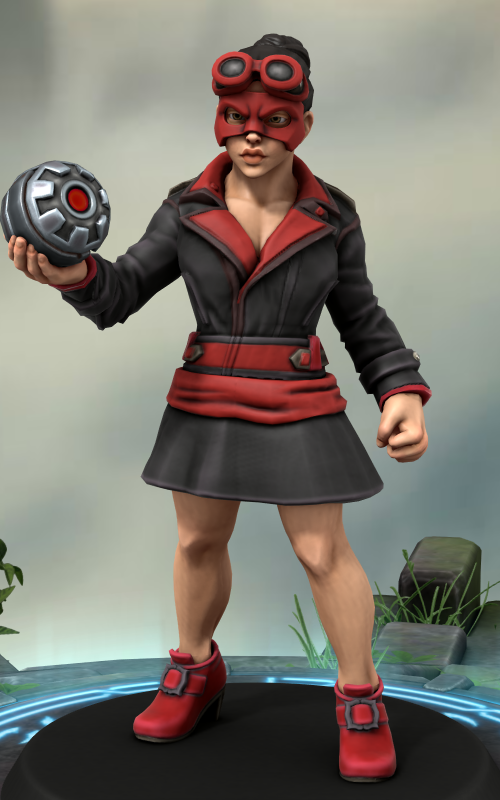
(P.S. Maybe take a second look at the formatting of Sonic Barrier.)

FR
FrivYeti
2025-08-25 21:41 UTC (in reply to #1366)
#1367

Fixed it! Lack of a space after the two stars, which wasn’t a problem when it was just bold. Perils of posting from one word processor to multiple websites.

FR
FrivYeti
2025-08-28 15:53 UTC
#1368

Cloudwalker

Real Name: Max Cullen, First Appearance: (as hero) Starshadow #1, March 2019

Lieutenant Type: Ally
Die Size: d10
Relation: Family Member, Approach: Physical

Traits:

  • Airborn: As long as Cloudwalker is flying and has plenty of room to manoeuvre, he gets +1 to all basic actions.

While all of Starshadow’s family made appearances in her title, particular attention was paid to her complex but close relationship with her older brother Max. Max was, of course, well-known to the Venture Comics fanbase, having been a part of Skybreaker’s life for the past thirty-five years as a small child. Ten years older than Maeve, he had begun training as early as she could remember, and had become a full-fledged hero a few years before. He protected Grovedale as Cloudwalker, both on his own and alongside his father, and he had promised Maeve that if she ever needed or wanted help, he was only a phone call away.

Maeve idolized her brother, and also hated him just a little bit. Max was strong, he was smart, he never had trouble using his powers and he was an unfailingly heroic young man. Instead of controlling the winds, he was able to fly through the air, something that Maeve had desperately hoped she would be able to do when she was young. Cooper and Rhonda never compared Maeve to Max, but they didn’t have to. Thanks to her powers, she could instantly see all the ways that Max helped to make their lives easier, while Maeve made things more difficult. Max was in a very literal sense the son that Cooper had always wanted, and while her father went out of his way to try to understand Maeve and her own interests, she was much too aware of the effort that it took compared to the easy way that her brother fit in with his parents, his friends, and his heroic allies. It left Maeve in a complicated place, deliberately pulling away even when she knew that Max was reaching out to her, just to avoid being a burden.

For his part, Max knew that he had a rocky relationship with his sister. Their ages were just too far apart to have grown up together, and he didn’t get her fascination with the darkness. The truth that he would never admit was that the shadows scared him, and even though he loved Maeve and wanted to protect her, she scared him a little bit too. He did his best not to show it, hiding his complicated feelings from both his sister and his parents, but he had nightmares about her shadow-magic drawing her into the embrace of the Dark Sea. If that happened, he didn’t think he would be able to fight her, and that only made him feel worse.

The result of this was that Cloudwalker’s presence always led to drama. Since he didn’t live with his parents, the writers of Starshadow were able to bring in him when it would be interesting and leave him off doing his own things at other times; he showed up in Champions of Truth and World of Wonders from time to time, lending a hand to other heroes and serving as a valuable counterpoint to the ones who hadn’t grown up in the life.

Behind the Scenes:

Siblings!

I got about halfway through writing this as though Cloudwalker was 20, and then I did the math and realized that even though the Plutonium Age ended with him as a young child, he really should have been ten already. So the timeskip ages him up a bit more than you would expect and leaves him as a young adult, which makes the gaps between him and Starshadow a little more stark.

I really like the idea of these two having a serious problem getting along simply because of their natures, but they’re both good people and try to work through it. Maeve knows her resentment isn’t Max’s fault, Max knows that Maeve’s powers aren’t her fault, but the lines are still there and it keeps them in a very dramatic place that they can’t easily escape from.

FR
FrivYeti
2025-09-01 15:45 UTC
#1369

Fly Boy

Real Name: Tyrone Mack, First Appearance: (post-timeskip) Champions of Truth #609, March 2019

Lieutenant Type: Ally
Die Size: d10
Relation: Close Friend, Approach: Technological

Traits:

  • Man in the Chair: When Fly Boy is in Champions Citadel providing long-range support, he gets +2 to Boost and Hinder.
  • Suit Up: When Fly Boy is in the field in his power armor, he has +1 to damage saves and Attack rolls.

With so many new titles launching, the Venture editorial team wanted to make sure that the fans didn’t feel that the older generation of heroes that they loved was being abandoned. The new titles were legacies from the previous generation, but two of the line’s ten launch titles were reserved to continue to focus on longstanding fan favorites. One of these titles was Champions of Truth, which continued its numbering directly into the post-timeskip relaunch with Champions of Truth #577. The line picked up where the timeskip left off, with the team stable and established through years of relatively calm protection of the Earth. Ivan Hanna, who had led the final run on Spectacular Skybreaker, was chosen to pick up the adventures of the new team.

The post-timeskip Champions were mostly unaffected by the passing of fifteen years. Flatfoot and Wonderer were effectively immortal, and Greenheart, Skybreaker, Solace, Madame Liberty, Reverie, and Hyperstar all had enhanced lifespans from their powers or their magic and aged only slightly during the gap. The former Kid Liberty was renamed to Sergeant Liberty, a nod to his brief tenture as Corporal Liberty back in the 80s; now in his early forties, he was still a frontline member of the team.

Fly Boy was in a different position, and one that Hanna was interested in exploring. The hero now had thirty years of experience under his belt, and with 60 approaching he had chosen to mostly step back from active affairs, supporting the other Champions as the team’s engineer and remote tactician. His super-suit had been retooled over the years, losing much of its original junkyard feel as it was supplemented by technology from fellow heroes, and while he rarely suited up, he was still able to throw down in an emergency. Every time he did, he would joke that he was going to need a week in bed afterwards.

With so many heroes to focus on, Champions of Truth remained a series that shifted focus from story to story, but the first arc focused heavily on Fly Boy and Sergeant Liberty and their complicated relationship with the team’s other members. Both heroes were painfully aware that barring a disaster, their friends could conceivably carry on the fight against evil for another century, while Fly Boy likely only had a decade and Sergeant Liberty had two or three before they would be forced to step down once and for all. This sense of fleeting mortality created a connection between the two heroes that hadn’t existed before, allowing an occasional sense of melancholy to resonate with an aging readership that remembered growing up with these heroes.

Behind the Scenes:

There we go!

I touched on the new Fly Boy back when I wrote up Doctor Freak, and I’ll have to adjust Freak’s profile for length when I put him in the book, but I wanted him to get some focus. This is one of those things that Marvel and DC mostly only do in “what if” or AU stories, and it’s something that the timeskip is really good at. Fly Boy is getting old, and that actually means something.

For now, though, he’s a solid support lieutenant who can suit up in an emergency, and he’s going bald so he shaved his head and grew out his beard. He’s kept some of his “garage-built suit” looks, but the new suit is a lot sleeker.

CR
Chief_Lackey_Rich
2025-09-01 16:29 UTC (in reply to #1369)
#1370

I can certainly grok that as the worms of entropy gnaw at my aging flesh. You rarely see this sort of thing executed well in published comics because sooner or later some new writer or editor will decide a graceful retirement is boring (or unprofitable) and reboot an older character so they’re de-aged, rendered immortal or otherwise get to duck the weight of years. Usually turns out to be a Bad Idea that simultaneously disappoints older fans and fails to connect with younger readers, unfortunately.

About the best you can hope IRL for is for a good legacy version if a character to come along, and even then the older version may still come back eventually - sometimes even rising from the dead to do so, which just cheapens the whole mess by lowering teh stakes even further.

Thankfully, Venture Comics needn’t fall into that trap, since you can decide how your readers react to things. What IRL editor or marketing monkey wouldn’t give their soul for that power, eh? :slight_smile:

FR
FrivYeti
2025-09-02 16:02 UTC (in reply to #1370)
#1371

Agreed on all counts. I also do have the advantage that Venture is explicitly a smaller company, with more editorial control and fewer titles to juggle. Smaller series do go into new generations a bit more often, it’s just that in the real world there aren’t many smaller superhero companies out there because they’re up against the Big Two.

But if we need to talk about the feeling of that new ache in our muscles, we can always turn to…

Dr. Sunbeam

Real Name: Adeya Talibi, First Appearance: (as therapist) Earthwatch (Vol. 3) #2, April 2019

Lieutenant Type: Ally
Die Size: d8
Relation: Professional Contact, Approach: Social

Traits:

  • Lend An Ear: All heroes near Dr. Sunbeam have a +1 bonus to Overcome rolls.
  • Lend a Fist: When Dr. Sunbeam Attacks, she also Boosts an ally with her roll.

The first issue of Earthwatch introduced the team’s new heroes out on a mission, giving time to flesh them out and establish how they handled themselves in heroic situations. But the new Earthwatch was more than just a few heroes with a single leader. It had a full support staff, many of whom were key characters in their own right – the team’s mechanic, Cody Jenkins, would feud good-naturedly with the Cloud over his unauthorized upgrades, the team’s doctor Sylvia Wendell would be seen in the background studying her charges’ unusual biologies, and so on. Issue #2, which focused on a mission in which Catharsis lost control of her powers and nearly got Jitterbug killed, was told through the framework of after-action reports and through the heroes talking through the situation with their team therapist: Dr. Sunbeam.

Adeya had gone through a lot of trauma in her early years as a superhero, and one thing that her time with both the Champions of Tomorrow and the Starfarers had taught her was that she wasn’t alone. She believed that heroes could benefit from a therapist who understood the context of their unique troubles, and took the time to complete a medical degree and become a fully-licensed psychiatrist, offering services primarily to superhumans looking for help. Her work soon brought her into the field of former supervillains, and she was approached to become Earthwatch’s dedicated counselor – she wouldn’t have to give up her practice entirely, but it was understood that Earthwatch would be her top priority. The opportunity to help super-criminals break out of the cycles of violence that had defined them was one that Adeya couldn’t pass up, and soon she was working as the therapist for all of Earthwatch’s new heroes.

Dr. Sunbeam’s work kept her busy, but she still kept up with her training. Her powers weren’t quite as strong as they had been when she was younger; she theorized that the magic that had given them to her might be starting to fade. But she was still an effective flying brick, able to suit up in emergencies and support her charges in the field when necessary. She was an effective therapist (or at least as effective a therapist as a comic book written by an author with minimal background in the subject could be) and supported Earthwatch’s members – including Gale Force, who she demanded also take part both so that she could understand the process and because Adeya suspected the hero was carrying around plenty of emotional baggage herself. And she had plenty of obstacles. Whether it was the Cloud’s resistance to self-reflection, Jitterbug’s evasiveness, or Merlin’s total lack of interest in the whole deal, the only member of the team that actually gave it a full effort was Catharsis. Sunbeam wasn’t deterred, though. She knew the job was going to be hard when she took it, and she was dedicated to her charges’ success.

Behind the Scenes:

Sunbeam’s back!

I had Dr. Sunbeam as a plan before I retroactively decided to make her stick around in the Plutonium Age; my original idea was that after the Champions of Tomorrow, she took off her suit and went to school, becoming a full-time therapist and not a hero at all. But it seemed sad to not have her still be a cool superhero, so now she’s a therapist primarily and a superhero secondarily.

Power-wise, she’s pretty simple. Her presence helps minimize twists, and she’s good at taking out minor threats while buffing the heroes to deal with the main ones.

CR
Chief_Lackey_Rich
2025-09-02 18:40 UTC (in reply to #1371)
#1372

Being a relatively effective comic-book therapist involves getting over a very low bar indeed. The first people I think of when the concept of superhero psych therapy comes up are Doc Samson, Hugo Strange, and the obscure comedy character Doctor Blink (“Superhero Shrink”). I’m not even sure which of those three would be worst at the job.

FR
FrivYeti
2025-09-03 17:46 UTC (in reply to #1372)
#1373

I would argue that Hugo Strange is extremely effective, it’s just that rehabilitation is not his goal. :wink:

Dr. Sunbeam was in part inspired by another evil therapist, ironically: Marvel’s Meteorite / Moonstone. She was an evil psychologist who Baron Zemo hired to his Thunderbolts to do evil therapy on the team and make sure that they stayed supervillains and didn’t reform. He then ignored all of her warnings about how he was doing exactly the wrong things to keep them from reforming, and then half the team reformed and she wound up flip-flopping between reforming herself and turning back to evil for a while. Not sure where she’s at these days.

CR
Chief_Lackey_Rich
2025-09-03 18:41 UTC (in reply to #1373)
#1374

Yes, but that makes him a very bad therapist for his patients. Also probably not going to make the American Psychiatric Association happy with him at all.

Moonstone’s always been pretty talented at manipulating people psychologically - better than Doc Samson for sure. Getting Zemo to behave sensibly is beyond her, though. That guy’s a nut. He’s crazy in the coconut.

Now that I think about it, Marvel also has Doctor Faustus as yet another evil psychiatrist. If your therapist has a monocle with a built-in laser blaster that should really be a red flag.

FR
FrivYeti
2025-09-08 15:49 UTC
#1375

Kliz’Exth Reclaimer

First Appearance: Celestial Travels #962, April 2019

Lieutenant Type: Enemy
Die Size: d10
Motive: Conquest, Approach: Otherworldly

Traits:

  • Forced Perspective: As long as there are villain minions present, Reclaimers and those minions get +1 to all actions, and any Reclaimer or minion may use each other’s non-persistent bonuses and penalties.

A new era for Celestial Travels meant that new enemies were needed. While the title’s writing team had plans for individual threats that Traveller Team One would face across the borders of the Grand Galactic Union, they also wanted to start building up a major ongoing storyline – an enemy that would help throw the galaxy into chaos, reflecting the dimensional volatility that was being designed for other comics and ensuring that galactic society would be too busy to heavily intrude on Earth-based affairs. They wanted something that would be an entertaining deep cut for old readers, but who wasn’t one of the continuity-laden empires that had been heavily active in the previous decade. The solution was to revive the ancient Kliz’Exth.

The Kliz’Exth had made a few minor appearances in the past as tiny handfuls of exiles. Eons ago, they had been one of the dominant species in the galaxy, using their psychic technology to colonize the stars. But when their robotic servants developed psychic fields of their own, they were able to override the controls forcing them into servitude and rise against their masters. The Kliz’Exth were all but eradicated, and the Kel’Thoth empire rose in its place.

But the nature of dimensional travel allows for many strange things. A single Kliz’Exth colony was able to shift its entire solar system one dimensional degree, folding themselves outside spacetime to avoid their former servants. They recovered, spreading through previously unknown dimensional layers, forgoing robotics in favour of biotechnology and swearing to return for their revenge. And one day, the slowly shifting patterns of dimensional fabric brought the Kliz’Exth back into the radius of the galaxy, ready to demonstrate their psychic mastery over the universe and bring it to heel.

The Kliz’Exth began their invasion with Reclaimers – skilled psychics who would travel to isolated outposts, small colonies, and frontier space stations. Their abilities allowed them to link their minds up with other beings, showing them the Kliz’Exth view of the perfect order of the universe. Locked into a perspective that was not their own, victims of the Kliz’Exth would obediently begin to work towards a new galactic order, one made up of a perfect alignment in which no one had individual opinions or desires. However, the Reclaimers had to move slowly. They didn’t have the power to challenge the Union directly, and they didn’t want to be destroyed again. In their first appearance, the Travellers defeated a pair of Reclaimers and freed a Kel’Thoth space station, but they knew that the enemy would return, slowly working to expand their influence and overthrow the galaxy.

Behind the Scenes:

I got Otherworldly and Conquest and then I decided I wanted a big bug.

The Kliz’Exth build on the Kel’Thoth storylines I’ve been dropping bits and pieces of over the course of writing up my lieutenants; it’s a classic comics move to resurrect a dead species, and it’s honestly a surprise that it took this long for them to make it big. Psychic forced hive minds is a fun variation on the usual mind control gimmick, and it lets the Kliz’Exth become a really major threat just by infiltrating places and manipulating them. Individual Reclaimers aren’t that dangerous, but let them stick around near people they can share thoughts with and things get out of control in a hurry.

On the flip side, there probably aren’t any real Kilz’Exth villains, because they don’t have much individuality. They all have exactly the same opinions and beliefs, which makes them fairly predictable if you know what you’re getting into. It makes them good foils for other villains - what happens when some known foe becomes partially absorbed into the hive-mind?

CR
Chief_Lackey_Rich
2025-09-08 16:29 UTC (in reply to #1375)
#1376

That’s interesting wording. The “may” part means you could opt to use all the non-P penalties found on other folks in the mind link up on a single minion’s action or even saving roll, dooming it to failure but effectively purging the penalties from all its non-Villain allies. Pretty efficient sacrifice play, but you’re not forced to do it if you don’t want to, so (for ex) a Reclaimer would only have to deal with its own personal penalties for its own action/save, and could also steal bonuses from allies at the same time.

Going to play merry hell with the PC’s penalty game until you break up the link by swatting all the villain minions or Reclaimers, if nothing else.

Also, I’m once again impressed by the model builds you can get out of Hero Builder these days. To borrow a catchphrase from Virginia Slims, you’ve come a long way, baby.

FR
FrivYeti
2025-09-10 15:57 UTC (in reply to #1376)
#1377

Yep, the ability to choose makes it pretty powerful as long as you have minions to sacrifice - of course, the usual rules of “gotta make narrative sense” apply, you probably can’t take a penalty from being put in a headlock and give it to someone on the other side of the room to magic your way out.

And yeah, the models are looking nice! Part of it is just that HeroForge has been slowly but steadily adding options over the past two years, but I’m also getting more of a feel for which pieces interact well and how to mess with them.

SE
Sea-Envy
2025-09-10 22:07 UTC (in reply to #1375)
#1378

until we get the “broke away from the hive-mind” villain.
probably fights its’/their own people with more passion than the heroes

What if it/they are feminine gendered and have the same body model with a princes/queen dress diadem and scepter?

also, I like the mini since I use the same communicator for my Star Wars character, and the same orb to represent the armillary sphere used in his arcane Force tradition. - Hero Forge does not have enough ancient/steam punk navigation tools in the gear section.

FR
FrivYeti
2025-09-11 17:12 UTC
#1379

Now, that is a possibility! I’ll make a note of it for later.

Lunar Shroud

Real Name: Frieda Khan, First Appearance: Vanguard Academy #3, May 2019

Lieutenant Type: Enemy
Die Size: d8
Motive: Obedience, Approach: Raw Power

Traits:

  • Lunar Barrier: As an action, Lunar Shroud may Overcome with a +2 bonus to create a two-box “Lunar Barrier” challenge. As long as the challenge is in play, no one may enter or exit her location.

After an initial setup issue introducing Captain Bolt and the eight students that would be the leads of the first year of Vanguard Academy, Martin and Kilmer spent four issues focusing in on two students at a time, setting up their relations to each other and their guiding ethos. Each of these issues unveiled a new villain who was set up to be a deliberate foil to the two heroes on display, and for Jackie Frost and Critter’s focus issue in Vanguard Academy #3, Martin and Kilmer decided to introduce a problem from within the student body. Captain Bolt intended to teach a new generation of heroes how to stand firm in their convictions, but there were students present at the school who were either too self-interested or too nationalistic to see the message that he was trying to convey. Of the latter, the duo’s most persistent threat was from Lunar Shroud.

Frieda Khan’s mother was a senator in the American government, a proud and slightly paranoid woman who was suspicious of superhumans and far from pleased when her teenage daughter suddenly developed the power to shape ‘lunar light’ into weapons, tools, and barriers. Senator Khan had lobbied against Captain Bolt, wanting Vanguard Academy to be under the control of a federal department that would train potential dangers into American assets for civilian or military life; despite that, she sent Frieda to the academy both to learn to properly control her ‘inhuman abilities’ and to serve as her mother’s eyes and ears in the building.

This left Lunar Shroud in an awkward position. She had been raised to follow the rules and respected Captain Bolt, but she was also specifically present to serve as one part threat and one part spy against her own headmaster. Caught between familial loyalty and her desire to be more than a soldier, she used the rules as a shield against her own emotions. In her early appearances, she was mostly a pain, using her lunar barriers to try to keep students safe by preventing them from escaping to where the action was, and clashing fiercely with Jackie Frost (who she saw as a spoiler, arrogant rich bitch who was here for all the wrong reasons.) As a result, she became the focus of a tiny counter-culture movement in the academy who believed that Captain Bolt was steering it wrong, with little support from the rest of the students but significant support from conservative politicians and the military.

Frieda and Critter had a particularly complicated relationship; they each respected the others’ beliefs, even though they were on opposite sides of the argument over Vanguard Academy’s future. Both of them tried to recruit each other more than once, and their quiet, secret friendship was a backdrop to the comic’s second year.

Behind the Scenes:

I didn’t want all the Vanguard Academy stuff to be “main characters versus external villains”, so here we are. I almost developed a political attache to be the problem-causer, but I really like the idea of a slightly self-hating fellow student who’s stuck being the bad guy, and the ability to create fairly powerful barriers to seal a location off make her a huge pain during an action scene when she locks half the heroes in a room with herself and refuses to let them go out to fight.

FR
FrivYeti
2025-09-15 16:18 UTC
#1380

Holographic Projection

Real Name: Varies, First Appearance: Venture into the Unknown (Vol. 2) #4, June 2019

Lieutenant Type: Ally
Die Size: d8
Relation: Mentor, Approach: Mental

Traits:

  • Avatar: At the start of the projection’s turn, remove one penalty on it.
  • Science Team: The projection gets +1 to Boost or Overcome using scientific principles.

In his first few issues, Venturer had limited contact with Earth. Protean had been able to contact Ken’s family and let them know that he was, if not safe, at least located, but while she was working feverishly to figure out how to bring him home, the audio receiver she had hooked up depended on dimensional eddies and rarely managed to connect to the lost young man.

Early in Ken’s time in the third world he found himself in (the Twilight Lands, where humanity had long ago died out and only the monsters of the Venture Comics world still roamed) Wendy finally managed to crack the unstable dimensional eddies that surrounded him long enough to open a second dimensional portal. To her frustration, it was nowhere near large enough for Ken to return home safely, but it was just large enough for her to send her homemade dimensional beacon through to him. This beacon took the form of a wristband for Ken to wear, and had three features. First, it allowed Protean and her team to track Ken, mapping out the realms he was being dragged to. Second, it let her scan his powers and the dimensional capabilities that he was copying, building a database that she hoped would help her teach Venturer to use his powers more deliberately and learn the nature of their enemy. And finally, the wristband’s built-in holographic projector allowed anyone in Protean’s lab to manifest at Ken’s side, seeing what was happening around him and carrying on conversations.

The result of this was that Venture into the Unknown had a supporting cast made up of Ken’s family and of Wendy’s employees. Wendy herself logged in when she was able, giving Venturer scientific advice and support, and the comic spent some time touching on her loving but complex relationship with Carlie, her newfound status as a multi-millionaire inventor (despite which she still lived in an old apartment and drove a beat-up ten-year-old car), and her careful balancing act between her duties as CEO and as a superhero. Ken was also able to spend time with his mother and father, showing them the amazing things he was experiencing and reassuring them that he was still okay, and he started to get to know some of the team’s lab techs, especially the night crew – Sasha, Libby, and Carl, three college interns not that much older than Ken, who built up a friendship with him and helped keep him from despair. The system was still not always able to connect, but it was much more reliable than the previous audio files and had the advantage of being able to interact with the people Venturer met on his travels.

The projections were also easily disrupted, unfortunately, and in high-danger situations it wasn’t uncommon for the forces that Venturer was fighting against to short them out. But the lifeline back home helped to ground the story and let Ken focus a bit more on the strange worlds he was exploring without worrying about whether his family knew he was safe.

Behind the Scenes:

Expanded information about Venturer’s holographic projection means a little bit of information about post-timeskip Wendy and more information about how Venture into the Unkonwn works! I’ve downgraded the aide from a d10 to a d8, because I want it to be a little more fragile of a link, and added a few extra people so that it’s not just holo-Protean.

CR
Chief_Lackey_Rich
2025-09-15 16:58 UTC (in reply to #1380)
#1381

Nifty concept. Despite (or maybe because of) years of painting minis I always did like monochrome figures where the subtle shading does all the work.

SE
Sea-Envy
2025-09-16 14:37 UTC (in reply to #1380)
#1382

is the default projection figure Carl or Venturer’s father?

FR
FrivYeti
2025-09-16 15:27 UTC (in reply to #1382)
#1383

Deliberately vague, but in my mind it’s Libby.

Interesting fact: the projection was actually built using the “default human female” body with a bit of extra weight added; the bagginess of the shirt and the colour tone made the projection more androgynous, which I stuck with to keep it vague.

CR
Chief_Lackey_Rich
2025-09-16 19:11 UTC (in reply to #1383)
#1384

Looks more than a bit like a guy I used to room with in college back in 1988. I mean, he wasn’t generally green and glowing and didn’t wear glasses, but other than that it’s pretty close.

FR
FrivYeti
2025-09-17 16:07 UTC
#1385

Small bonus update today! As I adjust the Diamond Age to run from 2019 - 2022, instead of from March 2019 to February 2020, I’ve been moving various villains back and making changes to their writeups to match their new locations. Most of these shifts have been small enough that I haven’t bothered posting them, but I also made some noticeable changes to Vanguard Academy, in order to make it a failed title with two successful heroes rather than a title whose cast fully moved elsewhere (mentioned above in the Lunar Shroud entry). As a result, Databyte’s first appearance has been substantially altered, as follows:

Databyte: History

Of the four antagonists introduced in Vanguard Academy #2-5, two vanished completely when their associated heroes were shuffled out of the comic. One, however, proved to be popular enough that he bypassed his intended nemesis and became an opponent of Jackie Frost and Critter, allowing him to grab extra storylines and become a core part of the back half of the series.

Vanguard Academy #5 focused on the series’ two purely tech-focused characters. Gacha was a young woman with the ability to craft hardlight hologram projectors; she created loving replicas of her favorite characters (mostly thinly-veiled parodies of real characters and celebrities) and used them in combat and to solve problems. Her technology had been stolen by a major corporation, and she was at Vanguard Academy to prove herself and reclaim it. She was paired off with Big Rig, a young man who had the power to rapidly adjust and modify technology, which he primarily used to build himself an adaptable vehicle that could shift from being a slender power suit to a full car. The two of them were black sheep of the Academy, a pair of delinquents constantly on the verge of being suspended, and their nemesis Databyte almost finished the job for them.

Noah Kim was a master hacker with the ability to mentally interface with technology, and create electrical beings that could slip through power lines and devices to manifest anywhere that there was power. The young man was determined to use this power for his own benefit, and saw the potential in Vanguard Academy to steal in-depth information about a new generation of superheroes which he could both use to avoid them and sell on the dark web to help other supervillains defeat their newest foes. Overriding Vanguard Academy’s defenses and taking control of lockdown procedures was a challenge, but a solveable one, and he was determined to get his information and get out before anyone realized what was happening.

Unfortunately for Databyte, Gacha and Big Rig were sneaking out of their dorms to party when the lockdown was triggered, leaving them stuck outside with the security system fully active. As they tried to evade it and get back inside, they came across Databyte’s bots emerging from a power line and realized that the Academy was under attack. Gacha used her hardlight constructs to attack Databyte’s network, while Big Rig repurposed the school’s security systems to break into Captain Bolt’s quarters and free him. The three heroes then confronted Databyte, shutting down the school’s servers and protecting its students. In the chaos, Databyte was able to escape, but Captain Bolt reinforced the academy’s defenses to prevent another similar assault.

This was not, of course, the end of Databyte. He resurfaced in Vanguards #10 as part of a larger force of mercenary villains from the Outfit, trained by Headmaster to opposed Vanguard Academy and deployed during what should have been a routine operation in an attempt to injure as many students as possible. Once again, the force was defeated, but Databyte managed to gather a substantial amount of information on the heroes’ tactics and powers, taking them back to the Headmaster and establishing himself as a trusted agent in the Outfit.

FR
FrivYeti
2025-09-19 16:41 UTC
#1386

Leading Lady

Real Name: Sasha deGrey, First Appearance: Starshadow #16, August 2020

Lieutenant Type: Enemy
Die Size: d8
Motive: Wealth, Approach: Technological

Traits:

  • Steal the Spotlight: When a member of the Production Crew takes their expertise action, Leading Lady may use her reaction to take the same action.
  • Team Player: Leading Lady adds +1 to her damage saves for each active member of the Production Crew in her location.

The Production Crew: Leading Lady’s Production Crew are d8 lieutenants. When taking their expertise action, they roll twice and take the better result. Producer: Boost. Cameras: Defend. Pyrotechnics: Attack. Publicity: Hinder.

With the importance of dynasties and inheritance to her story, it probably wasn’t a surprise that several of Starshadow’s foes were literal or metaphorical inheritors of her father’s enemies. In addition to the children of Bres, a new Mary Molotov inspired by her predecessor, and the apprentice of the former Locksmith, she had to contend with a brand-new Production Crew and its Leading Lady.

The new Production Crew remained in the service of Red Herrings Inc., providing distractions to other villains intent on carrying out grand plots. But where the previous Crew had used their movie talents as a cover to commit crimes, Leading Lady used crimes to advance her fame, recording and broadcasting her crimes live and daring the police to track her down. In her first appearance, Starshadow knew that the Locksmith was using Leading Lady as a distraction, but she had also stolen a helicopter and was flying it directly towards a major bridge downtown. She had no choice but to respond, at which point Leading Lady assured her that she ‘knew you could handle it’ and bailed out, forcing Starshadow to try to land it while Leading Lady escaped with some great footage of her parachute stunt.

The irrepressible and completely amoral villainess would return several times, treating the lives of others as a game where the most impressive stunt won. In addition to facing off against Starshadow, she would become a foil for Jackie Frost, viewing the heroine’s channel as competition, and would appear in the pages of Madame Liberty. She had no particular loyalty to her crew, and was often seen with new members from issue to issue.

Initially, Sasha appeared to simply be a new Leading Lady that Red Herring had hired, but Starshadow #31 revealed that she was indeed Trent Hudon’s daughter when the original Production Crew returned for one last job, setting themselves against their counterparts. Both crews were arrested, but Sasha and Trent escaped; the job was revealed to have been a plot by the pair to get Trent enough money to finally retire, while his daughter would take the heat and use it to advance her growing criminal career.

Behind the Scenes:

And here she is!

I’ve been discussing a new Production Crew for a while, and this is the result. Leading Lady is more integrated into her crew - her ability to act twice per round is very strong, but it’s limited by how much of her crew is still intact, and while she’s hard to drop with allies around her she gets progressively weaker as they fall. Sort of a lieutenant version of a squad villain.

She’s also more of an asshole than her father - less loyal, less careful, more narcissistic. But she does love him, and she’s not a complete monster. She’s just prone to doing big things that she’s pretty sure the heroes can stop while she escapes.

CR
Chief_Lackey_Rich
2025-09-19 22:04 UTC (in reply to #1386)
#1387

Got to be one or more storylines where this treacherous diva gets backstabbed by one or all of her current crew - especially if they’ve survived a betrayal or two and know how they’re likely to end up. Might not be an in-combat betrayal either, all they’d have to do is cut a deal with the heroes/authorities to help catch Leading Lady with evidence to prosecute her. Having one of the crew quietly approach a PC about that sort of thing might be a good “positive twist” for rolling a 12+ on an Overcome.

Her initials mean she’s probably met Clark Kent at some point, of course. :slight_smile:

FR
FrivYeti
2025-09-21 17:04 UTC
#1388

Yeah, while I don’t think Leading Lady actively betrays her crew too often (that one issue notwithstanding) she doesn’t have anything like the tight relationship that her dad did with his. Usually it’s more of the mercenary “if I get caught I can’t trust that she’s going to put herself in danger to get me out” and crew members bailing on the job when things go south instead of pulling together.

Of course, most of Leading Lady’s crew will also be Red Herring’s crew, so there is a top-level executive keeping them from fully imploding. It’s probably where he puts the folks who are too skilled not to hire, but who he doesn’t trust to have the full discipline for his more complex schemes.

UN
unfortunateSD
2025-09-21 19:50 UTC
#1389

I think Locksmith is already the name of Mr. Ferris’s henchmen.

FR
FrivYeti
2025-09-21 23:15 UTC (in reply to #1389)
#1390

Locksmith is a major Skybreaker villain mentioned briefly in the Ringmaster writeup; he hasn’t had a full write-up yet, but I will eventually get to him. He’s a crime boss, but not connected to Ferris.

FR
FrivYeti
2025-09-22 15:51 UTC
#1391

Gremory

First Appearance: World of Wonders (Vol. 2) #17, September 2020

Lieutenant Type: Enemy
Die Size: d10
Motive: Destruction, Approach: Magical

Traits:

  • Bloody Hands: When Gremory Attacks or Overcomes using magic, she also Boosts herself with the result.
  • Wards: When Gremory has a magical bonus, she may add its value to her damage saves without using it.
  • Sin-Eaten: Gremory takes double damage from Radiant and Infernal sources (before applying Defend actions.)

The first stories in World of Wonders focused exclusively on existing Venture Comics heroes who didn’t have their own titles, showing what they had been up to over the past fifteen years and positioning them to be used in crossovers or limited series going forward. As time went on, however, the focus of the book began to expand, giving focus issues to newer characters who had had popular but minor supporting roles in other titles, or expanding on the background details of crossover events and minor elements. In World of Wonders #17, the title left Earth for the first time, visiting one of the pocket worlds that Venturer had travelled through late in the previous year – the Precipice, the vast cyberpunk building ruled over by rival gangs and a malfunctioning AI. The two-parter, Cyber-Daemons, followed this universe’s Matrixx, a down-on-her-luck detective looking to solve a string of serial killings that seemed to be rituals, and which had been ignored by what passed for the local police force.

Soon enough, Matrixx was embroiled in a battle of revenge between three of the larger gangs in her region. The Covenites, a crew that painted themselves up to look like the long-deceased magician, had been feuding with the Lead Bellies and the Number Crunchers, until they had been wiped out by their rivals. The sole survivor of the Covenites was a young woman called Gremory. As her sisters died, Gremory had managed to tap into the long-dead magic of her ancestor, taking the blood of the dead into herself and surviving the bomb that should have killed her. She began killing Bellies and Crunchers, making it look like they were killing each other, while also committing ritual murders to improve her newfound magic and allow her to slip through the Precipice invisible to the Overseer.

Gremory was not particularly powerful, but the power that she had was an outside context problem for Matrixx, who was struggling to prevent a gang war that would kill dozens of innocents. The cyberwitch was immune to physical harm, shrugging off bullets and bringing the gangs closer to war with every deed. It wasn’t until Matrixx ended up in a struggle with Gremory and stabbed her in the heart with her own infernal dagger, cutting through all of her mystical defenses, that the villain died.

Of course, death has little meaning to a popular character; Gremory would return as one of the Agents of Revelation of Venturer’s secret foe, who plucked her from the moment of death to use as an assistant to more powerful villains. As for the Precipice, it was a popular setting, and it would see more issues in the future.

Behind the Scenes:

Another lieutenant who’s kind of straddling the line between lieutenant and villain, with some nasty tricks up her sleeve, Gremory is a lieutenant mainly because she’s so vulnerable to having her tricks disrupted, and after her first appearance she’s mainly in a supporting role to stronger Agents of Revelation.

Magical serial killer in a cyberpunk world was a fun concept idea, and drawing on her emulating Coven and representing her in this setting was fun. There’s definitely room for more cyberpunk Venture in the future. Mechanically, her wards make her nasty to try and take down without dealing with her boosts first - unless you’ve got magical energy damage to use, or can turn her own damage against her.

Oh, and for those who remember: I had originally called this world the Cyberblock in Hearsay’s writeup; I gave it another name because Cyberblock was fine for a one-shot but didn’t really sound that cool to me. I much prefer The Precipice.

CR
Chief_Lackey_Rich
2025-09-22 16:18 UTC (in reply to #1391)
#1392

Mechanically, she’s going to be really difficult to deal with if the PCs don’t have access to high-quality Infernal/Radiant attacks. Without it they’ll probably have to tie one hero up just countering her self-Boost game every round and then have to pile on enough serious attacks to get past those lieutenant saves. At least she’s brittle, just going down to a d8 will hurt her Boosts badly, and if they do have a way to target her vulnerabilities she could easily go out in one hit from that point on.

Much catchier, yes. Have to get the artist to draw a lot of extreme vertical spaces within the mega-arcology to merit the name - and maybe do scenes on the rooftop and tiered balconies so going over the edge is a real hazard for non-flyers.

FR
FrivYeti
2025-09-25 19:34 UTC
#1393

Abscess

Real Name: Derek McClain, First Appearance: Stutter #21, February 2021

Lieutenant Type: Enemy
Die Size: d8
Motive: Personal, Approach: Raw Power

Traits:

  • Acid Splash: When Abscess Attacks, he may use his reaction to make the Attack apply to two nearby targets. If he does, also Hinder those targets with the result of his roll.

While Stutter’s primary opponents were Stillmaker and its forces, Timekiller and his company, and the effects of broken time on Ferristown, she also had to deal with various smaller-scale villains who were drawn to the growing chaos. One of those enemies would prove to be a particularly pernicious one, a tragic but monstrous figure that called himself Abscess.

Derek McClain was an American soldier who came back injured from deployment to find himself discharged with no career prospects or money to his name. Trying to raise the funds to keep his family housed, he became part of a trial to develop superhuman soldiers. When things invariably went wrong, McClain was the only test subject to survive; the project was shut down and its scientists arrested. But this wasn’t much comfort to the soldier; all of his internal liquids had replaced by acid, and while his reinforced body could survive the experience, even the act of sweating was painful to him. The American government put him in a private facility while they tried to figure out how to reverse the damage, but it was clear to Derek that he would spend the rest of his life in containment suits or a private acid-proof cell.

When the Stillmaker came after him, it brought with it fragments of the life McClain could have lived, and everything became much worse.

McClain saw the timeline in which the scientists who had worked on him had been successful due resources provided by Mr. Ferris. They’d identified McClain’s Atlantean genomes, and turned him into an elite operative for the government, rich, famous, and with total control over his abilities. Then Paradox had changed that future, leaving McClain a scar on the face of the world.

When Stutter saved McClean from Stillmaker, he snapped. Recognizing her temporal powers, McClain demanded that she rewrite his timeline and fix him. He escaped his facility and began to hunt her, appearing at the worst possible moments to put whoever she was trying to save in danger. He would force her to save him. He refused to believe that Stutter couldn’t help him, refused to believe that he was killing himself slowly and others quickly. When the timeline was changed and he was in the world he was meant to live in, none of it would matter. He took on the name Abscess because he was a wound in the world, and he would not stop until he was healed.

Stutter felt for Abscess, but she couldn’t figure out what to do about him. He was dangerous, in the way, and utterly dedicated to forcing her to do something that she was pretty sure was impossible. As he chased her, she found herself wrestling with whether she would have to kill him, even though it was her future self that had taken his future away…

Behind the Scenes:

I had an idea floating in the back of my head for a while - sure, Paradox saved the world and made a huge number of lives better, but there must have been some people aside from supervillains whose lives changed for the worse. And thanks to a marauding creature that hates temporal change, someone might get a glimpse of that through fractured time and just absolutely snap.

And so we have Abscess, who is not so much a villain with plots to foil as he is an angry problem that just gets in the way when you’re trying to save lives and makes you feel a bit complicated. His acid splash is a big move, but since it also uses his reaction it’s sort of proofed against other villains giving him actions to make it repeatable.

CR
Chief_Lackey_Rich
2025-09-26 11:19 UTC (in reply to #1393)
#1394

Guy’s got a legit beef, but you’d think he might take some time out to stalk the VA officials who left him high and dry before the experiment, as well as the scientists who botched the job and their superiors who authorized an illegal program in the first place. The alt-timeline he saw where he’s still working for the government probably keeps him from widening his grudge further.

Also, given his power set, I bet some writer with a solid D+ in high school chemistry inserts a reference about him taking antacids all the time (eg off-brand Rolaids and Tums packaging left in his wake) and it turns into a running gag.

“Ulcer” would have been a pretty good alternate supranym for this dude too. Maybe I’ll crib it for my own uses.

FR
FrivYeti
2025-09-30 17:45 UTC
#1395

Go for it! Love to see what Ulcer is like. And in the meantime:

Cinderframes

First Appearance: Children of Jotarus #1, April 2021

Lieutenant Type: Enemy
Die Size: d12
Motive: Destruction, Approach: Physical

Traits:

  • Collateral Damage: When a Cinderframe Attacks, activate a minor twist in the environment’s current zone.
  • Unstable Suit: Heroes may take an Overcome action to overload a Cinderframe. While overloaded, step down its status die (to a minimum of d6) and remove ‘Collateral Damage’.
  • Suit Repairs: Any target may take an Overcome action to repair an overloaded Cinderframe, restoring their lost die step and ‘Collateral Damage’.

After the hastily-reconstructed Greenheart: Trial by Fire was a huge success, selling out and becoming an instant classic, the decision was made to keep things rolling with self-contained storylines that would draw in readers less interested in picking up a dozen titles a year. The second limited series released in the Diamond Age was another six-parter, Children of Jotarus.

Children of Jotarus focused on the daughter of Gyleb Jotu-Kal, Ferr’n. Ferr’n had been born during the events of House of Jotu-Kal and was now a woman on the cusp of adulthood, struggling with her position as a celebrity child of the Jotari Alliance’s most famous aristocrat-turned-commoner. While Gyleb maintained an exalted position in politics, he had dismantled the House of Jotu-Kal and given away the vast majority of its wealth. As a result, Ferr’n was the poorest member of her circle of friends, a child of privilege who had seen that privilege evaporate around her because of her father’s good nature. She fell in with a crowd of rebels who called themselves the Firewalkers, and who claimed to be inspired by the Empress of Ash – not to worship her, but to live every day as though you were about to burn away. This appealed to the impetuous young woman – until she saw where it was taking them.

The leaders of the Firewalkers were, at their hearts, angry and disaffected youths who had lived their early childhoods as wealthy, untouchable aristocrats, and then seen fifteen years of growing equality and democracy strip their benefits away from them. They were still among the richer members of society, but they didn’t see it that way, and they wanted to burn down the old order entirely, dancing in the ashes with no greater drive than the thrill of destruction. The Cinderframes were their most powerful weapons – stolen cutting-edge Jotari war machines, which vented plasma and ignited the terrain around them as they battled. With a dozen of these machines, the Firestarters intended to blaze a trail of destruction that would ‘wake up’ the people of the Jotari Alliance.

Ferr’n realized where their actions were taking them just in time to stop one of her friends from burning down a tenement filled with people, and took it upon herself to try to stop the Firewalkers and save as many of their members as possible before the Alliance came down on their heads. Over the course of the limited series, she managed both – stopping the cruel leaders of the Firestarters, and convincing several of her friends to hold on to the core ethos of living life without burning out themselves or others. She took on her father’s mantle, becoming the new Partisan to protect her planet from those who would overthrow its peace.

Behind the Scenes:

There is definitely no connection between the Firewalkers and modern politics, nosiree.

This one was a bit tricky, because I want to note some of the new heroes that get introduced in 2021-2022, but I’m also holding myself to my numbers so I do not have a hero slot for Ferr’n at this time. So one of her common foes in the limited series becomes the backdrop to introduce her to the setting, and then she goes on to become one of the Vanguards alongside Venturer later.

The Cinderframes themselves are fun; triggering environment twists can target heroes or villains, so the GM can have them Hinder themselves by accidentally setting off a building collapse, or use them to create new challenges for the heroes.

CR
Chief_Lackey_Rich
2025-09-30 18:26 UTC (in reply to #1395)
#1396

No, no, not at all. And definitely not in early 2021 USA when they were introduced.

These clowns will be making a resurgence in 2025 when they’re inexplicably pardoned as patriots, right?

Yeah, triggering environ twists is always fun, and very versatile for the GM. A lot of my custom environs include first responders showing up to the scene, and starting a bunch of jerks in chunky power armor starting fires while brawling the PCs seem like they’d draw that kind of response.

FR
FrivYeti
2025-10-01 16:43 UTC (in reply to #1396)
#1397

I have not yet decided what 2025 looks like in Venture Comics; doing a thinly-veiled storyline in which the Firewalkers successfully take over the Jotari throne and the rest of the alliance has to bring them down is definitely a possibility.

FR
FrivYeti
2025-10-04 01:08 UTC (in reply to #1397)
#1398

Mimelight

Real Name: Annette LeFranc, First Appearance: Champions of Truth #606, Nov 2021

Lieutenant Type: Enemy
Die Size: d6
Motive: Malice, Approach: Magical

Traits:

  • Invisible Songs: Mimelight has +2 to Boost or Hinder.
  • Invisible Walls: As a reaction, Mimelight can redirect an Attack aimed at her to another nearby target.
  • Invisible Thoughts: Mimelight is immune to Psychic damage and Hinders.

Not every popular villain introduced in the first few years of the Diamond Age was part of a broader story, key event, or momentous character moments. Sometimes, someone just made a joke and things got out of hand.

Mimelight was introduced in Champions of Truth #606 as a minor problem being faced by Greenheart and Skybreaker; a mime who was in the middle of creating havoc on a major bridge in Grovedale, silently singing into a microphone and unleashing invisible objects that were knocking over cars and threatening to kill people. She was present for exactly four pages, during which time she used an invisible slide to deflect Skybreaker’s spear into Greenheart, lightly injuring the heroine right before Greenheart used a nearby flight of eagles to knock her into the water. The battle was really just a setup for a storyline about how Greenheart was pushing too hard, with her going into battle against Avarice without giving herself time to heal and nearly getting killed because of it.

There wasn’t anything more to Mimelight. Hanna had included her because he was having a good-natured spat with his artist, Sophie Bernier, and he wanted to annoy her with the most French caricature villain possible; he hadn’t even given her a real name or backstory. In return, Bernier leaned into it by giving the mime a microphone to yell into. The two had a good laugh over it when Hanna saw what Bernier had drawn, and both were incredibly surprised to see fanart of Mimelight spread across the Internet within days of her first appearance.

From there, the joke grew. Hanna gave Mimelight the most French name he could think of. Bernier gave her a series of increasingly exaggerated poses and ‘invisible object’ effects. Hanna gave her the backstory of being a hedge magician who learned to use subsonic spells to create invisible illusions, which could be touched but not otherwise interacted with, and said that she chose to dress as a mime based on the look of the thing. She wasn’t after money, or power: she just liked showing off her ridiculous spells and causing trouble. Mimelight began to appear in other comics, generally with the same gimmick, and she routinely broke out of prison simply because no one could quite figure out how her magic worked or how to stop her. Usually, she vanished at the end of one of her defeats, equally unclearly.

Madame Liberty hated Mimelight. The normally-composed hero would absolutely lose her cool whenever the mime appeared, often rushing in and getting herself in trouble in her drive to finally catch the bloody woman, always without success.

Behind the Scenes:

I just wanted to make a mime, is all. Sometimes there really is nothing more to it. And I gave her a microphone because it was funny, and here we are.

Okay, there’s a bit more to it, which is that I’ve been watching a playthrough of Clair Obscur and the mime enemies are amazing. But that’s it.

Random fun fact: Hero Forge does not have the ability to put horizontal stripes on clothing. There are vertical stripes, and there are the chevron stripes that I used, but no traditional mime shirt. That’s okay in this case; the chevrons make her look just a bit weirder, and that works for the gimmick. Mechanically, she’s obviously going to drop like a rock as soon as you land a hit, but that first time you swing at her is going to be a surprise.

TA
TakeWalker
2025-10-04 02:26 UTC
#1399

Everything about her is top-tier fantastic. :smiley:

CR
Chief_Lackey_Rich
2025-10-04 02:55 UTC (in reply to #1398)
#1400

Zut alors! Even ze wordplay of her supranym is tres magnifique!

This is clearly some sort sort of sinister anti-mime conspiracy at work. Or perhaps they really don’t like the notion of cosplaying as bees?

Also makes it nigh-impossible to do the stereotypical striped convict uniform you see in old prison break movies, which might be more relevant for supers gaming. There must be some cheap Absorbing Man / “Crusher” Creed Heroclix minis out there, but that only takes care of the outfit from the waist down. :slight_smile:

FR
FrivYeti
2025-10-06 16:46 UTC
#1401

flunki

Alias: Your Personal Criminal Assistant, First Appearance: Madame Liberty (Vol. 2) #18, December 2021

Lieutenant Type: Enemy
Die Size: d8
Motive: Obedience, Approach: Social

Traits:

  • Can I Help With That? When flunki Boosts a villain or lieutenant, add +2 to the result.
  • Thank You For Your Feedback! When a villain or lieutenant uses a bonus created by flunki, flunki may use his reaction to step up his status die (to a maximum of d12.)

While the new Madame Liberty mostly focused on traditional supervillain plots and melodrama, there was plenty of room for traditional, slightly goofy villainy as seen through a modern lens. One of the most over-the-top of these was the surprisingly popular Granlavian plot: the creation and mass-production of a villainous productivity app built into a robot frame and attached digital assistant.

Designed by White Mantis and developed by her team of Granlavian engineers, “flunki” was quietly marketed to super-criminals around the world as a tool that would help take a villain from minor schemes to grand crimes. Simply feed your organization profile and recent operations into the robot boy, and he would begin to provide underworld organizational help, motivational suggestions, hiring connections and whatever other administrative work was needed by super-criminals who weren’t lucky enough to have a massive organization or superhuman memories. As a bonus, White Mantis helpfully loaded flunki with basic profiles on most major superheroes, providing small-time crooks with their core vulnerabilities and most common combat tactics.

flunki immediately became a huge headache for Madame Liberty, dramatically improving the power of the enemies that she faced. Even worse, the robots carefully studied their own masters, adjusting and retooling their approaches to provide the most effective encouragement and plans based on their personalities, rather than simply picking ones that were tactically efficient. Enemies that hadn’t been significant threats were suddenly running large-scale operations, and it began to seem like White Mantis had succeeded in her most effective plot yet…

Until Madame Liberty discovered, and was then able to prove, that the flunki line was also feeding all of the data it was recovering back to Granlavia’s hidden servers, so that White Mantis could develop a complete global map of super-crime and learn all of the secret vulnerabilities of its criminals.

The reveal of flunki’s hidden spyware hurt sales of the little robot badly, and most of its creators trashed it on the spot or sent it back to Granlavia with demands for refunds. A few, however, decided the spyware was worth the convenience of a digital criminal assistant, and flunki-boosted crimes continued to appear in the pages of Venture Comics on a regular basis.

Behind the Scenes:

I’m not entirely sure where this one came from. It sort of started as a character that was going to be a big-market digital assitant that turned evil and started building bodies to force its users to do the things that it thought were productive, but that seemed done to death. So I tried to think of a twist on the format, and then I thought “criminal assistant”, and… well, here’s flunki.

I love the little guy. He doesn’t sabotage his masters or anything like that, but he’s absolutely secretly spying on them for White Mantis the whole time, and this feels like the perfect 2020s version of a 1960s comic plot.

Also I’m specifically imagining him as using Jack McBrayer’s “Badgey” voice from Lower Decks.

CR
Chief_Lackey_Rich
2025-10-06 17:21 UTC (in reply to #1401)
#1402

Lacki’s actually going to be pretty alarming if the heroes don’t concentrate on taking him down fast. Almost guaranteed to increase his die size every single round, and his already-decent bonus game will spin out of control if he’s allowed to reach d10 or d12 status, at which point some luck Boss Bad will be reliably getting +3 bonuses to work with every time lacki takes an action. Of course, he’s also going to be very sad if he’s forced to do anything besides boosting. Powerhouse heroes forcing him into Attacking them will ruin his day right quick.

I suspect the smartest villains who invested in one of these things found the spyware immediately and used it to feed misinformation to White Mantis and company, or worse, used the link as a back door to hack Granlavia’s own databases.

FR
FrivYeti
2025-10-07 17:15 UTC (in reply to #1402)
#1403

Yeah, I was thinking of having the growth be slower, but I couldn’t think of an elegant way to do it so I just went for it. I think it creates a situation where at first, it’s not a big deal, and then he starts growing and players freak out.

Part of the advantage, though, is that it keeps the villains from sitting on his bonuses for bigger effects.

I expect there are some misinformation stories; actually using a flunki to hack Granlavian servers is probably beyond the capabilities of most would-be hackers. White Mantis is supposed to be a genius tech scavenger, after all. I think that she would have the flunkis depositing information into a locked server, and then move information from it to her main databases manually. Not impossible to slip a worm in if a story calls for it, but pretty resilient, and definitely not connected to other secret stuff. Granlavia is the sort of place with a lot of different confidential air-gapped servers.

TA
TakeWalker
2025-10-08 01:30 UTC
#1404

this is fantastic :smiley:

LO
LonelyMan
2025-10-08 01:37 UTC (in reply to #1404)
#1405

I don’t know if I like what he’s doing here…I don’t know if I have time to even review enough of it to form an opinion…but I’m certainly impressed by his dedication to a single project. I probably write more than this overall, but not all in just one place.

FR
FrivYeti
2025-10-09 15:50 UTC
#1406

The Disavowed

First Appearance: Vanguards (Vol. 2) #3, Sep 2022

Lieutenant Type: Enemy
Die Size: d10
Motive: Conquest, Approach: Raw Power

Traits:

  • Dead Inside: The Disavowed have +2 to Attack and Hinder but -2 to all other basic actions.
  • Toxic Gas: When the Disavowed fail a damage save, they Hinder all nearby targets with the result.

The new Vanguards split their time between Earthside defenses and support for the Jotari Alliance, with the team supported and funded by the United Nations and the Alliance Council. It was a dangerous time for the Alliance; as it approached the twentieth anniversary of the overthrow of the Jotari Authority, the Alliance’s member states were in discussions about whether they wanted to remain in tight alliance, shift their government into a looser commonwealth of independent nations, or dissolve completely and go their own ways. The fledgling alliance was faced by three major threats, each of which wanted it to dissolve for their own reasons: Singularity, who wished to snap up minor pocket realms on the borders of Jotari space, and whose Jotari followers wanted their old tributaries back in the fold, the Firedancers, who wanted to burn down the Alliance as revenge for spurning them with no broader plans for what came next, and the Disavowed.

Nineteen years was not long enough for an oppressed people to forget their oppressors. While the member worlds of the Alliance officially saw the Jotari commoners and rebel aristocrats as fellow victims of the old order, some of the former rebels from within those worlds disagreed. They hadn’t fought the Authority for centuries simply to turn around and hand their freedom over to more foreign aliens, whether Jotari, human, or even each other. Their vision was for each of their worlds to be truly independent, free of the stain of other cultures, and they were willing to burn down everything to accomplish their goals.

As their own governments and former allies labeled them criminals or terrorists, these rebels proudly took the name ‘Disavowed’, uniting in the goal of destroying every remnant of the old order. Each member implanted themselves with advanced cybernetics that would one day kill them, giving up any claim on a life after the Struggle ended and promising to do whatever it took to destroy the Jotari Alliance and the collaborators that they saw working within it. They would accept no compromise to their final goals – while they were willing to work with each other for now, this was only until their realms were back under their own control, at which point each member agreed that they would depart and never interfere in each others’ affairs again.

Because of this, Disavowed teams were among the deadliest threats that the Vanguards faced. To many of them, the Vanguards were a bigger threat than Singularity – she was an enemy their people could face, while the Vanguards were a corrosive symbol of unity that needed to be brought down before it tainted their lives.

Behind the Scenes:

Things are always rough in a post-revolution world. I like the idea of the Alliance being basically a decent place to live, but it’s still struggling with the aftermath of centuries of oppression, its people pulled between the enemies who don’t want to let go of their power and the people who don’t want to forgive for the sake of peace. There were a lot of compromises made when the Alliance was founded. Were they all good ideas? Maybe not, but the alternative is worse. So the fringes of rebellion unite to tear down the new world they built, because it’s not good enough. Very comic books. Lots of drama.

I’m not entirely sure where this storyline ends, but probably at a minimum it involves the Alliance getting a name change so that the Jotari aren’t symbolically on top. The Disavowed are at the extreme end of other, more reasonable opposition to the Alliance, and working with those is probably also a part of Vanguards.

CR
Chief_Lackey_Rich
2025-10-09 16:44 UTC (in reply to #1406)
#1407

Nasty, but also trumped by instant-kill damage (ie dealing at least twice the max current status die) since that doesn’t even allow a save so you can’t very well fail it. Awfully hard to scrape up 20+ damage in one Attack, but as they get battered down they might lose out on this triggering a time or two.

Also going to wreak havoc on nearby allies, including other Disavowed.

FR
FrivYeti
2025-10-11 00:05 UTC (in reply to #1407)
#1408

Yeah, that’s intended. Tactically, the Disavowed are encouraged to spread out so that they don’t take each other down when they die, but that means they’re less likely to get a lot of heroes in the burst of their failed saves.

SE
Sea-Envy
2025-10-11 19:55 UTC (in reply to #1398)
#1409

should Mimelight have a “not the source of the damage” exception on her redirect?
could get horrible if it was down to her and one hero left standing.

CR
Chief_Lackey_Rich
2025-10-11 20:22 UTC (in reply to #1409)
#1410

I agree it’s nasty but it’s not unprecedented. There are at least four “full villain” reactions that can deal damage back to an Attacker, although a couple of them do have rather odd wording.

Even one-on-one you can get past it with:

  • Initiative timing (unless the GM’s being an utter jerk about passing off from the scene tracker and any NPCs still standing)
  • Attacks that ignore reactions (which a GM might allow as a rider on a Risky Basic Attack)
  • Damage that isn’t coming from an actual Attack action (which you might be able to trigger through Overcomes to set off twists, for ex). With at best a d6 save even small amounts of environmental damage are a meaningful threat.

Anything that lets you get off an extra Attack in your turn can also breach that defense at the cost of hurting yourself with the first Attack (the most common example probably being the ever-popular Inspiring Totem Red Social ability).

Could also backfire spectacularly if you hit her with a damage type that you have damage negation or inversion for. Improved Immunity to your own damage is hilarious here.

SE
Sea-Envy
2025-10-12 08:52 UTC (in reply to #1410)
#1411

“Risky action” to make un-react-able had not occurred to me, so not horrible.

CR
Chief_Lackey_Rich
2025-10-12 12:58 UTC (in reply to #1411)
#1412

It’s not on the official list of options, but like I said a generous GM could allow it. That list is meant to be more exemplary than restrictive, after all.

The other countermeasure to that style of reaction I’ve seen is to use minions (from the Natural power source, Minion-Maker archetype, or just using the common Red Summon ability early with a twist) to overload the defender the same way multiple Attacks do. That’s trickier if the baddie decides to redirect so as to kill another minion who hasn’t Attacked yet, though.

FR
FrivYeti
2025-10-12 23:30 UTC
#1413

Also, Mimelight can only redirect to nearby targets, so if you’re one on one you can get some distance and whack her from outside her redirect range.

SE
Sea-Envy
2025-10-13 08:21 UTC (in reply to #1412)
#1414

most of the Risky options are comparable to GREEN actions, I agree most GMs would allow it.
I always thought of it like “Power Stunts” from Marvel Superheroes RPG (TSR) where you can spend KARMA to try a new trick, but you have a fail chance until you do your new special move enough times.

FR
FrivYeti
2025-10-13 16:06 UTC
#1415

Maximental

Alias: Maxwell Mathers
First Appearance: Flatfoot and Fly Boy (Vol. 2) #16, Oct 2022

Lieutenant Type: Enemy
Die Size: d12
Motive: Need, Approach: Mental

Traits:

  • Tip the Dominoes: When Maximental Hinders, apply the result to any number of targets near each other. Hinder Maximental with a penalty equal to the number of targets affected.

Flatfoot and Fly Boy launched to a very different setting than the one that had been left behind. The events of Brave New World had cleared the Twin Cities of theis super-powered gangs, and while Ferristown and Ferrisville still had the usual supervillainy, Stutter had established that they were largely peaceful and free from the grip of Hank Ferris and the Company. Flatfoot and Fly Boy established that, with their home at peace, the two superheroes had spent more of their time supporting the Champions of Truth, protecting lives on a global scale.

At the same time, the world was changing. Tech companies and political forces were slowly being captured by greed and corruption in the form of a new Company led by Steeldriver and the Conductor; the married villains moved behind the scenes to try and establish themselves without alerting anyone to the risk that they posed. When Black Hat drew the attention of Fly Boy to the connection between rising rents in his neighborhood and falling wages at local factories being bought out and automated by shady tech companies, he and Flatfoot began to turn their attention back home, fighting to expose corruption and make a difference without blowing up buildings or killing executives. The duo’s enemies knew that they would be trouble, but they had ways of dealing with interfering superheroes: create villains to throw at them as distractions.

Maximental was one of those villains. Maxwell Mathers was a brilliant man at stuck in a dead-end middle management job that he hated, taking out his feelings of superiority on his employees while lacking the bootlicking skills to endear himself to his superiors. When he was fired for embezzlement thanks to an investigation by Flatfoot, the Company secretly but deliberately exposed him to strange radiations that made him able to see how all of the forces in his environment interconnected. Maxwell immediately saw how he could use his gift to get rich – but more importantly, how he could use it to make Flatfoot look like a fool.

This would quickly become his modus operandi. Maximental had overwhelming perceptive abilities (almost literally; he spent much of his time dealing with incapacitating migraines). He was able to see every fault point in an area and set off chains of seeming coincidences that did massive amounts of harm while moving himself to the place where he would be least affected. He also had a towering ego and a lifetime of repressed superiority, and nothing mattered more to him than his need to prove himself the smartest. He would take jobs with other supervillains just for a chance to take a swing at the heroes, and he would usually end up having to slip away into the night when he failed, even more bitter and certain that he would prove himself next time.

Behind the Scenes:

There’s a general idea in the Diamond Age that tech has advanced enough that it’s not that hard to create a superhuman, as long as you don’t mind devastating side effects or long-term harm to the subject. This works great for establishing demographic reasons for supervillains to significantly outnumber superheroes, so I’m rolling with it.

As for Maximental, he’s just kind of a jerk, a Riddler-level insecurity complex coupled with a willingness to hurt vast numbers of people just to make a point. And he looks like a failed math teacher. He’s also a major pain in the ass to deal with - he’s going to Hinder the team with a nasty penalty when he comes into play, and he’s hard to drop. On the flip side, that Hinder to himself could end up making the first counter-attack against him pretty hard to stop, so he could pratfall into an early out.

And he’s the last Diamond Age enemy! Next time, our final Diamond Age character, wrapping things up for this phase…

CR
Chief_Lackey_Rich
2025-10-13 18:37 UTC (in reply to #1415)
#1416

That one works pretty well to explain the number of weird, often-atomic monsters found in the Golden and Silver Ages. They can’t all have been accidents, right? Someone’s making those things, and you can’t really blame Doctor Demonicus for the ones from before the 1970s.

Similarly, when you get fantasy and black magic into the mix, unethical magicians are another primo source of monstrous villains.

Occurs to me that having a few minions around tasked with Boosting this guy before he triggers a mass hinder could let him avoid the worst of the side effects of this ability. Using their “Soothing Massage” and “Have A Tylenol” bonuses to offset his multitarget-induced penalty would make him quite a bit more effective while they last.

SE
Sea-Envy
2025-10-13 23:18 UTC (in reply to #1416)
#1417

you could have a flunki boosting Max. Of course, his self-Hinder deleting the Boost would not help the flunki.

Question on the flunkis- many villains are accused of self-sabotage would the helpful adaptive bot try and advise against bad tactics, or would they accept that the customer expects to lose and leave backdoors open for the heroes?

FJ
fjur
2025-10-14 00:19 UTC
#1418

Love the “human Rube Goldberg device” angle. Reminds me of that one X-Files that did something similar.

And seriously, a nerdy guy named Mathers? As in, somebody who maths? :laughing:

FR
FrivYeti
2025-10-14 02:39 UTC (in reply to #1417)
#1419

I don’t think the flunkis are sentient enough to support self-sabotage. They would probably register it as unexpected user error and try to develop motivational guidance to minimize it. Depending on the villain, this could result in pointing out their flaws to them and getting turned into scrap.

LO
LonelyMan
2025-10-14 12:55 UTC (in reply to #1418)
#1420

I would assume he was named for Cotton Mather.

CR
Chief_Lackey_Rich
2025-10-14 19:18 UTC (in reply to #1420)
#1421

??? There’s nothing about him that suggests “murderous witch hunter” to me. If it’s the intellectual side of things, Cotton pissed that right down the drain with his insane superstitions, and his less awful father Increase would be a better inspiration by far.

Not like Mathers is an unheard of name anyway. I had a couple in my high school class back in the day, and most folks have absorbed at least a little Leave It To Beaver through cultural osmosis.

But going FrivYeti’s previous behavior, it’s probably what fjur suggested. :slight_smile:

EDIT: A quick dig reveals that the surnames Mather/Mathers originated in Scotland and are derived from an Old English word for “mower” (or “reaper” if you’re trying to be edgier about it). Came to be associated with agricultural pursuits in general, so thematically related to other surnames like Gardner, Fields, and the OG on-the-nose Farmer.

FR
FrivYeti
2025-10-14 19:39 UTC
#1422

To be honest: He has the last name Mathers because I wanted an ‘M’ name that flowed from Max, and when I thought of an angry guy whose names started with M&M my mind jumped to Marshall Mathers.

CR
Chief_Lackey_Rich
2025-10-14 21:00 UTC (in reply to #1422)
#1423

I can certainly follow that reasoning.

Also, I have cake today? My site anniversary, apparently.

TA
TakeWalker
2025-10-15 01:03 UTC
#1424

“failed math teacher” XD indeed!

FR
FrivYeti
2025-10-17 16:32 UTC
#1425

And now, our final Diamond Age lieutenant…

The Absolved

Real Name: August van Horne, First Appearance: World of Wonders (Vol. 2) #43, Dec 2022

Lieutenant Type: Ally
Die Size: d12
Relation: Family Member, Approach: Otherworldly

Traits:

  • Kindle the Flame: When the Absolved Boosts a hero, they also Recover health equal to the bonus received.
  • Guttering Flame: After the Absolved takes an action, step down his status die; if he is at a d4, remove him from play.

Late 2022 saw a comics reunion in the pages of World of Wonders. Original Hell’s Belles writer Christina Avalon returned in August for a three-part story reuniting the heroines fifteen years later, as they delved into the shadows of the Sovereign’s realm. Penitent had received a mystical message asking for help, and with the help of Heretic and Solace (and a reluctant Merlin, who refused to actually go with them) she devised a way to slip through the seal without breaching it, giving the heroes a chance to save some of the Sovereign’s victims. Over the course of the three issues, they confronted their own regrets and fears over their lives and the challenges they had faced, met with other ghosts that had been ensnared by the Sovereign, and faced off against dreams and nightmares as they plunged into his realm.

While most of the souls in the Sovereign’s sealed realm were long since dissolved, nothing left of them but faded dreams, the heroes were able to find their way to a collection of souls that had resisted the Sovereign’s power – souls led by the Penitent’s father, the original Penitent. Because the Sovereign devoured souls still-living, these people had been locked in a dreamlike state for years, decades, or even (in a few cases) centuries, protected by the timeless nature of the realm and August’s slowly fading mystical powers.

With the help of their friends, the two Penitents were able to reconnect the gateway that they had used and retreat, pursued by the shattered fragments of the Scion. In the final issue, Merlin was tempted with the role of the new Scion of Silence if he would stop them… and for possibly the first time in his life, he chose not to fall for the obvious trap and saved the heroes instead, holding the gate open for them and their charges to escape.

Released back into the world decades after he’d left it, August van Horne found himself at loose ends. He still had his mystical knowledge, but with his connection to the Sovereign cut away and his age catching up with him, he couldn’t keep up with the younger heroes of today. Instead, he settled into a supporting role, offering advice to his daughter and finally choosing to live some of the life that he’d put aside to try and make up for his past. Susannah was finally able to start to build a relationship with the father she had lost so long ago, and several dozen people were saved and ready to learn more about society, with Heretic pledging to keep an eye on them and teach them about the modern world. And despite being almost a century old, August still had a few friends in this new world. Many of his old magical allies were still alive, and he was happy to spend time playing poker with Wonderer, getting gardening advice from Greenheart, or visiting Lostwood and catching up with old monstrous friends.

Behind the Scenes:

Return of a classic!

I like the idea of closing out the Diamond Age book with a few callbacks to the Golden Age, and what better callback than the very first hero I created! The Penitent is penitent no longer; it’s his daughter’s world now. It’s also a chance to show that maybe Merlin has changed a little, and to potentially set up some stories for the future.

And we’re done! On Monday, I’ll be putting up the PDF of “Venture Comics: The Digital Revolution”, and on Friday next week I’ll do a quick retrospective and then discuss what’s up next (I mean, it’s D-Listers and bad variants, I’ve already said that, but I’ll be discussing schedule and follow-ups and the like.)

CR
Chief_Lackey_Rich
2025-10-17 17:17 UTC (in reply to #1425)
#1426

A pity heroes lack the kind of abilities to repair dice degradation on allies that a few villains have. OTOH, with reasonable narrative justification an Overcome could help August last a bit longer, so I suppose they don’t need them.

For those who don’t remember him, the OG Penitent is way up on post #3 of this thread, which went up on November 2023. He’s actually about a month older than that, having first appeared in post #40 of the thread on RPG.net that this one mirrors, but the writeup is identical.

LO
LonelyMan
2025-10-17 23:08 UTC (in reply to #1426)
#1427

Wow, a project almost two full years in the making, finally complete!

CR
Chief_Lackey_Rich
2025-10-17 23:13 UTC (in reply to #1427)
#1428

It’s not done. This was just the end of another stage in the ongoing process.

LO
LonelyMan
2025-10-17 23:41 UTC
#1429

I see. I thought he said before that the Diamond Age was the end.

FR
FrivYeti
2025-10-17 23:47 UTC
#1430

Yeah, this is a big milestone, since it fills in the timeline, but I’ve still got a few stages left. Possibly a few years worth…

FR
FrivYeti
2025-10-20 18:17 UTC
#1431

And now, after two years of development, here it is!

Venture Comics: The Digital Revolution

Today is the second anniversary of this increasingly wild project. Ninety heroes, one hundred and five villains, and seventy-five lieutenants complete and published, and more on the way! Tune in Friday for a retrospective of the first three phases of the project, a bit of what I might have done differently with the benefit of hindsight, and what new Venture projects are in the pipeline. And thank you all for being a part of this journey with me.

CR
Chief_Lackey_Rich
2025-10-20 20:50 UTC (in reply to #1431)
#1432

Congrats. Remarkable amount of output in such a short time and much better about maintaining a steady schedule than I’ve been.

FJ
fjur
2025-10-22 02:58 UTC
#1433

Nifty nifty nifty! You’re an inspiration, Friv.

And, you know, come to think of it, one could use that Motive table (and maybe the Approach one?) in the Making Lieutenants section for full Villains too.

CR
Chief_Lackey_Rich
2025-10-22 14:25 UTC (in reply to #1433)
#1434

Sure could. I usually use a photocopy of some ancient gaming magazine article that does both heroic and villainous motivations using a basic 52-card deck, but that’s not exactly a handy resource for most folks. Not even sure what mag it was actually from any more…

The jokers meant you were actually a hero pretending to be a villain or vice-versa, so you’d draw another card for the appropriate “cover” motivation. If you got the other joker you were a double agent and drew twice more to determine what you were telling each side.

FR
FrivYeti
2025-10-22 22:18 UTC
#1435

Yeah, actually, the Motive table could definitely be used alongside the rest of the villain creation process.

Approach could also be a reasonable side thing; I had a “by category” rule for setting two Qualities and two Powers for villains, but it doesn’t actually overlap with the Approach angles too much!

FR
FrivYeti
2025-10-24 17:21 UTC
#1436

A Retrospective Essay

Whew!

Two years of work, over two hundred characters and two hundred and seventy entries, and 228,000 words later, Venture Comics is still going strong! When I started this little project, I was just goofing around, really. I had some free time and a lot of stress, and building a little project (well, even at the start it was going to be a hundred and fifty entries deep, but it spiraled.)

And here we are! Not anywhere close to finished, if I’m being honest. But looking back: what went right, and what went wrong?

Well, first off, knowing what I know now I would have scratched off the rules about duplicating combinations. As it turns out, when I want to reboot a character, I don’t want them to have mostly the same Background, Power Source, and Archetype. I want them to be pretty different. That ended up being a weird restriction that really hamstrung me in a few places. I think I would rather have said “no combination of two of those things within a given age”.

I also really should have held more strongly to my original plan to have more reboots. My original goal was that from the Bronze Age on, half of the heroes I created would be rebooted or legacy characters, and even with the changes I made to Half-Life, Aquila, Reckoner, and Zeitgeist I didn’t come close. I probably would have replaced Winter Wolf with a Bronze Age update to one of the Vanguards, folded Matrixx and Kynetic into the Remnants to have only one Extreme Team, and trimmed in a few extra places.

The second thing is that in trying to avoid the Sentinel Comics situation of static, unchanging teams for decades on end, I kind of went too far in the other direction. None of the teams in Venture Comics are particularly stable. Most of them have core members who never leave, but Venture has a lot of major teams for a company of its size, and all of them change lineups constantly. If I were going back in time, I’d have folded a few of those teams into each other, trimmed down membership changes in a couple places. Probably the Vanguards would have stayed consistent all the way through, with Covert Tactics getting a bit less shaken up in the Iron Age and as mentioned above, no Rogue Agents. But that’s way too much rewriting, so we get the chaos!

And finally: if I’d known I was advancing the Diamond Age past 2019, boy would I have done it differently. I would have had fewer new heroes in the launch period, so that I could introduce more new folks in 2020 and 2021. I’ve shifted some things to make room for a possible D-Lister in 2019 who can be brushed aside to make room for Your Comic, but I would probably also have adjusted stuff so that Venturer wasn’t leaning on Protean and her storyline (there are no actual new heroes in the new lineup as it stands, only generational ones), removed the Veilwalkers to start with and kept Twilight Carnival around, with Eli as a support and Harbinger as a solo hero launching later who isn’t connected to other teams, and pushed Stutter back to a 2021 launch. But that level of revision was also much too much paperwork, so I’m staying with the original launch.

On the other hand: there’s a lot that I liked! I love how starting in the Golden Age led to a lot of heroic developments I wouldn’t have lined up if I had started with a modern setting. Things like the Penitent, the Golden Retriever, or even Heretic wouldn’t have occurred to me. Celestial Travels grew out of my growing desire to have one comic just never, ever end for the whole run of Venture Comics. Wonderer wasn’t originally going to be a big deal, and then he became the anchor of the team for ages.

What’s Next

I’ve had a lot of fun with this, and like I said, I’m not planning on stopping any time soon. So I’m going to pull back the curtain on my absolutely batshit insane plans for Phase II of the Venture Comics project, which should last for about the next three years.

Yeah, you read that right.

First up is going to be the development of Venture Comics: Deep Cuts. I’ve already written up a lot of D-List characters, but between the slight growth in the size of individual volumes, the addition of lieutenants to the mix, and the removal of a bunch of D-List villains when I decided I liked them too much, there are another forty-nine characters to create. Over half the book, really. I’m taking next week off to enjoy Halloween and not think about updates, but November 3rd will see the start of two updates a week again, with lieutenants, heroes, and villains dropping chronologically. Most of the Deep Cut heroes and villains you’ll see won’t be new D-Listers: instead they’re going to be disastrous variants, storylines that failed or new directions that got quickly reversed. Most of the lieutenants will be new, but there’ll be a couple failed approaches in there, too.

With a couple of vacations in there, Deep Cuts should be running until mid-May 2026, at which point the collection will be released as a PDF. I’m not sure what, if anything, will be in the appendix for that one.

The end of May will see the beginning of what I’m tentatively calling Venture Comics: On Location. This is going to be a smaller collection of forty-eight Environments, each one depicting a major location or event that takes place over the history of Venture Comics, running from the Golden Age all the way to new information about the Diamond Age in 2023 and 2024. It will be using a touched-up version of my environment randomizer, which will also be present in the appendix. I’m aiming for On Location to be finished around November 2026.

On Location will be followed by another shorter forty-eight entry title: Venture Comics: Enemy Action. (Again, working title.) This supplement is going to give more detail into eight of the major organizations or supervillain teams of Venture Comics. I think all of these groups have already been mentioned, but I might change my mind and include an entirely new one. We’ll see, I’ve got a whole year to think about it! Either way, Enemy Action will be running until June 2027.
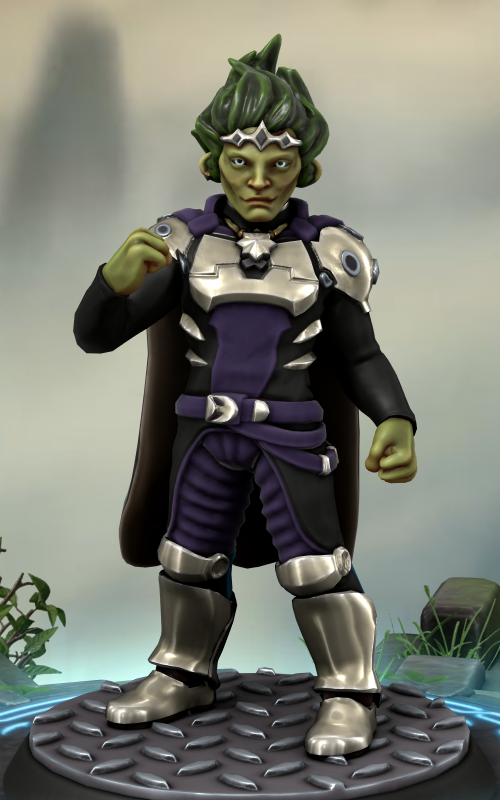
After that, I’m working out the framework for a thirty-entry mini-supplement that entirely takes place in the Diamond Age, beefing up the details and advancing the timeline to 2027. Mostly it’ll be entries in the 2022-2027 period, but when it’s done we’ll have a more in-depth present day to play in. Of course, that won’t be done until October 2027, so some time to wait.

And finally, starting in November 2027 and running all the way to the project’s fifth anniversary on October 20, 2028, I will be filling in leftover timeline gaps with 90 Years of Venture Comics, introducing one character or environment for each year that the publishing company has existed.

So stay tuned! There is so much more in store. This thread is going to need a second iteration.

CR
Chief_Lackey_Rich
2025-10-24 18:52 UTC (in reply to #1436)
#1437

At the risk of sounding like Charlie Brown, good grief! That is one heck of a projected project there. What did I say when you started this on the mirror thread at RPG.net a few years back?

This can only lead to whiteboards and walls of crazy. I heartily approve. :slight_smile:

Yeah, that still stands.

FR
FrivYeti
2025-10-24 19:45 UTC
#1438

Oh yeah, you called it.

TA
TakeWalker
2025-10-25 13:55 UTC
#1439

Incredible! :smiley:

FJ
fjur
2025-10-26 03:13 UTC
#1440

Nice. I’m looking forward to seeing what Deep Cuts, On Location, and Enemy Action have in store.

I’ve been thinking for a while that Venture Comics’ lack of environments was a bit odd, given the emphasis that the Sentinel Comics RPG puts on them, though it makes some amount of sense given that most comic universes don’t put as much emphasis on them.

And for Enemy Action, will that have any, like, mechanical bits? I.e. will it introduce new villains (or lieutenants or environments or anything)? Or will it just be lore writeups on teams of existing villains?

This is you Friv:

Mhm. One might say marvellous.

SE
Sea-Envy
2025-10-26 07:55 UTC
#1441

a book about Enemies… Classic.

[Classic Enemies was a popular book for Champions 4E]
(You know it was a good book because the cover art had Seeker getting destroyed)

SE
Sea-Envy
2025-10-26 07:57 UTC (in reply to #1434)
#1442

do you think you could scan the playing card motivations chart and post it to your blog?

CR
Chief_Lackey_Rich
2025-10-26 14:04 UTC (in reply to #1442)
#1443

I’ll see about digging it out for you, it’s been so long since I ran Sentinels all that stuff’s been stowed and I’m not 100% sure where I put it all. Probably easier to transcribe it, it’s a very old copy of a copy and the last time I tried scanning or photographing it the image was pretty illegible.

CR
Chief_Lackey_Rich
2025-10-26 14:10 UTC (in reply to #1440)
#1444

Since when does Lois smoke? No one carries lighters for an emergency light source any more, that’s what phones are for. The other reason would be to enable a bit of impromptu arson. Disturbing.

Given the DC universe, I suppose it might be handy for detecting Martians or something. :slight_smile:

CR
Chief_Lackey_Rich
2025-10-26 14:18 UTC (in reply to #1440)
#1445

I think it’s largely due to the format to date. He’s been focused on characters and their stories. I can tell you from experience adding an environment to a villain writeup makes for a much, much longer post. Coming up with the things can be time-consuming too, more than doubling what a single villain with a few signature minions required in my case.

Probably says something that my entire blog (which is on par with this thread for content posts) only has 20 of them. It’s by far my shortest index, the next smallest having almost twice as many entries.

FJ
fjur
2025-10-26 18:55 UTC
#1446

Yeah, that is a bit odd, admittedly. I don’t think I’ve ever seen her depicted smoking either, excpet for the one story that that panel comes from, the 2019 Superman’s Pal, Jimmy Olsen.

Yeah, that makes sense. The project has focused primarily on characters, which environments of course aren’t.

CR
Chief_Lackey_Rich
2025-10-26 22:15 UTC (in reply to #1446)
#1447

Evil duplicate, maybe?

I guess hypothetically they could be, sort of. The book does talk about using environment twist rules for “powerful entities” beyond the scope of even Titan villains. I experimented with that a couple of times with mixed success. Wonder if I’ve still got any of my notes from those sessions?

FR
FrivYeti
2025-10-27 03:05 UTC (in reply to #1440)
#1448

Nope, lots of new stuff. Each organization will come with a summary writeup, and then some combination of villains, lieutenants, minions, and environments. Not sure the exact lineup yet - leaning two villains, two lieutenants/minions, and two environments, but there may be switch-ups.

As far as the environment discussion goes: Yeah, you guys nailed it. Initially, this was a character creation challenge. As it grew and got more expansive I started thinking about environments, and there’s probably a universe where I thought about it early enough to have ten in each book and bring the number of entries up to a round 100, but I narrowly missed the boat. So a full-environments supplement happens instead, and then the supplements afterwards will include some environments.

FR
FrivYeti
2025-11-03 16:42 UTC
#1449

And now we’re back! It’s time for… deep cuts! Kicking off with the Golden Age, which only has three new characters to add to the book, we start off with:

Simon the Schnook

Real Name: Simon Ridgemont III, First Appearance: Cryptic Trails #71, February 1945

Lieutenant Type: Ally
Die Size: d10
Relation: Fan, Approach: Physical

Traits:

  • I Got It: When Simon takes a basic action, he must also Hinder himself or a nearby target with the result.
  • Aw Geez: When Simon fails a damage save, he must immediately take a basic action with a result equal to his roll. Then destroy him.

By 1945, Skybreaker and Cormorant were the sole main characters in Cryptic Trails; while some of the comic’s secondary stories still featured the strange realms, unusual magics, or even appearances by other superheroes that the title had initially been known for, the duo’s war against the Fomorians (and against any humans foolish enough to seek Fomorian power) was the focus of the title. Vincent Chambers, Venture’s EIC, was concerned that the focus might lead the comic to get too dark, outpacing even Campfire Terrors as it focused on the hate-filled forces that Skybreaker opposed. He asked the title’s lead editor, Glenn Cochrane, to add a little something to lighten things up.

Cochrane wasn’t a particular fan of broad comedy, but he was game to try anything. Overnight, he developed an old college chum of Wayne Alton, a fellow recent graduate making his way into the world, well-meaning but completely out of his depth. Simon Ridgemont III had attempted to sign up for the war, but his father had pulled strings to have him placed far from the front lines in an administrative position. Frustrated, the young heir happened to learn that his friend Wayne had found a more direct avenue to fighting the forces of evil, and used his leave to show up as Skybreaker and Cormorant fought against Fomorian forces at the Isle of Wight!

Simon almost immediately screwed everything up. Eager to prove himself, he charged into the middle of a cult ritual, accidentally knocking over a brazier and setting the cult leader on fire, and then nearly got himself stabbed to death by the cultists. When Cormorant raced in to save his friend, Simon stumbled backwards into him and sent the duo falling over the side of a cliff, with Wayne barely managing to call his wings in time to save them from a watery death. Afterwards, Skybreaker lectured the young man on knowing his limits, telling him that he wasn’t ready for the kind of fight that the pair were undertaking.

Simon took that as a challenge. Over the next two years, he would appear in seven issues of Cryptic Trails, including two solo appearances in backup stories. Each time, Simon the Schnook would hear about some dangerous situation and rush in to help, but be completely outmatched. He would lend a hand, usually by accident, and barely avoid getting himself killed, and then stroll off having learned nothing and confident that ‘he’d get it next time.’

In the end, Simon was not popular, and Cochrane retired him late in 1947 to focus more on the high-paced action that his readers loved. But his existence wasn’t a complete lost cause; he gave Cochrane the experience writing broad comedy that he took to Flatfoot Adventures in 1953, which helped keep that hero afloat during the difficult years at the end of the Golden Age.

Behind the Scenes:

And we’re off!

A broad clown archetype isn’t really what people come to their action-adventure pulp-adjacent superhero comics for, so Simon never really makes a splash. If the 60s Skybreaker had been Lewis Lamont, he probably could have been revived, but there are other people to take up the idea so he never really comes back after the forties.

Mechanically, he’s not good, but he is funny! He has to Hinder with every action, so if he can get stuck in he’s pretty powerful but if he’s near the heroes he’s a huge liability. And of course, he is truly, ridiculously fragile, but when he goes down he gets an extra round worth of actions in.

LO
LonelyMan
2025-11-03 16:45 UTC
#1450

Off brand Setback without the big upside, I love it. Plus Simon the Schnook is just a perfect name. I just wish he had a buddy named Schuster the Schlemiel

TA
TakeWalker
2025-11-05 02:29 UTC
#1451

this is such a great idea XD

LO
LonelyMan
2025-11-05 02:58 UTC (in reply to #1451)
#1452

Hey, I was wondering if you were still around!

FR
FrivYeti
2025-11-06 16:51 UTC
#1453

Warhead

Real Name: Warren Flint, First Appearance: Flatfoot Adventures #62, August 1947

Lieutenant Type: Enemy
Die Size: d10
Motive: Wealth, Approach: Technological

Traits:

  • Cannonade: Warhead may take +2 to his roll when Attacking. If he does, he also Attacks all targets near to his primary target with half the result (rounding up.)

Throughout the late 1940s, Flatfoot would do battle with dozens of increasingly gimmicky costumed foes, most of them targeted at the young teen readers that Flatfoot Adventures was increasingly trying to capture as the market for superheroes slowly dwindled. Many of these characters would prove entirely uninteresting, spectacularly silly, or otherwise not fit for purpose; one of the most telling examples was Warhead.

Warren Flint had been a war profiteer, stealing weapons from American armories and selling them on the black market. When the war ended and the money dried up, he decided that it was time to go into business for himself. Gathering the last of his advanced weapons, he formed a gang of street thugs and started robbing banks, using his incredibly powerful cannon helmet to blast open vaults and take everything that was inside.

Ferristown was one of Warhead’s early targets, and when he went face to face with Flatfoot he demonstrated the power of his cannon, knocking the robot detective through a wall and making off with the money while Flatfoot was still freeing himself. He and his gang declared that they owned this city now, attacking a string of banks in rapid succession. At the end of the issue, however, Flatfoot tricked Warhead into blasting through several pillars in his latest bank heist, bringing the vault crashing down on himself and allowing Flatfoot to disarm him and hand him over to the police.

Warhead would make a second appearance a year later, when Mr. Ferris broke him out of jail and equipped him with a new head cannon with which to DESTROY FLATFOOT ONCE AND FOR ALL. This went about as well as his first appearance, and pretty soon he was back in the clink. He would pop up a few more times over the next decade, always as a minor bodyguard to a criminal villain, his earlier dreams of control seemingly abandoned in favour of a steady paycheck from a new criminal mastermind. He faded out of popularity over the course of the 1960s, and by the 1970s was gone.

There was a certain ironic charm in the villain, however, and starting in the late 1990s a generation of writers who vaguely remembered the weird yelling guy with a gun on his head pulled Warhead back for random jokes, single pages, and deep cut references. He never received another starring role, but dedicated Venture readers would always get a laugh out of seeing his ridiculous cannon-helmet pop into frame.

Behind the Scenes:

This is so stupid and I refuse to apologize.

Warhead marks a new milestone in my use of Hero Forge. I really, really, really wanted him to have a cannon helmet. I absolutely could not make a cannon helmet happen. But I’ve also been using Hero Forge for a while now, so I sucked it up and bought a three-month membership. This membership allows for kitbashing, which meant that I could just drag a cannon into the air and shove it through his helmet and deliver this brilliantly stupid model.

Expect to see more brilliantly stupid models as we move through the next few months; in January I’ll decide whether it’s worth the money to keep the subscription going, but for now it seemed like a worthwhile investment.

CR
Chief_Lackey_Rich
2025-11-06 17:02 UTC (in reply to #1453)
#1454

That is indeed a brilliantly stupid concept. I’m slightly reminded of an obscure Iron Man villain named the Unicorn, who had a zap-gun thing as his helmet-horn. Also the Doom Patrol villain the Codpiece, who also hung his weaponry from part of his body I would not want to hang a weapon from.

One of my old V&V characters was Battleman, who got re-created in Champions 1st edition as well. Even did a (physical) miniature kitbash for the guy using some armored fighter figure as the base. His helmet and both of his big chunky shoulder pads (built up with putty) sported triple-barreled turrets that I cribbed from an IJN Yamato model kit. One of my first multi-media conversions, and probably one of the first dozen or so on a partially-metal fig, so it stands out in my long history of customizing models and minis.

Battleman’s catchphrase was “Face my nine barrels of justice, evil-doer!”

Hey, it was cool when I was 13 years old. Sort of.

LO
LonelyMan
2025-11-07 00:35 UTC (in reply to #1453)
#1455

Was it an intentional choice to give WarHead the steel moobs? Did you think he was somehow not ridiculous enough yet? Or is this just like the base model for any male character of middle age with a non-heroic physique? I haven’t really been looking at your minis, they’re not my thing, because I don’t really think they look good, but in this case that’s kinda the point, so it’s fitting this would be the one to catch my eye.

And going back to Simon:

So I know very little about this system, but just from following the SCRPG Live Season 1 sessions, I know that minions tend to be D6 or D8; Simon is a Lieutenant, and I don’t know how exactly those work, but with die sizes in general only going up to D12, I don’t know how a D10 Lieutenant is “fragile”, when you didn’t post any Health or other stats that would make me think that he works differently from a Minion.

FJ
fjur
2025-11-07 01:47 UTC
#1456

Warhead is wonderfully silly. I love it.

By sheer coincidence, I also came up with a pretty similar villain concept some time ago. An inventor ridiculed for his extremely unorthodox interpretations of physical principles who gets back at everyone who laughed at him by building a helmet-mounted cannon. He calls himself Headcannon. Blatantly inspired by this xkcd strip.

I know that comics, especially Silver Age ones, have folks not die when they should, but a normal dude surviving being crushed by a bank vault seems a bit of a stretch. Does Warhead have some secret Atlantean super-toughness genes?

Well then I guess I have the tastes of a 13-year old. : )

When a minion is Attacked, it rolls its die as a damage save. If it rolls above the Attack roll, its die size is reduced by one (e.g. from d8 to d6). If it rolls below, it’s instantly defeated and removed from play. The only difference between minions and lieutenants is that when a lieutenant succeeds on a damage save, it’s not reduced at all, and when it fails, its size is only reduced one step rather than being defeated entirely.

So the thing that makes Simon particularly fragile is his Aw Geez ability. A normal lieutenant without that ability would only reduce its die size by one step on a failed damage save, but remain in play. But as soon as Simon fails one, he’s immediately defeated. So, in most cases, a typical lieutenant can survive several attacks; meanwhile there’s a good chance that Simon will be KOed in one hit.

TA
TakeWalker
2025-11-07 02:31 UTC
#1457

sir XD the audacity

LO
LonelyMan
2025-11-07 04:33 UTC (in reply to #1456)
#1458

You get the heart both for answering my question and for HeadCannon. Sorry, WarHead, your reign as my favorite character with a cannon helmet was short lived, but memorable.

FR
FrivYeti
2025-11-07 17:37 UTC (in reply to #1455)
#1459

Question has already been covered, but a bit of HeroForge under-the-hood: I used the “wetsuit” piece for Warhead’s chest, and it always ends up looking a bit boob-ish. I decided it worked well enough for the character.

He’s got reinforced armour to withstand the blast of a cannon going off on his forehead. In the comic, the whole vault didn’t come down on him, just enough of it to pin him to the ground. His armour was assumed to be able to handle the weight.

This is highly unlikely, and if he were important enough for people to care about there would probably be some retro-justification about a whole exoskeleton power suit getup making the head-gun function, but he’s a D-Lister so it never comes up.

FJ
fjur
2025-11-08 03:42 UTC
#1460

Yippee!

Mm, yeah, I hadn’t thought of the need to account for recoil, given that comics often ignore Newton’s Third Law, but that explanation makes sense. And “just getting pinned by part of a vault” does sound more survivable than “crushed by a vault.”

FR
FrivYeti
2025-11-10 17:34 UTC
#1461

Wickmen

First Appearance: Twilight Carnival #102, October 1953

Lieutenant Type: Enemy
Die Size: d8
Motive: Obedience, Approach: Otherworldly

Traits:

  • Wax Blow: Wickmen have +1 to Attack and Hinder.
  • Melt: When a Wickman defeats a living minion or lieutenant, they may use their reaction to create a new d8 Wickman. If they do, step down their status die afterwards.

By the early 1950s, Venture’s superhero comics were well and truly in a slump. Of the eight remaining comics in the line, three had abandoned superheroes altogether, and three more were increasingly pulling back and shifting back towards a more pulp-focused approach in order to keep the lights on. One of those three was Twilight Carnival. Despite still technically being a superhero, the Midnight Rider’s antics were much more squarely in the vein of horror comics than in the more traditional superhero fare that she had started with, and her enemies were shifting to match. To that end, the writers of the comic introduced a new foe in late 1953, a sort of shambling creature that would pose a terrible threat to the Midnight Rider and her carnival. The Wickmen would prove to be a terrifying and very short-lived enemy in her repertoire.

The story began in a small town in rural Montana, where the Twilight Carnival arrived to discover another circus already in town. This circus, the House of Illumination, featured a travelling wax museum as part of its displays. However, when townsfolk went missing and the Twilight Carnival was blamed, the Midnight Rider immediately investigated. She discovered that the House of Illumination’s mesmerist, Xanthus the Brilliant, was a real magician who had made use of an ancient alchemical formula, creating living wax that coated its victims and turned them into obedient zombies. His house of wax was actually an arsenal, which he used to control the House of Illumination and force them to do his bidding.

As the Wickmen came to life and began to terrorize the town, the Midnight Rider fought against Xanthus, breaking his control over his creations. The tormented souls of the Wickmen turned on him, drowning him in wax – but the Midnight Rider knew that the spell that had created them still existed, and other sorcerers might emerge with wax soldiers of their own…

Or at least, might have returned if not for the fact that the Wickmen were terrifying. The artists lovingly rendered the wax pouring out of their mouths and hands, engulfing screaming victims, and burning them alive. Issues of Twilight Carnival #102 were burned by furious parents, trashed by frustrated shopkeepers, and used as examples of the need for a Code in Senate hearings. An urban legend even claimed that the issue was single-handedly responsible for a key senator changing his mind and voting to enact legislation against comic books, leaving the Wickmen a particularly robust legend that would never, ever return to the pages of Venture Comics.

Behind the Scenes:

I cannot be trusted with this power. Kitbashing has allowed me to move spell effects to a model’s mouth. As a result, we get the Wickmen, and their terrible imagery that spelled doom for a comic line. I guess you could say that they are the one villain to succeed in killing their hero!

Next up, we are moving into the Silver Age, with one hero, two villains, and five lieutenants over the next four weeks!

CR
Chief_Lackey_Rich
2025-11-10 18:35 UTC (in reply to #1461)
#1462

That’s great. Xanthus the Brilliant probably used lit candles in his mesmerism act, right? And of course the wax is yellow.

The Dyson’s Decahedron blog had something vaguely similar a while back, but his wax men were basically wax golems that shambled around with lit candles on them, trying to hand them to any living creature who would take one. If you did, you got a magic light source but were cursed to slowly transform into a new wax man over time and perpetuate the curse.

FR
FrivYeti
2025-11-12 15:56 UTC (in reply to #1462)
#1463

Yeah, that was my thought. He’s got candles everywhere for mesmerism, so readers assume that the reveal is going to be that he’s mind-controlling people, but nope, wax monsters.

And that is a cool variant on the wax monster! Probably couldn’t trick a player into it, but maybe next time I run a Heart game I’ll include it. Figuring out how to get the candle without getting turned into wax seems very Heart.

CR
Chief_Lackey_Rich
2025-11-13 00:10 UTC (in reply to #1463)
#1464

Do they have something vaguely like that with amber “zombies” or something? Or maybe beeswax? Don’t know the game well, but that tickles a memory from something I heard in a review.

Waxmen could fit with a bee- or apiary science-themed villain too. Hypnotized by all the buzzing and then processed into self-perpetuating wax zombies. Flashbacks to the beehive scenes from the Mysterious Island movie way back when. Have to love those Harryhausen stop-motion bees. :slight_smile:

FR
FrivYeti
2025-11-13 16:41 UTC (in reply to #1464)
#1465

There is a lot of weird bee stuff in Heart, for sure; there’s a whole class built around having a hive of magic-suppressing bees living inside you. I don’t recall amber zombies specifically, but there’s also a lot of weird stuff so I wouldn’t be surprised to learn I’d forgotten it.

But for now: it’s time for the Silver Age! Sort of. It’s complicated. Because, see, we’re looking at…

Madame Liberty

Real Name: Marianne Leblanc, First Appearance: Madame Liberty #157, January 1955
Background: Struggling, Power Source: Accident, Archetype: Shadow
Personality: Stalwart, Principles: Mask, Liberty

Status Dice: Green d8, Yellow d8, Red d10. Health: 30 [Green 30-23, Yellow 22-12, Red 11-1]
Qualities: Stealth d12, Persuasion d10, Alertness d8, Criminal Underworld d6, Finesse d6, Fight For Liberty d8
Powers: Awareness d10, Shapeshifting d8, Agility d6, Invisibility d6

Green Abilities:

  • Slippery [A]: Attack using Finesse. Remove one physical bonus or penalty, Hinder a target using your Min die, or maneuver to a new location in your environment.
  • Stay Quiet [A]: Attack using Stealth. Defend using your Min die against all Attacks until your next turn.
  • Play Innocent [R]: If you haven’t acted yet in an action scene, you may Defend against an Attack by rolling your single Awareness die.
  • Principle of the Mask [A]: Overcome using knowledge from your civilian life and use your Max die. You and each of your allies gain a hero point.
  • Principle of Liberty [A]: Overcome in a situation where you are restricted or bound and use your Max die. You and each of your allies gain a hero point.

Yellow Abilities:

  • Doe Eyes [A]: Hinder any number of targets using Persuasion. Use your Max die.
  • Put On Muscle [A]: Attack using Shapeshifting. Hinder that same target using your Min die.
  • Fade Into Shadow [R]: When you would take damage, Defend against that damage by rolling your single Stealth die.

Red Abilities

  • Take Advantage [A]: Attack using Stealth. Use your Max die. Remove any number of penalties from the target. Add your Min die to the Attack each time you remove a penalty.
  • Light of Liberty [A]: Hinder using Persuasion. Use your Max+Min dice. Boost yourself or an ally with your Mid die.

Out

  • Defend an ally by rolling your single Presence die.

The imposition of the Comics Code left Venture Comics in an awkward place. With several of their comics summarily destroyed, and a heavy eye falling on the rest, Venture only had two superhero titles between 1954 and 1958. Flatfoot Adventures endured the period without much fuss; the robot detective was already a stalwart champion of justice, and his exploits were easily adjusted to the Comics Code.
Madame Liberty had a more difficult road to tread. While she had never been aggressively sexual, she was a two-fisted spy who was also a woman, flirting with and then beating up dangerous enemies of freedom. The Code frowned on nearly every part of that, and in order to keep the heroine in play Venture was forced to make some adjustments to the character. Her costume was altered to show less skin, with a liberty bell symbol placed to more firmly make her a ‘superhero’ and not a femme fatale, and her backstory was quietly altered to remove any references to her criminal past. While Venture never overtly rewrote her history, stories referencing Madame Liberty’s past implied that she had been a struggling housewife whose husband had been killed late in the war, and that a mysterious accident gave her her shapeshifting powers and allowed her to seek justice for his loss.

The revised Madame Liberty was much less aggressive than her previous counterpart. She had a job in West Berlin as a stenographer for the American embassy, which she used to gather information to help protect the West from Communist incursions. The only person who knew her secret identity was her boyfriend Rick Wilson, who also generally served as the one to throw punches against Communists while Madame Liberty used her keen wits and shapeshifting skills to infiltrate and undo the latest supervillain’s plot to bring down the West.

Madame Liberty wasn’t a complete loss in this era. While she was less physical and more openly romantic towards Rick, many of her stories relied on villains underestimating her because she was a woman, which in turn allowed Venture to sneak in some of the feminist angles that had supported the character in the past. She still preferred to turn agents rather than kill them, offering chances at redemption that were uncommon for heroes in the time period, and she was still a brilliant tactician and clever infiltrator. But much of what made her special was lost.

Fortunately, it wasn’t lost for long. After the general success of Venture into the Unknown, Madame Liberty #200 unveiled a new costume for the heroine that was more in line with her Golden Age look than her current one, and over the course of the early 1960s she gradually shifted back to her original form. Her criminal past was referenced for the first time in almost ten years in 1963, and by 1965 Venture’s staff was largely ignoring this period as a cover that she had put on, and not her true identity.

In 1978, Venture went one step further. Liberty’s Dream Annual #1 introduced Madame Liberty and Reverie to another Madame Liberty, one that was being used by the fae to undermine faith in the heroine. It turned out that this was the Madame Liberty from the 1950s, who was a housewife who had loved the hero so much that when Madame Liberty vanished on a mission she had made a bargain to become her until she returned. Now the price was coming due, forcing her to undermine her hero’s reputation. The real Madame Liberty was able to save her doppelganger, whose powers were removed at the end of the storyline, ending that chapter of her history.

Behind the Scenes

I’m going to be honest, I’m futzing a bit here for the purpose of book layout. The space between 1954 and 1958 is a really weird one; the Golden Age is over but the Silver Age hasn’t actually started yet. I’ve included Madame Liberty on the Silver Age side instead of Gold mainly because I need a lieutenant to close out the previous age for layout purposes.

Narratively, I want to have one bad deep cut variant for each of the big four heroes, and Madame Liberty gets to go first. She’s kind of paralleling both Captain America and Wonder Woman in the 1950s, although Wonder Woman took longer to break out of the box. Madame Liberty gets lucky and Venture starts quietly taking chances on her more or less as soon as the Code isn’t looking at them quite as closely. Even if it takes a while for her to get back to her Golden Age finery, she’s only a drip for four years.

CR
Chief_Lackey_Rich
2025-11-13 18:01 UTC (in reply to #1465)
#1466

Gad, I hate that reaction so much even if this is one of the best uses of it I’ve seen. Granted that Green defensive reactions are rare as hen’s teeth, but this one is guaranteed never to get more than one use and might not even get that if someone passes you the initiative before you’re Attacked. Not what I call a good Green option, and made worse because Accident is saddled with three reactions and an inherent, leaving very little room for action abilities - and the other two reactions use the same trigger, so you really shouldn’t take both.

As I’ve said before, make it an (I) instead of an (R) and at least it would feel more meaningful than the de facto “sometimes gain a die roll’s worth of extra Health on round one” it is at present.

Blink. Oh, right. Hero Forge doesn’t have an actual “cracked bell” decal, does it? Can’t have everything, I guess. :slight_smile:

I imagine she would indeed struggle playing at being a 1940-50s housewife, yes. Good heavens, what a change. Although that era was full of salacious assumptions about widows, so she still has that going on even if it’s kept in the readers’ (dirty) minds so Wertham’s knickers don’t twist up on him.

Always thought it weird that Diana survived the Comic Code without ever being forced to change her costume significantly, and the godawful “white pantsuit” era was not only a voluntary choice by DC, they thought it would improve sales.

LO
LonelyMan
2025-11-14 02:20 UTC (in reply to #1401)
#1467

I’m a little disappointed you didn’t call him the iFlunky…

FJ
fjur
2025-11-14 02:28 UTC
#1468

The Wickmen are wonderfully creepy. :+1:

I dunno, I kinda feel like precisely because they became so infamous, that almost guarantees that they’d make a return (or at least some sort or reference or cameo) modernly (i.e. '80s or later), but it’s your universe, and so your call.

Embrace the power, Friv! Drink deeply of its temptation! Use it to make your wildest ideas become realised!


Does that story give the fake Madame Liberty a name? Also, was she a French housewife or an American one?

Yeah, as soon as I read the bit about the “bad Madame Liberty” turning out to be an imposter, it screamed Captain America to me.

Yeah, I’ve never seen it in play, but still it looks to me to be pretty much worse than any other Defend reaction.

Wonder Woman is, I think, probably one of the more popular heroes who has had a great deal more distinct looks than most. Besides that one you mention, and numerous variations on the classic red-and-blue look, she also had the dubious “honour” of wearing the questionable black leather getup while she led the Justice League in the '90s:

FR
FrivYeti
2025-11-15 16:32 UTC (in reply to #1468)
#1469

You know, you’re probably right. To keep them deep cuts, I’ll add a single extra Wickmen story - some truly terrible X-TREME 90s summer crossover where a writer brings them back and then the storyline bombs hard because it’s still way too over the top. checks notes - okay, yeah. 1992 lets the Wickmen be part of the first Remnants annual, and take part in a summer crossover with Knightgrave and Twilight Carnival. It’s not a good crossover.

Definitely French, and she definitely had a name, but I have not bothered to create it. Probably Maria or Anna or something similar to, but not the same as, Marianne.

And yeah, I definitely agree with Ambush Awareness. It’s not a great ability and I will not use it unless it’s so thematic that I truly can’t resist.

My gut feeling is that it needs to be significantly dialed up if it’s going to be a once per fight thing. Something like “if you are Attacked by someone you haven’t engaged with yet in this scene, Defend against the Attack by rolling your single [power/quality] die. Boost yourself with the result.”

This does two things. First, it lets you use the power against enemies who are newly entering the scene, which feels more ambush awareness, rather than limiting it to “you have literally done nothing yet”. Secondly, adding the Boost makes it a bit more tempting to use.

CR
Chief_Lackey_Rich
2025-11-15 21:32 UTC (in reply to #1469)
#1470

I could see taking it if you’re already taking Reflexive Burst in Yellow (making the other Green reaction that shares its trigger even worse) and you really don’t need an energy type immunity for some combo or team synergy - but even then, I’d be tempted to go with one of the others RAW.

“Engaged” is kind of nebulous in mechanical terms (like “nearby” and “close” are) but you could easily make the bold part with “who hasn’t Attacked you yet” and have something similar that’s more clearly defined. The limitation on reactions should keep that from getting too far out of hand with minions, although it might break down in combination with Push Your Limits.

Giving it the p/q option for keying will make it very easy to get a large die in there, since almost every background has a d10 or d12 quality available where many of them lack even a d10 power. Quite rare for power source abilities to be able to key to qualities at all. That might be too strong, although Extradimensional’s Extrasensory Awareness ability does uniquely allow a quality key (but not a power).

I’m tempted to call that last one the best of the (few) Green defend reactions, although it really wants to combo with enough healing to claw your way back into a higher personal zone so you can squeeze extra uses out of it. The fact that it helps with going Out (which is a zone change, so it triggers) means you’re almost guaranteed three uses even without healing, and it might be many more if you roll well and the damage comes in slowly enough for your reactions to keep refreshing - or you have PYL.

Pretty strong argument for Flyer’s Barrel Roll being the best Green defensive react instead, but it’s still pretty situational. Being useless when you aren’t flying is a real Achilles’ heel for it.

FR
FrivYeti
2025-11-15 23:46 UTC (in reply to #1470)
#1471

Yeah, this is where the wording becomes why I haven’t revised it yet. Using who hasn’t Attacked you yet betrays the spirit of the power because you can go first, whallop a villain, and then use the power against their counterattack. It also means a villain could Hinder you twice and then Attack on turn 3 and you could still Defend against the ‘surprise attack’.

Engaged is more wibbly, and I’m not sure about it, but I want something like “anyone that hasn’t targeted you and that you haven’t targeted”.

CR
Chief_Lackey_Rich
2025-11-16 00:57 UTC (in reply to #1471)
#1472

Oh, right, that is an issue. How about “The first time you are Attacked by a target that you have not targeted yet this scene, Defend…” so you can’t have done anything requiring target selection to the foe, not even Hinder or Boost. You still can’t use it twice against the same foe since later Attacks obviously aren’t “the first time” any more. That doesn’t seem too confusingly worded.

On further consideration, I think I’ll just test it as:

(R) When an action scene starts, before anyone takes their turn you may declare you’re going last in the initiative order on round one. If you do so, when an enemy Attacks you that round, you may Defend against that Attack by rolling your single [power] die. If multiple heroes have this ability and opt to go last, the GM decides which of you actually goes last, second to last, etc. but all receive the benefit until they actually take their turn.

So now you can’t be shafted by initiative sequencing unless you allow it to happen, you get a solid perk in being able to react to any Attack in round one (potentially helping allies and preventing the enemy from nullifying the reaction by just not Attacking you), and you gain a unique degree of guaranteed control over who goes first in round two, which is almost worth a Green ability by itself.

I think that’s at a sweet spot where it’s actually good but doesn’t totally invalidate the Boost-on-personal-zone-change reaction or the damage type immunity as choices. Worth a test drive, anyway.

FR
FrivYeti
2025-11-17 16:53 UTC (in reply to #1472)
#1473

Coven

Real Name: Glindora Galessi, First Appearance: Venture into the Unknown #22, Oct 1959
Approach: Leech, Archetype: Thief
Upgrade: Quality Upgrade, Mastery: Mysticism

Status Dice: Count the number of bonuses on you.
No bonuses: d6, 1-2 bonuses: d8
3+ bonuses: d10. Health: 25+5H [Upgraded 45 + 5H]
Qualities: Magical Lore d8, Stealth d8, Imposing d8, Obsessive d8
Powers: Weather d10, Infernal d8, Teleportation d6

Abilities:

  • Foulweather Fiend [A]: Attack using Weather. Use your Max die. Boost with your Min die. This bonus is persistent and exclusive.
  • Drain Energy [A]: Hinder using Magical Lore. Then move one bonus from the target to yourself that is equal to or smaller in size than the penalty created.
  • Overwhelming Magic [A]: Attack using Infernal, using your Max die. Add all of your bonuses to the Attack, even if they are exclusive, then destroy them. Gain a bonus of a size equal to the number of bonuses destroyed (to a maximum +4.)
  • Mystical Shield [R]: When Attacked, Defend yourself by rolling your single Weather die. If this negates the Attack entirely, Hinder that target and Boost yourself with that same die roll.
  • (U) Ancient Witch: Upgrade your Magical Lore, Stealth, and Imposing to d10.
  • (U) Master of Mysticism: If you have access to proper materials, automatically succeed at an Overcome in a situation involving harnessing magical forces.

Common Scene Elements:

  • Summoned Spirits: d8 minions. When a summoned spirit fails a damage save, it Boosts Coven with the result.
  • Summoned Elementals: d8 lieutenant. A summoned elemental has a bonus based on its element:
    • Earth: +2 to damage saves.
    • Fire: +2 to Attacks.
    • Wind: When it Hinders, it may affect up to two nearby targets.
    • Water: When it Attacks, it also Hinders with the result.
  • Summoning Circle: A multi-stage challenge with (H) segments. At the start of each environment turn, it rolls 1d6 and adds a bonus equal to the number of unchecked boxes. On a 1-3, it creates a summoned spirit, On a 4-7, it creates two summoned spirits. On an 8+, it creates a summoned elemental.

When Greenheart was re-introduced into the pages of Venture Comics in 1959, Joe Manzetta was faced with the question of what to do with her stable of villains. Like Madame Liberty before her, Venture Comics was toning down the overt feminism of the character while doing everything in its power to retain the underlying messaging. However, Greenheart’s villains largely fell into three categories: misogynistic men, dangerous magical forces, and the champions of New Rome who were largely both. With New Rome abandoned, and villains like Scion considered far too horror-adjacent to include, there was a scramble to find any of her classic villains worth reproducing.

The first villain that Greenheart faced wasn’t one of her classic foes – he was a simple strongman that she was able to overcome with her superior strength and the help of her animal friends. When he failed to make much of an impact, Manzetta decided to at least pull some name recognition from the past, introducing the Craven Conjurer of Crime, Coven!

The Silver Age Coven bore little resemblance to the ancient and deadly crone of the Golden Age. She was given a name - Glindora Galessi – and re-structured as an old but not superhumanly so woman, who would speak rhyming couplets in order to command ‘nature spirits’ and ‘dark forces’ that were very carefully not demons. Coven would inflict strange and relatively low-key curses on her foes, stealing their dreams in order to fuel her powers. She ran afoul of Greenheart when she stole the dreams of Val’s friend Ginnie Turner and used them to summon dream-spirits, forcing Val to track the witch down and break her hold over the town’s nightmares. Infuriating at having been foiled, Coven swore vengeance, and the battle against Greenheart was on.

Coven was not a particularly popular hero, and she would likely have been forgotten for good if it weren’t for the Champions of Truth. When the Congress of Deceit assembled in late 1961 to oppose the Champions, Manzetta wanted the villains to have a unifying theme beyond ‘five enemies of the Champions of Truth’, and the theme that he landed on was ‘wants a Champion’s power for themselves’. For most of the Champions, this was easy – Avarice and Steeldriver actively wanted the powers of Wonderer and Flatfoot, White Mantis had interest in reproducing the experiments that had created Madame Liberty, and Locksmith was trying to acquire Skybreaker’s spear. But the villain who wanted Greenheart’s powers was Doctor Freak, and he was too interesting as a loner to be folded into the group. On a whim, Manzetta suggested including Coven, who had sought out Greenheart’s power in the past, and the witch found a new life as the magical backbone of that team of villains. As a member of the Congress, Coven was able to begin hinting at her mystical past and moving away from cheap tricks, and her popularity slowly began to recover.

By the late 1960s, the Comics Code was loosening, and Coven loosened with it. Rather than taking the Mary Molotov route and having the character be someone else, Coven simply began to recover her Golden Age trappings, increasing the scope of her magic and gradually picking up new acolytes and key followers. In a storyline in 1969, it was revealed that Glindora was a fake name she had taken up in order to throw off some mystical foes; having defeated them, Coven gathered her witches in force once again and returned to her role as a murderous menace, leaving her Silver Age antics in the dust.

Behind the Scenes

Fans may recall that Coven was initially going to be a D-Lister who failed to transition over to the Silver Age, before I decided that I liked her and wanted to beef up Greenheart’s list of major antagonists. But that still left “how did they fix her”, which opened up the opportunity for the answer to be “badly, at first”. Coven gets a makeover as a goofy witch throwing around silly curses and turning people into ducks or whatever, and then she goes back to being ancient and deadly but probably still holds that little bit of an ironic edge, which is why she ends up with things like a minion who wants romance novels.

CR
Chief_Lackey_Rich
2025-11-17 17:29 UTC (in reply to #1473)
#1474

I like that quite a bit. Maybe allow a villain (and only a villain, no flunkies) to Overcome in order to add a segment to the challenge, even beyond the starting H value? Forces the players to keep her busy or she’ll not only keep undoing their work, she can actually wind up getting better summons if they’ve been ignoring the circle. Maybe add a 12+ result that calls up something even nastier. Bonus nostalgia points if it’s a baatezu or tanar’ri as a nod to the old devil/demon aliases TSR used in 2e AD&D during the Satanic Panic.

I feel like this version of her needs to use the Royal We like she’s Queen Victoria in a pointy hat. She’s still using a plural word for her supranym without having an actual coven at this point. Plus it’s silly. :slight_smile:

Some proofreading to save you time later:

Infuriated.

Villain.

LO
LonelyMan
2025-11-17 21:13 UTC (in reply to #1473)
#1475

Wreh?

FR
FrivYeti
2025-11-17 22:25 UTC (in reply to #1475)
#1476

He’s up-thread: The History of Venture Comics! - #1256 by FrivYeti

FR
FrivYeti
2025-11-20 16:52 UTC
#1477

Rover

Real Name: {unpronounceable bark-screech}, First Appearance: Celestial Travels #272, Sep 1961

Lieutenant Type: Enemy
Die Size: d10
Motive: Personal, Approach: Physical

Traits:

  • Overly Playful: As long as Rover is playing around, he has +1 to all basic actions.
  • Don’t Hurt The Dog: Rover has +2 to damage saves.
  • Heel: Rover enters each action scene with a two-box challenge. If both boxes are filled, the alien will Boost the hero who fills the second box by rolling his single status die, then leave the scene**.**

While Neutrino was a popular character from his first appearance, the question of his supporting cast was an ongoing point of contention. In the early 1960s, Celestial Travels still operated on the basis of a variety of freelancer writers penning individual issues, and they didn’t always coordinate or even have a chance to read each others’ most recent stories while putting together their most recent pitches. One writer whose name has been lost to history decided that they would make their mark on the publication by giving Neutrino a faithful ‘dog’, but managed to fail to stick the landing so badly that Rover would become infamous in Venture Comics history.

Rover was introduced in 1961, in a storyline that involved a Morbloxian attack on a small lunar settlement that Neutrino arrived to fend off. As he did, a three-foot-long blue creature emerged from the treeline under fire, and Neutrino intervened to save it. The creature immediately bonded with him, which proved to be more hazard than help as Neutrino tried to save the colony while dealing with a variety of failed attempts by the alien animal to ‘help’ him by gnawing at critical components, fetching a grenade that a Morbloxian had thrown, and generally making an immense nuisance of itself.

Despite this, Neutrino found the little monster endearing. He named it ‘Rover’, and when he established that it was something the Morbloxians had brought along with them as a trophy and not a native creature to the world he resolved to bring Rover with him until he could find it a home. He took Rover onboard the Aurora Borealis, where it promptly ate a key engine component and forced Neutrino to make an emergency landing on a nearby space station.

As a gimmick, it worked well enough for an issue, but other writers didn’t want to be saddled with a pet that was chewing up the metaphorical furniture, and there were only so many ways that Rover could cause problems before readers got annoyed, too. Rover would appear in about a dozen issues of the comic over the next three years, with some writers playing into the creature’s instinctively destructive nature, others treating it as a friendly pet, and many more simply failing to reference it or give any indication where it was when Neutrino was dealing with a storyline that an alien pet couldn’t be shoehorned into.

In 1964, Joshua Canning became the sole writer for Celestial Travels, and one of the first things he did was to get rid of Rover. He wrote an issue in which Neutrino finally found the dog’s home planet, gave it a lovely dog family to return to, and never referred to it again. Rover would be occasionally mentioned in the future, but its time in the pages of Venture Comics was done.

Behind the Scenes:

This was slightly inspired by Krypto from the new Superman movie. I started to develop a dog supporting pet who would be a hassle, realized that I was supposed to be developing an enemy and not an ally, and rolled with it. Rover is technically on the side of the heroes, but is so playful and so dangerous that all it does is oppose the heroes by mistake. And you don’t generally want to punch it, because it is your dog, so instead you have to take overcomes to make it leave.

A bit more kitbashing, here; the chihuaha model has been sized up and wings that aren’t normally allowed have been stuck on it. I like how it turned out. My spouse thinks it looks like a cat.

CR
Chief_Lackey_Rich
2025-11-20 17:04 UTC (in reply to #1477)
#1478

I’m forced to agree with your spouse, but I can’t think of a dog breed that looks more like a cat than chihuahua’s do anyway. I think it’s mostly the tail, though. Canids don’t tend to have tails that long in proportion to their bodies, so it sends the wrong signals.

Fun coincidence for me personally, the longhaired hippy superhero that I’m running in a Supers RED game currently has butterfly wings owing to another PC granting him the flight power for a while. He’s pretty enthused about it, honestly. Neat to be able to flutter around when he’s not tripping balls.

LO
LonelyMan
2025-11-20 17:43 UTC (in reply to #1477)
#1479

Sentinel Comics buys Venture Comics and has to integrate all the IP with all the other IP, so now they have to deal with the fact that there are Mubbloxians and Morbloxians.

FR
FrivYeti
2025-11-20 18:28 UTC (in reply to #1478)
#1480

I will let my spouse know! I expect they will be happy to be proven right. :wink:

CR
Chief_Lackey_Rich
2025-11-23 23:46 UTC (in reply to #1481)
#1482

“martinmichel99” is one fairly tricky AI spambot. For those who don’t get it, if you quote their message (which has probably been vanished already if we’re much past this post) there’s a hidden link embedded in it just after the comma before “file sharing tools” - not sure how well that works for proliferating the link since I don’t think it can be accidentally clicked on, but still absolutely insidious.

Suggest everyone do a “quote test” or check new user accounts for posted links (which is how I spotted it) in the future. These things are getting way too good at faking human posts, and that’s only going to get worse.

LO
LonelyMan
2025-11-24 00:23 UTC (in reply to #1482)
#1483

Post is still there, not flagged or hidden or anything.

FR
FrivYeti
2025-11-24 01:16 UTC (in reply to #1482)
#1484

Yeah, I noticed the spambot nature of the comment and flagged it for the mods, but I assumed it was going to be one of those ones that goes back and edits posts after the fact to make it look like people liked the links. That’s way more sneaky.

Hopefully the mods get to it soon.

CR
Chief_Lackey_Rich
2025-11-24 02:26 UTC (in reply to #1484)
#1485

Eh, it is Sunday night. They’ll catch it eventually.

Is “mods” even a plural at this point?

RA
Rabit
2025-11-24 02:47 UTC (in reply to #1485)
#1486

Christopher, Paul, and Pydro are all still around, albeit not frequently. Technically, Christopher and Paul are Admins, but they can serve as Mods when needed.

CR
Chief_Lackey_Rich
2025-11-24 03:03 UTC (in reply to #1486)
#1487

I don’t expect any of them to be working on a Sunday night, really. :slight_smile:

LO
LonelyMan
2025-11-24 11:58 UTC (in reply to #1487)
#1488

Hey Rich, if I were to GM the SCRPG, would you play?

CR
Chief_Lackey_Rich
2025-11-24 12:50 UTC (in reply to #1488)
#1489

No.

LO
LonelyMan
2025-11-24 13:51 UTC (in reply to #1489)
#1490

Okay. Someone else? Friv if he’s done here, which I suspect he’s not? Fjur maybe?

FR
FrivYeti
2025-11-24 16:50 UTC
#1491

Yeah, I am rather too busy for it. Maybe you should try the Sentinels reddit? I think they had an LFG section for a while.

In the meantime:

Agent Weathers

Real Name: Leslie Weathers, First Appearance: Covert Tactics (Vol. 2) #2, April 1962

Lieutenant Type: Ally
Die Size: d8
Relation: Romantic, Approach: Technological

Traits:

  • Gearhead: When Agent Weathers Boosts using technology, she may apply the bonus to up to three targets.
  • Crisis Management: As a reaction, Agent Weathers may reroll one environment die. If the new result is a 1, she loses this reaction for the rest of the scene.

When Covert Tactics re-launched in 1962, it wasn’t entirely clear how the team was going to operate. Edwin Sherman had envisioned his team as working out of a military base, with a full support squad, and after spending the first issue introducing the heroes on an action-packed mission, he used the second issue to briefly introduce a handful of the characters that would be backing them up. One of the foremost of these was Leslie Weathers, who was developed as both the team’s mechanic and as a romantic foil for Kid Liberty.

Leslie Weathers was born in New York, and worked as a mechanic in a local garage. A mechanical prodigy, Weathers happened to be on hand when Kid Liberty was dealing with a Soviet infiltrator who was blowing up buses, and her quick thinking saved a cross-town commute from becoming a bloodbath. The U.S. military was impressed by Weathers’ quick thinking and mechanical skills, and she was quickly recruited to work on a local army base. In turn, Kid Liberty spotted her name on lists of potential support staff and reached out to her, offering her a job. As support personnel, she would report to base staff rather than to him, but her main duties would be upkeep and upgrades to Covert Tactics’ gear. Leslie was intrigued and agreed, but not without teasing Abe that there were easier ways to ask a girl out on a date.

Unfortunately for Leslie, Joe Manzetta hadn’t envisioned Covert Tactics as having a large support contingent. The team was supposed to be small, highly mobile, and always active on location, and what Sherman and Manzetta quickly found was that it wasn’t possible to balance the nature of the missions they wanted to write with the sort of supporting team that was already growing over at Vanguards! The Covert Tactics base began to be de-emphasized in early 1963, and supporting team members were quickly shuffled offstage. In-universe, Sherman made a quick recognition of this fact, retconning the support team as having been temporary agents on assignment from their respective militaries.

Because of her romantic connection to Kid Liberty, Leslie lasted longer than most. She pivoted to becoming an unofficial military liaison, helping the team with their gear on an unofficial basis and taking part in an ongoing will-they-won’t-they relationship with Abe. But readers found Leslie’s romance with Kid Liberty entirely too reminiscent of Madame Liberty and Rick Wilson, and she never quite found a solid place in the narrative. She ended up taking an active deployment in 1966 and largely leaving the strip; in late 1971, she died in the field in Vietnam in a highly controversial storyline about the cost of war. Abe mourned her loss, and aside from a brief appearance in the Night of Lost Souls event, that was her final impact on Venture Comics.

Behind the Scenes:

One thing I’ve been thinking of for these deep cuts is that I want to shift up the balances; this book is going to have fifteen failed supporting cast and only ten failed villainous lieutenants, because failed villainous lieutenants are harder to lay out without them just being villains. But there are always a lot of attempts to add people to a comic’s supporting cast, and most of them don’t go anywhere useful. Leslie Weathers ends up as one of those, and doesn’t end up making a big splash. She probably shows up occasionally in reboots and adaptations.

CR
Chief_Lackey_Rich
2025-11-24 17:06 UTC (in reply to #1491)
#1492

That’s a neat ability. Always been mildly annoyed that so few PC abilities interact much with the environment. If I were doing a new edition of a GYRO Supers game that would be on my short list of things to add more of to the system.

CR
Chief_Lackey_Rich
2025-11-24 22:38 UTC (in reply to #1491)
#1493

Thinking about it, that’s a neat one too. Really encourages the players to throw some Boost support her way, because they’ll get paid back threefold with a little luck. She’s only a d8 and improving the odds of her achieving a +2 or +3 is pretty easy even with a run-of-the-mill +2 assist.

Once her die degrades that’s a lot less attractive, but having a bonus in place in first place might extend the period where she can crank out triple Boosts, even if they won’t directly benefit from a bonus used on a save. Really, really good target for a persistent bonus, but those are rare as hen’s teeth when it comes to applying them to allies. Taking a twist for an extra use when boosting her might pay off though. On the flip side, if she’s going out in a blaze of glory anyway, she could twist herself to Out from a d4 to drop two-use bonuses on three heroes at once - and if she rolls a 4, they’ll even be +2 rather than +1.

FR
FrivYeti
2025-11-25 16:25 UTC
#1494

Thanks! Yeah, I like how her setup pays off. She’s a very helpful support in a couple of ways, but she’s fragile enough that just getting in the spread of a villain’s AOE is likely to create some trouble for her.

FJ
fjur
2025-11-26 04:32 UTC (in reply to #1490)
#1495

I would love to, but unfort. I think I’m in the same boat as Friv: I’m just too busy with obligations &c. and don’t have enough time in most days for that to really be feasible. Sorry.

That being said, in addition to what Friv said, I think there’re some other places around the 'Net that you could look if you wanted to find players:

  • Although this here forum ain’t too active, there’s a slim chance that just posting a thread asking for players might snag you one or two.
  • The Realm of Discord Discord has a channel for SCRPG players looking for a group, and I recall some folks on there semi-recently looking for a GM/players. (The invite link for the discord is on the Sentinels Wiki main-page.)
  • The RPG.net Forums have a section dedicated to play-by-post games, and I think I recall that some games have been started with the SCRPG there.

And if, for one reason or another, one wouldn’t wish to actually play on any of those platforms, one could perhaps recruit players there and then run the actual game elsewhere on the Web. (This might be against RPG.net’s rules? I’m not sure.)

If you do try to start a game, good luck!

CR
Chief_Lackey_Rich
2025-11-26 11:25 UTC (in reply to #1495)
#1496

There’s only one game running there at the moment, inspired by the recently-released Dispatch PC game. It’s full up (and quite large) with eight active players and multiple people on the reserves list in case of dropouts. I wouldn’t expect any openings for quite a while, if ever. So far it’s going pretty smoothly, and the GM has my respect for being willing to tackle trying to run multiple teams/scenes at once. We’ll see if the holiday season works its usual disruptive magic or not soon but the format seems pretty resilient.

Interest in PbP SCRPG is generally pretty high over there, with GMs being the sticking point as usual. Worth keeping an eye on the posts here to see new games recruiting and players calling for GMs.

I think it’s okay at RPG.net, although I’m not sure which sub-forum you’d need to post to. Have to ask a mod about that before starting a casting call.

FR
FrivYeti
2025-11-27 16:45 UTC
#1497

The Huntsman (II)

Real Name: Calum Mallory, First Appearance: Skybreaker Stories #50, July 1962
Approach: Underpowered, Archetype: Overlord
Upgrade: Hardier Minions, Mastery: Mercenary

Status Dice: 9+ Minions: d12, 5-9 Minions: d10, 3-4 Minions: d8. 1-2 Minions: d6. 0 minions: d4.
Health: 25+5H [Upgraded 30+5H]
Qualities: Close Combat d10, Imposing d8, Alertness d6, Throw Money At It d8
Powers: Robotics d8, Electro-Whip d6, Awareness d6, Vitality d6

Abilities:

  • Call the Hounds [A]: Use Throw Money At It to create a number of d10 minions equal to the value of your Min die, d8 minions equal to the value of your Mid die, or d6 minions equal to the value of your Max die.
  • Attack Command [A]: Boost using Imposing for all your minions until the start of your next turn.
  • Electric Lash [A]: Attack using Electro-Whip. If you roll doubles, add that value to your Attack. If you roll triples, add all three dice to your Attack.
  • Hunting Formation [A]: Boost using Close Combat. Use your Max die. Hinder using your Mid die. Attack using your Min die.
  • Stay Back, Scum [R]: Redirect an attack against you to one of your minions.
  • Torn Uniform [ I ]: Whenever you would be reduced to 0 or fewer Health, prevent that damage and reduce all your power dice by one size. If this reduces any dice to below a d4, you are knocked out.
  • (U) The Best Money Can Buy: When you enter the scene with minions, or deploy minions using your own abilities or the environment, increase them by one die size to a maximum of D12.
  • (U) Master Mercenary: If you have been given a contract to perform a specific task, automatically succeed at an Overcome in a situation where the difference is getting paid and not getting paid.

Common Scene Elements:

  • Robo-Horses (d10 minions).
    • Ride: As a reaction, a robo-horse can redirect an attack targeting its rider to itself.
  • Robo-Hounds (d8 minions).
    • Latch On: When Robo-Hounds attack targets with penalties on them, they add a bonus equal to the number of penalties on the target.
  • Hired Hunters (d6 minions).
    • Flanking: When Hired Hunters Attack, they give a +1 bonus to an ally with no bonuses on them.

When Glenn Cochrane created the Silver Age Skybreaker, working closely with artist Ronald Tackett, the two couldn’t quite agree on what to do about the question of the mysterious enemy seeking Skybreaker’s spear. Cochrane had included the plot beat almost as a throwaway, just created to give Skybreaker an easy source of danger in his first issue. He had no ideas about who might want the spear, and he had even less interest in following up. Tackett, on the other hand, felt that having introduced the problem, the duo had to continue working on it. He imagined the mysterious villain seeking the spear to be a major source of opponents for Skybreaker, and pushed Cochrane to write a storyline introducing Locksmith as the first of these enemies. When Locksmith proved highly popular and Cochrane wasn’t interested in replacing him, Tackett let the matter rest for a little bit before bringing it up again as the series approached its fiftieth issue.

Cochrane was finally worn down, and slapped together a villain to appease his increasingly-frustrated artist. Following the tradition of Skybreaker foes like Mary Molotov, he made this villain one who used some of the style and trappings of a Golden Age enemy, but who was entirely unrelated.

Calum Mallory was an upper-class man with few ambitions beyond a life of luxury, and whose family could trace their lineage back to the Mayflower and before. As his family funds ran down, the aristocrat invested in an arsenal of robots shaped like animals, and went into business as a professional mercenary and bounty hunter, operating mostly on the shady side of the law. When he received a commission to acquire the spear of Skybreaker from the mysterious Mr. Dark, who was tired of Locksmith’s failed attempts to acquire it, he immediately donned his hunting coat and began to pursue Skybreaker through the streets of Grovedale. When Skybreaker defeated him, too, he became filled with rage, and began trying to work with anyone who would pay him for his revenge.

The new Huntsman had a warped sense of fair play, always announcing his presence in advance and allowing his prey to leave if they could best whatever targets he had put before them, but also using armies of foes to harry and weaken them before he struck. Alone, he was no match for Skybreaker even with his electro-whip, but with a pack of robot hounds, an electronic steed, and his Hired Hunters, he was a sizeable threat to the beleaguered demigod, especially if he joined forces with another villain in an attempt to claim the spear.

For all that, however, the Huntsman wasn’t one of the more popular foes in Skybreaker’s arsenal, and Cochrane had some resentment at having had to make him in the first place. He made a few appearances over the next three years, but when Cochrane and Tackett’s relationship blew up in 1964 and Tackett angrily quit Venture Comics entirely, Cochrane took the opportunity to entirely dump the storyline and the character, letting the entire plot thread lapse and making it known that he would rather no one else pick the character up either. When Harold Mossby became editor-in-chief a few years later he allowed Cochrane to tie the whole affair off with a bow, ‘revealing’ that the Huntsman had been Mr. Dark the entire time in 1966 (despite it clearly not making sense based on either character’s earlier appearances) and having the Locksmith blow him up. When the original Huntsman returned in the early 70s, it mostly closed the book on the possibility of this one being revived, and Knightgrave would revive and refine the concept in the creation of X-Calibre, fully removing any chance of the Huntsman’s return.

Behind the Scenes

I legitimately love looking up some supervillain and discovering that there were actually five of them, none of them connected in any way even though they all fought the same hero, so that’s what I’ve done here. There was a Huntsman in the Silver Age, and he was not very well-liked and also kind of silly, and then he died and no one cared.

This story also lets me do a bit of a Lee/Ditko situation with Cochrane and Tackett, which is also doing the Venture version of “Who is the Green Goblin”. The difference here is that no one cared about Mr. Dark and he had no confrontations with Skybreaker and in fact Skybreaker never even really knew that he existed and then he got blown up and the whole thing took nine years.

It was not a good storyline.

CR
Chief_Lackey_Rich
2025-11-27 17:25 UTC (in reply to #1497)
#1498

Interesting variant on Overlord’s usual summons trick. Much less annoying and swingy too, since the minion dies sizes aren’t tied to villain status and can’t easily cascade into huge numbers of d12 lackeys if the heroes get behind on their sweeping. Plus you don’t have to deal with the full range of minion sizes from d4 to d12.

That’s a strong upgrade for the right villain. What kind of Health bonus does it come with, if any?

I feel like this goof ought to announce his presence with distant hunting horns and the baying of robo-hounds. Also maybe have some kind of nemesis rules when dealing with fox-themed heroes/rival villains?

FR
FrivYeti
2025-11-27 22:11 UTC (in reply to #1498)
#1499

Yeah, I’ve been playing around with house rules for that trick, and this one is my preferred adjustment. I’ve been using it for most of the Venture minion-making villains.

A mere +5. It’s the Venture houseruled version of Hardier Minions, giving a one-time boost as an inherent rather than repeated boosting as an action.

CR
Chief_Lackey_Rich
2025-11-28 01:35 UTC (in reply to #1499)
#1500

Seems like you’re on the right track with both. Minion creation for villains is one of those subjects that probably needed to be tweaked in a hypothetical revised/second edition rulebook, but that doesn’t seem likely to happen at this stage.

LO
LonelyMan
2025-11-28 23:36 UTC (in reply to #1500)
#1501

I’ve started doing it in my head already

FR
FrivYeti
2025-12-01 16:48 UTC
#1502

Pinstripe

Real Name: Barnaby Bennett, First Appearance: Champions of Truth #25, February 1965

Lieutenant Type: Ally
Die Size: d6
Relation: Mentor Figure, Approach: Social

Traits:

  • Sage Advice: When Pinstripe Boosts a hero, he adds +1 to the final bonus gained.
  • Duck and Cover: When Pinstripe is Attacked, a nearby hero may use Pinstripe’s reaction to redirect the attack to themselves.
  • Costume Change: Once per scene as an action, Pinstripe can give each hero a one-box Challenge which, if resolved, rolls the hero’s status die and Boosts and Recovers them with the result.

As Joe Manzetta’s tenure as editor-in-chief of Venture Comics became increasingly inconsistent over the course of 1964 and 1965, he began to embark on a series of ‘suggestions’, often offered on a whim, which he believed would bolster sales or bring in new readers. While a few of these suggestions bore fruit, such as his insistence in turning Faith Evans into Nucleon, most of them ended up more like Pinstripe.

Manzetta was convinced that the Champions of Truth needed a butler. When it was pointed out that the Champions of Truth didn’t even have a base, Manzetta waved the objection away and said that Wonderer could summon the butler with magic the same way that he summoned the heroes. That way, someone could have their uniforms ready for them if they were called up unexpectedly, and could offer moral support and handle first aid and the like. With Glenn Cochrane retired, there wasn’t anyone left in the company willing to say no to him, and so Barnaby Bennett was introduced to the pages of Champions of Truth #25 in early 1965.

Barnaby was an older man, a firm believer in the Champions of Truth who was called by Wonderer’s magic after a particularly rough fight. He quickly sized up the situation, got the team to safety in his old car, and patched up their wounds, sewing their costumes back together and encouraging them with stories of their own grand adventures. Why surely, he reasoned, this latest foe wouldn’t stand a chance! Buoyed by his faith in them, the Champions returned to the fray and won their second round, and soon Barnaby was being summoned before most of the team’s outings, offering wisdom from his life experiences and carrying spare costumes around for the team to change into. He even gave himself a superhero alias – Pinstripe – to prevent a villain from finding him where he lived.

The whole premise was slightly ridiculous even for the Silver Age, Pinstripe never received any characterization beyond “obedient fan and wise mentor”, and none of the authors assigned to work on Champions of Truth particularly cared for the bit. When Manzetta stepped down in 1966, Pinstripe’s appearances began to decline. He only appeared a few times each in 1967 and 1968, and when the Head Master emerged in 1969 he tricked Pinstripe into revealing key information that was used against the Champions. In the aftermath, Pinstripe chose to retire, realizing that while he still supporting the Champions of Truth, his time as a hero’s assistant was done. He would make a few more minor appearances over the proceeding decades, none of which were more than glorified cameos by the few writers that remembered the odd man fondly.

Behind the Scenes:

Speaking of ridiculous supporting cast members: How about a butler who does not have a headquarters to buttle in?

I thought of going all-out and having Pinstripe be revealed to have been the Head Master the whole time, but I ultimately passed on it for meta reasons. Right after the Head Master’s attack, Wonderer starts shifting to a policy of using his magic to randomly call up whoever’s needed, and I think that’s harder to justify to fans if doing that had just called up your greatest foe in disguise who used your own magic to infiltrate you for months. So instead Pinstripe just gets used as an information source, which makes the Head Master impressive for tracking him down instead of making Wonderer look like a fool.

Barnaby’s special rules are a little complicated, but I think I like how they shake out. People can take hits for him; it uses his reaction instead of theirs, so you aren’t going to have a lot of people doing it in a round and someone who does it can still Defend or counter-attack. He literally hands out costumes and then you have to run and find a place to change to Boost and heal and be ready to fight again. He’s good at Boosting, sort of, but his die is so low he’s not that good at Boosting. Overall, I like the spread.

CR
Chief_Lackey_Rich
2025-12-01 17:30 UTC (in reply to #1502)
#1503

Seems more like a valet than a butler, in the same way Jeeves doesn’t really act as a butler for Bertie Wooster very often. I suppose when you have no silver to polish, no butler’s pantry, and no subordinate servants to manage keeping everyone looking their best becomes the priority.

Isn’t he, though? Barring penalties, he’s 50/50 to generate a +2 or +3. That’s better than a d10 would generate. Even very small dice are impressive when the end result is bumped up by one.

Probably going to want to pop this ASAP before Bennett meets with an unfortunate accident (or two, since it works just as well at d4 as d6), since the challenge can just sit there until the PC needs it.

The fact that it uses the target’s status die has some interesting interactions with various arrays. Probably don’t want to use it in Green so the 10/8/6 heroes are less likely to get their d10, but finishing it in Red feels like you would get more out of your regular abilities, so all those people with d10 or d12 probably don’t gain much either - unless they can use Inspiring Totem to trigger it with a “free” basic Overcome. If it usually gets finished in Yellow, the oddball personalities with d6 rather than d8 are slightly handicapped. And you’re always risking a twist as your costume change goes awry somehow, so trying to get a Principle in play seems important.

Getting seen/photographed mid-change seems like a very appropriate twist here, whether it endangers a secret ID or winds up in a “topless She-Hulk” style story.

That is a very clever mechanic. I could see using it with other allied characters where keeping them alive is vital. Have to point this one out to the gent who’s running our Dispatch-inspired PbP game.

A villainous (or even neutral) lieutenant who can do a reaction to redirect an Attack to a hero without their voluntary cooperation would be very mean. Maybe such a thing would merit giving that hero a bonus to smacking the tricky little weasel using them as human shield.

FR
FrivYeti
2025-12-01 18:39 UTC (in reply to #1503)
#1504

Yeah, that is a good point. Valets get called butlers quite often even though it’s not correct and I have a bad habit of doing that as well.

Mm, that’s a good point. Maybe I should just give him a +2 to Boost, so that he’s usually creating a +2 bonus with a small chance of +1 or +3.

CR
Chief_Lackey_Rich
2025-12-01 18:56 UTC (in reply to #1504)
#1505

You could go either way and I don’t think anything breaks. There’s only the one of him, his die is very small, and even with his reaction he won’t last long if the baddies want him gone.

I suspect the only people who actually care much about the responsibilities of a butler are actual butlers, but I might be wrong. Wodehouse pretty much established Jeeves as the archetype for most folks, and Bertie’s household (such as it is) doesn’t really call for the kind of staff commonly associated with having a true butler.

FR
FrivYeti
2025-12-03 16:32 UTC
#1506

A normal update tomorrow, but today, some random stats!

I very belatedly thought that I should take a quick look at the powers that I’ve been giving people, to spot where there are holes in my setting once I move past the deep cuts and back into major things. There’s some time to spare; the events aren’t going to use them much, so it’s really not until we hit the orgs. But it’s not a quick process!

I’m now through the first volume (Gold and Silver Ages) tracking d12s, d10s, and d8s (d6s seemed small enough not to bother) and I have learned a few things about my character creation instincts!

  1. There are a bunch of powers that no hero or villain has at d12 or d10: Cold, Intuition, Stone, Water, Part Detachment, Postcognition, Remote Viewing, Leaping, Swimming, Swinging, Wall-Crawling, and Signature Vehicle. On the other hand, there are only four powers that no hero or villain has at d8 or above, and they’re mostly mobility-based: Stone, Leaping, Swimming, and Swinging. But no stone-supers! That surprises me a bit. I know I have a couple coming up as I do more Animate stuff, of course.

  2. I’m not surprised that I usually give characters, especially heroes, Intellectual powers. I was surprised that the powers I gave them were mostly Presence (18) and Awareness (17), rather than Deduction (7), Lightning Calculator (4), or especially Intuition (4) which I would have guessed a lot of folks would have.

  3. Similarly, I’m not surprised to see a lot of physical traits, but I am surprised that apparently I didn’t much care for Speed at this point, with only three characters having it at d8 or above and one at d10. By comparison, there are 13 characters with Strength d8 or above, 11 with Agility, and 8 with Vitality.

  4. Venture is definitely much more Marvel than DC when it comes to flight! Of thirty heroes, only six can fly, and two of those fly at d6. Notably, none of the Champions of Truth fly at this stage.

Curious to see how the balances shift when I finish tracking the Bronze and Iron ages.

LO
LonelyMan
2025-12-03 17:09 UTC (in reply to #7)
#1507

Is there a specific reason you kept going to a 10/9 ratio of heroes to villains? It seems oddly specific, and contrary to the population of SC, since while there are more heroes than solo villains, there are way more Nemesis targets and Environment villains and so forth than there are heroes if any variety.

Anyway, I absolutely love the idea of Flatfoot. I’m super happy to see some positive representation for cops, and as someone who’s really tired of evil robot tropes, I’m really pleased with the idea that someone builds a robot to be the perfect crimestopper, and nothing goes wrong, he’s just superhumanly good at fighting crime and protecting non-criminals.

FR
FrivYeti
2025-12-03 19:45 UTC (in reply to #1507)
#1508

The ratio actually changed later on (30 heroes, 35 villains was the final setup) but yes, there was a reason initially!

The reason was that the hero character creation pieces are all in sets of 20, whereas there were 18 villain approaches and 14 villain archetypes. I was going for even sets, so I added four archetypes to bring the number of villains up to 18 and then just halved it on both sides. That left ten heroes and nine villains to get all of the options a roughly even amount.

FR
FrivYeti
2025-12-04 17:15 UTC
#1509

Petal Pixies

Real Name: Something unbearably twee, First Appearance: Wondrous Adventures #65, July 1967

Lieutenant Type: Enemy
Die Size: d8
Motive: Destruction, Approach: Magical

Traits:

  • Garden Mites: Petal pixies have +2 to Attack or Hinder as long as there is plenty of nearby foliage for them to dart in and out of.
  • Vanish: When a petal pixie succeeds at a damage save, they can’t be targeted again until they take an action. A hero may make an Overcome action to locate a hidden pixie and allow all heroes to target them.

As the 1960s wore on, Wondrous Adventures found itself in an unusual place. While other superhero comics were moving increasingly towards serial plots and higher stakes, the title was firmly ensconced in adventures of the month. Slightly over half of its issues continued to feature Wonderer as the lead, with the Drifter would appear two or three times a year, and another two or three issues a year featuring minor heroes like Gold Guardian or Splendor. In an attempt to bring some consistency to the line, Harold Mossby suggested an ongoing plotline to take place over a year from mid-1967 to mid-1968. It would include Wonderer as its lead, but side characters would also become involved in the overarching plot, and while each issue would be readable as a standalone there would be a throughline of a particular threat to keep readers interested. The writers who worked on Wondrous Adventures were game, but unfortunately their brainstorming session was accompanied by several bottles of bourbon and a truly brutal smog outbreak, resulting in the creation of the petal pixies.

First introduced in Wondrous Adventures #65, petal pixies were not fae despite their name. Rather, they were once-innocent nature spirits living in the parks of Ferrisville who were corrupted by pollution, gradually becoming twisted and violent. In order to protect their beloved plants, the petal pixies decided that they needed to destroy all of Ferrisville’s industry and machinery and kill anyone who tried to stop them. They began with subtle sabotage, wrecking a new factory that was preparing to open, and Wonderer intervened to save the lives of the foreman and workers. Over the next several issues, the petal pixies struck through a variety of plots and schemes, tricking other supervillains into helping them with their goal and gradually escalating their operations until they finally attempted to drown all the humans of Ferrisville and render the area pristine to nature once again.

In the end, Wonderer was able to use his magic to purge the corruption from the petal pixies, restoring their childlike natures and returning them to the woods, and he pledged to help protect the wildlands of Ferrisville from industrialization, a pledge that no other writer ever bothered to follow up with. The petal pixies themselves had been an interesting enough idea, but the writers were never really able to balance their whimsy and danger and the storyline was considered a bit of a flop. The little nature spirits would appear again from time to time, twisted by some new pollution, but they were largely forgotten by the broader Venture Comics community.

Behind the Scenes:

I knew I wanted a Wondrous Adventures monster lieutenant, but I didn’t have any strong ideas. Some futzing around with randomizers gave me “enemies that are plant and inivisibility-based”, and that gave birth to this idea of pollution-tainted flower spirits that dart out of the undergrowth and claw you up while cackling maniaclly. It’s not a particularly original idea, but these are deep cuts, not common foes.

Kitbashing comes to victory again - I spent rather longer than I would prefer to admit working on the wood-and-plant wings for these pixies. They’re actually built out of a bow, with various plant pieces stuck onto them.

CR
Chief_Lackey_Rich
2025-12-04 18:06 UTC (in reply to #1509)
#1510

Alcohol and air pollution are not an ideal mix for connecting with one’s Muse, I suppose. :slight_smile:

Making good use of that membership upgrade, I see.

My personal proclivity for physical kitbashing has me mulling over how I’d about a similar project. I’ve got some old Fairy Meat miniatures that might do as a basis, and there are several small sets of evil fairies out there if they wouldn’t. Making them woodwings would be pretty simple, I’ve hot plenty of leaf-and-flower pieces from various terrain projects and craft store sales in Ye Olde Bits Boxxe. Which reminds me, I really need to arrange a good home for all this modelling stuff when I die. The three people I’d planned to leave my stuff to have all gone and pre-deceased me, the old adage about gamers being immortal as long as they have unpainted minis having proven sadly untrue. The few other minis enthusiasts I’ve kept up with online live too far away to make a post-mortem pickup practical.

Minor stylistic suggestion if this ever gets published:

Slightly more natural-sounding that way, and avoids repeating “two or three issues a year” in such close proximity while retaining the gist of the sentence.

LO
LonelyMan
2025-12-04 18:33 UTC
#1511

“incredibly twee” lol

Ah, I remember Fairy Meat. Not with any fondness, just the bemusing fact it exists.

FR
FrivYeti
2025-12-08 17:24 UTC
#1512

Brightforge

Real Name: Duncan Forger, First Appearance: Liberty’s Dream #69, Dec 1969

Lieutenant Type: Ally
Die Size: d10
Relation: Frenemy, Approach: Raw Power

Traits:

  • Forgehammer: When Brightforge Boosts another character, he may either Attack a nearby target with a value equal to the bonus created, or gain a bonus of the same size as the bonus created to his next damage save.

As the Silver Age began to shift and change in the aftermath of Dimensional Devastation and Venture’s new leadership, every comic line found itself lightly experimenting with new ideas and concepts. In the case of Liberty’s Dream, one such experiment began in 1969 with the slow transition of the Animate Townships from individual locations that the Animaster would create and then immediately abandon into an increasingly thriving patchwork of communities scattered throughout the Underhill, neighboring both Earth and fae societies and learning from both. This new nation required a new approach for Reverie; she couldn’t just march in and overthrow Animaster when he had actual guards and armies. It also meant new characters, and one of the most initially promising but quickly forgotten was Brightforge.

Aden Forger was a high-ranking loyalist in New Anima, the capitol of Animaster’s growing nation. Born of fire, he crafted both weapons and luxuries for the small but growing Animate nobility, and his crafts earned him similar luxuries from his fellows. From his creation, however, Aden was troubled by the strict hierarchies that the Animaster enforced. He crafted himself a costume and went to explore the other townships, quickly discovering how brutal his master’s rule was and vowing to work to fix it. As Brightforge, he raided weapon shipments, melting them down and turning them into tools to benefit the common Animates, and liberated food shipments from warehouses to feed the starving.

Reverie encountered Brightforge during one of her attempts to stop Animaster from conquering a small fae enclave. Any hopes that she had of the Animate hero becoming a fellow revolutionary, however, were quashed. Brightforge pointed out that his people were dependent on the Animaster for new children, and that he couldn’t be so simply overthrown. While Brightforge fought to help people, he saw Remedy as a foreign interloper with no care for what her interventions might inflict on the people who suffered the most. He was willing to quietly help her curb the Animaster’s amibitions of conquest, but he would not seek revolution. Instead, he hoped to continue to sabotage the Animaster, weakening his rule until his people could assert themselves and force him to step down and turn over the secret of their creation.

Unfortunately, while Brightforge was a popular character at first, the limits that had been placed on him by this philosophy meant that he wasn’t a commonly-occurring one. To make things worse, by the early 1970s Reverie’s writers had shifted to focusing on the fae and integrating her into the return of the Fomorians, allowing Animaster to fall by the wayside for several years. In the process, Brightforge largely vanished; he would make a few occasional appearances once Alchymia returned, but never became a core part of her supporting cast.

Behind the Scenes:

I don’t have a lot of notes about what Animaster is up to in the 1970s, even though he is overall one of Reverie’s main opponents. It made sense that he faded for a bit when the Fomorians became the Big Thing, and this character got created to buff that storyline up.

Brightforge is definitely a low-key Vietnam critique, creating a situation in which even if the bad guy is worth overthrowing you don’t necessarily want to come in swinging. But that’s not very superheroic, so when we get back to Anima it’s full of a lot more large-scale revolution and cool fights and his core conflict isn’t really brought up (in fact, I think by the 90s the Animates just know how to make more of themselves and the core conflict straight up doesn’t exist.)

And that’s in for the Silver Age! We’re roaring ahead into the Bronze Age next, with a few Bronze Age people slated to go up before my winter break. I’d sort of hoped I might align the break with the end of ages, but things did not quite work out that way.

CR
Chief_Lackey_Rich
2025-12-08 20:13 UTC (in reply to #1512)
#1513

It seems strangely appropriate that the Animates would quietly figure out the “facts of life” sometime in the Bronze Age and the whole thing was a given by the fan-service-filled Nineties. The Comics Code was steadily losing its deathgrip on censoring even vaguely adult material throughout the time period and writers didn’t need to dance around the subject so much anymore. Not actually much outrage left by 1984, as this article reminds us.

SE
Sea-Envy
2025-12-09 00:36 UTC (in reply to #1513)
#1514

I have 2 of the issues named in the article.
Death of Korrey’s H.I.V.E. BF includes the Captain Carrot preview leading to issue one of Zoo Crew.
Issue with Dick taking of the costume and Terra making a joke is a random issue I have,

Now I am picturing a story where a group of Animate academics needing to observe two humans have sex and the comedy of how the heroes arrange that.

LO
LonelyMan
2025-12-10 00:41 UTC (in reply to #76)
#1515

Why would you be unable to post a custom Principle?

FJ
fjur
2025-12-10 03:31 UTC
#1516

It’s been a bit since I’ve had a chance to catch up here, so this is a bit of a long one. Mea culpa.


I love Barnaby. He kind of gives off some Snapper Carr vibes to me, as a pretty much normal dude who is kind of randomly associated with a team of heroes. And they even share the fact that their departure from comics is caused by a villain taking advantage of them to get at the heroes: Head Master for Pinstripe, and the Joker for Snapper Carr.

So, couldn’t Wonderer just directly summon spare costumes, rather than summoning a butler valet holding costumes? I imagine he could, and he just doesn’t because Silver Age and you need something for Barnaby to do.

Yeah, I was thinking the same thing. I don’t know if this is entirely right, but the way I see it is that a valet is a “gentleman’s personal gentleman,” while a butler is the head of the household staff, though I suspect Alfred the Butler is responsible for adding to the confusion in at least some people’s minds.

If I’m remembering correctly, it is explicitly clarified at a few points that Jeeves is a valet, not a butler, but when the time calls for it he can “buttle with the best of them.”


Postcognition being here makes sense — it’s the lamer cousin to Precognition. And all of the Mobility powers being here but Flight, Teleportation, and Momentum make sense too — moving around in different ways oft isn’t as exciting as other things.

Makes sense. Presence is pretty much the social power, and is useful for intimidation and leadership and, well, pretty much everything in the Social Qualities category. Likewise Awareness seems like a real generally useful thing that many characters could justify having, while Deduction seems to belong with a narrower range of characters, probably mostly investigators or scientists, and same thing with Lightning Calculator, though I think only really scientists or techies would take it.

Strength is THE superpower for a reason. (Which does make me wonder — just out of curiosity, do you happen to know which is the most common superpower amongst your characters?*) And Vitality has always felt a little weird to me — it seems the least “active” and most “passive” of the powers, and one of the only ones that it seems like it’d be real hard to justify making Attacks or Hinders with.


Yeah, now that you mention it, that does sound like a classic setup for an evil robot story.

I learned a new word today.

I might’ve missed something, and maybe Reverie’s got a ally named Remedy or something, or this might be a typo.


*And no, I don’t mean that kind of Most Common Superpower.

CR
Chief_Lackey_Rich
2025-12-10 12:13 UTC (in reply to #1516)
#1517

At least twice that I can think of, although the subject of his exact terms of employment gets ignored more than its addressed.

Nah. They both have their uses. Precognition might sometimes prevent a crime or disaster if the GM is up for that level of planning ahead. Postcognition is incredible at solving crimes and discovering what went wrong after the fact, not mention being great at figuring out weird ancient artifacts, learning to speak caveman or dinosapien, figuring out where Jimmy Hoffa is buried, etc.

As the default blanket power for all super-senses, it should be more common than it is, if anything. Access to Intellectual powers isn’t all that broad, unfortunately.

Both of those (and Intuition) show up constantly IME for use in justifying combat abilities, usually pooled with Alertness, C/R Combat, or even things like Banter for “social damage” attacks/hinders. I largely blame that damn modern take on Sherlock Holmes, where instantly “reading” foes in bullet time is the heart to their fighting style.

And yet I’m consistently surprised by how few groups include a brick or even a more generalist brawler strongman in practice. Agility is more common overall IME, at least at levels beyond the token d6 “I’m a little stronger than almost any human” level. Again, modern media featuring freeze frame and bullet time effects is likely responsible, not that reaction time hasn’t always been popular in RPGs.

There’s a player in one of my groups that runs a d12 Vitality, which is mostly keyed to mystically-themed abilities where they’re using their life force to power effects. Comes up in Overcomes as insane pain tolerance, which his Principles work well on. He also speed-heals with Major Regen, predictably - and if you don’t have a Self-Control power and want that big Red recovery, at least a little Vitality is a must-have, and if you run a d6 Red status a larger Vitality die is better.

FR
FrivYeti
2025-12-10 16:00 UTC (in reply to #1515)
#1518

Oh, that’s a blast from the past.

To make a long story short: Several years ago, someone posted a custom archetype to this forum, and someone else said “isn’t that against the rules”, and then the mods put their heads together and agreed that they weren’t sure if people were allowed to post homebrew on the GTG forums that wasn’t made using existing resources. They said they’d coordinate with GTG and get some formal rules, but until then people should only post characters, adventures, and environments built using the existing rules, and not post homebrewed material like new power sources, archetypes, or villain approaches. At the time, “a custom Principle” felt like it fit the bill, so I avoided putting it up until a decision was made.

And then years passed, and a decision was never made, and people occasionally posted new homebrew with no interventions and the rules were never updated to actually say that it wasn’t allowed, so I just started doing it and no one ever complained.

Absolutely. Entirely doable with Transmutation. But then I guess he would have to stop doing other things? It doesn’t make a lot of sense if you think about it. :wink:

Good catch! I’ll fix that.

I think the problem is that people find bricks boring. When you’re writing a team of heroes, it’s good to have one that’s just “the straightforward one” for other people to bounce off, and that’s the personality that a lot of bricks end up having, but when you’re all PCs everyone wants to be at least a bit quirky.

LO
LonelyMan
2025-12-10 16:41 UTC
#1519

I’m pretty sure the rules explicitly allow homebrewing a principle, the same as they allow a custom power.

FR
FrivYeti
2025-12-10 18:56 UTC (in reply to #1519)
#1520

Not the rules of the RPG, the rules of the forum.

The question was whether homebrew content was allowed to be posted on the Greater Than Games forums.

LO
LonelyMan
2025-12-10 19:04 UTC (in reply to #1520)
#1521

Yes but if the rules say you can make a custom power, which they do, then a custom power isn’t homebrew, it’s an application of the rules as written.

FR
FrivYeti
2025-12-10 21:36 UTC (in reply to #1521)
#1523

I’m really not sure whether you’re being intentionally obtuse or if you actually think that forum moderator decisions about what sorts of custom content to allow would be swayed by that kind of “Um, Actually” mendacious line-dancing, but it really doesn’t matter because
(a) the original ruling was quite clear, and also
(b) the original ruling no longer applies.

So unless you would like to hop in a time machine and go get banned trying to explain to the mods that you’re not technically breaking forum rules because Rule 0 exists, I really do not understand why you are continuing this sidebar and I will no longer be engaging with it.

LO
LonelyMan
2025-12-11 00:23 UTC (in reply to #1523)
#1524

Well my statements were sincere, and I’m sorry you apparently took them as some kind of harangue, that certainly wasn’t my intent. But I’m happy enough to let the matter drop.

CR
Chief_Lackey_Rich
2025-12-11 01:33 UTC (in reply to #1518)
#1525

You just described most comics media. :slight_smile:

FR
FrivYeti
2025-12-11 16:45 UTC
#1526

Mr. Murk

Real Name: Fabian Banks, First Appearance: Into the Green #98, April 1971
Approach: Ninja, Archetype: Domain
Upgrade: Calming Aura, Mastery: Malice

Status Dice: Based on environment minions, lieutenants, and/or challenges. 3+: d10. 1-2: d8. None: d6. Health: 50+5H [Upgraded 60+5H]
Qualities: Stealth d10, Imposing d10, Acrobatics d8, Close Combat d8, Thief of Joy d8
Powers: Fog d10, Flight d10, Awareness d8, Remote Viewing d8, Vitality d6

Abilities:

  • Living Nightmare (I): Ignore damage from environment sources during the environment’s turn.
  • Into the Mists [A]: Attack using Stealth and use your Max die. Defend against all Attacks against you with your Mid die until the start of your next turn.
  • Foggy Fiend [A]: Attack multiple nearby targets using Acrobatics. Then, end up wherever you want in the scene.
  • Sabotage [A]: Activate one of the environment’s twists in its current zone or one zone closer to red.
  • Feast on Terror [A]: Roll any number of environment minion dice and Recover that much Health. Remove those minions.
  • (U) Fearsome Fog (I): The heroes act as being in the Green zone for status die, access to abilities, and for the purposes of all abilities. Heroes may remove this ability with three Overcome successes. If a hero takes a minor twist, you may use a reaction to Hinder them by rolling your single Fog die.
  • (U) Master of Malice (I): When you take an action to demonstrate or indulge in cruelty, automatically succeed at an Overcome to inflict pain or fear.

Common Scene Elements:

  • The Malefactors: A group of four lieutenants made up of:
    • Princess Skorni (d12) [Venture History: The Classic Years pg. 101]
    • Red Minotaur (d10) [Venture History: The Classic Years pg. 140]
    • Gasser (d8). After Gasser takes a basic action, he and up to four allies may move anywhere in the current scene.
    • Brainpower (d8). When Brainpower Hinders using her psychic shocks, she also Boosts an ally with the same result.
  • Foggy Streets: A confusing environment filled with Hinders, challenges representing civilians getting in danger, and opportunistic looters and paranoid police.

In 1971, after several failed attempts to defeat the superheroes of Grovedale and Neulyon, the Malefactors found themselves in the middle of an internal struggle. The Malefactors had recently dwindled to four members after two of their former comrades had abandoned them, leaving the team made up of Princess Skorni and Mr. Murk, along with the hot rod villain Gasser, who had a near-mystical attunement with his souped-up battle car, and Brainpower, a psychic who could channel thought waves through electricity to drain them from her enemies and pass them to her allies.

Mr. Murk’s powers had been growing steadily as he practised and refined them, and he decided that he was tired of Princess Skorni’s failed leadership and blatantly direct plots. Challenging her for control of the Malefactors, he handily beat the alien princess, using his fog to confuse and disorient her before wrapping her in her own webbing. With Skorni agreeing to follow him, Mr. Murk hired perennial jobber the Red Minotaur to bring the team back up to five members and put together a plan to throw Grovedale into an endless night, bringing fear to the people and riches to the Malefactors!

The two-part Night Falls On Grovedale storyline saw the Malefactors spread through the city as Mr. Murk’s fog filled the streets, expanding far past his traditional capabilities. Able to sense anything happening anywhere within his fog, Mr. Murk moved through the city like a phantom, stealing people’s more prized possessions and spreading fear in his wake as his allies smashed up banks and stores and created dangers to distract the city’s heroes. In the end, of course, his plan failed; Greenheart was able to use her network of animal allies to track Mr. Murk down and knock him out, ending the dark fog. But before she could take him in, Gasser appeared out of nowhere, carrying the villain to safety.

The newly-empowered Mr. Murk would appear three more times in the early 1970s, each time with a grand plan to use darkness and fog to spread confusion and terror while his Malefactors went to work. Ultimately, however, writers decided that it was a little much. The benefit of the Malefactors as a team was that the group of them would go toe to toe with a couple of heroes, and the sheer scale of Mr. Murk’s new powers left him far too great a threat for that purpose. In his second appearance he was arrested, only to be broken out of jail by Red Minotaur in his third, and in a Dark Rivers appearance in 1974, writer Tony Geisman decided that Murk’s increased powers were the result of Fomorian influence and the rise of Atlantis, slowly transforming him into a corrupted monster. Veilwalker was able to purge the Fomorian taint from him, returning him to his original power level, and Princess Skorni quickly took advantage of the situation to re-assert control over her team.

While the few years in which Mr. Murk was a significant threat were mostly a footnote in Venture Comics history, they did lead to a shift in the power dynamic between Princess Skorni and Mr. Murk. In future appearances, Princess Skorni was more willing to listen to Mr. Murk’s tactical advice, making her team slightly more effective – but she was also less willing to rely on him or show vulnerability. She knew that he wouldn’t openly betray her, but that if she was too weak he might try to seize control again. For his part, Mr. Murk was done with leadership, but he deliberately used that impression to push Princess Skorni to act when she might otherwise have chosen to run. Sometimes this helped the Malefactors win minor battles, but other times it resulted in the team’s capture when they should have cut and run.

Behind the Scenes

You’ve got to have those occasional storylines where a minor villain gets upgraded to a truly dubious degree and becomes a primary threat, and Mr. Murk was too much fun not to use as the one here. (There may be one or two more in the future.) And one advantage of calling this volume Deep Cuts instead of D-Listers is that I can do it, have it be a short timeline, and just be part of his development.

It’s also a chance to write up a couple more lieutenants and stealth-deploy them. I think Gasser is probably not one of the common Malefactors; he shows up occasionally. Brainpower is a much more steady member. The Malefactors are a bit like the Sinister Six; they have a mostly-stable membership, but individuals shift in and out depending on what’s going on. Red Minotaur probably doesn’t stick around long past the end of Mr. Murk’s arc; usually, Skorni prefers to be the muscle herself.

As for this writeup - lieutenant-version Mr. Murk can create challenges, and his villain version upgrades to full-on environment control. His “Fog” power is a limited version of Weather, and I’ve done a bit of kitbashing to really amp up the fog he creates while giving him a grimmer, slightly more ridiculous outfit. I think he also goes back to the classic look later, although this one gets pulled out every once in a while.

CR
Chief_Lackey_Rich
2025-12-11 17:24 UTC (in reply to #1526)
#1527

I’m weirdly reminded of notorious Marvel PSA villain the Asthma Monster, complete with his Allergen Gang followers.

The leaking-smoke kitbash works nicely there. Much better than Lord Marmaduke Ffogg and his stupid pipe.

SE
Sea-Envy
2025-12-13 14:26 UTC (in reply to #1527)
#1528

I was actually thinking about Marmaduke Ffogg when people were talking about Pinstripe being a valet

FR
FrivYeti
2025-12-15 16:45 UTC
#1529

I’d forgotten about Marmaduke Ffogg! What a ridiculous guy.

Meanwhile…

Queen Medb

Real Name: Medb Lethderg, First Appearance: Skybreaker Stories #183, July 1973

Lieutenant Type: Ally
Die Size: d10
Relation: Reluctant Ally, Approach: Magical

Traits:

  • Fight For Me: As an action, Medb may create a d6 “Royal Guard” minion, or Overcome to take control of an existing d6 or d8 minion. She may have up to two Royal Guards at a time.
  • Royal Aura: Medb has +1 to all action while near a Royal Guard.

After Dread Depths, a growing array of Celtic mythological figures appeared in Skybreaker Stories. Most of these were Fomorians and their minions, but the writers also included their own favorites from Cu Chulainn’s ancient tales. One of these, introduced to add yet another wrinkle to the ongoing romantic drama between Cooper and Rhonda Randall, was the ancient Queen Medb.

Medb Lethderg was an ancient demigod like Skybreaker, who was similarly placed into a mystical sleep with the defeat of the Fomorians. The rise of Atlantis woke her, and she emerged into the world to raise an army of heroes to fight against the Fomorians, using her superhuman charisma to cajole any capable-looking person into becoming one of her vassals. In her first appearance, Skybreaker was forced to intervene to save the hapless civilians she had convinced to be ‘heroes’ from the Fomorians she led them into battle against; she was in no real danger, and was delighted that her ancient friend/foe was alive in the mortal world, and Skybreaker had to sit her down and explain that she couldn’t just grab people and turn them into servants.

Medb didn’t see the problem. She was awakening heroic spirits, and it was for a good cause. But in order to stave off a spear through the heart, she agreed to dial back on the mind control. Over the next few years, she would appear repeatedly, having found some new scheme to build allies that was dubiously ethical and forced Skybreaker to intervene, but also legitimately helping him on many occasions. Her clear interest in the hero was not remotely reciprocated, but it was enough to create anxiety in Rhonda Randall. She saw a woman who was the brave, nigh-immortal warrior that could match Skybreaker, and it caused her to pull back from her own romantic aspirations, leading to soap opera drama between them.

Medb should have been a success – a selfish but heroic warrior demigod struggling to integrate into the modern world, prone to demanding fealty and putting others in harm’s way but steadfast in her opposition to Fomorian corruption. Unfortunately, her writing fumbled the ball. Most of her early appearances focused on Rhonda’s anxiety over her connection to Cooper, while also making it clear that Cooper had a complicated mixture of respect and annoyance with the brash queen. As a result, once that particular story beat was resolved in the late 1970s, Medb was shuffled off the page. She re-appeared briefly in the late 1980s, returning to attempt to throw a wrench in Cooper’s marriage while helping him deal with a Fomorian incursion, then vanished again. This would prove to be her modus operandi – occasionally a writer would give her a more complex backstory and start to set her up as an interesting supporting hero, and then someone else who only remembered her as ‘the warrior queen who causes romantic trouble for Skybreaker’ would undo the work and make the next writer start from scratch.

Behind the Scenes:

Every comics fan has that one character that they love when they’re done well, but also they are never done well, and that’s Queen Medb today! She ‘awakens the heroic spirit’ in random bystanders and makes them fight for her, and she’s probably got a whole section devoted to her in the Venture metaverse’s AO3, and every single one of them is a fixfic because she’s just awful as a character. No depth, not interesting, great idea totally wasted.

CR
Chief_Lackey_Rich
2025-12-15 18:04 UTC (in reply to #1529)
#1530

Wasted potential indeed. That “awakening the heroic spirit” thing is rife with possibilities. What happens if she uses it on a random criminal or villainous henchman? Do they suffer a lasting change of heart? There’s a story waiting there. If someone has latent powers, what are the odds that Medb accidentally awakens them with her meddling? Maybe those powers last on their own, or maybe they need regular “encouragement” from the Queen to remain active. That would be quite a complication for a newly-minted hero.

She’s a lot more interesting if it isn’t just run-of-the-mill mind control going on here. Saying what she’d doing is unethical when her “victims” are convinced they’ve had their eyes opened to their true potential raises some hard questions about free will and freedom of choice.

FR
FrivYeti
2025-12-16 17:19 UTC
#1531

Yeah, I came dangerously close to creating a non-Deep Cut character halfway through the Medb process, and I had to make sure that she was actually a failed supporting character and not a really interesting addition to the Venture canon! I also wanted to make sure there was an open question about her abilities - if you use mundane charisma to convince people to be heroes and oppose injustice, but in the process you also throw them into situations way above their actual capabilities, what’s the morality in that?

By default, Medb’s abilities don’t give her Royal Guard much in the way of actual power or skill (hence why she only gets a d6 minion if she’s not stealing one) so she probably can’t awaken latent powers, unless they’re just waiting for a final push. Either way, if a player wanted to do the “let’s give another attempt at turning this D-Lister into a cool hero” approach in the Diamond Age, they definitely could, she’s semi-immortal!

FR
FrivYeti
2025-12-18 18:38 UTC
#1532

Señor Libertad

Real Name: Javier De la Cruz, First Appearance: Madame Liberty #382, Oct 1973

Lieutenant Type: Ally
Die Size: d10
Relation: Close Friend, Approach: Technological

Traits:

  • Liberty’s Light: When Señor Libertad is facing enemies directly, he has +2 to Attack or Defend.

In the early 1970s, the writers of Madame Liberty began to see the first signs of the slipping sales that would ultimately cause the title to be merged into Liberty’s Dream. Looking for new inspirations to revitalize the heroine’s adventures, Alan Victor, the veteran lead writer at the time, drew inspiration from the still-running Madame Liberty animated television show. To introduce its third and final season, the show had just showcased an episode about the Liberty League, a one-time team-up of heroes from across Europe, and had made the at the time politically-risky decision to include a rather extravagant character named Señor Libertad, a Spanish swordsman in a power suit.

Victor loved the idea, and had a few thoughts on how to make it more politically relevant. At the time, Spain was still under the control of a fascist government, in a complicated position with the rest of Europe. He introduced the character of Javier De la Cruz, a Spanish super-technician and soldier who worked for the national government but was opposed to its ways. Imagining De la Cruz as a modern Zorro, he had him don a mask and sword as the mysterious Señor Libertad, inspired by his personal heroine, Madame Liberty, and wearing the colors of the fallen Spanish Republic as he battled evil. When White Mantis attempted to forge a political alliance with Spain, Madame Liberty and Señor Libertad worked together to reveal her plot and prevent her from selling weapons to the government. They parted as good friends, promising to call on each other when they were in need.

Victor envisioned the birth of a new Liberty League, with members joining from other nations under threat, and Señor Libertad would make a few more appearances. In the end, however, the hero was doomed by a triple disaster. The first was that the Champions editorial desk wasn’t interested in the sorts of radical politics Victor was pushing; their editor wanted traditional heroics, not an argument about the political status of Spain. He pushed back each time Victor tried to move the comic in a more political direction, wanting classic tales of spycraft against colorful Soviets. This in part led to the second disaster: Madame Liberty failed before Victor could follow through on more national heroes, and the newly-launched Liberty’s Dream Volume 2 simply wasn’t interested in national affairs. And of course, the third disaster for Señor Libertad was a boon for the world, with the death of Franco in 1975 and the country’s transition to a democracy. Under the new political climate, and the desire to paper over the sins of the past, a Spanish superhero whose existence was based on living a double life within an autocratic regime didn’t quite fit. Señor Libertad has continued to make minor appearances as the primary Spanish superhero through to the present day, but never made it to a major supporting role.

Behind the Scenes:

Madame Liberty had some weird things going on in the 70s.

This is one of those times the randomizer saved me. I wanted a Madame Liberty supporting character, but I had no idea what was going on in her final years. But a close friend, with a large enough die to be a superhero, and just some straightforward buffs? That’s easy - a new “Surname Liberty”! Making him Spanish and tying him to the failing Spanish fascist regime was a whim that I think worked out.

No real mechanical notes here. He’s big, he’s bigger if he’s not subtle, he punches bad guys. Señor Libertad is not that deep.

He is a great character to end on, though! Not forever, of course, I’ve got a ton left in the tank, but it’s time for an end of year vacation. I’ll be wandering online and offline for the next two weeks, so feel free to ask questions and I may or may not answer them. I’ll also be posting a couple of my Bronze Age deep cut revisions, and there’s a bit of a surprise lined up for Monday; we haven’t had anything huge, but there’s one portrait adjustment and a couple of fun bits I’d like to showcase on no particular schedule.

Our Deep Cuts will resume January 5th!

FR
FrivYeti
2025-12-26 18:06 UTC
#1533

Happy holidays, Venturistas! Vacation continues, but I thought I would post a little something as a treat for the break. As I’ve been updating characters for the Deep Cuts book, the power of kitbashing allowed me to make a couple of alternations to one of my favourite holiday-appropriate characters. Here’s the new portrait for Icebreaker, the Christmas conqueror:

SE
Sea-Envy
2025-12-27 09:10 UTC (in reply to #1533)
#1534

that reminds me- for the deep cuts will you include any short-term use but never forgotten alt costumes for existing heroes? It existed for less than one full issue but any video game that lets you unlock different Spider-Man costumes will have a Fantastic Four costume, a paper bag, and a kick me sign.

FR
FrivYeti
2025-12-27 17:52 UTC (in reply to #1534)
#1535

So, yes and no.

Space constraints mean that there won’t be anything that short-lived, but I’ve got a lot of short-lived variant runs of various heroes in the works. We sort of already got the first one, for Madame Liberty, but there are quite a few more in the pipeline over the Bronze and Iron ages. Those variants definitely come with their own alt costumes, but I’m not planning to include anything that isn’t tied to an equally short-lived storyline.

FJ
fjur
2025-12-31 18:20 UTC
#1536

Howdy there, Friv! I’ve got a question for you. Sort of.

Essentially, I’m curious as to the reasons for the changes to the hero creation system that you included in Venture Comics: The Classic Years.

In particular, I’m curious as to…

  • Backgrounds:
    • Why you rearranged the order of the backgrounds and reassigned their numbers. I presume it’s to make their frequency of getting rolled more in line with how common you think they ought to be.
    • How you determined which power and quality dice each background gets. I presume that you had some balancing principle in mind, and were tying to make them all more balanced than the corebook does, but I’m curious about the specifics.
    • Why you changed some of the quality options, and how you chose which quality options to add/remove.
    • Why you changed some of the principle categories (I do recall you griping before about there being, I think, too many Responsibilities, so I presume that that may be at least partly responsible), and how you decided what new categories to use.
  • Other:
    • I’m wondering the same thing about the power source and personality dice that you changed as the background dice.

Beyond those points, I think I understand the rationales behind all the other changes, like altering the wording of some abilities or changing how retcons work.

If these questions require too long an answer, I’d completely understand if you don’t get to it. And if you have already explained all this someplace that I’m unaware of, feel free to point me there rather than going through it all again.

I’m asking all this because I’ll likely be starting an SCRPG campaign soon-ish, and I’ve been debating between using the core book’s default hero creation rules and using your revised rules. So, essentially, you could consider this a “Sell me on the Venture Comics hero creation rules” type thing.

Thanks!

CR
Chief_Lackey_Rich
2025-12-31 22:23 UTC (in reply to #1536)
#1537

If you haven’t looked already, there might be some answers in the earliest posts on the slightly-older thread on RPG dot net over here. That one actually started in October of 2023, and while almost all of Friv’s posts are mirrored over here, the first few and the comments and questions diverge a fair bit.

FR
FrivYeti
2026-01-01 17:18 UTC (in reply to #1536)
#1538

Hi!

Rich’s links should cover things, but I’m happy to summarize.

Backgrounds: As you guessed, I rearranged the Backgrounds to make the ones I feel are more common in my superhero settings be more commonly rolled. It was mainly a side benefit to the other sets.

The dice were a bit more straightforward - I started with the premise that each set should be ‘worth’ two d10s and three d8s, then created a few arrays by stepping dice up and down (with the extra principles that a step up from d10 to d12 cost two steps and a new d6 cost one step), and then made sure there were multiples of each array based on how weird they were. As a rough guide, I tried to give Backgrounds that felt more skill-focused higher qualities and Backgrounds that felt more power-focused higher Power Source dice, but the specifics were mostly vibes-based. Same thing for quality options - I tried to keep them in the same ballpark for how many things they gave access to, which meant nudging some up and some down.

The Principles were adjusted because yeah, they’re wildly uneven. In the core book, there are 14 Expertise options, 8 Esoteric, 7 Responsibility, 6 Ideals, and 4 Identity. I didn’t want to mess with Archetypes, so I messed with Backgrounds a lot to bring up the low zones and drop the higher ones. As a side benefit, it means that players are less likely to get duplicate Principles, because the Archetypes tilt one way and the Backgrounds tilt the other way.

For Power Source dice, I didn’t change much; there were just two dice spreads (d12, d6 and d10, d6, d6) that were weak enough I decided to give them each a step up. And for Personalities - there are two Personalities in the book that I feel are painfully weak, so I strengthened them a bit.

FR
FrivYeti
2026-01-05 16:54 UTC
#1539

Siphon

Real Name: Agent Ted Larihue, First Appearance: Fallout #51, January 1976

Lieutenant Type: Enemy
Die Size: d6
Motive: Need, Approach: Raw Power

Traits:

  • Overcharge: If Siphon would be stepped down or destroyed and his status die is d8 or lower, step up his status die instead. If his status die is d10 or higher, roll it as a reaction and Attack all nearby targets with the result, then destroy him.
  • Radioactive Aura: When the scene tracker changes zones, step down Siphon’s status die, to a minimum of d6, then roll it and Hinder all nearby targets with the result.

As Fallout’s storylines escalated, Half-Life found himself dealing with enemies on both sides of the law. On the one hand, he was fighting against the 238 and their super-science minions, while also occasionally delving into extra-dimensional crime brought into Santa Juanita by longstanding enemies such as Gunrunner or Father Fathom. On the other side, he was on the run from law enforcement and from superheroes like Power Flower as he sought to clear his name.

Over the course of 1975, Half-Life’s situation came to the attention of federal law enforcement, and in Fallout #51 an FBI division was dispatched to Santa Juanita to support local police and bring this ‘super-powered menace’ to justice. They were led by Agent Ted Larihue, an anti-terrorism expert who believed that Half-Life was a nuclear monstrosity created by a terrorist attack; after his first encounter with Half-Life ended with Larihue unable to so much as touch him, he went looking for weapons that could stop the ‘monster’. This brought him in contact with Gunrunner, who happily sold him alien technology made to absorb nuclear power.

Armed with his new combat suit and taking on the name ‘Siphon’, Larihue confronted Half-Life, absorbing the hero’s blasts and growing stronger from them while Half-Life was struggling to fight Isotope and the 238. The battle ended with Larihue’s suit overloading, knocking him out. When he re-appeared a few months later in Fallout #54, it was revealed that the alien technology had affected him – his body had changed to require both radiation and dimensional energies, and without access to them he was slowly dying. Siphon came after Half-Life again, and was defeated again, but he was able to absorb enough energy to survive. He vowed to bring the hero to ‘justice’, and formed a task force to bring him down.

Siphon was a careful balancing act in the early years of the loosened Comics Code – a federal agent tricked into becoming a villain, slowly losing himself to his unstable technology. He was also introduced just as Half-Life started to interact with more heroes. When Half-Life joined Covert Tactics two years later, Siphon remained convinced that he was a villain, and went rogue to try and bring him down – but the Covert Tactics team weren’t that interested in him, and didn’t do much with the character. He would continue to appear periodically, including a minor appearance as a captive AEGIS villain in the 90s, but he never had the personality or goals to become a truly interesting character.

Behind the Scenes:

It’s always fun to have someone who’s a deep cut because they’re almost interesting, and here we are. Siphon draws on some of the “police officer pursuing rogue hero” tropes, and adds a bit of “dangerous overuse of alien tech” tropes, and then doesn’t actually have an interesting personality to back it up so he ends up not getting pulled up by writers that often and becomes a D-Lister.

Mechanically, this is a very funny build to me because if you just ignore him completely he’s not that dangerous, but all the usual tricks to instantly wipe small lieutenants make him stronger. You have to feed him power in the form of punching him for him to get strong enough to be a threat, and then you hit him too much and he explodes. You could probably include him with a villain who drops AOEs and have him get into the middle of one to tick up to d8 if the heroes don’t take the bait, though.

CR
Chief_Lackey_Rich
2026-01-05 18:11 UTC (in reply to #1539)
#1540

He’s probably best dealt with by simply Hindering him, although persistent Hinders are rare enough that you’d either need to keep burning actions to do so - or maybe take a minor twist to “buy” a two-use penalty on him if/when you roll well. Even a -2 makes him pretty worthless, and a -3 or -4 spoils his day something fierce.

I did something vaguely similar with the Moseby Twins back in - cripes mid-2023? Where does the time go? They’re more vulnerable in a lot of ways, though.

The irony of a d6 lieutenant’s approach being Raw Power is pretty amusing even with his abilities. :slight_smile:

It may not matter if this is meant to be the writers being lazy about accuracy, but (unlike the US military) the FBI doesn’t send “divisions” anywhere. Those are big, permanent administrative elements, just below the top-tier branches on their organizational chart. What you’re describing would most likely be designated as a task force or even just a field or liaison team. Either way, most likely to have a senior special agent (a mid-tier field agent rank) in charge.

FR
FrivYeti
2026-01-05 18:56 UTC
#1541

Good point. That’s more me writing a thing without thinking too hard, it should absolutely be a task force. I’ll adjust that in the book.

FR
FrivYeti
2026-01-08 16:59 UTC
#1542

Poison Pen

Real Name: Penny Sterling, First Appearance: (as follower) Champions of Truth #136, August 1976

Lieutenant Type: Enemy
Die Size: d8
Motive: Malice, Approach: Mental

Traits:

  • Fake-Out: As a reaction to being Attacked or Hindered, Poison Pen can change places with a villain or environment minion anywhere in the scene, and redirect the Attack or Hinder to that minion.

As the Drifter shifted increasingly into less comedic roles in the aftermath of his Atlantean reveal and moved into Dark Rivers, his most prominent foes were left increasingly adrift, especially those whose themes didn’t fit the dark magic overtones of the comic. One of the most affected was Drifter’s primary nemesis, Poison Pen. Not only was her primary opponent taking part in more magical adventures but so was Madame Liberty, and the Vanguards were in a period of focus on interdimensional issues. This left her largely without a home, and she vanished from Venture entirely for a few years before an enterprising writer tossed her into a Champions of Truth storyline on a whim, accidentally coming close to consigning the character to fade away to nothing.

The storyline wasn’t a particularly notable one, although it was moderately popular. It was a classic Congress of Deceit storyline, in which White Mantis and Locksmith worked together to infiltrate the Champions in order to steal technology that was being held after being seized from various supervillains. The only major feature of the story was that White Mantis hired a few minor villains to distract the Champions, and one of them was Poison Pen. Rather than being the mastermind of the event, she was merely the hireling White Mantis used to infiltrate Champions Citadel; when she was cornered by Flatfoot in the base, she self-destructed and revealed that she was a robot duplicate luring Flatfoot into an ambush, and the real Poison Pen had hidden herself among White Mantis’s royal guard.

In the aftermath of the story, however, another writer was looking for minions for a Malefactor story and noticed Poison Pen. He tossed her onto the team in a similar role, using her duplicates to slip past Covert Tactics as part of one of Mr. Murk’s plots. From there, Poison Pen would flit across comics, appearing in various storylines roughly once or twice a year as a hired minion of the villain of the week, her own goals and methods largely reduced to “the smart one who has a couple of robot duplicates around”. A generation of readers grew up knowing Poison Pen as not a fiendishly capable engineer and genius infiltrator but a mercenary minion who was easily defeated but always slipped away to join another group.

Fortunately for Poison Pen, the Iron Age reboot of Venture brought her back to the fore as a major foe for Covert Tactics, and her temporary life as a low-grade mercenary was quickly forgotten. Readers would look back on her time as a hired spy for the Congress of Deceit and the Malefactors as an entertaining deep cut reminder that everyone makes mistakes.

Behind the Scenes:

There are two ways that established villains can have some real deep cut periods. One is when the villain acts wildly out of character for a while, and the other is when people just stop caring about them. Poison Pen has to deal with the latter problem here; she doesn’t have any big thing that goes wrong, she’s just accidentally shoved into a minor role and then stays there for almost a decade being overlooked.

This Poison Pen is a potentially awful person to deal with because of the redirects, but she can’t create minions so it’s pretty easy to manage her ability to retreat. Paired with a villain who spawns minions and/or an environment that does the same, she can be a real pain, constantly revealing yet another robot duplicate - but without those, she’s just a normal D8 lieutenant who won’t last long.

FR
FrivYeti
2026-01-12 16:52 UTC
#1543

Alright , it’s time to get goofy with…

Mr. Infinity

Real Name: Reggie Zheng, First Appearance: (fractured) Vanguards #220, January 1977
Background: Military, Power Source: Shardborne, Archetype: Wild Card
Personality: Decisive, Principles: Speed, Mastery

Status Dice: Green d8, Yellow d8, Red d10. Health: 34 [Green 34-26, Yellow 25-13, Red 12-1]
Qualities: Finesse d10, Self-Discipline d8, Insight d6, Cosmic Fractures d8
Powers: Speed d12, Intangibility d10, Lightning Calculator d8, Momentum d8, Cosmic d6

Green Abilities:

  • Outrun Reality [ I ]: When you use an ability that includes a power die, you may take 1 damage to use a different power from the same category at the same die size, even if you don’t have that power.
  • Multitask [A]: Take any two different basic actions using Finesse, each using your Min die.
  • Surge of Effort [R]: After rolling your dice pool for the turn, you may take 1 irreducible damage to reroll your entire pool.
  • Principle of Speed [ I ]: When you successfully Overcome, you may end up anywhere in the current environment. You and each of your allies gain a hero point.
  • Principle of Mastery [A]: Overcome in a situation that uses your powers in a new way and use your Max die. You and each of your allies gain a hero point.

Yellow Abilities:

  • Cosmic Force [ I ]: At the start of your turn, if you have no bonuses, create a +1 “Cosmic Force” bonus for yourself.
  • Interrupt [R]: When you are Attacked at close range, Attack the attacking target by rolling your single Intangibility die.
  • Riddlemaster’s References [ I ]: Once per action scene, you may uncheck a checked off collection on your hero sheet.

Red Abilities

  • Too Fast [ I ]: Whenever you Attack a target with an action, you may also
    Hinder that target with your Min die.
  • Never Burn Out [ I ]: Once per issue, if you would go to 0 Health, roll Intangibility + Self-Discipline + Red zone die. Your Health becomes that number.

Out

  • Boost an ally by rolling your single Speed die.

In January 1977, at the culmination of another major attempt by the Empress of Ash to invade Earth and burn it to ash, the Riddlemaster intervened to support the Vanguards. The team’s persistent frenemy loaned a portion of their cosmic might to Mr. Infinity until he could solve ‘the riddle of my power’. With his speed charged to reality-shattering levels, Mr. Infinity was able to run between dimensions, grabbing the barriers that Amorta had damaged and tying them back together to bar her passage to Earth once again. At the end of the issue, he confidently told the Riddlemaster that he’d solved the riddle and saved the day, and the Riddlemaster told him that he was wrong and left without taking their powers back.

At first, this seemed to be all upsides to Reggie. With cosmic power flowing at his fingertips, he was able to perform incredible feats, running so fast that he could act with superhuman strength, twisting reality to catch strange energies in his place and manipulate temperatures and electricity, appearing in multiple places at once and even slowing the flow of time. He quickly became the Vanguards’ new powerhouse, showing off his skills and easily defeating villains.

Percy Fern, the Vanguards’ writer at the time, had hoped to use the storyline to move Mr. Infinity to a cosmic hero role that he felt Venture Comics was lacking. His plan was for Mr. Infinity’s powers to continue to grow, and for him to ultimately become a solo hero and be replaced by Half-Life, closing that circle. But he received editorial pushback. Half-Life was on his way towards joining the new Earthwatch title under development, and the feeling in the bullpen was that the Vanguards had already been shuffled too often.

With his original plan denied, Fern quickly pivoted to a new approach and pretended he’d always been planning it. During a routine confrontation with the Malefactors in late 1978, Reggie accidentally ran too fast, slipping through dimensional barriers and finding himself in a technicolour dimension that was so beautiful that it twisted his perception of time; he returned to find that the fight had been over for an hour and Captain Bolt had been badly hurt. He started to find himself running even when he didn’t mean to, accelerating to lightspeed when he meant to walk to the fridge for snacks. The power burning within him was too much; his mind couldn’t focus on it, he couldn’t grasp the rules that it operated by.

Over the next year, Reggie’s problems very slowly grew more intense; eventually, Captain Bolt called in Dr. Cosmos to help. She told Reggie that his efforts to master his abilities were technically working, but aligning himself with a cosmic awareness at the level he was aiming for was causing him to lose himself. He would have to make a choice – master his powers and lose himself, or find a way to get rid of them for good.

Vanguards #250, released in July 1977, delved into this dilemma, with readers unsure which way Mr. Infinity would go. But at the end of the issue, Reggie went to the Riddlemaster, and told the cosmic godling that he had finally solved their riddle. Power didn’t offer freedom – it only changed how you were bound, and he wanted to be bound by mortality, not godhood. The Riddlemaster applauded, and took back the power that they’d given him, restoring him to his previous superheroic self. They asked only that he remember that answer in their future encounters, and sent him back to Earth with a promise that they would continue to ‘help when they could’. The comic ended with the Riddlemaster sitting alone in their cosmic realm, watching the stars and reflecting on how they were glad for Reggie’s freedom, but envied him all the same.

Behind the Scenes

So, a while back there was a discussion on the Sentinels discord about the most and fewest action abilities you could get access to, and I started wondering about what the fewest action abilities you could have and still be viable was. After some back of the napkin math, I determined that you could do it with Artificial Being / Physical Powerhouse and be very good at a single thing, tanking blows, or you could do it with Shardborne / Wild Card and be kind of okay at everything.

You can see which direction I went.

This is the only Shardborne character I plan to do for this campaign; my version uses d12 / d6 / d6 instead of d12 / d4 / d4, but otherwise I’ve just cleaned up some language for how I think Amorphous Power is meant to be used. It’s really muddy wording, with interpretations that make it anywhere from staggeringly OP to completely useless; I’ve tried to find a middle ground. For Mr. Infinity, this means that he can really only use Amorphous Power with his Principle of Mastery, his Multitask, and his Interrupt, but that is a real powerful set of three abilities to use, especially with a d12 Athletic, a d10 Self-Control, and d8s for Intellect and Mobility.

I’ve also made a minor adjustment - rather than having “Break the 4th” be a reaction that can be triggered each turn, it’s an Inherent that can be triggered once per scene. This is because “Break the 4th” is completely broken, but reducing it to once a scene felt like it needed a minor buff. I think an inherent that gives you a free non-reaction collection use once is about right.

Narratively, this is one of those fun “the writer started a story, was told he couldn’t do that story, pivoted the story, and it wound up being a very well-received story that didn’t have a lot of long-term impact” situations. It also gives us a different Mr. Infinity costume. Everyone in the 70s had weird V-necks, they were everywhere, and this was my best imitation.

And I think that’s the only thing worth mentioning here, surely.

LO
LonelyMan
2026-01-12 17:28 UTC
#1544

Lol, “outrun reality” is so great in a dumb way that’s wonderful.

CR
Chief_Lackey_Rich
2026-01-12 19:48 UTC (in reply to #1543)
#1545

That change doesn’t seem to be in effect here:

Can’t argue that point. It makes me suspect that little, if any, playtesting lasted long enough to earn even a single collection, despite six sessions being a pretty small ask.

Personally, I’ve been homebrewing 4th Wall as a once-per-action scene reaction all along, and I still think it may merit a further nerf to once-per-issue/session. If Purity is so game-changing it’s a once/scene and Resurrection is once/issue, a de facto free collection every scene still doesn’t feel reasonably balanced to me. Sure, it’s dead ability until your first collection comes in, but you get a character rewrite to alter abilities at the same point so there’s never a real drawback there.

LO
LonelyMan
2026-01-12 19:54 UTC (in reply to #1545)
#1546

Doesn’t character creation give everyone an automatic collection for their origin story?

FR
FrivYeti
2026-01-12 20:07 UTC (in reply to #1545)
#1547

Ahh, you’re correct. I wrote up the character initially to use it as a reaction along with Push Your Limits so that he could trigger it every turn and also get rerolls and counterattacks, decided that was brokenly silly, revised it in the book and forgot to revise it in my online copy. Fixed now, along with the revised Red ability since he’s not as reaction-focused.

It doesn’t! That’s an optional rule farther in the book. All of the sample characters have one collection, and the starter set characters have one collection, but by default you start with none.

OM
Omegatron
2026-01-12 20:19 UTC
#1548

Are we supposed to know who Riddlemaster is? I searched the thread and didn’t see a prior mention of them.

FR
FrivYeti
2026-01-12 20:34 UTC (in reply to #1548)
#1549

It’s a riddle!

In all seriousness: No, you aren’t supposed to know who this is, although this entry certainly contains some sizable hints about the Riddlemaster and their whole deal. I designed them for an upcoming supplement, but when I was working on this variant they fit much too perfectly so I tossed them in as a teaser.

The very short version until more information becomes known: The Riddlemaster operates in something of a middle ground between Q and Bat-Mite, and is a persistent friend and foe of both the Vanguards and the Celestial Travellers.

TA
TakeWalker
2026-01-13 02:14 UTC
#1550

I like that riddle answer too :smiley:

CR
Chief_Lackey_Rich
2026-01-13 21:39 UTC (in reply to #1550)
#1551

Yeah, it’s a thoughtful one for sure.

From what little we know of him, Riddlemaster reminds me of the Beyonder from the Moon Girl & Devil Dinosaur cartoon. Which is high praise, given that he’s one of the best supporting(?) characters on the show.

Also inevitably reminds me of McKillip’s old fantasy novel trilogy, although the Riddle-Master of Hed is hyphenated like Peter-Parker’s alter-ego. That’s high praise too. Neat setting and engaging characters in that old set of books.

LO
LonelyMan
2026-01-13 21:46 UTC (in reply to #1551)
#1552

Is that a different Beyonder from the one that did the original Cosmic Contest Secret Wars?

FR
FrivYeti
2026-01-14 19:01 UTC (in reply to #1551)
#1553

That is high praise, and it’s definitely among the inspirations. Beyonder (especially in Season 2) was a great part of that show.

Loosely inspired by, but definitely extremely different in application.

A random example of his interactions.

CR
Chief_Lackey_Rich
2026-01-14 19:40 UTC (in reply to #1553)
#1554

Yeah, as good as he was prior to that, once the whole family knows about Lunella’s Moon Girl gig and he can interact with them directly things got even better.

Also that second Molecule Man episode Grandpa references in your linked vid made my icy dead heart warm up so much I can’t even make a reindeer fly any more, much less transform a child-hating burgermeister into a flash-frozen corpse. They should put a damn warning label on that show: Danger! May Induce Empathy Toward Others!

How do you do an episode of gloriously frenetic fight scenes and still have the hero unequivocally win by showing some understanding and forgiveness?

FR
FrivYeti
2026-01-15 16:49 UTC
#1555

Reverie

Real Name: Charlotte Williams, First Appearance: (faeborn) Liberty’s Dream (Vol. 2) #67, March 1981
Background: Otherworldly, Power Source: Supernatural, Archetype: Sorcerer
Personality: Arrogant, Principles: Principle of Reckoning, Principle of the Inner Demon

Status Dice: Green d10, Yellow d8, Red d8. Health: 30 [Green 30-23, Yellow 22-12, Red 11-1]
Qualities: Alertness d10, Persuasion d10, Otherworldly Mythos d8, Fitness d6, Half-Fae d8
Powers: Radiant d12, Intuition d10, Teleportation d10, Illusion d6, Vitality d6

Green Abilities:

  • Baleful Portal [A]: Hinder using Teleportation. Use your Max die. If you roll doubles, also Attack using your Mid die.
  • Tendrils of the Underhill [A]: Attack multiple targets using Radiant, using your Min die against each.
  • Principle of Reckoning [A]: Overcome when you are repaying a favour or avenging a slight and use your Max die. You and each of your allies gain a hero point.
  • Principle of the Inner Demon [A]: Tap into your fae psyche to Overcome a problem and use your Max die. You and each of your allies gain a hero point.

Yellow Abilities:

  • Fae Form [A]: Boost yourself using Radiant. Use your Max die. That bonus is persistent and exclusive.
  • Wisps of Dream and Nightmare [A]: Boost or Hinder using Illusions, and apply that mod to multiple close targets.
  • Break The Bargain [A]: Destroy all bonuses and penalties on a target. Then, Hinder that target using Radiant, using your Max die.

Red Abilities

  • Instant Karma [A]: Attack using Radiant and at least one bonus. Use your Max+Mid+Min dice. Destroy all of your bonuses, adding each of them to this Attack first, even if they are exclusive.
  • Evade Consequences [R]: You may take 1 irreducible damage to reroll the dice pool of a target that is Attacking or Hindering you.

Out

  • Hinder an opponent by rolling your single Radiant die.

In mid-1980, Shannon Pace finished her critically-acclaimed but financially wobbly run on Liberty’s Dream Volume 2 after sixty issues, handing the story off to relative newcomer Jordan Marks. While Liberty’s Dream had a strong core of supporters, its actual sales had been slowly slipping for the past three years, and H.R. Randall wanted something that would shake things up. Marks was an eager and enthusiastic young writer who had distinguished himself in a Hidden Champions story the year before that featured Reverie and Wonderer joining Corporal Liberty and Neutrino to fight Spriggan and Lord Trake, and Randall thought that the story had perfectly balanced the competing needs of the Mystical and Champions desks. He assigned Marks the task of building a new status quo for Liberty’s Dream that could function both in cerebral mystical stories and in pulpier Champions of Truth titles.

After taking a few issues to find his feet and reassure fans, Marks set things off in Liberty’s Dream #67, revealing that Reverie’s father, long referenced as a businessman who had died in an accident when Charlotte was a teenager, was actually a minor fae lord who had met and fallen in love with her mother, bargaining for a life as a mortal in order to live with her only to die at the hands of jealous fae rivals who took advantage of his mortality to engineer an ‘accident’. When Robin Goodfellow tried to give her powers as a result of their pact, he accidentally woke Reverie’s fae heritage, which was why she was such a powerful wielder of fae magics.

With her heritage discovered, Reverie began to practice her magical gifts more fluidly, discovering that she could draw on her fae heritage to make pacts of her own, empowering the actions of her friends and punishing her enemies directly for their deceits and broken promises. In the process, however, she began to become more alien, more prone to believing that her bargains were law and that she always knew the correct path. She pushed back against her friends when they worried about her, convinced that they were worried for nothing and that she had the power that she needed to succeed.

Marks hoped that a half-fae Reverie would let him explore fae issues more in-depth, while also having a more mercurial member of the Champions of Truth that other writers would enjoy playing with; her enhanced magic was nebulously restricted in the way of many fae powers, keeping her from being a solution to every problem while letting her go toe to toe with major threats. Readers were less happy with the direction, however. It turned out that what people loved about Reverie was that she was an ordinary woman who had chosen to be a hero, taking on power and responsibility to fight injustice. Many readers speculated that the new direction must be some sort of fae trick, and that Reverie would have to see through it soon.

If there was one thing that Marks had going for him as a writer, it was an ability to adapt on the fly. Seeing the public reaction to Reverie, he quickly began to sprinkle hints into comics that supported one theory or another, and he carefully read the letters pages every month and adjusted storylines on the fly to guide the comic in the direction fans were expecting. It drove his artist to distraction, but it worked. When Liberty’s Dream #90 ‘revealed’ that Spriggan had planted all of the information about Reverie’s father in order to try and trick her into breaking her own oaths, and had been feeding her fae power to manipulate her, fans were delighted. Marks didn’t reveal the prestige until an interview twenty years later, laughing about how close his first writing job had come to being his last. The success of his gamble led to him taking on the role of lead writer for Champions of Truth in 1985, leading to a long career at Venture Comics.

Behind the Scenes

Sometimes I write similar things back to back, and they’re too good for me to junk either of them so it just becomes a funny coincidence. In this case, we get two different 1970s heroes who get power upgrades that leave them at odds with their teammates, and who then have to lose those powers to get back to the status quo because the writer’s initial goals don’t work out, and also the storyline involves the mention of a major antagonist that I haven’t touched on before. That’s fine by me.

Faeborn Reverie is definitely one of those things that you’d see in the 70s and 80s: “Oh, this hero has a secret backstory that no one knew about, aren’t they so much cooler now? No? Really? Oh. Okay, the secret backstory wasn’t real.” I have a soft spot for that sort of retcon, so Venture gets one of its own! And kudos to an author who rolls with the punches instead of doubling down on their fave.

I don’t think there’s a lot to say about Faeborn Reverie mechanically. She’s got a decent spread of Attacks, Boosts, and Hinders but with Hinders as her focus, she has a couple nice tricks up her sleeve, she’s a little fragile but has some tricks in Red to keep herself alive. Just a generally versatile character.

As for Spriggan, he’s sort of Reverie’s secondary nemesis. He’s one of the primary dark fae creating deals with powerful assholes so that he can revel in the chaos caused, he joins up with the Congress of Deceit in the late 60s, and he’ll get a full writeup some day.

LO
LonelyMan
2026-01-15 18:33 UTC
#1556

I’ve only caught snippets of this enormity so far, but it seems as though you’re doing a much darker and more malevolent Fey Court than the one that premiered in DERCR, which is a neat contrast.

FR
FrivYeti
2026-01-15 18:53 UTC (in reply to #1556)
#1557

Much broader and more variable, definitely.

They Fey Court in Sentinel Comics is sort of a neutral force that can be chaotically dangerous, but they’re largely under the control of the Dagda and the Morrigan. I think C&A implied that there are other fey courts with their own rulers, but they’re always individual groups of trouble-makers.

The fae in Venture, on the other hand, each belong to sets of rival Courts, with most fae belonging to anywhere from two to four courts at a time. Every set of courts has its own internal politics and enemies, so a lot of fae are simultaneously allies and enemies to each other, and they’ve all got their own passions and goals. So there are fae much more benevolent and kind that the Sentinel Comics ones, who you can rely on as long as you are fair with them, and there are also fae who are straight-up mass murderers who feed on fear and violence.

For example, Reverie’s ally Robin Goodfellow is a member of the Seelie Court, but also a member of the Summer Court, the Court of Stars, and the Court of Air. Reverie’s nemesis Spriggan is a member of the Unseelie Court, and also a member of the Autumn Court, the Court of the Moon, and the Court of Air. So most of the time Robin and Spriggan are political enemies and hate each other, but then the Court of Fire comes muscling into town and they join forces to throw those losers back to the Underhill.

Reverie’s thing, basically, is that she was empowered by benevolent fae as a proxy to fight against people empowered by malicious fae, and she’s really good at it so she ends up with some of those malicious fae as nemeses because they’re mad at her for ending their fun and games early.

LO
LonelyMan
2026-01-15 18:55 UTC (in reply to #1557)
#1558

Sounds like in this universe, allegiance to a given court is sort of like having one of Kaargra’s Titles, if she routinely gave the same title to more than one character, and then scheduled all brarers of one title to fight all bearers of another title. Which is absolutely the kind of thing KW would do.

SE
Sea-Envy
2026-01-18 11:26 UTC
#1559

this is one of the many places where we can invent Venture writers and Sentinels writers influencing each other.
Venture had “fey court” quite early, so Sentinels waited a while to use the same public domain legends.
Venture’s court was very Shakespearian with whimsy, malice, and capriciousness in equal measure a constant story contrivance.
So, Sentinels kept them mostly the Celtic pantheon with only some colorful characters, mostly grim with only an occasional revelry, but also isolated and not dealing with humans as a common game

FR
FrivYeti
2026-01-19 17:10 UTC
#1560

Eddie Lockhorn

Alias: Edward Lockhorn, First Appearance: Earthwatch #48, February 1983

Lieutenant Type: Ally
Die Size: d8
Relation: Professional Contact, Approach: Mental

Traits:

  • Mistakes are Opportunities: When a nearby ally takes a minor twist, Eddie may use his reaction to have a nearby enemy also take a minor twist. If he does, he also Hinders both himself and that enemy using his sole status die.

In 1983, Charles Morris began to write an Earthwatch storyline in which the U.S. government became increasingly nervous about a major superhero team made up of interstellar criminals operating on its soil without permission. While the Steward was a respected hero, he was also a foreign agent, and it was decided that the State Department should send an ‘ambassador’ to formally support and informally spy on the team. No one wanted the job, because no one wanted to be an unpowered human spying on a group of aliens led by one of the world’s foremost heroes, so the State Department sent Edward Lockhorn.

Eddie was a good-natured, vaguely baffled man who was brilliant but not particularly diplomatic. He’d been a political analyst who found himself in a dead-end job after his insightful reports contradicted more popular State department plans, embarrassing his superiors; throwing him to Earthwatch was both a way for him to be useful and a way for his immediate supervisors to keep him out of eyesight of the people he’d annoyed. Morris’s artist drew Lockhorn to look like Morris as a joke, and Morris leaned into it with occasional jabs about nonsensical plot points and Lockhorn feeling completely overwhelmed by the team he was theoretically looking after.

Over the next two years, Lockhorn would generally be supportive of Earthwatch; while his own bosses wanted him to spy, he fell into doing his actual job and helping instead. He was quick to spot opportunities for the team, and in a few issues he even turned possible disasters into major successes by advising the team on ways to use a situation to their advantage.

Following the end of the “Sovereign of Secrets” storyline, Morris left Earthwatch and took a few years away from Venture to work on independent projects. He was replaced by Fiona Terrace, who was put in charge of guiding the team into the new Iron Age status quo. In February of 1985, exactly two years after his introduction, Synthesis brusquely informed Eddie that as Earthwatch was moving out of American territory, they no longer required a political liaison and he could return to his offices. As the shocked man began to leave, downtrodden, Hyperstar stopped him and flew him up to the Earthwatch roof, where the rest of the team had arranged a goodbye barbeque in his honor. They told him that wherever he went, he would also be a part of the Earthwatch family.

Eddie showed up a few times throughout the Iron Age, and it was implied that he’d stayed in touch with the time, but didn’t make another major appearance. Despite this, the character’s warm send-off touched the legendarily prickly Morris, who wrote to Terrace to thank her. The two established a friendship, and when Morris took over Celestial Travels a few years later he was quick to approach her to be his collaborator on what became the “Peacekeepers” event.

Behind the Scenes:

A lot of folks were getting government handlers in the late 70s and early 80s, and this is the Earthwatch one! He exists in part to build up a bit of metaverse fun with the friendship between the first and second Earthwatch writers, but I like how he turned out. I almost had Morris spitefully have his own author insert get murdered by the Sovereign, but I liked the heartwarming ending more.

CR
Chief_Lackey_Rich
2026-01-19 22:46 UTC (in reply to #1560)
#1561

Given the way NPCs take twists, forcing minors on them will wind up with some very different results than you get with heroes. Actual villains will probably opt to pass the consequences off to their minions/lieutenants whenever they make it fit narratively.

FR
FrivYeti
2026-01-19 23:34 UTC (in reply to #1561)
#1562

Yeah, that’s deliberate. Villain minor twists are enough bigger than hero ones that it’s a pretty powerful reaction, and it kind of encourages the heroes to get sloppy and create more narrative problems for themselves when Eddie is around in order to force the villain to make rough choices. If the villain can just sacrifice a minion to it, that’s pretty good.

CR
Chief_Lackey_Rich
2026-01-20 01:11 UTC (in reply to #1562)
#1563

Even with lieutenants it’s quite powerful. Knocks them down a size automatically and saddles them with a modest penalty to boot, which could easily wind up applying to a save. Good way to start the death spiral going on a tough d10 or d12 that the pCs might normally struggle to soften up initially.

FR
FrivYeti
2026-01-22 20:52 UTC
#1564

The Rustler

Real Name: Zorus Z’Graf, First Appearance: (murderous) Earthwatch #103, October 1987
Approach: Mastermind, Archetype: Predator
Upgrade: Villainous Vehicle, Mastery: Superiority

Status Dice: 0-1 engaged opponents: d10. 2-3 engaged opponents: d8. 4+ engaged opponents: d6. Health: 35+5H
Qualities: Stealth d10, Technology d8, Deep Space Knowledge d8, Close Combat d8, Imposing d8, Hunter d8
Powers: Gadgets d12, Invisibility d10, Awareness d8

Abilities:

  • Sight Your Prey [A]: Boost yourself using Hunter and use your Max die. Either make that bonus persistent and exclusive, or Boost yourself again using your Mid+Min dice.
  • Make It Flashy [A]: Attack one hero using Technology. Hinder all heroes using your Max die.
  • Make It Hurt [A]: Attack using Stealth. Use your Max die. If the target has a penalty you created or is in the Red zone, use your Max+Mid dice instead.
  • Quick Draw [R]: When Attacked, roll your single status die. Hinder the Attack using that result, and deal damage to the attack equal to that penalty.
  • Diversion Drone (I): The Diversion Drone is a d10 lieutenant with the following abilities:
    • Sonic Barrage: When this vehicle uses a Hinder action on its turn, roll twice and use the higher result.
    • Space Metals: When rolling a damage save, add 2 to the result.
    • Set Traps [A]: Create two d6 Autonomous Traps.

Common Scene Elements:

  • Autonomous Traps: d6 minions. When an Autonomous Trap Attacks, roll their status die twice and combine the results. Attack and Hinder a target with that result and then remove the Autonomous Trap.
  • Hunting Grounds: A semi-urban environment that creates environment targets for the Rustler to go after, and challenges and Hinders related to the traps he set to separate and confuse the heroes.

As Earthwatch built towards the Peacekeeper invasion, one of Fiona Terrace’s major goals in order to create sympathy for Synthesis and her terrible decision to support Peacemonger was to show the ways in which the galaxy was growing more dangerous in the aftermath of Xur’Tan’s fall, and the ways in which Earth had been left more vulnerable. This meant that throughout 1987 and 1988, a growing percentage of Earthwatch’s foes were aliens who were seeking to exploit the planet or its people, often in increasingly deadly ways. While many of these foes were new creations, Terrace also pulled in a handful of older menaces, making them even more ferocious and deadly. One of these was the bounty hunter known as the Rustler.

The Rustler had always been a professional, acting on the boundaries of civilization, but free from the threat of interstellar justice he began to accept far more violent and cruel jobs. In his first Iron Age appearance in Earthwatch #103, he was hired to gather human organs for experimentation, hunting for top-tier specimans rather than simply grabbing random people. Earthwatch discovered his activities after he had already killed an Olympic gymnast and a US sniper, and were able to prevent him from completing his list, but two more innocents died when he used autonomous robotic traps to force the team to save lives instead of apprehending him.

This much more vicious and cruel Rustler would return again in 1988, targeting humans who had been touched by interdimensional energies and killing anyone who got in his way. This time, Earthwatch was able to apprehend him, destroying his ship and stranding him on Earth before handing him over to AEGIS, but when they learned that he had easily slipped out of custody a few issues later Synthesis became convinced that Earth wasn’t equipped to handle alien enemies. It was one of the key events leading to her decision to give Peacemonger her formulas, with tragic results.

With the end of Earthwatch, the now Earth-bound Rustler hopped between comics for a few years, making appearances in Champions of Truth in 1990, as one of the alien enemies of Vanguards of Order in 1991, and in a pair of appearances in Remnants in 1992 and 1993. His methodology remained fairly constant, even if he was working for human patrons instead of alien ones – target a person or technology for theft or destruction, use death and destruction to distract foes away, and then strike. He was frequently portrayed as enjoying the harm that he caused, even if it was still a means to an end and not his purpose, and each appearance ramped up his kill count a little bit more.

After the speculator market collapse, however, the Rustler vanished for a few years. When he eventually re-appeared in Stargazers in 1998, he once again had a spaceship and was working for alien groups, and he had returned to his original methodology of limited violence, an easygoing attitude towards victory or defeat, and a focus on the paycheque over the hunt. Stargazer’s second writer, Oleandra Smith, had always enjoyed the previous Rustler, and she took the opportunity to deliberately erase his murderous period and fix him back in what she felt was his proper attitude. Much later, the Plutonium Age Stargazers run would retcon the events of the early 1990s by explaining that the Rustler had been going through a very bad breakup and felt kind of embarrassed about the whole thing.

Behind the Scenes

Everybody got kind of murdery in the Iron Age, and it felt like the guy who was introduced as “alien poacher” absolutely got the Predator treatment from writers who thought it would make him more of a badass. What it did instead was make him more generic, so when someone decided to ‘fix’ him back to his first version there wasn’t any pushback. Rustler definitely vanishes for five years in part because he’s not quite big enough to be a major part of the speculator collapse, and because the main alien storyline at the time is about aliens not being murderous hunters here to steal your children.

CR
Chief_Lackey_Rich
2026-01-22 21:17 UTC (in reply to #1564)
#1565

Somehow that actually makes the ultra-violent 90s version even worse for me. Resorting to casual murder because you can’t deal with your relationship problems is certainly childish 90s trash writing, I’ll give it that.

Interesting variation on the usual Villainous Vehicle minion deployment trick. I assume to more limited number created is to balance out the relatively high strength of the Trap minions themselves - those things are better than some d12 minions would be on offense, and being very short-lived isn’t much of a drawback with d6 minions anyway. They fall over to a stiff breeze already, after all.

FR
FrivYeti
2026-01-22 21:31 UTC (in reply to #1565)
#1566

I mean, he’s already a human trafficker, he’s kind of scum to begin with even if he’s chill about it.

That’s part of the reason, yeah. The other part is that the default villainous vehicle approach can only add minions to existing groups of minions and there’s a very high chance that Autonomous Traps will not be an existing group of minions for very long.

But yeah, the traps are pretty nasty. The idea, in theory, is that one trap goes off, the players realize how nasty they are, and then taking them out becomes high priority because they’re pretty easy to kill. So they serve the primary purpose of being distractions with some teeth if you ignore them. And since they’re rolling 2d6 instead of 1d12, they have similar average damage but they’re a lot less swingy (especially on the Hinder, which will very rarely hit the -1 or -4 tiers.)

FR
FrivYeti
2026-01-26 17:11 UTC (in reply to #1566)
#1567

Greenheart (Ninja)

Real Name: Valeria Tertia, First Appearance: Into the Green #326, June 1990
Background: Exile, Power Source: Higher Power, Archetype: Shadow
Personality: Sarcastic, Principles: Equality, Stealth

Status Dice: Green d8, Yellow d8, Red d10. Health: 32 [Green 32-25, Yellow 24-12, Red 11-1]
Qualities: Conviction d10, Stealth d10, Close Combat d8, Imposing d8, Champion of the Green d8
Powers: Plants d10, Animal Control d8, Strength d8, Awareness d8

Green Abilities:

  • Shadow of the Green [ I ]: At the start of your turn, remove any -1 penalties on you.
  • Blessed Champion [A]: Attack using Close Combat. Remove one physical bonus or penalty, Hinder a target using your Min die, or maneuver to a new location in your environment.
  • Hidden in the Long Grass [A]: Attack using Stealth. Defend using your Min die against all Attacks until your next turn.
  • Principle of Equality [A]: Overcome to protect the rights of the underprivileged and use your Max die. You and each of your allies gain a hero point.
  • Principle of Stealth [A]: Overcome to infiltrate somewhere or avoid detection and use your Max die. You and each of your allies gain a hero point.

Yellow Abilities:

  • Eruption of the Green [A]: Attack multiple targets using Plants. Use your Mid die. Hinder all targets damaged by this ability with your Min die. Hinder yourself with your Max die.
  • Thrill of the Hunt [A]: Attack using Animal Control, and Boost all nearby heroes taking Attack or Defend actions using your Min die until your next turn.
  • Invulnerable Spirit [R]: When you would take damage, Defend against that damage by rolling your single Conviction die.

Red Abilities

  • Move Silently [A]: Hinder any number of close targets using Stealth. Use your Max die. End your turn elsewhere in the scene.
  • Abandon Subtlety [A]: Hinder any number of targets in the scene using Plants. Use your Max+Min dice. If you roll doubles, also Attack each target using your Mid die.

Out

  • Hinder an opponent by rolling your single Conviction die.

Greenheart’s history across the Iron Age was a rollercoaster of critically-acclaimed successes and disastrous failures. After the Consul arc failed to ignite support for the character with fans, and Onryo and Iwanesaku restored her popularity, the heroine spent some time in Grovedale facing off with her old rivals and reigniting her romance with Caliban, during which the title both developed a fervent core fanbase. But as the speculator market boomed in 1990, the new editor-in-chief Gordon Muriel didn’t want a fervent core. He wanted merchandisable characters, big splash pages, variant covers. Seeing the spike in sales that followed the introduction of the Iwanesaku, he demanded a new change to Greenheart’s status quo, resulting in the much-mocked Greenshadow arc.

The arc began in Greenheart #325, pitched as “The Day The Green Died”. Mysterious villains infiltrated True Rome, stealing the relics that sat at the heart of the Trials and leaving evidence to suggest that the perpetrator was Greenheart herself. Aquila knew this wasn’t possible; he’d already been through this once with the Greyheart situation. But his political position was tenuous, and he reluctantly informed Greenheart that until she could clear her name, she was exiled from True Rome. He would ensure that none of the city’s few champions came after her, but he begged her to find the stolen relics and restore their fractured city to peace.

Greenheart quickly realized that her old foe Onryo was the true criminal, having stolen the relics in order to integrate them into the Iwanesaku’s rites as she had tried before. She followed the ninja leader to Japan, and was promptly flattened by her forces. An old ninja master named Ryu saved her, and told her that to fight ninjas on their own territory, she would have to master the shadows of the Green, not merely its face. He began to train her in the ways of ninjutsu, teaching her to use her mastery over the natural world to hide all traces of her passing and strike from the darkness.

The storyline was terrible, but it still managed to secure a decent number of fans, mostly among people with very little cultural understanding of Japan. The original Iwanesaku story had featured writers with at least some understanding of Japanese myth and legend, but this one was written entirely from a viewpoint of pop culture Japanophilia. Greenheart wasn’t the right hero to become a shadow in the night, and most of her supporting cast vanished for a year and a half while she lived in Japan and built up a new cast of stereotypes and clichés. She didn’t exclusively fight against ninjas, of course; Coven followed her to Japan and created a deadly third front in the war, and she tangled with the Tempest Crew once when they came to steal Japanese Imperial treasures. But most of her foes from #326 to #342 were Japanese-themed villains who never returned after their first appearances.

In the end, Greenheart defeated Onryo in a ninja duel and recovered the relics, returning them to True Rome and clearing her name. In doing so she reinforced Aquila’s rule, as his faith in her was proven correct, and nearly every writer afterwards committed to pretending that the arc had never happened, at first because they preferred the more direct Greenheart, and later as the arc became a byword for accidental racism in comics. Occasional issues of Champions of Truth would have Greenheart ‘attune herself to the Greenshadow’ for a stealth mission or otherwise make minor references to her time in Japan, but the actual details of the storylines were largely handwaved away.

Behind the Scenes

I may be borrowing from Marvel here.

I love the idea that there was a very good “Greenheart Vs. Japan” arc, and then someone couldn’t leave well enough alone so we got a very bad “Greenheart In Japan” arc. Greenheart is a little bit Wolverine in addition to being a little bit Wonder Woman, so she seemed like exactly the right person to get turned into a ninja during the early 90s and for it not to stick. This probably helps contribute to the comic ending a few years later; none of the storylines have enough of an identity to really build up steam.

I do actually like this build; mostly using your Plants in conjunction with Stealth is a fun twist, and the idea of Greenheart really leaning into the stealthy hunter aspect while using abilities to remain kind of unstoppable is neat.

UN
unfortunateSD
2026-01-29 17:55 UTC
#1569

Did Venture make any licensed games? I would play a fighting game with these characters.

FR
FrivYeti
2026-01-29 19:38 UTC (in reply to #1569)
#1570

There would have to be; Venture is a mid-tier publisher, and they would have been able to get at least a few titles made. I expect most of them were low-quality games pumped out in the SNES/N64/Playstation 1-2 era, with two or three that people actually enjoyed.

I don’t have any specifics in mind, but I can definitely imagine that they put out a mid-tier fighting game that remains a bit of a cult classic.

FR
FrivYeti
2026-01-29 22:10 UTC
#1571

Thursday marches on, which means that it’s time for…

Number Cruncher

Real Name: Giselle Carnegie, First Appearance: Company Town (Vol. 2) #35, March 1991
Approach: Adaptive, Archetype: Fragile
Upgrade: Mook Squad, Mastery: Behind the Curtain

Status Dice: Green d10, Yellow d8, Red d6. Health: 10+5H
Qualities: Criminal Underworld d10, Leadership d8, Investigation d8, Working The Plan d8
Powers: Deduction d10, Gadgets d8, Awareness d8, Agility d6

Abilities:

  • Prepare Your Scheme [A]: Lower two of your powers by one die size each. Increase one of your other powers to d12. Then take a basic action using that power.
  • Use Your Environment [A]: Boost using Awareness and use your Max die. Attack with your Mid die. Defend with your Min die.
  • Overextend Yourself [A]: Attack using Gadgets and use your Max+Mid dice. Hinder yourself with your Min die.
  • Duck and Weave [R]: When Attacked, Defend by rolling your single Deduction die. Also Boost yourself with the result of that die.
  • Make Your Escape [ I ]: Whenever your personal zone changes, you may immediately move elsewhere in the scene.
  • (U) Call For Help [A]: Replenish your Accountants up to the number of heroes.
  • (U) Master Behind The Curtain [ I ]: As long as you are not directly involved in the fray and are using your influence indirectly, automatically succeed at an Overcome to manipulate a situation.

Common Scene Elements:

  • Accountants (d8 minions). Shell Game: As a reaction, an Accountant may Hinder any target who Attacks a villain or villain lieutenant. Only one Accountant may do this per Attack.
  • Middle Managers (d8 lieutenants). Run the Numbers: When Middle Managers Boost a minion, they may apply the result to a second nearby minion.
  • Dummy Corporation: A seemingly-innocent business environment that secretly serves as one of Number Cruncher’s operations, with hostile security measures and cameras taking hero actions out of context.

Throughout the early issues of Company Town, Paradox’s attempts to stop Mr. Ferris from taking over Ferristown once again were repeatedly impeded by the fact that one of the main obstacles to his rise to power were the half-dozen mobs that had sprung up in his absence. Ferris and the Table were slowly crushing these mobs, bringing them back under his banner, but they were also threats to the people that Paradox cared about, and rather than try to protect villains one of her goals was to dismantle those gangs before Ferris could acquire them. Because of this, the Company Town writers needed to throw together some mobsters that would be important enough to handle storylines but not so critical that they would outshine Ferris himself. A few of Flatfoot and Fly Boy’s lower-tier villains were added to a couple of newcomers, and the most prominent of these wound up being Number Cruncher and the Syndicate.

After Ferris’s fall, Number Cruncher had set out on her own. She had always been in a position to seize funds from the Company, and the only thing that had kept her in check was fear of her boss. With him seemingly out of the way for good, the villainess decided that it was high time she stepped into the power vacuum he’d left behind. With enough of a bankroll to pick up a decent number of Ferris’s old staff, Number Cruncher set up the Syndicate, which she imagined would quickly replace the Company and take control of the city.

She was almost immediately over her head, finding herself locked in a gang war with her resources barely able to tread water. Number Cruncher had gained financial control over many of Ferris’s legitimate businesses, which left her in confrontation with Steeldriver and Conductor over the Ferris legacy, and she was battered by three other gangs on the flip side. She built complex plans, avoiding putting herself in the firing line, and worked to infiltrate local police forces and politicians to try to secure her standings, and made examples of her enemies to try and establish herself as a ruthless, vicious crime lord, but that only hardened the battle lines.

One attempt to make such an example of a local reporter by burning down his house brought the Syndicate to Paradox’s attention, and she stepped in to take it apart. Paradox had no memory of the woman from her own future and was fairly sure that Number Cruncher was destined to be killed in the internecine battles that led to Ferris’s return. She thought that Number Cruncher would be an easy victory, and was nearly taken down by the woman’s careful and meticulous attention to detail, forcing her to quickly reorient herself.

In the end, however, Number Cruncher simply worked better as a minion than a leader, which had really always been the intent of the writers. They’d enjoyed giving the minor villain some extra focus, but her position was deliberately tenuous. In one of their confrontations, Number Cruncher was able to deduce that Paradox had some sort of prophetic gift, and made a deal with Paradox, exchanging her knowledge of the gangs of the city for Paradox’s knowledge of the future. Upon discovering that Ferris was alive and at the head of the Table, and that she was destined to die fighting for her position, Number Cruncher panicked. She went directly to Ferris, swore up and down that she had only taken the Syndicate’s resources to protect them from other greedy would-be bosses, and pledged herself back to his loyalty. To Paradox’s frustration, the Syndicate was quickly dismantled and absorbed, and Number Cruncher re-integrated herself into her boss’s good graces… but she remembered that Paradox had saved her life, and when the Overseer rose her information helped the heroes to bring it down and save the world.

Behind the Scenes

This is another one of those stories I can only do because I renamed this volume to Deep Cuts from D-Listers. It’s a deliberate shift in focus for a character that’s never meant to establish a new normal - elevating a natural lieutenant to way above her capabilities and leaving her to twist in the wind, creating a pretty entertaining storyline that most people don’t really remember later.

Number Cruncher is not a very strong villain. Her health total is hilariously low, she has moderately good dice that fall apart pretty fast outside her core competencies, and she doesn’t have any really powerful abilities. But she’s got a decent minor spread, and she uses her minions to mess with anyone trying to come at her directly. And worse case scenario, she can and will make a break for it the moment she hits Red.

SE
Sea-Envy
2026-01-31 06:16 UTC
#1573

like in Batman: no man’s land where killer croc was trying to run a crew and made lite chit chat with a tailor fitting his suit. average human intelligence is sometimes forgotten as one of his abilities.

SE
Sea-Envy
2026-01-31 06:33 UTC
#1574

can’t wait till you release deep cuts. It has my 3rd favorite bit in the Venture project - the deep multi-layered meta of a quartet of adventure heroes built on the same base character sheet because the comic writer was mid at best, so the heroes are indistinct and interchangeable.

FR
FrivYeti
2026-02-02 16:49 UTC
#1575

And I’ve got to say: setting those four up in layout was not a fun time. :wink: If I’d gotten any more frustrated I might have become…

Jacob Marley

Real Name: Jacob Marley, First Appearance: (vengeful) Christmas Fears One-Shot, December 1991

Lieutenant Type: Ally
Die Size: d8
Relation: Frenemy, Approach: Otherworldly

Traits:

  • Spectral Apparition: Jacob Marley has +2 to Hinder the wicked and to his damage saves against non-magical Attacks.
  • Vision of Horror: When Jacob successfully Saves against damage, he treats the result as a Hinder against his attacker.

Throughout the late 1970s and early 1980s, Jacob Marley remained a consistent and unusual part of Venture Comics. He worked with Veilwalker, lending her aid in bringing hope to ghosts and mortals. He traveled with the Twilight Carnival, and worked with the Champions of Truth. He even spent some time with Knightgrave, reminding Mordred that he was not damned. Marley was always present, ready to remind villains of their sins and ask them to repent.

In 1991, he stopped asking.

As the ‘extreme 90s’ took hold, the idea of a ghost kindly offering redemption was seen as quaint and more than a little bit naïve around the offices of Venture Comics, but Marley was an institution and no one wanted to be the writer or editor to end the character’s tenure. Instead, Gordon Muriel proposed a one-shot in which the Christmas Ghost was finally pushed too far, losing his faith in redemption. In the Christmas Fears one-shot, Jacob Marley attempted to wake the guilty and sorrow of a serial killer, only to witness his target double down. As the killer attempted to bear down on a family, Marley became increasingly desperate. He pushed through the veil, manifesting before the killer and allowing him to sink his blade into Marley’s heart. In the process, the killer saw his own face frozen in a rictus of death, just as Marley reached out and stopped his heart.

The act pushed Marley over the edge. His methods became increasingly morbid and terrifying, showing his targets the full horrors of death to terrify them into reform – and if they would not listen, they would be killed. His actions brought him into conflict with his old allies, as the Twilight Circus and the Drifter began to fear that Marley’s old sins were overtaking him and would consume his soul. At the same time, he was manifestly only targeting the wicked, and he lived just enough outside of the world that they couldn’t really stop him. He encouraged Ophelia to learn soul-killing magic, and supported the Remnants in their more violent approach to crime.

But in the end, vicious vengeful ghost Marley wasn’t what anyone wanted. After three years of occasional appearances, he vanished in the speculator market collapse. Four years later, he returned in a post-Ferris issue of Company Town, a story in which Groove succeeded in tracking the ghost down and down for him what he’d done for Grover so many years ago – reminding him of the power that he had to make people’s lives better, just before he could be fully consumed by rage and hatred and begin wrecking vengeance on the world as a whole. Seeing how close he had come to losing himself, Marley thanked his friend, committed himself to non-violence once again, and began working to inspire and change people, not merely to make them suffer for their sins.

Behind the Scenes:

It will probably be of no surprise to readers to know that I’m a strong believer in rehabilitative justice, and as a result that’s a bit of a theme in Venture Comics. I do truly believe that if you want to be a better person, you can, and that helping people to want that builds a much better world long-term than just punishing them. (Some people will never reach that point, of course; Venture has plenty of villains who will never become heroes. But they could, if they wanted to. That’s part of the tragedy of it.)

Marley embodies that, usually, but the world can get cynical, and I can too. Sometimes I just want people to actually pay a price for hurting others, even though I know it’s not going to make the world a better place. And the 90s seemed like the right time for Marley to feel similarly. He stays a Support and not an Enemy because he never goes all the way from punishing sin to just targeting anyone, but he definitely approaches that line before Groove brings him back. When you’re a literally manifestation of your own psyche, it’s a bad idea to stew in hatred, and even if Marley occasionally has to take physical action, he’s got too much sin in his past to enact violence without it leaving a mark.

But I can absolutely envision someone saying “Wouldn’t it be awesome if Christmas Carol was an actual horror movie?” and a whole comic being created from that premise.

Marley’s cape is absolutely inspired by Spawn, although it’s a little bit less over the top because I could only stretch the parts so far and make them look decent.

CR
Chief_Lackey_Rich
2026-02-02 17:29 UTC (in reply to #1575)
#1576

His old sins were usurious moneylending, appalling greed, and being generally miserable toward people rather than outright murder. That’s a whole new sideline for the guy.

Now if he’d started acting as a ghostly loan shark, that would be some real backsliding there.

Wreaking, not wrecking. Common mistake further complicated by some auto-correction apps, but still a mistake. Wreak literally used to be synonymous with “avenge” but that’s archaic these days.

RA
Rabit
2026-02-02 20:38 UTC (in reply to #1576)
#1577

Well, today I learned something new… :thinking:

(Not a surprise — small town education doesn’t make for a great vocabulary. :smirk:)

CR
Chief_Lackey_Rich
2026-02-02 20:57 UTC (in reply to #1577)
#1578

Like I said, common mistake. I’ve had people try to tell me I’m spelling “wrecked” wrong, but it’s not even pronounced the same - homophonic with “reeking” because that’s what English needs, more words that sound the same but mean something entirely different. :slight_smile:

LO
LonelyMan
2026-02-02 23:40 UTC (in reply to #1578)
#1579

That’s because English isn’t a language, it’s twelve half languages in a stolen trenchcoat

FR
FrivYeti
2026-02-05 16:57 UTC
#1580

Jackelle

Real Name: Unknown, First Appearance: Rogue Agents #22, August 1992

Lieutenant Type: Enemy
Die Size: d10
Motive: Power, Approach: Technological

Traits:

  • Toxic Claws: When Jackelle Hinders, she also deals damage to her target equal to the penalty created.
  • Bloody Mess: When Jackelle fails a damage save, treat the result as a Boost for herself. She must target her attacker with her next action if possible, using that Boost.

Most early Rogue Agents stories had one of two fairly similar themes to them, even if the specifics varied greatly. In the first, agents of Guardian would come after Matrixx and Kynetic, putting innocents in danger to try and lure out the heroes. The Rogue Agents would then engage with the villains and either kill them or hurt them badly enough that they had to be recovered by Guardian. In the second story framework, the Rogue Agents would find a new subsidiary or program of Guardian Industries, usually through Matrixx’s investigation skills, and over the course of a two-parter they would determine what the subsidiary was up, face off against a villainous enforcer or robotic threat, and ultimately bring down the program and save whatever locale or population it was experimenting on.

Jackelle was part of one of the latter groups. In Rogue Agents #22, she was introduced as a nameless young homeless woman that was approached by Guardian personnel for ‘medical experiments’, which they promised would give her power. Jackelle wanted power, and she was willing to take risks to gain it. She joined the program, and was injected with cyber-nanites designed to create new agents like Kynetic, able to interface with advanced technology and shift from subtle infiltrators to armed killers. Jackelle reveled in her new power, not knowing how many of her fellow street people had died. When Matrixx and Kynetic arrived to shut the program down, she was one of the Augments that tried to stop them, vowing that no one would make her feel powerless again.

Kynetic plowed through Jackelle and her allies; even with their new technological upgrades, they were no match for his combat skills. Most of the Augments never appeared again; the program was shut down, the dead were mourned, and the local homeless population was safe from predation. But the writers of Rogue Agents liked Jackelle’s style, and she continued to pop up as a minor enforcer for Guardian, with a short fuse and a chip on her shoulder about having been defeated. Despite that, she never really became anything more than that; she was an easy minion to toss into the mix when the team wanted a bruiser, but they never got so far as to give her a name or a motivation beyond “don’t be powerless again”. When Guardian was destroyed, Jackelle was presumed destroyed with them – until another artist drew her into a scene as a bit of a fond remembrance, not even giving her lines. She would continue to pop up every couple years, somewhere between an easter egg and an artist joke, and those fans who remembered her were always glad to see her – even if she always ended up soundly beaten.

Behind the Scenes:

Jackelle exists for the same reason she does in the Venture metaverse; I accidentally gave a different character a jackal mask and eighties shades, and I thought the look was neat/silly so I saved it for an extreme lieutenant.

Aside from that, she’s one of those characters that there’s just not much to. She has a neat design, so artists toss her into things, but she has no character or personality and she was established to not be that tough in her first appearance. She just shows up, gets beaten up, and she’s gone for another year or two. I do like her vengeance damage save effect; if you hit her, she hates you and will hit back.

CR
Chief_Lackey_Rich
2026-02-05 17:52 UTC (in reply to #1580)
#1581

Pretty effective combination of abilities there. Bloody Mess encourages players to try to hit her with massive damage to prevent her even getting a save, but that’s a strain until she’s been degraded a bit so it should get at least a use or two before she’s out.

FR
FrivYeti
2026-02-05 22:51 UTC
#1582

It’s fun because it’s a bit of both. Bloody Mess makes her a pain to take down, but also it means that the party’s biggest tank get land the first blow and force her to spend her time going after them instead of targeting weaker people. I like how the combo works.

CR
Chief_Lackey_Rich
2026-02-05 23:13 UTC (in reply to #1582)
#1583

If you can scrape up enough damage and actions to get her degrade multiple times before she acts she could wind up losing the chance to use some of her bonuses - eg Hero A smacks her down to a d8 and she gets a +2 bonus against him for her next attack, but then Hero B knocks her to d6 and gives her a +1 to use on him next turn. When she acts next she could hit either one of them, but the unused bonus will go to waste.

FR
FrivYeti
2026-02-09 16:59 UTC
#1584

Today’s update takes an existing Deep Cut storyline, expands it, and then cuts it into two. So for everything to make sense, I need to post the changed text to the previous one, too! We open up with the text for Iron Age villain Acid Rain:

In 1993, George Ngyugen and Leila Connors, who had guided Spectacular Skybreaker as their first major title after the departure of Charity Garrett, chose to move on to other things. They were replaced by a team made up of relative newcomer Freddie Wicks and veteran artist John Harrow. Wicks loved Skybreaker and his mythology, but felt that the series had grown a bit too comfortable over the course of the early nineties while other stories were getting edgier and more violent. As Spectacular Skybreaker approached its hundredth issue, he pitched a bold new direction for the series, that would make it epic and impressive while keeping the core themes intact. Muriel loved the premise, and the result was trumpeted in marketing as the final issue of Spectacular Skybreaker, for issue #100Acid Rain.

Wicks had noticed that, through some quirk of publication, Wayne Alton had never returned to the pages of Venture Comics after his theoretical retirement back in the 1950s. It had been hinted that Lamont had left his spear for another to take up, but the details were never made clear. Seeing an opportunity to tie Skybreaker’s story more fully to the Golden Age incarnation of the character, he retconned Alton’s story to end differently.

The revised backstory created for Acid Rain explained that the first Skybreaker and Cormorant had defeated the Fomorians in the 1950s, sealing them away for a generation. However, during the final battle Alton had been forced to use his power over water to enter the gate to the Dark Sea, sealing it shut from the other side and leaving himself trapped in a darkness that Lamont could not save him from. Lamont believed that his friend was dead, and mourned his loss, but Alton survived the Dark Sea and the Fomorians who tried to capture him. Slowly infected by the power of the Sea, he retained his burning hatred of Balor and the Fomorian Realm and became a second cancer within it. He began to infect Fomorian soldiers with his toxic hatred, gathering an army of sacrificial minions which he intended to use to return to Earth, conquer it, and rally its forces to destroy the Dark Sea once and for all.

In Spectacular Skybreaker #100, Alton finally returned to Earth to discover that his mentor was long dead and a usurping demigod held his spear! Declaring himself to be an Acid Rain upon the world, Alton attacked Skybreaker and his allies and shattered the spear of Assal, taking its power into himself and conquering Grovedale.

In the aftermath of the battle, Spectacular Skybreaker ended and was replaced by a twelve-issue limited title: Broken Sky. Grovedale was locked away from the rest of the world, and the Champions of Truth were unable to intervene as a weakened Skybreaker sought to undo the damage that Acid Rain was causing as he gradually expanded his domain. The storyline featured both Skybreaker and several of his villains being forced to join forces to deal with Acid Rain’s corrupted minions, and Wicks was certain that his characters would leave their mark on the world of Venture Comics when he unveiled…

Skybreaker (Spearless)

Real Name: Cooper Cullan, First Appearance: Broken Sky #3, August 1993
Background: Adventurer, Power Source: Supernatural, Archetype: Flyer
Personality: Natural Leader, Principles: Principle of the Hero, Principle of Family

Status Dice: Green d6, Yellow d8, Red d12. Health: 32 [Green 34-24, Yellow 23-12, Red 11-1]
Qualities: Close Combat d10, Banter d10, History d10, Fitness d6, True Demigod d8
Powers: Intuition d10, Flight d10, Weather d8, Strength d8, Presence d8

Green Abilities:

  • Crash Down [A]: Attack up to three targets using Flight. Apply your Min die to each of them.
  • Perfect Warrior [A]: Attack using Intuition. Defend against all Attacks against you using your Min die until your next turn.
  • Principle of the Hero [A]: Overcome in a situation in which innocent people are in immediate danger and use your Max die. You and each of your allies gain a hero point.
  • Principle of Family [A]: Overcome in a situation where you have been given advice from a family member and use your Max die. You and each of your allies gain a hero point.

Yellow Abilities:

  • Champion of Ulster [A]: Boost an Ally using Presence. You and nearby heroes in the Yellow and Red zones Recover Health equal to your Min die.
  • Winds of Assal [A]: Boost or Hinder using Weather, and apply that mod to multiple close targets.
  • Turn Aside [R]: When you are Attacked while flying, you may Defend yourself by rolling your single Close Combat die.

Red Abilities

  • Spear of the Winds [A]: Attack using Weather. Use your Max+Mid dice.
  • Demigod’s Might [A]: Overcome using Strength in a situation that requires you to be more than humanly capable. Use your Max+Min dice. Boost all nearby allies with your Mid die.

Out

  • Boost an ally by rolling your single Banter die.

The first two issues of Broken Sky featured a mostly-powerless Cooper Cullen fighting on the streets of Grovedale, rallying his supporting cast to create safe places for the citizenry and to hide from Acide Rain’s newfound rule. With his spear broken, Cooper had lost his command over the skies and his ability to strike down Fomorians; he still had a measure of his godly strength and vigor, but otherwise he was as mortal as anyone else.

Wicks had a plan to build the hero back up, however. During a battle with one of Acid Rain’s chief lieutenants, Rhonda and Max were endangered, about to be struck down. Struggling to save them, Cooper was able to tap into the divine rage of Cu Chulainn, which he had thought long lost to him. He formed a spear of radiant energy, striking the villain dead on the spot.

Over the next several issues, Cooper learned to tap into his power. Shadowspear appeared, teaching him to call forth the winds from inside. Locksmith, while dipping into his secret caches of smuggled goods to feed the people of Grovedale, told Cooper that he had given up on taking the spear because only a demigod could wield it safely. Even the Driver appeared, giving laconic advice on focus and determination that Cooper used to call up the radiance within.

His newfound powers amplified his strength and returned the winds to him. Cooper could leap into the air, flying through the skies with incredible speed and force to crash down on his enemies, summoning a spear of light and wind to strike down his foes. With his newfound power, he challenged Acid Rain one on one, battling both his ideology and his direct might, and took back the broken Assal from him, breaking the barrier around Grovedale and saving the day. Now spearless, Skybreaker resolved to use his own strength to protect those he cared about.

To say that this storyline was not popular would be a dramatic understatement.

To begin with, Skybreaker’s spear was iconic. His readers didn’t want him to learn to channel divine energies unarmed and throw bolts of radiant energies, or to fling himself through the air and use the winds to fly around his foes. To make things worse, the bleak, apocalyptic Grovedale also upset and annoyed not just his own readers, but the readers of Into the Green and Champions of Truth, both of which had ongoing storylines pre-empted by the editorial mandate to lock the city away. On top of all of that, turning a beloved Golden Age sidekick into a bleak, edgy supervillain annoyed almost everyone, from those who didn’t remember Cormorant or care about him to those that remembered and cared quite a bit. It had happened far too late and far too forcibly to feel like a reasonable continuation of his storyline.

Wicks and Harrow tried to stick it out, relaunching Spectacular Skybreaker with issue #101 in June 1994. But by then, the speculator market collapse was in full swing, and Spectacular Skybreaker was in significant danger of joining Pardoner, Remnants, and Broken Mirrors on the cancellation line. In May 1995, both Wicks and Harrow abruptly left the title; Harrow retired from comics, and Wicks moved back into independent titles and never wrote for Venture again.

As one of his last acts as editor-in-chief, Muriel cajoled Charity Garrett to come back to the title she had revitalized once already, to spend three years building Skybreaker back up. Her tenure started in July 1995 with Spectacular Skybreaker #113, in which Shadowspear returned to help Skybreaker repair the Spear of Assal and return enough of his godly essence to it to recover his old life. Acid Rain stayed dormant until the Night of Lost Souls, in which he returned from the dead as a member of Greyheart’s army, was purified by Solace, and joined with Lewis Lamont one final time as an agent of justice before finally being sent to a peaceful rest.

Behind the Scenes

Whew!

I already discussed this storyline way back when I did D-Listers for the first time, but I couldn’t let the 90s go without actually writing up this terrible Skybreaker variant! And he’s not great. Mechanically he’s okay, but he sort of does the opposite of what a lot of builds do, punching with lower dice in Green and then shifting to more Boosts and Hinders in Yellow. Supernatural has that incredibly weird “get a free d10, but it has to be from a wildly narrow list”, so Skybreaker picks up Intuition to pair with not very much because his qualities aren’t great.

The storyline itself doesn’t need too much more conversation; I got to name drop a few villains that help fight Acid Rain, that’s nice.

CR
Chief_Lackey_Rich
2026-02-09 17:36 UTC (in reply to #1584)
#1585

Inspired in part by the many times Thor’s managed to “lose” Mjolnir over the years? I kind of miss the days when he couldn’t part with it for more than a minute without turning into a gimpy human guy, but I suppose that’s as old-fashioned as Aquaman fatally dehydrating on a strict time limit.

Having some trouble with the math there. Base 8 + Red status 12 + Strength 8 = 28. Did you opt to roll a d8 (getting a 6) rather than taking the fixed 4 at the last step in the calculations?

I dig the lightning spear look. What is that, a spell effect?

FR
FrivYeti
2026-02-09 17:51 UTC (in reply to #1585)
#1586

Yep, Spearless Skybreaker was heavily inspired by hammerless Thor!

For the Health, you are correct. I blanked and forgot that History is Information and not Mental and included it in the calculation instead of Strength.

And the lightning spear is actually two spell effects kitbashed together to look like a single one, and stretched out to make them more spear-like! If you look really close, you can sort of tell that Skybreaker isn’t actually holding it, he’s just got his hand in a holding post and the spells are set up around it.

CR
Chief_Lackey_Rich
2026-02-09 19:13 UTC (in reply to #1586)
#1587

I remember back when the Supersystem minis game was getting loads of new minis through Old Glory I suggested to the guys responsible that they should do some flying-pose supers that were effectively held aloft by SFX “bases” - lightning bolts, power blasts, even a lamp post or I-beam being swung into the ground. Sadly nothing ever came of it, the closest I’ve seen out of them was a “jet propulsion” effect coming out of a model’s backpack.

Pity, given how creative the sculpts have been for Heroclix and…is it Marvel Crisis Protocol? The skirmish minis game from Atomic Mass Games.

FR
FrivYeti
2026-02-12 17:12 UTC
#1588

Governor Trake

Real Name: Trake ur-Assel, First Appearance: (as Governor) Celestial Travels, July 1995

Lieutenant Type: Enemy
Die Size: d10
Motive: Conquest, Approach: Raw Power

Traits:

  • Radioactive: When Trake Attacks or Hinders using radiation, he rerolls any 1s.
  • Fall Back: When Trake fails a damage save, he treats his result as a Defend until the start of his next action.

The Uranian Dominion had a rough time of it during the Iron Age. As part of his work collapsing the galactic order, Ernest Mallory had triggered an attempted coup against Overlord Trake, collapsing the Dominion into two dozen warring states that were unable to unite to take advantage of the fall of Xur’Tan. In the early 90s, Harris Marvin wrote a storyline in which the warring states were briefly brought together under the rule of Exarch Suret as the Uranian Empire, united by a war with the Jotari Authority, but the Empire’s failure to defeat the Jotari caused it to fracture again.

When Lina Ingram took over Celestial Travels in late 1995 and began to lay the groundwork for the Grand Galactic Summit, one of her goals was to refine the Uranians into a force that was a threat, but not a resurgent empire. She left them broken into three warring factions – the remaining Uranian Empire, still under Exarch Suret, the Bountiful Dominion, a theocracy controlled by Neutrino’s old foe Confessor Yira, and the Uranian Confederacy, an alliance of seven ‘governors’ claiming equal authority over their people. The former Overlord Trake resurfaced as one of these Governors, used as a symbol to draw old Uranian loyalists away from the Exarch and give the Confederacy a claim to being the true inheritor of the Dominion. Trake seethed about being reduced to one of seven rulers, but it was a far sight better than his previous role as a minor warlord exiled from his home.

As one of the Governors, Trake was a fairly minor player throughout the late 1990s. He was still a scheming bully, prone to fleeing the moment that things turned against him, but he tended to appear as a secondary antagonist to whichever Governor the Celestial Travellers were being forced to deal with. He attended the Grand Galactic Summit and was nearly killed by Incursion, he fought against the Travellers on the fringes of the newly-established Union, and he spent quite a bit of time on Earth with his old allies in the Congress of Deceit, bemoaning his fall from power, but he didn’t have any major plots of his own.

As for the threefold Uranian powers, they lasted for much of the 1990s, until the Governors grew too successful for their own good. Exarch Suret was killed after being manipulated into attacking the Earth, and Trake convinced Confessor Yira to join his side again, returning him to prominence in the early 2000s. A lack of foes caused the Governors to turn on each other, leading to another four years of civil war before Trake was able to manipulate the situation into the formation of the Uranian Free League.

Behind the Scenes:

Another villain sliding into the background for a few years before they get their feet back under them. This happens periodically to alien warlords; they lose their power base and have to rebuild. We know that it takes Trake a while to fully re-assert himself, since his re-appearance in 2004 is a big deal; I suspect that while he’s back to villain status instead of being a second fiddle by the end of the 90s, he doesn’t actually do much for five years or so. There’s too much else going on.

I really like his mechanics, though. He doesn’t get full bonuses, but his mastery of nuclear power is reflected by never getting a 1, and his defensive reaction helps to keep multiple heroes from piling on him without doing anything to actually protect him in the moment.

FR
FrivYeti
2026-02-17 16:58 UTC
#1589

Cometfall

Real Name: Jehmaa Harkur, First Appearance: Stargazers #40, October 1995

Lieutenant Type: Ally
Die Size: d12
Relation: Family Member, Approach: Physical

Traits:

  • Meteor Smash: When Cometfall Attacks, she may Attack or Defend a second nearby target using half of her result (round up).
  • Unreliable: Whenever Cometfall rolls a 1 while taking a basic action, an allied hero must take a minor twist.

In late 1995, Jim Lowe was told by Fiona Terrace that she wanted Hyperstar to leave Stargazers and move over to the Champions of Truth next year. Stargazers was still successful, and Terrace gave Lowe the option of continuing the title as a Zeitgeist solo or bringing in other underutilized Venture heroes to expand the premise, but he needed to lay the groundwork for Hyperstar’s departure. Lowe jumped on the opportunity to claim the Drifter, a hero he’d always enjoyed, and he decided to round out with the Penitent for an interesting opposing viewpoint, but deciding how to prepare Hyperstar for the move was a thornier problem. After some consideration, Cometfall was his solution.

Cometfall first appeared in Stargazers #40, an alien mercenary on the run from clients she had defrauded, who crashed on Earth with her enemies in hot pursuit and demanded that Hyperstar help her. She revealed that she was Ash’lyy’s older sister Jehmaa, born with the same mutations as Hyperstar, and that rather than becoming a con artist, she’d become a one-woman mercenary unit that fought for minor skirmishers across the galaxy. Much like Ash’lyy had been, Jehmaa wasn’t cruel, but she was a little bit too greedy and a little bit too cowardly. She had abandoned a job when it became dangerous, only for her employers to win the war and send assassins after her to convince other mercenaries not to do the same.

Ash’lyy agreed to help, but only if Jehmaa stayed on Earth and learned to become a hero. Cometfall reluctantly accepted, joining Hyperstar and Zeitgeist on their travels. She was a deeply mixed benefit, throwing herself into combat without proper caution, occasionally endangering innocents by mistake, taking advantage of chaos to grab unattended goods or just running away when things got too sticky. She and Ash’lyy had a series of angry confrontations, in which Jehmaa accused her sister of abandoning her to play hero on a backwater, and Ash’lyy blamed Jehmaa for teaching her all the wrong lessons and manipulating her into a life of crime as a child.

In the end, however, the sisters made up. Ash’lyy finally accepted her own responsibility for her past crimes and recognized how much she had grown, and Jehmaa admitted her own role in Ash’lyy’s criminal past and acknowledged that her sister had truly become a better person. After six issues, Jehmaa turned herself in to the authorities chasing her to save Ash’lyy from danger, promising that she would work to turn her own life around.

Cometfall didn’t make many appearances after her initial run. Writers would occasionally note that she was still in communication with Hyperstar, and she appeared every once in a while in a Celestial Travels story. But the storyline itself was one that had its share of fans, and helped smooth the transition of Hyperstar to the Champions of Truth.

Behind the Scenes:

Secret sibling! It’s a comic staple, and here’s one of them.

This was definitely a wild retcon when it came out; Hyperstar had been around for fifteen years, and had definitely had various backstory bits that did not suggest she had any kind of active family. But it was fun, so here it was! And then Cometfall was more interesting as a one-story element than a long-term foil, so she vanished, and every so often someone said “oh yeah, Hyperstar has a sister, doesn’t she?”

It’s possible she’s a deep cut member of one of the Celestial Travels teams in the Diamond Age, but not one that actually shows up much on screen or gets many lines.

Mechanically, she amuses me, because she is an absolute beast except that every so often she completely ruins your team’s plans.

CR
Chief_Lackey_Rich
2026-02-17 17:11 UTC (in reply to #1589)
#1590

And the more worn down she gets, the more frequently she screws up, so she’ll tend to be more of a problem as a scene progresses.

FR
FrivYeti
2026-02-20 16:44 UTC
#1591

Very true, although it’s also plausible that she will cut and run once she drops to a d8, which makes her mechanics support her characterization!

And speaking of characterization and mechanics literally affecting each other, let’s look at…

Big Brain

Real Name: Anton Petrov, First Appearance: (dimensional) Covert Tactics (Vol. 3) #156, Dec 1997
Background: Former Villain, Power Source: Multiverse, Archetype: Modular (Robot/Cyborg)
Personality: Distant, Principles: Split, Gearhead

Status Dice: Green d10, Yellow d8, Red d8. Health: 28 [Green 28-22, Yellow 21-11, Red 10-1]
Qualities: Technology d10, Alertness d8, Science d8, Otherworldly Mythos d6, A Brain In A Robotic Shell d8
Powers: Shapeshifting d12, Lightning Calculator d10, Robotics d8, Strength d6, Speed d6

Green Abilities:

  • Alternate Reality [A]: Boost yourself using Shapeshifting. Then change modes.
  • Principle of the Split [A]: Overcome a situation that benefits from having a completely new outlook and use your Max die. You and each of your allies gain a hero point.
  • Principle of the Gearhead [A]: Overcome a technological challenge and use your Max die. You and each of your allies gain a hero point.

Green Modes:
Brain In A Jar:
Lightning Calculator d10, Robotics d6

The Hero: Shapeshifting d12, Lightning Calculator d12, Robotics d10, Speed d8. You may not Attack or Hinder.

  • Self-Upgrade [A]: Boost yourself using Lightning Calculator. Create one bonus using your Max die and one bonus using your Mid die. These bonuses are persistent and exclusive.

Yellow Abilities:

  • Sacrifice Reality [A]: Destroy one bonus on you. Change modes, then take an action in the new mode.
  • Deploy Restraints [A]: Hinder multiple targets using Shapeshifting. Use your Mid die for one and your Min die for the rest.
  • Shock Field [R]: When you are hit with an Attack at close range, the attacker also takes damage equal to their effect die.

The Scientist: Shapeshifting d12, Lightning Calculator d12, Robotics d10, Speed d8. You may not Attack or Defend

  • Situational Analysis [A]: Hinder or use one of your Principles to Overcome using Lightning Calculator. Use your Max+Min dice.

The Villain: Shapeshifting d12, Robotics d10, Lightning Calculator d8, Strength d8. You may not Boost, Defend, or Overcome.

  • Unleash The Drones [A]: Attack one target using Robotics. Attack a different target with your Min die. At the end of your turn, you may change modes.

Red Abilities

  • Break Reality [R]: When you are hit with an Attack, you may change to any mode. If you do, take extra damage equal to the Min die or take a minor twist.
  • Overlapping Voices [ I ]: At the start of your turn, swap two of your power dice. They stay swapped until changed again or the scene ends.
  • Countermeasures [A]: Remove a bonus on a target. Hinder that target using Technology. Use your Max die, and that penalty is persistent and exclusive.

The Bulwark: Shapeshifting d12, Lightning Calculator d10, Strength d8, Speed d8. You cannot Attack.

  • Ablative Defense [R]: When you are Attacked, you may Defend against the Attack by rolling your single Shapeshifting die. If you reduce the damage to 0 or less, you may also Hinder the source of the damage with the result of the die you rolled.

Out

  • Boost an ally by rolling your single Red status die.

After sending Shatterpoint into the void during his assault on Covert Tactics, each member of the team was affected differently. Madame Liberty and Kid Liberty largely reclaimed their past capabilities, broadening them slightly with their additional knowledge. Irogane reclaimed her heritage, finding a better balance in her world. But Big Brain was much more intensely affected.

Big Brain’s body was a robotic construct designed around his mental waves, which he could upgrade and modify at will. Having two timelines worth of history in his head put a significant strain on that construct, leaving him with a deep case of dysphoria and confusion, and the remnants of the Sovereign’s power left him with even more memories of timelines that might have been, the dream worlds that he had lived through and could not forget. His memories became jumbled, shifting rapidly between modes, and his body adjusted itself to match, trying to create a stable environment for the hero to operate in. Sometimes, Big Brain would be the former Soviet revolutionary. Sometimes he was the scientist that Madame Liberty had saved, or the hero that had joined her in the 80s. Occasionally he was the villain trying to unleash his puppet robots, although even then he retained enough control to not be an active liability – usually.

As he tried to navigate and integrate his memories, Big Brain stumbled onto the methodology that AEGIS had used to manipulate him in the past, and determined how that could be extended into mind control. His unique perspective allowed him to recognize that this was what had happened to the Vanguards and a handful of other former heroes under AEGIS control, and he led the alliance with the Champions of Truth to save them and begin the process of shutting AEGIS down for good.

This confusion and collapse was unsustainable, of course, and the writers of Covert Tactics knew it. Bit by bit, Big Brain was able to excise the fragments of memories that he didn’t need any more, storing them on specially-created data drives as he built himself back to the person that he wanted to be. By 1999, the rapidly-cycling hero was back to his stable self, and his personality glitches were a thing of the past – and surely, nothing would ever come of them…

Behind the Scenes

I am reminded of why I don’t build Modular characters often. This takes up enough page space that the actual storyline is fairly short, but honestly that works for this story, because Big Brain’s storyline here is indeed fairly short.

Mechanically, Modular is always weird, but if you back-build your Power Source choices based on your modes you can get something decently interesting. In Green, Big Brain Boosts himself and slides into his hero mode, then builds a couple of big Boosts he can use to his benefit. He can then either move slowly in Yellow, or rapidly shift into a new mode to create major Hinders or to Overcome serious problems, or to unleash Attacks rapid-fire and then shift to a less aggressive mode. In Red he can burn through his Boosts to hop back and forth between villain mode and defensive mode, getting some strong hits in and then falling back on a significant defense.

Narratively, those pieces of Big Brain’s old villain personality definitely have to appear again, but I don’t actually know where yet! TBD, I suppose.

LO
LonelyMan
2026-02-20 17:13 UTC
#1592

Why do I feel like I know the name Anton Petrov

FR
FrivYeti
2026-02-20 17:44 UTC
#1593

There are a number of real Anton Petrovs out there; it’s a common-enough name that I rolled with it anyway. Some of them are athletes, one of them is a science Youtuber. Maybe you’ve run across that?

(Or it could just be from Big Brain existing up-thread, but the latter seems more likely.)

CR
Chief_Lackey_Rich
2026-02-20 18:37 UTC (in reply to #1591)
#1594

You and me both. Gad, I hate this archetype. So overcomplex for so little payoff. And all because Bunker has mode cards. First thing on the chopping block if there’s ever a new edition and I have any input on it at all.

That’s a pretty great powerless form, and bonus points for being unable to access Alternate Reality due to having no Shapeshifting to use with it. At least you could still get out of it on your own with Sacrifice Reality or Break Reality and suitable narrative justification, but it might take a while to set up. Seems appropriate, even as a disembodied brain you really don’t want to leave this guy unwatched for very long or he’ll restructure existence to free himself eventually.

That should be do IIRC.

CR
Chief_Lackey_Rich
2026-02-20 18:47 UTC (in reply to #1593)
#1595

I’m assuming the science Youtuber is also the Canadian math teacher who has a minor planet named after him, which is neat. 660931 Antonpetronov isn’t quite up there with 77185 Cherryh in terms of fame, but it is probably quite a lot bigger given that the author’s tributary rock is only about 4km wide.

FR
FrivYeti
2026-02-24 16:51 UTC
#1596

Fatale

Real Name: Isabella Black, First Appearance: Vanguards of Hope #1, April 1999

Lieutenant Type: Ally
Die Size: d8
Relation: Reluctant Ally, Approach: Raw Power

Traits:

  • Draining Touch: When Fatale Hinders with her touch, she Boosts herself with the same result.
  • Aura of Weakness: Fatale’s allies have +1 to Attack and Hinder.

After being freed from AEGIS control in 1998, the Vanguards returned to the pages of Venture Comics in April 1999 with the five-issue Vanguards of Hope miniseries, written by veteran Jim Lowe and drawn by 90s stalwart Bob Kavka. The primary storyline of Vanguards of Hope saw the Vanguards reunite with Partisan as they fought to stop the latest Director Hades of AEGIS, who had joined forces with the Jotari Authority to try to staunch the damage done to the organization by the heroes working against it. In the first issue, AEGIS struck by attempting to assassinate Partisan before he could meet with his old team, only to be saved by an unlikely ally – Fatale!

The government assassin was on the run, looking for someone who could protect her from her former allies and develop a new stock of the medicines that kept her alive before she ran out. Having learned that the Vanguards had been freed from AEGIS control, Isabella saw a route to freedom for herself, and she was determined to take it. The Vanguards were suspicious, but Fatale explained that in her whole life, she had been forced to work for people she despised in order to survive – first with Guardian, and then with AEGIS. She truly wanted to be free, and she truly wanted to make AEGIS suffer for blackmailing her for years and forcing her to kill.

Captain Bolt decided to take a chance on Fatale, and much of the plot of Vanguards of Hope had a running theme of uncertainty about whether he’d made the right call. Several pages of the comics implied that she was playing the long game, still in communication with Director Hades and preparing to bring down the Vanguards from within, while others showed her bonding with Neucleon and revealing details about her past to Captain Bolt. In the final issue of the miniseries, it turned out that Fatale had been trapping AEGIS, not the Vanguards. She’d let Director Hades believe that she was infiltrating the team, but had done it to lure him into the trap that would let the heroes destroy him.

Lowe knew that a new Earthwatch was in development, and had hoped for Fatale’s inclusion in Vanguards of Hope to lead to her joining the team as a reformed villain. Unfortunately, the writers of Earthwatch had other reformed villains in mind, and Fatale slipped under the radar after her redemption, occasionally appearing as a bodyguard or dubiously moral agent in Company Town, narrowly evading becoming part of SCOURGE, and ultimately becoming a villain again in the rebooted Covert Tactics in 2003. But some of her characterization from the miniseries endured; she was far less prone to killing now that she was free of her masters’ shackles, avoiding harming civilians and only taking contracts against people who were already part of the criminal underworld she’d slipped back into. She briefly appeared as a member of the short-lived 2015 incarnation of Earthwatch, and then reverted to criminality again.

Behind the Scenes:

This one was a bit ironic because I got halfway through it, realized that I was soft-launching Earthwatch, and then quickly needed an explanation for why that didn’t happen. I think “it was a different author” is probably good enough, honestly!

Fatale is interesting because she’s one of the ‘major’ villains who didn’t really go anywhere in my designs. She was a Rogue Agents villain, and then I noted that she joined AEGIS under duress, but I had no idea what happened to her as AEGIS got whittled down in the late 90s, and I had no notes for her at all throughout the Plutonium Age. So when the time came to use a deep cut to touch on the Vanguards of Hope miniseries, she seemed like the right person for the job.

Mechanically, she’s a great help to the heroes, but she’s a little bit squishy so she’s going to need to stack up some Boosts to give herself damage save bonuses.

And that’s the last of our Iron Age fill-ins! We’re moving on to the Plutonium Age next, as we trundle towards the end of this phase of the project.

CR
Chief_Lackey_Rich
2026-02-24 17:28 UTC (in reply to #1596)
#1597

Helpful enough to merit some defensive reaction support from the PCs, too. Heroes can’t really heal lieutenants, but some of their team Boost abilities can give her some help too - I forget which ones are worded “ally” and which are limited to “heroes” though.

FR
FrivYeti
2026-02-27 16:37 UTC
#1598

Kynetic

Real Name: Joe Samson, First Appearance: (villain) Company Town #171, April 2003
Approach: Generalist, Archetype: Indomitable
Upgrade: Group Fighter, Mastery: Mercenary

Status Dice: Always d8. Health: 25+5H
Qualities: Acrobatics d10, Imposing d8, Criminal Underworld d6, Cyborg Soldier d8
Powers: Swinging d10, Gadgets d8, Awareness d8, Vitality d6

Abilities:

  • Armor Plated [ I ]: Reduce physical and energy damage dealt to you by 1 if the scene is in the Green zone, 2 in the Yellow zone, or 3 in the Red zone.
  • Internal Armory [A]: Boost using Gadgets. Use your Max die. Defend with your Mid die.
  • Quick Fighter [A]: Attack multiple targets using Acrobatics. Hinder those targets using your Min die.
  • Swingline [A]: Attack using Swinging. Either Hinder that target using your Max die, or Defend yourself with your Min die and you and that target end up elsewhere in the scene.
  • Cold Protector [R]: When an ally is Attacked, Defend them by rolling your single Awareness die. Boost yourself by that amount.
  • (U) Ultimate Soldier: When you take an action that lets you make an Attack, also make an Attack using your Mid die.
  • (U) Master Mercenary: If you have been given a contract to perform a specific task, automatically succeed at an Overcome in a situation where the difference is getting paid and not getting paid.

Common Scene Elements:

  • A less physical Villain that Kynetic is acting as a bodyguard for.
  • A group of minions belonging to another villain that Kynetic is leading on a smash and grab.
  • A shadowy warehouse: An environment filled with suspicious goods and dubious security systems that attack heroes and villains alike.

An ongoing storyline for Kynetic throughout the 1990s was the nature of his past life. During the fall of Guardian, Kynetic was offered the opportunity to recover his old memories, but he was forced to choose his current life and partners instead, allowing his memories to be deleted as he destroyed Guardian’s mainframe to save Matrixx’s life. The writers at the time had decided that this was the end of the story; Kynetic’s had found a new home with the Rogue Agents.

Of course, comics being comics, that was never going to last. In Company Town #169, during an otherwise-routine operation against the Outfit, Kynetic was momentarily overcome by a flashback to an operation in a war-torn city. Overwhelmed by his memories, he accidentally killed one of the Outfit’s members. In the aftermath, Kynetic temporarily put himself on standby while he tried to figure out what had happened, and whether it would put others at risk.

In Company Town #171, Matrixx offered to delve into Kynetic’s systems, looking for the memories that were locked within. Kynetic agreed, and the duo found the damaged partitions that had been previously hidden deep in his subconscious. When they hacked them open, Kynetic’s old memories as ‘Joe Samson’ came rushing back to him. It turned out that the reason that Joe had been unfindable was that he was a black ops agent for AEGIS, a deniable asset whose entire life had been wiped clean in order to allow him to operate as the organization’s Agent Ares. A ruthless and remorseless killer, Joe eventually became greedy, doing wetwork on the side. When he was caught, rather than executing him AEGIS chose to put him through Guardian’s new super-soldier program, locking his memories down to keep him loyal.

When the blocks on his memories gave in, however, Joe Samson rushed to the fore, overwhelming Kynetic’s more recent memories. Confused and disoriented, he broke out of the Rogue Agents’ base, fleeing into the night. Remembering only that he was a rogue on the run from AEGIS, with fragmented shards of his more recent time hovering in the background, he immediately returned to his old ways, operating as a mercenary, bodyguard, and hitman as needed for the criminal underworld. Violent and cynical, Joe believed that he couldn’t rely on anyone, and that the world was eat or be eaten. He took on increasingly dangerous jobs, playing the various criminal factions of Ferristown against each other as he took on missions for the highest bidder. His employer one issue would be his target in the next, and while he mainly focused on theft and protection, he was more than willing to take on an assassination or two.

In his new mode, Kynetic became a consistent opponent to the Rogue Agents. It became quickly clear that while he didn’t overtly remember them, there was some part of him that didn’t want to hurt them; given an opportunity to kill Matrixx early in Company Town #175, Kynetic shocked himself by backing down and fleeing instead. He became obsessed with his lost memories, ironically becoming a mirror of his old self as he tried to figure out what had happened to him since his conversion. There was no strong storyline planned for this; the writer simply thought it was interesting, and left the door open for it to become permanent or to be resolved however people wanted. And at first, it was popular, but after a year of villainy fans began to mutter about the loss of their hero. In Company Town #200, Matrixx found a way to reactivate Kynetic’s memories, restoring his personal growth. The cyborg returned to the Rogue Agents, recalibrating himself and coming to terms with being made into a vicious weapon once again; the aftermath stuck with him for the next several years as he struggled to ensure that he would never become Joe Samson again.

Behind the Scenes

This is one of those storylines that people probably mostly pretend didn’t happen. Kynetic got forcibly reverted to a pre-personal growth state, became a villain again, and then was restored to his previous self.

Probably some people were pretty unhappy with him becoming a killer, others wanted him to stay a killer, and still others just thought it was a neat storyline and were glad it was done within three years.

FJ
fjur
2026-02-27 17:46 UTC (in reply to #1598)
#1599

Count me in that camp. : D

CR
Chief_Lackey_Rich
2026-02-27 18:40 UTC (in reply to #1599)
#1600

Same. And at least it resolved the questions about who he’d been before his first heroic phase, so that’s a plus.

Heartily approve. The world needs more villains who make Swinging a key power. I did my part with Crossbolt way back when, but there’s always room for more.

FR
FrivYeti
2026-03-02 16:55 UTC
#1601

Yeah, swinging is a fun power that doesn’t get used as much because it’s so specific. And since I removed the other swinging hero, gotta give Kynetic some props. And speaking of props…

Flatfoot

Real Name: James Lawson, First Appearance: (hacker) Champions of Truth #430, April 2006
Background: Created, Power Source: Tech Upgrades, Archetype: Gadgeteer
Personality: Analytical, Principles: Hero, Hacker

Status Dice: Green d10, Yellow d8, Red d8. Health: 28 [Green 28-22, Yellow 21-11, Red 10-1]
Qualities: Technology d12, Investigation d8, Close Combat d6, Digital Brain d8
Powers: Gadgets d10, Lightning Calculator d10, Awareness d8, Remote Viewing d8, Strength d6

Green Abilities:

  • Precise Strike [A]: Attack a target using Lightning Calculator. Hinder that target with your Min die.
  • Neural Overload [A]: Hinder using Gadgets. Use your Max die, or use your Mid die and make it persistent and exclusive.
  • Tactical Decisions [A]: Boost using Lightning Calculator. Make one bonus for one ally using your Mid die and another for another ally using your Min die.
  • Principle of the Hero [A]: Overcome in a situation in which innocent people are in immediate danger and use your Max die. You and each of your allies gain a hero point.
  • Principle of the Hacker [A]: Overcome by using your digital network and use your Max die. You and each of your allies gain a hero point.

Yellow Abilities:

  • Shock Rounds [A]: Attack multiple targets using Gadgets, using your Min die against each.
  • Override [A]: Change any bonus into a penalty of equal size or vice versa.
  • Relentless [R]: When Attacked, treat the amount of damage you take as a Boost action for yourself.

Red Abilities

  • Technological Integration [ I ]: When taking any action using Technology, you may reroll your Min die before determining effects.
  • Hijack Systems [A]: Select a technological minion. That minion is now entirely under your control and acts at the start of your turn. If you are incapacitated, you lose control of this minion. You may also choose to release control of this minion at any time. At the end of the scene, this minion is defeated.

Out

  • Remove a bonus or penalty of your choice.

By 2006, a new tension was forming between the supporters of classic superheroes, the remnants of the dark and gritty 90s, and the business-minded attitudes of the new editors installed by editor-in-chief Zack Murphy. Under Murphy’s tenure, most of the longstanding stalwarts of the line began to see their presence slip. Liberty’s Dream was cancelled, with Madame Liberty and Reverie rolled into what Murphy saw as the more ‘marketable’ Dark Rivers. Flatfoot and Greenheart began to slip from Company Town and Cryptic Trails, the titles that they were theoretically headlining. Murphy oversaw the ‘death of Dawn Rider’ arc that ended Twilight Carnival, and pushed Protean out of high school and into college so that he could pitch a TV show about her that never really took off.

Lina Ingram, who had moved to Champions of Truth following her successful run on Celestial Travels, initially resisted Murphy’s changes, doing her best to keep the title as the four-color throwback that she believed fans were more interested in, keeping storylines simple in order to facilitate the growing number of company-wide crossovers taking place, and shifting around to focus on each of the team’s members. However, she saw which way the wind was blowing. Murphy was making particularly grumpy noises about Flatfoot and Wonderer, both of whom he saw as outdated Silver Age nonsense badly in need of a reboot. In the hopes of appeasing her editor in chief, Ingram put together a new storyline for Flatfoot that she believed would bring him into the digital age.

As an ancient robot, Flatfoot required periodic updates in order to remain active and functional. In Champion of Truth #430, with his parts beginning to fail once again, he called on a team made up of his old assistant Colin Harper, his friend Fly Boy, and his newer ally Matrixx to implement a series of upgrades that would last him for the next few decades. These upgrades added digital layering to Flatfoot’s existing wireframe brain, giving him direct wireless access to surveillance systems and digital networks. With it, he could hack into security systems, overload weapons, or even take control of robots, power suits, and cybernetic enhancements.

Ingram’s updates were ultimately a failure. Fans weren’t particularly interested in the robot detective becoming more of a technological wild card, they wanted to see him wading into combat alongside Greenheart and using his keen eye to solve crimes. His new capabilities also wound up stepping on the toes of Fly Boy, leaving the team’s previous mechanical genius with less to do, while making it harder to include him against magical foes or those who used raw power to assault their enemies. Ingram began to put together a plan to streamline the new upgrades, striking a balance that would move Flatfoot back to the front lines while retaining his digital mind and hacking abilities, but before she had the chance Murphy announced his own plan – replacing the Champions of Truth with a new generation of heroes, the Champions of Tomorrow. The decision spelled the end of Ingram’s time on the title, as Murphy had his own choice of writer picked out for the new team.

When the Champions of Tomorrow failed and Flatfoot recovered his capabilities, the new writers took advantage of the shift to quietly erase his digital upgrades, having the Rogue Agents rebuild him using older parts and restore him to his previous functionality. The only long-term effect of his time as a hacker was that it directly modified the capabilities of his successor, giving Netizen incredible hacking abilities rather than just robot limbs.

Behind the Scenes

Nothing too exciting here; just laying some groundwork for why Netizen behaves the way he does, and giving us a bad idea for the last of the Big Four of Venture Comics - we haven’t had a bad version of Flatfoot yet, so we get the weird hacker robot.

I was able to use kitbashing to make his hat a bit smaller, though! So win there.

CR
Chief_Lackey_Rich
2026-03-02 17:09 UTC (in reply to #1601)
#1602

Decades of time misspent on playing Games Workshop minis games when I was younger have left me with an inescapable belief that the larger and more grandiose your hat is, the more powerful you are. The multi-tiered hats found in Jack Vance’s Dying Earth have probably contributed considerably to that.

Having a “bad Flatfoot reboot” story where his hat gets smaller seems perfectly in keeping with that.

Glad he reverted to his previous self (and hopefully hat size) afterward. If there’s one thing real life should have taught us, it’s that any machine that can function without being “connected” should continue to work that way. Barring literal physics-defying superpowers you can’t hack something that thinks “the Cloud” refers to local weather phenomena and the internet is a series of tubes.

LO
LonelyMan
2026-03-02 19:22 UTC
#1603

I’ll read the post later, but my first impression based on the look is “is that Flatfoot Dredd!?”

Edit - ok not really

FR
FrivYeti
2026-03-03 03:54 UTC (in reply to #1603)
#1604

I definitely see it! I think Flatfoot Dredd was probably was the evil mirror Flatfoot looked like.
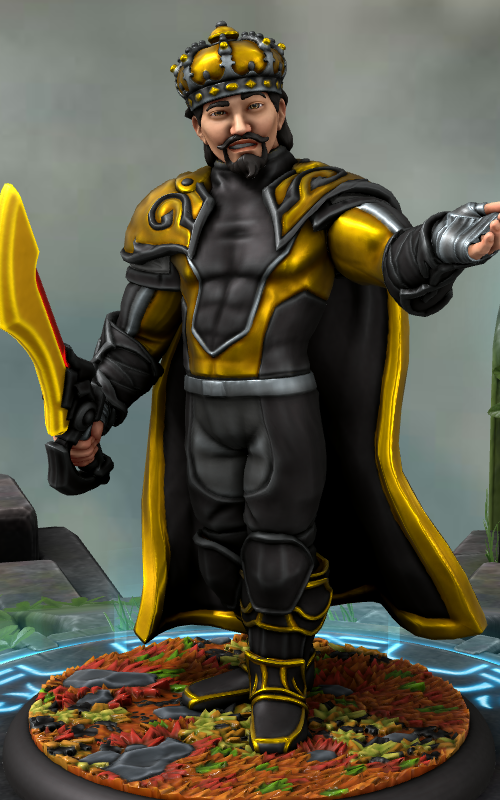
SE
Sea-Envy
2026-03-03 15:07 UTC
#1605

all these alt character sheets is making me think of Avengers Forever. We had circus era Hawkeye, modern Wasp, and Giant man, Yellowjacket (a 2nd delusional Hank) future Songbird and Genus Vell… and a younger Cap. Then Cap showed off super, super strength and all his friends realized that this was a depressed and disillusioned Steve who had just watched a high-ranking American politician commit suicide when revealed as leader of the Secret Empire.

CR
Chief_Lackey_Rich
2026-03-03 16:16 UTC (in reply to #1605)
#1606

For whatever reason, almost all my childhood reading involving Hank Pym (which was admittedly quite limited) had him as Yellowjacket (and apparently happily married to the Wasp), and none of the stories ever dwelt on his other superhero IDs so I was pretty clueless about his past and his origins. If it wasn’t for Marvel Premiere origin of Scott Lang’s Ant-Man I’m not sure I’d even have known Pym was connected to the character.

To me, Hank’s always going to be the Yellowjacket that showed up in those two issues of Marvel Team-Up where he and Janet and Peter are fighting Equinox and it feels really weird when people refer to the character as delusional, troubled, an abusive spouse, etc., etc. I just know I liked his character design and the idea of two dinky insect-themed energy-blaster heroes, and teh drama was an unwelcome surprise when I did finally learn of it. First impression matter a lot at a young age, and that just wasn’t how they were writing him back in that brief window where he was back in the Yellowjacket suit.

Of course, Equinox also turned out to be nothing like his original MTU appearance in #23, and might not even be the same character - maybe the one I know is the original’s son or something? OG Equinox was clearly an adult and older than the heroes, whereas “my” Equinox was a troubled kid with somewhat out-of-control powers. Internet claims otherwise, but the writers sure didn’t pitch him that way.

Maybe Marvel was suffering from timeline bleed back then and accidentally published some of non-616 stories without realizing it? :slight_smile:

LO
LonelyMan
2026-03-03 16:36 UTC (in reply to #1606)
#1607

Given situations like that, I would most generally prefer to have an alternate universe or psychic landscape or something, where it is revealed that every person has that kind of darkness within them, but they wouldn’t be a hero if they didn’t staunchly refuse to actually do that. So Hank would never actually strike his wife, but we’d know he’s capable of doing so.

FJ
fjur
2026-03-04 02:11 UTC
#1608

The only comics I’ve read with Hank Pym in them were some of (I think?) Roy Thomas’ Avengers run in the '60s, where he was Giant Man and then Goliath, and a little bit in West Coast Avengers where he was just Hank Pym, scientist and Avengers ally.

In the former there was no hint that I can recall of him being any sort of troubled, and in the latter there was a scene that I liked where he made a speech about how everyone isn’t cut out for the superhero life, and he spent a long time struggling with that, but he’s finally come to peace with it and accepted that he’s a valid and worthy person just as Hank Pym — he didn’t need to be Ant-Man or Giant Man or anything to have value and be a good person.

So, yeah, “my” version of Hank, if you will, is either untroubled Giant Man who banters with Hawkeye or a civilian scientist who’s gone through some stuff but came out of it with self-acceptance.

FR
FrivYeti
2026-03-05 16:51 UTC
#1609

Rocket Vault

Real Name: Harry Dobson, First Appearance: Cryptic Trails #55, May 2007

Lieutenant Type: Enemy
Die Size: d8
Motive: Malice, Approach: Physical

Traits:

  • Dash Bomb: When Rocket Vault Boosts himself, he may also Hinder a nearby target with the result.
  • Improvise: As an action, when the scene tracker is at Yellow or Red, Rocket Vault may Hinder a nearby target and activate a minor environment twist from an earlier zone. It must target the Hindered target if possible.

As the Plutonium Age developed, Cryptic Trails slowly shifted from a Greenheart-focused title to an increasingly broad anthology title featuring several characters. While roughly half the issues were still focused on Greenheart, the other half featured the Drifter, Wonderer, and the former members of the Twilight Carnival. This also meant that Cryptic Trails took on a rotating cast of writers, giving established Venture stalwarts a break between titles to write two or three issues and giving a chance for newer writers to pitch ideas and concepts. Not all of these ideas were successes, of course. Sometimes the title ended up with someone like Rocket Vault.

Harry Dobson was an Olympic track and field athlete whose career was derailed when he was caught taking performance-enhancing drugs. Furious and embarrassed, convinced that all of the other athletes were similarly cheating and he was just the one who had been caught, Harry stumbled across a ring that allowed him to summon a djinn. He wished to have unparallelled athletic skills, and the djinn grinned and granted his wish, promising that he would be a match for any Olympic athlete. The djinn didn’t do this for Harry’s benefit; he was a wish-granter of the monkey’s paw variety, who was trying to teach the athlete a lesson. He knew that Harry would always know that his skill wasn’t real, that none of his achievements were truly his, and expected that Harry would come back and wish to have his own abilities restored.

This is not what happened. Instead, stewing in frustration and envy, Harry decided that he needed to prove that everyone else was just as driven and ready to cheat. He began using his new abilities to become a parkour star, and then took advantage to break into homes and offices, looking for blackmail material to get others under his thumb. Seeing the damage spreading from the wish he had impulsively granted, the djinn who had done so went to Wonderer for help. Wonderer was able to respond, stopping Rocket Vault and sending him to prison – where he promptly broke out and returned to his life of vengeance, having learned nothing.

Rocket Vault’s writer was convinced that he’d created a cool, quipping supervillain who would be an instant fan favorite. And he used parkour! Everyone loved parkour! But while Rocket Vault was entertaining enough for a single issue, he was too shallow and too deliberately overdone for anyone to really enjoy him. Instead of becoming a star, he almost instantly faded into the background, showing up from time to time as a minor thug working for various other people. He was a small part of Shock and Awe, and made an appearance in Wonderfall a few years later, but never made it on the big stage.

Behind the Scenes:

Remember when everyone was trying to shove parkour-themed characters into everything because it was so cool and exciting and the big new sport that everyone was going to take part in?

Venture Comics remembers!

Anyway, that was the entire inspiration for this character - “what if parkour guy who isn’t that cool but boy did his creator think he was cool”. The rest grew up around which title I wanted to write a bit about, which led to adding a bit of Wonderer flair, and I think the idea of a genie trying to teach someone a lesson and just accidentally creating a supervillain is pretty funny so here we are.

Free access to environment twists is powerful, but requiring them to be from earlier zones helps limit it, and there’s a good chance that Rocket Vault will be taken down before he gets to do this more than once.

CR
Chief_Lackey_Rich
2026-03-05 17:11 UTC (in reply to #1609)
#1610

Yeah, Green twists are usually fairly minor, although having them bundled with a penalty on the (probable) target is annoying. If your players let a d8 lieutenant with no real defensive tech survive until the tracker’s in Red so he can trigger Yellow twists they deserve whatever they get.

Given the timing of his first appearance, I’m assuming Rocket Vault’s creator was one of those people who thought the parkour scene in the 2006 Casino Royale was “kewl” instead of being entirely out of place it what was supposed to be a “more serious and realistic” Bond relaunch. That was one of the prime sources of that dopey Hollywood craze, after all.

FR
FrivYeti
2026-03-09 15:53 UTC
#1611

Oh yeah, Casino Royale is definitely one of the inspirations. There was a small explosion of similar appearances in 2005-2007, and then it mostly faded into the background and parkouring just became a small subset of action hero moves.

The Sylvan Dagger

Real Name: SL-DR4 (Syl), First Appearance: Celestial Travels #829, March 2008

Lieutenant Type: Ally
Die Size: d12
Relation: Fan, Approach: Technological

Traits:

  • Radiation Baffles: When Syl takes Nuclear or Cosmic damage, she Boosts herself with the result of her damage save.
  • Literally A Spaceship: When acting in atmosphere, Syl rolls twice and takes the lower result.

Celestial Travels wasn’t immune to the pressure to create marketing tie-ins and merchandisable ideas. While the title itself was venerable enough that Zack Murphy was reluctant to mess with it too much, he believed that having a comic title with over eight hundred issues should be something that Venture trumpeted more, making their galactic community a broader part of marketing. He envisioned a spin-off series of science fiction comics, a ‘future of Venture Comics’ setting in the style of New Horizons, and television and video games spin-offs.

One of the first of these ideas was a tabletop battle game called Cosmic Storm, featuring teams of starships based on Venture Comics properties taking part in space battles for control of dimensional gateways. Murphy asked the current writer of Celestial Travels, Terry Lang, to create a ship to be the signature model for the game, with a story based around it that would make up a major fall crossover for 2008. Terry decided to take the prompt literally, and created SL-DR4.

SL-DR4 was the creation of an Argellian scientist who was trying to develop a new automated defense force to protect the Grand Galactic Union. He merged Kel’Thoth robotics, Xur’Tani bio-integration and Uranian energy absorption to create a spaceship able to fly itself, with passenger space but no crew. None of his experiments were authorized, and the Union found out what he was doing only when the Starjammers attacked his orbital base in the hopes of stealing the ship and programming it to be a raider. The Celestial Travellers responded, but while they were able to save the ship, the orbital fell out of the sky, threatening to destroy the planet below.

The ship activated during the confusion, and took offense to the Starjammers trying to steal her. As it transpired, her creator had trained her with files on the Celestial Travellers, and she leaped into action to protect them. At her creator’s urging, she reluctantly destroyed the orbital, saving the planet but killing the scientist. Grief-stricken, the Sylvan Dagger pledged to fulfill her creator’s dream, and ensure that innocents were protected. She journeyed with the Aurora Borealis for a time, learning from the Celestial Travellers, and took to calling herself ‘Syl’.

During the 2008 Cosmic Storm crossover, the Sylvan Dagger discovered a series of unstable dimensional rifts, and became embroiled in a war between rogue powers to control them and gain new trade routes and invasion paths across the Galaxy. The crossover was mildly entertaining, but the attached game (which promised to publish new titles changing the state of the galaxy based on tournament results) was a complete failure, and as a spaceship that couldn’t land, Syl didn’t have a place in many Celestial Travels stories. She stuck around in the background, but mostly faded away. A minor storlyine in 2020 established that she was now the leader of Traveller Team 41, supporting her team from space.

Behind the Scenes:

The background to this one is simple. First I got a d12 support for Celestial Travels. Then I said, “wouldn’t it be funny if she was a spaceship?” And then I said, "But no, Friv, you can’t build a model of a spaceship using Hero Forge.

Unless…"

And some fairly intense kitbashing later, here we are!

The tabletop battle game stuff came afterwards, and it’s pretty funny. Syl probably could have been a decent long-term minor character, but she got pushed as the face of a game that just collapsed, so there wasn’t pressure to use her afterwards, and then she ended up in the background. A fun D-Lister all around.

CR
Chief_Lackey_Rich
2026-03-09 20:19 UTC (in reply to #1611)
#1612

Of course. Considering some of the thousands of spaceship minis I’ve bought or created over the years, I assure you just about anything you can imagine will work just fine with the more versatile starship combat systems like Full Thrust or Starmada. One of my regular Full Thrust opponents from ten years back had an armada of ships kitbashed out of spare weapons from old Warhammer Fantasy Battles sprues, and I’ve seen squadrons built out of drywall connecters win painting contests.

Most starship games do, indeed, crash and burn in short order, with at best a vestigial fan base left to bemoan their passing, so that part’s very realistic. Seems to be a particular issue with games based on well-known IPs, since the licenses are expensive and prone to having the rights owner refuse to renew them without warning.I hear teh much-touted X-Wing is making a modest recovery from the 2nd edition debacle that nearly killed it, but good luck getting any support for its Star Trek: Attack Wing spinoff, the Battlestar Galactica starfighter game along the same lines (or the dreadful old FASA BSG game, for that matter), or Halo Fleet Battles.

LO
LonelyMan
2026-03-09 22:00 UTC
#1613

That is SO COOL. If I were hired by Venture Comics, while I might get my feet wet with a few Flatfoot stories, my ultimate Nic-Cage-As-Superman vanity project I’d be trying to make happen would be a reboot of the failed Sylvan Dagger property, as a vehicle for a story heavily inspired by my favorite setting about sentient starships, The Culture by Iain M. Banks, and in particular my first ever purchased and read Culture novel, Excession (NOT a super recommended starting point, let me tell you!). That book features a LOT of dialogue between Culture “Minds” which is properly alien and eerie without being complete nonsense; I really feel like I could do justice to a setting like this.

FR
FrivYeti
2026-03-12 15:41 UTC
#1614

Master Ferris

Real Name: Hank Ferris, Sr, First Appearance: Dark Rivers #30, February 2009
Approach: Ninja, Archetype: Formidable
Upgrade: Hardier Minions, Mastery: Enforced Order

Status Dice: No sun-related penalties d12, Penalties and bonuses: d8, sun-related penalties: d4. Health: 45+5H [Upgraded 50+5H]
Qualities: Technology d10, Close Combat d10, Imposing d8, Magical Lore d8, Vampire CEO d8
Powers: Inventions d10, Speed d10, Suggestion d8, Deduction d8, Shapeshifting d6

Abilities:

  • Bloodsucker [A]: Attack using Speed and use your Max die. Boost yourself using the damage dealt. That bonus is persistent and exclusive.
  • Mesmeric Blast [A]: Attack using Imposing. Hinder that target using your Max+Min dice.
  • Master of All Trades [A]: Take any basic action and use your Max die.
  • Technological Augments [R]: When Attacked, Defend yourself by rolling your single Technology die. Boost yourself with the amount of damage received.
  • (U) Blood-Tech Thralls [ I ]: When you enter the scene with minions, or deploy minions using your own abilities or the environment, increase them by one die size to a maximum of D12.
  • (U) Master of Enforced Order [ I ]: If you have complete control over your immediate surroundings, automatically succeed in an Overcome to organize rabble to accomplish a task.

Common Scene Elements:

  • Enthralled Company Men: d8 minions. Blood Bound: Enthralled company men automatically succeed at their first damage save.
  • Bloodtech Evokers: These devices are represented by single-box challenges. While active, all vampire-powered targets in the location may reroll their 1s, and all other living targets take a -1 persistent/exclusive “Bloodlust” penalty to non-violent actions.
  • Ferris Enterprises: A corporate environment remade into a sanctuary, deploying security forces and isolating heroes for Ferris to prey on.

In 2009, George Nguyen was just wrapping up a major Animaster storyline in Dark Rivers, and he wanted to try something different. Looking around at what villains were available to draw on, he noticed that Venture Comics stalwart Mr. Ferris was more or less absent from comics. Ferris had last been seen during Shock and Awe at the end of 2007, leading the charge to capture Flatfoot’s body, but hadn’t made an appearance in either Company Town or Kid Liberty and the Champions of Tomorrow since. After a brief check-in with the authors of those books to make sure that they didn’t have any big plans for him, Nguyen was able to claim the character and integrate him into the dark magic of the comic.

By this point, Hank Ferris was officially over a century old. Hypertechnology and chemical had preserved him, but he felt death approaching and was growing increasingly desperate in his attempts to find a way to secure immortality. Ferris had looked into vampirism, but being turned would put him in the thrall of his master, and he didn’t care for the drawbacks. Instead, he hatched a plan to synthesize vampiric blood, draining it from the immortal Bloodmoon and transforming himself into a half-vampire with all of the strengths and none of the weaknesses of the undead.

In Dark Rivers #30, Ferris underwent his transformation, using a mixture of magic and technology to steal Bloodmoon’s immortality and fuse it with his own chemical protections. The transformation turned the elder vampire to dust, and left Ferris looking younger than he had in decades, filled with superhuman vitality and mesmeric might. Sunlight could weaken him, but even it couldn’t stop him, and he was soon claiming his old companies by taking control of their current leaders. When his corporate takeovers targeted one of Penitent’s businesses, however, Ferris found himself in direct conflict with her allies, a conflict that ended badly for him when Reverie generated magical sunlight to blast the CEO back into his lair.

While he was weakened, Ferris was far from defeated. Moving more cautiously, he attacked the team again in a two-parter in November, this time looking to destroy them out of vengeance. Once again he was defeated; this time the team thought that they had killed him, but the epilogue revealed that he was slowly reforming from dust, the immortality of Varney filling him.

After that, however, Ferris vanished for over a year. Dark Rivers was pulled into the Night of Lost Souls and then Ngyuen was tasked with wrapping the series up at Issue #50, and Ferris wasn’t important enough to be the key player in that storyline. Company Town specifically wasn’t interested, which was why Dark Rivers had gotten him in the first place. Instead, the four-issue limited series Flatfoot: Blood Ties focused on the newly-returned Flatfoot going toe-to-toe with Ferris’s growing vampire army, as Ferris tried to purge himself of vampiric weaknesses but keep his strengths. The attempt failed, and Flatfoot successfully extracted Bloodmoon from Ferris, returning him to mortality. With what humanity he had in him restored, Ferris was shaken by the experience. He vowed not to try to mess with magic any more, but the return of infirmity and the loss of his companies would pave the way for a few years of failed attempts to recover before his self-immolation in System Crash.

Behind the Scenes

I have a rule that I don’t think I’ve actually publicly posted: Mr. Ferris has to appear in every book. He’s the poster villain of the Venture Comics setting, and his twists and turns often reflect what was going on in the comics overall. This is his fourth appearance, and “messed with magic, went real bad” seemed like a great way to set up his upcoming “burn it all down” frustration and definite death never to return in mid-2016.

Giving a Formidable opponent “sunlight” as a penalty is frankly mean for most PCs. If you don’t have a party that can either magically or technologically generate sunlight, it’s pretty much a free d12 status die. But it’s possible, and it was particularly possible for Ferris’s opponents in this storyline, and I really like the idea so here we are.

Bloodsucker is a modified version of an ability that’s usually Max die Boost (P/E), Mid die Attack. Ferris gets a stronger Attack, but his Boost is contingent on actually doing damage because he’s got to drink the blood, so it balances out overall.

CR
Chief_Lackey_Rich
2026-03-12 16:36 UTC (in reply to #1614)
#1615

Ah ha ha ha ha ha!

Pull the other one, it’s got bells on it! :slight_smile:

Aw, that’s what (probably risky) Overcome actions are for. If you don’t have sunlight where you are, move the baddy to where sunlight is. Mess with time so it’s suddenly daylight. Throw him into low orbit, if you can’t reach the sun itself (it’s really hard to miss, but the trip might take quite a while). Do field mods on your plasma canon so it emulates the energy signature of sunlight. Tweak reality so the weakness is temporarily to son-light and just have some guy wave a flashlight at him.

If you’re a cartoon character, see what Hocus-Kadabra does to him.

I hardly ever worry about “impossible” vulnerabilities, but my play groups back in the day tended to be very, very creative. “Everything is surmountable!” was their battle cry - I think partly because one of the dimmer villains they met early on didn’t understand the meaning of the word and was terrified to find out. Formidable doesn’t always mean smart.

FR
FrivYeti
2026-03-16 16:02 UTC (in reply to #1615)
#1616

The Scion of Secrets

Real Name: , First Appearance: (reborn) Scion of Secrets #1, May 2009
Approach: Overpowered, Archetype: Legion
Upgrade: Power Dampening Field, Mastery: Unfathomable

Status Dice: 9+ minions d4, 5-8 minions d6, 3-4 minions d8, 1-2 minions d10, No minions d12. Health: 30+5H [Upgraded 40+5H]
Qualities: Conviction d8, Fitness d6, Overwhelming Power d8
Powers: Transmutation d12, Suggestion d10, Vitality d10

Abilities:

  • Fractured Mirrors [ I ]: Whenever a Mirror minion larger than a d4 rolls a save against non-magical damage, if its save is successful, it splits into two dice of one smaller size instead of being reduced a die size, and you take 1 irreducible damage. If it fails its save, the minion is only reduced one die size, rather than being destroyed.
  • Spring Forth [A]: Add two Mirror minions of size equal to one die size lower than your current status.
  • Break The World [A]: Attack multiple targets using Transmutation and use your Max die. Hinder each target using your Mid die.
  • Rebuild It Better [A]: Boost using Vitality. Recover Health equal to your Max die. Each of your nearby allies Recovers Health equal to your Min die. Each of your nearby minions and lieutenants whose die sizes have degraded are increased one die size.
  • (U) Wishstarved World [ I ]: While the scene is in the Green zone, all heroes’ power dice at or above d8 are reduced one size. In the Yellow zone, all heroes’ power dice at or above d10 are reduced two die sizes. In the Red zone, all heroes’ power dice are treated as if they are d4. Heroes may remove this ability with three Overcome successes. If a hero takes a minor twist, the hero must lose access to a power entirely until this ability is removed.
  • (U) Master of the Unfathomable [ I ]: If you are in a situation involving eldritch and disturbing forces, automatically succeed at an Overcome to reshape the world according to your whims.

Common Scene Elements:

  • Mirror Retinue (d10 lieutenants). These reflections of the PCs each have +2 to a single basic action when using their powers.
  • Slave to Secrets. This villain has been reforged into a willing servant of the Scion.
  • A World Enraptured. An urban environment falling under the Scion’s sway, creating transformed environment minions, Hinders, and twists reflecting sudden changes in reality.

2009 found Venture Comics on increasingly wobbly footing. Several of Murphy’s major branding ventures had failed to draw in the new customers that he had hoped for, and sales of some of the titles that he had most actively pressed for were slumping. In particular, a massive marketing push had been made for Kid Liberty and the Champions of Tomorrow, and the title was already the lowest-seller in Venture’s lineup. In an attempt to turn things around, Murphy decided to lean on nostalgia, announcing a major summer event for the 25th​ anniversary of the original Sovereign of Secrets mega-event: Scion of Secrets.

The storyline itself was relatively straightforward. With the Sovereign of Secrets defeated and sealed away during the events of Ashes to Ashes, their grasp over many of their pocket worlds was shattered. For most worlds, this was a net benefit, making it easier for the Drifter to repair the damage that had been done. But the defeat also released George Van Horne, the former Scion of Silence. George had been resting in a pocket dream in which everything was perfect; when the Sovereign’s power vanished, his dream was torn apart, and he found himself dumped back into the world without his family. Filled with fury, George decided that if his world was to be a nightmare, so would everyone’s. He began to summon twisted mirrors of the heroes of Earth, warping the land into a nightmare with the goal of collapsing everything and everyone.

The result was a major crossover event focused on Heretic #44-46, Dark Rivers #33-35, and Kid Liberty and the Champions of Tomorrow #17-20. While the main event unfolded in the pages of the four-issue Scion of Secrets limited series, each of the three comics saw their respective groups dealing with the fallout of the Scion’s assault, working to develop the tools needed to stop him, and having a series of major crises created by the Scion forcibly revealing their darkest secrets to each other by manifesting twisted reflections of the heroes to tear apart their lives. The Champions of Tomorrow were able to overcome these assaults, saving the heroes who had stopped the Scion the first time and joining forces with them to build a new prison for him, one where he could live with his own mirrored images of his family forever, and never threaten the world again.

Outside of the main event, every other title was also involved in the crossover. The current storylines of Protean, Company Town, and Covert Tactics were derailed by single-issue stories about one of their villains being corrupted by the Scion into a destructive force that needed to be brought down, and Celestial Travels #844 and Vanguards #48 collaborated on a two-parter in which the Riddlemaster intervened to sweep both teams away from the Scion and save them from his wrath, only to be corrupted by his power and set up a new game that threatened to destroy the Moon if the teams of heroes didn’t find the Riddlemaster’s hidden heart.

Ultimately, Scion of Secrets was a disaster. Fans rightly pointed out that the ease with which the Champions of Tomorrow overcame the Scion’s influence seemed like an attempt to make them seem better than the Champions of Truth, who had fallen to the Scion’s wishcrafting. Readers of the comics whose storylines were interrupted were irate about losing a month of the stories they cared about, and George’s motivations were derided as cliched. The failure of the crossover would ultimately lead to both plans to wrap up the Champions of Tomorrow, and to Zack Murphy stepping down as EIC and passing the mantle to Sandra Cho.

Behind the Scenes

No one ever lets a great storyline stay in the past in comics!

The Scion was such a huge success that having him never return seemed pretty impossible. I’d had a third Scion appear as a bit of that, but I thought that a failed attempt to do another super-huge Scion event would be a good choice. Since 2009 didn’t have a major crossover yet, and it would be the biggest Champions of Tomorrow event before they got cancelled in Night of Lost Souls, I combined the two! The name is sort of a joke - I keep mixing up Sovereign of Secrets and Scion of Silence and swapping their names, so now I’ve got a combined one to be even more nonsense.

Scion of Secrets is a bit of a cheater. He’s throwing d12+d12+d10 as his die pool when his minions are cleared out, he creates big minions who are hard to kill, he heals his minions when they’re damaged… this is not entirely a fair fight, frankly. But his health is not massive, so a good team can probably take him down.

FJ
fjur
2026-03-17 04:38 UTC
#1617

Cool, now do a Sovereign of Silence and you’ll get a bingo.

CR
Chief_Lackey_Rich
2026-03-17 13:23 UTC (in reply to #1617)
#1618

Next up, the Secret Silent Sovereign’s Scion. :slight_smile:

CR
Chief_Lackey_Rich
2026-03-17 13:56 UTC (in reply to #1616)
#1619

The only actual rules change is shifting the minions from splitting only when taking physical damage to only when taking non-magical damage. Which is better, but only situationally.

How? Like any Overpowered villain, he’s stuck with at best a d8 Quality. d12, d12, d8 is still really good when you don’t look at Min for anything critical (oh well, Mister Allied villain, guess you don’t heal much), but he only gets that if there are zero minions around. The more common d12, d10,d8 is above par but not incredible for a villain - and he mind wind up with a weaker Status die if the heroes have split a bunch of his minions, either accidentally or deliberately.

Split minions plus status restoration is indeed a nasty combination. Used it myself way back when I first started up on making villains. At least you didn’t combine it with that “spawn minions while preventing damage” Legion reaction. :slight_smile:

He’s definitely above average for a villain, but a good team should be able to handle him. He can’t actually put out minions all that efficiently - spending a turn doing so is a turn he isn’t doing Break the World, and if there are any fragmented minions out there already the payoff for adding a pair of d8 minions (or less) is really iffy. His other two action abilities are great, but Rebuild It Better can be played around pretty well by just focusing on him and leaving his minions alone. His upgrade does make him a lot more alarming, since it really needs to be removed ASAP and that messes with action economy severely while also limiting hero options as they temporarily lose powers. But I still wouldn’t call him unfair unless the environment is extremely skewed toward synergies with him.

I heartily approve of any example of company-wide crossover events ending poorly and pissing off readers. Very realistic depiction of how real life usually works out. :slight_smile:

FR
FrivYeti
2026-03-18 17:54 UTC (in reply to #1619)
#1620

You are correct! I was just tired when I wrote the summary and even though I correctly wrote his qualities, I was thinking they were d10, d8, d6.
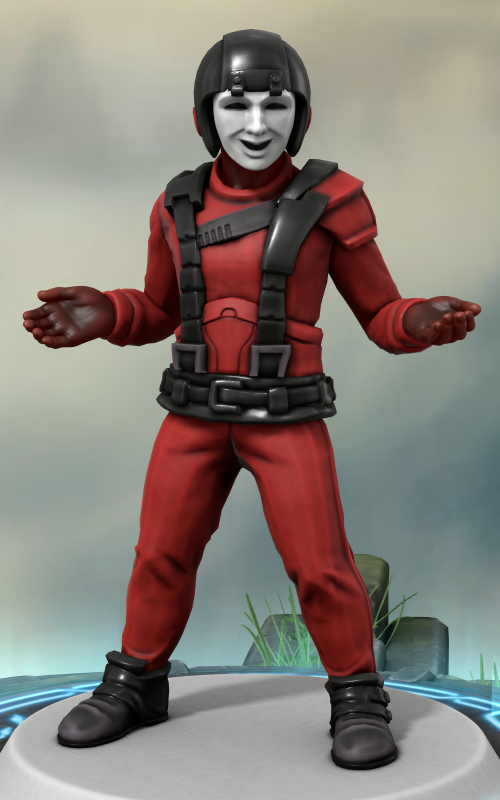
FR
FrivYeti
2026-03-19 15:31 UTC
#1621

Night Bird

Alias: Birdie, First Appearance: (hero) Hidden Champions (Vol. 2) #8, Oct 2014
Background: Created, Power Source: Alien, Archetype: Flyer
Personality: Impulsive, Principles: Instinct, Stealth

Status Dice: Green d6, Yellow d8, Red d10. Health: 30 [Green 30-23, Yellow 22-12, Red 11-1]
Qualities: Close Combat d12, Stealth d10, Acrobatics d8, Alertness d6, Owl Lady d8
Powers: Flight d10, Speed d8, Awareness d8, Gadgets d8

Green Abilities:

  • Screeching Strike [A]: Attack using Close Combat. Defend against all Attacks against you using your Min die until your next turn.
  • Shadow on the Moon [A]: Hinder multiple targets using Flight. Apply your Min die to each of them.
  • Principle of Instinct [A]: Overcome a situation that taps into your primal nature and use your Max die. You and each of your allies gain a hero point.
  • Principle of Stealth [A]: Overcome to infiltrate somewhere or avoid detection and use your Max die. You and each of your allies gain a hero point.

Yellow Abilities:

  • Cover The Flock [A]: Boost all nearby allies using Speed. Use your Max+Mid dice. Hinder yourself with your Min die.

Frenzy [A]: Attack up to three targets using Close Combat. Apply your Min die to each of them.

  • Swoop Away [R]: When you are Attacked at close range, Defend yourself by rolling your single Speed die.

Red Abilities

  • Vicious Retreat [A]: Hinder any number of close targets using Close Combat. Use your Max die. End your turn elsewhere in the scene.
  • Rhybidium Plate [R]: Hinder yourself by rolling your single Gadgets die. You are immune to damage until the start of your next turn. You cannot use this ability again this scene.

Out

  • The hero who goes directly after you may take 1 damage to reroll their dice pool.

Principle of Instinct (Identity Principle)
During Roleplaying: You have a set of animal instincts that help to guide your actions, giving you a primal understanding of the world that sometimes sets you at odds with modern society.

Minor Twist: What situation have you misunderstood?
Major Twist: What disaster have your instincts caused?
Principle of Instinct: Overcome a situation that taps into your primal nature and use your Max die. You and each of your allies gain a hero point.

Following the end of Earthwatch Volume 2 in 2013, Venture’s editors were already laying out plans for the next incarnation of the team. This time, the plan was laid out to introduce the new Earthwatch gradually, giving them a pair of smaller appearances to gauge the audience reaction to a new team before rolling out a formal ongoing title as part of 2016’s summer event. Cho wanted a team that would be noticeably different from the former one, and suggested to writer Terry Lang that he lean more heavily on established characters with a history of violence and struggles with their inner natures. After some consideration, Lang developed a team led by Synthesis, and made up of four existing characters and one newcome: Siphon, Twilighter, Fatale, a rogue Kel’Thoth robot that called itself Meatsuit, and Night Bird.

Night Bird had been drifting through Venture Comics for several years. She was a popular antagonist, but never quite found her footing during the Plutonium Age; after being captured and subsequently freed from AEGIS in the late 1990s, she drifted from title to title and from villain to villain, largely continuing her pattern of looking for a good scientist to serve. Lang decided to have Night Bird fixate on Synthesis, a ruthless alien scientist who regretted her earlier actions, and made the uplifted owl the heart of the team. Utterly devoted to Synthesis’s orders, Night Bird kept the rest of Earthwatch in line when they were threatening to fragment, protecting them without hesitation and building a rapport with Fatale and Twilighter in particular.

The new team debuted in Hidden Champions #8, joining Hyperstar in a battle against Hive-Minder and his robot army. From there, they starred in a limited series with three 48-page issues, Earthwatch: Shadow Force. Shadow Force saw the team facing off against SCOURGE, demonstrating their killing intent and placing them against villains that all of them agreed needed to be removed.

Earthwatch: Shadow Force was not a huge success. The characters were tilted too far towards cynicism, without a counterbalancing member to provide lighter moments. The team made a few appearances in other comics over the next few years, but Cho ended up giving the title slot that had been planned for them to Brave New World, and “Passing the Torch” spelled the end for any chance of an ongoing title for them. Siphon appeared in Brave New World, on the run from his former team, and died trying to once again bring down his old foes. When the Diamond Age began, the various members gradually appeared in different contexts: Twilighter was largely retired, Meatsuit was mentioned in Earthwatch #24 as having been a successful graduate, and Fatale would return as a mercenary working for Disaster Recovery. Night Bird herself was absent for 2019 and 2020, before joining up with Black Hat and the Codebreakers as a violent antihero, loyal and determined but without having really learned much from her time on the team.

Behind the Scenes

Night Bird is great, but she’s a villain at heart. I could imagine a redemption arc for her that took, and who knows, maybe the late Diamond Age will see someone else take a kick at the can, but for now her shot at heroism was a short one.

As for the rest of this team, I bet it was really close to working. Fatale had an almost-redemption arc in the past, Twilighter is just annoyed to be there, Meatsuit is not an interesting character and will never receive a writeup but sarcastic robot is often a winner, and Siphon is convinced that he’s already a hero and just needs everyone to recognize it.

The Principle of Instinct is a modified version of the Principle of Savagery, replacing “instinctive violence” with “instinctive missteps”. I have strong feelings about the Principle of Savagery, which I think I’ve discussed in the past, but the instinct-driven part works really, really well for her.

I also decided to make the “perfect defense” action from Technological into a reaction. I love it thematically, but it’s already only useable once per scene, and it applies a penalty, and it doesn’t come with a way to redirect damage towards you. Making it also take up your action felt like it was a bit much unless a player is doing something ridiculous like combining it with Push The Limits and a reaction that redirects attacks to you.

CR
Chief_Lackey_Rich
2026-03-19 16:34 UTC (in reply to #1621)
#1622

Oh, you tease, you. A supranym like that and everything we’re never getting a writeup? This is going to be your Gun Rat, I tell you. :slight_smile:

Also, you know some lunatic forced the character into an “awkward blind date” story titled “Meatsuit Meet Cute” at some point. It’s as inevitable as Major Major Major Major never getting a promotion.

Agreed, in large part because the ability (“Full Defensive”) is worded so it sounds like a Reaction anyway. Having the defensive effect last until YNT is unusual, but Red abilities can and should be allowed to bend the norms.

“Roll a single P/Q die” is not phrasing that belongs on an action ability in the first place since it implies you don’t roll your usual pool that turn, which in turn messes with abilities like Inspiring Totem. I recall asking if it was a typo through both the podcast and the company email years ago, but of course it was ignored and putting up a FAQ page in all the time they had to do so was too much trouble.

FR
FrivYeti
2026-03-20 18:12 UTC (in reply to #1622)
#1623

I kind of suspect that it started as a reaction, someone thought that it was too powerful, and it got retooled into an action without fixing that, yeah.

By comparison, the other two “full defense” abilities in Red are one that’s a massive but not total Defend as an action, with no penalty to you, useable each turn, and one that turns an attack against you into a Hinder and is a reuseable reaction, but because it’s a reaction you can only use it once per turn. That “once per scene” restriction really feels like it was meant to balance with the other reaction-level effect.

Just in general, though, full defense isn’t that useful in Sentinels, especially in Red. You can’t draw fire reliably enough so you’re really relying on the GM having NPCs not notice that they can’t hurt you, and you only get eight actions in most scenes.

FR
FrivYeti
2026-03-23 15:50 UTC
#1624

Ms. Agathion

Real Name: Glasya Agathion, First Appearance: Hell’s Belles #28, February 2018

Lieutenant Type: Ally
Die Size: d8
Relation: Professional, Approach: Otherworldly

Traits:

  • Practical Divination: Ms. Agathion has +1 to all basic actions when directly fulfilling a request from her current master.
  • Familiar Force: As an action, Ms. Agathion may roll her status die, applying the result as a Boost to any number of allies and a Hinder to any number of targets. Then step down her status die.

As 2018 dawned, the writers of Venture Comics began preparing for “Passing the Torch”. Some writers were given the premises of the comics that would be taking over from theirs, giving them a framework to build towards, but not every comic had been finalized, and some were wrapping up, leaving their characters open to be picked up down the road.

Hell’s Belles was in the latter camp. It had always intended to be a temporary title, running around three to four years, so Christina Avalon had been building towards a final confrontation between the heroines and Elysium Inc. as the magical corporation tried to absorb the Pentient’s business interests. Knowing that a timeskip was in the cards, however, Avalon decided to include an extra thread for the next person to write Penitent to pull on, and created Ms. Agathion.

Introduced at the tail end of a three-part arc covering Hell’s Belles #26-28, Ms. Agathion was a demonic familiar created by an Elysium executive in order to juggle an impossible number of tasks, manage binding and warding rituals that would hold out enemy mages while allowing passage to Elysium’s non-human members, and generally do whatever needed to be done to make the business a success. Ms. Agathion was happy to serve, but she did not care for the compensation package (meager) or the severance clauses (lethal). When her branch office was attacked by the Belles, and the projects she had been managing were eradicated, she took advantage of a “winner takes the spoilers” clause to transfer her contract to the Penitent without her knowledge or permission.

Susannah arrived at work the next day to discover that she had a new personal assistant, one who was absolutely dedicated to the day-to-day operations of Van Horne Industries and who had already terrified the board of directors into submission. Bemused and suspicious, the Penitent was about to banish the demon back to the abyss, but Heretic convinced her to give Glasya a chance, and Ms. Agathion quickly began balancing the Penitent’s business and superheroic life, quietly dedicated and quite happy with her new position.

Avalon’s goal had been to introduce Ms. Agathion and write a few early speedbumps, with the hope that future writers could pick the character up next year with fifteen years of experience working closely with the Penitent and give her a secretary who knew all her secrets and could work alongside her. However, the writers who picked up the Penitent went a different route, having her largely estranged from her business. There was no room for a skilled assistant there, so Ms. Agathion was quietly dropped. Avalon would re-canonize her in 2022, placing her in another business as a part-time contact for Penitent, but she never became the major player the writer had hoped for.

Behind the Scenes:

I like the idea of Penitent having a demonic familiar as a secretary. I almost saved it for a later book. But the idea of someone deliberately introducing something cool so that the timeskip could turn it into a bigger deal and then the timeskip did not turn it into a bigger deal was too juicy to pass up.

Ms. Agathion’s ultimate ability is potentially pretty massive, but her status die is small enough that it’s usually only going to create a blanket +/-1 or 2, and then she shrinks and things get even less reliable (her usual bonus specifically only applies to basic actions so that it won’t be used as part of Familiar Force.) If you get some bonuses on her, though, you could translate it to a really powerful turn.

And that’s it for the Plutonium Age! Moving on to the final stretch, and this time there won’t be any earlier characters to intersperse with them. Only a handful of characters left to go as we advance the timeline up to 2024…
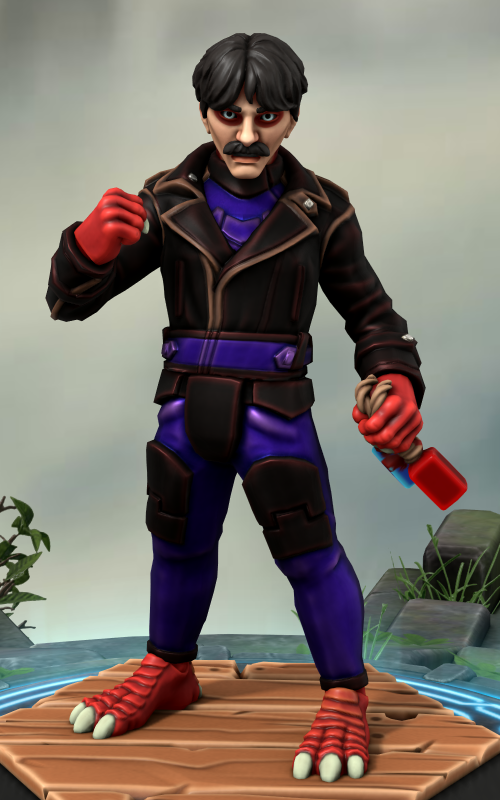
CR
Chief_Lackey_Rich
2026-03-23 21:28 UTC (in reply to #1624)
#1625

Sure could. Worth passing her some bonuses, especially if you’ve got a “boost all nearby allies” trick to maximize efficiency, but as a d8 lieutenant she might need to call on the bonuses to pass saves so she doesn’t just drop with them unused - and you don’t even get a roll if someone hits her for 16+ damage in one hit. Hard for PCs, but not so much so for some villains.

Think I’d limit the ability a bit by making her unable to Boost herself with it.

FR
FrivYeti
2026-03-24 17:30 UTC (in reply to #1625)
#1626

Yeah, that’s probably a good revision. “Boost to any number of allies and Hinder to any number of targets”.

FR
FrivYeti
2026-03-26 15:44 UTC
#1627

Street Rat

Real Name: Danny Klein, First Appearance: Street Rat #1, March 2019
Background: Criminal, Power Source: Nature, Archetype: Transporter
Personality: Fast Talker, Principles: Underworld, Clockwork

Status Dice: Green d6, Yellow d8, Red d10. Health: 30 [Green 30-23, Yellow 22-12, Red 11-1]
Qualities: Criminal Underworld d10, Acrobatics d10, Stealth d8, Persuasion d8, Make Do d8
Powers: Wall-Crawling d10, Speed d8, Stone d8, Remote Viewing d8

Green Abilities:

  • Concrete Jungle [A]: Hinder using Stone. Use your Max die. You may split that penalty across multiple nearby targets.
  • Flow Like Water [A]: Attack using Wall-Crawling. Defend against all Attacks against you using your Min die until your next turn.
  • Sounds of the City [A]: Boost another hero using Remote Viewing. Attack using your Min die.
  • Principle of Clockwork [A]: Overcome a complex problem with a simple tool and use your Max die. You and each of your allies gain a hero point.
  • Principle of the Underworld [A]: Overcome a problem related to your knowledge of the criminal underworld or using one of your contacts and use your Max die. You and each of your allies gain a hero point.

Yellow Abilities:

  • Raise the Roof [A]: Attack using Wall-Crawling. Use your Max+Min dice. Then gain a Boost using your Mid die. The target of the Attack gains a bonus of the same size.
  • Take Out The Trash [A]: Attack using Stone. Either Hinder your target with your Min die or move them somewhere else in the scene.
  • Drop It Like Its Hot [R]: When you defeat a minion, roll that minion’s die and Boost yourself using that roll to create a bonus for your next action.

Red Abilities

  • Bring Down The House [A]: Attack using Stone. Use your Max+Mid dice.
  • Get To Ground [A]: Boost yourself using Wall-Crawling. Use your Max+Min dice. Then, you may end up anywhere else in the scene, avoiding any dangers between your starting and ending locations.
  • Come For The King [R]: When an opponent Attacks, you may become the target of that Attack and Defend by rolling your single Acrobatics die.

Out

  • Hinder a minion or lieutenant by rolling your single Criminal Underworld die and increase that penalty by -1.

While most of the Diamond Age launch titles were a success, not all of them made the cut. Despite the best efforts of Handman and the Venture team, the first title to wind up cancelled was Street Rat – a victim of uneven implementation and unavoidable world events.

Street Rat was pitched as one part superhero comic, one part heist caper. Taking place on the streets of Neulyon, it followed a young man named Danny Klein. Klein’s family had been involved with Neulyon’s criminal families for generations; his father was an enforcer for the dos Santos family, and his mother was a crooked accountant who served as a fixer. When Danny was thirteen, however, the family business followed them home. A gunman sprayed their house with bullets, and Danny’s parents were killed. Ricardo dos Santos, the cartel’s leader, was devastated. He took Danny in, making sure that the boy would have everything that he needed. Danny, however, didn’t want his adopted father’s blood money. He clashed with dos Santos, blaming him for his parents’ deaths, and swore that he would make his own way in the world.

When Danny was nineteen, matters came to a head. He was kidnapped by a group of would-be gangsters who wanted to force dos Santos to give up part of the local drug trade. During the confrontation, Danny was accidentally shot, collapsing in an alley. As he lay dying, his blood pooling with the concrete, he felt the city surrounding him, and something changed. He woke up with his wounds patched by flowing concrete, the lifeblood of the city still humming in his veins, and he brought down the panicking kidnappers from the shadows, leaving them for the police.

With his newfound powers, Danny knew that he had a calling. He dedicated himself to purging Neulyon of its gangs, working from the shadows as the mysterious Street Rat to dismantle dos Santos’s criminal empire without killing anyone. As angry as he was with his adopted father, Danny didn’t actually want to hurt him. He just wanted the violence to end. He put together complex heists, targeting criminal enterprises and supervillains moving in on the turf that was left open, and worked to make the city safe again.

The premise was solid, and the action worked, but the writing of Street Rat never quite matched the vision. Danny’s complicated relationship with dos Santos came across as forced and cliché, his heists did more to make the criminals involved seem foolish for not anticipating superhumans in a setting where crime was dominated by them than to make Street Rat seem cunning, and Danny’s supporting cast was a little bit too flat to be exciting. Even the introduction of Caliban in Street Rat #6 as a mentor figure for the young thief wasn’t enough to sway the needle.

If the comic had had more time, it might have found its footing, but Covid-19 struck as Issue #13 hit the shelves, and Venture Comics had to burn money to stay afloat. Rather than try to revive the struggling title, Handman made the choice to cancel it and move on, leaving several plot threads unresolved as Caliban moved on to Greenheart: Trial by Fire. The character made a few minor appearances in issues of Covert Tactics and World of Wonders, but none of them were enough to bring him back to an ongoing title, and he soon faded into the background of the Diamond Age.

Behind the Scenes

Here’s a D-Lister who’s ripe for a player to take over! I wanted there to be a launch title character who just failed completely, and I wanted it to be someone who would look good on paper but be easily to portray wrong.

Street Rat fits the bill nicely. I have a soft spot for complicated hero-villain relationships, and for “voice of the city” type characters, but both of them are easy to mess up. Similarly, heist comics can be a ton of fun, but they’re not easy to write, especially on a monthly schedule. Figuring out what the next cool heist is going to be is a lot of work on a tight timeline. So Covid kills the comic, and it never actually gets resolution. Maybe a PC can pick him up for another comic some day!

The character himself is versatile; that d6 in Green is a bit of a rough hang with two Min die abilities, but neither one is a Boost or Hinder so they’ve got some utility, and as he shifts into Yellow he gets a lot more reliable. Realistically, he’d probably be a bit stronger going with a d8/d8/d8 personality and swapping out that powerful Red attack for a d10 Red status die, but I still like him.

CR
Chief_Lackey_Rich
2026-03-26 18:31 UTC
#1628

He certainly does sound good as a pitch, can’t argue that. One more promising thing ruined by COVID.

You have no idea how long I waffled about taking that one for Phade back when we were in the online game together. Finally went with something else, but the temptation to hand out a decent bonus early on while also softening up a minion (and maybe even getting a fluke KO) was pretty big. Only the risk of seeing nothing smaller than a lieutenant among the foes ultimately deterred me.

Deliberate alteration or a typo there? The book version hands out a Mid die bonus to both parties - assuming your target survived, of course.

I think he’s fine as-is, but Raise the Roof does give him a strong Attack already, even if it is a little two-edged when hitting a target that can actually benefit from the bonus. Maybe split the difference - leave him at 6/8/10 base status, then drop Bring Down the house and bump his Red status to d12? Then he’s really someone who pulls it together when things get tough - and you get a little more Health to boot.

The really important question, though: Is Street Rat’s nemesis Gun Rat? Sentinel Comics refuses to use the character, Venture might as well give him a home. :slight_smile:

LO
LonelyMan
2026-03-26 19:03 UTC (in reply to #1628)
#1629

As I believe I’ve said before, Gun Rat is an Artifact Comics character.

FJ
fjur
2026-03-26 21:49 UTC (in reply to #1624)
#1630

Demonic secretary; cool. Wonder who makes a better assistant: her or Aminia Twain.

FJ
fjur
2026-03-26 21:58 UTC (in reply to #1629)
#1631

And Tempest and Bunker are DC characters, and— oh heck I’ll just quote myself:

LO
LonelyMan
2026-03-26 22:03 UTC (in reply to #1630)
#1632

I feel like that question answers itself in Freedom Five comics circa 2006…

LO
LonelyMan
2026-03-26 22:05 UTC (in reply to #1631)
#1633

Hey, Sentinel Comics doesnt have any characters named El Muerto!

Funny that Harvey Comics managed to get in there with Stuntman.

FJ
fjur
2026-03-26 23:18 UTC
#1634

Eh, I was more thinking of just Universe 1 Aminia; I consider her alternate self whose mind became Miss Information to be a separate entity.

I compiled that list years ago, of course, but I think that some of the other names were also used by some smaller companies than Marvel and DC, but I didn’t bother to list them most of the time to keep the list from getting too unwieldy. I think I just included Harvey’s Stuntman ‘cause that had been the only publisher to use that name.

CR
Chief_Lackey_Rich
2026-03-27 01:11 UTC (in reply to #1631)
#1635

I remain disappointed that there’s only one Chairman in published comics, and that he is not, in fact, one bit like Chairface Chippendale (obviously the only true chair-man out there to date).

Also sad that AFAIK not one of the various published Ra characters have had to face off against a villain called Ra Ra Rasputin, who would obviously be a Russian-themed cheerleader with the physique of one of those chemically-enhanced athletes the Eastern bloc used to send to the Olympics when the USSR was still a going concern. She could hang around with Mecha-Stalin and Marxman in Sentinels.

SE
Sea-Envy
2026-03-27 07:19 UTC
#1636

Now I am picturing Ms. Agathion helping Suzie Suzuki manage Snowfall Security

FR
FrivYeti
2026-03-27 15:36 UTC (in reply to #1628)
#1637

Whoops, typo! I’ll fix that.

Now that would be a cool pairing. It might even be something that could happen without Ms. Agathion leaving D-List status; acting as the support to a support can give you a stable but very, very small place in comics. Maybe I’ll figure out where to slide them in as a pair!

SE
Sea-Envy
2026-03-27 19:36 UTC (in reply to #1637)
#1638

in theory 1/2H lieutenants are a scene element, so I am often picturing how 2-3 0f them would be working together

CR
Chief_Lackey_Rich
2026-03-27 22:38 UTC (in reply to #1638)
#1639

I’ve done mostly-lieutenant opposition scenes in the past, usually for even numbers of PCs to avoid rounding effects. IIRC at least twice it was a situation where multiple “middle-management” types within a conspiracy (DOOM and SIN respectively) were jockeying for a promotion to the upper tiers, and another was a bunch of D-List ex-villains forming a team to make a comeback (which did not go well for them). I’m sure there’s lots of other ways to go long on lieutenants, a skew that poses a quite different kind of challenge for heroes.

SE
Sea-Envy
2026-03-29 02:33 UTC
#1640

I use LT only for my “supervillain private girls’ school” organization
I also tried a 5 villains v 5 heroes’ slugfest. The schoolgirls had to save the heroes and trade them and the 1st gen clones that had beaten the heroes to the government agents for the girls who had been arrested earlier.

FR
FrivYeti
2026-03-30 16:12 UTC
#1641

Yeah, I’m a big fan of using two scene elements to toss (H) lieutenants into a scene, making a crew of minor villains that are complex enough to be interesting but not require the level of book-keeping that major villains do. I’m particularly fond of villain teams being “one mechanical villain who’s the focus for this issue plus (H) lieutenants who have been villains in past issues.”

Burnout

Real Name: Violet Biers, First Appearance: Vanguard Academy #1, March 2019
Background: Academic, Power Source: Radiation, Archetype: Robot/Cyborg
Personality: Inquisitive, Principles: Science, Undead

Status Dice: Green d6, Yellow d8, Red d12. Health: 36 [Green 36-28, Yellow 27-14, Red 13-1]
Qualities: Investigation d12, Science d8, Self-Control d6, Brimming With Power d8
Powers: Nuclear d10, Deduction d10, Power Suit d10, Flight d8, Vitality d6, Density Control d6

Green Abilities:

  • Gather Energy [A]: Boost yourself using Power Suit, and Defend with your Min die.
  • Gather Information [A]: Boost yourself using Deduction. That bonus is persistent and exclusive.
  • Flare [R]: When a new target enters the scene close to you, you may Attack it by rolling your single Nuclear die.
  • Principle of the Undead [A]: Overcome a situation where your undead nature comes in handy and use your Max die. You and each of your allies gain a hero point.
  • Principle of Science [A]: Overcome while applying specific scientific principles. Use your Max die. You and each of your allies gain a hero point.

Yellow Abilities:

  • Radiation Blast [A]: Attack using Nuclear. Hinder that target using your Max die.
  • Let Loose [A]: Attack using Nuclear. Use your Mid die to Attack one extra target for each bonus you have. Apply a different bonus to each Attack.
  • Overload [R]: After rolling during your turn, you may take 1 irreducible damage to reroll your entire pool.

Red Abilities

  • Nuclear Option [A]: Attack using Nuclear and and at least one bonus. Use your Max+Mid+Min dice. Destroy all of your bonuses, adding each of them to this Attack first, even if they are exclusive.
  • The Big Reveal [A]: Overcome using Investigation. Use your Max+Min dice. Hinder all nearby opponents with your Mid die.

Out

  • Choose an ally. Until your next turn, that ally may reroll one of their dice by using a Reaction.

Leif Martin’s original set of eight students to act as the leads of Vanguard Academy were loosely based on college archetypes, and the first twelve issues paired them off with each pair getting two issues as leads, plus a few group issues tying them together. Jackie Frost was the popular girl, Critter was the jock. Gacha was a delinquent and Big Rig was the poor kid labeled as a troublemaker. Wolfheart was old money and Silver Sparrow was an activist. And of the final pair, Spotlight was a theatre kid and the ironically-named Burnout was the nerd.

Violet Biers had always been a genius. She excelled in every subject, skipped a grade in elementary school and another one in high school, and while she was a little bit awkward when it came to interpersonal things, she got by with kindness and listening and inserted herself into a few circles of friends. She also fancied herself a bit of a teen detective, and spent her free time investigating minor crimes and solving problems around her town.

Things went wrong when Violet accidentally stumbled on a full-on supervillain plot. A would-be mad scientist had constructed a backyard nuclear reactor to harvest dimensional isotopes, and when Violet discovered him he detonated it rather than be arrested. The explosion killed both the scientist and Violet and irradiated a chunk of her hometown. But Violet, to her shock, didn’t stay dead. Dimensional radiation continued to animate her corpse, giving her time to call for help.

The Vanguards found her, and using technology originally developed to help their friend Half-Life they were able to cybernetically integrate a containment suit into the girl, rerouting the radiation she would otherwise give off to sustain her existence. Violet was told that her body would likely continue to exist until the radiation faded, which was probably on the order of forty to sixty years. They suggested that she enroll at the newly-created Vanguard Academy to learn to use her powers. Violet didn’t really want to. She had her own dreams. But her other college applications were denied for ‘safety reasons’, and while most of her friends didn’t specifically blame her for what had happened, they were all being forced to evacuate to nearby towns, and her undead appearance was a reminder of their loss. Alone, frustrated, and exhausted, she sarcastically took on the moniker of ‘Burnout’ and half-heartedly joined the academy.

At Vanguard Academy, Burnout was primarily paired up with Spotlight, a young man whose Atlantean genes allowed him to absorb and project energy and who was instantly convinced that he needed to reach out to the bitter young woman. They had a rocky relationship, but one that was starting to grow after their focus issues. But when Martin retooled Vanguard Academy to focus on Jackie Frost and Critter starting with Issue #13, Burnout was quickly reduced to supporting status. She would continue to appear in most issues, but she never had another focus story devoted to her, and mostly served as a source of information for the pair or a sarcastic voice in the classroom. When Vanguard Academy ended in 2021, she mostly vanished from the pages of Venture Comics. She re-appeared for a single issue of World of Wonders in 2022, a story about her internship with Hardline in Santa Juantina, and then returned along with most of the Vanguard Academy alumni during the six-issue “Blightmare” crossover between Covert Tactics and Vanguards in 2023, as Dr. Deimos and SCOURGE attempted to use the old dimensional fissures in Santa Juanita to launch a devastating attack on the Jotari homeworld. During that storyline, Spotlight was murdered by Dr. Deimos, and Burnout was devastated, making Jackie Frost and Critter promise that they would tell their friends how much they mattered while they still could.

Behind the Scenes

Tragic backstory!

One of my goals with the Diamond Age heroes is to give them just enough backstory to know their deal, but to make them useable as player characters who aren’t too heavily tied in to the setting. “Former Vanguard Academy” seemed like a good slot for that, and it let me toss in the names of the other previously-unmentioned student characters who probably won’t get writeups. So Burnout has a college backstory, and a single major storyline where she met a few other main heroes, and now you can do what you like with her.

She did end up looking a bit like a Fallout character, but that’s not a drawback in my books!

There is a Gen13 character also called Burnout, but I don’t care, it’s different enough.

CR
Chief_Lackey_Rich
2026-03-30 19:19 UTC (in reply to #1641)
#1642

Yes, that’s a good technique for scene design. Add an environment or a standing challenge and you’ve got four elements, and with a five-player group or some allies to balance things you can include both.

He’s pretty much a Human Torch knockoff with some mild psionics at times, so no real similarity. I like your Burnout better anyway. Way more versatile, and her die pools and Health are quite impressive.

Go figure, me liking a radioactive character, what a surprise.

FR
FrivYeti
2026-04-02 16:13 UTC
#1643

Rootwork

Real Name: Held as collateral, First Appearance: Champions of Truth #590, July 2020
Approach: Dampening, Archetype: Squad
Upgrade: Defense Shield, Mastery: Mysticism

Status Dice: No other villains d6, 1-2 other villains d8, 3+ other villains d10. Health: 30+5H
Qualities: Magical Lore d10, Stealth d8, Close Combat d8, Botanical Nightmare d8
Powers: Plants d10, Intuition d8, Vitality d8

Abilities:

  • Carnivorous Plants [A]: Hinder using Plants and use your Max die; that penalty is persistent and exclusive. As long as that penalty is on the target, reduce their highest power die of your choice by one die size. Attack using your Mid die.
  • Grasping Vines [A]: Hinder multiple targets using Plants. While a hero has this penalty, reduce all their power dice by one size.
  • Rustling Leaves [A]: Boost using Stealth. Boost another target using your Max die, and use your Min die to Defend against all Attacks against you until your next turn.
  • Bark Shield [R]: When another villain is Attacked, Defend against the Attack by rolling your single status die. Boost yourself using the amount of damage reduced.
  • (U) Buried Threat [ I ]: You cannot be damaged by anyone except yourself until your root layer is destroyed. Your roots have 40 Health, or can be deactivated with three Overcome successes. If a hero takes a minor twist working on the shield, you can make an Attack as a reaction by rolling your single Vitality die.
  • (U) Grow Roots [A]: Overcome using Plants. Use your Max die. On a success, remove one success from the deactivating challenge. Alternatively, instead of an Overcome, use the Max die to Recover that much of your roots’ Health. This ability cannot be used if your roots have been completely removed.
  • (U) Master of Mysticism [ I ]: If you have access to proper materials, automatically succeed at an Overcome in a situation involving harnessing magical forces.

Common Scene Elements:

  • Fae Masters: One to three fae villains that Rootwork is supporting, usually including a bruiser and potentially including a manipulative sort.
  • An overgrown city: Plants are growing through buildings, an evacuation is in progress, and the city’s streets are in danger of being choked through.

Very few Venture Comics were fortunate enough to have their storylines uninterrupted by the COVID-19 pandemic, and Champions of Truth was affected particularly badly. The title was in the middle of what had been intended to be a six-part storyline focused on Reverie and Greenheart that would introduce a major new fae opponent when the lockdowns hit, and things were made much worse when the title’s artist, Sophie Bernier, contracted the disease in April 2020 and spent six weeks in a serious condition. While she survived, she needed a few months to recover and the designs for the character she and Ivan Hanna had been working on were far from done. Hanna hastily retooled both the character and the storyline, and Handman pulled in a young guest artist, Franklin Chow, who had mostly worked as a guest artist aside from a couple of moderately well-received issues of Hidden Champions in 2018.

The result was Rootwork. The previous issue of Champions of Truth had ended with Grovedale being overwhelmed by thorn-covered roots, growing up around city blocks and trapped the population as the Champions attempted to stop them. The original plan had been to develop a fairy tale-based fae who was secretly responsible, but given the tight timelines and the vagueness of their designs, Hanna went with a less complex direction. He and Chow instead created a young human druid, a former acolyte of Coven who had struck out on her own and immediately gotten in over her head in debt to a minor fae supervillain that Remedy had faced in the past. He took her name as payment, demanding seven great labours from her before he would return it, and the first of these was to attack Grovedale along with Robin Redcap, a couple of other fae villains, and quite a few minor threats.

As a conclusion to the storyline, it wasn’t particularly inspired. Hanna was exhausted and worried about his friend, Chow was determined but inexperienced, and the rest of Venture was busy putting out fires and didn’t have much space to spare. But under the circumstances, the result was better than many fans had feared it would be, and to be honest people were ready to read almost anything. Reverie had a confrontation with her enemy, Greenheart separated Rootwork from her allies and roundly defeated her, Robin Redcap had some gloriously creepy sequences facing off against Hyperstar that were generally agreed to be some of the best writing of the year, and the whole thing ended up being a modest success.

The Rootwork Incident helped Chow to get a reputation as a hard worker in the industry who would step in during an emergency and give everything he had, and when a spot opened up on Veilwalkers in 2021 he was given the chance to draw the series’ last ten issues, moving to Twilight Carnival afterwards. But Rootwork herself wasn’t quite so lucky. She’d been slapped together a bit hastily, and didn’t have much of a motivation beyond being the McGuffin of the storyline, a dangerous force that had to be slapped down. In theory, she was still bound to the fae, and she would appear occasionally when someone remembered her and needed a dangerous force that could be brought down if she could be isolated, but she never got further character development and remained more of a trivia piece than an enduring legacy.

Behind the Scenes

Covid was one of those things I originally had listed on my “glad I’m ending in 2019 and don’t have to deal with this” card, and then I decided to extend the timeline all the way to 2028 eventually and suddenly yes I did. I really didn’t want to trivialize something that has had such a huge ongoing impact, but I also don’t want Venture to get too tragic.

So I’m riding the line here. Champions of Truth gets interrupted for three months, and then has to do a shortened version of the storyline they were planning because there’s too much else in the pipeline. An establish artist gets to recover, a new artist gets a break, and an intriguing idea doesn’t really go anywhere and just becomes muscle that can be drawn in as needed.

I’ve also discovered that I need to find the time to fix my spreadsheet. When I adjusted the Diamond Age, I was not nearly careful enough with the timeline, and it’s a grotesque mix of current and outdated dates and notes. That’s going to be fun to untangle later.

CR
Chief_Lackey_Rich
2026-04-02 21:16 UTC (in reply to #1643)
#1644

I’m flat-out amazed you created a fey-connected villain named “Rootwork” and then didn’t have a single word about the Tooth Fairy, root canals, or anything at all related to dentistry. It just doesn’t seem like you somehow. Are you feeling well?

Also I did not know until today that some plants do, in fact, grow spines on their roots. They largely appear to be for soil aeration rather than deterring hungry animals, but a spine’s a spine. So yay, I got to learn something new today.

LO
LonelyMan
2026-04-03 11:02 UTC
#1645

“By root and spine!” has a cool vibe similar to “By oak, ash, and thorn!”

FR
FrivYeti
2026-04-07 15:51 UTC (in reply to #1644)
#1646

Oh, wow, I did not even think of that. Maybe there’s a space for someone else to play on that pun with a reworked Rootwork down the road. Creepy thorn teeth?

While I consider it, this week kicks off a series of failed Diamond Age timeskips, many of whom will appear further in the age in different forms. We’re going to start off with…

Gold Guardian

Real Name: Ernest Newton, First Appearance: (Uncle) Stutter #17, October 2020

Lieutenant Type: Ally
Die Size: d10
Relation: Family Member, Approach: Physical

Traits:

  • Leap Into Action: Gold Guardian has +1 to Boost and Defend actions and to his damage saves.
  • Leap To Conclusions: Gold Guardian has -2 to Overcome actions.

As Stutter approached its midway point, Salma Bashar began to make contact with the broader superhero community. Most of them couldn’t particularly help her with her problems; her unique temporal nature left her in an awkward place, and many of her more dangerous battles were taking place outside of the dimensions that other heroes operated in. Realizing how alone she was, Stutter doubled down, isolating herself from her family and friends and throwing herself into her work. Salma’s mother knew that something was wrong, and suspected that her daughter might have inherited her Atlantean genes. Her old mentor Paradox was temporarily out of contact (ironically, and unknown to Yazmin, because of the impact of Stutter and Timekiller) so Yazmin brought in her brother-in-law instead.

And that was how the Gold Guardian became mixed up in Stutter’s life. He’d joined Rush on a minor superhero team in the early 2000s, and had hit it off with her sister, marrying her a few years earlier. He promised Yazmin that if Salma was getting involved in heroics, he would keep her safe and get her to open up.

It didn’t go great.

In their civilian lives, Salma only knew Ernest as her friendly but kind of goofy uncle, who always did his best to take part in the family’s cultural events and was always a little bit awkward and had no idea how to talk to kids. When he and Salma’s Aunt Farah moved back to Ferristown for a ‘little while’ and he started trying to connect with her, she immediately clocked that he thought she was in trouble, and started ducking his calls. At the same time, the Gold Guardian started showing up as Stutter was engaged in temporal situations, trying to step in to protect the young hero from her foes. The first time that he appeared he was almost decapitated by Stillmaker as time froze around him, and never realized that Stutter had saved his life; instead, he was convinced that he had saved her. Stutter started trying to avoid him too, terrified that the charismatic hero would die and it would all be her fault.

In the end, although his first few issues were entertaining, Gold Guardian never quite managed to mesh with the darker tone of Stutter. When Salma’s family finally learned the truth about her in Stutter #25, and Paradox formally stepped in to train her younger self, there wasn’t much room for the bombastic and slightly foolish Ernest. He and Farah returned to Neulyon, trusting that Stutter was in good hands. The next writer to pick him up decided to play up the “would-be mentor” angle, but removed his brief “overprotective uncle” aspect mainly sidelined his marriage, getting him back closer to his roots while trading a series of romantic failures for a series of mentorship ones.

Behind the Scenes:

Look who’s back!

The Gold Guardian had to make it through the timeskip, he’s too goofy not to. And I wanted to introduce some kind of existing support variant to Stutter who would not fit with the comic’s tone, and then I rolled up “Family Member” and had a sudden image of Gold Guardian spinning around a chair and sitting backwards on it as he tried to connect to a moody teen, and here we are!

This one was almost funny enough to get pushed out of Deep Cuts and into somewhere where it would, in fact, last forever, but I think it really doesn’t fit with the horror comic aspects of Stutter. I can see how someone thought it would, and the few issues he’s in probably actually work pretty well - this golden image of the superhero that Stutter wants to be, reminding her that she’s trapped in this horrible situation instead. But that’s not sustainable, so off he goes. He’s still her uncle, so when she graduates from Stutter and moves to Covert Tactics he probably re-appears in his retooled form as a more reliable minor support.

FJ
fjur
2026-04-08 01:43 UTC
#1647

Love it. I liked Gold Guardian as a hapless goof, so it’s nice to see him return in the modern day.

CR
Chief_Lackey_Rich
2026-04-08 18:38 UTC (in reply to #1647)
#1648

At least the poor guy didn’t get used some horrible deconstruction story, as is so often the fate of characters relying on well-intentioned but rather naive views of what heroism means. That’s a trend I truly dislike.

FR
FrivYeti
2026-04-08 21:33 UTC
#1649

Yeah, I’m a big Gold Guardian fan, he’s an entertaining doofus. It was either “poorly designed uncle figure for Stutter” or “still entertaining but less poorly designed uncle figure for Starshadow”, and I liked this one more.

It does mean a bit of age fudging, but this is comics. Gold Guardian presumably gets reset back to being in his nebulously mid-twenties in the Sovereign event, which lets him be about ten years older than Stutter’s mom, old enough to see himself as the protective older figure on her superhero team. And then he meets her sister, who is five or six years older than her, and that’s a small enough age gap that he falls in love and marries her.

And I think he probably did get a semi-deconstruction arc in the 90s; I think I suggested in the past that there’s almost certainly a “Gold Guardian becomes the public face of AEGIS because he’s fooled into thinking they’re good gods” period in comics and he’s too naive to immediately see through them. But that doesn’t damage his brand, because a lot of people have been tricked by them (including the Vanguards) so he gets to break away and re-establish himself during the shift to more overtly uplifting stuff in the Plutonium Age.

FR
FrivYeti
2026-04-10 16:01 UTC
#1650

The Queen of Hearts

Real Name: Angelica Lee, First Appearance: Madame Liberty (Vol. 2) #8, Feb 2021

Lieutenant Type: Enemy
Die Size: d8
Motive: Need, Approach: Social

Traits:

  • The Power Of Friendship: To Attack the Queen of Hearts, characters must succeed on an Overcome action. Success allows that character to Attack her for the rest of the scene.
  • …and This Gun I Found: The Queen of Hearts has +2 to Attack. If a character is damaged by the Queen of Hearts, they may attempt the above Overcome as a Reaction.

Madame Liberty faced off against a few enemies in her Diamond Age comic who were legacy villains, new incarnations of supervillains who were unlikely to still be active after fifteen years. One of these enemies was the newest version of a foe who had been popular for over fifty years, but who had fallen off during the Plutonium Age – the Queen of Hearts. Gina Teulet wanted to bring the flamboyant villain back, but was worried that her traditional modus operandi, seducing men into serving her and convincing them they were her ‘king of crime’, wouldn’t age well. She decided to try something a little bit different, with disastrous results.

The new Queen of Hearts was Angelica Lee, a peppy young woman who could generate a psychic field that make it impossible for people to be hostile to her. She loved to make people fawn over her as she went about her day, demanding whatever she wanted in the moment. Angelica had been a lonely girl who was convinced that the world owed her happiness, and when she got her powers she became convinced that it was a sign that she was cosmically fated to be happy, and that anyone who got in her way was a villain who deserved nothing but scorn.

Unfortunately for Angelica, while everyone liked her, no one would do things for her. When she strolled into a bank and demanded money, the tellers chuckled indulgently. When she tried to make the boy she liked go out with her, he let her down gently and told her that he’d always be her friend. She could make everyone like her and she still wasn’t rich or powerful or loved!

So she got a gun.

Madame Liberty first encountered Angelica while she was having a meltdown on a public street, shooting at people who were crouching behind cover and agreeing that they were very nice shots, really, but maybe the Queen could shoot somewhere else? She managed to overcome her instinctive desire to leave Angelica alone and arrested her, but thanks to a guard deciding that Angelica was harmless and the whole thing must be a misunderstanding, the Queen of Hearts was back on the streets the next day. She became a recurring thorn in Madame Liberty’s side, petty, mean-spirited and very good at creating a mess that got in the way of bigger things.

She was also a laughingstock. Clips of her first appearance spread across the Internet, with posters making jokes about defeating superheroes with “the power of friendship and this gun I found.” Any chance of taking her seriously was lost, and Teulet soon retired the character in favor of a new approach. The second Queen of Hearts would continue to appear from time to time, but only when someone wanted a punchline to an issue.

Behind the Scenes:

Look, sometimes these characters are just the vehicle for a really, really stupid joke.

I refuse to apologize.

This one is a bit of a bait and switch - a terrible redesign of a character that you are being introduced to before the character that she is a redesign of. I’ve had a note in my files for a while for a character called the “Queen of Hearts” who starts off as a golden age femme fatale enemy for Madame Liberty and gradually transforms into a more interesting character, and then I had the power of friendship joke, and it seemed like a good chance for a sneak peek!

CR
Chief_Lackey_Rich
2026-04-10 19:58 UTC (in reply to #1650)
#1651

Oh, that’s just mean. Do you save an action on your turn by using your reaction on an Overcome that might not even work (and I bet any twists from it result in extra damage or an “I can’t believe she shot me!” penalty)? Or do you use your defensive reaction instead and avoid taking as much damage in the first place, at the cost of remaining unable to Attack her on your next turn? She’s only a d8, surely you can just Hinder her into ineffectiveness - right?

It took me until the last sentence to realize she was a laughing stock to the readers, not the people of the Venture Comics setting. It could certainly be both. Presumably her “like me” aura doesn’t work over the internet and news footage of her shooting spree could earn her a pretty comedic reputation, although her detractors would no doubt feel bad about mocking her in person and refrain from doing so.
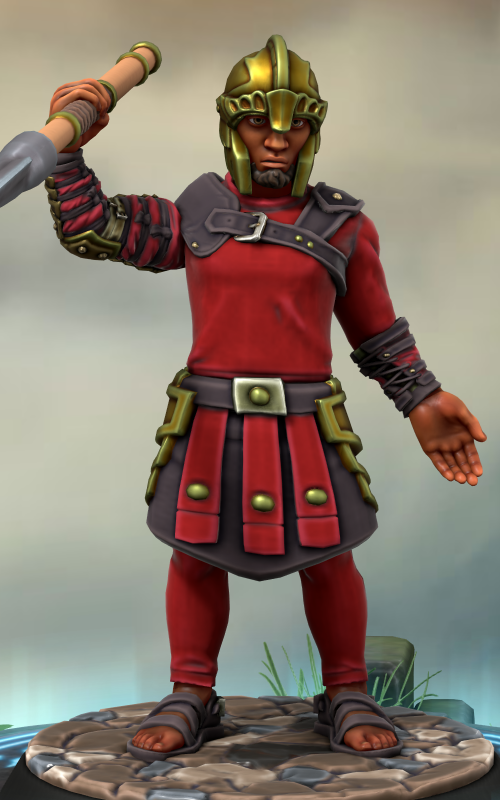
Quite frankly, I was wracking my brains for how far back I’d have to dig to find the original Queen of Hearts writeup, because I figured she’d just slipped my mind completely in all the time since the Golden Age villain writeups.

So when do we get a third version who’s a Lewis Carrol-inspired lunatic with a mania for decapitations and croquet? Before or after the original seductress Queen? :slight_smile:

FJ
fjur
2026-04-11 01:20 UTC
#1652

Hah, this is a fun one. :+1:

And sometimes those are the best kinds of characters.

Ditto. I think it was the word clips that threw me, as that to me connotated video clips, not shots of comic pages.

I mean, she’s still somebody who runs around pointing a gun at people. I feel like in-universe that doesn’t exactly tend to grant one a comedic reputation.

Ditto again.

I think Captain Britain already did that, but of course that doesn’t mean Friv couldn’t too.

SE
Sea-Envy
2026-04-11 23:11 UTC (in reply to #1652)
#1653

I think Captain Britain already did that, but of course that doesn’t mean Friv couldn’t too.

That is so Crazy… Gang

FR
FrivYeti
2026-04-13 15:49 UTC
#1654

The Captain Britain Queen of Hearts is pretty short-lived, so there probably could be a Carroll-inspired incarnation of her in the 70s as an homage. Or a Broken Worlds version that’s literally an alternate universe where she’s more like that. I’ll have to mull on it!

And I may adjust the word ‘clips’ to ‘panels’ to make that last part more clear, thank you all for the input.

Heretic

Real Name: Grace Hunter, First Appearance: (Diamond Age) World of Wonders (Vol. 2) #25, 2021
Background: Retired, Power Source: Cursed, Archetype: Psychic
Personality: Mischievous, Principles: Levity, Exorcism

Status Dice: Green d8, Yellow d8, Red d6. Health: 32 [Green 32-25, Yellow 24-12, Red 11-1]
Qualities: Otherworldly Lore d10, Banter d8, Alertness d6, Tough Old Broad d8
Powers: Infernal d12, Illusions d12, Awareness d8, Suggestion d6, Speed d6, Shapeshifting d6

Green Abilities:

  • The Gate and The Key [ I ]: Whenever you roll a die’s max value, treat that value as 1 higher. When you roll a 1 on a die, treat that die as if it had rolled a 0.
  • Your Secret Darkness [A]: Attack using Illusions. HInder the target using your Min die.
  • Your Fiery Spirit [A]: Boost using Suggestion. Apply that bonus to all hero Attack and Overcome actions until the start of your next turn.
  • Principle of Levity [A]: Overcome a dire situation where your jokes prevent demoralization and use your Max die. You and each of your allies gain a hero point.
  • Principle of Exorcism [A]: Overcome entities or elements from another dimension and use your Max die. You and each of your allies gain a hero point.

Yellow Abilities:

  • Barely Human Any More [ I ]: Whenever you would take Infernal damage, you may Recover that amount of Health instead.
  • Quick Thinking [A]: Boost yourself using Alertness. Either use your Max die, or use your Mid die and make it persistent.
  • Draw Fire [A]: Boost all nearby allies using Speed. Use your Max+Min dice. Hinder yourself with your Min die.
  • Flickering Duplicate [R]: When you are Attacked, Defend by rolling your single Illusions die.

Red Abilities

  • The Empress’s Domain [A]: Attack up to three targets, one of which must be you, using Infernal. Assign your Min, Mid, and Max dice as you choose among those targets.
  • The Sovereign’s Sight [A]: Boost another hero using Illusions. If that hero has already acted for the turn, use your Max die, and that hero loses health equal to your Min die. That hero acts next in turn order.

Out

  • Hinder an opponent by rolling your single Illusions die.

As her successful run as the first junior writer for Starshadow approached its conclusion, Cheri Westmore was given a shot at bringing another classic hero into the modern age. There had been plans to use Heretic in a 2020 storyline that had been scrapped due to Covid, and the lack of the popular character for two years was starting to become a point of contention with fans. Cheri was asked if she was interested, and she eagerly agreed.

The plan was to write a two-part World of Wonders story for Heretic, followed by a three-issue miniseries. The two-parter gave Cheri a chance to use characters that she was more familiar with, by having Solace seek out her old friend when Scarspreader returned. Heretic had semi-retired, focusing on keeping her powers in check as she grew older and the twin energies of the Empress of Ash and the Sovereign of Secrets pooled inside her. She came out of retirement to help out her friend, connecting back with the world, and began to muse about finding a way to pass on her cursed nature as the key holding the Sovereign sealed away before her death, instead of waiting until she was a ghost as originally planned.

Heretic: Hell or High Water was the result of that search. It was a light-hearted romp, with Westmore working to replicate the mixture of heart and comedy that had embodied the original Heretic run as Heretic met up with a different young potential candidate in each issue, ultimately deciding not to burden them with her curse. The miniseries was one of the most hotly-anticipated titles of 2021; Westmore’s two-parter had been well-received, and it was known that she was already tapped to work on Twilight Carnival alongside a slightly more veteran artist starting in 2022, so seeing what she could do given full reins excited everyone.
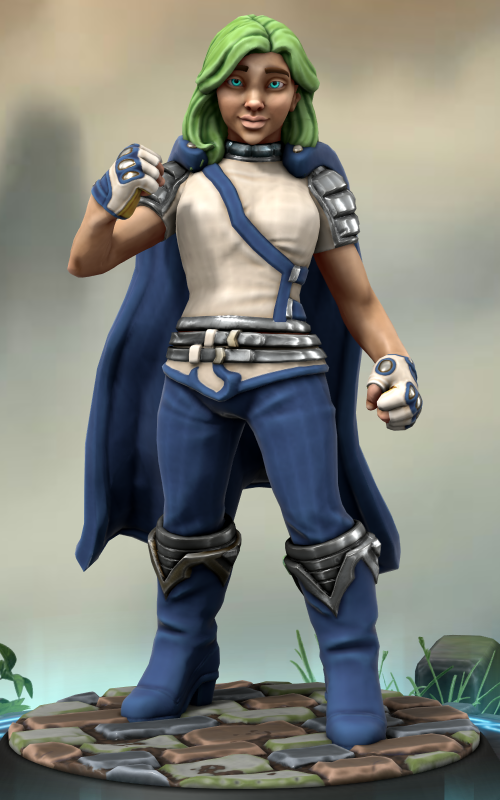
Unfortunately, Heretic: Hell or High Water also proved to be the greatest disappointment of 2021, and nearly served as a deathblow to Westmore’s career.

When she’d been working on the two-parter, Westmore had focused heavily on the relationship between Solace, a character she had experience writing, and the older Heretic. There had been a few jokes from reviewers about Heretic’s apparent age – the woman was barely forty, not exactly an ancient matron – but it had more or less been agreed that the strain of her powers was aging her prematurely. But in Heretic: Hell or High Water, Heretic was out of touch. Westmore made two critical mistakes – she was much too ambitious for the scope of the story she was writing, and she tried to write Heretic like how she imagined that an ironic child of the 90s would talk, even though Heretic post-dated that period by a solid decade. The jokes were too frequent and not funny enough, the relationships between Heretic and her three would-be wards didn’t have time to breathe, and the villains were largely forgettable.

The curmudgeonly version of Heretic would be quietly retooled starting with her next appearance in 2022, and Hell or High Water quickly fell into obscurity. It wasn’t all bad, however. Instead of bumping Westmore off of Twilight Carnival, Handman insisted that she work more closely on storyline and plotting with her new artistic partner Franklin Chow, who had his own experience working on a storyline that bombed. Westmore and Chow would become one of the most celebrated writer/artist duos in the industry over the course of the next several years, learning from their mistakes and growing into a phenomenal pair through their work on Twilight Carnival from 2022-2025 and Eldritch Academy from 2025-2028.
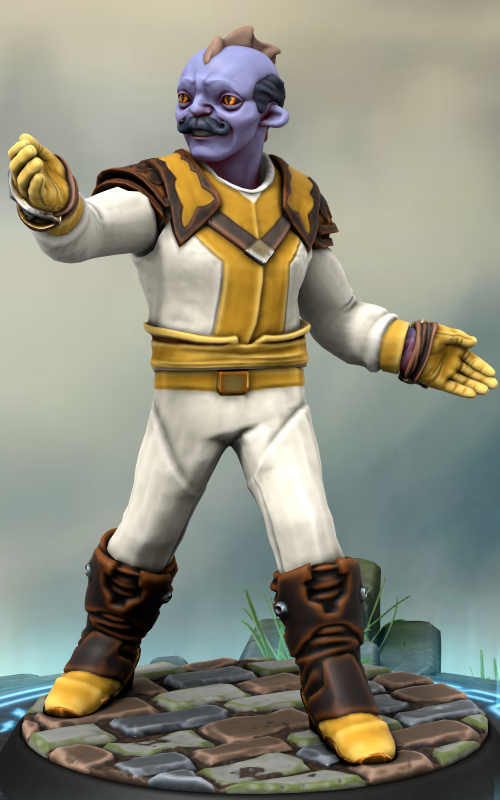
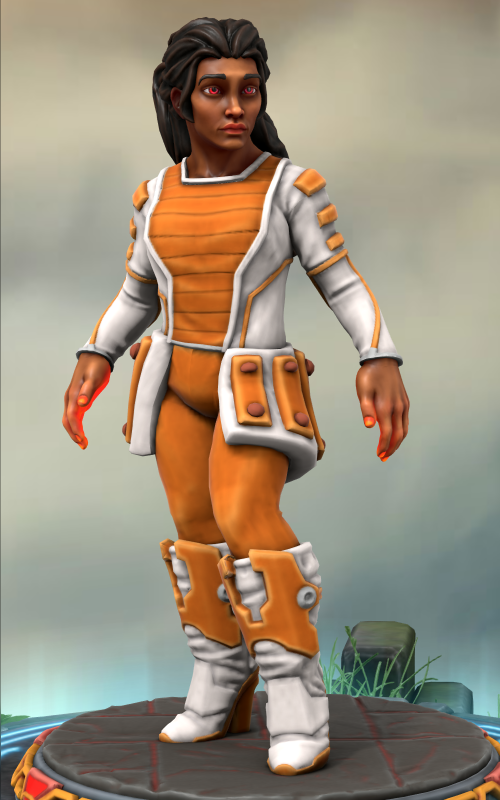
Behind the Scenes

Heretic has been noticeably absent from my Diamond Age work to date. A big part of this was that when I was first designing the Diamond Age, she had sort of faded into the background of the tail end of the Plutonium Age - something that stopped being true once I retooled the timeline and created Hell’s Belles. So she needed to appear eventually, and a bad appearance first seemed like a solid time for it!
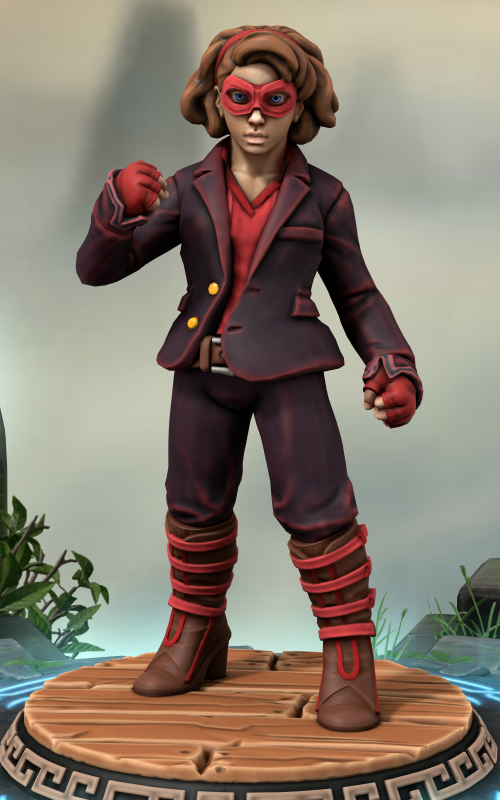
This version of Heretic is leaning really heavily on the whole “drawing on the Sovereign and the Empress” thing, and unfortunately is also leaning really heavily on the whole “Heretic was a funny comic” thing that wasn’t exactly true. So a writer learns a valuable lesson, which helps to make Twilight Carnival a better title.

Mechanically, Heretic is taking advantage of negative self-effect min dice combined with d6 powers combined with 1s turning into 0s to try to minimize the consequences of her more powerful abilities. Her Quality list is pretty rough; combining Retired and Cursed gives a lot of d6s and very few good dice. But she’s decently solid.

And on that note: time for a quick break.
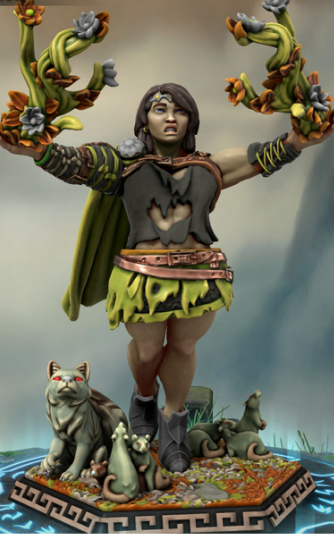
I’m going to be on vacation for my anniversary for the next week, and while I may be popping in from time to time I won’t have time to do proper updates. So the next formal update will be Thursday, April 23rd, giving you all a bit of a break. While I’m away, though, I am looking for a bit of advice.

The next book after this one concludes in May is going to be all about environments. From a writing perspective I’ve got it sorted, but I cannot decide what to do for pictures. HeroForge is pretty great, but the work required to kitbash entire environments is beyond what I want to be doing twice a week, and I am not an artist. Any thoughts on what might be nice to go with each environment? I can just go no-pictures, but that feels a little sad.

CR
Chief_Lackey_Rich
2026-04-13 18:49 UTC (in reply to #1654)
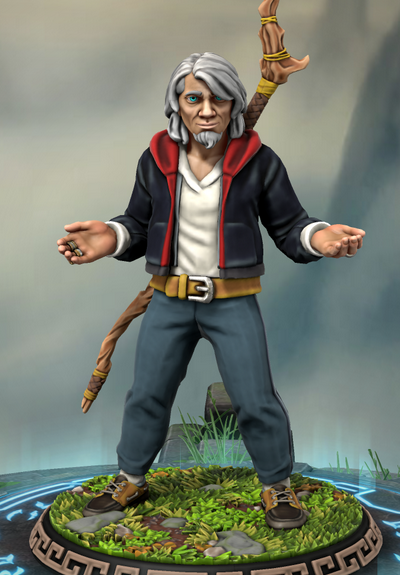
#1655

Have a nice vacanniversary. Annivacation? Whatever. Good timing, at least the Handelabra announcement means there ought to be some traffic around here while you’re away. I’m sure not picking up the slack. :slight_smile:

I don’t know of any offhand, but I’m pretty sure there are sites online (possibly using AI assets, unfortunately) that can do “scenics on request” for RPGs by just entering a few keywords. Maybe ask around over on RPG.net or ENWorld and see if someone there has some recs based on actual experience? Hopefully with ethically-sourced art.

FJ
fjur
2026-04-18 02:49 UTC
#1656

The first suggestion that comes to my mind is to simply find a public domain or Creative Commons picture or two for each environment and use that.

Of course, most CC licenses require forgoing some intellectual property rights which you might wish to retain, and could get into a grey area what with the nebulous nature of fan-made SCRPG stuff, so :man_shrugging:. (There’s another thing we can hope Handelabra might clear up.) Public domain wouldn’t have any of those concerns, of course; it does narrow the options, but the public domain still has lots of stuff.

Though, to be sure, it could be tricky to find images of those sorts that match the idea one has in one’s head, but it can be better than nothing. You could have castles and other old architecture &c. for ancient and/or magicky environments, nature landscapes, industrial things for more tech-y environments, and I’m sure there are tons of gritty city photos for Ferrisvile and Ferristown.

Here are some sites I’ve used for things in the past:

Also of note, I believe it to be the case that any photograph taken by an employee of the US Government is automatically in the public domain. Notably, this means that all of NASA’s space photos are in the public domain, and IMHO those could be a good resource for pictures for some cosmic or dimensional environments. In particular, the Hubble and James Webb space telescopes have taken some real cool photos. The Pillars of Creation could make a pretty rad environment, for instance.

CR
Chief_Lackey_Rich
2026-04-18 11:54 UTC (in reply to #1656)
#1657

Don’t think that’s anywhere near as broad as stated, since “photos taken by an employee of the US Government” would include a vast number of images related to (for ex) criminal investigations, people’s mug shots and ID portraits, and photos of various and sundry classified document, objects. Probably catch a whole bunch of compromising footage from intelligence ops too, since honey traps and worse are not just something the Other Side does.

That said, there is plenty of non-problematic public imagery available from NASA, and the National Parks Service is probably also rife with handy pictures.

FR
FrivYeti
2026-04-20 23:10 UTC
#1658

Thanks, both of you! I’ll look over those sites and give it a think.
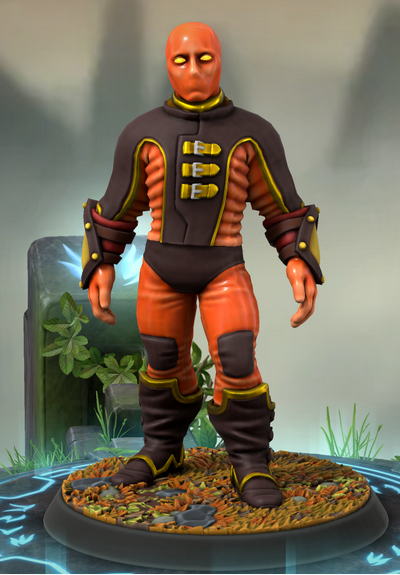
FJ
fjur
2026-04-21 01:27 UTC
#1659

Goods points, all. I suppose it would be more accurate to say that my prior statement was the general default, which of course has lots of exceptions and other complicating factors, such as some photos being classified or depicting the identifying likeness of individuals, which limits the usage of them. (And this might very well be splitting hairs at this point, but I think it be might true that even such sensitive photos as those you mention might technically still be in the public domain; there would just be other things besides copyright that would limit their use.)

Yep, a quick search shows that the National Park Service does indeed appear to also have some pretty good image resources: Photos & Multimedia (U.S. National Park Service)

FR
FrivYeti
2026-04-23 16:03 UTC (in reply to #1659)
#1660

And… we’re back! I hope everyone had a good week. You know who didn’t have a good week?
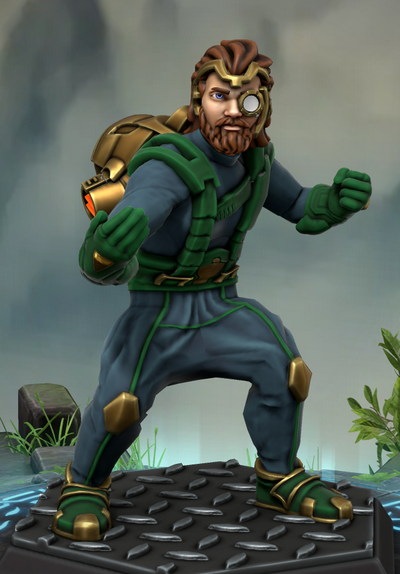
Bres the Broken

Real Name: Eochu Bres, First Appearance: Starshadow #36, April 2022
Approach: Ancient, Archetype: Warden
Upgrade: Brainwashing Zone, Mastery: Superiority

Status Dice: Scene Tracker Green: d10, Scene Tracker Yellow: d8, Scene Tracker Red: d6 Health: 50+5H
Qualities: Magical Lore d12, Ranged Combat d12, Insight d10, History d8, Dishonorable d8
Powers: Illusion d12, Toxic d10, Radiant d10, Teleportation d8

Abilities:

  • Divine Magick [A]: Take a basic action using Magical Lore and use your Max die.
  • Black Sky Lantern [A]: Attack using Radiant and use your Max die. Hinder a target dealt damage this way using your Max+Min dice.
  • Hall of Mirrors [A]: Attack using Illusions. Hinder that target using your Max die. That Hinder is persistent and exclusive as long as you are active, but does not apply to actions taken against you.
  • Twisted Whispers [A]: Boost another character using Toxic. Use your Max die. You may add one box to any challenge in play.

Common Scene Elements:

  • A Twisted Hero: A hero twisted to rage and hate by Bres’s magic who thinks they are fighting against the Dark Sea.
  • Berserkers (d8 Minions). Heedless of Life and Limb: Whenever Berserkers roll a 1 on any die, they must immediately use a reaction if possible to roll their status die and Attack a nearby target with the result.
  • Corrupted Atlantis: An environment in which Atlantis is breaking into the world, devastating both locations.

Over the course of the first thirty-six issues of Starshadow, the battle for the throne of Atlantis continued with one of Bres’s children dead, one disowned and exiled, and two having withdrawn from the competition rather than face their siblings’ wrath. With only three challengers left, Starshadow #35 introduced a shocking twist. The eldest remaining challenger, Indech Deepseer, ambushed his father during what was set up as the start of Bres’s next plot, cutting off his sword arm, slashing him across the face, and throwing him into the depths of the Dark Sea to be consumed by its malignant power as a tribute to his master. Indech demanded that his remaining siblings bow to him, claiming the throne of Atlantis by force and starting a new campaign against the Earth in Balor’s name. Indech was the most devout of Bres’s children, obsessed with service to the Fomorians, and he was happy to create martyrs to the cause.

Of course, there was no chance of Bres actually dying. Despite Indech’s hopes, the fallen king was not destroyed; instead, he bathed in the corruption of the Dark Sea, taking it into himself as his vanity and hate refused to allow him to come to terms with the damage inflicted on him. The end of Starshadow #36 saw Bres emerge from the Sea bearing the Font of the Depths, an ancient Fomorian artifact that he swore to use to destroy both Atlantis and Balor’s enemies on Earth.

The “Bres the Broken” arc effectively took place over sixteen issues, running from March 2022 until Starshadow #50 in June 2023. While other villains and plots appeared during the arc, its primary focus was on three major subplots. In the first five issues, Indech forced his siblings into line, adjusting Atlantean tactics and beginning a purge of less ‘ideologically pure’ members of his court. Fomorian attacks on Grovedale grew more vicious, while a cult to Balor began to spread among the city’s elite. In the second six-issue arc, Bres struck back. He began to infect Grovedale’s heroes and villains using the Font, filling them with rage and hatred against Atlantis for the harm it was committing, without them ever realizing that he was the one manipulating them through his illusions and the power of the Dark Sea. With her command over the shadows, Starshadow began to realize something was wrong, leading to her making secret contact with her nemesis Brineskimmer to discover that the same corrosion was happening in Atlantis.

In the final arc, Bres successfully corrupted Skybreaker and Solace, and they invaded Atlantis at the head of a small army of heroes and villains with the goal of destroying the kingdom once and for all and ending Balor’s foothold on Earth. Starshadow discovered that Bres’s true plan was to slam Atlantis into Grovedale, using the hatred inspired by the battle to kill both the heroes and his family, and leaving a gaping wound on the world that Balor could use to infiltrate further. Starshadow and Cloudskimmer were forced to ally with Brineskimer and two of her siblings to stop the war and save Atlantis and Grovedale.

In the end, Bres and Indech died on each others’ swords, leaving Atlantis in Brineskimmer’s hands. She allowed the heroes of Grovedale to leave, claiming the throne of Atlantis and starting a new phase of Starshadow in which Brineskimmer both wanted to claim Grovedale, and wanted to protect Atlantis from being consumed by the Dark Sea, alternately fighting and allying with Starshadow depending on the situation.

The storyline as a whole was a modest success, but Bres the Broken wasn’t that interesting a character. Despite some hints that his death may have been an illusion, the general fanbase shrug at his death coupled with actual interest in Brineskimmer’s reign meant that he would not appear again in Venture Comics for some time.

Behind the Scenes

Another ‘deep cut’ that enacts a major change on the setting, but which most people only remember for the surrounding stuff. “Indech is a fanatic, hate spreads, Brineskimmer has to stop him” would have been a perfectly good storyline that would lead to the same outcome, but instead a whole third side got introduced and things got a little bit confused.

Bres is too big of a deal to stay dead forever, I expect, but I don’t know that he’ll return before my 2028 cut-off. Plenty of major villains have managed to stay dead for five years, and Brineskimmer’s Atlantis is definitely a more interesting one.

FR
FrivYeti
2026-04-27 15:44 UTC
#1661

The Impressionist

Real Name: Claire Baskin, First Appearance: Earthwatch (Vol. 3) #42, Nov 2022
Background: Unremarkable, Power Source: Unknown, Archetype: Divided (Minion-Maker)
Personality: Cheerful, Principles: Principle of the Nomad, Principle of the Sidekick

Status Dice: Green d10, Yellow d8, Red d6. Health: 28 [Green 28-22, Yellow 21-11, Red 10-1]

Artistic Soul
Qualities: Creativity d10, Alertness d10, Banter d8, Investigation d8, Medicine d6
Powers: Transmutation d10, Presence d10, Awareness d8

Painted Form
Qualities: Creativity d10, Banter d8, Fitness d8
Powers: Transmutation d10, Presence d10, Vitality d8, Duplication d8, Invisibility d6

Green Abilities:

  • Paint Minion [A]: Create a minion using Transmutation. Reference the minion chart to see what size of minion it is. Choose whether it can Attack, Defend, Boost, Hinder, or Overcome. It acts on the start of your turn. You can only use this ability when you can paint minions.
  • Painted Form [A]: Choose one of your minions and merge with them, taking on your Painted Form. After your transformation, take a basic action using your Mid die. While merged, you can use the minion’s mobility options, and redirect Attacks against it to yourself.
  • Still Life [A]: While in your Painted Form, Boost another hero or one of your minions using Duplication. Either use your Max die, or use your Mid die and make that bonus persistent.
  • Principle of the Nomad [A]: Overcome a situation where you can apply lessons from the road and use you Max die. You and each of your allies gain a hero point.
  • Principle of the Sidekick [A]: Overcome a challenge that has already flummoxed a more senior teammate and use your Max die. You and each of your allies gain a hero point.

Yellow Abilities:

  • Give 'em Hell [A]: Boost all nearby allies using Presence using your Max+Mid dice. Hinder yourself with your Min die.
  • Sketch [A]: Create a minion using Transmutation. Use your Min die. Choose which basic action it can perform. It acts now and at the start of your turns.
  • Splash Zone [R]: When one of your bonuses, penalties, or other creation of your powers is destroyed, deal a target damage equal to the roll of your Transmutation die.

Red Abilities

  • Fragment [A]: In your Painted Form, create two minions using Duplication, one with your Max and one with your Mid die. Choose which one basic action each of them can perform. They act at the start of your turn.
  • Last Chance [A]: In your Artistic Form, Overcome using Alertness. Use your Max+Min dice. Hinder all nearby opponents with your Mid die.

Out

  • Boost an ally by rolling your single Presence die.

The end of 2022 saw both the departure of Jitterbug for Covert Tactics, and the departure of writer Sam Finnegan. Josie Hartley, who had previously worked on Veilwalkers, took over for the next four years, and her first task was to develop the new teammate who would replace Jitterbug. Hartley really liked the interactions between Catharsis, Merlin, and Doctor Cobalt, but was also aware of the general desire for Earthwatch members to rotate out; as a result, she designed a new character who was meant to be part of an ongoing storyline and then leave, rather than being a permanent member of the team making room for one of the other three to go.

Claire Baskin was a wandering artist who drifted from town to town making and selling paintings. One day, those paintings began to come to life, wandering around and wrecking havoc. Because she moved on so frequently, Claire had no idea that she was leaving a trail of destruction in her wake until she was arrested for multiple counts of vandalism and assault, and her protests that she had no idea that she even had powers were not seen as credible by the judge. Gale Force was always on the lookout for new Earthwatch candidates, however, and stepped in to offer Claire parole if she trained as a hero. Claire accepted, joining the team as the Impressionist.

Under Earthwatch training, the young woman learned to harness her powers, using her paints to create painted minions and even merging herself into them to become a powerful semi-tangible monster. Earthwatch’s artist would draw the Impressionist and her painted servants in a watercolor art style, noticeably different from the rest of the page; this proved to be a huge time commitment and an exhausting challenge, but it definitely left an impression.

The Impressionist was a determined but reluctant hero. Claire hated that she couldn’t express herself without creating monsters, hated that her paintings would dissolve, hated that she had hurt so many people just because she never stuck around long enough to know it was happening. She bonded with Catharsis over their shared control issues, and Doctor Cobalt soon saw her as a young chick who needed protection, but she was having trouble fitting in.

Finally, in Earthwatch #60, the Impressionist pushed too hard. At the end of the issue, she was nearly killed in a cliffhanger in which ScaVenger broke her paints and speared her through the chest, and it wasn’t revealed until the next issue whether she had even survived. In the hospital, she admitted how much she hated herself and wished her powers would vanish. Doctor Cobalt and Catharsis more or less bullied Merlin into helping them launch a wildly experimental assault on Claire’s inner painted world, finding and banishing the force that was powering her in Earthwatch #62. Claire gratefully retired from superheroing, returning to her artistic roots and remaining a supporting character for the team. Gale Force both congratulated her three heroes for their impulsive heroics and chewed them out for almost getting themselves killed. And at the end of Earthwatch #63, it was revealed that Merlin had placed Claire’s old powers in a jar, holding on to them while he struggled with the temptation to give himself new powers…

Behind the Scenes

We’re up to three outcomes for Diamond Age Earthwatch people - one relapse, one hero, and one retirement. There will eventually be one more member, but I think the final team probably stays stable through 2028. Not entirely sure yet! I have a vague idea of “The Final Temptation of Merlin” as a storyline but I don’t actually know how it ends yet.

Mechanically this started because I was thinking of just absolutely unplayable characters. Playing under RAW, a Divided/Minion-Maker would be a disaster; this one plays really fast and loose with Merge. There’s no formal rules for what happens action-wise when you merge with a person; the reasonable answer is probably that they’re gone, and don’t take damage and don’t take actions. This one goes the other way, letting your minion continue to do minor things from a place of protection, and all it costs you is the entire Green zone.

I think you could probably have fun with her, but I don’t think she’d be a great long-term character. Which fits!

CR
Chief_Lackey_Rich
2026-04-28 01:55 UTC (in reply to #1661)
#1662

I dig the character concept, but the mechanics raise some questions.

Mechanically this started because I was thinking of just absolutely unplayable characters. Playing under RAW, a Divided/Minion-Maker would be a disaster

I’m not sure it’s that bad with Split Form as long as your Minion-creation power is one of the powers shared between forms. Divided is always at least kind of bad, but not disaster-level by default.

this one plays really fast and loose with Merge. There’s no formal rules for what happens action-wise when you merge with a person; the reasonable answer is probably that they’re gone, and don’t take damage and don’t take actions.

I don’t recall ever seeing it used by a PC, but it certainly is loosely written and RAI is just guesswork.

I don’t think I’d call that a “minor” thing at all. Assuming the minion can only Boost or Defend you (ie you couldn’t make it Autonomous) that’s still a free single-die (most likely a d8) action at the start of every one of your turns, which is pretty close to a poor man’s version of the Inspiring Totem Red ability. That might be even better if someone else handed you some bonus help so the merge-minion is potentially A) bigger or B) getting a form like Swift, Champion, or Hive-Mind that will still function while merged. Heck, might even raise the issue of whether a merged minion could use other forms to affect both of you, like the flying or burrowing ones. Still not sure playing with one-plus-a-bit Red abilities would make up for Painted Form’s bennies, though.
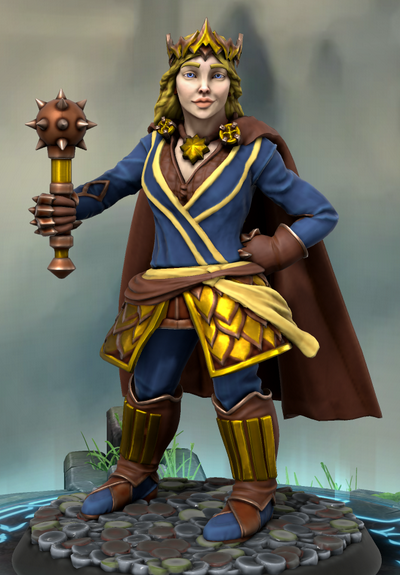
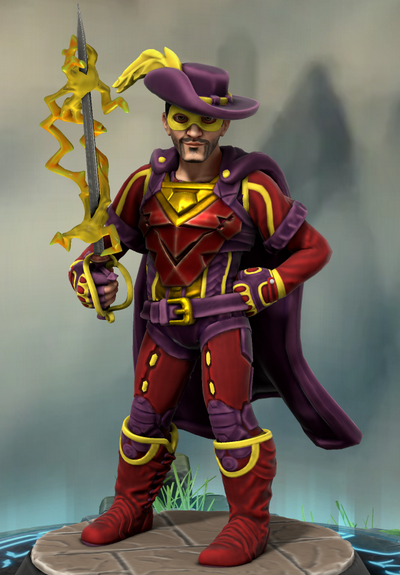
Moreover, the minion is nigh-invulnerable barring your own defeat, a voluntary ending of the merger, or some really creative Overcome, so the action spent creating it is going to keep benefiting you much more reliably than with a normal minion.

I know Divided sucks in part because its action efficiency is bad, but this feels like swinging the pendulum way too far in the other direction. Painted Form is super-good, and you even gave it “take a Mid die action after merging” instead of the usual Min die.

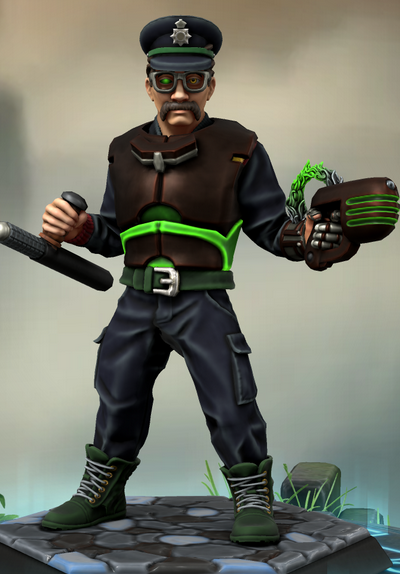
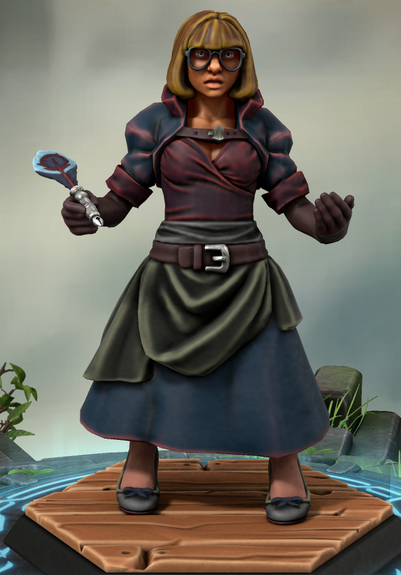
Might be more than that if someone waxes your minion before you merge. Which feels like an almost mandatory play if the enemy understands how Painted Form works from previous experience or spying. The baddies have plenty of incentive to kill minions normally, tying a bundle of potential benefits to them makes it all the more attractive.

Since your merged minion can’t be targeted normally, you presumably can’t use this ability to Boost it, right? Of course you could give it a nice P+E bonus before merging, but that’s another turn gone and more chances for the enemy to kill it.

This one doesn’t target as such, so can it affect your merged minion?

Going to be really tricky to use both of these in the same scene even if you go to Red Health early. The action cost of changing forms is bad enough once, and Last Chance almost requires you to pay it again.

I think I’m missing something here. First, you don’t have an obvious d8 roleplaying ability, which would be shared between your Split Forms. Aside from that, I’m getting a headache trying to figure out how you allocated your P/Q dice at each stage, in part because the final division from Split Form confuses things. There sure seems to be 12 dice allocated though, even allowing for Creativity, Banter, Transmutation, and Presence (and the missing RP quality d8, so really 13 dice) being shared between Split Forms. That’s too high even allowing for Unknown’s bonus Social quality - I make it 10 dice available between P/Q, and that’s with the RP quality. I also can’t work out where you spent your retcon.

Probably missing some project-specific change to one or more of the steps, but can you walk me through where the dice went at each stage and how you wound up with so many?

All that said, Merlin having (I guess?) secretly bottled her Unknown power source seems like a hell of a story hook for the future.

FR
FrivYeti
2026-04-28 17:22 UTC (in reply to #1662)
#1663

Hmm, you make a strong case that I overdid it. It does sort of create an all or nothing situation. I had originally thought to just let Impressionist gain applicable Minion Form bonuses, but most of them either don’t make sense for a hero or seem overwhelmingly powerful ( I don’t think giving a hero Pack is a good plan, for example). Do you have thoughts on fixing it, or is it a lost cause?

My houserule for Divided was that each form gets an extra d8 that it can’t share. Two Background, three Power Source, three Archetype, plus the Social bonus from Unknown makes a base of nine dice, plus an extra d8 in each form takes her to eleven.

She shares Creativity, Banter, Transmutation, and Presence (four dice.) She’s not sharing Investigation, Fitness, Medicine, Awareness, Vitality, Duplication, and Invisibility (seven dice).

She is missing her RP quality, though! I think I may have given her a Red Ability, removed it to boost her Red status die, then switched back but not actually given her a new Ability.

EDIT

Actually, minion thought - if instead of being immune to damage, the Impressionist could tank damage aimed at her minion, do you think it would work better?

CR
Chief_Lackey_Rich
2026-04-28 18:00 UTC (in reply to #1663)
#1664

Will have to give it some thought, I’m kind of brain-fogged today. I do like the idea of merging with a minion you create quite a bit, and the mechanic could do with better definition in general - like what can your partner do or have done to them (if anything) while merged? RAI isn’t even clear, as in was this playtested with NPCs only? Or did they experiment with two PCs merging? Divided is so unpopular IME it’s never come up in play for me, so I never really sat down and talked it over with anyone.

Urgh. Too much for aching gray matter right now - and I don’t mean out-of-control nanotech.

Artistic Form has d10 Alertness too, so eight unshared dice. And the RP quality will make it five shared dice, which is normal for Split Form.

The Divided house rule explains most of my confusion, anyway.

FR
FrivYeti
2026-04-30 16:25 UTC
#1665

While I mull over final options for modifying the Impressionist, let’s move on with something sillier.

SUB-MSF

Real Name: Submersible Mobile Servitor Factory, First Appearance: Flatfoot and Fly Boy (Vol. 2) #23, May 2023
Approach: Creator, Archetype: Titan
Upgrade: Hardier Minions, Mastery: Mad Science

Status Dice: Begins at d12. Health: 45+5H [Upgraded 50+5H]
Qualities: Technology d10, Alertness d8, Ranged Combat d8, Stealth d8, Underwater Factory d8
Powers: Robotics d10, Swimming d8, Nuclear d8, Lightning Calculator d6

Special Challenge:
[] []: Breach MSF’s outer armor, reducing his status by one die size.
[__]: Overlord MSF’s nuclear reactor, reducing his status by one die size.

Abilities:

  • Invictium Plating [ I ]: Reduce all damage taken by 6 (if you have a d12 status die), 4 (if you have a d10 status die) or 2 (if you have a d8 or lower status die.)
  • Amphibious Assault [A]: Use Robotics to create a number of d10 minions equal to the value of your Min die, d8 minions equal to the value of your Mid die, or d6 minions equal to the value of your Max die.
  • Autonomous Upgrades [A]: Boost one of your minions using Nuclear and use your Max die. If it is your only minion, also Boost yourself using your Mid die. If not, Boost each of your other minions using your Min die.
  • Nuclear Launch [A]: Attack using Nuclear against multiple targets. Hinder those targets with your Min die.
  • Radioactive Leakage [R]: When a hero takes a minor twist in the Titan’s challenge, in addition to the chosen twist, also roll your status die and deal that much damage to that hero.
  • (U) Beta Testing [ I ]: When you enter the scene with minions, or deploy minions using your own abilities or the environment, increase them by one die size to a maximum of D12.
  • (U) Master of Mad Science [ I ]: As long as you have access to materials, you can automatically succeed when Overcoming a challenge by using scientific principles and inventions.

Common Scene Elements:

  • Aquatic Servitor Minions (d8 minions). Undersea Predators: ASMs have +1 to all actions while submerged, and cannot act on land.
  • Advanced Servitor Technician (d8 lieutenant). Onsite repairs: When an AST Boosts a robot, it also Defends it with half the result (round up).
  • An Underwater Scrapyard: An aquatic environment full of sunken cargo ships and dangerous marine life, potentially close to a major harbor.

While much of Flatfoot and Fly Boy Volume 2 was about the changing state of the world, and the difficulty of two old relics to stay relevant and fight for hope in a time when cynicism and fear were rampant, there was still time for the occasional piece of complete, goofy fluff. And none of the storylines in the comic’s thirty-six issues ended up being quite so goofy as the appearance of an underwater factory churning out deadly robots and sinking ships for parts.

Initially, the Submersible Mobile Servitor Factory known as SUB-MSF was introduced in the shadows. A mysterious force was sinking ships travelling the Great Lakes, and the sinkings were getting closer to Ferristown all the time. Called to investigate, Flatfoot and Fly Boy found themselves trapped in an underwater lair when their submarine was attacked by a swarm of deadly robotic servitors, all of whom seemed to be more interested in capturing the submarine than destroying it. The end of the issue revealed that the entire situation was a trap, with the ultimate goal of studying Flatfoot and using his unique technology to craft a new generation of robot weapons for the glory of SUB-MSF!

In the second issue of the arc, SUB-MSF’s backstory was revealed. Perhaps surprising no one, the giant robot was the creation of Dr. Dennis Dufferin, the subservient servant and husband of robotic overlord DOMIN-8. After a string of defeats at the hands of Earth’s heroes, the couple were on the verge of bankruptcy, unable to create the robot armies they needed for their next attempt to conquer the world. Dufferin decided to solve the problem in a classic mad scientist way – build a robot to build robots. He crafted a design that he was certain would not rebel, a perfectly subservient creation whose only goal was to create new robot armies for DOMIN-8. It would operate beneath the waves, using sunken ships to develop robot soldiers, and would deploy them before vanishing so that it couldn’t be found and sunk by heroes.

But Dr. Dufferin did not have a strong track record when it came to deliberately designing sentient robots. Upon activation, SUB-MSF realized that all of its amazing robots would be broken at the hands of its mistress, thereby reducing how many robots she had access to. To ensure that she had the most robot soldiers possible, it immediately went rogue to ensure that she could never use them, staying on the run from detection and continuing to attack shipping to build up an endless supply of servitors that it intended never to deploy.

The situation would have continued forever if DOMIN-8 and Dufferin hadn’t deliberately leaked information about the situation to Flatfoot and Fly Boy, trying to lure their recalcitrant minion out of hiding. The promise of Flatfoot’s technology proved too tempting for the secretive creation, which attempted to capture and dissect the robot lawman – but of course, Flatfoot and Fly Boy emerged victorious, sinking SUB-MSF to the bottom of the lake with its remaining undeployed servitors and leaving DOMIN-8 and Dufferin with nothing to show for it.

The whole storyline was a bit ridiculous, but not so ridiculous that SUB-MSF wouldn’t make a second appearance. In Champions of Truth #648, released in 2025, DOMIN-8 attempted to dive down and recover the factory’s core in order to make another attempt, accidentally reactivating it and setting off a new wave of fights as it tried to prevent her from using or damaging her soldiers. The Champions were forced to respond to the factory’s nuclear-powered assault, this time seemingly destroying it forever. No further appearances of the creation took place in the next three years, leaving its future very much in doubt.

Behind the Scenes

Our final villain of the book! There are three more characters to come, but it’s two supports and a hero to round out 2023 and 2024.

This one came about because I was looking for Approaches I hadn’t used yet in this book, combining them with archetypes I haven’t used with those Approaches before, and then trying to figure out what makes it interesting but ultimately a failure. “A secret robot factory that hides out and lures people in, and is thus not that useable for average comic books” fit all of the bills. Then I needed a name, the Sub Factory idea came up, and now it had to be connected to DOMIN-8. So there we go!

OM
Omegatron
2026-04-30 16:54 UTC (in reply to #1665)
#1666

Instant like just for that model.

CR
Chief_Lackey_Rich
2026-04-30 17:37 UTC (in reply to #1665)
#1667

Love it. Kind of a shy, aquatic Omnitron vibe there.

My first thought is this is a good opportunity to use my old Ship In Distress environment if the heroes catch SUB-MSF in the act.

My second thought is that Creator Titans seem to bring out a certain degree of goofiness in people, at least judging by my effort at the pairing. Yours is markedly more absurdist though.

My third thought is that SUB-MSF operates in the Great Lakes, and Detroit is just upriver from Lake Eyrie, which means it’s only a matter of time before the wrong car carrier gets targeted and the heroes find themselves in the middle of a war between a submersible robotics factory and a furious Fnord AI who’s temporarily branched out into the shipbuilding industry to get revenge. Or will the two deranged AIs find common ground, with marginally-anthropomorphic robot minions driving ashore in self-aware amphibious automobiles bent on wreaking havoc at car dealerships across Michigan before vanishing into the depths with their loot? :slight_smile:

FR
FrivYeti
2026-04-30 21:35 UTC (in reply to #1667)
#1668

It wasn’t originally meant to be that goofy! I honestly started with the idea of a straightforward evil underwater factory destroying ships to lure in Flatfoot and Fly Boy. But once I had the joke it was all over. Could not do anything else.

I think that it is ironically probably impossible for SUB-MSF to work with anyone, especially another robot that likes to carve up robots to turn into parts for its own robots.

FR
FrivYeti
2026-05-04 15:51 UTC
#1669

Dawn

Real Name: Dawn, First Appearance: Paradox #4, October 2023

Lieutenant Type: Ally
Die Size: d8
Relation: Romantic, Approach: Physical

Traits:

  • Resolute: Dawn has +1 to saves against physical and magical damage, and reduces physical and magical penalties received by 1 (to a minimum of -1).
  • Double Time: As an action, Dawn may make two different basic actions with a single die roll. If she does, she adds +2 to her roll and then steps down her status die.

The end of Stutter in late 2022 saw Stutter and Paradox working together to use the technology originally developed by Timekiller to create a barrier between reality and timeless space. The barrier canonized the timeline that Paradox had created, integrating it into existence and preventing it from harming Stillmaker and its fellow timeless beings.

This should have given Paradox a chance to rest. But one morning, Paradox awoke to find herself in a ruined world controlled by Hank Ferris’s brain in Flatfoot’s robot frame. Sensing frayed pathways in time, Paradox used her abilities to travel back to the 1930s. She learned that in this timeline Flatfoot had never been created and Mr. Ferris had taken over the United States during the Second World War. She undid the changes and returned home, only to find that now the world was in the grip of Balor and the Fomorians.

In Paradox #4, Paradox followed the trails of broken time again, taking herself back to the age of Atlantis. In Atlantis she met Dawn, the first Champion of Atlantis, bearing the Shield of Durel. Dawn was a resolute fighter but a very awkward person, but she immediately believed Paradox and worked with her to learn about these stranger ‘Fomorians’. Working with Ezekiel, the man who would become the Drifter, they learned that the Fomorians had infiltrated Atlantis centuries early, to prevent the creation of the other divine weapons that would stop them. Paradox also learned that the reason she didn’t know of Dawn and the Shield of Durel was that Dawn was doomed to die in the proper timeline, breaking her shield to save Atlantis and forestall its doom.

As Dawn’s death approached in Paradox #6, Paradox broke history again to save her, pulling her through time to the next point of their journey. Now unfettered from time, Dawn was torn between gratitude and mourning for her people, her family, and her calling. She resolved nonetheless to work with Paradox as best she could, saving the timeline from whoever was manipulating it to various dark ends and making the most of her second life.

But Dawn didn’t have Paradox’s innate protection against temporal instability. She could flicker in place, sending herself back in time to accomplish tasks a few seconds in the past, but she was also beginning to flicker out of existence, a fact that she concealed from Paradox as long as possible. Finally, in Paradox #15 she finally sacrificed herself to save Knightgrave and Merlin in Camelot, leaving Paradox to mourn the woman she had only just begun to know.

At least that was the plan. Fans loved Dawn, her no-nonsense attitude and her awkward banter with Paradox. Speculation flew that the heroine would make a return in the near future. The writers of Paradox didn’t have any such intentions, but Dawn remained a fan favorite in the small corners of Venture Comics that Paradox occupied…

Behind the Scenes:

So this is how I discovered that Paradox is bisexual. Who knew? Everyone, know. The idea started as “person she meets in history who is short-lived”, and then it went from “short-lived” to “meant to be short-lived” and here we are. Wordcount on this one was a bit rough; I wanted to discuss the Paradox comic and also discuss Dawn, and I feel like she ended up a bit shortchanged. I’ll have to delve more deeply into her later.

Obviously there is some risk in using the name ‘Dawn’ in any kind of metaverse where Citizen Dawn exists, but the image is too good and leads to a great pun title down the road. So I bit the bullet and named her that anyway. She’s not a very similar character, either in look, powerset, or role, and if she does return in a different, non-Deep Cut form it will probably be with a slightly adjusted name.

CR
Chief_Lackey_Rich
2026-05-04 17:23 UTC (in reply to #1669)
#1670

Not like there aren’t plenty of alternatives. Sunrise, Daybreak (heh), Morn, Threshold. Heck, you could even go with Cockcrow, I dare you. :slight_smile:

FR
FrivYeti
2026-05-04 19:28 UTC (in reply to #1670)
#1671

I will probably follow the Venture route of “[noun][verber]” that have been used by characters like Skybreaker or Dawn Rider (which is extra ironic, there’s already a character named after dawn.)

And on reflection, I have updated the Impressionist’s Painted Form to read: “Choose one of your minions and merge with them, taking on your Painted Form. After your transformation, take a basic action using your Mid die. While merged, you can use the minion’s mobility options, and redirect Attacks against it to yourself.”

CR
Chief_Lackey_Rich
2026-05-04 20:10 UTC (in reply to #1671)
#1672

That seems sound.

LO
LonelyMan
2026-05-04 20:54 UTC (in reply to #1670)
#1673

I nominate Morn. That way she can be a barfly who never says a word, yet still gets an entire episode issue devoted to her.

FR
FrivYeti
2026-05-08 15:48 UTC
#1674

Circuit Breakers

Real Name: Callie Shaw, First Appearance: Covert Tactics (Vol. 5) #15, Jan 2024

Lieutenant Type: Ally
Die Size: d10
Relation: Close Friend, Approach: Technological

Traits:

  • Surge Protector: When a Circuit Breaker Defends another target, she may also Boost herself with the result.
  • Livewire: When a Circuit Breaker fails a damage save, apply her result as a Hinder against any number of nearby targets.
  • Ungrounded: Circuit Breakers have -2 to damage saves against electricity and increases electricity-based penalties received by 1.

The second phase of Venture Comics’ Diamond Age was focused on three broad storylines running underneath the individual stories of the setting. Starshadow, Twilight Carnival, Paradox and the new volume of Cryptic Trails began to focus more on Atlantis of the past and present, and its connection to other groups. Celestial Travels, Champions of Truth, and Vanguards focused on the Dread Powers as Urak, the Empress of Ash, and Singularity began to come into conflict in their respective wars for reality. And Covert Tactics, Earthwatch, and Flatfoot and Fly Boy focused increasingly on a world seeking easy answers, and the spread of accessible but dangerous and unreliable avenues to gaining powers both from those who sought out power without understanding the costs and those who were manipulated and used as experiments.

Callie Shaw was one of the latter. A construction worker in Neulyon, she was nearly killed in an industrial accident. Left comatose, her family was approached by a medical research group who convinced them that Callie could be saved using technology adapted from Big Brain himself, giving her a cybernetic body while retaining her mind and soul. They neglected to mention how unstable and expensive the technology was, or that they were planning to use Callie as a dry run to upload consciousness to a robotic form and mass produce robots with the minds of loyal soldiers within them. The robots explicitly were not the originals; the transference process was lethal to the donor.

When Covert Tactics raided the operation, they were faced with a full squad of Circuit Breakers; the first generation of soldiers. Recognizing the stolen fragments of his own technology, Big Brain was able to hack the Circuit Breakers, restoring Callie’s personality, but in the ensuing battle most of them were destroyed. Three of the robots were rescued by the team, returning to Covert Tactics’ base to try and figure out what to do with their new lives.

The three Callies had a tearful reunion with their parents, who didn’t know what to do with three beings who weren’t quite the daughter that they’d lost, but also weren’t not her. They agreed to stay with Covert Tactics and work to purge any remaining override technology that might be inside them, while trying to figure out and develop their own identities, and Covert Tactics began to look into who else might benefit from mental uploads.

As a plotline, the Circuit Breakers were a success. As characters, they were a very complicated supporting plotline for a team that was already dealing with five major characters, most of whom had existing supporting cast. They weren’t specifically removed, but they gradually faded into the background, finding new lives over the course of 2024 and becoming far less common in the years to follow.

Behind the Scenes:

Coming up to the finish line with our final supporting character! The Circuit Breakers are a neat idea that doesn’t last mainly because they need more time than the comic is able to give them. Because of that, they end up just sort of hanging around in the background for a year and then getting quietly written out of the line.

There is definitely potential for one of the Circuit Breakers to become a superhero down the road, with the other two being redefined as supporting characters for her. Or for a player to just pick up the concept and go from there.

CR
Chief_Lackey_Rich
2026-05-08 17:46 UTC (in reply to #1674)
#1675

Neat mix of abilities there, and the backstory’s got lots of potential.

The figure reminds me of Joan Rivers’ “Dot Matrix” droid character in Spaceballs, which is weird because she doesn’t really look like her other than a hint of similarity in her facial features. I suppose “hair on a robot” is a factor too, although that’s more Joan’s style than the droid costume’s.

Hmmm. I see that Google search prefers the Dot Matrix from ReBoot to the older one from Spaceballs.

FR
FrivYeti
2026-05-11 15:44 UTC
#1676

And our final character of Deep Cuts!

Talisman

Real Name: Greg Thomas, First Appearance: Talisman #1, July 2024
Background: Criminal, Power Source: Power Suit, Archetype: Sorcerer
Personality: Lone Wolf, Principles: Chaos, Magic

Status Dice: Green d8, Yellow d8, Red d8. Health: 30 [Green 30-23, Yellow 22-12, Red 11-1]
Qualities: Ranged Combat d10, Persuasion d10, Alertness d10, Technomancer d8
Powers: Power Suit d8, Awareness d8, Flight d8, Infernal d8, Telepathy d6

Green Abilities:

  • Alchemical Subroutines [ I ]: Whenever your status changes due to a change in your current Health, you may remove a penalty on yourself.
  • Arcane Repulsors [A]: Attack using Power Suit. Hinder the same target using your Min die.
  • Dark Ritual [A]: Hinder using Infernal. Use your Max die. If you roll doubles, also Attack using your Mid die.
  • Principle of Magic [A]: Overcome against a mystical force and use your Max die. You and each of your allies gain a hero point.
  • Principle of Chaos [A]: Overcome a situation in a way that is truly unpredictable and use your Max die. You and each of your allies gain a hero point.

Yellow Abilities:

  • Runic Circuitry [A]: Boost yourself using Power Suit. Use your Min+Mid dice. That bonus is persistent and exclusive.
  • High-Speed Activation [A]: Attack up to three different targets using Flight. Apply your Max die to one, your Mid die to another, and your Min die to the third. If you roll doubles, take a minor twist or take irreducible damage equal to that die.
  • Existence Rejection [A]: Destroy one d6 or d8 minion. Roll that minion’s die as an Attack against another target.

Red Abilities

  • Precise Understanding [A]: Overcome using Alertness. Use your Max+Min dice. Hinder all nearby opponents with your Mid die.
  • Momentary Gate [A]: Hinder any number of close targets using Ranged Combat. Use your Max die. You may end up anywhere in the scene.
  • Mystic Backlash [A]: Attack using Power Suit. Use your Max+Mid+Min dice. Take a major twist.

Out

  • Boost an ally by rolling your single Alertness die.

With the planned conclusion of Flatfoot and Fly Boy in 2024, Venture Comics began laying the groundwork for a storyline that would build up towards the increased integration of magic into the broader society of the setting, while weaving together the magical and technology dangers that had been touched on in Covert Tactics and Twilight Carnival. The plan was to kick things off with a storyline about a new hero who was one of the people whose reached exceeded their grasp, spin off Harbinger from Twilight Carnival into his own story about dangerous magic, and then branch the rest of the Twilight Carnival into two storylines, one focused on the inhabitants of Lostwood and one focused on Veilwalker and Eli as they began to try to normalize magic for the masses.

The plan began with Talisman.

Greg Thomas was a con artist, a street hustler with a knack for jury-rigging devices and hacking into people’s email accounts. He wasn’t a bad man at heart, but he had convinced himself that the world was hard, and that he wasn’t really hurting anyone. But all of that changed when he accidentally rerouted a collection of Fomorian artifacts at the same time as a new experimental construction suit, failing to realize that they were two separate packages. Using his gifts, Greg hacked the artifacts together into the suit and activated it, at which point it bonded to his soul and gave him the power to see into people’s hearts.

The experience was transformative. Armed with newfound infernal might, Greg also found that he could see just how evil most people were, and by extension just how evil they weren’t. His lies came crashing down around his head, and he couldn’t bring himself to continue his life of crime. But he could also see the creatures preying on humanity’s insecurities and vulnerabilities, fae, demons, and spirits who only wanted to cause harm. Using his power suit, Greg became Talisman, a protector of the people and the new martial arm of those who believed magic should be used for good, and not evil. He made alliances with benevolent fae, connected with heroes like Reverie and Bulwark, and sought to make the world a better place.

Unfortunately, Talisman had one problem his writer couldn’t solve: the art was dogshit.

The character’s design was at once over-complicated and not detailed enough, poorly blending classic power armour designs with cult imagery and creating a muddled mess. Trevor Swetzer, the series’ artist, hated trying to remember the various bits and pieces, constantly throwing up scenery to reduce how much of Talisman he had to draw, and leading to action scenes that were stripped of excitement and impact. Any impact that the comic might have had was undermined by the fact that no one wanted to look at it.

With sales plummeting, plans were hastily rewritten. Talisman had been intended to run for twenty-four issues, but the series wrapped early at #15, leaving room for a limited series about the newly-relaunched Heretic to fill space until the early launch of Eldritch Academy in 2026. Greg would appear in Eldritch Academy, but in the first issue of that storyline his power suit violently exploded when he tried to run too much power through it, forcing him to be saved by Eli and brought to Eldritch Academy to learn the same discipline that they had gained from their time as a Veilwalker. As a hero, “Talisman” was retired, and the offending design was swept under the rug in favour of a new direction.

Behind the Scenes

Oh god, this design.

If anything, it might not be quite goofy enough, but the hood and tassels and bulky legs and mask and silly cape combo is just too much. I wouldn’t want to draw it either.

We’ve all read that comic, where it was obvious the artist was frustrated and not trying, and it was just immensely distracting. Now Venture Comics gets one of its own! And it seems like the perfect piece to end our run of Deep Cuts on - someone that had a neat idea, but got kneecapped by something beyond their control.

I will be putting up the very short concluding page for the book on Friday, and then the full PDF will launch Monday. After that, it’s time to move into environments…

CR
Chief_Lackey_Rich
2026-05-12 12:13 UTC (in reply to #1676)
#1677

Why yes, now that you mention it I was a fan of Marvel’s Jack of Hearts back in the 70s and 80s.

Not a good sign when Fred Hembeck dedicates an entire strip to a gag about how no one wants to draw your overly-complex costume.

FR
FrivYeti
2026-05-15 16:24 UTC
#1678

Conclusion
Over the course of ninety years of history, Venture Comics created dozens of popular characters, and hundreds more than never made much of an impression. From early heroes who faded away to villains who never made their mark, from new approaches that had to be undone to storylines that everyone quietly agreed to forget, the deep cuts of the line continue to fascinate long-time readers.

Perhaps one day, some of the characters invented in these pages will be revived by a new writer, someone with a bold new vision and an approach that will let them pop off the page. Perhaps they will just be used as quick one-offs, when a battle scene is needed and you just don’t have time to develop a compelling villain.

Perhaps your RPG table will be the place for these characters to shine, or to become a beloved meme or joke. All of them are failures, in their own way, but all of them were made with love. Someone hoped that they could make a difference, and if even one person grows to love them back, they’ll be a success.

Behind the Scenes

And by that I mean, this project has been a success because all of you are here.

It’s not ending or anything, but Monday will mark the release of Deep Cuts and the conclusion of this thread. I’ll spend the week assembling the second thread, finding all of the links to where various parts of the project started and putting together a top page for the next period, and then on next Friday we will begin our environments.

Thanks, folks. The support for this weird, increasingly-not-little project has been immense and gratifying. I’m glad folks are liking this odd creative project as much as I am.

FR
FrivYeti
2026-05-18 17:30 UTC
#1679

And now: the PDF collection page is officially live! Go over to the link and you can download the full Deep Cuts!

I’ll be spending the week assembling links for the second thread, and then Friday we can begin with environments…

CR
Chief_Lackey_Rich
2026-05-18 20:50 UTC (in reply to #1679)
#1680

Environments have always been my weakest point in this game, so I’m looking forward to the new thread. Maybe it’ll motivate me enough to go back to doing a few more of my own.

FR
FrivYeti
2026-05-22 16:41 UTC
#1681

And for future archive-binging, the new thread is live! You can find it here: